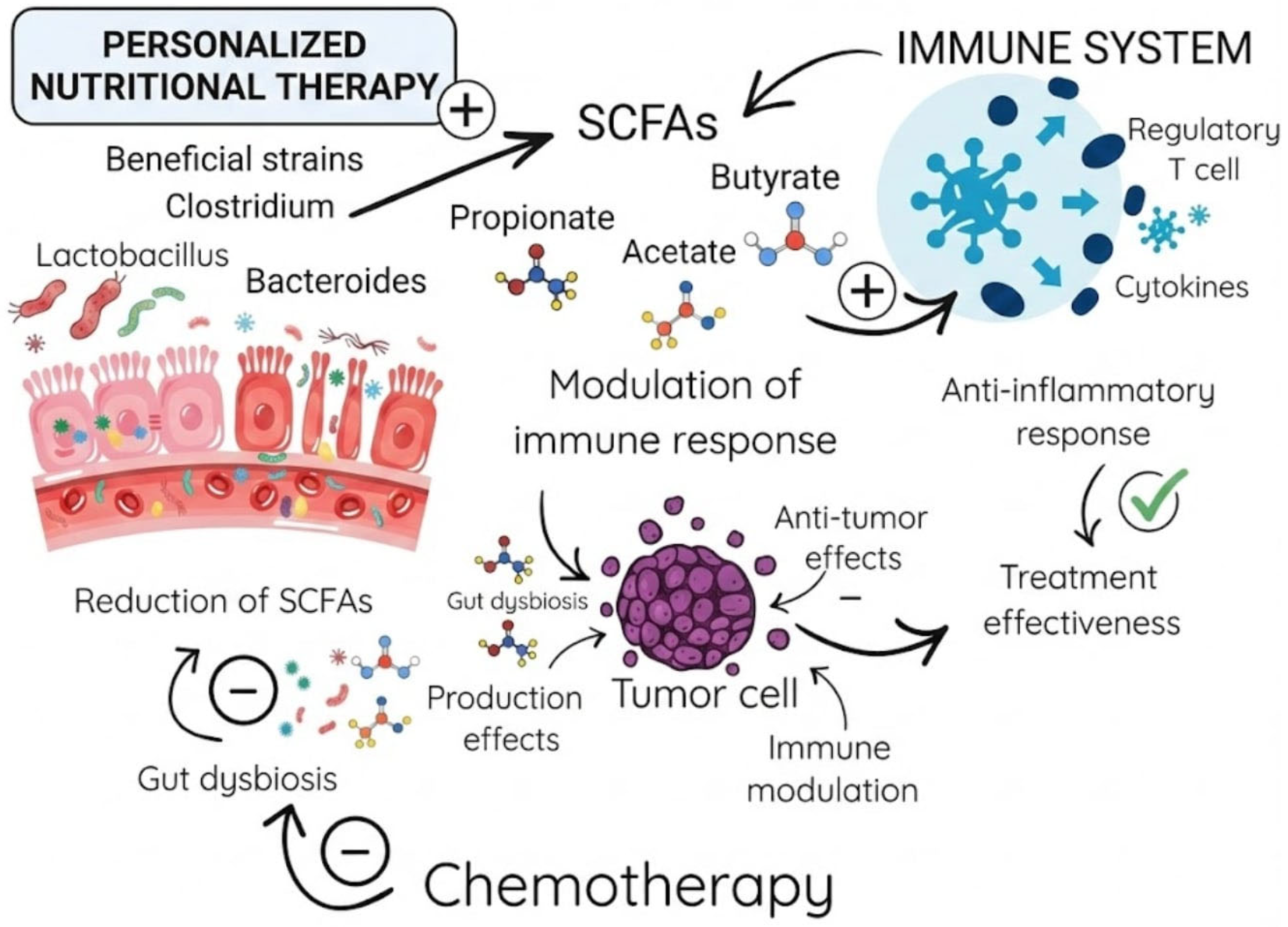

Personalizing Nutritional Therapy in Pediatric Oncology: The Role of Gut Microbiome Profiling and Metabolomics in Mitigating Mucositis and Enhancing Immune Response to Chemotherapy
 , , ,
, , ,
Abstract
1. Introduction
2. Materials and Methods
2.1. Literature Search Strategy
2.1.1. Time Frame and Language Criteria
2.1.2. Keywords and Search Query Construction
- Population: Pediatric OR children OR adolescent OR oncology OR leukemia OR acute lymphoblastic leukemia (ALL) OR acute myeloid leukemia (AML) OR hematopoietic stem cell transplantation (HSCT).
- Exposure (Microbiome/Metabolome): Gut microbiome OR microbiota OR dysbiosis OR metabolomics OR short-chain fatty acids (SCFAs) OR butyrate OR propionate OR acetate.
- Outcome (Toxicity/Effect): Mucositis OR sepsis OR intestinal inflammation OR gastrointestinal toxicity OR graft-versus-host disease (GvHD) OR immune function OR T cell OR probiotic OR prebiotic OR synbiotic OR postbiotic OR nutritional intervention.
2.2. Inclusion and Exclusion Criteria
2.2.1. Inclusion Criteria
- Clinical Studies—randomized controlled trials (RCTs), prospective and retrospective cohort studies, and pilot studies.
- Preclinical/Experimental Studies—studies conducted in animal models (primarily murine models of mucositis or graft-versus-host disease) providing mechanistic evidence (for example, the role of short-chain fatty acids in immunomodulation and intestinal barrier integrity).
- Review Articles and Meta-Analyses—included as reference sources to identify additional key publications using a snowballing approach.
- Publications focusing on:
- ·
- Correlations between changes in microbiome composition (16S ribosomal ribonucleic acid sequencing or shotgun metagenomic sequencing) and clinical outcomes.
- ·
- Associations between metabolites (measurement of short-chain fatty acid concentrations in stool or serum) and the severity of complications.
- ·
- The impact of nutritional interventions on microbiome modulation in pediatric patients undergoing oncological treatment.
2.2.2. Exclusion Criteria
- Case reports and letters to the editor.
- Studies focusing exclusively on adult populations (>18 years of age).
- Publications not classified as peer-reviewed scientific articles (for example, conference abstracts without full-text availability).
- Articles that did not provide quantitative microbiome or metabolomic data.
2.3. Study Selection and Data Extraction Process
2.3.1. Study Selection
- Titles and abstracts were screened to exclude irrelevant publications or those not meeting the inclusion criteria.
- Full texts of potentially relevant articles were assessed to confirm final eligibility. Discrepancies between reviewers were resolved through discussion or consultation with a third independent researcher.
2.3.2. Data Extraction
- Study Identification—authors, year of publication, study design, population characteristics (number of patients, age, type of malignancy and treatment).
- Microbiome Analysis Methods—analytical method and taxonomic resolution.
- Metabolomic Analysis Methods—analytical technique and concentrations of key short-chain fatty acids.
- Clinical Outcomes—severity of mucositis (according to the World Health Organization scale or the Oral Mucositis Assessment Scale), incidence and type of infections (sepsis), and risk of graft-versus-host disease.
- Type of Intervention—probiotic, prebiotic, dietary intervention, or combined approaches.
- Key Findings—reported correlations between microbiome composition or short-chain fatty acid levels and treatment-related toxicity or intervention effectiveness.
2.4. Quality Assessment
2.5. Data Synthesis Methods
- Identification of consistent and reproducible dysbiosis patterns associated with clinical complications.
- Determination of short-chain fatty acid thresholds associated with increased risk.
- Integration of mechanistic (preclinical) and clinical evidence regarding the impact of interventions on the microbiome–metabolome–immune axis.
3. Results
3.1. Gut Microbiome Profiling and Fecal Metabolomics as Predictors of Toxicity
3.1.1. Intestinal Dysbiosis in Pediatric Patients Undergoing Chemotherapy and HSCT
3.1.2. Depletion of Protective Taxa and Expansion of Pathobionts
3.2. Metabolomic Correlates of Treatment Toxicity: The Role of SCFAs
3.3. Potential Nutritional Therapy for Gut Microbiome Modulation
3.3.1. Probiotics
3.3.2. Prebiotics
3.3.3. Postbiotic
3.3.4. Fecal Microbiome Transplantation
3.4. Improvement in Long-Term Clinical Outcomes and QoL
3.4.1. Correlation Between Microbiome Modulation and Chemotherapy Dose Intensity
3.4.2. Reduction in Long-Term Complication Risk: Impact on Chronic Intestinal Inflammation and the Risk of Secondary Cancers
4. Conclusions
Author Contributions
Funding
Institutional Review Board Statement
Informed Consent Statement
Data Availability Statement
Conflicts of Interest
Abbreviations
| HSCT | Hematopoietic stem cell transplantation |
| SCFA | Short-chain fatty acid |
| GvHD | Graft-versus-host disease |
| FMT | Fecal microbiota transplantation |
| RDI | Relative dose intensity |
| ALL | Acute lymphoblastic leukemia |
| QoL | Quality of life |
| OS | Overall survival |
| NASPGHAN | North American Society for Pediatric Gastroenterology, Hepatology and Nutrition |
| ESPEN | European Society for Clinical Nutrition and Metabolism |
| AML | Acute myeloid leukemia |
| OTU | Operational taxonomic units |
| LBP | Lactobacillus plantarum |
| IMD | Intestinal mucosal damage |
References
- Parambil, B.C.; Banavali, S.D. Pediatric Oncology. In Tata Memorial Centre Textbook of Oncology; Springer Nature: Singapore, 2024; pp. 51–59. [Google Scholar]
- Agarwal, S. Pediatric Cancers: Insights and Novel Therapeutic Approaches. Cancers 2023, 15, 3537. [Google Scholar] [CrossRef]
- Marszołek, A.; Leśniak, M.; Sekunda, A.; Siwek, A.; Skiba, Z.; Lejman, M.; Zawitkowska, J. Haploidentical HSCT in the Treatment of Pediatric Hematological Disorders. Int. J. Mol. Sci. 2024, 25, 6380. [Google Scholar] [CrossRef] [PubMed]
- Olson, T.L.; Pollack, M.M.; Dávila Saldaña, B.J.; Patel, A.K. Hospital Survival Following Pediatric HSCT: Changes in Complications, ICU Therapies and Outcomes over 10 Years. Front. Pediatr. 2023, 11, 1247792. [Google Scholar] [CrossRef] [PubMed]
- Dai, W.; Chen, X.; Zhou, H.; Liu, N.; Jin, M.; Guo, Z. Microbiota Modulation for Infectious Complications Following Allogeneic Hematopoietic Stem Cell Transplantation in Pediatric Hematological Malignancies. Front. Pediatr. 2025, 13, 1509612. [Google Scholar] [CrossRef] [PubMed]
- Peterson, D.; Bonham, K.S.; Rowland, S.; Pattanayak, C.W.; RESONANCE Consortium; Klepac-Ceraj, V. Comparative Analysis of 16S rRNA Gene and Metagenome Sequencing in Pediatric Gut Microbiomes. Front. Microbiol. 2021, 12, 670336. [Google Scholar] [CrossRef]
- Faraci, M.; Bonaretti, C.; Dell’Orso, G.; Pierri, F.; Giardino, S.; Angiero, F.; Blasi, S.; Farronato, G.; Di Marco, E.; Trevisiol, A.; et al. Association between Oral and Fecal Microbiome Dysbiosis and Treatment Complications in Pediatric Patients Undergoing Allogeneic Hematopoietic Stem Cell Transplantation. Sci. Rep. 2024, 14, 67–68. [Google Scholar] [CrossRef]
- Kaźmierczak-Siedlecka, K.; Skonieczna-Żydecka, K.; Biliński, J.; Roviello, G.; Iannone, L.F.; Atzeni, A.; Sobocki, B.K.; Połom, K. Gut Microbiome Modulation and Faecal Microbiota Transplantation Following Allogenic Hematopoietic Stem Cell Transplantation. Cancers 2021, 13, 4665. [Google Scholar] [CrossRef]
- Józefczuk, P.; Biliński, J.; Minkowska, A.; Łaguna, P. Gut Microbiome in Children Undergoing Hematopoietic Stem Cell Transplantation. Best Pract. Res. Clin. Gastroenterol. 2024, 72, 101955. [Google Scholar] [CrossRef]
- Vaitkute, G.; Panic, G.; Alber, D.G.; Faizura-Yeop, I.; Cloutman-Green, E.; Swann, J.; Veys, P.; Standing, J.F.; Klein, N.; Bajaj-Elliott, M. Linking Gastrointestinal Microbiota and Metabolome Dynamics to Clinical Outcomes in Paediatric Haematopoietic Stem Cell Transplantation. Microbiome 2022, 10, 89. [Google Scholar] [CrossRef]
- Wong, S.P.; Er, Y.X.; Tan, S.M.; Lee, S.C.; Rajasuriar, R.; Lim, Y.A.L. Oral and Gut Microbiota Dysbiosis Is Associated with Mucositis Severity in Autologous Hematopoietic Stem Cell Transplantation: Evidence from an Asian Population. Transplant. Cell. Ther. 2023, 29, 633.e1–633.e13. [Google Scholar] [CrossRef]
- Chi, M.; Jiang, T.; He, X.; Peng, H.; Li, Y.; Zhang, J.; Wang, L.; Nian, Q.; Ma, K.; Liu, C. Role of Gut Microbiota and Oxidative Stress in the Progression of Transplant-Related Complications Following Hematopoietic Stem Cell Transplantation. Oxid. Med. Cell. Longev. 2023, 2023, 3532756. [Google Scholar] [CrossRef]
- Lauwers, E.; Sabino, J.; Hoffman, I.; van Hoeve, K. Faecal Microbiota Transplantation in Children: A Systematic Review. Acta Paediatr. 2024, 113, 1991–2002. [Google Scholar] [CrossRef] [PubMed]
- Morello, E.; Arena, F.; Malagola, M.; Farina, M.; Polverelli, N.; Cavagna, E.; Colnaghi, F.; Donna, L.; Zollner, T.; Buttini, E.A.; et al. Malnutrition Prevention after Allogeneic Hematopoietic Stem Cell Transplantation (AlloHSCT): A Prospective Explorative Interventional Study with an Oral Polymeric Formulation Enriched with Transforming Growth Factor Beta 2 (TGF-Β2). Nutrients 2022, 14, 3589. [Google Scholar] [CrossRef] [PubMed]
- Lin, D.; Hu, B.; Li, P.; Zhao, Y.; Xu, Y.; Wu, D. Roles of the Intestinal Microbiota and Microbial Metabolites in Acute GVHD. Exp. Hematol. Oncol. 2021, 10, 49. [Google Scholar] [CrossRef] [PubMed]
- Adel, M.; Khedr, R.A.; Sayed, A.A.; Shalaby, L.; Diab, A.A.; Yahia, A.; Elanany, M.; Lehmann, L.E.; Ahmed, S.; Aziz, R.K.; et al. Changes in Gut Microbial Diversity and Correlation with Clinical Outcome in Children with Acute Myeloid Leukemia Receiving Induction Chemotherapy. Children 2025, 12, 1176. [Google Scholar] [CrossRef]
- Leardini, D.; Roberto, M.; Roggiani, S.; Muratore, E.; Fabbrini, M.; Storci, G.; Tomassini, E.; Dan, E.; Schipani, A.; De Matteis, S.; et al. Hematopoietic Stem Cell Transplantation Disrupts Age-Related Gut Microbiota Signatures in Pediatric and Adult Recipients. Bone Marrow Transplant. 2025, 60, 1611–1621. [Google Scholar] [CrossRef]
- Sørum, M.E.; Boulund, U.; De Pietri, S.; Weischendorff, S.; Enevold, C.; Rathe, M.; Als-Nielsen, B.; Hasle, H.; Pamp, S.; Stokholm, J.; et al. Changes in Gut Microbiota Predict Neutropenia after Induction Treatment in Childhood Acute Lymphoblastic Leukemia. Blood Adv. 2025, 9, 1508–1521. [Google Scholar] [CrossRef]
- Huang, Y.; Liao, L.; Jiang, Y.; Tao, S.; Tang, D. Role of Gut Microbiota in Predicting Chemotherapy-Induced Neutropenia Duration in Leukemia Patients. Front. Microbiol. 2025, 16, 1507336. [Google Scholar] [CrossRef]
- Le, T.T.; Hoang, T.N.; Do, D.H.; Nguyen, X.-H.; Huynh, C.; Viet, H.D.; Dat, V.Q.; Zengler, K.; Gilbert, J.A.; Avedissian, S.N.; et al. Current State of Microbiota Clinical Applications in Neonatal and Pediatric Bacterial Infections. Gut Microbes 2025, 17, 2529400. [Google Scholar] [CrossRef]
- Park, M.; Jung, J.; Lee, J.A.; Lee, E.; Lee, H.; Eom, H.S.; Park, H.J. Understanding Gut Microbiome Changes in Korean Children, Adolescents, and Young Adults with Hematologic Malignancies. Ann. Hematol. 2025, 104, 2947–2961. [Google Scholar] [CrossRef]
- Zeng, J.; Tan, Z.; Zhang, K.; Han, Q.; Ou, S.; Wang, Z.; Liu, J.; Wang, F.; Huang, Y.; Wu, L. Butyrate Enhances Recovery of Chemotherapy-Induced Oral Mucositis by Enhancing Tight Junction Protein Expression and Inhibiting Inflammatory Responses. Med. Oral Patol. Oral Cir. Bucal 2025, 30, e657–e663. [Google Scholar] [CrossRef] [PubMed]
- Perceval, C.; Szajewska, H.; Indrio, F.; Weizman, Z.; Vandenplas, Y. Prophylactic Use of Probiotics for Gastrointestinal Disorders in Children. Lancet Child Adolesc. Health 2019, 3, 655–662. [Google Scholar] [CrossRef] [PubMed]
- Martyniak, A.; Medyńska-Przęczek, A.; Wędrychowicz, A.; Skoczeń, S.; Tomasik, P.J. Prebiotics, Probiotics, Synbiotics, Paraprobiotics and Postbiotic Compounds in IBD. Biomolecules 2021, 11, 1903. [Google Scholar] [CrossRef] [PubMed]
- Markowiak, P.; Śliżewska, K. Effects of Probiotics, Prebiotics, and Synbiotics on Human Health. Nutrients 2017, 9, 1021. [Google Scholar] [CrossRef]
- Martyniak, A.; Zakrzewska, Z.; Schab, M.; Zawartka, A.; Wędrychowicz, A.; Skoczeń, S.; Tomasik, P.J. Prevention and Health Benefits of Prebiotics, Probiotics and Postbiotics in Acute Lymphoblastic Leukemia. Microorganisms 2023, 11, 1775. [Google Scholar] [CrossRef]
- Reyna-Figueroa, J.; Barrón-Calvillo, E.; García-Parra, C.; Galindo-Delgado, P.; Contreras-Ochoa, C.; Lagunas-Martínez, A.; Campos-Romero, F.H.; Silva-Estrada, J.A.; Limón-Rojas, A.E. Probiotic Supplementation Decreases Chemotherapy-Induced Gastrointestinal Side Effects in Patients with Acute Leukemia. J. Pediatr. Hematol. Oncol. 2019, 41, 468–472. [Google Scholar] [CrossRef]
- Vivarelli, S.; Salemi, R.; Candido, S.; Falzone, L.; Santagati, M.; Stefani, S.; Torino, F.; Banna, G.L.; Tonini, G.; Libra, M. Gut Microbiota and Cancer: From Pathogenesis to Therapy. Cancers 2019, 11, 38. [Google Scholar] [CrossRef]
- Badgeley, A.; Anwar, H.; Modi, K.; Murphy, P.; Lakshmikuttyamma, A. Effect of Probiotics and Gut Microbiota on Anti-Cancer Drugs: Mechanistic Perspectives. BBA Rev. Cancer 2021, 1875, 188494. [Google Scholar] [CrossRef]
- Ladas, E.J.; Bhatia, M.; Chen, L.; Sandler, E.; Petrovic, A.; Berman, D.M.; Hamblin, F.; Gates, M.; Hawks, R.; Sung, L.; et al. The Safety and Feasibility of Probiotics in Children and Adolescents Undergoing Hematopoietic Cell Transplantation. Bone Marrow Transplant. 2016, 51, 262–266. [Google Scholar] [CrossRef]
- Simms-Waldrip, T.R.; Sunkersett, G.; Coughlin, L.A.; Savani, M.R.; Arana, C.; Kim, J.; Kim, M.; Zhan, X.; Greenberg, D.E.; Xie, Y.; et al. Antibiotic-Induced Depletion of Anti-Inflammatory Clostridia Is Associated with the Development of Graft-versus-Host Disease in Pediatric Stem Cell Transplantation Patients. Biol. Blood Marrow Transplant. 2017, 23, 820–829. [Google Scholar] [CrossRef]
- Mathewson, N.D.; Jenq, R.; Mathew, A.V.; Koenigsknecht, M.; Hanash, A.; Toubai, T.; Oravecz-Wilson, K.; Wu, S.-R.; Sun, Y.; Rossi, C.; et al. Gut Microbiome–Derived Metabolites Modulate Intestinal Epithelial Cell Damage and Mitigate Graft-versus-Host Disease. Nat. Immunol. 2016, 17, 505–513. [Google Scholar] [CrossRef]
- ClinicalTrials.gov. Available online: https://clinicaltrials.gov/study/NCT03057054 (accessed on 20 December 2025).
- Oldenburg, M.; Rüchel, N.; Janssen, S.; Borkhardt, A.; Gössling, K.L. The Microbiome in Childhood Acute Lymphoblastic Leukemia. Cancers 2021, 13, 4947. [Google Scholar] [CrossRef] [PubMed]
- Ambesh, P.; Stroud, S.; Franzova, E.; Gotesman, J.; Sharma, K.; Wolf, L.; Kamholz, S. Recurrent Lactobacillus Bacteremia in a Patient with Leukemia. J. Investig. Med. High Impact Case Rep. 2017, 5, 2324709617744233. [Google Scholar] [CrossRef] [PubMed]
- Mangrolia, U.; Osborne, W.J. Staphylococcus xylosus VITURAJ10: Pyrrolo [1,2α] Pyrazine-1,4-Dione, Hexahydro-3-(2-Methylpropyl) (PPDHMP) Producing, Potential Probiotic Strain with Antibacterial and Anticancer Activity. Microb. Pathog. 2020, 147, 104259. [Google Scholar] [CrossRef] [PubMed]
- Tarrah, A.; de Castilhos, J.; Rossi, R.C.; da Silva Duarte, V.; Ziegler, D.R.; Corich, V.; Giacomini, A. In Vitro Probiotic Potential and Anti-Cancer Activity of Newly Isolated Folate-Producing Streptococcus thermophilus Strains. Front. Microbiol. 2018, 9, 2214. [Google Scholar] [CrossRef]
- Samanta, S. Potential Impacts of Prebiotics and Probiotics on Cancer Prevention. Anticancer Agents Med. Chem. 2022, 22, 605–628. [Google Scholar] [CrossRef]
- Alexander, J.L.; Wilson, I.D.; Teare, J.; Marchesi, J.R.; Nicholson, J.K.; Kinross, J.M. Gut Microbiota Modulation of Chemotherapy Efficacy and Toxicity. Nat. Rev. Gastroenterol. Hepatol. 2017, 14, 356–365. [Google Scholar] [CrossRef]
- Mafe, A.N.; Büsselberg, D. Microbiome Integrity Enhances the Efficacy and Safety of Anticancer Drug. Biomedicines 2025, 13, 422. [Google Scholar] [CrossRef]
- Li, S.; Zhu, S.; Yu, J. The Role of Gut Microbiota and Metabolites in Cancer Chemotherapy. J. Adv. Res. 2024, 64, 223–235. [Google Scholar] [CrossRef]
- Yoo, S.; Jung, S.-C.; Kwak, K.; Kim, J.-S. The Role of Prebiotics in Modulating Gut Microbiota: Implications for Human Health. Int. J. Mol. Sci. 2024, 25, 4834. [Google Scholar] [CrossRef]
- Khandelwal, P.; Andersen, H.; Romick-Rosendale, L.; Taggart, C.B.; Watanabe, M.; Lane, A.; Dandoy, C.E.; Lake, K.E.; Litts, B.A.; Morrow, A.L.; et al. A Pilot Study of Human Milk to Reduce Intestinal Inflammation After Bone Marrow Transplant. Breastfeed. Med. 2019, 14, 193–202. [Google Scholar] [CrossRef] [PubMed]
- Ren, G.; Zhang, J.; Li, M.; Tang, Z.; Yang, Z.; Cheng, G.; Wang, J. Gut Microbiota Composition Influences Outcomes of Skeletal Muscle Nutritional Intervention via Blended Protein Supplementation in Posttransplant Patients with Hematological Malignancies. Clin. Nutr. 2021, 40, 94–102. [Google Scholar] [CrossRef] [PubMed]
- Wu, X.; Hou, Q.; Zhao, Z.; Wang, J.; Guo, Y.; Lu, L.; Han, J. Effects of Soy–Whey Protein Nutritional Supplementation on Hematopoiesis and Immune Reconstitution in an Allogeneic Transplanted Mice. Nutrients 2022, 14, 3014. [Google Scholar] [CrossRef] [PubMed]
- Bindels, L.B.; Neyrinck, A.M.; Salazar, N.; Taminiau, B.; Druart, C.; Muccioli, G.G.; François, E.; Blecker, C.; Richel, A.; Daube, G.; et al. Non Digestible Oligosaccharides Modulate the Gut Microbiota to Control the Development of Leukemia and Associated Cachexia in Mice. PLoS ONE 2015, 10, e0131009. [Google Scholar] [CrossRef]
- Bindels, L.B.; Neyrinck, A.M.; Claus, S.P.; Le Roy, C.I.; Grangette, C.; Pot, B.; Martinez, I.; Walter, J.; Cani, P.D.; Delzenne, N.M. Synbiotic Approach Restores Intestinal Homeostasis and Prolongs Survival in Leukaemic Mice with Cachexia. ISME J. 2016, 10, 1456–1470. [Google Scholar] [CrossRef]
- ClinicalTrials.gov. Available online: https://clinicaltrials.gov/study/NCT04263597 (accessed on 22 December 2025).
- ClinicalTrials.gov. Available online: https://clinicaltrials.gov/study/NCT04111471 (accessed on 22 December 2025).
- Salminen, S.; Collado, M.C.; Endo, A.; Hill, C.; Lebeer, S.; Quigley, E.M.M.; Sanders, M.E.; Shamir, R.; Swann, J.R.; Szajewska, H.; et al. The International Scientific Association of Probiotics and Prebiotics (ISAPP) Consensus Statement on the Definition and Scope of Postbiotics. Nat. Rev. Gastroenterol. Hepatol. 2021, 18, 649–667. [Google Scholar] [CrossRef]
- Yu, J.; Sun, H.; Cao, W.; Han, L.; Song, Y.; Wan, D.; Jiang, Z. Applications of Gut Microbiota in Patients with Hematopoietic Stem-Cell Transplantation. Exp. Hematol. Oncol. 2020, 9, 35. [Google Scholar] [CrossRef]
- Mayorgas, A.; Dotti, I.; Salas, A. Microbial Metabolites, Postbiotics, and Intestinal Epithelial Function. Mol. Nutr. Food Res. 2021, 65, e2000188. [Google Scholar] [CrossRef]
- Chuah, L.-O.; Foo, H.L.; Loh, T.C.; Alitheen, N.B.M.; Yeap, S.K.; Mutalib, N.E.A.; Rahim, R.A.; Yusoff, K. Postbiotic Metabolites Produced by Lactobacillus plantarum Strains Exert Selective Cytotoxicity Effects on Cancer Cells. BMC Complement. Altern. Med. 2019, 19, 114. [Google Scholar] [CrossRef]
- Pulliam, S.R.; Pellom, S.T., Jr.; Shanker, A.; Adunyah, S.E. Butyrate Regulates the Expression of Inflammatory and Chemotactic Cytokines in Human Acute Leukemic Cells during Apoptosis. Cytokine 2016, 84, 74–87. [Google Scholar] [CrossRef]
- Terzić-Vidojević, A.; Veljović, K.; Tolinački, M.; Živković, M.; Lukić, J.; Lozo, J.; Fira, Đ.; Jovčić, B.; Strahinić, I.; Begović, J.; et al. Diversity of Non-Starter Lactic Acid Bacteria in Autochthonous Dairy Products from Western Balkan Countries—Technological and Probiotic Properties. Food Res. Int. 2020, 136, 109494. [Google Scholar] [CrossRef] [PubMed]
- Esmail, G.A.; Miri, S.; Hric, I.; Mottawea, W.; Nechalová, L.; Šimiaková, M.; Leao, L.; Kolisek, M.; Kolenová, A.; Bielik, V.; et al. Colonic Microbiome Modulation and Metabolic Effects of Bryndza Sheep Cheese in Pediatric Acute Lymphoblastic Leukemia: An in Vitro Study. J. Funct. Foods 2025, 127, 106755. [Google Scholar] [CrossRef]
- Song, Y.; Perlman, K.; Gyarmati, P. Microbial and Host Factors Contribute to Bloodstream Infection in a Pediatric Acute Lymphocytic Leukemia Mouse Model. Heliyon 2022, 8, e11340. [Google Scholar] [CrossRef] [PubMed]
- D’Amico, F.; Biagi, E.; Rampelli, S.; Fiori, J.; Zama, D.; Soverini, M.; Barone, M.; Leardini, D.; Muratore, E.; Prete, A.; et al. Enteral Nutrition in Pediatric Patients Undergoing Hematopoietic SCT Promotes the Recovery of Gut Microbiome Homeostasis. Nutrients 2019, 11, 2958. [Google Scholar] [CrossRef]
- Zama, D.; Gori, D.; Muratore, E.; Leardini, D.; Rallo, F.; Turroni, S.; Prete, A.; Brigidi, P.; Pession, A.; Masetti, R. Enteral versus Parenteral Nutrition as Nutritional Support after Allogeneic Hematopoietic Stem Cell Transplantation: A Systematic Review and Meta-Analysis. Transplant. Cell. Ther. 2021, 27, 180.e1–180.e8. [Google Scholar] [CrossRef]
- Cammarota, G.; Ianiro, G.; Tilg, H.; Rajilić-Stojanović, M.; Kump, P.; Satokari, R.; Sokol, H.; Arkkila, P.; Pintus, C.; Hart, A.; et al. European Consensus Conference on Faecal Microbiota Transplantation in Clinical Practice. Gut 2017, 66, 569–580. [Google Scholar] [CrossRef]
- Hourigan, S.K.; Nicholson, M.R.; Kahn, S.A.; Kellermayer, R. Updates and Challenges in Fecal Microbiota Transplantation for Clostridioides difficile Infection in Children. J. Pediatr. Gastroenterol. Nutr. 2021, 73, 430–432. [Google Scholar] [CrossRef]
- DeFilipp, Z.; Hohmann, E.; Jenq, R.R.; Chen, Y.-B. Fecal Microbiota Transplantation: Restoring the Injured Microbiome after Allogeneic Hematopoietic Cell Transplantation. Biol. Blood Marrow Transplant. 2019, 25, e17–e22. [Google Scholar] [CrossRef]
- Roganovic, J.; Radosevic, M.; Dordevic, A. Role of the Gut Microbiome in the Development and Prognosis of Pediatric Leukemia. World J. Clin. Oncol. 2025, 16, 111419. [Google Scholar] [CrossRef]
- Muratore, E.; Leardini, D.; Baccelli, F.; Venturelli, F.; Prete, A.; Masetti, R. Nutritional Modulation of the Gut Microbiome in Allogeneic Hematopoietic Stem Cell Transplantation Recipients. Front. Nutr. 2022, 9, 993668. [Google Scholar] [CrossRef]
- Pession, A.; Zama, D.; Muratore, E.; Leardini, D.; Gori, D.; Guaraldi, F.; Prete, A.; Turroni, S.; Brigidi, P.; Masetti, R. Fecal Microbiota Transplantation in Allogeneic Hematopoietic Stem Cell Transplantation Recipients: A Systematic Review. J. Pers. Med. 2021, 11, 100. [Google Scholar] [CrossRef]
- Holvoet, T.; Joossens, M.; Vázquez-Castellanos, J.F.; Christiaens, E.; Heyerick, L.; Boelens, J.; Verhasselt, B.; van Vlierberghe, H.; De Vos, M.; Raes, J.; et al. Fecal Microbiota Transplantation Reduces Symptoms in Some Patients with Irritable Bowel Syndrome with Predominant Abdominal Bloating: Short- and Long-Term Results From a Placebo-Controlled Randomized Trial. Gastroenterology 2021, 160, 145–157.e8. [Google Scholar] [CrossRef] [PubMed]
- Xu, F.; Li, N.; Wang, C.; Xing, H.; Chen, D.; Wei, Y. Clinical Efficacy of Fecal Microbiota Transplantation for Patients with Small Intestinal Bacterial Overgrowth: A Randomized, Placebo-Controlled Clinic Study. BMC Gastroenterol. 2021, 21, 54. [Google Scholar] [CrossRef] [PubMed]
- Goloshchapov, O.; Bakin, E.; Stanevich, O.; Klementeva, R.; Shcherbakov, A.; Shvetsov, A.; Paina, O.; Kozhokar, P.; Gorchakova, M.; Babenko, E.; et al. Clinical and Immune Effects of Fecal Microbiota Transplantation in Children with Acute Graft-versus-Host Disease. Cell. Ther. Transplant. 2021, 10, 69–78. [Google Scholar] [CrossRef]
- Zhong, S.; Zeng, J.; Deng, Z.; Jiang, L.; Zhang, B.; Yang, K.; Wang, W.; Zhang, T. Fecal Microbiota Transplantation for Refractory Diarrhea in Immunocompromised Diseases: A Pediatric Case Report. Ital. J. Pediatr. 2019, 45, 116. [Google Scholar] [CrossRef]
- Merli, P.; Putignani, L.; Ruggeri, A.; Del Chierico, F.; Gargiullo, L.; Galaverna, F.; Gaspari, S.; Pagliara, D.; Russo, A.; Pane, S.; et al. Decolonization of Multi-Drug Resistant Bacteria by Fecal Microbiota Transplantation in Five Pediatric Patients before Allogeneic Hematopoietic Stem Cell Transplantation: Gut Microbiota Profiling, Infectious and Clinical Outcomes. Haematologica 2020, 105, 2686–2690. [Google Scholar] [CrossRef]
- Conover, K.R.; Absah, I.; Ballal, S.; Brumbaugh, D.; Cho, S.; Cardenas, M.C.; Knackstedt, E.D.; Goyal, A.; Jensen, M.K.; Kaplan, J.L.; et al. Fecal Microbiota Transplantation for Clostridioides difficile Infection in Immunocompromised Pediatric Patients. J. Pediatr. Gastroenterol. Nutr. 2023, 76, 440–446. [Google Scholar] [CrossRef]
- Zhang, X.-Y.; Wang, Y.-Z.; Li, X.-L.; Hu, H.; Liu, H.-F.; Li, D.; Xiao, Y.-M.; Zhang, T. Safety of Fecal Microbiota Transplantation in Chinese Children: A Single-Center Retrospective Study. World J. Clin. Cases 2018, 6, 1121–1127. [Google Scholar] [CrossRef]
- Webb, B.J.; Brunner, A.; Ford, C.D.; Gazdik, M.A.; Petersen, F.B.; Hoda, D. Fecal Microbiota Transplantation for Recurrent Clostridium difficile Infection in Hematopoietic Stem Cell Transplant Recipients. Transpl. Infect. Dis. 2016, 18, 628–633. [Google Scholar] [CrossRef]
- Battipaglia, G.; Malard, F.; Rubio, M.T.; Ruggeri, A.; Mamez, A.C.; Brissot, E.; Giannotti, F.; Dulery, R.; Joly, A.C.; Baylatry, M.T.; et al. Fecal Microbiota Transplantation before or after Allogeneic Hematopoietic Transplantation in Patients with Hematologic Malignancies Carrying Multidrug-Resistance Bacteria. Haematologica 2019, 104, 1682–1688. [Google Scholar] [CrossRef]
- Gulumbe, B.H.; Abdulrahim, A. Pushing the frontiers in the fight against antimicrobial resistance: The potential of fecal and maggot therapies. Future Sci. OA 2023, 9, FSO899. [Google Scholar] [CrossRef]
- Oh, B.; Boyle, F.; Pavlakis, N.; Clarke, S.; Guminski, A.; Eade, T.; Lamoury, G.; Carroll, S.; Morgia, M.; Kneebone, A.; et al. Emerging Evidence of the Gut Microbiome in Chemotherapy: A Clinical Review. Front. Oncol. 2021, 11, 706331. [Google Scholar] [CrossRef]
- Oh, L.; Ab Rahman, S.; Dubinsky, K.; Azanan, M.S.; Ariffin, H. Manipulating the Gut Microbiome as a Therapeutic Strategy to Mitigate Late Effects in Childhood Cancer Survivors. Technol. Cancer Res. Treat. 2023, 22, 15330338221149799. [Google Scholar] [CrossRef] [PubMed]
- van Vliet, M.J.; Harmsen, H.J.M.; de Bont, E.S.J.M.; Tissing, W.J.E. The Role of Intestinal Microbiota in the Development and Severity of Chemotherapy-Induced Mucositis. PLoS Pathog. 2010, 6, e1000879. [Google Scholar] [CrossRef] [PubMed]
- The Human Microbiome Project Consortium. Structure, Function and Diversity of the Healthy Human Microbiome. Nature 2012, 486, 207–214. [Google Scholar] [CrossRef] [PubMed]
- Wei, L.; Wen, X.-S.; Xian, C.J. Chemotherapy-Induced Intestinal Microbiota Dysbiosis Impairs Mucosal Homeostasis by Modulating Toll-like Receptor Signaling Pathways. Int. J. Mol. Sci. 2021, 22, 9474. [Google Scholar] [CrossRef]
- Wallace, B.D.; Wang, H.; Lane, K.T.; Scott, J.E.; Orans, J.; Koo, J.S.; Venkatesh, M.; Jobin, C.; Yeh, L.-A.; Mani, S.; et al. Alleviating Cancer Drug Toxicity by Inhibiting a Bacterial Enzyme. Science 2010, 330, 831–835. [Google Scholar] [CrossRef]
- Sadeghloo, Z.; Sadeghi, A. Gut Microbiota as a Hidden Modulator of Chemotherapy: Implications for Colorectal Cancer Treatment. Discov. Oncol. 2025, 16, 1717. [Google Scholar] [CrossRef]
- Guthrie, L.; Gupta, S.; Daily, J.; Kelly, L. Human Microbiome Signatures of Differential Colorectal Cancer Drug Metabolism. NPJ Biofilms Microbiomes 2017, 3, 27. [Google Scholar] [CrossRef]
- Furman, W.L.; Crews, K.R.; Billups, C.; Wu, J.; Gajjar, A.J.; Daw, N.C.; Patrick, C.C.; Rodriguez-Galindo, C.; Stewart, C.F.; Dome, J.S.; et al. Cefixime Allows Greater Dose Escalation of Oral Irinotecan: A Phase I Study in Pediatric Patients with Refractory Solid Tumors. J. Clin. Oncol. 2006, 24, 563–570. [Google Scholar] [CrossRef]
- Hakim, H.; Dallas, R.; Wolf, J.; Tang, L.; Schultz-Cherry, S.; Darling, V.; Johnson, C.; Karlsson, E.A.; Chang, T.-C.; Jeha, S.; et al. Gut Microbiome Composition Predicts Infection Risk During Chemotherapy in Children with Acute Lymphoblastic Leukemia. Clin. Infect. Dis. 2018, 67, 541–548. [Google Scholar] [CrossRef] [PubMed]
- Masetti, R.; D’Amico, F.; Zama, D.; Leardini, D.; Muratore, E.; Ussowicz, M.; Fraczkiewicz, J.; Cesaro, S.; Caddeo, G.; Pezzella, V.; et al. Febrile Neutropenia Duration Is Associated with the Severity of Gut Microbiota Dysbiosis in Pediatric Allogeneic Hematopoietic Stem Cell Transplantation Recipients. Cancers 2022, 14, 1932. [Google Scholar] [CrossRef] [PubMed]
- Rajagopala, S.V.; Yooseph, S.; Harkins, D.M.; Moncera, K.J.; Zabokrtsky, K.B.; Torralba, M.G.; Tovchigrechko, A.; Highlander, S.K.; Pieper, R.; Sender, L.; et al. Gastrointestinal Microbial Populations Can Distinguish Pediatric and Adolescent Acute Lymphoblastic Leukemia (ALL) at the Time of Disease Diagnosis. BMC Genom. 2016, 17, 635. [Google Scholar] [CrossRef] [PubMed]
- Sági, V.; Makra, N.; Csoszánszki, N.; Decmann, A.; Szabó, D.; Garami, M. The Influence of the Gut Microbiome in Paediatric Cancer Origin and Treatment. Antibiotics 2022, 11, 1521. [Google Scholar] [CrossRef]
- Todor, S.B.; Ichim, C. Microbiome Modulation in Pediatric Leukemia: Impact on Graft-Versus-Host Disease and Treatment Outcomes: A Narrative Review. Children 2025, 12, 166. [Google Scholar] [CrossRef]
- Pleguezuelos-Manzano, C.; Puschhof, J.; Rosendahl Huber, A.; van Hoeck, A.; Wood, H.M.; Nomburg, J.; Gurjao, C.; Manders, F.; Dalmasso, G.; Stege, P.B.; et al. Mutational Signature in Colorectal Cancer Caused by Genotoxic pks+ E. coli. Nature 2020, 580, 269–273. [Google Scholar] [CrossRef]
- Scott, N.; Whittle, E.; Jeraldo, P.; Chia, N. A Systemic Review of the Role of Enterotoxic Bacteroides fragilis in Colorectal Cancer. Neoplasia 2022, 29, 100797. [Google Scholar] [CrossRef]
- Chua, L.L.; Rajasuriar, R.; Azanan, M.S.; Abdullah, N.K.; Tang, M.S.; Lee, S.C.; Woo, Y.L.; Lim, Y.A.L.; Ariffin, H.; Loke, P. Reduced Microbial Diversity in Adult Survivors of Childhood Acute Lymphoblastic Leukemia and Microbial Associations with Increased Immune Activation. Microbiome 2017, 5, 35. [Google Scholar] [CrossRef]
- Oeffinger, K.C.; Mertens, A.C.; Sklar, C.A.; Kawashima, T.; Hudson, M.M.; Meadows, A.T.; Friedman, D.L.; Marina, N.; Hobbie, W.; Kadan-Lottick, N.S.; et al. Chronic Health Conditions in Adult Survivors of Childhood Cancer. N. Engl. J. Med. 2006, 355, 1572–1582. [Google Scholar] [CrossRef]
- Hudson, M.M.; Ness, K.K.; Gurney, J.G.; Mulrooney, D.A.; Chemaitilly, W.; Krull, K.R.; Green, D.M.; Armstrong, G.T.; Nottage, K.A.; Jones, K.E.; et al. Clinical Ascertainment of Health Outcomes Among Adults Treated for Childhood Cancer. JAMA 2013, 309, 2371–2381. [Google Scholar] [CrossRef]
- Hajjar, J.; Mendoza, T.; Zhang, L.; Fu, S.; Piha-Paul, S.A.; Hong, D.S.; Janku, F.; Karp, D.D.; Ballhausen, A.; Gong, J.; et al. Associations between the Gut Microbiome and Fatigue in Cancer Patients. Sci. Rep. 2021, 11, 5847. [Google Scholar] [CrossRef]
- Wei, H.; Xie, L.; Zhao, Y.; He, J.; Zhu, J.; Li, M.; Sun, Y. Diverse Gut Microbiota Pattern between Mild and Severe Cancer-related Fatigue in Lung Cancer Patients Treated with First-line Chemotherapy: A Pilot Study. Thorac. Cancer 2023, 14, 309–319. [Google Scholar] [CrossRef]


| Identification Code | NCT04111471 | NCT04263597 |
|---|---|---|
| Type of trial | randomized | a single center prospective study |
| The studied substance | inulin | 2′-fucosyllactose |
| Drug administration | orally | orally |
| Study duration | 2019–2024 | 2020–2025 |
| Clinical trial phase | not applicable | phase I/IIa |
| Age of the patients | 2–18 years | Arm 1: 0–5 years; Arm 2: 5.1–10 years; Arm 3: >10 years |
| Number of enrolled patients | 40 | 70 |
| Time of administration | from day −7 until day +14 after transplant | from day −7 until day + 30 after HSCT |
| Organizations involved with this study | Ann & Robert H Lurie Children’s Hospital of Chicago | Children’s Hospital Medical Center, Cincinnati |
| Patient Type | Number of Patients | Age Range | Article Type | Main Results | References |
|---|---|---|---|---|---|
| refractory acute GvHD 1 | 1 | 5 years | case study | a clinical symptoms reduction and increased bacterial diversity, an enrichment of Firmicutes, and a reduction in Proteobacteria | [70] |
| patients with ALL 2 colonized by MDR 3 bacteria | 5 | 2–18 years | case series study | 80% MDR 3 bacteria decolonization within one week | [71] |
| immunocompromised included: solid organ transplantation malignancy, primary immunodeficiency, or other chronic conditions | 59 | 1.5–18 years | multi-center retrospective cohort study | 79% after 1st FMT 4, 86% after 1 or more FMT 4, no MDR 3 infections and no deaths | [72] |
| children with recurrent CDI 5 | 49 | 4 to 193 months-old | retrospective study | 26.32% short-term negative side effects (mostly mild) | [73] |
| HSCT 6 recipients with CDI 5 | 7 | 25–67 years | retrospective study | 85.7% of FMT 4 recipients had no CDI 5 recurrence and no serious side effects were identified | [74] |
| patients with hematologic malignancies (4 after and 6 before allo-HSCT 6) colonized with MDR 3 bacteria | 10 | 16–64 years | retrospective study | decolonization in 7 of 10 patients, FMT 4 was safe: 1 patient had constipation, and 2 had grade I diarrhea | [75] |
| children with GvHD 1 and antibiotic-resistant colitis developed after allo-HSCT 6 | 7 | 3–10 years | prospective single-centerstudy | 6 of 7 patients reached a clinical response, an increased number of Bacteroides fragilis, Escherichia coli and Faecalibacterium prausnitzii in fecal microbiota since day +8 after FMT 4 was achieved | [68] |
Disclaimer/Publisher’s Note: The statements, opinions and data contained in all publications are solely those of the individual author(s) and contributor(s) and not of MDPI and/or the editor(s). MDPI and/or the editor(s) disclaim responsibility for any injury to people or property resulting from any ideas, methods, instructions or products referred to in the content. |
© 2026 by the authors. Licensee MDPI, Basel, Switzerland. This article is an open access article distributed under the terms and conditions of the Creative Commons Attribution (CC BY) license.
Share and Cite
Pawłowski, P.; Zaj, N.; Iwaniszczuk, K.; Grzelka, I.; Makuch, W.; Samardakiewicz-Kirol, E.; Kościołek, A.; Samardakiewicz, M. Personalizing Nutritional Therapy in Pediatric Oncology: The Role of Gut Microbiome Profiling and Metabolomics in Mitigating Mucositis and Enhancing Immune Response to Chemotherapy. Children 2026, 13, 293. https://doi.org/10.3390/children13020293
Pawłowski P, Zaj N, Iwaniszczuk K, Grzelka I, Makuch W, Samardakiewicz-Kirol E, Kościołek A, Samardakiewicz M. Personalizing Nutritional Therapy in Pediatric Oncology: The Role of Gut Microbiome Profiling and Metabolomics in Mitigating Mucositis and Enhancing Immune Response to Chemotherapy. Children. 2026; 13(2):293. https://doi.org/10.3390/children13020293
Chicago/Turabian StylePawłowski, Piotr, Natalia Zaj, Kamil Iwaniszczuk, Izabela Grzelka, Wojciech Makuch, Emilia Samardakiewicz-Kirol, Aneta Kościołek, and Marzena Samardakiewicz. 2026. "Personalizing Nutritional Therapy in Pediatric Oncology: The Role of Gut Microbiome Profiling and Metabolomics in Mitigating Mucositis and Enhancing Immune Response to Chemotherapy" Children 13, no. 2: 293. https://doi.org/10.3390/children13020293
APA StylePawłowski, P., Zaj, N., Iwaniszczuk, K., Grzelka, I., Makuch, W., Samardakiewicz-Kirol, E., Kościołek, A., & Samardakiewicz, M. (2026). Personalizing Nutritional Therapy in Pediatric Oncology: The Role of Gut Microbiome Profiling and Metabolomics in Mitigating Mucositis and Enhancing Immune Response to Chemotherapy. Children, 13(2), 293. https://doi.org/10.3390/children13020293