Developmental Foundations of Psychosocial Interventions in Pediatric Oncology: A Lifespan Framework for Resilience




Highlights
- Targeted psychosocial interventions that take into account the developmental stage (such as therapeutic play, cognitive–behavioral techniques, and school reintegration programs) significantly improve the emotional regulation and school adjustment of children with cancer.
- The effectiveness of interventions varies by age and type of cancer, with interventions that involve family and peers having the most consistent positive outcomes.
- Developing interventions based on developmental models can enhance the long-term mental resilience and academic success of child survivors.
- More cross-cultural and long-term research is needed to determine intervention models that can be widely applied in pediatric oncology programs.
Abstract
1. Introduction
- (1)
- Synthesize evidence on cognitive, emotional, and social outcomes as examined in intervention-based studies targeting children and adolescents with cancer;
- (2)
- Examine psychosocial interventions through a developmental lens;
- (3)
- Compare intervention effectiveness across developmental stages;
- (4)
- Identify key risk and resilience factors across childhood and adolescence;
- (5)
- Propose a lifespan developmental framework to guide clinical practice in pediatric oncology.
2. Materials and Methods
2.1. Study Design
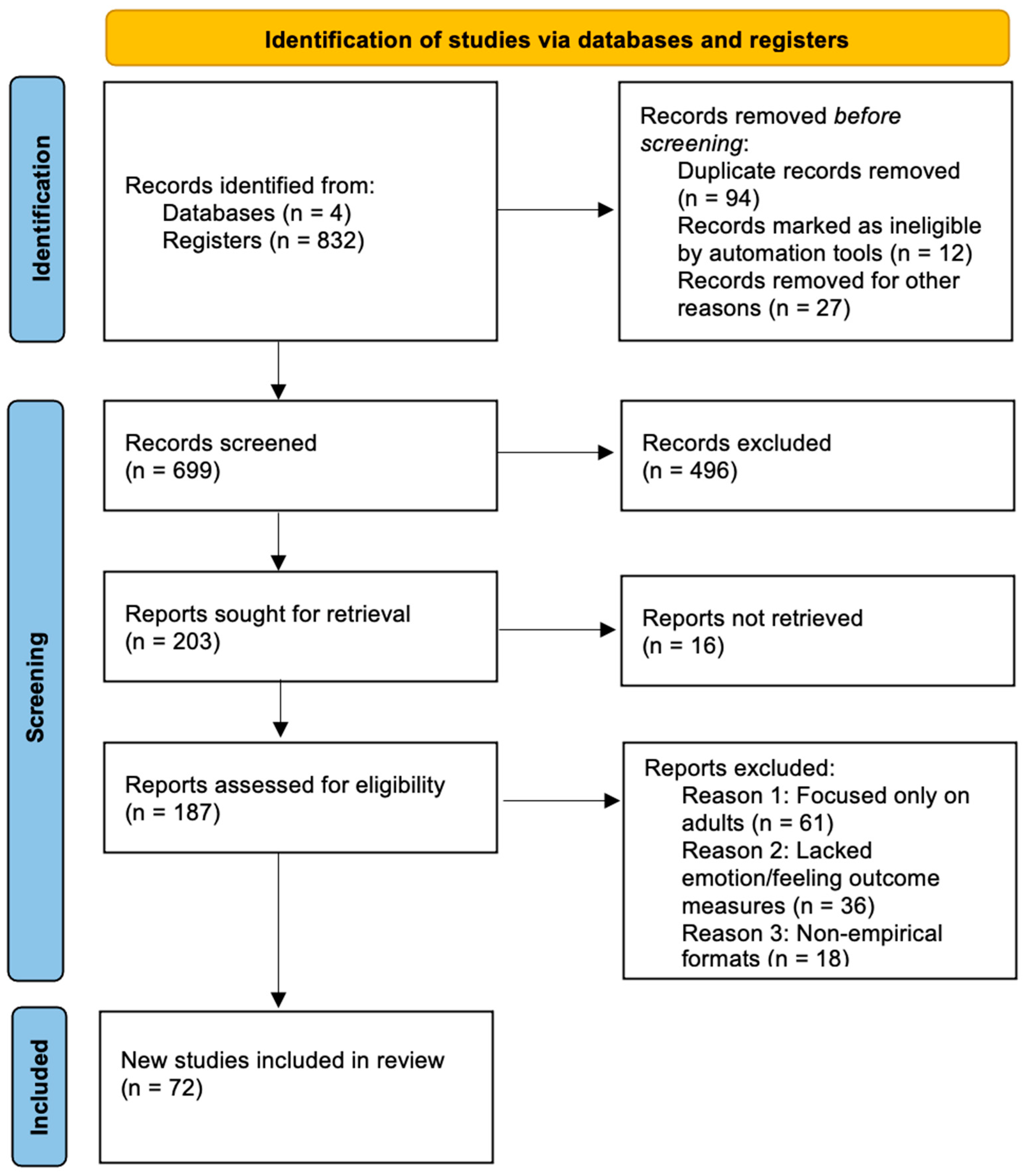
2.2. Literature Search Strategy
2.3. Inclusion/Exclusion Criteria
2.4. Data Extraction and Synthesis
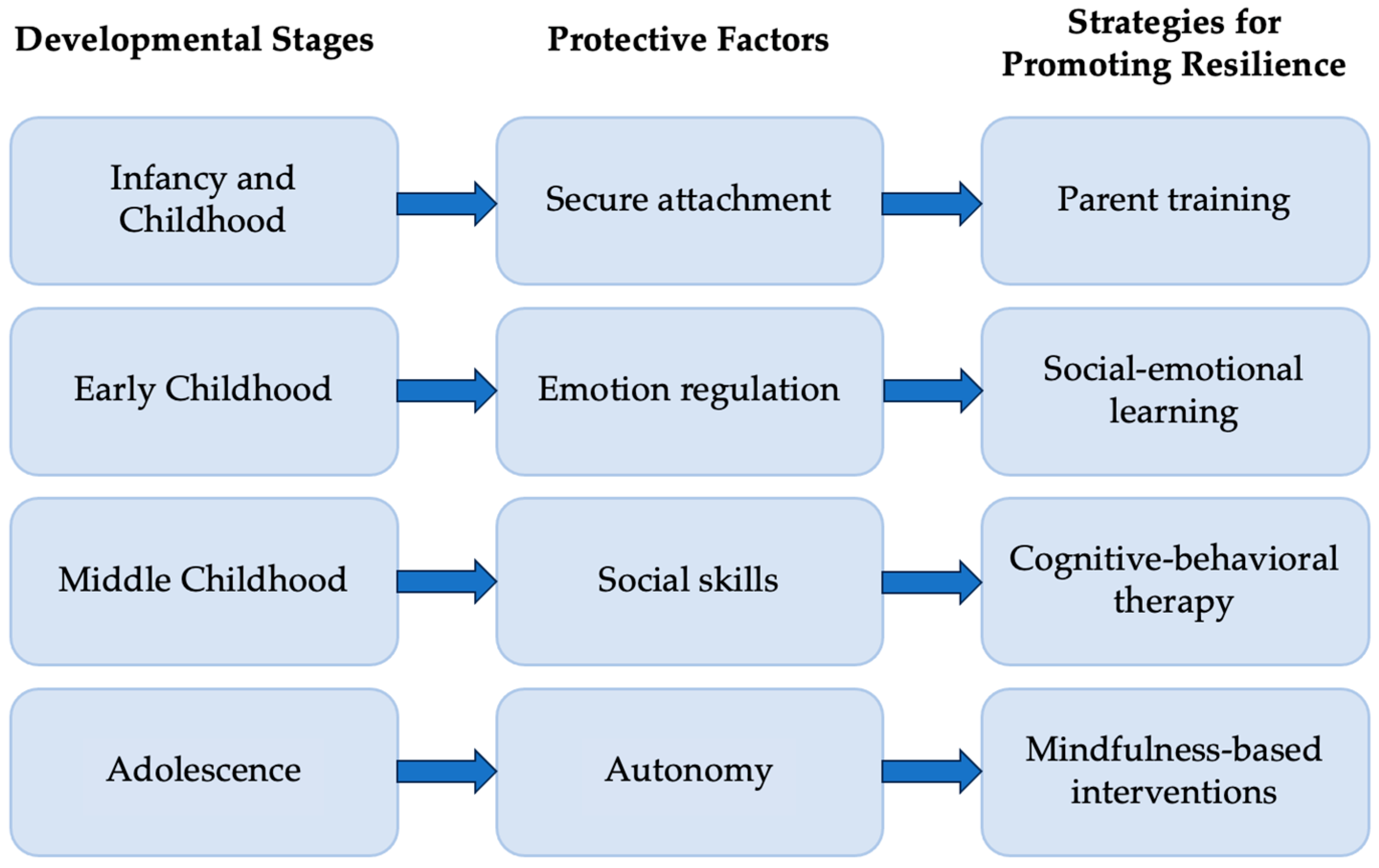
2.5. Conceptual Framework Development
3. Results
3.1. Cognitive Interventions
3.2. Psychosocial Interventions: Developmental Foundations and Resilience
3.2.1. Infancy and Toddlerhood (0–2 Years)
3.2.2. Early Childhood (3–5 Years)
3.2.3. Middle Childhood (6–11 Years)
3.2.4. Adolescence (12–18 Years Old)
3.3. Combined Approaches to Cognitive and Psychosocial Support
3.4. Summary of Findings
3.5. Cross-Study Variability and Moderating Factors
3.6. Age-Specific Response Patterns
4. Discussion
5. Conclusions
Author Contributions
Funding
Institutional Review Board Statement
Informed Consent Statement
Data Availability Statement
Conflicts of Interest
References
- Brinkman, T.M.; Ness, K.K.; Li, Z.; Huang, I.-C.; Krull, K.R.; Gajjar, A.; Merchant, T.E.; Klosky, J.L.; Partin, R.E.; Tonning Olsson, I.; et al. Attainment of functional and social independence in adult survivors of pediatric CNS tumors: A report from the St Jude Lifetime Cohort Study. J. Clin. Oncol. 2018, 36, 2762–2769. [Google Scholar] [CrossRef]
- Zeltzer, L.K.; Recklitis, C.; Buchbinder, D.; Zebrack, B.; Casillas, J.; Tsao, J.C.I.; Lu, Q.; Krull, K. Psychological Status in Childhood Cancer Survivors: A Report from the Childhood Cancer Survivor Study. J. Clin. Oncol. 2009, 27, 2396–2404. [Google Scholar] [CrossRef]
- McGill, B.C. Psychological risk and resilience in families of children with cancer. Nat. Rev. Psychol. 2025, 4, 758. [Google Scholar] [CrossRef]
- Sharp, K.; Tillery, R.; Long, A.; Wang, F.; Pan, H.; Phipps, S. Trajectories of resilience and posttraumatic stress in childhood cancer: Consistency of child and parent outcomes. Health Psychol. 2022, 41, 256–267. [Google Scholar] [CrossRef]
- Marbot, L.; Dyntar, D.; Schladerer, S.P.; Michel, G. Psychological resilience among childhood cancer survivors and their families: A systematic review. J. Psychosoc. Oncol. Res. Pract. 2025, 7, e165. [Google Scholar] [CrossRef]
- Lee, A.R.Y.B.; Low, C.E.; Yau, C.E.; Li, J.; Ho, R.; Ho, C.S.H. Lifetime Burden of Psychological Symptoms, Disorders, and Suicide Due to Cancer in Childhood, Adolescent, and Young Adult Years: A Systematic Review and Meta-Analysis. JAMA Pediatr. 2023, 177, 790–799. [Google Scholar] [CrossRef] [PubMed]
- Klosky, J.L.; Krull, K.R.; Kawashima, T.; Leisenring, W.; Zebrack, B.; Stuber, M.L.; Robison, L.L.; Mertens, A.C. Relations between Posttraumatic Stress and Posttraumatic Growth in Long-Term Survivors of Childhood Cancer: A Report from the Childhood Cancer Survivor Study. Health Psychol. 2014, 33, 878–882. [Google Scholar] [CrossRef]
- Alemany, M.; Velasco, R.; Simó, M.; Bruna, J. Late effects of cancer treatment: Consequences for long-term brain cancer survivors. Neurooncol. Pract. 2021, 8, 18–30. [Google Scholar] [CrossRef]
- Raguindin, P.F.; De Clercq, E.; Vokinger, A.K.; Pedraza, E.C.; Bolliger, C.; Scheinemann, K.; Tinner, E.M.; Bergstraesser, E.; von Bueren, A.O.; Michel, G. Resilience among parents whose child died of cancer: Investigating its role on psychological distress and prolonged grief disorder. BMC Palliat. Care 2025, 24, 218. [Google Scholar] [CrossRef]
- Simard, C.; Roberge, V.; St-Pierre, M.; Cherblanc, J.; Bergeron-Leclerc, C.; Kadri, M.A.; Lacharité, C.; Bérubé, S.; Lapointe, L.; Faucher, V.; et al. Designing a resilience-based intervention program for children with cancer and their families: A study protocol. Front. Psychol. 2024, 15, 1419192. [Google Scholar] [CrossRef]
- Mabbott, D.J.; Penkman, L.; Witol, A.; Strother, D.; Bouffet, E. Core Neurocognitive Functions in Children Treated for Posterior Fossa Tumors. Neuropsychology 2008, 22, 159–168. [Google Scholar] [CrossRef]
- Phillips, N.S.; Baedke, J.L.; Williams, A.; Ji, Q.; Zhang, S.; Scoggins, M.; Sabin, N.; Merchant, T.E.; Gajjar, A.J.; Ness, K.K.; et al. Accelerated brain age and associated neurocognitive impairments in adult survivors of childhood cancer. J. Clin. Oncol. 2023, 41, 10028. [Google Scholar] [CrossRef]
- Kesler, S.R.; Sleurs, C.; McDonald, B.C.; Deprez, S.; van der Plas, E.; Nieman, B.J. Brain imaging in pediatric cancer survivors: Correlates of cognitive impairment. J. Clin. Oncol. 2021, 39, 1775–1785. [Google Scholar] [CrossRef]
- Christou, A.I.; Kalfadeli, G.; Tsermentseli, S.; Bacopoulou, F. Neurocognitive and Emotional Outcomes in Childhood Cancer: A Developmental Perspective. Curr. Oncol. 2025, 32, 611. [Google Scholar] [CrossRef]
- Stavinoha, P.L.; Askins, M.A.; Powell, S.K.; Smiley, N.P.; Robert, R.S. Neurocognitive and Psychosocial Outcomes in Pediatric Brain Tumor Survivors. Bioengineering 2018, 5, 73. [Google Scholar] [CrossRef] [PubMed]
- Pancaldi, A.; Pugliese, M.; Migliozzi, C.; Blom, J.; Cellini, M.; Iughetti, L. Neuropsychological outcomes of children treated for brain tumors. Children 2023, 10, 472. [Google Scholar] [CrossRef] [PubMed]
- Olsson, I.T.; Perrin, S.; Lundgren, J.; Hjorth, L.; Johanson, A. Long-term cognitive sequelae after pediatric brain tumor related to medical risk factors, age, and sex. Pediatr. Neurol. 2014, 51, 515–521. [Google Scholar] [CrossRef]
- Patel, S.; Mullins, W.; O’neil, S.; Wilson, K. Neuropsychological differences between survivors of supratentorial and infratentorial brain tumours. J. Intell. Disabil. Res. 2011, 55, 30–40. [Google Scholar] [CrossRef] [PubMed]
- Spiegler, B.J.; Bouffet, E.; Greenberg, M.L.; Rutka, J.T.; Mabbott, D.J. Change in neurocognitive functioning after treatment with cranial radiation in childhood. J. Clin. Oncol. 2004, 22, 706–713. [Google Scholar] [CrossRef]
- Jacola, L.M.; Ashford, J.M.; Reddick, W.E.; Glass, J.O.; Ogg, R.J.; Merchant, T.E.; Conklin, H.M. The relationship between working memory and cerebral white matter volume in survivors of childhood brain tumors treated with conformal radiation therapy. J. Neuro-Oncol. 2014, 119, 197–205. [Google Scholar] [CrossRef]
- Schreiber, J.E.; Palmer, S.L.; Conklin, H.M.; Mabbott, D.J.; Swain, M.A.; Bonner, M.J.; Chapieski, M.L.; Huang, L.; Zhang, H.; Gajjar, A. Posterior fossa syndrome and long-term neuropsychological outcomes among children treated for medulloblastoma on a multi-institutional, prospective study. Neuro-Oncology 2017, 19, 1673–1682. [Google Scholar] [CrossRef]
- Devine, K.A.; Christen, S.; Mulder, R.L.; Brown, M.C.; Ingerski, L.M.; Mader, L.; Potter, E.J.; Sleurs, C.; Viola, A.S.; Waern, S.; et al. Recommendations for the Surveillance of Education and Employment Outcomes in Survivors of Childhood, Adolescent, and Young Adult Cancer: A Report from the International Late Effects of Childhood Cancer Guideline Harmonization Group. Cancer 2022, 128, 2405–2419. [Google Scholar] [CrossRef]
- Kasteler, R.; Fuchs, P.; Otth, M.; Scheinemann, K. Interventions to Improve Neurocognitive Late-Effects in Pediatric and Adolescent CNS Tumor Patients and Survivors—A Systematic Review. Front. Oncol. 2023, 13, 1150166. [Google Scholar] [CrossRef]
- Krull, K.R.; Hardy, K.K.; Kahalley, L.S.; Schuitema, I.; Kesler, S.R. Neurocognitive outcomes and interventions in long-term survivors of childhood cancer. J. Clin. Oncol. 2018, 36, 2181–2189. [Google Scholar] [CrossRef]
- Deegan, A.; Brennan, C.; Gallagher, P.; Lambert, V.; Dunne, S. Social Support and Childhood Cancer Survivors: A Systematic Review (2006–2022). Psychooncology 2023, 32, 819–833. [Google Scholar] [CrossRef]
- Clanton, N.R.; Klosky, J.L.; Li, C.; Jain, N.; Srivastava, D.K.; Mulrooney, D.; Zeltzer, L.; Robison, L.L.; Krull, K.R. Fatigue, Vitality, Sleep, and Neurocognitive Function in Adult Survivors of Childhood Cancer: A Report from the Childhood Cancer Survivor Study. Cancer 2011, 117, 2559–2568. [Google Scholar] [CrossRef] [PubMed]
- Wengenroth, L.; Rueegg, C.S.; Michel, G.; Gianinazzi, M.E.; Essig, S.; von der Weid, N.X.; Grotzer, M.; Kuehni, C.E.; Swiss Paediatric Oncology Group SPOG. Concentration, Working Speed and Memory: Cognitive Problems in Young Childhood Cancer Survivors and Their Siblings. Pediatr. Blood Cancer 2015, 62, 875–882. [Google Scholar] [CrossRef]
- Oyefiade, A.; Paltin, I.; De Luca, C.R.; Hardy, K.K.; Grosshans, D.R.; Chintagumpala, M.; Mabbott, D.J.; Kahalley, L.S. Cognitive Risk in Survivors of Pediatric Brain Tumors. J. Clin. Oncol. 2021, 39, 1718–1726. [Google Scholar] [CrossRef]
- Baytan, B.; Aşut, Ç.; Çırpan Kantarcıoğlu, A.; Sezgin Evim, M.; Güneş, A.M. Health-Related Quality of Life, Depression, Anxiety, and Self-Image in Acute Lymphocytic Leukemia Survivors. Turk. J. Hematol. 2016, 33, 326–330. [Google Scholar] [CrossRef] [PubMed]
- Jankowska-Polańska, B.; Sliwiński, M.; Świątoniowska, N.; Butrym, A.; Mazur, G. Quality of life in children with acute lymphoblastic leukaemia. Scand. Caring Sci. 2020, 34, 380–389. [Google Scholar] [CrossRef] [PubMed]
- Li, H.C.W.; Lopez, V.; Joyce Chung, O.K.; Ho, K.Y.; Chiu, S.Y. The impact of cancer on the physical, psychological and social well-being of childhood cancer survivors. Eur. J. Oncol. Nurs. 2013, 17, 214–219. [Google Scholar] [CrossRef]
- Brinkman, T.M.; Recklitis, C.J.; Michel, G.; Grootenhuis, M.A.; Klosky, J.L. Psychological symptoms, social outcomes, socioeconomic attainment, and health behaviors among survivors of childhood cancer: Current state of the literature. J. Clin. Oncol. 2018, 36, 2190–2197. [Google Scholar] [CrossRef]
- Bessell, A.; Moss, T.P. Evaluating the effectiveness of psychosocial interventions for individuals with visible differences: A systematic review of the empirical literature. Body Image 2007, 4, 227–238. [Google Scholar] [CrossRef] [PubMed]
- Antoni, M.H. Psychosocial intervention effects on adaptation, disease course and biobehavioral processes in cancer. Brain Behav. Immun. 2013, 30, S88–S98. [Google Scholar] [CrossRef] [PubMed]
- Wechsler, A.M.; Sánchez-Iglesias, I. Psychological adjustment of children with cancer as compared with healthy children: A meta-analysis: Cancer adjustment meta-analysis. Eur. J. Cancer Care 2013, 22, 314–325. [Google Scholar] [CrossRef]
- Chaves, C.; Vázquez, C.; Hervás, G. Positive interventions in seriously-ill children: Effects on well-being after granting a wish. J. Health Psychol. 2016, 21, 1870–1883. [Google Scholar] [CrossRef]
- Yu, L.; Mo, L.; Tang, Y.; Huang, X.; Tan, J. Effects of nursing intervention models on social adaption capability development in preschool children with malignant tumors: A randomized control trial. Psychooncology 2014, 23, 708–712. [Google Scholar] [CrossRef] [PubMed]
- Inaba, H.; Pui, C.H. Advances in the Diagnosis and Treatment of Pediatric Acute Lymphoblastic Leukemia. J. Clin. Med. 2021, 10, 1926. [Google Scholar] [CrossRef]
- Park, M.; Choi, E.K.; Lyu, C.J.; Han, J.W.; Hahn, S.M. Family resilience factors affecting family adaptation of children with cancer: A cross-sectional study. Eur. J. Oncol. Nurs. 2022, 56, 102078. [Google Scholar] [CrossRef]
- Toledano-Toledano, F.; Luna, D.; Moral De La Rubia, J.; Martínez Valverde, S.; Bermúdez Morón, C.A.; Salazar García, M.; Vasquez Pauca, M.J. Psychosocial Factors Predicting Resilience in Family Caregivers of Children with Cancer: A Cross-Sectional Study. Int. J. Environ. Res. Public Health 2021, 18, 748. [Google Scholar] [CrossRef]
- Wayant, C.; Manquen, J.; Wendelbo, H.; Kerr, N.; Crow, M.; Goodell, J.; Tricco, A.C.; Mack, J.W.; Hellman, C.; Vassar, M. Identification of Evidence for Key Positive Psychological Constructs in Pediatric and Adolescent/Young Adult Patients with Cancer: A Scoping Review. J. Adolesc. Young Adult Oncol. 2021, 10, 247–259. [Google Scholar] [CrossRef]
- Zale, E.L.; Pierre-Louis, C.; Macklin, E.A.; Riklin, E.; Vranceanu, A.-M. The impact of a mind–body program on multiple dimensions of resiliency among geographically diverse patients with neurofibromatosis. J. Neurooncol. 2018, 137, 321–329. [Google Scholar] [CrossRef]
- Peterson, C.C.; Johnson, C.E.; Ramirez, L.Y.; Huestis, S.; Pai, A.L.; Demaree, H.A.; Drotar, D. A Meta-Analysis of the Neuropsychological Sequelae of Chemotherapy-Only Treatment for Pediatric Acute Lymphoblastic Leukemia. Pediatr. Blood Cancer 2008, 51, 99–104. [Google Scholar] [CrossRef]
- Ullrich, N.J.; Embry, L. Neurocognitive Dysfunction in Survivors of Childhood Brain Tumors. Semin. Pediatr. Neurol. 2012, 19, 35–42. [Google Scholar] [CrossRef]
- Campbell, L.K.; Scaduto, M.; Sharp, W.; Dufton, L.; Van Slyke, D.; Whitlock, J.A.; Compas, B.E. A Meta-Analysis of the Cognitive Effects of Chemotherapy in Children Treated for Acute Lymphoblastic Leukemia. Pediatr. Blood Cancer 2007, 49, 65–73. [Google Scholar] [CrossRef]
- Brinkman, T.M.; Reddick, W.E.; Luxton, J.; Glass, J.O.; Sabin, N.D.; Srivastava, D.K.; Robison, L.L.; Hudson, M.M.; Krull, K.R. Cerebral White Matter Integrity and Executive Function in Adult Survivors of Childhood Medulloblastoma. Neuro Oncol. 2012, 14, iv25–iv36. [Google Scholar] [CrossRef] [PubMed]
- Jacola, L.M.; Edelstein, K.; Liu, W.; Pui, C.H.; Hayashi, R.; Kadan-Lottick, N.S.; Srivastava, D.; Henderson, T.; Leisenring, W.; Robison, L.L.; et al. Cognitive, behaviour, and academic functioning in adolescent and young adult survivors of childhood acute lymphoblastic leukaemia: A report from the Childhood Cancer Survivor Study. Lancet Psychiatry 2016, 3, 965–972. [Google Scholar] [CrossRef] [PubMed]
- Major, N.; Patel, N.A.; Bennett, J.; Novakovic, E.; Poloni, D.; Abraham, M.; Brown, N.J.; Gendreau, J.L.; Sahyouni, R.; Loya, J. The Current State of Radiotherapy for Pediatric Brain Tumors: An Overview of Post-Radiotherapy Neurocognitive Decline and Outcomes. J. Pers. Med. 2022, 12, 1050. [Google Scholar] [CrossRef]
- Armstrong, G.T.; Stovall, M.; Robison, L.L. Long-term effects of radiation exposure among adult survivors of childhood cancer: Results from the childhood cancer survivor study. Radiat. Res. 2010, 174, 840–850. [Google Scholar] [CrossRef]
- Reimers, T.S.; Ehrenfels, S.; Mortensen, E.L.; Schmiegelow, M.; Sønderkaer, S.; Carstensen, H.; Schmiegelow, K.; Müller, J. Cognitive deficits in long-term survivors of childhood brain tumors: Identification of predictive factors. Med. Pediatr. Oncol. 2003, 40, 26–34. [Google Scholar] [CrossRef] [PubMed]
- De Ruiter, M.A.; Schouten-van Meeteren, A.Y.N.; van Vuurden, D.G.; Maurice-Stam, H.; Gidding, C.; Beek, L.R.; Granzen, B.; Oosterlaan, J.; Grootenhuis, M.A. Psychosocial profile of pediatric brain tumor survivors with neurocognitive complaints. Qual. Life Res. 2016, 25, 435–446. [Google Scholar] [CrossRef]
- Howard, A.F.; Hasan, H.; Bobinski, M.A.; Nurcombe, W.; Olson, R.; Parkinson, M.; Goddard, K. Parents’ perspectives of life challenges experienced by long-term paediatric brain tumour survivors: Work and finances, daily and social functioning, and legal difficulties. J. Cancer Surviv. 2014, 8, 372–383. [Google Scholar] [CrossRef]
- Fuemmeler, B.F.; Elkin, T.D.; Mullins, L.L. Survivors of childhood brain tumors: Behavioral, emotional, and social adjustment. Clin. Psychol. Rev. 2002, 22, 547–585. [Google Scholar] [CrossRef]
- Sands, S.A.; Pasichow, K.P. Psychological and social impact of being a pediatric brain tumor survivor. In Late Effects of Treatment for Brain Tumors; Springer: New York, NY, USA, 2009; pp. 297–307. [Google Scholar] [CrossRef]
- Poggi, G.; Liscio, M.; Galbiati, S.; Adduci, A.; Massimino, M.; Gandola, L.; Spreafico, F.; Clerici, C.A.; Fossati-Bellani, F.; Sommovigo, M. Brain tumors in children and adolescents: Cognitive and psychological disorders at different ages. Psycho-Oncol. J. Psychol. Soc. Behav. Dimens. Cancer 2005, 14, 386–395. [Google Scholar] [CrossRef]
- Ventura, L.M.; Grieco, J.A.; Evans, C.L.; Kuhlthau, K.A.; MacDonald, S.M.; Tarbell, N.J.; Yock, T.I.; Pulsifer, M.B. Executive functioning, academic skills, and quality of life in pediatric patients with brain tumors post-proton radiation therapy. J. Neuro-Oncol. 2018, 137, 119–126. [Google Scholar] [CrossRef]
- Marusak, H.A.; Iadipaolo, A.S.; Harper, F.W.; Elrahal, F.; Taub, J.W.; Goldberg, E.; Rabinak, C.A. Neurodevelopmental consequences of pediatric cancer and its treatment: Applying an early adversity framework to understanding cognitive, behavioral, and emotional outcomes. Neuropsychol. Rev. 2017, 28, 123–175. [Google Scholar] [CrossRef]
- Olson, K.; Sands, S.A. Cognitive training programs for childhood cancer patients and survivors: A critical review and future directions. Child Neuropsychol. 2016, 22, 509–536. [Google Scholar] [CrossRef] [PubMed]
- Butler, R.W.; Copeland, D.R.; Fairclough, D.L.; Mulhern, R.K.; Katz, E.R.; Kazak, A.E.; Noll, R.B.; Patel, S.K.; Sahler, O.J.Z. A multicenter, randomized clinical trial of a cognitive remediation program for childhood survivors of a pediatric malignancy. J. Consult. Clin. Psychol. 2008, 76, 367. [Google Scholar] [CrossRef]
- Hardy, K.K.; Willard, V.W.; Allen, T.M.; Bonner, M.J. Working memory training in survivors of pediatric cancer: A randomized pilot study. Psycho-Oncol. 2013, 22, 1856–1865. [Google Scholar] [CrossRef] [PubMed]
- Schulte, F. Social competence in pediatric brain tumor survivors: Breadth versus depth. Curr. Opin. Oncol. 2015, 27, 306–310. [Google Scholar] [CrossRef] [PubMed]
- Schulte, F.; Brinkman, T.M.; Li, C.; Fay-McClymont, T.; Srivastava, D.K.; Ness, K.K.; Howell, R.M.; Mueller, S.; Wells, E.; Strother, D.; et al. Social adjustment in adolescent survivors of pediatric central nervous system tumors: A report from the Childhood Cancer Survivor Study. Cancer 2018, 124, 3596–3608. [Google Scholar] [CrossRef]
- Emond, A.; Edwards, L.; Peacock, S.; Norman, C.; Evangeli, M. Social competence in children and young people treated for a brain tumour. Support. Care Cancer 2016, 24, 4587–4595. [Google Scholar] [CrossRef]
- Bruce, M. A systematic and conceptual review of posttraumatic stress in childhood cancer survivors and their parents. Clin. Psychol. Rev. 2006, 26, 233–256. [Google Scholar] [CrossRef] [PubMed]
- Redmond, K.J.; Mahone, E.M.; Terezakis, S.; Ishaq, O.; Ford, E.; McNutt, T.; Kleinberg, L.; Cohen, K.J.; Wharam, M.; Horska, A. Association between radiation dose to neuronal progenitor cell niches and temporal lobes and performance on neuropsychological testing in children: A prospective study. Neuro-Oncology 2013, 15, 360–369. [Google Scholar] [CrossRef] [PubMed]
- Roddy, E.; Mueller, S. Late effects of treatment of pediatric central nervous system tumors. J. Child Neurol. 2016, 31, 237–254. [Google Scholar] [CrossRef]
- Kieffer-Renaux, V.; Bulteau, C.; Grill, J.; Kalifa, C.; Viguier, D.; Jambaque, I. Patterns of neuropsychological deficits in children with medulloblastoma according to craniospatial irradiation doses. Dev. Med. Child Neurol. 2000, 42, 741–745. [Google Scholar] [CrossRef] [PubMed]
- Annett, R.D.; Patel, S.K.; Phipps, S. Monitoring and Assessment of Neuropsychological Outcomes as a Standard of Care in Pediatric Oncology. Pediatr. Blood Cancer 2015, 62, S460–S513. [Google Scholar] [CrossRef]
- Di Giuseppe, G.; Pagalan, L.; Jetha, A.; Pechlivanoglou, P.; Pole, J.D. Financial toxicity among adolescent and young adult cancer survivors: A systematic review of educational attainment, employment, and income. Crit. Rev. Oncol./Hematol. 2023, 183, 103914. [Google Scholar] [CrossRef]
- Otth, M.; Michel, G.; Gerber, N.U.; Guerreiro Stücklin, A.S.; von Bueren, A.O.; Scheinemann, K.; On Behalf of the Swiss Pediatric Oncology Group (SPOG). Educational Attainment and Employment Outcome of Survivors of Pediatric CNS Tumors in Switzerland—A Report from the Swiss Childhood Cancer Survivor Study. Children 2022, 9, 411. [Google Scholar] [CrossRef]
- Michel, G.; Brinkman, T.M.; Wakefield, C.E.; Grootenhuis, M. Psychological Outcomes, Health-Related Quality of Life, and Neurocognitive Functioning in Survivors of Childhood Cancer and Their Parents. Pediatr. Clin. N. Am. 2020, 67, 1103–1134. [Google Scholar] [CrossRef]
- Sansom-Daly, U.M.; Wakefield, C.E.; Bryant, R.A.; Butow, P.; Sawyer, S.; Patterson, P.; Anazodo, A.; Thompson, K.; Cohn, R.J. Online Group-Based Cognitive-Behavioural Therapy for Adolescents and Young Adults after Cancer Treatment: A Multicenter Randomised Controlled Trial of Recapture Life-AYA. BMC Cancer 2012, 12, 339. [Google Scholar] [CrossRef] [PubMed]
- Zebrack, B.; Isaacson, S. Psychosocial Care of Adolescent and Young Adult Patients with Cancer and Survivors. J. Clin. Oncol. 2012, 30, 1221–1226. [Google Scholar] [CrossRef]
- Huang, T.T.; Hudson, M.M.; Stokes, D.C.; Krasin, M.J.; Spunt, S.L.; Ness, K.K. Pulmonary Outcomes in Survivors of Childhood Cancer: A Systematic Review. Chest 2011, 140, 881–901. [Google Scholar] [CrossRef]
- Palmer, J.D.; Tsang, D.S.; Tinkle, C.L.; Olch, A.J.; Kremer, L.C.M.; Ronckers, C.M.; Gibbs, I.C.; Constine, L.S. Late effects of radiation therapy in pediatric patients and survivorship. Pediatr. Blood Cancer 2021, 68, e28349. [Google Scholar] [CrossRef]
- Norsker, F.N.; Pedersen, C.; Armstrong, G.T.; Robison, L.L.; McBride, M.L.; Hawkins, M.; Kuehni, C.E.; de Vathaire, F.; Berbis, J.; Kremer, L.C.; et al. Late Effects in Childhood Cancer Survivors: Early Studies, Survivor Cohorts, and Significant Contributions to the Field of Late Effects. Pediatr. Clin. N. Am. 2020, 67, 1033–1049. [Google Scholar] [CrossRef]
- Wengenroth, L.; Gianinazzi, M.E.; Rueegg, C.S.; Lüer, S.; Bergstraesser, E.; Kuehni, C.E.; Michel, G. Health-related quality of life in young survivors of childhood cancer. Qual. Life Res. 2015, 24, 2151–2161. [Google Scholar] [CrossRef] [PubMed][Green Version]
- de Ruiter, M.A.; van Mourik, R.; Schouten-van Meeteren, A.Y.; Grootenhuis, M.A.; Oosterlaan, J. Neurocognitive consequences of a paediatric brain tumour and its treatment: A meta-analysis. Dev. Med. Child Neurol. 2013, 55, 408–417. [Google Scholar] [CrossRef] [PubMed]
- Palmer, S.L.; Armstrong, C.; Onar-Thomas, A.; Wu, S.; Wallace, D.; Bonner, M.J.; Schreiber, J.; Swain, M.; Chapieski, L.; Mabbott, D.; et al. Processing speed, attention, and working memory after treatment for medulloblastoma: An international, prospective, and longitudinal study. J. Clin. Oncol. 2013, 31, 3494–3500. [Google Scholar] [CrossRef]
- Christou, A.I.; Fanti, K.; Mavrommatis, I.; Soursou, G.; Pergantis, P.; Drigas, A. Social Affiliation and Attention to Angry Faces in Children: Evidence for the Contributing Role of Parental Sensory Processing Sensitivity. Children 2025, 12, 524. [Google Scholar] [CrossRef]
- Attia, A.; Page, B.R.; Lesser, G.J.; Chan, M. Treatment of radiation-induced cognitive decline. Curr. Treat Options Oncol. 2014, 15, 539–550. [Google Scholar] [CrossRef]
- Escherich, G.; Bielack, S.; Maier, S.; Braungart, R.; Brümmendorf, T.H.; Freund, M.; Grosse, R.; Hoferer, A.; Kampschulte, R.; Koch, B.; et al. Building a national framework for adolescent and young adult hematology and oncology and transition from pediatric to adult care: Report of the inaugural meeting of the “AjET” working group of the German Society for Pediatric Oncology and Hematology. J. Adolesc. Young Adult Oncol. 2017, 6, 194–199. [Google Scholar] [CrossRef]
- Christou, A.I.; Wallis, Y.; Bair, H.; Crawford, H.; Frisson, S.; Zeegers, M.; McCleery, J.P. BDNF Val66Met and 5-HTTLPR Genotype Are Each Associated with Visual Scanning Patterns of Faces in Young Children. Front. Behav. Neurosci. 2015, 9, 175. [Google Scholar] [CrossRef]
- Kunin-Batson, A.; Kadan-Lottick, N.; Neglia, J.P. The contribution of neurocognitive functioning to quality of life after childhood acute lymphoblastic leukemia. Psychooncology 2014, 23, 692–699. [Google Scholar] [CrossRef]
- Kouklari, E.C.; Christou, A.I.; Tsermentseli, S. Hot executive function in autism spectrum disorder: A brief narrative review. J. Educ. Dev. Psychol. 2024, 14. [Google Scholar] [CrossRef]
- Christen, S.; Roser, K.; Mulder, R.L.; Ilic, A.; Lie, H.C.; Loonen, J.J.; Mellblom, A.V.; Kremer, L.C.M.; Hudson, M.M.; Constine, L.S.; et al. IGHG Psychological Late Effects Group. Recommendations for the surveillance of cancer-related fatigue in childhood, adolescent, and young adult cancer survivors: A report from the International Late Effects of Childhood Cancer Guideline Harmonization Group. J. Cancer Surviv. 2020, 14, 923–938. [Google Scholar] [CrossRef]
- van der Plas, E.; Schachar, R.J.; Hitzler, J.; Crosbie, J.; Guger, S.L.; Spiegler, B.J.; Ito, S.; Nieman, B.J. Brain structure, working memory and response inhibition in childhood leukemia survivors. Brain Behav. 2016, 7, e00621. [Google Scholar] [CrossRef]
- Kenney, L.B.; Cohen, L.E.; Shnorhavorian, M.; Metzger, M.L.; Lockart, B.; Hijiya, N.; Duffey-Lind, E.; Constine, L.; Green, D.; Meacham, L. Male reproductive health after childhood, adolescent, and young adult cancers: A report from the Children’s Oncology Group. J. Clin. Oncol. 2012, 30, 3408–3416. [Google Scholar] [CrossRef]
- Edelmann, M.N.; Krull, K.R.; Liu, W.; Glass, J.O.; Ji, Q.; Ogg, R.J.; Sabin, N.D.; Srivastava, D.K.; Robison, L.L.; Hudson, M.M.; et al. Diffusion Tensor Imaging and Neurocognition in Survivors of Childhood Acute Lymphoblastic Leukaemia. Brain 2014, 137, 2973–2983. [Google Scholar] [CrossRef]
- Ris, M.D.; Packer, R.; Goldwein, J.; Jones-Wallace, D.; Boyett, J.M. Intellectual outcome after reduced-dose radiation therapy plus adjuvant chemotherapy for medulloblastoma: A Children’s Cancer Group study. J. Clin. Oncol. 2001, 19, 3470–3476. [Google Scholar] [CrossRef]
- Merchant, T.E.; Kiehna, E.N.; Li, C.; Shukla, H.; Sengupta, S.; Xiong, X.; Gajjar, A.; Mulhern, R.K. Modeling radiation dosimetry to predict cognitive outcomes in pediatric patients with CNS embryonal tumors including medulloblastoma. Int. J. Radiat. Oncol. Biol. Phys. 2006, 65, 210–221. [Google Scholar] [CrossRef]
- Nathan, P.C.; Patel, S.K.; Dilley, K.; Goldsby, R.; Harvey, J.; Jacobsen, C.; Kadan-Lottick, N.; McKinley, K.; Millham, A.K.; Moore, I.; et al. Guidelines for identification of, advocacy for, and intervention in neurocognitive problems in survivors of childhood cancer: A report from the Children’s Oncology Group. Arch. Pediatr. Adolesc. Med. 2007, 161, 798–806. [Google Scholar] [CrossRef]
- Palmer, S.L.; Hassall, T.; Evankovich, K.; Mabbott, D.J.; Bonner, M.; Deluca, C.; Cohn, R.; Fisher, M.J.; Morris, E.B.; Broniscer, A.; et al. Neurocognitive outcome 12 months following cerebellar mutism syndrome in pediatric patients with medulloblastoma. Neuro-Oncology 2010, 12, 1311–1317. [Google Scholar] [CrossRef]
- Castellino, S.M.; Ullrich, N.J.; Whelen, M.J.; Lange, B.J. Developing Interventions for Cancer-Related Cognitive Dysfunction in Childhood Cancer Survivors. J. Natl. Cancer Inst. 2014, 106, dju186. [Google Scholar] [CrossRef]
- Horan, M.R.; Srivastava, D.K.; Bhakta, N.; Ehrhardt, M.J.; Brinkman, T.M.; Baker, J.N.; Yasui, Y.; Krull, K.R.; Ness, K.K.; Robison, L.L.; et al. Determinants of Health-Related Quality-of-Life in Adult Survivors of Childhood Cancer: Integrating Personal and Societal Values Through a Health Utility Approach. EClinicalMedicine 2023, 58, 101921. [Google Scholar] [CrossRef]
- Child, A.E.; Warren, E.A.; Grosshans, D.R.; Paulino, A.C.; Okcu, M.F.; Ris, M.D.; Mahajan, A.; Orobio, J.; Cirino, P.T.; Minard, C.G.; et al. Long-Term Cognitive and Academic Outcomes among Pediatric Brain Tumor Survivors Treated with Proton versus Photon Radiotherapy. Pediatr. Blood Cancer 2021, 68, e29125. [Google Scholar] [CrossRef]
- Reddick, W.E.; White, H.A.; Glass, J.O.; Wheeler, G.C.; Thompson, S.J.; Gajjar, A.; Leigh, L.; Mulhern, R.K. Developmental Model Relating White Matter Volume to Neurocognitive Deficits in Pediatric Brain Tumor Survivors. Cancer 2003, 97, 2512–2519. [Google Scholar] [CrossRef]
- Iyer, N.S.; Balsamo, L.M.; Bracken, M.B.; Kadan-Lottick, N.S. Chemotherapy-only treatment effects on long-term neurocognitive functioning in childhood ALL survivors: A review and meta-analysis. Blood 2015, 126, 346–353. [Google Scholar] [CrossRef]
- Pui, C.H.; Robison, L.L.; Look, A.T. Acute Lymphoblastic Leukaemia. Lancet 2008, 371, 1030–1043. [Google Scholar] [CrossRef]
- Hudson, M.M.; Ness, K.K.; Gurney, J.G.; Mulrooney, D.A.; Chemaitilly, W.; Krull, K.R.; Green, D.M.; Armstrong, G.T.; Nottage, K.A.; Jones, K.E.; et al. Clinical Ascertainment of Health Outcomes among Adults Treated for Childhood Cancer. JAMA 2013, 309, 2371–2381. [Google Scholar] [CrossRef]
- Compas, B.E.; Jaser, S.S.; Dunn, M.J.; Rodriguez, E.M. Coping with chronic illness in childhood and adolescence. Annu. Rev. Clin. Psychol. 2012, 8, 455–480. [Google Scholar] [CrossRef]
- Kazak, A.E.; Abrams, A.N.; Banks, J.; Christakis, D.; Dahlquist, L.M.; DeRosa, B.W.; Holmes, C.S.; Rourke, M.T. Psychosocial assessment as a standard of care in pediatric oncology. Pediatr. Blood Cancer 2015, 62, S426–S459. [Google Scholar] [CrossRef]
- Zebrack, B.J.; Chesler, M.A. Quality of life in childhood cancer survivors. Psychooncology 2002, 11, 132–141. [Google Scholar] [CrossRef]
- Palmer, S.L.; Goloubeva, O.; Reddick, W.E.; Glass, J.O.; Gajjar, A.; Kun, L.; Merchant, T.E.; Mulhern, R.K. Patterns of intellectual development among survivors of pediatric medulloblastoma: A longitudinal analysis. J. Clin. Oncol. 2001, 19, 2302–2308. [Google Scholar] [CrossRef]
- Christou, A.I.; Fanti, K.; Mavrommatis, I.; Soursou, G. Child–Parent Covariation on the Processing of Angry Facial Stimuli Predicts Children’s Reactive Aggression. Psychol. Violence 2026. advance online publication. [Google Scholar] [CrossRef]
- Christou, A.I.; Fanti, K.; Mavrommatis, I.; Soursou, G. Parental Sensory Processing Sensitivity Predicts Children’s Visual Scanning Pattern of Emotional Faces. J. Psychopathol. Behav. Assess. 2024, 46, 932–942. [Google Scholar] [CrossRef]
- Christou, A.I.; Fanti, K.; Mavrommatis, I.; Soursou, G. Parent–Child Eye Gaze Congruency to Emotional Expressions Mediated by Child Aesthetic Sensitivity. Children 2025, 12, 839. [Google Scholar] [CrossRef]
- Coughtrey, A.; Millington, A.; Bennett, S.; Christie, D.; Hough, R.; Su, M.T.; Constantinou, M.P.; Shafran, R. The effectiveness of psychosocial interventions for psychological outcomes in pediatric oncology: A systematic review. J. Pain Symptom Manag. 2018, 55, 1004–1017. [Google Scholar] [CrossRef]
- Low, C.E.; Tan, S.Y.P.; Loh, A.; Yu, J.; Ong, J.Z.E.; Loh, C.Y.L.; Yau, C.E.; Lee, A.R.Y.B.; Ho, C.S.H. Post-traumatic stress disorder and symptoms in paediatric cancer survivors and their family nucleus: A systematic review and meta-analysis. BJPsych Open 2024, 10, e207. [Google Scholar] [CrossRef]
- Christou, A.I.; Bacopoulou, F. Emotion and Feeling in Parent–Child Dyads: Neurocognitive and Psychophysiological Pathways of Development. Children 2025, 12, 1478. [Google Scholar] [CrossRef]
- Christou, A.I.; Fanti, K.; Mavrommatis, I.; Soursou, G. Exploring Emotional Face Processing in Children with CU Traits Using Eye-Tracking Technology: Insights into the Role of Sex Depicted in Emotional Faces. Adv. Cogn. Psychol. 2025, 21, 242–252. [Google Scholar] [CrossRef]
- Pergantis, P.; Bamicha, V.; Doulou, A.; Christou, A.I.; Bardis, N.; Skianis, C.; Drigas, A. Assistive and Emerging Technologies to Detect and Reduce Neurophysiological Stress and Anxiety in Children and Adolescents with Autism and Sensory Processing Disorders: A Systematic Review. Technologies 2025, 13, 144. [Google Scholar] [CrossRef]
- Christou, A.I.; Tsermentseli, S.; Drigas, A. The Role of Mobile Games and Environmental Factors in Improving Learning and Metacognitive Potential of Young Students. Int. J. Interact. Mob. Technol. (Ijim) 2023, 17, 67–84. [Google Scholar] [CrossRef]



| Intervention Type | Developmental Focus | Core Strategies | Main Outcomes |
|---|---|---|---|
| Cognitive Interventions | School-age children & adolescents | Computerized training (Cogmed), Working memory enhancement programs [57,58] | Improvement in executive functions, attention, and working memory, Limited generalization to everyday functioning, Greater effectiveness in long-term programs and at younger ages [59,60] |
| Psychosocial Interventions—Infancy & Toddlerhood (0–2) | Need for secure relationships and emotional stability [37] | Parent guidance, Emotional regulation support, Strengthening secure attachment [61,62] | Stable emotional foundation, strengthening early resilience, reducing maladaptive reactions [63] |
| Psychosocial Interventions—Early Childhood (3–5) | Development of emotional regulation & social skills | Play therapy, Social skills activities, Individual counseling, Active parental involvement [64] | Strengthening coping mechanisms, emotional self-regulation, positive social interaction [65,66] |
| Psychosocial Interventions—Middle Childhood (6–11) | Self-regulation, social participation, problem solving | Social skills groups, Counseling, Educational activities for autonomy [67] | Improving self-management, adapting to school, developing resilience through social empowerment [68,69] |
| Psychosocial Interventions—Adolescence (12–18) | Autonomy, social inclusion, stress management | Mindfulness, Individual counseling, Support groups, Stress management techniques [70,71] | Reduction in emotional difficulties, enhancement of independence, social adjustment, and resilience [72,73] |
| Combined Cognitive–Psychosocial Interventions | All ages, with development-compatible design | Combination of executive functions (memory, attention) and psychosocial skills (self-regulation, participation), Intervention according to the developmental stage [74,75] | Systematically better daily functioning, adaptation to the school/social context, increased resilience, enhanced autonomy and social integration [76,77] |
Disclaimer/Publisher’s Note: The statements, opinions and data contained in all publications are solely those of the individual author(s) and contributor(s) and not of MDPI and/or the editor(s). MDPI and/or the editor(s) disclaim responsibility for any injury to people or property resulting from any ideas, methods, instructions or products referred to in the content. |
© 2026 by the authors. Licensee MDPI, Basel, Switzerland. This article is an open access article distributed under the terms and conditions of the Creative Commons Attribution (CC BY) license.
Share and Cite
Christou, A.I.; Kalfadeli, G.; Bacopoulou, F. Developmental Foundations of Psychosocial Interventions in Pediatric Oncology: A Lifespan Framework for Resilience. Children 2026, 13, 198. https://doi.org/10.3390/children13020198
Christou AI, Kalfadeli G, Bacopoulou F. Developmental Foundations of Psychosocial Interventions in Pediatric Oncology: A Lifespan Framework for Resilience. Children. 2026; 13(2):198. https://doi.org/10.3390/children13020198
Chicago/Turabian StyleChristou, Antonios I., Georgia Kalfadeli, and Flora Bacopoulou. 2026. "Developmental Foundations of Psychosocial Interventions in Pediatric Oncology: A Lifespan Framework for Resilience" Children 13, no. 2: 198. https://doi.org/10.3390/children13020198
APA StyleChristou, A. I., Kalfadeli, G., & Bacopoulou, F. (2026). Developmental Foundations of Psychosocial Interventions in Pediatric Oncology: A Lifespan Framework for Resilience. Children, 13(2), 198. https://doi.org/10.3390/children13020198