1. Introduction
Sleep is a fundamental biological process that plays a crucial role in physical growth, brain maturation, and emotional development during childhood and adolescence. Across pediatric development, sleep supports neural plasticity, emotional learning, and the regulation of affective responses, contributing to adaptive functioning and mental well-being [
1,
2,
3]. Disruptions in sleep duration, quality, or timing during sensitive developmental periods have been consistently associated with emotional dysregulation, increased vulnerability to psychopathology, and impaired psychosocial functioning [
4,
5,
6]. Childhood and adolescence are characterized by profound changes in sleep architecture and circadian regulation. Normative developmental trajectories include a gradual reduction in total sleep time, a shift toward later chronotypes, and marked modifications in rapid eye movement (REM) and slow-wave sleep, particularly during adolescence [
7,
8,
9]. These sleep-related changes occur in parallel with the maturation of fronto-limbic neural circuits involved in emotion regulation, reward processing, and stress responsivity, suggesting a tightly interconnected relationship between sleep and emotional development [
10,
11].
Growing evidence indicates that these processes do not unfold uniformly across sexes. Sex differences in sleep patterns and emotional outcomes become increasingly pronounced from late childhood through adolescence, coinciding with pubertal maturation and hormonal changes [
12,
13]. Epidemiological studies show that, during adolescence, girls are more likely to experience sleep disturbances and internalizing symptoms such as anxiety and depression, whereas boys more frequently exhibit externalizing behaviors and impulse-control difficulties associated with short sleep duration and circadian misalignment [
14,
15,
16]. These divergent trajectories may reflect sex-specific interactions between biological factors, including gonadal hormones and circadian physiology, and psychosocial stressors.
From a neurobiological perspective, sex differences in emotional vulnerability have been linked to differential maturation of prefrontal–amygdala circuitry, stress reactivity, and REM sleep-dependent emotional processing [
17,
18,
19]. REM sleep, in particular, has been implicated in affective memory consolidation and emotional recalibration, processes that may be differentially sensitive to sleep disruption in boys and girls [
20]. Alterations in REM sleep have been associated with heightened emotional reactivity and mood symptoms in pediatric populations, further underscoring the relevance of sleep architecture in emotional development [
21].
Environmental and social factors also play a critical moderating role. School schedules, screen exposure, family routines, and sociocultural expectations interact with biological sex to shape sleep behaviors and emotional outcomes [
22,
23,
24]. Importantly, the bidirectional nature of sleep–emotion relationships suggests that emotional distress may both result from and contribute to sleep disturbances, creating self-reinforcing cycles of vulnerability during development [
25].
Despite increasing recognition of the importance of sleep for pediatric mental health, sex-specific mechanisms linking sleep and emotional regulation remain insufficiently integrated into developmental and clinical models. Understanding how sleep-related processes differentially influence emotional trajectories in boys and girls is essential for early identification of risk and the development of targeted, developmentally informed interventions. This narrative review aims to synthesize current evidence on sex-specific associations between sleep, neurodevelopment, and emotional regulation across childhood and adolescence, with a focus on clinical and preventive implications relevant to pediatric mental health.
2. Materials and Methods
2.1. Study Design
This article is a narrative review aimed at synthesizing current evidence on the relationships between sleep, emotional regulation, and sex-specific developmental trajectories in childhood and adolescence. A narrative approach was chosen to allow the integration of findings from heterogeneous study designs, including longitudinal cohort studies, neurodevelopmental research, and clinical investigations, which are not easily captured within a strictly systematic framework. Given the narrative design of the review, protocol registration (e.g., PROSPERO) and PRISMA reporting standards were not applicable. The narrative approach was intentionally adopted to allow conceptual integration of heterogeneous evidence across developmental, neurobiological, and clinical domains.
2.2. Literature Search Strategy
A comprehensive literature search was conducted in the electronic databases PubMed/MEDLINE, Scopus, and Web of Science to identify relevant peer-reviewed studies published up to June 2025. The search strategy combined keywords and Medical Subject Headings (MeSH) related to sleep, emotional development, and sex differences in pediatric populations. Search terms included combinations of: sleep, sleep disturbances, emotional regulation, emotion dysregulation, sex differences, gender differences, childhood, adolescence, puberty, anxiety, depression, and externalizing behaviors. Reference lists of selected articles and relevant reviews were manually screened to identify additional studies of interest. For narrative reviews, there is no fixed requirement regarding the number of databases searched. The selected databases were considered sufficient to capture high-impact literature in pediatric sleep, developmental neuroscience, and child psychiatry, and were complemented by manual screening of reference lists.
2.3. Eligibility Criteria
Studies were considered eligible if they met the following criteria: included children or adolescents (≤18 years); examined sleep characteristics (e.g., duration, quality, circadian timing, or sleep architecture); assessed emotional regulation, internalizing symptoms, or externalizing behaviors; reported sex-based or gender-based analyses, or provided data allowing sex-specific interpretation; and were published in English-language peer-reviewed journals. Experimental studies, observational studies, and longitudinal designs were included. Case reports and studies focusing exclusively on adult populations were excluded.
2.4. Data Extraction and Synthesis
Relevant information was extracted from each study, including sample characteristics, age range, sleep measures, emotional or behavioral outcomes, and reported sex differences. Given the heterogeneity of methodologies and outcome measures, a qualitative synthesis was performed rather than a meta-analytic approach. Findings were organized thematically, with particular attention to developmental stage (childhood versus adolescence) and sex-specific patterns of vulnerability. Given the substantial heterogeneity in study designs, populations, sleep measures, and emotional outcomes, a quantitative synthesis or meta-analysis was not methodologically appropriate for the aims of this review.
2.5. Methodological Considerations
In line with recommendations for narrative reviews, the present synthesis emphasizes conceptual integration and clinical relevance rather than exhaustive quantification of effect sizes. Potential sources of bias, including variability in sleep assessment methods and inconsistencies in sex-specific reporting, were considered when interpreting results. Reporting was informed by established guidance on narrative and integrative reviews in health sciences [
26]. This approach is consistent with established guidance on narrative and integrative reviews, which emphasize conceptual synthesis and clinical relevance over exhaustive quantification when addressing complex developmental phenomena.
3. Sex Differences in Sleep Regulation Across Childhood and Adolescence
Sleep regulation undergoes profound developmental changes from childhood to adolescence, reflecting the maturation of circadian systems, homeostatic sleep pressure, and neuroendocrine processes. Increasing evidence indicates that these trajectories differ significantly between boys and girls, contributing to sex-specific patterns of sleep behavior and vulnerability to sleep disturbances [
27,
28,
29].
3.1. Biological Foundations of Sex Differences in Sleep
Sex differences in sleep regulation emerge gradually during childhood and become more pronounced during adolescence, paralleling pubertal maturation. Puberty is associated with marked changes in gonadal hormone secretion, including rising levels of estrogen and progesterone in girls and testosterone in boys, which exert modulatory effects on circadian rhythms and sleep architecture [
30,
31]. Experimental and observational studies suggest that estrogen influences circadian phase timing and REM sleep expression, whereas progesterone has sedative and thermoregulatory effects that may alter sleep continuity [
32]. Girls tend to report shorter sleep duration, poorer subjective sleep quality, and greater insomnia symptoms compared with boys during adolescence, even when objective sleep parameters are comparable [
33]. These differences appear to be partly biologically driven, as girls generally experience earlier pubertal onset, which is associated with earlier circadian phase shifts and increased vulnerability to sleep disruption during school days [
34].
3.2. Circadian Regulation and Chronotype Differences
Adolescence is characterized by a normative delay in circadian phase preference toward eveningness, a phenomenon influenced by both biological maturation and social factors [
35]. Evidence suggests that girls may exhibit a stronger circadian sensitivity to pubertal and hormonal changes, whereas boys often show greater variability in sleep timing and a higher prevalence of extreme evening chronotypes [
36].
Sex differences in circadian misalignment have important implications for emotional functioning. Eveningness and social jetlag have been more strongly associated with internalizing symptoms in adolescent girls, while in boys they are more frequently linked to risk-taking behaviors and externalizing problems [
37,
38]. These findings highlight the interaction between sex-specific circadian regulation and behavioral outcomes during development.
3.3. Sex-Specific Sleep Architecture
Beyond sleep duration and timing, sex differences have also been observed in sleep architecture. Polysomnographic studies indicate that girls generally exhibit higher slow-wave activity and more stable REM sleep across development, whereas boys show a steeper decline in slow-wave sleep during adolescence, reflecting differential cortical maturation processes [
39,
40]. REM sleep, which plays a key role in emotional processing and affective memory consolidation, may therefore represent a critical window through which sleep disturbances exert sex-specific effects on emotional regulation [
19].
Alterations in REM sleep continuity and density have been associated with increased emotional reactivity and mood symptoms in pediatric populations, particularly among adolescent girls [
41]. These findings support the hypothesis that sex-related differences in sleep architecture contribute to divergent emotional trajectories during development.
3.4. Interaction with Environmental and Psychosocial Factors
Biological sex interacts dynamically with environmental influences to shape sleep regulation. School start times, academic demands, screen exposure, and social stressors differentially affect boys and girls, often amplifying underlying biological vulnerabilities [
27,
42,
43]. More broadly, pediatric sleep problems and clinically relevant sleep disorders are shaped by developmental factors but are also strongly influenced by behavioral and contextual determinants, supporting the need for developmentally informed assessment in children and adolescents [
44]. Lifestyle disruptions and stress-related changes in daily routines, such as those described during large-scale societal stressors, may further affect sleep timing and quality, with downstream consequences for mental health and emotional well-being in youth [
45]. Finally, the widespread exposure to social media has been increasingly linked to psychiatric and psychological outcomes in young people, and sleep disruption is frequently implicated as a plausible pathway connecting digital behaviors to affective and behavioral dysregulation during adolescence [
46].
Sex-specific trajectories of sleep regulation across childhood and adolescence are associated with divergent patterns of emotional vulnerability. An overview of developmental stage-specific sleep characteristics and emotional outcomes in boys and girls is provided in
Table 1.
4. Neurodevelopmental Pathways Linking Sleep and Emotion
Childhood and adolescence are characterized by rapid and non-linear brain maturation processes that are highly sensitive to sleep–wake regulation. Sleep plays a critical role in neurodevelopment by supporting synaptic pruning, myelination, and the functional integration of large-scale neural networks involved in emotional processing and regulation [
47,
48]. Disruptions in sleep during these sensitive developmental windows may therefore have lasting effects on emotional functioning and mental health vulnerability.
4.1. Maturation of Fronto-Limbic Circuits
Emotional regulation depends on the coordinated activity of fronto-limbic circuits, particularly connections between the prefrontal cortex and limbic structures such as the amygdala and hippocampus. During childhood and adolescence, these circuits undergo progressive structural and functional maturation, with the prefrontal cortex developing later than subcortical emotional systems [
49,
50]. This developmental imbalance contributes to heightened emotional reactivity and reduced regulatory control, especially during adolescence.
Sleep loss and sleep fragmentation have been shown to impair prefrontal cortical functioning and to exacerbate amygdala reactivity to emotional stimuli, leading to reduced top-down emotional regulation [
51]. Neuroimaging studies in children and adolescents indicate that insufficient or irregular sleep is associated with altered functional connectivity within fronto–limbic networks, including reduced prefrontal regulation of amygdala reactivity and disrupted integration of emotion-processing circuits. These alterations have been linked to heightened emotional reactivity, impaired affective control, and increased vulnerability to internalizing and externalizing symptoms during development [
27,
52].
4.2. Role of REM Sleep in Emotional Processing
REM sleep is thought to play a central role in emotional memory consolidation and affective recalibration. Experimental evidence suggests that REM sleep facilitates the processing of emotionally salient experiences while attenuating their affective intensity, a mechanism that may be particularly important during development [
53,
54]. In children and adolescents, REM sleep occupies a larger proportion of total sleep time compared to adults, highlighting its potential relevance for emotional maturation. Alterations in REM sleep continuity, latency, or density have been associated with increased emotional reactivity, anxiety symptoms, and mood dysregulation in pediatric populations [
55]. These associations appear especially pronounced during adolescence, a period marked by both changes in REM sleep organization and increased vulnerability to internalizing disorders. Sex-related differences in REM sleep expression may further modulate these effects, contributing to divergent emotional trajectories in boys and girls [
22].
4.3. Sleep, Stress Reactivity, and Neuroplasticity
Sleep is closely intertwined with stress regulation systems, including the HPA axis. Adequate sleep supports adaptive stress responsivity, whereas chronic sleep disturbances are associated with heightened cortisol secretion and impaired stress recovery [
56]. In developing individuals, repeated exposure to sleep-related stress may influence neuroplastic processes and bias emotional responses toward hyperarousal or negative affect.
Animal and human studies indicate that sleep deprivation during developmental periods can alter synaptic plasticity and stress-sensitive neural circuits, potentially increasing long-term vulnerability to anxiety and mood disorders [
57]. These findings underscore the importance of sleep as a modulator of neurodevelopmental trajectories linking early-life experiences to later emotional outcomes [
36].
4.4. Bidirectional Pathways Between Sleep and Emotional Development
Importantly, the relationship between sleep and emotional regulation is bidirectional. Emotional difficulties such as anxiety, depression, and behavioral dysregulation can disrupt sleep through mechanisms including hyperarousal, rumination, and dysregulated circadian rhythms [
58,
59]. Over time, this reciprocal interaction may give rise to self-perpetuating cycles in which sleep disturbances and emotional dysregulation reinforce one another, particularly during periods of developmental transition. Understanding the neurodevelopmental pathways linking sleep and emotion is therefore essential for identifying early markers of risk and informing preventive interventions aimed at promoting emotional resilience in children and adolescents.
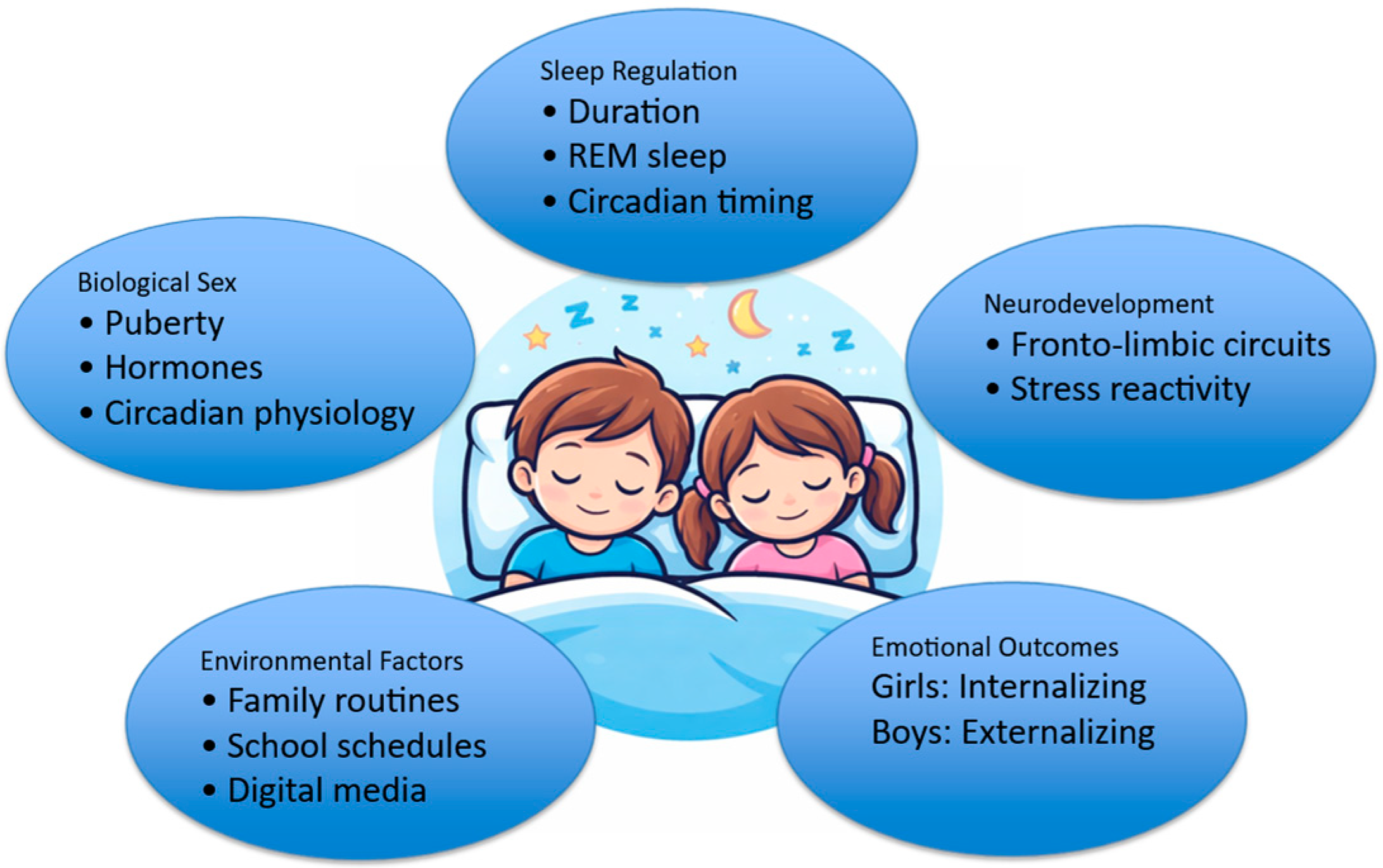
An integrative conceptual model summarizing sex-specific sleep–emotion pathways across development is presented in
Figure 1.
5. Sleep and Emotional Regulation: Divergent Trajectories in Boys and Girls
Accumulating evidence indicates that sleep disturbances are differentially associated with emotional and behavioral outcomes in boys and girls across childhood and adolescence. These divergent trajectories reflect the interaction between sex-specific neurodevelopmental processes, hormonal changes, and psychosocial influences, contributing to distinct patterns of vulnerability to internalizing and externalizing symptoms [
60,
61].
5.1. Internalizing Symptoms in Girls
From early adolescence onward, girls show a marked increase in internalizing symptoms, including anxiety, depressive mood, and emotional distress. Sleep disturbances, particularly insomnia symptoms, poor sleep quality, and circadian misalignment, have been consistently linked to these outcomes [
62,
63]. Longitudinal studies suggest that sleep problems often precede the onset of internalizing psychopathology in girls, supporting a potential causal role of sleep disruption in shaping emotional vulnerability [
34].
Biological sensitivity to stress and heightened emotional reactivity may partly explain these associations. Girls tend to exhibit greater HPA axis reactivity and stronger emotional responses to interpersonal stressors, factors that may interact with sleep loss to amplify negative affect and rumination [
64]. Moreover, pubertal timing appears to play a critical role, as early-maturing girls are particularly vulnerable to the combined effects of sleep disruption and emotional stress, increasing the risk for anxiety and mood disorders [
65].
5.2. Externalizing Behaviors in Boys
In contrast, boys are more likely to exhibit externalizing behaviors such as impulsivity, hyperactivity, aggression, and risk-taking, which have been associated with insufficient sleep duration and irregular sleep–wake patterns [
66,
67]. Experimental and observational studies indicate that sleep restriction impairs executive functioning and inhibitory control, effects that may be more behaviorally expressed in boys through dysregulated or disruptive behaviors [
53]. Circadian misalignment and eveningness have been linked to increased sensation seeking and conduct problems in male adolescents, suggesting that sleep timing, rather than sleep quality alone, may be particularly relevant for emotional and behavioral regulation in boys [
68,
69]. These findings underscore the importance of considering sex-specific behavioral manifestations of sleep-related emotional dysregulation.
5.3. Bidirectional and Developmental Considerations
Importantly, the associations between sleep and emotional regulation are bidirectional and evolve across development. Emotional difficulties may exacerbate sleep problems through mechanisms such as hyperarousal, worry, and dysregulated routines, while chronic sleep disturbances may impair emotional regulation capacities over time [
5]. Sex differences in coping strategies and emotional expression further shape these reciprocal pathways, with girls more likely to internalize distress and boys more prone to externalize emotional difficulties. Recent developmental models emphasize dynamic and reciprocal interactions between sleep and emotional functioning, highlighting how sex differences in coping styles and stress reactivity may shape divergent trajectories over time [
50].
These findings suggest that sleep disturbances contribute to sex-specific emotional trajectories during childhood and adolescence. Recognizing these divergent patterns is essential for early identification of at-risk individuals and for the development of tailored prevention and intervention strategies that account for both sex and developmental stage.
6. Environmental and Psychosocial Moderators of Sleep–Emotion Relationships
While biological maturation plays a central role in shaping sleep and emotional development, environmental and psychosocial factors critically moderate these processes across childhood and adolescence.
Family context, school-related demands, digital media exposure, and broader sociocultural influences interact with sex-specific biological vulnerabilities, amplifying or buffering the impact of sleep disturbances on emotional regulation [
70,
71]. Poor sleep quality is consistently associated with increased difficulties in emotion regulation in adolescents, not only through direct affective dysregulation but also via intermediary psychosocial processes such as daytime dysfunction and reduced self-control capacities, as recently demonstrated in a large school-based cohort study [
72].
6.1. Family Environment and Daily Routines
Family routines and parenting practices strongly influence sleep behaviors in children and adolescents. Consistent bedtimes, parental monitoring, and emotionally supportive environments are associated with better sleep quality and more adaptive emotional functioning [
73]. Conversely, family stress, irregular schedules, and inconsistent sleep-related practices have been linked to both sleep disturbances and emotional dysregulation, particularly in younger children [
74]. Sex differences may emerge in how children respond to family-related stressors. Girls appear more sensitive to interpersonal and emotional aspects of the family environment, which may exacerbate sleep-related internalizing symptoms, whereas boys may be more affected by behavioral dysregulation associated with inconsistent routines [
75].
6.2. School Schedules and Academic Demands
School-related factors represent a major external constraint on sleep, particularly during adolescence. Early school start times often conflict with adolescents’ biologically delayed circadian rhythms, leading to chronic sleep restriction and circadian misalignment [
76]. These effects have been associated with poorer emotional regulation, increased depressive symptoms, and reduced stress tolerance.
Evidence suggests that girls may experience stronger associations between academic stress, sleep loss, and internalizing symptoms, whereas boys may show greater behavioral consequences, such as irritability and reduced impulse control, in response to insufficient sleep [
42]. Longitudinal evidence suggests that the effects of sleep problems on externalizing behaviors are mediated by emotion dysregulation, highlighting an intermediary psychological mechanism that may be a target for early interventions [
77].
School-based interventions aimed at promoting healthy sleep schedules have demonstrated benefits for both sleep duration and emotional well-being [
78].
6.3. Screen Exposure and Digital Media Use
The widespread use of electronic devices and social media has emerged as a key environmental factor affecting sleep and mental health in youth. Screen exposure in the evening can delay sleep onset through both physiological mechanisms, such as blue-light-induced melatonin suppression, and psychological mechanisms, including cognitive and emotional arousal. Growing evidence links excessive or problematic social media use to sleep disturbances, anxiety, depressive symptoms, and emotional dysregulation in children and adolescents [
79]. Current reviews indicate that disrupted sleep in adolescence is robustly associated with both depressive and anxiety symptomatology, underscoring its relevance in clinical assessment and intervention planning [
80]. These associations may be particularly pronounced in girls, who tend to engage more in social and emotionally salient online interactions, whereas boys may be more affected by gaming-related sleep disruption. Sleep disruption has been proposed as a critical mediator linking digital behaviors to adverse emotional outcomes [
81].
6.4. Sociocultural Stressors and Developmental Context
Broader sociocultural stressors, including peer relationships, societal expectations, and exposure to large-scale stressors, further shape sleep–emotion interactions. Changes in lifestyle and daily structure during periods of societal disruption have been shown to negatively affect sleep patterns and mental health in youth, highlighting the sensitivity of developing sleep–emotion systems to contextual instability [
45].
It is clear that sleep-related emotional vulnerability cannot be understood in isolation from the environmental context in which children and adolescents develop. Integrating biological, psychological, and social perspectives is essential for identifying modifiable risk factors and informing prevention strategies aimed at promoting emotional well-being.
The interaction between neurodevelopmental mechanisms and environmental factors shapes sex-specific sleep–emotion pathways across development. An overview of key biological and contextual moderators, along with their clinical implications, is provided in
Table 2.
7. Clinical and Preventive Implications
7.1. Early Identification and Risk Stratification
The evidence reviewed highlights sleep as a modifiable and developmentally sensitive target for promoting emotional well-being in children and adolescents. Sleep disturbances often emerge before the onset of clinically significant emotional or behavioral symptoms, making them a valuable early marker of vulnerability, as shown in longitudinal and clinical studies in pediatric populations [
5,
25]. Early sleep problems have been associated with later anxiety, depression, and behavioral dysregulation, supporting the role of sleep screening in preventive mental health strategies.
Screening approaches should be sensitive to sex-specific patterns, as girls are more likely to present with sleep-related internalizing symptoms, whereas boys more often exhibit behavioral dysregulation linked to insufficient or irregular sleep [
29,
33]. Integrating sleep assessment into pediatric and school-based mental health evaluations may therefore improve early risk stratification and diagnostic accuracy.
7.2. Sex-Sensitive and Developmentally Informed Interventions
The findings of this review underscore the importance of tailoring sleep-focused interventions to both developmental stage and sex-specific vulnerabilities. In girls, interventions targeting insomnia symptoms, rumination, and stress-related sleep disruption have been shown to reduce internalizing symptoms such as anxiety and depression [
34]. In boys, strategies aimed at stabilizing sleep schedules and reducing circadian misalignment may be particularly effective in mitigating impulsivity and externalizing behaviors [
42]. Behavioral sleep interventions, including sleep hygiene education and cognitive–behavioral approaches, are supported by a growing body of evidence in pediatric populations and may be enhanced by integrating emotion regulation strategies [
2,
3]. Such integrative approaches are consistent with developmental models of sleep–emotion interaction [
82,
83].
7.3. Role of Families, Schools, and Digital Environments
Family routines, parenting practices, and emotional climate play a central role in shaping sleep behaviors and emotional regulation in children [
3,
35]. Parent-focused interventions that promote consistent routines and appropriate limit-setting around screen use have been associated with improvements in both sleep quality and emotional functioning.
At the school level, evidence indicates that early school start times contribute to chronic sleep restriction and emotional distress in adolescents, supporting policy-level interventions such as delayed start times [
76]. Educational initiatives aimed at increasing awareness of the importance of sleep for emotional well-being may further enhance prevention efforts [
84].
Digital media exposure represents an increasingly relevant target for intervention. A growing literature links excessive social media use to sleep disturbances and adverse psychiatric outcomes in youth, with sleep disruption acting as a potential mediating mechanism [
23,
40,
85]. Reducing evening screen exposure and promoting balanced digital habits may therefore represent key components of sleep-based preventive strategies.
Future research could also leverage signal-based and machine learning approaches, such as analyses of handwriting, graphomotor, and voice signals, to study complex behavioral patterns and emotional regulation in children and adolescents. These methodologies provide a promising framework to investigate sex-specific developmental trajectories and the impact of familial, school, and digital environments on sleep and emotional outcomes [
86,
87,
88].
7.4. Implications for Public Health and Prevention
From a public health perspective, sleep represents a low-cost, scalable, and non-stigmatizing target for early intervention. Integrating sleep education and screening into existing pediatric mental health frameworks may help reduce the burden of emotional disorders and improve long-term outcomes [
3,
24]. A sex-sensitive and developmentally informed approach to sleep and emotional regulation offers an opportunity to refine preventive strategies and to support more personalized models of pediatric mental health care.
8. Conclusions
Sleep plays a central and developmentally sensitive role in shaping emotional regulation and mental health trajectories during childhood and adolescence. The evidence synthesized in this review highlights that sleep–emotion interactions are not uniform across development but follow sex-specific pathways influenced by biological maturation, neurodevelopmental processes, and environmental context.
Girls appear to show greater vulnerability to sleep-related internalizing symptoms, particularly during the pubertal transition, whereas boys more frequently exhibit externalizing behaviors associated with insufficient sleep and circadian misalignment. These divergent trajectories reflect the interplay between sex hormones, maturation of fronto-limbic circuits, stress reactivity, and psychosocial influences, underscoring the importance of adopting a sex-sensitive perspective in pediatric sleep and mental health research.
Importantly, the bidirectional nature of sleep and emotional regulation suggests that sleep disturbances may both precede and exacerbate emotional difficulties, creating self-reinforcing cycles of vulnerability across development [
89]. This highlights sleep as a critical and modifiable target for early identification, prevention, and intervention in pediatric mental health [
90,
91].
From a clinical and public health perspective, integrating sleep assessment and education into pediatric care, school-based programs, and preventive mental health strategies represents a promising approach to improving emotional well-being in youth. Interventions that are developmentally informed and tailored to sex-specific patterns of vulnerability may enhance effectiveness and contribute to more personalized models of care.
Ongoing research should prioritize longitudinal and mechanistic studies that clarify causal pathways linking sleep, neurodevelopment, and emotional outcomes, while accounting for sex differences and environmental moderators. Advancing this line of inquiry has the potential to refine early prevention strategies and to support healthier emotional development across childhood and adolescence.
Author Contributions
Conceptualization, G.M. and M.M.; methodology, G.M. and M.M.; resources, G.M. and M.M.; data curation, G.M. and M.M.; writing—original draft preparation, G.M. and M.M.; writing—review and editing, G.M. and M.M. All authors have read and agreed to the published version of the manuscript.
Funding
This research received no external funding.
Institutional Review Board Statement
Not applicable.
Informed Consent Statement
Not applicable.
Data Availability Statement
No new data were created.
Conflicts of Interest
The authors declare no conflicts of interest.
References
- Dahl, R.E. Sleep and the developing brain. Sleep 2007, 30, 1079–1080. [Google Scholar] [CrossRef] [Scilit]
- Owens, J.A.; Mindell, J.A. Pediatric sleep medicine: Priorities for research, patient care, policy and education. J. Clin. Sleep Med. 2006, 2, 77–88. [Google Scholar] [CrossRef] [Scilit] [PubMed]
- Mindell, J.A.; Owens, J.A. A Clinical Guide to Pediatric Sleep: Diagnosis and Management of Sleep Problems; Lippincott Williams & Wilkins: Philadelphia, PA, USA, 2015. [Google Scholar]
- Mazza, M.; Faia, V.; Paciello, N.; Della Marca, G.; Mazza, S. Sleep disorders in childhood: A review. Clin. Ter. 2002, 153, 189–193. [Google Scholar] [PubMed]
- Gregory, A.M.; Sadeh, A. Sleep, emotional and behavioral difficulties in children and adolescents. Sleep Med. Rev. 2012, 16, 129–136. [Google Scholar] [CrossRef] [Scilit]
- Short, M.A.; Louca, M. Sleep deprivation leads to mood deficits in healthy adolescents. Sleep Med. 2015, 16, 987–993. [Google Scholar] [CrossRef] [Scilit] [PubMed]
- Ksinan Jiskrova, G.; Vazsonyi, A.T.; Klánová, J.; Dušek, L. Childhood sleep functioning as a developmental precursor of adolescent adjustment problems. Child Psychiatry Hum. Dev. 2020, 51, 239–253. [Google Scholar] [CrossRef] [Scilit]
- Carskadon, M.A.; Acebo, C. Regulation of sleepiness in adolescents: Update, insights, and speculation. Sleep 2002, 25, 606–614. [Google Scholar] [CrossRef] [Scilit]
- Feinberg, I.; Campbell, I.G. Sleep EEG changes during adolescence: An index of a fundamental brain reorganization. Brain Cogn. 2010, 72, 56–65. [Google Scholar] [CrossRef] [Scilit]
- Tarokh, L.; Carskadon, M.A. Developmental changes in the human sleep EEG during early adolescence. Sleep 2010, 33, 801–809. [Google Scholar] [CrossRef] [Scilit]
- Casey, B.J.; Jones, R.M.; Hare, T.A. The adolescent brain. Ann. N. Y. Acad. Sci. 2008, 1124, 111–126. [Google Scholar] [CrossRef] [Scilit]
- Campbell, I.G.; Grimm, K.J.; de Bie, E.; Feinberg, I. Sex, puberty, and the timing of sleep EEG measured adolescent brain maturation. Proc. Natl. Acad. Sci. USA 2012, 109, 5740–5743. [Google Scholar] [CrossRef] [Scilit]
- Ricci, A.; He, F.; Calhoun, S.L.; Fang, J.; Vgontzas, A.N.; Liao, D.; Bixler, E.O.; Younes, M.; Fernandez-Mendoza, J. Sex and pubertal differences in the maturational trajectories of sleep spindles in the transition from childhood to adolescence: A population-based study. eNeuro 2021, 8, ENEURO.0257-21.2021. [Google Scholar] [CrossRef] [Scilit]
- Sadeh, A.; Dahl, R.E.; Shahar, G.; Rosenblat-Stein, S. Sleep and the transition to adolescence: A longitudinal study. Sleep 2009, 32, 1602–1609. [Google Scholar] [CrossRef] [Scilit]
- Hankin, B.L.; Abramson, L.Y. Development of gender differences in depression: Description and possible explanations. Ann. Med. 1999, 31, 372–379. [Google Scholar] [CrossRef] [Scilit]
- Roberts, R.E.; Duong, H.T. Depression and insomnia among adolescents: A prospective perspective. J. Affect. Disord. 2013, 148, 66–71. [Google Scholar] [CrossRef] [Scilit]
- Gee, D.G.; Humphreys, K.L.; Flannery, J.; Goff, B.; Telzer, E.H.; Shapiro, M.; Hare, T.A.; Bookheimer, S.Y.; Tottenham, N. A developmental shift from positive to negative connectivity in human amygdala-prefrontal circuitry. J. Neurosci. 2013, 33, 4584–4593. [Google Scholar] [CrossRef] [Scilit]
- Goldstein, J.M.; Jerram, M.; Abbs, B.; Whitfield-Gabrieli, S.; Makris, N. Sex differences in stress response circuitry activation dependent on female hormonal cycle. J. Neurosci. 2010, 30, 431–438. [Google Scholar] [CrossRef] [Scilit]
- Goldstein, A.N.; Walker, M.P. The role of sleep in emotional brain function. Annu. Rev. Clin. Psychol. 2014, 10, 679–708. [Google Scholar] [CrossRef] [Scilit] [PubMed]
- Palmer, C.A.; Alfano, C.A. Sleep and emotion regulation: An organizing, integrative review. Sleep Med. Rev. 2017, 31, 6–16. [Google Scholar] [CrossRef] [Scilit] [PubMed]
- Walker, M.P.; van der Helm, E. Overnight therapy? The role of sleep in emotional brain processing. Psychol. Bull. 2009, 135, 731–748. [Google Scholar] [CrossRef] [Scilit] [PubMed]
- Chang, L.Y.; Wang, Y.Q.; Li, Z.; Zhang, Y.; Huang, Z.L.; Yang, S.R. Neural circuits and emotional processing in rapid eye movement sleep. Front. Psychiatry 2025, 16, 1674071. [Google Scholar] [CrossRef] [Scilit]
- Cain, N.; Gradisar, M. Electronic media use and sleep in school-aged children and adolescents: A review. Sleep Med. 2010, 11, 735–742. [Google Scholar] [CrossRef] [Scilit]
- Owens, J.A.; Weiss, M.R. Insufficient sleep in adolescents: Causes and consequences. Minerva Pediatr. 2017, 69, 326–336. [Google Scholar] [CrossRef] [Scilit]
- Alfano, C.A.; Gamble, A.L. The role of sleep in childhood psychiatric disorders. Child Youth Care Forum 2009, 38, 327–340. [Google Scholar] [CrossRef] [Scilit]
- Grant, M.J.; Booth, A. A typology of reviews: An analysis of 14 review types and associated methodologies. Health Inf. Libr. J. 2009, 26, 91–108. [Google Scholar] [CrossRef] [Scilit] [PubMed]
- Crowley, S.J.; Wolfson, A.R.; Tarokh, L.; Carskadon, M.A. An update on adolescent sleep: New evidence informing the perfect storm model. J. Adolesc. 2018, 67, 55–65. [Google Scholar] [CrossRef] [Scilit] [PubMed]
- Mong, J.A.; Cusmano, D.M. Sex differences in sleep: Impact of biological sex and sex steroids. Philos. Trans. R. Soc. Lond. B Biol. Sci. 2016, 371, 20150110. [Google Scholar] [CrossRef] [Scilit]
- Johnson, E.O.; Roth, T.; Schultz, L.; Breslau, N. Epidemiology of DSM-IV insomnia in adolescence: Lifetime prevalence, chronicity, and an emergent gender difference. Pediatrics 2006, 117, e247–e256. [Google Scholar] [CrossRef] [Scilit] [PubMed]
- Tononi, G.; Cirelli, C. Sleep and the price of plasticity: From synaptic and cellular homeostasis to memory consolidation and integration. Neuron 2014, 81, 12–34. [Google Scholar] [CrossRef] [Scilit]
- Song, J.; Jeronimus, B.F.; Fisher, A.J. Sleep, event appraisal, and affect: An ecological momentary assessment study. J. Affect. Disord. 2024, 361, 376–382. [Google Scholar] [CrossRef] [Scilit]
- Buckley, T.M.; Schatzberg, A.F. On the interactions of the hypothalamic-pituitary-adrenal (HPA) axis and sleep: Normal HPA axis activity and circadian rhythm, exemplary sleep disorders. J. Clin. Endocrinol. Metab. 2005, 90, 3106–3114. [Google Scholar] [CrossRef] [Scilit]
- Beebe, D.W. Cognitive, behavioral, and functional consequences of inadequate sleep in children and adolescents. Pediatr. Clin. N. Am. 2011, 58, 649–665. [Google Scholar] [CrossRef] [Scilit]
- Lovato, N.; Gradisar, M. A meta-analysis and model of the relationship between sleep and depression in adolescents: Recommendations for future research and clinical practice. Sleep Med. Rev. 2014, 18, 521–529. [Google Scholar] [CrossRef] [Scilit]
- El-Sheikh, M.; Sadeh, A.I. Sleep and development: Introduction to the monograph. Monogr. Soc. Res. Child Dev. 2015, 80, 1–14. [Google Scholar] [CrossRef] [Scilit]
- Meltzer, L.J.; Williamson, A.A.; Mindell, J.A. Pediatric sleep health: It matters, and so does how we define it. Sleep Med. Rev. 2021, 57, 101425. [Google Scholar] [CrossRef] [Scilit] [PubMed]
- Minges, K.E.; Redeker, N.S. Delayed school start times and adolescent sleep: A systematic review of the experimental evidence. Sleep Med. Rev. 2016, 28, 86–95. [Google Scholar] [CrossRef] [Scilit]
- Chang, A.M.; Aeschbach, D.; Duffy, J.F.; Czeisler, C.A. Evening use of light-emitting eReaders negatively affects sleep, circadian timing, and next-morning alertness. Proc. Natl. Acad. Sci. USA 2015, 112, 1232–1237. [Google Scholar] [CrossRef] [Scilit]
- Caroppo, E.; Mazza, M.; Sannella, A.; Marano, G.; Avallone, C.; Claro, A.E.; Janiri, D.; Moccia, L.; Janiri, L.; Sani, G. Will Nothing Be the Same Again?: Changes in Lifestyle during COVID-19 Pandemic and Consequences on Mental Health. Int. J. Environ. Res. Public Health 2021, 18, 8433. [Google Scholar] [CrossRef] [Scilit]
- Marano, G.; Lisci, F.M.; Rossi, S.; Marzo, E.M.; Boggio, G.; Brisi, C.; Traversi, G.; Mazza, O.; Pola, R.; Gaetani, E.; et al. Connected but at risk: Social media exposure and psychiatric and psychological outcomes in youth. Children 2025, 12, 1322. [Google Scholar] [CrossRef] [Scilit] [PubMed]
- Forbes, E.E.; Bertocci, M.A.; Gregory, A.M.; Ryan, N.D.; Axelson, D.A.; Birmaher, B.; Dahl, R.E. Objective sleep in pediatric anxiety disorders and major depressive disorder. J. Am. Acad. Child Adolesc. Psychiatry 2008, 47, 148–155. [Google Scholar] [CrossRef] [Scilit] [PubMed]
- Short, M.A.; Gradisar, M.; Gill, J.; Camfferman, D. Identifying adolescent sleep problems. PLoS ONE 2013, 8, e75301. [Google Scholar] [CrossRef] [Scilit]
- Fitzpatrick, J.M.; Silva, G.E.; Vana, K.D. Perceived barriers and facilitating factors in implementing delayed school start times to improve adolescent sleep patterns. J. Sch. Health 2020. ahead of print. [Google Scholar] [CrossRef] [Scilit] [PubMed]
- Hinterberger, A.; Esposito, P.; Cappelletti, L.; Wang, L.; Ismail, N. Adolescent chronic sleep disruption increases blood-brain barrier permeability, but in a time-, region- and sex-dependent manner in CD-1 mice. Int. J. Dev. Neurosci. 2025, 85, e70080. [Google Scholar] [CrossRef] [Scilit]
- Becker, S.P.; Gregory, A.M. Editorial perspective: Perils and promise for child and adolescent sleep and associated psychopathology during the COVID-19 pandemic. J. Child Psychol. Psychiatry 2020, 61, 757–759. [Google Scholar] [CrossRef] [Scilit]
- Scott, H.; Biello, S.M.; Woods, H.C. Social media use and adolescent sleep patterns: Cross-sectional findings from the UK Millennium Cohort Study. BMJ Open 2019, 9, e031161. [Google Scholar] [CrossRef] [Scilit]
- Kurth, S.; Olini, N.; Huber, R.; LeBourgeois, M. Sleep and early cortical development. Curr. Sleep Med. Rep. 2015, 1, 64–73. [Google Scholar] [CrossRef] [Scilit]
- Tarokh, L.; Raffray, T.; Van Reen, E.; Carskadon, M.A. Physiology of normal sleep in adolescents. Adolesc. Med. State Art Rev. 2010, 21, 401–417. [Google Scholar]
- Nagata, J.M.; Helmer, C.K.; Frimpong, I.; Beltran Murillo, K.; Heuer, A.W.; Huang, O.H.; Li, E.J.; Ricklefs, C.; Ganson, K.T.; Testa, A.; et al. Social epidemiology of multidimensional sleep health in early adolescence. Pediatr. Res. 2025. ahead of print. [Google Scholar] [CrossRef] [Scilit]
- Tottenham, N.; Hare, T.A.; Quinn, B.T.; McCarry, T.W.; Nurse, M.; Gilhooly, T.; Millner, A.; Galvan, A.; Davidson, M.C.; Eigsti, I.M.; et al. Prolonged institutional rearing is associated with atypically large amygdala volume and difficulties in emotion regulation. Dev. Sci. 2010, 13, 46–61. [Google Scholar] [CrossRef] [Scilit] [PubMed]
- Yoo, S.S.; Gujar, N.; Hu, P.; Jolesz, F.A.; Walker, M.P. The human emotional brain without sleep—A prefrontal amygdala disconnect. Curr. Biol. 2007, 17, R877–R878. [Google Scholar] [CrossRef] [Scilit] [PubMed]
- Telzer, E.H.; Fuligni, A.J.; Lieberman, M.D.; Galván, A. The effects of poor quality sleep on brain function and risk taking in adolescence. Neuroimage 2013, 71, 275–283. [Google Scholar] [CrossRef] [Scilit]
- Goel, P.; Goel, A. Exploring the evolution of sleep patterns from infancy to adolescence. Cureus 2024, 16, e64759. [Google Scholar] [CrossRef] [Scilit]
- Mariotti, P.; Quaranta, D.; Di Giacopo, R.; Bentivoglio, A.R.; Mazza, M.; Martini, A.; Canestri, J.; Della Marca, G. Rapid eye movement sleep behavior disorder: A window on the emotional world of Parkinson disease. Sleep 2015, 38, 287–294. [Google Scholar] [CrossRef] [Scilit]
- Saxena, S. A review on anxiety and sleep. Bioinformation 2025, 21, 965–968. [Google Scholar] [CrossRef] [Scilit]
- Meerlo, P.; Sgoifo, A.; Suchecki, D. Restricted and disrupted sleep: Effects on autonomic function, neuroendocrine stress systems and stress responsivity. Sleep Med. Rev. 2008, 12, 197–210. [Google Scholar] [CrossRef] [Scilit] [PubMed]
- Tiba, P.A.; Tufik, S.; Suchecki, D. Effects of maternal separation on baseline sleep and cold stress-induced sleep rebound in adult Wistar rats. Sleep 2004, 27, 1146–1153. [Google Scholar] [CrossRef] [Scilit] [PubMed]
- Harvey, A.G. A cognitive model of insomnia. Behav. Res. Ther. 2002, 40, 869–893. [Google Scholar] [CrossRef] [Scilit] [PubMed]
- Farina, B.; Della Marca, G.; Grochocinski, V.J.; Mazza, M.; Buysse, D.J.; Di Giannantonio, M.; Mennuni, G.F.; De Risio, S.; Kupfer, D.J.; Frank, E. Microstructure of sleep in depressed patients according to the cyclic alternating pattern. J. Affect. Disord. 2003, 77, 227–235. [Google Scholar] [CrossRef] [Scilit]
- Sivertsen, B.; Harvey, A.G.; Lundervold, A.J.; Hysing, M. Sleep problems and depression in adolescence: Results from a large population-based study of Norwegian adolescents aged 16–18 years. Eur. Child Adolesc. Psychiatry 2014, 23, 681–689. [Google Scholar] [CrossRef] [Scilit]
- Gregory, A.M.; O’Connor, T.G. Sleep problems in childhood: A longitudinal study of developmental change and association with behavioral problems. J. Am. Acad. Child Adolesc. Psychiatry 2002, 41, 964–971. [Google Scholar] [CrossRef] [Scilit]
- Johnson, E.O.; Chilcoat, H.D.; Breslau, N. Trouble sleeping and anxiety/depression in childhood. Psychiatry Res. 2000, 94, 93–102. [Google Scholar] [CrossRef] [Scilit] [PubMed]
- Roberts, R.E.; Duong, H.T. The prospective association between sleep deprivation and depression among adolescents. Sleep 2014, 37, 239–244. [Google Scholar] [CrossRef] [Scilit] [PubMed]
- Wang, R.; Kogler, L.; Derntl, B. Sex differences in cortisol levels in depression: A systematic review and meta-analysis. Front. Neuroendocrinol. 2024, 72, 101118. [Google Scholar] [CrossRef] [Scilit]
- Mendle, J.; Turkheimer, E.; Emery, R.E. Detrimental psychological outcomes associated with early pubertal timing in adolescent girls. Dev. Rev. 2007, 27, 151–171. [Google Scholar] [CrossRef] [Scilit]
- Gregory, A.M.; Van der Ende, J.; Willis, T.A.; Verhulst, F.C. Parent-reported sleep problems during development and self-reported anxiety/depression, attention problems, and aggressive behavior later in life. Arch. Pediatr. Adolesc. Med. 2008, 162, 330–335. [Google Scholar] [CrossRef] [Scilit] [PubMed]
- O’Brien, L.M.; Lucas, N.H.; Felt, B.T.; Hoban, T.F.; Ruzicka, D.L.; Jordan, R.; Guire, K.; Chervin, R.D. Aggressive behavior, bullying, snoring, and sleepiness in schoolchildren. Sleep Med. 2011, 12, 652–658. [Google Scholar] [CrossRef] [Scilit]
- Zhu, M.Q.; Oliveros, H.; Marín, C.; Mora-Plazas, M.; Villamor, E. Is the association of chronotype with adolescent behavior problems mediated through social jetlag? Chronobiol. Int. 2023. ahead of print. [Google Scholar] [CrossRef] [Scilit]
- Zhang, Y.; Xia, M. Daily stress and adolescent emotional well-being: Protective roles of sport experience and sleep quality. J. Res. Adolesc. 2026, 36, e70139. [Google Scholar] [CrossRef] [Scilit]
- El-Sheikh, M.; Kelly, R.J. Family functioning and children’s sleep. Child Dev. Perspect. 2017, 11, 264–269. [Google Scholar] [CrossRef] [Scilit]
- Hale, L.; Guan, S. Screen time and sleep among school-aged children and adolescents: A systematic literature review. Sleep Med. Rev. 2015, 21, 50–58. [Google Scholar] [CrossRef] [Scilit]
- Wang, W.; Zhu, Y.; Yu, H.; Wu, C.; Li, T.; Ji, C.; Jiang, Y.; Ding, D. The impact of sleep quality on emotion regulation difficulties in adolescents through daytime dysfunction, social exclusion, and self-control. BMC Public Health 2024, 24, 1862. [Google Scholar] [CrossRef] [Scilit]
- Mindell, J.A.; Williamson, A.A. Benefits of a bedtime routine in young children: Sleep, development, and beyond. Sleep Med. Rev. 2018, 40, 93–108. [Google Scholar] [CrossRef] [Scilit]
- El-Sheikh, M.; Tu, K.M.; Saini, E.K.; Fuller-Rowell, T.E.; Buckhalt, J.A. Perceived discrimination and youths’ adjustment: Sleep as a moderator. J. Sleep Res. 2016, 25, 70–77. [Google Scholar] [CrossRef] [Scilit]
- Kelly, R.J.; El-Sheikh, M. Marital conflict and children’s sleep: Reciprocal relations and socioeconomic effects. J. Fam. Psychol. 2011, 25, 412–422. [Google Scholar] [CrossRef] [Scilit] [PubMed]
- Carskadon, M.A.; Acebo, C.; Jenni, O.G. Regulation of adolescent sleep: Implications for behavior. Ann. N. Y. Acad. Sci. 2004, 1021, 276–291. [Google Scholar] [CrossRef] [Scilit] [PubMed]
- Liu, X. Emotion dysregulation mediates the relationship between sleep problems and externalizing symptoms in early adolescents: A four-wave longitudinal study. J. Affect. Disord. 2024, 363, 221–229. [Google Scholar] [CrossRef] [Scilit]
- Charoenthammanon, R.S.; Gooley, J.J. Factors associated with late bedtimes, early wake-up times, and short sleep in adolescents on school nights. Sleep Adv. 2025, 6, zpaf018. [Google Scholar] [CrossRef] [Scilit]
- Twenge, J.M.; Martin, G.N.; Spitzberg, B.H. Trends in U.S. adolescents’ media use, 1976–2016: The rise of digital media, the decline of TV, and the (near) demise of print. Psychol. Pop. Media Cult. 2019, 8, 329–345. [Google Scholar] [CrossRef] [Scilit]
- Chai, R.; Bian, W.Y. Adolescent sleep and its disruption in depression and anxiety. Front. Neurosci. 2024, 18, 1479420. [Google Scholar] [CrossRef] [Scilit] [PubMed]
- Exelmans, L.; Van den Bulck, J. Bedtime mobile phone use and sleep in adults. Soc. Sci. Med. 2016, 148, 93–101. [Google Scholar] [CrossRef] [Scilit]
- Félix, A.; Candeias, A. Sleep as a developmental process: A systematic review of cognitive, emotional, and behavioral outcomes in children aged 6–12 years. Clocks Sleep 2025, 7, 66. [Google Scholar] [CrossRef] [Scilit]
- Schlarb, A.A.; Blunden, S.; Brand, S.; Bruni, O.; Corkum, P.; Horne, R.S.C.; Ipsiroglu, O.S.; Quante, M.; Spruyt, K.; Owens, J. The future of paediatric sleep medicine: A blueprint for advancing the field. J. Sleep Res. 2025, 34, e14482. [Google Scholar] [CrossRef] [Scilit]
- Godzik, C.M.; Carlson, D.D.; Pashchenko, O.I.; Ballarino, G.A.; Emond, J.A. Within-child associations between sleep quality and emotional self-regulation over 6 months among preschool-aged (3- to 5-year-old) children. Front Sleep 2024, 3, 1420245. [Google Scholar] [CrossRef] [Scilit]
- Woods, H.C.; Scott, H. #Sleepyteens: Social media use in adolescence is associated with poor sleep quality, anxiety, depression and low self-esteem. J. Adolesc. 2016, 51, 41–49. [Google Scholar] [CrossRef] [Scilit] [PubMed]
- Laganaro, F.; Mazza, M.; Marano, G.; Piuzzi, E.; Pallotti, A. Grapho-phonological signals-based machine learning models development for the depressive disorder. In Lecture Notes in Electrical Engineering; Springer: Cham, Switzerland, 2024; Volume 1113, pp. 436–454. [Google Scholar]
- Laganaro, F.; Mazza, M.; Marano, G.; Piuzzi, E.; Pallotti, A. Classification-based screening of depressive disorder patients through graph, handwriting and voice signals. In Proceedings of the 2023 IEEE International Workshop on Biomedical Applications, Technologies and Sensors (BATS 2023), Catanzaro, Italy, 28–29 September 2023; pp. 6–10. [Google Scholar]
- Fratello, M.; Cordella, F.; Marano, G.; Paffi, A.; Pallotti, A. Classification-based screening of Parkinson’s disease patients through graph and handwriting signal. Eng. Proc. 2021, 11, 49. [Google Scholar]
- Bose, S.; Ross, K.R.; Zheng, X.; Xhani, N.; Ötvös, T.; Merced-Nieves, F.M.; Redline, S.; Wright, R.J. Early childhood sleep quality in a pediatric cohort: Sex-specific differences. Front. Sleep 2025, 4, 1681175. [Google Scholar] [CrossRef] [Scilit] [PubMed]
- Lecuelle, F.; Anders, R.; Gustin, M.P.; Challamel, M.J.; Weissbluth, M.; Franco, P.; Putois, B. Drivers of suboptimal sleep education and insomnia in children: A Cognitive and Emotional Model of Young Children’s Insomnia (CEMYCI). Sleep Med. 2025, 139, 108737. [Google Scholar] [CrossRef] [Scilit]
- Bruzzese, J.M.; Gold, M.A.; Fahey, E.M. The Development, Feasibility, and Acceptability of Sleeping Healthy, Living Healthy for Children (SHLH-C): A Behavioral Sleep and Mind Body Integrative Health Intervention for School-Aged Children. J. Sch. Nurs. 2025, 10598405251396150. [Google Scholar] [CrossRef] [Scilit] [PubMed]
| Disclaimer/Publisher’s Note: The statements, opinions and data contained in all publications are solely those of the individual author(s) and contributor(s) and not of MDPI and/or the editor(s). MDPI and/or the editor(s) disclaim responsibility for any injury to people or property resulting from any ideas, methods, instructions or products referred to in the content. |