Cinchonidine, a Natural Quinoline Alkaloid, Attenuates Ischemic Neurovascular Injury Through Blood–Brain Barrier Preservation

 ,
, 
Abstract
1. Introduction
2. Materials and Methods
2.1. Ethics Statement
2.2. Experimental Animals Randomized and Blinding
2.3. Middle Cerebral Artery Occlusion (MCAO) Model
2.4. Cinchonidine Administration
2.5. Neurological Severity Score (NSS) Assessment
2.6. Spontaneous Locomotor Activity and Rotarod Test
2.7. Immunofluorescence Staining
2.8. TTC Staining and Measurement of Infarct Volume and Edema
2.9. BV2 Cell Culture and LPS Stimulation
2.10. Western Blotting Assay
2.11. Quantitative Real-Time PCR (RT-qPCR)
2.12. Human Platelet Preparation
2.13. Platelet Aggregation Assay
2.14. Primary Mouse Cerebral Endothelial Cell Culture
2.15. Neuro2A Cell Culture
2.16. Oxygen-Glucose Deprivation (OGD)
2.17. Cell Viability, Cytotoxicity, and Apoptosis Assay
2.18. Statistical Analysis
3. Results
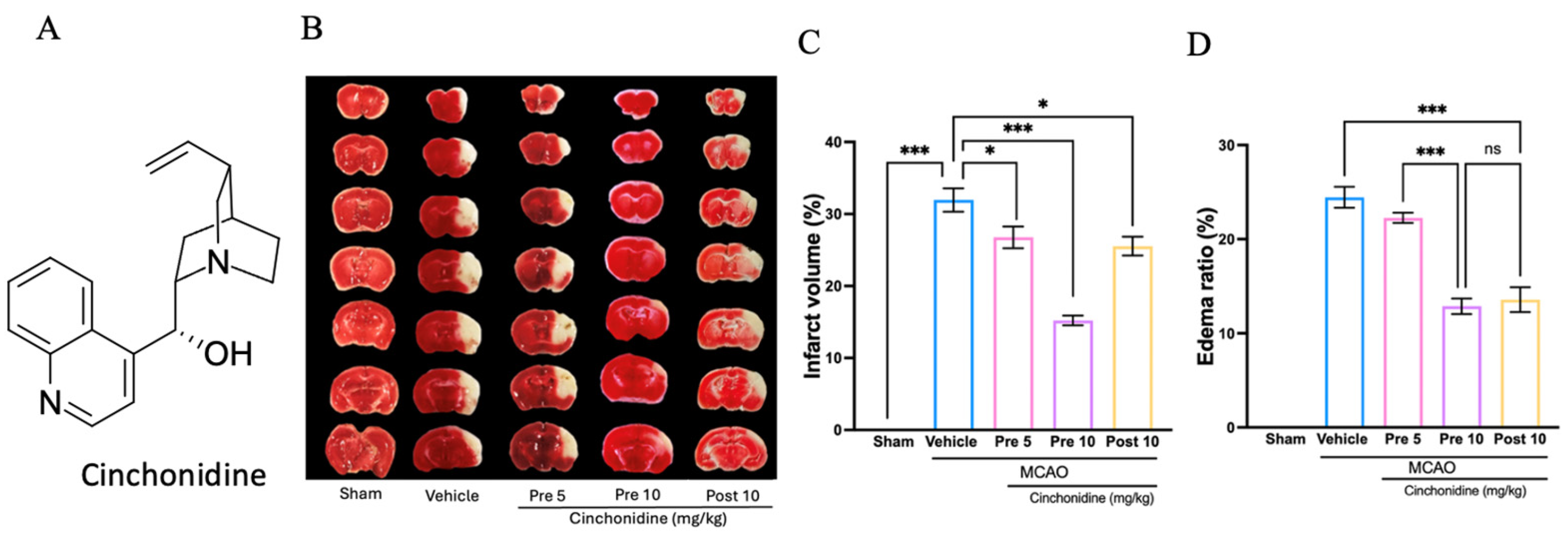
3.1. Cinchonidine Attenuates Cerebral Infarction and Brain Edema in a Mouse Model of Ischemic Stroke
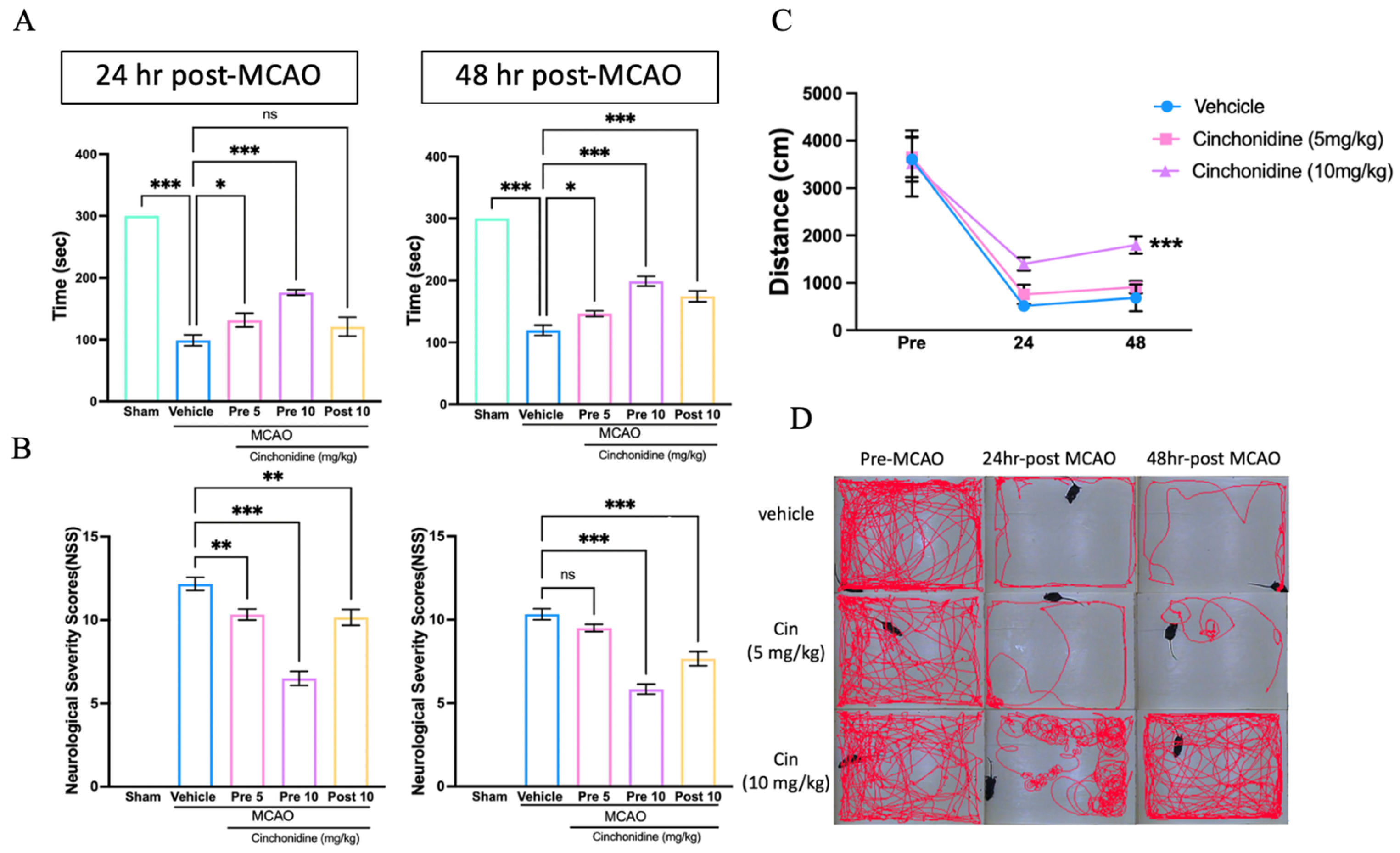
3.2. Cinchonidine Promotes Functional Recovery and Improves Neurological Outcomes Following Ischemic Injury
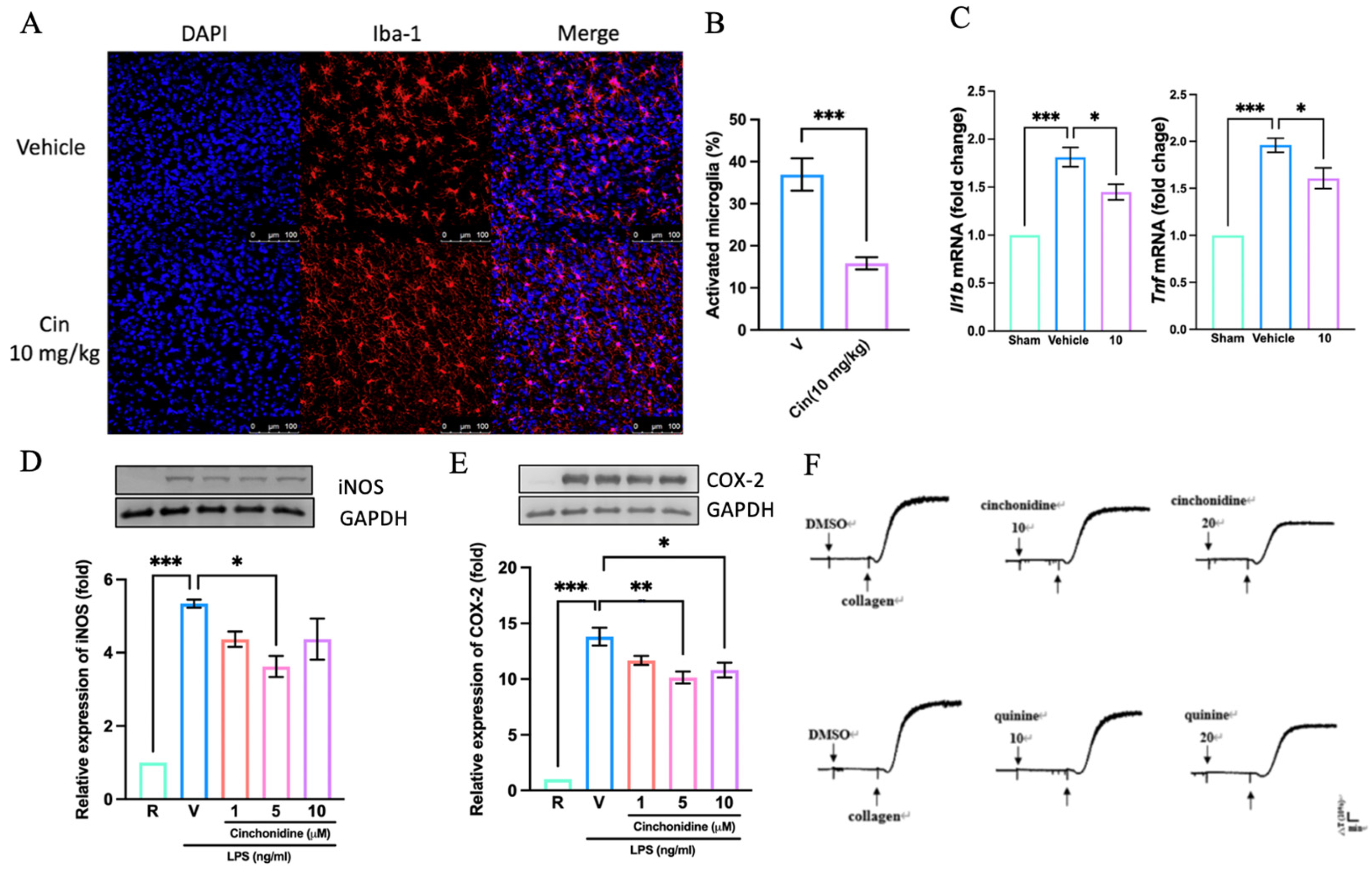
3.3. Cinchonidine Suppresses Neuroinflammatory Responses Without Affecting Platelet Aggregation
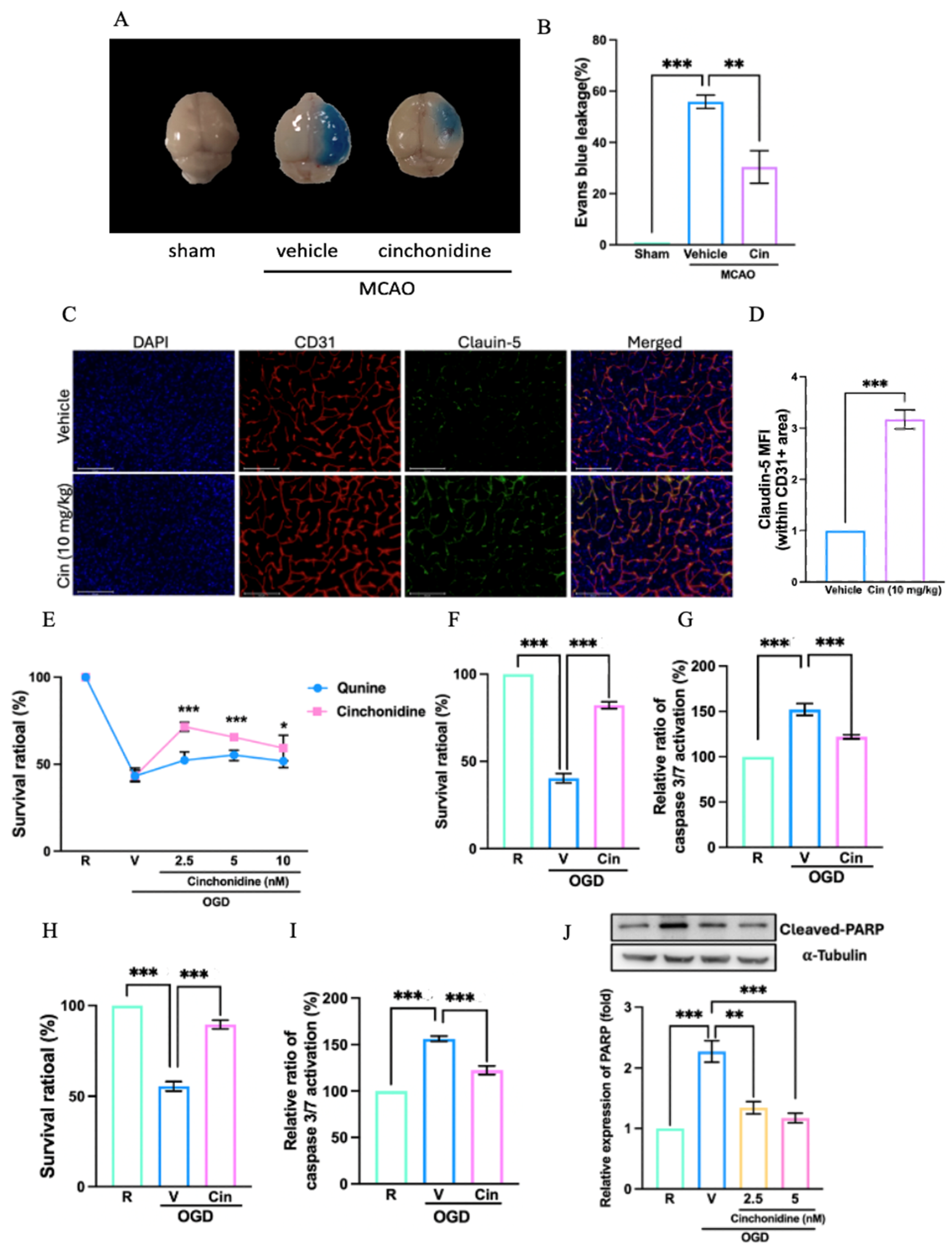
3.4. Preservation of Blood–Brain Barrier Integrity and Attenuation of Apoptosis
3.5. Cinchonidine Modulates Apoptosis-Related Markers in Ischemic Conditions
4. Discussion
Author Contributions
Funding
Institutional Review Board Statement
Informed Consent Statement
Data Availability Statement
Conflicts of Interest
References
- Sacco, R.L.; Kasner, S.E.; Broderick, J.P.; Caplan, L.R.; Connors, J.J.; Culebras, A.; Elkind, M.S.; George, M.G.; Hamdan, A.D.; Higashida, R.T.; et al. An Updated Definition of Stroke for the 21st Century. Stroke 2013, 44, 2064–2089, Erratum in Stroke 2019, 50, e239. [Google Scholar] [CrossRef] [PubMed]
- Stokum, J.A.; Gerzanich, V.; Simard, J.M. Molecular pathophysiology of cerebral edema. J. Cereb. Blood Flow Metab. 2016, 36, 513–538. [Google Scholar] [PubMed]
- Benjamin, E.J.; Muntner, P.; Alonso, A.; Bittencourt, M.S.; Callaway, C.W.; Carson, A.P.; Chamberlain, A.M.; Chang, A.R.; Cheng, S.; Das, S.R.; et al. Heart disease and stroke statistics—2019 update: A report from the American Heart Association. Circulation 2019, 139, e56–e528, Erratum in Circulation 2020, 141, e33. [Google Scholar] [CrossRef] [PubMed]
- Donkor, E.S. Stroke in the 21(st) Century: A Snapshot of the Burden, Epidemiology, and Quality of Life. Stroke Res. Treat. 2018, 2018, 3238165. [Google Scholar] [PubMed]
- Khan, S.U.; Khan, M.Z.; Khan, M.U.; Khan, M.S.; Mamas, M.A.; Rashid, M.; Blankstein, R.; Virani, S.S.; Johansen, M.C.; Shapiro, M.D.; et al. Clinical and Economic Burden of Stroke Among Young, Midlife, and Older Adults in the United States, 2002–2017. Mayo Clin. Proc. Innov. Qual. Outcomes 2021, 5, 431–441. [Google Scholar] [PubMed]
- Kim, J.S. tPA Helpers in the Treatment of Acute Ischemic Stroke: Are They Ready for Clinical Use? J. Stroke 2019, 21, 160–174. [Google Scholar]
- Bhaskar, S.; Stanwell, P.; Cordato, D.; Attia, J.; Levi, C. Reperfusion therapy in acute ischemic stroke: Dawn of a new era? BMC Neurol. 2018, 18, 8. [Google Scholar] [CrossRef] [PubMed]
- Kalogeris, T.; Baines, C.P.; Krenz, M.; Korthuis, R.J. Cell biology of ischemia/reperfusion injury. Int. Rev. Cell Mol. Biol. 2012, 298, 229–317. [Google Scholar] [CrossRef] [PubMed]
- Arkelius, K.; Wendt, T.S.; Andersson, H.; Arnou, A.; Gottschalk, M.; Gonzales, R.J.; Ansar, S. LOX-1 and MMP-9 Inhibition Attenuates the Detrimental Effects of Delayed rt-PA Therapy and Improves Outcomes After Acute Ischemic Stroke. Circ. Res. 2024, 134, 954–969. [Google Scholar] [CrossRef] [PubMed]
- Salaudeen, M.A.; Bello, N.; Danraka, R.N.; Ammani, M.L. Understanding the Pathophysiology of Ischemic Stroke: The Basis of Current Therapies and Opportunity for New Ones. Biomolecules 2024, 14, 305. [Google Scholar] [CrossRef] [PubMed]
- Wu, D.; Chen, Q.; Chen, X.; Han, F.; Chen, Z.; Wang, Y. The blood–brain barrier: Structure, regulation and drug delivery. Signal Transduct. Target. Ther. 2023, 8, 217. [Google Scholar] [CrossRef] [PubMed]
- Segarra, M.; Aburto, M.R.; Acker-Palmer, A. Blood–Brain Barrier Dynamics to Maintain Brain Homeostasis. Trends Neurosci. 2021, 44, 393–405. [Google Scholar] [CrossRef] [PubMed]
- Yang, C.; Hawkins, K.E.; Doré, S.; Candelario-Jalil, E. Neuroinflammatory mechanisms of blood-brain barrier damage in ischemic stroke. Am. J. Physiol. Cell Physiol. 2019, 316, C135–C153. [Google Scholar] [CrossRef] [PubMed]
- Liu, Y.; Song, X.; Liu, W.; Zhang, T.; Zuo, J. Glucose deprivation induces mitochondrial dysfunction and oxidative stress in PC12 cell line. J. Cell. Mol. Med. 2003, 7, 49–56. [Google Scholar] [CrossRef] [PubMed]
- Rakza, R.; Groussin, P.; Benali, K.; Behar, N.; Mabo, P.; Pavin, D.; Leclercq, C.; Liang, J.J.; Martins, R.P. Quinidine for ventricular arrhythmias: A comprehensive review. Trends Cardiovasc. Med. 2025, 35, 73–81. [Google Scholar] [PubMed]
- Parveen, S.; Maurya, N.; Meena, A.; Luqman, S. Cinchonine: A Versatile Pharmacological Agent Derived from Natural Cinchona Alkaloids. Curr. Top. Med. Chem. 2023, 24, 343–363. [Google Scholar]
- Al-Harbi, L.N.; Al-Shammari, G.M.; Subash-Babu, P.; Mohammed, M.A.; Alkreadees, R.A.; Yagoub, A.E.A. Cinchona officinalis Phytochemicals-Loaded Iron Oxide Nanoparticles Induce Cytotoxicity and Stimulate Apoptosis in MCF-7 Human Breast Cancer Cells. Nanomaterials 2022, 12, 3393. [Google Scholar] [CrossRef] [PubMed]
- Teng, R.-D.; Yang, C.-H.; Chung, C.-L.; Sheu, J.-R.; Hsieh, C.-Y. Attenuation of indoxyl sulfate–induced cell damage by cinchonidine—A Cinchona alkaloid—Through the downregulation of p53 signaling pathway by promoting MDM2 cytoplasmic-nuclear shuttling in endothelial cells. Life Sci. 2023, 318, 121477. [Google Scholar] [PubMed]
- Lu, K.-J.; Yang, C.-H.; Sheu, J.-R.; Chung, C.-L.; Jayakumar, T.; Chen, C.-M.; Hsieh, C.-Y. Overexpressing glyoxalase 1 attenuates acute hyperglycemia–exacerbated neurological deficits of ischemic stroke in mice. Transl. Res. 2023, 261, 57–68. [Google Scholar] [CrossRef] [PubMed]
- Lu, K.-J.; Sheu, J.-R.; Teng, R.-D.; Jayakumar, T.; Chung, C.-L.; Hsieh, C.-Y. Ability of Local Clearance of Senescent Cells in Ipsilateral Hemisphere to Mitigate Acute Ischemic Brain Injury in Mice. Int. J. Biol. Sci. 2023, 19, 2835–2847. [Google Scholar] [CrossRef] [PubMed]
- Yen, T.-L.; Chen, R.-J.; Jayakumar, T.; Lu, W.-J.; Hsieh, C.-Y.; Hsu, M.-J.; Yang, C.-H.; Chang, C.-C.; Lin, Y.-K.; Lin, K.-H.; et al. Andrographolide stimulates p38 mitogen-activated protein kinase–nuclear factor erythroid-2-related factor 2–heme oxygenase 1 signaling in primary cerebral endothelial cells for definite protection against ischemic stroke in rats. Transl. Res. 2016, 170, 57–72. [Google Scholar] [PubMed]
- Chen, W.-F.; Lee, J.-J.; Chang, C.-C.; Lin, K.-H.; Wang, S.-H.; Sheu, J.-R. Platelet protease-activated receptor (PAR)4, but not PAR1, associated with neutral sphingomyelinase responsible for thrombin-stimulated ceramide-NF-κB signaling in human platelets. Haematologica 2013, 98, 793–801. [Google Scholar] [PubMed]
- Yin, K.-J.; Chen, S.-D.; Lee, J.-M.; Xu, J.; Hsu, C.Y. ATM Gene Regulates Oxygen-Glucose Deprivation–Induced Nuclear Factor-κB DNA-Binding Activity and Downstream Apoptotic Cascade in Mouse Cerebrovascular Endothelial Cells. Stroke 2002, 33, 2471–2477. [Google Scholar] [PubMed]
- Stuckey, S.M.; Ong, L.K.; Collins-Praino, L.E.; Turner, R.J. Neuroinflammation as a Key Driver of Secondary Neurodegeneration Following Stroke? Int. J. Mol. Sci. 2021, 22, 13101. [Google Scholar] [CrossRef] [PubMed]
- Kim, S.; Sharma, C.; Jung, U.J.; Kim, S.R. Pathophysiological Role of Microglial Activation Induced by Blood-Borne Proteins in Alzheimer’s Disease. Biomedicines 2023, 11, 1383. [Google Scholar] [PubMed]
- Zhao, S.-C.; Ma, L.-S.; Chu, Z.-H.; Xu, H.; Wu, W.-Q.; Liu, F. Regulation of microglial activation in stroke. Acta Pharmacol. Sin. 2017, 38, 445–458. [Google Scholar] [CrossRef] [PubMed]
- Nian, K.; Harding, I.C.; Herman, I.M.; Ebong, E.E. Blood-Brain Barrier Damage in Ischemic Stroke and Its Regulation by Endothelial Mechanotransduction. Front. Physiol. 2020, 11, 605398. [Google Scholar] [CrossRef] [PubMed]
- Wang, L.; Xiong, X.; Zhang, L.; Shen, J. Neurovascular Unit: A critical role in ischemic stroke. CNS Neurosci. Ther. 2021, 27, 7–16. [Google Scholar] [CrossRef] [PubMed]
- McConnell, H.L.; Mishra, A. Cells of the Blood-Brain Barrier: An Overview of the Neurovascular Unit in Health and Disease. Methods Mol. Biol. 2022, 2492, 3–24. [Google Scholar] [CrossRef] [PubMed]
- Józkowiak, M.; Niebora, J.; Domagała, D.; Data, K.; Partyńska, A.; Kulus, M.; Kotrych, K.; Podralska, M.; Górska, A.; Chwiłkowska, A.; et al. New insights into endothelial cell physiology and pathophysiology. Biomed. Pharmacother. 2025, 190, 118415. [Google Scholar] [CrossRef] [PubMed]
- Wang, H.; Yiqiang, Z.; Cai, J.; Guo, J. Immune-mediated blood-brain barrier disruption after ischemic stroke: Mechanisms and therapeutic targets. Front. Immunol. 2025, 16, 1716041. [Google Scholar] [PubMed]
- Hills, C.; Hernandez, C.A.; Gabbay, V.; Berman, J.W. Inflammation-Associated Mechanisms of Blood–Brain Barrier Disruption and Depression Pathogenesis in People with and Without HIV. Cells 2026, 15, 399. [Google Scholar] [PubMed]
- Venkat, P.; Chopp, M.; Chen, J. Blood–Brain Barrier Disruption, Vascular Impairment, and Ischemia/Reperfusion Damage in Diabetic Stroke. J. Am. Heart Assoc. 2017, 6, e005819. [Google Scholar] [PubMed]
- Levine, G.N.; McEvoy, J.W.; Fang, J.C.; Ibeh, C.; McCarthy, C.P.; Misra, A.; Shah, Z.I.; Shenoy, C.; Spinler, S.A.; Vallurupalli, S.; et al. Management of Patients at Risk for and with Left Ventricular Thrombus: A Scientific Statement From the American Heart Association. Circulation 2022, 146, e205–e223. [Google Scholar] [CrossRef] [PubMed]
- Sikora, J.; Karczmarska-Wódzka, A.; Bugieda, J.; Sobczak, P. The Importance of Platelets Response during Antiplatelet Treatment after Ischemic Stroke-Between Benefit and Risk: A Systematic Review. Int. J. Mol. Sci. 2022, 23, 1043. [Google Scholar] [PubMed]



| Primer | Forward (Sense) | Reverse (Antisense) |
|---|---|---|
| CTCATTGTGGCTGTGGAGAA | CACACACCAGCAGGTTATCA | |
| CATCTTCTCAAAACTCGAGTGACAA | TGGGAGTAGATAAGGTACAGCCC |
Disclaimer/Publisher’s Note: The statements, opinions and data contained in all publications are solely those of the individual author(s) and contributor(s) and not of MDPI and/or the editor(s). MDPI and/or the editor(s) disclaim responsibility for any injury to people or property resulting from any ideas, methods, instructions or products referred to in the content. |
© 2026 by the authors. Licensee MDPI, Basel, Switzerland. This article is an open access article distributed under the terms and conditions of the Creative Commons Attribution (CC BY) license.
Share and Cite
Lu, K.-J.; Hsu, C.-Y.; Jayakumar, T.; Hsieh, C.-Y.; Teng, R.-D. Cinchonidine, a Natural Quinoline Alkaloid, Attenuates Ischemic Neurovascular Injury Through Blood–Brain Barrier Preservation. Biomedicines 2026, 14, 1442. https://doi.org/10.3390/biomedicines14071442
Lu K-J, Hsu C-Y, Jayakumar T, Hsieh C-Y, Teng R-D. Cinchonidine, a Natural Quinoline Alkaloid, Attenuates Ischemic Neurovascular Injury Through Blood–Brain Barrier Preservation. Biomedicines. 2026; 14(7):1442. https://doi.org/10.3390/biomedicines14071442
Chicago/Turabian StyleLu, Kuan-Jung, Chia-Yuan Hsu, Thanasekaran Jayakumar, Cheng-Ying Hsieh, and Ruei-Dun Teng. 2026. "Cinchonidine, a Natural Quinoline Alkaloid, Attenuates Ischemic Neurovascular Injury Through Blood–Brain Barrier Preservation" Biomedicines 14, no. 7: 1442. https://doi.org/10.3390/biomedicines14071442
APA StyleLu, K.-J., Hsu, C.-Y., Jayakumar, T., Hsieh, C.-Y., & Teng, R.-D. (2026). Cinchonidine, a Natural Quinoline Alkaloid, Attenuates Ischemic Neurovascular Injury Through Blood–Brain Barrier Preservation. Biomedicines, 14(7), 1442. https://doi.org/10.3390/biomedicines14071442