1. Introduction
Despite substantial progress in screening, vaccination, and treatment, cervical cancer remains a major cause of cancer-related morbidity and mortality in women worldwide [
1]. Surgical resection remains a cornerstone of treatment for resectable disease, yet oncologic outcome is determined not only by tumor stage and pathology but also by perioperative biological events that may influence residual tumor cells and host responses [
2,
3]. Among perioperative factors, anesthetic maintenance has attracted sustained attention because volatile and intravenous anesthetics may differ in their effects on tumor biology, inflammation, and antitumor immunity [
4]. However, clinical evidence comparing these techniques remains inconsistent across tumor types and study designs [
5,
6]. In gynecologic malignancies, some retrospective data have suggested less favorable long-term outcomes after sevoflurane-based anesthesia than after propofol-based anesthesia, but the biological basis for such observations remains unclear [
7].
Extracellular vesicles (EVs) are membrane-enclosed particles released by most cell types and are increasingly recognized as major mediators of intercellular communication [
8]. By transferring proteins, nucleic acids, and lipids to recipient cells, EVs can reshape proliferation, invasion, metastasis, angiogenesis, and therapeutic response in cancer [
9,
10]. EV-associated cargo is particularly relevant in the perioperative setting, where systemic signals generated during anesthesia and surgery may alter the composition and biological activity of circulating vesicles [
11]. Whether anesthesia-associated plasma EVs can directly modulate the behavior of cervical cancer cells, however, remains largely unknown.
Lipid metabolism provides a plausible mechanistic link between circulating EVs and tumor progression. EVs can participate in the intercellular transfer of lipids and lipid-related enzymes and can thereby alter membrane composition and signaling in recipient cells [
12]. More broadly, metabolic rewiring is a hallmark of malignant growth, and altered lipid metabolism is increasingly recognized as a determinant of tumor cell survival, plasticity, and progression [
13,
14]. In cervical cancer, lipid dysregulation has clinical and biological relevance. Obesity has been associated with worse outcomes [
15], CD36-dependent fatty-acid uptake promotes tumor growth and metastatic behavior [
16,
17], and modulation of unsaturated fatty-acid signaling can influence treatment response [
18]. Together, these observations support the premise that lipid remodeling may serve as an interface between perioperative exposures and cervical cancer biology.
In the present study, we investigated whether plasma EVs collected before and after sevoflurane or propofol anesthesia differentially affect recipient-cell behavior in cervical cancer and whether lipid remodeling is associated with the biologically active EV condition. Using paired perioperative plasma samples from patients with stage II cervical cancer, we combined EV characterization, functional assays in HeLa cells and human umbilical vein endothelial cells (HUVECs), EV miRNA profiling, recipient-cell lipidomics, and signaling analysis. We found that EVs collected after sevoflurane anesthesia were associated with enhanced aggressive phenotypes in recipient cells, lipid metabolic remodeling characterized by diacylglycerol enrichment, and increased EGFR/PKCα/NF-κB signaling. These findings support an exploratory mechanistic framework linking anesthesia-associated circulating EVs to lipid remodeling in cervical cancer.
2. Materials and Methods
2.1. Design and Participants
The study was conducted in accordance with the Declaration of Helsinki, and the protocol was approved by the Medical Ethics Committee of Tongji Medical College, Huazhong University of Science and Technology (No. S053) on 26 March 2021. Written informed consent was obtained from all participants.
This single-center prospective observational cohort included women aged 35–60 years with pathologically confirmed FIGO stage II cervical cancer, scheduled for radical surgery under general anesthesia. Maintenance anesthesia (sevoflurane or propofol) was selected as part of routine clinical care. A total of 53 eligible patients were enrolled: 28 in the sevoflurane cohort and 25 in the propofol cohort. Baseline demographic, tumor-related, and perioperative characteristics were recorded; the two cohorts were comparable for these variables (
Table S1). Patients with neoadjuvant therapy, known distant metastasis, or major organ dysfunction were excluded.
2.2. Anesthetic Management and Blood Collection
General anesthesia was induced with etomidate (0.3 mg/kg), sufentanil (0.5 μg/kg), and rocuronium (0.9 mg/kg). After endotracheal intubation, anesthesia was maintained with either sevoflurane inhalation (2%) or continuous intravenous propofol infusion (6–8 mg/kg/h). Remifentanil (0.1–0.15 μg/kg/min) was administered continuously for analgesia, with additional rocuronium as required. Depth of anesthesia and vital signs were monitored continuously. Central venous blood samples were collected into EDTA-containing tubes at two predefined perioperative time points: immediately before anesthesia induction and immediately at the end of surgery, corresponding to approximately 2 to 4 h after anesthesia induction.
2.3. Isolation of Plasma EV Preparations
Plasma was obtained by centrifugation of blood at 800× g for 10 min at 4 °C. Residual cells and debris were removed by sequential centrifugation at 3000× g for 10 min and 10,000× g for 30 min at 4 °C. The resulting supernatants were ultracentrifuged at 100,000× g for 70 min at 4 °C. The pellets were washed once with phosphate-buffered saline (PBS) and ultracentrifuged again at 100,000× g for 70 min at 4 °C. The final pellets were resuspended in PBS.
Differential ultracentrifugation of plasma enriches for extracellular vesicles but may also co-precipitate non-vesicular components, including circulating lipoproteins. These preparations are therefore considered EV-enriched plasma fractions rather than purified EV populations. For readability, they are referred to as EVs after this definition. No additional purification procedures, such as density-gradient ultracentrifugation or size-exclusion chromatography, were applied, and lipoprotein-associated markers such as ApoB were not evaluated. Consequently, co-isolation of lipoprotein particles cannot be formally excluded under the present experimental conditions. All lipidomic and functional analyses were conducted in recipient HeLa cells following exposure to these EV-enriched preparations rather than by direct molecular profiling of the isolated pellets themselves.
EV preparations were classified into four groups according to anesthetic exposure and sampling time: S-Pre-EVs (before sevoflurane), S-Post-EVs (after sevoflurane), P-Pre-EVs (before propofol), and P-Post-EVs (after propofol). Each biological replicate in functional assays, small-RNA sequencing, and lipidomic analyses was derived from an individual patient’s EV preparation.
2.4. Transmission Electron Microscopy (TEM)
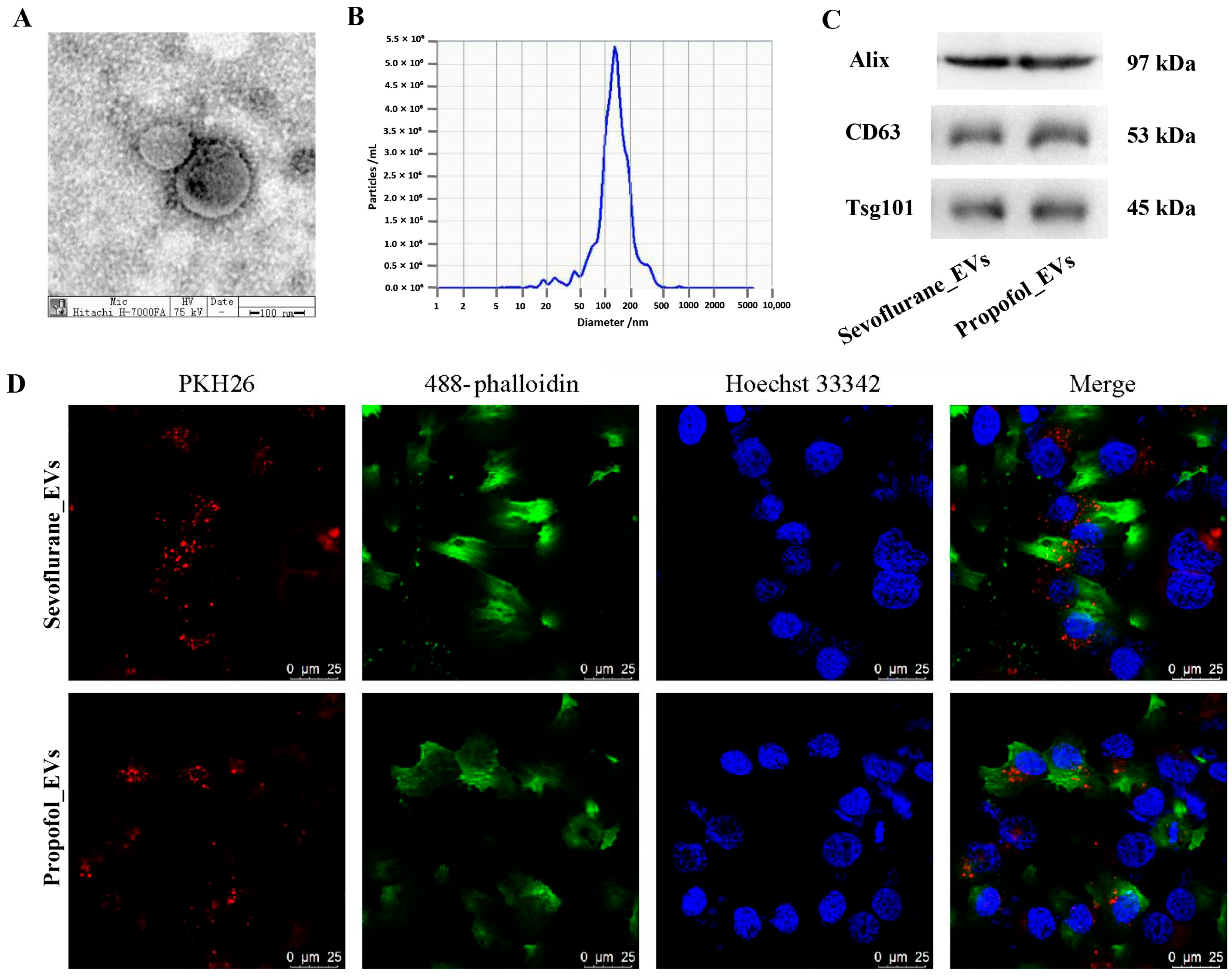
A drop of EV suspension was placed onto a copper grid and allowed to adsorb for 5 min. Excess liquid was removed with filter paper. The grid was then negatively stained with 2% uranyl acetate for 5 min in the dark, air-dried at room temperature, and examined using a transmission electron microscope (FEI, Hillsboro, OR, USA) to assess EV morphology.
2.5. Nanoparticle Tracking Analysis
EV suspensions were diluted in PBS to an appropriate concentration and analyzed using a nanoparticle tracking analysis instrument (ZetaView, Particle Metrix, Meerbusch, Germany) according to the manufacturer’s instructions. Particle size distribution and concentration were calculated on the basis of Brownian motion using the Stokes–Einstein equation.
2.6. Western Blotting
For EV characterization and signaling analysis, protein concentrations of EV preparations or cell lysates were measured using a BCA Protein Assay Kit (Boster, Wuhan, China). Equal amounts of protein were separated by SDS-polyacrylamide gel electrophoresis and transferred onto PVDF membranes (Millipore, Billerica, MA, USA). Membranes were blocked with 5% non-fat milk for 1 h at room temperature and then incubated overnight at 4 °C with primary antibodies against Alix (Abcam, Cambridge, UK, ab275377), CD63 (Abcam, Cambridge, UK, ab134045), Tsg101 (Abcam, Cambridge, UK, ab125011), EGFR (ABclonal, Wuhan, China, A11351), phospho-EGFR (Abcam, Cambridge, UK, ab319113), PKCα (ABclonal, Wuhan, China, A11107), NF-κB p65 (Abcam, Cambridge, UK, ab16502), phospho-NF-κB p65 (Cell Signaling Technology, Danvers, MA, USA, 3033), and β-actin (Abcam, Cambridge, UK, ab115777). After incubation with the corresponding secondary antibodies for 1 h at room temperature, signals were visualized by chemiluminescence. Band intensities were quantified by densitometry. Phosphorylated proteins were normalized to their corresponding total proteins, and total protein levels were normalized to β-actin where appropriate.
2.7. Cell Culture and EV Treatment
HeLa cells were obtained from the Cell Bank of the Chinese Academy of Sciences (Shanghai, China), and HUVECs were obtained from the American Type Culture Collection (ATCC, Manassas, VA, USA). HeLa cells were cultured in DMEM supplemented with 10% fetal bovine serum and 1% penicillin/streptomycin at 37 °C in a humidified atmosphere containing 5% CO2. HUVECs were cultured in Endothelial Cell Growth Medium-2 (EGM-2; Lonza, Walkersville, MD, USA) supplemented with the EGM-2 SingleQuots™ kit according to the manufacturer’s instructions. For functional experiments, cells were treated with PBS or EVs at a final concentration of 250 μg/mL.
2.8. EV Uptake Assay
EVs were labeled with PKH26 to examine cellular uptake. Briefly, 100 μL EV suspension (100 μg/mL) was resuspended in 1 mL PBS and incubated with 4 μL PKH26 dye (Sigma-Aldrich, St. Louis, MO, USA) for 20 min at 37 °C. Labeled EVs were washed twice by ultracentrifugation at 100,000× g for 70 min at 4 °C to remove excess dye and were then resuspended in PBS. HeLa cells were incubated in serum-free medium until attachment and then exposed to PKH26-labeled EVs for 12 h. After incubation, cells were washed with PBS, fixed with 4% paraformaldehyde, counterstained with Hoechst 33342, and examined by confocal fluorescence microscopy (Leica Microsystems, Wetzlar, Germany).
2.9. CCK-8 Proliferation Assay
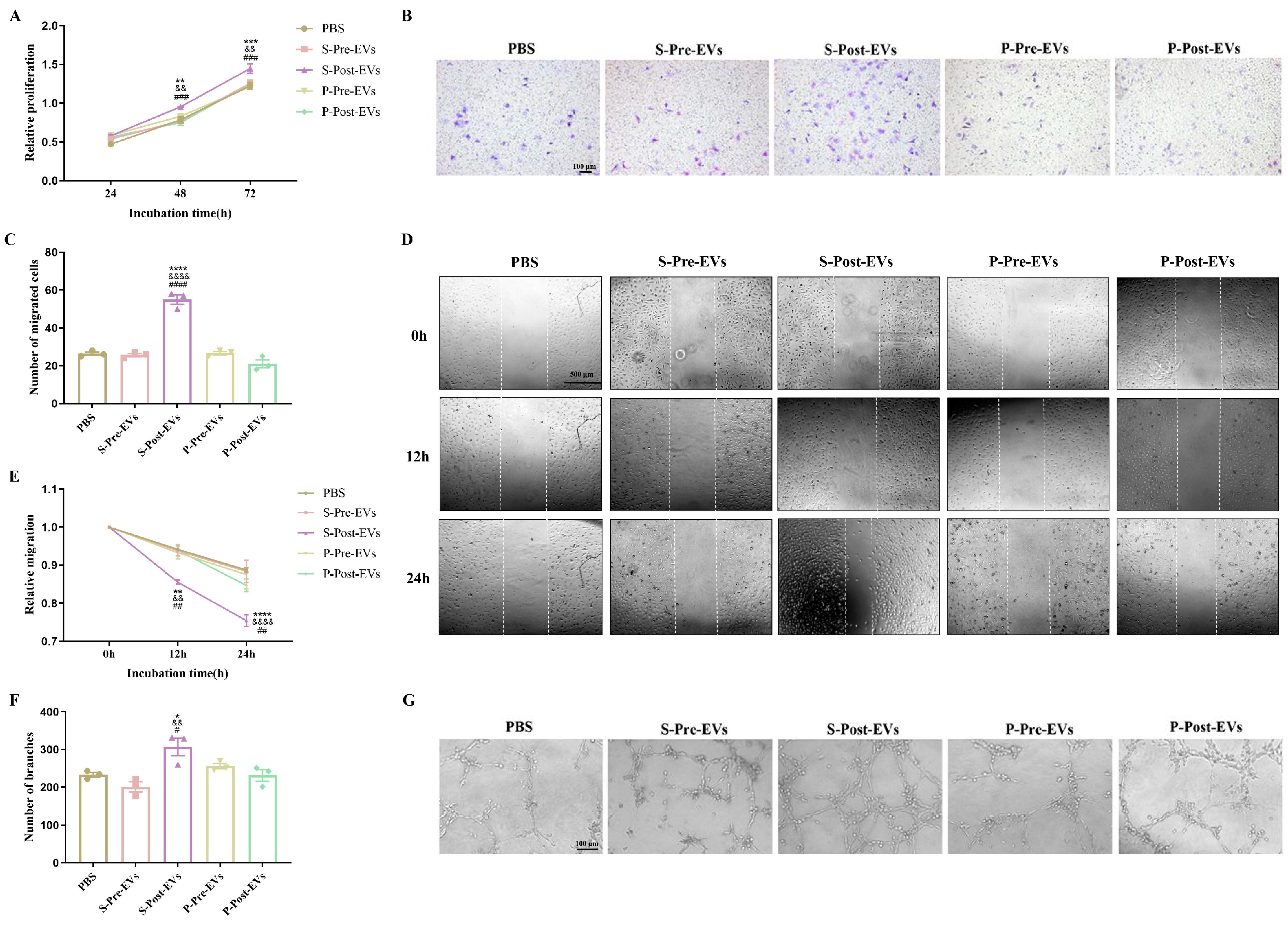
HeLa cells were seeded into 96-well plates in technical triplicate at a density of 5 × 10³ cells per well. After attachment, cells were treated with PBS or EVs for 24, 48, or 72 h. The culture medium was then replaced with DMEM containing 10% Cell Counting Kit-8 reagent (MCE, Monmouth Junction, NJ, USA), and cells were incubated for 1 h at 37 °C. Absorbance at 450 nm was measured using a microplate reader (BioTek, Winooski, VT, USA).
2.10. Wound-Healing Assay
HeLa cells were seeded into 6-well plates in technical triplicate and cultured to near confluence. A straight scratch was created using a sterile pipette tip, and detached cells were removed by washing with PBS. Cells were then cultured in low-serum medium containing PBS or EVs. Images were obtained at 0, 12, and 24 h using an inverted microscope (Olympus, Tokyo, Japan). Residual wound area was quantified using ImageJ (version 1.52) and expressed relative to the wound area at 0 h.
2.11. Transwell Invasion Assay
HeLa cells were seeded into Matrigel-coated Transwell inserts (Corning, Corning, NY, USA) at 2 × 10⁴ cells per well. After attachment, cells in the upper chamber were treated with PBS or EVs (250 μg/mL). The lower chamber was filled with DMEM containing 10% fetal bovine serum as a chemoattractant. After 24 h of incubation at 37 °C, cells remaining on the upper surface of the membrane were removed. Cells that had traversed to the lower surface were fixed with 4% paraformaldehyde for 20 min, stained with 0.1% crystal violet for 10 min, washed with PBS, air-dried, and visualized under a light microscope (Olympus, Tokyo, Japan).
2.12. Tube-Formation Assay
Matrigel matrix (BD, Franklin Lakes, NJ, USA) was added to 96-well plates and allowed to polymerize at 37 °C for 45 min. HUVECs were then seeded onto the gel at 2.5 × 10⁴ cells per well in technical triplicate and treated with PBS or EVs. After 6 h of incubation at 37 °C in 5% CO2, tube-like structures were imaged under a light microscope (Olympus, Tokyo, Japan). Branch points were quantified using ImageJ.
2.13. Small-RNA Sequencing and Bioinformatic Analysis
Total RNA was extracted from EV preparations using TRIzol reagent (Invitrogen, Carlsbad, CA, USA) according to the manufacturer’s instructions. RNA concentration was measured using an ND-2000 spectrophotometer (NanoDrop Technologies, Wilmington, DE, USA), and RNA quality was assessed using an Agilent 2100 Bioanalyzer (Agilent Technologies, Palo Alto, CA, USA). Small-RNA libraries were prepared from 3 μg total RNA using the TruSeq Small RNA Sample Prep Kit (Illumina, San Diego, CA, USA). After library amplification (11–12 PCR cycles), sequencing was performed on the Illumina HiSeq X Ten/NovaSeq 6000 platform (Illumina, San Diego, CA, USA).
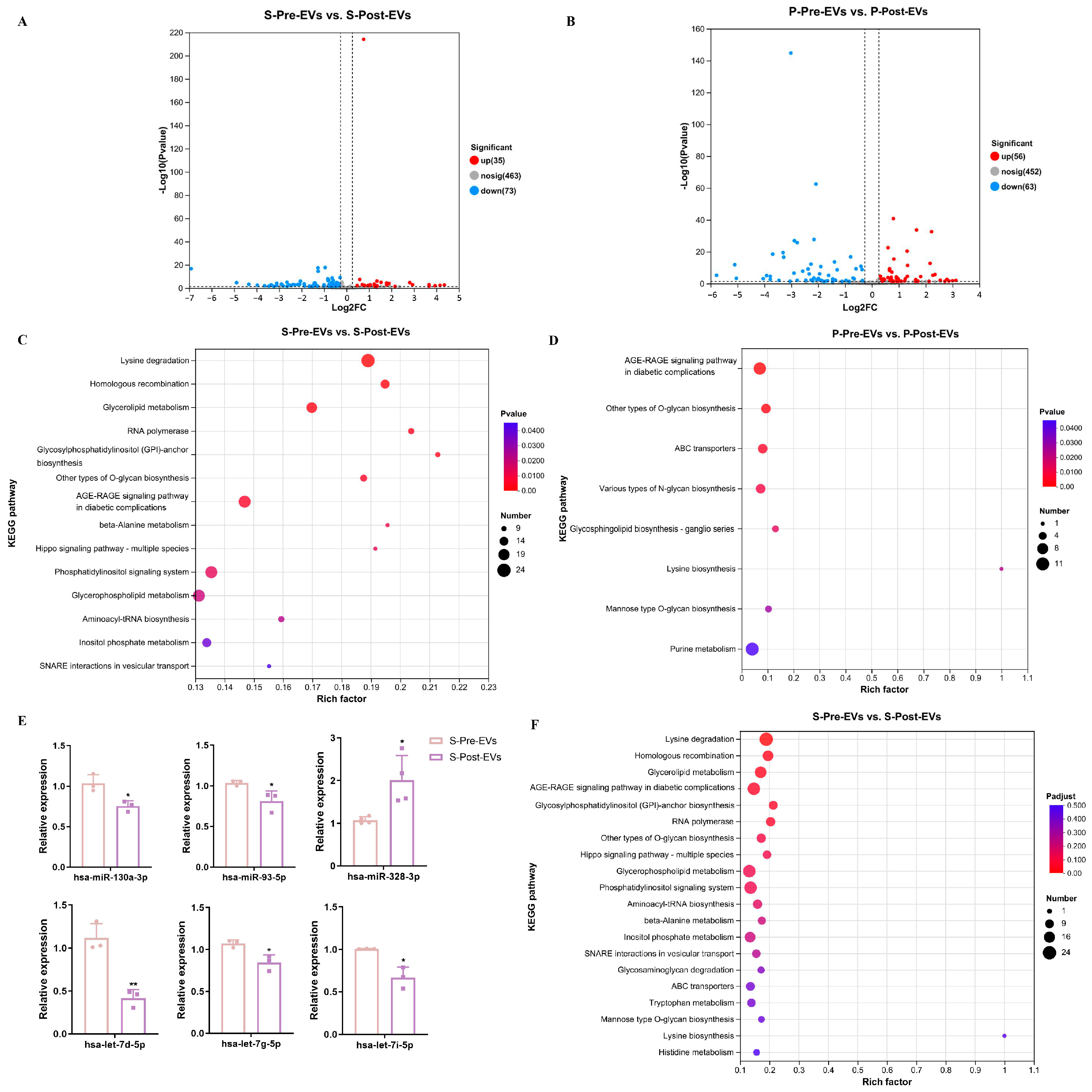
After adaptor trimming and quality control, reads were mapped to miRBase version 21.0 to generate miRNA expression profiles. miRNA abundance was expressed as transcripts per million. Differential expression analysis was performed using DESeq2 (version 1.42.0), and miRNAs with |log2 fold change| > 1.2 and a false discovery rate (FDR) < 0.05 were considered significantly differentially expressed. Predicted target genes of differentially expressed miRNAs were subjected to Kyoto Encyclopedia of Genes and Genomes (KEGG) enrichment analysis, and the top enriched pathways were visualized as bubble plots.
2.14. RT-qPCR Validation of Selected EV miRNAs
To technically validate the small-RNA sequencing results, candidate miRNAs from the sevoflurane comparison were prioritized for RT-qPCR on the basis of concordant directional change across sequenced biological replicates and relatively high abundance in the sequencing dataset, which favored robust detectability. Total RNA was reverse-transcribed using a miRNA-specific reverse transcription system according to the manufacturer’s instructions. Quantitative PCR was performed on a real-time PCR platform (Bio-Rad, Hercules, CA, USA) using SYBR Green Master Mix (Thermo Fisher Scientific, Waltham, MA, USA). Relative miRNA expression was calculated using the 2
−ΔΔCt method after normalization to U6 snRNA. All reactions were run in technical triplicate. Primer sequences are listed in
Table S2.
2.15. Lipidomic Analysis by LC-MS
HeLa cells treated with S-Pre-EVs or S-Post-EVs were washed with PBS, scraped into 1.5-mL tubes, and pelleted by centrifugation. Cell numbers were normalized before extraction. Samples were homogenized with beads, extracted with an organic solvent mixture, sonicated at −10 °C, and centrifuged. The resulting supernatants were transferred to LC-MS autosampler vials (Thermo Fisher Scientific, Waltham, MA, USA) for analysis.
Chromatographic separation was performed on an HSS T3 column maintained at 40 °C at a flow rate of 0.40 mL/min using an acetonitrile/water-based mobile phase containing formic acid. Mass spectrometric data were acquired in both positive and negative ion modes over an m/z range of 70–1050 with high-resolution MS1 and MS2 acquisition. Lipid feature annotation was performed with reference to the Human Metabolome Database (HMDB, version 4.0) and KEGG.
2.16. Statistical Analysis
Statistical analyses were performed using GraphPad Prism 9.5, SPSS 27.0, and R 4.2.0. Continuous clinical variables were tested for normality using the Shapiro–Wilk test and are presented as mean ± standard deviation or median (interquartile range), as appropriate. Categorical variables are presented as counts and percentages. Baseline clinical characteristics between the sevoflurane and propofol cohorts were compared using Student’s t test or Mann–Whitney U test for continuous variables and the chi-square test or Fisher’s exact test for categorical variables.
For cell-based and molecular experiments, each biological replicate represented an independent patient-derived EV preparation. Technical triplicates were averaged before statistical testing. Data are presented as mean ± standard error of the mean unless otherwise specified. Time-course experiments, including CCK-8 and wound-healing assays, were analyzed using two-way ANOVA with treatment group and time as factors. Post hoc comparisons were performed using Bonferroni correction to assess simple effects within each time point. Single-time-point assays involving more than two groups were analyzed by one-way ANOVA followed by Bonferroni post hoc test.
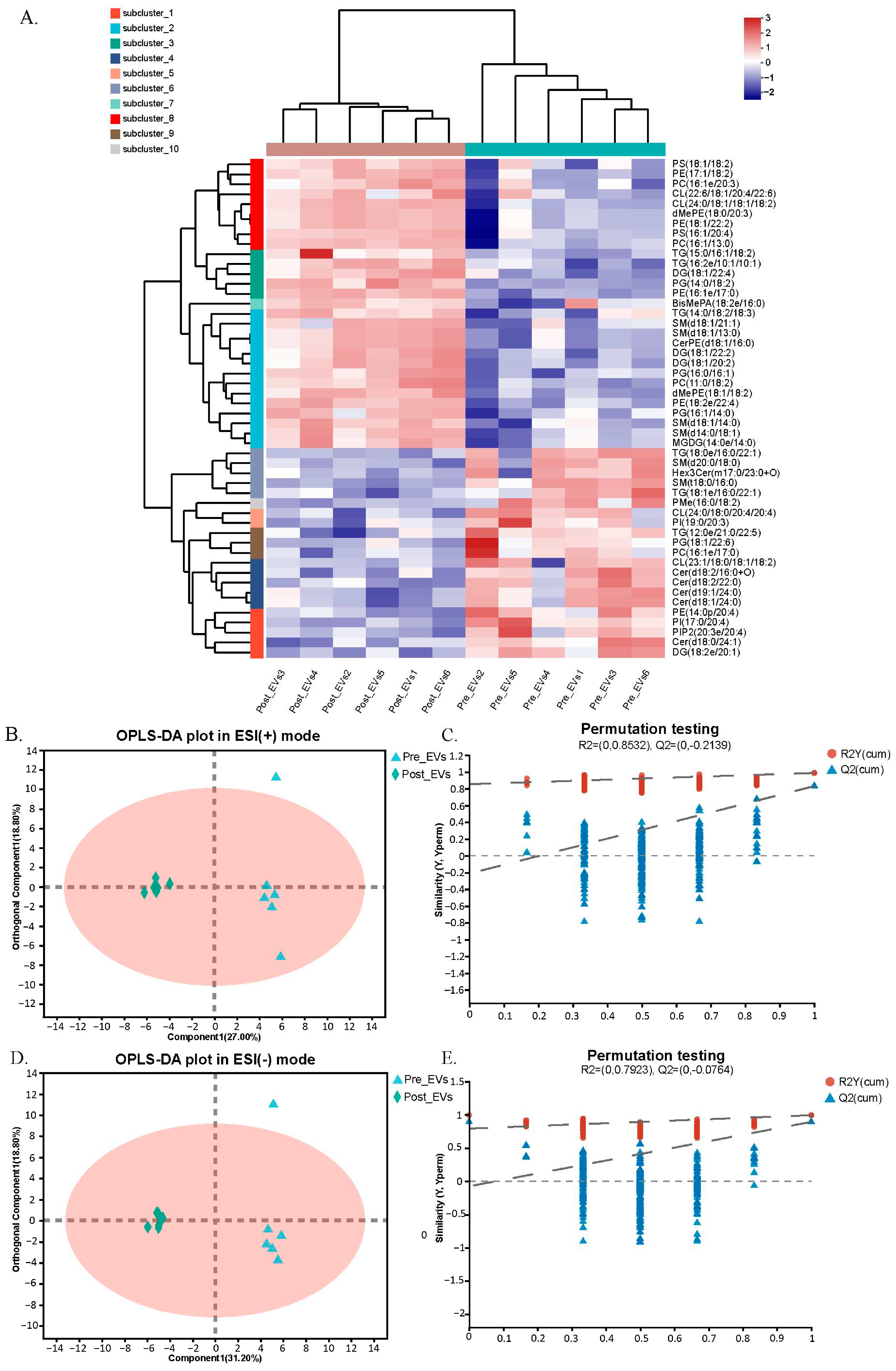
DFS and OS were estimated using the Kaplan–Meier method and compared with the log-rank test; these analyses were exploratory. For small-RNA sequencing, differential expression was analyzed with DESeq2, and miRNAs with |log2 fold change| > 1.2 and FDR < 0.05 were considered differentially expressed. Lipidomic data were subjected to hierarchical clustering and orthogonal partial least squares-discriminant analysis (OPLS-DA), and model robustness was assessed by permutation testing. Differential lipids were defined by a variable importance in projection value >1 and p < 0.05. Associations between DG abundance and phenotypic readouts were examined using Spearman rank correlation. All tests were two-sided, and p < 0.05 was considered statistically significant.
Unless otherwise specified, three independent EV preparations per group were used for functional assays and sequencing, and six per group for lipidomic analysis.
4. Discussion
This study identified a consistent EV-associated biological signal linked to sevoflurane anesthesia in cervical cancer. Among the perioperative EV conditions tested, only EVs collected after sevoflurane anesthesia reproducibly enhanced HeLa cell proliferation, invasion, and wound closure and increased endothelial branching in HUVECs. That phenotype was accompanied by a distinct EV miRNA profile enriched in lipid-related pathways, a broad shift in the lipid composition of recipient HeLa cells, accumulation of several DG species, and increased p-EGFR, PKCα, and p-NF-κB p65. Considered together, these findings define a coherent exploratory model in which sevoflurane-associated circulating EVs are linked to lipid-metabolic remodeling and a more aggressive cell phenotype.
The question of whether anesthetic technique influences long-term cancer outcomes remains unresolved, particularly when retrospective studies, tumor-specific cohorts, and broader comparative analyses are considered together [
2,
3,
5,
6,
7]. In the present cohort, exploratory follow-up did not show a difference in DFS or OS between the sevoflurane and propofol groups. This finding should not be interpreted as evidence of equivalence between anesthetic techniques, because the study was not powered for oncologic outcome comparisons and only a small number of events occurred across the entire cohort. Accordingly, the present dataset does not permit inference regarding long-term prognosis. The principal value of the clinical cohort lies in the paired perioperative biospecimens, which enabled mechanistic interrogation of anesthesia-associated EV biology under clinically relevant conditions.
EVs are plausible mediators of perioperative biological effects because they transfer proteins, nucleic acids, and lipids between cells and can durably alter recipient-cell behavior [
8,
9,
10,
12,
19]. The present data add cervical cancer-specific evidence to that concept. Under the conditions tested here, the phenotype-positive signal was confined to the post-sevoflurane EV condition. Post-propofol EVs did not reproduce the same effects in HeLa proliferation, invasion, wound-closure, or HUVEC branching assays. This contrast is important for two reasons. First, it provided the rationale for focusing downstream mechanistic analyses on the sevoflurane arm. Second, it suggests that the perioperative signal detected in this study was not captured equally by the two anesthetic-associated EV states examined here. The increase in HUVEC branching also indicates that the effect was not restricted to tumor cells alone, but extended to a surrogate endothelial readout relevant to angiogenesis.
A related question is why post-propofol EVs did not elicit comparable phenotypic changes in the present assays. Several non-mutually-exclusive possibilities exist. First, sevoflurane and propofol have distinct effects on cellular stress responses, inflammation, and the tumor microenvironment [
20,
21]. Given that these processes can regulate EV biogenesis and cargo sorting, it is plausible that the two anesthetics differentially influence the composition of circulating EVs. Supporting this concept, Buschmann et al. reported that sevoflurane and propofol differentially alter miRNA cargo in circulating EVs during colorectal cancer resection [
22]. In addition, Gluth et al. demonstrated that EV concentration and EV-associated miRNA profiles differ between propofol- and sevoflurane-based anesthesia in bladder cancer patients undergoing radical cystectomy [
23]. Similarly, a recent study in hepatocellular carcinoma reported that sevoflurane-associated plasma exosomal miRNA alterations were linked to immune-related biological processes and tumor progression through bioinformatic pathway analyses [
24]. Collectively, these studies indicate that anesthetic techniques can influence both the composition and biological relevance of circulating EVs. Consistent with these findings, our small-RNA sequencing data revealed that the sevoflurane-associated EV-miRNA signature was prominently enriched in lipid-metabolism-related pathways, whereas the propofol-associated signature was not. This difference in pathway enrichment may help explain why post-propofol EVs did not produce the same enhancing effects on HeLa cell proliferation, invasion, and wound closure as observed with post-sevoflurane EVs. Importantly, while previous studies primarily inferred potential biological implications from EV-miRNA profiling, the present study integrates EV-miRNA sequencing with functional assays, recipient-cell lipidomics, and signaling analyses, thereby providing complementary evidence that anesthesia-associated EV alterations may be accompanied by measurable phenotypic consequences in recipient cells. Second, the absence of detectable effects in proliferation, invasion, wound closure, or tube formation assays does not exclude the possibility that post-propofol EVs may influence other aspects of tumor biology, such as immune modulation or therapy resistance, which were not evaluated in this study. Therefore, while the present data support focusing mechanistic investigations on the sevoflurane-associated EV effects, the propofol findings should be interpreted as context-dependent and limited to the endpoints assessed here rather than evidence of biological inactivity. Future in vivo studies will be valuable for determining the biological significance of these EV-associated differences in more physiologically relevant settings.
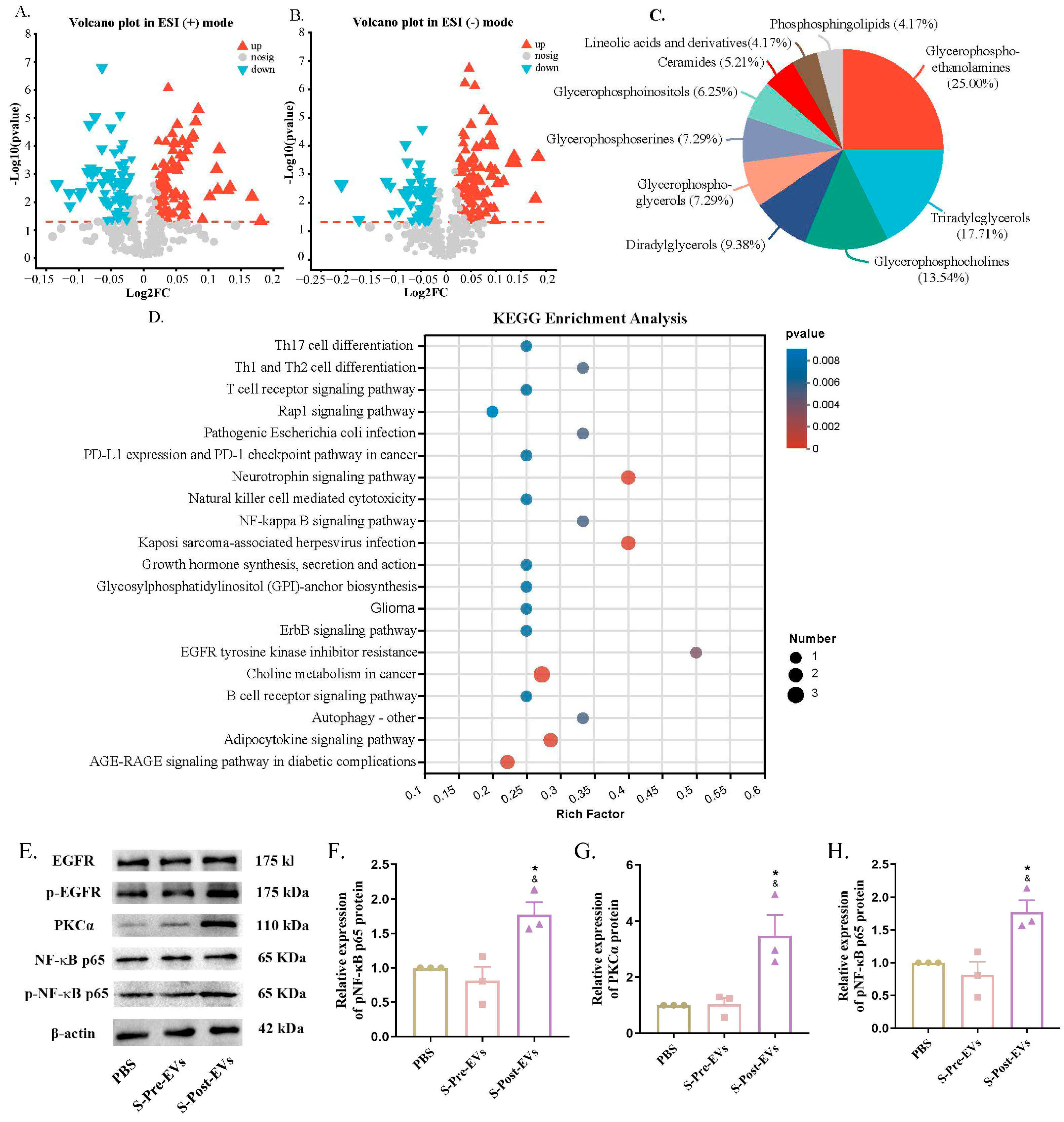
Further analysis of the sevoflurane-associated EV-miRNA signature provided insight into the potential downstream mechanisms. Both anesthetic regimens altered EV miRNA profiles, but the sevoflurane-associated signature was preferentially linked to glycerolipid metabolism, glycerophospholipid metabolism, GPI-anchor biosynthesis, the phosphatidylinositol signaling system, and inositol phosphate metabolism. The concordance between small-RNA sequencing and RT-qPCR for selected miRNAs further supports the robustness of the sevoflurane-associated EV-miRNA signal. RT-qPCR was used as a targeted technical validation of a representative subset of sevoflurane-associated EV miRNAs, rather than as functional evidence for individual miRNAs. Candidate miRNAs were prioritized according to concordant directional change across sequenced samples and relatively high abundance in the sequencing dataset, which favored reliable RT-qPCR detection. The validated subset reproduced the sequencing-defined direction of change and therefore strengthened confidence in the sevoflurane-associated EV-miRNA signal. Because post-propofol EVs did not produce measurable phenotypic effects and downstream mechanistic analyses were focused on the phenotype-positive sevoflurane arm, individual propofol-associated miRNAs were not independently validated in the present study. This enrichment pattern was biologically meaningful because it was mirrored by the lipidomic data obtained in recipient HeLa cells. Cells exposed to post-sevoflurane EVs separated clearly from the pre-sevoflurane condition in both unsupervised clustering and supervised OPLS-DA, indicating global lipidomic remodeling rather than isolated changes in a few metabolites. The continuity from EV-miRNA pathway enrichment to recipient-cell lipid remodeling strengthens the internal logic of the dataset. It is also compatible with current evidence that dysregulated lipid handling contributes to cervical cancer progression, including associations with obesity, altered circulating lipid profiles, fatty-acid uptake, and lymphatic metastatic behavior [
15,
16,
17,
18,
25,
26,
27].
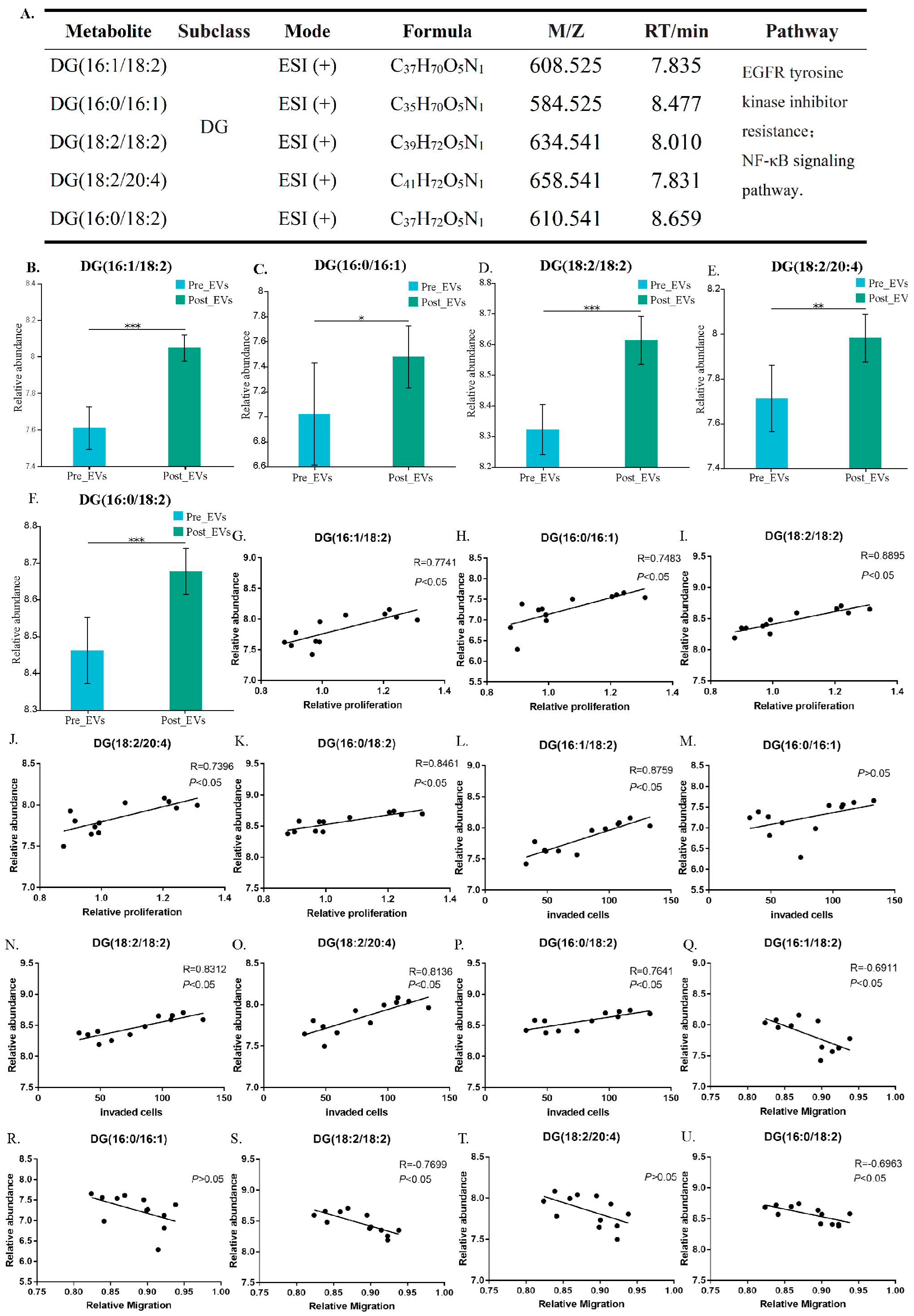
Within the altered lipidome, DG species represented the most coherent and biologically interpretable signal. Five DG molecules were increased in HeLa cells after exposure to post-sevoflurane EVs, and the abundance of these species tracked with the major phenotypic readouts. All five correlated positively with proliferation; four correlated positively with invaded cell number; and three were inversely correlated with residual wound area, consistent with faster wound closure at higher DG abundance. These associations do not by themselves establish causality, but they are not random. DG is a signaling lipid with a well-established role in recruiting and activating conventional PKC isoforms at cellular membranes [
28]. In cervical neoplasia, altered glycerolipid composition has also been reported at the plasma level [
27], making DG enrichment a biologically credible candidate rather than an isolated analytic finding.
The signaling readouts were concordant with the lipidomic data. Post-sevoflurane EV exposure increased p-EGFR, PKCα, and p-NF-κB p65 in recipient HeLa cells. An important mechanistic consideration concerns the relationship between DG accumulation and EGFR activation. In canonical EGFR signaling, receptor activation can stimulate phospholipase Cγ activity, leading to DG generation as a downstream second messenger [
29]. Because PLC activity, DG manipulation, receptor binding, and pathway inhibition/rescue experiments were not performed, the present data do not establish that DG directly activates EGFR or that DG accumulation is necessary for EGFR phosphorylation. Accordingly, DG enrichment and increased p-EGFR, PKCα, and p-NF-κB p65 should be interpreted as coordinated features of the post-sevoflurane EV-enriched preparation response rather than as evidence of a strictly linear DG-to-EGFR pathway. EGFR is frequently overexpressed in cervical cancer and is associated with aggressive disease biology and poorer prognosis [
30,
31]. PKCα is a canonical downstream effector of DG-rich membrane signaling [
28], and NF-κB is a central regulator of pro-survival and pro-invasive transcriptional programs.
Several limitations should be acknowledged. First, this was a single-center observational study with a modest sample size, and the exploratory follow-up was not powered to detect differences in recurrence or survival. Second, although the phenotypic assays, miRNA profiling, lipidomics, and immunoblot data were internally consistent, causal validation was not performed. Therefore, the observed DG enrichment and alterations in EGFR/PKCα/NF-κB signaling should be interpreted as coordinated mechanistic features rather than a proven signaling pathway. Third, lipidomic and signaling analyses were intentionally restricted to the phenotype-positive sevoflurane arm because post-propofol EVs did not induce measurable changes in the functional assays. That design was reasonable for discovery, but it sets a clear boundary: the current data identify a positive mechanistic signal associated with sevoflurane-derived EVs, whereas subtler metabolic effects of propofol-derived EVs cannot be excluded. Fourth, functional validation was conducted in HeLa cells and HUVECs. Although these models provided a controlled and interpretable experimental system, the cervical cancer-specific findings were derived from a single cervical cancer cell line. Given the biological heterogeneity of cervical cancer, the extent to which these observations apply to other cervical cancer subtypes remains uncertain. Validation in additional cervical cancer cell lines and primary patient-derived cervical cancer cells will be important to establish the broader generalizability of the present findings. Fifth, the plasma EV-enriched preparations were obtained by differential ultracentrifugation without additional purification procedures and without assessment of lipoprotein-associated markers. Therefore, co-isolation of circulating lipoproteins or other non-EV particles cannot be formally excluded. In addition, lipidomic analyses were performed in recipient HeLa cells after exposure to EV-enriched plasma fractions rather than by direct profiling of the isolated preparations. The observed lipid alterations should therefore be interpreted as recipient-cell remodeling responses and not as definitive measurements of EV lipid cargo. These considerations should guide interpretation of the present findings.
Taken together, the present study does not support direct clinical claims regarding anesthetic selection and survival, but it does identify a biologically coherent perioperative EV signal in cervical cancer. Plasma EVs collected after sevoflurane anesthesia were associated with enhanced malignant phenotypes in recipient cells, DG-centered lipid remodeling, and increased EGFR/PKCα/NF-κB signaling. These observations define a focused mechanistic framework for future validation studies and support further investigation of perioperative EV biology as a potential determinant of tumor behavior in cervical cancer.




 ,
,