Association of Malaysian-MIND Diet Scores with Brain Activation in Older Adults: A Functional MRI Study

 ,
,  , , and
Abstract
1. Introduction
2. Materials and Methods
2.1. Study Design and Sampling
2.2. Adaptation and Validation of MY-MINDD© Scores
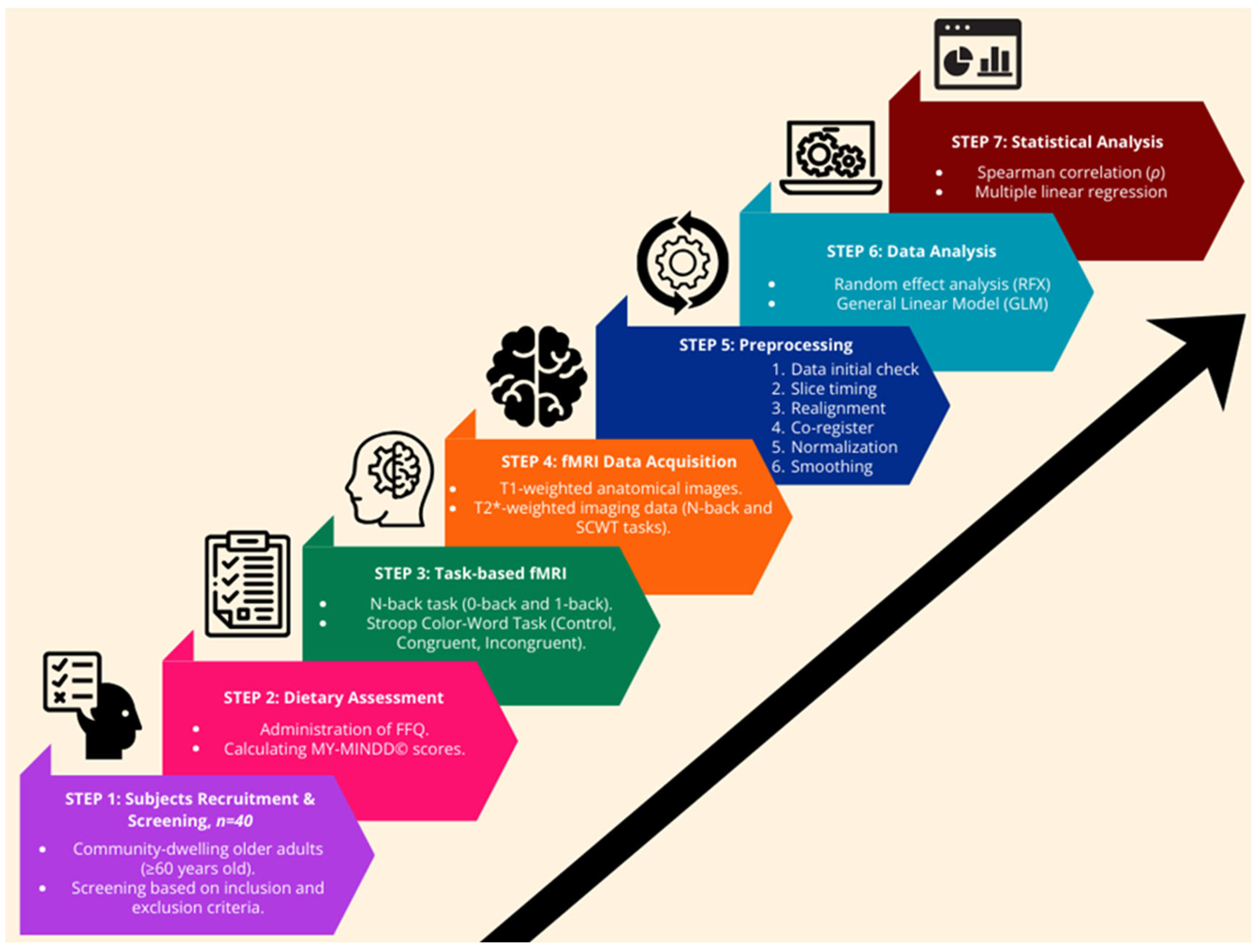
2.3. Procedures
2.4. fMRI Protocol
2.5. fMRI Data Acquisition
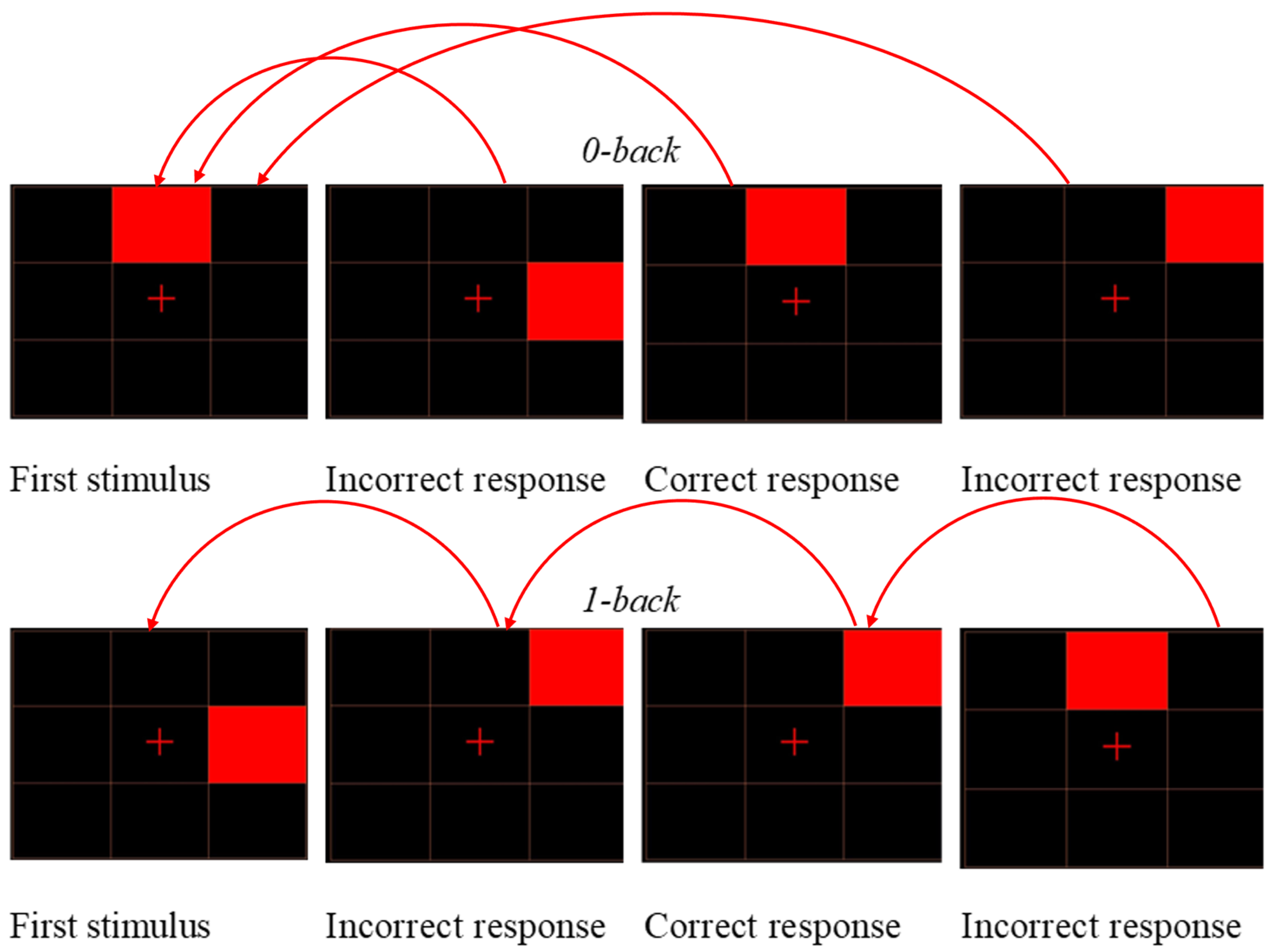
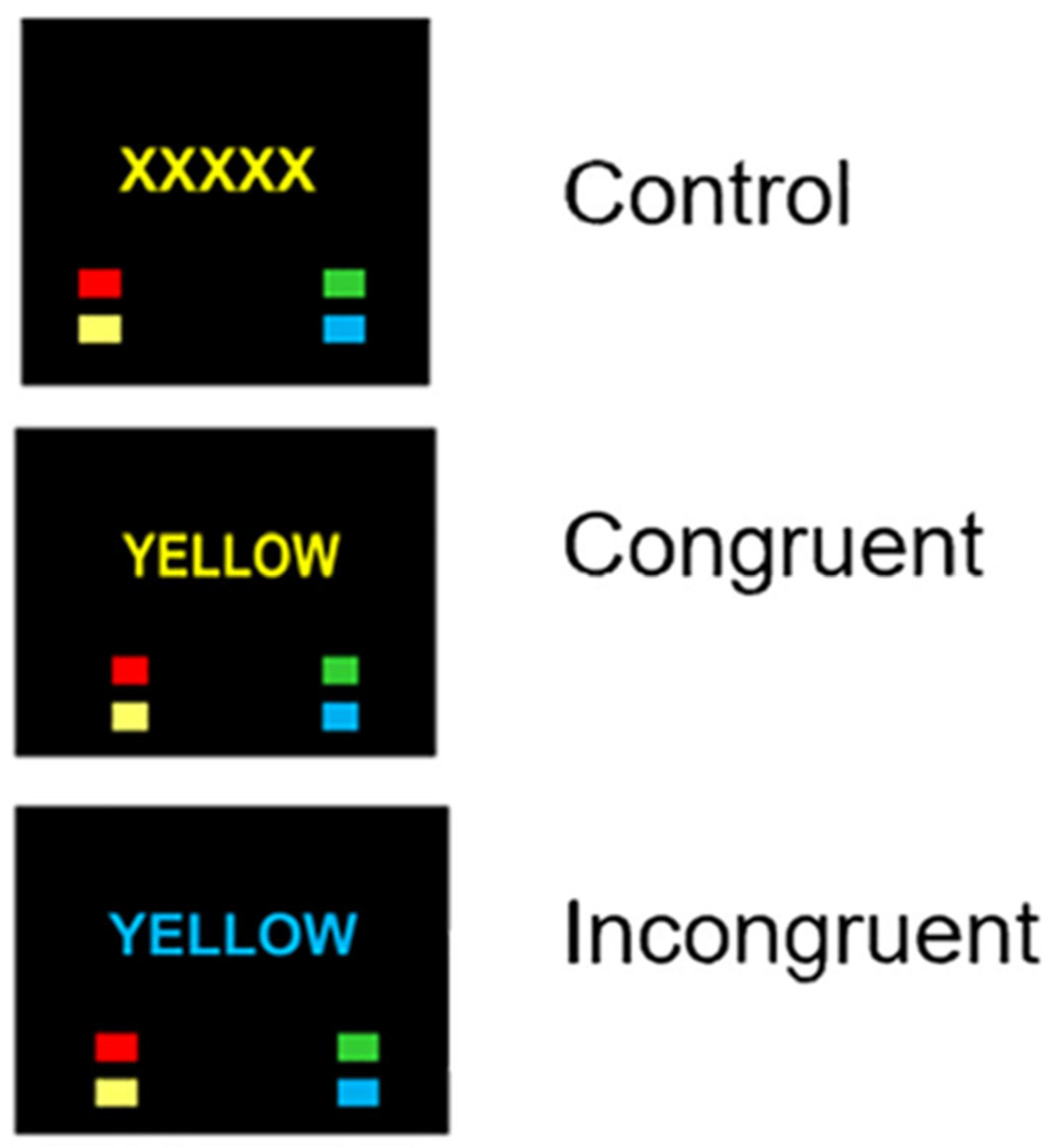
2.6. Task Performance Data
2.7. Preprocessing and Functional Imaging Data Analysis
2.8. Group Results Analysis
2.9. Region of Interest (ROI) Analysis
2.10. Statistical Analysis
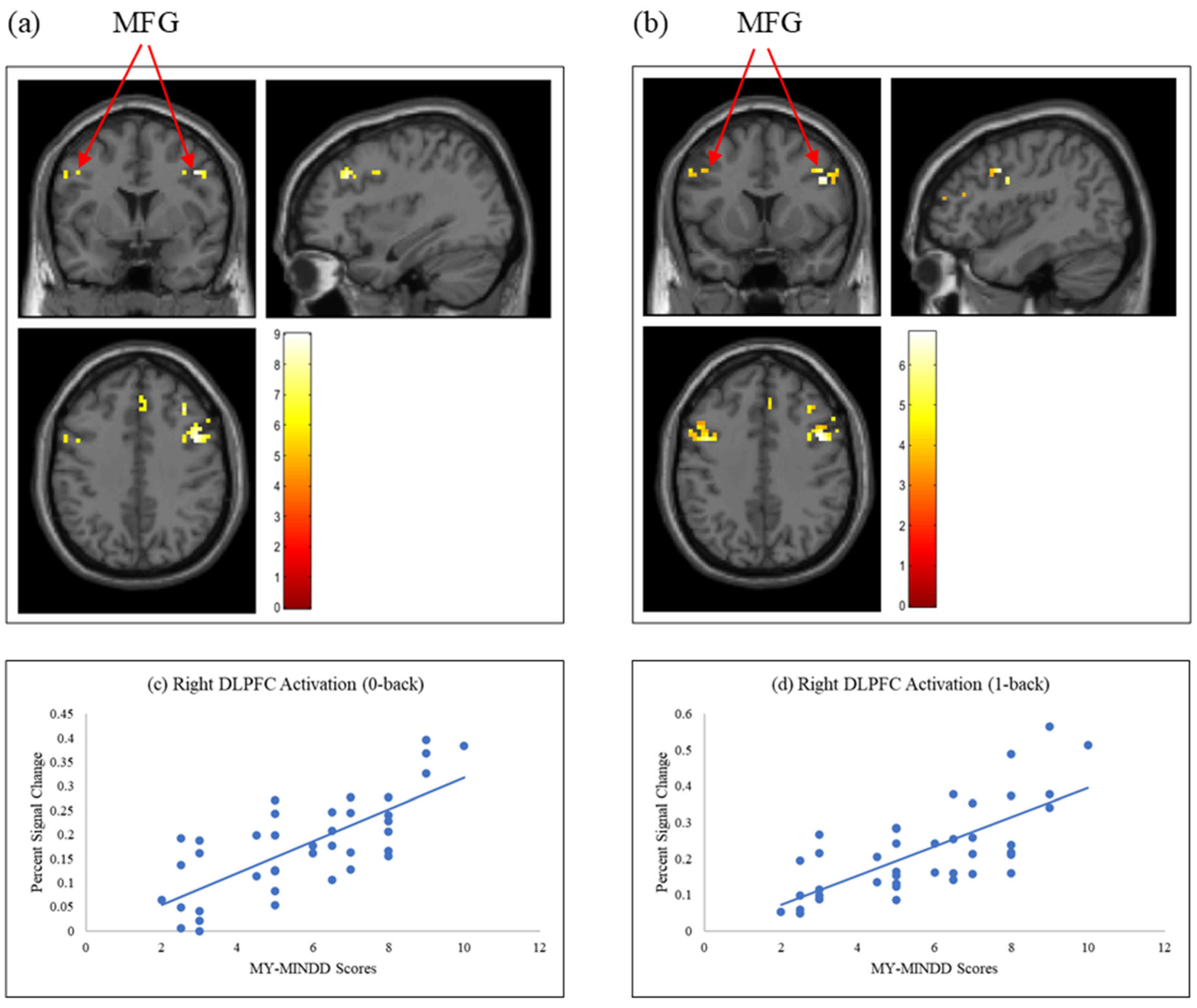
3. Results
4. Discussion
Limitations
5. Conclusions
Author Contributions
Funding
Institutional Review Board Statement
Informed Consent Statement
Data Availability Statement
Acknowledgments
Conflicts of Interest
Abbreviations
| MY-MINDD© | Malaysian-MIND Diet |
| DLPFC | Dorsolateral Prefrontal Cortex |
| DASH | Dietary Approaches to Stop Hypertension |
| ACC | Anterior Cingulate Cortex |
| ROI | Region of Interest |
| SCWT | Stroop Colour Word Test |
| GLM | General Linear Model |
| fMRI | Functional Magnetic Resonance Imaging |
| SPM | Statistical Parametric Mapping |
| MNI | Montreal Neurological Institute |
| RFX | Random Effect Analysis |
| AAL | Automated Anatomical Labelling |
| FWE | Familywise Error |
| ANCOVA | Analysis of Covariance |
| MCI | Mild Cognitive Impairment |
| RAVLT | Rey Auditory Verbal Learning Test |
| IADL | Instrumental Activities of Daily Living |
| BMI | Body Mass Index |
| MMSE | Mini-Mental State Examination |
| FFQ | Food Frequency Questionnaire |
| GDS | Geriatric Depression Scale |
| CI | Confidence Interval |
| MFG | Middle Frontal Gyrus |
| DHA | Docosahexaenoic Acid |
References
- Jaqua, E.E.; Tran, M.N.; Alvarez, P. Dementia and Cognitive Decline: A HEALM Approach. Am. J. Lifestyle Med. 2024, 19, 779–794. [Google Scholar] [CrossRef] [Scilit]
- Rippe, J.M. Lifestyle Medicine: The Health Promoting Power of Daily Habits and Practices. Am. J. Lifestyle Med. 2018, 12, 499–512. [Google Scholar] [CrossRef] [Scilit]
- Vanoh, D.; Shahar, S.; Che Din, N.; Omar, A.; Vyrn, C.A.; Razali, R.; Ibrahim, R.; Hamid, T.A. Predictors of poor cognitive status among older Malaysian adults: Baseline findings from the LRGS TUA cohort study. Aging Clin. Exp. Res. 2017, 29, 173–182. [Google Scholar] [CrossRef] [Scilit]
- Solomons, D.; Rodriguez-Fernandez, M.; Mery-Munoz, F.; Arrano-Carrasco, L.; Toloza-Ramirez, D.; Sahki-Costabal, F.; Mendez-Orellana, C. Right hemisphere engagement in language abilities in older adults: Indication of compensation rather than decline. Front. Aging 2025, 6, 1458692. [Google Scholar] [CrossRef] [Scilit] [PubMed]
- Friedman, N.P.; Robbins, T.W. The role of prefrontal cortex in cognitive control and executive function. Neuropsychopharmacology 2022, 47, 72–89. [Google Scholar] [CrossRef] [Scilit] [PubMed]
- Cipriani, G.E.; Molfese, S.; Giovannelli, F.; Gunteki, B.; Vitali, N.; Marcato, R.; Amanzio, M. Executive control from healthy ageing to cognitive impairment: A systematic review of stroop and simon effects using psychophysiological and imaging techniques. Neurosci. Biobehav. Rev. 2025, 172, 106121. [Google Scholar] [CrossRef] [Scilit] [PubMed]
- Jung, J.; Lambon Ralph, M.A.; Jackson, R.L. Subregions of DLPFC Display Graded yet Distinct Structural and Functional Connectivity. J. Neurosci. 2021, 42, 3241–3252. [Google Scholar] [CrossRef] [Scilit] [PubMed]
- Joyce, M.K.P.; Uchendu, S.; Arnsten, A.F.T. Stress and Inflammation Target Dorsolateral Prefrontal Cortex Function: Neural Mechanisms Underlying Weakened Cognitive Control. Biol. Psychiatry 2025, 97, 359–371. [Google Scholar] [CrossRef] [Scilit]
- You, Y.X.; Shahar, S.; Mohamad, M.; Rajab, N.F.; Haron, H.; Che Din, N.; Md, H.A.H. Neuroimaging Functional Magnetic Resonance Imaging Task-Based Dorsolateral Prefrontal Cortex Activation Following 12 Weeks of Cosmos caudatus Supplementation Among Older Adults with Mild Cognitive Impairment. J. Magn. Reson. Imaging 2021, 54, 1804–1818. [Google Scholar] [CrossRef] [Scilit]
- Malek Rivan, N.F.; Shahar, S.; Nik Mohd Fakhruddin, N.N.I.; You, Y.X.; Che Din, N.; Rajikan, R. The effect of dietary patterns on mild cognitive impairment and dementia incidence among community-dwelling older adults. Front. Nutr. 2022, 9, 901750. [Google Scholar] [CrossRef] [Scilit]
- You, Y.X.; Shahar, S.; Haron, H.; Yahya, H.M. More Ulam for Your Brain: A Review on the Potential Role of Ulam in Protecting Against Cognitive Decline. Sains Malays. 2018, 47, 2713–2729. [Google Scholar] [CrossRef] [Scilit]
- Gurbuz, E.; Gokce, A. Visual processing of food stimuli: The impact of working memory load and color. Atten. Percept. Psychophys. 2023, 85, 1722–1732. [Google Scholar] [CrossRef] [Scilit]
- Loong, S.; Barnes, S.; Gatto, N.M.; Chowdhury, S.; Lee, G.J. Omega-3 Fatty Acids, Cognition, and Brain Volume in Older Adults. Brain Sci. 2023, 13, 1278. [Google Scholar] [CrossRef] [Scilit]
- You, Y.X.; Shahar, S.; Mohamad, M.; Yahya, H.M.; Haron, H.; Hamid, H.A. Does traditional asian vegetables (ulam) consumption correlate with brain activity using fMRI? A study among aging adults from low-income households. J. Magn. Reson. Imaging 2020, 51, 1142–1153. [Google Scholar] [CrossRef] [Scilit]
- Morris, M.C.; Tangney, C.C.; Wang, Y.; Sacks, F.M.; Barnes, L.L.; Bennett, D.A.; Aggarwal, N.T. MIND diet slows cognitive decline with aging. Alzheimer’s Dement. 2015, 11, 1015–1022. [Google Scholar] [CrossRef] [Scilit]
- Fakhruddin, N.N.I.N.M.; Shahar, S.; Rajikan, R.; Omar, M.A.; Din, N.C.; Razali, R.; Harith, S.; Mohamed, H.J.J.; Hakim, B.N.A. Identification of dietary patterns associated with characteristics of successful aging. Malays. J. Nutr. 2019, 25, 47–57. [Google Scholar] [CrossRef] [Scilit]
- Muhamad Mustaqim, M.Z.; You, Y.X.; Shahar, S.; Shahril, M.R.; Malek Rivan, N.F.; Nik Mohd Fakhruddin, N.N.I.; Yap, A.X.W. Development of Malaysian-MIND diet scores for prediction of mild cognitive impairment among older adults in Malaysia. BMC Geriatr. 2024, 24, 387. [Google Scholar] [CrossRef] [Scilit]
- Huang, X.; Aihemaitijiang, S.; Ye, C.; Halimulati, M.; Wang, R.; Zhang, Z. Development of the cMIND Diet and Its Association with Cognitive Impairment in Older Chinese People. J. Nutr. Health Aging 2022, 26, 760–770. [Google Scholar] [CrossRef] [Scilit] [PubMed]
- Howieson, D. Current limitations of neuropsychological tests and assessment procedures. Clin. Neuropsychol. 2019, 33, 200–208. [Google Scholar] [CrossRef] [Scilit] [PubMed]
- Warren, S.L.; Reid, E.; Whitfield, P.; Helal, A.M.; Abo Hamza, E.G.; Tindle, R.; Moustafa, A.A.; Hamid, M.S. Cognitive and behavioral abnormalities in individuals with Alzheimer’s disease, mild cognitive impairment, and subjective memory complaints. Curr. Psychol. 2023, 43, 800–810. [Google Scholar] [CrossRef] [Scilit]
- Li, G.; Hu, Y.; Zhang, W.; Wang, J.; Ji, W.; Manza, P.; Volkow, N.D.; Zhang, Y.; Wang, G.-J. Brain functional and structural magnetic resonance imaging of obesity and weight loss interventions. Mol. Psychiatry 2023, 28, 1466–1479. [Google Scholar] [CrossRef] [Scilit]
- Lau, H.; Shahar, S.; Mohamad, M.; Rajab, N.F.; Yahya, H.M.; Che Din, N.; Hamid, H.A. Relationships between dietary nutrients intake and lipid levels with functional MRI dorsolateral prefrontal cortex activation. Clin. Interv. Aging 2019, 14, 43–51. [Google Scholar] [CrossRef] [Scilit]
- Talukdar, T.; Zamroziewicz, M.K.; Zwilling, C.E.; Barbey, A.K. Nutrient biomarkers shape individual differences in functional brain connectivity: Evidence from omega-3 PUFAs. Hum. Brain Mapp. 2019, 40, 1887–1897. [Google Scholar] [CrossRef] [Scilit]
- Hulley, S.B.; Cummings, S.R.; Browner, W.S.; Grady, D.G.; Newman, T.B. Designing Clinical Research 2013; Lippincott Williams & Wilkins: San Francisco, CA, USA, 2013. [Google Scholar]
- Dhana, K.; James, B.D.; Agarwal, P.; Aggarwal, N.T.; Cherian, L.J.; Leurgans, S.E.; Barnes, L.L.; A Bennett, D.; A Schneider, J. MIND Diet, Common Brain Pathologies, and Cognition in Community-Dwelling Older Adults. J. Alzheimer’s Dis. 2021, 83, 683–692. [Google Scholar] [CrossRef] [Scilit]
- Shahar, S.; Shahril, M.R.; Abdullah, N.; Borhanuddin, B.; Kamaruddin, M.A.; Md Yusuf, N.A.; Dauni, A.; Rosli, H.; Zainuddin, N.S.; Jamal, R. Development and Relative Validity of a Semiquantitative Food Frequency Questionnaire to Estimate Dietary Intake among a Multi-Ethnic Population in the Malaysian Cohort Project. Nutrients 2021, 13, 1163. [Google Scholar] [CrossRef] [Scilit] [PubMed]
- Abdul Manaf, Z.; Shahar, S.; Safii, N.S.; Haron, H. Atlas of Food Exchanges & Portion Sizes, 3rd ed.; MDC Publishers Sdn. Bhd: Kuala Lumpur, Malaysia, 2015. [Google Scholar]
- Protocol for Sampling and Method of Analysis for Malaysian Food Composition Database. 2011. Available online: https://myfcd.moh.gov.my/ (accessed on 9 November 2023).
- Abdull Nasser, N.M.; Mohamad, M.; Chan, L.F.; Suppiah, S.; Yusoff, A.N.; Abd Hamid, A.I.; Ismail, W.S.W.; Sim, S.T. task-based fMRI study on neural activity of internet gaming addiction among Malaysian adolescents: A stroop color task. Neurol. Asia 2021, 26, 561–574. [Google Scholar] [CrossRef] [Scilit]
- Friston, K.J.; Holmes, A.; Poline, J.B.; Price, C.J.; Frith, C.D. Detecting Activations in PET and fMRI: Levels of Inference and Power. Neuroimage 1996, 40, 223–235. [Google Scholar] [CrossRef] [Scilit] [PubMed]
- Simeonova, D.; Paunova, R.; Stoyanova, K.; Todeva-Radneva, A.; Kandilarova, S.; Stoyanov, D. Functional MRI Correlates of Stroop N-Back Test Underpin the Diagnosis of Major Depression. J. Integr. Neurosci. 2022, 21, 113. [Google Scholar] [CrossRef] [Scilit]
- Zhu, S.; Wang, Q.; Kan, C.; Geng, A.; Sui, Y.; Zhuang, R.; Zhu, Y.; Wang, T.; Zhu, L.; Guo, C. Age-related cerebral changes during different n-back tasks: A functional near-infrared spectroscopy study. Front. Aging Neurosci. 2024, 16, 1437587. [Google Scholar] [CrossRef] [Scilit]
- Kheirouri, S.; Alizadeh, M. MIND diet and cognitive performance in older adults: A systematic review. Crit. Rev. Food Sci. Nutr. 2022, 62, 8059–8077. [Google Scholar] [CrossRef] [Scilit]
- Clemente-Suarez, V.J.; Martin-Rodriguez, A.; Curiel-Regueros, A.; Rubio-Zarapuz, A.; Tornero-Aguilera, J.F. Neuro-Nutrition and Exercise Synergy: Exploring the Bioengineering of Cognitive Enhancement and Mental Health Optimization. Bioengineering 2025, 12, 208. [Google Scholar] [CrossRef] [Scilit] [PubMed]
- Sarubbo, F.; Moranta, D.; Tejada, S.; Jimenez, M.; Esteban, S. Impact of Gut Microbiota in Brain Ageing: Polyphenols as Beneficial Modulators. Antioxidants 2023, 12, 812. [Google Scholar] [CrossRef] [Scilit]
- Grabska-Kobylecka, I.; Szpakowski, P.; Krol, A.; Ksiazek-Winiarek, D.; Kobylecki, A.; Glabinski, A.; Nowak, D. Polyphenols and Their Impact on the Prevention of Neurodegenerative Diseases and Development. Nutrients 2023, 15, 3454. [Google Scholar] [CrossRef] [Scilit]
- Starns, J.J.; Ratcliff, R. The effects of aging on the speed-accuracy compromise: Boundary optimality in the diffusion model. Psychol. Aging 2010, 25, 377–390. [Google Scholar] [CrossRef] [Scilit] [PubMed]
- Agbangla, N.F.; Audiffren, M.; Pylouster, J.; Albinet, C.T. Load-Dependent Prefrontal Cortex Activation Assessed by Continuous-Wave Near-Infrared Spectroscopy during Two Executive Tasks with Three Cognitive Loads in Young Adults. Brain Sci. 2022, 12, 1462. [Google Scholar] [CrossRef] [Scilit] [PubMed]
- Salminen, T.; Forlim, C.G.; Schubert, T.; Kuhn, S. Dual n-back training improves functional connectivity of the right inferior frontal gyrus at rest. Sci. Rep. 2020, 10, 20379. [Google Scholar] [CrossRef] [Scilit]
- Xu, P.; Wang, M.; Zhang, T.; Zhang, J.; Jin, Z.; Li, L. The role of middle frontal gyrus in working memory retrieval by the effect of target detection tasks: A simultaneous EEG-fMRI study. Brain Struct. Funct. 2024, 229, 2493–2508. [Google Scholar] [CrossRef] [Scilit]
- Mikhailova, E.S.; Kurgansky, A.V.; Nushtaeva, R.A.; Gerasimenko, N.Y.; Kushnir, A.B. Intracortical Directed Connectivity for Information Retention in Visual-Spatial Working Memory. Dokl. Biol. Sci. 2021, 500, 133–137. [Google Scholar] [CrossRef] [Scilit]
- Hennessee, J.P.; Webb, C.E.; Chen, X.; Kennedy, K.M.; Wig, G.S.; Park, D.C. Relationship of prefrontal brain lateralization to optimal cognitive function differs with age. Neuroimage 2022, 264, 119736. [Google Scholar] [CrossRef] [Scilit]
- Yoon, J.A.; Kong, I.J.; Choi, J.K.; Baek, J.Y.; Kim, E.J.; Shin, Y.I.; Ko, M.-H.; Shin, Y.B.; Shin, M.J. Neural Compensatory Response During Complex Cognitive Function Tasks in Mild Cognitive Impairment: A Near-Infrared Spectroscopy Study. Neural Plast. 2019, 2019, 7845104. [Google Scholar] [CrossRef] [Scilit]
- Fan, C.; Li, H.; Chen, K.; Yang, G.; Xie, H.; Li, H.; Wu, Y.; Li, M. Brain compensatory activation during Stroop task in patients with mild cognitive impairment: A functional near-infrared spectroscopy study. Front. Aging Neurosci. 2025, 17, 1470747. [Google Scholar] [CrossRef] [Scilit]
- Lee, T.L.; Ding, Z.; Chan, A.S. Prefrontal hemodynamic features of older adults with preserved visuospatial working memory function. Geroscience 2023, 45, 3513–3527. [Google Scholar] [CrossRef] [Scilit]
- Xia, H.; Hou, Y.; Li, Q.; Chen, A. A meta-analysis of cognitive flexibility in aging: Perspective from functional network and lateralization. Hum. Brain Mapp. 2024, 45, e70031. [Google Scholar] [CrossRef] [Scilit]
- Morcom, A.M.; Henson, R.N.A. Increased Prefrontal Activity with Aging Reflects Nonspecific Neural Responses Rather than Compensation. J. Neurosci. 2018, 38, 7303–7313. [Google Scholar] [CrossRef] [Scilit]
- Mekala, A.; Qiu, H. Interplay Between Vascular Dysfunction and Neurodegenerative Pathology: New Insights into Molecular Mechanisms and Management. Biomolecules 2025, 15, 712. [Google Scholar] [CrossRef] [Scilit] [PubMed]
- Morris, M.C.; Tangney, C.C.; Wang, Y.; Sacks, F.M.; Bennett, D.A.; Aggarwal, N.T. MIND diet associated with reduced incidence of Alzheimer’s disease. Alzheimer’s Dement. 2015, 11, 1007–1014. [Google Scholar] [CrossRef] [Scilit]



| Characteristics | All (n = 40) | MY-MINDD© Score (Range 0–11) | p Value | |||
|---|---|---|---|---|---|---|
| Q1 (0–3) (n = 10) | Q2 (4–5) (n = 10) | Q3 (6–7) (n = 10) | Q4 (8–11) (n = 10) | |||
| MY-MINDD© score 2 | 5.68 ± 2.21 | 2.70 ± 0.35 | 4.90 ± 0.21 | 6.60 ± 0.39 | 8.50 ± 0.71 | <0.001 |
| Gender 3 | 0.865 | |||||
| Male | 11 (27.5) | 2 (20.0) | 2 (20.0) | 4 (40.0) | 3 (30.0) | |
| Female | 29 (72.5) | 8 (80.0) | 8 (80.0) | 6 (60.0) | 7 (70.0) | |
| Age 1 | 67.48 ± 2.99 | 66.50 ± 3.06 | 67.30 ± 1.95 | 67.20 ± 2.94 | 68.90 ± 3.67 | 0.335 |
| Ethnicity 3 | 0.705 | |||||
| Malay | 18 (45.0) | 3 (30.0) | 4 (40.0) | 6 (60.0) | 5 (50.0) | |
| Chinese | 18 (45.0) | 6 (60.0) | 4 (40.0) | 3 (30.0) | 5 (50.0) | |
| Indian | 4 (10.0) | 1 (10.0) | 2 (20.0) | 1 (10.0) | 0 (0.0) | |
| Marital status 3 | 0.920 | |||||
| Single | 2 (5.0) | 1 (10.0) | 1 (10.0) | 0 (0.0) | 0 (0.0) | |
| Married | 31 (77.5) | 7 (70.0) | 7 (70.0) | 8 (80.0) | 9 (90.0) | |
| Widow/Widower | 7 (17.5) | 2 (20.0) | 2 (20.0) | 2 (20.0) | 1 (10.0) | |
| Household income 2 (RM) | 5062.50 ± 3117.75 | 4700.00 ± 2626.79 | 3650.00 ± 2848.49 | 5800.00 ± 3259.18 | 6100.00 ± 3510.30 | 0.381 |
| Education level 3 | 0.357 | |||||
| Secondary school | 22 (55.0) | 4 (40.0) | 7 (70.0) | 6 (60.0) | 5 (50.0) | |
| Diploma | 7 (17.5) | 3 (30.0) | 2 (20.0) | 2 (20.0) | 0 (0.0) | |
| Degree | 11 (27.5) | 3 (30.0) | 1 (10.0) | 2 (20.0) | 5 (50.0) | |
| Formal education 2 (years) | 13.63 ± 1.85 | 14.10 ± 1.85 | 13.00 ± 1.63 | 13.40 ± 1.84 | 14.00 ± 2.11 | 0.447 |
| Body mass index 1 (kg/m2) | 24.68 ± 3.40 | 23.77 ± 2.78 | 24.85 ± 2.14 | 22.96 ± 2.48 a | 27.13 ± 4.55 a | 0.030 |
| Hypertension 3 | 0.689 | |||||
| Yes | 26 (65.0) | 7 (70.0) | 6 (60.0) | 5 (50.0) | 8 (80.0) | |
| No | 14 (35.0) | 3 (30.0) | 4 (40.0) | 5 (50.0) | 2 (20.0) | |
| Diabetes 3 | 0.853 | |||||
| Yes | 6 (15.0) | 1 (10.0) | 2 (20.0) | 2 (20.0) | 1 (10.0) | |
| No | 34 (85.0) | 9 (90.0) | 8 (80.0) | 8 (80.0) | 9 (90.0) | |
| Hyperlipidemia 3 | 0.627 | |||||
| Yes | 24 (60.0) | 7 (70.0) | 6 (60.0) | 7 (70.0) | 4 (40.0) | |
| No | 16 (40.0) | 3 (30.0) | 4 (40.0) | 3 (30.0) | 6 (60.0) | |
| Smoking 3 | N/A | |||||
| Yes | 0 (0.0) | 0 (0.0) | 0 (0.0) | 0 (0.0) | 0 (0.0) | |
| No | 40 (100.0) | 10 (100.0) | 10 (100.0) | 10 (100.0) | 10 (100.0) | |
| Social activity 3 | 0.865 | |||||
| Frequent | 17 (42.5) | 4 (40.0) | 4 (40.0) | 4 (40.0) | 5 (50.0) | |
| Sometimes | 14 (35.0) | 4 (40.0) | 2 (20.0) | 5 (50.0) | 3 (30.0) | |
| Seldom | 6 (15.0) | 1 (10.0) | 2 (20.0) | 1 (10.0) | 2 (20.0) | |
| None | 3 (7.5) | 1 (10.0) | 2 (20.0) | 0 (0.0) | 0 (0.0) | |
| Exercise 3 | 0.669 | |||||
| Everyday | 11 (27.5) | 3 (30.0) | 2 (20.0) | 1 (10.0) | 5 (50.0) | |
| 3–5 times per week | 10 (25.0) | 3 (30.0) | 3 (30.0) | 2 (20.0) | 2 (20.0) | |
| 1–2 times per week | 15 (37.5) | 3 (30.0) | 3 (30.0) | 6 (60.0) | 3 (30.0) | |
| None | 4 (10.0) | 1 (10.0) | 2 (20.0) | 1 (10.0) | 0 (0.0) | |
| GDS 3 | 0.551 | |||||
| No depressive symptoms | 38 (95.0) | 10 (100.0) | 10 (100.0) | 9 (90.0) | 9 (90.0) | |
| Depressive symptoms | 2 (5.0) | 0 (0.0) | 0 (0.0) | 1 (10.0) | 1 (10.0) | |
| IADL 2 | 7.78 ± 0.48 | 7.70 ± 0.68 | 7.90 ± 0.32 | 7.70 ± 0.48 | 7.80 ± 0.42 | 0.760 |
| Brain Activation | MY-MINDD© Score (Range 0–11) | p Value | Effect Size Cohen’s f | |||
|---|---|---|---|---|---|---|
| Q1 (0–3) (n = 10) | Q2 (4–5) (n = 10) | Q3 (6–7) (n = 10) | Q4 (8–11) (n = 10) | |||
| 0-back left DLPFC activation | 0.06 ± 0.08 a | 0.11 ± 0.11 b | 0.08 ± 0.07 c | 0.21 ± 0.13 abc | 0.026 * | 0.25 |
| 0-back right DLPFC activation | 0.11 ± 0.11 a | 0.15 ± 0.07 | 0.19 ± 0.05 | 0.23 ± 0.14 a | 0.044 * | 0.22 |
| 1-back left DLPFC activation | 0.05 ± 0.10 a | 0.16 ± 0.15 | 0.15 ± 0.12 | 0.24 ± 0.21 a | 0.104 | 0.17 |
| 1-back right DLPFC activation | 0.10 ± 0.12 ab | 0.18 ± 0.16 | 0.25 ± 0.13 a | 0.26 ± 0.17 b | 0.043 * | 0.22 |
| SCWT Control Left DLPFC activation | 0.02 ± 0.03 a | 0.19 ± 0.31 b | 0.19 ± 0.21 | 0.12 ± 0.10 | 0.211 | 0.13 |
| SCWT Congruent Left DLPFC activation | 0.07 ± 0.08 | 0.25 ± 0.36 | 0.13 ± 0.20 | 0.18 ± 0.14 | 0.376 | 0.09 |
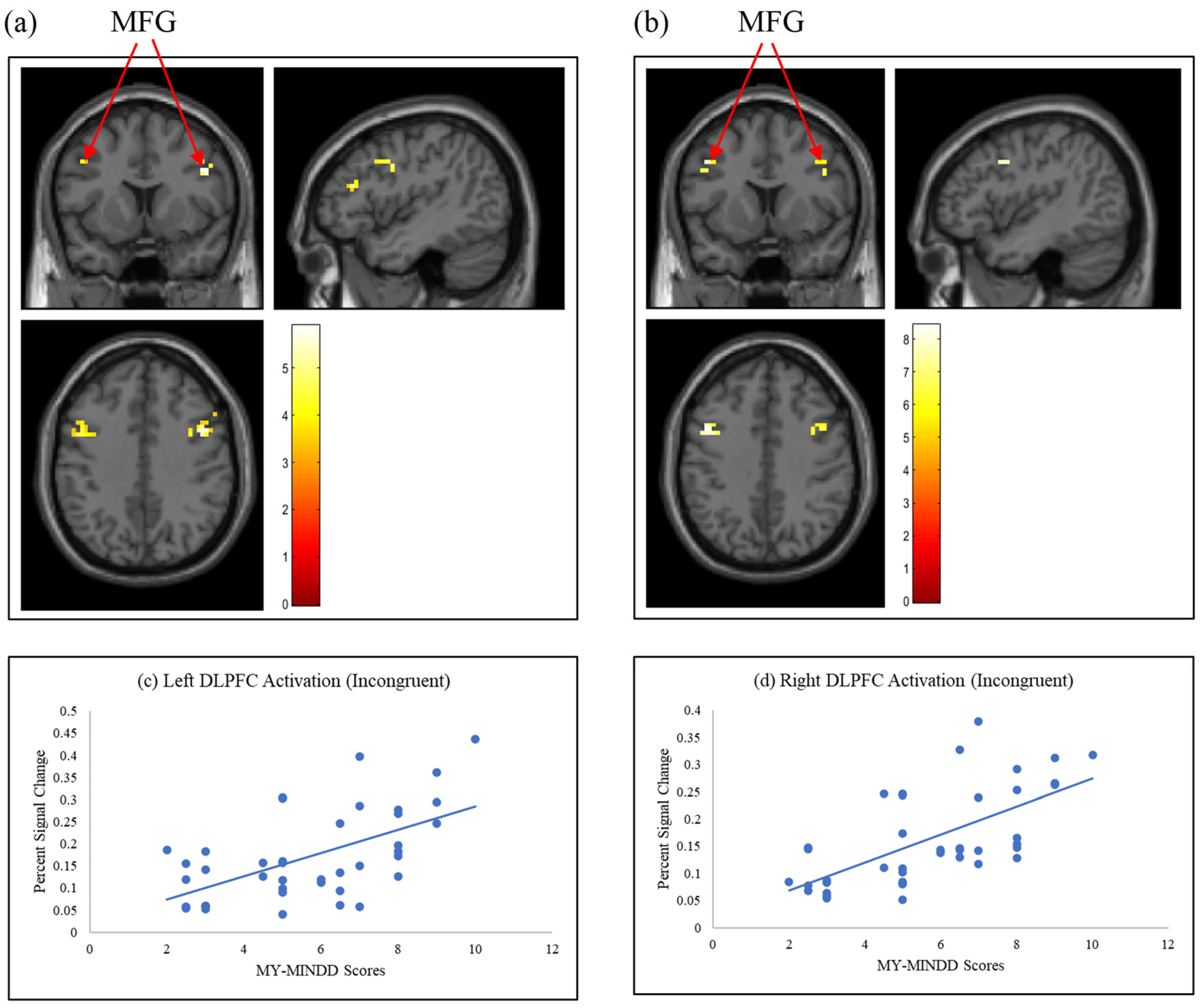
| SCWT Incongruent Left DLPFC activation | 0.11 ± 0.06 d | 0.16 ± 0.09 e | 0.16 ± 0.14 f | 0.26 ± 0.09 def | 0.008 * | 0.31 |
| SCWT Control Right DLPFC activation | 0.02 ± 0.03 a | 0.21 ± 0.35 a | 0.17 ± 0.20 | 0.12 ± 0.13 | 0.176 | 0.14 |
| SCWT Congruent Right DLPFC activation | 0.07 ± 0.07 | 0.21 ± 0.30 | 0.12 ± 0.16 | 0.17 ± 0.12 | 0.429 | 0.08 |
| SCWT Incongruent Right DLPFC activation | 0.09 ± 0.03 de | 0.14 ± 0.08 f | 0.19 ± 0.09 d | 0.22 ± 0.08 ef | 0.002 * | 0.36 |
| Task Performance | MY-MINDD© Scores (Range 0–11) | |
|---|---|---|
| Correlation (ρ) | p-Value | |
| 0-back correct response % | 0.536 * | <0.001 |
| 1-back correct response % | 0.041 | 0.802 |
| 0-back response time | −0.296 | 0.064 |
| 1-back response time | −0.112 | 0.492 |
| SCWT control correct response % | 0.737 * | <0.001 |
| SCWT congruent correct response % | 0.616 * | <0.001 |
| SCWT incongruent correct response % | 0.069 | 0.671 |
| SCWT control response time | −0.301 | 0.059 |
| SCWT congruent response time | −0.276 | 0.084 |
| SCWT incongruent response time | −0.034 | 0.836 |
| Task Performance | Correlation, ρ (p-Value) | |||||||||
|---|---|---|---|---|---|---|---|---|---|---|
| 0-Back DLPFC Activation | 1-Back DLPFC Activation | SCWT Control DLPFC Activation | SCWT Congruent DLPFC Activation | SCWT Incongruent DLPFC Activation | ||||||
| L | R | L | R | L | R | L | R | L | R | |
| 0-back correct response % | 0.523 (0.001) ** | 0.425 (0.006) ** | ||||||||
| 0-back response time | −0.335 (0.035) * | −0.184 (0.257) | ||||||||
| 1-back correct response % | 0.002 (0.990) | 0.055 (0.738) | ||||||||
| 1-back response time | −0.041 (0.802) | −0.086 (0.600) | ||||||||
| SCWT control correct response % | 0.326 (0.040) * | 0.404 (0.010) * | ||||||||
| SCWT control response time | −0.093 (0.569) | −0.010 (0.949) | ||||||||
| SCWT congruent correct response % | −0.045 (0.781) | −0.014 (0.931) | ||||||||
| SCWT congruent response time | −0.196 (0.226) | −0.048 (0.770) | ||||||||
| SCWT incongruent correct response % | −0.178 (0.272) | −0.078 (0.633) | ||||||||
| SCWT incongruent response time | −0.112 (0.489) | 0.015 (0.925) | ||||||||
| Variables | Beta Coefficient, β (95% CI) | |||||||
|---|---|---|---|---|---|---|---|---|
| 0-Back DLPFC Activation | 1-Back DLPFC Activation | SCWT Control DLPFC Activation | SCWT Incongruent DLPFC Activation | |||||
| L | R | L | R | L | R | L | R | |
| Unadjusted Model | ||||||||
| MY-MINDD© score | 0.478 (0.010–0.039) * | 0.529 (0.012–0.038) * | 0.421 (0.009–0.053) | 0.444 (0.010–0.051) * | 0.212 (−0.010–0.048) | 0.176 (−0.014–0.048) | 0.534 (0.013–0.041) * | 0.629 (0.015–0.035) * |
| Adjusted Model ** | ||||||||
| MY-MINDD© score | 0.461 (0.008–0.039) * | 0.564 (0.012–0.041) * | 0.418 (0.008–0.054) | 0.480 (0.012–0.054) * | 0.198 (−0.013–0.049) | 0.166 (−0.017–0.049) | 0.567 (0.013–0.044) * | 0.654 (0.015–0.036) * |
| Anatomical Region | L/R | Coordinates x, y, z | Voxels Activated | Maximum T Value |
|---|---|---|---|---|
| 0-back | ||||
| Middle frontal gyrus | L | −54 17 32 | 84 | 8.40 |
| Inferior frontal gyrus | R | 45 8 38 | 147 | 8.10 |
| 1-back | ||||
| Middle frontal gyrus | L | −51 29 35 | 147 | 11.03 |
| Middle frontal gyrus | R | 39 41 35 | 330 | 11.10 |
| SCWT-Control | ||||
| Middle frontal gyrus | L | −42 5 38 | 6 | 5.56 |
| Middle frontal gyrus | R | 51 8 38 | 14 | 5.59 |
| SCWT-Congruent | ||||
| Precentral gyrus | L | −36 47 32 | 54 | 7.89 |
| Middle frontal gyrus | R | 36 50 32 | 66 | 8.25 |
| SCWT-Incongruent | ||||
| Middle frontal gyrus | L | −57 20 32 | 25 | 7.45 |
| Inferior frontal gyrus | R | 60 23 26 | 18 | 6.25 |
Disclaimer/Publisher’s Note: The statements, opinions and data contained in all publications are solely those of the individual author(s) and contributor(s) and not of MDPI and/or the editor(s). MDPI and/or the editor(s) disclaim responsibility for any injury to people or property resulting from any ideas, methods, instructions or products referred to in the content. |
© 2026 by the authors. Licensee MDPI, Basel, Switzerland. This article is an open access article distributed under the terms and conditions of the Creative Commons Attribution (CC BY) license.
Share and Cite
Zapawi, M.M.M.; You, Y.X.; Mohamad, M.; Subramaniam, P.; Shahril, M.R.; Mohd Zaki, F.; Shahar, S. Association of Malaysian-MIND Diet Scores with Brain Activation in Older Adults: A Functional MRI Study. Biomedicines 2026, 14, 1238. https://doi.org/10.3390/biomedicines14061238
Zapawi MMM, You YX, Mohamad M, Subramaniam P, Shahril MR, Mohd Zaki F, Shahar S. Association of Malaysian-MIND Diet Scores with Brain Activation in Older Adults: A Functional MRI Study. Biomedicines. 2026; 14(6):1238. https://doi.org/10.3390/biomedicines14061238
Chicago/Turabian StyleZapawi, Muhamad Mustaqim M, Yee Xing You, Mazlyfarina Mohamad, Ponnusamy Subramaniam, Mohd Razif Shahril, Faizah Mohd Zaki, and Suzana Shahar. 2026. "Association of Malaysian-MIND Diet Scores with Brain Activation in Older Adults: A Functional MRI Study" Biomedicines 14, no. 6: 1238. https://doi.org/10.3390/biomedicines14061238
APA StyleZapawi, M. M. M., You, Y. X., Mohamad, M., Subramaniam, P., Shahril, M. R., Mohd Zaki, F., & Shahar, S. (2026). Association of Malaysian-MIND Diet Scores with Brain Activation in Older Adults: A Functional MRI Study. Biomedicines, 14(6), 1238. https://doi.org/10.3390/biomedicines14061238