Benzyl-Naphthoquinones as Selective Anticancer Agents for Oral Squamous Cell Carcinoma via Apoptosis Induction

 , , ,
, , ,  , , and
Abstract
1. Introduction
2. Materials and Methods
2.1. Chemistry
2.1.1. General Experimental Procedures
2.1.2. Purity Assessment of Synthesized Compounds
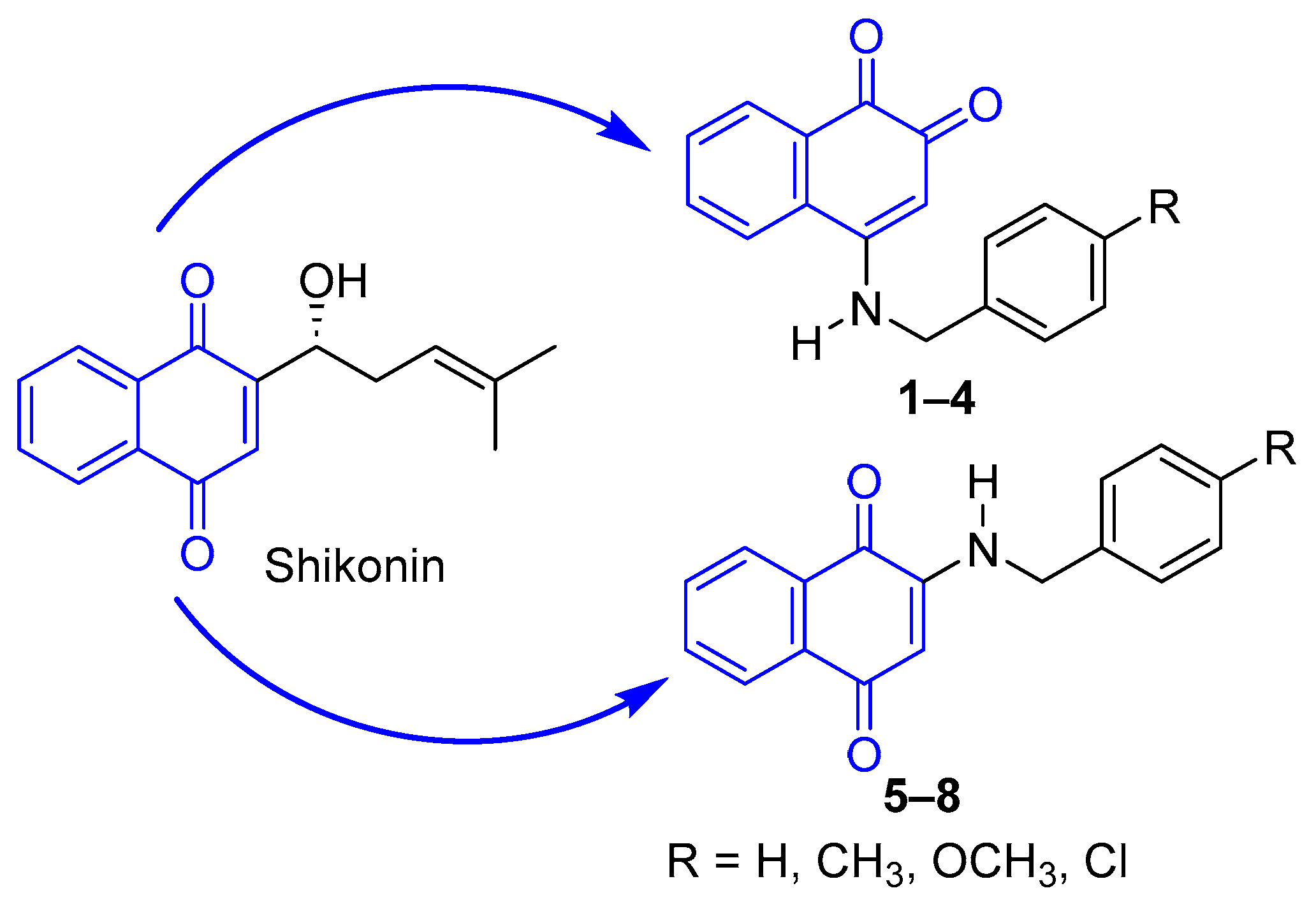
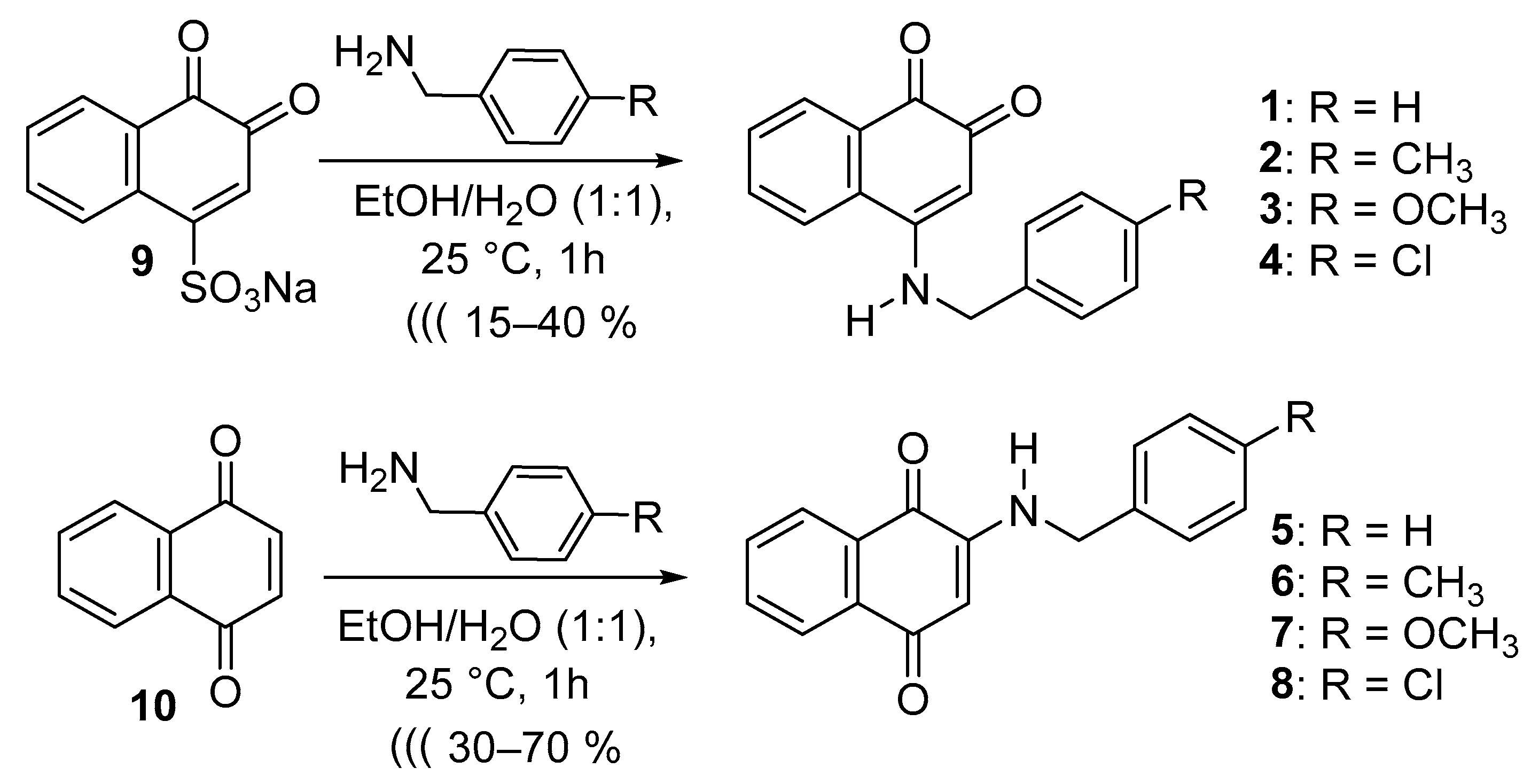
2.1.3. Procedure for Preparing 4-Benzylamine-naphthalene-1,2-dione 1-4 and 2-Benzylamine-naphthalene-1,4-dione 5-8
2.2. Biological Assays
2.2.1. Cell Lines and Culture Conditions
2.2.2. MTT Cytotoxicity Assay
2.2.3. Statistical Analysis
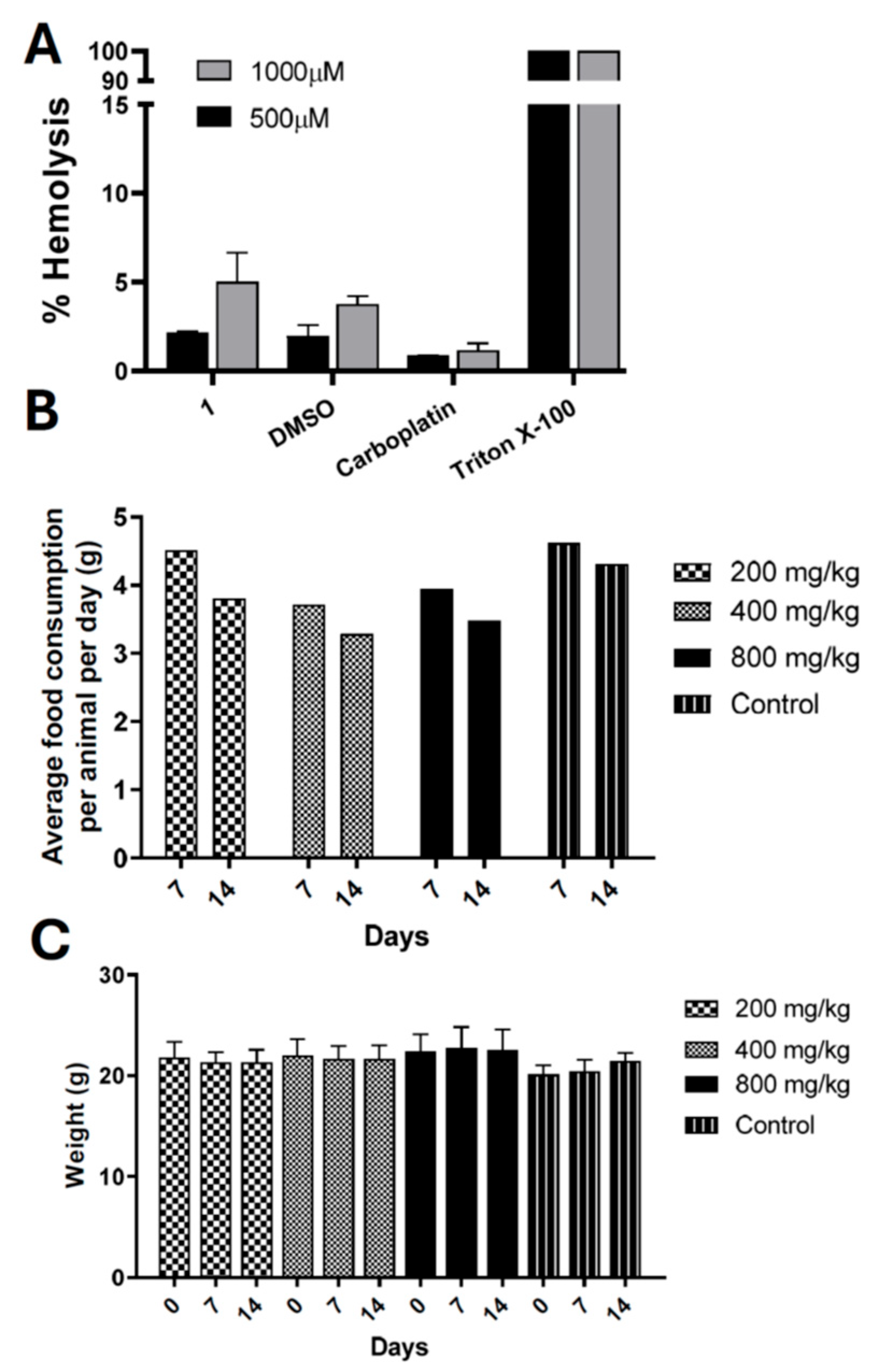
2.2.4. Hemolysis Assay
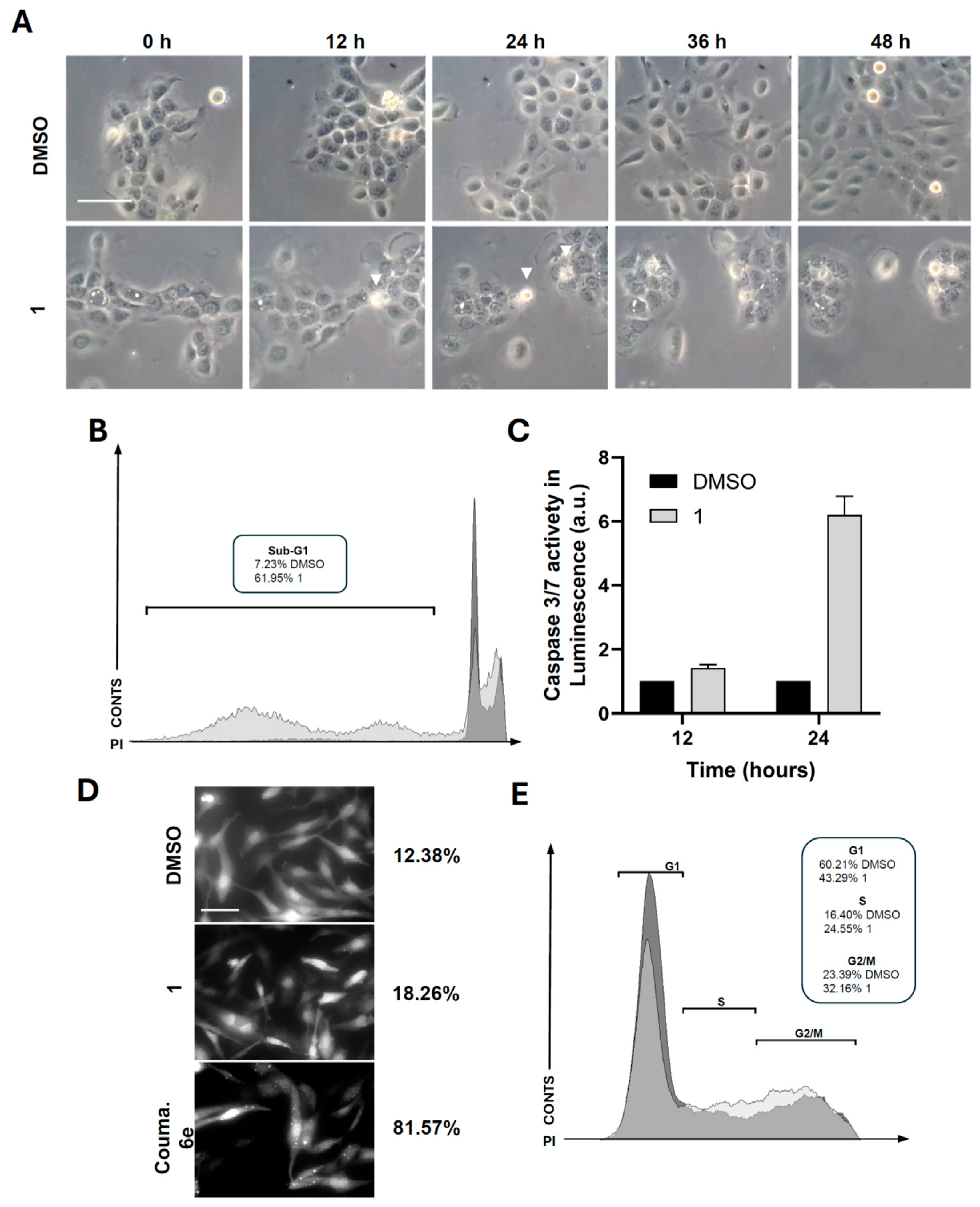
2.2.5. Time-Lapse Assay
2.2.6. Caspase 3/7 Activity Assay
2.2.7. DNA Fragmentation and Cell Cycle Analysis
2.2.8. Autophagy Marker Analysis by Fluorescence Microscopy
2.2.9. In Vivo Acute Toxicity Study
2.3. In Silico Studies
2.3.1. In Silico ADMET Prediction
2.3.2. Molecular Docking Studies
2.4. Use of AI
3. Results and Discussion
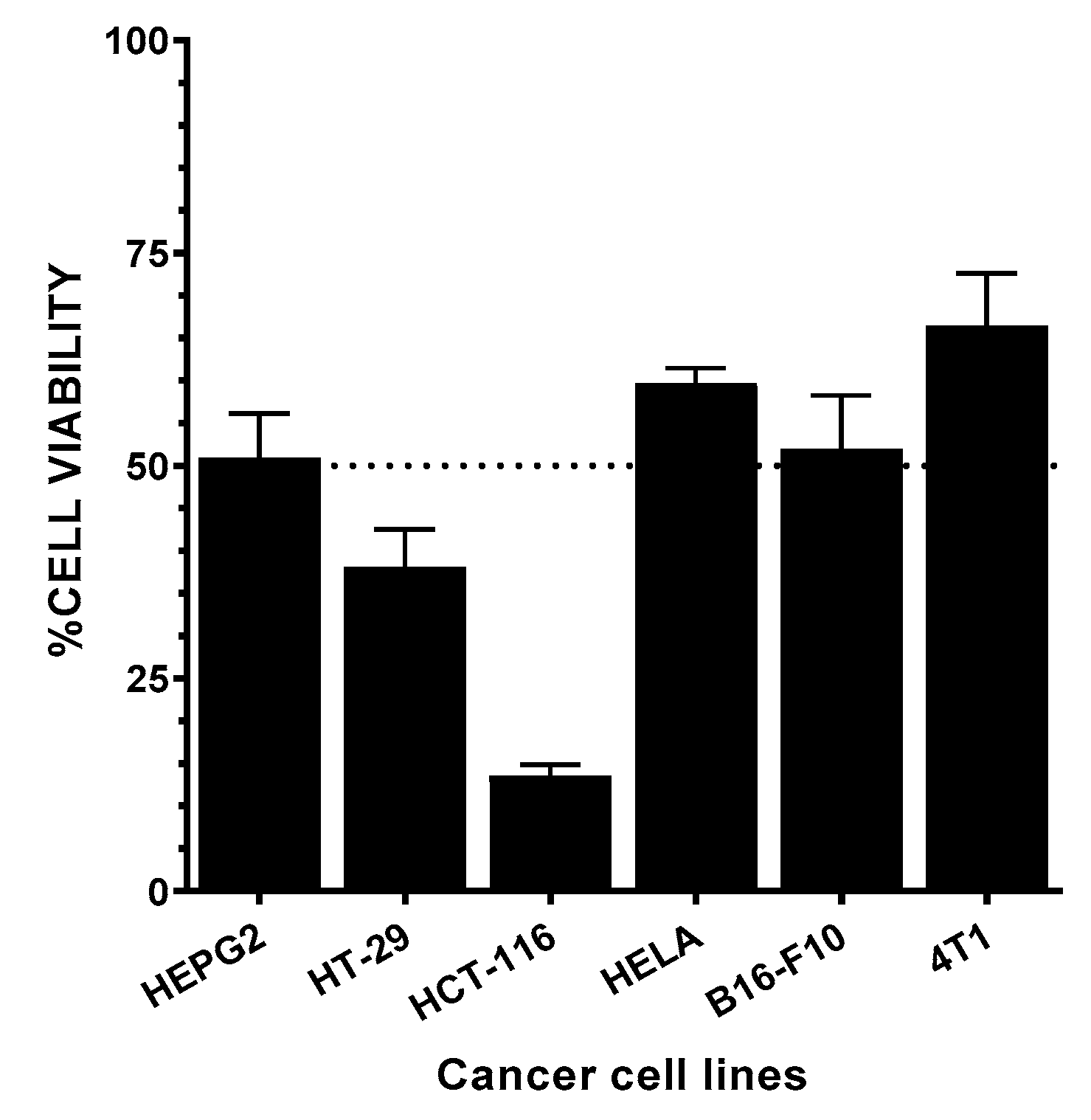
3.1. Cytotoxicity, Selectivity, and Toxicity of Naphthoquinone Compounds
3.2. Cell Death Pathway Investigation
3.3. Predicted Pharmacokinetic and Physicochemical Characteristics of Compound 1
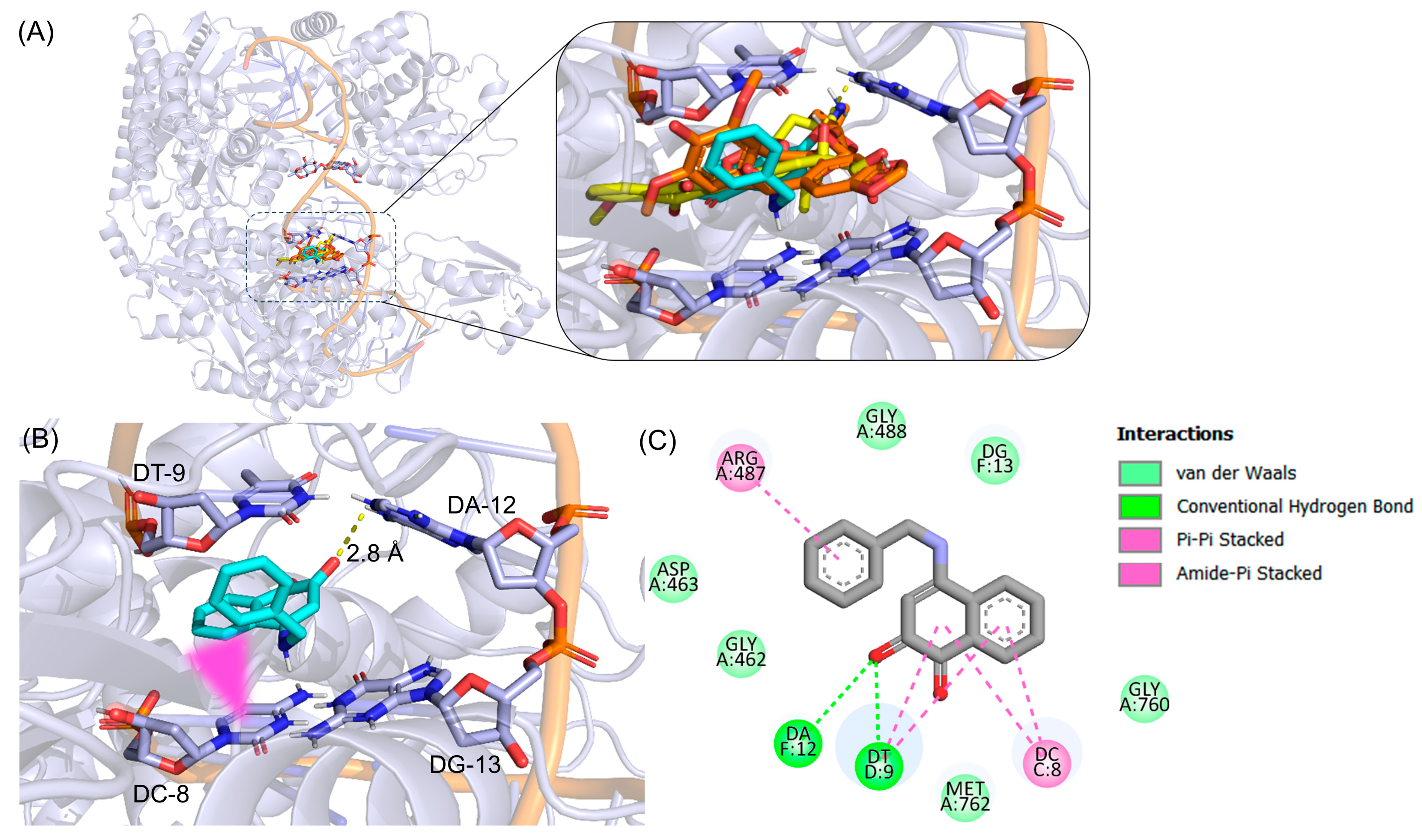
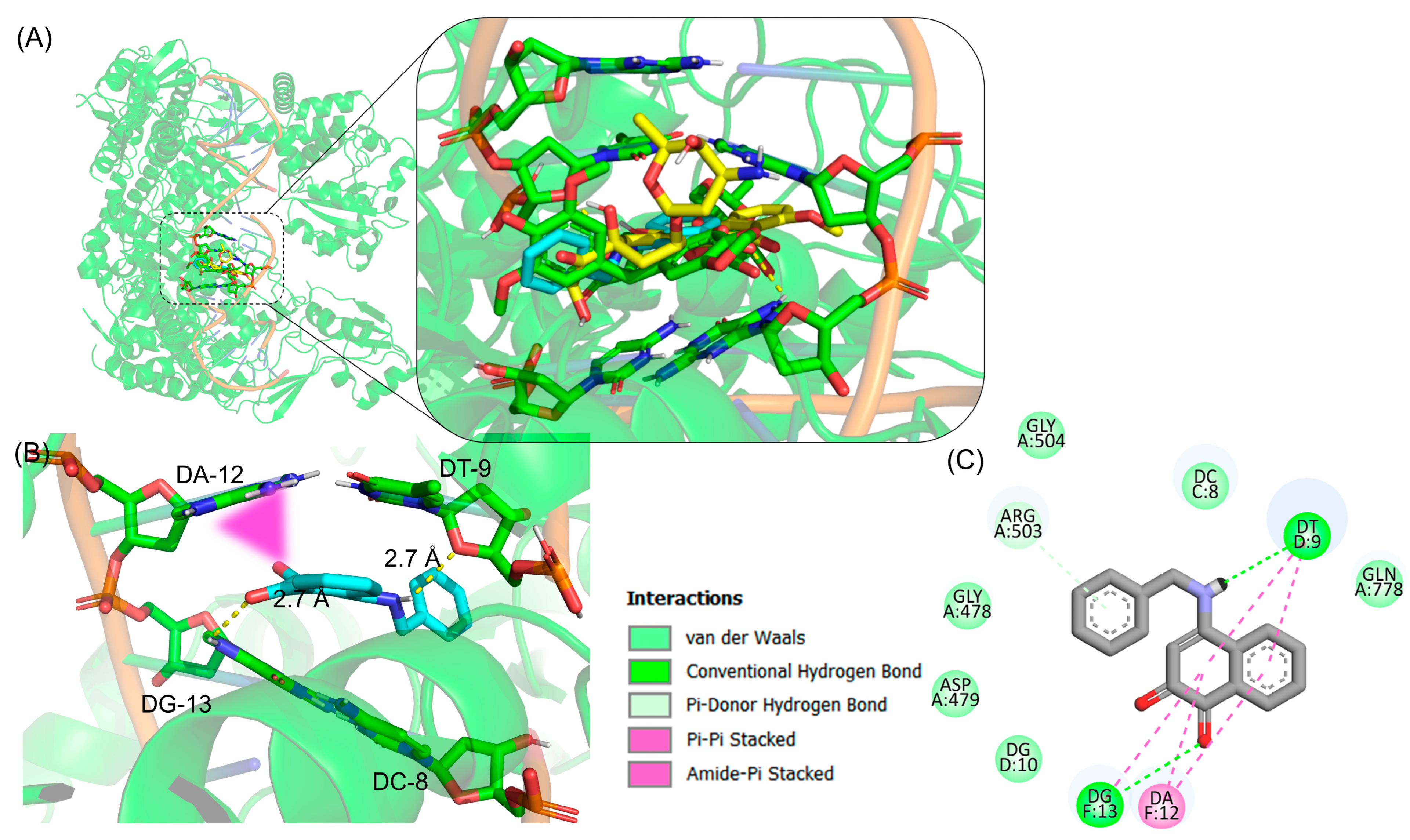
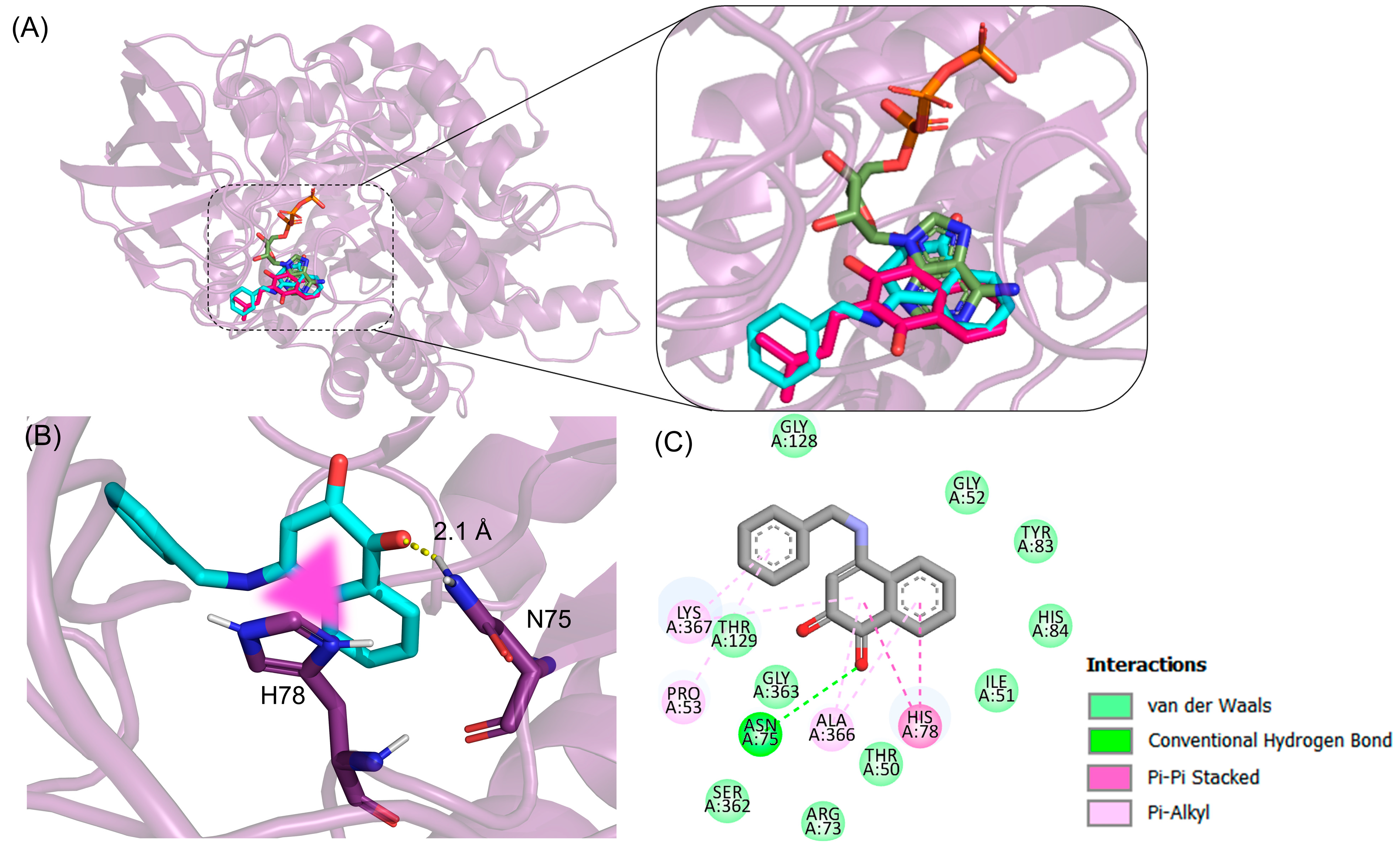
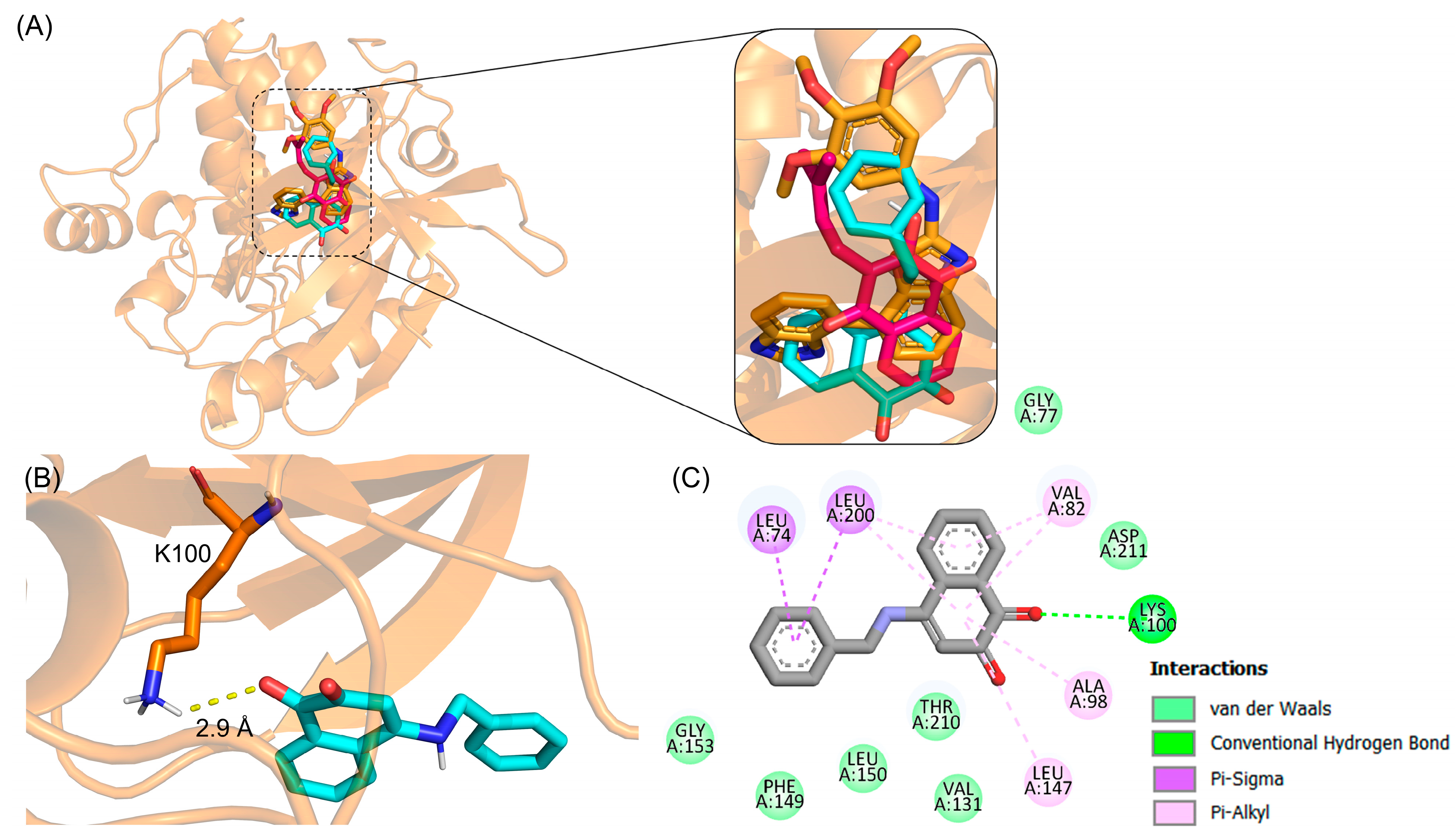
3.4. Analysis of Putative Antitumor Targets of Compound 1 by In Silico Reverse Docking
4. Conclusions
Supplementary Materials
Author Contributions
Funding
Institutional Review Board Statement
Informed Consent Statement
Data Availability Statement
Conflicts of Interest
References
- Tan, Y.; Wang, Z.; Xu, M.; Li, B.; Huang, Z.; Qin, S.; Nice, E.C.; Tang, J.; Huang, C. Oral squamous cell carcinomas: State of the field and emerging directions. Int. J. Oral Sci. 2023, 15, 44. [Google Scholar] [CrossRef] [Scilit]
- Dong, L.; Xue, L.; Cheng, W.; Tang, J.; Ran, J.; Li, Y. Comprehensive survival analysis of oral squamous cell carcinoma patients undergoing initial radical surgery. BMC Oral. Health 2024, 24, 919. [Google Scholar] [CrossRef] [Scilit] [PubMed]
- Zhang, C.; Xu, C.; Gao, X.; Yao, Q. Platinum-based drugs for cancer therapy and anti-tumor strategies. Theranostics 2022, 12, 2115–2132. [Google Scholar] [CrossRef] [Scilit]
- de Almeida, P.D.O.; Jobim, G.D.S.B.; Ferreira, C.C.D.S.; Bernardes, L.R.; Dias, R.B.; Sales, C.B.S.; de F, L.; Rocha, C.A.G.; Soares, M.B.P.; Bezerra, D.P.; et al. A new synthetic antitumor naphthoquinone induces ROS-mediated apoptosis with activation of the JNK and p38 signaling pathways. Chem. Biol. Interact. 2021, 343, 109444. [Google Scholar] [CrossRef] [Scilit]
- Valipour, M. Recent advances of antitumor shikonin/alkannin derivatives: A comprehensive overview focusing on structural classification, synthetic approaches, and mechanisms of action. Eur. J. Med. Chem. 2022, 235, 114314. [Google Scholar] [CrossRef] [Scilit]
- de Carvalho da Silva, F.; Ferreira, V.F. Natural Naphthoquinones with Great Importance in Medicinal Chemistry. Curr. Org. Synth. 2016, 13, 334–371. [Google Scholar] [CrossRef] [Scilit]
- Ferraz da Costa, D.C.; Pereira Rangel, L.; da Cunha Martins-Dinis, M.M.; da Silva Ferretti, G.D.; Ferreira, V.F.; Silva, J.L. Anticancer Potential of Resveratrol, β-Lapachone and Their Analogues. Molecules 2020, 25, 893. [Google Scholar] [CrossRef] [Scilit] [PubMed]
- Wermelinger, G.F.; Rubini, L.; da Fonseca, A.C.C.; Ouverney, G.; de Oliveira, R.P.R.F.; de Souza, A.S.; Forezi, L.S.M.; Limaverde-Sousa, G.; Pinheiro, S.; Robbs, B.K. A Novel MDM2-Binding Chalcone Induces Apoptosis of Oral Squamous Cell Carcinoma. Biomedicines 2023, 11, 1711. [Google Scholar] [CrossRef] [Scilit]
- Borges, A.A.; de Souza, M.P.; da Fonseca, A.C.C.; Wermelinger, G.F.; Ribeiro, R.C.B.; Amaral, A.A.P.; de Carvalho, C.J.C.; Abreu, L.S.; de Queiroz, L.N.; de Almeida, E.C.P.; et al. Chemoselective Synthesis of Mannich Adducts from 1,4-Naphthoquinones and Profile as Autophagic Inducers in Oral Squamous Cell Carcinoma. Molecules 2022, 28, 309. [Google Scholar] [CrossRef] [Scilit] [PubMed]
- Pinheiro, L.C.S.; Feitosa, L.M.; Gandi, M.O.; Silveira, F.F.; Boechat, N. The Development of Novel Compounds Against Malaria: Quinolines, Triazolpyridines, Pyrazolopyridines and Pyrazolopyrimidines. Molecules 2019, 24, 4095. [Google Scholar] [CrossRef] [Scilit] [PubMed]
- Westphal, R.; Filho, E.V.; Loureiro, L.B.; Tormena, C.F.; Pessoa, C.; de J, C.; Manso, M.P.; Fiorot, R.G.; Campos, V.R.; Resende, J.A.L.C.; et al. Green Synthesis of Spiro Compounds with Potential Anticancer Activity through Knoevenagel/Michael/Cyclization Multicomponent Domino Reactions Organocatalyzed by Ionic Liquid and Microwave-Assisted. Molecules 2022, 27, 8051. [Google Scholar] [CrossRef] [Scilit] [PubMed]
- Bullock, F.J.; Tweedie, J.F.; McRitchie, D.D.; Tucker, M.A. Antiprotozoal quinones. II. Synthesis of 4-amino-1,2-naphthoquinones and related compounds as potential antimalarials. J. Med. Chem. 1970, 13, 97–103. [Google Scholar] [CrossRef] [Scilit] [PubMed]
- Mital, A.; Sonawane, M.; Bindal, S.; Mahlavat, S.; Negi, V. Substituted 1,4-naphthoquinones as a new class of antimycobacterial agents. Der Pharma Chem. J. Med. Chem. Pharm. Chem. Pharm. Sci. Comput. Chem. 2010, 2, 63–73. [Google Scholar]
- MacGregor, K.A.; Abdel-Hamid, M.K.; Odell, L.R.; Chau, N.; Whiting, A.; Robinson, P.J.; McCluskey, A. Development of quinone analogues as dynamin GTPase inhibitors. Eur. J. Med. Chem. 2014, 85, 191–206. [Google Scholar] [CrossRef] [Scilit]
- Gornostaev, L.M.; Vigant, M.V.; Kargina, O.I.; Kuznetsova, A.S.; Khalyavina, Y.G.; Lavrikova, T.I. Synthesis of 2-aryl-1-hydroxy-1H-naphtho [2,3-d]imidazole-4,9-diones by reaction of 2-benzylamino-1,4-naphthoquinones with nitric acid. Russ. J. Org. Chem. 2013, 49, 1354–1357. [Google Scholar] [CrossRef] [Scilit]
- Josey, B.J.; Inks, E.S.; Wen, X.; Chou, C.J. Structure–Activity Relationship Study of Vitamin K Derivatives Yields Highly Potent Neuroprotective Agents. J. Med. Chem. 2013, 56, 1007–1022. [Google Scholar] [CrossRef] [Scilit] [PubMed]
- Folly, D.; da Silva, S.C.; Dinis, G.; Ouverney, G.; Wermelinger, G.F.; Abreu, L.S.; Robbs, B.K.; Rocha, L. Pyrones Isolated from Annona Acutiflora Exhibit Promising Cytotoxic Effects on Cancer Cell Lines. Chem. Biodivers. 2024, 21, e202400572. [Google Scholar] [CrossRef] [Scilit]
- de Queiroz, L.N.; Da Fonseca, A.C.C.; Wermelinger, G.F.; da Silva, D.P.D.; Pascoal, A.C.R.F.; Sawaya, A.C.H.F.; de Almeida, E.C.P.; Amaral, B.S.D.; de Lima Moreira, D.; Robbs, B.K.; et al. New substances of Equisetum hyemale L. extracts and their in vivo antitumoral effect against oral squamous cell carcinoma. J. Ethnopharmacol. 2023, 303, 116043. [Google Scholar] [CrossRef] [Scilit] [PubMed]
- Santos, T.B.; de Souza Cruz Lopes Canuto, A.; de C, J.F.B.V.; Santos-Diniz, A.C.; de A, R.M.; Paschoal, C.R.S.; Rabelo, V.W.-H.; Abreu, P.A.; Ferreira, V.F.; da Rocha, D.R.; et al. Mechanistic Insights into the Anticancer Action of Novel 2-Hydroxy-1,4-naphthoquinone Thiol Derivatives. ACS Omega 2025, 10, 41975–41992. [Google Scholar] [CrossRef] [Scilit]
- de Andrade Borges, A.; Ouverney, G.; Arruda, A.T.S.; Ribeiro, A.V.; Ribeiro, R.C.B.; Souza, A.S.; da Fonseca, A.C.C.; de Queiroz, L.N.N.-C.; de Almeida, E.C.P.; Pontes, B.; et al. Determination of Inhibitory Effect of PKM2 Enzyme and Antitumoral Activity of Novel Coumarin-Naphthoquinone Hybrids. Curr. Med. Chem. 2025, 32, 359–379. [Google Scholar] [CrossRef] [Scilit] [PubMed]
- Costa, D.C.S.; de Almeida, G.S.; Rabelo, V.W.-H.; Cabral, L.M.; Sathler, P.C.; Abreu, P.A.; Ferreira, V.F.; da Silva, L.C.R.P.; de C, F. Synthesis and evaluation of the cytotoxic activity of Furanaphthoquinones tethered to 1H-1,2,3-triazoles in Caco-2, Calu-3, MDA-MB231 cells. Eur. J. Med. Chem. 2018, 156, 524–533. [Google Scholar] [CrossRef] [Scilit] [PubMed]
- Chipoline, I.C.; da Fonseca, A.C.C.; da Costa, G.R.M.; de Souza, M.P.; Rabelo, V.W.-H.; de Queiroz, L.N.; de Souza, T.L.F.; de Almeida, E.C.P. Molecular mechanism of action of new 1,4-naphthoquinones tethered to 1,2,3-1H-triazoles with cytotoxic and selective effect against oral squamous cell carcinoma. Bioorg. Chem. 2020, 101, 103984. [Google Scholar] [CrossRef] [Scilit] [PubMed]
- Zorzanelli, B.C.; Ouverney, G.; Pauli, F.P.; da Fonseca, A.C.C.; de Almeida, E.C.P.; de Carvalho, D.G.; Possik, P.A.; Rabelo, V.W.-H.; Abreu, P.A.; Pontes, B.; et al. Pro-Apoptotic Antitumoral Effect of Novel Acridine-Core Naphthoquinone Compounds against Oral Squamous Cell Carcinoma. Molecules 2022, 27, 5148. [Google Scholar] [CrossRef] [Scilit] [PubMed]
- Gharat, S.A.; Momin, M.; Bhavsar, C. Oral Squamous Cell Carcinoma: Current Treatment Strategies and Nanotechnology-Based Approaches for Prevention and Therapy. Crit. Rev. Ther. Drug Carr. Syst. 2016, 33, 363–400. [Google Scholar] [CrossRef] [Scilit] [PubMed]
- Ikeda, K. Recent advances in medical management of hepatocellular carcinoma. Hepatol. Res. 2019, 49, 14–32. [Google Scholar] [CrossRef] [Scilit]
- Gupta, A.; Gomes, F.; Lorigan, P. The Role for Chemotherapy in the Modern Management of Melanoma. Melanoma Manag. 2017, 4, 125–136. [Google Scholar] [CrossRef] [Scilit] [PubMed]
- Ali, I.; Wani, W.A.; Saleem, K.; Haque, A. Platinum Compounds: A Hope for Future Cancer Chemotherapy. Anticancer Agents Med. Chem. 2013, 13, 296–306. [Google Scholar] [CrossRef] [Scilit]
- da S, L.; de O, É.; Duarte, T.G.; Charret, T.S.; Castiglione, R.C.; Simões, R.L.; Pascoal, V.D.B.; Döring, T.H.; de C, F.; Ferreira, V.F.; et al. New Chalcogen-Functionalized Naphthoquinones: Design, Synthesis, and Evaluation, In Vitro and In Silico, against Squamous Cell Carcinoma. ACS Omega 2024, 9, 21948–21963. [Google Scholar] [CrossRef] [Scilit]
- Muñoz-Núñez; Flores, S.; Silva, V.; Villena, J.; Vergara, R.; Montenegro, I.; Fernandez-Hernandez, L.; Madrid, A. In vitro and in silico analysis of anticancer and antioxidant potential of camphor derivatives. Sci. Rep. 2025, 15, 43782. [Google Scholar] [CrossRef] [Scilit]
- Pereyra, C.E.; Dantas, R.F.; Ferreira, S.B.; Gomes, L.P.; Silva, F.P., Jr. The diverse mechanisms and anticancer potential of naphthoquinones. Cancer Cell Int. 2019, 19, 207. [Google Scholar] [CrossRef] [Scilit]
- Wang, F.; Mayca Pozo, F.; Tian, D.; Geng, X.; Yao, X.; Zhang, Y.; Tang, J. Corrigendum: Shikonin Inhibits Cancer Through P21 Upregulation and Apoptosis Induction. Front. Pharmacol. 2020, 11, 1088. [Google Scholar] [CrossRef] [Scilit] [PubMed]
- Sæbø, I.; Bjørås, M.; Franzyk, H.; Helgesen, E.; Booth, J. Optimization of the Hemolysis Assay for the Assessment of Cytotoxicity. Int. J. Mol. Sci. 2023, 24, 2914. [Google Scholar] [CrossRef] [Scilit] [PubMed]
- Test No. 423: Acute Oral toxicity—Acute Toxic Class Method; OECD: Paris, France, 2002. [CrossRef] [Scilit]
- Galluzzi, L.; Vitale, I.; Aaronson, S.A.; Abrams, J.M.; Adam, D.; Agostinis, P.; Alnemri, E.S.; Altucci, L.; Amelio, I.; Andrews, D.W. Molecular mechanisms of cell death: Recommendations of the Nomenclature Committee on Cell Death 2018. Cell Death Differ. 2018, 25, 486–541. [Google Scholar] [CrossRef] [Scilit] [PubMed]
- Choi, B.T.; Cheong, J.; Choi, Y.H. b-Lapachone-induced apoptosis is associated with activation of caspase-3 and inactivation of NF-??B in human colon cancer HCT-116 cells. Anticancer Drugs 2003, 14, 845–850. [Google Scholar] [CrossRef] [Scilit] [PubMed]
- Angulo-Elizari, E.; Henriquez-Figuereo, A.; Morán-Serradilla, C.; Plano, D.; Sanmartín, C. Unlocking the potential of 1,4-naphthoquinones: A comprehensive review of their anticancer properties. Eur. J. Med. Chem. 2024, 268, 116249. [Google Scholar] [CrossRef] [Scilit]
- Law, B.Y.K.; Chan, W.K.; Xu, S.W.; Wang, J.R.; Bai, L.P.; Liu, L.; Wong, V.K.W. Natural small-molecule enhancers of autophagy induce autophagic cell death in apoptosis-defective cells. Sci. Rep. 2014, 4, 5510. [Google Scholar] [CrossRef] [Scilit] [PubMed]
- Kretschmer, N.; Rinner, B.; Deutsch, A.J.A.; Lohberger, B.; Knausz, H.; Kunert, O.; Blunder, M.; Boechzelt, H.; Schaider, H.; Bauer, R.; et al. Naphthoquinones from Onosma paniculata Induce Cell-Cycle Arrest and Apoptosis in Melanoma Cells. J. Nat. Prod. 2012, 75, 865–869. [Google Scholar] [CrossRef] [Scilit]
- Dias, R.B.; de Araújo, T.B.S.; de Freitas, R.D.; da C, A.C.B.; Sousa, L.P.; Sales, C.B.S.; de F, L.; Soares, M.B.P.; Reis, M.G.D.; Della Coletta, R.; et al. β-Lapachone and its iodine derivatives cause cell cycle arrest at G2/M phase and reactive oxygen species-mediated apoptosis in human oral squamous cell carcinoma cells. Free Radic. Biol. Med. 2018, 126, 87–100. [Google Scholar] [CrossRef] [Scilit]
- Lipinski, C.A.; Lombardo, F.; Dominy, B.W.; Feeney, P.J. Experimental and computational approaches to estimate solubility and permeability in drug discovery and development settings. Adv. Drug Deliv. Rev. 1997, 23, 3–25. [Google Scholar] [CrossRef] [Scilit]
- Karami, T.K.; Hailu, S.; Feng, S.; Graham, R.; Gukasyan, H.J. Eyes on Lipinski’s Rule of Five: A New “Rule of Thumb” for Physicochemical Design Space of Ophthalmic Drugs. J. Ocul. Pharmacol. Ther. 2022, 38, 43–55. [Google Scholar] [CrossRef] [Scilit]
- Zhang, S.; Thompson, J.P.; Xia, J.; Bogetti, A.T.; York, F.; Skillman, A.G.; Chong, L.T.; LeBard, D.N. Mechanistic Insights into Passive Membrane Permeability of Drug-like Molecules from a Weighted Ensemble of Trajectories. J. Chem. Inf. Model. 2022, 62, 1891–1904. [Google Scholar] [CrossRef] [Scilit]
- Gu, Y.; Yu, Z.; Wang, Y.; Chen, L.; Lou, C.; Yang, C.; Li, W.; Liu, G.; Tang, Y. admetSAR3.0: A comprehensive platform for exploration, prediction and optimization of chemical ADMET properties. Nucleic Acids Res. 2024, 52, W432–W438. [Google Scholar] [CrossRef] [Scilit] [PubMed]
- Paul, S.M.; Mytelka, D.S.; Dunwiddie, C.T.; Persinger, C.C.; Munos, B.H.; Lindborg, S.R.; Schacht, A.L. How to improve R&D productivity: The pharmaceutical industry’s grand challenge. Nat. Rev. Drug Discov. 2010, 9, 203–214. [Google Scholar] [CrossRef] [Scilit] [PubMed]
- Machado, T.Q.; Lima, M.E.D.; da Silva, R.C.; Macedo, A.L.; de Queiroz, L.N.; Angrisani, B.R.P.; da Fonseca, A.C.C.; Câmara, P.R.; Rabelo, V.V.-H.; Carollo, C.A.; et al. Anticancer Activity and Molecular Targets of Piper cernuum Substances in Oral Squamous Cell Carcinoma Models. Biomedicines 2023, 11, 1914. [Google Scholar] [CrossRef] [Scilit]
- Wei, H.; Ruthenburg, A.J.; Bechis, S.K.; Verdine, G.L. Nucleotide-dependent Domain Movement in the ATPase Domain of a Human Type IIA DNA Topoisomerase. J. Biol. Chem. 2005, 280, 37041–37047. [Google Scholar] [CrossRef] [Scilit]
- Lee, J.; Choi, M.-K.; Song, I.-S. Recent Advances in Doxorubicin Formulation to Enhance Pharmacokinetics and Tumor Targeting. Pharmaceuticals 2023, 16, 802. [Google Scholar] [CrossRef] [Scilit]
- Taymaz-Nikerel, H.; Karabekmez, M.E.; Eraslan, S.; Kırdar, B. Doxorubicin induces an extensive transcriptional and metabolic rewiring in yeast cells. Sci. Rep. 2018, 8, 13672. [Google Scholar] [CrossRef] [Scilit] [PubMed]
- Kciuk, M.; Gielecińska, A.; Mujwar, S.; Kołat, D.; Kałuzińska-Kołat, Ż.; Celik, I.; Kontek, R. Doxorubicin—An Agent with Multiple Mechanisms of Anticancer Activity. Cells 2023, 12, 659. [Google Scholar] [CrossRef] [Scilit]
- Wilstermann, A.M.; Bender, R.P.; Godfrey, M.; Choi, S.; Anklin, C.; Berkowitz, D.B.; Osheroff, N.; Graves, D.E. Topoisomerase II−Drug Interaction Domains: Identification of Substituents on Etoposide That Interact with the Enzyme. Biochemistry 2007, 46, 8217–8225. [Google Scholar] [CrossRef] [Scilit]
- Swedan, H.K.; Kassab, A.E.; Gedawy, E.M.; Elmeligie, S.E. Topoisomerase II inhibitors design: Early studies and new perspectives. Bioorg. Chem. 2023, 136, 106548. [Google Scholar] [CrossRef] [Scilit]
- Zahra, K.; Dey, T.; Ashish Mishra, S.P.; Pandey, U. Pyruvate Kinase M2 and Cancer: The Role of PKM2 in Promoting Tumorigenesis. Front. Oncol. 2020, 10, 159. [Google Scholar] [CrossRef] [Scilit]
- Chen, J.; Xie, J.; Jiang, Z.; Wang, B.; Wang, Y.; Hu, X. Shikonin and its analogs inhibit cancer cell glycolysis by targeting tumor pyruvate kinase-M2. Oncogene 2011, 30, 4297–4306. [Google Scholar] [CrossRef] [Scilit]
- Ning, X.; Qi, H.; Li, R.; Li, Y.; Jin, Y.; McNutt, M.A.; Liu, J.; Yin, Y. Discovery of novel naphthoquinone derivatives as inhibitors of the tumor cell specific M2 isoform of pyruvate kinase. Eur. J. Med. Chem. 2017, 138, 343–352. [Google Scholar] [CrossRef] [Scilit]
- Zhao, X.; Zhu, Y.; Hu, J.; Jiang, L.; Li, L.; Jia, S.; Zen, K. Shikonin Inhibits Tumor Growth in Mice by Suppressing Pyruvate Kinase M2-mediated Aerobic Glycolysis. Sci. Rep. 2018, 8, 14517. [Google Scholar] [CrossRef] [Scilit]
- Wong, N.; De Melo, J.; Tang, D. PKM2, a Central Point of Regulation in Cancer Metabolism. Int. J. Cell Biol. 2013, 2013, 1–11. [Google Scholar] [CrossRef] [Scilit] [PubMed]
- Shankar Babu, M.; Mahanta, S.; Lakhter, A.J.; Hato, T.; Paul, S.; Naidu, S.R. Lapachol inhibits glycolysis in cancer cells by targeting pyruvate kinase M2. PLoS ONE 2018, 13, e0191419. [Google Scholar] [CrossRef] [Scilit]
- Zhang, Z.; Deng, X.; Liu, Y.; Liu, Y.; Sun, L.; Chen, F. Correction to: PKM2, function and expression and regulation. Cell Biosci. 2019, 9, 59. [Google Scholar] [CrossRef] [Scilit] [PubMed]
- Zu, X.; Xie, X.; Zhang, Y.; Liu, K.; Bode, A.M.; Dong, Z.; Kim, D.J. Lapachol is a novel ribosomal protein S6 kinase 2 inhibitor that suppresses growth and induces intrinsic apoptosis in esophageal squamous cell carcinoma cells. Phytother. Res. 2019, 33, 2337–2346. [Google Scholar] [CrossRef] [Scilit] [PubMed]
- Aronchik, I.; Appleton, B.A.; Basham, S.E.; Crawford, K.; Del Rosario, M.; Doyle, L.V.; Estacio, W.F.; Lan, J.; Lindvall, M.K.; Luu, C.A.; et al. Novel Potent and Selective Inhibitors of p90 Ribosomal S6 Kinase Reveal the Heterogeneity of RSK Function in MAPK-Driven Cancers. Mol. Cancer Res. 2014, 12, 803–812. [Google Scholar] [CrossRef] [Scilit]
- Clark, D.E. Rsk2 allosterically activates estrogen receptor alpha by docking to the hormone-binding domain. EMBO J. 2001, 20, 3484–3494. [Google Scholar] [CrossRef] [Scilit]
- Costales, A.; Mathur, M.; Ramurthy, S.; Lan, J.; Subramanian, S.; Jain, R.; Atallah, G.; Setti, L.; Lindvall, M.; Appleton, B.A. 2-Amino-7-substituted benzoxazole analogs as potent RSK2 inhibitors. Bioorg. Med. Chem. Lett. 2014, 24, 1592–1596. [Google Scholar] [CrossRef] [Scilit] [PubMed]



| Target | RSK2 | TopoIDNA | TopoIIaATPase | TopoIIaDNA | TopoIIbDNA | PKM2 |
|---|---|---|---|---|---|---|
| PDB | 4NW6 | 1K4T | 1ZXM | 5GWK | 3QX3 | 1A49 X 3SRD |
| Co-crystallized ligand | 2-amino-7-substituted benzoxazole | Topotecan | AMP-PNP | Etoposide | Etoposide | ATP |
| Exhaustiveness | 8 | 8 | 8 | 8 | 8 | 5 |
| Dimensions (Å) | 24 × 18 × 20 Å | 20 Å3 | 26 Å3 | 18 Å3 | 20 Å3 | 18 × 24 × 20 Å |
| Center (Å) | −17.217 × −0.699 × −19.500 Å | 21.541 × −3.558 × 27.791 Å | 35.933 × 0.377 × 36.838 Å | 23.7 × −38.695 × −60.34 Å | 32.884 × 95.413 × 50.785 Å | −9.975 × 57.403 × 11.74 Å |
| Redocking (kcal/mol−1) | −10.3 | −11.3 | −11.8 | −10.3 | −14.6 | −9.4 |
| RMSD (Å) | 0.495 | 0.271 | 0.213 | 0.253 | 0.103 | 1.685 |
| Compounds | IC50 | SD |
|---|---|---|
| 1 | 2.36 | 0.04 |
| 2 | 2.02 | 0.05 |
| 3 | 4.81 | 0.14 |
| 4 | 1.27 | 0.08 |
| 5 | ND | ND |
| 6 | ND | ND |
| 7 | ND | ND |
| 8 | ND | ND |
| Shikonin | 3.79 | 0.04 |
| Carboplatin | 181.7 | 0.03 |
| Compounds | Cancer OSCC Cells | Primary Gingival Fibroblast | Average S.I. | |||||||||
|---|---|---|---|---|---|---|---|---|---|---|---|---|
| SCC9 | SCC4 | SCC25 | ||||||||||
| IC50 (µM) | S.D. | S.I. | IC50 (µM) | S.D. | S.I. | IC50 (µM) | S.D. | S.I. | IC50 (µM) | S.D. | ||
| 1 | 2.36 | 0.04 | 5.58 | 0.95 | 0.09 | 13.86 | 7.21 | 0.07 | 1.83 | 13.17 | 0.11 | 7.06 |
| 2 | 2.02 | 0.05 | 10.8 | 10.82 | 0.1 | 2.01 | 13.07 | 0.1 | 1.67 | 21.8 | 0.10 | 4.82 |
| 3 | 4.81 | 0.14 | 4.36 | 3.13 | 0.05 | 6.7 | 25.29 | 0.07 | 0.83 | 21.0 | 0.09 | 3.96 |
| 4 | 1.27 | 0.08 | 5.70 | 10.57 | 0.11 | 0.68 | 3.16 | 0.13 | 2.29 | 7.25 | 0.14 | 2.88 |
| Shikonin | 3.79 | 0.04 | 0.27 | 0.83 | 1.41 | 1.26 | 0.58 | 0.05 | 1.79 | 1.04 | 0.03 | 1.10 |
| Carboplatin | 181.7 | 0.03 | 1.41 | 141.5 | 0.2 | 1.81 | 128.5 | 0.03 | 2.00 | 256.9 | 0.04 | 1.74 |
| Treatment | Dose mg/kg a | Change in Body Weight | Morbidity b | Mortality | Gross Necropsy c |
|---|---|---|---|---|---|
| Control | 0 N = 3 | Absent | Normal | Absent | No alteration |
| 1 | 200 N = 3 | Absent | Normal | Absent | No alteration |
| 400 N = 3 | Absent | Normal | Absent | Adhesion of abdominal cavity organs | |
| 800 N = 3 | Absent | Normal | Absent | Adhesion of abdominal cavity organs |
| Compounds | Physicochemical Properties | |||||
|---|---|---|---|---|---|---|
| CLogP | nON | nOH/NH | MW | Lipinski’s Rule Violations a | TPSA (Å2) | |
| 1 | 2.58 | 2 | 1 | 263.3 | Accept | 46.7 |
| Shikonin | 2.05 | 5 | 3 | 288.3 | Accept | 94.83 |
| Carboplatin | −1.79 | 6 | 4 | 371.2 | Accept | 126.64 |
| ADMET | Compound 1 | Carboplatin | Shikonin |
|---|---|---|---|
| Human intestinal absorption | 1 | 1 | 1 |
| P-glycoprotein inhibitor | 1 | 0 | 0 |
| P-glycoprotein substrate | 0 | 0 | 0 |
| Caco-2 permeability | 1 | 0 | 1 |
| Mean Residence Time | −0.89 | −0.69 | 0.05 |
Disclaimer/Publisher’s Note: The statements, opinions and data contained in all publications are solely those of the individual author(s) and contributor(s) and not of MDPI and/or the editor(s). MDPI and/or the editor(s) disclaim responsibility for any injury to people or property resulting from any ideas, methods, instructions or products referred to in the content. |
© 2026 by the authors. Licensee MDPI, Basel, Switzerland. This article is an open access article distributed under the terms and conditions of the Creative Commons Attribution (CC BY) license.
Share and Cite
Marconi-Nicolau, A.M.; de Sá, R.G.; Paschoal, C.R.S.; de Almeida, L.A.; Ouverney, G.; dos Santos-Diniz, A.C.; Blaudt Meira, A.; Brunhosa, J.P.d.C.F.; Pinheiro, L.C.d.S.; Abreu, P.A.; et al. Benzyl-Naphthoquinones as Selective Anticancer Agents for Oral Squamous Cell Carcinoma via Apoptosis Induction. Biomedicines 2026, 14, 757. https://doi.org/10.3390/biomedicines14040757
Marconi-Nicolau AM, de Sá RG, Paschoal CRS, de Almeida LA, Ouverney G, dos Santos-Diniz AC, Blaudt Meira A, Brunhosa JPdCF, Pinheiro LCdS, Abreu PA, et al. Benzyl-Naphthoquinones as Selective Anticancer Agents for Oral Squamous Cell Carcinoma via Apoptosis Induction. Biomedicines. 2026; 14(4):757. https://doi.org/10.3390/biomedicines14040757
Chicago/Turabian StyleMarconi-Nicolau, Antonio Mendonça, Rebeca Gripp de Sá, Caroline Reis Santiago Paschoal, Lethícia Andrade de Almeida, Gabriel Ouverney, Ana Caroline dos Santos-Diniz, Anamel Blaudt Meira, João Pedro da Costa Faria Brunhosa, Luiz Carlos da Silva Pinheiro, Paula Alvarez Abreu, and et al. 2026. "Benzyl-Naphthoquinones as Selective Anticancer Agents for Oral Squamous Cell Carcinoma via Apoptosis Induction" Biomedicines 14, no. 4: 757. https://doi.org/10.3390/biomedicines14040757
APA StyleMarconi-Nicolau, A. M., de Sá, R. G., Paschoal, C. R. S., de Almeida, L. A., Ouverney, G., dos Santos-Diniz, A. C., Blaudt Meira, A., Brunhosa, J. P. d. C. F., Pinheiro, L. C. d. S., Abreu, P. A., Campos, V. R., & Robbs, B. K. (2026). Benzyl-Naphthoquinones as Selective Anticancer Agents for Oral Squamous Cell Carcinoma via Apoptosis Induction. Biomedicines, 14(4), 757. https://doi.org/10.3390/biomedicines14040757