All the Way: A Decade of SIRT1 in Breast Cancer

 ,
,  ,
,  ,
,  , and
, and
Abstract
1. Introduction
2. SIRT1 in Human Diseases: An Overview
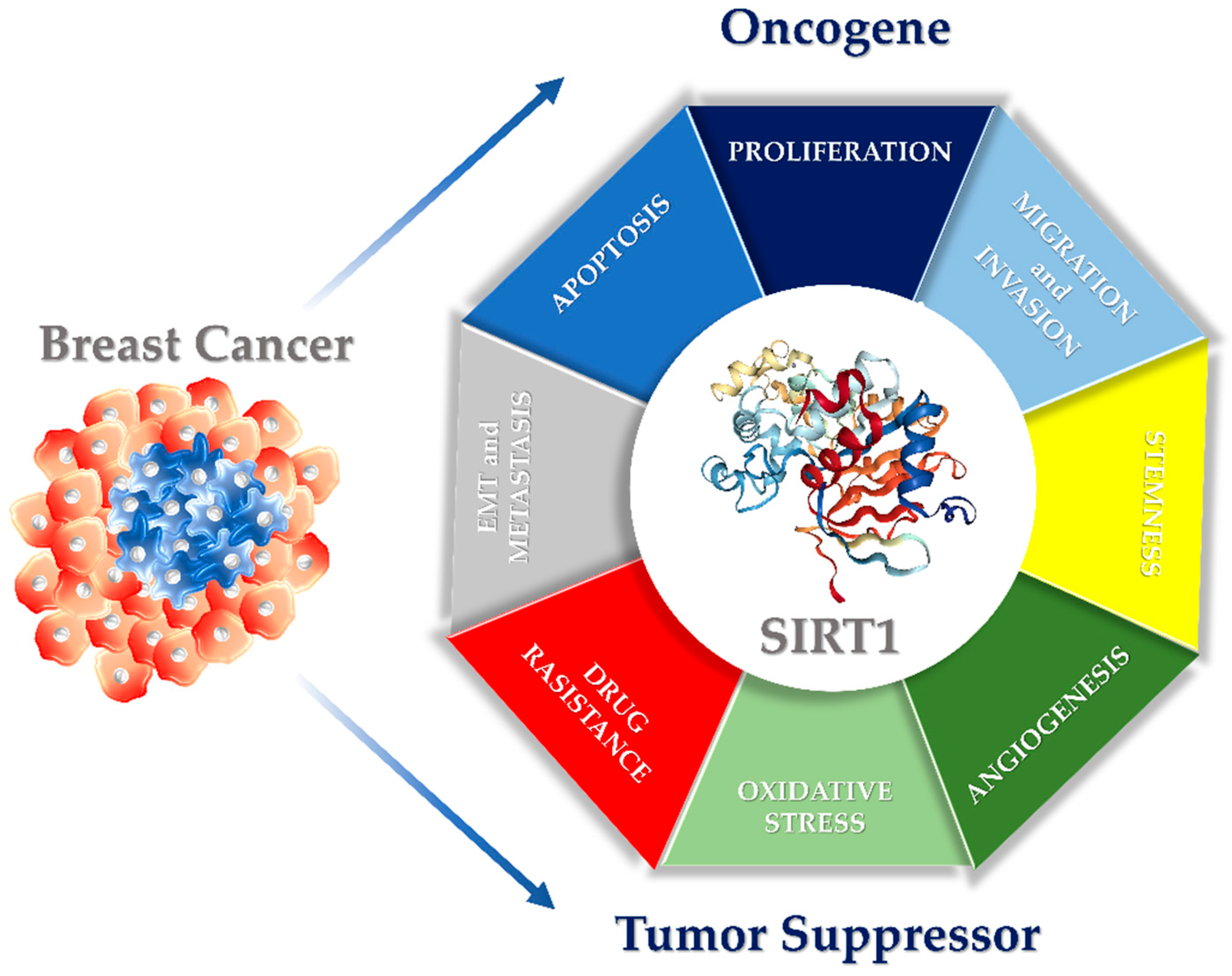
3. Dual Role of SIRT1 in Breast Cancer
3.1. Oncogenic SIRT1
3.2. Tumor Suppressor SIRT1
4. Implications and Dual Role of SIRT1 in TNBC
4.1. Oncogenic SIRT1 in TNBC
4.2. Tumor Suppressor SIRT1 in TNBC
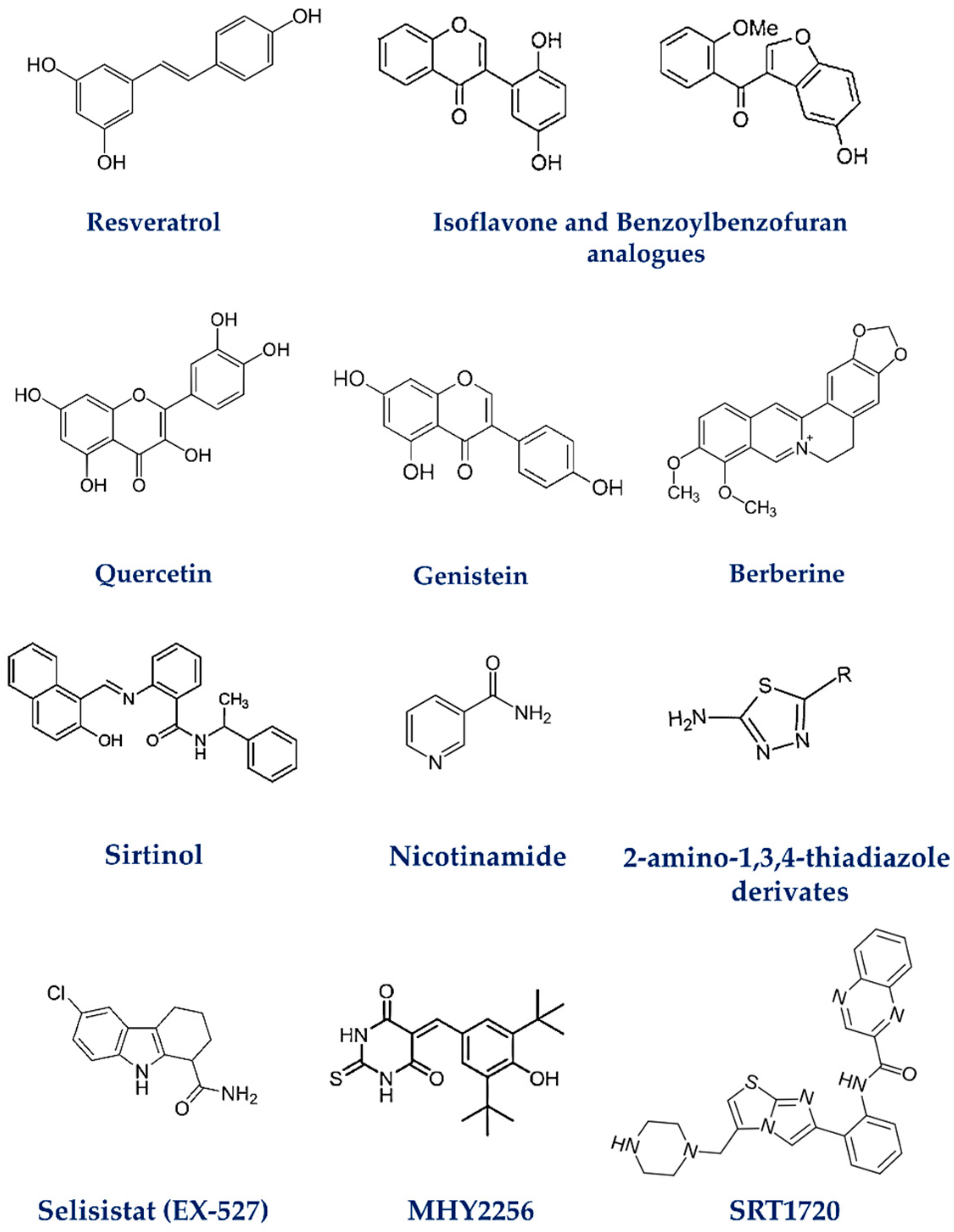
5. Modulators of SIRT1 in Breast Cancer
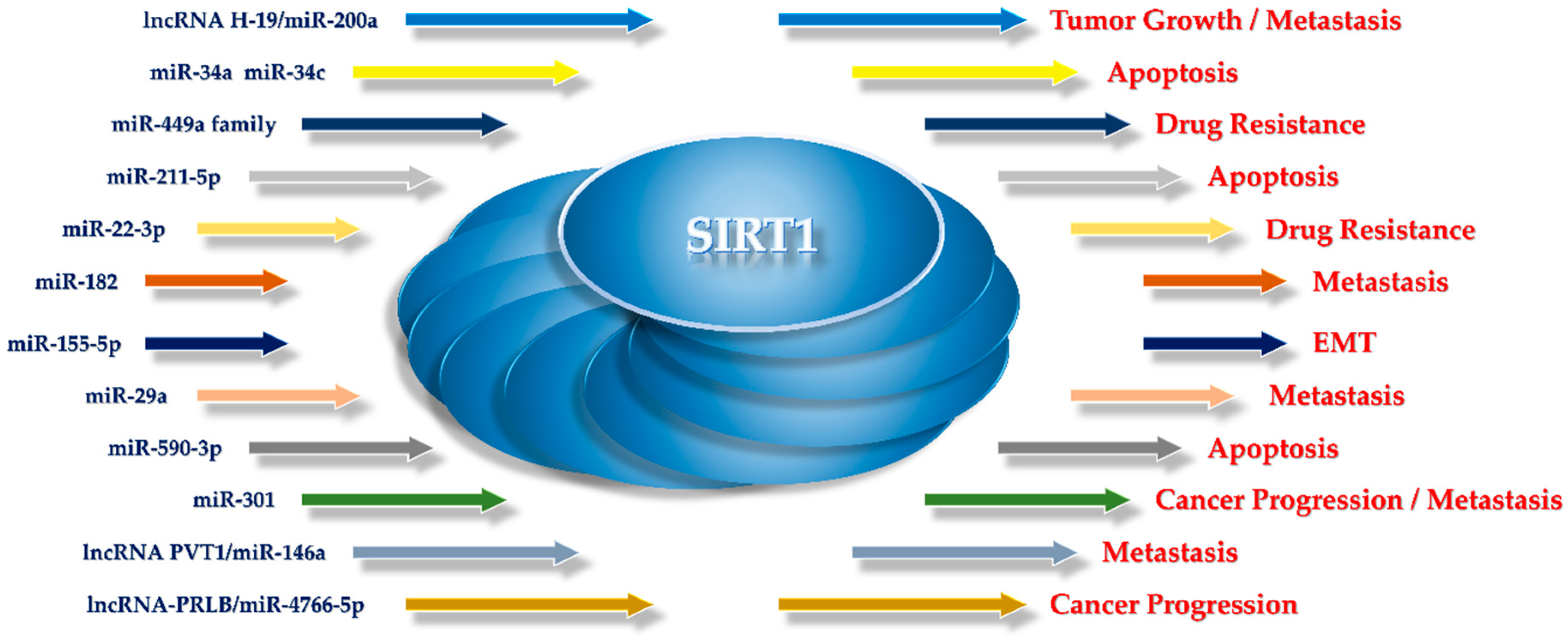
6. SIRT1 and miRNAs Network
7. Conclusions
Author Contributions
Funding
Data Availability Statement
Conflicts of Interest
References
- Bray, F.; Laversanne, M.; Sung, H.; Ferlay, J.; Siegel, R.L.; Soerjomataram, I.; Jemal, A. Global cancer statistics 2022: GLOBOCAN estimates of incidence and mortality worldwide for 36 cancers in 185 countries. CA Cancer J. Clin. 2024, 74, 229–263. [Google Scholar] [CrossRef]
- Kolahdooz, F.; Jang, S.L.; Corriveau, A.; Gotay, C.; Johnston, N.; Sharma, S. Knowledge, attitudes, and behaviours towards cancer screening in indigenous populations: A systematic review. Lancet Oncol. 2014, 15, 504–516. [Google Scholar] [CrossRef]
- Kopans, D.B. Breast cancer screening: Where have we been and where are we going? A personal perspective based on history, data and experience. Clin. Imaging 2017, 50, 91–95. [Google Scholar] [CrossRef]
- Thompson, D.; Easton, D. The genetic epidemiology of breast cancer genes. J. Mammary Gland Biol. Neoplasia 2004, 9, 221–236. [Google Scholar] [CrossRef] [PubMed]
- Velloso, F.J.; Bianco, A.F.; Farias, J.O.; Torres, N.E.; Ferruzo, P.Y.; Anschau, V.; Jesus-Ferreira, H.C.; Chang, T.H.; Sogayar, M.C.; Zerbini, L.F.; et al. The crossroads of breast cancer progression: Insights into the modulation of major signaling pathways. Onco Targets Ther. 2017, 10, 5491–5524. [Google Scholar] [CrossRef] [PubMed]
- Wood, L.D.; Parsons, D.W.; Jones, S.; Lin, J.; Sjöblom, T.; Leary, R.J.; Shen, D.; Boca, S.M.; Barber, T.; Ptak, J.; et al. The genomic landscapes of human breast and colorectal cancers. Science 2007, 318, 1108–1113. [Google Scholar] [CrossRef]
- Hoon Tan, P.; Ellis, I.; Allison, K.; Brogi, E.; Fox, S.B.; Lakhani, S.; Lazar, A.J.; Morris, E.A.; Sahin, A.; Salgado, R.; et al. The 2019 WHO classification of tumours of the breast. Histopathology 2020, 77, 181–185. [Google Scholar] [CrossRef]
- Sørlie, T.; Perou, C.M.; Tibshirani, R.; Aas, T.; Geisler, S.; Johnsen, H.; Hastie, T.; Eisen, M.B.; van de Rijn, M.; Jeffrey, S.S.; et al. Gene expression patterns of breast carcinomas distinguish tumor subclasses with clinical implications. Proc. Natl. Acad. Sci. USA 2001, 98, 10869–10874. [Google Scholar] [CrossRef]
- Bombonati, A.; Sgroi, D.C. The molecular pathology of breast cancer progression. J. Pathol. 2011, 223, 307–317. [Google Scholar] [CrossRef]
- Cazzaniga, M.E.; Cortesi, L.; Ferzi, A.; Scaltriti, L.; Cicchiello, F.; Ciccarese, M.; Torre, S.D.; Villa, F.; Giordano, M.; Verusio, C.; et al. Metronomic chemotherapy in triple-negative metastatic breast cancer: The future is now? Int. J. Breast Cancer 2017, 2017, 1683060. [Google Scholar] [CrossRef] [PubMed]
- Margueron, R.; Trojer, P.; Reinberg, D. The key to development: Interpreting the histone code? Curr. Opin. Genet. Dev. 2005, 15, 163–176. [Google Scholar] [CrossRef] [PubMed]
- Esteller, M. Epigenetics in cancer. N. Engl. J. Med. 2008, 358, 1148–1159. [Google Scholar] [CrossRef]
- Sharma, S.; Kelly, T.K.; Jones, P.A. Epigenetics in cancer. Carcinogenesis 2010, 31, 27–36. [Google Scholar] [CrossRef]
- Baylin, S.B.; Jones, P.A. A decade of exploring the cancer epigenome-biological and translational implications. Nat. Rev. Cancer 2011, 11, 726–734. [Google Scholar] [CrossRef]
- Feinberg, A.P.; Koldobskiy, M.A.; Göndör, A. Epigenetic modulators, modifiers and mediators in cancer aetiology and progression. Nat. Rev. Genet. 2016, 17, 284–299. [Google Scholar] [CrossRef]
- Hanahan, D.; Weinberg, R.A. Hallmarks of cancer: The next generation. Cell 2011, 144, 646–674. [Google Scholar] [CrossRef]
- Suzuki, J.; Chen, Y.Y.; Scott, G.K.; Devries, S.; Chin, K.; Benz, C.C.; Waldman, F.M.; Hwang, E.S. Protein acetylation and histone deacetylase expression associated with malignant breast cancer progression. Clin. Cancer Res. 2009, 15, 3163–3171. [Google Scholar] [CrossRef]
- Falahi, F.; van Kruchten, M.; Martinet, N.; Hospers, G.A.; Rots, M.G. Current and upcoming approaches to exploit the reversibility of epigenetic mutations in breast cancer. Breast Cancer Res. 2014, 16, 412. [Google Scholar] [CrossRef] [PubMed]
- Messier, T.L.; Gordon, J.A.R.; Boyd, J.R.; Tye, C.E.; Browne, G.; Stein, J.L.; Lian, J.B.; Stein, G.S. Histone H3 lysine 4 acetylation and methylation dynamics define breast cancer subtypes. Oncotarget 2016, 7, 5094–5109. [Google Scholar] [CrossRef] [PubMed]
- Shukla, S.; Penta, D.; Mondal, P.; Meeran, S.M. Epigenetics of Breast Cancer: Clinical Status of Epi-drugs and Phytochemicals. Adv. Exp. Med. Biol. 2019, 1152, 293–310. [Google Scholar] [CrossRef]
- Choudhary, C.; Kumar, C.; Gnad, F.; Nielsen, M.L.; Rehman, M.; Walther, T.C.; Olsen, J.V.; Mann, M. Lysine acetylation targets protein complexes and co-regulates major cellular functions. Science 2009, 325, 834–840. [Google Scholar] [CrossRef] [PubMed]
- Gregoretti, I.V.; Lee, Y.M.; Goodson, H.V. Molecular evolution of the histone deacetylase family: Functional implications of phylogenetic analysis. J. Mol. Biol. 2004, 338, 17–31. [Google Scholar] [CrossRef] [PubMed]
- Grunstein, M.; Gasser, S.M. Epigenetics in Saccharomyces cerevisiae. Cold Spring Harb. Perspect. Biol. 2013, 5, a017491. [Google Scholar] [CrossRef]
- Frye, R.A. Phylogenetic classification of prokaryotic and eukaryotic Sir2-like proteins. Biochem. Biophys. Res. Commun. 2000, 273, 793–798. [Google Scholar] [CrossRef] [PubMed]
- Zhu, S.; Dong, Z.; Ke, X.; Hou, J.; Zhao, E.; Zhang, K.; Wang, F.; Yang, L.; Xiang, Z.; Cui, H. The roles of sirtuins family in cell metabolism during tumor development. Semin. Cancer Biol. 2018, 57, 59–71. [Google Scholar] [CrossRef]
- Barneda-Zahonero, B.; Parra, M. Histone deacetylases and cancer. Mol. Oncol. 2012, 6, 579–589. [Google Scholar] [CrossRef]
- Saunders, L.; Verdin, E. Sirtuins: Critical regulators at the crossroads between cancer and aging. Oncogene 2007, 26, 5489–5504. [Google Scholar] [CrossRef]
- Haigis, M.C.; Sinclair, D.A. Mammalian sirtuins: Biological insights and disease relevance. Annu. Rev. Pathol. 2010, 5, 253–295. [Google Scholar] [CrossRef]
- George, J.; Ahmad, N. Mitochondrial Sirtuins in Cancer: Emerging Roles and Therapeutic Potential. Cancer Res. 2016, 76, 2500–2506. [Google Scholar] [CrossRef]
- Wu, Q.J.; Zhang, T.N.; Chen, H.H.; Yu, X.F.; Lv, J.L.; Liu, Y.Y.; Liu, Y.S.; Zheng, G.; Zhao, J.Q.; Wei, Y.F.; et al. The sirtuin family in health and disease. Signal Transduct. Target. Ther. 2022, 7, 402. [Google Scholar] [CrossRef]
- Buler, M.; Andersson, U.; Hakkola, J. Who watches the watchmen? Regulation of the expression and activity of sirtuins. FASEB J. 2016, 30, 3942–3960. [Google Scholar] [CrossRef]
- Tanno, M.; Sakamoto, J.; Miura, T.; Shimamoto, K.; Horio, Y. Nucleocytoplasmic shuttling of the NAD+-dependent histone deacetylase SIRT1. J. Biol. Chem. 2007, 282, 6823–6832. [Google Scholar] [CrossRef] [PubMed]
- Rahman, S.; Islam, R. Mammalian Sirt1: Insights on its biological functions. Cell Commun. Signal. 2011, 9, 11. [Google Scholar] [CrossRef]
- Carafa, V.; Rotili, D.; Forgione, M.; Cuomo, F.; Serretiello, E.; Hailu, G.S.; Jarho, E.; Lahtela-Kakkonen, M.; Mai, A.; Altucci, L. Sirtuin functions and modulation: From chemistry to the clinic. Clin. Epigenet. 2016, 8, 61. [Google Scholar] [CrossRef]
- Zhang, M.; Tang, Z. Therapeutic potential of natural molecules against Alzheimer’s disease via SIRT1 modulation. Biomed. Pharmacother. 2023, 161, 114474. [Google Scholar] [CrossRef]
- Yuan, Q.; Yang, Z. Unraveling the therapeutic potential of ginsenoside compound Mc1 in Alzheimer’s disease: Exploring the role of AMPK/SIRT1/NF-κB signaling pathway and mitochondrial function. Adv. Clin. Exp. Med. 2024, 33, 1105–1114. [Google Scholar] [CrossRef] [PubMed]
- Razick, D.I.; Akhtar, M.; Wen, J.; Alam, M.; Dean, N.; Karabala, M.; Ansari, U.; Ansari, Z.; Tabaie, E.; Siddiqui, S. The Role of Sirtuin 1 (SIRT1) in Neurodegeneration. Cureus 2023, 15, e40463. [Google Scholar] [CrossRef] [PubMed]
- Yang, Q.; Zhou, Y.; Sun, Y.; Luo, Y.; Shen, Y.; Shao, A. Will Sirtuins Be Promising Therapeutic Targets for TBI and Associated Neurodegenerative Diseases? Front. Neurosci. 2020, 14, 791. [Google Scholar] [CrossRef]
- Chen, C.; Zhou, M.; Ge, Y.; Wang, X. SIRT1 and aging related signaling pathways. Mech. Ageing Dev. 2020, 187, 111215. [Google Scholar] [CrossRef]
- Zhao, L.; Cao, J.; Hu, K.; He, X.; Yun, D.; Tong, T.; Han, L. Sirtuins and their Biological Relevance in Aging and Age-Related Diseases. Aging Dis. 2020, 11, 927–945. [Google Scholar] [CrossRef]
- Covarrubias, A.J.; Perrone, R.; Grozio, A.; Verdin, E. NAD+ metabolism and its roles in cellular processes during ageing. Nat. Rev. Mol. Cell Biol. 2021, 22, 119–141. [Google Scholar] [CrossRef]
- Pardo, P.S.; Boriek, A.M. SIRT1 Regulation in Ageing and Obesity. Mech. Ageing Dev. 2020, 188, 111249. [Google Scholar] [CrossRef]
- Kitada, M.; Koya, D. SIRT1 in Type 2 Diabetes: Mechanisms and Therapeutic Potential. Diabetes Metab. J. 2013, 37, 315–325. [Google Scholar] [CrossRef]
- Safarpour, P.; Daneshi-Maskooni, M.; Vafa, M.; Nourbakhsh, M.; Janani, L.; Maddah, M.; Amiri, F.S.; Mohammadi, F.; Sadeghi, H. Vitamin D supplementation improves SIRT1, Irisin, and glucose indices in overweight or obese type 2 diabetic patients: A double-blind randomized placebo-controlled clinical trial. BMC Fam. Pract. 2020, 21, 26. [Google Scholar] [CrossRef]
- Mihanfar, A.; Akbarzadeh, M.; Ghazizadeh Darband, S.; Sadighparvar, S.; Majidinia, M. SIRT1: A promising therapeutic target in type 2 diabetes mellitus. Arch. Physiol. Biochem. 2024, 130, 13–28. [Google Scholar] [CrossRef] [PubMed]
- Zheng, L.; Rao, Z.; Wu, J.; Ma, X.; Jiang, Z.; Xiao, W. Resistance Exercise Improves Glycolipid Metabolism and Mitochondrial Biogenesis in Skeletal Muscle of T2DM Mice via miR-30d-5p/SIRT1/PGC-1α Axis. Int. J. Mol. Sci. 2024, 25, 12416. [Google Scholar] [CrossRef] [PubMed]
- Flori, L.; Piragine, E.; Spezzini, J.; Citi, V.; Calderone, V.; Martelli, A. Influence of Polyphenols on Adipose Tissue: Sirtuins as Pivotal Players in the Browning Process. Int. J. Mol. Sci. 2023, 24, 9276. [Google Scholar] [CrossRef] [PubMed]
- Lagunas-Rangel, F.A. Current role of mammalian sirtuins in DNA repair. DNA Repair 2019, 80, 85–92. [Google Scholar] [CrossRef]
- Hashemi, M.; Zali, N.; Ghafarzadeh Dastjerdi, S.Z.; Pakshad, B.; Aliahmadi, M.; Sharifi, N.; Esfahani, K.S.; Kohandani, F.S.; Chamanian, S.; Abbasi, F.; et al. SIRT1 as a masterful reciprocal regulator of molecular mechanisms and signaling pathways involved in tumor growth and expansion. Clin. Exp. Med. 2025, 25, 225. [Google Scholar] [CrossRef]
- Alrouji, M.; Alhumaydhi, F.A.; Alsayari, A.; Sharaf, S.E.; Shafi, S.; Anwar, S.; Shahwan, M.; Atiya, A.; Shamsi, A. Targeting Sirtuin 1 for therapeutic potential: Drug repurposing approach integrating docking and molecular dynamics simulations. PLoS ONE 2023, 18, e0293185. [Google Scholar] [CrossRef]
- Rifaï, K.; Idrissou, M.; Penault-Llorca, F.; Bignon, Y.J.; Bernard-Gallon, D. Breaking down the Contradictory Roles of Histone Deacetylase SIRT1 in Human Breast Cancer. Cancers 2018, 10, 409. [Google Scholar] [CrossRef]
- Escudero-Feliu, J.; García-Costela, M.; Moreno-SanJuan, S.; Puentes-Pardo, J.D.; Arrabal, S.R.; González-Novoa, P.; Núñez, M.I.; Carazo, Á.; Jimenez-Lopez, J.C.; León, J. Narrow Leafed Lupin (Lupinus angustifolius L.) β-Conglutin Seed Proteins as a New Natural Cytotoxic Agents against Breast Cancer Cells. Nutrients 2023, 15, 523. [Google Scholar] [CrossRef] [PubMed]
- Shi, L.; Tang, X.; Qian, M.; Liu, Z.; Meng, F.; Fu, L.; Wang, Z.; Zhu, W.G.; Huang, J.D.; Zhou, Z.; et al. A SIRT1-centered circuitry regulates breast cancer stemness and metastasis. Oncogene 2018, 37, 6299–6315. [Google Scholar] [CrossRef]
- Choupani, J.; Alivand, M.R.; Derakhshan, S.M.; Zaeifizadeh, M.; Khaniani, M.S. Oleuropein inhibits migration ability through suppression of epithelial-mesenchymal transition and synergistically enhances doxorubicin-mediated apoptosis in MCF-7 cells. J. Cell. Physiol. 2019, 234, 9093–9104. [Google Scholar] [CrossRef]
- Parija, M.; Prakash, S.; Krishna, B.M.; Dash, S.; Mishra, S.K. SIRT1 mediates breast cancer development and tumorigenesis controlled by estrogen-related receptor β. Breast Cancer 2024, 31, 440–455. [Google Scholar] [CrossRef] [PubMed]
- Park, J.Y.; Han, S.; Ka, H.I.; Joo, H.J.; Soh, S.J.; Yoo, K.H.; Yang, Y. Silent mating-type information regulation 2 homolog 1 overexpression is an important strategy for the survival of adapted suspension tumor cells. Cancer Sci. 2019, 110, 2773–2782. [Google Scholar] [CrossRef] [PubMed]
- Mahmud, Z.; Gomes, A.R.; Lee, H.J.; Aimjongjun, S.; Jiramongkol, Y.; Yao, S.; Zona, S.; Alasiri, G.; Gong, G.; Yagüe, E.; et al. EP300 and SIRT1/6 Co-Regulate Lapatinib Sensitivity Via Modulating FOXO3-Acetylation and Activity in Breast Cancer. Cancers 2019, 11, 1067. [Google Scholar] [CrossRef]
- Dilmac, S.; Kuscu, N.; Caner, A.; Yildirim, S.; Yoldas, B.; Farooqi, A.A.; Tanriover, G. SIRT1/FOXO Signaling Pathway in Breast Cancer Progression and Metastasis. Int. J. Mol. Sci. 2022, 23, 10227. [Google Scholar] [CrossRef]
- Kaiser, A.; Krüger, T.; Eiselt, G.; Bechler, J.; Kniemeyer, O.; Huber, O.; Schmidt, M. Identification of PARP-1, Histone H1 and SIRT-1 as New Regulators of Breast Cancer-Related Aromatase Promoter I.3/II. Cells 2020, 9, 427. [Google Scholar] [CrossRef]
- Kojja, V.; Kumar, D.; Kalavagunta, P.K.; Bhukya, B.; Tangutur, A.D.; Nayak, P.K. 2-(Diarylalkyl)aminobenzothiazole derivatives induce autophagy and apoptotic death through SIRT inhibition and P53 activation in MCF7 breast cancer cells. Comput. Biol. Chem. 2025, 116, 108395. [Google Scholar] [CrossRef]
- Tan, J.; Liu, Y.; Maimaiti, Y.; Wang, C.; Yan, Y.; Zhou, J.; Ruan, S.; Huang, T. Combination of SIRT1 and Src overexpression suggests poor prognosis in luminal breast cancer. Onco Targets Ther. 2018, 11, 2051–2061. [Google Scholar] [CrossRef]
- Zhou, J.; Xu, M.; Le, K.; Ming, J.; Guo, H.; Ruan, S.; Huang, T. SRC Promotes Tamoxifen Resistance in Breast Cancer Via Up-Regulating SIRT1. Onco Targets Ther. 2020, 13, 4635–4647. [Google Scholar] [CrossRef] [PubMed]
- Xu, Y.; Qin, Q.; Chen, R.; Wei, C.; Mo, Q. SIRT1 promotes proliferation, migration, and invasion of breast cancer cell line MCF-7 by upregulating DNA polymerase delta1 (POLD1). Biochem. Biophys. Res. Commun. 2018, 502, 351–357. [Google Scholar] [CrossRef]
- Liu, D.; Zha, L.; Liu, Y.; Zhao, X.; Xu, X.; Liu, S.; Ma, W.; Zheng, J.; Shi, M. β2-AR activation promotes cleavage and nuclear translocation of Her2 and metastatic potential of cancer cells. Cancer Sci. 2020, 111, 4417–4428. [Google Scholar] [CrossRef]
- Jin, X.; Wei, Y.; Liu, Y.; Chen, Y.; Zhao, B.; Huang, J.; Yu, H.; Li, C. High Expression of SIRT1 Associates with the Doxorubicin Resistance of Breast Cancer through the Activation of Akt. Anticancer Agents Med. Chem. 2020, 20, 94–102. [Google Scholar] [CrossRef]
- Wu, G.; Yao, W.; Cheng, L.; Wang, X.; Chen, T. SIRT1 rescues autophagic flux via PI3K/AKT/mTOR inactivation to suppress DOX-induced senescence in MCF-7 cells. Exp. Cell Res. 2025, 452, 114754. [Google Scholar] [CrossRef] [PubMed]
- Bertozzi, S.; Londero, A.P.; Viola, L.; Orsaria, M.; Bulfoni, M.; Marzinotto, S.; Corradetti, B.; Baccarani, U.; Cesselli, D.; Cedolini, C.; et al. TFEB, SIRT1, CARM1, Beclin-1 expression and PITX2 methylation in breast cancer chemoresistance: A retrospective study. BMC Cancer 2021, 21, 1118. [Google Scholar] [CrossRef] [PubMed]
- Das, N.; Mukherjee, S.; Das, A.; Gupta, P.; Bandyopadhyay, A.; Chattopadhyay, S. Intra-tumor ROS amplification by melatonin interferes in the apoptosis-autophagy-inflammation-EMT collusion in the breast tumor microenvironment. Heliyon 2023, 10, e23870. [Google Scholar] [CrossRef]
- Wang, Y.; Zeng, J.; Wu, W.; Xie, S.; Yu, H.; Li, G.; Zhu, T.; Li, F.; Lu, J.; Wang, G.Y.; et al. Nicotinamide N-methyltransferase enhances chemoresistance in breast cancer through SIRT1 protein stabilization. Breast Cancer Res. 2019, 21, 64. [Google Scholar] [CrossRef]
- Ahmad, S.M.S.; Al-Mansoob, M.; Ouhtit, A. SIRT1, a novel transcriptional downstream target of CD44, linking its deacetylase activity to tumor cell invasion/metastasis. Front. Oncol. 2022, 12, 1038121. [Google Scholar] [CrossRef]
- Zhang, H.; Ma, C.; Peng, M.; Lv, X.; Xie, X.; Huang, R. The prognostic implications of SIRTs expression in breast cancer: A systematic review and meta-analysis. Discov. Oncol. 2022, 13, 69. [Google Scholar] [CrossRef] [PubMed]
- Xu, Z.; Yang, Y.; Li, B.; Li, Y.; Xia, K.; Yang, Y.; Li, X.; Wang, M.; Li, S.; Wu, H. Checkpoint suppressor 1 suppresses transcriptional activity of ERα and breast cancer cell proliferation via deacetylase SIRT1. Cell Death Dis. 2018, 9, 559. [Google Scholar] [CrossRef]
- Subbaramaiah, K.; Iyengar, N.M.; Morrow, M.; Elemento, O.; Zhou, X.K.; Dannenberg, A.J. Prostaglandin E2 down-regulates sirtuin 1 (SIRT1), leading to elevated levels of aromatase, providing insights into the obesity-breast cancer connection. J. Biol. Chem. 2019, 294, 361–371. [Google Scholar] [CrossRef] [PubMed]
- Rifaï, K.; Judes, G.; Idrissou, M.; Daures, M.; Bignon, Y.J.; Penault-Llorca, F.; Bernard-Gallon, D. SIRT1-dependent epigenetic regulation of H3 and H4 histone acetylation in human breast cancer. Oncotarget 2018, 9, 30661–30678. [Google Scholar] [CrossRef]
- Lahusen, T.J.; Kim, S.J.; Miao, K.; Huang, Z.; Xu, X.; Deng, C.X. BRCA1 function in the intra-S checkpoint is activated by acetylation via a pCAF/SIRT1 axis. Oncogene 2018, 37, 2343–2350. [Google Scholar] [CrossRef]
- Semmler, L.; Reiter-Brennan, C.; Klein, A. BRCA1 and Breast Cancer: A Review of the Underlying Mechanisms Resulting in the Tissue-Specific Tumorigenesis in Mutation Carriers. J. Breast Cancer 2019, 22, 1–14. [Google Scholar] [CrossRef]
- Yao, Y.; Liu, T.; Wang, X.; Zhang, D. The Contrary Effects of Sirt1 on MCF7 Cells Depend on CD36 Expression Level. J. Surg. Res. 2019, 238, 248–254. [Google Scholar] [CrossRef]
- Xiang, S.; Dauchy, R.T.; Hoffman, A.E.; Pointer, D.; Frasch, T.; Blask, D.E.; Hill, S.M. Epigenetic inhibition of the tumor suppressor ARHI by light at night-induced circadian melatonin disruption mediates STAT3-driven paclitaxel resistance in breast cancer. J. Pineal Res. 2019, 67, e12586. [Google Scholar] [CrossRef]
- Wang, L.; Shi, H.; Zhang, X.; Zhang, X.; Liu, Y.; Kang, W.; Shi, X.; Wang, T. I157172, a novel inhibitor of cystathionine γ-lyase, inhibits growth and migration of breast cancer cells via SIRT1-mediated deacetylation of STAT3. Oncol. Rep. 2019, 41, 427–436. [Google Scholar] [CrossRef] [PubMed]
- Ghatreh Samani, K.; Farrokhi, E.; Tabatabaee, A.; Jalilian, N.; Jafari, M. Synergistic Effects of Lauryl Gallate and Tamoxifen on Human Breast Cancer Cell. Iran. J. Public Health 2020, 49, 1324–1329. [Google Scholar] [CrossRef]
- Chakraborty, S.; Datta, S.; Ghosh, S. Induction of autophagy under nitrosative stress: A complex regulatory interplay between SIRT1 and AMPK in MCF7 cells. Cell. Signal. 2019, 64, 109411. [Google Scholar] [CrossRef]
- Kim, U.; Kim, K.S.; Park, J.K.; Um, H.D. Hyperacetylation of the C-terminal domain of p53 inhibits the formation of the p53/p21 complex. Biochem. Biophys. Res. Commun. 2022, 635, 52–56. [Google Scholar] [CrossRef] [PubMed]
- Li, W.; Fu, P.; Shi, P.; Hu, B.; Li, H. Neratinib stimulates senescence of mammary cancer cells by reducing the levels of SIRT1. Aging 2024, 16, 9547–9557. [Google Scholar] [CrossRef]
- Kang, J.A.; Kim, Y.J.; Jang, K.Y.; Moon, H.W.; Lee, H.; Lee, S.; Song, H.K.; Cho, S.W.; Yoo, Y.S.; Han, H.G.; et al. SIRT1 ISGylation accelerates tumor progression by unleashing SIRT1 from the inactive state to promote its deacetylase activity. Exp. Mol. Med. 2024, 56, 656–673. [Google Scholar] [CrossRef]
- Chung, S.Y.; Jung, Y.Y.; Park, I.A.; Kim, H.; Chung, Y.R.; Kim, J.Y.; Park, S.Y.; Im, S.A.; Lee, K.H.; Moon, H.G.; et al. Oncogenic role of SIRT1 associated with tumor invasion, lymph node metastasis, and poor disease-free survival in triple negative breast cancer. Clin. Exp. Metastasis 2016, 33, 179–185. [Google Scholar] [CrossRef] [PubMed]
- Alharbi, B.; Aldahlawi, A.; Assidi, M.; Basingab, F.; Zaher, K.; Alrahimi, J.; Mokhtar, S.; Al-Maghrabi, J.; Buhmeida, A.; Al-Sakkaf, K. The Immunohistochemical Prognostic Value of Nuclear and Cytoplasmic Silent Information Regulator 1 Protein Expression in Saudi Patients with Breast Cancer. Biomolecules 2025, 15, 50. [Google Scholar] [CrossRef] [PubMed]
- Lee, J.J.; Lee, H.J.; Son, B.H.; Kim, S.B.; Ahn, J.H.; Ahn, S.D.; Cho, E.Y.; Gong, G. Expression of FOXM1 and related proteins in breast cancer molecular subtypes. Int. J. Exp. Pathol. 2016, 97, 170–177. [Google Scholar] [CrossRef]
- Uzelac, B.; Krivokuca, A.; Brankovic-Magic, M.; Magic, Z.; Susnjar, S.; Milovanovic, Z.; Supic, G. Expression of SIRT1, SIRT3 and SIRT6 Genes for Predicting Survival in Triple-Negative and Hormone Receptor-Positive Subtypes of Breast Cancer. Pathol. Oncol. Res. 2020, 26, 2723–2731. [Google Scholar] [CrossRef]
- Sahoo, S.; Kumari, S.; Pulipaka, S.; Chandra, Y.; Kotamraju, S. SIRT1 promotes doxorubicin-induced breast cancer drug resistance and tumor angiogenesis via regulating GSH-mediated redox homeostasis. Mol. Carcinog. 2024, 63, 2291–2304. [Google Scholar] [CrossRef]
- Jin, X.; Wei, Y.; Xu, F.; Zhao, M.; Dai, K.; Shen, R.; Yang, S.; Zhang, N. SIRT1 promotes formation of breast cancer through modulating Akt activity. J. Cancer 2018, 9, 2012–2023. [Google Scholar] [CrossRef]
- Jin, M.S.; Hyun, C.L.; Park, I.A.; Kim, J.Y.; Chung, Y.R.; Im, S.A.; Lee, K.H.; Moon, H.G.; Ryu, H.S. SIRT1 induces tumor invasion by targeting epithelial mesenchymal transition-related pathway and is a prognostic marker in triple negative breast cancer. Tumour Biol. 2016, 37, 4743–4753. [Google Scholar] [CrossRef]
- Xu, J.; Shumate, C.; Qin, Y.; Reddy, V.; Burnam, Y.; Lopez, V.; Okoli, J.; Reddy, P.; Rao, V.N. A novel Ubc9-dependent pathway regulates SIRT1-ER-α Axis and BRCA1-associated TNBC lung metastasis. Integr. Mol. Med. 2017, 4, 10-15761. [Google Scholar] [CrossRef]
- El-Ashmawy, N.E.; Khedr, E.G.; Khedr, N.F.; El-Adawy, S.A. Suppression of epithelial-mesenchymal transition and SIRT1/AKT signaling pathway in breast cancer by montelukast. Int. Immunopharmacol. 2023, 119, 110148. [Google Scholar] [CrossRef] [PubMed]
- Guo, M.; Wang, Y.J.; Shi, J.; Cao, L.X.; Ou, Y.; Jia, X.; Qi, C.C.; Li, Z.X.; Liu, Y.X.; Zuo, S.Y.; et al. Oxidative stress-induced ZEB1 acetylation drives a hybrid epithelial-mesenchymal phenotype and promotes lung metastasis in triple-negative breast cancer. Redox Biol. 2025, 86, 103834. [Google Scholar] [CrossRef] [PubMed]
- Sharma, M.; Molehin, D.; Castro-Piedras, I.; Martinez, E.G.; Pruitt, K. Acetylation of conserved DVL-1 lysines regulates its nuclear translocation and binding to gene promoters in triple-negative breast cancer. Sci. Rep. 2019, 9, 16257. [Google Scholar] [CrossRef]
- Du, L.; Liu, X.; Ren, Y.; Li, J.; Li, P.; Jiao, Q.; Meng, P.; Wang, F.; Wang, Y.; Wang, Y.S.; et al. Loss of SIRT4 promotes the self-renewal of Breast Cancer Stem Cells. Theranostics 2020, 10, 9458–9476. [Google Scholar] [CrossRef]
- Chiang, Y.F.; Huang, K.C.; Chen, H.Y.; Huang, T.C.; Ali, M.; Chang, H.Y.; Shieh, T.M.; Shih, Y.H.; Wang, K.L.; Huang, Y.J.; et al. The Adipokine Visfatin Modulates Cancer Stem Cell Properties in Triple-Negative Breast Cancer. Biomedicines 2023, 11, 297. [Google Scholar] [CrossRef]
- Deng, Z.; Ou, M.; Shi, Y.; Li, G.; Lv, L. Ginsenoside Rg3 attenuates the stemness of breast cancer stem cells by activating the hippo signaling pathway. Toxicol. Appl. Pharmacol. 2025, 494, 117158. [Google Scholar] [CrossRef]
- Latifkar, A.; Ling, L.; Hingorani, A.; Johansen, E.; Clement, A.; Zhang, X.; Hartman, J.; Fischbach, C.; Lin, H.; Cerione, R.A.; et al. Loss of Sirtuin 1 Alters the Secretome of Breast Cancer Cells by Impairing Lysosomal Integrity. Dev. Cell 2019, 49, 393–408.e7. [Google Scholar] [CrossRef]
- Minic, Z.; Hüttmann, N.; Poolsup, S.; Li, Y.; Susevski, V.; Zaripov, E.; Berezovski, M.V. Phosphoproteomic Analysis of Breast Cancer-Derived Small Extracellular Vesicles Reveals Disease-Specific Phosphorylated Enzymes. Biomedicines 2022, 10, 408. [Google Scholar] [CrossRef] [PubMed]
- Latifkar, A.; Wang, F.; Mullmann, J.J.; Panizza, E.; Fernandez, I.R.; Ling, L.; Miller, A.D.; Fischbach, C.; Weiss, R.S.; Lin, H.; et al. IGF2BP2 promotes cancer progression by degrading the RNA transcript encoding a v-ATPase subunit. Proc. Natl. Acad. Sci. USA 2022, 119, e2200477119. [Google Scholar] [CrossRef]
- Hu, C.; Zhang, X.; Song, P.; Yuan, Y.P.; Kong, C.Y.; Wu, H.M.; Xu, S.C.; Ma, Z.G.; Tang, Q.Z. Meteorin-like protein attenuates doxorubicin-induced cardiotoxicity via activating cAMP/PKA/SIRT1 pathway. Redox Biol. 2020, 37, 101747. [Google Scholar] [CrossRef]
- Urra, F.A.; Muñoz, F.; Córdova-Delgado, M.; Ramírez, M.P.; Peña-Ahumada, B.; Rios, M.; Cruz, P.; Ahumada-Castro, U.; Bustos, G.; Silva-Pavez, E.; et al. FR58P1a; a new uncoupler of OXPHOS that inhibits migration in triple-negative breast cancer cells via Sirt1/AMPK/β1-integrin pathway. Sci. Rep. 2018, 8, 13190. [Google Scholar] [CrossRef]
- Gollavilli, P.N.; Kanugula, A.K.; Koyyada, R.; Karnewar, S.; Neeli, P.K.; Kotamraju, S. AMPK inhibits MTDH expression via GSK3β and SIRT1 activation: Potential role in triple negative breast cancer cell proliferation. FEBS J. 2015, 282, 3971–3985. [Google Scholar] [CrossRef]
- Liang, L.; Liu, X.; He, J.; Shao, Y.; Liu, J.; Wang, Z.; Xia, L.; Han, T.; Wu, P. Cyanidin-3-glucoside induces mesenchymal to epithelial transition via activating Sirt1 expression in triple negative breast cancer cells. Biochimie 2019, 162, 107–115. [Google Scholar] [CrossRef] [PubMed]
- Jiang, Y.; Luo, Z.; Gong, Y.; Fu, Y.; Luo, Y. NAD+ supplementation limits triple-negative breast cancer metastasis via SIRT1-P66Shc signaling. Oncogene 2023, 42, 808–824. [Google Scholar] [CrossRef] [PubMed]
- Han, X.; Fu, H.; Zhang, Z.; Wang, J.; Feng, S.; Jiang, L.; Chen, L.; Li, H.; Wang, T. Aurintricarboxylic acid, an inhibitor of cystathionine γ-lyase, enhances the sensitivity of chemotherapy drugs in TNBC. Transl. Oncol. 2025, 63, 102602. [Google Scholar] [CrossRef] [PubMed]
- Akbaribazm, M.; Khazaei, M.R.; Khazaei, F.; Khazaei, M. Doxorubicin and Trifolium pratense L. (Red clover) extract synergistically inhibits brain and lung metastases in 4T1 tumor-bearing BALB/c mice. Food Sci. Nutr. 2020, 8, 5557–5570. [Google Scholar] [CrossRef]
- Nezamdoost, Z.; Saghebjoo, M.; Hoshyar, R.; Hedayati, M.; Keska, A. High-Intensity Training and Saffron: Effects on Breast Cancer-related Gene Expression. Med. Sci. Sports Exerc. 2020, 52, 1470–1476. [Google Scholar] [CrossRef] [PubMed]
- Zhou, X.; Liu, X.; Wan, X.; Xu, M.; Wang, R.; Yang, D.; Peng, M.; Jin, T.; Tang, R.; Liu, M.; et al. Oxidized ATM governs stemness of breast cancer stem cell through regulating ubiquitylation and acetylation switch. Biochem. Biophys. Res. Commun. 2024, 691, 149243. [Google Scholar] [CrossRef]
- Sinha, S.; Patel, S.; Athar, M.; Vora, J.; Chhabria, M.T.; Jha, P.C.; Shrivastava, N. Structure-based identification of novel sirtuin inhibitors against triple negative breast cancer: An in silico and in vitro study. Int. J. Biol. Macromol. 2019, 140, 454–468. [Google Scholar] [CrossRef]
- Iside, C.; Scafuro, M.; Nebbioso, A.; Altucci, L. SIRT1 Activation by Natural Phytochemicals: An Overview. Front. Pharmacol. 2020, 11, 1225. [Google Scholar] [CrossRef]
- Fiorentino, F.; Fabbrizi, E.; Mai, A.; Rotili, D. Activation and inhibition of sirtuins: From bench to bedside. Med. Res. Rev. 2025, 45, 484–560. [Google Scholar] [CrossRef]
- Kala, R.; Shah, H.N.; Martin, S.L.; Tollefsbol, T.O. Epigenetic-based combinatorial resveratrol and pterostilbene alters DNA damage response by affecting SIRT1 and DNMT enzyme expression, including SIRT1-dependent γ-H2AX and telomerase regulation in triple-negative breast cancer. BMC Cancer 2015, 15, 672. [Google Scholar] [CrossRef]
- Fukui, M.; Choi, H.J.; Wang, P.; Zhu, B.T. Mechanism underlying resveratrol’s attenuation of paclitaxel cytotoxicity in human breast cancer cells: Role of the SIRT1-FOXO1-HER3 signaling pathway. Cancer Treat. Res. Commun. 2021, 28, 100386. [Google Scholar] [CrossRef]
- Jin, X.; Wei, Y.; Liu, Y.; Lu, X.; Ding, F.; Wang, J.; Yang, S. Resveratrol promotes sensitization to Doxorubicin by inhibiting epithelial-mesenchymal transition and modulating SIRT1/β-catenin signaling pathway in breast cancer. Cancer Med. 2019, 8, 1246–1257. [Google Scholar] [CrossRef]
- Zhang, M.; Lu, P.; Terada, T.; Sui, M.; Furuta, H.; Iida, K.; Katayama, Y.; Lu, Y.; Okamoto, K.; Suzuki, M.; et al. Quercetin 3,5,7,3′,4′-pentamethyl ether from Kaempferia parviflora directly and effectively activates human SIRT1. Commun. Biol. 2021, 4, 209. [Google Scholar] [CrossRef] [PubMed]
- Khongsti, K.; Das, K.B.; Das, B. MAPK pathway and SIRT1 are involved in the down-regulation of secreted osteopontin expression by genistein in metastatic cancer cells. Life Sci. 2021, 265, 118787. [Google Scholar] [CrossRef] [PubMed]
- Bian, Y.; Wang, X.; Zheng, Z.; Ren, G.; Zhu, H.; Qiao, M.; Li, G. Resveratrol drives cancer cell senescence via enhancing p38MAPK and DLC1 expressions. Food Funct. 2022, 13, 3283–3293. [Google Scholar] [CrossRef]
- Yu, W.; Wang, Z.; Dai, P.; Sun, J.; Li, J.; Han, W.; Li, K. The activation of SIRT1 by resveratrol reduces breast cancer metastasis to lung through inhibiting neutrophil extracellular traps. J. Drug Target. 2023, 31, 962–975. [Google Scholar] [CrossRef] [PubMed]
- Fatehi, D.; Soltani, A.; Ghatrehsamani, M. SRT1720, a potential sensitizer for radiotherapy and cytotoxicity effects of NVB-BEZ235 in metastatic breast cancer cells. Pathol. Res. Pract. 2018, 214, 889–895. [Google Scholar] [CrossRef]
- Masoumi, H.; Soltani, A.; Ghatrehsamani, M. The beneficial role of SIRT1 activator on chemo- and radiosensitization of breast cancer cells in response to IL-6. Mol. Biol. Rep. 2020, 47, 129–139. [Google Scholar] [CrossRef] [PubMed]
- Satam, S.; Palekar, N.; Premkumar, K.; Shankar, B.S. Sirtinol, a SIRT1 inhibitor, inhibits the EMT and metastasis of 4T1 breast cancer cells and impacts the tumor microenvironment. Immunopharmacol. Immunotoxicol. 2024, 46, 829–842. [Google Scholar] [CrossRef] [PubMed]
- El-Ashmawy, N.E.; Khedr, E.G.; El-Adawy, S.A.; Khedr, N.F. Berberine-Induced Cytotoxicity in Breast Cancer Is Mediated by Reversal of EMT and Repression of Sirtuin 1/AKT Signaling Pathways. J. Biochem. Mol. Toxicol. 2025, 39, e70375. [Google Scholar] [CrossRef]
- Wei, Y.; Guo, Y.; Zhou, J.; Dai, K.; Xu, Q.; Jin, X. Nicotinamide Overcomes Doxorubicin Resistance of Breast Cancer Cells through Deregulating SIRT1/Akt Pathway. Anticancer Agents Med. Chem. 2019, 19, 687–696. [Google Scholar] [CrossRef]
- Prasad, M.G.; Lakshmi, C.V.; Katari, N.K.; Pal, M. Lemon Juice as a Biocatalyst Under Ultrasound Irradiation: Synthesis and Pharmacological Evaluation of 2-amino 1,3,4-thiadiazoles. Anticancer Agents Med. Chem. 2020, 20, 1379–1386. [Google Scholar] [CrossRef]
- Salih, A.I.; Al-Sudani, B.T.; Mshimesh, B.A. Targeting POLD1 to suppress the proliferation and migration of breast cancer MDA-MB-231 cell lines by downregulation of SIRT1. Toxicol. Res. 2024, 13, tfae111. [Google Scholar] [CrossRef]
- Wawruszak, A.; Luszczki, J.; Bartuzi, D.; Kalafut, J.; Okon, E.; Czerwonka, A.; Stepulak, A. Selisistat, a SIRT1 inhibitor, enhances paclitaxel activity in luminal and triple-negative breast cancer: In silico, in vitro, and in vivo studies. J. Enzyme Inhib. Med. Chem. 2025, 40, 2458554. [Google Scholar] [CrossRef]
- Selepe, M.A.; Kunyane, P.; Seboletswe, P.; Nair, S.; Cele, N.; Engelbrecht, M.; Joubert, D.F.; Vandevoorde, C.; Singh, P.; Sonopo, M.S. Synthesis and evaluation of benzoylbenzofurans and isoflavone derivatives as sirtuin 1 inhibitors with antiproliferative effects on cancer cells. Bioorg. Chem. 2022, 128, 106101. [Google Scholar] [CrossRef] [PubMed]
- Nava-Ochoa, A.; Stranahan, L.W.; San-Cristobal, R.; Mertens-Talcott, S.U.; Noratto, G.D. Dark Sweet Cherry Anthocyanins Suppressed Triple-Negative Breast Cancer Pulmonary Metastasis and Downregulated Genes Associated with Metastasis and Therapy Resistance In Vivo. Int. J. Mol. Sci. 2025, 26, 7225. [Google Scholar] [CrossRef]
- Park, E.Y.; Woo, Y.; Kim, S.J.; Kim, D.H.; Lee, E.K.; De, U.; Kim, K.S.; Lee, J.; Jung, J.H.; Ha, K.T.; et al. Anticancer Effects of a New SIRT Inhibitor, MHY2256, against Human Breast Cancer MCF-7 Cells via Regulation of MDM2-p53 Binding. Int. J. Biol. Sci. 2016, 12, 1555–1567. [Google Scholar] [CrossRef]
- Tenhunen, J.; Kokkola, T.; Huovinen, M.; Rahnasto-Rilla, M.; Lahtela-Kakkonen, M. Impact of structurally diverse BET inhibitors on SIRT1. Gene 2020, 741, 144558. [Google Scholar] [CrossRef]
- Goetz, C.J.; Sprague, D.J.; Smith, B.C. Development of activity-based probes for the protein deacylase Sirt1. Bioorg. Chem. 2020, 104, 104232. [Google Scholar] [CrossRef] [PubMed]
- Abdel-Rafei, M.K.; Askar, M.A.; Azab, K.S.; El-Sayyad, G.S.; El Kodous, M.A.; El Fatih, N.M.; Tawill, G.E.; Thabet, N.M. FA-HA-Amygdalin@Fe2O3 and/or γ-Rays Affecting SIRT1 Regulation of YAP/TAZ-p53 Signaling and Modulates Tumorigenicity of MDA-MB231 or MCF-7 Cancer Cells. Curr. Cancer Drug Targets 2023, 23, 118–144. [Google Scholar] [CrossRef]
- Yue, Y.; He, L.; Tian, M.; Li, X. Construction of SIRT1 gene shRNA lentivirus vector and its effect on the proliferation of breast cancer cells. Cell. Mol. Biol. 2020, 66, 204–210. [Google Scholar] [CrossRef] [PubMed]
- Karbasforooshan, H.; Roohbakhsh, A.; Karimi, G. SIRT1 and microRNAs: The role in breast, lung and prostate cancers. Exp. Cell Res. 2018, 367, 1–6. [Google Scholar] [CrossRef]
- Liang, Y.; Song, X.; Li, Y.; Sang, Y.; Zhang, N.; Zhang, H.; Liu, Y.; Duan, Y.; Chen, B.; Guo, R.; et al. A novel long non-coding RNA-PRLB acts as a tumor promoter through regulating miR-4766-5p/SIRT1 axis in breast cancer. Cell Death Dis. 2018, 9, 563. [Google Scholar] [CrossRef]
- Khalil, M.; Desouky, E.M.; Khaliefa, A.K.; Hozyen, W.G.; Mohamed, S.S.; Hasona, N.A. Insights into the Crosstalk Between miR-200a/lncRNA H-19 and IL-6/SIRT-1 Axis in Breast Cancer. J. Interferon Cytokine Res. 2024, 44, 191–197. [Google Scholar] [CrossRef] [PubMed]
- Sayed, N.H.; Senousy, M.A.; Shaker, O.G.; Kortam, M.A. Serum lncRNA PVT1 and Its Targets miR-146a and SIRT1 as Biomarkers for the Early Detection of Breast Cancer and Its Metastasis. Biotechnol. Appl. Biochem. 2025, 72, 1644–1657. [Google Scholar] [CrossRef] [PubMed]
- Yarahmadi, S.; Abdolvahabi, Z.; Hesari, Z.; Tavakoli-Yaraki, M.; Yousefi, Z.; Seiri, P.; Hosseinkhani, S.; Nourbakhsh, M. Inhibition of sirtuin 1 deacetylase by miR-211-5p provides a mechanism for the induction of cell death in breast cancer cells. Gene 2019, 711, 143939. [Google Scholar] [CrossRef]
- Che, L.; Yang, H.; Wang, D.; Liu, S. Corylin sensitizes breast cancer cells to overcome tamoxifen resistance by regulating OAS1/miR-22-3p/SIRT1 axis. Acta Biochim. Pol. 2021, 68, 757–764. [Google Scholar] [CrossRef]
- Ilisso, C.P.; Delle Cave, D.; Mosca, L.; Pagano, M.; Coppola, A.; Mele, L.; Caraglia, M.; Cacciapuoti, G.; Porcelli, M. S-Adenosylmethionine regulates apoptosis and autophagy in MCF-7 breast cancer cells through the modulation of specific microRNAs. Cancer Cell Int. 2018, 18, 197. [Google Scholar] [CrossRef]
- Torres-Ruiz, S.; Garrido-Cano, I.; Lameirinhas, A.; Burgués, O.; Hernando, C.; Martínez, M.T.; Rojo, F.; Bermejo, B.; Tapia, M.; Carbonell-Asins, J.A.; et al. MiRNA-449 family is epigenetically repressed and sensitizes to doxorubicin through ACSL4 downregulation in triple-negative breast cancer. Cell Death Discov. 2024, 10, 372. [Google Scholar] [CrossRef] [PubMed]
- Hasona, N.A.; Elsabahy, M.; Shaker, O.G.; Zaki, O.; Ayeldeen, G. The Implication of Growth Arrest-Specific 5 rs145204276 Polymorphism and Serum Expression of Sirtuin 1, Transforming Growth Factor-Beta, and microRNA-182 in Breast Cancer. Clin. Med. Insights Oncol. 2024, 18, 11795549241227415. [Google Scholar] [CrossRef]
- Abdolvahabi, Z.; Nourbakhsh, M.; Hosseinkhani, S.; Hesari, Z.; Alipour, M.; Jafarzadeh, M.; Ghorbanhosseini, S.S.; Seiri, P.; Yousefi, Z.; Yarahmadi, S.; et al. MicroRNA-590-3P suppresses cell survival and triggers breast cancer cell apoptosis via targeting sirtuin-1 and deacetylation of p53. J. Cell. Biochem. 2019, 120, 9356–9368. [Google Scholar] [CrossRef] [PubMed]
- Jia, Y.; Zhao, J.; Yang, J.; Shao, J.; Cai, Z. miR-301 regulates the SIRT1/SOX2 pathway via CPEB1 in the breast cancer progression. Mol. Ther. Oncol. 2021, 22, 13–26. [Google Scholar] [CrossRef]
- Li, Z.; Min, L.; Chen, L.; Hu, Y.; Luan, W.; Li, C.; Xiong, Q.; Huang, K. Therapeutic potential of anti-miR29a in breast cancer patients with type 2 diabetes: An in vitro and xenograft mouse-model study. Transl. Cancer Res. 2022, 11, 1285–1296. [Google Scholar] [CrossRef] [PubMed]
- Chen, G.; Wang, S.; Wang, F.; Yang, C.; Zhang, R.; Liu, P.; Ning, J.; Wang, S.; Ma, F.; Xu, L.; et al. Targeted inhibition of MDSC-derived exosomal miR-155-5p restrains epithelial-mesenchymal transition in hormone receptor-positive breast cancer by regulating SIRT1. Mater. Today Bio 2025, 35, 102492. [Google Scholar] [CrossRef]



| BREAST CANCER MOLECULAR SUBTYPES | |||
|---|---|---|---|
| Luminal A | Luminal B | HER2−Enriched | Basal-like (TNBC) |
| ER and/or PR+ | ER and/or PR+ | ER- PR- | ER- PR- |
| HER2− | HER2+ or HER2− | HER2+ | HER2− |
| Low Ki-67 (<14%) | High Ki-67 (>14%) | High Ki-67 (>14%) | High Ki-67 (>14%) CK5/6 and/or EGFR+ |
| MAMMALIAN SIRT1 | ||||
|---|---|---|---|---|
| Superfamily | Family | Class | Subclass | Localization |
| Deoxyhypusine synthase like NAD/FAD-binding domain | Sir2 regulator | Class III | I | Nucleus/Cytoplasm |
| Histone Substrate | Non-Histone Substrate | Biological Implication | ||
| H1K26ac, H3K9ac, H3K14ac, H3K56ac, H4K16ac | FOXO1, FOXO3, p53, PPARγ, PGC1α, E2F1, β-catenin, MyoD, MYC, PCAF, Ku70, NF-kB, HIF1α, HIF2α, Rb, LKB1 | DNA repair, genome stability, autophagy, neurodegenerative and metabolic diseases, cellular stress, cancer | ||
| ONCOGENIC SIRT1 IN TNBC | ||
|---|---|---|
| Hallmark Process | SIRT1-Regulated Factors/Regulators | Functional Outcome |
| Survival, proliferation, and drug resistance | NRF2, GSH, AKT | Activation of antioxidant response and AKT signaling promotes redox balance, tumor cell proliferation, and resistance to apoptosis and chemotherapy |
| EMT | ZEB1, CBP, CtBP, Vimentin, Ubc9, E-Cadherin, Caveolin-1, ERα | Regulation of EMT transcription factors and markers promotes epithelial–mesenchymal plasticity and acquisition of a mesenchymal phenotype |
| Migration, invasion, and metastasis | AKT, Ubc9, DVL | Activation of AKT and modulation of Wnt signaling enhance cell motility, invasiveness, and metastatic dissemination |
| Angiogenesis | VEGF | Upregulation of VEGF promotes tumor vascularization and supports tumor growth |
| CSCs maintenance and self-renewal | OCT4, SOX2, NANOG, Visfatin, ALDH1A1, c-Myc, SIRT4, p53 | Regulation of stemness-associated factors enhances CSCs phenotype, sphere formation, and aggressiveness |
| TUMOR SUPPRESSOR SIRT1 IN TNBC | ||
|---|---|---|
| Hallmark Process | SIRT1-Regulated Factors/Regulators | Functional Outcome |
| Lysosomal function and exosome regulation | ATP6V1A, IGF2BP2 | Maintains lysosomal acidification and proper exosome cargo, preventing ECM remodeling and invasion |
| EMT inhibition | NF-κB, p66Shc, E-Cadherin, Vimentin, Snail1/2 | Suppresses EMT, increases epithelial markers, decreases mesenchymal markers, reducing migration and invasiveness |
| Apoptosis and drug resistance | p53, c-Myc, STAT3, Bcl-2 | Enhances apoptotic susceptibility and chemosensitivity, downregulating oncogenic and anti-apoptotic signaling |
| Metabolic stress adaptation and motility | AMPK, β1-integrin | Integrates energetic stress signals to promote cytoprotection while limiting adhesion and migration |
| CSCs inhibition and stemness suppression | ATM, TRIM21, H4 acetylation | Prevents activation of CSCs transcriptional programs, reducing stem-like properties and tumor aggressiveness |
Disclaimer/Publisher’s Note: The statements, opinions and data contained in all publications are solely those of the individual author(s) and contributor(s) and not of MDPI and/or the editor(s). MDPI and/or the editor(s) disclaim responsibility for any injury to people or property resulting from any ideas, methods, instructions or products referred to in the content. |
© 2026 by the authors. Licensee MDPI, Basel, Switzerland. This article is an open access article distributed under the terms and conditions of the Creative Commons Attribution (CC BY) license.
Share and Cite
Pratelli, G.; Montalbano, M.; Affranchi, F.; Occhipinti, C.; Lauricella, M.; Carlisi, D.; De Blasio, A. All the Way: A Decade of SIRT1 in Breast Cancer. Biomedicines 2026, 14, 671. https://doi.org/10.3390/biomedicines14030671
Pratelli G, Montalbano M, Affranchi F, Occhipinti C, Lauricella M, Carlisi D, De Blasio A. All the Way: A Decade of SIRT1 in Breast Cancer. Biomedicines. 2026; 14(3):671. https://doi.org/10.3390/biomedicines14030671
Chicago/Turabian StylePratelli, Giovanni, Mauro Montalbano, Federica Affranchi, Chiara Occhipinti, Marianna Lauricella, Daniela Carlisi, and Anna De Blasio. 2026. "All the Way: A Decade of SIRT1 in Breast Cancer" Biomedicines 14, no. 3: 671. https://doi.org/10.3390/biomedicines14030671
APA StylePratelli, G., Montalbano, M., Affranchi, F., Occhipinti, C., Lauricella, M., Carlisi, D., & De Blasio, A. (2026). All the Way: A Decade of SIRT1 in Breast Cancer. Biomedicines, 14(3), 671. https://doi.org/10.3390/biomedicines14030671