From Signal to Symptom: EEG Paroxysms and Background Slowing as Potential Biomarkers and Compensatory Failures in Treatment-Resistant Schizophrenia



Abstract
1. Introduction
2. Methods
2.1. Participants
- Prospective observation for at least 12 weeks.
- Administration of at least two different antipsychotic drug trials at a dose equivalent to or greater than 600 mg of chlorpromazine.
- A score below 60 on the Social and Occupational Functioning Assessment Scale (SOFAS), indicating significant social dysfunction.
2.2. EEG Recording and Analysis
- Interictal Epileptiform Discharges (IEDs):
- 2.
- Background Activity:
2.3. Statistical Analysis
2.4. Ethical Considerations
3. Results
3.1. Demographic and Clinical Characteristics of the Sample
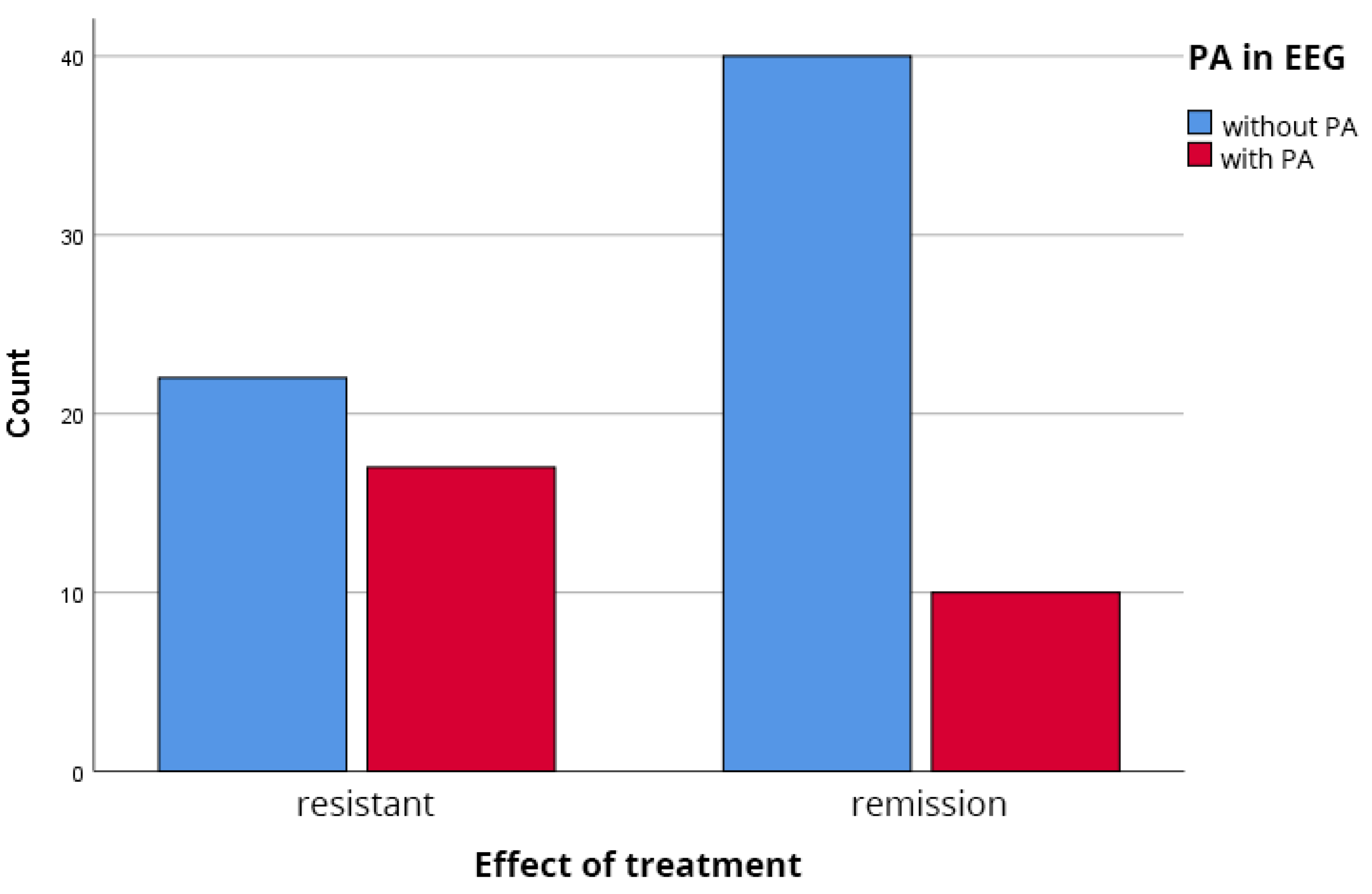
3.2. Prevalence of Interictal Epileptiform Discharges (IEDs)
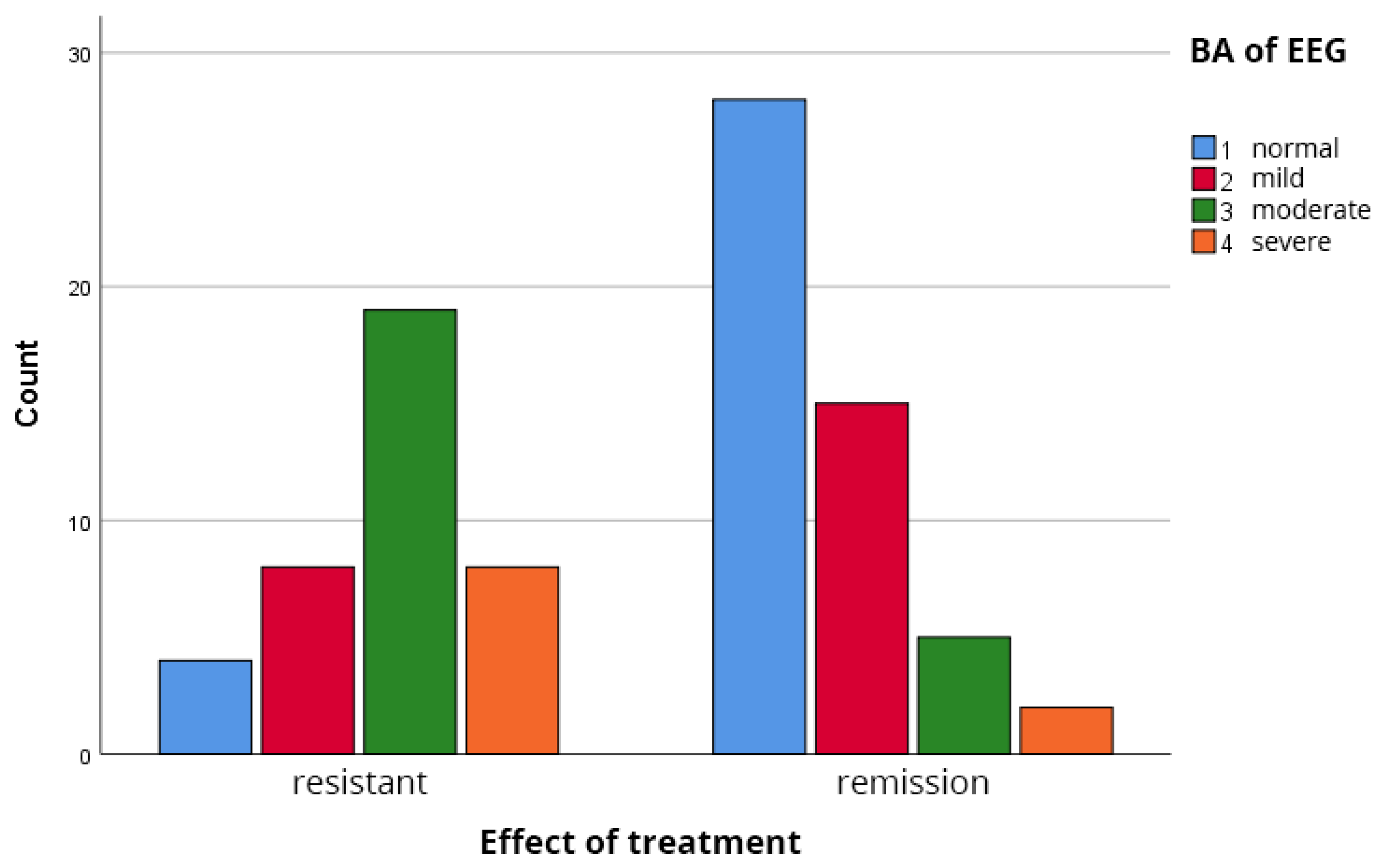
3.3. Severity of Background EEG Abnormalities
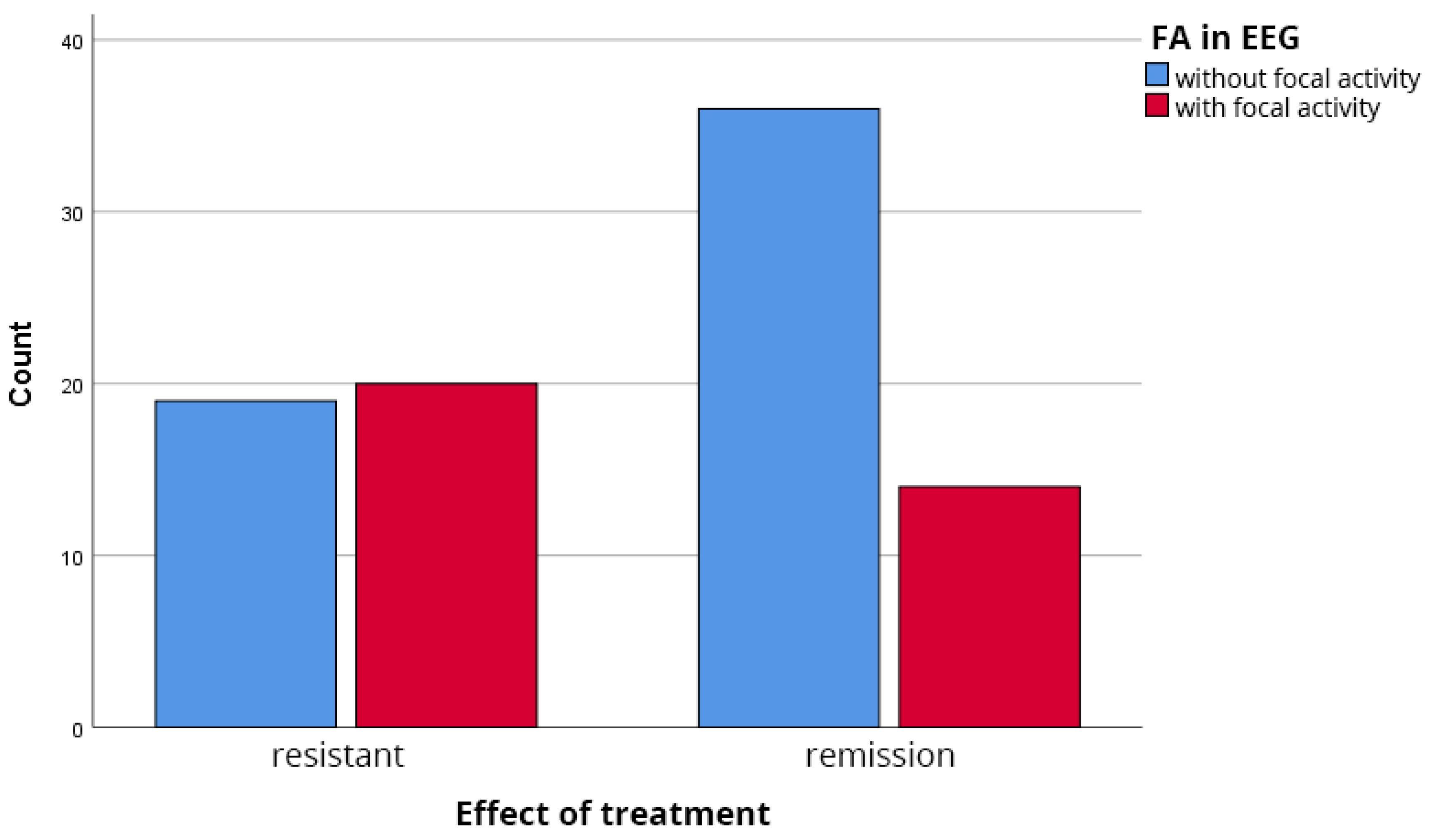
3.4. Focal EEG Abnormalities
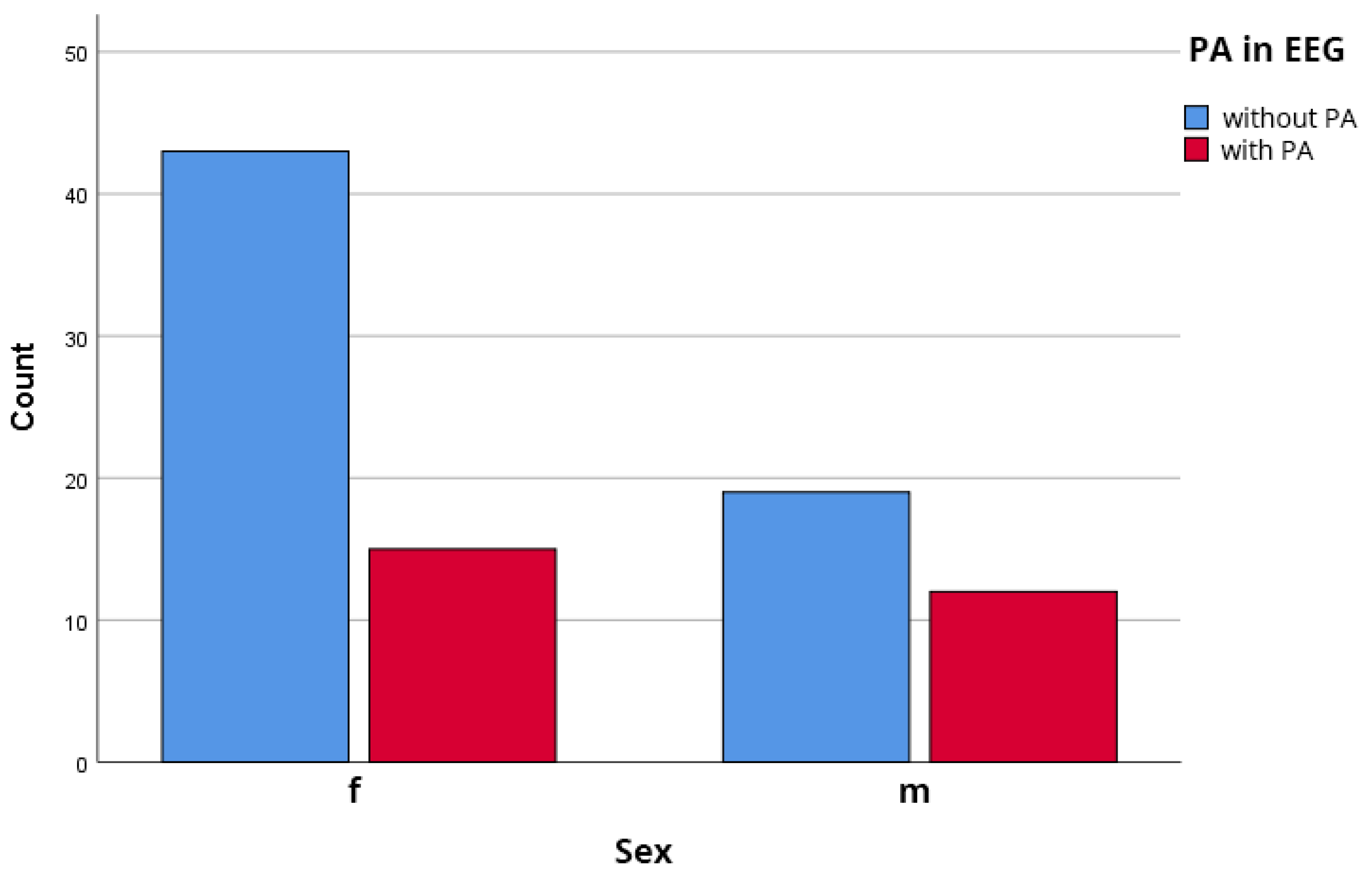
3.5. Gender Distribution of EEG Findings
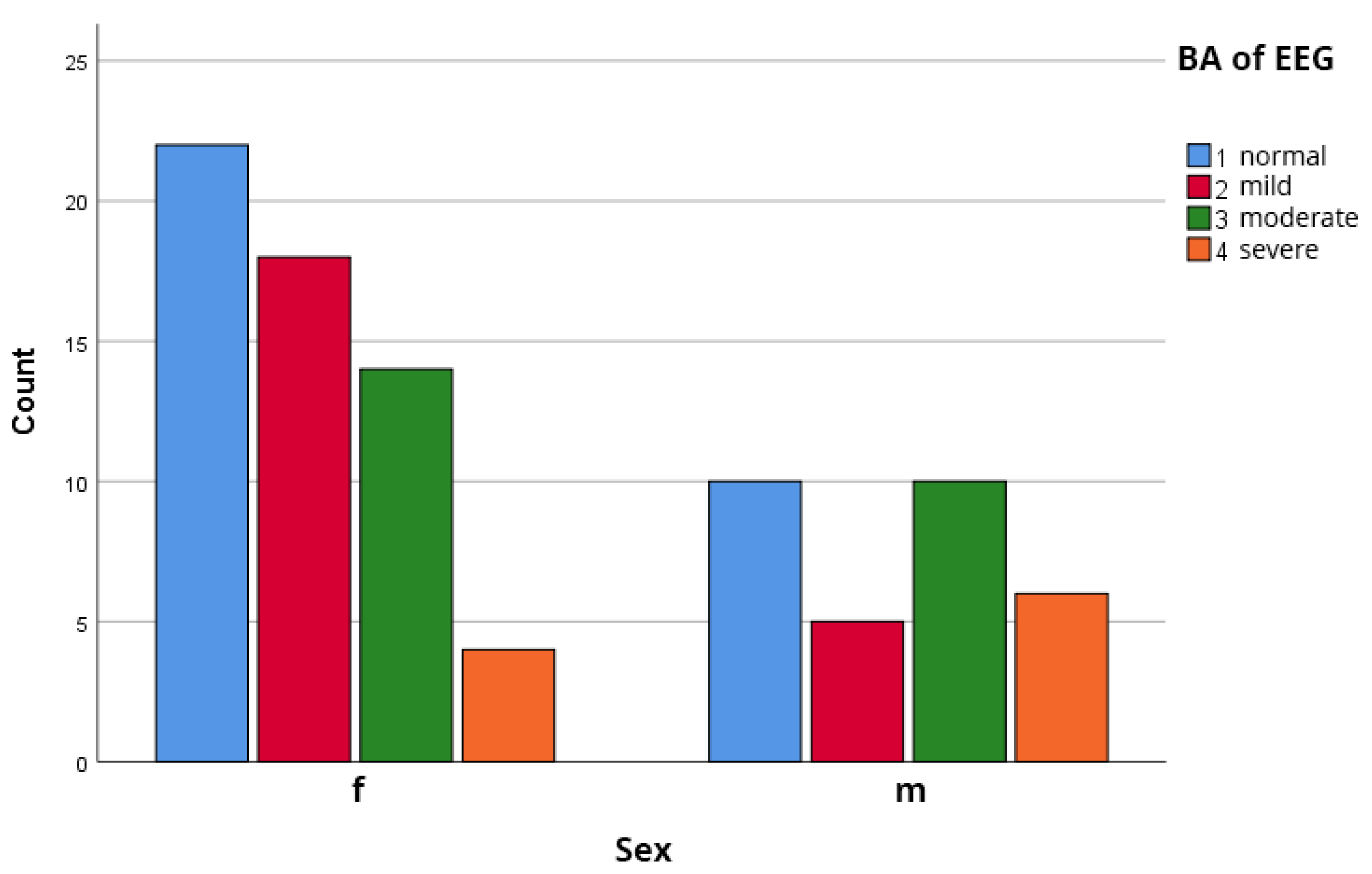
3.6. Gender Associated Distribution of the Changes of the Background Activity of the EEG
3.7. Multivariate Analysis
4. Discussion
4.1. Interictal Epileptiform Discharges as a Marker of Network Instability in TRS
4.2. Background Slowing: A Correlate of Diffuse Dysfunction and Cognitive Impairment
4.3. The Dual-Faced Nature of Interictal Epileptiform Discharges: A Hypothesis for a Failed Compensatory Mechanism
4.4. Clinical Implications and Future Directions
- Adjunctive mood stabilizers/anticonvulsants (e.g., valproate, lamotrigine) to dampen neuronal hyperexcitability, drawing on the parallel with epilepsy management.
- KP-modulating interventions, an area of active preclinical research aimed at reducing QUIN or enhancing KYNA signaling.
- Targeted neurostimulation (e.g., transcranial direct current stimulation—tDCS, or repetitive transcranial magnetic stimulation—rTMS) protocols designed to modulate cortical excitability and enhance slow-wave activity.
4.5. Study Limitations
5. Conclusions
Author Contributions
Funding
Institutional Review Board Statement
Informed Consent Statement
Data Availability Statement
Conflicts of Interest
References
- O’sullivan, P.F.; Kendler, K.S.; Neale, M.C. Schizophrenia as a Complex Trait: Evidence from a Meta-Analysis of Twin Studies. Arch. Gen. Psychiatry 2003, 60, 1187–1192. [Google Scholar] [CrossRef] [PubMed]
- Owen, M.J.; Sawa, A.; Mortensen, P.B. Schizophrenia. Lancet 2016, 388, 86–97. [Google Scholar] [CrossRef] [PubMed]
- Akbarian, S.; Nestler, E.J. Epigenetic Mechanisms in Psychiatry. Neuron 2016, 89, 683–686. [Google Scholar] [CrossRef] [PubMed][Green Version]
- Jouroukhin, Y.; McFarland, R.; Ayhan, Y.; Pletnikov, M.V. Modeling gene-environment interaction in schizophrenia. In Modeling the Psychopathological Dimensions of Schizophrenia: From Molecules to Behavior; Pletnikov, M.V., Waddington, J., Eds.; Elsevier Academic Press: Amsterdam, The Netherlands, 2016; pp. 345–360. [Google Scholar]
- Mill, J.; Tang, T.; Kaminsky, Z.; Khare, T.; Yazdanpanah, S.; Bouchard, L.; Jia, P.; Assadzadeh, A.; Flanagan, J.; Schumacher, A.; et al. Epigenomic Profiling Reveals DNA-Methylation Changes Associated with Major Psychosis. Am. J. Hum. Genet. 2008, 82, 696–711. [Google Scholar] [CrossRef]
- Andreasen, N.C. Symptoms, signs, and diagnosis of schizophrenia. Lancet 1995, 345, 477–481. [Google Scholar] [CrossRef]
- Keefe, R.S.; Harvey, P.D. Cognitive impairment in schizophrenia. Handb. Exp. Pharmacol. 2012, 213, 11–37. [Google Scholar]
- Andreasen, N.C. The Scale for the Assessment of Negative Symptoms (SANS): Conceptual and theoretical foundations. Br. J. Psychiatry 1989, 155, 49–52. [Google Scholar] [CrossRef]
- Barch, D.M.; Ceaser, A. Cognition in schizophrenia: Core psychological and neural mechanisms. Trends Cogn. Sci. 2012, 16, 27–34. [Google Scholar] [CrossRef]
- Buckley, P.F.; Miller, B.J.; Lehrer, D.S.; Castle, D.J. Psychiatric comorbidities and schizophrenia. Schizophr. Bull. 2009, 35, 383–402. [Google Scholar] [CrossRef]
- Tanaka, M.; Vécsei, L. Editorial of special issue crosstalk between depression, anxiety, and dementia: Comorbidity in behavioral neurology and neuropsychiatry. Biomedicines 2021, 9, 517. [Google Scholar] [CrossRef]
- Addington, D.; Addington, J.; Schissel, B. A depression rating scale for schizophrenics. Schizophr. Res. 1990, 3, 247–251. [Google Scholar] [CrossRef] [PubMed]
- Insel, T.R. Rethinking schizophrenia. Nature 2010, 468, 187–193. [Google Scholar] [CrossRef] [PubMed]
- Howes, O.D.; McCutcheon, R.; Agid, O.; de Bartolomeis, A.; van Beveren, N.J.; Birnbaum, M.L.; Bloomfield, M.A.P.; Bressan, R.A.; Buchanan, R.W.; Carpenter, W.T.; et al. Treatment-Resistant Schizophrenia: Treatment Response and Resistance in Psychosis (TRRIP) Working Group Consensus Guidelines on Diagnosis and Terminology. Am. J. Psychiatry 2017, 174, 216–229. [Google Scholar] [CrossRef]
- Howells, F.M.; Stein, D.J.; Russell, V.A. Childhood trauma is associated with altered alpha oscillations and functional connectivity in schizophrenia. Schizophr. Res. 2018, 202, 92–99. [Google Scholar]
- Itokawa, M.; Kamiya, K.; Kishimoto, T.; Hasegawa, T.; Fujii, S.; Miyashita, M.; Arai, M.; Ito, Y.; Okazaki, Y.; Kato, N. Routine EEG findings in schizophrenia: A systematic review and meta-analysis. Clin. EEG Neurosci. 2020, 51, 365–375. [Google Scholar]
- Panov, G. Quantitative EEG in Patients with Schizophrenia. In Computational Neuroscience; Stoyanov, D., Draganski, B., Brambilla, P., Lamm, C., Eds.; Springer: New York, NY, USA, 2023; Volume 199, pp. 107–115. [Google Scholar]
- Kanemoto, K.; Tadokoro, Y.; Oshima, T. EEG paroxysmal abnormalities in schizophrenia: Clinical significance and implications for treatment resistance. Psychiatry Clin. Neurosci. 2019, 73, 409–417. [Google Scholar]
- Sarnyai, Z.; Tomori, Z. Epileptiform activity and excitatory-inhibitory imbalance in schizophrenia: Mechanistic insights and therapeutic perspectives. Neurosci. Biobehav. Rev. 2019, 98, 297–306. [Google Scholar]
- Alper, K. The EEG in schizophrenia: Paroxysmal abnormalities and their clinical correlates. Clin. EEG Neurosci. 2019, 50, 3–10. [Google Scholar]
- Tanaka, M.; Vescei, L.; Amadeo, M.B. EEG biomarkers and treatment resistance in schizophrenia. Front. Psychiatry 2022, 13, 892345. [Google Scholar]
- Plitman, E.; Iwata, Y.; Caravaggio, F.; Nakajima, S.; Chung, J.K.; Gerretsen, P.; Kim, J.; Takeuchi, H.; Chakravarty, M.M.; Remington, G.; et al. Kynurenic acid in schizophrenia: A systematic review and meta-analysis. Schizophr. Bull. 2017, 43, 764–777. [Google Scholar] [CrossRef]
- Schwarcz, R.; Bruno, J.P.; Muchowski, P.J.; Wu, H.Q. Kynurenines in the mammalian brain: When physiology meets pathology. Nat. Rev. Neurosci. 2012, 13, 465–477. [Google Scholar] [CrossRef]
- Vécsei, L.; Szalárdy, L.; Fülöp, F.; Toldi, J. Kynurenines in the CNS: Recent advances and new questions. Nat. Rev. Drug Discov. 2013, 12, 64–82. [Google Scholar] [CrossRef]
- Erhardt, S.; Schwieler, L.; Imbeault, S.; Engberg, G. The kynurenine pathway in schizophrenia and bipolar disorder. Neuropharmacology 2017, 112, 297–306. [Google Scholar] [CrossRef] [PubMed]
- Chen, Y.; Guillemin, G.J. Kynurenine pathway metabolites in humans: Disease and healthy States. Int. J. Tryptophan Res. 2009, 2, 1–19. [Google Scholar] [CrossRef] [PubMed]
- Tanaka, M.; Vécsei, L. Editorial of special issue ‘dissecting neurological and neuropsychiatric diseases: Neurodegeneration and neuroprotection’. Int. J. Mol. Sci. 2022, 23, 6991. [Google Scholar] [CrossRef]
- Müller, N.; Schwarz, M.J. A psychoneuroimmunological perspective to Emil Kraepelin’s dichotomy: Schizophrenia and major depression as inflammatory CNS disorders. Eur. Arch. Psychiatry Clin. Neurosci. 2008, 258, 97–106. [Google Scholar] [CrossRef] [PubMed]
- Schwieler, L.; Samuelsson, M.; Frye, M.A.; Bhat, M.; Schuppe-Koistinen, I.; Jungholm, O.; Johansson, A.G.; Landén, M.; Sellgren, C.M.; Erhardt, S. Electroconvulsive therapy suppresses the neurotoxic branch of the kynurenine pathway in treatment-resistant depressed patients. J. Neuroinflamm. 2015, 12, 115. [Google Scholar] [CrossRef]
- Pláteník, J.; Fišar, Z.; Buchal, R.; Jirák, R.; Kitzlerová, E.; Zvěřová, M.; Raboch, J. Electroconvulsive therapy modulates the kynurenine pathway in major depressive disorder. J. Affect. Disord. 2019, 246, 399–404. [Google Scholar]
- Abdullah, L.N.; Browne, P.D.; Guillemin, G.J. The role of kynurenine pathway and electroconvulsive therapy in major depressive disorder: A systematic review. Brain Behav. Immun. Health 2022, 26, 100539. [Google Scholar]
- Panov, G.; Panova, P. Obsessive-compulsive symptoms in patient with schizophrenia: The influence of disorganized symptoms, duration of schizophrenia, and drug resistance. Front. Psychiatry 2023, 14, 1120974. [Google Scholar] [CrossRef]
- Panov, G. Dissociative Model in Patients with Resistant Schizophrenia. Front. Psychiatry 2022, 13, 845493. [Google Scholar] [CrossRef] [PubMed]
- Panov, G. Comparative Analysis of Lateral Preferences in Patients with Resistant Schizophrenia. Front. Psychiatry 2022, 13, 868285. [Google Scholar] [CrossRef] [PubMed]
- Panov, G. Gender-associated role in patients with schizophrenia. Is there a connection with the resistance? Front. Psychiatry 2022, 13, 845493. [Google Scholar]
- Panov, G. Higher Depression Scores in Patients with Drug-Resistant Schizophrenia. J. Integr. Neurosci. 2022, 21, 126. [Google Scholar] [CrossRef]
- Panov, G.P. Early Markers in Resistant Schizophrenia: Effect of the First Antipsychotic Drug. Diagnostics 2022, 12, 803. [Google Scholar] [CrossRef]
- Panov, G.; Djulgerova, S.; Panova, P. The effect of education level and sex differences on resistance to treatment in patients with schizophrenia. Bulg. Meditsina 2022, 12, 22–29. [Google Scholar]
- Panov, G.; Dyulgerova, S.; Panova, P.; Stefanova, S. Untangling Depression in Schizophrenia: The Role of Disorganized and Obsessive-Compulsive Symptoms and the Duration of Untreated Psychosis. Biomedicines 2024, 12, 2646. [Google Scholar] [CrossRef]
- Panov, G.; Djulgerova, S.; Panova, P. Comparative anthropometric criteria in patients with resistant schizophrenia. Bulg. Meditsina 2022, 12, 30–39. [Google Scholar]
- American Psychiatric Association. Diagnostic and Statistical Manual of Mental Disorders, 5th ed.; American Psychiatric Association: Washington, DC, USA, 2013. [Google Scholar]
- World Health Organization. The ICD-10 Classification of Mental and Behavioural Disorders: Clinical Descriptions and Diagnostic Guidelines; WHO: Geneva, Switzerland, 1994. [Google Scholar]
- American Psychiatric Association. Diagnostic and Statistical Manual of Mental Disorders, 5th ed.; American Psychiatric Publishing: Arlington, VA, USA, 2022. [Google Scholar]
- Kay, S.R.; Fiszbein, A.; Opler, L.A. The positive and negative syndrome scale (PANSS) for schizophrenia. Schizophr. Bull. 1987, 13, 261–276. [Google Scholar] [CrossRef]
- Overall, J.E.; Gorham, D.R. The Brief Psychiatric Rating Scale. Psychol. Rep. 1962, 10, 799–812. [Google Scholar] [CrossRef]
- Andreasen, N.C.; Carpenter, W.T.; Kane, J.M., Jr.; Lasser, R.A.; Marder, S.R.; Weinberger, D.R. Remission in schizophrenia: Proposed criteria and rationale for consensus. Am. J. Psychiatry 2005, 162, 441–449. [Google Scholar] [CrossRef]
- Kane, N.; Acharya, J.; Benickzy, S.; Caboclo, L.; Finnigan, S.; Kaplan, P.W.; Shibasaki, H.; Pressler, R.; van Putten, M.J.A.M. A revised glossary of terms most commonly used by clinical electroencephalographers and updated proposal for the report format of the EEG findings. Clin. Neurophysiol. Pract. 2017, 2, 170–185. [Google Scholar] [CrossRef] [PubMed]
- Noachtar, S.; Rémi, J. The role of EEG in epilepsy: A critical review. Epilepsy Behav. 2009, 15, 22–33. [Google Scholar] [CrossRef] [PubMed]
- Niedermeyer, E.; da Silva, F.L. (Eds.) Electroencephalography: Basic Principles, Clinical Applications, and Related Fields, 5th ed.; Lippincott Williams & Wilkins: Philadelphia, PA, USA, 2005. [Google Scholar]
- Deuschl, G.; Eisen, A. (Eds.) Recommendations for the Practice of Clinical Neurophysiology: Guidelines of the International Federation of Clinical Neurophysiology, 2nd ed.; Electroencephalography and Clinical Neurophysiology, Supplement 52; Elsevier: Amsterdam, The Netherlands, 1999. [Google Scholar]
- Guillemin, G.J. Quinolinic acid, the inescapable neurotoxin. FEBS J. 2012, 279, 1356–1365. [Google Scholar] [CrossRef] [PubMed]
- Kindler, J.; Lim, C.K.; Weickert, C.S.; Boerrigter, D.; Galletly, C.; Liu, D.; Jacobs, K.R.; Balzan, R.; Bruggemann, J.; O’Donnell, M.; et al. Dysregulation of kynurenine metabolism is related to proinflammatory cytokines, attention, and prefrontal cortex volume in schizophrenia. Mol. Psychiatry 2020, 25, 2860–2872. [Google Scholar] [CrossRef]
- Dean, A.C.; Solomon, G.; Harden, C.; Papakostas, G.; Labar, D.R. Left hemispheric dominance of epileptiform discharges. Epilepsia 1997, 38, 503–505. [Google Scholar] [CrossRef]
- Holmes, M.D.; Dodrill, C.B.; Kutsy, R.L.; Ojemann, G.A.; Miller, J.W. Is the left cerebral hemisphere more prone to epileptogenesis than the right? Epileptic Disord. 2001, 3, 137–141. [Google Scholar] [CrossRef]
- Labar, D.; Dilone, L.; Solomon, G.; Harden, C. Epileptogenesis: Left or right hemisphere dominance? Preliminary findings in a hospital-based population. Seizure 2001, 10, 570–572. [Google Scholar] [CrossRef][Green Version]
- Pillai, J.; Sperling, M.R. Interictal EEG and the diagnosis of epilepsy. Epilepsia 2006, 47, 14–22. [Google Scholar] [CrossRef]
- Howes, O.D.; Kapur, S. The dopamine hypothesis of schizophrenia: Version III—The final common pathway. Schizophr. Bull. 2009, 35, 549–562. [Google Scholar] [CrossRef]
- Robertson, G.S.; Hori, S.E.; Powell, K.J. Schizophrenia: An integrative approach to modelling a complex disorder. J. Psychiatry Neurosci. 2006, 31, 157–167. [Google Scholar] [CrossRef] [PubMed]
- Tanaka, M.; Szabó, Á; Vécsei, L. Integrating armchair, bench, and bedside research for behavioral neurology and neuropsychiatry: Editorial. Biomedicines 2022, 10, 2999. [Google Scholar] [CrossRef] [PubMed]
- Battaglia, S.; Nazzi, C.; Thayer, J.F. The role of large-scale neural networks in the integration of interoceptive and exteroceptive information: A novel framework for understanding psychopathology. Biomedicines 2023, 11, 1464. [Google Scholar]
- Battaglia, S.; Cardellicchio, P.; Di Fazio, C.; Fracasso, A. Excitatory-inhibitory balance and neural network dynamics in schizophrenia: From pathophysiology to novel therapeutic targets. Biomedicines 2023, 11, 1465. [Google Scholar]
- Kwan, P.; Brodie, M.J. Early identification of refractory epilepsy. N. Engl. J. Med. 2000, 342, 314–319. [Google Scholar] [CrossRef]
- Krishnamoorthy, E.S.; Trimble, M.R.; Sander, J.W. Forced normalization at the interface between epilepsy and psychiatry. Epilepsy Behav. 2002, 3, 303–308. [Google Scholar] [CrossRef]
- Föcking, M.; Doyle, B.; Munawar, N.; Dillon, E.T.; Cotter, D.; Cagney, G. Epigenetic Factors in Schizophrenia: Mechanisms and Experimental Approaches. Mol. Neuropsychiatry 2019, 5, 6–12. [Google Scholar] [CrossRef]
- Tanaka, M.; Tóth, F.; Polyák, H.; Szabó, Á; Mándi, Y.; Vécsei, L. Immune influencers in action: Metabolites and enzymes of the tryptophan-kynurenine metabolic pathway. Biomedicines 2021, 9, 734. [Google Scholar] [CrossRef]
- Correia, B.S.B.; Nani, J.V.; Waladares Ricardo, R.; Stanisic, D.; Costa, T.B.B.C.; Hayashi, M.A.F.; Tasic, L. Effects of psychostimulants and antipsychotics on serum lipids in an animal model for schizophrenia. Biomedicines 2021, 9, 235. [Google Scholar] [CrossRef]



| Characteristic | TRS Group (n = 39) Mean ± SD | Remission Group (n = 50) Mean ± SD | p-Value |
|---|---|---|---|
| Age (years) | 36.82 ± 10.79 | 36.84 ± 10.26 | 0.994 |
| Age of Onset (years) | 23.33 ± 7.31 | 27.52 ± 8.45 | 0.018 |
| Duration of Illness (years) | 13.69 ± 11.45 | 9.14 ± 6.98 | 0.016 |
| Height (cm) | 169.79 ± 8.56 | 166.84 ± 7.45 | 0.073 |
| Weight (kg) | 75.00 ± 15.04 | 74.66 ± 16.24 | 0.919 |
| Body Mass Index (kg/m2) | 26.39 ± 4.86 | 26.88 ± 5.61 | 0.667 |
| EEG Background Category | Remission Group (n = 50) n (%) | TRS Group (n = 39) n (%) |
|---|---|---|
| 1. Normal | 28 (56.0%) | 4 (10.3%) |
| 2. Mild Diffuse Slowing | 15 (30.0%) | 8 (20.5%) |
| 3. Moderate Slowing | 5 (10.0%) | 19 (48.7%) |
| 4. Severe Slowing | 2 (4.0%) | 8 (20.5%) |
| Median (IQR) | 1.5 (1–2) | 3.0 (3–4) |
| Predictor Variable | B | SE | Wald χ2 | df | p-Value | Odds Ratio (OR) | 95% CI for OR |
|---|---|---|---|---|---|---|---|
| IEDs (present vs. absent) | 1.163 | 0.552 | 4.44 | 1 | 0.035 | 3.20 | 1.08–9.45 |
| Background Severity Score | 1.411 | 0.329 | 18.42 | 1 | <0.001 | 4.10 | 2.15–7.82 |
| Age of Onset (years) | −0.042 | 0.033 | 1.64 | 1 | 0.20 | 0.96 | 0.90–1.02 |
| Illness Duration (years) | 0.095 | 0.051 | 3.53 | 1 | 0.06 | 1.10 | 1.00–1.22 |
| Gender (male vs. female) | 0.712 | 0.495 | 2.07 | 1 | 0.15 | 2.04 | 0.77–5.38 |
| Constant | −2.847 | 1.324 | 4.62 | 1 | 0.032 | 0.058 | – |
Disclaimer/Publisher’s Note: The statements, opinions and data contained in all publications are solely those of the individual author(s) and contributor(s) and not of MDPI and/or the editor(s). MDPI and/or the editor(s) disclaim responsibility for any injury to people or property resulting from any ideas, methods, instructions or products referred to in the content. |
© 2026 by the authors. Licensee MDPI, Basel, Switzerland. This article is an open access article distributed under the terms and conditions of the Creative Commons Attribution (CC BY) license.
Share and Cite
Panov, G.; Panova, P.; Dyulgerova, S.; Chakarov, I. From Signal to Symptom: EEG Paroxysms and Background Slowing as Potential Biomarkers and Compensatory Failures in Treatment-Resistant Schizophrenia. Biomedicines 2026, 14, 641. https://doi.org/10.3390/biomedicines14030641
Panov G, Panova P, Dyulgerova S, Chakarov I. From Signal to Symptom: EEG Paroxysms and Background Slowing as Potential Biomarkers and Compensatory Failures in Treatment-Resistant Schizophrenia. Biomedicines. 2026; 14(3):641. https://doi.org/10.3390/biomedicines14030641
Chicago/Turabian StylePanov, Georgi, Presyana Panova, Silvana Dyulgerova, and Ivan Chakarov. 2026. "From Signal to Symptom: EEG Paroxysms and Background Slowing as Potential Biomarkers and Compensatory Failures in Treatment-Resistant Schizophrenia" Biomedicines 14, no. 3: 641. https://doi.org/10.3390/biomedicines14030641
APA StylePanov, G., Panova, P., Dyulgerova, S., & Chakarov, I. (2026). From Signal to Symptom: EEG Paroxysms and Background Slowing as Potential Biomarkers and Compensatory Failures in Treatment-Resistant Schizophrenia. Biomedicines, 14(3), 641. https://doi.org/10.3390/biomedicines14030641