Epigenetic Regulation of Sebaceous and Meibomian Glands: From Development to Disease

Abstract
1. Introduction
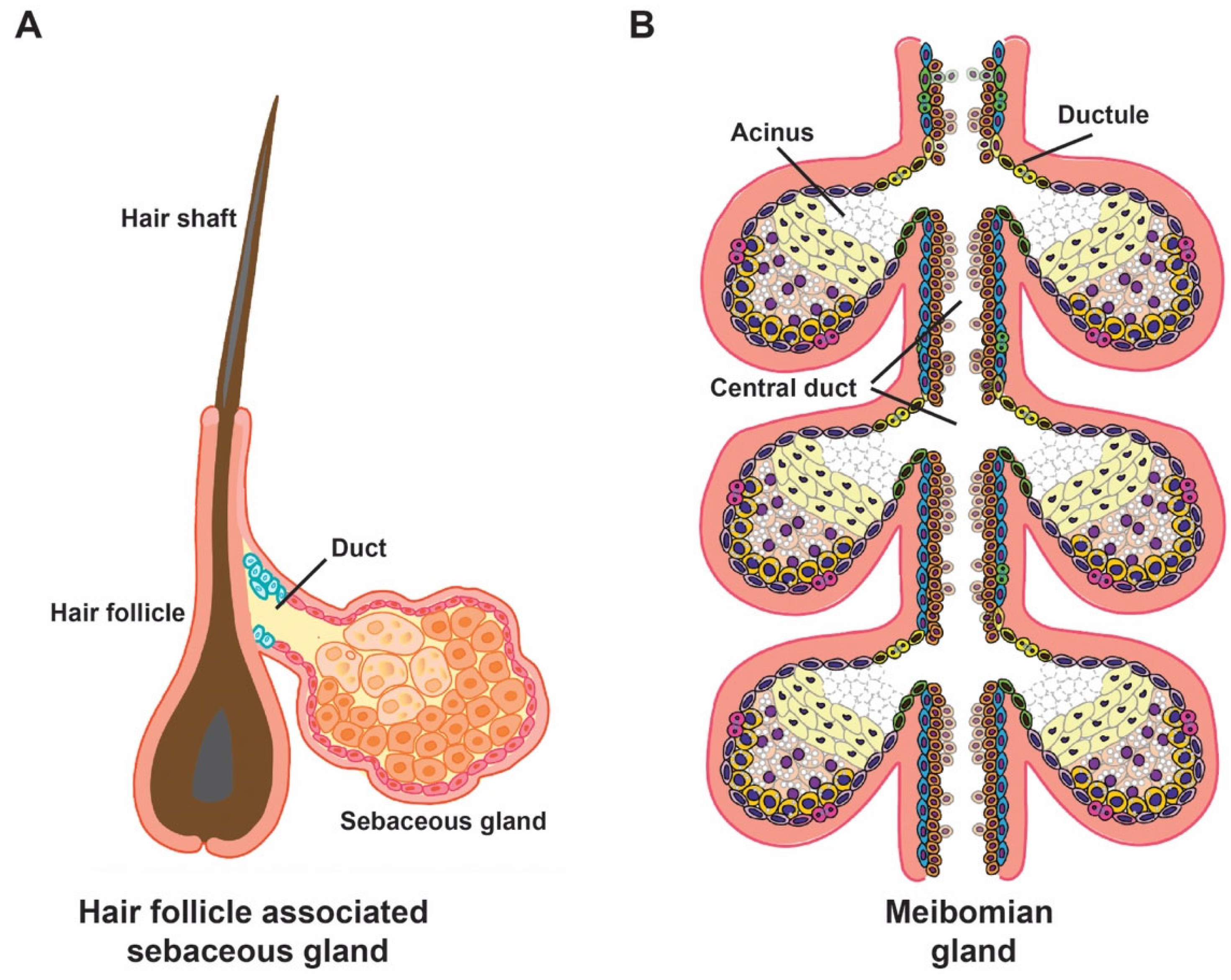
2. Overview of the SG and Its Subtypes
3. Overview of Epigenetic Regulatory Mechanisms
3.1. DNA Methylation
3.2. Covalent Modifications of Histone Proteins
3.2.1. Methylation
3.2.2. Acetylation
3.3. NcRNAs
3.3.1. MiRNAs
3.3.2. LncRNAs
4. Overview of SG/MG Development
4.1. SG Development
4.2. MG Development
5. Adult SG/MG Homeostasis
5.1. SG Homeostasis
5.2. MG Homeostasis
6. Common SG and MG Diseases
6.1. Acne Vulgaris
6.2. SG Neoplasms
6.3. MG Dysfunction (MGD) and EDED
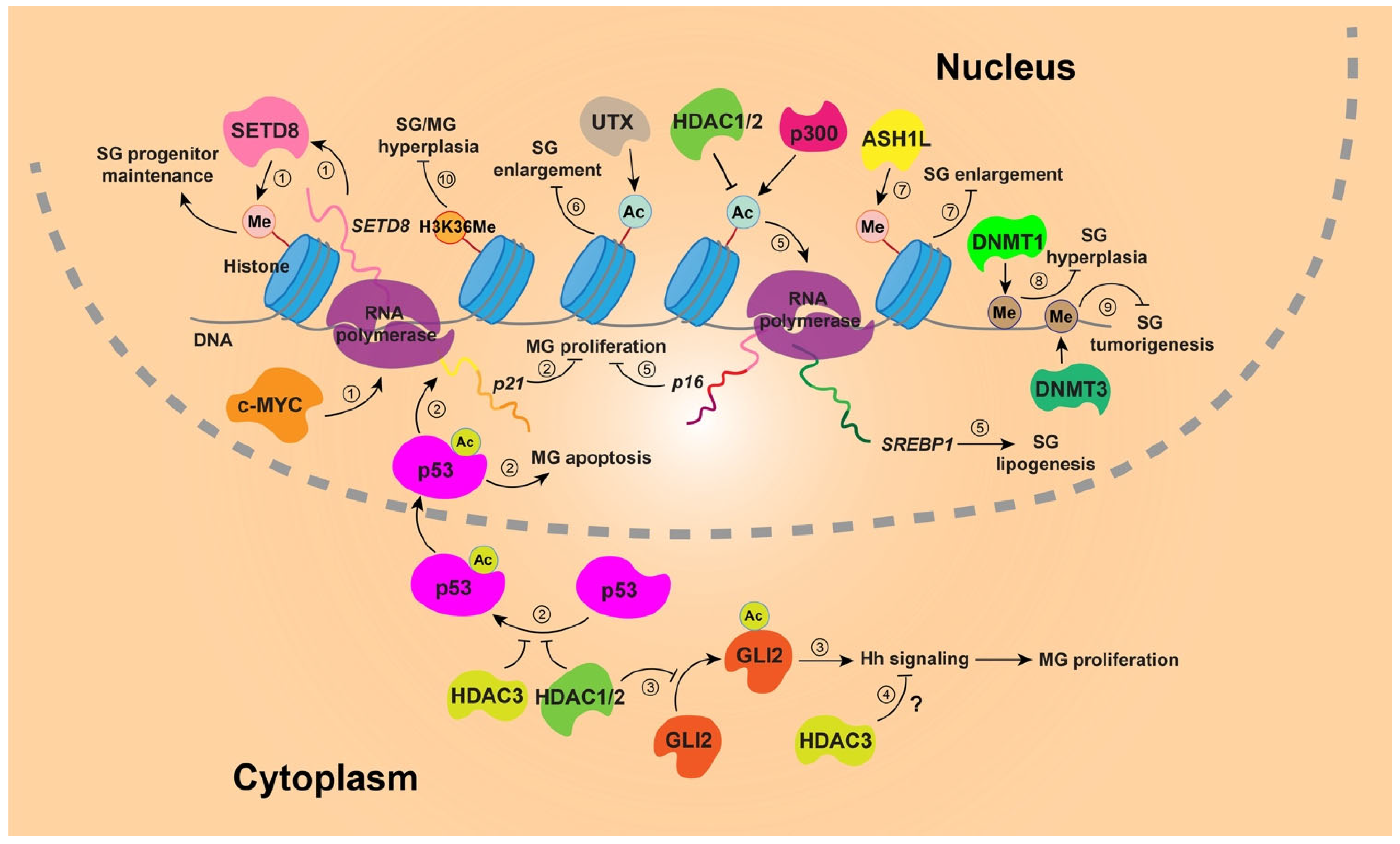
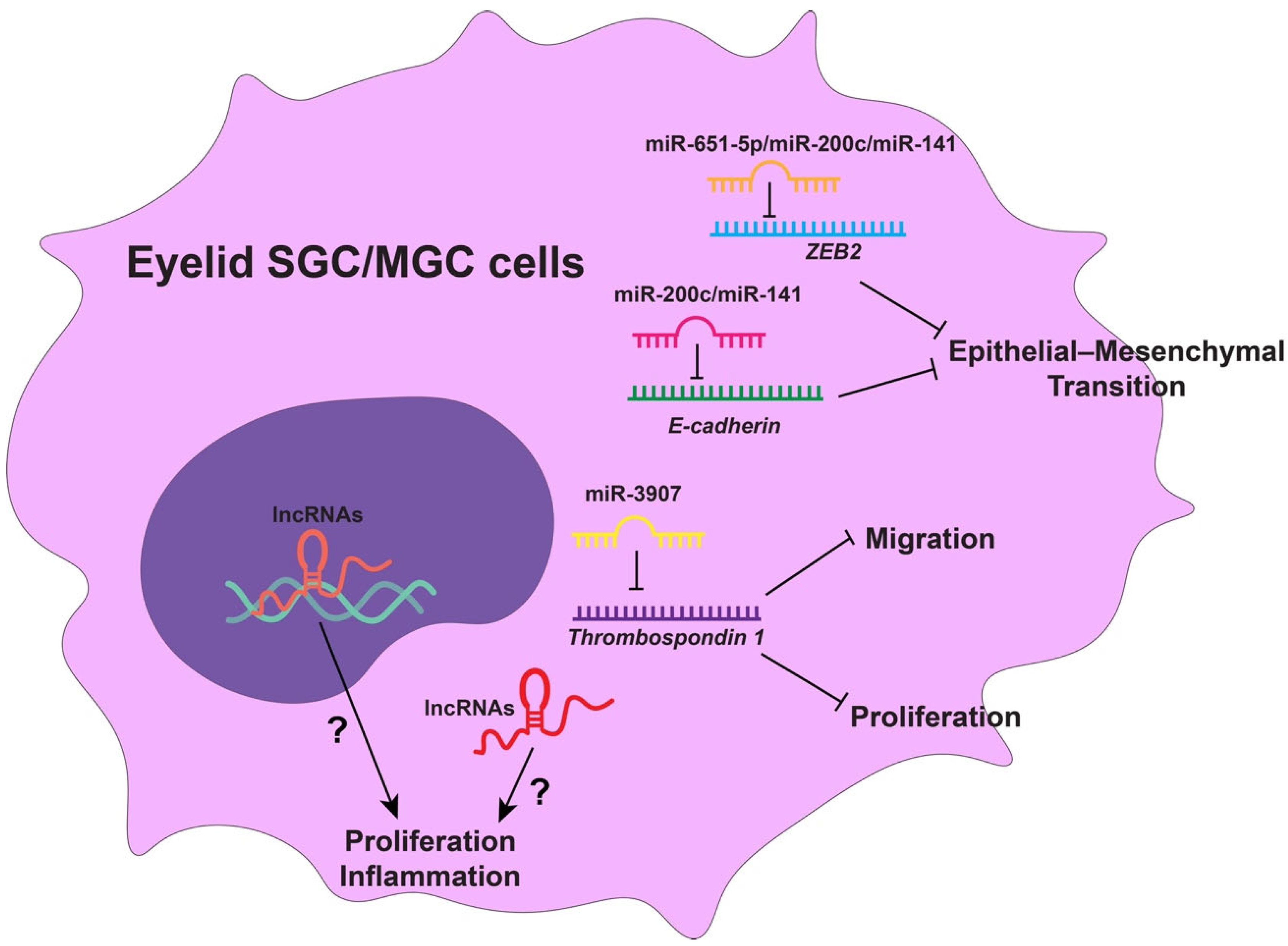
7. Epigenetic Regulation of SG and MG Development, Homeostasis, and Disease
8. Epigenetic Regulation of PPARγ
9. Conclusions and Perspectives
Author Contributions
Funding
Data Availability Statement
Acknowledgments
Conflicts of Interest
Abbreviations
| Abbreviation | Explanation |
| 5mC | 5-methylcytosine |
| Ash1l | ASH1-like histone lysine methyltransferase |
| Axin2 | Axis inhibition protein 2 |
| CBP | CREB-binding protein |
| C/EBPα | CCAAT/enhancer-binding protein alpha |
| ceRNA | Competing endogenous RNA |
| circRNA | Circular RNA |
| c-MYC | MYC proto-oncogene |
| CoREST | Corepressor of REST |
| CpG | Cytosine–phosphate–guanine |
| DED | Dry eye disease |
| DGCR8 | DiGeorge syndrome critical region gene 8 |
| DNMT | DNA methyltransferase |
| Drosha | Ribonuclease III enzyme Drosha |
| EDED | Evaporative dry eye disease |
| ELP3 | Elongator acetyltransferase complex subunit 3 |
| GCN5 | General control of amino acid synthesis 5 |
| GNG7 | G protein subunit gamma 7 |
| Gli2 | GLI family zinc finger 2 |
| HDAC | Histone deacetylase |
| HDAC1 | Histone deacetylase 1 |
| HDAC2 | Histone deacetylase 2 |
| HDAC3 | Histone deacetylase 3 |
| HAT | Histone acetyltransferase |
| HBO1 | Histone acetyltransferase binding to ORC1 |
| H3K18la | Lactylation at lysine 18 (K18) on histone H3 |
| H3K4 | Histone H3 lysine 4 |
| H3K36 | Histone H3 lysine 36 |
| H3K79 | Histone H3 lysine 79 |
| H3K9me3 | Trimethylation of histone H3 lysine 9 |
| H3K27me3 | Trimethylation of histone H3 lysine 27 |
| H4K20 | Histone H4 lysine 20 |
| H19 | Long noncoding RNA H19 |
| HBEGF | Heparin-binding EGF-like growth factor |
| Hh | Hedgehog |
| HOTAIR | HOX antisense intergenic RNA |
| JZ | Junctional zone |
| JMJD2B | Jumonji domain-containing 2B histone demethylase |
| Kla | Lysine lactylation |
| KDM6A | Lysine demethylase 6A |
| Krt17 | Keratin 17 |
| Krox20 | EGR2, Early Growth Response 2 |
| Lgr6 | Leucine-rich repeat-containing G protein-coupled receptor 6 |
| Lrig1 | Leucine-rich repeats and immunoglobulin-like domains 1 |
| MG | Meibomian gland |
| MGC | Meibomian gland carcinoma |
| MGD | Meibomian gland dysfunction |
| MiDAC | Mitotic deacetylase complex |
| miRNA | MicroRNA |
| MOZ | Monocytic leukemia zinc finger protein |
| MORF | MOZ-related factor |
| ncRNA | Non-coding RNA |
| NEAT1 | Nuclear enriched abundant transcript 1 |
| N-CoR | Nuclear receptor corepressor |
| NuRD | Nucleosome remodeling and deacetylase complex |
| PCAF | p300/CBP-associated factor |
| PPARγ | Peroxisome proliferator-activated receptor gamma |
| PTIP | PAX transactivation-domain interacting protein |
| pre-miRNA | Precursor miRNA |
| pri-miRNA | Long primary transcript of microRNA |
| RISC | RNA-induced silencing complex |
| SETD8 | SET domain-containing protein 8 |
| Sin3A | SIN3 transcription regulator family member A |
| Slc1a3 | Solute carrier family 1 member 3 |
| SNHG1 | Small nucleolar RNA host gene 1 |
| SNHG3 | Small nucleolar RNA host gene 3 |
| SRC-1 | Steroid receptor coactivator-1 |
| SREBP1 | Sterol regulatory element-binding protein 1 |
| TAF1 | TATA-box binding protein-associated factor 1 |
| TET | Ten-eleven translocation |
| TIP60 | Tat-interactive protein 60 kDa |
| tRNAs | Transfer RNAs |
| TUG1 | Taurine upregulated gene 1 |
| U90926 | Long noncoding RNA U90926 |
| UV | Ultraviolet |
| ZEB2 | Zinc finger E-box binding homeobox 2 |
| SG | Sebaceous gland |
| SGC | Sebaceous gland carcinoma |
References
- Alegría-Torres, J.A.; Baccarelli, A.; Bollati, V. Epigenetics and lifestyle. Epigenomics 2011, 3, 267–277. [Google Scholar] [CrossRef] [Scilit]
- Faraji, J.; Metz, G.A.S. Environmental epigenetics: New horizons in redefining biological and health outcomes. Environ. Int. 2026, 208, 110072. [Google Scholar] [CrossRef] [Scilit] [PubMed]
- Kaelin, W.G.; McKnight, S.L. Influence of Metabolism on Epigenetics and Disease. Cell 2013, 153, 56–69. [Google Scholar] [CrossRef] [Scilit]
- Wilkinson, A.L.; Zorzan, I.; Rugg-Gunn, P.J. Epigenetic regulation of early human embryo development. Cell Stem Cell 2023, 30, 1569–1584. [Google Scholar] [CrossRef] [Scilit]
- Hemberger, M.; Dean, W.; Reik, W. Epigenetic dynamics of stem cells and cell lineage commitment: Digging Waddington’s canal. Nat. Rev. Mol. Cell Biol. 2009, 10, 526–537. [Google Scholar] [CrossRef] [Scilit]
- Fico, A.; Fiorenzano, A.; Pascale, E.; Patriarca, E.J.; Minchiotti, G. Long non-coding RNA in stem cell pluripotency and lineage commitment: Functions and evolutionary conservation. Cell. Mol. Life Sci. 2019, 76, 1459–1471. [Google Scholar] [CrossRef] [Scilit]
- Moris, N.; Pina, C.; Arias, A.M. Transition states and cell fate decisions in epigenetic landscapes. Nat. Rev. Genet. 2016, 17, 693–703. [Google Scholar] [CrossRef] [Scilit]
- Lorzadeh, A.; Romero-Wolf, M.; Goel, A.; Jadhav, U. Epigenetic Regulation of Intestinal Stem Cells and Disease: A Balancing Act of DNA and Histone Methylation. Gastroenterology 2021, 160, 2267–2282. [Google Scholar] [CrossRef] [Scilit] [PubMed]
- Moltrasio, C.; Romagnuolo, M.; Marzano, A.V. Epigenetic Mechanisms of Epidermal Differentiation. Int. J. Mol. Sci. 2022, 23, 4874. [Google Scholar] [CrossRef] [Scilit] [PubMed]
- Mosca, S.; Ottaviani, M.; Briganti, S.; Di Nardo, A.; Flori, E. The Sebaceous Gland: A Key Player in the Balance Between Homeostasis and Inflammatory Skin Diseases. Cells 2025, 14, 747. [Google Scholar] [CrossRef] [Scilit]
- Niemann, C.; Horsley, V. Development and homeostasis of the sebaceous gland. Semin. Cell Dev. Biol. 2012, 23, 928–936. [Google Scholar] [CrossRef] [Scilit]
- Dai, W.; Qiao, X.; Fang, Y.; Guo, R.; Bai, P.; Liu, S.; Li, T.; Jiang, Y.; Wei, S.; Na, Z.; et al. Epigenetics-targeted drugs: Current paradigms and future challenges. Signal Transduct. Target. Ther. 2024, 9, 332. [Google Scholar] [CrossRef] [Scilit]
- Schmidt, M.; Binder, H.; Schneider, M.R. The metabolic underpinnings of sebaceous lipogenesis. Commun. Biol. 2025, 8, 670. [Google Scholar] [CrossRef] [Scilit]
- Okoro, O.E.; Camera, E.; Flori, E.; Ottaviani, M. Insulin and the sebaceous gland function. Front. Physiol. 2023, 14, 1252972. [Google Scholar] [CrossRef] [Scilit]
- Szöllősi, A.G.; Oláh, A.; Bíró, T.; Tóth, B.I. Recent advances in the endocrinology of the sebaceous gland. Dermatoendocrinology 2017, 9, e1361576. [Google Scholar] [CrossRef] [Scilit]
- Hou, X.; Wei, Z.; Zouboulis, C.C.; Ju, Q. Aging in the sebaceous gland. Front. Cell Dev. Biol. 2022, 10, 909694. [Google Scholar] [CrossRef] [Scilit]
- Zouboulis, C.C.; Coenye, T.; He, L.; Kabashima, K.; Kobayashi, T.; Niemann, C.; Nomura, T.; Oláh, A.; Picardo, M.; Quist, S.R.; et al. Sebaceous immunobiology—Skin homeostasis, pathophysiology, coordination of innate immunity and inflammatory response and disease associations. Front. Immunol. 2022, 13, 1029818. [Google Scholar] [CrossRef] [Scilit]
- Lee, W.J.; Park, K.H.; Sohn, M.Y.; Lee, W.C.; Lee, S.J.; Kim, D.W. Ultraviolet B irradiation increases the expression of inflammatory cytokines in cultured sebocytes. J. Dermatol. 2013, 40, 993–997. [Google Scholar] [CrossRef] [Scilit] [PubMed]
- Clayton, R.W.; Göbel, K.; Niessen, C.M.; Paus, R.; van Steensel, M.A.M.; Lim, X. Homeostasis of the sebaceous gland and mechanisms of acne pathogenesis. Br. J. Dermatol. 2019, 181, 677–690. [Google Scholar] [CrossRef] [Scilit] [PubMed]
- Hussein, L.; Perrett, C.M. Treatment of sebaceous gland hyperplasia: A review of the literature. J. Dermatol. Treat. 2021, 32, 866–877. [Google Scholar] [CrossRef] [Scilit] [PubMed]
- Dowell-Esquivel, C.; Lee, R.; DiCaprio, R.C., 3rd; Nouri, K. Sebaceous carcinoma: An updated review of pathogenesis, diagnosis, and treatment options. Arch. Dermatol. Res. 2023, 316, 55. [Google Scholar] [CrossRef] [Scilit]
- Makrantonaki, E.; Ganceviciene, R.; Zouboulis, C. An update on the role of the sebaceous gland in the pathogenesis of acne. Dermatoendocrinology 2011, 3, 41–49. [Google Scholar] [CrossRef] [Scilit]
- Obata, H. Anatomy and histopathology of human meibomian gland. Cornea 2002, 21, S70–S74. [Google Scholar] [CrossRef] [Scilit]
- Treuting, P.M.; Dintzis, S.M.; Montine, K.S. Comparative Anatomy and Histology: A Mouse, Rat, and Human Atlas, 2nd ed.; Elsevier: London, UK; Academic Press: London, UK, 2018. [Google Scholar]
- Doucet, S.; Soussignan, R.; Sagot, P.; Schaal, B. The secretion of areolar (Montgomery’s) glands from lactating women elicits selective, unconditional responses in neonates. PLoS ONE 2009, 4, e7579. [Google Scholar] [CrossRef] [Scilit] [PubMed]
- Sheppard, J.D.; Nichols, K.K. Dry Eye Disease Associated with Meibomian Gland Dysfunction: Focus on Tear Film Characteristics and the Therapeutic Landscape. Ophthalmol. Ther. 2023, 12, 1397–1418. [Google Scholar] [CrossRef] [Scilit]
- Moreno, I.; Verma, S.; Gesteira, T.F.; Coulson-Thomas, V.J. Recent advances in age-related meibomian gland dysfunction (ARMGD). Ocul. Surf. 2023, 30, 298–306. [Google Scholar] [CrossRef] [Scilit] [PubMed]
- Shields, J.A.; Demirci, H.; Marr, B.P.; Eagle, R.C.; Shields, C.L. Sebaceous Carcinoma of the Ocular Region: A Review. Surv. Ophthalmol. 2005, 50, 103–122. [Google Scholar] [CrossRef] [Scilit] [PubMed]
- Knop, E.; Knop, N.; Millar, T.; Obata, H.; Sullivan, D.A. The international workshop on meibomian gland dysfunction: Report of the subcommittee on anatomy, physiology, and pathophysiology of the meibomian gland. Investig. Ophthalmol. Vis. Sci. 2011, 52, 1938–1978. [Google Scholar] [CrossRef] [Scilit]
- Bron, A.J.; Tripathi, R.C.; Tripathi, B.J.; Wolff, E. Wolff’s Anatomy of the Eye and Orbit, 8th ed.; Bron, A.J., Tripathi, R.C., Tripathi, B.J., Eds.; Chapman & Hall Medical: London, UK, 1997. [Google Scholar]
- Verma, S.; Moreno, I.Y.; Trapp, M.E.; Ramirez, L.; Gesteira, T.F.; Coulson-Thomas, V.J. Meibomian gland development: Where, when and how? Differentiation 2023, 132, 41–50. [Google Scholar] [CrossRef] [Scilit]
- Zhu, X.; Xu, M.; Portal, C.; Lin, Y.; Ferdinand, A.; Peng, T.; Morrisey, E.E.; Dlugosz, A.A.; Castellano, J.M.; Lee, V.; et al. Identification of Meibomian gland stem cell populations and mechanisms of aging. Nat. Commun. 2025, 16, 1663. [Google Scholar] [CrossRef] [Scilit]
- Butovich, I.A. Meibomian glands, meibum, and meibogenesis. Exp. Eye Res. 2017, 163, 2–16. [Google Scholar] [CrossRef] [Scilit]
- Andersen, B.; Millar, S. Skin epigenetics. Exp. Dermatol. 2021, 30, 1004–1008. [Google Scholar] [CrossRef] [Scilit] [PubMed]
- Allis, C.D.; Jenuwein, T. The molecular hallmarks of epigenetic control. Nat. Rev. Genet. 2016, 17, 487–500. [Google Scholar] [CrossRef] [Scilit]
- Mattei, A.L.; Bailly, N.; Meissner, A. DNA methylation: A historical perspective. Trends Genet. 2022, 38, 676–707. [Google Scholar] [CrossRef] [Scilit]
- Babenko, V.N.; Chadaeva, I.V.; Orlov, Y.L. Genomic landscape of CpG rich elements in human. BMC Evol. Biol. 2017, 17, 19. [Google Scholar] [CrossRef] [Scilit] [PubMed]
- Moore, L.D.; Le, T.; Fan, G. DNA Methylation and Its Basic Function. Neuropsychopharmacology 2013, 38, 23–38. [Google Scholar] [CrossRef] [Scilit]
- Lyko, F. The DNA methyltransferase family: A versatile toolkit for epigenetic regulation. Nat. Rev. Genet. 2018, 19, 81–92. [Google Scholar] [CrossRef] [Scilit] [PubMed]
- Gujar, H.; Weisenberger, D.J.; Liang, G. The Roles of Human DNA Methyltransferases and Their Isoforms in Shaping the Epigenome. Genes 2019, 10, 172. [Google Scholar] [CrossRef] [Scilit]
- Michalak, E.M.; Burr, M.L.; Bannister, A.J.; Dawson, M.A. The roles of DNA, RNA and histone methylation in ageing and cancer. Nat. Rev. Mol. Cell Biol. 2019, 20, 573–589. [Google Scholar] [CrossRef] [Scilit]
- Hyun, K.; Jeon, J.; Park, K.; Kim, J. Writing, erasing and reading histone lysine methylations. Exp. Mol. Med. 2017, 49, e324. [Google Scholar] [CrossRef] [Scilit]
- Greer, E.L.; Shi, Y. Histone methylation: A dynamic mark in health, disease and inheritance. Nat. Rev. Genet. 2012, 13, 343–357. [Google Scholar] [CrossRef] [Scilit]
- Lee, M.K.; Park, N.H.; Lee, S.Y.; Kim, T. Context-Dependent and Locus-Specific Role of H3K36 Methylation in Transcriptional Regulation. J. Mol. Biol. 2025, 437, 168796. [Google Scholar] [CrossRef] [Scilit] [PubMed]
- Yang, C.; Zhang, J.; Ma, Y.; Wu, C.; Cui, W.; Wang, L. Histone methyltransferase and drug resistance in cancers. J. Exp. Clin. Cancer Res. 2020, 39, 173. [Google Scholar] [CrossRef] [Scilit]
- Dimitrova, E.; Turberfield, A.H.; Klose, R.J. Histone demethylases in chromatin biology and beyond. EMBO Rep. 2015, 16, 1620–1639. [Google Scholar] [CrossRef] [Scilit]
- Husmann, D.; Gozani, O. Histone lysine methyltransferases in biology and disease. Nat. Struct. Mol. Biol. 2019, 26, 880–889. [Google Scholar] [CrossRef] [Scilit]
- Basavarajappa, B.S.; Subbanna, S. Histone Methylation Regulation in Neurodegenerative Disorders. Int. J. Mol. Sci. 2021, 22, 4654. [Google Scholar] [CrossRef] [Scilit]
- Zhang, Q.J.; Liu, Z.P. Histone methylations in heart development, congenital and adult heart diseases. Epigenomics 2015, 7, 321–330. [Google Scholar] [CrossRef] [Scilit] [PubMed]
- Kubo, N.; Chen, P.B.; Hu, R.; Ye, Z.; Sasaki, H.; Ren, B. H3K4me1 facilitates promoter-enhancer interactions and gene activation during embryonic stem cell differentiation. Mol. Cell 2024, 84, 1742–1752.e1745. [Google Scholar] [CrossRef] [Scilit] [PubMed]
- LaMere, S.A.; Thompson, R.C.; Komori, H.K.; Mark, A.; Salomon, D.R. Promoter H3K4 methylation dynamically reinforces activation-induced pathways in human CD4 T cells. Genes Immun. 2016, 17, 283–297. [Google Scholar] [CrossRef] [Scilit]
- Shoaib, M.; Chen, Q.; Shi, X.; Nair, N.; Prasanna, C.; Yang, R.; Walter, D.; Frederiksen, K.S.; Einarsson, H.; Svensson, J.P.; et al. Histone H4 lysine 20 mono-methylation directly facilitates chromatin openness and promotes transcription of housekeeping genes. Nat. Commun. 2021, 12, 4800. [Google Scholar] [CrossRef] [Scilit]
- Ninova, M.; Fejes Tóth, K.; Aravin, A.A. The control of gene expression and cell identity by H3K9 trimethylation. Development 2019, 146, 181180. [Google Scholar] [CrossRef] [Scilit]
- Cai, Y.; Zhang, Y.; Loh, Y.P.; Tng, J.Q.; Lim, M.C.; Cao, Z.; Raju, A.; Lieberman Aiden, E.; Li, S.; Manikandan, L.; et al. H3K27me3-rich genomic regions can function as silencers to repress gene expression via chromatin interactions. Nat. Commun. 2021, 12, 719. [Google Scholar] [CrossRef] [Scilit]
- Shvedunova, M.; Akhtar, A. Modulation of cellular processes by histone and non-histone protein acetylation. Nat. Rev. Mol. Cell Biol. 2022, 23, 329–349. [Google Scholar] [CrossRef] [Scilit] [PubMed]
- Wapenaar, H.; Dekker, F.J. Histone acetyltransferases: Challenges in targeting bi-substrate enzymes. Clin. Epigenetics 2016, 8, 59. [Google Scholar] [CrossRef] [Scilit]
- Marmorstein, R. Structure of histone acetyltransferases. J. Mol. Biol. 2001, 311, 433–444. [Google Scholar] [CrossRef] [Scilit] [PubMed]
- Brownell, J.E.; Allis, C.D. Special HATs for special occasions: Linking histone acetylation to chromatin assembly and gene activation. Curr. Opin. Genet. Dev. 1996, 6, 176–184. [Google Scholar] [CrossRef] [Scilit]
- Parthun, M.R. Histone acetyltransferase 1: More than just an enzyme? Biochim. Biophys. Acta 2012, 1819, 256–263. [Google Scholar] [CrossRef] [Scilit]
- Sun, X.J.; Man, N.; Tan, Y.; Nimer, S.D.; Wang, L. The Role of Histone Acetyltransferases in Normal and Malignant Hematopoiesis. Front. Oncol. 2015, 5, 108. [Google Scholar] [CrossRef] [Scilit]
- Milazzo, G.; Mercatelli, D.; Di Muzio, G.; Triboli, L.; De Rosa, P.; Perini, G.; Giorgi, F.M. Histone Deacetylases (HDACs): Evolution, Specificity, Role in Transcriptional Complexes, and Pharmacological Actionability. Genes 2020, 11, 556. [Google Scholar] [CrossRef] [Scilit] [PubMed]
- Curcio, A.; Rocca, R.; Alcaro, S.; Artese, A. The Histone Deacetylase Family: Structural Features and Application of Combined Computational Methods. Pharmaceuticals 2024, 17, 620, Correction in Pharmaceuticals 2024, 17, 1520. https://doi.org/10.3390/ph17111520.. [Google Scholar] [CrossRef] [Scilit]
- Parveen, R.; Harihar, D.; Chatterji, B.P. Recent histone deacetylase inhibitors in cancer therapy. Cancer 2023, 129, 3372–3380. [Google Scholar] [CrossRef] [Scilit] [PubMed]
- English, D.M.; Lee, S.N.; Sabat, K.A.; Baker, I.M.; Pham, T.K.; Collins, M.O.; Cowley, S.M. Rapid degradation of histone deacetylase 1 (HDAC1) reveals essential roles in both gene repression and active transcription. Nucleic Acids Res. 2024, 53, gkae1223. [Google Scholar] [CrossRef] [Scilit]
- Ishii, S. The Role of Histone Deacetylase 3 Complex in Nuclear Hormone Receptor Action. Int. J. Mol. Sci. 2021, 22, 9138. [Google Scholar] [CrossRef] [Scilit]
- Efthymiadou, A.; Gu, C.; Wang, C.; Wang, H.; Li, Z.; Garcia-Irigoyen, O.; Fan, R.; Treuter, E.; Huang, Z. SMRT anchors the HDAC3 corepressor complex to chromatin to regulate inflammatory and metabolic pathways in macrophages. Nucleic Acids Res. 2025, 53, gkaf880. [Google Scholar] [CrossRef] [Scilit]
- Haberland, M.; Montgomery, R.L.; Olson, E.N. The many roles of histone deacetylases in development and physiology: Implications for disease and therapy. Nat. Rev. Genet. 2009, 10, 32–42. [Google Scholar] [CrossRef] [Scilit] [PubMed]
- Pu, J.; Liu, T.; Wang, X.; Sharma, A.; Schmidt-Wolf, I.G.H.; Jiang, L.; Hou, J. Exploring the role of histone deacetylase and histone deacetylase inhibitors in the context of multiple myeloma: Mechanisms, therapeutic implications, and future perspectives. Exp Hematol. Oncol. 2024, 13, 45. [Google Scholar] [CrossRef] [Scilit]
- Pires, G.S.; Tolomeu, H.V.; Rodrigues, D.A.; Lima, L.M.; Fraga, C.A.M.; Pinheiro, P.d.S.M. Drug Discovery for Histone Deacetylase Inhibition: Past, Present and Future of Zinc-Binding Groups. Pharmaceuticals 2025, 18, 577. [Google Scholar] [CrossRef] [Scilit] [PubMed]
- Shi, M.Q.; Xu, Y.; Fu, X.; Pan, D.S.; Lu, X.P.; Xiao, Y.; Jiang, Y.Z. Advances in targeting histone deacetylase for treatment of solid tumors. J. Hematol. Oncol. 2024, 17, 37. [Google Scholar] [CrossRef] [Scilit]
- Nemeth, K.; Bayraktar, R.; Ferracin, M.; Calin, G.A. Non-coding RNAs in disease: From mechanisms to therapeutics. Nat. Rev. Genet. 2024, 25, 211–232. [Google Scholar] [CrossRef] [Scilit]
- Cech, T.R.; Steitz, J.A. The Noncoding RNA Revolution—Trashing Old Rules to Forge New Ones. Cell 2014, 157, 77–94. [Google Scholar] [CrossRef] [Scilit]
- Shang, R.; Lee, S.; Senavirathne, G.; Lai, E.C. microRNAs in action: Biogenesis, function and regulation. Nat. Rev. Genet. 2023, 24, 816–833. [Google Scholar] [CrossRef] [Scilit] [PubMed]
- O’Brien, J.; Hayder, H.; Zayed, Y.; Peng, C. Overview of MicroRNA Biogenesis, Mechanisms of Actions, and Circulation. Front. Endocrinol. 2018, 9, 402. [Google Scholar] [CrossRef] [Scilit] [PubMed]
- Kim, H.; Lee, Y.-Y.; Kim, V.N. The biogenesis and regulation of animal microRNAs. Nat. Rev. Mol. Cell Biol. 2025, 26, 276–296. [Google Scholar] [CrossRef] [Scilit]
- Ivey, K.N.; Srivastava, D. microRNAs as Developmental Regulators. Cold Spring Harb. Perspect. Biol. 2015, 7, a008144. [Google Scholar] [CrossRef] [Scilit]
- Leung, A.K.; Sharp, P.A. MicroRNA functions in stress responses. Mol. Cell 2010, 40, 205–215. [Google Scholar] [CrossRef] [Scilit]
- Quah, S.; Subramanian, G.; Tan, J.S.L.; Utami, K.H.; Sampath, P. MicroRNAs: A symphony orchestrating evolution and disease dynamics. Trends Mol. Med. 2025, 31, 21–35. [Google Scholar] [CrossRef] [Scilit] [PubMed]
- Condrat, C.E.; Thompson, D.C.; Barbu, M.G.; Bugnar, O.L.; Boboc, A.; Cretoiu, D.; Suciu, N.; Cretoiu, S.M.; Voinea, S.C. miRNAs as Biomarkers in Disease: Latest Findings Regarding Their Role in Diagnosis and Prognosis. Cells 2020, 9, 276. [Google Scholar] [CrossRef] [Scilit]
- Fu, Z.; Wang, L.; Li, S.; Chen, F.; Au-Yeung, K.K.-W.; Shi, C. MicroRNA as an Important Target for Anticancer Drug Development. Front. Pharmacol. 2021, 12, 736323. [Google Scholar] [CrossRef] [Scilit]
- Yao, Q.; Chen, Y.; Zhou, X. The roles of microRNAs in epigenetic regulation. Curr. Opin. Chem. Biol. 2019, 51, 11–17. [Google Scholar] [CrossRef] [Scilit]
- Mattick, J.S.; Amaral, P.P.; Carninci, P.; Carpenter, S.; Chang, H.Y.; Chen, L.-L.; Chen, R.; Dean, C.; Dinger, M.E.; Fitzgerald, K.A.; et al. Long non-coding RNAs: Definitions, functions, challenges and recommendations. Nat. Rev. Mol. Cell Biol. 2023, 24, 430–447. [Google Scholar] [CrossRef] [Scilit]
- Statello, L.; Guo, C.-J.; Chen, L.-L.; Huarte, M. Gene regulation by long non-coding RNAs and its biological functions. Nat. Rev. Mol. Cell Biol. 2021, 22, 96–118, Correction in Nat. Rev. Mol. Cell Biol. 2021, 22, 159. https://doi.org/10.1038/s41580-021-00330-4.. [Google Scholar] [CrossRef] [Scilit]
- Zhao, Y.; Teng, H.; Yao, F.; Yap, S.; Sun, Y.; Ma, L. Challenges and Strategies in Ascribing Functions to Long Noncoding RNAs. Cancers 2020, 12, 1458. [Google Scholar] [CrossRef] [Scilit] [PubMed]
- Hezroni, H.; Koppstein, D.; Schwartz, M.G.; Avrutin, A.; Bartel, D.P.; Ulitsky, I. Principles of long noncoding RNA evolution derived from direct comparison of transcriptomes in 17 species. Cell Rep. 2015, 11, 1110–1122. [Google Scholar] [CrossRef] [Scilit] [PubMed]
- Gaggi, G.; Hausman, C.; Cho, S.; Badalamenti, B.C.; Trinh, B.Q.; Di Ruscio, A.; Ummarino, S. LncRNAs Ride the Storm of Epigenetic Marks. Genes 2025, 16, 313. [Google Scholar] [CrossRef] [Scilit] [PubMed]
- Somasundaram, K.; Gupta, B.; Jain, N.; Jana, S. LncRNAs divide and rule: The master regulators of phase separation. Front. Genet. 2022, 13, 930792. [Google Scholar] [CrossRef] [Scilit]
- Ku, D.; Yang, Y.; Kim, Y. RNA-associated nuclear condensates: Where the nucleus keeps its RNAs in check. Mol. Cells 2025, 48, 100240. [Google Scholar] [CrossRef] [Scilit]
- Noh, J.H.; Kim, K.M.; McClusky, W.G.; Abdelmohsen, K.; Gorospe, M. Cytoplasmic functions of long noncoding RNAs. Wiley Interdiscip. Rev. RNA 2018, 9, e1471. [Google Scholar] [CrossRef] [Scilit]
- Aillaud, M.; Schulte, L.N. Emerging Roles of Long Noncoding RNAs in the Cytoplasmic Milieu. Non-Coding RNA 2020, 6, 44. [Google Scholar] [CrossRef] [Scilit]
- Lee, H.; Zhang, Z.; Krause, H.M. Long Noncoding RNAs and Repetitive Elements: Junk or Intimate Evolutionary Partners? Trends Genet. 2019, 35, 892–902. [Google Scholar] [CrossRef] [Scilit]
- Chodurska, B.; Kunej, T. Long non-coding RNAs in humans: Classification, genomic organization and function. Non-Coding RNA Res. 2025, 11, 313–327. [Google Scholar] [CrossRef] [Scilit]
- López-Urrutia, E.; Bustamante Montes, L.P.; Ladrón de Guevara Cervantes, D.; Pérez-Plasencia, C.; Campos-Parra, A.D. Crosstalk Between Long Non-coding RNAs, Micro-RNAs and mRNAs: Deciphering Molecular Mechanisms of Master Regulators in Cancer. Front. Oncol. 2019, 9, 669. [Google Scholar] [CrossRef] [Scilit]
- Bhattacharjee, R.; Prabhakar, N.; Kumar, L.; Bhattacharjee, A.; Kar, S.; Malik, S.; Kumar, D.; Ruokolainen, J.; Negi, A.; Jha, N.K.; et al. Crosstalk between long noncoding RNA and microRNA in Cancer. Cell. Oncol. 2023, 46, 885–908. [Google Scholar] [CrossRef] [Scilit]
- Shamloul, G.; Khachemoune, A. An updated review of the sebaceous gland and its role in health and diseases Part 1: Embryology, evolution, structure, and function of sebaceous glands. Dermatol. Ther. 2021, 34, e14695. [Google Scholar] [CrossRef] [Scilit]
- Andersen, H.; Ehlers, N.; Matthiessen, M.E. Histochemistry and development of the human eyelids. Acta Ophthalmol. 1965, 43, 642–668. [Google Scholar] [CrossRef] [Scilit]
- Nien, C.J.; Massei, S.; Lin, G.; Liu, H.; Paugh, J.R.; Liu, C.Y.; Kao, W.W.; Brown, D.J.; Jester, J.V. The development of meibomian glands in mice. Mol. Vis. 2010, 16, 1132–1140. [Google Scholar] [PubMed]
- Butovich, I.A.; Wilkerson, A. Dynamic Changes in the Gene Expression Patterns and Lipid Profiles in the Developing and Maturing Meibomian Glands. Int. J. Mol. Sci. 2022, 23, 7884. [Google Scholar] [CrossRef] [Scilit]
- Geueke, A.; Niemann, C. Stem and progenitor cells in sebaceous gland development, homeostasis and pathologies. Exp. Dermatol. 2021, 30, 588–597. [Google Scholar] [CrossRef] [Scilit] [PubMed]
- Reichenbach, B.; Classon, J.; Aida, T.; Tanaka, K.; Genander, M.; Göritz, C. Glutamate transporter Slc1a3 mediates inter-niche stem cell activation during skin growth. Embo J 2018, 37, EMBJ201798280. [Google Scholar] [CrossRef] [Scilit] [PubMed]
- Petersson, M.; Brylka, H.; Kraus, A.; John, S.; Rappl, G.; Schettina, P.; Niemann, C. TCF/Lef1 activity controls establishment of diverse stem and progenitor cell compartments in mouse epidermis. Embo J. 2011, 30, 3004–3018. [Google Scholar] [CrossRef] [Scilit]
- Snippert, H.J.; Haegebarth, A.; Kasper, M.; Jaks, V.; van Es, J.H.; Barker, N.; van de Wetering, M.; van den Born, M.; Begthel, H.; Vries, R.G.; et al. Lgr6 marks stem cells in the hair follicle that generate all cell lineages of the skin. Science 2010, 327, 1385–1389. [Google Scholar] [CrossRef] [Scilit]
- Andersen, M.S.; Hannezo, E.; Ulyanchenko, S.; Estrach, S.; Antoku, Y.; Pisano, S.; Boonekamp, K.E.; Sendrup, S.; Maimets, M.; Pedersen, M.T.; et al. Tracing the cellular dynamics of sebaceous gland development in normal and perturbed states. Nat. Cell. Biol. 2019, 21, 924–932. [Google Scholar] [CrossRef] [Scilit]
- Jensen, K.B.; Collins, C.A.; Nascimento, E.; Tan, D.W.; Frye, M.; Itami, S.; Watt, F.M. Lrig1 expression defines a distinct multipotent stem cell population in mammalian epidermis. Cell Stem Cell 2009, 4, 427–439. [Google Scholar] [CrossRef] [Scilit]
- Olami, Y.; Zajicek, G.; Cogan, M.; Gnessin, H.; Pe’er, J. Turnover and Migration of Meibomian Gland Cells in Rats’ Eyelids. Ophthalmic Res. 2001, 33, 170–175. [Google Scholar] [CrossRef] [Scilit] [PubMed]
- Parfitt, G.J.; Lewis, P.N.; Young, R.D.; Richardson, A.; Lyons, J.G.; Di Girolamo, N.; Jester, J.V. Renewal of the holocrine meibomian glands by label-retaining, unipotent epithelial progenitors. Stem Cell Rep. 2016, 7, 399–410. [Google Scholar] [CrossRef] [Scilit]
- Zhang, Y.; Tchegnon, E.; Ghotbi, E.; Chen, Z.; Moye, S.L.; He, Y.; McKay, R.M.; Le, L.Q. Disruption of Krox20-Notch1 signaling blocks meibomian gland development and homeostasis leading to dry eye disease. Nat. Commun. 2025, 16, 11584. [Google Scholar] [CrossRef] [Scilit] [PubMed]
- Zhu, X.; Xu, M.; Owens, D.M.; Millar, S.E. KRT6A and KRT17 Mark Distinct Stem Cell Populations in the Adult Palpebral Conjunctiva and Meibomian Gland. Cells 2025, 14, 1979. [Google Scholar] [CrossRef] [Scilit]
- Kutlu, Ö.; Karadağ, A.S.; Wollina, U. Adult acne versus adolescent acne: A narrative review with a focus on epidemiology to treatment. An. Bras. Dermatol. 2023, 98, 75–83. [Google Scholar] [CrossRef] [Scilit]
- Vasam, M.; Korutla, S.; Bohara, R.A. Acne vulgaris: A review of the pathophysiology, treatment, and recent nanotechnology based advances. Biochem. Biophys. Rep. 2023, 36, 101578. [Google Scholar] [CrossRef] [Scilit]
- Sutaria, A.H.; Masood, S.; Saleh, H.M.; Schlessinger, J. Acne Vulgaris. In StatPearls; StatPearls Publishing: Treasure Island, FL, USA, 2025. [Google Scholar]
- Bernales Salinas, A. Acne vulgaris: Role of the immune system. Int. J. Dermatol. 2021, 60, 1076–1081. [Google Scholar] [CrossRef] [Scilit] [PubMed]
- Reynolds, R.V.; Yeung, H.; Cheng, C.E.; Cook-Bolden, F.; Desai, S.R.; Druby, K.M.; Freeman, E.E.; Keri, J.E.; Stein Gold, L.F.; Tan, J.K.L.; et al. Guidelines of care for the management of acne vulgaris. J. Am. Acad. Dermatol. 2024, 90, 1006.e1–1006.e30. [Google Scholar] [CrossRef] [Scilit]
- Eichenfield, D.Z.; Sprague, J.; Eichenfield, L.F. Management of Acne Vulgaris: A Review. JAMA 2021, 326, 2055–2067. [Google Scholar] [CrossRef] [Scilit]
- Li, Y.; Hu, X.; Dong, G.; Wang, X.; Liu, T. Acne treatment: Research progress and new perspectives. Front. Med. 2024, 11, 1425675. [Google Scholar] [CrossRef] [Scilit]
- Papadimitriou, I.; Vakirlis, E.; Sotiriou, E.; Bakirtzi, K.; Lallas, A.; Ioannides, D. Sebaceous Neoplasms. Diagnostics 2023, 13, 1676. [Google Scholar] [CrossRef] [Scilit]
- Lazar, A.J.; Lyle, S.; Calonje, E. Sebaceous neoplasia and Torre-Muir syndrome. Curr. Diagn. Pathol. 2007, 13, 301–319. [Google Scholar] [CrossRef] [Scilit]
- Plewig, G.; Kligman, A.M. Proliferative Activity of the Sebaceous Glands of the Aged. J. Investig. Dermatol. 1978, 70, 314–317. [Google Scholar] [CrossRef] [Scilit]
- Fenske, N.A.; Lober, C.W. Structural and functional changes of normal aging skin. J. Am. Acad. Dermatol. 1986, 15, 571–585. [Google Scholar] [CrossRef] [Scilit]
- Farci, F.; Rapini, R.P. Sebaceous Hyperplasia. In StatPearls; StatPearls Publishing: Treasure Island, FL, USA, 2025. [Google Scholar]
- Requena, L.; Sangüeza, O. Sebaceous Adenoma and Sebaceoma. In Cutaneous Adnexal Neoplasms; Requena, L., Sangüeza, O., Eds.; Springer International Publishing: Cham, Switzerland, 2017; pp. 881–922. [Google Scholar]
- Shalin, S.C.; Lyle, S.; Calonje, E.; Lazar, A.J. Sebaceous neoplasia and the Muir-Torre syndrome: Important connections with clinical implications. Histopathology 2010, 56, 133–147. [Google Scholar] [CrossRef] [Scilit]
- Mulay, K.; Aggarwal, E.; White, V.A. Periocular sebaceous gland carcinoma: A comprehensive review. Saudi J. Ophthalmol. 2013, 27, 159–165. [Google Scholar] [CrossRef] [Scilit] [PubMed]
- Buitrago, W.; Joseph, A.K. Sebaceous carcinoma: The great masquerader. Dermatol. Ther. 2008, 21, 459–466. [Google Scholar] [CrossRef] [Scilit] [PubMed]
- Owen, J.L.; Kibbi, N.; Worley, B.; Kelm, R.C.; Wang, J.V.; Barker, C.A.; Behshad, R.; Bichakjian, C.K.; Bolotin, D.; Bordeaux, J.S.; et al. Sebaceous carcinoma: Evidence-based clinical practice guidelines. Lancet Oncol. 2019, 20, e699–e714. [Google Scholar] [CrossRef] [Scilit] [PubMed]
- Knackstedt, T.; Samie, F.H. Sebaceous Carcinoma: A Review of the Scientific Literature. Curr. Treat. Options Oncol. 2017, 18, 47. [Google Scholar] [CrossRef] [Scilit]
- Narang, P.; Donthineni, P.R.; D’Souza, S.; Basu, S. Evaporative dry eye disease due to meibomian gland dysfunction: Preferred practice pattern guidelines for diagnosis and treatment. Indian J. Ophthalmol. 2023, 71, 1348–1356. [Google Scholar] [CrossRef] [Scilit]
- Kwon, J.; Moghtader, A.; Kang, C.; Bibak Bejandi, Z.; Shahjahan, S.; Alzein, A.; Djalilian, A.R. Overview of Dry Eye Disease for Primary Care Physicians. Medicina 2025, 61, 460. [Google Scholar] [CrossRef] [Scilit]
- Nelson, J.D.; Shimazaki, J.; Benitez-del-Castillo, J.M.; Craig, J.P.; McCulley, J.P.; Den, S.; Foulks, G.N. The international workshop on meibomian gland dysfunction: Report of the definition and classification subcommittee. Investig. Ophthalmol. Vis. Sci. 2011, 52, 1930–1937. [Google Scholar] [CrossRef] [Scilit] [PubMed]
- Foulks, G.N.; Nichols, K.K.; Bron, A.J.; Holland, E.J.; McDonald, M.B.; Nelson, J.D. Improving awareness, identification, and management of meibomian gland dysfunction. Ophthalmology 2012, 119, S1–S12. [Google Scholar] [CrossRef] [Scilit] [PubMed]
- Baudouin, C.; Messmer, E.M.; Aragona, P.; Geerling, G.; Akova, Y.A.; Benítez-del-Castillo, J.; Boboridis, K.G.; Merayo-Lloves, J.; Rolando, M.; Labetoulle, M. Revisiting the vicious circle of dry eye disease: A focus on the pathophysiology of meibomian gland dysfunction. Br. J. Ophthalmol. 2016, 100, 300–306. [Google Scholar] [CrossRef] [Scilit] [PubMed]
- Hassanzadeh, S.; Varmaghani, M.; Zarei-Ghanavati, S.; Heravian Shandiz, J.; Azimi Khorasani, A. Global Prevalence of Meibomian Gland Dysfunction: A Systematic Review and Meta-Analysis. Ocul. Immunol. Inflamm. 2021, 29, 66–75. [Google Scholar] [CrossRef] [Scilit]
- Geerling, G.; Baudouin, C.; Aragona, P.; Rolando, M.; Boboridis, K.G.; Benítez-del-Castillo, J.M.; Akova, Y.A.; Merayo-Lloves, J.; Labetoulle, M.; Steinhoff, M.; et al. Emerging strategies for the diagnosis and treatment of meibomian gland dysfunction: Proceedings of the OCEAN group meeting. Ocul. Surf. 2017, 15, 179–192. [Google Scholar] [CrossRef] [Scilit]
- Ko, E.K.; Anderson, A.; D’souza, C.; Zou, J.; Huang, S.; Cho, S.; Alawi, F.; Prouty, S.; Lee, V.; Yoon, S.; et al. Disruption of H3K36 methylation provokes cellular plasticity to drive aberrant glandular formation and squamous carcinogenesis. Dev. Cell 2024, 59, 187–198.e187. [Google Scholar] [CrossRef] [Scilit]
- Driskell, I.; Oda, H.; Blanco, S.; Nascimento, E.; Humphreys, P.; Frye, M. The histone methyltransferase Setd8 acts in concert with c-Myc and is required to maintain skin. Embo J. 2012, 31, 616–629. [Google Scholar] [CrossRef] [Scilit]
- Li, G.; Ye, Z.; Shi, C.; Sun, L.; Han, M.; Zhuang, Y.; Xu, T.; Zhao, S.; Wu, X. The Histone Methyltransferase Ash1l is Required for Epidermal Homeostasis in Mice. Sci. Rep. 2017, 7, 45401. [Google Scholar] [CrossRef] [Scilit]
- Shin, H.S.; Lee, Y.; Shin, M.H.; Cho, S.I.; Zouboulis, C.C.; Kim, M.K.; Lee, D.H.; Chung, J.H. Histone Deacetylase 1 Reduces Lipogenesis by Suppressing SREBP1 Transcription in Human Sebocyte Cell Line SZ95. Int. J. Mol. Sci. 2021, 22, 4477. [Google Scholar] [CrossRef] [Scilit] [PubMed]
- Shin, H.S.; Zouboulis, C.C.; Kim, M.K.; Lee, D.H.; Chung, J.H. Minocycline suppresses lipogenesis via inhibition of p300 histone acetyltransferase activity in human SZ95 sebocytes. J. Eur. Acad. Dermatol. Venereol. 2022, 36, 1325–1333. [Google Scholar] [CrossRef] [Scilit] [PubMed]
- Pacella, G.N.; Kuprasertkul, N.; Bao, L.; Huang, S.; D’souza, C.; Prouty, S.M.; Anderson, A.; Maldonado López, A.M.; Sinkfield, M.; Olingou, C.; et al. UTX (KDM6A) promotes differentiation noncatalytically in somatic self-renewing epithelia. Proc. Natl. Acad. Sci. USA 2025, 122, e2422971122. [Google Scholar] [CrossRef] [Scilit]
- Rinaldi, L.; Avgustinova, A.; Martín, M.; Datta, D.; Solanas, G.; Prats, N.; Benitah, S.A. Loss of Dnmt3a and Dnmt3b does not affect epidermal homeostasis but promotes squamous transformation through PPAR-γ. eLife 2017, 6, e21697. [Google Scholar] [CrossRef] [Scilit]
- Li, J.; Jiang, T.X.; Hughes, M.W.; Wu, P.; Yu, J.; Widelitz, R.B.; Fan, G.; Chuong, C.M. Progressive alopecia reveals decreasing stem cell activation probability during aging of mice with epidermal deletion of DNA methyltransferase 1. J. Investig. Dermatol. 2012, 132, 2681–2690. [Google Scholar] [CrossRef] [Scilit]
- Winter, M.; Moser, M.A.; Meunier, D.; Fischer, C.; Machat, G.; Mattes, K.; Lichtenberger, B.M.; Brunmeir, R.; Weissmann, S.; Murko, C.; et al. Divergent roles of HDAC1 and HDAC2 in the regulation of epidermal development and tumorigenesis. Embo J. 2013, 32, 3176–3191. [Google Scholar] [CrossRef] [Scilit]
- Hughes, M.W.; Jiang, T.X.; Lin, S.J.; Leung, Y.; Kobielak, K.; Widelitz, R.B.; Chuong, C.M. Disrupted ectodermal organ morphogenesis in mice with a conditional histone deacetylase 1, 2 deletion in the epidermis. J. Investig. Dermatol. 2014, 134, 24–32. [Google Scholar] [CrossRef] [Scilit]
- Zhu, X.; Xu, M.; Millar, S.E. HDAC1/2 and HDAC3 play distinct roles in controlling adult Meibomian gland homeostasis. Ocul. Surf. 2024, 33, 39–49. [Google Scholar] [CrossRef] [Scilit]
- Zhang, C.; Zhu, L.; Liu, X.; Jiang, M.; Tang, Q.; Xu, F.; Lin, T.; Dong, L.; He, Y. MicroRNA-3907 promotes the proliferation and migration of sebaceous gland carcinoma of the eyelid by targeting thrombospondin 1. Oncol. Lett 2021, 22, 833. [Google Scholar] [CrossRef] [Scilit] [PubMed]
- Bhardwaj, M.; Sen, S.; Chosdol, K.; Sharma, A.; Pushker, N.; Kashyap, S.; Bakhshi, S.; Bajaj, M.S. miRNA-200c and miRNA-141 as potential prognostic biomarkers and regulators of epithelial-mesenchymal transition in eyelid sebaceous gland carcinoma. Br. J. Ophthalmol. 2017, 101, 536–542. [Google Scholar] [CrossRef] [Scilit]
- Zhao, H.; Yang, X.; Liu, J.; Han, F.; Yang, Z.; Hu, Z.; Liu, M.; Mei, Y. Overexpression of miR-651-5p inhibits ultraviolet radiation-induced malignant biological behaviors of sebaceous gland carcinoma cells by targeting ZEB2. Ann. Transl. Med. 2022, 10, 517. [Google Scholar] [CrossRef] [Scilit] [PubMed]
- Dull, K.; Fazekas, F.; Deák, D.; Kovács, D.; Póliska, S.; Szegedi, A.; Zouboulis, C.C.; Törőcsik, D. miR-146a modulates TLR1/2 and 4 induced inflammation and links it with proliferation and lipid production via the indirect regulation of GNG7 in human SZ95 sebocytes. Sci. Rep. 2021, 11, 21510. [Google Scholar] [CrossRef] [Scilit] [PubMed]
- Song, X.; Fan, J.; Jia, R.; Zhou, Y.; Ge, S.; Zhang, G.; Wang, H.; Fan, X. Identification and regulation pattern analysis of long noncoding RNAs in meibomian gland carcinoma. Epigenomics 2019, 11, 381–400. [Google Scholar] [CrossRef] [Scilit]
- Briganti, S.; Mosca, S.; Di Nardo, A.; Flori, E.; Ottaviani, M. New Insights into the Role of PPARγ in Skin Physiopathology. Biomolecules 2024, 14, 728. [Google Scholar] [CrossRef] [Scilit] [PubMed]
- Jester, J.V.; Brown, D.J. Wakayama Symposium: Peroxisome proliferator-activated receptor-gamma (PPARγ) and meibomian gland dysfunction. Ocul. Surf. 2012, 10, 224–229. [Google Scholar] [CrossRef] [Scilit]
- Kim, S.W.; Xie, Y.; Nguyen, P.Q.; Bui, V.T.; Huynh, K.; Kang, J.S.; Brown, D.J.; Jester, J.V. PPARγ regulates meibocyte differentiation and lipid synthesis of cultured human meibomian gland epithelial cells (hMGEC). Ocul. Surf. 2018, 16, 463–469. [Google Scholar] [CrossRef] [Scilit]
- Rosen, E.D.; Sarraf, P.; Troy, A.E.; Bradwin, G.; Moore, K.; Milstone, D.S.; Spiegelman, B.M.; Mortensen, R.M. PPAR gamma is required for the differentiation of adipose tissue in vivo and in vitro. Mol. Cell 1999, 4, 611–617. [Google Scholar] [CrossRef] [Scilit]
- Veniaminova, N.A.; Jia, Y.Y.; Hartigan, A.M.; Huyge, T.J.; Tsai, S.Y.; Grachtchouk, M.; Nakagawa, S.; Dlugosz, A.A.; Atwood, S.X.; Wong, S.Y. Distinct mechanisms for sebaceous gland self-renewal and regeneration provide durability in response to injury. Cell Rep. 2023, 42, 113121. [Google Scholar] [CrossRef] [Scilit]
- Cho, Y.W.; Hong, S.; Jin, Q.; Wang, L.; Lee, J.E.; Gavrilova, O.; Ge, K. Histone methylation regulator PTIP is required for PPARgamma and C/EBPalpha expression and adipogenesis. Cell Metab 2009, 10, 27–39. [Google Scholar] [CrossRef] [Scilit]
- Małodobra-Mazur, M.; Cierzniak, A.; Kaliszewski, K.; Dobosz, T. PPARG Hypermethylation as the First Epigenetic Modification in Newly Onset Insulin Resistance in Human Adipocytes. Genes 2021, 12, 889. [Google Scholar] [CrossRef] [Scilit]
- Jang, M.-K.; Kim, J.-H.; Jung, M.H. Histone H3K9 Demethylase JMJD2B Activates Adipogenesis by Regulating H3K9 Methylation on PPARγ and C/EBPα during Adipogenesis. PLoS ONE 2017, 12, e0168185. [Google Scholar] [CrossRef] [Scilit]
- Yoo, Y.; Park, J.H.; Weigel, C.; Liesenfeld, D.B.; Weichenhan, D.; Plass, C.; Seo, D.G.; Lindroth, A.M.; Park, Y.J. TET-mediated hydroxymethylcytosine at the Pparγ locus is required for initiation of adipogenic differentiation. Int. J. Obes. 2017, 41, 652–659. [Google Scholar] [CrossRef] [Scilit]
- Zhang, D.; Tang, Z.; Huang, H.; Zhou, G.; Cui, C.; Weng, Y.; Liu, W.; Kim, S.; Lee, S.; Perez-Neut, M.; et al. Metabolic regulation of gene expression by histone lactylation. Nature 2019, 574, 575–580. [Google Scholar] [CrossRef] [Scilit]
- Peng, X.; Du, J. Histone and non-histone lactylation: Molecular mechanisms, biological functions, diseases, and therapeutic targets. Mol. Biomed. 2025, 6, 38. [Google Scholar] [CrossRef] [Scilit]
- Chen, F.; Gu, M.; Xu, H.; Zhou, S.; Shen, Z.; Li, X.; Dong, L.; Li, P. Chronic intermittent hypoxia impairs BM-MSC osteogenesis and long bone growth through regulating histone lactylation. J. Transl. Med. 2025, 23, 845. [Google Scholar] [CrossRef] [Scilit]
- Kulyté, A.; Kwok, K.H.M.; de Hoon, M.; Carninci, P.; Hayashizaki, Y.; Arner, P.; Arner, E. MicroRNA-27a/b-3p and PPARG regulate SCAMP3 through a feed- forward loop during adipogenesis. Sci. Rep. 2019, 9, 13891. [Google Scholar] [CrossRef] [Scilit] [PubMed]
- Kim, S.Y.; Kim, A.Y.; Lee, H.W.; Son, Y.H.; Lee, G.Y.; Lee, J.W.; Lee, Y.S.; Kim, J.B. miR-27a is a negative regulator of adipocyte differentiation via suppressing PPARgamma expression. Biochem. Biophys. Res. Commun. 2010, 392, 323–328. [Google Scholar] [CrossRef] [Scilit] [PubMed]
- Karbiener, M.; Fischer, C.; Nowitsch, S.; Opriessnig, P.; Papak, C.; Ailhaud, G.; Dani, C.; Amri, E.Z.; Scheideler, M. microRNA miR-27b impairs human adipocyte differentiation and targets PPARgamma. Biochem. Biophys. Res. Commun. 2009, 390, 247–251. [Google Scholar] [CrossRef] [Scilit] [PubMed]
- Lin, Q.; Gao, Z.; Alarcon, R.M.; Ye, J.; Yun, Z. A role of miR-27 in the regulation of adipogenesis. Febs J. 2009, 276, 2348–2358. [Google Scholar] [CrossRef] [Scilit]
- Lee, E.K.; Lee, M.J.; Abdelmohsen, K.; Kim, W.; Kim, M.M.; Srikantan, S.; Martindale, J.L.; Hutchison, E.R.; Kim, H.H.; Marasa, B.S.; et al. miR-130 suppresses adipogenesis by inhibiting peroxisome proliferator-activated receptor gamma expression. Mol. Cell Biol. 2011, 31, 626–638. [Google Scholar] [CrossRef] [Scilit]
- Chen, L.; Chen, Y.; Zhang, S.; Ye, L.; Cui, J.; Sun, Q.; Li, K.; Wu, H.; Liu, L. MiR-540 as a novel adipogenic inhibitor impairs adipogenesis via suppression of PPARγ. J. Cell. Biochem. 2015, 116, 969–976. [Google Scholar] [CrossRef] [Scilit]
- Li, H.; Xue, M.; Xu, J.; Qin, X. MiR-301a is involved in adipocyte dysfunction during obesity-related inflammation via suppression of PPARγ. Pharm. Int. J. Pharm. Sci. 2016, 71, 84–88. [Google Scholar]
- Skårn, M.; Namløs, H.M.; Noordhuis, P.; Wang, M.Y.; Meza-Zepeda, L.A.; Myklebost, O. Adipocyte differentiation of human bone marrow-derived stromal cells is modulated by microRNA-155, microRNA-221, and microRNA-222. Stem Cells Dev. 2012, 21, 873–883. [Google Scholar] [CrossRef] [Scilit]
- Liu, J.; Tang, T.; Wang, G.D.; Liu, B. LncRNA-H19 promotes hepatic lipogenesis by directly regulating miR-130a/PPARγ axis in non-alcoholic fatty liver disease. Biosci. Rep. 2019, 39, BSR20181722. [Google Scholar] [CrossRef] [Scilit]
- Xie, X.; Gao, M.; Zhao, W.; Li, C.; Zhang, W.; Yang, J.; Zhang, Y.; Chen, E.; Guo, Y.; Guo, Z.; et al. LncRNA Snhg3 aggravates hepatic steatosis via PPARγ signaling. eLife 2024, 13, RP96988. [Google Scholar] [CrossRef] [Scilit]
- Cai, H.; Xu, H.; Lu, H.; Xu, W.; Liu, H.; Wang, X.; Zhou, G.; Yang, X. LncRNA SNHG1 Facilitates Tumor Proliferation and Represses Apoptosis by Regulating PPARγ Ubiquitination in Bladder Cancer. Cancers 2022, 14, 4740. [Google Scholar] [CrossRef] [Scilit] [PubMed]
- Chen, J.; Liu, Y.; Lu, S.; Yin, L.; Zong, C.; Cui, S.; Qin, D.; Yang, Y.; Guan, Q.; Li, X.; et al. The role and possible mechanism of lncRNA U90926 in modulating 3T3-L1 preadipocyte differentiation. Int. J. Obes. 2017, 41, 299–308. [Google Scholar] [CrossRef] [Scilit] [PubMed]
- Cooper, D.R.; Carter, G.; Li, P.; Patel, R.; Watson, J.E.; Patel, N.A. Long Non-Coding RNA NEAT1 Associates with SRp40 to Temporally Regulate PPARγ2 Splicing during Adipogenesis in 3T3-L1 Cells. Genes 2014, 5, 1050–1063. [Google Scholar] [CrossRef] [Scilit]
- Divoux, A.; Karastergiou, K.; Xie, H.; Guo, W.; Perera, R.J.; Fried, S.K.; Smith, S.R. Identification of a novel lncRNA in gluteal adipose tissue and evidence for its positive effect on preadipocyte differentiation. Obesity 2014, 22, 1781–1785. [Google Scholar] [CrossRef] [Scilit] [PubMed]
- Zhang, Y.; Gu, M.; Ma, Y.; Peng, Y. LncRNA TUG1 reduces inflammation and enhances insulin sensitivity in white adipose tissue by regulating miR-204/SIRT1 axis in obesity mice. Mol. Cell. Biochem. 2020, 475, 171–183. [Google Scholar] [CrossRef] [Scilit]
- Downie, M.M.; Kealey, T. Human sebaceous glands engage in aerobic glycolysis and glutaminolysis. Br. J. Dermatol. 2004, 151, 320–327. [Google Scholar] [CrossRef] [Scilit]
- Crawford, S.O.; Hoogeveen, R.C.; Brancati, F.L.; Astor, B.C.; Ballantyne, C.M.; Schmidt, M.I.; Young, J.H. Association of blood lactate with type 2 diabetes: The Atherosclerosis Risk in Communities Carotid MRI Study. Int. J. Epidemiol. 2010, 39, 1647–1655. [Google Scholar] [CrossRef] [Scilit] [PubMed]
- Lin, X.; Xu, B.; Zheng, Y.; Coursey, T.G.; Zhao, Y.; Li, J.; Fu, Y.; Chen, X.; Zhao, Y.E. Meibomian Gland Dysfunction in Type 2 Diabetic Patients. J. Ophthalmol. 2017, 2017, 3047867. [Google Scholar] [CrossRef] [Scilit] [PubMed]
- Xu, K.; Zhang, K.; Wang, Y.; Gu, Y. Comprehensive review of histone lactylation: Structure, function, and therapeutic targets. Biochem. Pharmacol. 2024, 225, 116331. [Google Scholar] [CrossRef] [Scilit] [PubMed]


Disclaimer/Publisher’s Note: The statements, opinions and data contained in all publications are solely those of the individual author(s) and contributor(s) and not of MDPI and/or the editor(s). MDPI and/or the editor(s) disclaim responsibility for any injury to people or property resulting from any ideas, methods, instructions or products referred to in the content. |
© 2026 by the authors. Licensee MDPI, Basel, Switzerland. This article is an open access article distributed under the terms and conditions of the Creative Commons Attribution (CC BY) license.
Share and Cite
Zhu, X.; Huang, S. Epigenetic Regulation of Sebaceous and Meibomian Glands: From Development to Disease. Biomedicines 2026, 14, 468. https://doi.org/10.3390/biomedicines14020468
Zhu X, Huang S. Epigenetic Regulation of Sebaceous and Meibomian Glands: From Development to Disease. Biomedicines. 2026; 14(2):468. https://doi.org/10.3390/biomedicines14020468
Chicago/Turabian StyleZhu, Xuming, and Sixia Huang. 2026. "Epigenetic Regulation of Sebaceous and Meibomian Glands: From Development to Disease" Biomedicines 14, no. 2: 468. https://doi.org/10.3390/biomedicines14020468
APA StyleZhu, X., & Huang, S. (2026). Epigenetic Regulation of Sebaceous and Meibomian Glands: From Development to Disease. Biomedicines, 14(2), 468. https://doi.org/10.3390/biomedicines14020468