Cutaneous Dendritic Cells: Structure, Function and Immune Role

Abstract
1. Introduction
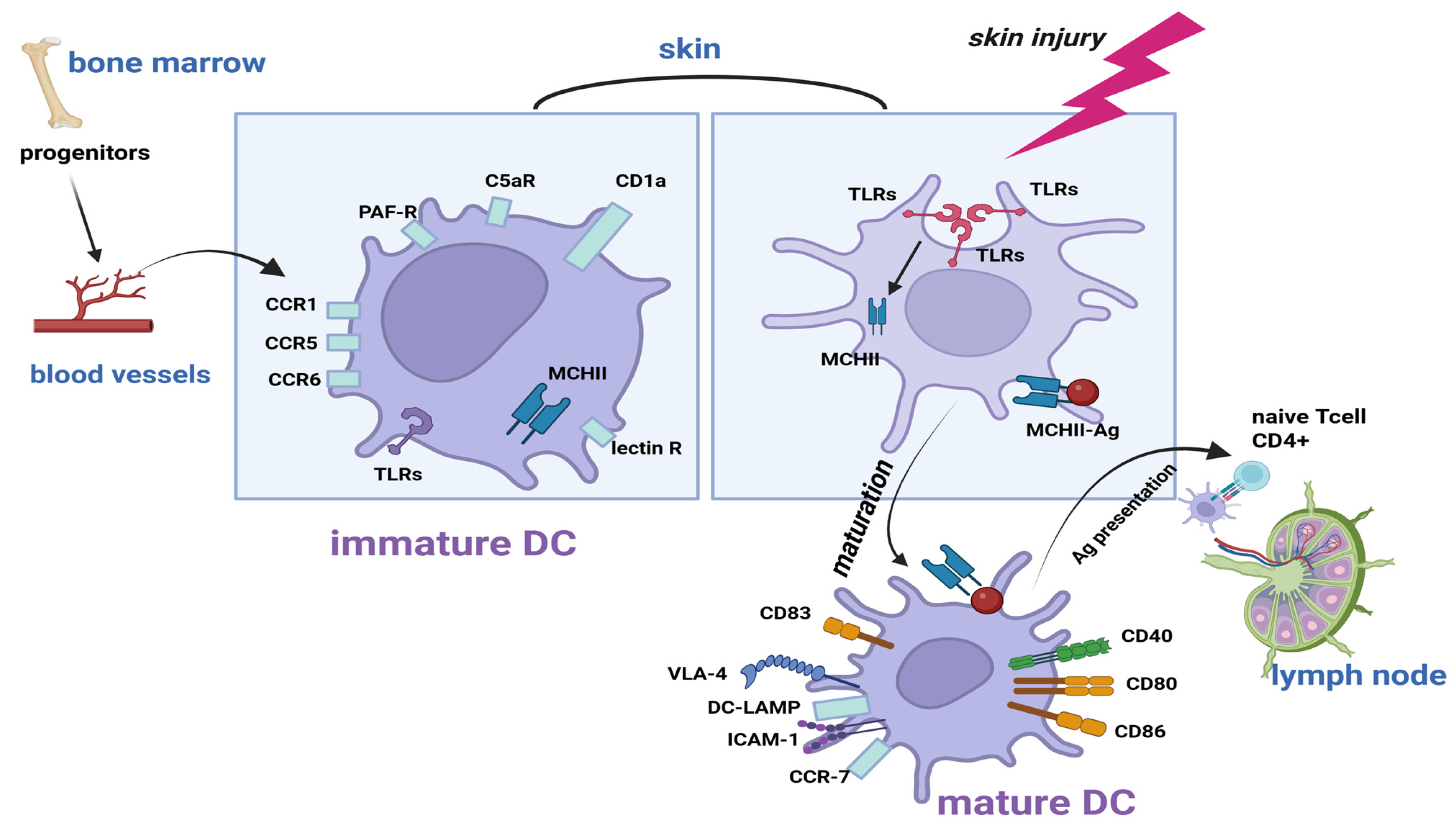
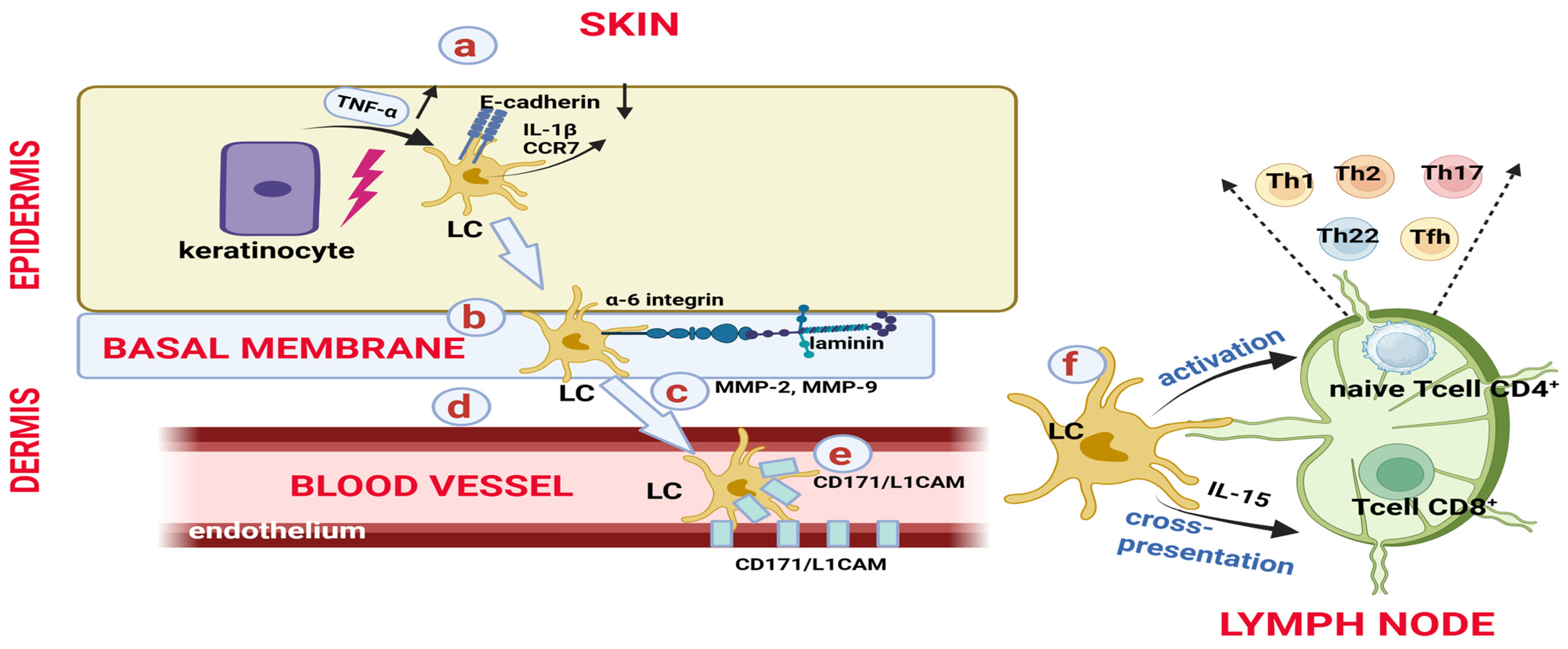
2. Skin APCs and Migration
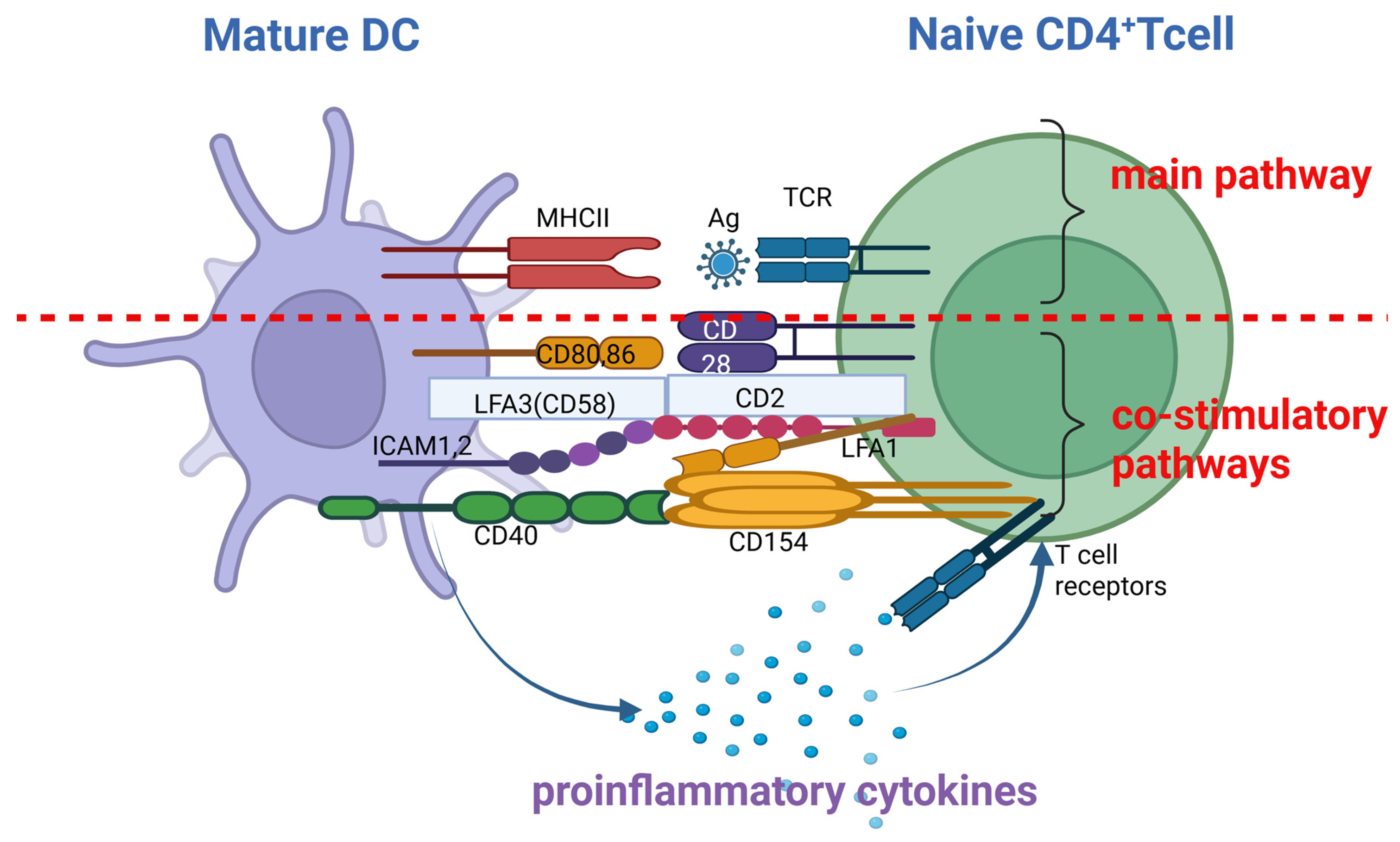
3. APC-Mediated T Cell Activation
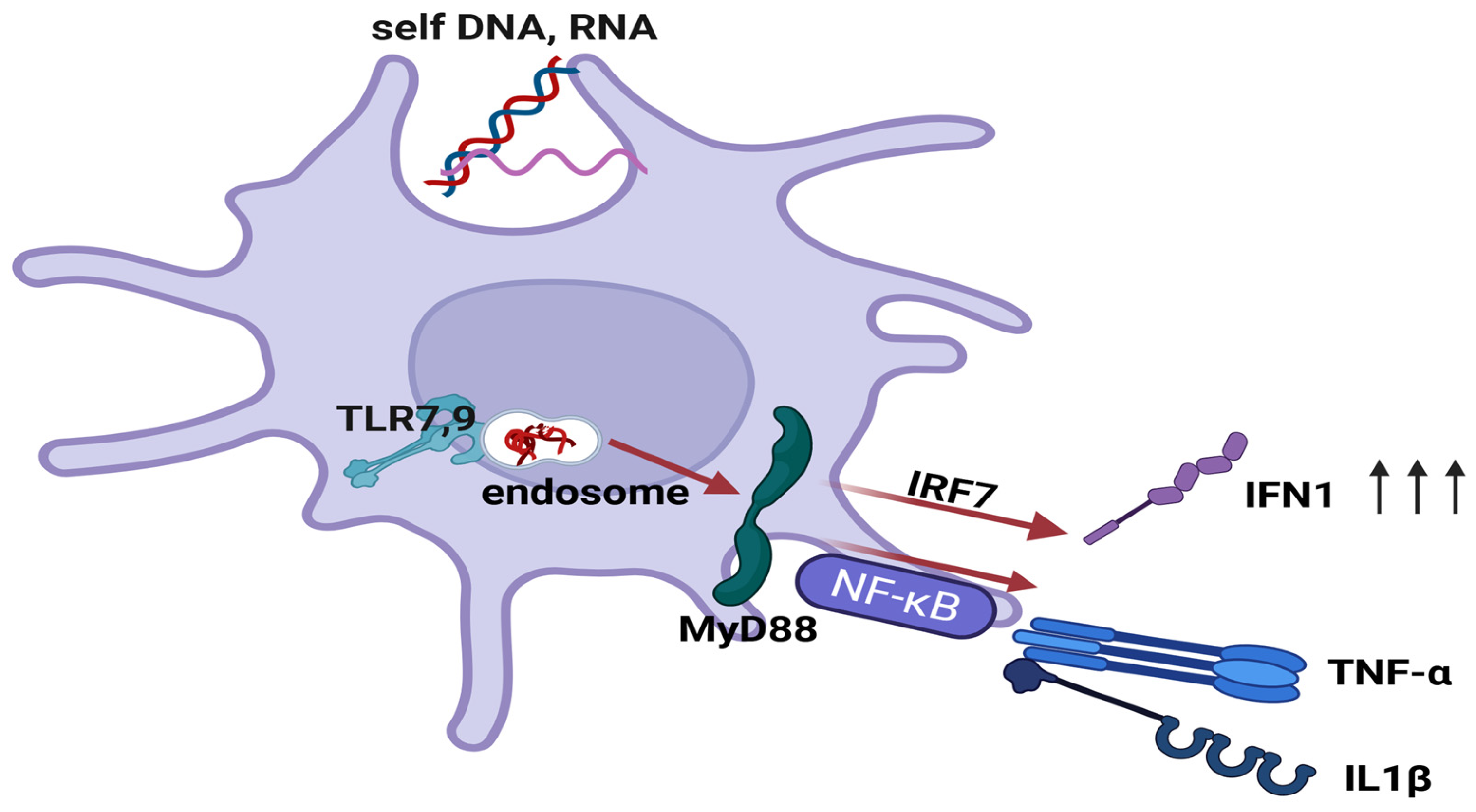
4. Skin APCs and Pattern Recognition Receptors (PRRs)
5. The Main Populations of Skin APCs
5.1. Resident APC Populations
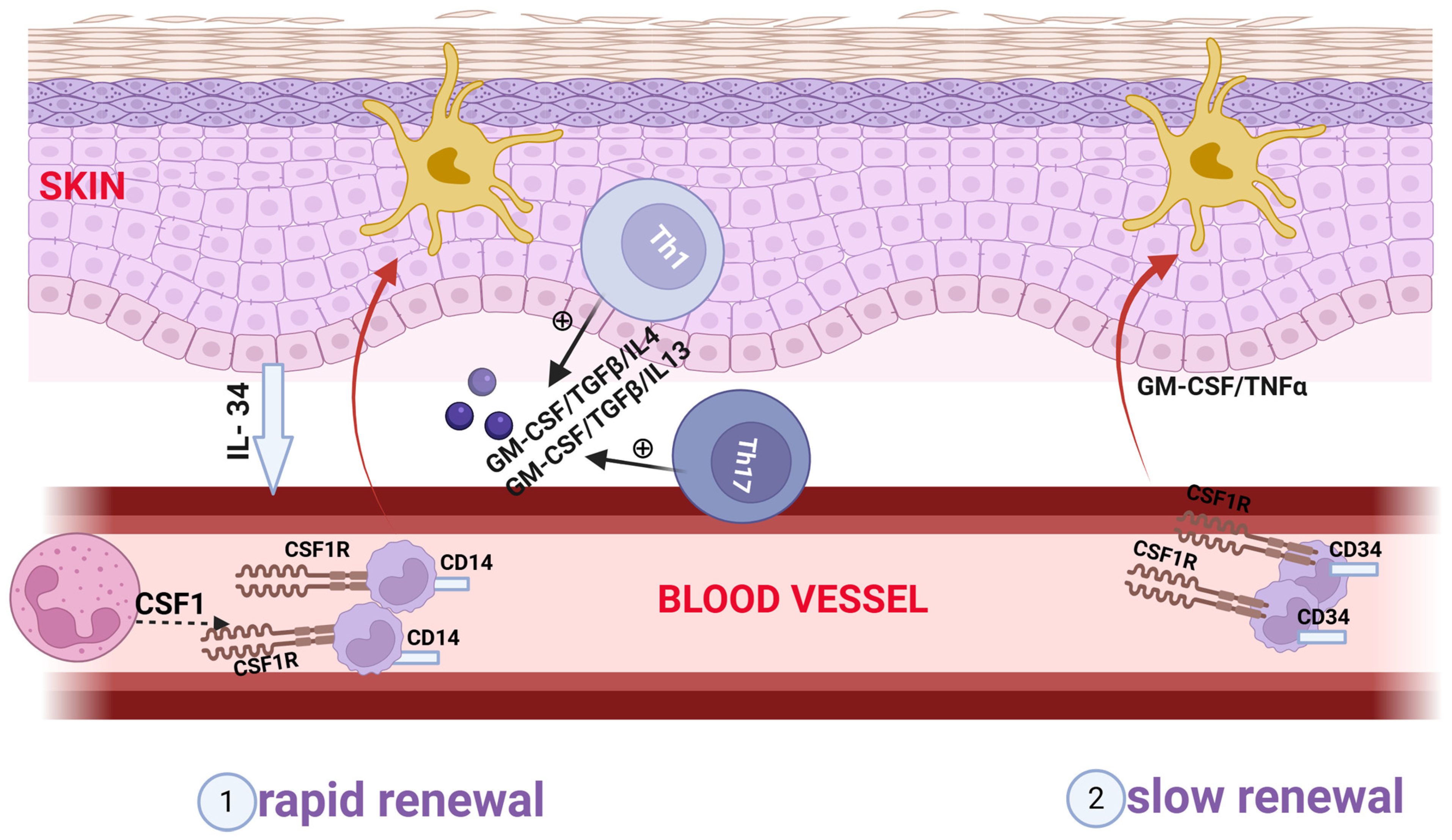
5.1.1. Langerhans Cells
5.1.2. Epidermal Non-Langerhans DCs
5.1.3. Conventional Dermal DCs (cDCs)
5.2. APC Populations in Skin Pathology (Inflammatory Context)
5.2.1. Langerhans Cells in Skin Inflammation
5.2.2. The Pathology of Conventional Dermal DCs
5.2.3. Type 3 DCs (DC3)
5.2.4. Inflammatory Epidermal DCs (IDECs)
5.2.5. Inflammatory Dermal DCs (infDCs)
5.2.6. Plasmacytoid DCs (pDCs)
6. Other Cutaneous APC Populations
7. Challenges and Emerging Concepts in Cutaneous APCs Research in 2025
8. Discussion
9. Conclusions
Author Contributions
Funding
Data Availability Statement
Acknowledgments
Conflicts of Interest
Abbreviations
| DCs | Dendritic cells |
| APCs | Antigen-presenting cells |
| MHC | Major Histocompatibility Complex |
| LCs | Langerhans cells |
| CD | Cluster of differentiation |
| DC3 | Type 3 DCs |
| ASDCs | Axl+ Siglec-6+ dendritic cells |
| mregDCs | Mature dendritic cells enriched in immunoregulatory molecules |
| TNFα | Tumor necrosis factor alpha |
| IL | Interleukin |
| CCL | C-C motif chemokine ligand |
| CCR | C-C chemokine receptor |
| CXCL | C-X-C motif chemokine ligand |
| CXCR | C-X-C chemokine receptor |
| Th | T helper |
| TCR | T-cell receptor |
| LFA | Lymphocyte function-associated antigen |
| ICAM | Intercellular adhesion molecule |
| PRRs | Pattern recognition receptors |
| TLRs | Toll-like receptors |
| CLRs | C-type lectin receptors |
| HIV | Human immunodeficiency virus |
| CLEC7A | C-type lectin domain containing 7A |
| DC-SIGN | Dendritic cell-specific ICAM-3-grabbing non-integrin |
| Treg | Regulatory T cell |
| PAMPs | Pathogen-associated molecular patterns |
| DAMPs | Damage-associated molecular patterns |
| NF-kB | Nuclear factor kappa-light-chain-enhancer of activated B cells |
| IRF7 | Interferon regulatory factor 7 |
| MyD88 | Myeloid differentiation primary response 88 |
| IFN | Interferon |
| AP-1 | Activator protein-1 |
| TRAF-6 | TNF receptor-associated factor 6 |
| TAK-1 | TGF-beta-activated kinase 1 |
| JNK | c-Jun N-terminal kinase |
| TGFβ | Transforming growth factor beta |
| CSF-1 | Colony-stimulating factor 1 |
| BMP-7 | Bone morphogenic protein 7 |
| AXL | AXL receptor tyrosine kinase |
| cDCs | Conventional DCs |
| CDPs | Myeloid common progenitors of DCs |
| FLT3 | Fms-like Tyrosine kinase 3 |
| FLT3L | Fms-like tyrosine kinase 3 ligand |
| GM-CSF | Granulocyte-macrophage colony-stimulating factor |
| CSF2 | Colony-stimulating factor 2 |
| CSF2R | Colony-stimulating factor 2 receptor |
| cDC1s | Conventional type 1 dermal dendritic cells |
| cDC2s | Conventional type 2 dermal dendritic cells |
| BDCA3 | Blood dendritic cell antigen 3 |
| CLEC9A | C-type lectin domain family 9 member A |
| Cadm1 | Cell adhesion molecule 1 |
| XCR1 | X-C motif chemokine receptor 1 |
| BDCA | Blood dendritic cell antigen |
| CSF-1R | Colony-stimulating factor 1 receptor |
| CSF1 | Colony-stimulating factor 1 |
| MIP3α | Macrophage inflammatory protein-3 alpha |
| MMP | Matrix metalloproteinase |
| L1CAM | L1 cell adhesion molecules |
| Tfh | T follicular helper |
| RANK | Receptor activator of nuclear factor kB |
| RANKL | Receptor activator of nuclear factor kB ligand |
| NGF | Nerve growth factor |
| GDNF | Glial cell line-derived neurotrophic factor |
| PGE2 | Prostaglandin E2 |
| CGRP | Calcitonin gene-related peptide |
| IDECs | Inflammatory epidermal dendritic cells |
| InfDCs | Inflammatory dendritic cells |
| moDCs | Monocyte-derived dendritic cells |
| TipDCs | TNFα and iNOS-producing dendritic cells |
| iNOS | Inducible nitric oxide synthase |
| Slan-DC | 6-Sulfo LacNAc dendritic cells |
| IFN-DC | Interferon-induced dendritic cell |
| ssRNA | Single-stranded RNA |
| pDCs | Plasmacytoid dendritic cells |
| HLA-DR | Human leukocyte antigen-DR isotype |
| ChemR23 | Chemokine-like receptor 1 (CMKLR1) |
| DNA | Deoxyribonucleic acid |
| RNA | Ribonucleic acid |
| MCP | Monocyte Chemoattractant protein |
| SLE | Systemic lupus erythematosus |
| LAMP3 | Lysosome-associated membrane glycoprotein 3 |
| BIRC3 | Baculoviral inhibitor of apoptosis repeat-containing protein 3 |
| HSV | Herpes Simplex Virus |
| VZV | Varicella-Zoster Virus |
| Epi-cDC2s | Epidermal conventional type 2 dermal dendritic cells |
| PD-L1 | Programmed death-ligand 1 |
| DEC-205 | CD205 |
References
- Steinman, R.M.; Cohn, Z.A. Identification of a novel cell type in peripheral lymphoid organs of mice. J. Exp. Med. 1973, 137, 1142–1162. [Google Scholar] [CrossRef] [Scilit]
- Steinman, R.M.; Witmer, M.D. Lymphoid dendritic cells are potent stimulators of the primary mixed leukocyte reaction in mice. Proc. Natl. Acad. Sci. USA 1978, 75, 5132–5136. [Google Scholar] [CrossRef] [Scilit]
- Inaba, K.; Metlay, J.P.; Crowley, M.T.; Steinman, R.M. Dendritic cells pulsed with protein antigens in vitro can prime antigen-specific, MHC-restricted T cells in situ. J. Exp. Med. 1990, 172, 631–640. [Google Scholar] [CrossRef] [Scilit]
- Zanna, M.Y.; Yasmin, A.R.; Omar, A.R.; Arshad, S.S.; Mariatulqabtiah, A.R.; Nur-Fazila, S.H.; Mahiza, I.N. Review of Dendritic Cells, Their Role in Clinical Immunology, and Distribution in Various Animal Species. Int. J. Mol. Sci. 2021, 22, 8044. [Google Scholar] [CrossRef] [Scilit]
- Kashem, S.W.; Haniffa, M.; Kaplan, D.H. Antigen-Presenting Cells in the Skin. Annu. Rev. Immunol. 2017, 35, 469–499. [Google Scholar] [CrossRef] [Scilit]
- Bertram, K.M.; Truong, N.R.; Smith, J.B.; Kim, M.; Sandgren, K.J.; Feng, K.L.; Herbert, J.J.; Rana, H.; Danastas, K.; Miranda-Saksena, M.; et al. Herpes Simplex Virus type 1 infects Langerhans cells and the novel epidermal dendritic cell, Epi-cDC2s, via different entry pathways. PLoS Pathog. 2021, 17, e1009536. [Google Scholar] [CrossRef] [Scilit]
- Bertram, K.M.; Botting, R.A.; Baharlou, H.; Rhodes, J.W.; Rana, H.; Graham, J.D.; Patrick, E.; Fletcher, J.; Plasto, T.M.; Truong, N.R.; et al. Identification of HIV transmitting CD11c+ human epidermal dendritic cells. Nat. Commun. 2019, 10, 2759. [Google Scholar] [CrossRef] [Scilit]
- Bertram, K.M.; O’Neil, T.R.; Vine, E.E.; Heeva Baharlou Cunningham, A.L.; Harman, A.N. Defining the landscape of human epidermal mononuclear phagocytes. Immunity 2023, 56, 459–460. [Google Scholar] [CrossRef] [Scilit]
- Vine, E.E.; Austin, P.J.; O’Neil, T.R.; Nasr, N.; Bertram, K.M.; Cunningham, A.L.; Harman, A.N. Epithelial dendritic cells vs. Langerhans cells: Implications for mucosal vaccines. Cell Rep. 2024, 43, 113977. [Google Scholar] [CrossRef] [Scilit]
- Zaba, L.C.; Krueger, J.G.; Lowes, M.A. Resident and “Inflammatory” Dendritic Cells in Human Skin. J. Investig. Dermatol. 2009, 129, 302–308. [Google Scholar] [CrossRef] [Scilit]
- Valladeau, J.; Saeland, S. Cutaneous dendritic cells. Semin. Immunol. 2005, 17, 273–283. [Google Scholar] [CrossRef] [Scilit]
- Nakamizo, S.; Dutertre, C.-A.; Khalilnezhad, A.; Zhang, X.M.; Lim, S.; Lum, J.; Koh, G.; Foong, C.; Yong, P.J.A.; Tan, K.J.; et al. Single-cell analysis of human skin identifies CD14+ type 3 dendritic cells co-producing IL1B and IL23A in psoriasis. J. Exp. Med. 2021, 218, e20202345. [Google Scholar] [CrossRef] [Scilit]
- Rhodes, J.W.; Botting, R.A.; Bertram, K.M.; Vine, E.E.; Rana, H.; Baharlou, H.; Vegh, P.; O’nEil, T.R.; Ashhurst, A.S.; Fletcher, J.; et al. Human anogenital monocyte-derived dendritic cells and langerin+cDC2 are major HIV target cells. Nat. Commun. 2021, 12, 2147. [Google Scholar] [CrossRef] [Scilit]
- Dutertre, C.-A.; Becht, E.; Irac, S.E.; Khalilnezhad, A.; Narang, V.; Khalilnezhad, S.; Ng, P.Y.; van den Hoogen, L.L.; Leong, J.Y.; Lee, B.; et al. Single-Cell Analysis of Human Mononuclear Phagocytes Reveals Subset-Defining Markers and Identifies Circulating Inflammatory Dendritic Cells. Immunity 2019, 51, 573–589.e8. [Google Scholar] [CrossRef] [Scilit]
- Sheng, J.; Chen, Q.; Wu, X.; Dong, Y.W.; Mayer, J.; Zhang, J.; Wang, L.; Bai, X.; Liang, T.; Sung, Y.H.; et al. Fate mapping analysis reveals a novel murine dermal migratory Langerhans-like cell population. eLife 2021, 10, e65412. [Google Scholar] [CrossRef] [Scilit]
- Lubin, R.; Patel, A.A.; Mackerodt, J.; Zhang, Y.; Gvili, R.; Mulder, K.; Dutertre, C.-A.; Jalali, P.; Glanville, J.R.; Hazan, I.; et al. The lifespan and kinetics of human dendritic cell subsets and their precursors in health and inflammation. J. Exp. Med. 2024, 221, e20220867. [Google Scholar] [CrossRef] [Scilit]
- Korenfeld, D.; Gorvel, L.; Munk, A.; Man, J.; Schaffer, A.; Tung, T.; Mann, C.; Klechevsky, E. A type of human skin dendritic cell marked by CD5 is associated with the development of inflammatory skin disease. JCI Insight 2017, 2, e96101. [Google Scholar] [CrossRef] [Scilit]
- Kim, T.-G.; Kim, S.H.; Park, J.; Choi, W.; Sohn, M.; Na, H.Y.; Lee, M.; Lee, J.W.; Kim, S.M.; Kim, D.-Y.; et al. Skin-Specific CD301b+ Dermal Dendritic Cells Drive IL-17-Mediated Psoriasis-Like Immune Response in Mice. J. Investig. Dermatol. 2018, 138, 844–853. [Google Scholar] [CrossRef] [Scilit]
- Jariwala, S.P. The role of dendritic cells in the immunopathogenesis of psoriasis. Arch. Dermatol. Res. 2007, 299, 359–366. [Google Scholar] [CrossRef] [Scilit]
- Alvarez, D.; Vollmann, E.H.; von Andrian, U.H. Mechanisms and Consequences of Dendritic Cell Migration. Immunity 2008, 29, 325–342. [Google Scholar] [CrossRef] [Scilit]
- Xiao, Q.; Xia, Y. Insights into dendritic cell maturation during infection with application of advanced imaging techniques. Front. Cell. Infect. Microbiol. 2023, 13, 1140765. [Google Scholar] [CrossRef] [Scilit] [PubMed]
- Tai, Y.; Wang, Q.; Korner, H.; Zhang, L.; Wei, W. Molecular Mechanisms of T Cells Activation by Dendritic Cells in Autoimmune Diseases. Front. Pharmacol. 2018, 9, 642. [Google Scholar] [CrossRef] [Scilit] [PubMed]
- Brandum, E.P.; Jørgensen, A.S.; Rosenkilde, M.M.; Hjortø, G.M. Dendritic Cells and CCR7 Expression: An Important Factor for Autoimmune Diseases, Chronic Inflammation, and Cancer. Int. J. Mol. Sci. 2021, 22, 8340. [Google Scholar] [CrossRef] [Scilit] [PubMed]
- Kyung Kim, M.; Kim, J. Properties of immature and mature dendritic cells: Phenotype, morphology, phagocytosis, and migration. RSC Adv. 2019, 9, 11230–11238. [Google Scholar] [CrossRef] [Scilit]
- Dudek, A.M.; Martin, S.; Garg, A.D.; Agostinis, P. Immature, Semi-Mature, and Fully Mature Dendritic Cells: Toward a DC-Cancer Cells Interface That Augments Anticancer Immunity. Front. Immunol. 2013, 4, 438. [Google Scholar] [CrossRef] [Scilit]
- Stoitzner, P.; Ratzinger, G.; Koch, F.; Janke, K.; Fritsch, P.; Romani, N.; Schöller, T.; Kaser, A.; Tilg, H.; Cruikshank, W.W. Interleukin-16 Supports the Migration of Langerhans Cells, Partly in a CD4-Independent Way. J. Investig. Dermatol. 2001, 116, 641–649. [Google Scholar] [CrossRef] [Scilit]
- Roediger, B.; Ng, L.G.; Smith, A.L.; Fazekas, B.; Weninger, W. Visualizing dendritic cell migration within the skin. Histochem. Cell Biol. 2008, 130, 1131–1146. [Google Scholar] [CrossRef] [Scilit]
- Ohl, L.; Mohaupt, M.; Czeloth, N.; Hintzen, G.; Kiafard, Z.; Zwirner, J.; Blankenstein, T.; Henning, G.; Förster, R. CCR7 Governs Skin Dendritic Cell Migration under Inflammatory and Steady-State Conditions. Immunity 2004, 21, 279–288. [Google Scholar] [CrossRef] [Scilit]
- Tal, O.; Lim, H.Y.; Gurevich, I.; Milo, I.; Shipony, Z.; Ng, L.G.; Angeli, V.; Shakhar, G. DC mobilization from the skin requires docking to immobilized CCL21 on lymphatic endothelium and intralymphatic crawling. J. Exp. Med. 2011, 208, 2141–2153. [Google Scholar] [CrossRef] [Scilit]
- Kabashima, K.; Shiraishi, N.; Sugita, K.; Mori, T.; Onoue, A.; Kobayashi, M.; Sakabe, J.-I.; Yoshiki, R.; Tamamura, H.; Fujii, N.; et al. CXCL12-CXCR4 Engagement Is Required for Migration of Cutaneous Dendritic Cells. Am. J. Pathol. 2007, 171, 1249–1257. [Google Scholar] [CrossRef] [Scilit]
- Johnson, L.A.; Clasper, S.; Holt, A.P.; Lalor, P.F.; Baban, D.; Jackson, D.G. An inflammation-induced mechanism for leukocyte transmigration across lymphatic vessel endothelium. J. Exp. Med. 2006, 203, 2763–2777. [Google Scholar] [CrossRef] [Scilit]
- Xu, H.; Guan, H.; Zu, G.; Bullard, D.; Hanson, J.; Slater, M.; Elmets, C.A. The role of ICAM-1 molecule in the migration of Langerhans cells in the skin and regional lymph node. Eur. J. Immunol. 2001, 31, 3085–3093. [Google Scholar] [CrossRef] [Scilit] [PubMed]
- Jahromi, N.H.; Gkountidi, A.-O.; Collado-Diaz, V.; Blatter, K.; Bauer, A.; Zambounis, L.; Medina-Sanchez, J.D.; Russo, E.; Runge, P.; Restivo, G.; et al. CD112 Supports Lymphatic Migration of Human Dermal Dendritic Cells. Cells 2024, 13, 424. [Google Scholar] [CrossRef] [Scilit] [PubMed]
- Nadafi, R.; Koning, J.J.; Veninga, H.; Stachtea, X.N.; Konijn, T.; Zwiers, A.; Malmström, A.; Haan, J.M.M.D.; Mebius, R.E.; Maccarana, M.; et al. Dendritic Cell Migration to Skin-Draining Lymph Nodes Is Controlled by Dermatan Sulfate and Determines Adaptive Immunity Magnitude. Front. Immunol. 2018, 9, 206. [Google Scholar] [CrossRef] [Scilit] [PubMed]
- Sabat, R.; Philipp, S.; Höflich, C.; Kreutzer, S.; Wallace, E.; Asadullah, K.; Volk, H.; Sterry, W.; Wolk, K. Immunopathogenesis of psoriasis. Exp. Dermatol. 2007, 16, 779–798. [Google Scholar] [CrossRef] [Scilit]
- Corthay, A. A Three-cell Model for Activation of Naïve T Helper Cells. Scand. J. Immunol. 2006, 64, 93–96. [Google Scholar] [CrossRef] [Scilit]
- Miga, A.J.; Masters, S.R.; Durell, B.G.; Gonzalez, M.; Jenkins, M.K.; Maliszewski, C.; Kikutani, H.; Wade, W.F.; Noelle, R.J. Dendritic cell longevity and T cell persistence is controlled by CD154-CD40 interactions. Eur. J. Immunol. 2001, 31, 959–965. [Google Scholar] [CrossRef] [Scilit]
- Hunger, R.E.; Sieling, P.A.; Ochoa, M.T.; Sugaya, M.; Burdick, A.E.; Rea, T.H.; Brennan, P.J.; Belisle, J.T.; Blauvelt, A.; Porcelli, S.A. Langerhans cells utilize CD1a and langerin to efficiently present nonpeptide antigens to T cells. J. Clin. Investig. 2004, 113, 701–708. [Google Scholar] [CrossRef] [Scilit]
- Li, D.; Wu, M. Pattern Recognition Receptors in Health and Diseases. Signal Transduct. Target. Ther. 2021, 6, 291. [Google Scholar] [CrossRef] [Scilit]
- Scurtu, L.G.; Simionescu, O. Soluble Factors and Receptors Involved in Skin Innate Immunity—What Do We Know So Far? Biomedicines 2021, 9, 1795. [Google Scholar] [CrossRef] [Scilit]
- Tang, C.; Makusheva, Y.; Sun, H.; Han, W.; Iwakura, Y. Myeloid C-type lectin receptors in skin/mucoepithelial diseases and tumors. J. Leukoc. Biol. 2019, 106, 903–917. [Google Scholar] [CrossRef] [Scilit]
- Blot, L.; Passeron, T.; Tulic, M.K. C-type lectin receptors in skin immunity: Emerging new role for CLEC12B. Adv. Biomed. Health Sci. 2022, 1, 13–22. [Google Scholar] [CrossRef] [Scilit]
- Reis e Sousa, C.; Yamasaki, S.; Brown, G.D. Myeloid C-type lectin receptors in innate immune recognition. Immunity 2024, 57, 700–717. [Google Scholar] [CrossRef] [Scilit]
- Duan, T.; Du, Y.; Xing, C.; Wang, H.Y.; Wang, R.F. Toll-Like Receptor Signaling and Its Role in Cell-Mediated Immunity. Front. Immunol. 2022, 13, 812774. [Google Scholar] [CrossRef] [Scilit] [PubMed]
- Gilliet, M.; Lande, R. Antimicrobial peptides and self-DNA in autoimmune skin inflammation. Curr. Opin. Immunol. 2008, 20, 401–407. [Google Scholar] [CrossRef] [Scilit] [PubMed]
- Ning, S.; Pagano, J.S.; Barber, G.N. IRF7: Activation, regulation, modification and function. Genes Immun. 2011, 12, 399–414. [Google Scholar] [CrossRef] [Scilit]
- Yasuda, K.; Richez, C.; Uccellini, M.B.; Richards, R.J.; Bonegio, R.G.; Akira, S.; Monestier, M.; Corley, R.B.; Viglianti, G.A.; Marshak-Rothstein, A.; et al. Requirement for DNA CpG Content in TLR9-Dependent Dendritic Cell Activation Induced by DNA-Containing Immune Complexes. J. Immunol. 2009, 183, 3109–3117. [Google Scholar] [CrossRef] [Scilit] [PubMed]
- Lande, R.; Gregorio, J.; Facchinetti, V.; Chatterjee, B.; Wang, Y.-H.; Homey, B.; Cao, W.; Wang, Y.-H.; Su, B.; Nestle, F.O.; et al. Plasmacytoid dendritic cells sense self-DNA coupled with antimicrobial peptide. Nature 2007, 449, 564–569. [Google Scholar] [CrossRef] [Scilit]
- Novoszel, P.; Holcmann, M.; Stulnig, G.; Fernandes, C.D.S.; Zyulina, V.; Borek, I.; Linder, M.; Bogusch, A.; Drobits, B.; Bauer, T.; et al. Psoriatic skin inflammation is promoted by c-Jun/AP-1-dependent CCL2 and IL-23 expression in dendritic cells. EMBO Mol. Med. 2021, 13, e12409. [Google Scholar] [CrossRef] [Scilit]
- Yamazaki, S.; Tanaka, Y.; Araki, H.; Kohda, A.; Sanematsu, F.; Arasaki, T.; Duan, X.; Miura, F.; Katagiri, T.; Shindo, R.; et al. The AP-1 transcription factor JunB is required for Th17 cell differentiation. Sci. Rep. 2017, 7, 17402. [Google Scholar] [CrossRef] [Scilit]
- Langerhans, P. Ueber die Nerven der menschlichen Haut. Archiv f. pathol. Anat. 1868, 44, 325–337. [Google Scholar] [CrossRef] [Scilit]
- Atmatzidis, D.H.; Lambert, W.C.; Lambert, M.W. Langerhans cell: Exciting developments in health and disease. J. Eur. Acad. Dermatol. Venereol. 2017, 31, 1817–1824. [Google Scholar] [CrossRef] [Scilit] [PubMed]
- Soltani, S.; Mahmoudi, M.; Farhadi, E. Dendritic Cells Currently under the Spotlight; Classification and Subset Based upon New Markers. Immunol. Investig. 2021, 50, 646–661. [Google Scholar] [CrossRef] [Scilit] [PubMed]
- Otsuka, M.; Egawa, G.; Kabashima, K. Uncovering the Mysteries of Langerhans Cells, Inflammatory Dendritic Epidermal Cells, and Monocyte-Derived Langerhans Cell-Like Cells in the Epidermis. Front. Immunol. 2018, 9, 1768. [Google Scholar] [CrossRef] [Scilit]
- Eidsmo, L.; Martini, E. Human Langerhans Cells with Pro-inflammatory Features Relocate within Psoriasis Lesions. Front. Immunol. 2018, 9, 300. [Google Scholar] [CrossRef] [Scilit]
- Kim, T.G.; Kim, S.; Lee, M.G. The Origin of Skin Dendritic Cell Network and Its Role in Psoriasis. Int. J. Mol. Sci. 2017, 19, 42. [Google Scholar] [CrossRef] [Scilit]
- Berger, C.L.; Vasquez, J.G.; Shofner, J.; Mariwalla, K.; Edelson, R.L. Langerhans cells: Mediators of immunity and tolerance. Int. J. Biochem. Cell Biol. 2006, 38, 1632–1636. [Google Scholar] [CrossRef] [Scilit]
- Hoeffel, G.; Wang, Y.; Greter, M.; See, P.; Teo, P.; Malleret, B.; Leboeuf, M.; Low, D.; Oller, G.; Almeida, F.; et al. Adult Langerhans cells derive predominantly from embryonic fetal liver monocytes with a minor contribution of yolk sac–derived macrophages. J. Exp. Med. 2012, 209, 1167–1181. [Google Scholar] [CrossRef] [Scilit]
- Chorro, L.; Sarde, A.; Li, M.; Woollard, K.J.; Chambon, P.; Malissen, B.; Kissenpfennig, A.; Barbaroux, J.-B.; Groves, R.; Geissmann, F. Langerhans cell (LC) proliferation mediates neonatal development, homeostasis, and inflammation-associated expansion of the epidermal LC network. J. Exp. Med. 2009, 206, 3089–3100. [Google Scholar] [CrossRef] [Scilit]
- Kanitakis, J.; Morelon, E.; Petruzzo, P.; Badet, L.; Dubernard, J.M. Self-renewal capacity of human epidermal Langerhans cells: Observations made on a composite tissue allograft. Exp. Dermatol. 2010, 20, 145–146. [Google Scholar] [CrossRef] [Scilit]
- Ghigo, C.; Mondor, I.; Jorquera, A.; Nowak, J.; Wienert, S.; Zahner, S.P.; Clausen, B.E.; Luche, H.; Malissen, B.; Klauschen, F.; et al. Multicolor fate mapping of Langerhans cell homeostasis. J. Exp. Med. 2013, 210, 1657–1664. [Google Scholar] [CrossRef] [Scilit] [PubMed]
- Doebel, T.; Voisin, B.; Nagao, K. Langerhans Cells—The Macrophage in Dendritic Cell Clothing. Trends Immunol. 2017, 38, 817–828. [Google Scholar] [CrossRef] [Scilit] [PubMed]
- Zhu, R.; Yao, X.; Li, W. Langerhans cells and skin immune diseases. Eur. J. Immunol. 2024, 54, e2250280. [Google Scholar] [CrossRef] [Scilit]
- Kaplan, D.H.; Li, M.O.; Jenison, M.C.; Shlomchik, W.D.; Flavell, R.A.; Shlomchik, M.J. Autocrine/paracrine TGFβ1 is required for the development of epidermal Langerhans cells. J. Exp. Med. 2007, 204, 2545–2552. [Google Scholar] [CrossRef] [Scilit] [PubMed]
- Bobr, A.; Igyarto, B.Z.; Haley, K.M.; Li, M.O.; Flavell, R.A.; Kaplan, D.H. Autocrine/paracrine TGF-β1 inhibits Langerhans cell migration. Proc. Natl. Acad. Sci. USA 2012, 109, 10492–10497. [Google Scholar] [CrossRef] [Scilit]
- Wang, Y.; Bugatti, M.; Ulland, T.K.; Vermi, W.; Gilfillan, S.; Colonna, M. Nonredundant roles of keratinocyte-derived IL-34 and neutrophil-derived CSF1 in Langerhans cell renewal in the steady state and during inflammation. Eur. J. Immunol. 2015, 46, 552–559. [Google Scholar] [CrossRef] [Scilit]
- Greter, M.; Lelios, I.; Pelczar, P.; Hoeffel, G.; Price, J.; Leboeuf, M.; Kündig, T.M.; Frei, K.; Ginhoux, F.; Merad, M.; et al. Stroma-Derived Interleukin-34 Controls the Development and Maintenance of Langerhans Cells and the Maintenance of Microglia. Immunity 2012, 37, 1050–1060. [Google Scholar] [CrossRef] [Scilit]
- Wang, Y.; Colonna, M. Interkeukin-34, a cytokine crucial for the differentiation and maintenance of tissue resident macrophages and Langerhans cells. Eur. J. Immunol. 2014, 44, 1575–1581. [Google Scholar] [CrossRef] [Scilit]
- Yasmin, N.; Bauer, T.; Modak, M.; Wagner, K.; Schuster, C.; Köffel, R.; Seyerl, M.; Stöckl, J.; Elbe-Bürger, A.; Graf, D.; et al. Identification of bone morphogenetic protein 7 (BMP7) as an instructive factor for human epidermal Langerhans cell differentiation. J. Exp. Med. 2013, 210, 2597–2610. [Google Scholar] [CrossRef] [Scilit]
- Bauer, T.; Zagórska, A.; Jurkin, J.; Yasmin, N.; Köffel, R.; Richter, S.; Gesslbauer, B.; Lemke, G.; Strobl, H. Identification of Axl as a downstream effector of TGF-β1 during Langerhans cell differentiation and epidermal homeostasis. J. Exp. Med. 2012, 209, 2033–2047. [Google Scholar] [CrossRef] [Scilit]
- Yan, B.; Liu, N.; Li, J.; Li, J.; Zhu, W.; Kuang, Y.; Chen, X.; Peng, C. The role of Langerhans cells in epidermal homeostasis and pathogenesis of psoriasis. J. Cell. Mol. Med. 2020, 24, 11646–11655. [Google Scholar] [CrossRef] [Scilit] [PubMed]
- Deckers, J.; Hammad, H.; Hoste, E. Langerhans Cells: Sensing the Environment in Health and Disease. Front. Immunol. 2018, 9, 93. [Google Scholar] [CrossRef] [Scilit] [PubMed]
- Wollenberg, A.; Oppel, T.; Schottdorf, E.-M.; Günther, S.; Moderer, M.; Mommaas, M. Expression and Function of the Mannose Receptor CD206 on Epidermal Dendritic Cells in Inflammatory Skin Diseases. J. Investig. Dermatol. 2002, 118, 327–334. [Google Scholar] [CrossRef] [Scilit] [PubMed]
- Collin, M.; Bigley, V. Human dendritic cell subsets: An update. Immunology 2018, 154, 3–20. [Google Scholar] [CrossRef] [Scilit]
- Loser, K.; Beissert, S. Dendritic cells and T cells in the regulation of cutaneous immunity. Adv. Dermatol. 2007, 23, 307–333. [Google Scholar] [CrossRef] [Scilit]
- van Leeuwen-Kerkhoff, N.; Lundberg, K.; Westers, T.M.; Kordasti, S.; Bontkes, H.J.; Lindstedt, M.; de Gruijl, T.D.; van de Loosdrecht, A.A. Human Bone Marrow-Derived Myeloid Dendritic Cells Show an Immature Transcriptional and Functional Profile Compared to Their Peripheral Blood Counterparts and Separate from Slan+ Non-Classical Monocytes. Front. Immunol. 2018, 9, 1619. [Google Scholar] [CrossRef] [Scilit]
- Yan, H.-X.; Li, W.-W.; Zhang, Y.; Wei, X.-W.; Fu, L.-X.; Shen, G.-B.; Yin, T.; Li, X.-Y.; Shi, H.-S.; Wan, Y.; et al. Accumulation of FLT3(+) CD11c (+) dendritic cells in psoriatic lesions and the anti-psoriatic effect of a selective FLT3 inhibitor. Immunol. Res. 2014, 60, 112–126. [Google Scholar] [CrossRef] [Scilit]
- Momenilandi, M.; Lévy, R.; Sobrino, S.; Li, J.; Lagresle-Peyrou, C.; Esmaeilzadeh, H.; Fayand, A.; Le Floc’h, C.; Guérin, A.; Della Mina, E.; et al. FLT3L governs the development of partially overlapping hematopoietic lineages in humans and mice. Cell 2024, 187, 2817–2837.e31. [Google Scholar] [CrossRef] [Scilit]
- Lowes, M.A.; Suárez-Fariñas, M.; Krueger, J.G. Immunology of Psoriasis. Annu. Rev. Immunol. 2014, 32, 227–255. [Google Scholar] [CrossRef] [Scilit]
- Bachem, A.; Güttler, S.; Hartung, E.; Ebstein, F.; Schaefer, M.; Tannert, A.; Salama, A.; Movassaghi, K.; Opitz, C.; Mages, H.W.; et al. Superior antigen cross-presentation and XCR1 expression define human CD11c+CD141+ cells as homologues of mouse CD8+ dendritic cells. J. Exp. Med. 2010, 207, 1273–1281. [Google Scholar] [CrossRef] [Scilit]
- Heger, L.; Hatscher, L.; Liang, C.; Lehmann, C.H.K.; Amon, L.; Lühr, J.J.; Kaszubowski, T.; Nzirorera, R.; Schaft, N.; Dörrie, J.; et al. XCR1 expression distinguishes human conventional dendritic cell type 1 with full effector functions from their immediate precursors. Proc. Natl. Acad. Sci. USA 2023, 120, e2300343120. [Google Scholar] [CrossRef] [Scilit]
- Zaba, L.C.; Fuentes-Duculan, J.; Steinman, R.M.; Krueger, J.G.; Lowes, M.A. Normal human dermis contains distinct populations of CD11c+BDCA-1+ dendritic cells and CD163+FXIIIA+ macrophages. J. Clin. Investig. 2007, 117, 2517–2525. [Google Scholar] [CrossRef] [Scilit]
- Yao, C.; Kaplan, D.H. Langerhans Cells Transfer Targeted Antigen to Dermal Dendritic Cells and Acquire Major Histocompatibility Complex II In Vivo. J. Investig. Dermatol. 2018, 138, 1665–1668. [Google Scholar] [CrossRef] [Scilit]
- Scheib, N.; Tiemann, J.; Becker, C.; Probst, H.C.; Raker, V.K.; Steinbrink, K. The Dendritic Cell Dilemma in the Skin: Between Tolerance and Immunity. Front. Immunol. 2022, 13, 929000. [Google Scholar] [CrossRef] [Scilit]
- Seré, K.; Baek, J.-H.; Ober-Blöbaum, J.; Müller-Newen, G.; Tacke, F.; Yokota, Y.; Zenke, M.; Hieronymus, T. Two Distinct Types of Langerhans Cells Populate the Skin during Steady State and Inflammation. Immunity 2012, 37, 905–916. [Google Scholar] [CrossRef] [Scilit] [PubMed]
- Price, A.A.; Cumberbatch, M.; Kimber, I.; Ager, A. Alpha 6 integrins are required for Langerhans cell migration from the epidermis. J. Exp. Med. 1997, 186, 1725–1735. [Google Scholar] [CrossRef] [Scilit] [PubMed]
- Ouwehand, K.; Santegoets, S.J.A.M.; Bruynzeel, D.P.; Scheper, R.J.; de Gruijl, T.D.; Gibbs, S. CXCL12 is essential for migration of activated Langerhans cells from epidermis to dermis. Eur. J. Immunol. 2008, 38, 3050–3059. [Google Scholar] [CrossRef] [Scilit] [PubMed]
- Maddaluno, L.; Verbrugge, S.E.; Martinoli, C.; Matteoli, G.; Chiavelli, A.; Zeng, Y.; Williams, E.D.; Rescigno, M.; Cavallaro, U. The adhesion molecule L1 regulates transendothelial migration and trafficking of dendritic cells. J. Exp. Med. 2009, 206, 623–635. [Google Scholar] [CrossRef] [Scilit]
- Furio, L.; Briotet, I.; Journeaux, A.; Billard, H.; Péguet-Navarro, J. Human Langerhans Cells Are More Efficient Than CD14−CD1c+ Dermal Dendritic Cells at Priming Naive CD4+ T Cells. J. Investig. Dermatol. 2010, 130, 1345–1354. [Google Scholar] [CrossRef] [Scilit]
- Furio, L.; Billard, H.; Valladeau, J.; Péguet-Navarro, J.; Berthier-Vergnes, O. Poly(I:C)-Treated Human Langerhans Cells Promote the Differentiation of CD4+ T Cells Producing IFN-γ and IL-10. J. Investig. Dermatol. 2009, 129, 1963–1971. [Google Scholar] [CrossRef] [Scilit]
- Klechevsky, E.; Morita, R.; Liu, M.; Cao, Y.; Coquery, S.; Thompson-Snipes, L.; Briere, F.; Chaussabel, D.; Zurawski, G.; Palucka, A.K.; et al. Functional Specializations of Human Epidermal Langerhans Cells and CD14+ Dermal Dendritic Cells. Immunity 2008, 29, 497–510. [Google Scholar] [CrossRef] [Scilit] [PubMed]
- Ebner, S.; Nguyen, V.A.; Forstner, M.; Wang, Y.-H.; Wolfram, D.; Liu, Y.-J.; Romani, N. Thymic stromal lymphopoietin converts human epidermal Langerhans cells into antigen-presenting cells that induce proallergic T cells. J. Allergy Clin. Immunol. 2007, 119, 982–990. [Google Scholar] [CrossRef] [Scilit] [PubMed]
- Nakajima, S.; Igyártó, B.Z.; Honda, T.; Egawa, G.; Otsuka, A.; Hara-Chikuma, M.; Watanabe, N.; Ziegler, S.F.; Tomura, M.; Inaba, K.; et al. Langerhans cells are critical in epicutaneous sensitization with protein antigen via thymic stromal lymphopoietin receptor signaling. J. Allergy Clin. Immunol. 2012, 129, 1048–1055.e6. [Google Scholar] [CrossRef] [Scilit] [PubMed]
- Mathers, A.R.; Janelsins, B.M.; Rubin, J.P.; Tkacheva, O.A.; Shufesky, W.J.; Watkins, S.C.; Morelli, A.E.; Larregina, A.T. Differential Capability of Human Cutaneous Dendritic Cell Subsets to Initiate Th17 Responses. J. Immunol. 2009, 182, 921–933. [Google Scholar] [CrossRef] [Scilit] [PubMed]
- Gramlich, R.; Aliahmadi, E.; Peiser, M. In Vitro Induction of T Helper 17 Cells by Synergistic Activation of Human Monocyte-Derived Langerhans Cell-Like Cells with Bacterial Agonists. Int. J. Mol. Sci. 2019, 20, 1367. [Google Scholar] [CrossRef] [Scilit] [PubMed]
- Fujita, H.; Nograles, K.E.; Kikuchi, T.; Gonzalez, J.; Carucci, J.A.; Krueger, J.G. Human Langerhans cells induce distinct IL-22-producing CD4+ T cells lacking IL-17 production. Proc. Natl. Acad. Sci. USA 2009, 106, 21795–21800. [Google Scholar] [CrossRef] [Scilit]
- Levin, C.; Bonduelle, O.; Nuttens, C.; Primard, C.; Verrier, B.; Boissonnas, A.; Combadière, B. Critical Role for Skin-Derived Migratory DCs and Langerhans Cells in TFH and GC Responses after Intradermal Immunization. J. Investig. Dermatol. 2017, 137, 1905–1913. [Google Scholar] [CrossRef] [Scilit]
- Zimara, N.; Florian, C.; Schmid, M.; Malissen, B.; Kissenpfennig, A.; Männel, D.N.; Edinger, M.; Hutchinson, J.A.; Hoffmann, P.; Ritter, U. Langerhans cells promote early germinal center formation in response to Leishmania-derived cutaneous antigens. Eur. J. Immunol. 2014, 44, 2955–2967. [Google Scholar] [CrossRef] [Scilit]
- Seneschal, J.; Clark Rachael, A.; Gehad, A.; Baecher-Allan Clare, M.; Kupper Thomas, S. Human Epidermal Langerhans Cells Maintain Immune Homeostasis in Skin by Activating Skin Resident Regulatory T Cells. Immunity 2012, 36, 873–884. [Google Scholar] [CrossRef] [Scilit]
- Kamenjarin, N.; Hodapp, K.; Melchior, F.; Harms, G.; Hartmann, A.-K.; Bartneck, J.; Muth, S.; Raker, V.K.; Becker, C.; Brand, A.; et al. Cross-presenting Langerhans cells are required for the early reactivation of resident CD8+ memory T cells in the epidermis. Proc. Natl. Acad. Sci. USA 2023, 120, e2219932120. [Google Scholar] [CrossRef] [Scilit]
- Ghajar-Rahimi, G.; Yusuf, N.; Xu, H. Ultraviolet Radiation-Induced Tolerogenic Dendritic Cells in Skin: Insights and Mechanisms. Cells 2025, 14, 308. [Google Scholar] [CrossRef] [Scilit] [PubMed]
- Wilcox, N.C.; Taheri, G.; Halievski, K.; Talbot, S.; Silva, J.R.; Ghasemlou, N. Interactions between skin-resident dendritic and Langerhans cells and pain-sensing neurons. J. Allergy Clin. Immunol. 2024, 154, 11–19. [Google Scholar] [CrossRef] [Scilit] [PubMed]
- Jongbloed, S.L.; Kassianos, A.J.; McDonald, K.J.; Clark, G.J.; Ju, X.; Angel, C.E.; Chen, C.-J.J.; Dunbar, P.R.; Wadley, R.B.; Jeet, V.; et al. Human CD141+ (BDCA-3)+ dendritic cells (DCs) represent a unique myeloid DC subset that cross-presents necrotic cell antigens. J. Exp. Med. 2010, 207, 1247–1260. [Google Scholar] [CrossRef] [Scilit] [PubMed]
- Kashem Sakeen, W.; Riedl Maureen, S.; Yao, C.; Honda Christopher, N.; Vulchanova, L.; Kaplan Daniel, H. Nociceptive Sensory Fibers Drive Interleukin-23 Production from CD301b+ Dermal Dendritic Cells and Drive Protective Cutaneous Immunity. Immunity 2015, 43, 515–526. [Google Scholar] [CrossRef] [Scilit]
- Zhang, J.; Zhao, S.; Xing, X.; Shang, L.; Cao, J.; He, Y. Effects of Neuropeptides on Dendritic Cells in the Pathogenesis of Psoriasis. J. Inflamm. Res. 2023, ume 16, 35–43. [Google Scholar] [CrossRef] [Scilit]
- Puig, L.; Costanzo, A.; Muñoz-Elías, E.J.; Jazra, M.; Wegner, S.; Paul, C.F.; Conrad, C. The biological basis of disease recurrence in psoriasis: A historical perspective and current models. Br. J. Dermatol. 2022, 186, 773–781. [Google Scholar] [CrossRef] [Scilit]
- Molinelli, E.; Gioacchini, H.; Sapigni, C.; Diotallevi, F.; Brisigotti, V.; Rizzetto, G.; Offidani, A.; Simonetti, O. New Insight into the Molecular Pathomechanism and Immunomodulatory Treatments of Hidradenitis Suppurativa. Int. J. Mol. Sci. 2023, 24, 8428. [Google Scholar] [CrossRef] [Scilit]
- Seyed Jafari, S.M.; Hunger, R.E.; Schlapbach, C. Hidradenitis Suppurativa: Current Understanding of Pathogenic Mechanisms and Suggestion for Treatment Algorithm. Front. Med. 2020, 7, 68. [Google Scholar] [CrossRef] [Scilit]
- Guttman-Yassky, E.; Nograles, K.E.; Krueger, J.G. Contrasting pathogenesis of atopic dermatitis and psoriasis—Part II: Immune cell subsets and therapeutic concepts. J. Allergy Clin. Immunol. 2011, 127, 1420–1432. [Google Scholar] [CrossRef] [Scilit]
- Wollenberg, A.; Klein, E. Current Aspects of Innate and Adaptive Immunity in Atopic Dermatitis. Clin. Rev. Allergy Immunol. 2007, 33, 35–44. [Google Scholar] [CrossRef] [Scilit]
- Wang, A.; Bai, Y. Dendritic cells: The driver of psoriasis. J. Dermatol. 2020, 47, 104–113. [Google Scholar] [CrossRef] [Scilit] [PubMed]
- Miyagawa, F.; Tagaya, Y.; Ozato, K.; Horie, K.; Asada, H. Inflammatory monocyte-derived dendritic cells mediate autoimmunity in murine model of systemic lupus erythematosus. J. Transl. Autoimmun. 2020, 3, 100060. [Google Scholar] [CrossRef] [Scilit] [PubMed]
- Schmid, M.A.; Harris, E. Monocyte Recruitment to the Dermis and Differentiation to Dendritic Cells Increases the Targets for Dengue Virus Replication. PLoS Pathog. 2014, 10, e1004541. [Google Scholar] [CrossRef] [Scilit]
- Alonso, M.N.; Wong, M.T.; Zhang, A.L.; Winer, D.; Suhoski, M.M.; Tolentino, L.L.; Gaitan, J.; Davidson, M.G.; Kung, T.H.; Galel, D.M.; et al. T(H)1, T(H)2, and T(H)17 cells instruct monocytes to differentiate into specialized dendritic cell subsets. Blood 2011, 118, 3311–3320. [Google Scholar] [CrossRef] [Scilit] [PubMed]
- Farkas, Á.; Kemény, L. Interferon-α in the generation of monocyte-derived dendritic cells: Recent advances and implications for dermatology. Br. J. Dermatol. 2011, 165, 247–254. [Google Scholar] [CrossRef] [Scilit]
- Farkas, Á.; Kemény, L. Monocyte-derived interferon-alpha primed dendritic cells in the pathogenesis of psoriasis: New pieces in the puzzle. Int. Immunopharmacol. 2012, 13, 215–218. [Google Scholar] [CrossRef] [Scilit]
- Meng, Y.; Li, J.; Ye, Z.; Yin, Z.; Sun, Q.; Liao, Z.; Li, G.; Deng, J.; Liu, L.; Yu, Y.; et al. MicroRNA-148a facilitates inflammatory dendritic cell differentiation and autoimmunity by targeting MAFB. JCI Insight 2020, 5, e133721. [Google Scholar] [CrossRef] [Scilit]
- Lowes, M.A.; Chamian, F.; Abello, M.V.; Fuentes-Duculan, J.; Lin, S.-L.; Nussbaum, R.; Novitskaya, I.; Carbonaro, H.; Cardinale, I.; Kikuchi, T.; et al. Increase in TNF-α and inducible nitric oxide synthase-expressing dendritic cells in psoriasis and reduction with efalizumab (anti-CD11a). Proc. Natl. Acad. Sci. USA 2005, 102, 19057–19062. [Google Scholar] [CrossRef] [Scilit]
- Wilsmann-Theis, D.; Koch, S.; Mindnich, C.; Bonness, S.; Schnautz, S.; von Bubnoff, D.; Bieber, T. Generation and functional analysis of human TNF-α/iNOS-producing dendritic cells (Tip-DC). Allergy 2013, 68, 890–898. [Google Scholar] [CrossRef] [Scilit]
- Mamun, A.A.; Shao, C.; Geng, P.; Wang, S.; Xiao, J. Recent advances in molecular mechanisms of skin wound healing and its treatments. Front. Immunol. 2024, 15, 1395479. [Google Scholar] [CrossRef] [Scilit]
- Kim, T.G.; Kim, D.S.; Kim, H.P.; Lee, M.G. The pathophysiological role of dendritic cell subsets in psoriasis. BMB Rep. 2014, 47, 60–68. [Google Scholar] [CrossRef] [Scilit]
- Günther, C.; Starke, J.; Zimmermann, N.; Schäkel, K. Human 6-sulfo LacNAc (slan) dendritic cells are a major population of dermal dendritic cells in steady state and inflammation. Clin. Exp. Dermatol. 2011, 37, 169–176. [Google Scholar] [CrossRef] [Scilit] [PubMed]
- Döbel, T.; Schäkel, K. The role of human 6-sulfo LacNAc dendritic cells (slanDCs) in autoimmunity and tumor diseases. J. Dtsch. Dermatol. Ges. 2014, 12, 874–880. [Google Scholar] [CrossRef] [Scilit] [PubMed]
- Hänsel, A.; Günther, C.; Ingwersen, J.; Starke, J.; Schmitz, M.; Bachmann, M.; Meurer, M.; Rieber, E.P.; Schäkel, K. Human slan (6-sulfo LacNAc) dendritic cells are inflammatory dermal dendritic cells in psoriasis and drive strong Th17/Th1 T-cell responses. J. Allergy Clin. Immunol. 2011, 127, 787–794.e9. [Google Scholar] [CrossRef] [Scilit] [PubMed]
- Hänsel, A.; Günther, C.; Baran, W.; Bidier, M.; Lorenz, H.-M.; Schmitz, M.; Bachmann, M.; Döbel, T.; Enk, A.H.; Schäkel, K. Human 6-sulfo LacNAc (slan) dendritic cells have molecular and functional features of an important pro-inflammatory cell type in lupus erythematosus. J. Autoimmun. 2013, 40, 1–8. [Google Scholar] [CrossRef] [Scilit]
- Kunze, A.; Förster, U.; Oehrl, S.; Schmitz, M.; Schäkel, K. Autocrine TNF-α and IL-1β prime 6-sulfo LacNAc+dendritic cells for high-level production of IL-23. Exp. Dermatol. 2016, 26, 314–316. [Google Scholar] [CrossRef] [Scilit]
- Farkas, A.; Tonel, G.; Nestle, F. Interferon-α and viral triggers promote functional maturation of human monocyte-derived dendritic cells. Br. J. Dermatol. 2008, 158, 921–929. [Google Scholar] [CrossRef] [Scilit]
- Charles, J.; Chaperot, L.; Salameire, D.; Di Domizio, J.; Aspord, C.; Gressin, R.; Jacob, M.-C.; Richard, M.-J.; Beani, J.-C.; Plumas, J.; et al. Plasmacytoid dendritic cells and dermatological disorders: Focus on their role in autoimmunity and cancer. Eur. J. Dermatol. 2010, 20, 016–023. [Google Scholar] [CrossRef] [Scilit]
- Bencze, D.; Fekete, T.; Pázmándi, K. Type I Interferon Production of Plasmacytoid Dendritic Cells under Control. Int. J. Mol. Sci. 2021, 22, 4190. [Google Scholar] [CrossRef] [Scilit]
- Ye, Y.; Gaugler, B.; Mohty, M.; Malard, F. Plasmacytoid dendritic cell biology and its role in immune-mediated diseases. Clin. Transl. Immunol. 2020, 9, e1139. [Google Scholar] [CrossRef] [Scilit]
- Antal, D.; Alimohammadi, S.; Bai, P.; Szöllősi, A.G.; Szántó, M. Antigen-Presenting Cells in Psoriasis. Life 2022, 12, 234. [Google Scholar] [CrossRef] [Scilit]
- Glitzner, E.; Korosec, A.; Brunner, P.M.; Drobits, B.; Amberg, N.; Schonthaler, H.B.; Kopp, T.; Wagner, E.F.; Stingl, G.; Holcmann, M.; et al. Specific roles for dendritic cell subsets during initiation and progression of psoriasis. EMBO Mol. Med. 2014, 6, 1312–1327. [Google Scholar] [CrossRef] [Scilit] [PubMed]
- Nestle, F.O.; Conrad, C.; Tun-Kyi, A.; Homey, B.; Gombert, M.; Boyman, O.; Burg, G.; Liu, Y.-J.; Gilliet, M. Plasmacytoid predendritic cells initiate psoriasis through interferon-α production. J. Exp. Med. 2005, 202, 135–143. [Google Scholar] [CrossRef] [Scilit] [PubMed]
- Ebner, S.; Ehammer, Z.; Holzmann, S.; Schwingshackl, P.; Forstner, M.; Stoitzner, P.; Huemer, G.M.; Fritsch, P.; Romani, N. Expression of C-type lectin receptors by subsets of dendritic cells in human skin. Int. Immunol. 2004, 16, 877–887. [Google Scholar] [CrossRef] [Scilit] [PubMed]
- Musumeci, A.; Lutz, K.; Winheim, E.; Krug, A.B. What Makes a pDC: Recent Advances in Understanding Plasmacytoid DC Development and Heterogeneity. Front. Immunol. 2019, 10, 1222. [Google Scholar] [CrossRef] [Scilit]
- Albanesi, C.; Scarponi, C.; Bosisio, D.; Sozzani, S.; Girolomoni, G. Immune functions and recruitment of plasmacytoid dendritic cells in psoriasis. Autoimmunity 2010, 43, 215–219. [Google Scholar] [CrossRef] [Scilit]
- Albanesi, C.; Scarponi, C.; Pallotta, S.; Daniele, R.; Bosisio, D.; Madonna, S.; Fortugno, P.; Gonzalvo-Feo, S.; Franssen, J.-D.; Parmentier, M.; et al. Chemerin expression marks early psoriatic skin lesions and correlates with plasmacytoid dendritic cell recruitment. J. Exp. Med. 2008, 206, 249–258. [Google Scholar] [CrossRef] [Scilit]
- Skrzeczyńska-Moncznik, J.; Wawro, K.; Stefańska, A.; Oleszycka, E.; Kulig, P.; Zabel, B.; Sułkowski, M.; Kapińska-Mrowiecka, M.; Czubak-Macugowska, M.; Butcher, E.; et al. Potential role of chemerin in recruitment of plasmacytoid dendritic cells to diseased skin. Biochem. Biophys. Res. Commun. 2009, 380, 323–327. [Google Scholar] [CrossRef] [Scilit]
- Dombrowski, Y.; Schauber, J. Cathelicidin LL-37: A defense molecule with a potential role in psoriasis pathogenesis. Exp. Dermatol. 2012, 21, 327–330. [Google Scholar] [CrossRef] [Scilit]
- Matta, B.M.; Castellaneta, A.; Thomson, A.W. Tolerogenic plasmacytoid DC. Eur. J. Immunol. 2010, 40, 2667–2676. [Google Scholar] [CrossRef] [Scilit]
- Scharschmidt, T.C.; Segre, J.A. Skin microbiome and dermatologic disorders. J. Clin. Investig. 2024, 135, e184315. [Google Scholar] [CrossRef] [Scilit]
- Reali, E.; Caliceti, C.; Lorenzini, A.; Rizzo, P. The Use of Microbial Modifying Therapies to Prevent Psoriasis Exacerbation and Associated Cardiovascular Comorbidity. Inflammation 2023, 47, 13–29. [Google Scholar] [CrossRef] [Scilit] [PubMed]
- Jiminez, V.; Yusuf, N. Bacterial Metabolites and Inflammatory Skin Diseases. Metabolites 2023, 13, 952. [Google Scholar] [CrossRef] [Scilit] [PubMed]
- Madaan, T.; Doan, K.; Hartman, A.; Gherardini, D.; Ventrola, A.; Zhang, Y.; Kotagiri, N. Advances in Microbiome-Based Therapeutics for Dermatological Disorders: Current Insights and Future Directions. Exp. Dermatol. 2024, 33, e70019. [Google Scholar] [CrossRef] [Scilit] [PubMed]
- Bravo, A.I.; Aris, M.; Panouillot, M.; Porto, M.; Dieu-Nosjean, M.-C.; Teillaud, J.-L.; Barrio, M.M.; Mordoh, J. HEV-associated dendritic cells are observed in metastatic tumor-draining lymph nodes of cutaneous melanoma patients with longer distant metastasis-free survival after adjuvant immunotherapy. Front. Immunol. 2023, 14, 1231734. [Google Scholar] [CrossRef] [Scilit]
- Trocchia, M.; Ventrici, A.; Modestino, L.; Cristinziano, L.; Ferrara, A.L.; Palestra, F.; Loffredo, S.; Capone, M.; Madonna, G.; Romanelli, M.; et al. Innate Immune Cells in Melanoma: Implications for Immunotherapy. Int. J. Mol. Sci. 2024, 25, 8523. [Google Scholar] [CrossRef] [Scilit]
- Monti, M.; Ferrari, G.; Grosso, V.; Missale, F.; Bugatti, M.; Cancila, V.; Zini, S.; Segala, A.; La Via, L.; Consoli, F.; et al. Impaired activation of plasmacytoid dendritic cells via toll-like receptor 7/9 and STING is mediated by melanoma-derived immunosuppressive cytokines and metabolic drift. Front. Immunol. 2024, 14, 1227648. [Google Scholar] [CrossRef] [Scilit]
- Mousa, A.M.; Enk, A.H.; Hassel, J.C.; Reschke, R. Immune Checkpoints and Cellular Landscape of the Tumor Microenvironment in Non-Melanoma Skin Cancer (NMSC). Cells 2024, 13, 1615. [Google Scholar] [CrossRef] [Scilit]
- Lee, Y.S.; O’BRien, L.J.; Walpole, C.M.; Pearson, F.E.; Leal-Rojas, I.M.; Masterman, K.-A.; Atkinson, V.; Barbour, A.; Radford, K.J. Human CD141+ dendritic cells (cDC1) are impaired in patients with advanced melanoma but can be targeted to enhance anti-PD-1 in a humanized mouse model. J. Immunother. Cancer 2021, 9, e001963. [Google Scholar] [CrossRef] [Scilit]
- Weckel, A.; Dhariwala, M.O.; Ly, K.; Tran, V.M.; Ojewumi, O.T.; Riggs, J.B.; Gonzalez, J.R.; Dwyer, L.R.; Okoro, J.N.; Leech, J.M.; et al. Long-term tolerance to skin commensals is established neonatally through a specialized dendritic cell subgroup. Immunity 2023, 56, 1239–1254.e7. [Google Scholar] [CrossRef] [Scilit]
- Huch, J.H.; Cunningham, A.L.; Arvin, A.M.; Nasr, N.; Santegoets, S.J.A.M.; Slobedman, E.; Slobedman, B.; Abendroth, A. Impact of Varicella-Zoster Virus on Dendritic Cell Subsets in Human Skin during Natural Infection. J. Virol. 2010, 84, 4060–4072. [Google Scholar] [CrossRef] [Scilit]
- Schönrich, G.; Raftery, M.J. Dendritic cells as Achilles’ heel and Trojan horse during varicella zoster virus infection. Front. Microbiol. 2015, 6, 417. [Google Scholar] [CrossRef] [Scilit]
- Scurtu, L.G.; Jinga, V.; Simionescu, O. Fascinating Molecular and Immune Escape Mechanisms in the Treatment of STIs (Syphilis, Gonorrhea, Chlamydia, and Herpes Simplex). Int. J. Mol. Sci. 2022, 23, 3550. [Google Scholar] [CrossRef] [Scilit] [PubMed]
- Cho, Y.M.; Furie, R. The Development of Litifilimab (BIIB 059) for Cutaneous and Systemic Lupus Erythematosus. Immunotherapy 2023, 16, 15–20. [Google Scholar] [CrossRef] [Scilit] [PubMed]
- Liu, L.; Chen, X.; Lu, Y.; Sun, X.-Y.; Ze, K.; Zhou, Y.-Q.; Li, W.; Li, X.; Li, H.-J.; Li, B. Celastrol gel ameliorates imiquimod-induced psoriasis-like dermatitis in mice by targeting Langerhans cells. Biomed. Pharmacother. 2022, 147, 112644. [Google Scholar] [CrossRef] [Scilit]
- Huang, T.; Gao, Z.; Zhang, Y.; Fan, K.; Wang, F.; Li, Y.; Zhong, J.; Fan, H.Y.; Cao, Q.; Zhou, J.; et al. CRL4DCAF2 negatively regulates IL-23 production in dendritic cells and limits the development of psoriasis. J. Exp. Med. 2018, 215, 1999–2017. [Google Scholar] [CrossRef] [Scilit]
- Alzahrani, K.S.; Nadeem, A.; Ahmad, S.F.; Al-Harbi, N.O.; Ibrahim, K.E.; El-Sherbeeny, A.M.; Alhoshani, A.R.; Alshammari, M.A.; Alotaibi, M.R.; Al-Harbi, M.M. Inhibition of spleen tyrosine kinase attenuates psoriasis-like inflammation in mice through blockade of dendritic cell-Th17 inflammation axis. Biomed. Pharmacother. 2019, 111, 347–358. [Google Scholar] [CrossRef] [Scilit]
- Campbell, N.K.; Fitzgerald, H.K.; Malara, A.; Hambly, R.; Sweeney, C.M.; Kirby, B.; Fletcher, J.M.; Dunne, A. Naturally derived Heme-Oxygenase 1 inducers attenuate inflammatory responses in human dendritic cells and T cells: Relevance for psoriasis treatment. Sci. Rep. 2018, 8, 10287. [Google Scholar] [CrossRef] [Scilit]
- Ghoreschi, K.; Brück, J.; Kellerer, C.; Deng, C.; Peng, H.; Rothfuss, O.; Hussain, R.Z.; Gocke, A.R.; Respa, A.; Glocova, I.; et al. Fumarates improve psoriasis and multiple sclerosis by inducing type II dendritic cells. J. Exp. Med. 2011, 208, 2291–2303. [Google Scholar] [CrossRef] [Scilit]
- Yeh, C.-Y.; Su, S.-H.; Tan, Y.F.; Tsai, T.-F.; Liang, P.-H.; Kelel, M.; Weng, H.-J.; Hsiao, Y.-P.; Lu, C.-H.; Tsai, C.-H.; et al. PD-L1 Enhanced by cis-Urocanic Acid on Langerhans Cells Inhibits Vγ4+ γδT17 Cells in Imiquimod-Induced Skin Inflammation. J. Investig. Dermatol. 2023, 143, 1449–1460. [Google Scholar] [CrossRef] [Scilit]
- Lui, P.P.; Ainali, C.; Chu, C.-C.; Terranova-Barberio, M.; Karagiannis, P.; Tewari, A.; Safinia, N.; Sharif-Paghaleh, E.; Tsoka, S.; Woszczek, G.; et al. Human skin CD141+ dendritic cells regulate cutaneous immunity via the neuropeptide urocortin 2. iScience 2023, 26, 108029. [Google Scholar] [CrossRef] [Scilit]
- Singto, T.; Filor, V.; Vidak, J.; Klopfleisch, R.; Bäumer, W. Dendritic cells under allergic condition enhance the activation of pruritogen-responsive neurons via inducing itch receptors in a co-culture study. BMC Immunol. 2024, 25, 17. [Google Scholar] [CrossRef] [Scilit] [PubMed]
- Han, C.; Zhu, X.; Sokol, C.L. Neuroimmune Circuits in Allergic Diseases. Annu. Rev. Immunol. 2025, 43, 367–394. [Google Scholar] [CrossRef] [Scilit] [PubMed]
- Kim, B.S.; Artis, D. The sensory neuroimmune frontier. Immunity 2025, 58, 1033–1039. [Google Scholar] [CrossRef] [Scilit] [PubMed]
- Henn, D.; Zhao, D.; Sivaraj, D.; Trotsyuk, A.; Bonham, C.A.; Fischer, K.S.; Kehl, T.; Fehlmann, T.; Greco, A.H.; Kussie, H.C.; et al. Cas9-mediated knockout of Ndrg2 enhances the regenerative potential of dendritic cells for wound healing. Nat. Commun. 2023, 14, 4729. [Google Scholar] [CrossRef] [Scilit]
- Vinish, M.; Cui, W.; Stafford, E.; Bae, L.; Hawkins, H.; Cox, R.; Toliver-Kinsky, T. Dendritic cells modulate burn wound healing by enhancing early proliferation. Wound Repair Regen. 2016, 24, 6–13. [Google Scholar] [CrossRef] [Scilit]
- Hervé, P.-L.; Dioszeghy, V.; Matthews, K.; Bee, K.J.; Campbell, D.E.; Sampson, H.A. Recent advances in epicutaneous immunotherapy and potential applications in food allergy. Front. Allergy 2023, 4, 1290003. [Google Scholar] [CrossRef] [Scilit]
- Bellmann, L.; Strandt, H.; Zelle-Rieser, C.; Ortner, D.; Tripp, C.H.; Schmid, S.; Rühl, J.; Cappellano, G.; Schaffenrath, S.; Prokopi, A.; et al. Targeted delivery of a vaccine protein to Langerhans cells in the human skin via the C-type lectin receptor Langerin. Eur. J. Immunol. 2022, 52, 1829–1841. [Google Scholar] [CrossRef] [Scilit]
- Rentzsch, M.; Wawrzinek, R.; Zelle-Rieser, C.; Strandt, H.; Bellmann, L.; Fuchsberger, F.F.; Schulze, J.; Busmann, J.; Rademacher, J.; Sigl, S.; et al. Specific Protein Antigen Delivery to Human Langerhans Cells in Intact Skin. Front. Immunol. 2021, 12, 732298. [Google Scholar] [CrossRef] [Scilit]
- Li, J.; Zhou, J.; Huang, H.; Jiang, J.; Zhang, T.; Ni, C. Mature dendritic cells enriched in immunoregulatory molecules (mregDCs): A novel population in the tumour microenvironment and immunotherapy target. Clin. Transl. Med. 2023, 13, e1199. [Google Scholar] [CrossRef] [Scilit]
- Kashem, S.W.; Igyártó, B.Z.; Gerami-Nejad, M.; Kumamoto, Y.; Mohammed, J.; Jarrett, E.; Drummond, R.A.; Zurawski, S.M.; Zurawski, G.; Berman, J.; et al. Candida albicans morphology and dendritic cell subsets determine T helper cell differentiation. Immunity 2015, 42, 356–366. [Google Scholar] [CrossRef] [Scilit]



| Chemokine Receptor | Chemokine |
|---|---|
| CCR7 | CCL19 |
| CCR7 | CCL21 |
| CXCR4 | CXCL12 |
| CCR2 | CCL2 |
| CCR6 | CCL20 |
| Subset | Where? | Key Markers | Key Cytokines | Signature Functions | Pathology Highlights |
|---|---|---|---|---|---|
| DC3 (CD1c+ CD14+ type 3 dendritic cells) * [12,14,53,79,90,106] | Circulation Dermis (steady-state and inflamed) | CD1c+, CD14+, CD11c+, CD163+, HLA-DR+ CD88−, CD5− TLR 2/4/5/6/8/10 | IL1β, IL23, TNFα, IL6, IL8, IL10, IL12, IL20, GM-CSF, MCP, TGFβ | Recognize and present antigens Activates T cells (Th1, Th2, Th17). Mediates the interaction between T cells and B cells/plasma cells. Activates humoral immune response. Induces Treg and Tfh cells (immunoregulatory properties). Shows marked expression of genes involved in IL17-dependent signalling and neutrophil recruitment, such as IL23A and CXCL2. | Inflammatory cells found in increased numbers in the blood of SLE patients and in the lesion skin of psoriasis, where they secrete IL1β and IL23A, and promote Th17 axis. Their proportion is higher in psoriasis in the lesion skin compared to the non-lesion skin. In SLE patients they are correlated with disease activity |
| Subset | Where? | Key Markers | Key Cytokines | Signature Functions | Pathology Highlights |
|---|---|---|---|---|---|
| Langerhans-like cells *** [15] | Circulation, Cutaneous lymph nodes Dermis (steady-state) | CD207+, CD326+ | High migratory capacity towards the lymph nodes Induce cutaneous tolerance to haptens | Tolerance induction in contact hypersensitivity and inflammatory skin diseases should be attributed to this dermal LC-like subset Potential therapeutic interest: targeting the LC-like migratory DCs that regulate tolerance | |
| ASDCs (Axl+ Siglec6+ dendritic cells) * [16] | Circulation Peripheral tissues, including skin (inflamed) | Axl+, Siglec6+ | Pro-inflammatory phenotype T cell activation Initiation of acute immune responses | In the human cutaneous inflammation model, ASDCs are among the first DCs recruited to the inflamed site | |
| Mature regulatory DCs (mRegDCs) * [12] | Dermis (steady-state and inflamed) | LAMP3+, BIRC3+ | IL15, IL32 | Mature, migratory population Immunomodulator DC differentiation Lymphocyte migration (secondary to intense expression of IRF4 and CCL17 genes) | Prominent in psoriasis and atopic dermatitis |
Disclaimer/Publisher’s Note: The statements, opinions and data contained in all publications are solely those of the individual author(s) and contributor(s) and not of MDPI and/or the editor(s). MDPI and/or the editor(s) disclaim responsibility for any injury to people or property resulting from any ideas, methods, instructions or products referred to in the content. |
© 2026 by the authors. Licensee MDPI, Basel, Switzerland. This article is an open access article distributed under the terms and conditions of the Creative Commons Attribution (CC BY) license.
Share and Cite
Alexandru, I.C.; Grigore, M.; Simionescu, O. Cutaneous Dendritic Cells: Structure, Function and Immune Role. Biomedicines 2026, 14, 460. https://doi.org/10.3390/biomedicines14020460
Alexandru IC, Grigore M, Simionescu O. Cutaneous Dendritic Cells: Structure, Function and Immune Role. Biomedicines. 2026; 14(2):460. https://doi.org/10.3390/biomedicines14020460
Chicago/Turabian StyleAlexandru, Ioana Cristina, Mariana Grigore, and Olga Simionescu. 2026. "Cutaneous Dendritic Cells: Structure, Function and Immune Role" Biomedicines 14, no. 2: 460. https://doi.org/10.3390/biomedicines14020460
APA StyleAlexandru, I. C., Grigore, M., & Simionescu, O. (2026). Cutaneous Dendritic Cells: Structure, Function and Immune Role. Biomedicines, 14(2), 460. https://doi.org/10.3390/biomedicines14020460