Lipoprotein Combine Index Is Associated with Multi-Compartment Oxidative Stress in Clinically Stable Peritoneal Dialysis Patients: A Cross-Sectional Study



Abstract
1. Introduction
2. Materials and Methods
2.1. Study Design and Ethical Approval
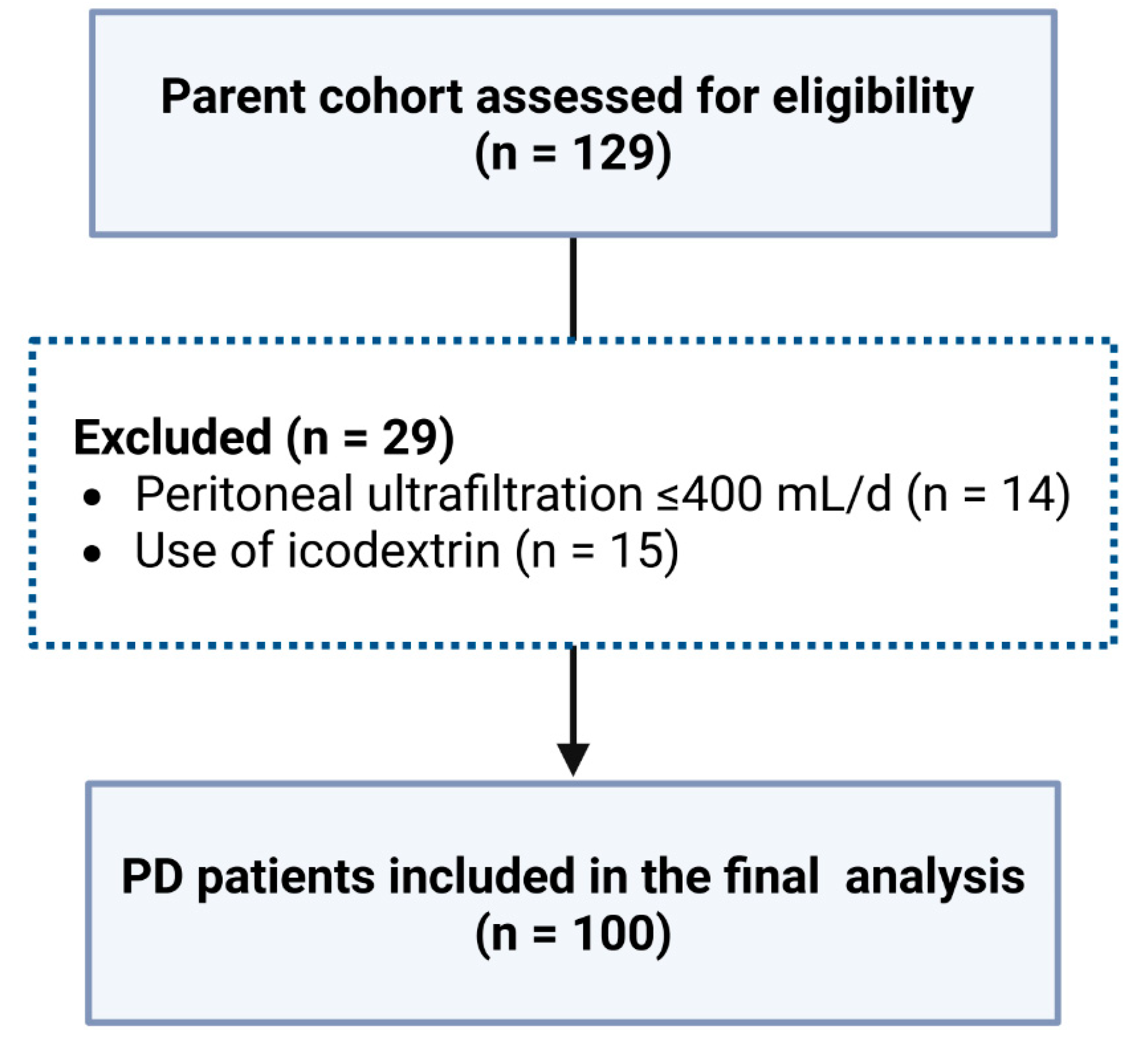
2.2. Study Setting and Participants
2.3. Sample Size
2.4. Baseline Data Collection and Study Procedures
2.5. LCI Calculation
2.6. OS Measurements
2.7. Statistical Analysis
3. Results
3.1. Cohort Characteristics
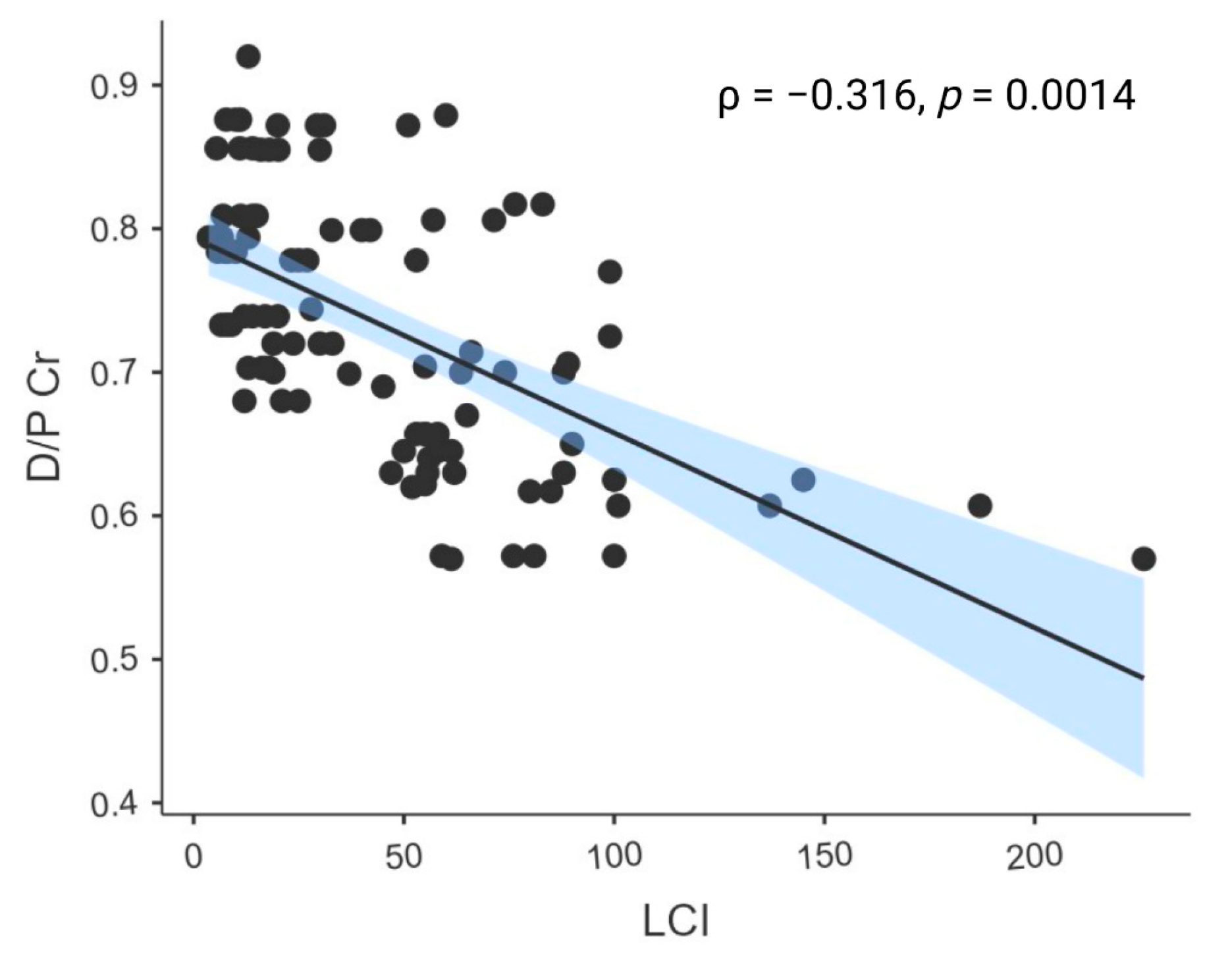
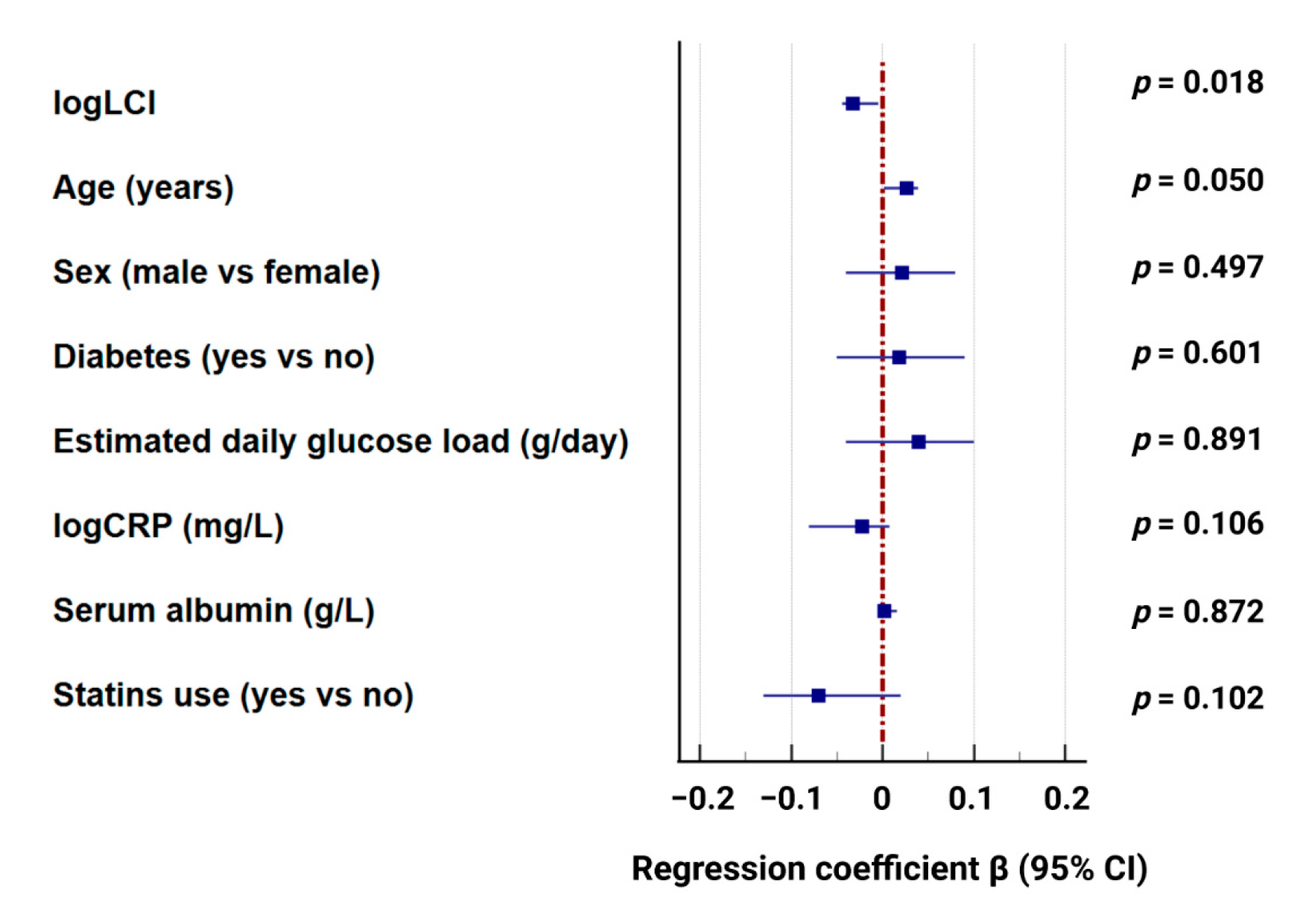
3.2. Association Between LCI and Peritoneal Transport Characteristics
3.3. LCI and OS Markers
3.4. Sensitivity Analyses
4. Discussion
5. Conclusions
Supplementary Materials
Author Contributions
Funding
Institutional Review Board Statement
Informed Consent Statement
Data Availability Statement
Conflicts of Interest
Abbreviations
| ACE | Angiotensin-converting enzyme |
| AIP | Atherogenic index of plasma |
| BMI | Body mass index |
| CAPD | Continuous ambulatory peritoneal dialysis |
| CrCl | Creatinine clearance |
| CRP | C-reactive protein |
| D/P Cr | Dialysate-to-plasma creatinine ratio |
| Hb | Hemoglobin |
| HDL-C | High-density lipoprotein cholesterol |
| iPTH | Intact parathyroid hormone |
| LCI | Lipoprotein combine index |
| LDL-C | Low-density lipoprotein cholesterol |
| MDAd | Dialysate malondialdehyde |
| MDAe | Erythrocyte malondialdehyde |
| MDAs | Serum malondialdehyde |
| MDAu | Urinary malondialdehyde |
| OS | Oxidative stress |
| PD | Peritoneal dialysis |
| PET | Peritoneal equilibration test |
| RAAS | Renin–angiotensin–aldosterone system |
| RKF | Residual kidney function |
| SHs | Serum sulfhydryl groups |
| SHe | Erythrocyte sulfhydryl groups |
| TC | Total cholesterol |
| TGs | Triglycerides |
| TPAd | Total peroxidase activity in dialysate |
| TPAe | Total peroxidase activity in erythrocytes |
References
- Feng, X.; Zhan, X.; Wen, Y.; Peng, F.; Wang, X.; Wang, N.; Wu, X.; Wu, J. Hyperlipidemia and Mortality in Patients on Peritoneal Dialysis. BMC Nephrol. 2022, 23, 342. [Google Scholar] [CrossRef]
- Lluesa, J.H.; López-Romero, L.C.; Monzó, J.J.B.; Marugán, M.R.; Boyano, I.V.; Rodríguez-Espinosa, D.; Gómez-Bori, A.; Orient, A.S.; Such, R.D.; Perez, P.S.; et al. Lipidic Profiles of Patients Starting Peritoneal Dialysis Suggest an Increased Cardiovascular Risk beyond Classical Dyslipidemia Biomarkers. Sci. Rep. 2022, 12, 16394. [Google Scholar] [CrossRef] [PubMed]
- Cho, Y.; Büchel, J.; Steppan, S.; Passlick-Deetjen, J.; Hawley, C.M.; Dimeski, G.; Clarke, M.; Johnson, D.W. Longitudinal Trend in Lipid Profile of Incident Peritoneal Dialysis Patients Is Not Influenced by the Use of Biocompatible Solutions. Perit. Dial. Int. 2016, 36, 146–153. [Google Scholar] [CrossRef] [PubMed]
- Toprak, K.; Kaplangöray, M.; Karataş, M.; Dursun, A.; Arğa, Y.; Tascanov, M.B.; Biçer, A.; Demirbağ, R. Atherogenic Combined Index: Validation of a Coronary Artery Disease Predictive Biomarker. Arch. Med. Res. 2024, 55, 103065. [Google Scholar] [CrossRef] [PubMed]
- Qiu, J.; Huang, X.; Kuang, M.; Yang, R.; Li, J.; Sheng, G.; Zou, Y. Lipoprotein Combine Index as a Better Marker for NAFLD Identification Than Traditional Lipid Parameters. Diabetes Metab. Syndr. Obes. Targets Ther. 2024, 17, 2583–2595. [Google Scholar] [CrossRef]
- Zlatkina, V.V.; Nesen, A.O.; Demikhova, N.V. Sodium-glucose cotransporter 2 inhibitors in the context of cardiorenal-metabolic comorbidity. Part 1: Pathophysiology and key clinical studies. Ukr. J. Nephrol. Dial. 2025, 4, 88–97. [Google Scholar] [CrossRef]
- Su, L.J.; Zhang, J.H.; Gomez, H.; Murugan, R.; Hong, X.; Xu, D.; Jiang, F.; Peng, Z.Y. Reactive Oxygen Species-Induced Lipid Peroxidation in Apoptosis, Autophagy, and Ferroptosis. Oxidative Med. Cell. Longev. 2019, 2019, 5080843. [Google Scholar] [CrossRef]
- Liakopoulos, V.; Roumeliotis, S.; Gorny, X.; Eleftheriadis, T.; Mertens, P.R. Oxidative Stress in Patients Undergoing Peritoneal Dialysis: A Current Review of the Literature. Oxidative Med. Cell. Longev. 2017, 2017, 3494867. [Google Scholar] [CrossRef]
- Roumeliotis, S.; Eleftheriadis, T.; Liakopoulos, V. Is Oxidative Stress an Issue in Peritoneal Dialysis? Semin. Dial. 2019, 32, 463–466. [Google Scholar] [CrossRef]
- Morishita, Y.; Watanabe, M.; Hirahara, I.; Akimoto, T.; Muto, S.; Kusano, E. Level of 8-OHdG in Drained Dialysate Appears to Be a Marker of Peritoneal Damage in Peritoneal Dialysis. Int. J. Nephrol. Renov. Dis. 2012, 5, 9–14. [Google Scholar] [CrossRef]
- Stepanova, N.; Korol, L.; Burdeyna, O.; Snisar, L.; Rysyev, A.; Filonov, V.; Poperechny, I. Oxidative Stress as the Bridge between Dyslipidemia and Peritoneal Ultrafiltration Failure: A Bi-Center Cross-Sectional Cohort Study. Ukr. J. Nephrol. Dial. 2023, 4, 34–45. [Google Scholar] [CrossRef]
- Gutiérrez-Prieto, J.A.; Soto-Vargas, J.; Parra-Michel, R.; Pazarín-Villaseñor, H.L.; García-Sánchez, A.; Miranda-Díaz, A.G. The Behavior of the Type of Peritoneal Transport in the Inflammatory and Oxidative Status in Adults Under Peritoneal Dialysis. Front. Med. 2019, 6, 210. [Google Scholar] [CrossRef] [PubMed]
- Nannapaneni, S.S.; Nimmanapalli, H.D.; Lakshmi, A.Y.; Vishnubotla, S.K. Markers of Oxidative Stress, Inflammation, and Endothelial Dysfunction in Diabetic and Nondiabetic Patients with Chronic Kidney Disease on Peritoneal Dialysis. Saudi J. Kidney Dis. Transplant. 2022, 33, 361–372. [Google Scholar] [CrossRef] [PubMed]
- Basso, A.; Baldini, P.; Bertoldi, G.; Driussi, G.; Caputo, I.; Bettin, E.; Cacciapuoti, M.; Calò, L.A. Oxidative Stress Reduction by Icodextrin-Based Glucose-Free Solutions in Peritoneal Dialysis: Support for New Promising Approaches. Artif. Organs 2024, 48, 1031–1037. [Google Scholar] [CrossRef]
- Stepanova, N.; Driianska, V.; Korol, L.; Snisar, L. Association between Serum Total Indoxyl Sulfate, Intraperitoneal Inflammation, and Peritoneal Dialysis Technique Failure: A 3-Year Prospective Cohort Study. BMC Nephrol. 2024, 25, 475. [Google Scholar] [CrossRef]
- Karl, Z.J.T.; Khanna, O.N.R.; Leonor, B.F.P.; Ryan, P.; Moore, H.L.; Nielsen, M.P. Peritoneal equilibration test. Perit. Dial. Int. J. Int. Soc. Perit. Dial. 1987, 7, 138–148. [Google Scholar] [CrossRef]
- Vasylchenko, V.S.; Korol, L.V.; Kuchmenko, O.B.; Stepanova, N.M. The Oxidative Status in Patients with Chronic Kidney Disease. Ukr. Biochem. J. 2020, 92, 70–77. [Google Scholar] [CrossRef]
- Liu, Y.; Huang, R.; Guo, Q.; Yang, Q.; Yi, C.; Lin, J.; Yu, X.; Yang, X. Baseline Higher Peritoneal Transport Had Been Associated with Worse Nutritional Status of Incident Continuous Ambulatory Peritoneal Dialysis Patients in Southern China: A 1-Year Prospective Study. Br. J. Nutr. 2015, 114, 398–405. [Google Scholar] [CrossRef]
- Chang, T.I.; Kang, E.W.; Lee, Y.K.; Shin, S.K. Higher Peritoneal Protein Clearance as a Risk Factor for Cardiovascular Disease in Peritoneal Dialysis Patient. PLoS ONE 2013, 8, e56223. [Google Scholar] [CrossRef]
- Aydin, G.; Topal, C.; Konur, K.; Ilmaz, O. Effects of Different Peritoneal Dialysis Solutions on Serum Lipid Levels and Lipid Profile in End-Stage Chronic Kidney Disease Patients Undergoing Peritoneal Dialysis. BMC Nephrol. 2025, 26, 483. [Google Scholar] [CrossRef]
- Law, S.; Davenport, A. The Effect of Glucose Absorption from Peritoneal Dialysates on Changes in Lipid Profiles in Prevalent Peritoneal Dialysis Patients. Perit. Dial. Int. J. Int. Soc. Perit. Dial. 2021, 41, 115–117. [Google Scholar] [CrossRef] [PubMed]
- Fang, Y.H.; Jiang, L.P.; Zhou, Z.J.; Wang, H.Y.; Xu, H.; Li, X.M.; Chen, L.M.; Li, X.W. Association of Lipid Metabolism Disorder with Peritoneum Transport Ability and Mortality in Peritoneal Dialysis Patients. Acta Acad. Med. Sin. 2013, 35, 327–331. [Google Scholar] [CrossRef]
- Fernández-Reyes, M.J.; Bajo, M.A.; Del Peso, G.; Ossorio, M.; Díaz, R.; Carretero, B.; Selgas, R. The Influence of Initial Peritoneal Transport Characteristics, Inflammation, and High Glucose Exposure on Prognosis for Peritoneal Membrane Function. Perit. Dial. Int. J. Int. Soc. Perit. Dial. 2012, 32, 636–644. [Google Scholar] [CrossRef] [PubMed]
- Morinaga, H.; Sugiyama, H.; Inoue, T.; Takiue, K.; Kikumoto, Y.; Kitagawa, M.; Akagi, S.; Nakao, K.; Maeshima, Y.; Miyazaki, I.; et al. Effluent Free Radicals Are Associated with Residual Renal Function and Predict Technique Failure in Peritoneal Dialysis Patients. Perit. Dial. Int. J. Int. Soc. Perit. Dial. 2012, 32, 453–461. [Google Scholar] [CrossRef]
- Xu, H.; Watanabe, M.; Qureshi, A.R.; Heimbürger, O.; Bárány, P.; Anderstam, B.; Eriksson, M.; Stenvinkel, P.; Lindholm, B. Oxidative DNA Damage and Mortality in Hemodialysis and Peritoneal Dialysis Patients. Perit. Dial. Int. J. Int. Soc. Perit. Dial. 2015, 35, 206–215. [Google Scholar] [CrossRef]
- Innico, G.; Gobbi, L.; Bertoldi, G.; Rigato, M.; Basso, A.; Bonfante, L.; Calò, L.A. Oxidative Stress, Inflammation, and Peritoneal Dialysis: A Molecular Biology Approach. Artif. Organs 2021, 45, 1202–1207. [Google Scholar] [CrossRef]
- Yu, J.; Zhu, L.; Ni, J.; Tong, M.; Wang, H. Technique Failure in Peritoneal Dialysis-Related Peritonitis: Risk Factors and Patient Survival. Ren. Fail. 2023, 45, 2205536. [Google Scholar] [CrossRef]
- Lu, J.; Gao, J.; Sun, J.; Wang, H.; Sun, H.; Huang, Q.; Zhang, Y.; Zhong, S. Apolipoprotein A-I Attenuates Peritoneal Fibrosis Associated with Peritoneal Dialysis by Inhibiting Oxidative Stress and Inflammation. Front. Pharmacol. 2023, 14, 1106339. [Google Scholar] [CrossRef]
- Huang, Y.J.; Jiang, Z.P.; Zhou, J.F.; Zhang, X.; Xiong, L.P.; Liang, M.J.; Shi, H.R.; Su, N.; Zhang, R. Hypertriglyceridemia Is a Risk Factor for Treatment Failure in Patients with Peritoneal Dialysis-Related Peritonitis. Int. Urol. Nephrol. 2021, 54, 1583–1589. [Google Scholar] [CrossRef]
- Oberacker, T.; Fritz, P.; Schanz, M.; Alscher, M.D.; Ketteler, M.; Schricker, S. Enhanced Oxidative DNA-Damage in Peritoneal Dialysis Patients via the TXNIP/TRX Axis. Antioxidants 2022, 11, 1124. [Google Scholar] [CrossRef]
- Vekic, J.; Stromsnes, K.; Mazzalai, S.; Zeljkovic, A.; Rizzo, M.; Gambini, J. Oxidative Stress, Atherogenic Dyslipidemia, and Cardiovascular Risk. Biomedicines 2023, 11, 2897. [Google Scholar] [CrossRef]
- Salekeen, R.; Haider, A.N.; Akhter, F.; Billah, M.M.; Islam, M.E.; Islam, K.M.D. Lipid Oxidation in Pathophysiology of Atherosclerosis: Current Understanding and Therapeutic Strategies. Int. J. Cardiol. Cardiovasc. Risk Prev. 2022, 14, 200143. [Google Scholar] [CrossRef]
- Chernatska, O.N.; Demikhova, N.V.; Rudenko, T.N.; Demikhov, A.I. Assessment of the Lipid Profile Correction in Patients with Arterial Hypertension and Type 2 Diabetes Mellitus. Azerbaijan Med. J. 2019, 1, 18–22. [Google Scholar]
- Das, A.K.; Kalra, S.; Punyani, H.; Deshmukh, S.; Taur, S. ’Oxidative Stress’-A New Target in the Management of Diabetes Mellitus. J. Fam. Med. Prim. Care 2023, 12, 2552–2557. [Google Scholar] [CrossRef]
- Roy, B. Pathophysiological Mechanisms of Diabetes-Induced Macrovascular and Microvascular Complications: The Role of Oxidative Stress. Med. Sci. 2025, 13, 87. [Google Scholar] [CrossRef]
- Shabalala, S.C.; Johnson, R.; Basson, A.K.; Ziqubu, K.; Hlengwa, N.; Mthembu, S.X.H.; Mabhida, S.E.; Mazibuko-Mbeje, S.E.; Hanser, S.; Cirilli, I.; et al. Detrimental Effects of Lipid Peroxidation in Type 2 Diabetes: Exploring the Neutralizing Influence of Antioxidants. Antioxidants 2022, 11, 2071. [Google Scholar] [CrossRef]



| Parameter | All Patients (n = 100) | LCI T1 (<16) (n = 34) | LCI T2 (17–45) (n = 32) | LCI T3 (>45) (n = 34) | p-Value |
|---|---|---|---|---|---|
| Demographic and clinical data | |||||
| Male gender, n (%) | 48 (48.0%) | 12 (35.3%) | 18 (56.2%) | 18 (52.9%) | 0.182 |
| Age, years | 49.9 ± 12.6 | 48.4 ± 13.2 | 48.0 ± 10.1 | 53.2 ± 10.5 | 0.169 |
| Diabetes, n (%) | 36 (36.0%) | 4 (11.8%) 2,3 | 12 (37.5%) 1,3 | 20 (58.8%) 1,2 | 0.0005 |
| Systolic blood pressure, mm Hg | 130 (110–140) | 130 (110–140) 3 | 130 (120–140) 3 | 140 (130–160) 1,2 | <0.0001 |
| Diastolic blood pressure, mm Hg | 90 (80–95) | 90 (70–90) 3 | 90 (80–90) 3 | 100 (90–100) 1,2 | <0.0001 |
| BMI, kg/m2 | 24.5 (21.0–29.2) | 23.7 (20.8–29.3) | 24.8 (20.9–29.7) | 24.5 (22.3–25.5) | 0.795 |
| Serum albumin, g/L | 38.5 (34.4–40.8) | 36.6 (32.8–39.5) | 40.5 (38.1–41.7) 3 | 35.8 (34.4–40.5) 2 | 0.046 |
| Total protein, g/L | 66.1 (58.1–68.2) | 63.6 (57.9–67.4) | 66.3 (64.7–67.8) | 64.8 (56.7–72.0) | 0.311 |
| CRP, mg/L | 9.8 (5.5–18.7) | 9.8 (4.3–18.5) | 8.8 (6.7–17.2) | 10.5 (6.1–20.7) | 0.216 |
| Hb, g/L | 94.0 (92.5–109.5) | 92.0 (90.5–119.3) | 97.2 (92.0–111.6) | 101.0 (93.1–107.7) | 0.123 |
| Glucose, mmol/L | 5.5 (5.0–7.6) | 5.08 (4.95–7.57) | 5.50 (5.11–6.87) | 5.62 (5.34–7.62) | 0.783 |
| Potassium, mmol/L | 4.5 ± 1.07 | 4.2 ± 1.02 | 4.5 ± 1.09 | 4.7 ± 1.13 | 0.081 |
| Calcium, mmol/L | 2.34 (2.20–2.37) | 2.26 (1.9–2.26) 2,3 | 2.34 (2.16–2.36) 1 | 2.36 (2.29–2.45) 1 | 0.0004 |
| Phosphorus, mmol/L | 2.0 (1.6–2.5) | 2.1 (1.9–2.5) | 1.8 (0.7–2.2) | 1.9 (1.6–2.4) | 0.067 |
| iPTH, ng/L | 206 (70.0–336.0) | 206 (70–337) | 227.5 (61.7–249) | 231 (60–334) | 0.215 |
| Lipid profile markers | |||||
| LCI | 23.7 (11.4–61.3) | 7.8 (5.8–11.4) 2,3 | 23.7 (20.2–32.8) 1,3 | 71.4 (61.3–80.5) 1,2 | <0.0001 |
| Total cholesterol, mmol/L | 5.6 (5.1–6.6) | 4.5 (3.3–5.2) 2,3 | 6.2 (5.1–6.2) 1,3 | 6.7 (6.6–7.3) 1,2 | <0.0001 |
| HDL-C, mmol/L | 1.14 (0.95–1.42) | 1.14 (1.0–1.21) | 1.42 (1.06–1.43) | 1.08 (0.88–1.25) | 0.081 |
| LDL-C, mmol/L | 4.15 (3.32–4.39) | 3.25 (2.60–3.62) 2,3 | 4.22 (3.59–4.26) 1,3 | 4.45 (4.26–4.69) 1,2 | <0.0001 |
| VLDL-C, mmol/L | 0.63 (0.42–1.16) | 0.30 (0.24–0.35) 2,3 | 0.56 (0.49–0.66) 1,3 | 1.37 (1.08–1.71) 1,2 | <0.0001 |
| Triglycerides, mmol/L | 1.44 (1.11–2.48) | 0.82 (0.73–1.28) 2,3 | 1.27 (1.18–1.47) 1,3 | 2.81 (2.28–3.43) 1,2 | <0.0001 |
| AIP | 4.91 (4.07–5.60) | 3.63 (1.77–4.28) 2,3 | 5.23 (4.55–5.27) 1,3 | 5.61 (4.86–6.19) 1,2 | <0.0001 |
| PD-related parameters | |||||
| Time on PD, months | 36 (26–49) | 36 (30–58) | 36 (19–44) | 32 (26–62) | 0.601 |
| Urine volume, L/24 h | 0.48 (0.25–0.80) | 0.45 (0.25–0.80) | 0.55 (0.30–0.75) | 0.40 (0.20–0.90) | 0.861 |
| Peritoneal UF, mL/d | 700 (550–900) | 750 (600–900) | 700 (500–900) | 650 (500–1000) | 0.415 |
| Previous peritonitis episode, n (%) | 57 (57.0%) | 19 (55.9%) | 17 (53.1%) | 21 (61.7%) | 0.483 |
| 4 h D/P Cr ratio | 0.77 (0.70–0.82) | 0.78 (0.73–0.81) 3 | 0.79 (0.71–0.86) 3 | 0.70 (0.64–0.81) 1,2 | 0.019 |
| Low-average transporters, n (%) | 16 (16.0%) | 2 (5.9%) 3 | 2 (6.2%) 3 | 12 (35.3%) 1,2 | 0.004 |
| High-average transporters, n (%) | 56 (56.0%) | 24 (70.6%) 3 | 18 (56.2%) | 14 (41.2%) 1 | 0.016 |
| High transporters. n (%) | 28 (28.0%) | 8 (23.5%) | 12 (37.5%) | 8 (23.5%) | 0.221 |
| Peritoneal weekly Kt/V | 1.91 (1.38–2.31) | 1.91 (1.46–2.23) | 1.92 (1.88–2.13) | 1.89 (1.33–2.39) | 0.343 |
| Renal weekly Kt/V | 0.18 (0.12–0.62) | 0.23 (0.14–0.39) | 0.17 (0.12–0.44) | 0.19 (0.11–0.81) | 0.439 |
| Total weekly Kt/V | 2.05 (1.85–2.32) | 2.03 (1.96–2.31) | 2.14 (1.83–2.49) | 2.00 (1.91–2.10) | 0.581 |
| Peritoneal weekly CrCl, L/week/1.73 m2 | 48.3 (43.2–52.6) | 48.7 (45.2–53.3) | 47.4 (42.6–53.7) | 48.2 (41.6–51.5) | 0.694 |
| Estimated peritoneal glucose load, g/d | 163.4 (145.2–181.6) | 163.4 (163.4–163.4) 3 | 163.4 (145.2–172.5) 3 | 181.6 (145.2–227.0) 1,2 | 0.003 |
| Medications | |||||
| ACE inhibitors/RAAS blockers, n (%) | 82 (82.0%) | 26 (76.4%) | 27 (84.4%) | 29 (85.3%) | 0.360 |
| Diuretics, n (%) | 63 (63.0%) | 22 (64.7%) | 20 (62.5%) | 21 (61.8%) | 0.808 |
| Iron supplementation, n (%) | 65 (65.0%) | 23 (67.6%) | 24 (75.0%) | 18 (52.9%) | 0.064 |
| Erythropoietins, n (%) | 71 (84.5%) | 25 (73.5%) | 24 (75.0%) | 22 (64.7%) | 0.366 |
| Non-calcium phosphate binders, n (%) | 18 (18.0%) | 6 (17.6%) | 5 (15.6%) | 7 (20.6%) | 0.601 |
| Statins, n (%) | 44 (44.0%) | 12 (35.3%) 2,3 | 4 (12.5%) 1,3 | 28 (82.4%) 1,2 | <0.0001 |
| All Patients (n = 100) | LCI T1 (<16) (n = 34) | LCI T2 (17–45) (n = 32) | LCI T3 (>45) (n = 34) | p-Value | |
|---|---|---|---|---|---|
| MDAs, µmol/L | 474.3 (384.6–576.9) | 397.4 (371.8–474.3) 2,3 | 499.9 (410.2–551.2) 1,3 | 564.1 (435.0–743.6) 1,2 | 0.008 |
| MDAe, nmol/g Hb | 602.5 (461.5–1038.4) | 602.5 (551.2–1282.0) | 506.4 (358.9–961.5) | 846.2 (461.5–1038.0) | 0.237 |
| MDAu, µmol/L | 448.7 (217.9–666.0) | 262.8 (205.1–512.9) 3 | 294.9 (173.1–435.9) 3 | 679.50 (564.0–679.5) 1,2 | <0.0001 |
| MDAd, µmol/L | 12.8 (10.5–19.6) | 19.6 (12.7–19.6) 3 | 11.0 (0.05–12.7) 3 | 51.3 (12.9–51.3) 1,2 | <0.0001 |
| TPAe, U/g | 623.1 (513.3–875.8) | 630.6 (509.3–1108.0) 2 | 875.6 (585.5–1284.5) 1,3 | 546.50 (517.4–620.7) 2 | 0.001 |
| TPAd,. U/L | 28.6 (11.4–37.5) | 32.0 (11.9–40.6) 2,3 | 26.3 (23.2–67.8) 1,3 | 11.4 (6.2–33.2) 1,2 | 0.001 |
| SHs groups, mmol/L | 1.86 (1.60–1.97) | 1.67 (1.52–1.97) 2 | 1.94 (1.74–2.08) 1 | 1.86 (1.66–1.92) 1 | 0.011 |
| SHe groups, mmol/L | 19.21 (10.27–25.28) | 19.85 (10.5–23.1) | 21.91 (11.19–26.06) | 16.99 (9.99–23.97) | 0.435 |
| Peroxide resistance, % | 86.7 (78.7–88.8) | 90.6 (58.9–91.8) 2 | 78.7 (73.2–86.1) 1,3 | 86.7 (83.9–87.8) 2 | 0.001 |
| Peroxide-induced hemolysis, % | 13.3 (112–21.3) | 9.4 (8.7–41.1) 2,3 | 21.30 (13.90–26.80) 1,2 | 13.30 (12.25–16.15) 1,2 | 0.001 |
| Serum ceruloplasmin, g/L | 0.19 (0.11–0.25) | 0.19 (0.11–0.26) | 0.20 (0.16–0.27) 3 | 0.17 (0.11–0.21) 2 | 0.015 |
| Predictors | logMDAd Estimate β (95% CI) | p-Value | logTPAd Estimate β (95% CI) | p-Value |
|---|---|---|---|---|
| Intercept | 3.25 (3.04 to 3.46) | <0.001 | 3.11 (2.83; 3.38) | <0.001 |
| Sex (male vs. female) | 0.35 (−0.22; 0.93) | 0.217 | 1.57 (0.91; 2.24) | <0.001 |
| Diabetes status (yes vs. no) | 0.83 (1.36; 0.31) | 0.003 | −0.67 (−1.27; −0.06) | 0.031 |
| Estimated glucose load | 0.04 (0.05; 0.025) | <0.001 | −0.03 (−0.04; −0.01) | <0.001 |
| Age (years) | 0.02 (−0.004; 0.044) | 0.098 | −0.02 (−0.05; 0.006) | 0.123 |
| LogLCI | 0.48 (0.29; 0.68) | <0.001 | −0.37 (−0.62; −0.12) | 0.005 |
Disclaimer/Publisher’s Note: The statements, opinions and data contained in all publications are solely those of the individual author(s) and contributor(s) and not of MDPI and/or the editor(s). MDPI and/or the editor(s) disclaim responsibility for any injury to people or property resulting from any ideas, methods, instructions or products referred to in the content. |
© 2026 by the authors. Licensee MDPI, Basel, Switzerland. This article is an open access article distributed under the terms and conditions of the Creative Commons Attribution (CC BY) license.
Share and Cite
Stepanova, N.; Korol, L. Lipoprotein Combine Index Is Associated with Multi-Compartment Oxidative Stress in Clinically Stable Peritoneal Dialysis Patients: A Cross-Sectional Study. Biomedicines 2026, 14, 456. https://doi.org/10.3390/biomedicines14020456
Stepanova N, Korol L. Lipoprotein Combine Index Is Associated with Multi-Compartment Oxidative Stress in Clinically Stable Peritoneal Dialysis Patients: A Cross-Sectional Study. Biomedicines. 2026; 14(2):456. https://doi.org/10.3390/biomedicines14020456
Chicago/Turabian StyleStepanova, Natalia, and Lesya Korol. 2026. "Lipoprotein Combine Index Is Associated with Multi-Compartment Oxidative Stress in Clinically Stable Peritoneal Dialysis Patients: A Cross-Sectional Study" Biomedicines 14, no. 2: 456. https://doi.org/10.3390/biomedicines14020456
APA StyleStepanova, N., & Korol, L. (2026). Lipoprotein Combine Index Is Associated with Multi-Compartment Oxidative Stress in Clinically Stable Peritoneal Dialysis Patients: A Cross-Sectional Study. Biomedicines, 14(2), 456. https://doi.org/10.3390/biomedicines14020456