


Abstract
Background: The use of resuscitative endovascular balloon occlusion of the aorta (REBOA) for hemorrhagic shock in the torso has become increasingly common as a bridge to definitive hemostasis. Hydrogen molecules, distributed throughout the bloodstream, alleviate ischemic injury but cannot reach ischemic organs during REBOA use. This study investigates whether intra-aortic irrigation with hydrogen-dissolved saline under REBOA use delivers hydrogen to the intestine in a swine hemorrhagic shock model. Methods: We induced volume-regulated hemorrhagic shock in a 40 kg female swine. Following this, hydrogen-dissolved saline irrigation was initiated through an intra-aortic catheter positioned distal to the REBOA balloon. Hydrogen concentration in the portal vein was determined in four models: controlled hemorrhagic shock with full REBOA inflation during the standard occlusion time, uncontrolled hemorrhagic shock with liver injury and full REBOA inflation during the extended occlusion time, uncontrolled hemorrhagic shock with liver injury and partial REBOA inflation during the extended occlusion time, and as the control model, controlled hemorrhagic shock with full REBOA inflation during the standard occlusion time with normal saline irrigation without hydrogen. Results: Hydrogen concentration in the portal vein was found to be 0.224 mg/L (13.998%) in the controlled hemorrhagic shock model with full REBOA inflation, 0.049 mg/L (3.063%) in the uncontrolled hemorrhagic shock model with liver injury and full REBOA inflation, 0.018 mg/L (1.125%) in the uncontrolled hemorrhagic shock model with liver injury and partial REBOA inflation, and 0.002 mg/L (0.015%) in the control model. These results demonstrate the presence of hydrogen in the portal vein under different REBOA applications. Conclusions: Increased hydrogen concentration in the portal vein indicated that hydrogen was delivered to the intestine. These findings suggest an approach for drug administration during REBOA use. However, further investigations are required to establish its application in clinical settings.
1. Introduction
Hemorrhagic shock is a significant cause of early mortality in patients [1]. In recent years, the use of resuscitative endovascular balloon occlusion of the aorta (REBOA) for hemorrhagic shock in the torso has become more common as a bridge therapy for definitive hemostasis. REBOA can temporarily control hemorrhage and preserve blood flow to the brain and coronary arteries [2,3,4]. This procedure is relatively easier than aortic cross-clamping; therefore, REBOA is expected to be used for various diseases, including non-traumatic conditions such as ruptured aortic aneurysm, gastrointestinal bleeding, and postpartum hemorrhage [5,6,7]. However, REBOA has several disadvantages. Blocking the aorta with REBOA inhibits blood flow downstream to the visceral organs, such as the intestine, in exchange for maintaining cerebral and coronary blood flow [7]. Given the risk of ischemic injury to visceral organs, there is a time limit for keeping the aorta blocked with REBOA [8]. Various approaches, including partial inflation and intermittent deflation, have been proposed to mitigate ischemic injury [9]. However, this technique is relatively complex and lacks a uniform approach. In addition, beyond refinements in balloon management aimed at preserving distal perfusion—such as partial or intermittent REBOA inflation—there remains a need for adjunctive strategies that can be delivered to ischemic visceral organs during aortic occlusion to mitigate ischemia–reperfusion injury [9,10,11].
Molecular hydrogen (H2) has been proposed as a selective antioxidant and cytoprotectant in ischemia–reperfusion injury and inflammation, and a broad body of preclinical and clinical literature has explored diverse delivery routes, including inhalation, intravenous/enteral hydrogen-rich solutions, nanoparticle-based carriers, and hydrogen-enriched organ perfusates across the heart, brain, kidney, liver, and intestine [12,13,14,15,16,17,18,19,20,21,22]. However, most hydrogen delivery strategies rely on intact systemic or splanchnic perfusion, and whether adequate H2 reaches the distal visceral circulation during complete aortic occlusion is uncertain; notably, recent experimental work suggests that hydrogen gas inhalation after REBOA may not sufficiently attenuate REBOA-associated ischemia–reperfusion injury [19].
To address the delivery barrier created by aortic occlusion, we explored whether H2 could be delivered to the distal visceral circulation during REBOA by irrigating H2-dissolved saline into the aorta distal to the occlusion balloon. In this proof-of-concept swine study, we quantified portal venous H2 concentrations under clinically relevant REBOA scenarios, including a normal saline irrigation control, to assess the feasibility and pharmacokinetic detectability of this downstream intra-aortic approach. This study was not designed to evaluate therapeutic efficacy or tissue protection.
2. Materials and Methods
2.1. Overview
This study was approved by the Research Council and Animal Care and Use Committee of the Research Institute of Keio University (20005-(2)). This study included four female swine (39–42 kg; Zen-noh Premium Pigs, Zen-noh Livestock, Tokyo, Japan), which were maintained in individual stainless-steel cages in a temperature- and light-controlled room (20 °C, 12 h light-dark cycle). The animals were specially bred, socialized, vaccinated, free from common domestic swine diseases, and had free access to food and water prior to the experiment. We complied with the ARRIVE guidelines.
2.2. Study Design
The study employed a translational swine model to determine the possibility of drug delivery under the REBOA use as a proof of concept study. The objective of this study was to demonstrate whether drugs with an anti-ischemic effect, i.e., H2 gas, could reach the intestine under REBOA use. Herein, we investigated the concentration of H2 gas molecules in the portal vein (PV), the outflow from the intestine, under REBOA use in different hemorrhagic shock models with/without solid organ injury. The presence of H2 molecules would indicate that H2 can potentially reach the intestine through intra-aortic irrigation with H2-dissolved saline under REBOA use.
2.3. Animal Preparation
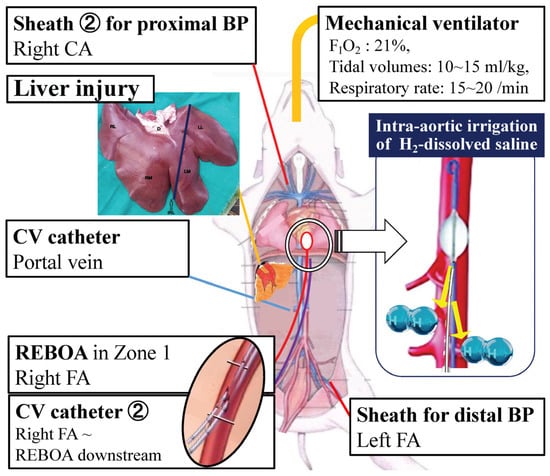
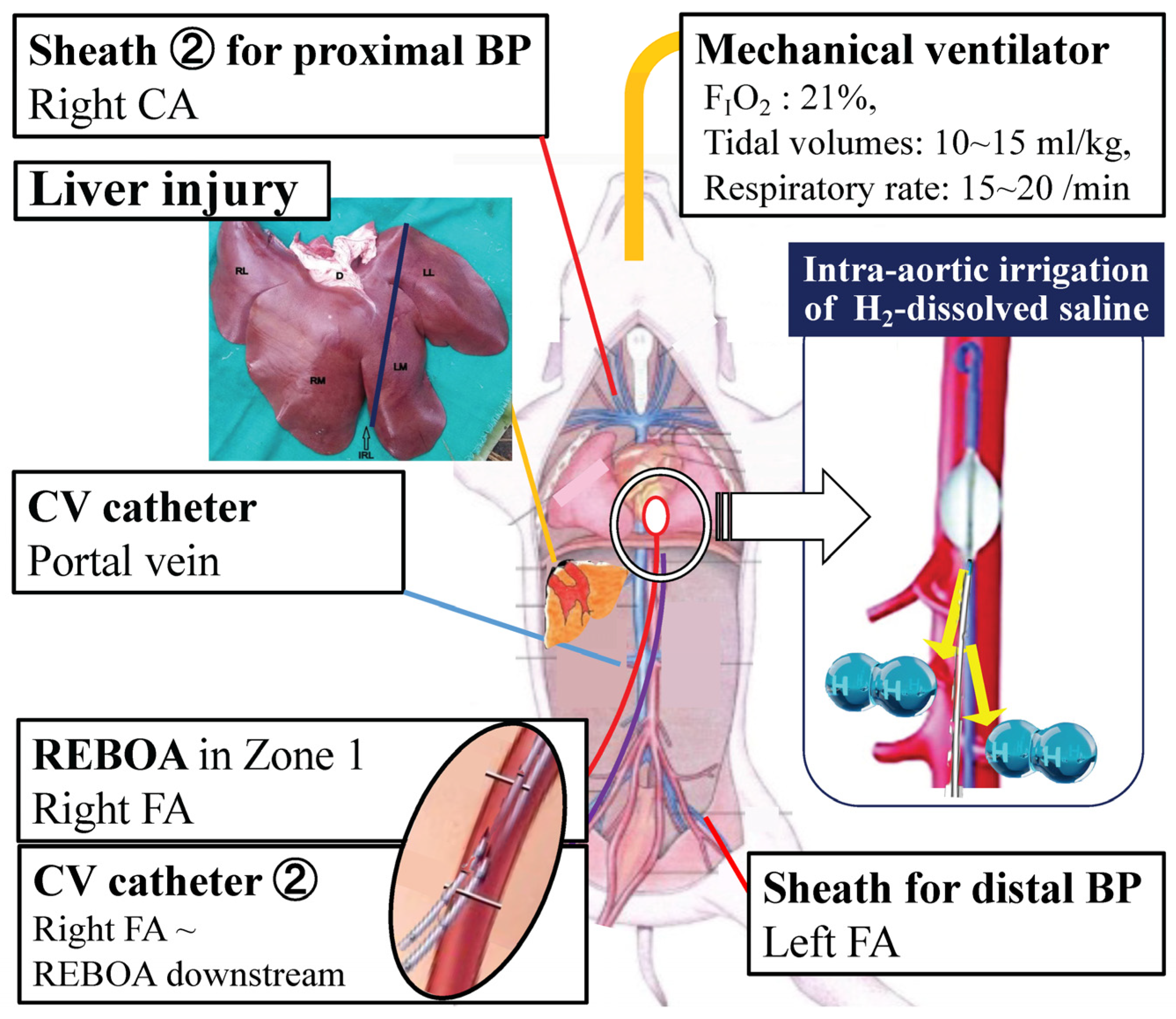
Animals were premedicated with an intramuscular mixture of midazolam (0.2 mg/kg), medetomidine (20 μg/kg), and butorphanol (0.2 mg/kg). Following isoflurane induction and endotracheal intubation, maintenance anesthesia consisted of 2% isoflurane. The animals were mechanically ventilated in a volume-controlled mode (FIO2, 21%; tidal volume, 10–15 mL/kg; respiratory rate, 15–20 breaths per min) and placed on a warming blanket set at 37 °C to minimize hypothermia. The right carotid artery and the bilateral femoral arteries were exposed. Arterial access was obtained for blood collection and hemodynamic monitoring. Proximal aortic pressure was measured via a 5 Fr introducer sheath (Super Sheath; Togo Medikit Corporation, Miyazaki, Japan) inserted into the right common carotid artery. Distal aortic pressure was similarly obtained via a 5 Fr introducer sheath (Super Sheath) inserted in a retrograde manner into the left femoral artery. With laparotomy, a central venous catheter (14G CV catheter kit single lumen; Cardinal Health, Tokyo, Japan) was inserted into the PV via the pancreatic vein to collect blood samples (Figure 1).
Figure 1.
Experimental setting. An intra-aortic catheter to irrigate the H2-containing saline was positioned distal to the REBOA balloon in zone 1. The H2-dissolved saline was administered to the aorta downstream of the REBOA blockage through a CV catheter. The H2 concentration produced in this experiment was 2.2 mg/L. BP, blood pressure; CA, carotid artery; CV, central vein; FA, femoral artery; REBOA, resuscitative endovascular balloon occlusion of the aorta.
2.4. REBOA Placement and H2 Administration Route
A 7 Fr REBOA catheter (Rescue Balloon®, Tokai Medical Products, Kasugai city, Japan) was retrogradely inserted via the right femoral artery. The REBOA balloon was located in zone 1, and the aorta from the left subclavian artery to the celiac artery was confirmed using extra-anatomical measurements prior to placement and through palpation at the completion of the experiment. Another central venous catheter (12G CV catheter kit double lumen; Cardinal Health, Tokyo, Japan) for irrigation with H2-containing saline was retrogradely inserted into the right femoral artery along with the REBOA (Figure 1). The top tip of the catheter was positioned distal to the REBOA balloon, and H2-containing saline was administered through the lumen of the catheter (Figure 1).
2.5. Dissolving H2 Gas into Saline
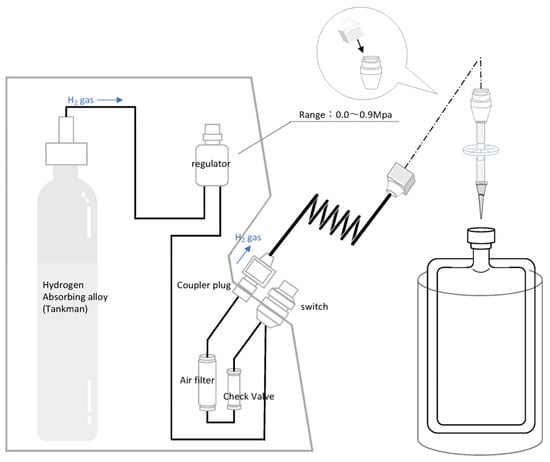
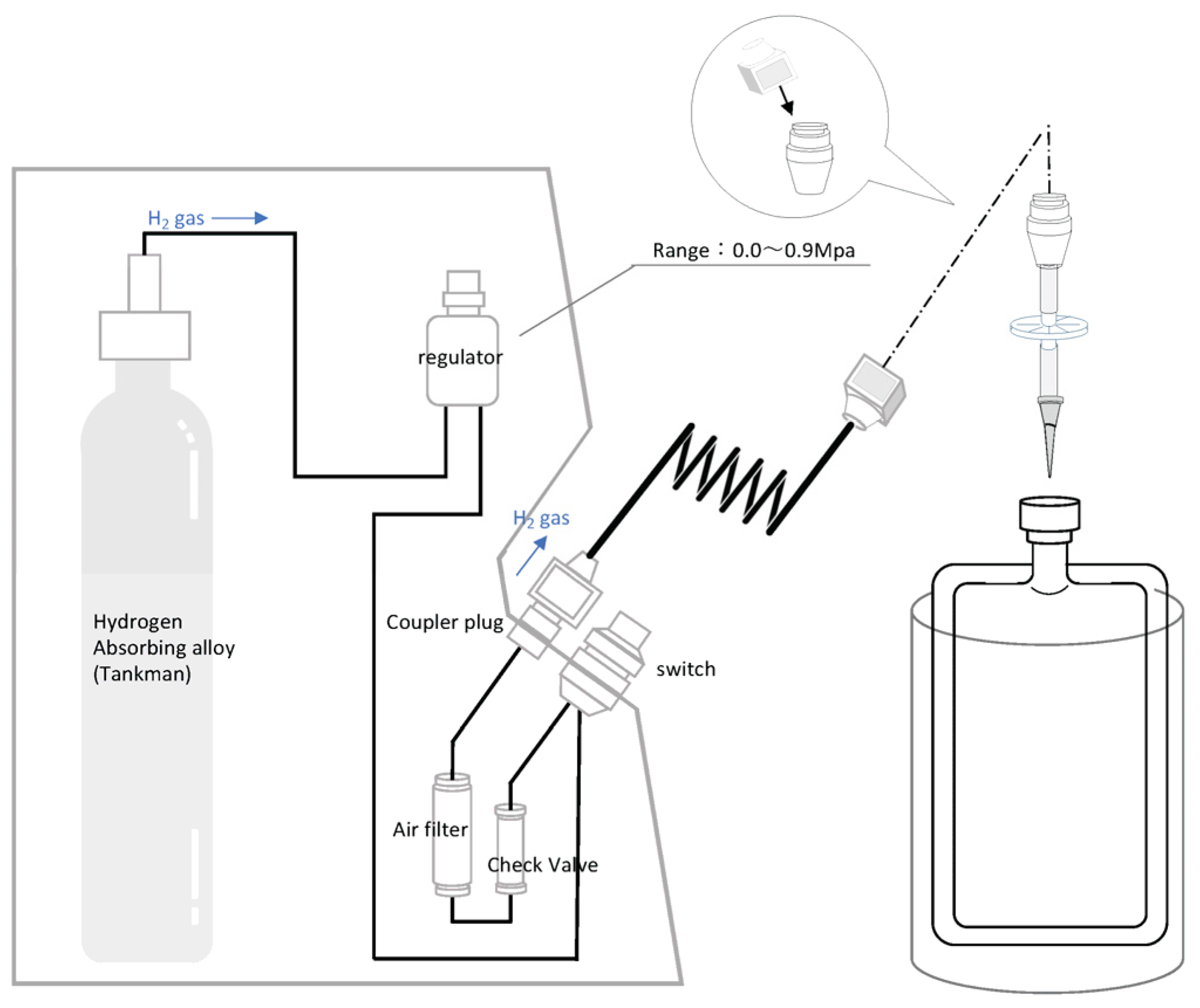
H2-dissolved saline was prepared as described previously [17]. The H2-absorbing alloy canister (Japan Steel Works, Ltd., Shinagawa-ku, Japan) is a cylinder containing an H2-absorbing alloy that reversibly absorbs and releases H2. Given that the internal pressure of the canister does not exceed 1 MPa, it is not deemed a high-pressure gas, as defined in the Japan High-Pressure Gas Safety Act. The H2 transfer device was assembled immediately before use, and H2 was injected into normal saline from the H2-absorbing alloy canister through a pressure regulator valve (Figure 2). When the gauge pressure reached 0.06 MPa, the plastic bag containing normal saline was disconnected from the pressure regulator valve. After vigorous manual shaking for 30 s, the bag containing normal saline was placed on ice and opened to the atmosphere. The H2 concentration produced during this experiment was 2.2 mg/L, which was >1.6 mg/L, the saturation point of H2 gas in water at room temperature without external pressure.
Figure 2.
Structure of the hydrogen (H2) filling machine. H2 gas was injected into the plastic bag of normal saline at the desired pressure through connecting the outlet of the plastic bag (the outlet of which was replaced with one that integrated a coupler plug with a stop valve) to the coupler socket with a stop valve on the main body of the hydrogen gas filling system. The H2 released from the H2 storage alloy in the H2 gas-filling system was adjusted to the desired pressure using a regulator (pressure control device).
2.6. Experimental Model
To demonstrate the concept of drug delivery under REBOA use, we established the following models considering the application of REBOA in clinical scenarios and basic research: controlled/uncontrolled hemorrhagic shock, standard (60 min) [23,24,25] /prolonged (90 min) [9,23,24,26,27] inflation time, with/without solid organ injury, or full/partial inflation. Since hydrogen gas is naturally produced by the gut microbiota and absorbed into the PV, its concentration in the PV was evaluated in the models without hydrogen-dissolved saline irrigation. Each model was performed once (n = 1), and the feasibility of hydrogen delivery was evaluated in each case.
Model 1: Controlled hemorrhagic shock model with full REBOA inflation for the standard occlusion time: 60 min
Controlled hemorrhage, a weight-based 20% total blood volume-controlled hemorrhage, was induced by withdrawing a predefined volume of blood through a 5 Fr sheath within 15 min, based on previous reports describing a controlled hemorrhagic shock pig model [10]. Immediately after shock induction, the REBOA balloon was inflated for 60 min. Successful occlusion of the aorta was confirmed through the loss of distal pulses in the left lower extremity, with an increase in mean arterial pressure (MAP) in the carotid artery. While the REBOA was inflated, the H2-dissolved saline was delivered to the aorta downstream of the REBOA occlusion through a central venous catheter inserted along with the REBOA. After 60 min of inflation with the irrigation of the H2-dissolved saline, the animal was euthanized by administering a KCL injection.
Model 2: Uncontrolled hemorrhagic shock with liver injury, accompanied by REBOA inflation for an extended occlusion time: 90 min
Following the induction of controlled hemorrhage for 15 min, as described above, a standardized high-grade liver injury was established by cutting the hepatic parenchyma medially, immediately distal to the confluence of segment 4 and the left lateral hepatic vein, using large scissors [10]. The midline laparotomy was rapidly closed after removing the liver segment. The REBOA balloon was immediately inflated for 90 min, and H2-dissolved saline was delivered to the aorta downstream of the REBOA occlusion. After 90 min of inflation, the animal was euthanized by administering a KCL injection.
Model 3: Uncontrolled hemorrhagic shock with liver injury, accompanied by partial REBOA inflation for an extended occlusion time: 90 min
Following the induction of controlled hemorrhage within 15 min, as described above, a standardized high-grade liver injury was established. The midline laparotomy was rapidly closed after the removal of the liver segment, and the REBOA balloon was inflated for 10 min for initial clot formation and stabilization, as described previously [9]. H2-dissolved saline was delivered to the aorta downstream of the REBOA occlusion. After 10 min of full occlusion, the balloon was promptly deflated until the distal aortic waveform reappeared. During the experimental period, the degree of inflation was modified to maintain adequate proximal and distal blood pressures at the minimum level to confirm distal pulses in the right lower extremity [9]. After 90 min of full and partial inflation, the animal was euthanized by administering a KCL injection.
Model 4 (control model): Controlled hemorrhagic shock with full REBOA inflation and normal saline irrigation for an extended occlusion time: 60 min
A controlled hemorrhage lasting 15 min was induced as described above. Immediately after shock induction, the REBOA balloon was inflated for 60 min. Successful occlusion of the aorta was confirmed through the loss of distal pulses in the left lower extremity, with an increase in MAP in the carotid artery. During REBOA inflation, normal saline was delivered to the aorta downstream of the REBOA occlusion through a central venous catheter inserted alongside the REBOA. After 60 min of inflation with normal saline irrigation, the animal was euthanized by KCl injection.
2.7. Data Collection
During all experiments, physiological data, including proximal carotid blood pressure, distal femoral artery blood pressure, and heart rate, were continuously monitored and recorded using a polygraph (Powerlab System, Chart; AD Instruments, Bella Vista, NSW, Australia). To measure the H2 concentration, blood samples were collected from catheters inserted into the PV at baseline and every 15 min throughout the experimental period.
2.8. Measuring H2 Concentration
To measure blood H2 concentration, we first inserted a needle into the rubber cap of a sealed 13.5 mL vial, extracted 1 mL of air, and injected 1 mL of blood. Wax was immediately applied to the rubber cap to seal the injection port and prevent outgassing. H2 in the blood was released into the air phase in a sealed vial. The air in the vial into which the blood was initially injected contained almost no H2 gas (0.5 ppm v/v); therefore, most of the H2 gas moved from the blood (liquid phase) to the air (gas phase). Through examining the concentration of H2 gas in the air inside the vial, the concentration of H2 gas in the blood could be estimated. A portion of the air phase (0.2 mL, 0.4 mL, or 1 mL, depending on the H2 concentration) was collected from the vial, and the H2 concentration was measured using gas chromatography TRIlyzer mBA-3000 (Taiyo Co., Ltd., Kochi-shi, Japan). A calibration curve was constructed using standard H2 at concentrations of 0 (nitrogen gas), 5, 50, and 130 parts per million (ppm). Each sample was analyzed twice. Simultaneously, air was collected from the same location into a blood-free vessel, and the concentration of H2 gas was determined. Additionally, the H2 concentration in normal saline, prepared without dissolved hydrogen, was measured as the control (0.0001 ppm w/w). The value of H2 in the air was 0.5 ppm v/v, which exceeds the limit of quantification. Each measured value for the sample was obtained by subtracting the air values.
2.9. Administration Rate
Because complete REBOA markedly reduces or abolishes distal aortic flow, downstream delivery requires infusion-driven transport. This study was designed as a feasibility/pharmacokinetic proof-of-concept rather than dose optimization; therefore, we used a pragmatic dosing strategy constrained by device capability and physiologic plausibility. In full REBOA models, H2-dissolved saline was infused at 1.5–2.0 L/h (0.025–0.033 L/min), including the device maximum of 2.0 L/h to ensure measurable delivery under no-flow conditions. In the partial REBOA model, where some native distal flow is preserved, the infusion rate was reduced to 0.1 L/h to approximate a clinically feasible adjunct. For contextual interpretation, we used a reference portal venous concentration of 0.016 mg/L (approximately 1% saturation) based on prior swine pharmacokinetic data following enteral hydrogen administration [20].
3. Results
3.1. Model 1: Controlled Hemorrhagic Shock Model with Full REBOA Inflation for the Standard Occlusion Time: 60 Min
3.1.1. Hemodynamics During REBOA Application
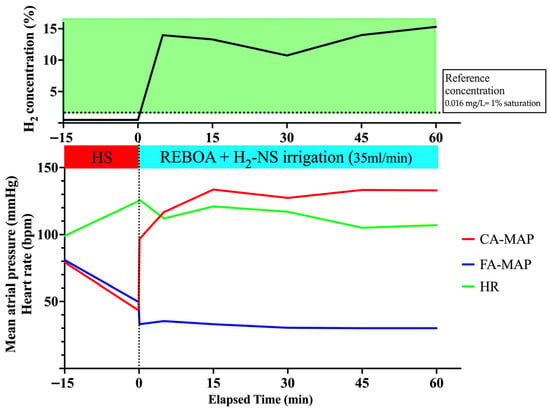
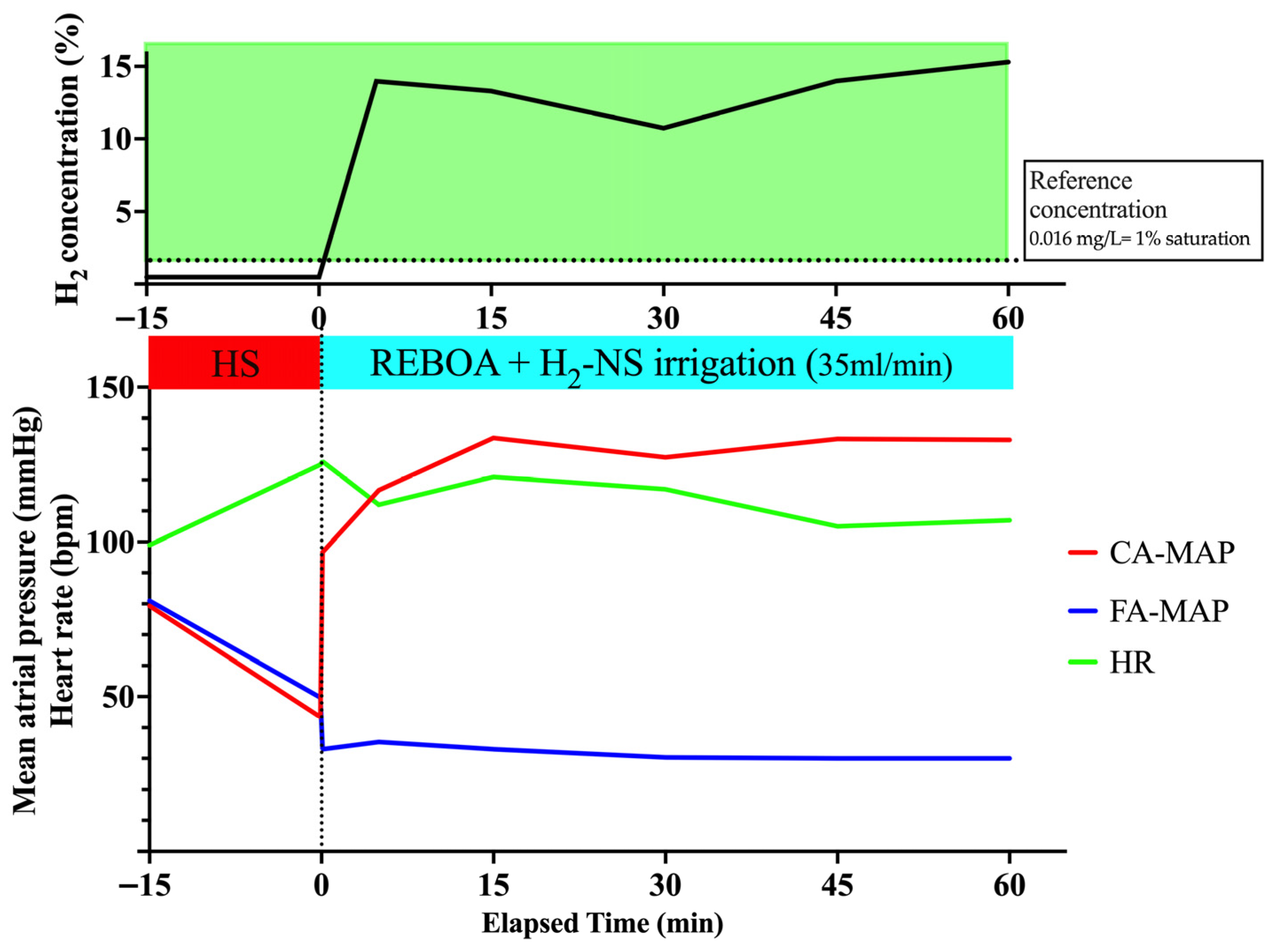
The mean carotid and femoral blood pressures and heart rate are shown in Figure 3. Shock induction by removing a predefined amount of blood reduced the MAP in the carotid and femoral arteries to ~40 mmHg. After the initial full inflation of the REBOA, the MAP in the carotid artery immediately increased, whereas the pulse in the femoral artery decreased, indicating that occlusion was achieved using REBOA. In Experiment 1, the MAP in the carotid artery was maintained at an elevated level of ~130 mmHg during the experimental period, thereby indicating that the use of the REBOA with full inflation for hemorrhagic shock was successful.
Figure 3.
Changes in hemodynamic parameters and H2 concentration with normal time full-inflation and controlled hemorrhagic shock without liver injury (n = 1). The horizontal dotted line indicates the reference concentration (0.016 mg/L; ~1% saturation). CA, carotid artery; FA, femoral artery; H2, hydrogen; HR, heart rate; HS, hemorrhagic shock; NS, normal saline; MAP, mean arterial pressure; REBOA, resuscitative endovascular balloon occlusion of the aorta.
3.1.2. H2 Concentration in the PV
Changes in H2 concentration are shown in Table 1 and Figure 3. Irrigation with H2-dissolved saline immediately increased the H2 concentration in the PV, peaking at 0.224 mg/L (13.998%) 5 min after irrigation, and was maintained throughout the experiment. These data demonstrate that downstream irrigation during full REBOA can increase portal venous H2 above a reference concentration (0.016 mg/L; ~1% saturation) [20], supporting feasibility of distal delivery under complete occlusion.
Table 1.
Changes in hydrogen concentration in the portal vein.
3.2. Model 2: Uncontrolled Hemorrhagic Shock with Liver Injury, Accompanied by Full REBOA Inflation for an Extended Occlusion Time: 90 Min
3.2.1. Hemodynamics During REBOA Application
The mean carotid and femoral blood pressures and heart rate are shown in Figure 4. Induction of shock by removing a predefined amount of blood, followed by liver resection, decreased the MAP in the carotid and femoral arteries to ~40 mmHg. After the initial full inflation of the REBOA, the MAP in the carotid artery immediately increased, whereas the pulse in the femoral artery decreased. The carotid artery MAP was elevated even during uncontrolled hemorrhagic shock owing to liver resection during the extended 90 min occlusion, indicating the successful use of REBOA. The intraperitoneal hemorrhage volume was 580 mL at the end of the study period.
Figure 4.
Changes in hemodynamic parameters and H2 concentration with extended time full-inflation and uncontrolled hemorrhagic shock with liver injury (n = 1). The horizontal dotted line indicates the reference concentration (0.016 mg/L; ~1% saturation). CA, carotid artery; FA, femoral artery; H2, hydrogen; HR, heart rate; HS, hemorrhagic shock; NS, normal saline; MAP, mean arterial pressure; REBOA, resuscitative endovascular balloon occlusion of the aorta.
3.2.2. H2 Concentration in the PV
Table 1 and Figure 4 show changes in H2 concentration. As observed in Experiment 1, the H2 concentration in the PV immediately increased and reached a peak level of 0.049 mg/L (3.063%). These data demonstrate that downstream irrigation during prolonged full REBOA can increase portal venous H2 above a reference concentration (0.016 mg/L; ~1% saturation) [20] even during uncontrolled hemorrhagic shock with liver injury.
3.3. Model 3: Uncontrolled Hemorrhagic Shock with Liver Injury, Accompanied by Partial REBOA Inflation for an Extended Occlusion Time: 90 Min
3.3.1. Hemodynamics During REBOA Application
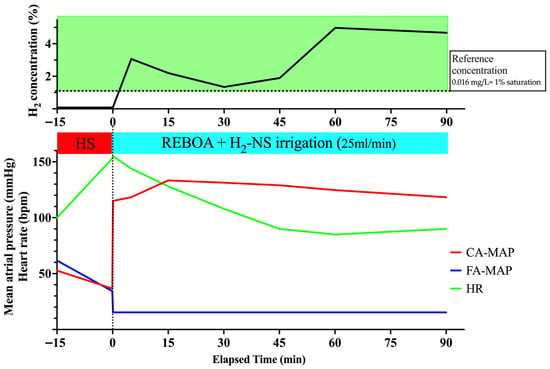
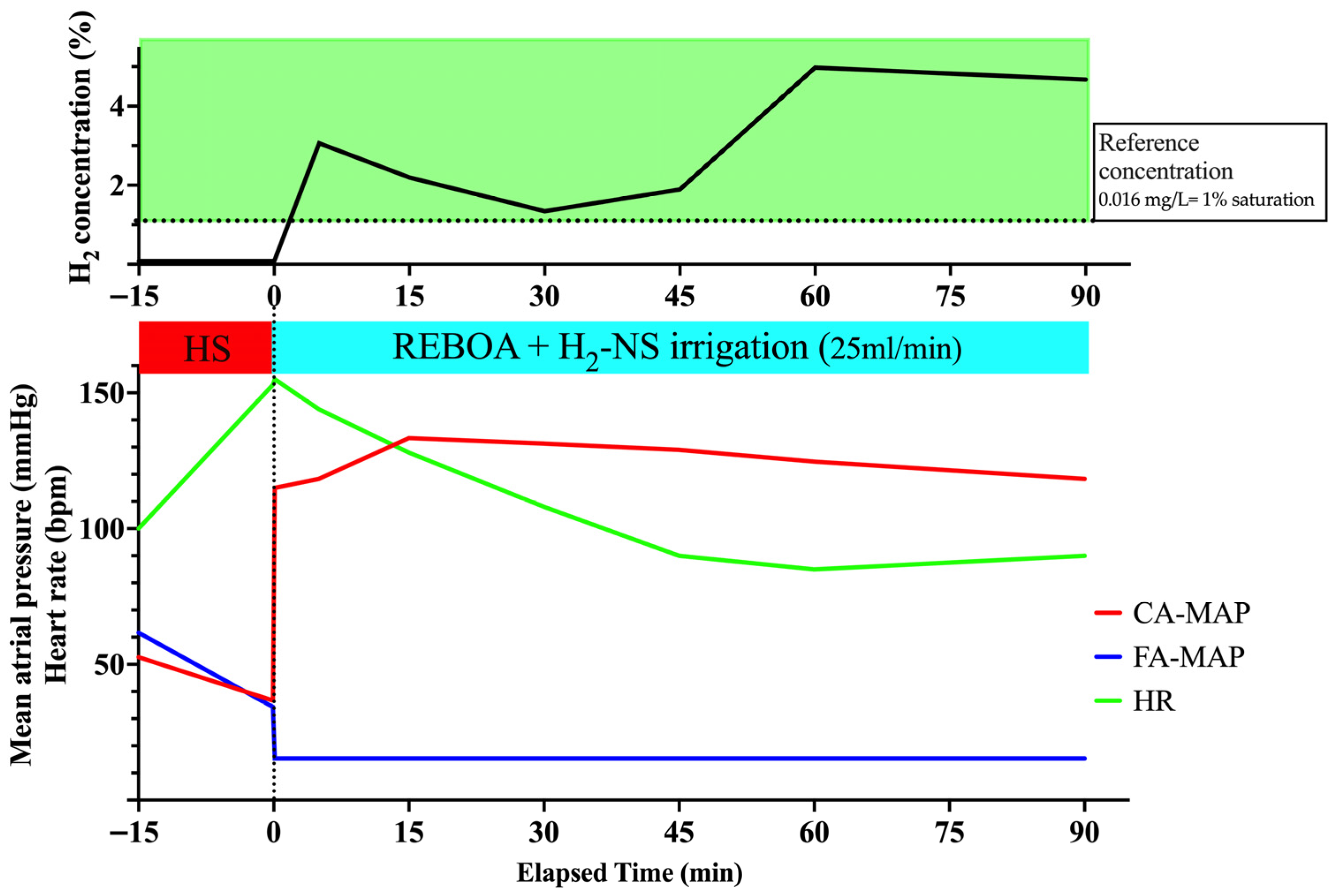
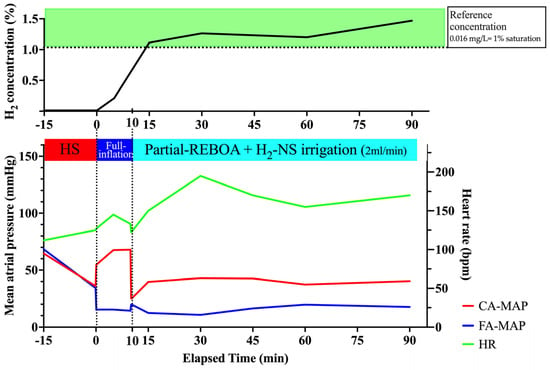
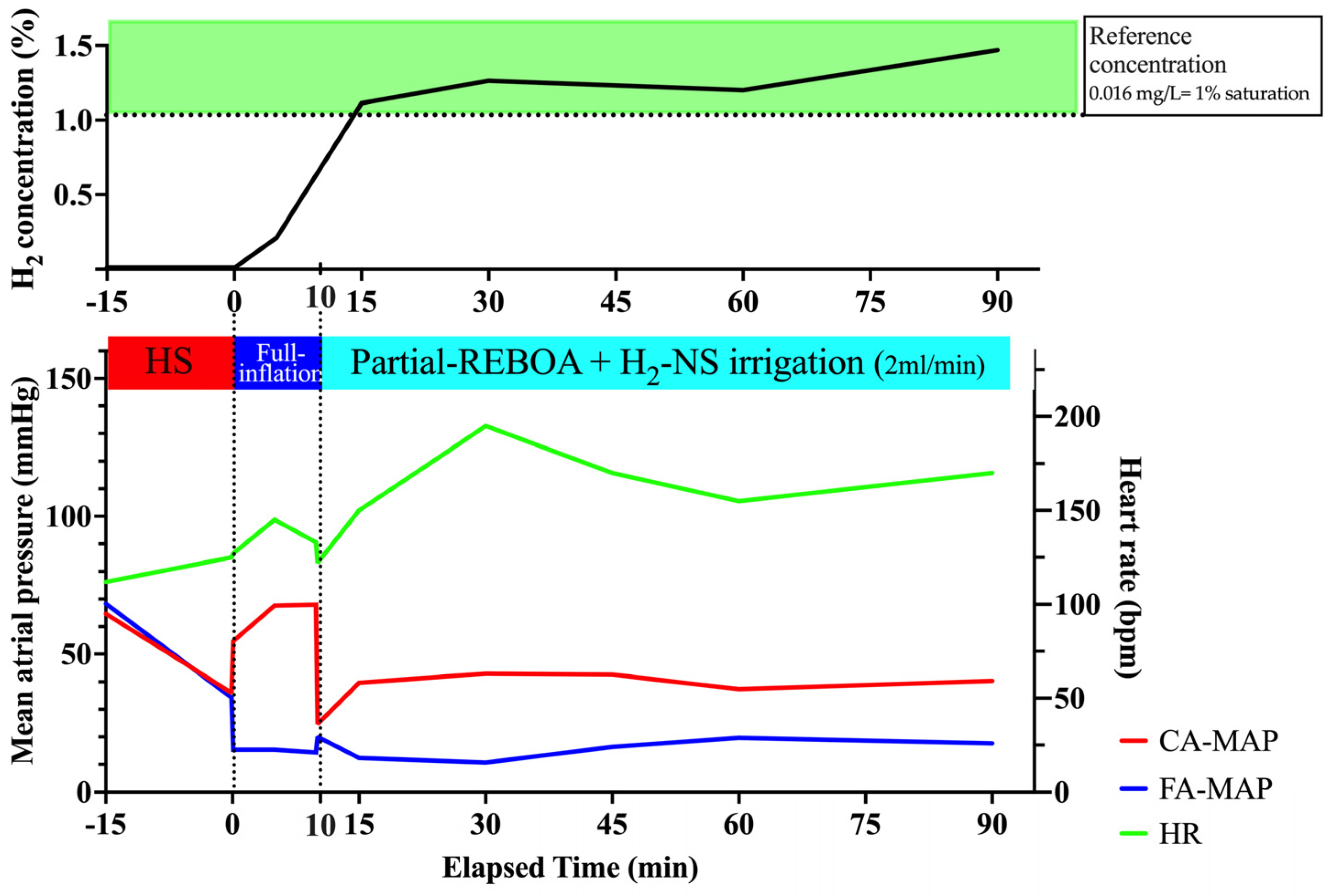
Figure 5 presents the mean carotid and femoral blood pressures and heart rate. Induction of shock by removing a predefined amount of blood, followed by liver resection, decreased the MAP in the carotid and femoral arteries to ~40 mmHg. After the initial full inflation of the REBOA, the MAP in the carotid artery immediately increased, whereas the pulse in the femoral artery decreased. Initiating partial inflation after 10 min of full inflation reduced the MAP in the carotid artery, although it was maintained at ~40 mmHg. Simultaneously, the MAP in the femoral artery increased by ~20 mmHg, indicating that partial REBOA was successful. The intraperitoneal hemorrhage volume was 800 mL at the end of the study period.
Figure 5.
Changes in hemodynamic parameters and H2 concentration with extended time partial-inflation and uncontrolled hemorrhagic shock with liver injury (n = 1). The horizontal dotted line indicates the reference concentration (0.016 mg/L; ~1% saturation). CA, carotid artery; FA, femoral artery; H2, hydrogen; HR, heart rate; HS, hemorrhagic shock; NS, normal saline; MAP, mean arterial pressure; REBOA, resuscitative endovascular balloon occlusion of the aorta.
3.3.2. H2 Concentration in the PV
Changes in H2 concentration are shown in Table 1 and Figure 5. Because the irrigation rate was relatively slow during the initial full inflation period, the H2 concentration was not markedly elevated early; however, at the start of partial inflation, the H2 concentration in the PV increased to 0.0178 mg/L (1.125%) and was maintained at this level. These data demonstrate that downstream irrigation can achieve portal venous H2 at approximately the reference concentration (0.016 mg/L; ~1% saturation) [20] during partial REBOA in uncontrolled hemorrhagic shock with liver injury.
3.4. Model 4 (Control Model): Controlled Hemorrhagic Shock with Full REBOA Inflation and Normal Saline Irrigation for an Extended Occlusion Time: 60 Min
3.4.1. Hemodynamics During REBOA Application
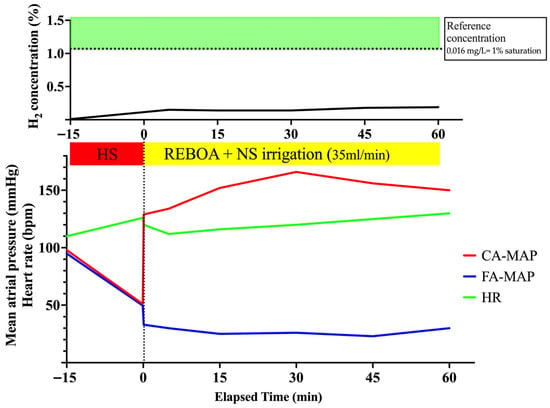
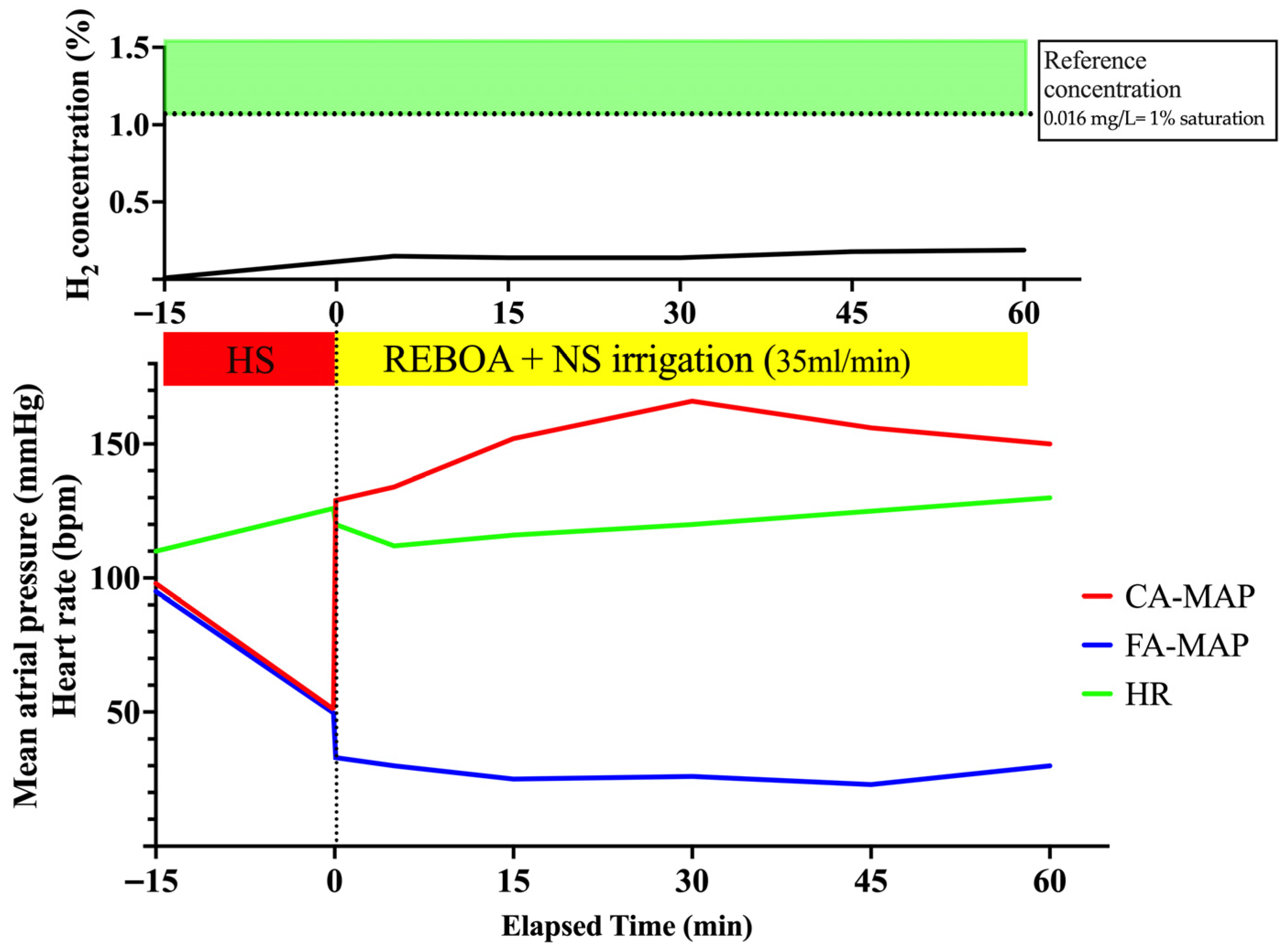
The mean carotid and femoral blood pressures and heart rate are presented in Figure 6. Shock induction by removing a predefined amount of blood reduced the MAP in the carotid and femoral arteries to approximately 50 mmHg. Following the initial full inflation of the REBOA, the MAP in the carotid artery immediately increased, whereas the pulse in the femoral artery decreased, indicating that occlusion was achieved using REBOA. In Experiment 4, the MAP in the carotid artery was maintained at an elevated level of approximately 160 mmHg during the experimental period, thereby indicating that the use of the REBOA with full inflation for hemorrhagic shock was successful.
Figure 6.
Changes in hemodynamic parameters and H2 concentration with normal time full-inflation with the irrigation of normal saline and controlled hemorrhagic shock (n = 1). The horizontal dotted line indicates the reference concentration (0.016 mg/L; ~1% saturation). CA, carotid artery; FA, femoral artery; H2, hydrogen; HR, heart rate; HS, hemorrhagic shock; NS, normal saline; MAP, mean arterial pressure; REBOA, resuscitative endovascular balloon occlusion of the aorta.
3.4.2. H2 Concentration in the PV
Changes in H2 concentration are shown in Table 1 and Figure 6. Because normal saline (without dissolved H2) was irrigated in this model, the H2 concentration in the PV remained low (≤0.003 mg/L; ≤0.188%), well below the reference concentration (0.016 mg/L; ~1% saturation) [20]. This low-level signal is consistent with baseline H2 produced by gut microbiota and absorbed into the portal circulation.
4. Discussion
In the current study, we identified the presence of H2 molecules in the PV under the use of REBOA with downstream H2-dissolved saline irrigation. This finding indicates that H2 molecules from H2-dissolved saline were sufficiently delivered to the intestines of pigs with hemorrhagic shock, thereby achieving the objective of a proof-of-concept study. Moreover, this finding could lead to a novel administration route under REBOA use, potentially facilitating the delivery of anti-ischemic drugs to the intestine and liver, organs well-known to incur ischemic injury under REBOA with hemorrhagic shock. These results could lead to a novel route under REBOA use, including full or partial balloon inflation and standard or extended inflation time, potentially facilitating delivery of anti-ischemic drugs or cell-based therapies to the intestine and liver [28,29,30].
Under complete occlusion, aortic blood flow downstream of REBOA is absent. Therefore, a high administration rate is required to deliver the dissolved H2 saline to downstream organs. Because this study was designed as a proof-of-concept technical feasibility assessment (not a dose-finding or pharmacodynamic study), we used a pragmatic stepwise approach. We first selected the maximum flow rate permitted by our irrigation setup (2.0 L/h) to maximize the likelihood of detecting a change in portal venous H2 during complete occlusion. After confirming measurable portal venous H2 at this rate, we reduced the irrigation rate in the liver-injury full-occlusion model to decrease infused volume while maintaining detectability. In the partial-REBOA model, given expected residual distal perfusion, we further reduced the rate (0.1 L/h) to explore feasibility under substantially lower infusion volumes. These rates were chosen for signal detection and feasibility and should not be interpreted as optimal or clinically recommended. Although hydrogen gas is naturally produced by gut microbiota and absorbed into the PV, naturalist baseline concentration in the PV was quite low, as observed in Model 4 (control). These findings suggest that our novel drug delivery system delivered hydrogen to the intestine; however, we did not evaluate histological damage assessment, which needed further efficacy investigation. Given that this is a proof-of-concept study, these findings could facilitate the determination of an appropriate administration rate under the REBOA downstream irrigation of drugs.
We have previously reported that H2 gas inhalation mitigates ischemic injury and delays progression to irreversible shock during severe hemorrhage [15]. However, since H2 molecules from inhaled gas are distributed to the body via the bloodstream, H2 inhalation cannot exert therapeutic effects within ischemic organs when blood flow is blocked by REBOA in the pig model [19]. Ichihara et al. reported an increase in H2 concentration in PV blood after oral ingestion of H2-dissolved saline [20]. Although oral ingestion may be one strategy to deliver drugs to the intestinal tract, oral ingestion during hemorrhagic shock is difficult, and continuous oral administration is impractical. Given that H2 molecules exert their effect without undergoing metabolism into a pharmacologically active form and can be administered directly into the aorta, our H2 delivery approach has the possibility to deliver H2 to ischemic organs without any metabolic concern during the hemodynamically unstable phase.
This study had some limitations. First, this is a proof-of-concept study to explore the possibility of a new administration route to visceral organs, including the intestines, under the use of REBOA with intra-aortic irrigation, not an evaluation of efficacy nor a pharmacological study to define an appropriate administration rate. In addition, the minimum effective concentration in pigs remains unknown, although a concentration of 0.016 mg/L (1%) has been documented in other animals, including humans [20]. Second, intra-aortic irrigation was performed in combination with pre-existing devices, including a central venous catheter and REBOA. A 2-in-1 REBOA device, which has a drug-administration port downstream of the block balloon, needs to be newly developed for clinical use. As the size of the REBOA device may increase, blood flow, including drug-dissolved saline, to distal organs, such as the kidney or legs, may decrease owing to intraluminal occupation by the device. Third, because this system may require high-dose intra-aortic administration, there is a risk of air embolism, hemodilution problems, pressure-related problems like abdominal compartment syndrome, and altered distal perfusion for the catheter-inserted leg. Therefore, the evaluation for these complications and a fail-safe function must be established before clinical use. Fourth, the sample size is notably small, even for a proof-of-concept study. This was an exploratory design intended to survey feasibility across multiple models. In particular, the rationale for selecting the administration rate is weak. The high irrigation rate used in the full-occlusion setting is unlikely to be directly applicable clinically. Clinically applicable rates and safety (e.g., hemodilution/pressure effects) require future evaluation with replication. Fifth, this study focused on intestinal drug delivery, and the delivery to other organs was not investigated. Further experiments are warranted to evaluate the drug delivery to other ischemic organs, including the liver, kidney, or legs.
5. Conclusions
In this proof-of-concept study, we demonstrated the presence of H2 molecules in the PV following REBOA use under various scenarios. The elevated H2 concentration in the PV indicates that H2 was delivered to the intestine. However, this study did not evaluate whether such delivery confers any physiological benefit. Further investigations exploring this H2 delivery approach are required to establish its application in clinical settings.
Author Contributions
Study design, data collection, data analysis and interpretation, and article writing: T.Y. and T.M. Data interpretation and critical revisions of the article: K.H. and T.T.; T.Y., T.M., S.S. (Sayuri Suzuki), S.S. (Shohei Suzuki), D.K. and J.Y. performed the experiments. Study design, data interpretation, and article review: K.Y., S.O., K.M., E.K., M.S. and J.S. All authors have read and agreed to the published version of the manuscript.
Funding
Specified contributions from Keio University (Grant No. S01PD10580). The funder had no role in the study design; in the collection, analysis, and interpretation of data; in the writing of the report; or in the decision to submit the article for publication.
Institutional Review Board Statement
This study was approved by the Research Council and Animal Care and Use Committee of the Research Institute of Keio University (No. 20005-2; approved on 24 January 2023).
Data Availability Statement
The datasets generated and/or analyzed during the current study are available from the corresponding author upon request.
Acknowledgments
This study was supported by the Research Council and Animal Care and Use Committee of the Research Institute of Keio University.
Conflicts of Interest
The authors declare no conflicts of interest.
Abbreviations
The following abbreviations are used in this manuscript:
| CA | Carotid artery |
| FA | Femoral artery |
| H2 | Hydrogen |
| HR | Heart rate |
| HS | Hemorrhagic shock |
| MAP | Mean arterial pressure |
| REBOA | Resuscitative endovascular balloon occlusion of the aorta |
References
- Kauvar, D.S.; Lefering, R.; Wade, C.E. Impact of hemorrhage on trauma outcome: An overview of epidemiology, clinical presentations, and therapeutic considerations. J. Trauma 2006, 60, S3–S11. [Google Scholar] [CrossRef] [Scilit] [PubMed]
- Cannon, J.; Morrison, J.; Lauer, C.; Grabo, D.; Polk, T.; Blackbourne, L.; Dubose, J.; Rasmussen, T. Resuscitative Endovascular Balloon Occlusion of the Aorta (REBOA) for Hemorrhagic Shock. Mil. Med. 2018, 183, 55–59. [Google Scholar] [CrossRef] [Scilit] [PubMed]
- Saito, N.; Matsumoto, H.; Yagi, T.; Hara, Y.; Hayashida, K.; Motomura, T.; Mashiko, K.; Iida, H.; Yokota, H.; Wagatsuma, Y. Evaluation of the safety and feasibility of resuscitative endovascular balloon occlusion of the aorta. J. Trauma Acute Care Surg. 2015, 78, 897–903; discussion 904. [Google Scholar] [CrossRef] [Scilit] [PubMed]
- Fitzgerald, M.; Lendrum, R.; Bernard, S.; Moloney, J.; Smit, V.; Mathew, J.; Kim, Y.; Nickson, C.; Lin, R.M.; Yeung, M.; et al. Feasibility study for implementation of resuscitative balloon occlusion of the aorta in peri-arrest, exsanguinating trauma at an adult level 1 Australian trauma centre. Emerg. Med. Australas. 2020, 32, 127–134. [Google Scholar] [CrossRef] [Scilit]
- Borger van der Burg, B.L.S.; van Dongen, T.; Morrison, J.J.; Hedeman Joosten, P.P.A.; DuBose, J.J.; Horer, T.M.; Hoencamp, R. A systematic review and meta-analysis of the use of resuscitative endovascular balloon occlusion of the aorta in the management of major exsanguination. Eur. J. Trauma Emerg. Surg. 2018, 44, 535–550. [Google Scholar] [CrossRef] [Scilit]
- Matsumura, Y.; Matsumoto, J.; Idoguchi, K.; Kondo, H.; Ishida, T.; Kon, Y.; Tomita, K.; Ishida, K.; Hirose, T.; Umakoshi, K.; et al. Non-traumatic hemorrhage is controlled with REBOA in acute phase then mortality increases gradually by non-hemorrhagic causes: DIRECT-IABO registry in Japan. Eur. J. Trauma Emerg. Surg. 2018, 44, 503–509. [Google Scholar] [CrossRef] [Scilit]
- Bekdache, O.; Paradis, T.; Shen, Y.B.H.; Elbahrawy, A.; Grushka, J.; Deckelbaum, D.; Khwaja, K.; Fata, P.; Razek, T.; Beckett, A. Resuscitative endovascular balloon occlusion of the aorta (REBOA): Indications: Advantages and challenges of implementation in traumatic non-compressible torso hemorrhage. Trauma Surg. Acute Care Open 2019, 4, e000262. [Google Scholar] [CrossRef] [Scilit]
- Russo, R.M.; White, J.M.; Baer, D.G. Partial Resuscitative Endovascular Balloon Occlusion of the Aorta: A Systematic Review of the Preclinical and Clinical Literature. J. Surg. Res. 2021, 262, 101–114. [Google Scholar] [CrossRef] [Scilit]
- Russo, R.M.; Williams, T.K.; Grayson, J.K.; Lamb, C.M.; Cannon, J.W.; Clement, N.F.; Galante, J.M.; Neff, L.P. Extending the golden hour: Partial resuscitative endovascular balloon occlusion of the aorta in a highly lethal swine liver injury model. J. Trauma Acute Care Surg. 2016, 80, 372–378; discussion 378–380. [Google Scholar] [CrossRef] [Scilit]
- Kuckelman, J.; Derickson, M.; Barron, M.; Phillips, C.J.; Moe, D.; Levine, T.; Kononchik, J.P.; Marko, S.T.; Eckert, M.; Martin, M.J. Efficacy of intermittent versus standard resuscitative endovascular balloon occlusion of the aorta in a lethal solid organ injury model. J. Trauma Acute Care Surg. 2019, 87, 9–17. [Google Scholar] [CrossRef] [Scilit]
- Castellini, G.; Gianola, S.; Biffi, A.; Porcu, G.; Fabbri, A.; Ruggieri, M.P.; Coniglio, C.; Napoletano, A.; Coclite, D.; D’Angelo, D.; et al. Resuscitative endovascular balloon occlusion of the aorta (REBOA) in patients with major trauma and uncontrolled haemorrhagic shock: A systematic review with meta-analysis. World J. Emerg. Surg. 2021, 16, 41. [Google Scholar] [CrossRef] [Scilit]
- Xiang, L.; Tan, J.W.; Huang, L.J.; Jia, L.; Liu, Y.Q.; Zhao, Y.Q.; Wang, K.; Dong, J.H. Inhalation of hydrogen gas reduces liver injury during major hepatotectomy in swine. World J. Gastroenterol. 2012, 18, 5197–5204. [Google Scholar] [CrossRef] [Scilit]
- Meng, X.; Xu, H.; Dang, Y.; Fan, Y.; Lv, M.; Sang, H.; Xu, L. Hyperoxygenated Hydrogen-Rich Solution Suppresses Lung Injury Induced by Hemorrhagic Shock in Rats. J. Surg. Res. 2019, 239, 103–114. [Google Scholar] [CrossRef] [Scilit] [PubMed]
- Johnsen, H.M.; Filtvedt, W.; Hiorth, M.; Klaveness, J. Silicon nanoparticles for oral administration of molecular hydrogen. Int. J. Pharm. 2022, 629, 122371. [Google Scholar] [CrossRef] [Scilit] [PubMed]
- Matsuoka, T.; Suzuki, M.; Sano, M.; Hayashida, K.; Tamura, T.; Homma, K.; Fukuda, K.; Sasaki, J. Hydrogen gas inhalation inhibits progression to the “irreversible” stage of shock after severe hemorrhage in rats. J. Trauma Acute Care Surg. 2017, 83, 469–475. [Google Scholar] [CrossRef] [Scilit] [PubMed]
- Henderson, P.W.; Singh, S.P.; Belkin, D.; Nagineni, V.; Weinstein, A.L.; Weissich, J.; Spector, J.A. Hydrogen sulfide protects against ischemia-reperfusion injury in an in vitro model of cutaneous tissue transplantation. J. Surg. Res. 2010, 159, 451–455. [Google Scholar] [CrossRef] [Scilit]
- Kobayashi, E.; Sano, M. Organ preservation solution containing dissolved hydrogen gas from a hydrogen-absorbing alloy canister improves function of transplanted ischemic kidneys in miniature pigs. PLoS ONE 2019, 14, e0222863. [Google Scholar] [CrossRef] [Scilit]
- Du, Z.; Jia, H.; Liu, J.; Zhao, X.; Xu, W. Effects of three hydrogen-rich liquids on hemorrhagic shock in rats. J. Surg. Res. 2015, 193, 377–382. [Google Scholar] [CrossRef] [Scilit]
- Matsumura, Y.; Hayashi, Y.; Aoki, M.; Izawa, Y. Hydrogen gas inhalation therapy may not work sufficiently to mitigate oxidative stress induced with REBOA. Sci. Rep. 2024, 14, 32128. [Google Scholar] [CrossRef] [Scilit]
- Ichihara, G.; Katsumata, Y.; Moriyama, H.; Kitakata, H.; Hirai, A.; Momoi, M.; Ko, S.; Shinya, Y.; Kinouchi, K.; Kobayashi, E.; et al. Pharmacokinetics of hydrogen after ingesting a hydrogen-rich solution: A study in pigs. Heliyon 2021, 7, e08359. [Google Scholar] [CrossRef] [Scilit]
- Ohsawa, I.; Ishikawa, M.; Takahashi, K.; Watanabe, M.; Nishimaki, K.; Yamagata, K.; Katsura, K.; Katayama, Y.; Asoh, S.; Ohta, S. Hydrogen acts as a therapeutic antioxidant by selectively reducing cytotoxic oxygen radicals. Nat. Med. 2007, 13, 688–694. [Google Scholar] [CrossRef] [Scilit] [PubMed]
- Zheng, X.; Mao, Y.; Cai, J.; Li, Y.; Liu, W.; Sun, P.; Zhang, J.H.; Sun, X.; Yuan, H. Hydrogen-rich saline protects against intestinal ischemia/reperfusion injury in rats. Free Radic. Res. 2009, 43, 478–484. [Google Scholar] [CrossRef] [Scilit] [PubMed]
- Treffalls, R.N.; DuBose, J.J.; Brenner, M.; Piccinini, A.; Inaba, K.; Scalea, T.M.; Moore, L.J.; Kauvar, D.S.; Aortic Occlusion for Resuscitation in Trauma and Acute Care Surgery (AORTA) Investigators. Outcomes Associated with Aortic Balloon Occlusion Time in Patients with Zone 1 Resuscitative Endovascular Balloon Occlusion of the Aorta. J. Surg. Res. 2024, 296, 256–264. [Google Scholar] [CrossRef] [Scilit] [PubMed]
- Norii, T.; Crandall, C.; Terasaka, Y. Survival of severe blunt trauma patients treated with resuscitative endovascular balloon occlusion of the aorta compared with propensity score-adjusted untreated patients. J. Trauma Acute Care Surg. 2015, 78, 721–728. [Google Scholar] [CrossRef] [Scilit]
- Lee, G.; Kim, D.H.; Ma, D.S.; Lee, S.W.; Heo, Y.; Jo, H.; Chang, S.W. Feasibility and Clinical Outcomes of Resuscitative Endovascular Balloon Occlusion of the Aorta in Patients with Traumatic Shock: A Single-Center 5-Year Experience. J. Chest Surg. 2023, 56, 108–116. [Google Scholar] [CrossRef] [Scilit]
- Cambronero, G.E.; Sanin, G.D.; Patel, N.T.P.; Ganapathy, A.S.; Lane, M.R.; Patterson, J.W.; Niebler, J.A.P.; Johnson, M.A.; Rahbar, E.; Jordan, J.E.; et al. Automated partial resuscitative endovascular balloon occlusion of the aorta reduces blood loss and hypotension in a highly lethal porcine liver injury model. J. Trauma Acute Care Surg. 2023, 95, 205–212. [Google Scholar] [CrossRef] [Scilit]
- Doucet, J.; Coimbra, R. REBOA: Is it ready for prime time? J. Vasc. Bras. 2017, 16, 1–3. [Google Scholar] [CrossRef] [Scilit]
- Wu, Z.F.; Cheng, W.; Su, J.D. Progress in the application of microneedle-mediated cell implantation combined with artificial dermal scaffolds. Eur. Cell Mater. 2025, 53, 52–64. [Google Scholar] [CrossRef] [Scilit]
- Herrmann, M.; Schneidereit, J.; Wiesner, S.; Kuric, M.; Rudert, M.; Lüdemann, M.; Srivastava, M.; Schütze, N.; Ebert, R.; Docheva, D.; et al. Peripheral blood cells enriched by adhesion to CYR61 are heterogenous myeloid modulators of tissue regeneration with early endothelial progenitor characteristics. Eur. Cell Mater. 2024, 48, 66–92. [Google Scholar] [CrossRef] [Scilit]
- Sun, J.L.; Yang, M.Y.; Zhou, J.H.; Jiang, N.; Chen, H.Z. Microstructural morphology and mechanical analysis of decellularized ligament scaffolds. Eur. Cell Mater. 2025, 53, 28–40. [Google Scholar] [CrossRef] [Scilit]

Disclaimer/Publisher’s Note: The statements, opinions and data contained in all publications are solely those of the individual author(s) and contributor(s) and not of MDPI and/or the editor(s). MDPI and/or the editor(s) disclaim responsibility for any injury to people or property resulting from any ideas, methods, instructions or products referred to in the content. |
© 2026 by the authors. Licensee MDPI, Basel, Switzerland. This article is an open access article distributed under the terms and conditions of the Creative Commons Attribution (CC BY) license.