cGAS-STING Pathway-Induced BST2 Enhances HPV-Infected Keratinocyte Proliferation in Condyloma Acuminata


Abstract
1. Introduction
2. Materials and Methods
2.1. Patients and Normal Donor Specimens
2.2. Cell Culture and Tissue Samples
2.3. RNA Interference
2.4. Cell Counting
2.5. Cell Counting Kit 8 (CCK-8) Assay
2.6. Cell Apoptosis Detection
2.7. Real-Time PCR
2.8. Immunohistochemistry
2.9. Western Blot Analysis
2.10. Low-Risk HPV Extraction and Infection
2.11. Statistical Analysis
3. Results
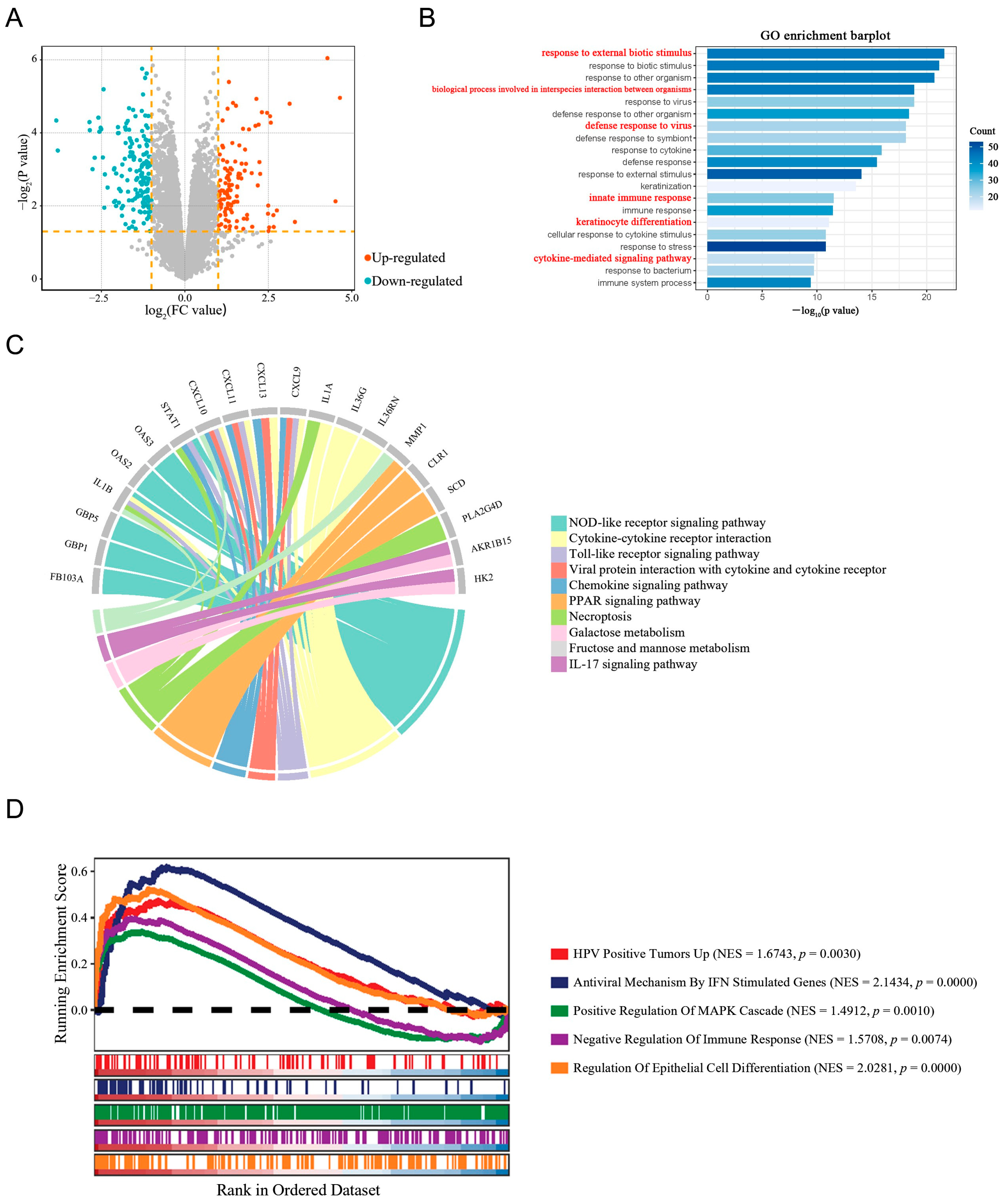
3.1. Bioinformatic Analysis of CA-Related Datasets from the GEO Database
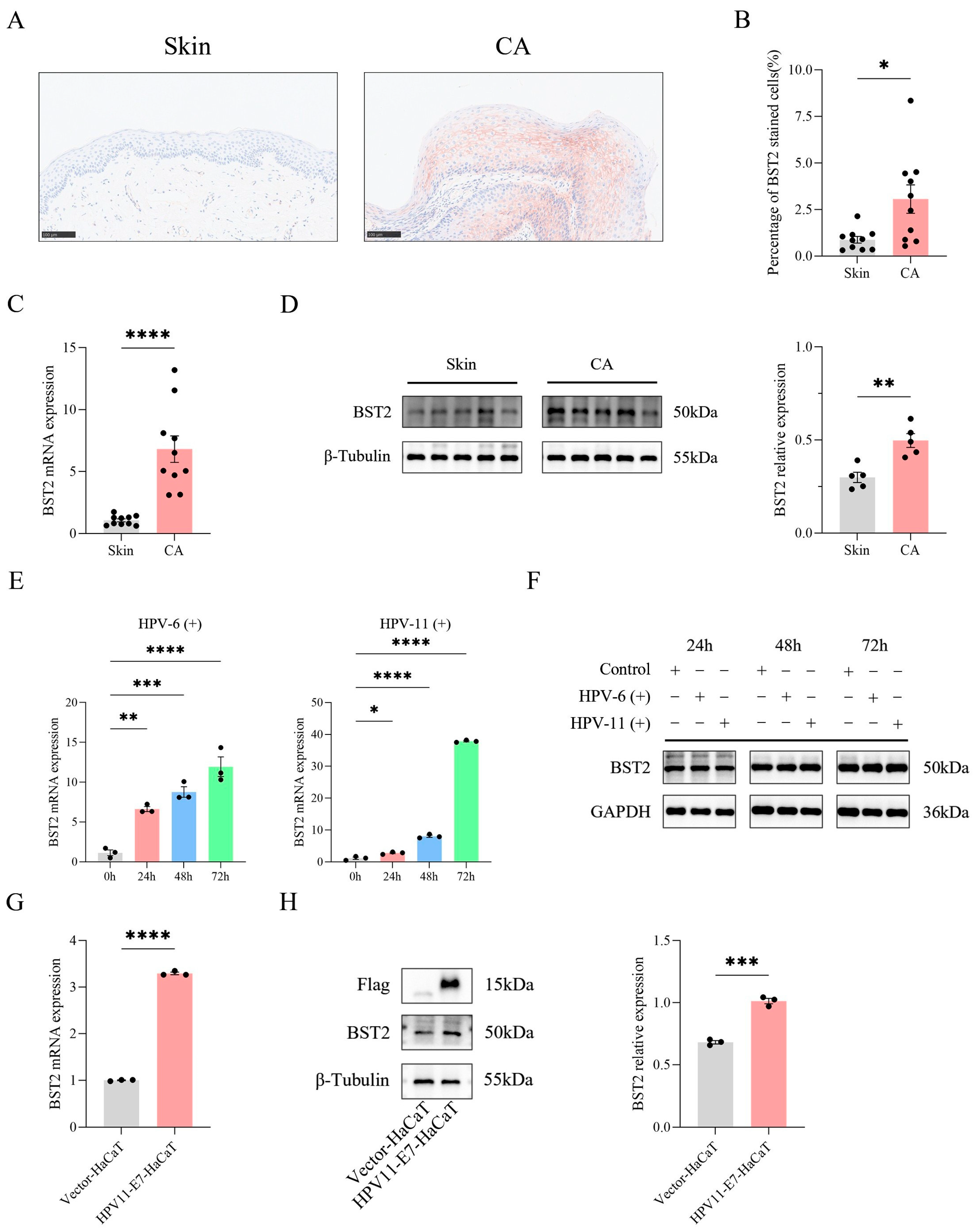
3.2. BST2 Is Induced in Keratinocytes from CA Warts
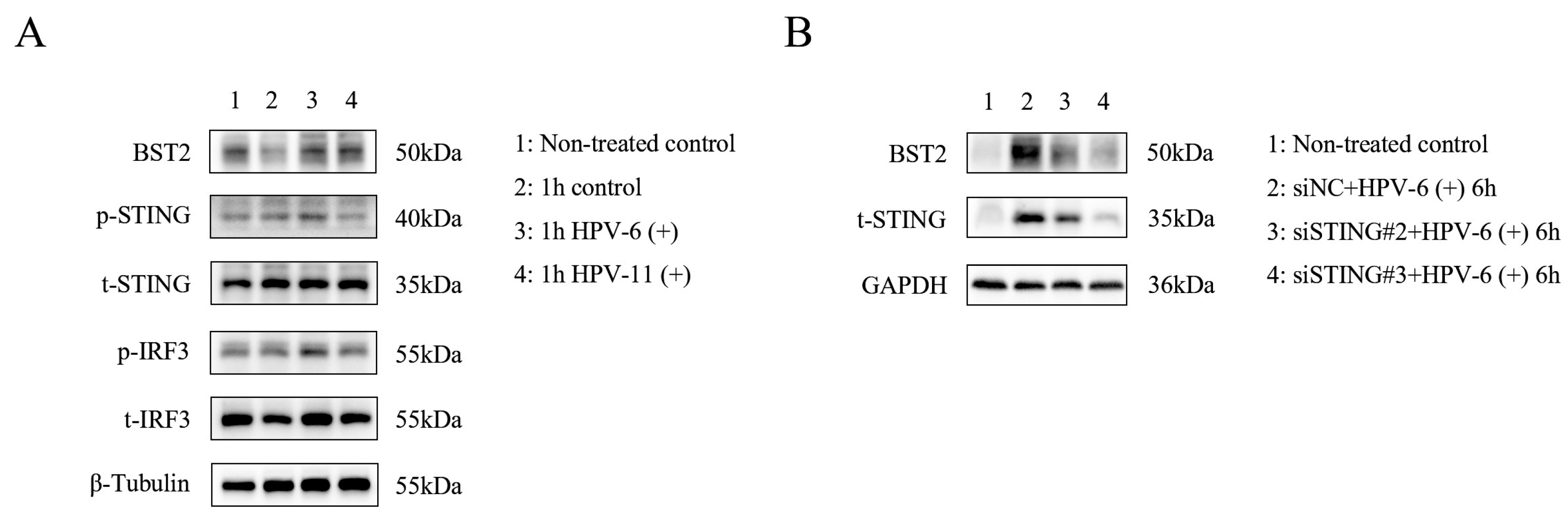
3.3. HPV Infection Induces BST2 Expression in Keratinocytes Through the cGAS/STING Signal Pathway
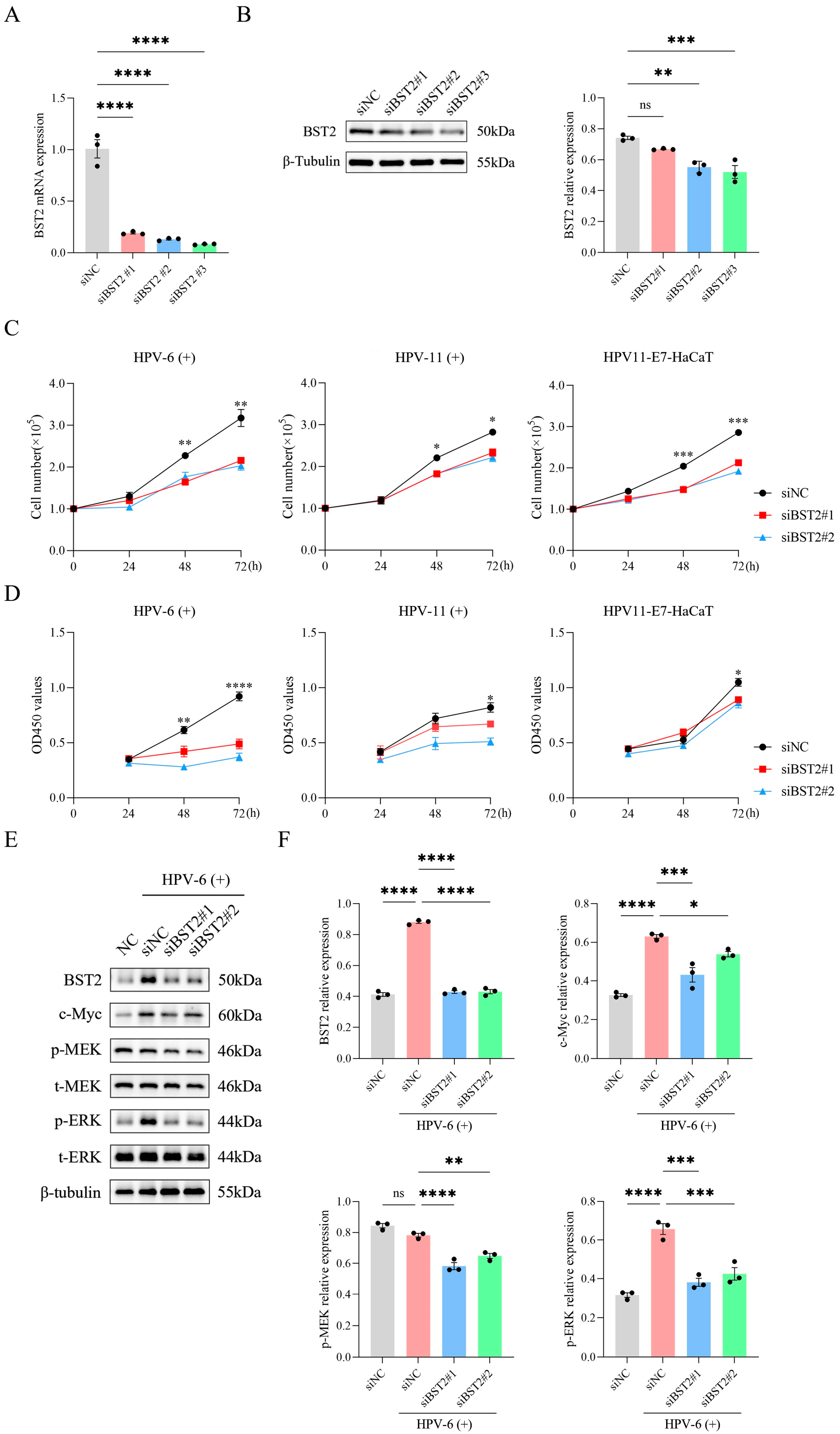
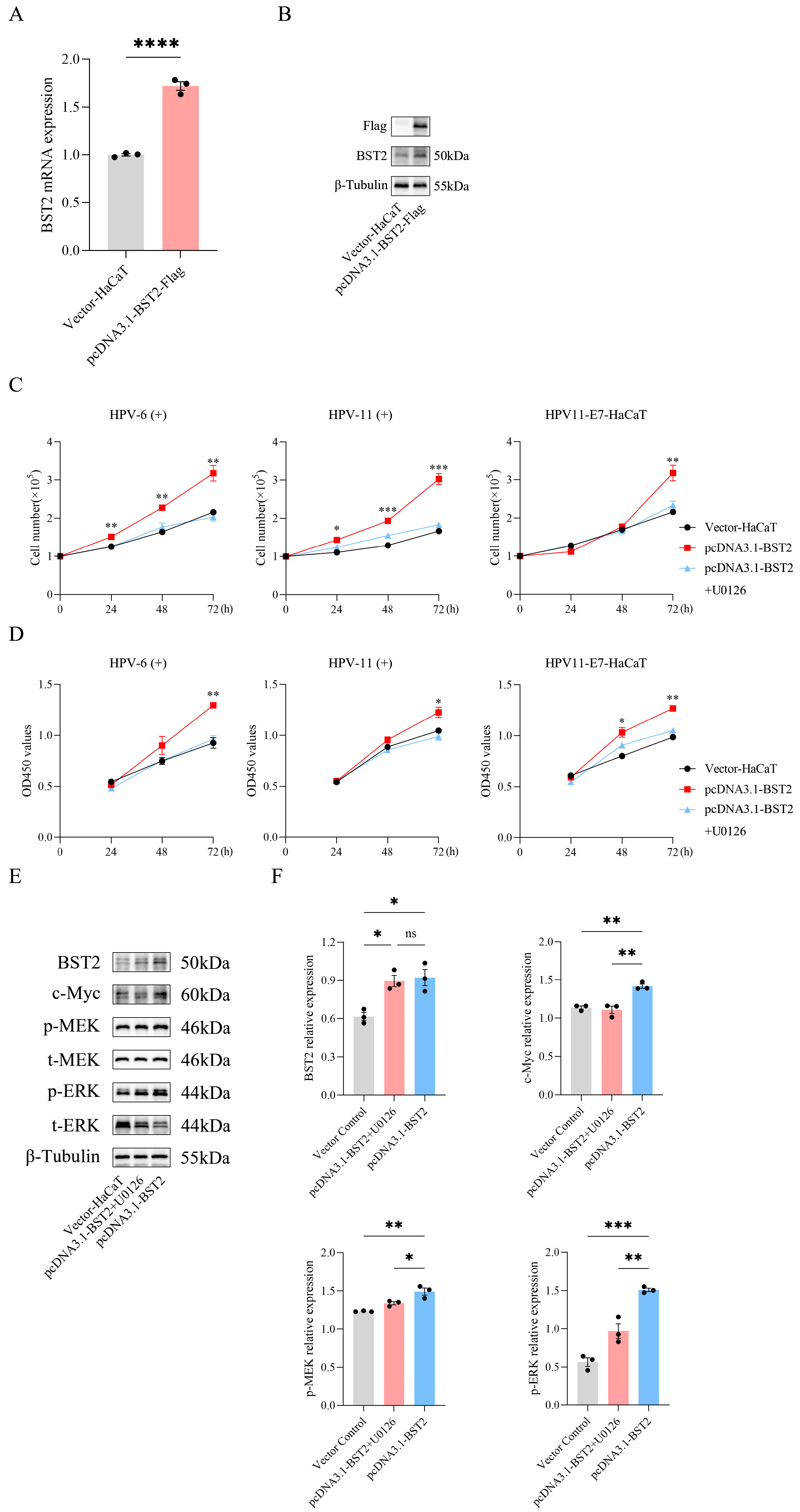
3.4. BST2 Promoted the Proliferation of Keratinocytes
3.5. Enhanced BST2 Promotes Keratinocyte’s Proliferation by Activating the MEK/ERK/c-Myc Signal Pathway
4. Discussion
5. Conclusions
Supplementary Materials
Author Contributions
Funding
Institutional Review Board Statement
Informed Consent Statement
Data Availability Statement
Acknowledgments
Conflicts of Interest
Abbreviations
| APC | Allophycocyanin |
| BST2 | Bone marrow stromal cell antigen 2 |
| CA | Condyloma acuminata |
| CCK-8 | Cell Counting Kit-8 |
| cGAS | Cyclic GMP–AMP synthase |
| DEGs | Differentially expressed genes |
| GEO | Gene Expression Omnibus |
| HPV | Human papillomavirus |
| ISGs | Interferon-stimulated genes |
| PAMP | Pathogen-associated molecular pattern |
| PRRs | Pattern recognition receptors |
| STING | Stimulator of interferon genes |
References
- Grennan, D. Genital warts. JAMA 2019, 321, 520. [Google Scholar] [CrossRef]
- Bhattacharjee, R.; Das, S.S.; Biswal, S.S.; Nath, A.; Das, D.; Basu, A.; Malik, S.; Kumar, L.; Kar, S.; Singh, S.K.; et al. Mechanistic role of HPV-associated early proteins in cervical cancer: Molecular pathways and targeted therapeutic strategies. Crit. Rev. Oncol./Hematol. 2022, 174, 103675. [Google Scholar] [CrossRef]
- Sindhuja, T.; Bhari, N.; Gupta, S. Asian guidelines for condyloma acuminatum. J. Infect. Chemother. 2022, 28, 845–852. [Google Scholar] [CrossRef] [PubMed]
- Plotzker, R.E.; Vaidya, A.; Pokharel, U.; Stier, E.A. Sexually transmitted human papillomavirus: Update in epidemiology, prevention, and management. Infect. Dis. Clin. North Am. 2023, 37, 289–310. [Google Scholar] [CrossRef]
- Widschwendter, A.; Böttcher, B.; Riedl, D.; Coban, S.; Mutz-Dehbalaie, I.; Matteucci Gothe, R.; Ciresa-König, A.; Marth, C.; Fessler, S. Recurrence of genitals warts in pre-HPV vaccine era after laser treatment. Arch. Gynecol. Obstet. 2019, 300, 661–668. [Google Scholar] [CrossRef]
- Giuliano, A.R.; Sirak, B.; Abrahamsen, M.; Silva, R.J.C.; Baggio, M.L.; Galan, L.; Cintra, R.C.; Lazcano-Ponce, E.; Villa, L.L. Genital wart recurrence among men residing in Brazil, Mexico, and the United States. J. Infect. Dis. 2019, 219, 703–710. [Google Scholar] [CrossRef]
- Mesev, E.V.; LeDesma, R.A.; Ploss, A. Decoding type I and III interferon signalling during viral infection. Nat. Microbiol. 2019, 4, 914–924. [Google Scholar] [CrossRef] [PubMed]
- Hopfner, K.P.; Hornung, V. Molecular mechanisms and cellular functions of cGAS–STING signalling. Nat. Rev. Mol. Cell Biol. 2020, 21, 501–521. [Google Scholar] [CrossRef] [PubMed]
- Doorbar, J.; Quint, W.; Banks, L.; Bravo, I.G.; Stoler, M.; Broker, T.R.; Stanley, M.A. The biology and life-cycle of human papillomaviruses. Vaccine 2012, 30, F55–F70. [Google Scholar] [CrossRef]
- Xie, J.; Zhang, P.; Crite, M.; DiMaio, D. Papillomaviruses go retro. Pathogens 2020, 9, 267. [Google Scholar] [CrossRef]
- Ivashkiv, L.B.; Donlin, L.T. Regulation of type I interferon responses. Nat. Rev. Immunol. 2014, 14, 36–49. [Google Scholar] [CrossRef]
- Au-Yeung, N.; Horvath, C.M. Transcriptional and chromatin regulation in interferon and innate antiviral gene expression. Cytokine Growth Factor Rev. 2018, 44, 11–17. [Google Scholar] [CrossRef]
- Timofeev, O.; Giron, P.; Lawo, S.; Pichler, M.; Noeparast, M. ERK pathway agonism for cancer therapy: Evidence, insights, and a target discovery framework. npj Precis. Oncol. 2024, 8, 70. [Google Scholar] [CrossRef] [PubMed]
- Song, Y.; Bi, Z.; Liu, Y.; Qin, F.; Wei, Y.; Wei, X. Targeting RAS–RAF–MEK–ERK signaling pathway in human cancer: Current status in clinical trials. Genes Dis. 2023, 10, 141–156. [Google Scholar] [CrossRef] [PubMed]
- Harada, T.; Ozaki, S.; Oda, A.; Tsuji, D.; Ikegame, A.; Iwasa, M.; Udaka, K.; Fujii, S.; Nakamura, S.; Miki, H.; et al. Combination with a defucosylated anti-HM1.24 monoclonal antibody plus lenalidomide induces marked ADCC against myeloma cells and their progenitors. PLoS ONE 2013, 8, e83905. [Google Scholar] [CrossRef]
- Ozaki, S.; Kosaka, M.; Wakatsuki, S.; Abe, M.; Koishihara, Y.; Matsumoto, T. Immunotherapy of multiple myeloma with a monoclonal antibody directed against a plasma cell-specific antigen, HM1.24. Blood 1997, 90, 3179–3186. [Google Scholar] [CrossRef] [PubMed]
- Mahauad-Fernandez, W.D.; Okeoma, C.M. Cysteine-linked dimerization of BST-2 confers anoikis resistance to breast cancer cells by negating proapoptotic activities to promote tumor cell survival and growth. Cell Death Dis. 2017, 8, e2687. [Google Scholar] [CrossRef]
- Zheng, C.; Wang, J.; Zhou, Y.; Duan, Y.; Zheng, R.; Xie, Y.; Wei, X.; Wu, J.; Shen, H.; Ye, M.; et al. IFNα-induced BST2+ tumor-associated macrophages facilitate immunosuppression and tumor growth in pancreatic cancer by ERK–CXCL7 signaling. Cell Rep. 2024, 43, 114088. [Google Scholar] [CrossRef]
- Mukai, S.; Oue, N.; Oshima, T.; Mukai, R.; Tatsumoto, Y.; Sakamoto, N.; Sentani, K.; Tanabe, K.; Egi, H.; Hinoi, T.; et al. Overexpression of transmembrane protein BST2 is associated with poor survival of patients with esophageal, gastric, or colorectal cancer. Ann. Surg. Oncol. 2017, 24, 594–602. [Google Scholar] [CrossRef]
- Sudarshan, S.R.; Schlegel, R.; Liu, X. Two conserved amino acids differentiate the biology of high-risk and low-risk HPV E5 proteins. J. Med. Virol. 2022, 94, 4565–4575. [Google Scholar] [CrossRef]
- Nasiri-Aghdam, M.; Garcia-Chagollan, M.; Pereira-Suarez, A.L.; Aguilar-Lemarroy, A.; Jave-Suarez, L.F. Splicing characterization and isoform switch events in human keratinocytes carrying oncogenes from high-risk HPV-16 and low-risk HPV-84. Int. J. Mol. Sci. 2023, 24, 8347. [Google Scholar] [CrossRef]
- Jones, R.N.; Miyauchi, S.; Roy, S.; Boutros, N.; Mayadev, J.S.; Mell, L.K.; Califano, J.A.; Venuti, A.; Sharabi, A.B. Computational and AI-driven 3D structural analysis of human papillomavirus (HPV) oncoproteins E5, E6, and E7 reveal significant divergence of HPV E5 between low-risk and high-risk genotypes. Virology 2024, 590, 109946. [Google Scholar] [CrossRef] [PubMed]
- Aranda-Rivera, A.K.; Cruz-Gregorio, A.; Briones-Herrera, A.; Pedraza-Chaverri, J. Regulation of autophagy by high- and low-risk human papillomaviruses. Rev. Med. Virol. 2021, 31, e2169. [Google Scholar] [CrossRef]
- Murakami, I.; Egawa, N.; Griffin, H.; Yin, W.; Kranjec, C.; Nakahara, T.; Kiyono, T.; Doorbar, J. Roles for E1-independent replication and E6-mediated p53 degradation during low-risk and high-risk human papillomavirus genome maintenance. PLoS Pathog. 2019, 15, e1007755. [Google Scholar] [CrossRef]
- Thomas, M.; Banks, L. The biology of papillomavirus PDZ associations: What do they offer papillomaviruses? Curr. Opin. Virol. 2021, 51, 119–126. [Google Scholar] [CrossRef]
- Streicher, F.; Jouvenet, N. Stimulation of innate immunity by host and viral RNAs. Trends Immunol. 2019, 40, 1134–1148. [Google Scholar] [CrossRef] [PubMed]
- Wirusanti, N.I.; Baldridge, M.T.; Harris, V.C. Microbiota regulation of viral infections through interferon signaling. Trends Microbiol. 2022, 30, 778–792. [Google Scholar] [CrossRef]
- Shan, F.; Shen, S.; Wang, X.; Chen, G. BST2 regulated by the transcription factor STAT1 can promotes metastasis, invasion and proliferation of oral squamous cell carcinoma via the AKT/ERK1/2 signaling pathway. Int. J. Oncol. 2023, 62, 54. [Google Scholar] [CrossRef] [PubMed]
- Liu, W.; Cao, Y.; Guan, Y.; Zheng, C. BST2 promotes cell proliferation, migration and induces NF-κB activation in gastric cancer. Biotechnol. Lett. 2018, 40, 1015–1027. [Google Scholar] [CrossRef]
- Welbourn, S.; Kao, S.; Du Pont, K.E.; Andrew, A.J.; Berndsen, C.E.; Strebel, K. Positioning of cysteine residues within the N-terminal portion of the BST-2/tetherin ectodomain is important for functional dimerization of BST-2. J. Biol. Chem. 2015, 290, 3740–3751. [Google Scholar] [CrossRef]
- Arias, J.F.; Iwabu, Y.; Tokunaga, K. Structural basis for the antiviral activity of BST-2/tetherin and its viral antagonism. Front. Microbiol. 2011, 2, 250. [Google Scholar] [CrossRef] [PubMed]
- Andrew, A.J.; Miyagi, E.; Kao, S.; Strebel, K. The formation of cysteine-linked dimers of BST-2/tetherin is important for inhibition of HIV-1 virus release but not for sensitivity to Vpu. Retrovirology 2009, 6, 80. [Google Scholar] [CrossRef]
- Schubert, H.L.; Zhai, Q.; Sandrin, V.; Eckert, D.M.; Garcia-Maya, M.; Saul, L.; Sundquist, W.I.; Steiner, R.A.; Hill, C.P. Structural and functional studies on the extracellular domain of BST2/tetherin in reduced and oxidized conformations. Proc. Natl. Acad. Sci. USA 2010, 107, 17951–17956. [Google Scholar] [CrossRef]
- Hinz, A.; Miguet, N.; Natrajan, G.; Usami, Y.; Yamanaka, H.; Renesto, P.; Hartlieb, B.; McCarthy, A.A.; Simorre, J.P.; Göttlinger, H.; et al. Structural basis of HIV-1 tethering to membranes by the BST-2/tetherin ectodomain. Cell Host Microbe 2010, 7, 314–323. [Google Scholar] [CrossRef] [PubMed]
- Yang, H.; Wang, J.; Jia, X.; McNatt, M.W.; Zang, T.; Pan, B.; Meng, W.; Wang, H.W.; Bieniasz, P.D.; Xiong, Y. Structural insight into the mechanisms of enveloped virus tethering by tetherin. Proc. Natl. Acad. Sci. USA 2010, 107, 18428–18432. [Google Scholar] [CrossRef]
- Neil, S.J.; Zang, T.; Bieniasz, P.D. Tetherin inhibits retrovirus release and is antagonized by HIV-1 Vpu. Nature 2008, 451, 425–430. [Google Scholar] [CrossRef]
- Reuschenbach, M.; Doorbar, J.; Del Pino, M.; Joura, E.A.; Walker, C.; Drury, R.; Rauscher, A.; Saah, A.J. Prophylactic HPV vaccines in patients with HPV-associated diseases and cancer. Vaccine 2023, 41, 6194–6205. [Google Scholar] [CrossRef] [PubMed]


Disclaimer/Publisher’s Note: The statements, opinions and data contained in all publications are solely those of the individual author(s) and contributor(s) and not of MDPI and/or the editor(s). MDPI and/or the editor(s) disclaim responsibility for any injury to people or property resulting from any ideas, methods, instructions or products referred to in the content. |
© 2026 by the authors. Licensee MDPI, Basel, Switzerland. This article is an open access article distributed under the terms and conditions of the Creative Commons Attribution (CC BY) license.
Share and Cite
Huang, H.; Liu, L.; Xie, X.; Cao, Y.; Gu, Z. cGAS-STING Pathway-Induced BST2 Enhances HPV-Infected Keratinocyte Proliferation in Condyloma Acuminata. Biomedicines 2026, 14, 339. https://doi.org/10.3390/biomedicines14020339
Huang H, Liu L, Xie X, Cao Y, Gu Z. cGAS-STING Pathway-Induced BST2 Enhances HPV-Infected Keratinocyte Proliferation in Condyloma Acuminata. Biomedicines. 2026; 14(2):339. https://doi.org/10.3390/biomedicines14020339
Chicago/Turabian StyleHuang, Huayu, Lian Liu, Xiaohang Xie, Yuchun Cao, and Zhichao Gu. 2026. "cGAS-STING Pathway-Induced BST2 Enhances HPV-Infected Keratinocyte Proliferation in Condyloma Acuminata" Biomedicines 14, no. 2: 339. https://doi.org/10.3390/biomedicines14020339
APA StyleHuang, H., Liu, L., Xie, X., Cao, Y., & Gu, Z. (2026). cGAS-STING Pathway-Induced BST2 Enhances HPV-Infected Keratinocyte Proliferation in Condyloma Acuminata. Biomedicines, 14(2), 339. https://doi.org/10.3390/biomedicines14020339