Article

An Exploratory Study of Machine Learning-Based Open-Angle Glaucoma Detection Using Specific Autoantibodies

1
Department of Ophthalmology, Tohoku University Graduate School of Medicine, Sendai 980-8574, Japan
2
Seiryo Eye Clinic, Sendai 980-0824, Japan
3
Taylor Family Institute for Innovative Psychiatric Research, Washington University School of Medicine, St. Louis, MO 63110, USA
4
Center for Brain Research in Mood Disorders, Washington University School of Medicine, St. Louis, MO 63110, USA
5
Department of Psychiatry, Washington University School of Medicine, St. Louis, MO 63110, USA
6
Department of Advanced Ophthalmic Medicine, Tohoku University Graduate School of Medicine, Sendai 980-8574, Japan
7
Department of Retinal Disease Control, Ophthalmology, Tohoku University Graduate School of Medicine, Sendai 980-8574, Japan
8
ProteoBridge Co., Tokyo 135-0064, Japan
9
Molecular Profiling Research Center for Drug Discovery, National Institute of Advanced Industrial Science and Technology (AIST), Tokyo 135-0064, Japan
10
Cellular and Molecular Biotechnology Research Institute, National Institute of Advanced Industrial Science and Technology (AIST), Tsukuba 305-8566, Japan
11
Ophthalmic Innovation Center, Santen Pharmaceutical Co., Ltd., Osaka 530-0011, Japan
12
Product Development Division, Santen Pharmaceutical Co., Ltd., Nara 630-0101, Japan
13
Department of Ophthalmology, School of Medicine, Keio University, Shinjuku-ku 160-8582, Japan
14
Epidemiology and Prevention Group, Center for Public Health Sciences, National Cancer Center, Tokyo 104-0045, Japan
*
Author to whom correspondence should be addressed.
Biomedicines 2025, 13(12), 3031; https://doi.org/10.3390/biomedicines13123031

Submission received: 29 September 2025 / Revised: 2 December 2025 / Accepted: 9 December 2025 / Published: 10 December 2025
(This article belongs to the Special Issue Glaucoma: New Diagnostic and Therapeutic Approaches, 3rd Edition)

Abstract

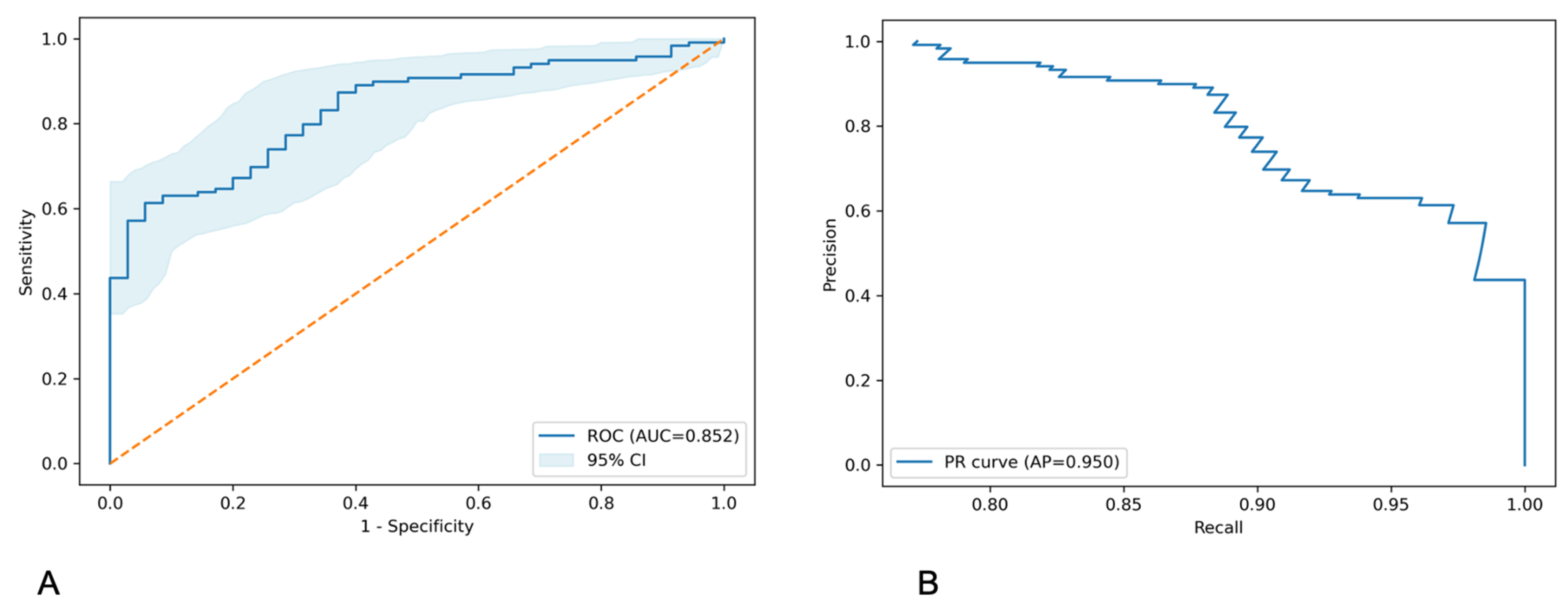
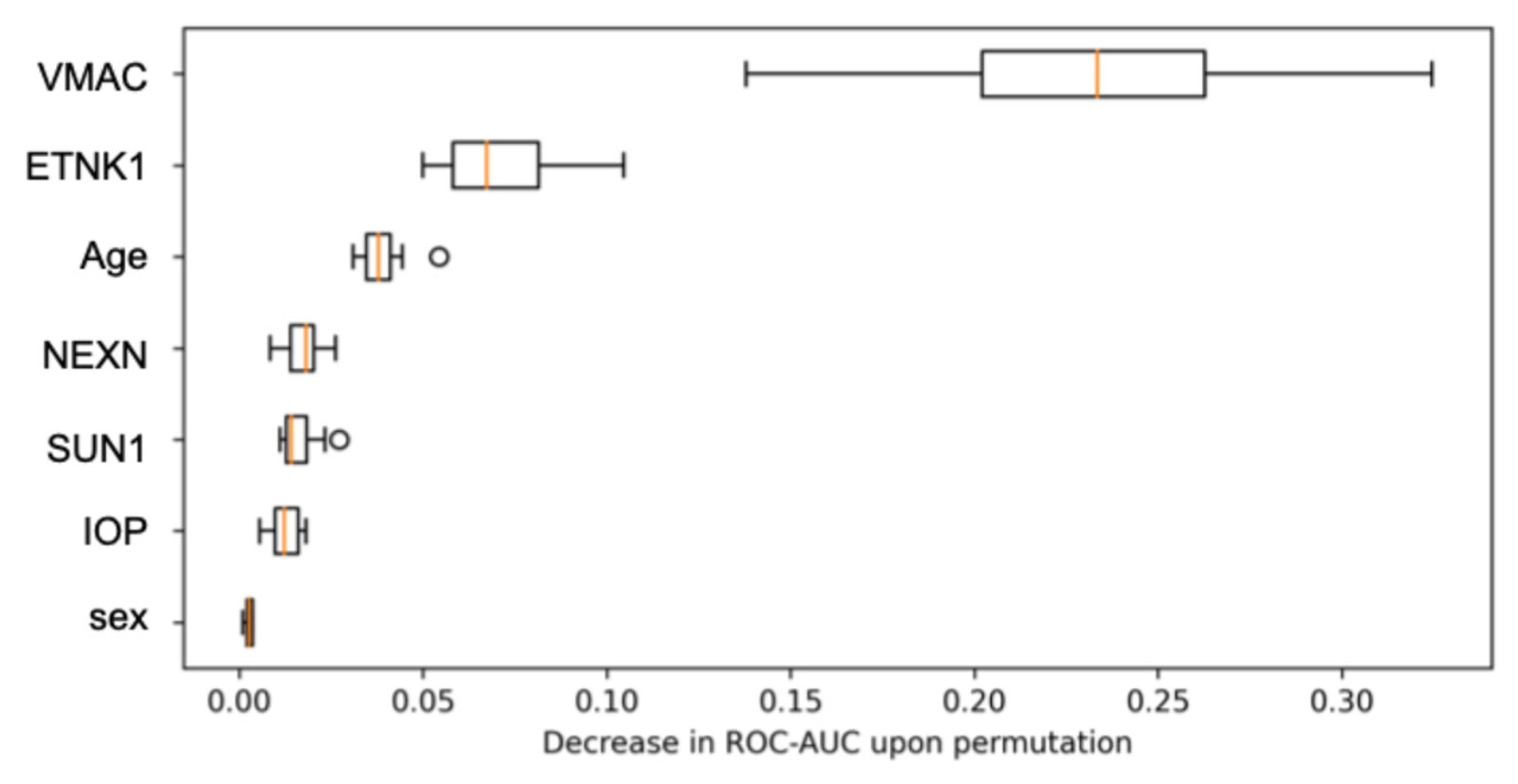
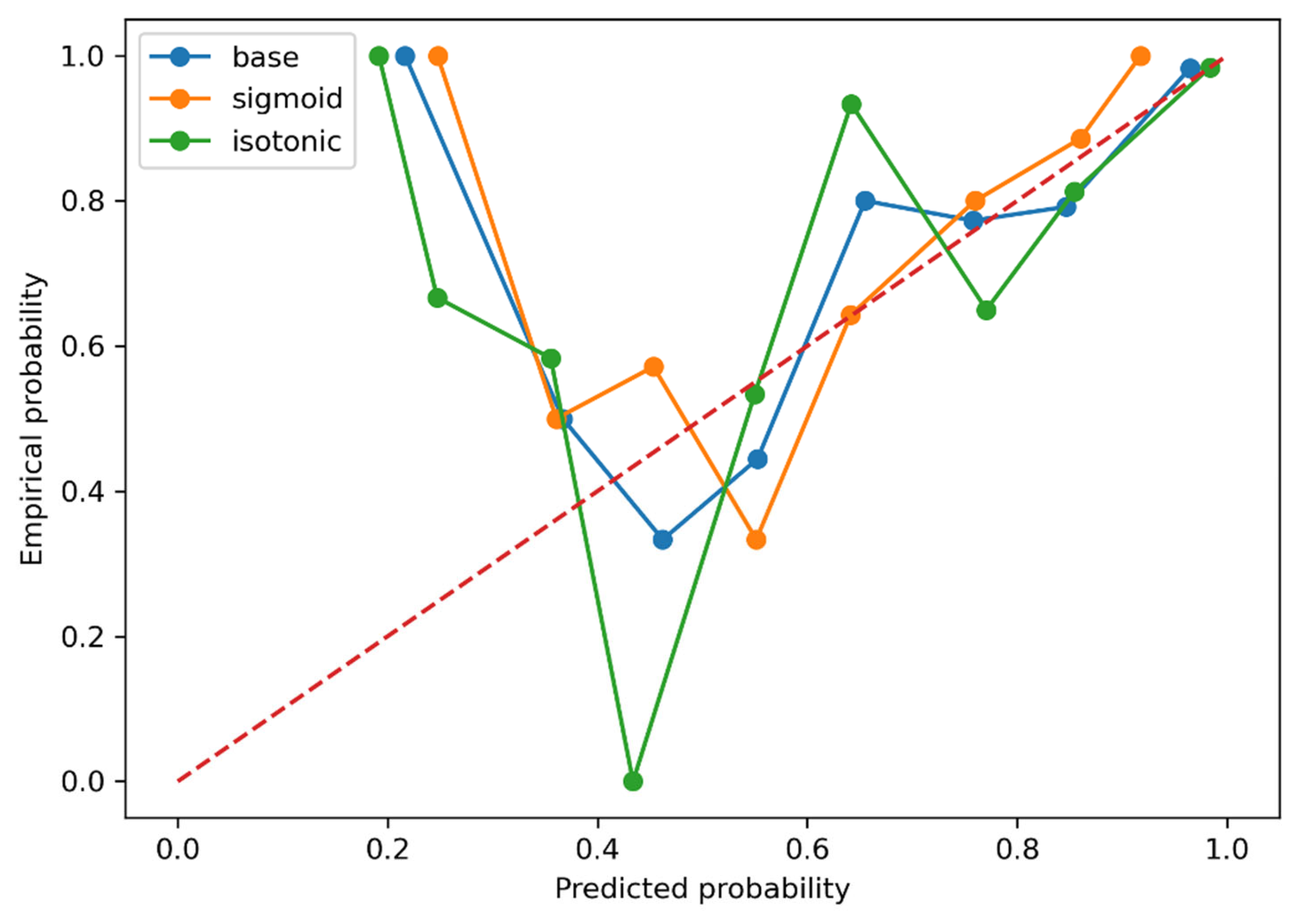
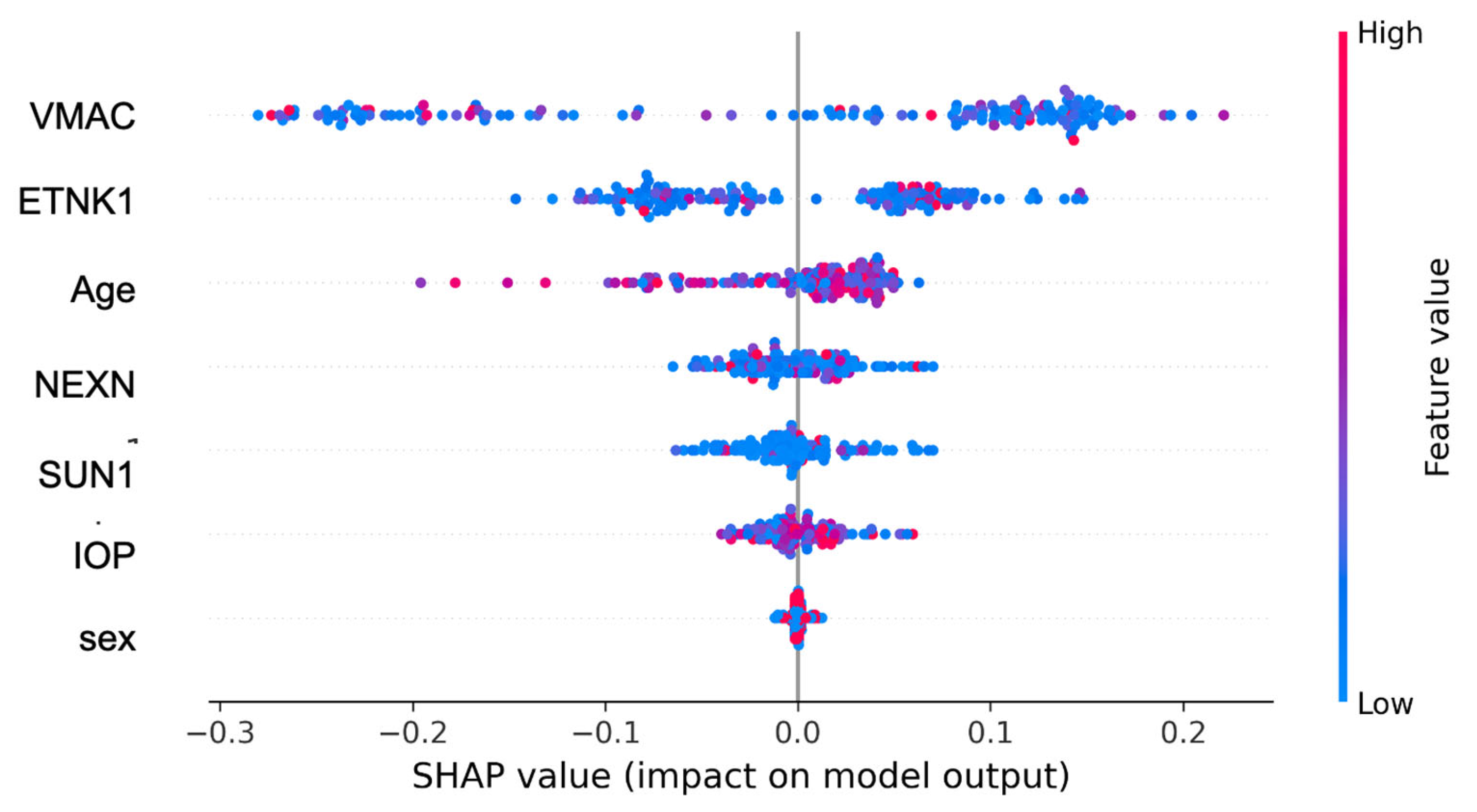
Objectives: Previously, we identified four open-angle glaucoma (OAG)-associated autoantibodies (anti-ETNK1, anti-VMAC, anti-NEXN, and anti-SUN1) using proteome-wide autoantibody screening by wet protein arrays. The objective of this exploratory study was to evaluate the diagnostic performance of these four glaucoma-associated autoantibodies using automated machine learning. Methods: Plasma samples from 119 patients with OAG and 35 patients with cataracts as controls were enrolled for the study. All machine-learning analyses were performed in Python 3.9.16 (GCC 11.2.0) using scikit-learn 1.2.2 and PyCaret 3.0.1. Variables included plasma levels of the autoantibodies, age, sex, and intra-ocular pressure (IOP). Probability calibration (Platt/sigmoid and isotonic) was assessed with reliability curves and Brier scores. Model explainability was examined with permutation importance, SHAP values, and an ablation analysis removing one autoantibody at a time. Results: The tuned random forest achieved an out-of-fold (OOF) area under the receiver-operating characteristic curve (ROC–AUC) of 0.852 (±0.040), an average precision (AP) of 0.950, and an F1 score of 0.865. Isotonic mapping improved agreement between predicted and empirical probabilities. Among these four autoantibodies, VMAC was the most important factor for the model’s prediction. Conclusions: A machine learning model using four autoantibodies from blood samples showed potential for diagnosing OAG.
Keywords: autoantibody; open-angle glaucoma; diagnosis; machine learning autoantibody; open-angle glaucoma; diagnosis; machine learning