Hypoxia-Induced Extracellular Vesicles and Non-Coding RNAs in Cancer: A Systematic Review of Tumor Dynamics and Therapeutic Implications in Preclinical Animal Models
 ,
,  , ,
, ,  , , , , and
Abstract
1. Introduction
2. Material and Methods
2.1. Eligibility Criteria
2.2. Search Information
2.3. Search Algorithms
- (“Hypoxia”[Mesh] OR Oxygen Deficiencies OR Oxygen Deficiency OR Anoxemia) AND (“Neoplasms”[Mesh] OR Tumors OR Neoplasia OR Neoplasias OR Neoplasm OR Tumor OR Cancer OR Cancers OR Malignant Neoplasm OR Malignancy OR Malignancies OR Malignant Neoplasms OR Benign Neoplasms OR Benign Neoplasm) AND (“RNA, Circular”[Mesh] OR circRNA OR circRNAs OR Circular RNA OR Circular RNAs OR Closed Circular RNA OR Circular Intronic RNA OR ciRNA).
- (“Neoplasms”[Mesh] OR Tumors OR Neoplasia OR Neoplasias OR Neoplasm OR Tumor OR Cancer OR Cancers OR Malignant Neoplasm OR Malignancy OR Malignancies OR Malignant Neoplasms OR Benign Neoplasms OR Benign Neoplasm) AND (“Hypoxia”[Mesh] OR Oxygen Deficiencies OR Oxygen Deficiency OR Anoxemia) AND (“Extracellular Vesicles”[Mesh] OR Extracellular Vesicle OR Exovesicles OR Exovesicle OR Apoptotic Bodies OR Apoptotic Body) AND (“MicroRNAs”[Mesh] OR Micro RNA OR MicroRNA OR miRNA OR miRNAs OR Small Temporal RNA OR stRNA OR Primary MicroRNA OR pri-miRNA OR pri miRNA OR Primary miRNA OR pre-miRNA OR pre miRNA) AND (“RNA, Circular”[Mesh] OR circRNA OR circRNAs OR Circular RNA OR Circular RNAs OR Closed Circular RNA OR Circular Intronic RNA OR ciRNA).
2.4. Study Selection
2.5. Data Extraction
2.6. Risk of Bias in Individual Studies
2.7. Characteristics of Studies
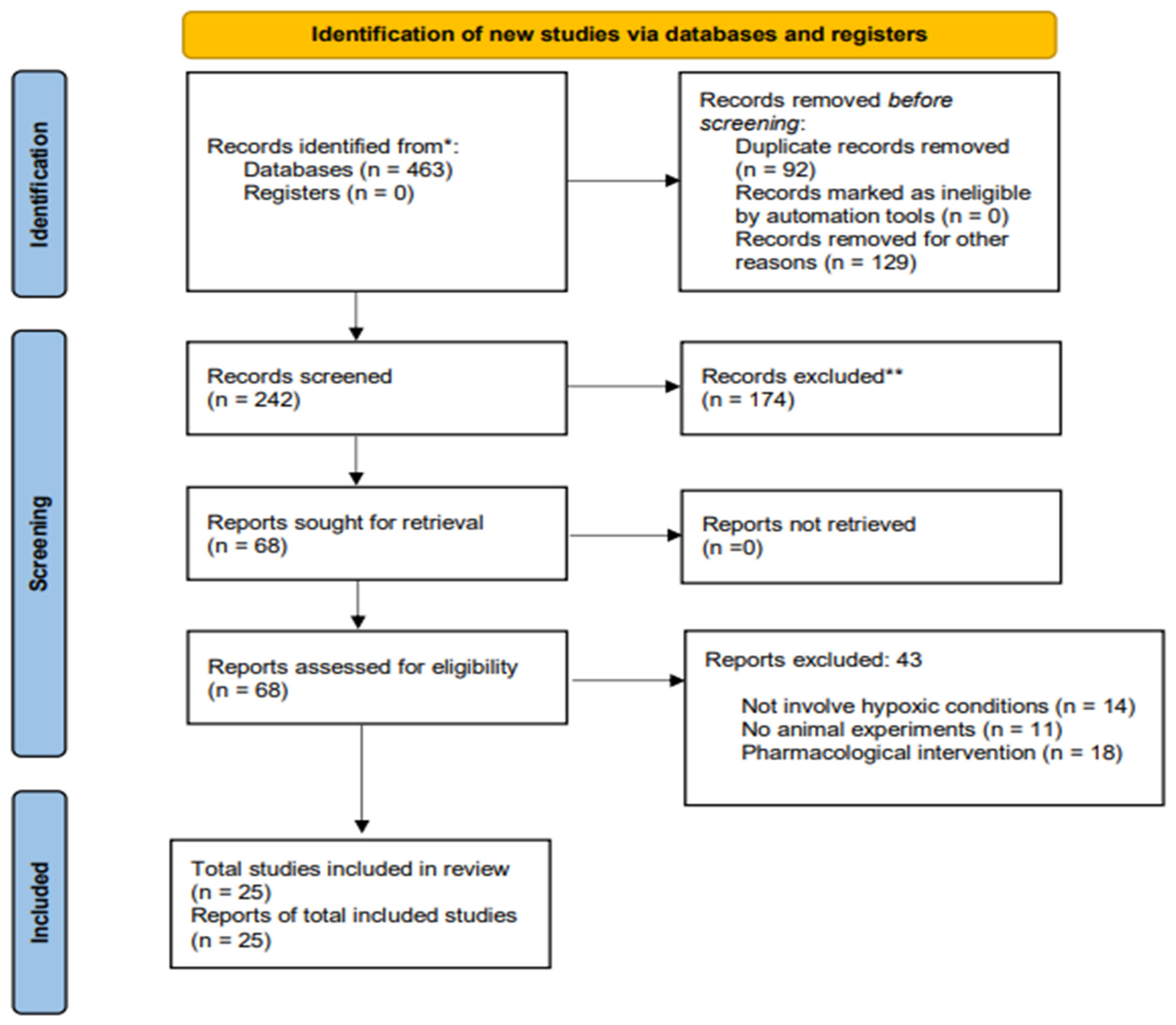
3. Results
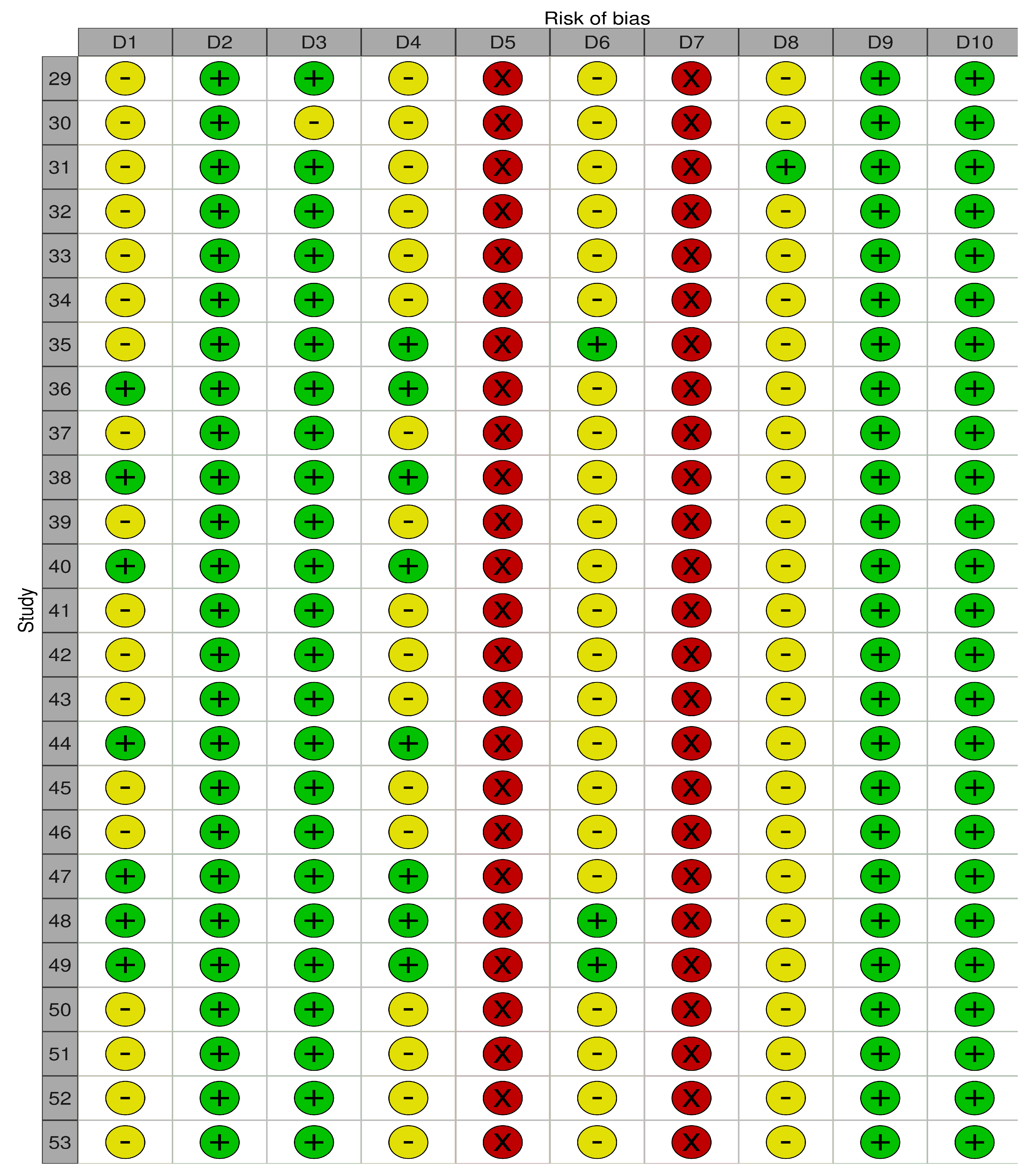
Risk of Bias
4. Discussion
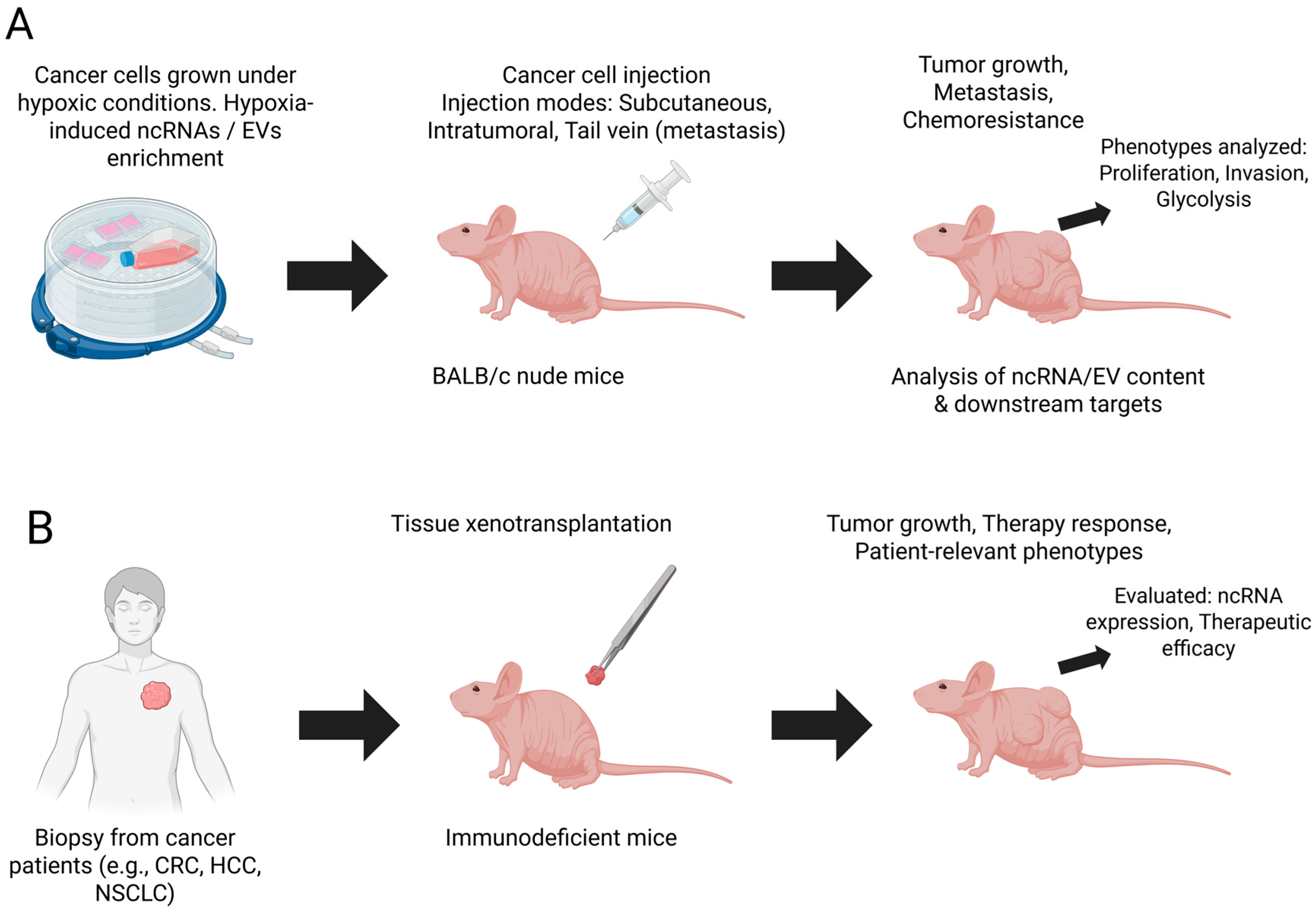
4.1. Animal Models in Hypoxia and Cancer Research
4.2. Choosing the Animal Model for Experimentation
4.3. Applicability and Limitations of Animal Models
4.4. Limits and Challenges
- Tumor heterogeneity: The overall structure and properties of a tumor are determined by the diversity of cell types and gene expression in each tissue. Although cell cultures are clonal, animal models are more complex and do not represent the full biological spectrum of human tumors.
- Immune responses: The mouse immune system differs from the human immune system, thereby restricting the applicability of the results, particularly regarding hypoxia and its effects on immune modulation.
- Impairment of the immune system over the total functional capacity in mice was noted in time-limited studies [46,49]. These studies have examples that vary in time to hypoxic extent and its efficiency and efficacy, while prolonged exposure at regular intervals has been advocated [35]. Although helpful in creating a model for recurrent hypoxia, this intermittency may only partially simulate chronic hypoxia, which varies in degree and duration, as observed in the dynamic fluctuations of most human TMEs.
- Long-term exposure and its consequences: Using 6-week intermittent hypoxic exposure in rats provides critical insights into long-term changes. Such changes are, for example, in tumor vascularization, cellular metabolism, and invasive behavior. One limitation of this model is that it may ignore certain factors that are more critical in a clinical setting, such as the presence of auditory sound gradients or interactions with specific therapies.
4.5. Clinical Implications and Therapeutic Perspectives
4.6. Breast Cancer
4.7. Colorectal Cancer (CRC)
4.8. Lung Cancer
4.9. Hepatocellular Carcinoma (HCC)
4.10. Gastric Cancer
4.11. Pancreatic Cancer
4.12. Other Malignancies
4.13. Esophageal Cancer
4.14. Bladder Cancer
4.15. Osteosarcoma
4.16. Glioma
4.17. Limitations and Challenges
4.18. Future Perspectives
5. Conclusions
Supplementary Materials
Author Contributions
Funding
Institutional Review Board Statement
Informed Consent Statement
Data Availability Statement
Acknowledgments
Conflicts of Interest
Abbreviations
| circRNAs | circular RNAs |
| CRC | Colorectal cancer |
| EVs | Extracellular vesicles |
| GC | Gastric cancer |
| HCC | Hepatocellular carcinoma |
| HIFs | Hypoxia-inducible transcription factors |
| lncRNAs | long non-coding RNAs |
| miRNAs | microRNAs |
| ncRNAs | non-coding RNAs |
| NCG | NOD-Prkdc scid IL2rg null mice |
| NOD-SCID | non-obese diabetic severe combined immunodeficiency |
| NSCLC | Non-small cell lung cancer |
| OS | Osteosarcoma |
| PC | Pancreatic cancer |
| piRNAs | Piwi-interacting RNAs |
| PRISMA | Preferred Items for Reporting of Systematic Reviews and Meta-Analyses |
| SYRCLE | Systematic Review Centre for Laboratory Animal Experimentation |
| TME | tumor microenvironment |
References
- Plutynski, A. How is cancer complex? Eur. J. Philos. Sci. 2021, 11, 55. [Google Scholar] [CrossRef]
- Yan, H.; Bu, P. Non-coding RNA in cancer. Essays Biochem. 2021, 65, 625–639. [Google Scholar] [CrossRef] [PubMed]
- ENCODE Project Consortium. An integrated encyclopedia of DNA elements in the human genome. Nature 2012, 489, 57–74. [Google Scholar] [CrossRef] [PubMed] [PubMed Central]
- Zhang, F.; Jiang, J.; Qian, H.; Yan, Y.; Xu, W. Exosomal circRNA: Emerging insights into cancer progression and clinical application potential. J. Hematol. Oncol. 2023, 16, 67. [Google Scholar] [CrossRef]
- Taverna, S.; Masucci, A.; Cammarata, G. PIWI-RNAs Small Noncoding RNAs with Smart Functions: Potential Theranostic Applications in Cancer. Cancers 2023, 15, 3912. [Google Scholar] [CrossRef] [PubMed] [PubMed Central]
- Wang, H.; Meng, Q.; Qian, J.; Li, M.; Gu, C.; Yang, Y. Review: RNA-based diagnostic markers discovery and therapeutic targets development in cancer. Pharmacol. Ther. 2022, 234, 108123. [Google Scholar] [CrossRef] [PubMed]
- Toden, S.; Zumwalt, T.J.; Goel, A. Non-coding RNAs and potential therapeutic targeting in cancer. Biochim. Biophys. Acta Rev. Cancer 2021, 1875, 188491. [Google Scholar] [CrossRef] [PubMed] [PubMed Central]
- Cowland, J.B.; Hother, C.; Grønbæk, K. MicroRNAs and cancer. APMIS 2007, 115, 1090–1106. [Google Scholar] [CrossRef]
- Zhang, Q.; Sun, P.; Hu, G.; Yu, X.; Zhang, W.; Feng, X.; Yu, L.; Zhang, P. Circular Nucleic Acids Act as an Oncogenic MicroRNA Sponge to Inhibit Hepatocellular Carcinoma Progression. Biomedicines 2025, 13, 1171. [Google Scholar] [CrossRef]
- Ye, Y.; Hu, Q.; Chen, H.; Liang, K.; Yuan, Y.; Xiang, Y.; Ruan, H.; Zhang, Z.; Song, A.; Zhang, H.; et al. Characterization of Hypoxia-associated Molecular Features to Aid Hypoxia-Targeted Therapy. Nat. Metab. 2019, 1, 431–444. [Google Scholar] [CrossRef] [PubMed] [PubMed Central]
- Huang, Y.; Lin, D.; Taniguchi, C.M. Hypoxia inducible factor (HIF) in the tumor microenvironment: Friend or foe? Sci. China Life Sci. 2017, 60, 1114–1124. [Google Scholar] [CrossRef] [PubMed] [PubMed Central]
- Nardinocchi, L.; Puca, R.; Sacchi, A.; D’Orazi, G. Inhibition of HIF-1alpha activity by homeodomain-interacting protein kinase-2 correlates with sensitization of chemoresistant cells to undergo apoptosis. Mol. Cancer 2009, 8, 1. [Google Scholar] [CrossRef] [PubMed] [PubMed Central]
- Sullivan, R.; Paré, G.C.; Frederiksen, L.J.; Semenza, G.L.; Graham, C.H. Hypoxia-induced resistance to anticancer drugs is associated with decreased senescence and requires hypoxia-inducible factor-1 activity. Mol. Cancer Ther. 2008, 7, 1961–1973. [Google Scholar] [CrossRef] [PubMed]
- Xu, R.H.; Pelicano, H.; Zhou, Y.; Carew, J.S.; Feng, L.; Bhalla, K.N.; Keating, M.J.; Huang, P. Inhibition of glycolysis in cancer cells: A novel strategy to overcome drug resistance associated with mitochondrial respiratory defect and hypoxia. Cancer Res. 2025, 65, 613–621. [Google Scholar] [CrossRef] [PubMed]
- Jing, X.; Yang, F.; Shao, C.; Wei, K.; Xie, M.; Shen, H.; Shu, Y. Role of hypoxia in cancer therapy by regulating the tumor microenvironment. Mol. Cancer 2019, 18, 157. [Google Scholar] [CrossRef] [PubMed] [PubMed Central]
- Infantino, V.; Santarsiero, A.; Convertini, P.; Todisco, S.; Iacobazzi, V. Cancer Cell Metabolism in Hypoxia: Role of HIF-1 as Key Regulator and Therapeutic Target. Int. J. Mol. Sci. 2021, 22, 5703. [Google Scholar] [CrossRef] [PubMed] [PubMed Central]
- Colombo, M.; Raposo, G.; Théry, C. Biogenesis, secretion, and intercellular interactions of exosomes and other extracellular vesicles. Annu. Rev. Cell Dev. Biol. 2014, 30, 255–289. [Google Scholar] [CrossRef] [PubMed]
- Taverna, S.; Giusti, I.; D’Ascenzo, S.; Pizzorno, L.; Dolo, V. Breast Cancer Derived Extracellular Vesicles in Bone Metastasis Induction and Their Clinical Implications as Biomarkers. Int. J. Mol. Sci. 2020, 21, 3573. [Google Scholar] [CrossRef] [PubMed] [PubMed Central]
- Mashouri, L.; Yousefi, H.; Aref, A.R.; Ahadi, A.M.; Molaei, F.; Alahari, S.K. Exosomes: Composition, biogenesis, and mechanisms in cancer metastasis and drug resistance. Mol. Cancer 2019, 18, 75. [Google Scholar] [CrossRef] [PubMed] [PubMed Central]
- Jeppesen, D.K.; Zhang, Q.; Franklin, J.L.; Coffey, R.J. Extracellular vesicles and nanoparticles: Emerging complexities. Trends Cell Biol. 2023, 33, 667–681. [Google Scholar] [CrossRef] [PubMed]
- Bister, N.; Pistono, C.; Huremagic, B.; Jolkkonen, J.; Giugno, R.; Malm, T. Hypoxia and extracellular vesicles: A review on methods, vesicular cargo and functions. J. Extracell. Vesicles 2020, 10, e12002. [Google Scholar] [CrossRef] [PubMed]
- Eguchi, T.; Sheta, M.; Fujii, M.; Calderwood, S.K. Cancer extracellular vesicles, tumoroid models, and tumor microenvironment. Semin. Cancer Biol. 2022, 86, 112–126. [Google Scholar] [CrossRef] [PubMed]
- Di Bella, M.A.; Taverna, S. Extracellular Vesicles: Diagnostic and Therapeutic Applications in Cancer. Biology 2024, 13, 716. [Google Scholar] [CrossRef] [PubMed] [PubMed Central]
- Osaid, Z.; Haider, M.; Hamoudi, R.; Harati, R. Exosomes Interactions with the Blood-Brain Barrier: Implications for Cerebral Disorders and Therapeutics. Int. J. Mol. Sci. 2023, 24, 15635. [Google Scholar] [CrossRef] [PubMed] [PubMed Central]
- He, B.; Zhao, Z.; Cai, Q.; Zhang, Y.; Zhang, P.; Shi, S.; Xie, H.; Peng, X.; Yin, W.; Tao, Y.; et al. miRNA-based biomarkers, therapies, and resistance in Cancer. Int. J. Biol. Sci. 2020, 16, 2628–2647. [Google Scholar] [CrossRef] [PubMed] [PubMed Central]
- Coan, M.; Haefliger, S.; Ounzain, S.; Johnson, R. Targeting and engineering long non-coding RNAs for cancer therapy. Nat. Rev. Genet. 2024, 25, 578–595. [Google Scholar] [CrossRef] [PubMed]
- Moher, D.; Shamseer, L.; Clarke, M.; Ghersi, D.; Liberati, A.; Petticrew, M.; Shekelle, P.; Stewart, L.A.; PRISMA-P Group. Preferred reporting items for systematic review and meta-analysis protocols (PRISMA-P) 2015 statement. Syst. Rev. 2015, 4, 1. [Google Scholar] [CrossRef] [PubMed] [PubMed Central]
- Hooijmans, C.R.; Rovers, M.M.; de Vries, R.B.; Leenaars, M.; Ritskes-Hoitinga, M.; Langendam, M.W. SYRCLE’s risk of bias tool for animal studies. BMC Med. Res. Methodol. 2014, 14, 43. [Google Scholar] [CrossRef] [PubMed] [PubMed Central]
- Chen, H.; Yang, R.; Xing, L.; Wang, B.; Liu, D.; Ou, X.; Deng, Y.; Jiang, R.; Chen, J. Hypoxia-inducible CircPFKFB4 Promotes Breast Cancer Progression by Facilitating the CRL4DDB2 E3 Ubiquitin Ligase-mediated p27 Degradation. Int. J. Biol. Sci. 2022, 18, 3888–3907. [Google Scholar] [CrossRef] [PubMed] [PubMed Central]
- Qiu, Z.; Wang, L.; Liu, H. Hsa_circ_0001982 promotes the progression of breast cancer through miR-1287-5p/MUC19 axis under hypoxia. World J. Surg. Oncol. 2021, 19, 161. [Google Scholar] [CrossRef] [PubMed] [PubMed Central]
- Ren, S.; Liu, J.; Feng, Y.; Li, Z.; He, L.; Li, L.; Cao, X.; Wang, Z.; Zhang, Y. Knockdown of circDENND4C inhibits glycolysis, migration and invasion by up-regulating miR-200b/c in breast cancer under hypoxia. J. Exp. Clin. Cancer Res. 2019, 38, 388. [Google Scholar] [CrossRef] [PubMed] [PubMed Central]
- Yang, R.; Chen, H.; Xing, L.; Wang, B.; Hu, M.; Ou, X.; Chen, H.; Deng, Y.; Liu, D.; Jiang, R.; et al. Hypoxia-induced circWSB1 promotes breast cancer progression through destabilizing p53 by interacting with USP10. Mol. Cancer 2022, 21, 88. [Google Scholar] [CrossRef] [PubMed] [PubMed Central]
- Yang, H.; Zhang, H.; Yang, Y.; Wang, X.; Deng, T.; Liu, R.; Ning, T.; Bai, M.; Li, H.; Zhu, K.; et al. Hypoxia induced exosomal circRNA promotes metastasis of Colorectal Cancer via targeting GEF-H1/RhoA axis. Theranostics 2020, 10, 8211–8226, Erratum in Theranostics 2024, 14, 3081. [Google Scholar] [CrossRef] [PubMed] [PubMed Central]
- Yang, K.; Zhang, J.; Bao, C. Exosomal circEIF3K from cancer-associated fibroblast promotes colorectal cancer (CRC) progression via miR-214/PD-L1 axis. BMC Cancer 2021, 21, 933. [Google Scholar] [CrossRef] [PubMed] [PubMed Central]
- Shi, L.; Tao, C.; Tang, Y.; Xia, Y.; Li, X.; Wang, X. Hypoxia-induced hsa_circ_0000826 is linked to liver metastasis of colorectal cancer. J. Clin. Lab. Anal. 2020, 34, e23405. [Google Scholar] [CrossRef] [PubMed] [PubMed Central]
- Xiong, L.; Liu, H.S.; Zhou, C.; Yang, X.; Huang, L.; Jie, H.Q.; Zeng, Z.W.; Zheng, X.B.; Li, W.X.; Liu, Z.Z.; et al. A novel protein encoded by circINSIG1 reprograms cholesterol metabolism by promoting the ubiquitin-dependent degradation of INSIG1 in colorectal cancer. Mol. Cancer 2023, 22, 72. [Google Scholar] [CrossRef] [PubMed] [PubMed Central]
- Li, C.; Liu, H.; Niu, Q.; Gao, J. Circ_0000376, a Novel circRNA, Promotes the Progression of Non-Small Cell Lung Cancer Through Regulating the miR-1182/NOVA2 Network. Cancer Manag. Res. 2020, 12, 7635–7647. [Google Scholar] [CrossRef] [PubMed] [PubMed Central]
- Li, L.; Liu, D.; Chen, T.; Wei, C.; Qiao, Y.; Liu, W.; Liang, Y.; Liang, Z.; Chen, C.; Li, D.; et al. Hypoxia-enhanced YAP1-EIF4A3 interaction drives circ_0007386 circularization by competing with CRIM1 pre-mRNA linear splicing and promotes non-small cell lung cancer progression. J. Exp. Clin. Cancer Res. 2024, 43, 200. [Google Scholar] [CrossRef] [PubMed] [PubMed Central]
- Wang, D.; Wang, S.; Jin, M.; Zuo, Y.; Wang, J.; Niu, Y.; Zhou, Q.; Chen, J.; Tang, X.; Tang, W.; et al. Hypoxic Exosomal circPLEKHM1-Mediated Crosstalk between Tumor Cells and Macrophages Drives Lung Cancer Metastasis. Adv. Sci. 2024, 11, e2309857. [Google Scholar] [CrossRef] [PubMed] [PubMed Central]
- Wu, D.; Chen, T.; Zhao, X.; Huang, D.; Huang, J.; Huang, Y.; Huang, Q.; Liang, Z.; Chen, C.; Chen, M.; et al. HIF1α-SP1 interaction disrupts the circ-0001875/miR-31-5p/SP1 regulatory loop under a hypoxic microenvironment and promotes non-small cell lung cancer progression. J. Exp. Clin. Cancer Res. 2022, 41, 156. [Google Scholar] [CrossRef] [PubMed] [PubMed Central]
- Chen, Z.Q.; Zuo, X.L.; Cai, J.; Zhang, Y.; Han, G.Y.; Zhang, L.; Ding, W.Z.; Wu, J.D.; Wang, X.H. Hypoxia-associated circPRDM4 promotes immune escape via HIF-1alpha regulation of PD-L1 in hepatocellular carcinoma. Exp. Hematol. Oncol. 2023, 12, 17. [Google Scholar] [CrossRef] [PubMed] [PubMed Central]
- Du, Q.; Han, J.; Gao, S.; Zhang, S.; Pan, Y. Hypoxia-induced circular RNA hsa_circ_0008450 accelerates hepatocellular cancer progression via the miR-431/AKAP1 axis. Oncol. Lett. 2020, 20, 388. [Google Scholar] [CrossRef] [PubMed] [PubMed Central]
- Li, Q.; Pan, X.; Zhu, D.; Deng, Z.; Jiang, R.; Wang, X. Circular RNA MAT2B Promotes Glycolysis and Malignancy of Hepatocellular Carcinoma Through the miR-338-3p/PKM2 Axis Under Hypoxic Stress. Hepatology 2019, 70, 1298–1316. [Google Scholar] [CrossRef] [PubMed]
- Ouyang, X.; Yao, L.; Liu, G.; Liu, S.; Gong, L.; Xiao, Y. Loss of androgen receptor promotes HCC invasion and metastasis via activating circ-LNPEP/miR-532-3p/RAB9A signal under hypoxia. Biochem. Biophys. Res. Commun. 2021, 557, 26–32. [Google Scholar] [CrossRef] [PubMed]
- Chen, W.; Ji, Y. CircC6orf132 Facilitates Proliferation, Migration, Invasion, and Glycolysis of Gastric Cancer Cells Under Hypoxia by Acting on the miR-873-5p/PRKAA1 Axis. Front. Genet. 2021, 12, 636392. [Google Scholar] [CrossRef] [PubMed] [PubMed Central]
- Fang, X.; Bai, Y.; Zhang, L.; Ding, S. Silencing circSLAMF6 represses cell glycolysis, migration, and invasion by regulating the miR-204-5p/MYH9 axis in gastric cancer under hypoxia. Biosci. Rep. 2020, 40, BSR20201275. [Google Scholar] [CrossRef] [PubMed] [PubMed Central]
- Lin, J.; Wang, X.; Zhai, S.; Shi, M.; Peng, C.; Deng, X.; Fu, D.; Wang, J.; Shen, B. Hypoxia-induced exosomal circPDK1 promotes pancreatic cancer glycolysis via c-myc activation by modulating miR-628-3p/BPTF axis and degrading BIN1. J. Hematol. Oncol. 2022, 15, 128. [Google Scholar] [CrossRef] [PubMed] [PubMed Central]
- Zeng, Z.; Zhao, Y.; Chen, Q.; Zhu, S.; Niu, Y.; Ye, Z.; Hu, P.; Chen, D.; Xu, P.; Chen, J.; et al. Hypoxic exosomal HIF-1α-stabilizing circZNF91 promotes chemoresistance of normoxic pancreatic cancer cells via enhancing glycolysis. Oncogene 2021, 40, 5505–5517. [Google Scholar] [CrossRef] [PubMed]
- He, Z.; Cai, K.; Zeng, Z.; Lei, S.; Cao, W.; Li, X. Autophagy-associated circRNA circATG7 facilitates autophagy and promotes pancreatic cancer progression. Cell Death Dis. 2022, 13, 233. [Google Scholar] [CrossRef] [PubMed] [PubMed Central]
- Mao, Y.; Wang, J.; Wang, Y.; Fu, Z.; Dong, L.; Liu, J. Hypoxia induced exosomal Circ-ZNF609 promotes pre-metastatic niche formation and cancer progression via miR-150-5p/VEGFA and HuR/ZO-1 axes in esophageal squamous cell carcinoma. Cell Death Discov. 2024, 10, 133. [Google Scholar] [CrossRef] [PubMed] [PubMed Central]
- Su, Y.; Yang, W.; Jiang, N.; Shi, J.; Chen, L.; Zhong, G.; Bi, J.; Dong, W.; Wang, Q.; Wang, C.; et al. Hypoxia-elevated circELP3 contributes to bladder cancer progression and cisplatin resistance. Int. J. Biol. Sci. 2019, 15, 441–452. [Google Scholar] [CrossRef] [PubMed] [PubMed Central]
- Yang, J.; Liu, Z.; Liu, B.; Sun, L. Silencing of circCYP51A1 represses cell progression and glycolysis by regulating miR-490-3p/KLF12 axis in osteosarcoma under hypoxia. J. Bone Oncol. 2022, 37, 100455. [Google Scholar] [CrossRef] [PubMed] [PubMed Central]
- Zhang, X.H.; Song, Y.C.; Qiu, F.; Wang, Z.C.; Li, N.; Zhao, F.B. Hypoxic glioma cell-secreted exosomal circ101491 promotes the progression of glioma by regulating miR-125b-5p/EDN1. Brain Res. Bull. 2023, 195, 55–65. [Google Scholar] [CrossRef] [PubMed]
- Okada, S.; Vaeteewoottacharn, K.; Kariya, R. Establishment of a Patient-Derived Tumor Xenograft Model and Application for Precision Cancer Medicine. Chem. Pharm. Bull. 2018, 66, 225–230. [Google Scholar] [CrossRef] [PubMed]
- Okada, S.; Vaeteewoottacharn, K.; Kariya, R. Application of Highly Immunocompromised Mice for the Establishment of Patient-Derived Xenograft (PDX) Models. Cells 2019, 8, 889. [Google Scholar] [CrossRef] [PubMed] [PubMed Central]
- Korbecki, J.; Simińska, D.; Gąssowska-Dobrowolska, M.; Listos, J.; Gutowska, I.; Chlubek, D.; Baranowska-Bosiacka, I. Chronic and Cycling Hypoxia: Drivers of Cancer Chronic Inflammation through HIF-1 and NF-κB Activation: A Review of the Molecular Mechanisms. Int. J. Mol. Sci. 2021, 22, 10701. [Google Scholar] [CrossRef] [PubMed] [PubMed Central]
- Tanaka, T.; Wiesener, M.; Bernhardt, W.; Eckardt, K.U.; Warnecke, C. The human HIF (hypoxia-inducible factor) alpha gene is a HIF-1 target gene and may modulate hypoxic gene induction. Biochem. J. 2009, 424, 143–151. [Google Scholar] [CrossRef]
- Span, P.N.; Bussink, J. Biology of hypoxia. Semin. Nucl. Med. 2015, 45, 101–109. [Google Scholar] [CrossRef]
- Baluk, P.; Morikawa, S.; Haskell, A.; Mancuso, M.; McDonald, D.M. Abnormalities of basement membrane on blood vessels and endothelial sprouts in tumors. Am. J. Pathol. 2003, 163, 1801–1815. [Google Scholar] [CrossRef]
- Lanzen, J.; Braun, R.D.; Klitzman, B.; Brizel, D.; Secomb, T.W.; Dewhirst, M.W. Direct demonstration of instabilities in oxygen concentrations within the extravascular compartment of an experimental tumor. Cancer Res. 2006, 66, 2219–2223. [Google Scholar] [CrossRef]



| Reference | Cancer Type | Non-Coding RNAs | Hypoxia Conditions | EV Type Studied | Animal Model | Outcomes | Principal Findings |
|---|---|---|---|---|---|---|---|
| [29] | Breast cancer (BC) | CircPFKFB4 | 1% O2 | N/A | BALB/c nude mice (4–6 weeks), injected subcutaneously with MCF-7 cells | Tumor growth | HIF1α-induced circPFKFB4 accelerates breast cancer progression by promoting p27 degradation and leading to a worse prognosis. |
| [30] | Breast cancer (BC) | circ_0001982, miR-1287-5p, MUC19 | Hypoxia chamber with 1% O2 | N/A | MDA-MB-231 cells or control cells (MCF-10A) expressing sh-circ_0001982 or sh-NC were injected into female nude mice | Tumor growth, metastasis and glycolysis | Knockdown of hsa_circ_0001982 significantly reduced tumor volume and weight. MUC19 expression decreased, while miR-1287-5p expression increased, suggesting that hsa_circ_0001982 regulates MUC19 via sponging for miR-1287-5p. |
| [31] | Breast cancer (BC) | circDENND4C | Hypoxia chamber with 1% O2 | N/A | Female BALB/c nude mice were injected subcutaneously with stably transfected MDA-MB-453 cells (5 × 10⁶), termed as sh-circ or sh-NC group | Inhibition of tumor growth and metastasis | Knockdown of circDENND4C significantly reduced tumor volume and weight. The expression of circDENND4C was decreased by 48%, while the expressions of miR-200b and miR-200c were increased by 3.12- and 2.56-fold, respectively. The expression of HIF1A was also reduced in the sh-circ group. |
| [32] | Breast cancer (BC) | circWSB1 | 1% O2 in tri-gas incubator | N/A | MCF-7 cells (1 × 10⁷) were subcutaneously inoculated into the dorsal flanks of the randomly grouped nude mice | Tumor growth | Overexpression of circWSB1 increases tumor growth, while its suppression reduces growth and improves survival in mice |
| [33] | Colorectal cancer (CRC) | circRNA-133, miR-133a | 1% O2 in cell cultures | Exosomes | BALB/c-nude mice with xenografts of HCT116 cells | Tumor growth and metastasis | Exosomes with high circ-133 expression increased tumor volume and weight; increased CTCs; decreased E-cadherin in the membrane; activation of the circ-133/GEF-H1/RhoA axis promoting metastasis; GEF-H1 expression modulated in relation to circ-133. |
| [34] | Colorectal cancer (CRC) | miR-214, circEIF3K | 94% N2, 5% CO2, 1% O2 | Exosomes | NOD-SCID mice injected subcutaneously with HCT116 cells | Increased tumor volume and weight | Tumors treated with sh-NC (circEIF3K) exosomes were larger than those treated with sh-circEIF3K. High levels of circEIF3K were associated with advanced stages of the disease and lower survival rates in patients. circEIF3K regulates the miR-214/PD-L1 axis. |
| [35] | Colorectal cancer (CRC) | Hsa_circ_0000826, mmu_circ_0000807 | Hypoxia chamber with 1% O2; 10% O2 for animals for 12 h per day | N/A | Nude mouse model with SW620 and HCT116 cells. | Tumor growth and metastasis | Hypoxia increased the expression of mmu_circ_0000807 and hsa_circ_0000826, resulting in increased tumorigenesis and metastasis in colorectal cancer. Mice in hypoxia had more tumors and the expression of mmu_circ_0000807 in tumor tissues increased. Inhibition of mmu_circ_0000807 reduced tumor formation, while hsa_circ_0000826 showed an increase in metastasis capacity. |
| [36] | Colorectal cancer (CRC) | circINSIG1 | 1% O2 and 100 μM CoCl2 | N/A | DLD1 cells, were injected into the cecal wall of 6-week-old NOD-SCID mice. Tumor tissues from colorectal cancer patients were implanted into NOD-SCID mice | Tumor growth and metastasis | Silencing of circINSIG1 reduces tumor growth, proliferation, and lipid signaling pathway in CRC, suggesting its potential as a therapeutic target. |
| [37] | Lung cancer (NSCLC) | circ_0000376, miR-1182 | 1% O2, 5% CO2 and 94% N2 | N/A | Male BALB/c mice, divided into two groups (n = 6), with transfected H522 cells injected subcutaneously. | Tumor growth | Silencing of circ_0000376 inhibited tumor growth by regulating the miR-1182/NOVA2 axis, highlighting it as a possible therapeutic target. |
| [38] | Lung cancer (NSCLC) | circ_0007386, CIRBP, YAP1, EIF4A3 | Incubation at 37 °C in a hypoxemic chamber with 1% O2 and 5% CO2 | N/A | Female nude mice (BALB/c), 4 weeks old, were subcutaneously injected with 6 × 10⁶ transfected cells. | Tumor growth | circ_0007386 promotes cell proliferation and tumor growth through the miR-383-5p/CIRBP axis, being regulated under hypoxia by the YAP1-EIF4A3 interaction. |
| [39] | Lung cancer (NSCLC) | circPLEKHM1 | Incubation at 37 °C under 1% O2 | Exosomes | Injection of cancer cells via intratibial or left ventricular route in BALB/c nude mice | Tumor growth and metastasis | circPLEKHM1-ASO treatment significantly reduced NSCLC metastasis (lung and bone), increased mouse survival, and decreased bone destruction and M2 macrophage polarization. CircPLEKHM1 was identified as an important regulator of cellular communication under hypoxia in the TME. |
| [40] | Lung cancer (NSCLC) | circ-0001875 | 1% O2 in hypoxemic chamber | N/A | Subcutaneous Tumor Model: subcutaneous injection of transfected cells into BALB/c nude mice. Metastasis Studies: injection of transfected cells into the tail vein of mice to monitor lung and liver metastases. | Tumor growth and metastasis | circ-0001875 promotes tumor growth and metastasis in NSCLC; overexpression increases proliferation and metastasis, while inhibition reduces them. |
| [41] | Hepatocarcinoma (HCC) | circPRDM4 | 1% O2 | N/A | NCG mice injected subcutaneously with HCC cells | Tumor growth and immune control | circPRDM4 promotes tumor growth and facilitates immune evasion in hepatocellular cancer models by reducing CD8+ T cell infiltration and increasing the expression of CD274 (PD-L1), a protein linked to immunosuppression. |
| [42] | Hepatocarcinoma (HCC) | circ_0008450, miR-431 | 94% N2, 5% CO2, 1% O2 for 48 h | N/A | Huh7 cells containing sh-circ_0008450 (for silencing of circ_0008450) or control (sh-NC) were injected subcutaneously into BALB/c nude mice. | Tumor growth | Silencing of circ_0008450 inhibited tumor growth and modulated the expression of miR-431 and AKAP1. |
| [43] | Hepatocarcinoma (HCC) | circMAT2B, miR-338-3p | Incubation in a hypoxemic chamber with 1% O2 | N/A | HCC cells were subcutaneously injected into the flanks of female BALB/c-nude mice. | Tumor growth and metastasis | circMAT2B increases glucose uptake, tumor growth and metastasis in HCC by regulating the miR-338-3p/PKM2 axis. Overexpression of circMAT2B is associated with poor prognosis in HCC patients. |
| [44] | Hepatocarcinoma (HCC) | miR-532-3p, circ-LNPEP | 1% O2, 5% CO2, 94% N2 | N/A | BALB/c nude mice injected with SK-HEP-1 luciferase cells | Tumor growth and metastasis | AR overexpression slows tumor growth and metastasis, an effect reversed by the presence of circ-LNPEP. RAB9A expression is increased in the presence of circ-LNPEP, which acts as a sponge for miR-532-3p, promoting cell invasion in HCC. |
| [45] | Gastric cancer (GC) | circC6orf132, miR-873-5p | 1% O2 | N/A | BALB/c nude mice, injected sh-circC6orf132 or sh-NC transfected HGC-27 cells | Tumor growth and tumor inhibition | Silencing of circC6orf132 reduced tumor growth, glycolysis (with decreased GLUT1, HK2, lactate production and glucose uptake) and the expression of proliferation-related proteins (Ki-67, PCNA). There was an increase in the expression of miR-873-5p and a decrease in PRKAA1 levels. |
| [46] | Gastric cancer (GC) | circSLAMF6, miR-204-5p | 1% O2 for 0, 3, 6, 12, 24, and 48 h | N/A | AGS cells transfected with sh-circSLAMF6 or sh-NC were injected into the male nude mice | Tumor growth | Silencing of circSLAMF6 significantly reduced tumor volume and weight in mice, in addition to decreasing MYH9 expression and increasing miR-204-5p. |
| [47] | Pancreatic cancer (PC) | circPDK1, miR-628-3p | 1% O2 for 48 h | Exosomes | BALB/c nude mice with subcutaneous injection of MIA PaCa-2 cells | Tumor growth and metastasis | Hypoxic exosomes increased tumor volume and weight; decreased PCNA and vimentin in IHC; increased E-cadherin. Lower number of lung metastatic nodules with sh1-circPDK1 exosomes. High levels of circPDK1 correlated with worse prognosis in patients. |
| [48] | Pancreatic cancer (PC) | circZNF91, miR-23b-3p | 1% O2, 5% CO2, and 94% N2 at 37 °C | Exosomes | BALB/c male nude mice (4 weeks old), treated with gemcitabine (GEM). | Restoration of gemcitabine sensitivity in xenotransplants. | Hypoxic exosomes reduced tumor response to gemcitabine (GEM). However, intratumoral injection of hypoxic exosomes containing siCircZNF91 or a miR-23b-3p mimetic restored sensitivity to GEM. An increase in circZNF91 expression and a decrease in miR-23b-3p were observed in tumors treated with these exosomes. |
| [49] | Pancreatic cancer (PC) | circATG7, miR-766-5p | 1% O2 for various durations (0, 3, 6, 12, 24, and 48 h) | N/A | Cell suspension was injected into the right flank of nude mice | Tumor growth and metastasis | circATG7 promoted pancreatic cancer proliferation and metastasis and facilitated autophagy via miR-766-5p/ATG7 and HUR/ATG7 axes. |
| [50] | Esophageal squamous cell carcinoma (ESCC) | circ-ZNF609, miR-150-5p | 5% CO2 with 0.5% O2 | Exosomes | BALB/c nude mice injected with exosomes and ESCC cells | Tumor growth and metastasis | Exosomal circZNF609 enhances metastasis and angiogenesis in ESCC, contributing to tumor growth and vascular endothelial dysfunction. Overexpression of circZNF609 accelerates tumor growth and reduces ZO-1 expression, indicating endothelial barrier dysfunction. |
| [51] | Bladder cancer | circELP3 | Cultivation under 1% O2 | N/A | Ten nude male mice (3–4 weeks old) injected with T24 cells for tumor growth monitoring | Tumor growth | Downregulation of circELP3 significantly decreased tumor growth in nude mice (p = 0.005) and reduced mean tumor weight (p < 0.05). CircELP3 was associated with adaptive response to hypoxia and treatment resistance in bladder cancer. |
| [52] | Osteosarcoma (OS) | circCYP51A1, miR-490-3p | 1% O2, 5% CO2 and 94% N2 for intervals of 0 to 48 h | N/A | MG63 or MNNG/HOS cells transfected with sh-NC or sh-circCYP51A1 were injected into 10 six-week-old male BALB/c nude mice. | Tumor growth | Silencing of circCYP51A1 reduces tumor growth, lung metastasis and expression of miR-490-3p/KLF12 pathway-associated genes in osteosarcoma. |
| [53] | Glioma | Circ101491, miR-125b-5p | 1% O2 (hypoxia) and 20% O2 (normoxia) | Exosomes | U251S cells were injected subcutaneously into BALB/c-nu/nu mice to generate a tumor model, while U118 cells treated with U251S exosomes were injected into the tail vein to establish a lung metastasis model. | Tumor growth and metastasis | Overexpression of circ101491 increases tumor weight and volume, promotes lung metastasis and is associated with miR-125b-5p inhibition. |
| References | Cancer Type | Animal Model | Non-Coding RNA (circRNA) | Function/Regulation in Hypoxia | Association with Prognosis/Aggressiveness |
|---|---|---|---|---|---|
| [29,31,32] | Breast Cancer | BALB/c nude mice (4–6 weeks), injected subcutaneously with MCF-7 cells [29] BALB/c nude mice injected with MDA-MB-453 cells [31] MCF-7 cells (1 × 10⁷) were subcutaneously inoculated into the dorsal flanks of the randomly grouped nude mice [32] | circPFKFB4, circDENND4C, circWSB1 | Regulation by HIF1α and other factors in hypoxic environment | Associated with worse prognosis and higher tumor aggressiveness |
| [33,34,35] | Colorectal Cancer | BALB/c-nude mice with xenografts of HCT116 cells [33] NOD-SCID mice injected subcutaneously with HCT116 cells [34] Nude mouse model with SW620 and HCT116 cells [35] | circEIF3K, circ-133, mmu_circ_0000807 | Increased invasiveness and immune evasion | Biomarkers for early diagnosis and metastasis risk monitoring |
| [38,39,40] | Lung Cancer | Female BALB/c nude mice (subcutaneous injection) [38] Injection of cancer cells via intratibial or left ventricular route in BALB/c nude mice [39] BALB/c nude mice (subcutaneous tumor and tail vein metastasis models) [40] | circPLEKHM1, circ_0007386, circ_0001875 | Metastatic potential and tumor aggressiveness | Biomarkers for aggressive tumors and progression; detectable in circulating exosomes |
| [41,43] | Hepatocellular Carcinoma (HCC) | NCG mice injected subcutaneously with HCC cells [41] HCC cells were subcutaneously injected into the flanks of female BALB/c-nude mice [43]. | circMAT2B, circPRDM4 | Metabolic changes and immune suppression | Associated with tumor invasion, progression, and immune impairment |
| [45,46] | Gastric Cancer | BALB/c nude mice, injected sh-circC6orf132 or sh-NC transfected HGC-27 cells [45] AGS cells transfected with sh-circSLAMF6 or sh-NC were Injected into the male nude mice [46] | circC6orf132, circSLAMF6 | Modulation of glycolysis and cell proliferation | Indicators of aggressive tumors with higher metastasis risk |
| [47,48] | Pancreatic Cancer | BALB/c nude mice with subcutaneous injection of MIA PaCa-2 cells [47] BALB/c male nude mice (4 weeks old), treated with gemcitabine (GEM) [48] | circPDK1, circZNF91 | Resistance to treatments (gemcitabine) | Prognostic indicators and treatment resistance |
| [51] | Bladder Cancer | Ten nude male mice (3–4 weeks old) injected with T24 cells for tumor growth monitoring [51] | circELP3 | Treatment resistance and adaptation to hypoxia | Indicator of therapeutic resistance and poorer treatment response |
| [52] | Osteosarcoma | BALB/c nude mice injected with MG63 or MNNG/HOS cells [52] | circCYP51A1 | Metastatic potential | Indicator of increased risk of metastasis |
| [53] | Glioma | BALB/c-nu/nu mice (U251S subcutaneous and U118 tail vein models) [53] | circ101491 | Cell proliferation and aggressiveness | Associated with worse tumor aggressiveness and unfavorable prognosis |
| References | Cancer Type | Animal Model | Non-Coding RNAs (miRNAs) | Role/Function | Association with Prognosis and Aggressiveness |
|---|---|---|---|---|---|
| [30] | Breast Cancer | Female nude mice injected with MDA-MB-231 or MCF-10A cells [30] | miR-1287-5p | Regulates critical pathways, impacts tumor progression under hypoxia | Low levels are linked to tumor aggressiveness and poor prognosis, as it functions as a tumor suppressor. |
| [33,34] | Colorectal Cancer | BALB/c-nude mice with xenografts of HCT116 cells [33] NOD-SCID mice injected subcutaneously with HCT116 cells [34] | miR-133a, miR-214 | Modulate disease progression and immune evasion | Dysregulation correlates with advanced tumor stages and poor outcomes |
| [37,38] | Lung Cancer | BALB/c mice injected with H522 cells [37] Female BALB/c nude mice (subcutaneous injection) [38] | miR-1182, miR-383-5p | Modulates cell proliferation under hypoxic conditions | miR-1182 is a favorable biomarker for prognosis, correlating with better outcomes |
| [42,43,44] | Hepatocellular Carcinoma | BALB/c nude mice injected with Huh7 cells [42] HCC cells were subcutaneously injected into the flanks of female BALB/c-nude mice. [43] BALB/c nude mice injected with SK-HEP-1 luciferase cells [44] | miR-431, miR-338-3p, miR-532-3p | Regulate tumor dynamics, metabolism, and immune suppression | High levels of miR-431 and miR-338-3p are associated with poor survival rates |
| [45,46] | Gastric Cancer | BALB/c nude mice, injected sh-circC6orf132 or sh-NC transfected HGC-27 cells [45] AGS cells transfected with sh-circSLAMF6 or sh-NC were Injected into the male nude mice [46] | miR-873-5p, miR-204-5p | Regulate cell survival and therapy resistance pathways | High expression correlates with therapy resistance and advanced disease |
| [47,48,49] | Pancreatic Cancer | BALB/c nude mice with subcutaneous injection of MIA PaCa-2 cells [47] BALB/c male nude mice (4 weeks old), treated with gemcitabine (GEM) [48] Cells injected into the right flank of nude mice [49] | miR-628-3p, miR-23b-3p, miR-766-5p | Modulate tumor progression and resistance to therapies | Dysregulation correlates with poor survival rates and aggressive tumor progression |
| [50] | Esophageal Cancer | BALB/c nude mice injected with exosomes and ESCC cells [50] | miR-150-5p | Critical modulator of tumor progression | Low levels are linked to aggressive phenotypes |
| [52] | Osteosarcoma | BALB/c nude mice injected with MG63 or MNNG/HOS cells [52] | miR-490-3p | Regulates invasion and metastasis via KLF12 pathways | Downregulation is associated with high metastatic potential and poor outcomes |
| [53] | Glioma | BALB/c-nu/nu mice (U251S subcutaneous and U118 tail vein models) [53] | miR-125b-5p | Regulates tumor processes under hypoxia | Low expression correlates with poor prognosis and aggressive tumor characteristics |
| References | Cancer Type | Animal Models | circRNAs/miRNAs | Function | Proposed Therapeutic Strategy |
|---|---|---|---|---|---|
| [29] | Breast Cancer | BALB/c nude mice (4–6 weeks), injected subcutaneously with MCF-7 cells [29] | circPFKFB4 | Increases p27 degradation, promoting tumor aggressiveness | Inhibit circPFKFB4 to reduce cell proliferation; potential delivery of inhibitors via EVs. |
| [30] | Breast Cancer | Female nude mice injected with MDA-MB-231 or MCF-10A cells [30] | miR-1287-5p | Acts as a tumor suppressor, reducing proliferation and promoting apoptosis | Increase miR-1287-5p levels in tumor cells using EVs or nanoparticles. |
| [33,34] | Colorectal Cancer | BALB/c-nude mice with xenografts of HCT116 cells [33] NOD-SCID mice injected subcutaneously with HCT116 cells [34] | circEIF3K, circRNA-133 | Associated with immune evasion and tumor invasiveness; circRNA-133 regulates miR-133a | Deliver miR-133a via EVs to counteract the pro-tumoral effects of circRNA-133. |
| [35] | Colorectal Cancer | Nude mouse model with SW620 and HCT116 cells [35] | mmu_circ_0000807 | Related to metastatic potential | Block mmu_circ_0000807 expression to reduce metastatic capacity. |
| [40] | Lung Cancer | BALB/c nude mice (subcutaneous tumor and tail vein metastasis models) [40] | circ_0007386, circ_0001875 | Linked to metastasis and tumor aggressiveness | Silence with siRNAs or blockers delivered by extracellular vesicles (EVs). |
| [37] | Lung Cancer | BALB/c mice injected with H522 cells [37] | miR-1182 | Acts as a tumor suppressor, reducing cell proliferation | Introduce exogenous miR-1182 via EVs or lipid nanoparticles. |
| [43] | Hepatocellular Carcinoma | HCC cells were subcutaneously injected into the flanks of female BALB/c-nude mice [43]. | circMAT2B | Regulates tumor metabolism and immune suppression; associated with advanced stages | Reduce circMAT2B expression using CRISPR/Cas9 or specific inhibitors transported by EVs. |
| [42] | Hepatocellular Carcinoma | BALB/c nude mice injected with Huh7 cells [42] | circ_0008450 | Regulates miR-431, promoting cell survival and tumor invasion | Modulate circ_0008450/miR-431 interaction to inhibit invasion and metastasis. |
| [44] | Hepatocellular Carcinoma | BALB/c nude mice injected with SK-HEP-1 luciferase cells [44] | miR-532-3p | Related to molecular regulatory processes in HCC | Reintroduce miR-532-3p into tumors via modified EVs. |
| [45,46] | Gastric Cancer | BALB/c nude mice, injected sh-circC6orf132 or sh-NC transfected HGC-27 cells [45] | circC6orf132, circSLAMF6 | Regulate metabolism and cell resistance under hypoxia; associated with proliferation and invasion | Develop therapies to silence these circRNAs, reducing aggressiveness and resistance. |
| [45,46] | Gastric Cancer | AGS cells transfected with sh-circSLAMF6 or sh-NC were Injected into the male nude mice [46] | miR-873-5p, miR-204-5p | Tumor suppressors, regulating survival and proliferation pathways | Increase levels of these miRNAs to inhibit tumor growth and resistance. |
| [47,49] | Pancreatic Cancer | BALB/c nude mice with subcutaneous injection of MIA PaCa-2 cells [47] | circPDK1, circZNF91 | Associated with poor prognosis and gemcitabine resistance | Deliver target miRNAs like miR-628-3p to reverse resistance; reduce circPDK1 expression. |
| [49] | Pancreatic Cancer | Cells injected into the right flank of nude mice [49] | miR-766-5p | Modulated by circATG7, related to tumor survival | Modulate miR-766-5p to reduce tumor aggressiveness. |
| [50] | Esophageal Cancer | BALB/c nude mice injected with exosomes and ESCC cells [50] | circZNF609 | Associated with tumor advancement and poor prognosis | Develop therapies to block circZNF609, reducing tumor progression. |
| [50] | Esophageal Cancer | BALB/c nude mice injected with exosomes and ESCC cells [50] | miR-150-5p | Tumor suppressor, reduces cellular aggressiveness | Introduce miR-150-5p into tumor cells via EVs to limit progression. |
| [51] | Bladder Cancer | Ten nude male mice (3–4 weeks old) injected with T24 cells for tumor growth monitoring [51] | circELP3 | Associated with treatment resistance | Inhibit circELP3 to improve therapeutic efficacy. |
| [52] | Osteosarcoma | BALB/c nude mice injected with MG63 or MNNG/HOS cells [52] | circCYP51A1 | Related to higher metastatic risk | Block circCYP51A1 expression to reduce metastatic risk. |
| [52] | Osteosarcoma | BALB/c nude mice injected with MG63 or MNNG/HOS cells [52] | miR-490-3p | Regulates invasion and metastasis | Increase miR-490-3p levels in tumors to inhibit metastasis. |
| [53] | Glioma | BALB/c-nu/nu mice (U251S subcutaneous and U118 tail vein models) [53] | circ101491 | Associated with greater aggressiveness and poor prognosis | Develop therapies to inhibit circ101491, reducing tumor progression. |
| [53] | Glioma | BALB/c-nu/nu mice (U251S subcutaneous and U118 tail vein models) [53] | miR-125b-5p | Tumor suppressor, reduces cellular aggressiveness | Reintroduce miR-125b-5p to limit tumor proliferation. |
Disclaimer/Publisher’s Note: The statements, opinions and data contained in all publications are solely those of the individual author(s) and contributor(s) and not of MDPI and/or the editor(s). MDPI and/or the editor(s) disclaim responsibility for any injury to people or property resulting from any ideas, methods, instructions or products referred to in the content. |
© 2025 by the authors. Licensee MDPI, Basel, Switzerland. This article is an open access article distributed under the terms and conditions of the Creative Commons Attribution (CC BY) license (https://creativecommons.org/licenses/by/4.0/).
Share and Cite
Afonso, J.P.R.; Taverna, S.; Pinsino, A.; Cammarata, G.; Andraus, R.A.C.; Silva, I.O.; Silva, C.H.M.; Oliveira, C.S.; Oliveira, R.F.; Oliveira, D.A.A.P.; et al. Hypoxia-Induced Extracellular Vesicles and Non-Coding RNAs in Cancer: A Systematic Review of Tumor Dynamics and Therapeutic Implications in Preclinical Animal Models. Biomedicines 2025, 13, 2796. https://doi.org/10.3390/biomedicines13112796
Afonso JPR, Taverna S, Pinsino A, Cammarata G, Andraus RAC, Silva IO, Silva CHM, Oliveira CS, Oliveira RF, Oliveira DAAP, et al. Hypoxia-Induced Extracellular Vesicles and Non-Coding RNAs in Cancer: A Systematic Review of Tumor Dynamics and Therapeutic Implications in Preclinical Animal Models. Biomedicines. 2025; 13(11):2796. https://doi.org/10.3390/biomedicines13112796
Chicago/Turabian StyleAfonso, Joao Pedro R., Simona Taverna, Annalisa Pinsino, Giuseppe Cammarata, Rodrigo A. C. Andraus, Iranse O. Silva, Carlos H. M. Silva, Claudia S. Oliveira, Rodrigo F. Oliveira, Deise A. A. P. Oliveira, and et al. 2025. "Hypoxia-Induced Extracellular Vesicles and Non-Coding RNAs in Cancer: A Systematic Review of Tumor Dynamics and Therapeutic Implications in Preclinical Animal Models" Biomedicines 13, no. 11: 2796. https://doi.org/10.3390/biomedicines13112796
APA StyleAfonso, J. P. R., Taverna, S., Pinsino, A., Cammarata, G., Andraus, R. A. C., Silva, I. O., Silva, C. H. M., Oliveira, C. S., Oliveira, R. F., Oliveira, D. A. A. P., Guedes, O. A., Maia, L. P., Junior, W. R. F., Ilias, E. J., Uriarte, J. J., Insalaco, G., & Oliveira, L. V. F. (2025). Hypoxia-Induced Extracellular Vesicles and Non-Coding RNAs in Cancer: A Systematic Review of Tumor Dynamics and Therapeutic Implications in Preclinical Animal Models. Biomedicines, 13(11), 2796. https://doi.org/10.3390/biomedicines13112796