Review

CAR-T Cell Therapy for Prostate Cancer: Current Advances and Future Perspectives

Department of Chemical, Biological, Pharmaceutical and Environmental Sciences, University of Messina, Viale Stagno d’Alcontres 31, 98166 Messina, Italy
*
Author to whom correspondence should be addressed.
Biomedicines 2025, 13(10), 2545; https://doi.org/10.3390/biomedicines13102545

Submission received: 1 September 2025 / Revised: 13 October 2025 / Accepted: 17 October 2025 / Published: 18 October 2025
(This article belongs to the Special Issue Diagnostic and Therapeutic Challenges of CAR-T Cell Therapy)

Abstract

Prostate cancer is the most frequently diagnosed solid-organ malignancy in men worldwide. Metastatic castration-resistant prostate cancer represents a rapidly fatal, end-stage form of the disease for which current therapies remain palliative rather than curative. The advent of chimeric antigen receptor (CAR) T-cell therapy has revolutionized the treatment of refractory hematologic malignancies, and a growing number of studies are now exploring its potential in solid tumors. In this review, we first provide a concise overview of current immunotherapeutic strategies for prostate cancer, including checkpoint inhibitors, vaccine-based approaches, and bispecific antibodies. We then focus on the most recent and promising developments in CAR-T cell therapy for this malignancy. Specifically, we examine the key tumor-associated antigens targeted in prostate cancer-directed CAR-T cell therapy and summarize findings from preclinical research as well as ongoing and completed clinical trials. Finally, we discuss the main challenges that limit the efficacy of CAR-T therapy in prostate cancer, such as antigen heterogeneity, immunosuppressive tumor microenvironments, on-target/off-tumor toxicity, limited T-cell persistence, and inefficient trafficking to metastatic lesions, and outline potential strategies to overcome these barriers. Our aim is to define a translational roadmap for advancing CAR-T therapy toward clinical application in patients with metastatic castration-resistant prostate cancer.
Keywords: chimeric antigen receptor; CAR-T cells; immunotherapy; prostate cancer; targeted prostate antigens chimeric antigen receptor; CAR-T cells; immunotherapy; prostate cancer; targeted prostate antigens
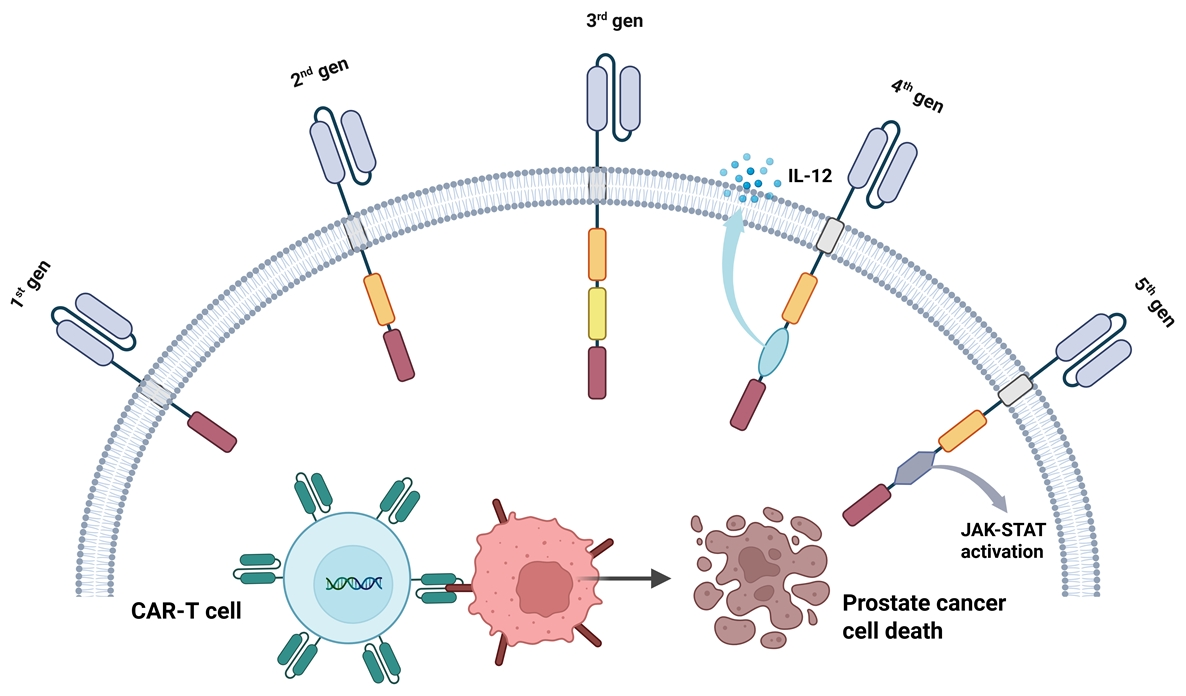
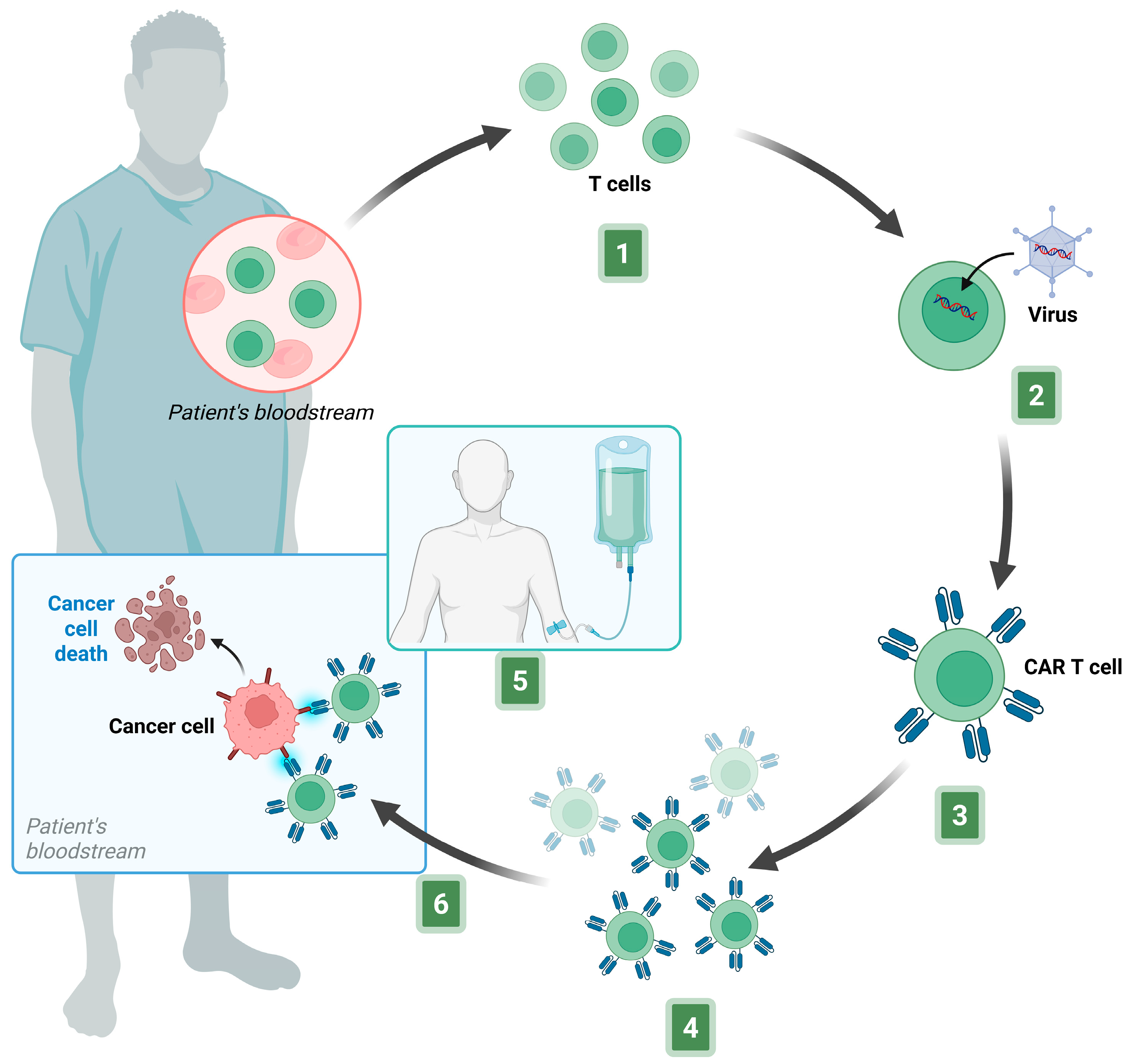
Graphical Abstract