Review

Biologic and Small Molecule Therapy in Atopic Dermatitis

1
Michael G. DeGroote School of Medicine, McMaster University, Hamilton, ON L8P 1H6, Canada
2
Faculty of Medicine, University of British Columbia, Vancouver, BC V6T 1Z3, Canada
3
College of Medicine, University of Saskatchewan, Saskatoon, SK S7N 5E5, Canada
4
Faculty of Medicine, University of Ottawa, Ottawa, ON K1H 8M5, Canada
5
Faculty of Medicine, Laval University, Quebec, QC G1V 0A6, Canada
6
Toronto Dermatology Centre, Toronto, ON M3H 5Y8, Canada
*
Author to whom correspondence should be addressed.
Biomedicines 2024, 12(8), 1841; https://doi.org/10.3390/biomedicines12081841

Submission received: 17 July 2024 / Revised: 6 August 2024 / Accepted: 9 August 2024 / Published: 13 August 2024
(This article belongs to the Special Issue Current Molecular Research on Skin Diseases)

Abstract

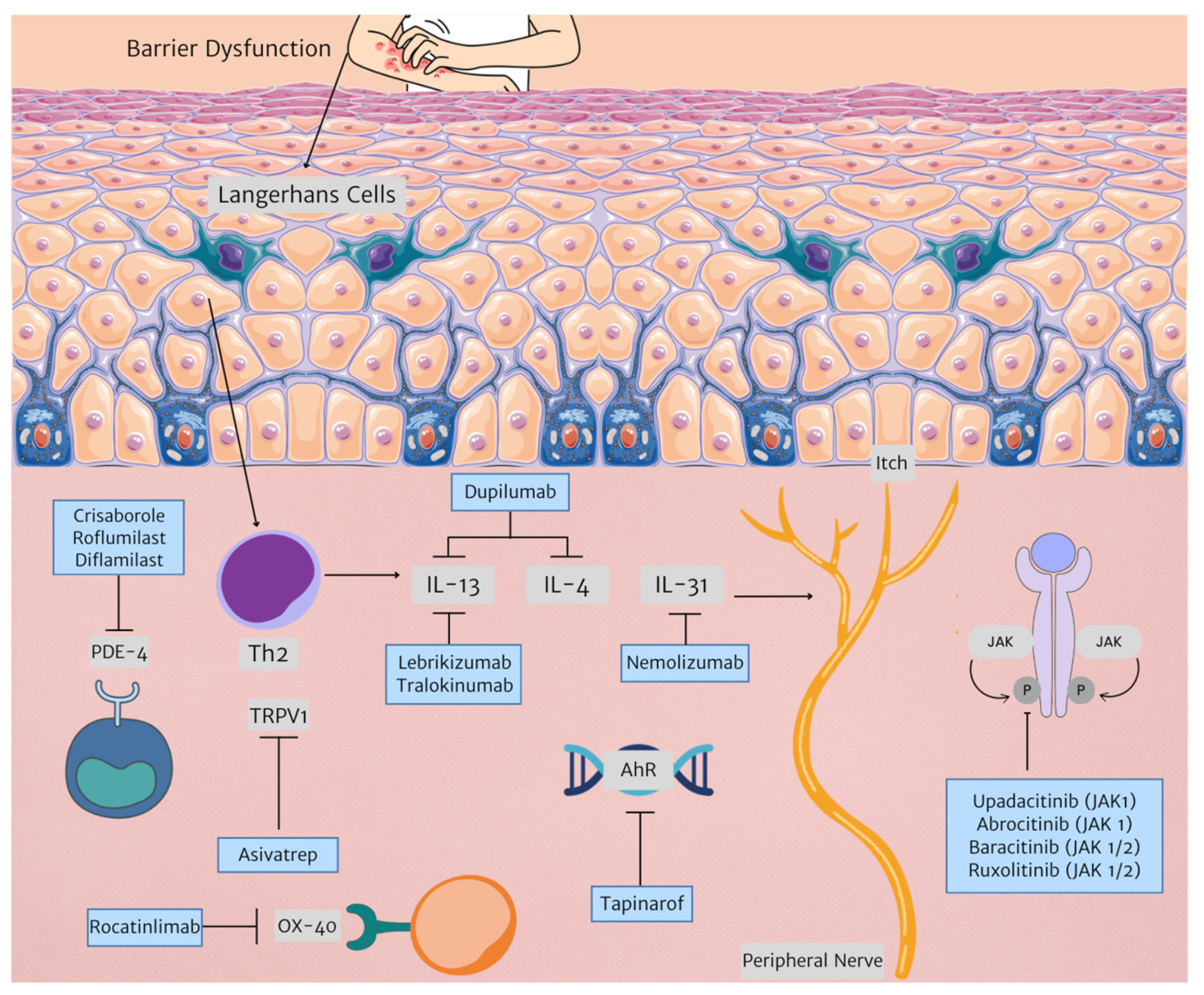
Atopic dermatitis is a chronic inflammatory dermatosis characterized by pruritic, scaly, erythematous lesions. Its incidence varies but is estimated to be approximately 20% in children and between 7 and 14% in adults, with variation amongst countries. It is a multifactorial condition, with a complex interplay between genetic, immunological, and environmental factors. Research into the inflammatory response has identified new therapeutic targets that work to reduce inflammation and subsequently reduce flares. This study explores existing therapeutic agents for atopic dermatitis as well as newer therapies such as biologics and small molecules, drawing upon each agent’s mechanism of action, relevant landmark clinical trials, efficacy, and safety profile. Current therapies include emollients, corticosteroids, cyclosporine A, calcineurin inhibitors, phototherapy, and methotrexate. Biologics described include dupilumab, tralokinumab, lebrikizumab, nemolizumab, and rocatinlimab. Small molecules inhibitors include Janus kinase inhibitors, phosphodiesterase 4 inhibitors, transient receptor potential vanilloid subfamily V member 1 antagonist, and aryl hydrocarbon receptor antagonist.
Keywords: AD; Janus kinase inhibitors; JAK1; JAK2; JAK3; TYK2; dupilumab AD; Janus kinase inhibitors; JAK1; JAK2; JAK3; TYK2; dupilumab