Review

Chemerin as Potential Biomarker in Pediatric Diseases: A PRISMA-Compliant Study
by
Katarzyna Zdanowicz
*,
Anna Bobrus-Chociej
and
Dariusz Marek Lebensztejn
Department of Pediatrics, Gastroenterology, Hepatology, Nutrition and Allergology, Medical University of Bialystok, 15-269 Bialystok, Poland
*
Author to whom correspondence should be addressed.
Biomedicines 2022, 10(3), 591; https://doi.org/10.3390/biomedicines10030591

Submission received: 8 February 2022 / Revised: 26 February 2022 / Accepted: 1 March 2022 / Published: 3 March 2022
(This article belongs to the Special Issue The Role of Chemerin in Human Disease)

Abstract

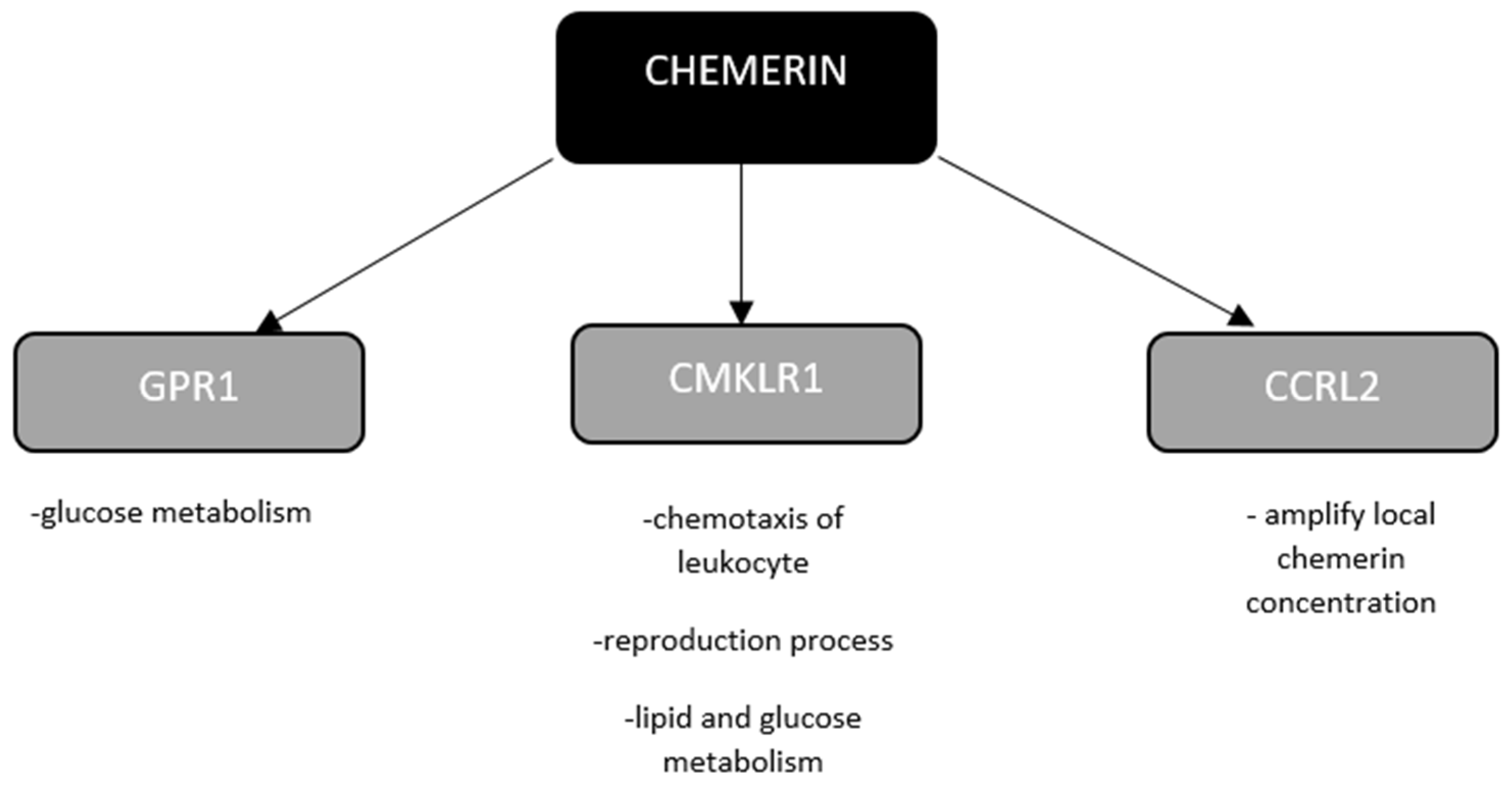
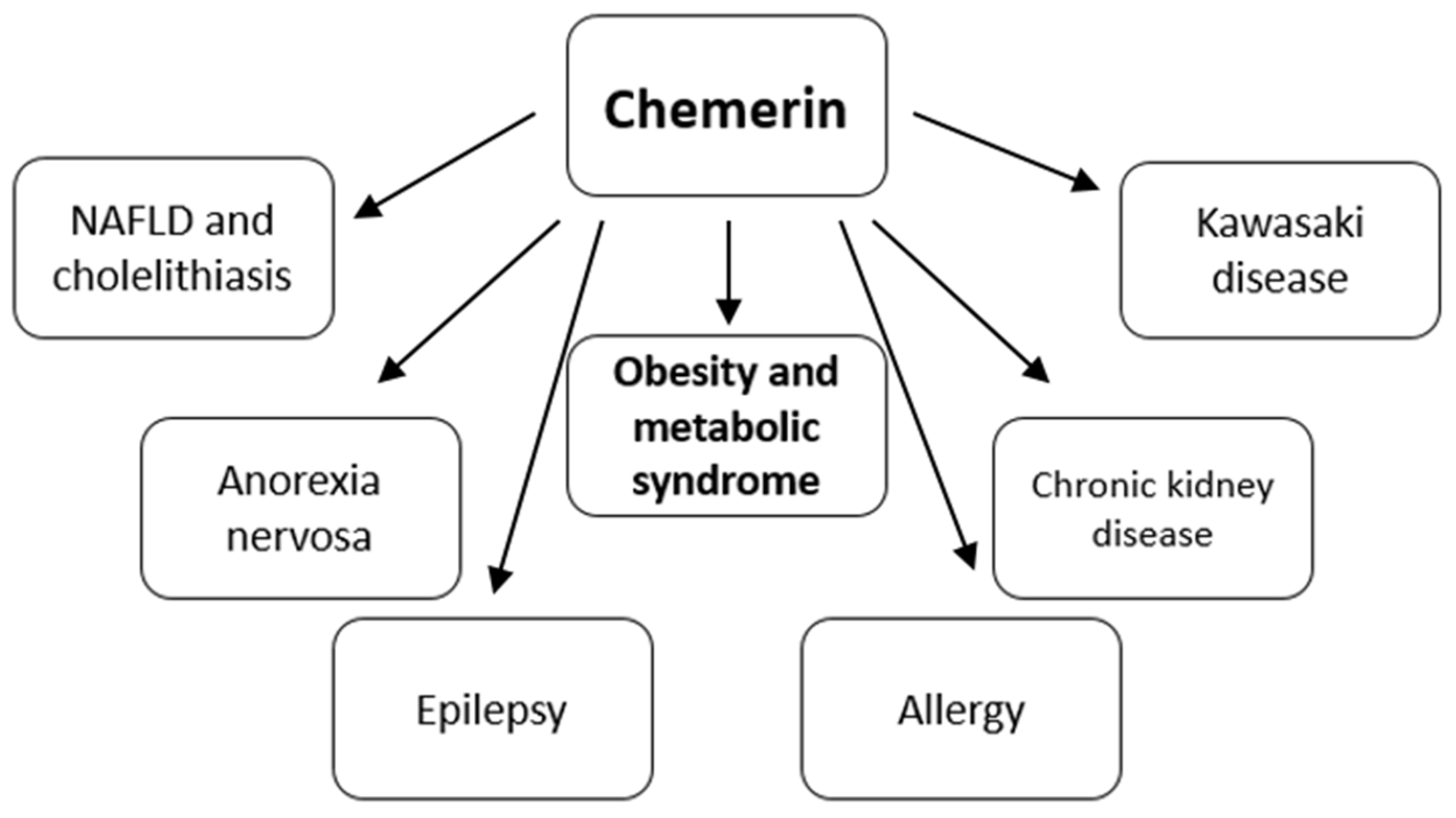
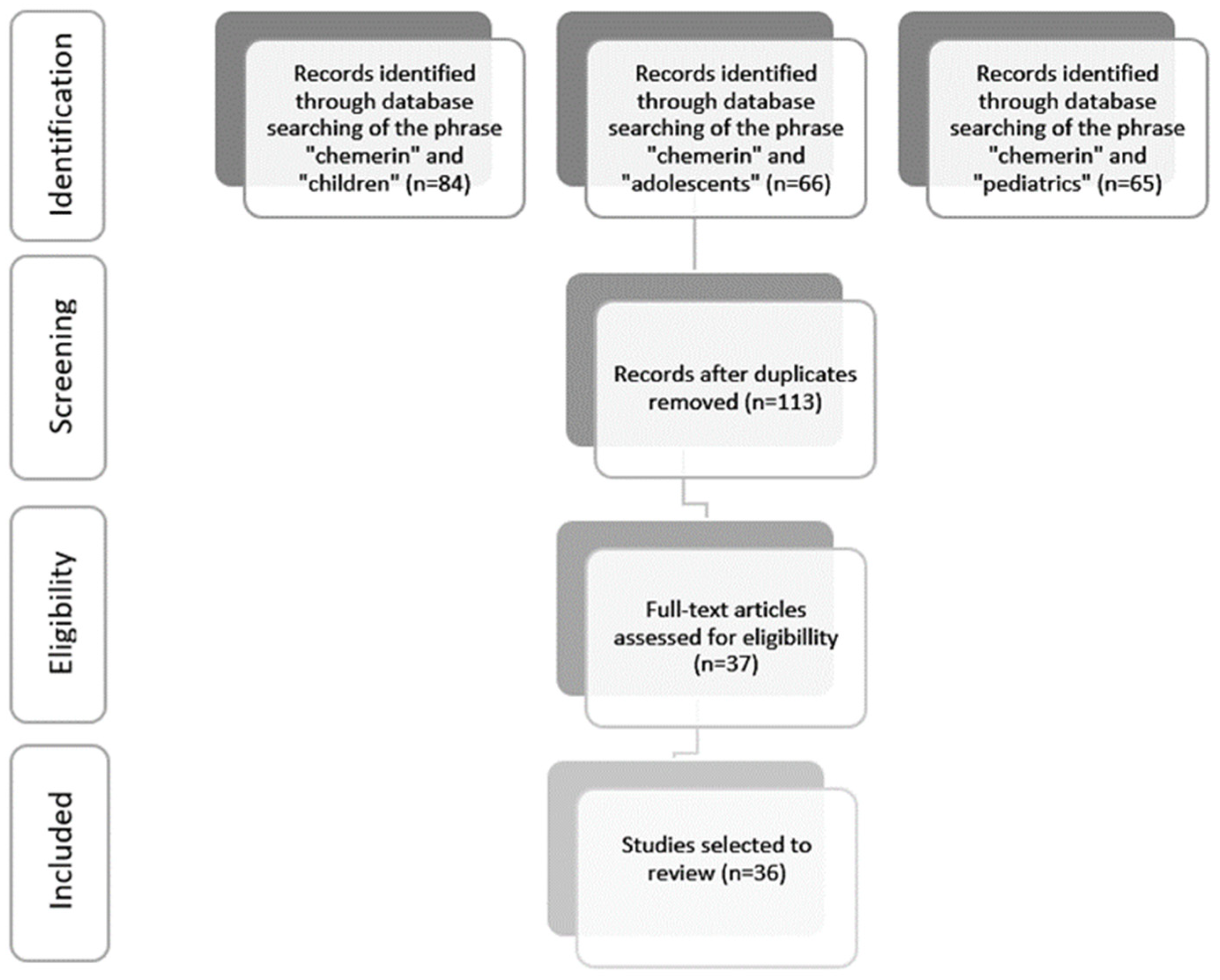
Adipose tissue is the main source of adipokines and therefore serves not only as a storage organ, but also has an endocrine effect. Chemerin, produced mainly in adipocytes and liver, is a natural ligand for chemokine-like receptor 1 (CMKLR1), G-protein-coupled receptor 1 (GPR1) and C-C motif chemokine receptor-like 2 (CCRL2), which have been identified in many tissues and organs. The role of this protein is an active area of research, and recent analyses suggest that chemerin contributes to angiogenesis, adipogenesis, glucose homeostasis and energy metabolism. Many studies confirm that this molecule is associated with obesity in both children and adults. We conducted a systematic review of data from published studies evaluating chemerin in children with various disease entities. We searched PubMed to identify eligible studies published prior to February 2022. A total of 36 studies were selected for analysis after a detailed investigation, which was intended to leave only the research studies. Moreover, chemerin seems to play an important role in the development of cardiovascular and digestive diseases. The purpose of this review was to describe the latest advances in knowledge of the role of chemerin in the pathogenesis of various diseases from studies in pediatric patients. The mechanisms underlying the function of chemerin in various diseases in children are still being investigated, and growing evidence suggests that this adipokine may be a potential prognostic biomarker for a wide range of diseases.
Keywords: chemerin; children; adolescents; pediatrics chemerin; children; adolescents; pediatrics