Article

Endurance Training in Humans Modulates the Bacterial DNA Signature of Skeletal Muscle
1
Novo Nordisk Foundation Center for Basic Metabolic Research, Faculty of Health and Medical Sciences, University of Copenhagen, 2200 Copenhagen, Denmark
2
Institut de Recherche sur les Maladies Métaboliques et Cardiovasculaires de Rangueil (I2MC), Institut National de la Santé et de la Recherche Médicale (INSERM), U1048, 31400 Toulouse, France
3
Institut des Mathématiques de Toulouse, 31400 Toulouse, France
*
Author to whom correspondence should be addressed.
Biomedicines 2022, 10(1), 64; https://doi.org/10.3390/biomedicines10010064

Submission received: 10 October 2021 / Revised: 3 December 2021 / Accepted: 6 December 2021 / Published: 29 December 2021
(This article belongs to the Special Issue Host-Microbiome Crosstalk in Cardiometabolic Diseases)

Abstract

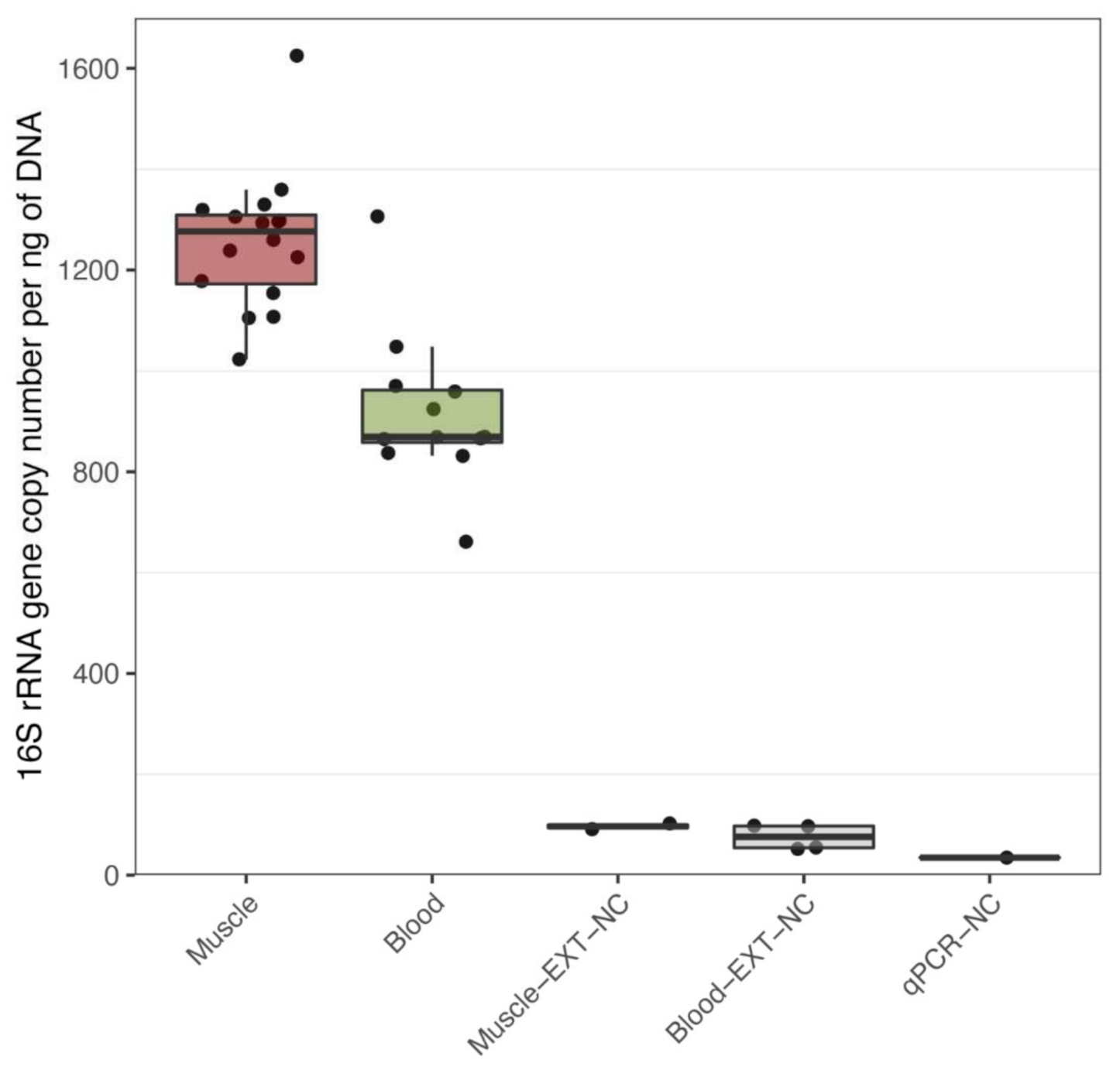

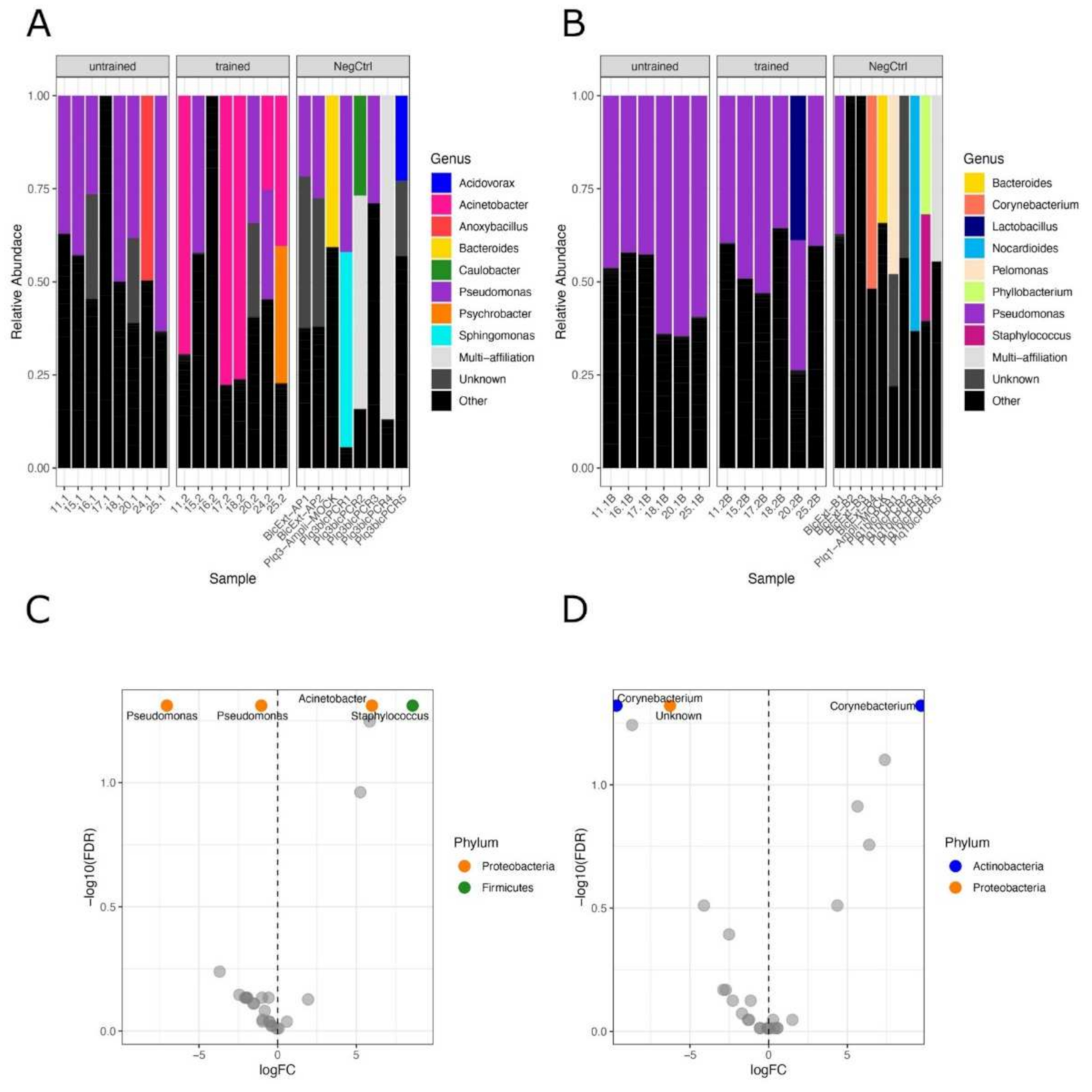
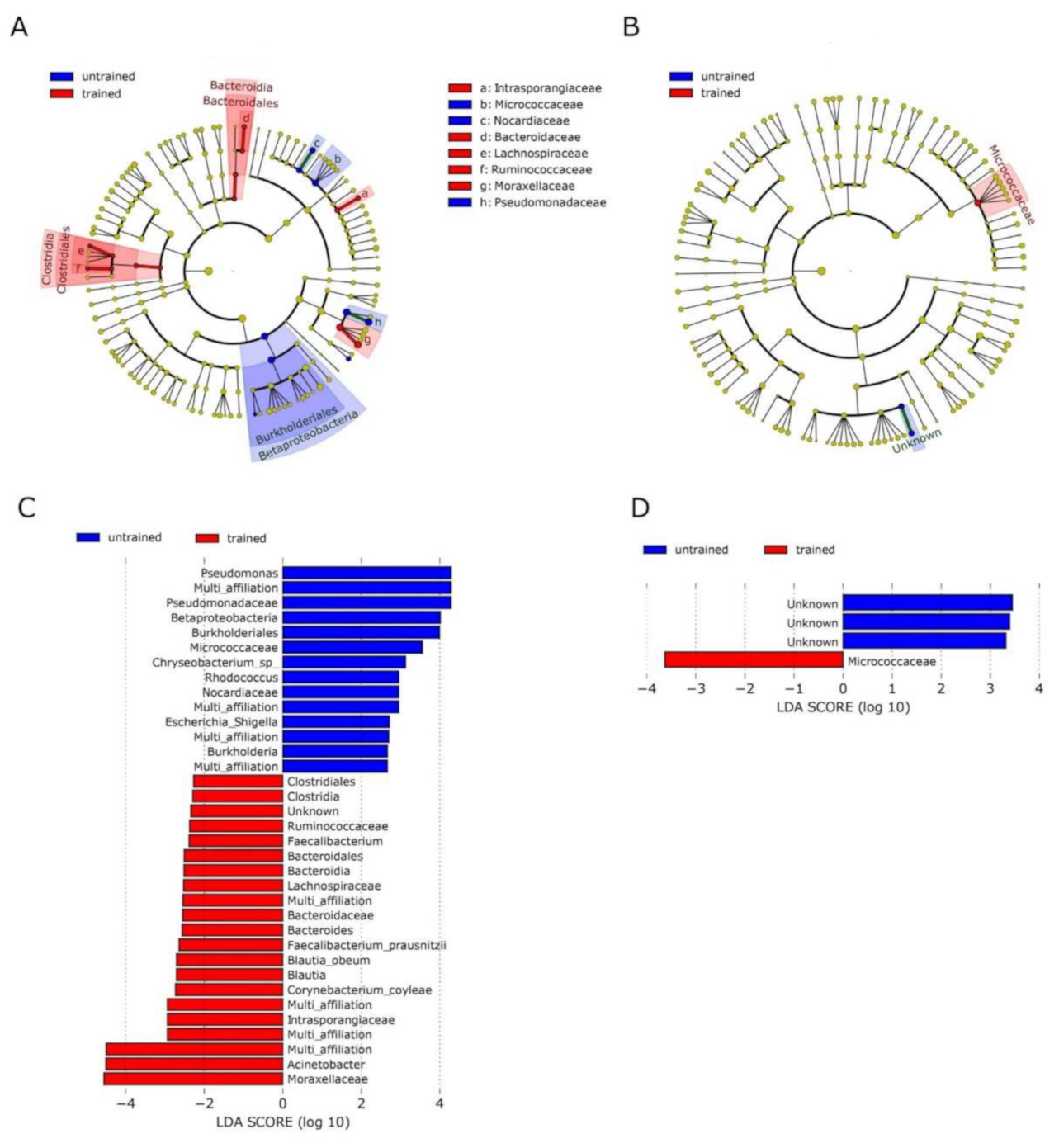
Accumulating evidence supports the existence of a tissue microbiota, which may regulate the physiological function of tissues in normal and pathological states. To gain insight into the regulation of tissue-borne bacteria in physiological conditions, we quantified and sequenced the 16S rRNA gene in aseptically collected skeletal muscle and blood samples from eight healthy male individuals subjected to six weeks of endurance training. Potential contamination bias was evaluated and the taxa profiles of each tissue were established. We detected bacterial DNA in skeletal muscle and blood, with background noise levels of detected bacterial DNA considerably lower in control versus tissue samples. In both muscle and blood, Proteobacteria, Actinobacteria, Firmicutes and Bacteroidetes were the most prominent phyla. Endurance training changed the content of resident bacterial DNA in skeletal muscle but not in blood, with Pseudomonas being less abundant, and both Staphylococcus and Acinetobacter being more abundant in muscle after exercise. Our results provide evidence that endurance training specifically remodels the bacterial DNA profile of skeletal muscle in healthy young men. Future investigations may shed light on the physiological impact, if any, of training-induced changes in bacterial DNA in skeletal muscle.
Keywords: tissue-borne microbiome; 16S rRNA sequencing; skeletal muscle; endurance training tissue-borne microbiome; 16S rRNA sequencing; skeletal muscle; endurance training