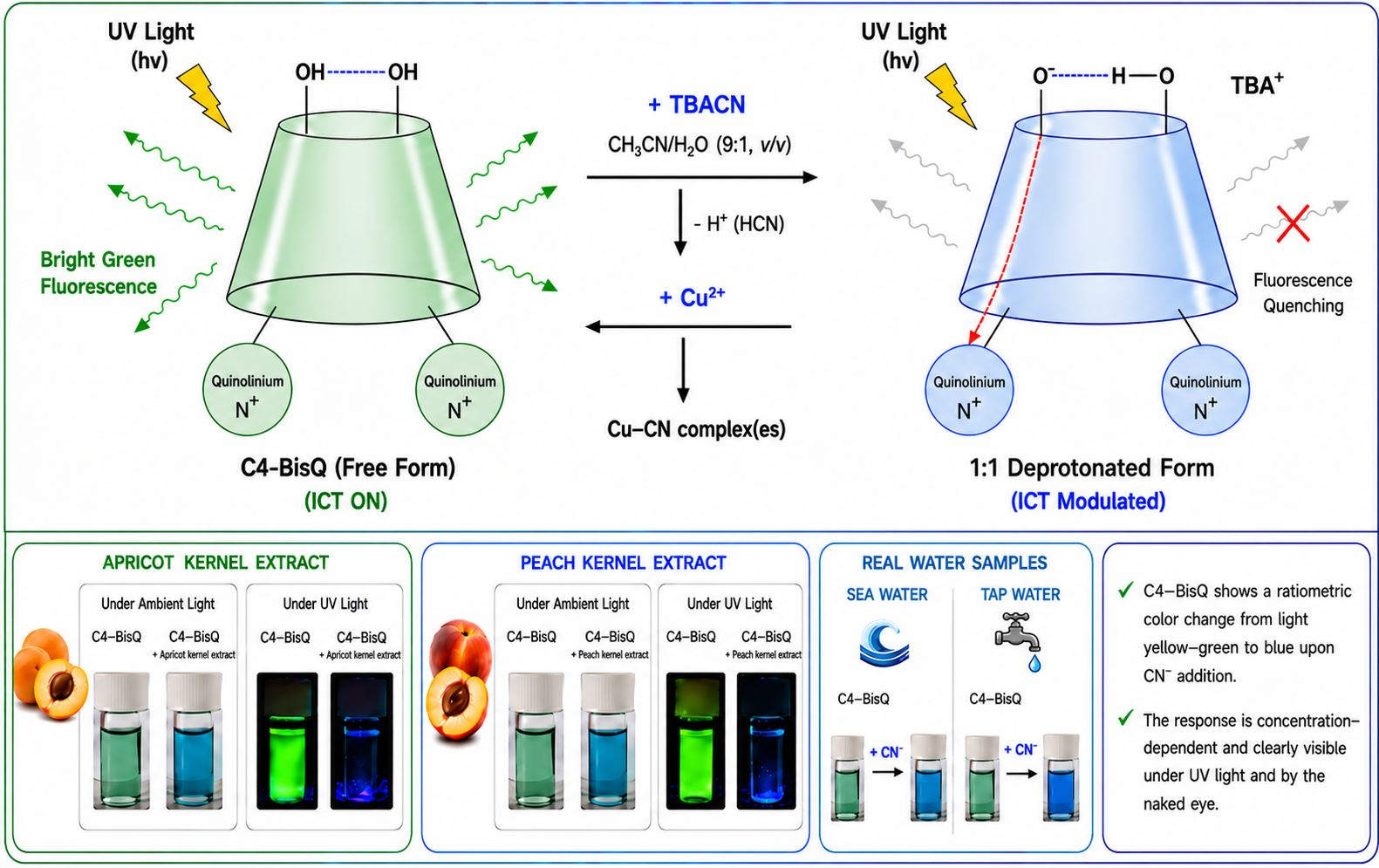
A Dual-Mode Colorimetric and Fluorescent Sensor for Rapid Detection of Cyanide Ions: Rational Design, Interaction Studies, and Practical Applications

Abstract
1. Introduction
2. Materials and Methods
2.1. Materials and Reagents
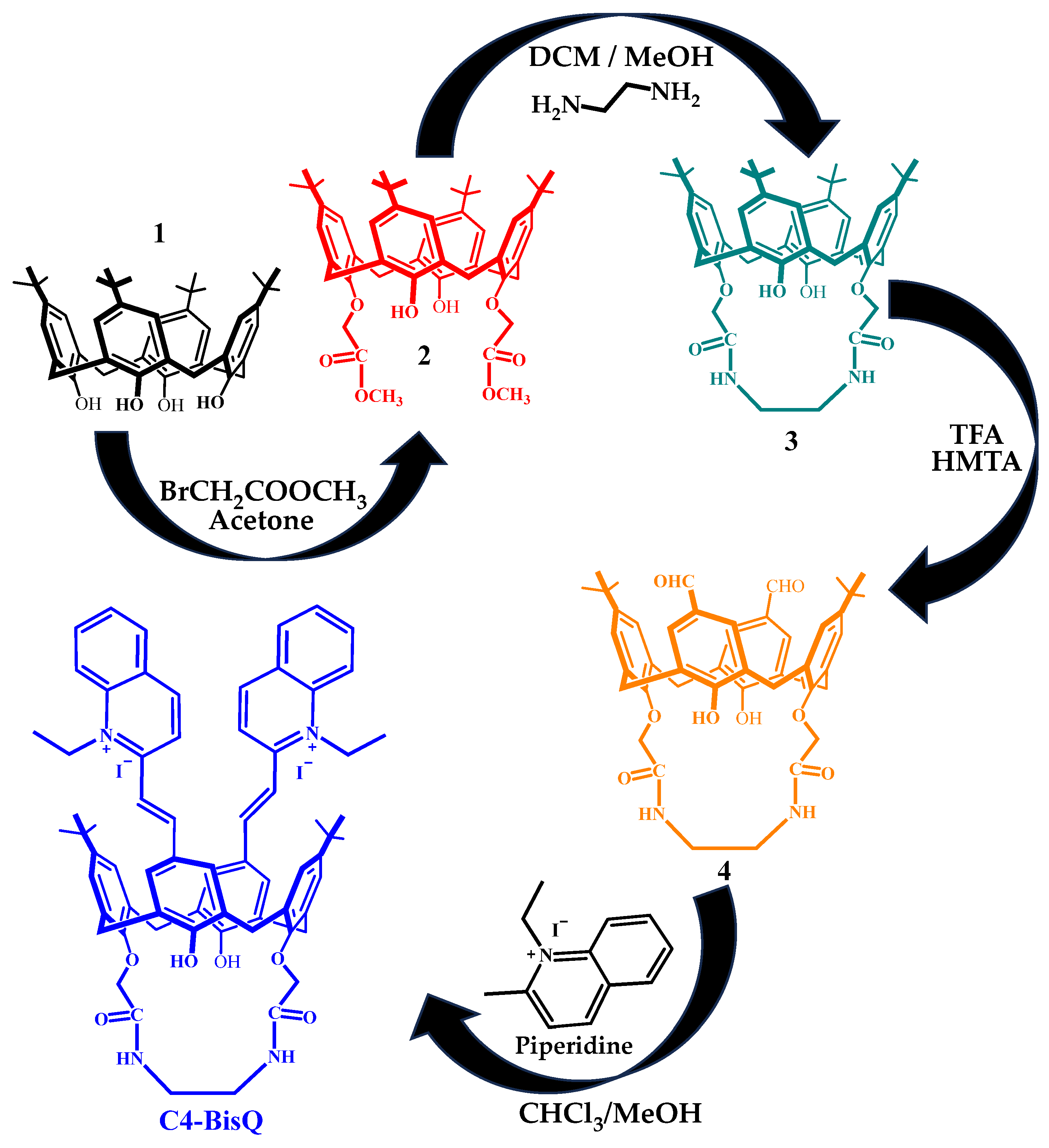
2.2. Synthesis of C4-BisQ
2.3. Preparation of Solutions and Optical Measurements
LOQ = 10 sb/k
2.4. Preparation of Food Extracts and Colorimetric Assay
2.5. Quantitative Spike-And-Recovery Assays in Environmental Water Samples
3. Results and Discussion
3.1. Synthesis and Characterization of Chemosensor C4-BisQ
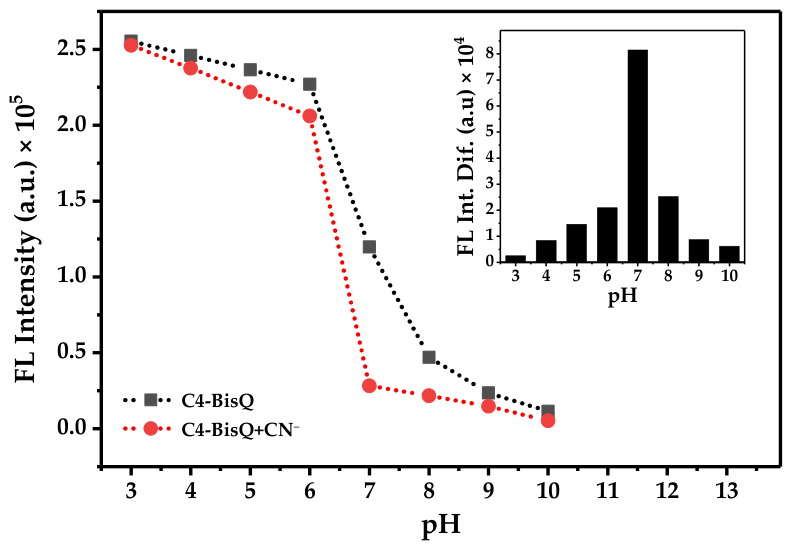
3.2. Optimization of the Sensing Conditions
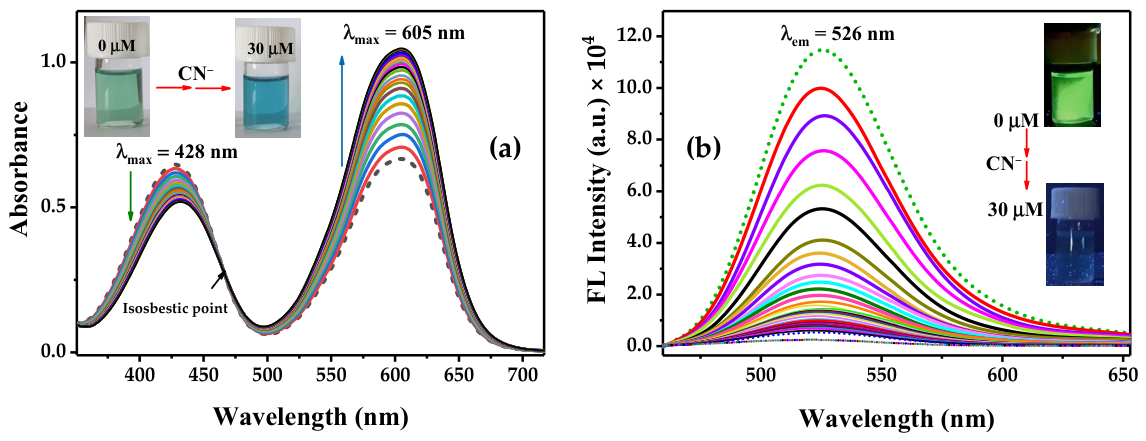
3.3. UV-Vis and Fluorescence Spectroscopic Titration Studies
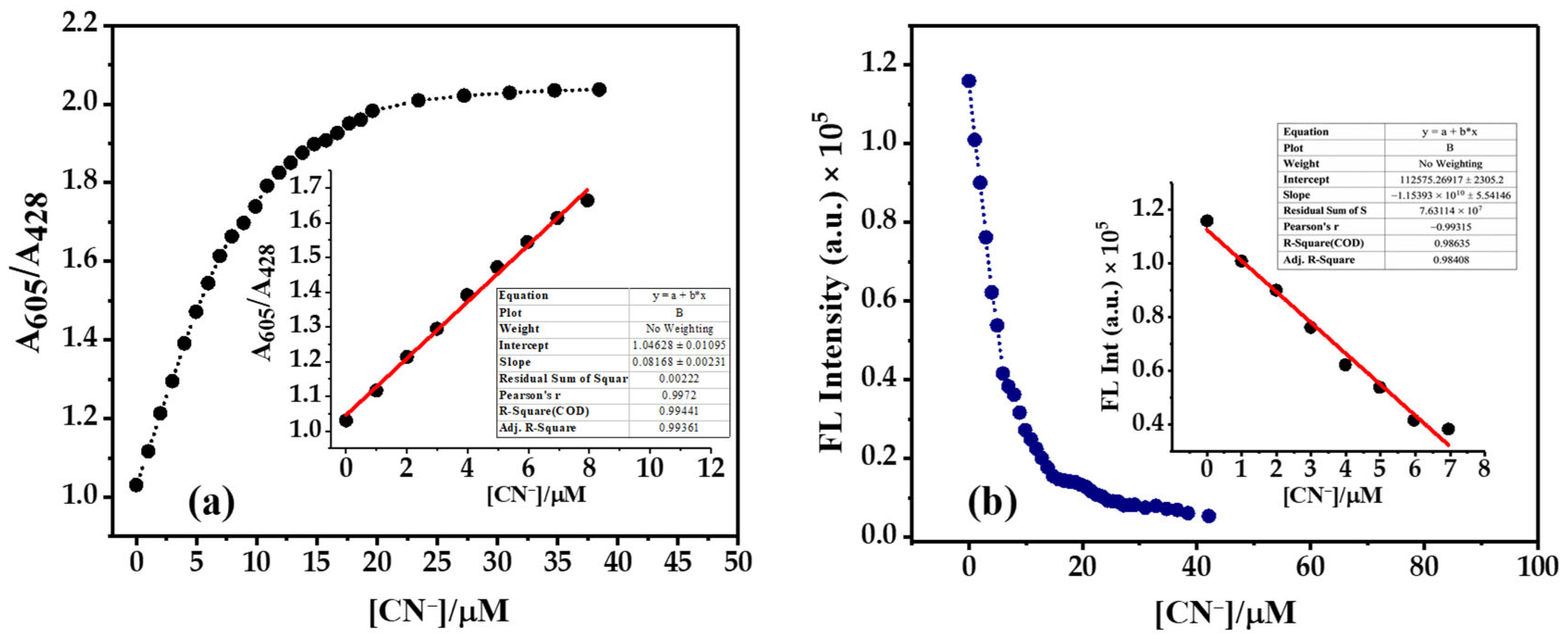
3.4. Analytical Sensitivity and Quantification Limits
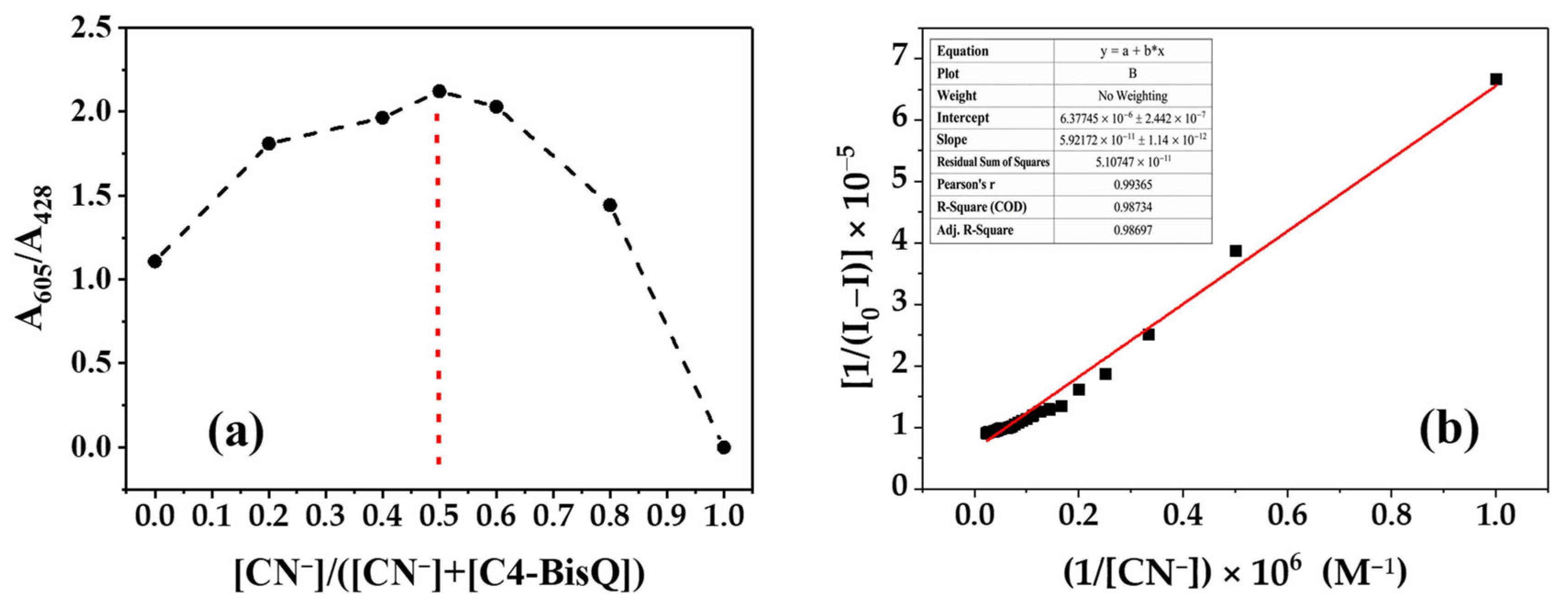
3.5. Binding Stoichiometry and Association Constant
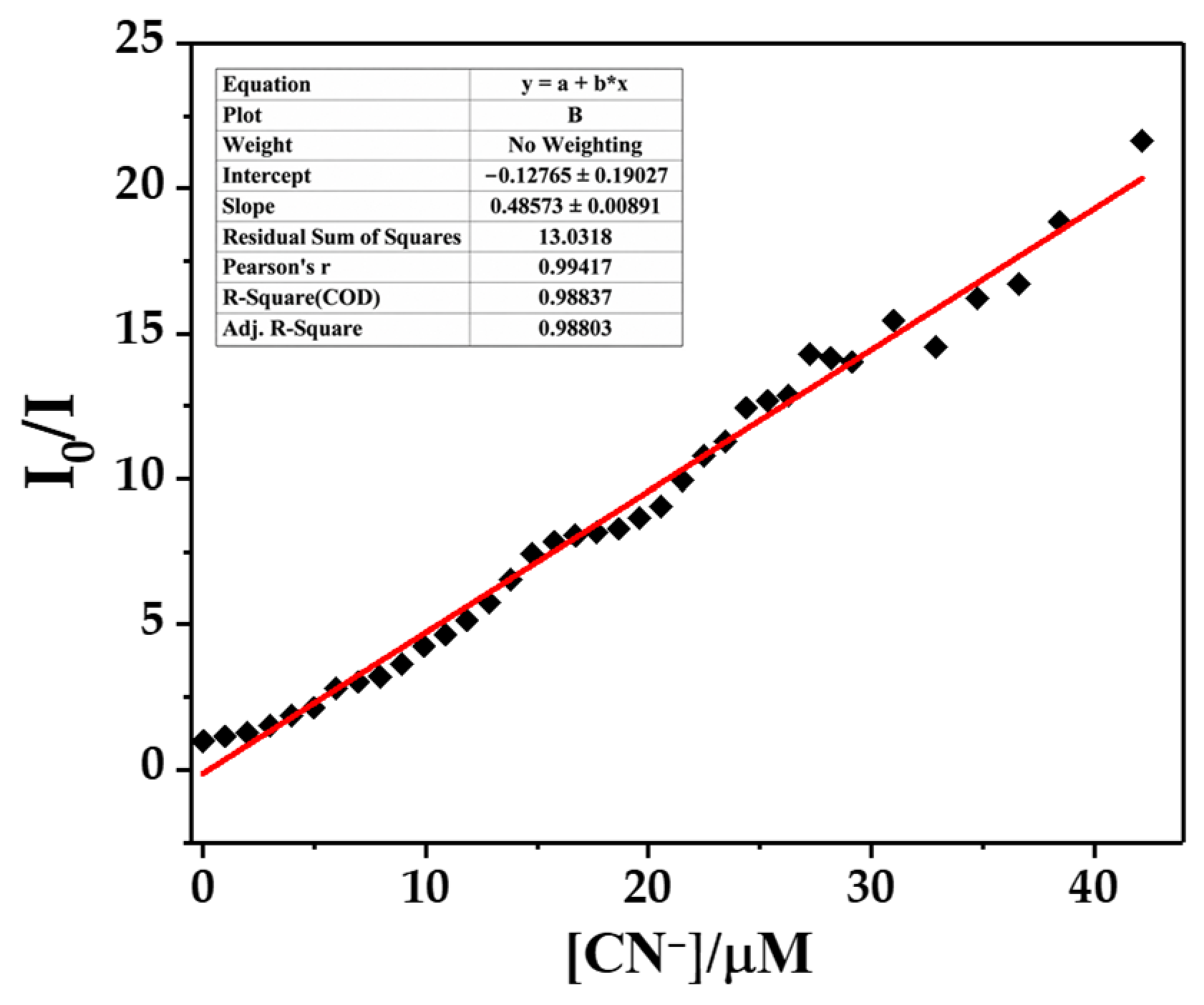
3.6. Stern–Volmer Analysis
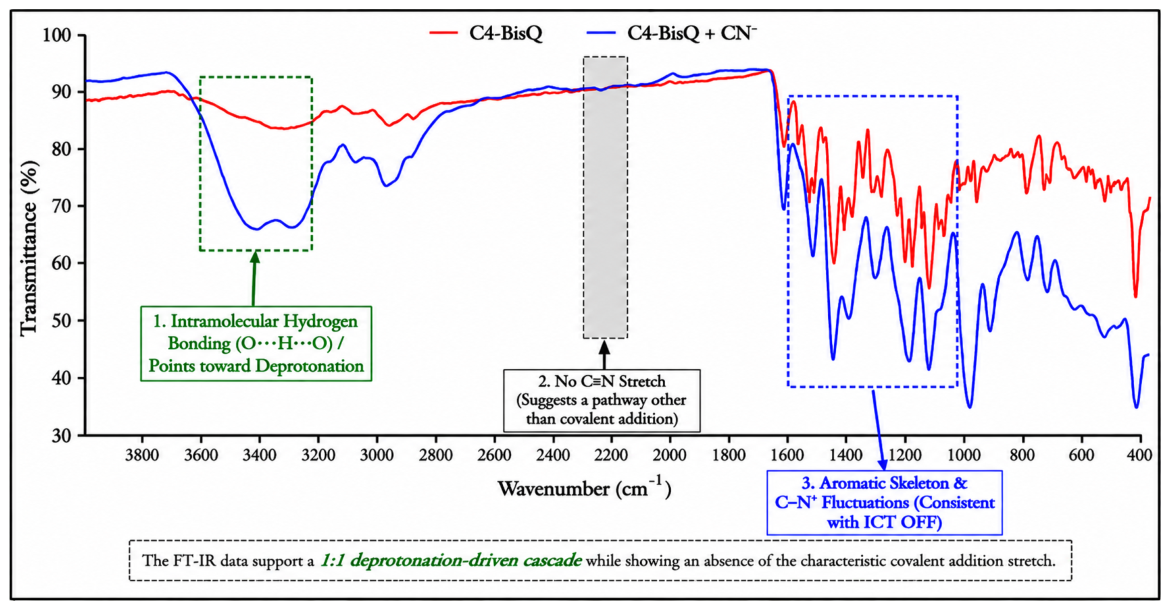
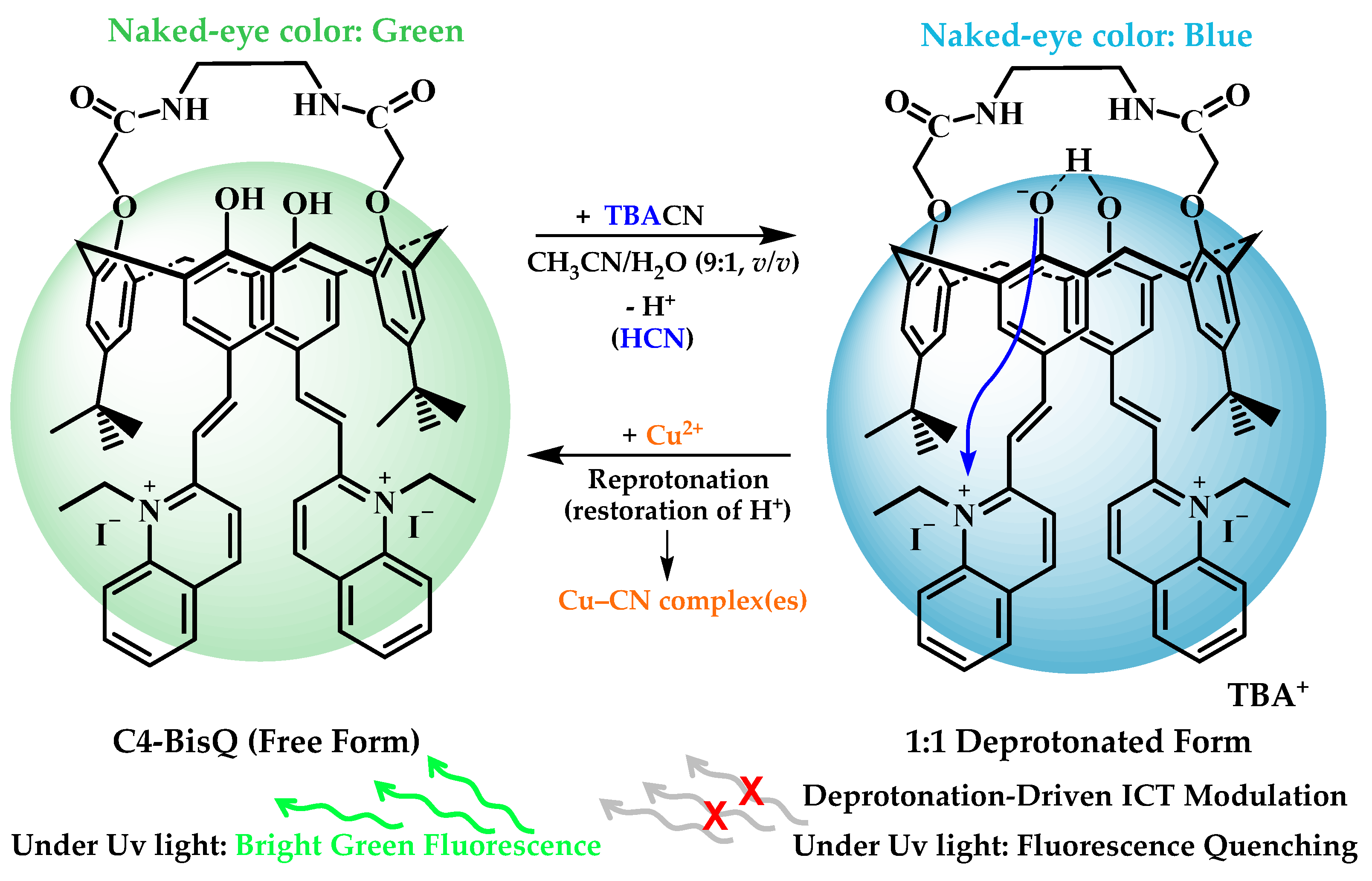
3.7. Proposed Sensing Mechanism
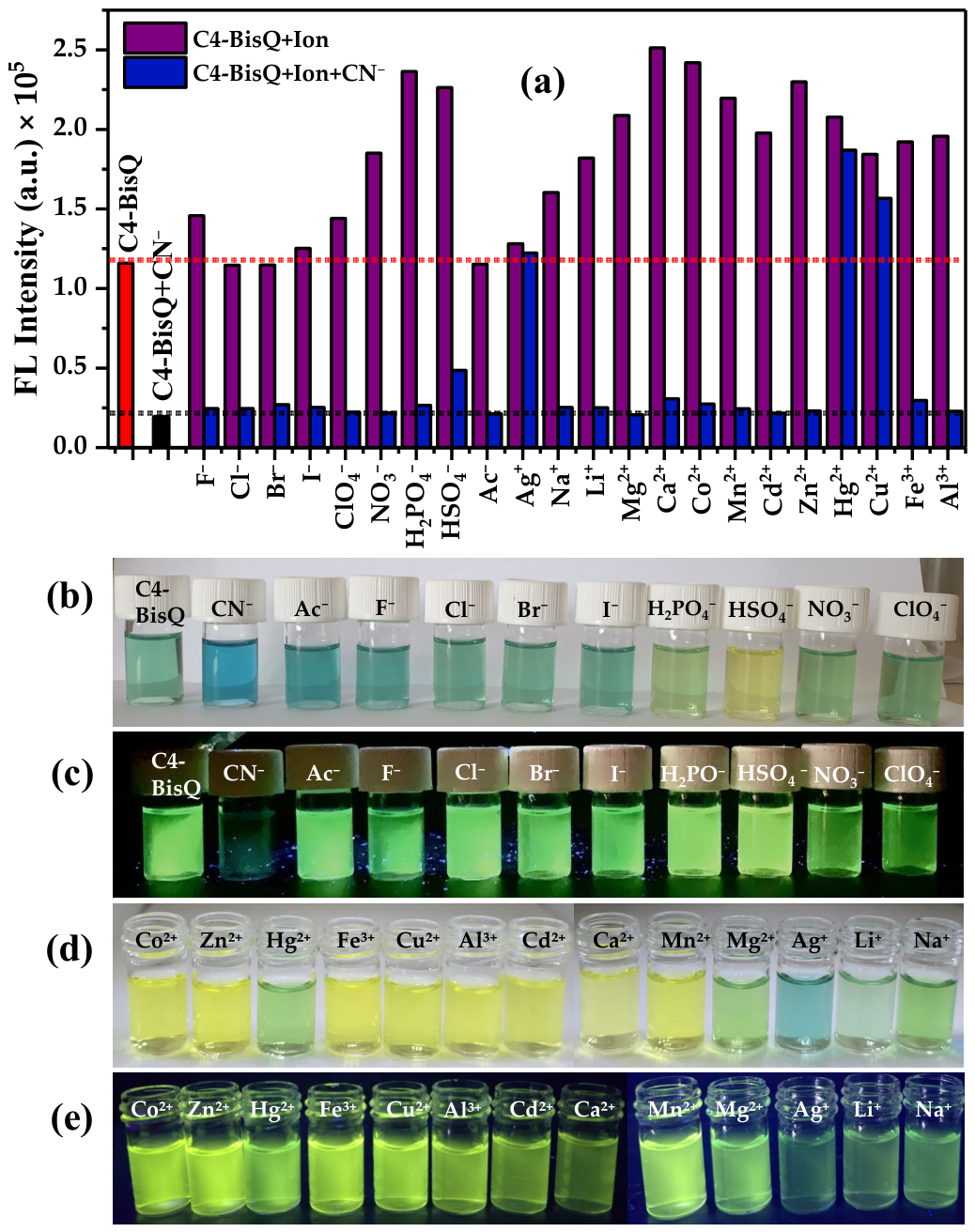
3.8. Selectivity and Competitive Interference Studies
3.9. Environmental Water Analysis (Tap Water and Sea Water)
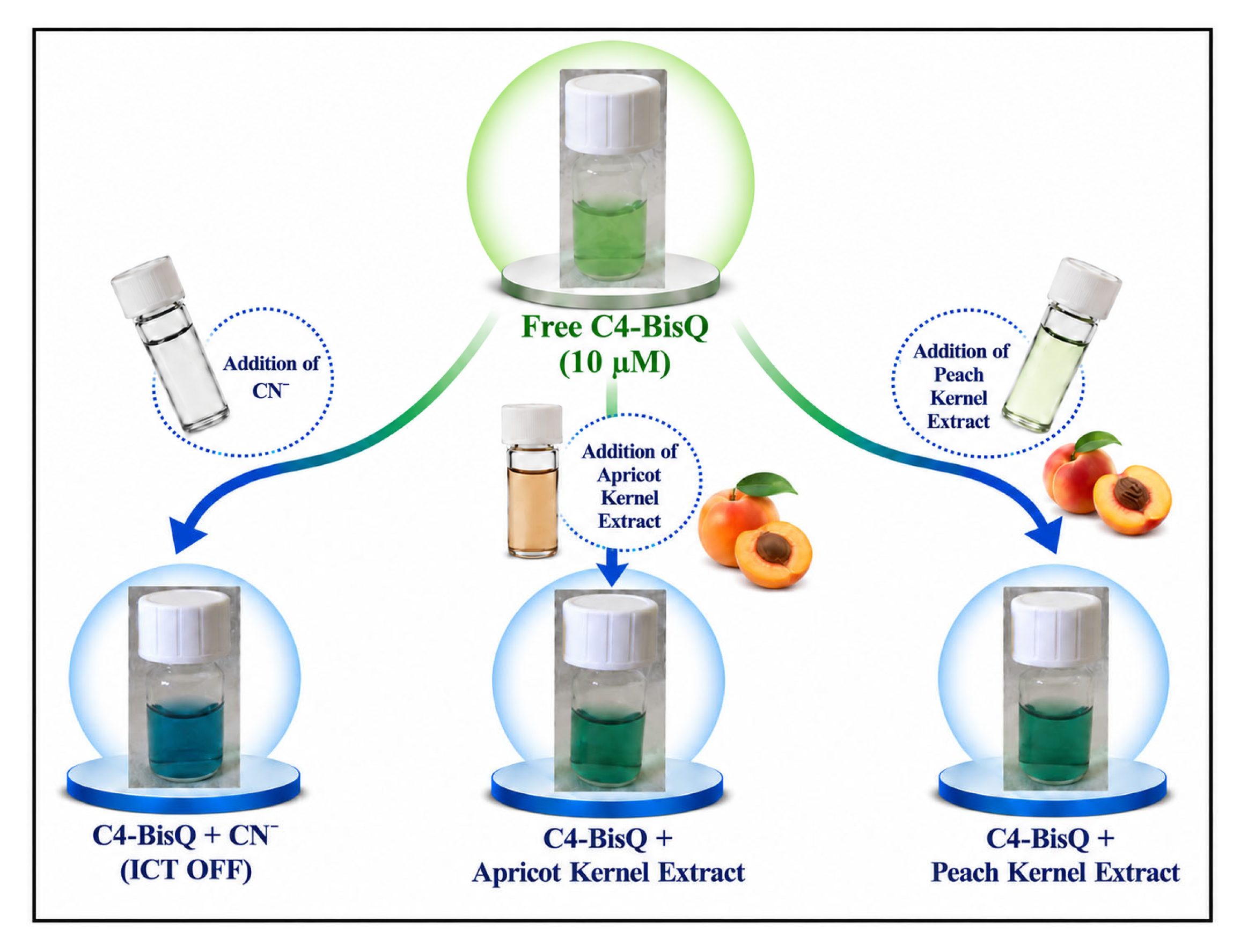
3.10. Practical Assays in Food Extracts
4. Conclusions
Supplementary Materials
Author Contributions
Funding
Institutional Review Board Statement
Informed Consent Statement
Data Availability Statement
Acknowledgments
Conflicts of Interest
References
- Hall, A.H.; Isom, G.E.; Rockwood, G.A. (Eds.) Toxicology of Cyanides and Cyanogens: Experimental, Applied and Clinical Aspects; John Wiley & Sons: Hoboken, NJ, USA, 2015. [Google Scholar]
- Zuhra, K.; Szabó, C. The two faces of cyanide: An environmental toxin and a potential novel mammalian gasotransmitter. FEBS J. 2021, 289, 2481–2515. [Google Scholar] [CrossRef] [Scilit] [PubMed]
- Sharma, M.; Akhter, Y.; Chatterjee, S. A review on remediation of cyanide containing industrial wastes using biological systems with special reference to enzymatic degradation. World J. Microbiol. Biotechnol. 2019, 35, 70. [Google Scholar] [CrossRef] [Scilit] [PubMed]
- Gandra, U.R.; Pandey, R.P.; Palanikumar, L.; Irfan, A.; Magzoub, M.; Belmabkhout, Y.; Hasan, S.W.; Infas, M.; Mohideen, H. Cu-TCPP metal-organic nanosheets embedded thin-film composite membranes for enhanced cyanide detection and removal: A multifunctional approach to water treatment and environmental safety. ACS Appl. Mater. Interfaces 2025, 17, 9563–9574. [Google Scholar] [CrossRef] [Scilit] [PubMed]
- Kohio, E.N.; Sossou, S.; Karoui, H.; Yacouba, H. Environmental cyanide pollution from artisanal gold mining in Burkina Faso: Human exposure risk analysis based on a conceptual site model. Int. J. Environ. Res. Public Health 2025, 22, 1125. [Google Scholar] [CrossRef] [Scilit] [PubMed]
- Cárdenas Riojas, A.A.; Wong, A.; Planes, G.A.; Sotomayor, M.D.; La Rosa-Toro, A.; Baena-Moncada, A.M. Development of a new electrochemical sensor based on silver sulfide nanoparticles and hierarchical porous carbon modified carbon paste electrode for determination of cyanide in river water samples. Sens. Actuators B Chem. 2019, 287, 544–550. [Google Scholar] [CrossRef] [Scilit]
- Bhadra, S.; Chan, A.S.; Hendry-Hofer, T.B.; Boss, G.R.; Bebarta, V.S.; Logue, B.A. Analysis of bisaminotetrazole cobinamide, a next-generation antidote for cyanide, hydrogen sulfide and methanethiol poisoning, in swine plasma by liquid chromatography-tandem mass spectrometry. J. Chromatogr. B 2022, 1208, 123392. [Google Scholar] [CrossRef] [Scilit] [PubMed]
- Pagliano, E.; Campanella, B.; D’Ulivo, A.; Mester, Z. Derivatization chemistries for the determination of inorganic anions and structurally related compounds by gas chromatography: A review. Anal. Chim. Acta 2018, 1025, 12–40. [Google Scholar] [CrossRef] [Scilit] [PubMed]
- Christison, T.T.; Rohrer, J.S. Direct determination of free cyanide in drinking water by ion chromatography with pulsed amperometric detection. J. Chromatogr. A 2007, 1155, 31–39. [Google Scholar] [CrossRef] [Scilit] [PubMed]
- Li, H.; Song, Y.; Zhou, B.; Xu, H. Nitrite: From application to detection and development. Appl. Sci. 2024, 14, 9027. [Google Scholar] [CrossRef] [Scilit]
- Ma, J.; Dasgupta, P.K. Recent developments in cyanide detection: A review. Anal. Chim. Acta 2010, 673, 117–125. [Google Scholar] [CrossRef] [Scilit] [PubMed]
- Banga, I.; Paul, A.; Poudyal, D.C.; Muthukumar, S.; Prasad, S. Recent advances in gas detection methodologies with a special focus on environmental sensing and health monitoring applications: A critical review. ACS Sens. 2023, 8, 3307–3319. [Google Scholar] [CrossRef] [Scilit] [PubMed]
- Fakayode, S.O.; Lisse, C.; Medawala, W.; Brady, P.N.; Bwambok, D.K.; Anum, D.; Alonge, T.; Taylor, M.E.; Baker, G.A.; Mehari, T.F.; et al. Fluorescent chemical sensors: Applications in analytical, environmental, forensic, pharmaceutical, biological, and biomedical sample measurement, and clinical diagnosis. Appl. Spectrosc. Rev. 2023, 59, 1–89. [Google Scholar] [CrossRef] [Scilit]
- Wu, Y.; Feng, J.; Hu, G.; Zhang, E.; Yu, H. Colorimetric sensors for chemical and biological sensing applications. Sensors 2023, 23, 2749. [Google Scholar] [CrossRef] [Scilit] [PubMed]
- Jin, Z.; Yim, W.; Retout, M.; Housel, E.; Zhong, W.; Zhou, J.; Strano, M.S.; Jokerst, J.V. Colorimetric sensing for translational applications: From colorants to mechanisms. Chem. Soc. Rev. 2024, 53, 7681–7741. [Google Scholar] [CrossRef] [Scilit] [PubMed]
- Zhou, Y.; Huang, X.; Hu, X.; Tong, W.; Leng, Y.; Xiong, Y. Recent advances in colorimetry/fluorimetry-based dual-modal sensing technologies. Biosens. Bioelectron. 2021, 190, 113386. [Google Scholar] [CrossRef] [Scilit] [PubMed]
- Li, Z.; Askim, J.R.; Suslick, K.S. The optoelectronic nose: Colorimetric and fluorometric sensor arrays. Chem. Rev. 2018, 119, 231–292. [Google Scholar] [CrossRef] [Scilit] [PubMed]
- Shen, Y.; Gao, X.; Zhang, Y.; Chen, H.; Ye, Y.; Wu, Y. Polydopamine-based nanozyme with dual-recognition strategy-driven fluorescence-colorimetric dual-mode platform for Listeria monocytogenes detection. J. Hazard. Mater. 2022, 439, 129582. [Google Scholar] [CrossRef] [Scilit] [PubMed]
- Liu, S.; Zhou, J.; Yuan, X.; Xiong, J.; Zong, M.; Wu, X.; Lou, W. A dual-mode sensing platform based on metal-organic framework for colorimetric and ratiometric fluorescent detection of organophosphorus pesticide. Food Chem. 2023, 432, 137272. [Google Scholar] [CrossRef] [Scilit] [PubMed]
- Hamzi, I.; Datoussaid, Y.; Oukebdane, N. Design strategies, mechanistic insights, and applications of N-acylhydrazone-based fluorometric and colorimetric chemosensors for anion detection. ChemistrySelect 2025, 10, 34. [Google Scholar] [CrossRef] [Scilit]
- Rashid, A.; Mondal, S.; Ghosh, P. Development and application of ruthenium(II) and iridium(III) based complexes for anion sensing. Molecules 2023, 28, 1231. [Google Scholar] [CrossRef] [Scilit] [PubMed]
- Krämer, J.; Kang, R.; Grimm, L.; De Cola, L.; Picchetti, P.; Biedermann, F. Molecular probes, chemosensors, and nanosensors for optical detection of biorelevant molecules and ions in aqueous media and biofluids. Chem. Rev. 2022, 122, 3459–3636. [Google Scholar] [CrossRef] [Scilit] [PubMed]
- Zhang, Y.; Zhou, C.; Li, J.; Kovtunets, E. A New Acridine-Based Fluorescent Sensor for the Detection of CN−. Chemosensors 2026, 14, 67. [Google Scholar] [CrossRef] [Scilit]
- Basri, R.; Ahmed, N.; Khalid, M.; Khan, M.U.; Abdullah, M.; Syed, A.; Elgorban, A.M.; Al-Rejaie, S.S.; Braga, A.A.C.; Shafiq, Z. Quinoline based thiosemicarbazones as colorimetric chemosensors for fluoride and cyanide ions and DFT studies. Sci. Rep. 2022, 12, 4927. [Google Scholar] [CrossRef] [Scilit] [PubMed]
- Sunitha, M.; Vijayakumar, V.; Lohitha, N.; Sarveswari, S. A quinoline appended isonicotino hydrazide-based colorimetric chemosensor for selective detection of cyanide ion in real samples. ChemistrySelect 2025, 10, 33. [Google Scholar] [CrossRef] [Scilit]
- Wu, C.; Wang, J.; Shen, J.; Zhang, C.; Wu, Z.P.; Zhou, H. A colorimetric quinoline-based chemosensor for sequential detection of copper ion and cyanide anions. Tetrahedron 2017, 73, 5715–5719. [Google Scholar] [CrossRef] [Scilit]
- Tang, Q.; Dan, F.; Ma, S.; Zeng, X.; Lan, H. A colorimetric and fluorescent probe based on quinoline-indolium for detection of CN− in aqueous media. ChemistrySelect 2021, 6, 6557–6563. [Google Scholar] [CrossRef] [Scilit]
- Ríos, M.C.; Bravo, N.F.; Sánchez, C.C.; Portilla, J. Chemosensors based on N-heterocyclic dyes: Advances in sensing highly toxic ions such as CN− and Hg2+. RSC Adv. 2021, 11, 34206–34234. [Google Scholar] [CrossRef] [Scilit] [PubMed]
- Udhayakumari, D. A comprehensive anthology of literature based on quinoline chemosensors from 2006 to 2022. J. Mol. Struct. 2023, 1287, 135715. [Google Scholar] [CrossRef] [Scilit]
- Swinburne, A.N.; Paterson, M.; Beeby, A.; Steed, J.W. A quinolinium-derived turn-off fluorescent anion sensor. Org. Biomol. Chem. 2010, 8, 1010–1016. [Google Scholar] [CrossRef] [Scilit] [PubMed]
- Han, Y.R.; Lee, S.B. Facile photocatalytic reactions in various conditions using quinolinium salts as photocatalysts. J. Ind. Eng. Chem. 2025, 152, 124–135. [Google Scholar] [CrossRef] [Scilit]
- Bleeker, J.; Kahn, A.P.; Baumgartner, L.M.; Grozema, F.C.; Vermaas, D.A.; Jager, W.F. Quinolinium-based fluorescent probes for dynamic pH monitoring in aqueous media at high pH using fluorescence lifetime imaging. ACS Sens. 2023, 8, 2050–2059. [Google Scholar] [CrossRef] [Scilit] [PubMed]
- Jothi, D.; Munusamy, S.; Kumar, S.M.; Enbanathan, S.; Iyer, S.K. A benzothiazole-based new fluorogenic chemosensor for the detection of CN− and its real-time application in environmental water samples and living cells. RSC Adv. 2022, 12, 8570–8577. [Google Scholar] [CrossRef] [Scilit] [PubMed]
- Barkale, H.V.; Dey, N. Selective sensing of cyanide ions: Impact of molecular design and assembly on the response of π-conjugated acylhydrazone compounds. RSC Adv. 2024, 14, 25108–25114. [Google Scholar] [CrossRef] [Scilit] [PubMed]
- Kolińska, J.; Grzelakowska, A.; Sokołowska, J. Dyes based on the 2(1H)-quinolone skeleton as potential colorimetric and fluorescent sensors for cyanide anions. Color. Technol. 2019, 135, 501–509. [Google Scholar] [CrossRef] [Scilit]
- Acar, M.; Daştan, A.; Koçak, R. Fluorometric and colorimetric sensor for selective detection of cyanide anion by dibenzosuberenone-based dihydropyridazine in aqueous solution. Talanta 2024, 277, 126241. [Google Scholar] [CrossRef] [Scilit] [PubMed]
- Padghan, S.D.; Hu, J.W.; Hsu, Y.H.; Liu, K.M.; Chen, K.Y. Swift and quantitative naked-eye detection of cyanide: A dual-mode approach using an ICT-based colorimetric and ratiometric fluorescent chemodosimeter. Dye. Pigment. 2024, 228, 112229. [Google Scholar] [CrossRef] [Scilit]
- Padghan, S.D.; Wang, L.C.; Lin, W.C.; Hu, J.W.; Liu, W.C.; Chen, K.Y. Rational design of an ICT-based chemodosimeter with aggregation-induced emission for colorimetric and ratiometric fluorescent detection of cyanide in a wide pH range. ACS Omega 2021, 6, 5287–5296. [Google Scholar] [CrossRef] [Scilit] [PubMed]
- Singh, S.; Heena; Singh, S.; Layek, S.; Goswami, T.; Kumar, S.; Dubey, R. Unveiling distinct hydrogen-bonding mechanisms: A catechol-derived probe for selective cyanide and fluoride detection. Spectrochim. Acta Part A Mol. Biomol. Spectrosc. 2025, 349, 127329. [Google Scholar] [CrossRef] [Scilit] [PubMed]
- Sunitha, M.; Sarveswari, S. A simple and coast effective quinoline based Schiff’s base SS-2 as a colorimetric chemosensor for highly selective detection of cyanide ion in food samples. Inorg. Chem. Commun. 2024, 160, 111973. [Google Scholar] [CrossRef] [Scilit]
- Poongodi, K.; Saravana Kumar, P.; Shanmugapriya, C.; Nandhini, C.; Elango, K. 2-Aminophenols based Schiff bases as fluorescent probes for selective detection of cyanide and aluminium ions: Effect of substituents. Spectrochim. Acta Part A Mol. Biomol. Spectrosc. 2020, 249, 119288. [Google Scholar] [CrossRef] [Scilit] [PubMed]
- Tian, J.; Zheng, Z.; Pan, Y.C.; Wang, Y.; Guo, D. Macrocycle-based differential sensing: Design strategies and applications. Responsive Mater. 2025, 3, e20240036. [Google Scholar] [CrossRef] [Scilit]
- Kumar, R.; Sharma, A.; Singh, H.; Suating, P.; Kim, H.S.; Sunwoo, K.; Shim, I.; Gibb, B.; Kim, J.S. Revisiting fluorescent calixarenes: From molecular sensors to smart materials. Chem. Rev. 2019, 119, 9657–9721. [Google Scholar] [CrossRef] [Scilit] [PubMed]
- Ren, H.; Wang, H.; Wen, W.; Li, S.; Li, N.; Huo, F.; Yin, C. A summary of calixarene-based fluorescent sensors developed during the past five years. Chem. Commun. 2023, 59, 13790–13799. [Google Scholar] [CrossRef] [Scilit] [PubMed]
- Marcos, P.M.; Berberan-Santos, M.N. Recent advances in calixarene-based fluorescent sensors for biological applications. Sensors 2024, 24, 7181. [Google Scholar] [CrossRef] [Scilit] [PubMed]
- Sayin, S. A highly selective fluorescence probe for Co2+ or Cu2+ detection based on a new tetraquinoline-substituted calix[4]arene derivative. Tetrahedron 2022, 122, 132960. [Google Scholar] [CrossRef] [Scilit]
- Patra, S.; Boricha, V.P.; Paul, P. Dual-mode calixarene-based chemosensor: Highly selective fluorogenic detection of Hg2+ and chromogenic detection of Cu2+ with a single ionophore. Eur. J. Inorg. Chem. 2018, 2019, 199–205. [Google Scholar] [CrossRef] [Scilit]
- Gutsche, C.D.; Rogers, J.S.; Stewart, R.D.; See, K.A. Calixarenes: Paradoxes and paradigms in molecular baskets. Pure Appl. Chem. 1990, 62, 485–491. [Google Scholar] [CrossRef] [Scilit]
- Collins, E.M.; McKervey, M.A.; Madigan, E.; Moran, M.B.; Owens, M.; Ferguson, G.; Harris, S.J. Chemically modified calix[4]arenes. Regioselective synthesis of 1,3-(distal) derivatives and related compounds. X-ray crystal structure of a diphenoldinitrile. J. Chem. Soc. Perkin Trans. 1 1991, 20, 3137–3142. [Google Scholar] [CrossRef] [Scilit]
- Uyanik, A.; Sen, N.; Yilmaz, M. Improvement of catalytic activity of lipase from Candida rugosa via sol–gel encapsulation in the presence of calix(aza)crown. Bioresour. Technol. 2011, 102, 4313–4318. [Google Scholar] [CrossRef] [Scilit] [PubMed]
- Chawla, H.M.; Pant, N.; Srivastava, B.; Upreti, S. Convenient direct synthesis of bisformylated calix[4]arenes via ipso substitution. Org. Lett. 2006, 8, 2237–2240. [Google Scholar] [CrossRef] [Scilit] [PubMed]
- Currie, L. Detection and quantification limits: Origins and historical overview. Anal. Chim. Acta 1997, 391, 127–134. [Google Scholar] [CrossRef] [Scilit]
- Benesi, H.A.; Hildebrand, J.H. A spectrophotometric investigation of the interaction of iodine with aromatic hydrocarbons. J. Am. Chem. Soc. 1949, 71, 2703–2707. [Google Scholar] [CrossRef] [Scilit]
- Gehlen, M. The centenary of the Stern-Volmer equation of fluorescence quenching: From the single line plot to the SV quenching map. J. Photochem. Photobiol. C Photochem. Rev. 2020, 42, 100338. [Google Scholar] [CrossRef] [Scilit]
- Huang, C.Y. Determination of binding stoichiometry by the continuous variation method: The job plot. In Methods in Enzymology; Purich, D.L., Ed.; Academic Press: New York, NY, USA, 1982; Volume 87, pp. 509–525. [Google Scholar]
- Erdemir, S.; Malkondu, S. On-site and low-cost detection of cyanide by simple colorimetric and fluorogenic sensors: Smartphone and test strip applications. Talanta 2020, 207, 120278. [Google Scholar] [CrossRef] [Scilit] [PubMed]
- Suna, G.; Gunduz, S.; Topal, S.; Ozturk, T.; Karakuş, E. A unique triple–channel fluorescent probe for discriminative detection of cyanide, hydrazine, and hypochlorite. Talanta 2023, 257, 124365. [Google Scholar] [CrossRef] [Scilit] [PubMed]
- Ravikumar, M.V.; Raj, A.K.; Rao, M.R.; Lakshmi, V. Structure-Property Evaluation of Knoevenagel-Derived π-Conjugated Organic Systems. Eur. J. Org. Chem. 2025, 28, e202401367. [Google Scholar] [CrossRef] [Scilit]
- Vaca-Escobar, K.; Arregui-Almeida, D.; Espinoza-Montero, P. Chemical, ecotoxicological characteristics, environmental fate, and treatment methods applied to cyanide-containing wastewater. npj Clean Water 2024, 7, 103. [Google Scholar] [CrossRef] [Scilit]
- World Health Organization. Guidelines for Drinking-Water Quality; World Health Organization: Geneva, Switzerland, 2002. [Google Scholar]
- Madhu, M.; Santhoshkumar, S.; Tseng, W.L.; Tseng, W.J. Maximizing analytical precision: Exploring the advantages of ratiometric strategy in fluorescence, Raman, electrochemical, and mass spectrometry detection. Front. Anal. Sci. 2023, 3, 1258558. [Google Scholar] [CrossRef] [Scilit]
- Zhou, Y.; Sun, Y.; Ren, G.; Huang, J. A porphyrin-chitosan Schiff base polymer for sequential ratiometric detection of Fe3+ and ascorbic acid via UV-Vis spectroscopy. Talanta 2026, 309, 129977. [Google Scholar] [CrossRef] [Scilit] [PubMed]
- Chawla, H.M.; Shukla, R.; Goel, P. Sensitive recognition of cyanide through supramolecularly complexed new calix[4]arenes. New J. Chem. 2014, 38, 5264–5267. [Google Scholar] [CrossRef] [Scilit]
- Nie, H.-M.; Gong, C.-B.; Tang, Q.; Ma, X.-B.; Chow, C.F.S. Visual and reversible detection of cyanide ions in protic solvents by a novel colorimetric receptor. Dye. Pigment. 2014, 106, 74–80. [Google Scholar] [CrossRef] [Scilit]
- Saini, N.; Prigyai, N.; Wannasiri, C.; Ervithayasuporn, V.; Kiatkamjornwong, S. Green synthesis of fluorescent N,O-chelating hydrazone Schiff base for multi-analyte sensing in Cu2+, F− and CN− ions. J. Photochem. Photobiol. A Chem. 2018, 358, 215–225. [Google Scholar] [CrossRef] [Scilit]
- Rezaeian, K.; Khanmohammadi, H.; Talebbaigy, A. Detection of CN−, Cu2+ and Zn2+ ions using a new chromone-based colorimetric chemosensor: Half-adder and integrated circuits. Anal. Methods 2020, 12, 1759–1766. [Google Scholar] [CrossRef] [Scilit]
- Sayin, S. Synthesis of new anthracene-conjugated calix[4]arene as highly selective fluorescent chemosensor for determination of CN− ion. J. Mol. Struct. 2022, 1252, 132212. [Google Scholar] [CrossRef] [Scilit]
- Panjwani, F.; Dey, S.; Kongor, A.; Kumar, A.; Panchal, M.; Modi, K.; Vora, M.; Kumar, A.; Jain, V.K. Pyrene functionalized oxacalix[4]arene architecture as dual readout sensor for expeditious recognition of cyanide anion. J. Fluoresc. 2022, 32, 1425–1433. [Google Scholar] [CrossRef] [Scilit] [PubMed]
- Gómez-Machuca, H.; Quiroga-Campano, C.; Jullian, C.; Saitz, C. Bifunctional receptor based on calix[4]arene with chromone groups as an efficient colorimetric sensor for Co2+, Cu2+, CN− and F−. ChemistrySelect 2022, 7, e202202581. [Google Scholar] [CrossRef] [Scilit]
- Oguz, A.; Oguz, M.; Kursunlu, A.N.; Yilmaz, M. A fully water-soluble Calix[4]arene probe for fluorometric and colorimetric detection of toxic hydrosulfide and cyanide ions: Practicability in living cells and food samples. Food Chem. 2023, 401, 134132. [Google Scholar] [CrossRef] [Scilit] [PubMed]
- Rani, B.; Sharma, N.; Shrivastava, R.; Agarwala, A.; Verma, V.P. Efficient detection of CN− and Cu2+ ions by styryl-BODIPY based multifunctional chemosensor in semi-aqueous medium. J. Mol. Struct. 2023, 1274, 134396. [Google Scholar] [CrossRef] [Scilit]
- Bhaskar, R.; Balakrishna, R.G. An azo dye-based colorimetric chemosensor for selective cyanide detection in food matrices. Inorg. Chem. Commun. 2026, 189, 116704. [Google Scholar] [CrossRef] [Scilit]
- Dey, S.K.; Al Kobaisi, M.; Bhosale, S.V. Functionalized quinoxaline for chromogenic and fluorogenic anion sensing. ChemistryOpen 2018, 7, 934–952. [Google Scholar] [CrossRef] [Scilit] [PubMed]
- Zali-Boeini, H.; Zareh Jonaghani, M. New fluorescent and colorimetric chemosensor for detection of cyanide with high selectivity and sensitivity in aqueous media. J. Fluoresc. 2017, 27, 1035–1040. [Google Scholar] [CrossRef] [Scilit] [PubMed]
- Wei, T.; Ding, J.D.; Chen, J.F.; Han, B.B.; Jiang, X.M.; Yao, H.; Zhang, Y.M.; Lin, Q. A Cyanide-Triggered Hydrogen-Bond-Breaking Deprotonation Mechanism: Fluorescent Detection of Cyanide Using a Thioacetohydrazone-Functionalized Bispillar[5]arene. New J. Chem. 2018, 42, 14197–14202. [Google Scholar] [CrossRef] [Scilit]
- Mahapatra, A.; Manna, S.; Pramanik, B.; Maiti, K.; Mondal, S.; Ali, S.S.; Mandal, D. Colorimetric and ratiometric fluorescent chemodosimeter for selective sensing of fluoride and cyanide ions: Tuning selectivity in proton transfer and C–Si bond cleavage. RSC Adv. 2015, 5, 10716–10722. [Google Scholar] [CrossRef] [Scilit]
- Li, G.Y.; Zhao, G.J.; Han, K.; He, G. A TD-DFT study on the cyanide-chemosensing mechanism of 8-formyl-7-hydroxycoumarin. J. Comput. Chem. 2011, 32, 668–674. [Google Scholar] [CrossRef] [Scilit] [PubMed]
- Algethami, J.S. Smart Organic Probes and Their Applications: Sequential Fluorometric and Colorimetric Sensing of Cu2+ and CN− Ions: A Review (2018–2025). Crit. Rev. Anal. Chem. 2025, 55, 1–16. [Google Scholar] [CrossRef] [Scilit] [PubMed]
- Kim, M.; Mergu, N.; Son, Y.A. Imidazole-containing ratiometric receptor for the selective and sensitive detection of cyanide and fluoride via deprotonation and a receptor-anion ensemble for Cu2+ sensing. J. Lumin. 2018, 204, 244–252. [Google Scholar] [CrossRef] [Scilit]
- Umabharathi, P.S.; Karpagam, S.; Dasgupta, T.; Tamizhselvi, R. Benzothiazole-quinoline based probe for simultaneous colorimetric detection of CN− and Cu2+ ions, with fluorescence sensing for Cu2+: Mechanistic insights and practical applications in environmental monitoring and cellular analysis. Heliyon 2024, 10, e38593. [Google Scholar] [CrossRef] [Scilit] [PubMed]
- Archana, P.; Vealan, S.M.B.; Sekar, C. Qualitative and quantitative detection of cyanide in forage crop and fibre dietary products by colorimetric and fluorescent sensor based on corn silk derived carbon dots-rutin system. Food Chem. 2025, 493, 145978. [Google Scholar] [CrossRef] [Scilit] [PubMed]
- Rodríguez Madrera, R.; Valles, S.B. Analysis of Cyanogenic Compounds Derived from Mandelonitrile by Ultrasound-Assisted Extraction and High-Performance Liquid Chromatography in Rosaceae and Sambucus Families. Molecules 2021, 26, 7563. [Google Scholar] [CrossRef] [Scilit] [PubMed]



| Sample | Added (µM) | Found (µM) ± SD a | Recovery (%) | RSD b (%) |
|---|---|---|---|---|
| Tap Water | 0 | ND c | - | - |
| 2.00 | 1.94 ± 0.01 | 97.0 | 0.81 | |
| 5.00 | 4.93 ± 0.01 | 101.6 | 0.20 | |
| Sea Water | 0 | ND c | - | - |
| 2.00 | 1.95 ± 0.02 | 96.0 | 1.94 | |
| 5.00 | 5.06 ± 0.01 | 99.8 | 0.22 |
Disclaimer/Publisher’s Note: The statements, opinions and data contained in all publications are solely those of the individual author(s) and contributor(s) and not of MDPI and/or the editor(s). MDPI and/or the editor(s) disclaim responsibility for any injury to people or property resulting from any ideas, methods, instructions or products referred to in the content. |
© 2026 by the authors. Licensee MDPI, Basel, Switzerland. This article is an open access article distributed under the terms and conditions of the Creative Commons Attribution (CC BY) license.
Share and Cite
Uyanik, I.; Uyanik, A. A Dual-Mode Colorimetric and Fluorescent Sensor for Rapid Detection of Cyanide Ions: Rational Design, Interaction Studies, and Practical Applications. Chemosensors 2026, 14, 205. https://doi.org/10.3390/chemosensors14090205
Uyanik I, Uyanik A. A Dual-Mode Colorimetric and Fluorescent Sensor for Rapid Detection of Cyanide Ions: Rational Design, Interaction Studies, and Practical Applications. Chemosensors. 2026; 14(9):205. https://doi.org/10.3390/chemosensors14090205
Chicago/Turabian StyleUyanik, Ibrahim, and Arzu Uyanik. 2026. "A Dual-Mode Colorimetric and Fluorescent Sensor for Rapid Detection of Cyanide Ions: Rational Design, Interaction Studies, and Practical Applications" Chemosensors 14, no. 9: 205. https://doi.org/10.3390/chemosensors14090205
APA StyleUyanik, I., & Uyanik, A. (2026). A Dual-Mode Colorimetric and Fluorescent Sensor for Rapid Detection of Cyanide Ions: Rational Design, Interaction Studies, and Practical Applications. Chemosensors, 14(9), 205. https://doi.org/10.3390/chemosensors14090205