Construction and Application Study of a Non-Enzymatic Dopamine Sensor Based on Zinc Porphyrin–Chitosan-Functionalized Reduced Graphene Oxide

Abstract
1. Introduction
2. Experiments
2.1. Reagents and Instruments
2.1.1. Experimental Reagents
2.1.2. Instruments and Equipment
2.2. Methods and Steps
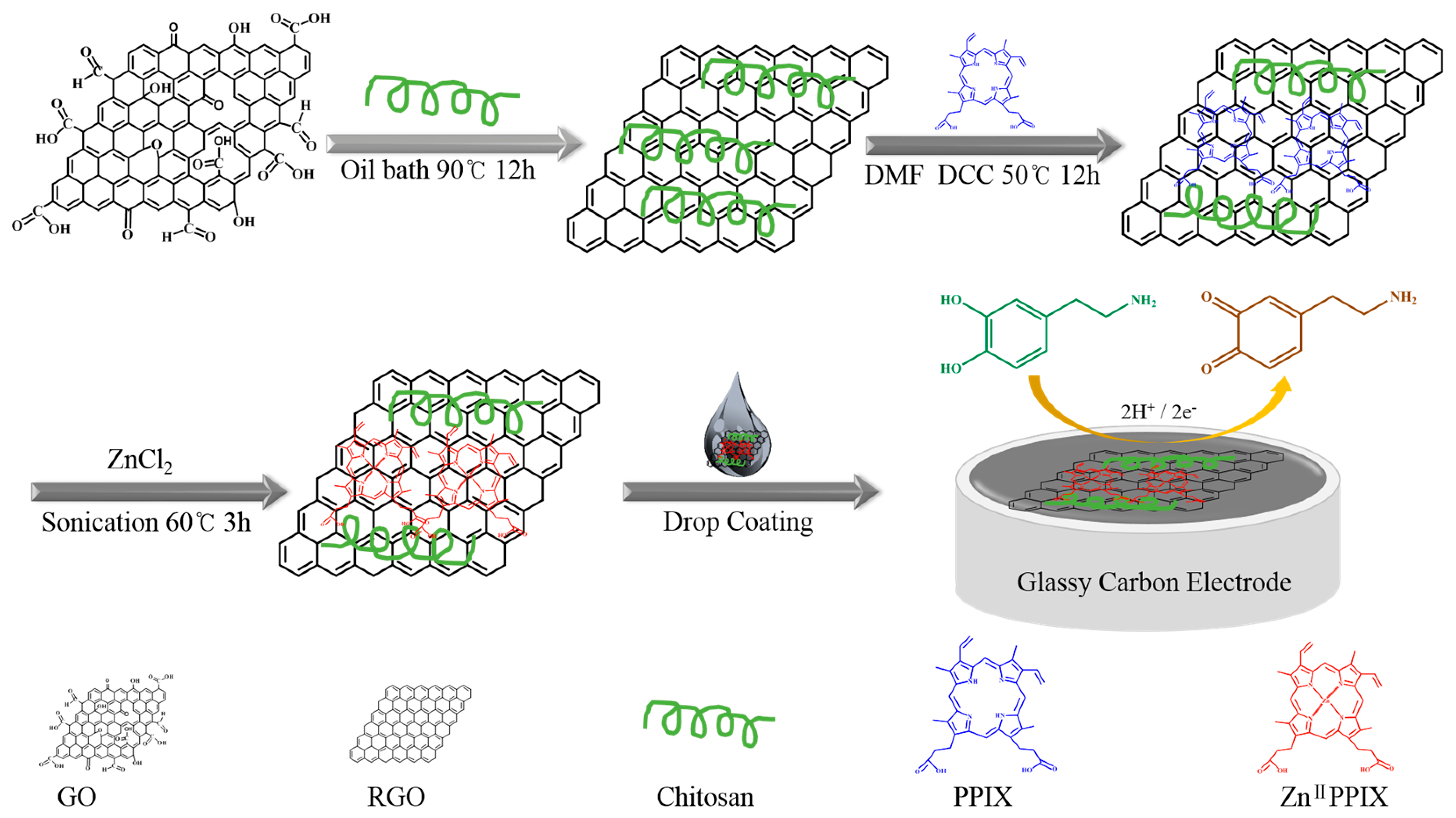
2.2.1. Preparation of Metal Porphyrin–Chitosan–Functionalized rGO
2.2.2. Construction of the Me-PPIX-CS-rGO/GCE Sensing Interface
2.3. Electrochemical Testing
2.4. Sample Preparation Method for Sensing Interface Applicability
3. Results and Discussion
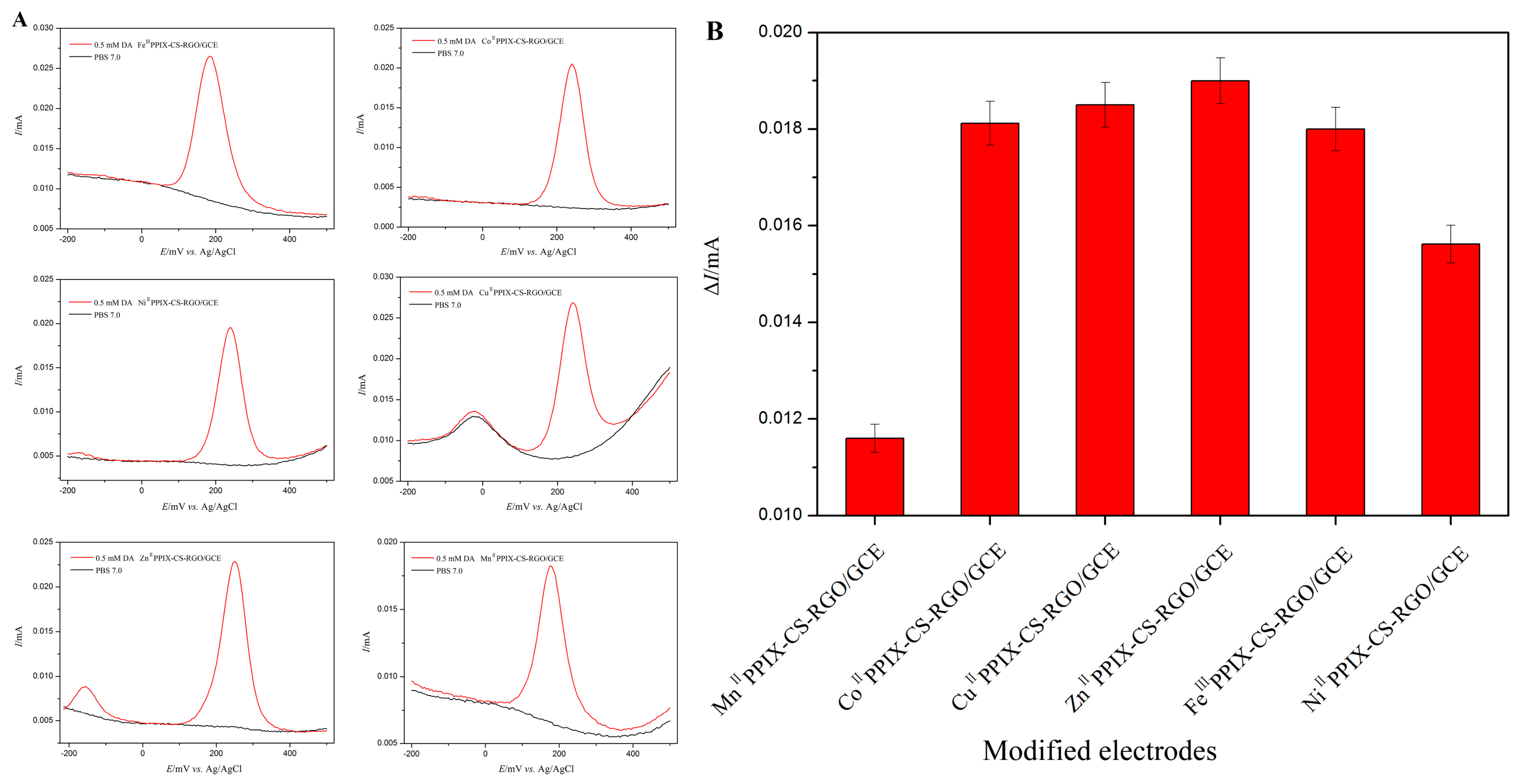
3.1. Screening of Transition Metal Ions in Me-PPIX-CS-rGO Nanocomposites
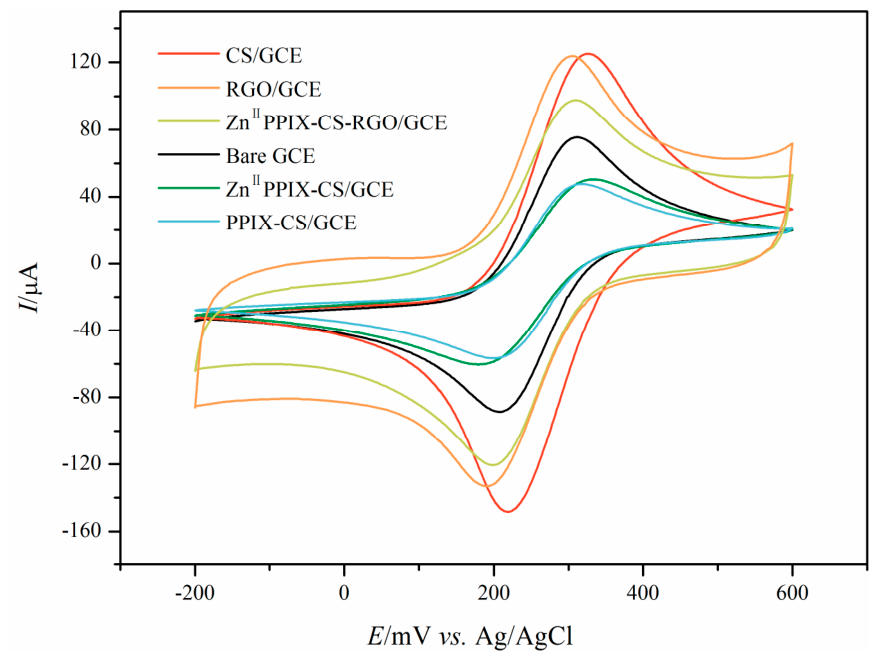
3.2. Electrochemical Performance in the Potassium Ferricyanide System
3.3. Characterization of Nanocomposites
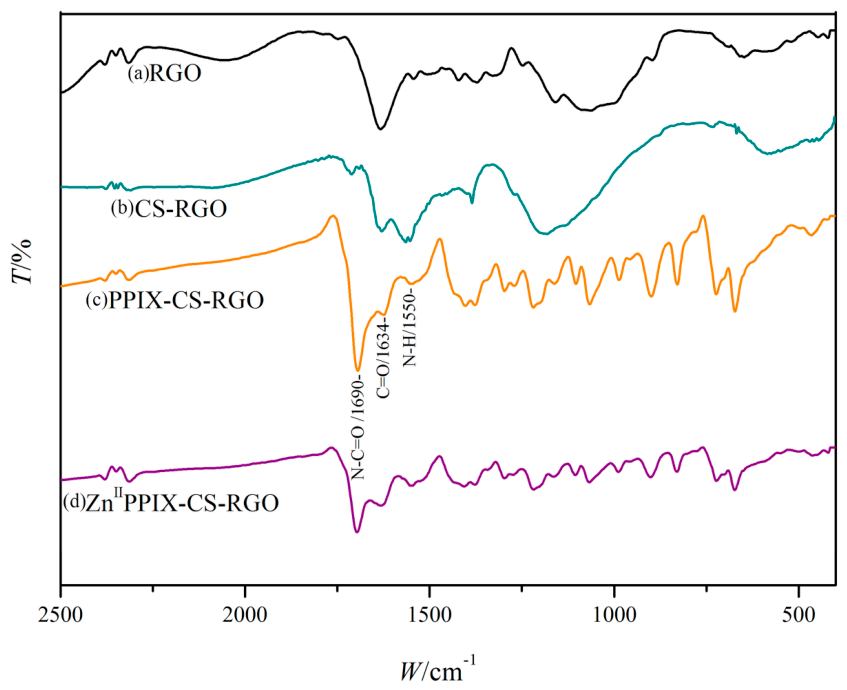
3.3.1. FTIR Characterization
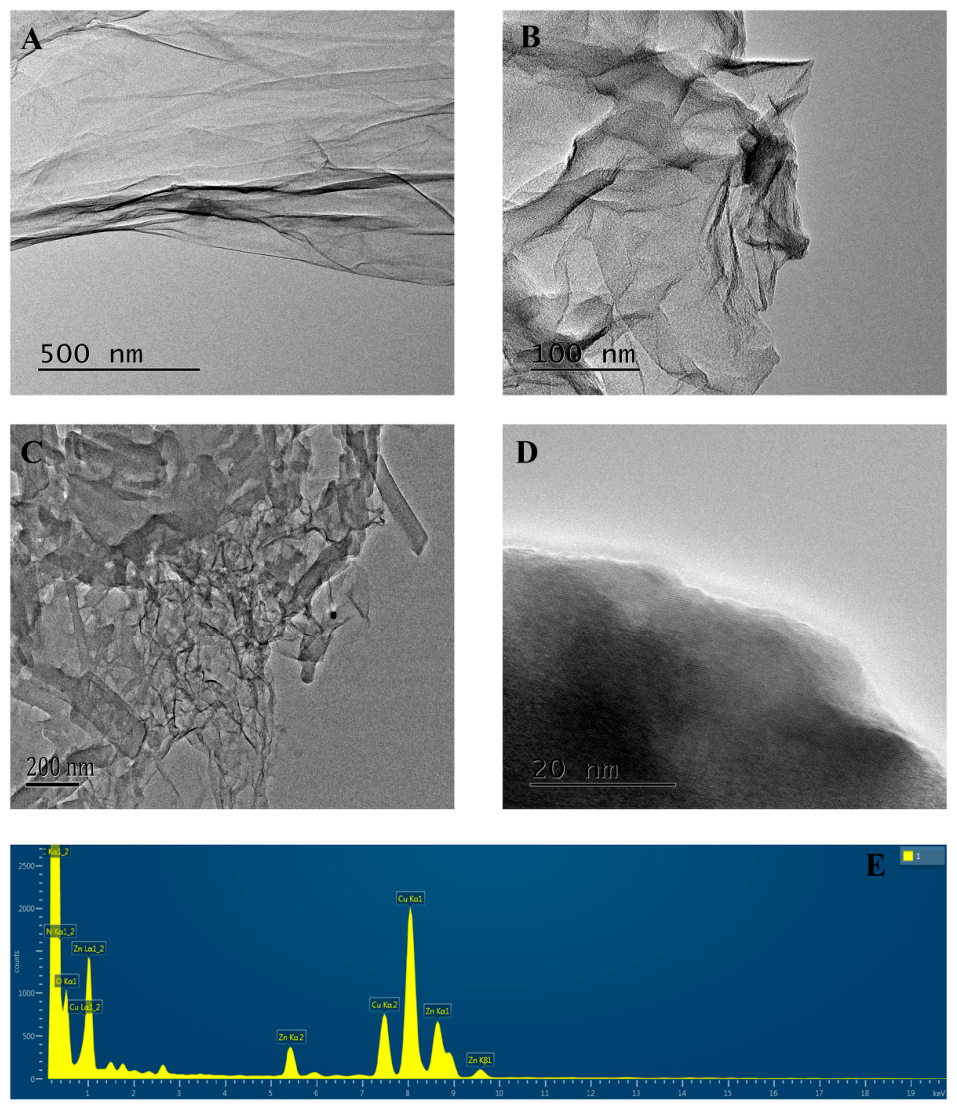
3.3.2. TEM and EDX Characterization
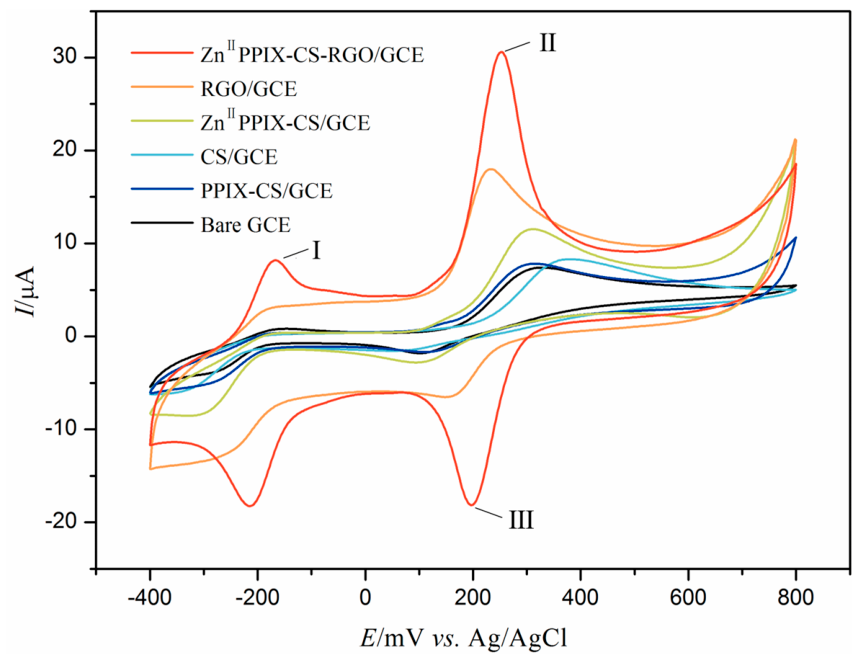
3.4. Electrochemical Response of Dopamine to Zn(II)-PPIX-CS-rGO Nanocomposite
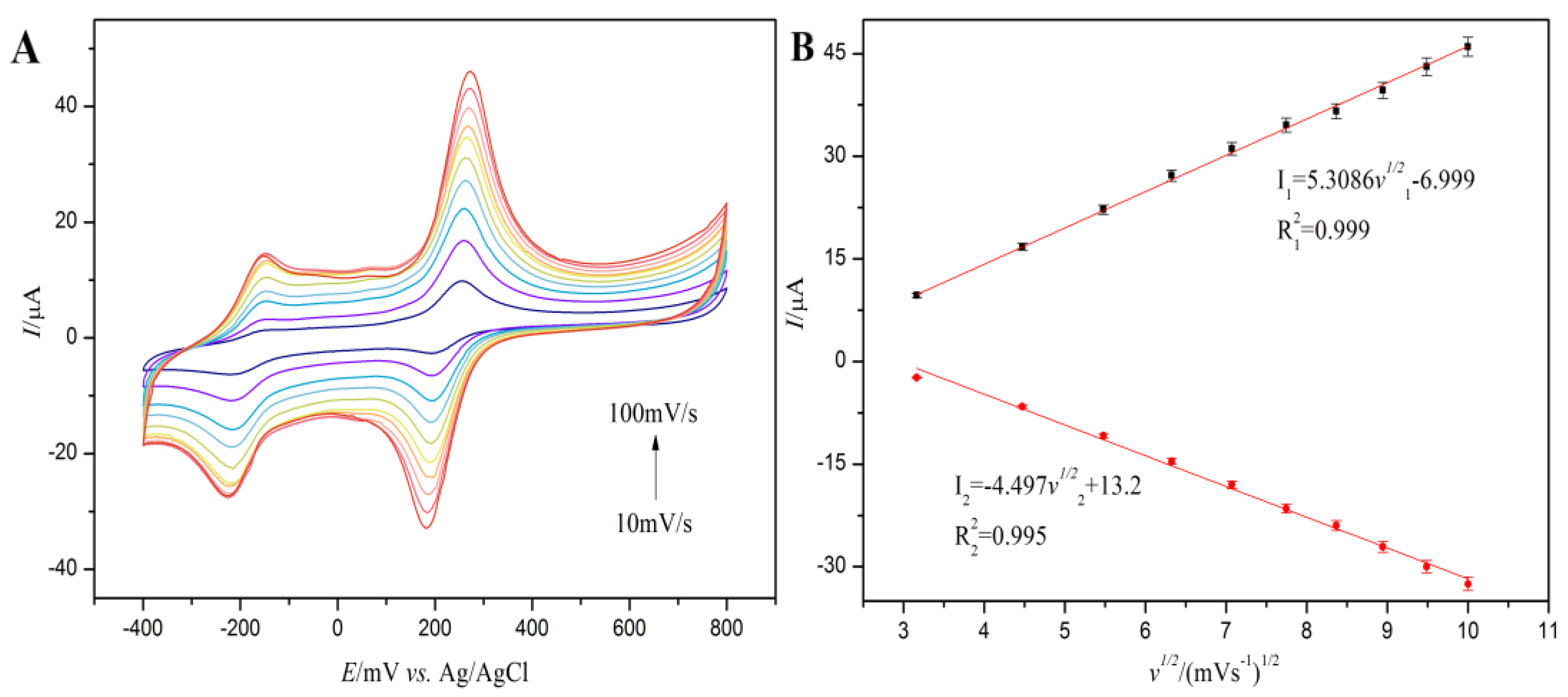
3.5. Influence of Scan Rate
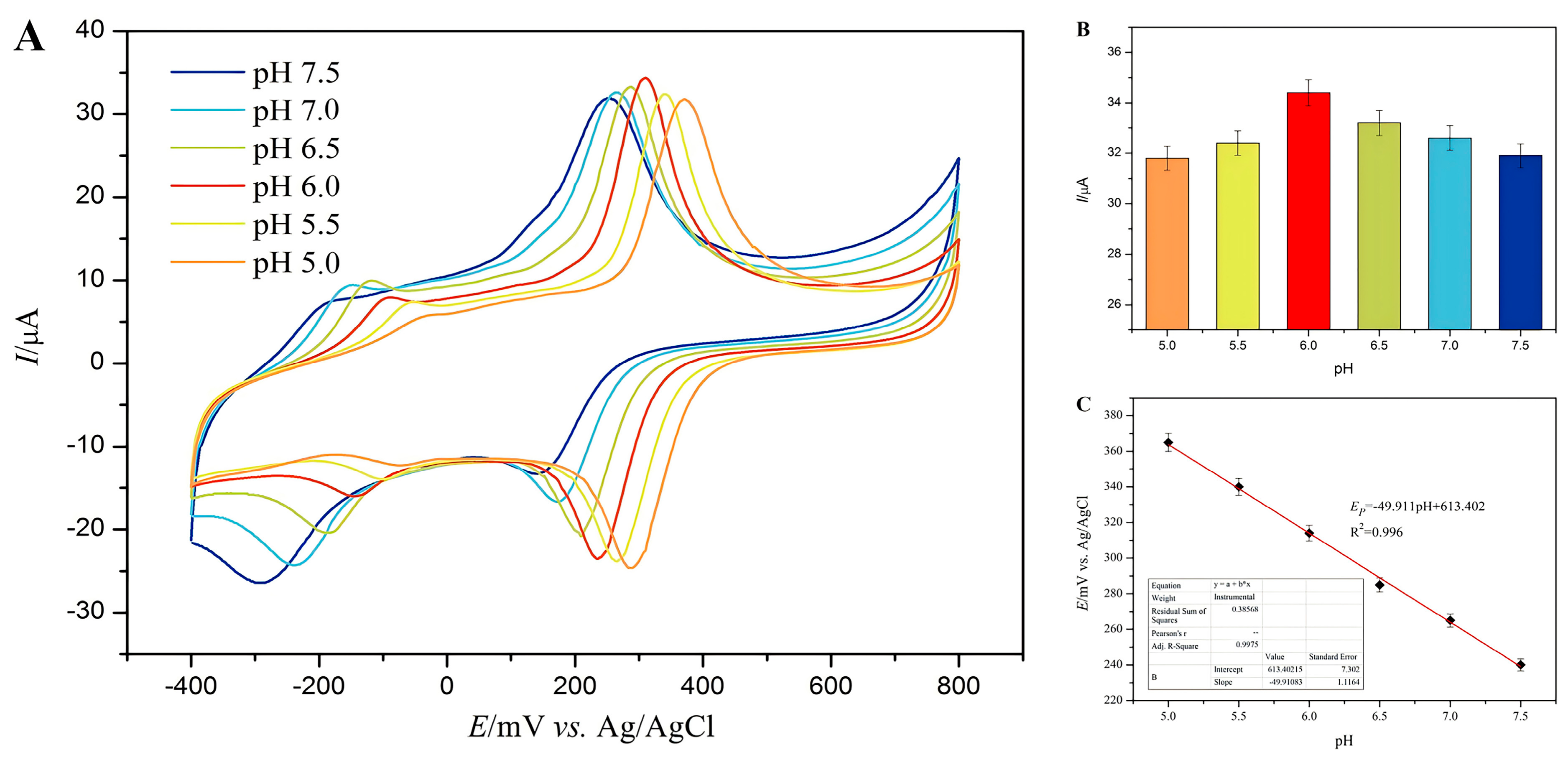
3.6. Effect of pH Value
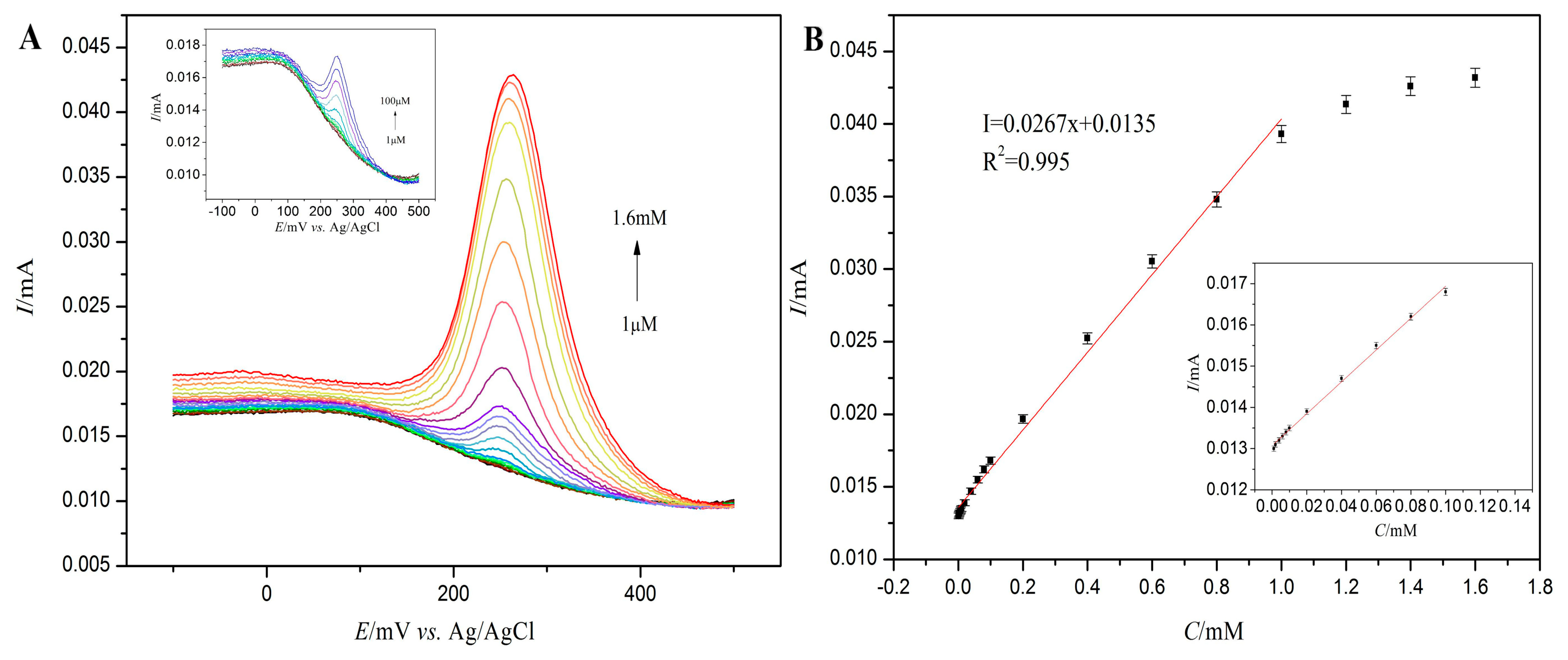
3.7. Electrochemical Detection of Dopamine Using Zn(II)-PPIX-CS-rGO/GCE
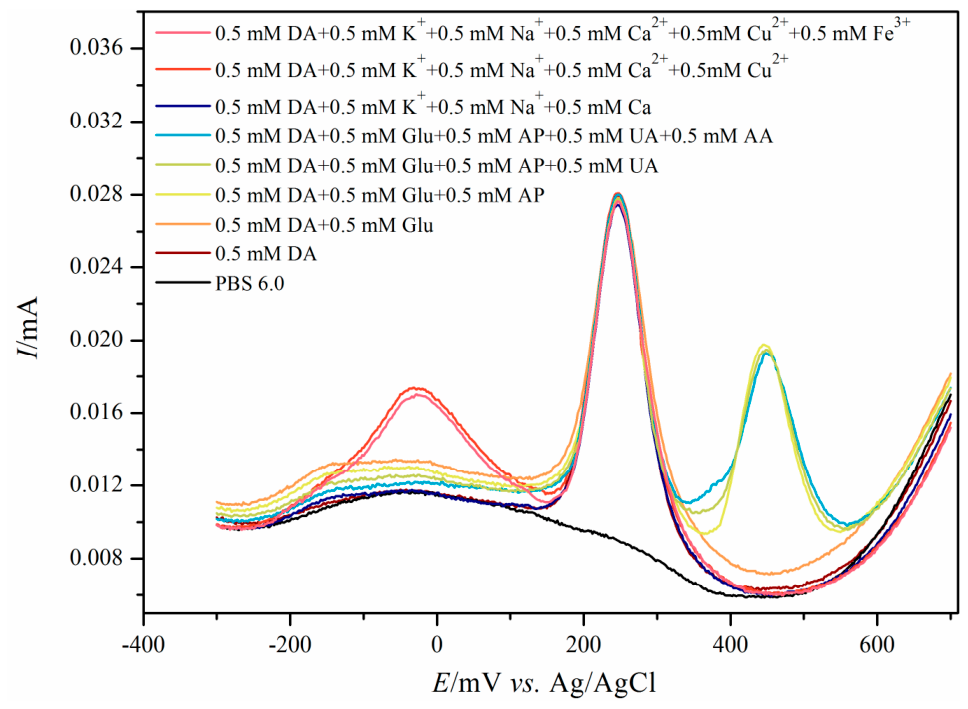
3.8. Evaluation of Reproducibility, Stability, Selectivity, and Applicability
4. Conclusions
Supplementary Materials
Author Contributions
Funding
Institutional Review Board Statement
Informed Consent Statement
Data Availability Statement
Acknowledgments
Conflicts of Interest
References
- Beaulieu, J.M.; Gainetdinov, R.R. The physiology, signaling, and pharmacology of dopamine receptors. Pharmacol. Rev. 2011, 63, 182–217. [Google Scholar] [CrossRef]
- Juárez Olguín, H.; Calderón Guzmán, D.; Hernández García, E.; Barragán Mejía, G. The role of dopamine and its dysfunction as a consequence of oxidative stress. Oxid. Med. Cell. Longev. 2016, 2016, 9730467. [Google Scholar] [CrossRef]
- Bicker, J.; Fortuna, A.; Alves, G.; Falcão, A. Liquid chromatographic methods for the quantification of catecholamines and their metabolites in several biological samples—A review. Anal. Chim. Acta 2013, 768, 12–34. [Google Scholar] [CrossRef]
- Bucher, E.S.; Wightman, R.M. Electrochemical analysis of neurotransmitters. Annu. Rev. Anal. Chem. 2015, 8, 239–261. [Google Scholar] [CrossRef] [PubMed]
- Mondal, R.; Mukherjee, N.; Ahmed, S.F. A comprehensive review on the enzyme-free electrochemical dopamine sensing: Development and challenges since inception. Inorg. Chem. Commun. 2025, 178, 114449. [Google Scholar] [CrossRef]
- Kamal Eddin, F.B.; Wing Fen, Y. Recent advances in electrochemical and optical sensing of dopamine. Sensors 2020, 20, 1039. [Google Scholar] [CrossRef]
- Shao, S.; Zhang, J.; Deng, K.-Q.; Yang, J.; Yang, S.-M. Detection of Dopamine by Enzyme-Free Sensor Constructed by Nickel-Cobalt Bimetallic-porphyrin Organic Framework Composites. Chin. J. Appl. Chem. 2022, 39, 1098–1107. [Google Scholar] [CrossRef]
- An, N.; Su, N.; Li, X.-R.; Liu, J.-Y.; Wang, Q.-Y. Study on Dopamine Electrochemical Sensing Based on Au@MoS2. J. Electrochem. 2025, 31, 2407241. [Google Scholar] [CrossRef]
- Jackowska, K.; Krysinski, P. New trends in the electrochemical sensing of dopamine. Anal. Bioanal. Chem. 2013, 405, 3753–3771. [Google Scholar] [CrossRef]
- Sajid, M.; Nazal, M.K.; Mansha, M.; Alsharaa, A.; Jillani, S.M.S.; Basheer, C. Chemically modified electrodes for electrochemical detection of dopamine in the presence of uric acid and ascorbic acid: A review. TrAC Trends Anal. Chem. 2016, 76, 15–29. [Google Scholar] [CrossRef]
- Balkourani, G.; Brouzgou, A.; Tsiakaras, P. A review on recent advancements in electrochemical detection of dopamine using carbonaceous nanomaterials. Carbon 2023, 213, 118281. [Google Scholar] [CrossRef]
- Shao, Y.; Wang, J.; Wu, H.; Liu, J.; Aksay, I.A.; Lin, Y. Graphene based electrochemical sensors and biosensors: A review. Electroanalysis 2010, 22, 1027–1036. [Google Scholar] [CrossRef]
- Rinaudo, M. Chitin and chitosan: Properties and applications. Prog. Polym. Sci. 2006, 31, 603–632. [Google Scholar] [CrossRef]
- Badminton, M.N. From chemistry to genomics: A concise history of the porphyrias. Liver Int. 2024, 44, 2144–2155. [Google Scholar] [CrossRef] [PubMed]
- Montmeat, P.; Madonia, S.; Pasquinet, E.; Hairault, L.; Gros, C.; Barbe, J.-M.; Guilard, R. Metalloporphyrins as sensing material for quartz-crystal microbalance nitroaromatics sensors. IEEE Sens. J. 2005, 5, 610–615. [Google Scholar] [CrossRef]
- Gilardi, G.; Di Nardo, G. Heme iron centers in cytochrome P450: Structure and catalytic activity. Rend. Lincei 2017, 28, 159–167. [Google Scholar] [CrossRef]
- Basova, T. Phthalocyanine and Porphyrin Derivatives and Their Hybrid Materials in Optical Sensors Based on the Phenomenon of Surface Plasmon Resonance. Chemosensors 2024, 12, 56. [Google Scholar] [CrossRef]
- Bouicha, M.A.; Mabrouk, C.; Gassoumi, B.; Barhoumi, H.; Molton, F.; Loiseau, F.; Roisnel, T.; Medina, A.S.; Cornejo Bravo, J.M.; Lopez-Maldonado, E.A.; et al. New zinc(ii) metalloporphyrin: Molecular structure, spectroscopic characterization, electrochemical sensing of dopamine, and catalytic dye degradation. RSC Adv. 2025, 15, 9810–9827. [Google Scholar] [CrossRef]
- De Oliveira, I.; Pereira, J.V.D.; Pereira, E.C.d.S.; de Souza, M.S.; Cazetta, M.L.; da Cruz Neto, C.C.; da Silva Santana, V.; Araújo Pinto, V.H.; Rebouças, J.S.; da Silva Martins, D.C.; et al. Degradation of Dyes Catalyzed by Aminophenyl-Substituted Mn-Porphyrin Immobilized on Chloropropyl Silica Gel and Evaluation of Phytotoxicity. ACS Omega 2024, 9, 29516–29528. [Google Scholar] [CrossRef]
- El-Khalafy, S.H.; Hassanein, M.T.; Salahuddin, N.A.; Alaskary, M.M. Efficient oxidative degradation of Azo dyes by cobalt(II) porphyrin complex supported on modified bentonite and chitosan: Structural characterization and mechanistic insight. Sci. Rep. 2025, 15, 34282. [Google Scholar] [CrossRef]
- Wang, L.; Yang, H.; He, J.; Zhang, Y.; Yu, J.; Song, Y. Cu-Hemin Metal-Organic-Frameworks/Chitosan-Reduced Graphene Oxide Nanocomposites with Peroxidase-Like Bioactivity for Electrochemical Sensing. Electrochim. Acta 2016, 213, 691–697. [Google Scholar] [CrossRef]
- Wu, L.; Feng, L.; Ren, J.; Qu, X. Electrochemical detection of dopamine using porphyrin-functionalized graphene. Biosens. Bioelectron. 2012, 34, 57–62. [Google Scholar] [CrossRef]
- Lv, M.; Mei, T.; Zhang, C.; Wang, X. Selective and sensitive electrochemical detection of dopamine based on water-soluble porphyrin functionalized graphene nanocomposites. RSC Adv. 2014, 4, 9261–9270. [Google Scholar] [CrossRef]
- Ma, J.; Bai, W.; Liu, X.; Zheng, J. Electrochemical dopamine sensor based on bi-metallic Co/Zn porphyrin metal–organic framework. Microchim. Acta 2022, 189, 20. [Google Scholar] [CrossRef]
- Ji, L.; Wang, Q.; Gong, X.; Chen, J.; Zhu, X.; Li, Z.; Hu, P. Ultrasensitive and simple dopamine electrochemical sensor based on the synergistic effect of Cu-TCPP frameworks and graphene nanosheets. Molecules 2023, 28, 2687. [Google Scholar] [CrossRef] [PubMed]
- Yan, R.; Zhao, Y.; Geng, H.; Yan, M.; Wang, J.; Han, S. Electrochemical sensor capable of enhancing dopamine sensitivity based on micron-sized metal–organic frameworks. Biosensors 2025, 15, 348. [Google Scholar] [CrossRef] [PubMed]
- Guo, Y.; Sun, X.; Liu, Y.; Wang, W.; Qiu, H.; Gao, J. One pot preparation of rGO or Au (Ag) nanoparticle-rGO hybrids using chitosan as a reducing and stabilizing agent and their use in methanol electrooxidation. Carbon 2012, 50, 2513–2523. [Google Scholar] [CrossRef]
- Elhami, N.; Pazhang, M.; Beygi-khosrowshahi, Y.; Dehghani, A. Development of nanocomposites based on chitosan/rGO for wound healing application. Int. J. Biol. Macromol. 2024, 258, 128832. [Google Scholar] [CrossRef] [PubMed]
- Alharbi, Y.R.; Popoola, S.A.; Altaleb, H.A.; Fathalla, M. A facile synthesis of porphyrin–chitosan conjugate and its application for removing methyl orange and heavy metals from polluted water. J. Taibah Univ. Sci. 2025, 19, 2559475. [Google Scholar] [CrossRef]
- Gou, H.; He, J.; Nie, R.; Xu, D.; Rao, H.; Zhao, G. A stable electrochemical chiral interface based on graphene–chitosan composites for tyrosine enantiomers recognition. Microchem. J. 2023, 190, 108712. [Google Scholar] [CrossRef]
- Ren, Z.; Li, H.; Li, J.; Cai, J.; Zhong, L.; Ma, Y.; Pang, Y. Green synthesis of rGO/chitosan/gold nanoparticles composites and their catalytic activity for reduction of 4-nitrophenol. Int. J. Biol. Macromol. 2023, 229, 732–745. [Google Scholar] [CrossRef]
- Salamon, J.; Simi, A.; Prabu, H.J.; Sahayaraj, A.F.; Kennedy, A.J.S.; Johnson, I. Synthesis and characterization of rGO-ZnO/Elwendia persica seed reinforced hybrid nanocomposite for high-performance supercapacitor applications. J. Inorg. Organomet. Polym. Mater. 2024, 35, 342–355. [Google Scholar] [CrossRef]
- Kant, R.; Ahuja, V.; Joshi, K.; Gupta, H.; Bhardwaj, S. Tuning the dielectric characteristics and energy storage properties of Ni-ZnO/rGO nanocomposite. Vacuum 2022, 204, 111375. [Google Scholar] [CrossRef]
- Srirattanapibul, S.; Tang, I.M.; Thongmee, S. Photocatalytic reduction of Cr6+ by ZnO decorated on rGO nanocomposites. Mater. Res. Bull. 2020, 122, 110705. [Google Scholar] [CrossRef]
- Amanat, M.; Shahzadi, T.; Riaz, T.; Zaib, M.; Nawaz, F.; Tawfeek, A.M.; Khawar, M.R.; Park, S.J.; Choi, D. Enhanced catalytic degradation of amoxicillin by phyto-mediated synthesised ZnO NPs and ZnO-rGO hybrid nanocomposite: Assessment of antioxidant activity, adsorption, and thermodynamic analysis. Nanotechnol. Rev. 2024, 13, 20230189. [Google Scholar] [CrossRef]
- Zhang, H.; Qu, H.; Cui, J.; Duan, L. A simple electrochemical immunosensor based on a chitosan/rGO nanocomposite for sensitive detection of biomarkers of malignant melanoma. RSC Adv. 2022, 12, 25844–25851. [Google Scholar] [CrossRef] [PubMed]
- Hamid, F.H.; Rasyid, F.R.; Mashuni, M.; Ahmad, L.O.; Jahiding, M. Enhanced rGO/ZnO/chitosan nanozyme photocatalytic technology for efficient degradation of diazinon pesticide contaminated water. Adsorption 2024, 31, 22. [Google Scholar] [CrossRef]
- Liu, C.-Y.; Chou, Y.-C.; Tsai, J.-H.; Huang, T.-M.; Chen, J.-Z.; Yeh, Y.-C. Tyrosinase/Chitosan/Reduced Graphene Oxide Modified Screen-Printed Carbon Electrode for Sensitive and Interference-Free Detection of Dopamine. Appl. Sci. 2019, 9, 622. [Google Scholar] [CrossRef]
- Begum, H.; Ahmed, M.S.; Jeon, S. New Approach for Porous Chitosan-Graphene Matrix Preparation through Enhanced Amidation for Synergic Detection of Dopamine and Uric Acid. ACS Omega 2017, 2, 3043–3054. [Google Scholar] [CrossRef]
- Lopes, A.G.R.; Silva, R.M.; Fatibello-Filho, O.; Silva, T.A. Electrochemical Sensing of Dopamine Neurotransmitter by Deep Eutectic Solvent–Carbon Black–Crosslinked Chitosan Films: Charge Transfer Kinetic Studies and Biological Sample Analysis. Chemosensors 2015, 13, 254. [Google Scholar] [CrossRef]
- Chen, H.; You, Z.; Hong, Y.; Wang, X.; Zhao, M.; Luan, Y.; Ying, Y.; Wang, Y. Gas-responsive two-dimensional metal–organic framework composites for trace visualization of volatile organic compounds. Biosens. Bioelectron. 2024, 245, 115826. [Google Scholar] [CrossRef]
- Van Duy, L.; Thi Nguyet, T.; Hung, C.M.; Van Duy, N.; Hoa, N.D.; Catini, A.; Magna, G.; Paolesse, R.; Biasioli, F.; Tonezzer, M.; et al. Light-assisted room temperature ammonia gas sensor based on porphyrin-coated V2O5 nanosheets. Sens. Actuators B Chem. 2024, 409, 135–582. [Google Scholar] [CrossRef]
- Koch, M.; Caparrotti, H.; Pauly, C.; Janka, O.; Erzina, M.; Silina, Y. One-step Pd-NPs/tyrosinase/Nafion biosensor for dopamine detection in the low μM range: ORR interference, defect-rich surface chemistry effects, and sensing pathway differentiation. Sens. Bio Sens. Res. 2026, 51, 100942. [Google Scholar] [CrossRef]
- Liu, Z.F.; Wang, X.Y.; Wei, Y.H.; Xie, W.; Li, S.; Chen, Z. Photothermal enhanced biosensing platform of Fe3O4@CS-Au-Lac for dopamine detection. Microchem. J. 2024, 198, 110094. [Google Scholar] [CrossRef]
- Manimekalai, K.; Nadar, N.R.; Deepak, J.; Santhanalakshmi, P.; Sharma, S.; Krushna, B.R.; Sahu, S.; Akila, K.; Kumar, V.K. Copper-doped NiAl2O4 nanoparticles for enhanced electrochemical dopamine sensing: A novel approach for biosensor development. J. Indian Chem. Soc. 2026, 103, 102513. [Google Scholar] [CrossRef]
- Wang, C.C.; Zhang, Y.; Liu, Y.Y.; Zeng, X.; Jin, C.; Huo, D.; Hou, J.; Hou, C. A wearable flexible electrochemical biosensor with CuNi-MOF@rGO modification for simultaneous detection of uric acid and dopamine in sweat. Anal. Chim. Acta 2024, 1299, 342441. [Google Scholar] [CrossRef] [PubMed]
- Xu, C.H.; Gu, C.C.; Xiao, Q.; Chen, J.; Yin, Z.-Z.; Liu, H.; Fan, K.; Li, L. A highly selective and sensitive biosensor for dopamine based on a surface molecularly imprinted layer to coordinate nano-interface functionalized acupuncture needle. Chem. Eng. J. 2022, 436, 135203. [Google Scholar] [CrossRef]



| Electrode Material | Electrochemical Technique | Liner Range (mM) | LOD (μM) | Sensitivity (mA mM−1 cm−2) | Reference |
|---|---|---|---|---|---|
| Pd-NPs/Tyrosinase/Nafion | CV | 0.001–0.015 | 0.2 | 1.817 | [43] |
| Fe3O4@CS-Au-Lac | DPV | 0.001~1 | 0.79 | - | [44] |
| Copper-doped NiAl2O4 MCPE | DPV | 0.001~0.7 | 0.4 | - | [45] |
| CuNi-MOF@rGO | CV | 0.001~0.5 | 9.41 | 0.019 | [46] |
| MIP/4-MPBA/AuNPs/ANE | DPV | 0.005~1 | 0.14 | - | [47] |
| Zn(II)-PPIX-CS-rGO/GCE | DPV | 0.001~1.0 | 0.05 | 0.30 | This work |
| Sample | HPLC Detected (mM) | Present Method (mM) | RSD (%) | DA Added (mM) | DA Found (mM) | Recovery (%) | RSD (%) |
|---|---|---|---|---|---|---|---|
| DA sample 1 | 0.128 | 0.119 | 3.41 | 0.1 | 0.221 | 102.00 | 3.97 |
| DA sample 2 | 0.107 | 0.097 | 4.52 | 0.2 | 0.310 | 106.50 | 3.65 |
| DA sample 3 | 0.116 | 0.125 | 2.97 | 0.3 | 0.417 | 97.33 | 4.32 |
| Serum sample 1 | - | - | - | 0.1 | 0.095 | 95.00 | 5.01 |
| Serum sample 2 | - | - | - | 0.2 | 0.207 | 103.50 | 2.99 |
| Serum sample 3 | - | - | - | 0.3 | 0.296 | 98.67 | 3.47 |
Disclaimer/Publisher’s Note: The statements, opinions and data contained in all publications are solely those of the individual author(s) and contributor(s) and not of MDPI and/or the editor(s). MDPI and/or the editor(s) disclaim responsibility for any injury to people or property resulting from any ideas, methods, instructions or products referred to in the content. |
© 2026 by the authors. Licensee MDPI, Basel, Switzerland. This article is an open access article distributed under the terms and conditions of the Creative Commons Attribution (CC BY) license.
Share and Cite
Ren, X.; Wang, R.; Zhang, Y.; Zhai, M.; Qin, Y.; Liao, W.; Cao, A.; Chen, Y.; Han, B. Construction and Application Study of a Non-Enzymatic Dopamine Sensor Based on Zinc Porphyrin–Chitosan-Functionalized Reduced Graphene Oxide. Chemosensors 2026, 14, 127. https://doi.org/10.3390/chemosensors14060127
Ren X, Wang R, Zhang Y, Zhai M, Qin Y, Liao W, Cao A, Chen Y, Han B. Construction and Application Study of a Non-Enzymatic Dopamine Sensor Based on Zinc Porphyrin–Chitosan-Functionalized Reduced Graphene Oxide. Chemosensors. 2026; 14(6):127. https://doi.org/10.3390/chemosensors14060127
Chicago/Turabian StyleRen, Xiangyu, Rundong Wang, Yiru Zhang, Mengjin Zhai, Yukun Qin, Wenhao Liao, Anjie Cao, Yuan Chen, and Bingkai Han. 2026. "Construction and Application Study of a Non-Enzymatic Dopamine Sensor Based on Zinc Porphyrin–Chitosan-Functionalized Reduced Graphene Oxide" Chemosensors 14, no. 6: 127. https://doi.org/10.3390/chemosensors14060127
APA StyleRen, X., Wang, R., Zhang, Y., Zhai, M., Qin, Y., Liao, W., Cao, A., Chen, Y., & Han, B. (2026). Construction and Application Study of a Non-Enzymatic Dopamine Sensor Based on Zinc Porphyrin–Chitosan-Functionalized Reduced Graphene Oxide. Chemosensors, 14(6), 127. https://doi.org/10.3390/chemosensors14060127