Ensemble Learning Combined with Laser-Induced Breakdown Spectroscopy for Detecting Pesticide Residues in Xinhui Dried Tangerine Peel

 ,
,
Abstract
1. Introduction
2. Experiments
2.1. Experimental Design and Theoretical Basis
2.1.1. Selection of Excitation Wavelength Band
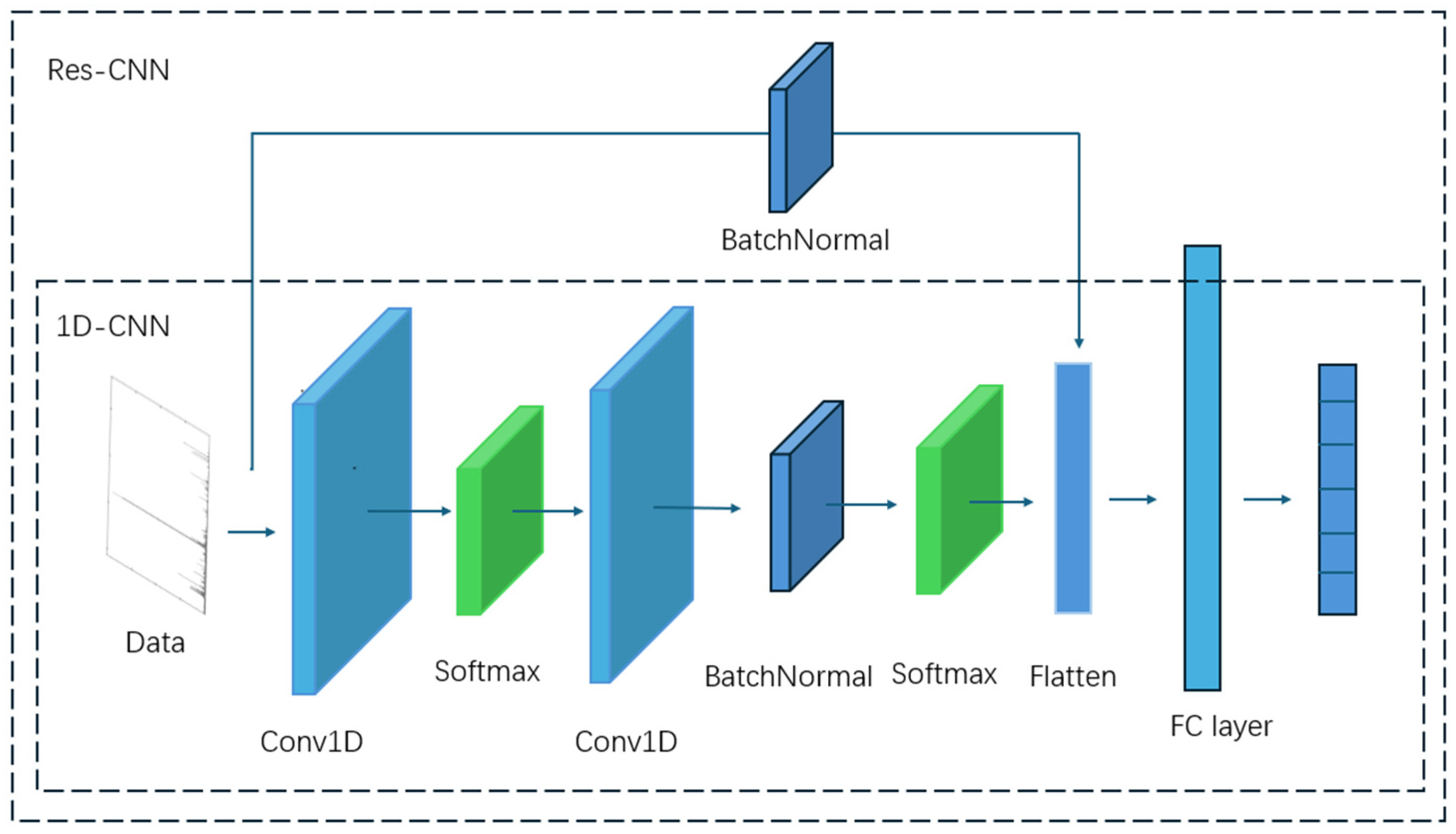
2.1.2. Weak Classifier Design
2.1.3. Training Strategy Design and Selection of Evaluation Metrics
2.1.4. Ensemble Method Design
2.2. Experimental Apparatus and Procedure
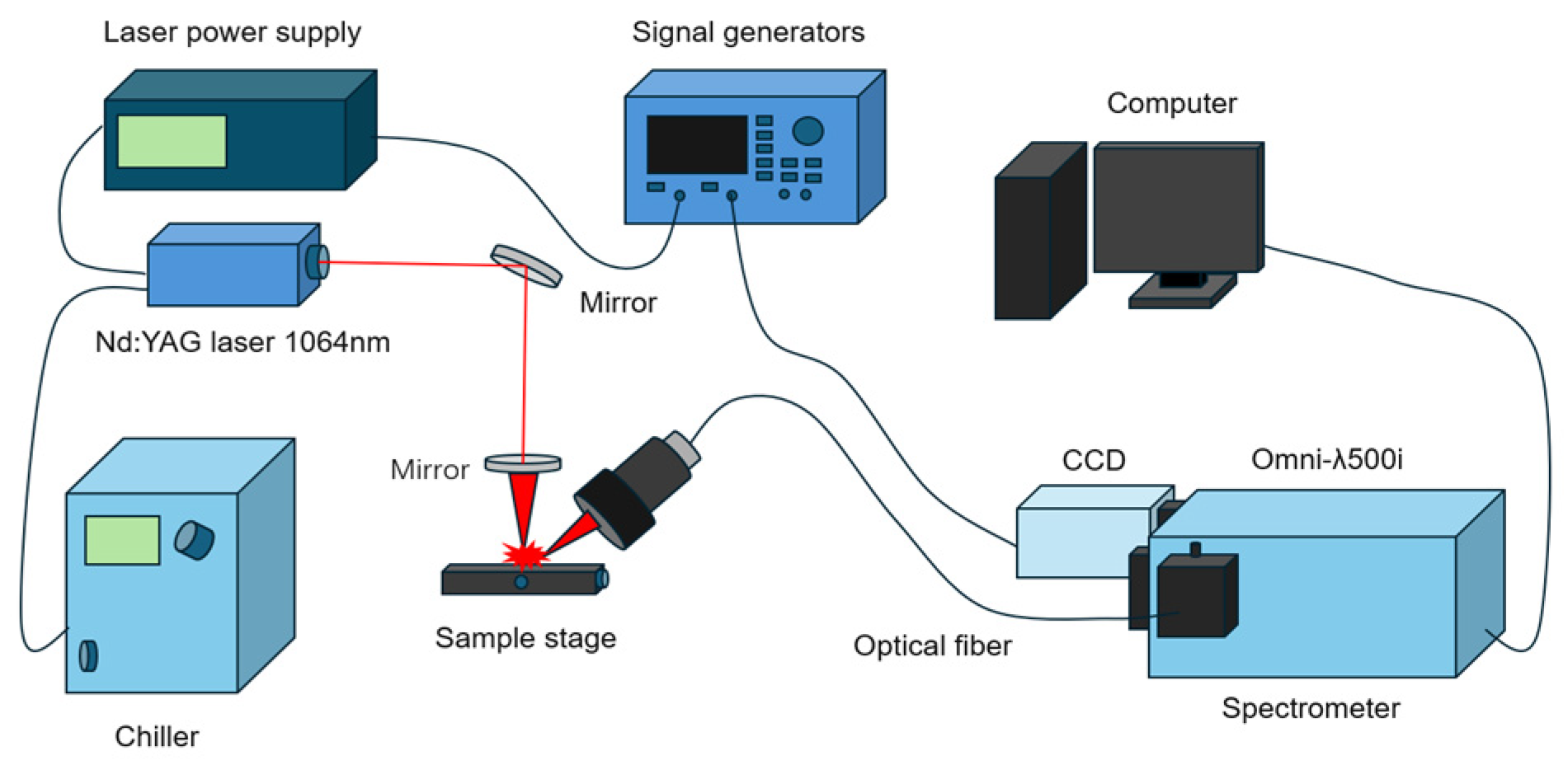
2.2.1. Experimental Equipment
2.2.2. Sample Preparation
2.2.3. Dataset
2.2.4. Training Procedure
3. Experimental Results
Training Performance
4. Analysis and Discussion
5. Conclusions
Author Contributions
Funding
Institutional Review Board Statement
Informed Consent Statement
Data Availability Statement
Conflicts of Interest
Abbreviations
| LIBS | Laser-induced breakdown spectroscopy |
| HPLC-MS/MS | High-performance liquid chromatography–tandem mass spectrometry |
| GC-MS/MS | Gas chromatography–tandem mass spectrometry |
| LC/MS-MS | Liquid chromatography–tandem mass spectrometry |
| SPE | Solid-phase extraction |
| CNN | Convolutional neural network |
| LSTM | Long short-term memory |
| RS | Random subspace |
| LDA | Linear discriminant analysis |
| SVM | Support vector machine |
| PLS-DA | Partial least squares discriminant analysis |
| RF | Random forest |
| ET | Extra trees |
| GBDT | Gradient boosting decision tree |
| NIST | National Institute of Standards and Technology |
| MSE | Mean squared error |
| TP | True positive |
| TN | True negative |
| FP | False positive |
| FN | False positive |
| CCD | Charge-coupled device |
| ALS | Alternating least squares |
| SGD | Stochastic gradient descent |
| Eloss-CNN | EnsembleLoss-Convolutional Neural Network |
| Eloss-Res-CNN | EnsembleLoss-Residual-Convolutional Neural Network |
| Eloss-LIBS-UNet | EnsembleLoss-LIBS-UNet |
| Grad-CAM | Gradient-weighted class activation mapping |
References
- Zhang, R.; Zhang, M.; Chen, Y.; Wang, C.; Zhang, C.; Heuberger, H.; Li, H.; Li, M. Future development of Good Agricultural Practice in China under globalization of traditional herbal medicine trade. Chin. Herb. Med. 2021, 13, 472–479. [Google Scholar] [CrossRef] [PubMed]
- Ali, A.H. High-performance liquid chromatography (HPLC): A review. Ann. Adv. Chem. 2022, 6, 010–020. [Google Scholar] [CrossRef]
- Teonata, N.; Wijaya, V.A.; Vitaloka, V.S.; Attamimi, M.T.; Kartikawati, M. An introduction to different types of gas chromatography. J. Sains Dan Terap. Kim. 2021, 15, 8–17. [Google Scholar] [CrossRef]
- Ma, D.; Wang, S.; Shi, Y.; Ni, S.; Tang, M.; Xu, A. The development of traditional Chinese medicine. J. Tradit. Chin. Med. Sci. 2021, 8, S1–S9. [Google Scholar] [CrossRef]
- Thomas, J.; Joshi, H.C. Review on Laser Induced Breakdown Spectroscopy: Methodology and Technical Developments. Appl. Spectrosc. Rev. 2024, 59, 124–155. [Google Scholar] [CrossRef]
- Castorena, J.; Oyen, D.; Ollila, A.; Legget, C.; Lanza, N. Deep spectral CNN for laser induced breakdown spectroscopy. Spectrochim. Acta Part B At. Spectrosc. 2021, 178, 106125. [Google Scholar] [CrossRef]
- Yang, F.; Xu, W.; Cui, Z.; Liu, X.; Xu, X.; Jia, L.; Chen, Y.; Shu, R.; Li, L. Convolutional neural network chemometrics for rock identification based on laser-induced breakdown spectroscopy data in Tianwen-1 pre-flight experiments. Remote Sens. 2022, 14, 5343. [Google Scholar] [CrossRef]
- Ma, S.; Xu, S.; Pan, C.; Fang, J.; Han, F.; Xia, Y.; Ding, W.; Chen, Y.; Hu, Y. TrCSL: A Transferred CNN-SE-LSTM Model for High-accuracy Quantitative Analysis of Laser-induced Breakdown Spectroscopy with Small Samples. J. Anal. At. Spectrom. 2025, 40, 1810–1820. [Google Scholar] [CrossRef]
- Hu, Z.; Cheng, C.; Xu, H.; Huang, L. Automatic identification of modal parameters of random subspaces based on spectral clustering. Eng. Mech. 2026, 43, 39–49. [Google Scholar] [CrossRef]
- Chu, Y.; Chen, F.; Sheng, Z.; Zhang, D.; Zhang, S.; Wang, W.; Jin, H.; Qi, J.; Guo, L. Blood cancer diagnosis using ensemble learning based on a random subspace method in laser-induced breakdown spectroscopy. Biomed. Opt. Express 2020, 11, 4191–4202. [Google Scholar] [CrossRef] [PubMed]
- Shih, M.; Yuan, Y.; Shi, G. Comparative analysis of LDA, PLS-DA, SVM, RF, and voting ensemble for discrimination origin in greenish-white to white nephrites using LIBS. J. Anal. At. Spectrom. 2024, 39, 1560–1570. [Google Scholar] [CrossRef]
- Wang, W.; Shi, S.; Liu, Y.; Hou, Z.; Qi, J.; Guo, L. Staging classification of omicron variant SARS-CoV-2 infection based on dual-spectrometer LIBS (DS-LIBS) combined with machine learning. Opt. Express 2023, 31, 42413–42427. [Google Scholar] [CrossRef] [PubMed]
- Pokrajac, D.D.; Sivakumar, P.; Markushin, Y.; Milovic, D.; Holness, G.; Liu, J.; Melikechi, N.; Rana, M. Modeling of Laser-Induced Breakdown Spectroscopic Data Analysis by an Automatic Classifier. Int. J. Data Sci. Anal. 2019, 8, 213–220. [Google Scholar] [CrossRef] [PubMed]
- Ma, J. Laser-Induced Breakdown Spectroscopy Signal Enhancement Technology and Its Application in Quantitative Analysis of Cd Elements in Soil. Master’s Thesis, Henan Agricultural University, Zhengzhou, China, 2024. [Google Scholar] [CrossRef]
- Fu, X. Study on the Influencing Factors and Methods of Rapid Measurement of Soil Elements Using LIBS. Ph.D. Thesis, Southwest University, Chongqing, China, 2020. [Google Scholar] [CrossRef]
- Fu, X.; Peng, Y.; Liu, Y.; Lin, Y.; Gui, G.; Gacanin, H.; Adachi, F. Semi-supervised specific emitter identification method using metric-adversarial training. IEEE Internet Things J. 2023, 10, 10778–10789. [Google Scholar] [CrossRef]
- DB44/T 604-2009; Product of geographical indication—Xinhui mandarin orange peel. Guangdong Provincial Quality and Technical Supervision Bureau: Jiangmen Guangdong, China.
- Kukreti, A.; Reddy, N.K. Safeguarding Citrus: Exploring State-of-the-Art Management. In Challenges in Plant Disease Detection and Recent Advancements; IntechOpen: London, UK, 2024; Volume 157. [Google Scholar] [CrossRef]
- Pan, G.; Shi, J.; Qiu, R.; Wang, H.; Wam, Q.; Zhang, Z.; Wang, K. Baseline correction algorithm for laser-induced breakdown spectroscopy. Appl. Opt. 2022, 43, 538–543. [Google Scholar] [CrossRef]



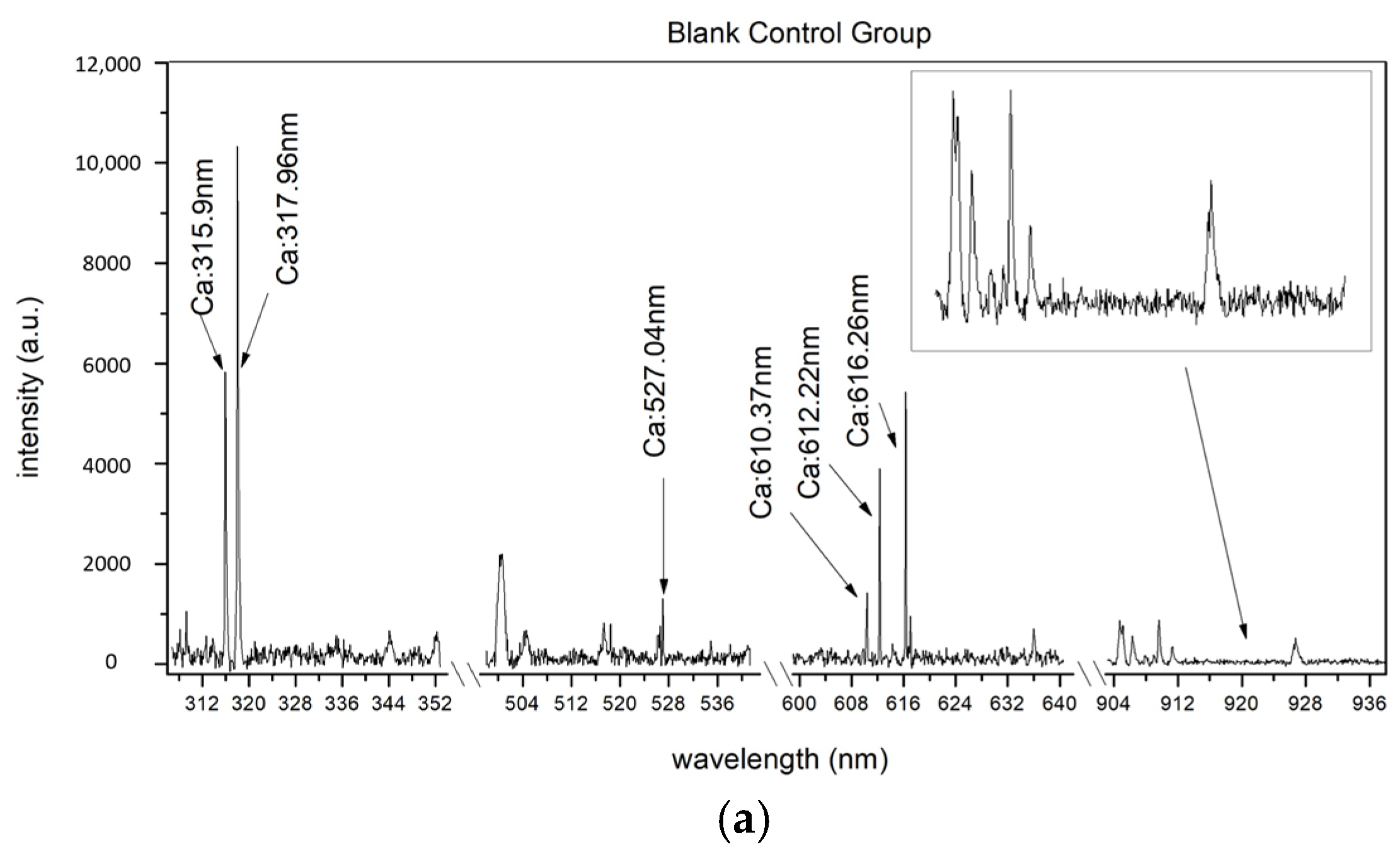
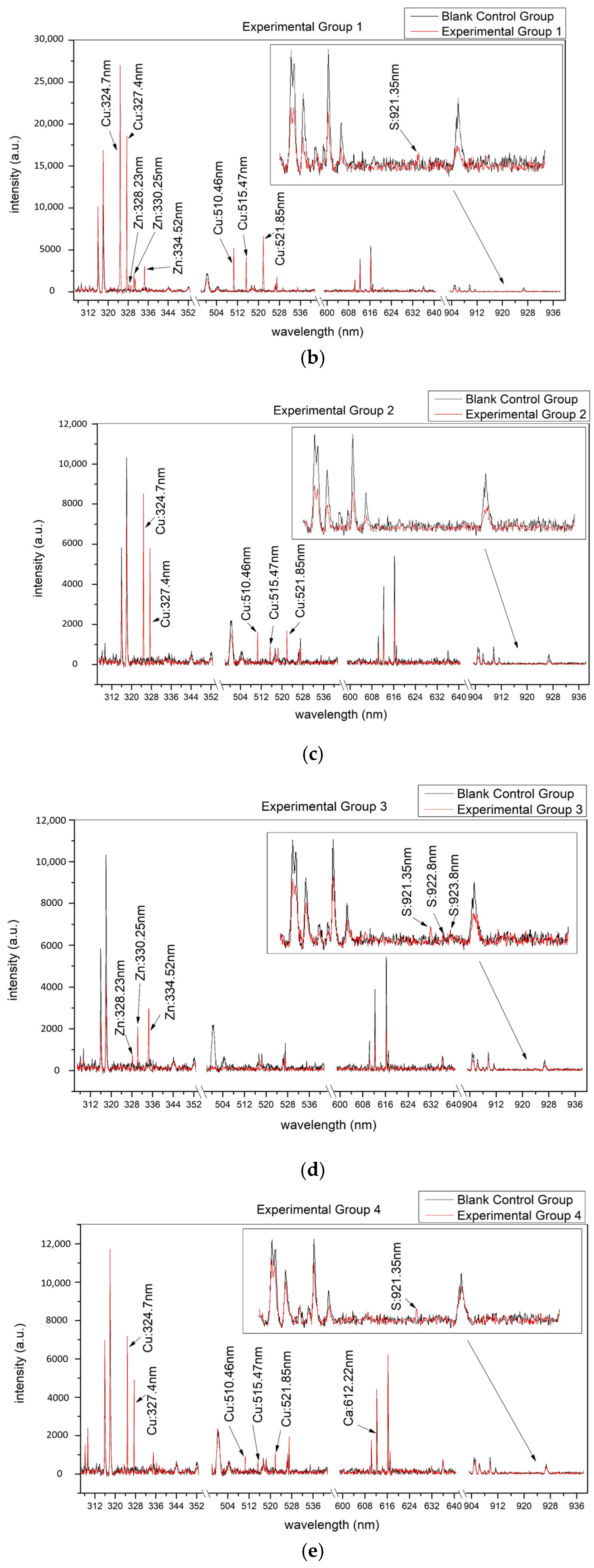
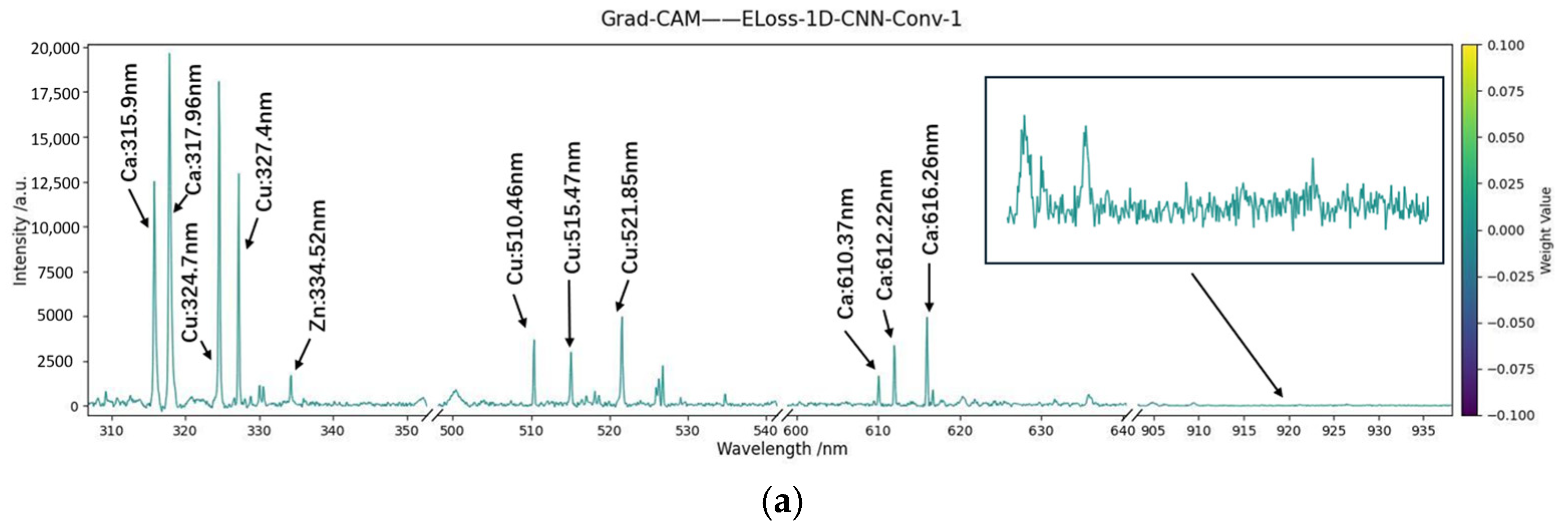
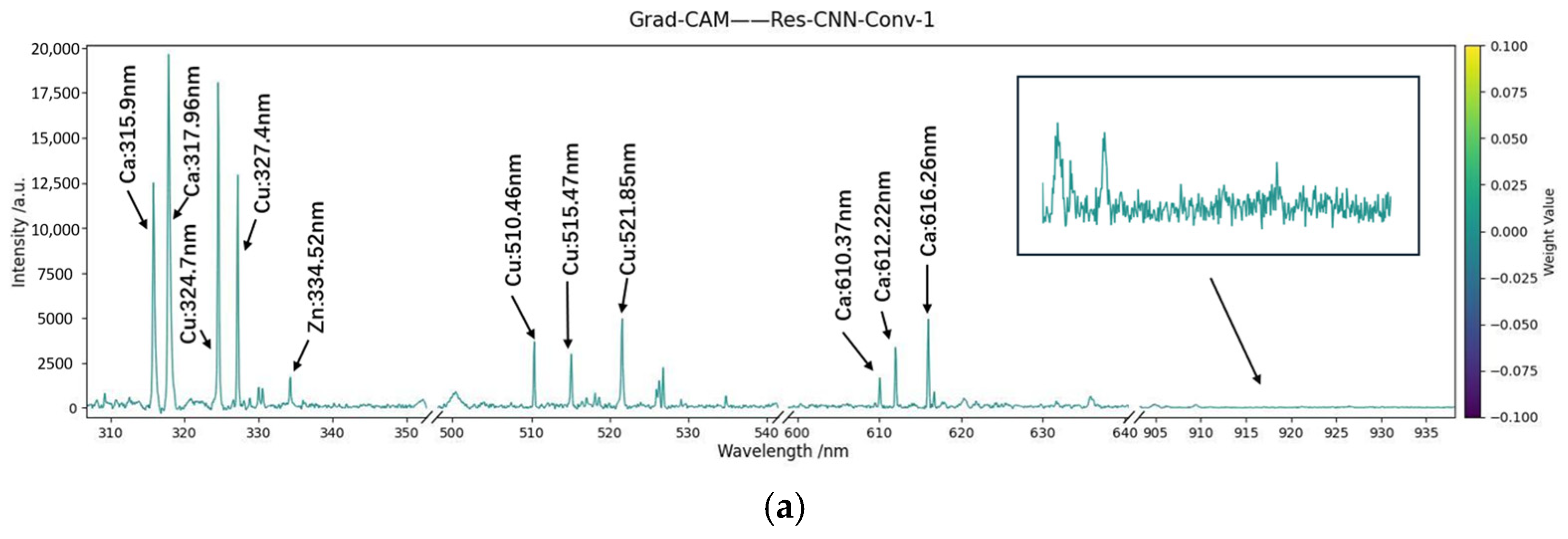
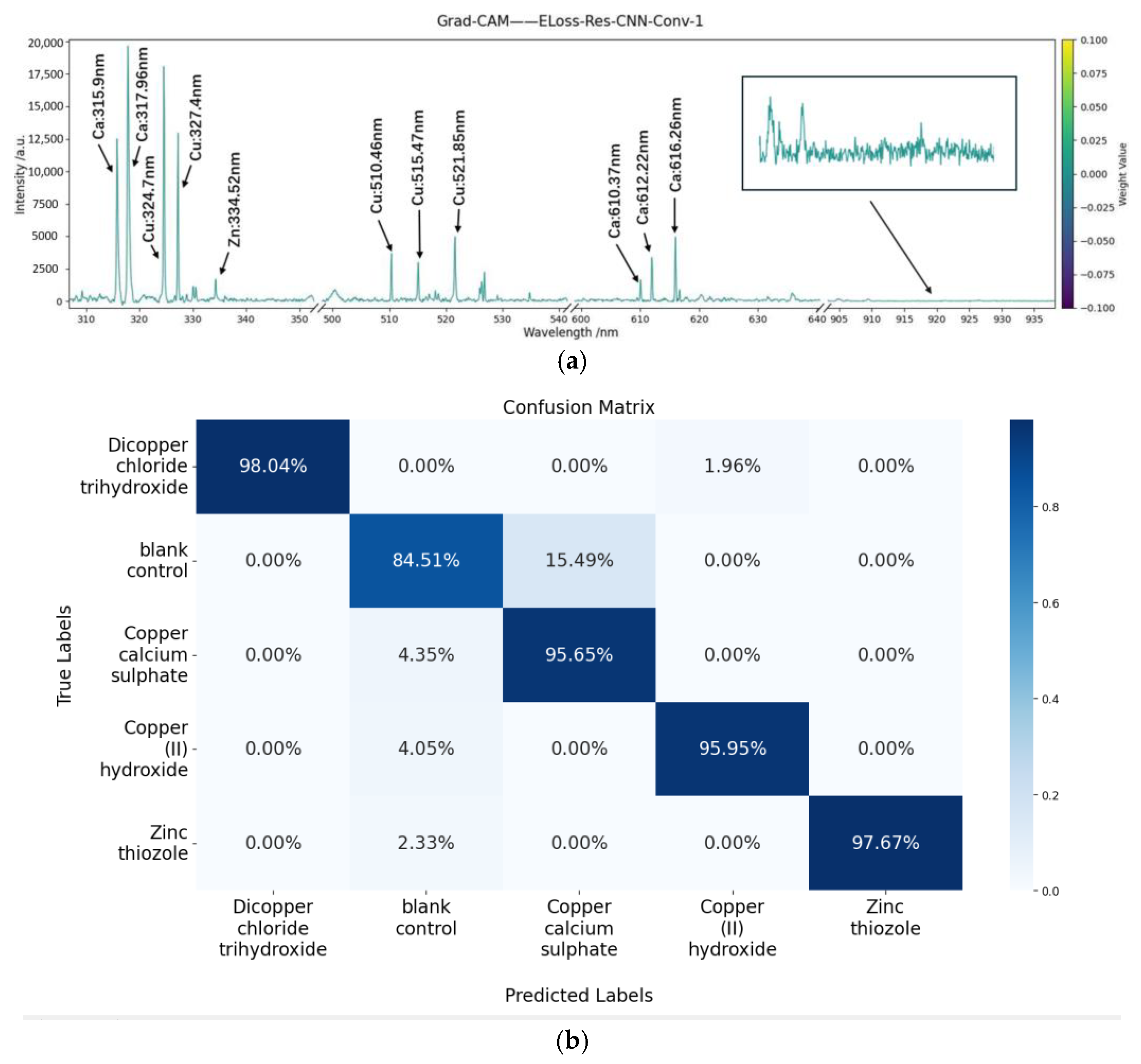
| Element | Wavelength (nm) | Spontaneous Transition Probability (Aki/108 s−1) |
|---|---|---|
| Cu | 324.7 | 1.395 |
| 327.4 | 1.376 | |
| 510.46 | 0.020 | |
| 515.47 | 0.600 | |
| 521.85 | 0.750 | |
| Zn | 328.23 | 0.900 |
| 330.25 | 1.200 | |
| 334.52 | 1.700 | |
| 636.21 | 0.470 | |
| Ca | 315.9 | 3.100 |
| 527.04 | 0.500 | |
| 535.07 | 0.560 | |
| 612.22 | 0.287 | |
| 616.26 | 0.477 | |
| S | 921.35 | 0.279 |
| 922.8 | 0.277 | |
| 923.8 | 0.277 |
| Element | Converted Concentration (mg/kg) | Mass Concentration (%) |
|---|---|---|
| Sn | 0.2184 | 0.000022 |
| Sb | 0.0170 | 0.000002 |
| Cu | 3.7849 | 0.000378 |
| Zn | 6.0764 | 0.000608 |
| Cl | 10,224.92 | 1.022492 |
| Ca | 570.5274 | 0.057053 |
| Model Name | Accuracy Rate | Time/ Epoch | GPU Occupancy | Model Parameters | ||
|---|---|---|---|---|---|---|
| Training Set | Validation Set | Test Set | ||||
| LIBS-Unet | 87.46% | 84.32% | 74.06% | 9.46 s | 33.44 MB | 4,246,599 |
| 1D-CNN | 96.39% | 95.47% | 97.50% | 0.3 s | 0.28 MB | 10,039 |
| Res-CNN | 99.73% | 100% | 95.00% | 0.35 s | 0.28 MB | 10,039 |
| Eloss-LIBS-Unet | 76.65% | 78.82% | 76.88% | 10.65 s | 33.4 MB | 4,246,599 |
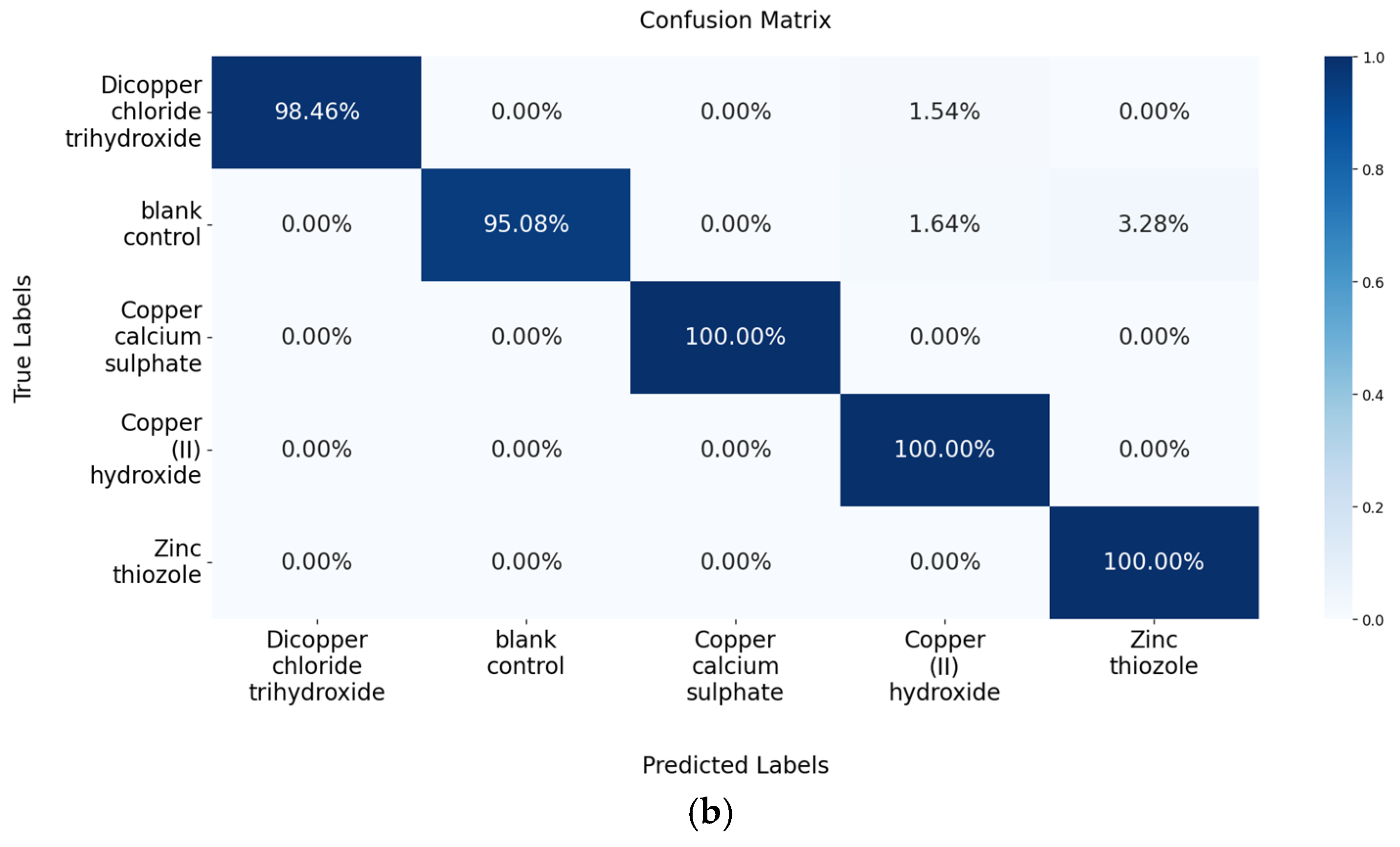
| Eloss-1D-CNN | 99.96% | 100% | 98.69% | 0.39 s | 0.3 MB | 10,039 |
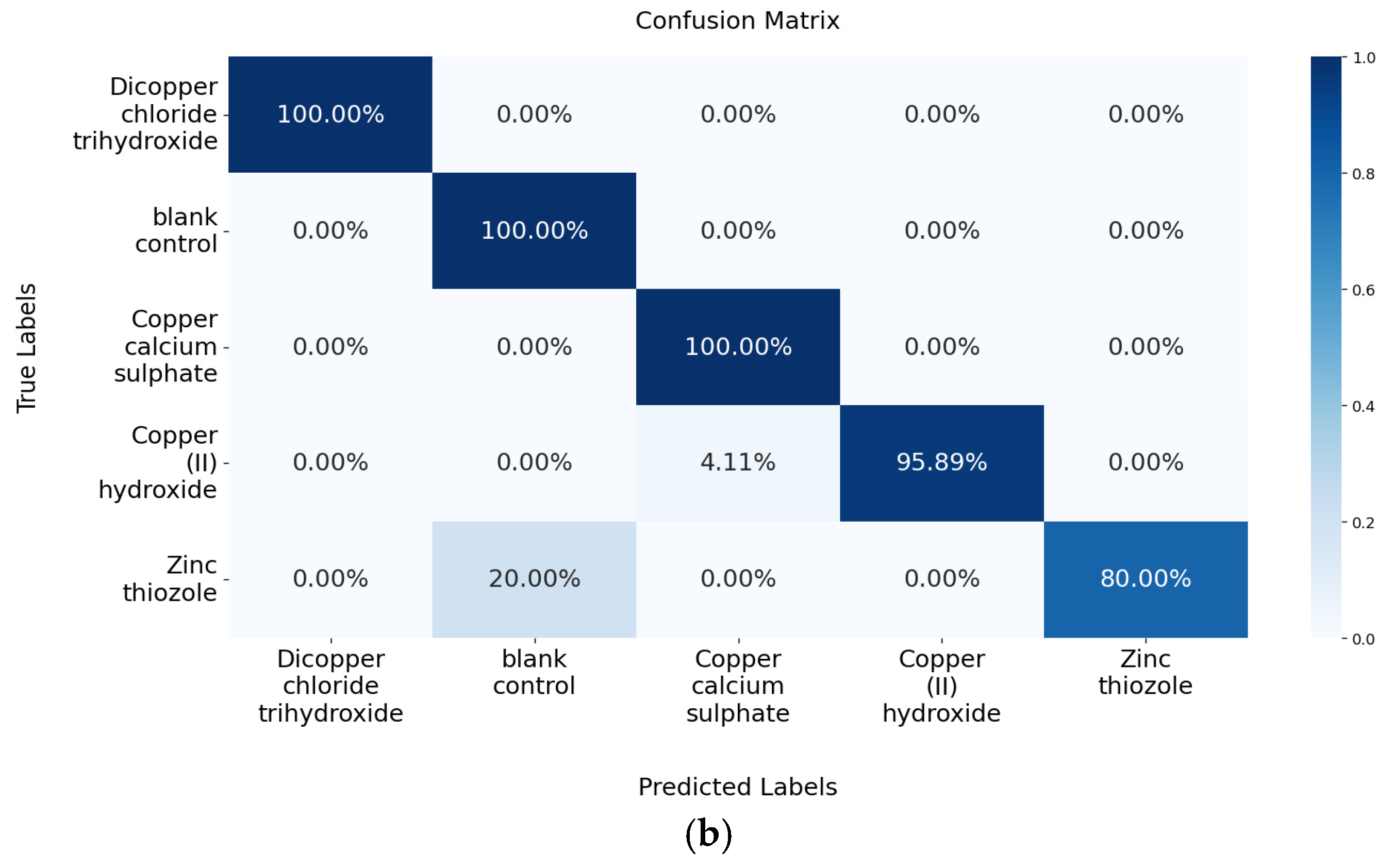
| Eloss-Res-CNN | 98.24% | 96.52% | 95.73% | 0.48 s | 0.3 MB | 10,039 |
| Model Name | Accuracy Rate | Time/ Epoch | GPU Occupancy | Model Parameters | ||
|---|---|---|---|---|---|---|
| Training Set | Validation Set | Test Set | ||||
| AlexNet | 50.67% | 52.94% | 59.83% | 15.73 s | 370.96 MB | 24,254,853 |
| ELoss-AlexNet | 59.23% | 58.68% | 60.26% | 15.7 s | 370.96 MB | 24,254,853 |
| GhostNet | 25.33% | 27.77% | 27.42% | 12.23 s | 64.16 MB | 8,197,284 |
| Eloss-GhostNet | 30.86% | 32.24% | 30.68% | 12.46 s | 64.20 MB | 8,197,284 |
| Modeling Methods | Test Accuracy |
|---|---|
| Hard independent modeling | 88.98% |
| Soft independent modeling | 99.99% |
| GBDT | 95.15% |
| XGBoost | 95.51% |
| LightBGM | 93.68% |
Disclaimer/Publisher’s Note: The statements, opinions and data contained in all publications are solely those of the individual author(s) and contributor(s) and not of MDPI and/or the editor(s). MDPI and/or the editor(s) disclaim responsibility for any injury to people or property resulting from any ideas, methods, instructions or products referred to in the content. |
© 2026 by the authors. Licensee MDPI, Basel, Switzerland. This article is an open access article distributed under the terms and conditions of the Creative Commons Attribution (CC BY) license.
Share and Cite
Bi, W.; Shi, D.; Wang, F.; Song, Y.; Sun, J.; Jiang, C. Ensemble Learning Combined with Laser-Induced Breakdown Spectroscopy for Detecting Pesticide Residues in Xinhui Dried Tangerine Peel. Chemosensors 2026, 14, 116. https://doi.org/10.3390/chemosensors14050116
Bi W, Shi D, Wang F, Song Y, Sun J, Jiang C. Ensemble Learning Combined with Laser-Induced Breakdown Spectroscopy for Detecting Pesticide Residues in Xinhui Dried Tangerine Peel. Chemosensors. 2026; 14(5):116. https://doi.org/10.3390/chemosensors14050116
Chicago/Turabian StyleBi, Wenhao, Dongxin Shi, Feifei Wang, Yuxiao Song, Jing Sun, and Chenyu Jiang. 2026. "Ensemble Learning Combined with Laser-Induced Breakdown Spectroscopy for Detecting Pesticide Residues in Xinhui Dried Tangerine Peel" Chemosensors 14, no. 5: 116. https://doi.org/10.3390/chemosensors14050116
APA StyleBi, W., Shi, D., Wang, F., Song, Y., Sun, J., & Jiang, C. (2026). Ensemble Learning Combined with Laser-Induced Breakdown Spectroscopy for Detecting Pesticide Residues in Xinhui Dried Tangerine Peel. Chemosensors, 14(5), 116. https://doi.org/10.3390/chemosensors14050116