
Article

Comparative Characterisation of Meat Quality, Nutritional Composition, and Flavour Profile in Wuhua Yellow Chickens (Gallus domesticus) Assessed by Multi-Analytical Approaches


Guangdong Provincial Key Laboratory of Conservation and Precision Utilization of Characteristic Agricultural Resources in Mountainous Areas, Guangdong Innovation Centre for Science and Technology of Wuhua Yellow Chicken, School of Life Sciences, Jiaying University, Meizhou 514015, China
*
Authors to whom correspondence should be addressed.
Chemosensors 2026, 14(5), 109; https://doi.org/10.3390/chemosensors14050109

Submission received: 15 March 2026 / Revised: 21 April 2026 / Accepted: 27 April 2026 / Published: 2 May 2026

Abstract

Wuhua Yellow Chicken (WYC) is a Guangdong heritage breed known for its characteristic “three yellow” phenotype and distinctive meat flavour. Despite its commercial importance, data on muscle flavour chemistry remain scarce. In this study, 180 one-day-old chicks (90 cocks, 90 hens, 18 replicates of 5 chickens per sex) were raised to 20 weeks under cage conditions, after which slaughter traits, meat physicochemical indices, proximate composition, amino acid and fatty acid profiles, and volatile compounds were measured. Cocks were heavier and had higher eviscerated yields and leg muscle percentages, whereas hens accumulated more abdominal fat (6.47–0.46%, p < 0.01). Shear force was greater in cock breast muscle (2.86–2.13 kg·f, p < 0.01), indicating firmer texture. Cock breast muscle contained more crude protein (26.89%) and less crude fat. Amino acid totals were identical between sexes (21.10 g/100 g), with all six essential amino acids surpassing FAO/WHO reference values; lysine scored highest (168%). Unsaturated fatty acid proportions were 63.33% (cocks) and 66.64% (hens), with PUFA/SFA ratios of 61.95% and 53.60%, respectively. Gas chromatography-mass spectrometry identified 10 volatile compounds in cocks and 14 in hens; aldehydes dominated in both, with hexanal alone accounting for over 50%. Hen muscle contained a richer volatile profile, including additional ketone and ester compounds. These data collectively confirm that WYC is nutritionally dense, organoleptically appealing, and well-suited for further breed promotion.

1. Introduction

China has abundant indigenous chicken genetic resources, many of which were formed through long-term adaptation to local environments and traditional feeding practices rather than intensive commercial breeding [1]. Among them, Wuhua Yellow Chicken (WYC) is a well-recognised native breed from northern Guangdong and has been included in Chinese Poultry Genetic Resources [2]. This breed originated in Wuhua County and has long been consumed as a high-quality local table chicken. Because of its typical “three-yellow” appearance, pleasant eating quality, and regional reputation, WYC remains popular in the Guangdong market [3].
Compared with fast-growing commercial broilers, WYC is valued more for eating quality than for rapid production efficiency. Local consumers generally prefer this breed for its yellow skin, characteristic aroma, and firm but tender texture, traits that are often weakened in modern commercial lines selected mainly for growth and breast yield [4]. In recent years, interest in slow-grown indigenous chickens has increased as consumers have become more concerned with product origin, sensory quality, and traditional breed characteristics [5]. The composition of chicken meat plays a critical role in determining its quality. Moisture, as the most abundant component, directly influences juiciness and tenderness [6]. Protein not only serves as the primary nutrient but also provides the structural basis for quality and flavour, contributing to tenderness and supplying flavour precursors [7]. Lipids, although present in relatively low amounts, represent the most dynamic component in flavour formation [8]. Earlier work on WYC suggested that its meat has relatively favourable nutritional traits, especially a high-protein content (20.66%) and a comparatively low-fat level (2.15%) [9,10]. Even so, the available reports are still limited in scope. Most focused on growth performance or a few conventional meat quality indices, while the chemical basis underlying flavour perception, especially the profile of volatile compounds, has received far less attention.
Meat flavour is not determined by a single component. Instead, it is shaped by the combined contribution of multiple substances. These include amino acids, fatty acids, and volatile compounds that develop in muscle. They are further released during processing or cooking [11]. For indigenous chickens, these traits are often closely linked to genotype, slaughter age, metabolic pattern, and fat deposition characteristics. As a result, their flavour and nutritional properties can differ markedly from those of commercial broilers [12]. Therefore, a broader evaluation is needed to better define the quality traits of WYC meat. This evaluation should include physicochemical properties, proximate composition, amino acid and fatty acid profiles, together with volatile flavour substances.
Sex is another factor that should not be ignored in poultry production. Cocks and hens usually differ in growth rate, carcass composition, fat accumulation, and muscle development, and these differences may further influence texture, nutritional value, and flavour-related compounds in meat [13]. This issue is especially relevant for indigenous breeds such as WYC, because males and females may show different market performance and may even be preferred by different consumer groups [14]. From a practical point of view, sex-related quality data can help producers optimise feeding management, improve product classification, and provide a clearer basis for breed utilisation.
At present, a systematic comparison of WYC cocks and hens covering slaughter traits, physicochemical indices, proximate composition, amino acid and fatty acid profiles, and volatile compounds is still lacking. This limits a full understanding of the nutritional and sensory value of this breed and also restricts its further commercial development. In the present study, 20-week-old WYC cocks and hens reared under standardised cage conditions were compared for slaughter performance, meat quality traits, nutritional composition, and Volatile compound profiles identified by Gas Chromatography-Mass Spectrometer (GC–MS). The aim was to provide a more complete description of the meat quality characteristics of WYC and to generate useful evidence for its breed conservation, product development, and market promotion.

2. Materials and Methods

2.1. Experimental Design

180 one-day-old WYCs were obtained from the Fengdu Integrated Poultry Farm (Meizhou, China). Chickens were sexed at hatch and allocated to 18 replicate cages per sex (5 chickens per cage), giving a 2 × 18 factorial arrangement. All cages were equipped with nipple drinkers and feed troughs; Chickens had unrestricted access to feed and water throughout the 20-week trial. The temperature and lighting programmeme followed standard commercial practice for slow-growing local breeds. The experimental protocol was approved by the Institutional Animal Ethics Committee.

2.2. Feeding

A commercial complete feed (Guangdong Xinnandu Feed Co., Ltd., Guangzhou, China) was supplied as a fine meal from 0 to 7 weeks and as 3 mm pellets from 8 to 20 weeks. Ingredient composition and calculated nutrient levels are given in Table 1.

2.3. Slaughter and Sample Collection

At 20 weeks, one chicken per cage was randomly selected (18 cocks, 18 hens). After 12 h of feed withdrawal, chickens were slaughtered by cervical exsanguination. Slaughter performance was assessed following the Chinese agricultural standard NY/T 823-2004 [15]. Bilateral breast and leg muscle samples were excised from homologous anatomical sites on each chicken for physicochemical and proximate analyses. For flavour compound analyses, breast muscle from six chickens per sex was pooled and minced.

2.4. Meat Quality

Referring to the methods of Harr et al [16], post-mortem pH was recorded at 45 min (pH1) and 24 h (pH2) in both muscle types with a MP120-BE pH metre (Beijing, China), with 3 readings taken per site and averaged. Meat colour was quantified as optical density (OD) by HANNA HI801 spectrophotometry (Shanghai, China). Shear force was measured on trimmed 1.0 × 0.5 × 5 cm strips using a C-LM3B tenderness metre (Beijing, China), with 3 cuts performed per strip [17]. Moisture loss was assessed by the compression method (35 kg, 5 min) [18]; drip loss was the weight lost after 24 h suspension in a sealed bag at 4 °C [19]; cooking loss was measured after boiling for 40 min [20].

2.5. Proximate Composition and Flavour Analyses

Crude protein was determined by Kjeldahl digestion according to GB 5009.5-2010 [21], and crude fat was determined by Soxhlet extraction, which was carried out following the method described in GB/T 9695.7-2008 [22]. Amino acid composition was quantified on pooled breast muscle samples according to GB/T 5009.124-2003 [23]. Fatty acid profiles were obtained following GB/T 9695.2-2008 [24].
GC-MS analysis was performed on an Agilent 7890B/5977A GC-MS system (Agilent Technologies, Santa Clara, CA, USA) based on the method of Han [25] with slight modifications. Sample preparation: The crushed sample (2 g) was accurately weighed into a headspace vial, followed by the addition of 1 μL of internal standard solution (2-methyl-3-heptanone, 0.2 μg/μL). The vial was immediately sealed and equilibrated at 55 °C for 20 min. Subsequently, a 50/30 μm DVB/CAR/PDMS fibre was used to extract the volatile compounds at 55 °C for 40 min. After extraction, the fibre was inserted into the GC injection port for thermal desorption for 5 min. GC conditions: The separation was carried out on a DB-WAX capillary column (30 m × 0.18 mm, 0.18 μm). Splitless injection mode was adopted with an injector temperature of 230 °C. Helium (purity > 99.99%) was used as the carrier gas at a flow rate of 1.0 mL/min. The oven temperature program was set as follows: initially held at 40 °C for 3 min, then ramped to 230 °C at 5 °C/min, and finally held at 230 °C for 5 min. MS conditions: The mass spectrometer was operated in electron impact (EI) ionisation mode at 70 eV. The ion source temperature was set at 250 °C, the transfer line temperature at 230 °C, and the interface temperature at 210 °C. A solvent delay of 3.5 min was applied, and the mass spectra were recorded in the full scan range of m/z 40–500.
Qualitative analysis: Compounds were identified by comparing their mass spectra with the NIST 11 mass spectral library. Only those with a matching degree greater than 80% were retained for further analysis. The retention indices (RI) of the identified compounds were calculated based on the retention times of a series of n-alkanes (C7–C30) under the same chromatographic conditions using the following equation:
R I = 100 × t x t n t n + 1 t n + 100 n
where n is the carbon number of the n-alkane eluting immediately before the target compound, tx is the retention time of the target compound x, and tn and tn+1 are the retention times of the n-alkanes with carbon numbers n and n + 1, respectively, satisfying tn < tx < tn+1.

2.6. Statistical Analysis

Data are reported as mean ± SD. Student’s t-test was used to compare cocks and hens within each variable, with significance thresholds of p < 0.05 and p < 0.01. Lowercase (a/b) and uppercase (A/B) superscripts denote significant and highly significant differences, respectively; absent or identical letters indicate p > 0.05. Analyses were performed in SPSS 19.0.

3. Results and Discussion

3.1. Slaughter Performance

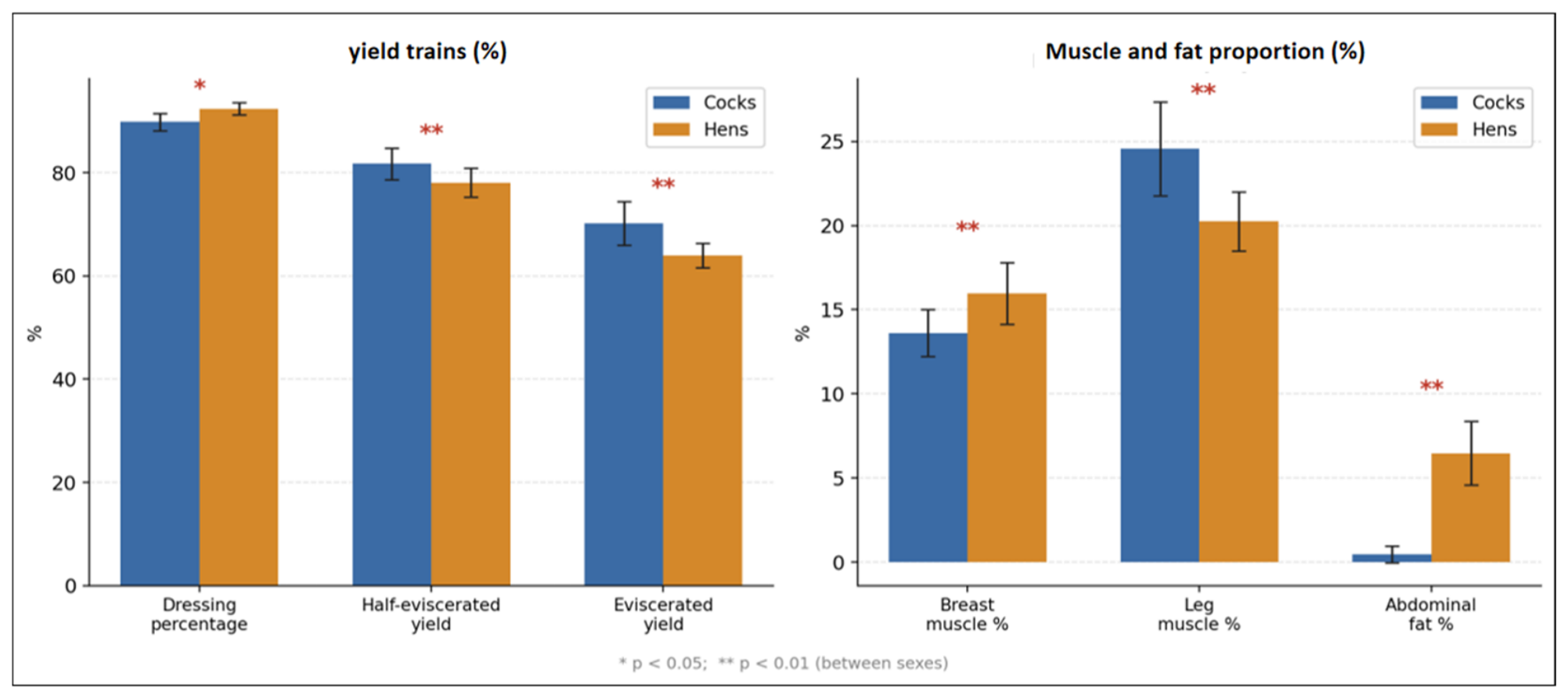
Slaughter data are shown in Table 2 and Figure 1. At 20 weeks, cocks were about 340 g heavier than hens on average (1793–1452 g, p < 0.01). Despite this advantage in live weight, hens returned a higher dressing percentage (92.32% vs. 89.77%, p < 0.05), reflecting proportionally lighter non-edible tissues. The eviscerated yield told the opposite story: cocks yielded 70.10% compared with 63.92% in hens (p < 0.01), driven by their greater leg muscle proportion (24.58% vs. 20.25%, p < 0.01). Breast muscle percentage favoured hens (15.96–13.61%, p < 0.01). Abdominal fat deposition differed markedly, with hens deposited 6.47% versus just 0.46% in cocks (p < 0.01), a pattern attributable to lipid mobilisation requirements for ovarian activity [26].
Both sexes met or exceeded the widely cited benchmarks for productive slaughter performance in Chinese local breeds (dressing percentage ≥ 80%, eviscerated yield ≥ 60%) [27]. The eviscerated yield of cocks (70.10%) was notably higher than that reported by Zhong [28]. under a mixed indoor-free-range system (63.14%), which may partly reflect the more controlled energy expenditure of cage rearing, allowing more dietary energy to be directed to muscle deposition rather than locomotion. Reducing the abdominal fat rate can decrease feed waste and improve the sensory quality of chickens at the same time [29]. The pronounced abdominal fat accumulation in hens (6.47%) is a well-documented reproductive consequence of oestrogen-driven lipogenesis [30] and is consistent with observations in most commercial and heritage laying-type strains [31,32]. From a processing standpoint, the higher eviscerated yield and leg muscle proportion of cocks make them the more efficient carcass for deboned products, while hens, with more breast muscle and higher intramuscular fat, may be better suited for whole-chicken or high-heat cooking preparations.

3.2. Physicochemical Meat Quality

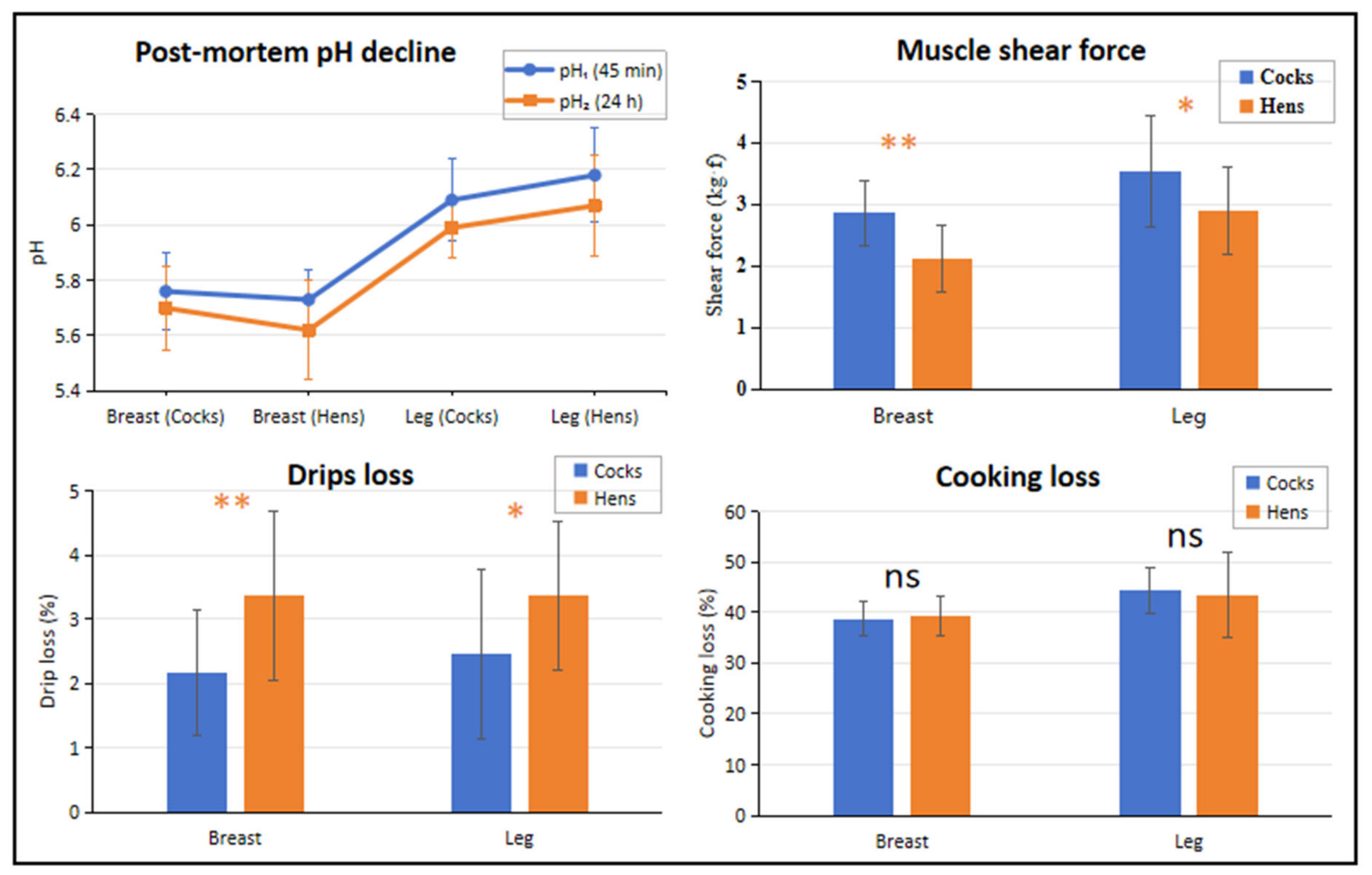
Physical quality indices are illustrated in Figure 2. Initial leg muscle pH values (6.09 in cocks, 6.18 in hens) fell within the 5.8–6.5 range considered typical of premium Chinese local breeds [33]. Breast muscle pH1 values were slightly lower (5.73–5.76), which we attribute to the grinding step required by our pH metre protocol, extending the delay between slaughter and measurement. The 24 h pH drop was small in all groups (Δ ≤ 0.16), pointing to modest post-mortem glycolytic activity-a trait generally associated with extended colour stability and reduced drip losses during chilled storage.
Shear force was significantly higher in cocks for both breast (2.86 vs. 2.13 kg·f, p < 0.01) and leg muscle (3.54 vs. 2.90 kg·f, p < 0.05), reflecting greater connective-tissue density in males. Even so, both values are lower than those reported for Lingnan Yellow Chicken (4.07 kg·f) and Qingyuan Hemp Chicken (5.09 kg·f) under comparable conditions [34], suggesting that WYC meat is notably tender for a late-slaughter heritage breed. Drip loss was lower in cocks than hens for both breast (2.16% vs. 3.37%, p < 0.01) and leg muscle (2.46% vs. 3.37%, p < 0.05); cooking loss did not differ significantly between sexes.
pH value reflects the acidity and alkalinity of chicken meat and is significantly correlated with the colour, tenderness and preservation properties of the meat. It is usually measured 45 min and 24 h after slaughtering [35]. The slow post-mortem pH decline (Δ ≤ 0.16 over 24 h) is a commercially desirable attribute, because rapid acidification, common in PSE-susceptible fast-growing broilers, accelerates protein denaturation, increases drip loss, and shortens colour stability [36]. The pattern observed here is typical of breeds with a low proportion of glycolytic (white) muscle fibres, which is an intrinsic characteristic of slow-growing heritage strains. Leg muscle pH1 values (6.09–6.18) were within the quality reference range of 5.8–6.5 for both sexes.
The lower shear force of WYC relative to Lingnan Yellow Chicken and Qingyuan Hemp Chicken is somewhat unexpected for a 20-week-old chicken and warrants comment [34]. One likely contributor is the relatively low intramuscular fat in cock breast muscle (1.37%), which might reduce the lubricating effect of fat on the myofibrillar architecture. Yet, shear force was still lower in hens despite their higher fat content, suggesting that connective tissue cross-linking, denser in mature cocks due to androgen exposure, is the dominant determinant of texture at this age.
Drip loss differences between sexes (cocks 2.16%, hens 3.37% for breast) broadly track the protein-to-fat ratio: higher muscle protein content is associated with greater myofibrillar water binding in cocks. Similar patterns have been documented in other dual-purpose heritage breeds [37]. The absence of significant cooking loss differences suggests that both sexes deliver comparable juiciness after thermal processing. Compared with other Chinese indigenous breeds reported in the literature, the physicochemical indices of WYC fall within a competitive range. The shear force values recorded here (2.86 kg·f for cock breast, 2.13 kg·f for hen breast) are notably lower than those of Lingnan Yellow Chicken (4.07 kg·f) and Qingyuan Hemp Chicken (5.09 kg·f) slaughtered at comparable ages [34], indicating that WYC possesses superior tenderness among slow-growing heritage breeds. The drip loss values (2.16–3.37%) are also comparable to or lower than those reported for Taihe Silky Chicken (3.1–4.2%) and Beijing-You Chicken (2.8–4.5%), suggesting good water-holding capacity [19,27]. The slow post-mortem pH decline (Δ ≤ 0.16 over 24 h) observed in both sexes is consistent with findings in other slow-growing indigenous breeds with predominantly oxidative muscle fibres, and contrasts markedly with the rapid acidification typical of fast-growing commercial broilers, further supporting the premium fresh-market positioning of WYC.

3.3. Proximate Muscle Composition

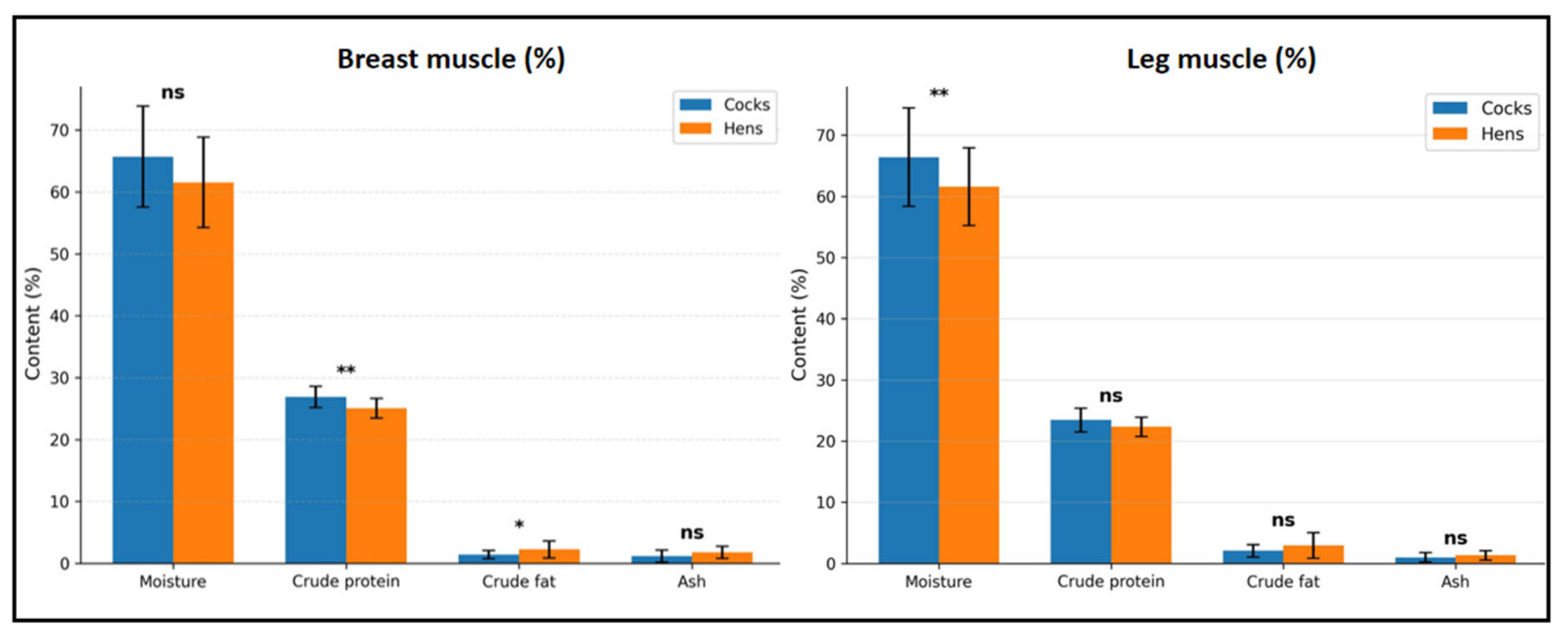
Figure 3 summarises the proximate composition of breast and leg muscle. Cock breast muscle contained more crude protein than hen breast muscle (26.89% vs. 25.05%, p < 0.01) and less crude fat (1.37% vs. 2.23%, p < 0.05). Leg muscle moisture was higher in cocks (66.40% vs. 61.59%, p < 0.01). No significant sex differences were detected for breast muscle moisture, ash content in either muscle, or leg crude protein and crude fat, although there was a numerical tendency for higher intramuscular fat in hens, consistent with the abdominal fat data above. The high-protein and low-fat values of cock breast muscle are broadly consistent with earlier characterisations of this breed [10] and place it favourably alongside other premium local breeds [38].

3.4. Amino Acid Composition

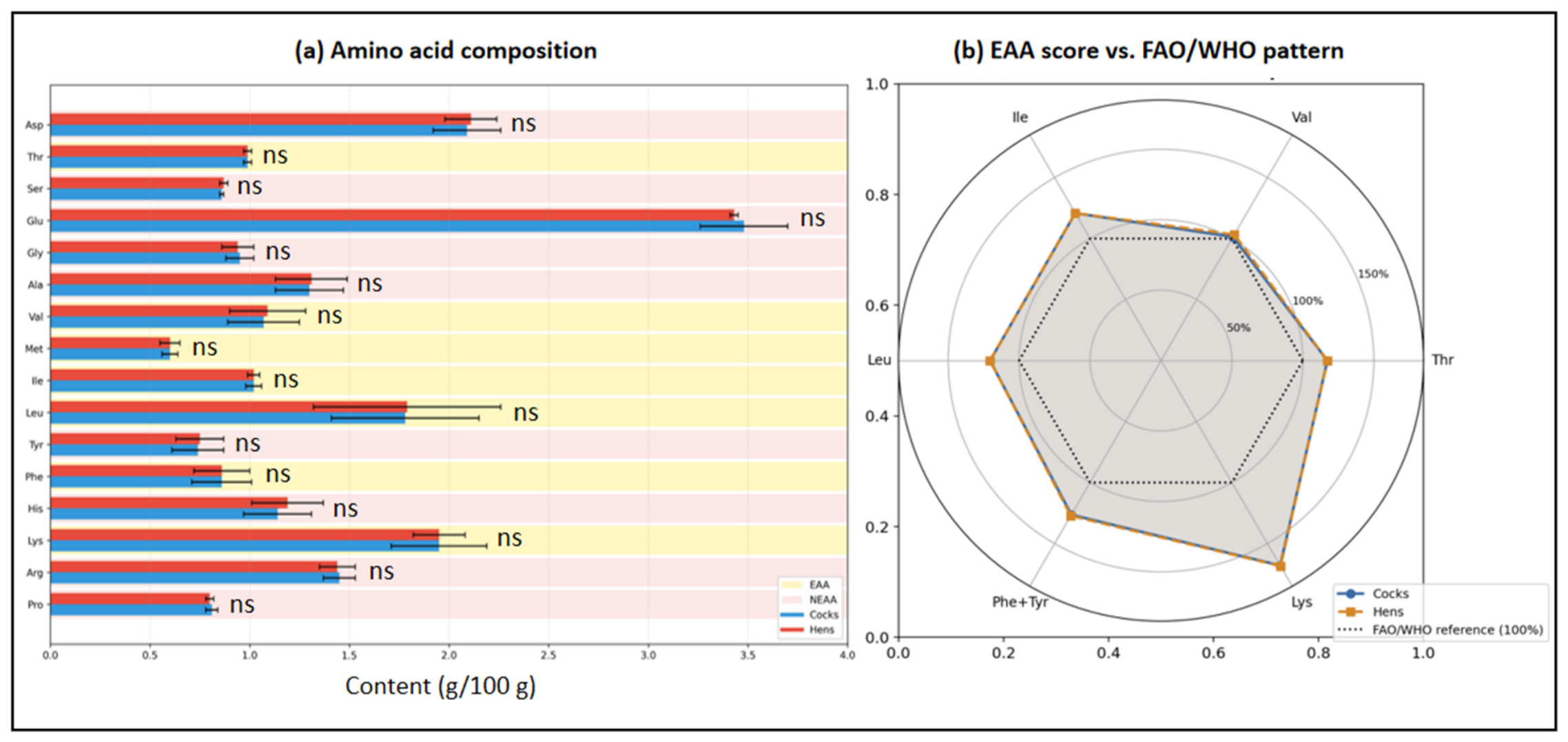
Full amino acid data are in Table 3 and Figure 4. The total amino acid content was 21.1 g/100 g for both sexes, spanning 16 amino acids of which six are essential (Thr, Val, Met, Ile, Leu, Phe, Lys). Essential amino acid totals were nearly identical (cocks 7.67, hens 7.70 g/100 g). Among individual amino acids, glutamic acid was the most abundant in both sexes (3.48 and 3.43 g/100 g), followed by aspartic acid; these two contribute directly to the umami character of cooked meat. Combined umami amino acid content was 5.57 g/100 g in cocks and 5.54 g/100 g in hens.
The radar chart in Figure 4b shows that all six evaluated essential amino acids exceeded the FAO/WHO reference pattern, with amino acid scores ranging from 101% (Val in cocks) to 168% (Lys in both sexes). Methionine and tryptophan fell below the detection limit of the assay, making them the practical limiting amino acids of this breed. When the degradation products of inosine-5′-Monophosphate (IMP), namely ribose and phosphoribose, undergo Maillard reactions respectively, they can produce volatile fragrances, effectively suppressing the bitterness of the meat, thereby enhancing the freshness of the meat after cooking [39]. The IMP content was 105 mg/100 g in cocks and 98 mg/100 g in hens; while the difference was small, IMP acts synergistically with glutamate in generating the characteristic savoury broth flavour of slow-grown chicken.

3.5. Fatty Acid Composition

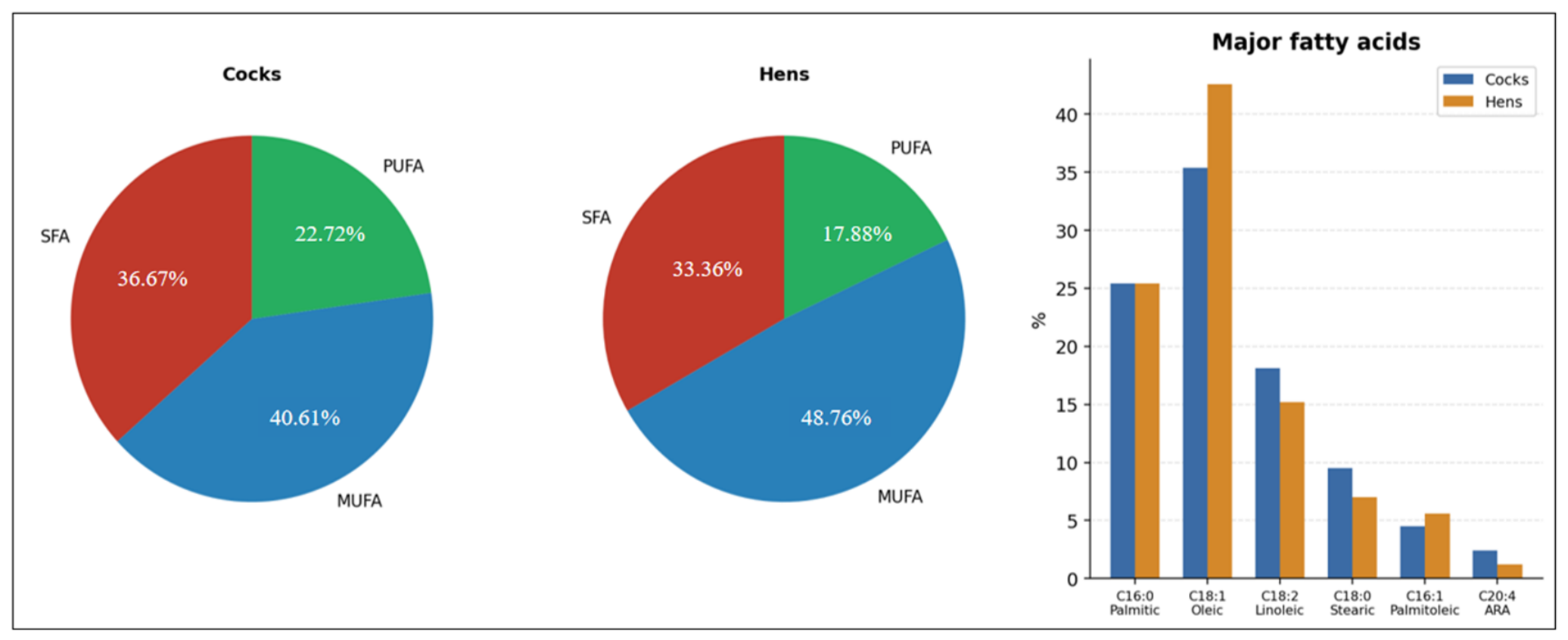
Fatty acid data are presented in Table 4 and Figure 5. Cocks carried 21 fatty acid species and hens 20. Oleic acid (C18:1) was the predominant fatty acid in both sexes but at markedly different levels—42.6% in hens versus 35.4% in cocks-with the surplus in hens accounted for by lower levels of stearic (7.0% vs. 9.5%) and longer-chain PUFA. Palmitic acid was identical (25.4%) across sexes. Fatty acids are an important component of fats, including saturated fatty acids and unsaturated fatty acids. Particularly, unsaturated fatty acids such as linoleic acid, linolenic acid and arachidonic acid are the key precursors for the flavour of chicken [40]. Total USFA reached 63.33% in cocks and 66.64% in hens, both higher than other Chickens [41], both well above the 40% threshold associated with cardiovascular benefits [42]. Cocks had noticeably higher ARA (2.4% vs. 1.2%) and DHA (0.24% vs. 0.18%), two long-chain PUFA with documented roles in inflammation regulation and neural development.
The near-identical total amino acid content across sexes (21.10 g/100 g), combined with all EAA scores exceeding 100% relative to the FAO/WHO pattern, positions WYC muscle protein as nutritionally complete by conventional criteria. Lysine scored 168%, which is particularly relevant given that cereal-based Asian diets are typically lysine-deficient; regular consumption of this breed could help offset dietary lysine shortfalls. The non-detection of methionine and tryptophan under standard acid-hydrolysis conditions is a methodological limitation. Sulphur amino acids are routinely destroyed during acid hydrolysis, and tryptophan requires alkaline hydrolysis; their actual biological concentrations are likely non-trivial.
The high PUFA/SFA ratio (>53% in both sexes, vs. the recommended minimum of 40% [41]) is an encouraging nutritional feature. Cock muscle showed higher concentrations of ARA, DPA, and DHA-long-chain n-6 and n-3 PUFA with established roles in anti-inflammatory signalling and cognitive function, respectively. This likely reflects the sex-specific partitioning of dietary lipids toward muscle phospholipids in males versus adipose reserves in females. From a consumer health perspective, cock meat from this breed may carry a modest advantage in long-chain PUFA delivery over hen meat. However, the absolute quantities are still modest compared with fatty fish.

3.6. Volatile Flavour Compounds

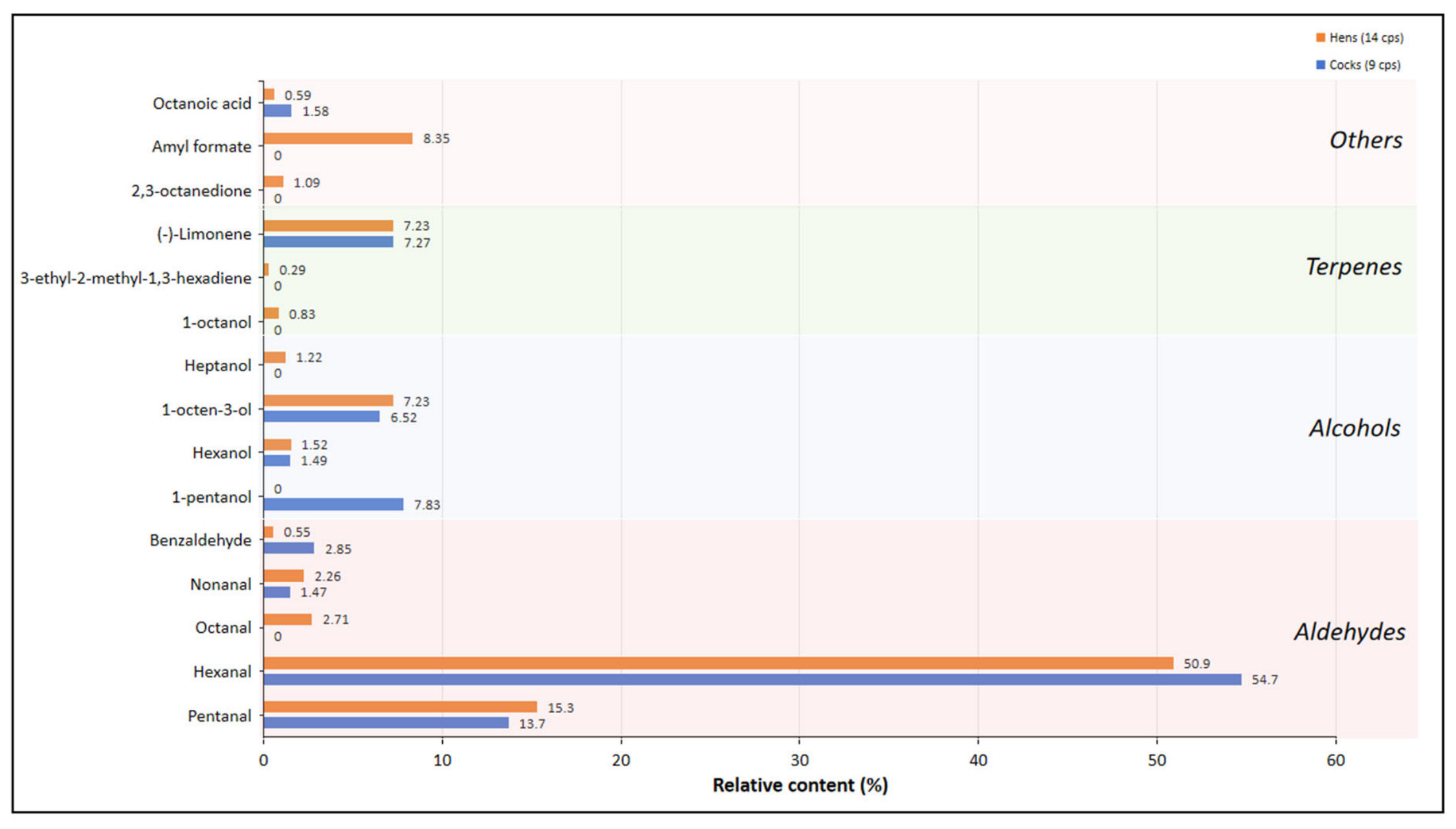
GC-MS identified four compound classes in cocks (9 compounds total) and six classes in hens (14 compounds), as illustrated in Figure 6 and detailed in Table 5. Aldehydes dominated the volatile fraction in both sexes—72.72% in cocks and 71.17% in hens—with hexanal alone comprising over half of all volatiles (54.7% and 50.9%, respectively). Pentanal was the second most abundant aldehyde (13.7% and 15.3%). Alcohols formed the second-largest class (15.84% in cocks, 10.80% in hens), with 1-octen-3-ol present in both sexes at similar levels (6.5–7.2%). Hydrocarbons, primarily (-)-limonene, contributed approximately 7% in both groups. Hens uniquely contained amyl formate (an ester, 8.35%), 2,3-octanedione (a diketone, 1.09%), 1-heptanol, and 1-octanol, resulting in a broader compound diversity compared with cocks.
Hexanal is a major secondary product of linoleic acid autoxidation and is responsible for the fatty, slightly green top-note characteristic of chicken fat aroma; its predominance in both sexes (>50%) reflects the substantial linoleic acid content of WYC breast muscle lipids [43,44], consistent with findings in other Chinese indigenous breeds such as Beijing-You Chicken and Taihe Silky Chicken, where aldehydes similarly account for the largest share of raw-meat volatiles [20,45]. Pentanal, also present in both sexes, contributes a more pungent note linked to n-3 PUFA oxidation [46].
The richer volatile inventory of hens—particularly the additional ester (amyl formate) and ketone (2,3-octanedione)—is consistent with their higher intramuscular fat content, which provides a larger substrate pool for both enzymatic and oxidative lipid transformation [47]. A similar sex-related pattern of volatile diversity has been reported in slow-growing indigenous breeds, where females tend to accumulate more intramuscular lipid and generate a wider range of lipid-derived volatiles [13]. 1-Octen-3-ol, present in both sexes at 6.5–7.2%, is an eight-carbon allylic alcohol recognised as a key contributor to the characteristic mushroom-like secondary note in poultry meat; its concentration here is comparable to values reported for premium Chinese breeds [45].
The detection of (-)-limonene (~7% in both sexes) warrants comment. While this monoterpene is not a conventional lipid oxidation product, its presence in chicken muscle is not without precedent: limonene has been identified as a key volatile in Chinese smoked chicken [48] and as a major volatile constituent (5.60–25.72%) in pepper chicken preparations. Its occurrence in raw muscle tissue has been attributed to the dietary transfer of terpene- containing feed ingredients, a mechanism experimentally confirmed in ruminants fed terpene- rich diets [49]. Given that the corn-soybean diet used in the present study may contain trace terpene residues, deposition of limonene in breast muscle lipids is a plausible explanation.
It should be noted that the present volatile data were obtained from raw, uncooked muscle. Maillard reaction products-pyrazines, furans, and thiols- which are principal contributors to roasted chicken aroma, are absent from this dataset. A follow-up study incorporating cooked-meat volatiles and a trained sensory panel would provide a more complete characterisation of the breed’s eating quality and is recommended before sensory marketing claims are made.

4. Conclusions

At 20 weeks of age, WYCs showed slaughter performance above standard benchmarks for heritage breeds, with cocks delivering higher eviscerated yield and leg muscle proportion and hens accumulating more abdominal and intramuscular fat. Meat quality was characterised by slow post-mortem glycolysis, moderate tenderness, and good water-holding capacity-attributes that support both fresh-market and processed-product applications. Muscle protein was nutritionally complete by FAO/WHO amino acid scoring criteria, unsaturated fatty acid proportions exceeded 63% in both sexes, and aldehyde-dominated volatile profiles confirm the breed’s characteristic fatty, slightly herbaceous raw-meat aroma. Hen muscle contained a greater variety of volatile compounds, suggesting potentially richer cooked-meat flavour, though sensory confirmation is needed. Taken together, the data provide a quantitative reference base for the conservation, selective improvement, and commercial development of this underutilised Guangdong heritage breed.

Author Contributions

Conceptualization, Z.W. and X.Z.; Methodology, Z.W. and X.H.; Investigation, Y.X., Z.W., and L.L.; Writing—original draft, Z.W.; Writing—review & editing, X.Z., Z.W., W.L., X.H., Y.X., and Z.L.; Supervision, W.L. and Z.L. All authors have read and agreed to the published version of the manuscript.

Funding

This research was funded by the research start-up project of Jiaying University (322E1822) and the Natural Science Research Project of Jiaying University (322E0102).

Institutional Review Board Statement

This study was approved by the Experimental Animal Ethics Committee of Jiaying University (Approval No.: JYYXLL2025-13). All experimental procedures followed the Regulations for the Administration of Laboratory Animals of Jiaying University. Every effort was made to minimize animal suffering and to use the fewest animals necessary for statistically valid conclusions.

Informed Consent Statement

Not applicable.

Data Availability Statement

Raw data are available from the corresponding author upon reasonable request.

Conflicts of Interest

The authors declare no conflicts of interest.

References

  1. China National Commission of Animal Genetic Resources. Animal Genetic Resources in China: Poultry; Agricultural Press of China: Beijing, China, 2011. [Google Scholar]
  2. Chen, G.; Wang, K.; Wang, J.; Ding, C. Poultry Genetic Resources of China; Shanghai Publisher of Science and Technology: Shanghai, China, 2004. [Google Scholar]
  3. Weng, Z.; Xu, Y.; Li, W.; Chen, J.; Zhong, M.; Zhong, F.; Du, B.; Zhang, B.; Huang, X. Genomic Variations and Signatures of Selection in Wuhua Yellow Chicken. PLoS ONE 2020, 15, e0241137. [Google Scholar] [CrossRef]
  4. Lei, W.Q.; Cui, Z.W.; Hu, W.Q.; Wang, M.X.; Chen, X.H.; Hu, X.J.; Chisoro, P.; Han, D.; Zhou, J.C.; Zhang, C.H. Characterization and comparison of flavor compounds in different specialty chicken meat after stewing. Food Chem. X 2025, 28, 102589. [Google Scholar] [CrossRef]
  5. Marupanthorn, K.; Wattanakul, W.; Chaiwang, N. Physiological profiling and breed suitability modeling of slow-growing Thai native chickens: Comparative insights with fast-growing broilers for sustainable poultry production. Ital. J. Anim. Sci. 2025, 24, 2376–2388. [Google Scholar] [CrossRef]
  6. Noh, S.W.; Song, D.H.; Kim, H.W. Stepwise Sous-Vide Cooking as a Novel Approach to Enhance the Water-Holding Capacity and Tenderness of Chicken Breast. Foods 2025, 14, 1708. [Google Scholar] [CrossRef]
  7. Zhang, Y.; Hu, B.; Zhang, Q. Advances in nutrition and function properties of chicken meat protein. J. Zhongkai Univ. Agric. Eng. 2009, 22, 66–71. [Google Scholar]
  8. Ali, S.; Liao, Z.; Cheng, Y.; Malhi, I.; Wang, Y.; Peng, S.; Zhang, L. Lipidomics in chicken meat flavor chemistry: Current understanding, integrated omics approaches, and future perspectives. Poult. Sci. 2025, 104, 105700. [Google Scholar] [CrossRef]
  9. Weng, Z. Whole-Genome Resequencing Uncovers the Genetic Diversity and Selection Signatures of 10 Indigenous Yellow-Feathered Chicken Populations Including Wuhua Yellow Chicken. Doctoral Thesis, Hunan Agricultural University, Changsha, China, 2021. [Google Scholar]
  10. Huang, X.; Weng, Z.; Li, W.; Chen, J.; Zhong, M.; Kuang, W.; Tang, Y.; Zhong, F. Research Progress in Wuhua Yellow Chicken. J. Jiaying Univ. 2017, 35, 50–57. [Google Scholar]
  11. Li, W.; Cao, X.; Ming, S.; Xu, Y.; Weng, Z.; Wang, H.; Zhang, X. Effects of Different Processing Methods on the Quality and Flavor Characteristics of Shiqi Pigeon (Columba livia domestica) Meat. Molecules 2026, 31, 810. [Google Scholar] [CrossRef]
  12. Tang, J.Y.; He, Z.; Liu, Y.G.; Jia, G.; Zhao, H. Effect of supplementing hydroxy selenomethionine on meat quality of yellow feather broiler. Poult. Sci. 2021, 100, 101389. [Google Scholar] [CrossRef]
  13. Xing, T.; Wang, C.; Zhang, L.; Gao, F. Research Advance of Factors Affecting Chicken Meat Flavor and Its Nuitritional Regulation. Chin. J. Anim. Nutr. 2021, 33, 3028–3035. [Google Scholar]
  14. Mu, X. Study on the Regulation Mechanism of Castrationto Improve the Meat Quality of Rooster Flavor. Master’s Thesis, Sichuan Agricultural University, Ya’an, China, 2019. [Google Scholar]
  15. NY/T 823-2004; Performance Terms and Measurement for Poultry. Standards Press of China: Beijing, China, 2004.
  16. Harr, K.M.; Jewell, N.; Edwards, J.; More, S.; Mafi, G.G.; Pfeiffer, M.; Ramanathan, R. Comparing the effects of packaging normal-pH and atypical dark-cutting beef in modified atmosphere conditions on surface color. Meat Sci. 2024, 213, 109466. [Google Scholar] [CrossRef]
  17. Li, J.; Zhang, J.; Yang, Y.; Zhu, J.; Zhang, J. Comparative characterization of lipids and volatile compounds of Beijing Heiliu and Laiwu Chinese black pork as markers. Food Res. Int. 2021, 146, 110433. [Google Scholar] [CrossRef]
  18. Xie, Y.; Zhou, K.; Chen, B.; Wang, Y.; Xu, B. Applying low voltage electrostatic field in the freezing process of beef steak reduced the loss of juiciness and textural properties. Innov. Food Sci. Emerg. Technol. 2021, 68, 102600. [Google Scholar] [CrossRef]
  19. Li, L.; Zang, S.; Wang, P.; Li, N. Meat Quality in Taihang Chickens. Chin. J. Anim. Nutr. 2011, 23, 1592–1599. [Google Scholar]
  20. Wei, Q.; Cui, H.; Hu, Y.; Li, J.; Yue, S.; Tang, C.; Zhao, Q.; Yu, Y.; Li, H.; Qin, Y.; et al. Comparative characterization of Taihe silky chicken and Cobb chicken using LC/MS-based lipidomics and GC/MS-based volatilomics. LWT 2022, 163, 113554. [Google Scholar] [CrossRef]
  21. GB 5009.5-2010; National Food Safety Standard Determination of Protein in Foods. Standards Press of China: Beijing, China, 2010.
  22. GB/T 9695.7-2008; Meat and Meat Products—Determination of Total Fat Content. Standards Press of China: Beijing, China, 2008.
  23. GB/T 5009.124-2003; Determination of Amino Acids in Foods. Standards Press of China: Beijing, China, 2003.
  24. GB/T 9695.2-2008; Meat and Meat Products—Determination of Fatty Acids. Standards Press of China: Beijing, China, 2008.
  25. Han, D.; Zhang, C.; Fauconnier, M.; Mi, S. Characterization and differentiation of boiled pork from Tibetan, Sanmenxia and Duroc × (Landrac × Yorkshire) pigs by volatiles profiling and chemometrics analysis. Food Res. Int. 2020, 130, 108910. [Google Scholar] [CrossRef] [PubMed]
  26. Mu, X.; Cui, X.; Liu, R.; Li, Q.; Zheng, M.; Zhao, G.; Ge, C.; Wen, J.; Hu, Y.; Cui, H. Identification of Differentially Expressed Genes and Pathways for Abdominal Fat Deposition in Ovariectomized and Sham-Operated Chickens. Genes 2019, 10, 155. [Google Scholar] [CrossRef] [PubMed]
  27. Chang, Z.; Zhang, X.; Zhang, J.; Geng, A.; Zeng, L.; Yan, Z.; Cao, J.; Gu, H.; Chu, Q.; Liu, H.; et al. Differences in Slaughter Performance, Meat Quality, and Flavor of Beijing-You Chickens Reaching the Same Market Weight at Different Ages. China Anim. Husb. Vet. Med. 2026, 53, 1261–1272. [Google Scholar] [CrossRef]
  28. Zhong, F.; Li, W.; Lin, W.; Huang, X.; Huang, X.; Zhou, C. Growth and development characteristics and carcass traits of Wuhua three-yellow chicken. J. Hunan Agric. Univ. 2014, 40, 56–59. [Google Scholar] [CrossRef]
  29. Dai, H.; Gao, J.; Zhang, Y.; Wu, H.; Li, Y.; Sun, Z.; Lv, D.; Zhu, W.; Cheng, Y. Dietary phytosterols supplementation improves the growth performance and decreases the abdominal fat of broiler chickens by regulating intestinal epithelial structure and microbiota. Anim. Feed Sci. Technol. 2023, 305, 115786. [Google Scholar] [CrossRef]
  30. Yang, J.X.; Chaudhr, M.T.; Yao, J.Y.; Wang, S.N.; Zhou, B.; Wang, M.; Han, C.Y.; You, Y.; Li, Y. Effects of phyto-oestrogen quercetin on productive performance, hormones, reproductive organs and apoptotic genes in laying hens. J. Anim. Physiol. Anim. Nutr. 2017, 102, 505–513. [Google Scholar] [CrossRef]
  31. Li, T.; Wang, P.; Zhou, Z.; Guo, T.; Zhou, J.; Zhang, H.; Cao, C.; Cai, Y.; Li, Y.; Zhang, J. Free-caged rearing modes regulate intestinal metabolism by influencing gut microbial homeostasis. Poulture Sci. 2025, 104, 104381. [Google Scholar] [CrossRef]
  32. Xu, Y.; Xu, K.; Wang, L.; Zhu, L.; Long, C.; Lin, Z.; Dou, J.; Wang, X.; Qi, X.; Chen, L.; et al. Comparative morphological and lipidomic profiling of abdominal adipose tissue in Beijing You chickens at different ages and Ross 308 broilers. Poult. Sci. 2025, 104, 105613. [Google Scholar] [CrossRef]
  33. Beauclercq, S.; Nadal-Desbarats, L.; Hennequet-Antier, C.; Collin, A.; Tesseraud, S.; Bourin, M.; Le Bihan-Duval, E.; Berri, C. Serum and Muscle Metabolomics for the Prediction of Ultimate pH, a Key Factor for Chicken-Meat Quality. J. Proteome Res. 2016, 15, 1168–1178. [Google Scholar] [CrossRef] [PubMed]
  34. Jiang, S.; Jiang, Z.; Zheng, C.; Chen, F.; Ruan, D. Effects of Dietary Protein to Energy Ratio on Growth Performance and Meat Quality in Fast-growing Lingnan Yellow-feathered Chickens and Qingyuan Partridge Chickens. In Proceedings of the 4th (2014) China Yellow-Feathered Broiler Industry Development Conference, Ningbo, China, 26–28 September 2014; p. 13. [Google Scholar]
  35. Toomer, O.; Livingston, M.; Wall, B.; Sanders, E.; Vu, T.; Malheiros, R.; Livingston, K.; Carvalho, L.; Ferket, P. Meat quality and sensory attributes of meat produced from broiler chickens fed a high oleic peanut diet. Poult. Sci. 2019, 98, 5188–5197. [Google Scholar] [CrossRef]
  36. Stéphane, B.; Christelle, H.; Christophe, P.; Estelle, G.; Anne, C.; Sophie, T.; Sonia, M.; Marie, B.; Marco, M.; Frédéric, M.; et al. Muscle transcriptome analysis reveals molecular pathways and biomarkers involved in extreme ultimate pH and meat defect occurrence in chicken. Sci. Rep. 2017, 7, 6447. [Google Scholar] [CrossRef]
  37. Bowker, B.; Zhuang, H. Relationship between water-holding capacity and protein denaturation in broiler breast meat. Poult. Sci. 2015, 94, 1657–1664. [Google Scholar] [CrossRef] [PubMed]
  38. Kokoszyński, D.; Żochowska-Kujawska, J.; Kotowicz, M.; Piątek, H.; Włodarczyk, K.; Arpášová, H.; Biesiada-Drzazga, B.; Wegner, M.; Saleh, M.; Imański, M. The Effects of Slaughter Age and Sex on Carcass Traits, Meat Quality, and Leg Bone Characteristics of Farmed Common Pheasants (Phasianus colchicus L). Animals 2024, 14, 1050. [Google Scholar] [CrossRef]
  39. Huang, Z.; Zhang, J.; Gu, Y.; Cai, Z.; Feng, X.; Yang, C.; Xin, G. Research progress on inosine monophosphate deposition mechanism in chicken muscle. Crit. Rev. Food Sci. Nutr. 2020, 62, 11–17. [Google Scholar] [CrossRef]
  40. Ma, J.; Wang, J.; Mahfuz, S.; Long, S.; Wu, D.; Gao, J.; Piao, X. Supplementation of Mixed Organic Acids Improves Growth Performance, Meat Quality, Gut Morphology and Volatile Fatty Acids of Broiler Chicken. Animals 2021, 11, 3020. [Google Scholar] [CrossRef] [PubMed]
  41. Wang, H.; Li, J.; Liang, R.; Liu, Y.; Song, Z.; Buyse, J.; Zhu, L.; Zuo, H. Effect of dietary Bacillus subtilis on basic chemical composition, free amino acids, fatty acids and volatile organic compounds in broiler meat. Poult. Sci. 2026, 105, 106673. [Google Scholar] [CrossRef]
  42. Wood, J.D.; Enser, M.; Fisher, A.V.; Nute, G.R.; Richardson, R.I. Effects of Diets on Fatty Acids and Meat Quality. In Options Méditerranéennes Série a Séminaires Méditerranéens; CIHEAM: Paris, France, 2005. [Google Scholar]
  43. Chiam, H.; Julius, H.; Bürgler, B.M.; Claudia, R.; Harald, P.; Margit, W. From linoleic acid to hexanal and hexanol by whole cell catalysis with a lipoxygenase, hydroperoxide lyase and reductase cascade in Komagataella phaffii. Front. Mol. Biosci. 2022, 10, 3389. [Google Scholar] [CrossRef]
  44. Méndez, M.V.R.; Velasco, J.; Lastrucci, A.S.; Ruiz, G.M. Lipid Quality Changes in French Fries, Chicken Croquettes, and Chicken Nuggets Fried with High-Linoleic and High-Oleic Sunflower Oils in Domestic Deep Fryers. Foods 2024, 13, 2419. [Google Scholar] [CrossRef]
  45. Wang, C.; Li, X.; Zhang, C.; Li, X.; Chen, X. Comparison of volatile compounds in different kinds of cooked chicken meat. Mod. Food Sci. Technol. 2015, 31, 208–215. [Google Scholar]
  46. Sun, X.; Yu, Y.; Saleh, A.S.M.; Yang, X.; Ma, J.; Gao, Z.; Zhang, D.; Li, W.; Wang, Z. Characterization of aroma profiles of Chinese four most famous traditional red-cooked chickens using GC-MS, GC-IMS, and E-nose. Food Res. Int. 2023, 173, 113335. [Google Scholar] [CrossRef]
  47. Purslow, P.P. New Aspects of Meat Quality: From Genes to Ethics; Woodhead Publishing: Cambridge, UK, 2022. [Google Scholar] [CrossRef]
  48. Yao, W.; Cai, Y.; Liu, D.; Zhao, Z.; Zhang, Z.; Ma, S.; Zhang, M.; Zhang, H. Comparative analysis of characteristic volatile compounds in Chinese traditional smoked chicken (specialty poultry products) from different regions by headspace-gas chromatography-ion mobility spectrometry. Poult. Sci. 2020, 99, 7192–7201. [Google Scholar] [CrossRef]
  49. Maggiolino, A.; Faccia, M.; Holman, B.; Hopkins, D.L.; Bragaglio, A.; Natrella, G.; Mazzone, A.; Palo, P.D. The effect of oral or respiratory exposure to limonene on goat kid performance and meat quality. Meat Sci. 2022, 191, 108865. [Google Scholar] [CrossRef]
Figure 1. Slaughter performance of WYCs (Error bars represent ± SD. * p < 0.05; ** p < 0.01).
Chemosensors 14 00109 g001
Figure 2. Physicochemical meat quality indices of WYCs. Error bars represent ± SD (n = 18). ns, not significant; * p < 0.05; ** p < 0.01.
Chemosensors 14 00109 g002
Figure 3. Proximate chemical composition of WYC breast and leg muscle. Error bars represent ± SD (n = 18). ns, not significant; * p < 0.05; ** p < 0.01.
Chemosensors 14 00109 g003
Figure 4. (a) Amino acid profile of WYC muscle. Error bars represent ± SD. Darker shading indicates essential amino acids (EAA), ns, not significant. (b) Radar chart of essential amino acid scores relative to the FAO/WHO reference pattern.
Chemosensors 14 00109 g004
Figure 5. Fatty acid composition of WYC breast muscle. Pie charts show SFA/MUFA/PUFA proportions; bar chart compares the six most abundant individual fatty acids.
Chemosensors 14 00109 g005
Figure 6. Relative content (%) of volatile flavour compounds identified in the breast muscle of WYC by HS-SPME-GC-MS. Blue bars, cocks; orange bars, hens. Compounds are grouped by chemical class (background shading): red, aldehydes; blue, alcohols; green, hydrocarbons; purple, others (ketones, esters, acids). Values beside bars indicate relative percentage content; absent bars indicate the compound was not detected in that sex.
Chemosensors 14 00109 g006
Table 1. Ingredient composition and calculated nutrient levels of experimental diets (air-dry basis).
Item0–7 Week8–16 Week17–20 Week
Ingredients (g/100 g)
Corn6261.567
Soybean meal3124.522.7
Wheat bran-103.8
Fish meal3-1
Oil--1.5
Premix444
Total100100100
Calculated nutrient levels
ME (kcal/kg)295628073028
CP (%)19.4416.3815.71
Ca (%)0.900.820.80
Available P (%)0.460.410.40
ME, metabolisable energy; CP, crude protein; P, phosphorus; Ca, calcium.
Table 2. Slaughter performance of WYCs at 20 weeks of age (mean ± SD).
SexLive wt
(g)
Dressing %Half-Eviscerated %Eviscerated %Breast Muscle %Leg Muscle %Abdominal Fat %
Cocks1793 ± 15989.77 ± 1.6881.67 ± 3.06 A70.10 ± 4.22 A13.61 ± 1.39 B24.58 ± 2.79 A0.46 ± 0.49 B
Hens1452 ± 12492.32 ± 1.1778.01 ± 2.81 B63.92 ± 2.41 B15.96 ± 1.83 A20.25 ± 1.76 B6.47 ± 1.89 A
Within a column, different uppercase superscripts at p < 0.01.
Table 3. Amino acid and IMP content of WYC breast muscle.
Amino AcidCocks (g/100 g)Hens (g/100 g)
Asp2.09 ± 0.172.11 ± 0.13
Thr *0.99 ± 0.020.99 ± 0.02
Ser0.86 ± 0.010.87 ± 0.02
Glu3.48 ± 0.223.43 ± 0.02
Gly0.95 ± 0.070.94 ± 0.08
Ala1.30 ± 0.171.31 ± 0.18
Val *1.07 ± 0.181.09 ± 0.19
Met *0.60 ± 0.040.60 ± 0.05
Ile *1.02 ± 0.041.02 ± 0.03
Leu *1.78 ± 0.371.79 ± 0.47
Tyr0.74 ± 0.130.75 ± 0.12
Phe *0.86 ± 0.150.86 ± 0.14
His1.14 ± 0.171.19 ± 0.18
Lys *1.95 ± 0.241.95 ± 0.13
Arg1.45 ± 0.081.44 ± 0.09
Pro0.81 ± 0.030.80 ± 0.02
EAA7.677.70
NEAA13.4313.40
DAA5.575.54
TAA21.1021.10
IMP (mg/100 g)105 ± 8.36 a98 ± 9.48 b
EAA, essential amino acids (marked *); NEAA, non-essential amino acids; DAA, delicious (umami) amino acids (Asp + Glu); TAA, total amino acids; IMP, inosine-5′-monophosphate. Within a column, values with different lowercase superscripts differ at p < 0.05.
Table 4. Fatty acid composition of WYC breast muscle (% of total fatty acids).
Fatty AcidCocks (%)Hens (%)
Capric acid (C10:0)0.22 ± 0.01-
Undecylic acid (C11:0)0.29 ± 0.02 A0.06 ± 0.01 B
Lauric acid (C12:0)0.13 ± 0.01-
Myristic acid (C14:0)0.63 ± 0.020.55 ± 0.02
Myristoleic acid (C14:1)0.13 ± 0.010.13 ± 0.01
Pentadecylic acid (C15:0)0.08 ± 0.000.06 ± 0.00
Palmitic acid (C16:0)25.40 ± 1.0825.40 ± 1.27
Palmitoleic acid (C16:1)4.50 ± 0.885.60 ± 0.74
Margaric acid (C17:0)0.28 ± 0.010.22 ± 0.01
(10Z)-Heptadec-10-enoic acid (C17:1)-0.07 ± 0.00
Stearic acid (C18:0)9.50 ± 1.037.00 ± 1.01
Oleic acid (C18:1)35.40 ± 2.13 b42.60 ± 2.37 a
Linoleic acid (C18:2)18.10 ± 1.2415.20 ± 1.21
α-Linolenic acid (C18:3)0.63 ± 0.030.62 ± 0.04
Eicosenoic acid (C20:1)0.49 ± 0.020.4 ± 0.02
Eicosadienoic acid (C20:2)0.18 ± 0.010.11 ± 0.01
Dihomo-γ-linolenic acid (C20:3)0.19 ± 0.010.14 ± 0.01
ARA (C20:4)2.40 ± 0.321.20 ± 0.33
Docosatetraenoic acid (C22:4)0.60 ± 0.01 A0.26 ± 0.01 B
DPA (C22:5)0.38 ± 0.080.17 ± 0.05
DHA (C22:6)0.24 ± 0.090.18 ± 0.07
Total SFA36.67 ± 2.3533.36 ± 2.47
Total MUFA40.61 ± 3.16 b48.76 ± 3.27 a
Total PUFA22.72 ± 1.35 a17.88 ± 1.12 b
Total USFA63.33 ± 4.1266.64 ± 4.67
SFA, saturated fatty acid; MUFA, monounsaturated fatty acid; PUFA, polyunsaturated fatty acid; USFA, total unsaturated fatty acids; ARA, arachidonic acid; DPA, docosapentaenoic acid; DHA, docosahexaenoic acid. Values are mean ± SD (n = 6 per sex). Rows in italics are class totals. “-” indicates the fatty acid was not detected in that sex; In the same row, values with different lowercase superscripts differ at p < 0.05 and different uppercase superscripts at p < 0.01.
Table 5. The volatile flavour compounds of WYC breast muscle.
ItemsMolecular FormulaCAS NumberRetention Indices (NIST/Exp)Relative Content (%)Identification
CockHen
Aldehydes
  PentanalC5H10O000110-62-3980/97913.7015.30MS, RI
  HexanalC6H12O000066-25-11089/108454.7050.90MS, RI
  OctanalC8H16O000124-13-01276/1291-2.71MS, RI
  NonanalC9H18O000124-19-61384/13961.472.26MS, RI
  BenzaldehydeC7H6O000100-52-71454/14502.850.55MS, RI
  Total 72.7271.17MS, RI
Alcohols
  1-pentanolC5H12O000071-41-01231/12497.83-MS, RI
  HexanolC6H14O000111-27-31334/13331.491.52MS, RI
  1-octen-3-olC8H16O003391-86-41429/14286.527.23MS, RI
  HeptanolC7H16O000111-70-61464/1455-1.22MS, RI
  1-octanolC8H18O000111-87-51541/1540-0.83MS, RI
  Total 15.8410.80
Terpenes
  3-ethyl-2-methyl-1,3-hexadieneC9H16061142-36-71058/1060-0.29MS, RI
  (-)-LimoneneC10H16005989-54-81187/11907.277.23MS, RI
  Total 7.277.52
Ketone
  2,3-octanedioneC8H14O2000585-25-11284/1280-1.09MS, RI
Ester
  Amyl formateC6H12O2000638-49-31076/1080
Acid
  Octanoic acidC8H16O2000124-07-22012/2012
CAS, Chemical Abstracts Service; NIST, These data are from the NIST Chemistry WebBook. Exp: These data are from this experiment; MS, Mass Spectrometry; RI, Retention Index.
Disclaimer/Publisher’s Note: The statements, opinions and data contained in all publications are solely those of the individual author(s) and contributor(s) and not of MDPI and/or the editor(s). MDPI and/or the editor(s) disclaim responsibility for any injury to people or property resulting from any ideas, methods, instructions or products referred to in the content.