Review

Prostate Cancer Diagnostics in Transition: A Review of Promising Biomarkers, Multiplex Biosensors, and Point-of-Care Diagnostic Strategies


1
Biomolecular Sciences Research Centre, Sheffield Hallam University, City Campus, Howard Street, Sheffield S1 1WB, UK
2
Materials and Engineering Research Institute, Sheffield Hallam University, City Campus, Howard Street, Sheffield S1 1WB, UK
3
School of Engineering and Environment Built, Sheffield Hallam University, City Campus, Howard Street, Sheffield S1 1WB, UK
4
North Africa International Centre for Research on Serums, Vaccines and Genetic Diseases, The Authority for Scientific Research, Zawia P.O. Box 80045, Libya
5
Department of Chemical, Material and Biological Engineering, The University of Sheffield, Mappin St., Sheffield City Centre, Sheffield S1 4LZ, UK
*
Author to whom correspondence should be addressed.
Chemosensors 2026, 14(4), 99; https://doi.org/10.3390/chemosensors14040099

Submission received: 15 March 2026 / Revised: 9 April 2026 / Accepted: 17 April 2026 / Published: 19 April 2026
(This article belongs to the Special Issue Electrochemical Biosensors for Global Health Challenges)

Abstract

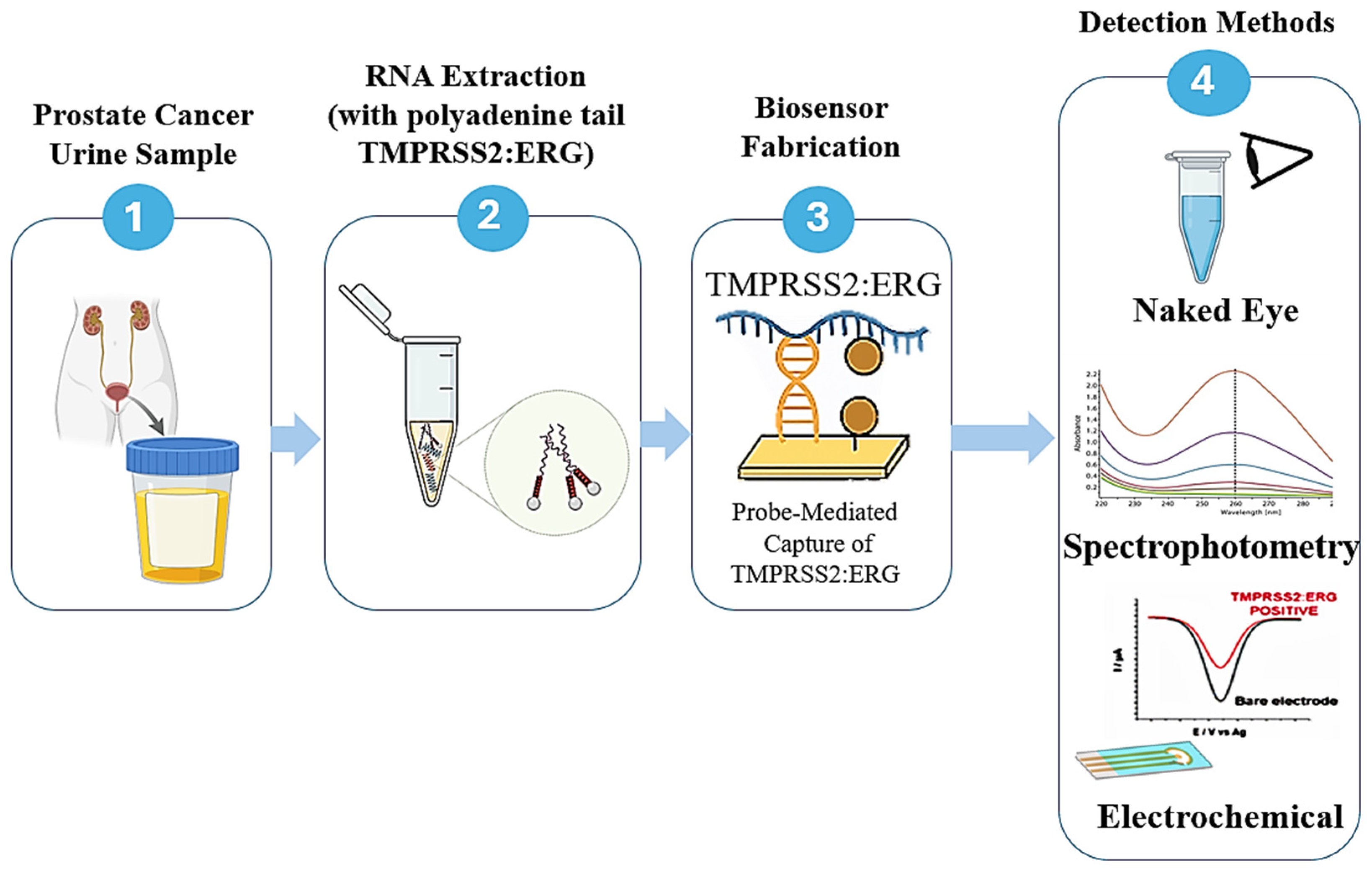
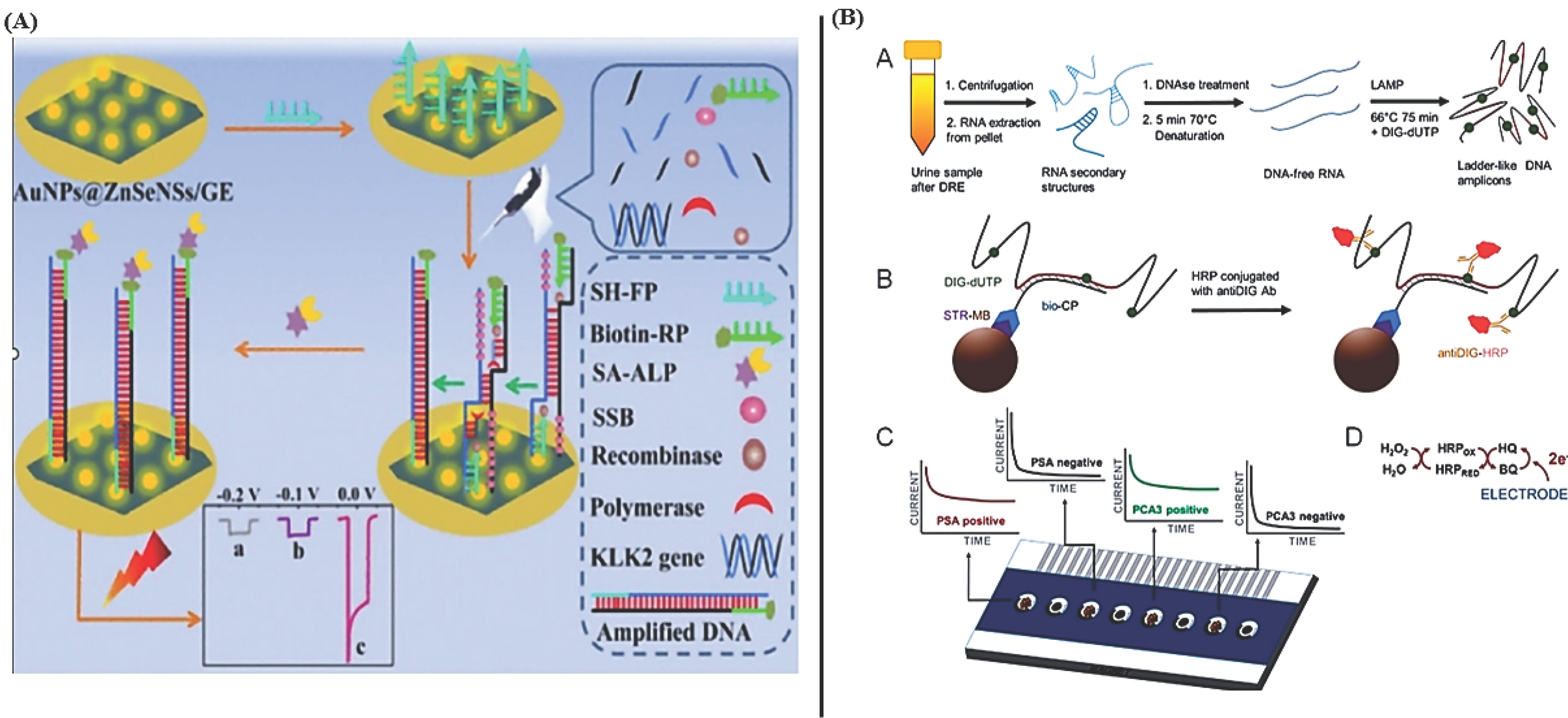
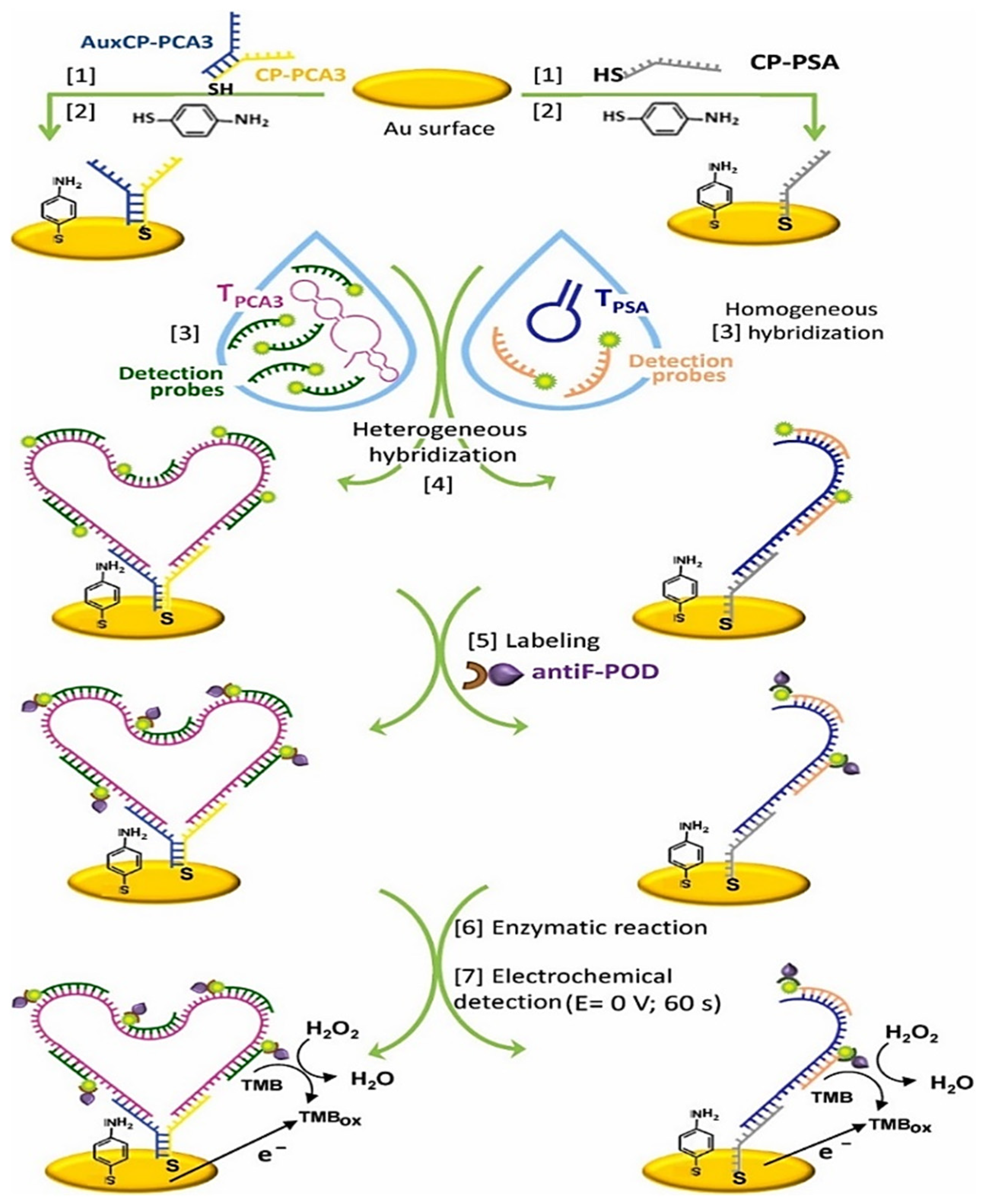
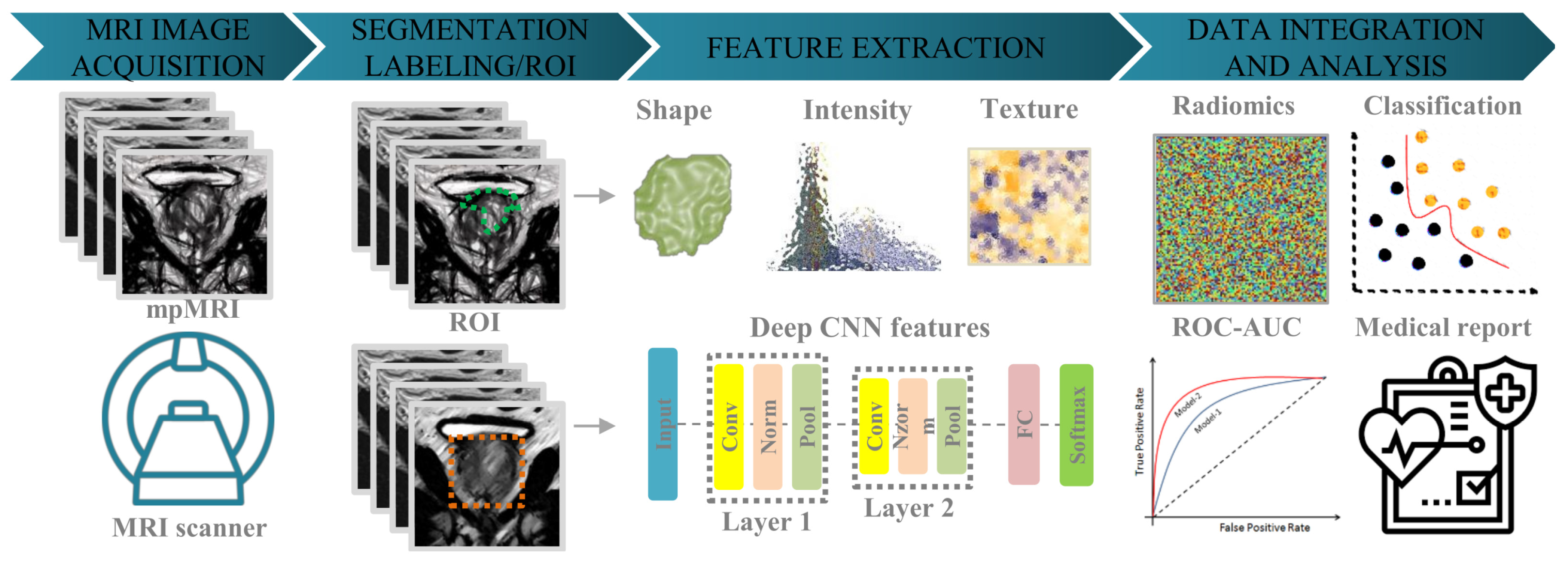
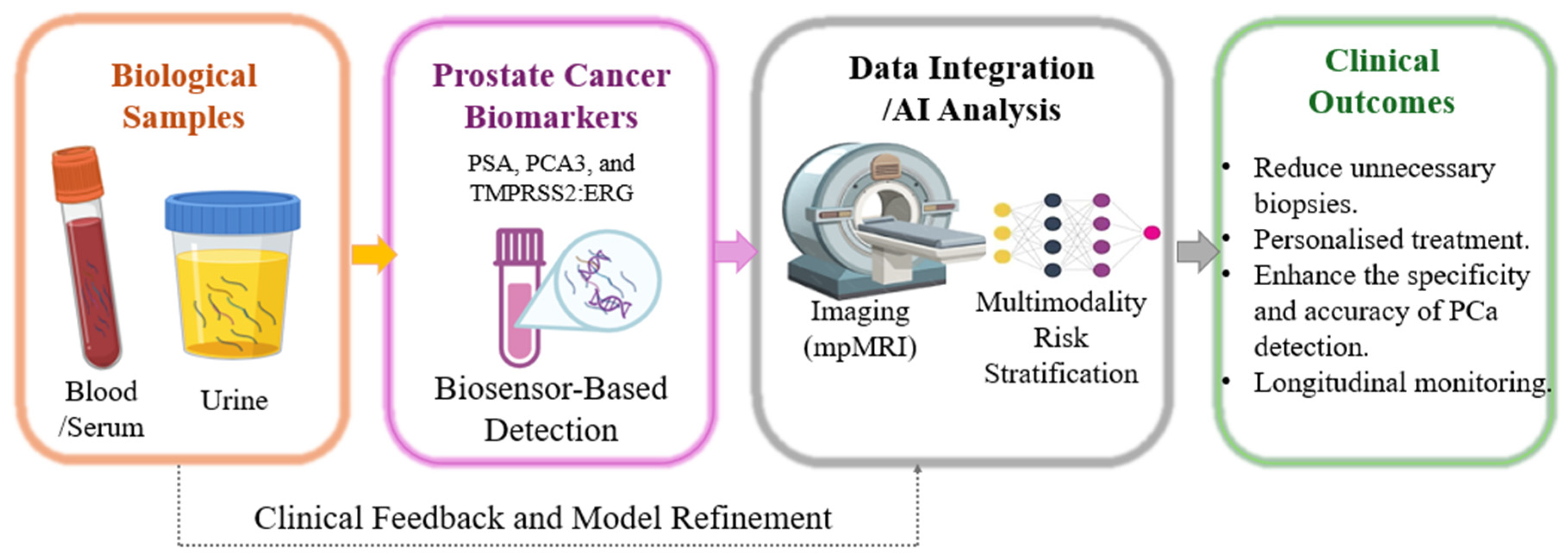
Prostate cancer (PCa) remains one of the most prevalent urological malignancies worldwide, with early and accurate diagnosis being critical for improving patient outcomes. Traditional screening approaches, such as digital rectal examination and prostate-specific antigen (PSA) testing, have long served as frontline tools; however, their limited specificity and sensitivity contribute to high rates of false positives, unnecessary biopsies, and overtreatment. Recent UK guidelines and international consensus increasingly question the role of PSA-based population screening, advocating for risk-stratified pathways and multiparametric MRI as first-line investigations. In parallel, advances in molecular biology have identified promising cancer-specific biomarkers, such as prostate cancer antigen 3 (PCA3) and transmembrane protease serine 2 (TMPRSS2:ERG), that outperform PSAs in terms of specificity and prognostic value. These developments have catalysed innovation in biosensor technologies, enabling rapid, cost-effective, and non-invasive detection of single and multiplex biomarkers in urine and serum. Electrochemical and optical affinity-based biosensors offer transformative potential for the development of personalised point-of-care platforms and diagnostics, reducing the reliance on invasive procedures and improving clinical decision-making. The latter can be augmented with artificial intelligence (AI) tools. This review critically examines the limitations of PSAs, synthesises evidence on novel biomarkers and imaging-led strategies, and evaluates the design, performance, and translational challenges of biosensor-based assays. Furthermore, it outlines future directions, including standardisation, large-scale clinical validation, and integration of multiplex biosensors with AI for precision diagnostics. By bridging molecular insights with engineering innovations, these approaches promise to redefine PCa screening and enable accurate, patient-centred care.
Keywords: prostate cancer; risk-stratified screening; PSA; PCA3; TMPRSS2:ERG; multiparametric MRI; biosensors; point-of-care diagnostics prostate cancer; risk-stratified screening; PSA; PCA3; TMPRSS2:ERG; multiparametric MRI; biosensors; point-of-care diagnostics