
Article

Electro-Steric Stabilization of Green-Synthesized Ni-Co Nanoparticles via β-Cyclodextrin Encapsulation for Enhanced Cadmium Ion Sensing

Chemistry Department, Faculty of Science, Taif University, Al-Hawiah, P.O. Box 11099, Taif 21944, Saudi Arabia
Chemosensors 2026, 14(4), 85; https://doi.org/10.3390/chemosensors14040085
Submission received: 9 February 2026 / Revised: 19 March 2026 / Accepted: 30 March 2026 / Published: 2 April 2026
(This article belongs to the Section Nanostructures for Chemical Sensing)

Abstract

This study presents the post-synthetic functionalization of Ni-Co bimetallic nanoparticles (NPs) with a β-cyclodextrin (β-CD) framework using a green synthesis approach with Illicium verum (Star anise) extract. The synthesized nanocomposite was verified using physicochemical characterization techniques such as FTIR, XRD, Zeta potential, DLS, SEM, and TEM. This surface modification successfully yielded a stable core–shell architecture with a reduced crystallite size of 29.5 nm, compared to 41.2 nm for bare Ni-Co NPs. The β-CD coating shifted the Zeta potential from −33.07 mV to −27.65 mV, establishing an electro-steric stabilization mechanism. Sensing performance toward Cd2+ ions was evaluated via the QCM-D technique. The Ni-Co/β-CD nanocomposite demonstrated a superior sensitivity of 34.72 Hz/mM and a remarkably low limit of detection (LOD) of 17.3 µM, representing a 27-fold enhancement over the bare Ni-Co NPs (LOD: 472.2 µM). The mechanical signature, characterized by negative dissipation shifts and a high acoustic ratio (ΔDf = 79.410 × 10⁻⁶), confirms an analyte-induced conformational rigidification driven by a host–guest interaction mechanism. These findings establish a robust method of producing bio-based, “smart” nanocomposites for high-precision environmental sensing.

1. Introduction

The detection of trace-level cadmium ions (Cd2+) in aquatic system remains a significant analytical challenge due to the high toxicity, persistence, and bioaccumulation potential of the metal [1,2]. To date, the state of the art for Cd2+ detection is dominated by electrochemical sensors and modified optical probes, which aim to achieve nanomolar limits of detection (LOD). For instance, electrochemical sensors utilizing functionalized graphene oxide exhibited a low value for detection limit (0.09 µg/L) [3]. Similarly, electrochemical sensor based on gold deposited-reduced graphene oxide sheets achieved limits of detection of 0.36 µM [4]. Fluorescent sensors based on carbon dots have achieved 15 nM as an LOD [5].
Despite these advancements, a significant challenge remains in maintaining sensor stability and selectivity in complex aqueous matrices [6]. In this context, Quartz Crystal Microbalance (QCM) sensors have emerged as a robust alternative. This technology provides a label-free platform for real-time monitoring of mass changes at the nanogram scale [7,8]. A persistent gap in QCM-based heavy metal sensing lies in the difficulty in engineering a sensing layer that simultaneously offers high sensitivity and structural stability [9].
Transition metal nanoparticles, such as Ni-Co bimetallic alloys, are frequently employed to enhance QCM sensitivity [10]. The synergy between nickel’s chemical stability and cobalt’s electronic properties creates a high-energy surface capable of strong ion interaction. From a synthesis perspective, the challenge lies in the rapid aggregation due to high surface energy and magnetic dipole–dipole interaction [11]. Traditional stabilization methods often rely on simple electrostatic repulsion, which is highly sensitive to pH and ionic strength changes in real environmental samples, leading to unstable baseline frequencies and poor reproducibility in QCM measurements.
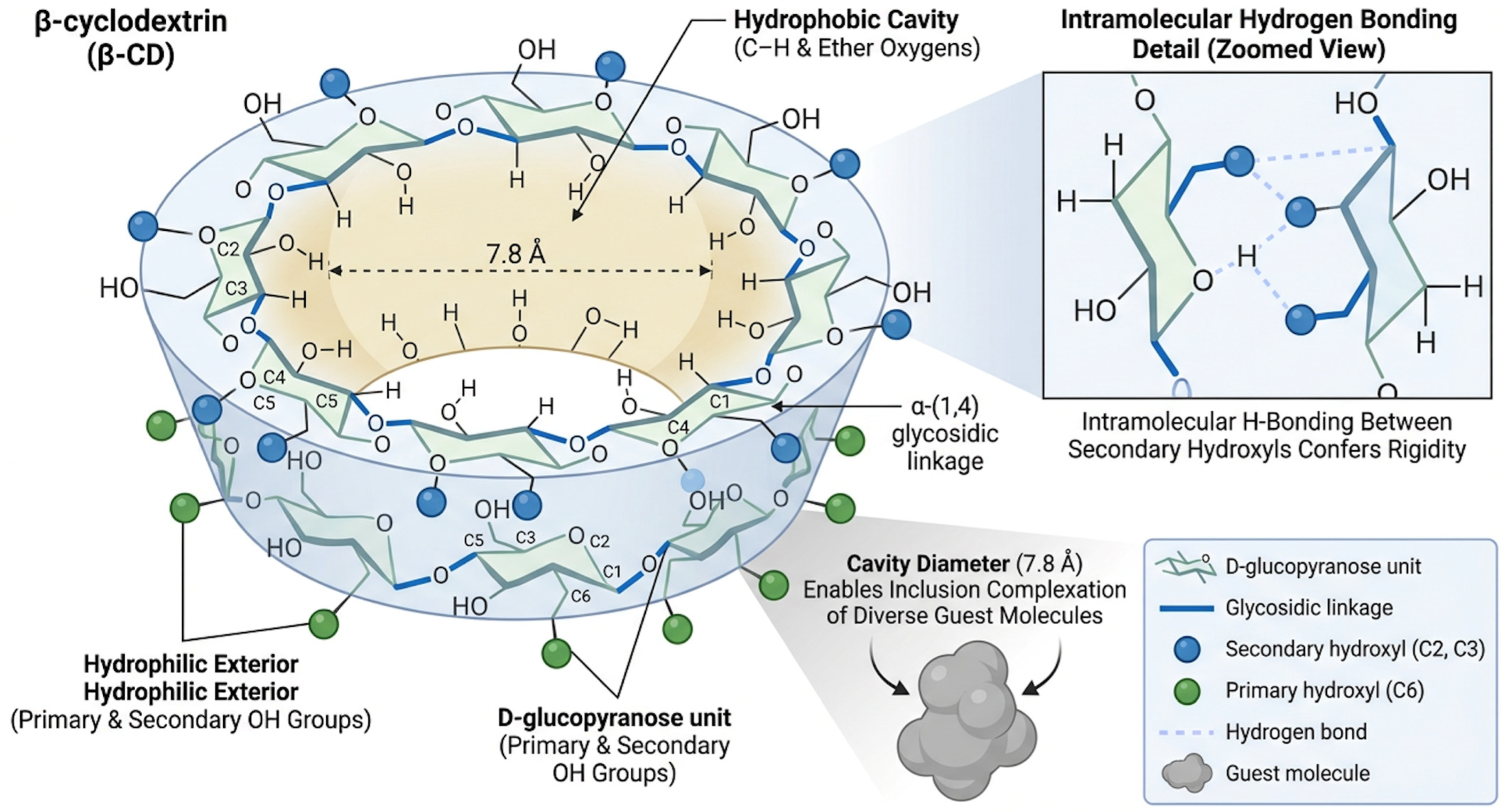
To address these limitations, this study investigates a surface functionalization strategy using beta-cyclodextrin (β-CD). β-CD, as illustrated in Figure 1, is a cyclic oligosaccharide composed of seven glucopyranose units, forming a hydrophobic cavity and hydrophilic exterior, enabling it to form stable host–guest inclusion complexes with a wide range of guest molecules, including transition metal ions [12]. This post-synthetic approach focuses on the encapsulation of pre-calcined Ni-Co nanoparticles within the β-CD matrix. This process provides robust steric stabilization, preventing secondary aggregation of the metallic cores while simultaneously creating a high-affinity interface for the targeted capture of Cd2+ ions [13].
The efficacy of Illicium verum (Star anise) extract as a potent biogenic reducing agent has been demonstrated in the synthesis of diverse metallic nanostructures. For instance, the high concentration of anethole and polyphenolic compounds in the extract has been utilized to produce spherical and flake-like-shaped zinc oxide nanoparticles (ZnO NPs), and silver nanoparticles (Ag NPs) with significant antimicrobial properties [14,15]. Furthermore, studies have shown that Star anise facilitates the formation of spherical cerium oxide nanoparticles (CeO2 NPs) with high antioxidant properties [16].
The aim of this study is to develop a stable, high-sensitivity QCM-D nanosensor for Cd2+ detection by utilizing β-CD functionalized Ni-Co bimetallic nanoparticles. Specifically, this research investigates the role of β-CD as a surface-capping agent and its impact on the structural and sensing properties of green-synthesized Ni-Co NPs. The synthesized nanomaterials were characterized by Fourier Transform Infrared spectroscopy (FTIR), X-ray diffraction (XRD), Zeta potential analysis, Dynamic Light Scattering (DLS), Scanning Electron Microscopy (SEM), energy-dispersive X-ray spectroscopy (EDX), and transmission electron microscopy (TEM) to elucidate their structural, morphological, and surface properties. Furthermore, by comparing the analytical performance of the functionalized nanocomposite with that of bare Ni-Co NPs, the QCM-D approach was used to monitor the real-time interaction and detection of Cd2+ ions.

2. Materials and Methods

2.1. Materials

The materials used in this study including NiCl2·6H2O, CoCl2·6H2O, Cd(NO3)2, β-CD, and NaOH were purchased from Sigma-Aldrich (Munich, Germany), and all were used without further purification. Illicium verum (Star anise) was purchased from a local market in Taif City. Double-distilled water was used as a solvent to prepare the solutions.

2.2. Preparation of the Star Anise Piece Extract

Initially, Star anise pieces were thoroughly rinsed multiple times with double-distilled water to remove surface impurities, followed by drying under ambient conditions. Once completely dried, the pieces were pulverized into a fine powder using a mortar and pestle. To prepare the aqueous extract, 5 g of the resulting powder was boiled in 100 mL of double-distilled water at 80 °C for one hour. The extract was thin-filtered to obtain the final extract, which was stored for the subsequent nanoparticle synthesis.

2.3. Green Synthesis of the Bare Ni-Co Nanoparticles (Ni-Co NPs)

The green synthesis of bare Ni-Co NPs was carried out using Star anise extract as a biogenic reducing and stabilizing agent. Initially, 20 mL of 1 M NiCl2·6H2O and 20 mL of 1 M CoCl2·6H2O were mixed in a reaction vessel, establishing a 1:1 molar ratio of Ni:Co. The mixture was heated to 80 °C under constant stirring. Subsequently, 10 mL of the freshly prepared Star anise extract was added to the precursor solution, resulting in a final reaction volume of 50 mL (excluding pH adjustment reagents). The pH was adjusted to 10 by adding 0.5 mL of 1.0 M NaOH. The reaction proceeded under continuous stirring for 2 h. The synthesized nanoparticles were recovered via centrifugation, washed three times with double-distilled water to remove unreacted precursors, and finally calcined at 500 °C for 5 h.

2.4. Synthesis of the Ni-Co/β-CD Nanocomposite (Ni-Co/β-CD)

The Ni-Co/β-CD nanocomposite was synthesized through a host–guest inclusion and surface functionalization process. Initially, 1.5 g of β-CD was dissolved in 30 mL of double-distilled water and heated at 80 °C for 30 min to ensure complete dissolution. Separately, 0.3 g of the previously synthesized bare Ni-Co NPs was dispersed in 20 mL of double-distilled water via ultrasonication for 10 min to minimize agglomeration. The Ni-Co suspension was added to the β-CD solution, establishing a 1:5 mass ratio of bare Ni-Co NPs to β-CD in a final reaction volume of 50 mL. The mixture was subjected to continuous magnetic stirring for 4 h to facilitate the entrapment of the metallic cores within the macrocyclic cavities. Finally, the resulting Ni-Co/β-CD nanocomposite was dehydrated in an oven at 80 °C for 48 h to obtain a stable powder for further characterization.

2.5. Detection of Cd2+ by Quartz Crystal Microbalance (QCM)

The QCM sensor comprised an AT-cut quartz crystal chip equipped with a gold electrode (14 mm diameter) and a resonance frequency (f0) of 5 MHz. The experimental procedure commenced with meticulous cleaning of the gold sensor through sequential immersion in acetone, isopropanol and double-distilled water for 10 min, then drying under high-purity nitrogen gas. To evaluate the enhancement provided by the β-CD host matrix, two separate experimental series were conducted. In the first series, the bare Ni-Co NPs were deposited to serve as a control, while the second series utilized the Ni-Co/β-CD nanocomposite. In each case, a 50 µg/L suspension of the respective nanomaterial in 20 mL of double-distilled water was introduced into the Q-sense chamber at a constant flow rate of 0.25 mL/min and maintained until a stable baseline frequency was obtained at the 7th overtone. A peristaltic pump (ISM 930, IPC, Ismatec, Wertheim, Germany) was used to control the flow rate in each experiment, which was maintained at 0.25 mL/min. Following surface stabilization, the sensor was exposed to Cd2+ ions via a sequential injection protocol. Solutions of Cd2+ at increasing concentrations (0.01, 0.03, and 0.05 mM) were introduced for 10 min intervals to allow for binding equilibrium. Between each concentration step, a 5 min rinse with double-distilled water was performed at the same flow rate to eliminate non-specifically adsorbed ions. Cd2+ ion adsorption causes a shift in frequency that is measured against time. To ensure validity, each measurement sequence was repeated in triplicate using independent sensors. Between replicate measurements, the flow system underwent thorough cleaning with sequential flushing of 0.1 M HNO3 and deionized water for 10 min to eliminate potential cross -contamination. The raw data was processed through QSense Dfind software (version 1.2) for baseline correction and extraction of steady-state values before advanced statistical analysis.

2.6. Characterization

The structural, morphological, and chemical properties of the synthesized bare Ni-Co NPs and Ni-Co/β-CD nanocomposite were comprehensively evaluated using a multi-technique approach. FTIR was employed to verify the successful in situ stabilization and chemical anchoring of the β-CD shell onto the bimetallic core. FTIR spectra were obtained using a Perkin-Elmer 1650 spectrometer with KBr disks, covering a spectral range from 4000 to 400 cm−1. XRD was utilized to determine the crystalline phase and calculate the average crystallite size via the Scherrer equation. It was performed using a D8, Bruker, Madison, WI, USA, with CuKα radiation 1.5418 Å. To assess colloidal behavior, Zeta potential and DLS measurement were conducted to analyze surface charge stability and hydrodynamic diameter, respectively. These analyses were conducted using the NanoSight NS500, Malvern Panalytical, Malven, UK. The morphology and internal architecture were visualized using SEM and TEM. SEM images were taken using a SEM, LEO 1530, Carl Zeiss SMT GmbH, Oberchoken, Germany. For sample preparation, they were diluted 10 times with their dispersion medium, then a drop was directly deposited on a polished aluminum sample holder and dried under a vacuum. Samples were coated with a gold layer using the K450X sputter coater, EMITECH, England. Images were taken at magnifications ranging from 15,000× to 12,000× using an accelerating voltage of 30 kV. TEM analysis was performed using a JEOL TEM-2100, Tokyo, Japan.

3. Results and Discussion

3.1. Characterization of Synthesized Bare Ni-Co NPs and Ni-Co/β-CD Nanocomposite

3.1.1. FTIR

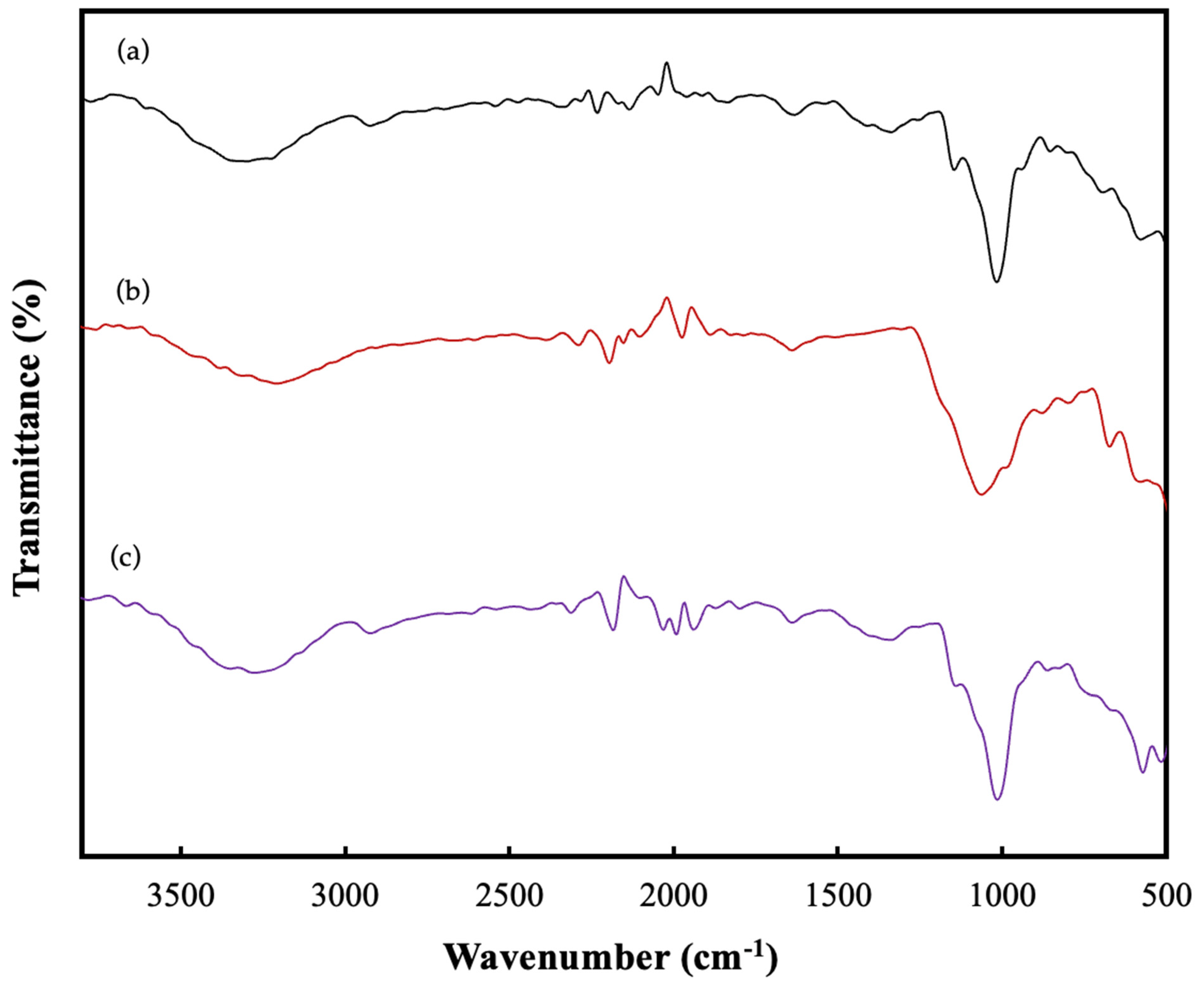
Figure 2 displays the FTIR spectra of β-CD, bare Ni-Co NPs and the Ni-Co/β-CD nanocomposite. In the spectrum of pure β-CD (Figure 2a), the intense broad peak at ~3299 cm−1 corresponds to the O-H stretching vibrations of the hydroxyl groups (both primary and secondary alcohols) present in the β-CD structure. Additionally, the peak at 2924 cm−1 arises from the aliphatic C-H stretching vibrations of the -CH2 groups. Two other notable peaks at 1146 cm−1 and 1017 cm−1 can be assigned to the C-O stretching and CH2-O bending vibrations, respectively, which are characteristic of the alcohol and ether functional groups in β-CD [17]. The FTIR spectrum of bare Ni-Co NPs (Figure 2b), obtained after calcination at 500 °C for 5 h, displays a significant reduction in organic signals. The residual peaks may be assigned to the stretching and bending modes of chemisorbed atmospheric moisture on the high-energy metallic surface [18,19]. The FTIR spectrum of the Ni-Co/β-CD nanocomposite (Figure 2c) confirms successful post-synthetic surface functionalization. The appearance of the aliphatic C-H stretching vibration at 2922 cm−1 and the recovery of the dense hydroxyl fingerprint between 1000 and 1200 cm−1 verify the presence of β-CD in the nanocomposite. Notably, a redshift in the skeletal vibration from 579 cm−1 (in pure β-CD) to 571 cm−1 (in the Ni-Co/β-CD nanocomposite) was observed, indicating strong physical entrapment and coordination of the metallic cores within the β-CD cavities. These modifications suggest that β-CD serves as a steric stabilizing agent.

3.1.2. XRD

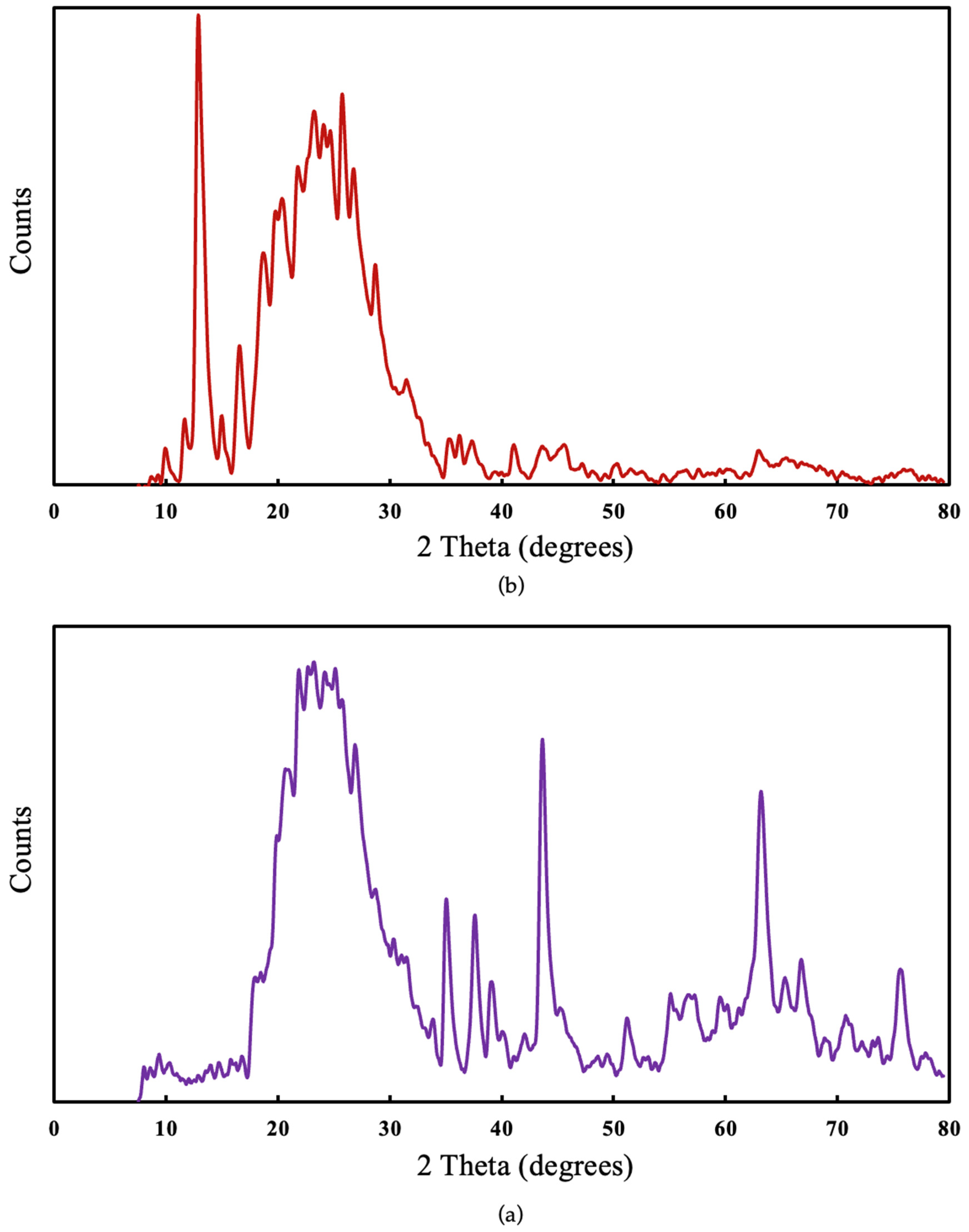
The crystalline nature of the bare Ni-Co NPs and Ni-Co/β-CD nanocomposite was confirmed using XRD analysis. Figure 3a represents the XRD pattern of the bare Ni-Co NPs which exhibited sharp diffraction peaks at 2Ø of 21.660° corresponding to the (111) reflection, 43.434° corresponding to the (200) reflection, and 62.933° corresponding to the (220) reflection planes [20]. These peaks correspond to a face-centered cubic (FCC) metallic structure with an estimated crystallize size of 41.2 nm. In contrast, the XRD pattern Ni-Co/β-CD nanocomposite is represented in Figure 3b. The metallic peaks disappear and new peaks appear at 12.624°, 25.558°, and 26.579°. The prevalence of these β-CD peaks (12.624° and 25.558°) indicates that the metallic cores are deeply embedded within the macrocyclic framework [21,22]. In such inclusion complexes, the host lattice effectively shields the guest, leading to a diffraction pattern dominated by the crystalline packing of the cyclodextrin molecules. The reduction in crystallite size from 41.2 nm to 29.5 nm further suggested that the β-CD layer acts as a physical barrier, effectively restricting the secondary aggregation of the metallic domains through steric hindrance. This core–shell arrangement aligns with the vibrational shifts observed in the FTIR spectra and confirms the structural integration of the metallic phase into the macrocyclic host.

3.1.3. Zeta Potential and Particle Size Distribution

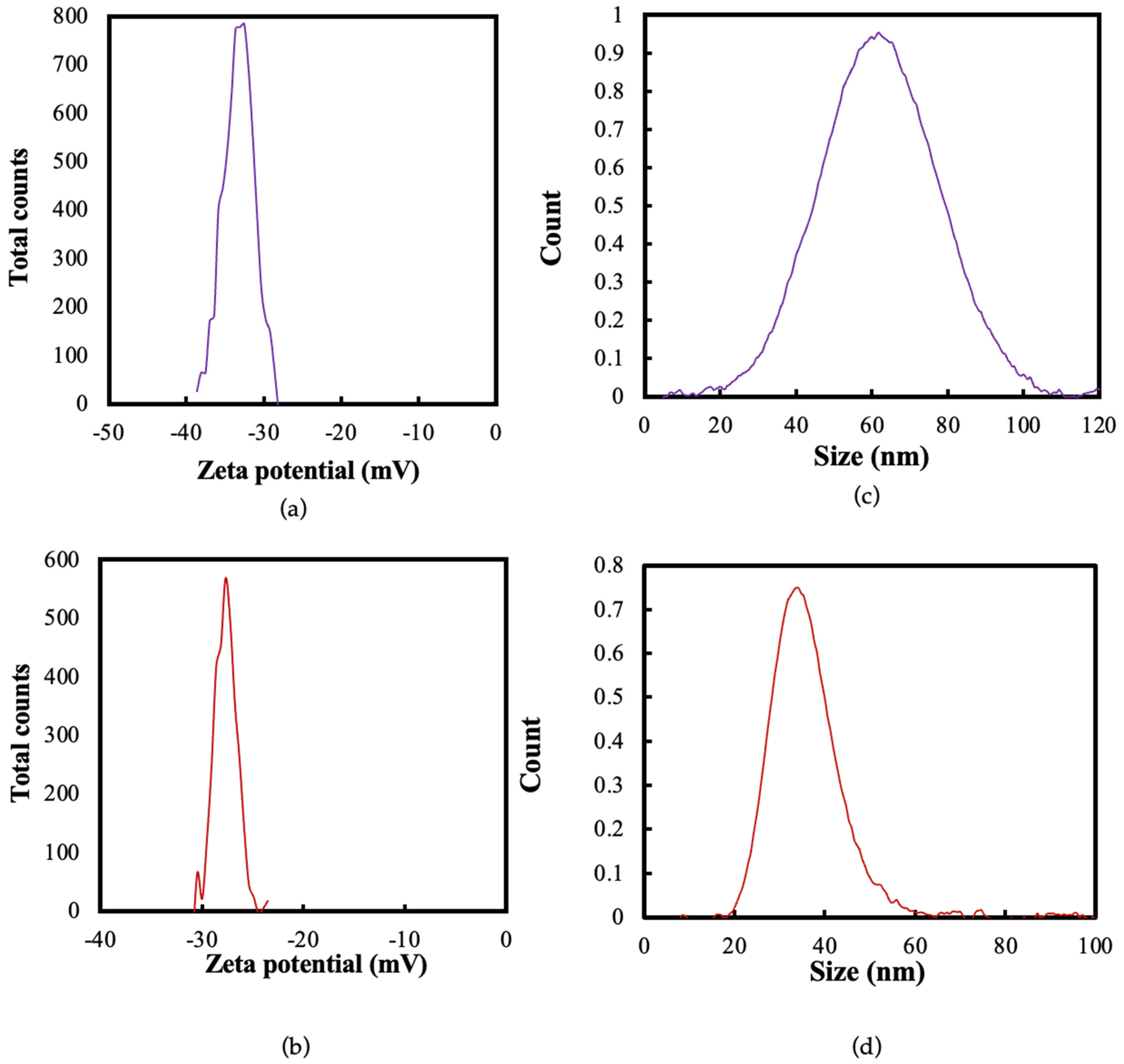
The surface charge and colloidal stability were evaluated using Zeta potential analysis. The bare Ni-Co NPs exhibited a value of −33.07 mV (Figure 4a), indicating a strong negative surface charge and excellent colloidal stability in aqueous suspension due to electrostatic repulsion. Upon formation of the Ni-Co/β-CD nanocomposite (Figure 4b), the Zeta potential shifted to −27.65 mV (Figure 4b); this reduction in the magnitude of the negative charge suggested that the neutral β-CD molecules successfully encapsulated the metallic cores, shielding the primary surface charge [23]. The transition from purely electrostatic to steric stabilization enhanced the stability of the nanocomposite. DLS analysis (Figure 4c,d) further supports the stabilizing effect of β-CD functionalization. The hydrodynamic diameter of the bare Ni-Co NPs was recorded at 52 nm, whereas the Ni-Co/β-CD nanocomposite exhibited a significantly reduced diameter of 30 nm. This decrease in size upon the introduction of β-CD is attributed to the effective deagglomeration of calcined Ni-Co clusters during the functionalization process [24]. The close agreement between the crystallite size determined by XRD (29.5 nm) and the hydrodynamic diameter (30 nm) for the nanocomposite was a significant finding. It indicated the formation of a highly stable, monodisperse system with a stabilizing shell, where the β-CD layer is thin and rigid enough to prevent the large solvation layers typically associated with loosely bound capping agents.

3.2. Morphology of Bare Ni-Co NPs and Ni-Co/β-CD Nanocomposite

3.2.1. SEM-EDX

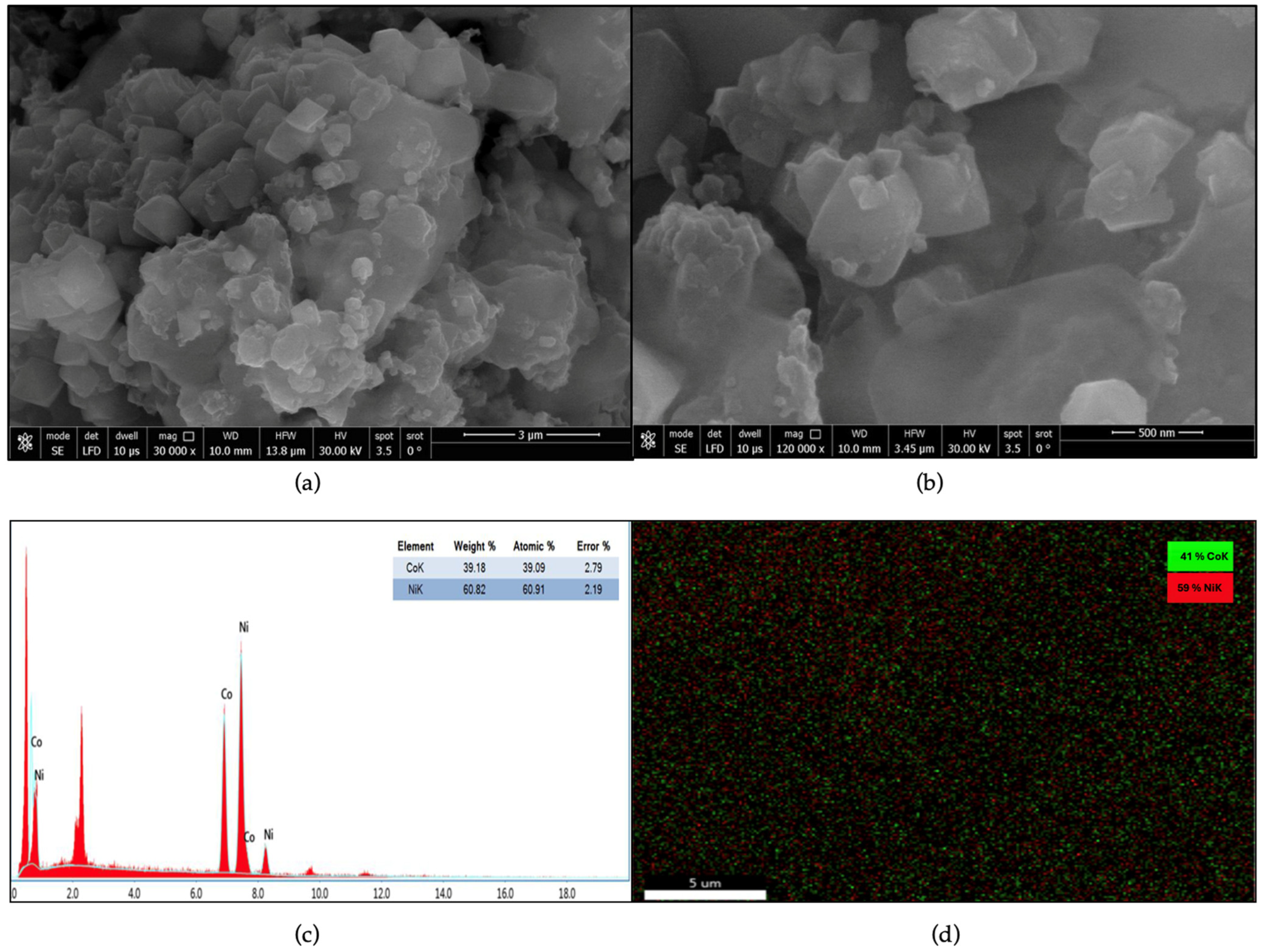
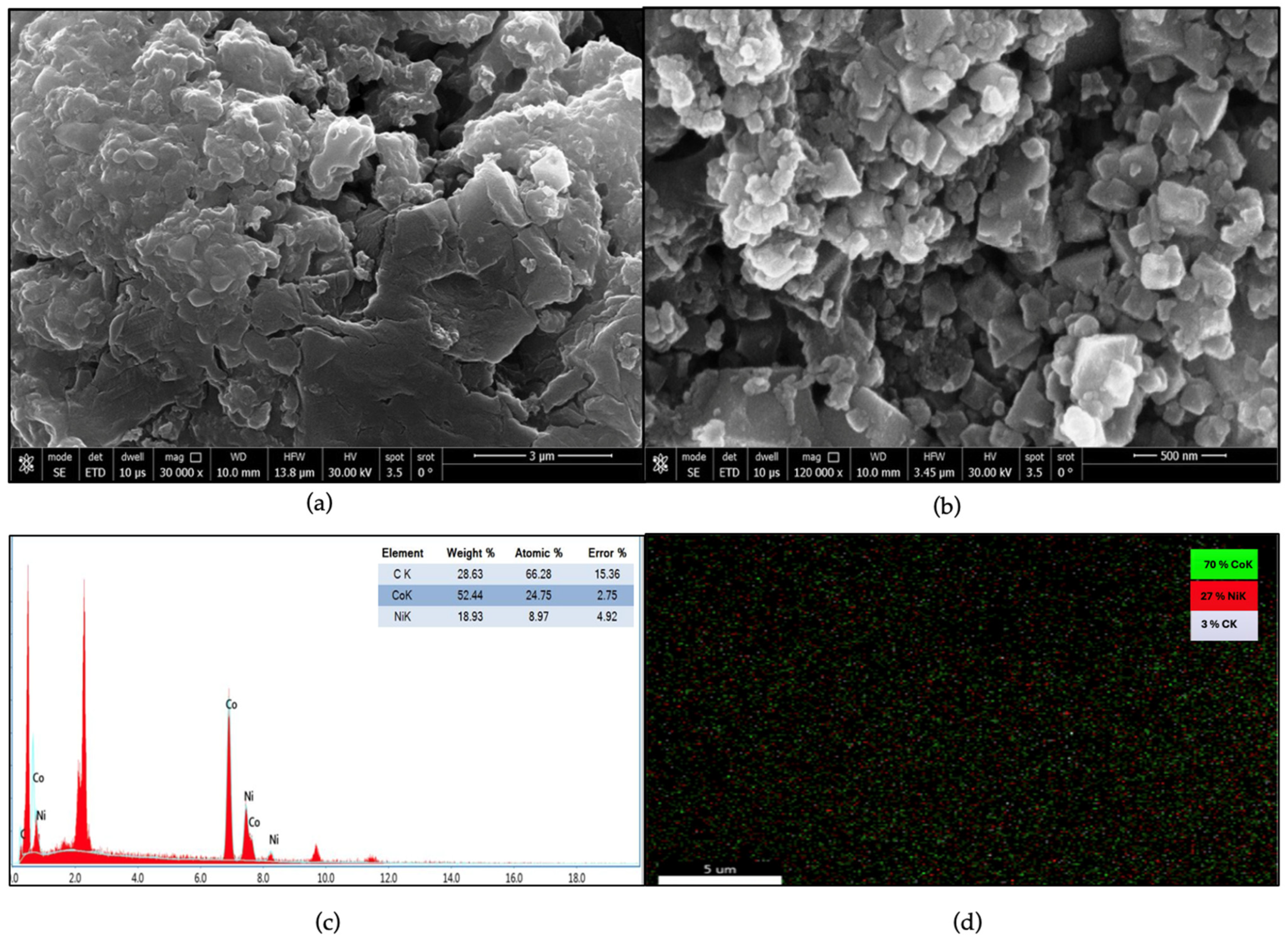
Figure 5a,b and Figure 6a,b present the SEM images of the bare Ni-Co NPs and Ni-Co/β-CD nanocomposite, respectively, at magnifications of 30,000× and 120,000×. The high-magnification images (120,000×) reveal that both the bare Ni-Co NPs and Ni-Co/β-CD nanocomposite possess a distinct cubic morphology. However, a significant difference was observed; while the bare metallic nanoparticles exhibited substantial agglomeration due to high surface energy and magnetic dipole–dipole interactions, the β-CD functionalized particles remained well separated. This observation is in total agreement with XRD and DLS data, confirming that β-CD prevented particle coalescence. EDX analysis (Figure 5c and Figure 6c) further confirms this encapsulation. The Ni-Co/β-CD nanocomposite shows a significant carbon contribution (28.63 wt%), which is absent in the bare metallic phase, corresponding to the hydrocarbon framework of the β-CD macrocycles. The decrease in the metallic signal intensity (Ni and Co) was observed, which may be attributed to the shielding effect of the organic shell during electron beam interaction. Elemental mapping (Figure 5d and Figure 6d) confirmed that the Ni, Co, and C are uniformly distributed across the sample area. This spatial homogeneity provides evidence of a well-integrated host–guest system.

3.2.2. TEM

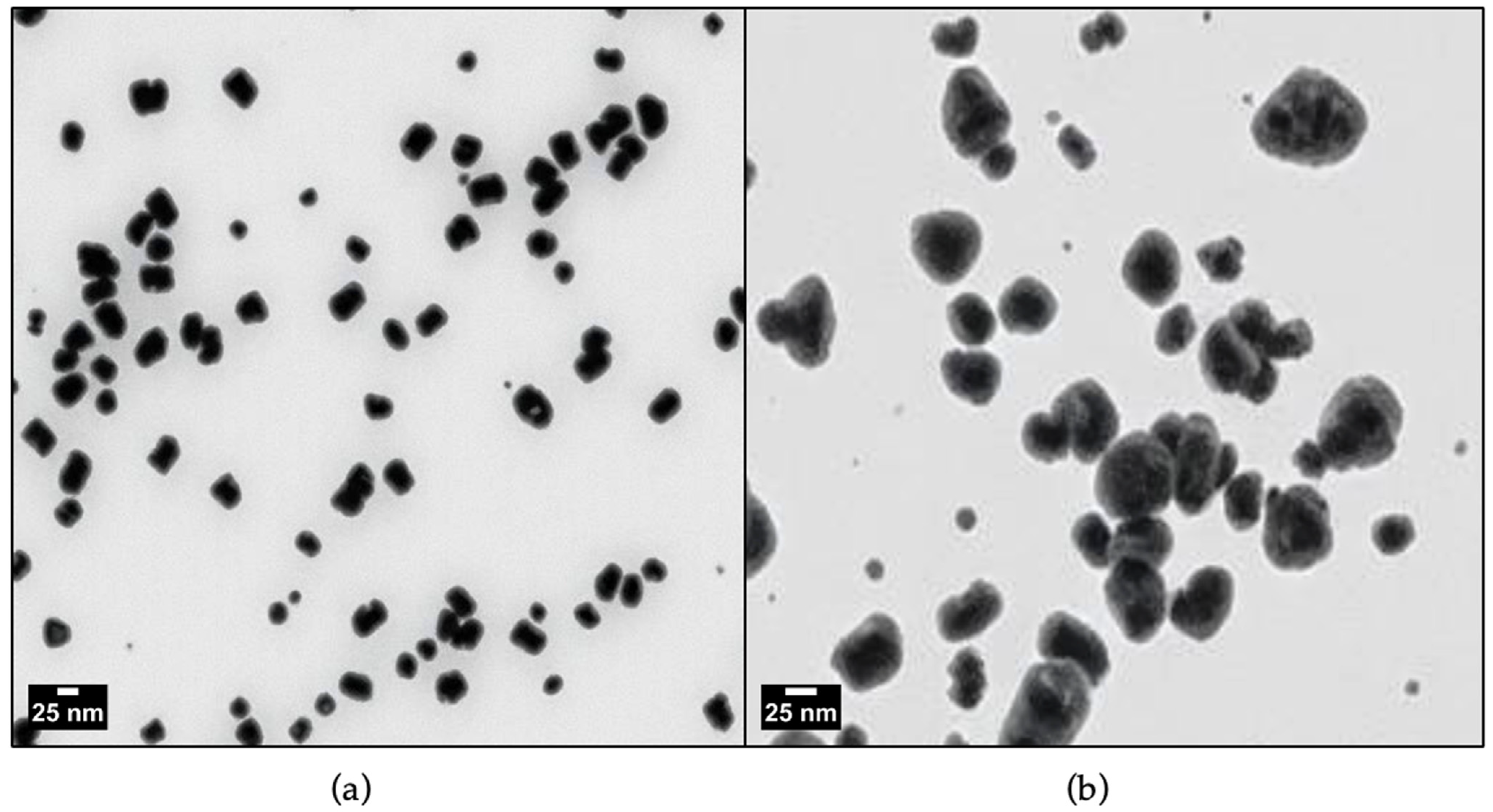
The morphological characteristics and structural refinement of the synthesized materials were further elucidated through TEM imaging. Figure 7a reveals that the bare Ni-Co NPs possess a well-defined cubic morphology with high structural integrity. In contrast, the Ni-Co/β-CD nanocomposite (Figure 7b) exhibits a distinct core–shell morphology, where the high-density metallic cores are enveloped in a lower-density organic layer.

3.3. QCM Sensor-Based Bare Ni-Co NPs and Ni-Co/β-CD Nanocomposite for Cd2+ Heavy Metal Detection

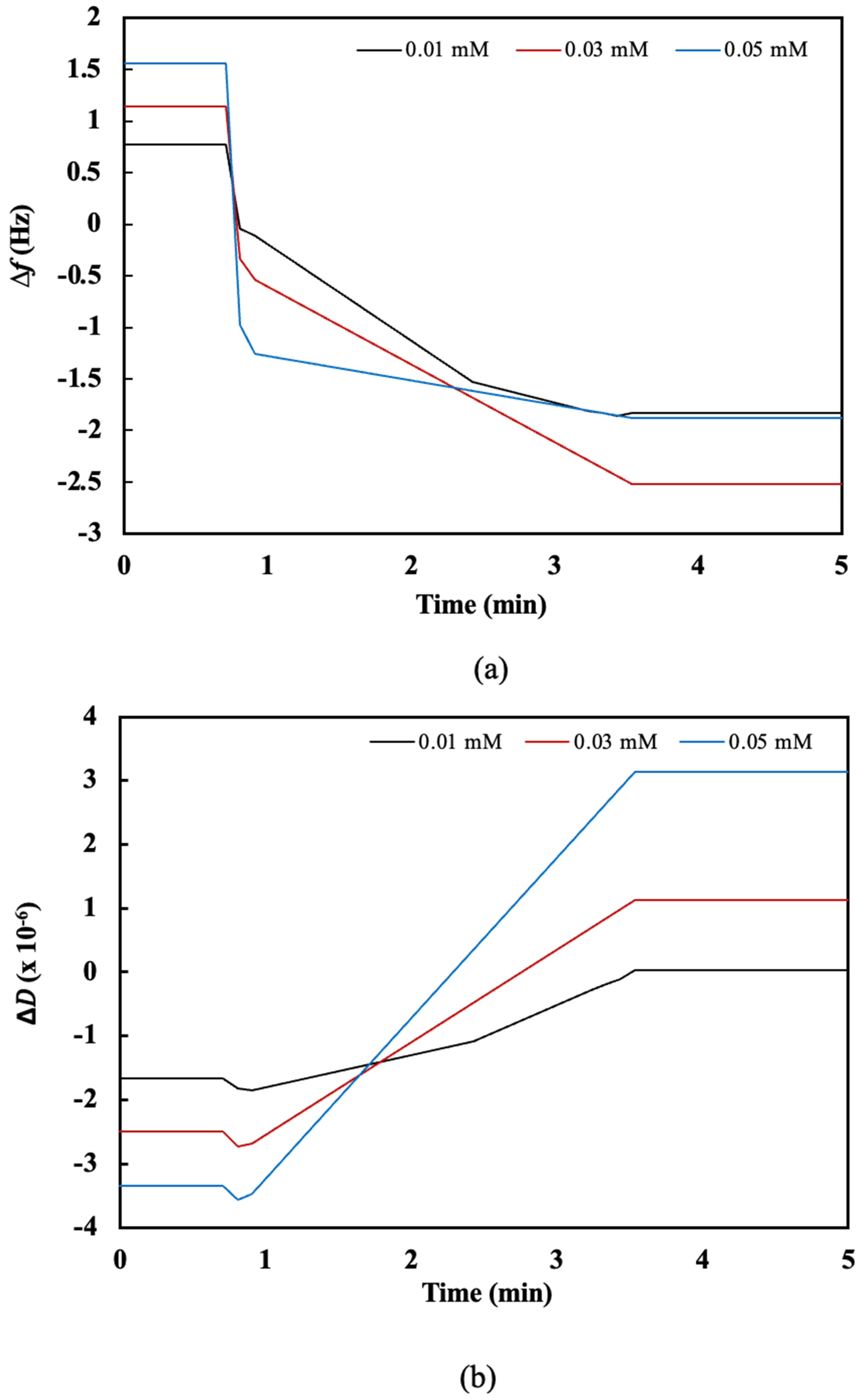
Figure 8a,b show the sensing performance and the dissipation profile of the bare Ni-Co NPs toward varying concentration of Cd2+ ions (0.01, 0.03, and 0.05 mM). The bare Ni-Co NP interface exhibited a significant non-monotonic resonant frequency shift (Δf), recording steady-state frequency shifts of −1.82 ± 0.20 Hz (0.01 mM) and −2.51 ± 0.25 Hz at (0.03 mM). This initial sensitivity is attributed to the high specific surface area and structural porosity of the metallic cluster. The inherent tendency of these nanoparticles to agglomerate creates a structurally rough interface that facilitates the entrapment of Cd2+ ions alongside coupled water molecules, effectively amplifying the frequency shift through hydrodynamic loading [25]. However, as the Cd2+ ion concentration progressed toward 0.05 mM, a distinct attenuation and subsequent reversal in the frequency response occurred, with the shift returning to −1.87 ± 0.28 Hz. This behavior indicates a transition toward surface saturation, characteristic of Langmuir adsorption kinetics, where the initial rapid uptake leads to stable monolayer coverage [26]. At this saturation threshold, the overcrowding of Cd2+ ions on unshielded metallic sites likely induces a partial expulsion of the trapped water from the porous agglomerates. Because the QCM-D measures the total hydrodynamic mass, this solvent release results in a net frequency increase despite full site occupation [27].
The interfacial viscoelastic properties of the bare Ni-Co NPs (Figure 8b) during Cd2+ adsorption were elucidated through changes in energy dissipation (ΔD). The dissipation increased monotonically with Cd2+ ion concentration, recording shifts of 0.028 ± 0.016 × 10⁻⁶ (0.01 mM), 1.132 ± 0.09 × 10⁻⁶ (0.03 mM), and a maximum of 3.148 ± 0.2 × 10⁻⁶ (0.05 mM). This significant rise in ΔD indicates the formation of an increasingly viscoelastic and soft absorbed layer, which dissipates more energy during the crystal’s oscillation due to the non-specific attraction of hydrated Cd2+ ions to the high-energy metallic surface [28]. This transition is quantitively confirmed by the acoustic ratio (ΔDf), which rose from 0.015 × 10⁻⁶ ± 0.009 × 10⁻⁶ at 0.01 mM to 1.670 × 10⁻⁶ ± 0.21 at 0.05 mM. According to the Kanazawa and Gordon model, these high values confirm that the bare Ni-Co NP interface acts as a porous scaffold where the recorded signal is heavily inflated by trapped water rather than the Cd2+ ions alone [29].
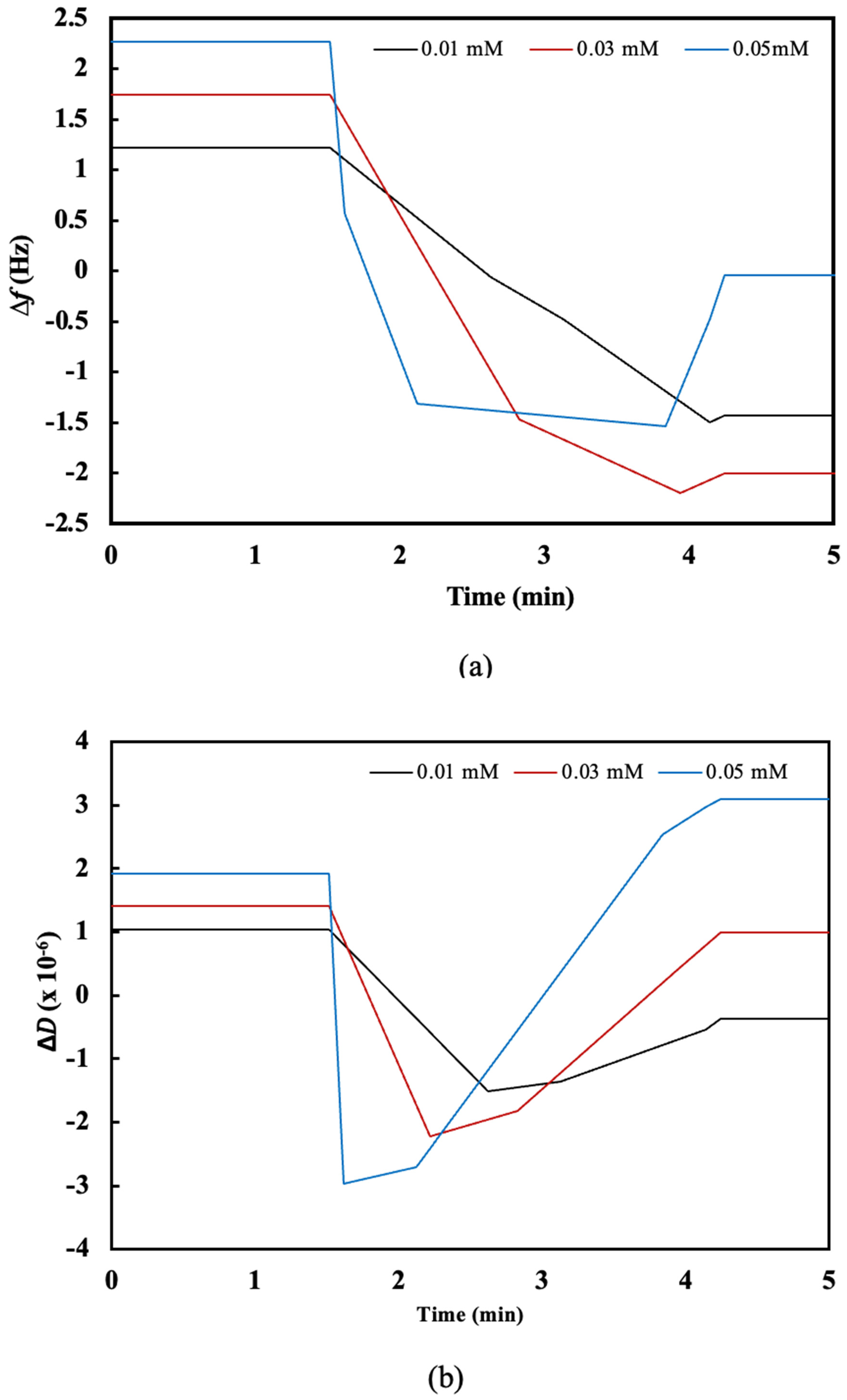
The sensing and the dissipation profiles of the Ni-Co/β-CD nanocomposite are illustrated in Figure 9a,b. The frequency shift in the Ni-Co/β-CD nanocomposite exhibited a sophisticated, multi-phasic response across the Cd2+ ions concentrations range, contrasting sharply with the simple accumulation observed on bare nanoparticles. At low concentrations (0.01 to 0.03 mM), the frequency decreased from −1.42 ± 0.12 Hz to −2.00 ± 0.15 Hz, representing the primary mass loading phase where Cd2+ ions are captured within the β-CD macrocyclic cavities via host–guest inclusion. Interestingly, the dissipation profile during this stage revealed a transition to a negative shift (−0.370 ± 0.05 × 10⁻⁶), which indicates analyte-induced rigidification. This may be due to the fact that as Cd2+ ions occupy the β-CD cavities, they act as inter-molecular cross-linkers by coordinating with the hydroxyl groups of the adjacent organic framework. During this coordination, the water molecules are expelled from the hydrophobic cavity, transforming the interface into a more compact, rigid state. This structural evolution provides a physical rationale for the frequency behavior observed at 0.05 mM, where the shift significantly reverted toward the baseline (−0.039 ± 0.015 Hz). At this concentration, the expulsion of water molecules, which possesses a higher relative acoustic mass, outweighs the mass gain from the absorbed Cd2+ ions, leading in a net increase in resonant frequency. This interpretation is quantitatively confirmed by the ΔDf ratio, which reached an exceptionally high value of 79.140 ± 31.33 × 10⁻⁶ at 0.05 mM. This high ratio proves that the sensor has moved into a structurally dominant regime. In this state, the resonant signal is no longer dictated by simple mass addition (Sauerbrey equation) but is governed by the mechanical stiffening and density changes in the interface.
Finally, at the highest concentrations (0.03 and 0.05 mM), the dissipation returned to a positive trend (0.998 ± 0.09 × 10⁻⁶ to 3.097 ± 0.28 × 10⁻⁶). This marks the saturation of the internal β-CD cavities and the subsequent onset of the secondary, non-specific loading on the outer surface of the nanocomposite. This outer surface adsorption attracts a fresh hydration shell, increasing the viscoelastic drag. These results demonstrate that the β-CD functionalization transforms the Ni-Co surface into a smart interface capable of sophisticated structural adaption during molecular recognition.

Comparative Analytical Performance of QCM-D Sensors

The analytical performance parameters, including sensitivity, limit of detection (LOD), and linear dynamic range, were derived from the steady-state frequency shifts and are summarized for both nanosensor platforms in Table 1. For the bare Ni-Co NPs, the sensing performance was notably poor, characterized by a negligible sensitivity of −1.27 Hz/mM and a high LOD of 472.2 µM. The linear regression analysis across the 0.01–0.03 mM range yielded a correlation coefficient (R2) of only 0.004. This lack of linearity and low sensitivity confirm that the bare metallic interface lacks specific binding sites, resulting in erratic, non-specific mass loading dominated by the random entrapment of hydrated ions within the porous nanoparticles aggregates. This is further supported by the high acoustic ratio ( Δ D / Δ f = 1.670   ± 0.22   ×   10 6 at 0.05 mM), which indicates the formation of an unstable, viscoelastic soft adsorbed layer.
In stark contrast, the Ni-Co/β-CD nanocomposite exhibited significantly enhanced analytical capabilities. The functionalization with β-CD macrocycles improved the sensitivity to 34.72 Hz/mM and lowered the LOD to 17.3 µM, representing a nearly 27-fold improvement in detection limit over the bare control. The dynamic range was extended to 0.005–0.05 mM (R2 = 0.473), reflecting a more predictable, high-affinity host–guest interaction. While the R2 value of 0.473 indicates a non-linear response at high concentrations, this interpreted as a transition from simple mass loading to conformational rigidification and surface saturation. As discussed, the increase in the acoustic ratio to 79.410 ± 31.33 × 10⁻⁶ at 0.05 mM confirms that the nanosensor moves beyond a simple linear mass response into a sophisticated structural switching phase. This confirms that the β-CD layer successfully transformed the nanoparticle surface into a responsive molecular sensing platform.

4. Conclusions

In conclusion, this research successfully demonstrated that surface functionalization of bare Ni-Co NPs with β-CD creates a superior sensing platform for Cd2+ ions. Comparative QCM-D analysis proves that bare metallic NPs are limited by non-specific, viscoelastic mass loading of hydrated ions, yielding poor linearity and a high detection limit. In contrast, the Ni-Co/β-CD nanocomposite utilizes a host–guest inclusion mechanism that induces structural rigidification and the expulsion of coupled water molecules. This transition from a mass-dominated to a structurally dominant regime at higher concentration provides a robust molecular signal, achieving a high sensitivity of 34.72 Hz/mM. The 27-fold reduction in LOD confirms that coordinating molecular recognition with mechanical interface response is a highly effective strategy for developing high-performance sensors for environmental monitoring.

Funding

This research received no external funding.

Institutional Review Board Statement

Not applicable.

Informed Consent Statement

Not applicable.

Data Availability Statement

Data are contained within the article.

Acknowledgments

The author would like to acknowledge the Deanship of Graduate Studies and Scientific Research, Taif University for funding this work.

Conflicts of Interest

The author declares no conflicts of interest.

Abbreviations

The following abbreviations are used in this manuscript:
β-CDβ-cyclodextrin
QCMquartz crystal microbalance
Δffrequency shift
ΔDdissipation shift
LODlimit of detection

References

  1. Sonone, S.S.; Jadhav, S.; Sankhla, M.S.; Kumar, R. Water contamination by heavy metals and their toxic effect on aquaculture and human health through food Chain. Lett. Appl. NanoBioSci. 2020, 10, 2148–2166. [Google Scholar]
  2. Genchi, G.; Sinicropi, M.S.; Lauria, G.; Carocci, A.; Catalano, A. The effects of cadmium toxicity. Int. J. Environ. Res. Public Health 2020, 17, 3782. [Google Scholar] [CrossRef]
  3. Mei, J.; Ying, Z.; Sheng, W.; Chen, J.; Xu, J.; Zheng, P. A sensitive and selective electrochemical sensor for the simultaneous determination of trace Cd2+ and Pb2+. Chem. Pap. 2020, 74, 1027–1037. [Google Scholar] [CrossRef]
  4. Uysal, R.S. A promising electrochemical sensor based on gold deposited-reduced graphene oxide sheets for the detection of Cd (II) and Pb (II). Chem. Pap. 2024, 78, 3589–3606. [Google Scholar] [CrossRef]
  5. Keerthana, P.; Das, A.K.; Bharath, M.; Ghosh, M.; Varghese, A. A ratiometric fluorescent sensor based on dual-emissive carbon dot for the selective detection of Cd2+. J. Environ. Chem. Eng. 2023, 11, 109325. [Google Scholar] [CrossRef]
  6. Virumbrales, C.; Hernández-Ruiz, R.; Trigo-López, M.; Vallejos, S.; García, J.M. Sensory polymers: Trends, challenges, and prospects ahead. Sensors 2024, 24, 3852. [Google Scholar] [CrossRef] [PubMed]
  7. Alanazi, N.; Almutairi, M.; Alodhayb, A.N. A review of quartz crystal microbalance for chemical and biological sensing applications. Sens. Imaging 2023, 24, 10. [Google Scholar] [CrossRef] [PubMed]
  8. Pohanka, M. Quartz crystal microbalance (QCM) sensing materials in biosensors development. Int. J. Electrochem. Sci. 2021, 16, 211220. [Google Scholar] [CrossRef]
  9. Eddaif, L.; Shaban, A.; Telegdi, J. Sensitive detection of heavy metals ions based on the calixarene derivatives-modified piezoelectric resonators: A review. Int. J. Environ. Anal. Chem. 2019, 99, 824–853. [Google Scholar] [CrossRef]
  10. Wang, L.; Liao, S.; Ye, P.; Chen, Q.; Chen, C.; Xu, L.; Wang, H.; Sun, M.; Tan, F. The research Progress of nanomaterial-enhanced quartz crystal microbalance sensing technology: A review. Microchem. J. 2026, 224, 117506. [Google Scholar] [CrossRef]
  11. Chen, T.; Tang, Y.; Guo, W.; Qiao, Y.; Yu, S.; Mu, S.; Wang, L.; Zhao, Y.; Gao, F. Synergistic effect of cobalt and nickel on the superior electrochemical performances of rGO anchored nickel cobalt binary sulfides. Electrochim. Acta 2016, 212, 294–302. [Google Scholar] [CrossRef]
  12. Qi, X.; Tong, X.; Pan, W.; Zeng, Q.; You, S.; Shen, J. Recent advances in polysaccharide-based adsorbents for wastewater treatment. J. Clean. Prod. 2021, 315, 128221. [Google Scholar] [CrossRef]
  13. Elgamouz, A.; Nassab, C.; Bihi, A.; Mohamad, S.A.; Almusafri, A.H.; Alharthi, S.S.; Abdulla, S.A.; Patole, S.P. Encapsulation capacity of β-cyclodextrin stabilized silver nanoparticles towards creatinine enhances the colorimetric sensing of hydrogen peroxide in urine. Nanomaterials 2021, 11, 1897. [Google Scholar] [CrossRef] [PubMed]
  14. Kalaiamthi, M.; Maheshwaran, A.; Hariharan, K.; Poovarasan, B.; Chandru, P. Illicium verum mediated preparation of zinc oxide nanoparticles: XRD, spectral and microscopic analysis. Orient. J. Chem. 2021, 37, 905–910. [Google Scholar] [CrossRef]
  15. Velmurugan, P.; Muruganandham, M.; Sivasubramanian, K.; Mohanavel, V.; Chinnathambi, A.; Alharbi, S.A.; Basavegowda, N. Green synthesis of silver nanoparticles using Illicium verum extract: Optimization and characterization for biomedical applications. Green Process. Synth. 2024, 13, 20230181. [Google Scholar] [CrossRef]
  16. Mehnath, S.; Nandhini, B.; Karthikeyan, K. Green Synthesized CeO2 NPs for photocatalytic degradation of congo red dye and efficient induction of Mung bean (Vigna radiata) seed germination. Biocatal. Agric. Biotechnol. 2026, 73, 103964. [Google Scholar] [CrossRef]
  17. Fan, X.; Bao, Y.; Chen, Y.; Wang, X.; On, S.L.; Wang, J. Synthesis of β-cyclodextrin@gold nanoparticles and its application on colorimetric assays for ascorbic acid and Salmonella based on peroxidase-like activities. Biosensors 2024, 14, 169. [Google Scholar] [CrossRef] [PubMed]
  18. Szałaj, U.; Świderska-Środa, A.; Chodara, A.; Gierlotka, S.; Łojkowski, W. Nanoparticle size effect on water vapour adsorption by hydroxyapatite. Nanomaterials 2019, 9, 1005. [Google Scholar] [CrossRef]
  19. Rahim, A.R.A.; Johari, K.; Hussain, M. Effect of solvent and calcination process on physicochemical features of silica nanocapsule for CO2 capture. Environ. Eng. Res. 2024, 29, 240011. [Google Scholar] [CrossRef]
  20. Wang, H.; Kou, X.; Zhang, J.; Li, J. Large scale synthesis and characterization of Ni nanoparticles by solution reduction method. Bull. Mater. Sci. 2008, 31, 97–100. [Google Scholar] [CrossRef]
  21. Hao, J.; Gao, Y.; Zheng, C.; Liu, J.; Hu, J.; Ju, Y. Natural-product-tailored polyurethane: Size-dictated construction of polypseudorotaxanes with cyclodextrin–triterpenoid pairs. ACS Macro Lett. 2018, 7, 1131–1137. [Google Scholar] [CrossRef]
  22. Ez-zoubi, A.; Merz-Chulbi, S.; Moliner, N.; Ruiz-García, R.; Farah, A.; Stiriba, S.E. Synthesis, characterization and structural elucidation of a new sodium β-cyclodextrin-based metal-organic framework and the sodium chloride β-cyclodextrin inclusion complex. Carbohydr. Polym. Technol. Appl. 2025, 11, 100996. [Google Scholar] [CrossRef]
  23. Hadian, Z.; Maleki, M.; Abdi, K.; Atyabi, F.; Mohammadi, A.; Khaksar, R. Preparation and characterization of nanoparticle β-cyclodextrin: Geraniol inclusion complexes. Iran. J. Pharm. Res. IJPR 2018, 17, 39–51. [Google Scholar] [PubMed]
  24. Hasanah, N.; Manurung, R.V.; Jenie, S.A.; Prastya, M.E.; Andreani, A.S. The effect of size control of gold nanoparticles stabilized with α-cyclodextrin and β-cyclodextrin and their antibacterial activities. Mater. Chem. Phys. 2023, 302, 127762. [Google Scholar] [CrossRef]
  25. Youssif, M.M.; El-Attar, H.G.; Hessel, V.; Wojnicki, M. Recent developments in the adsorption of heavy metal ions from aqueous solutions using various nanomaterials. Materials 2024, 17, 5141. [Google Scholar] [CrossRef] [PubMed]
  26. Islam, M.A.; Chowdhury, M.A.; Mozumder, M.S.I.; Uddin, M.T. Langmuir adsorption kinetics in liquid media: Interface reaction model. ACS Omega 2021, 6, 14481–14492. [Google Scholar] [CrossRef] [PubMed]
  27. Baiz, S.A.; Najmaddin, P.; Barzinjy, A.A. Quartz Crystal Microbalance a Powerful Technique for Nanogram Mass Sensing. Eurasian J. Sci. Eng. 2022, 8, 1–9. [Google Scholar] [CrossRef]
  28. Easley, A.D.; Ma, T.; Eneh, C.I.; Yun, J.; Thakur, R.M.; Lutkenhaus, J.L. A practical guide to quartz crystal microbalance with dissipation monitoring of thin polymer films. J. Polym. Sci. 2022, 60, 1090–1107. [Google Scholar] [CrossRef]
  29. Kanazawa, K.K.; Gordon, J.G., II. The oscillation frequency of a quartz resonator in contact with liquid. Anal. Chim. Acta 1985, 175, 99–105. [Google Scholar] [CrossRef]
Figure 1. Chemical structure of β-CD.
Chemosensors 14 00085 g001
Figure 2. FTIR spectra of (a) β-CD; (b) bare Ni-Co NPs; and (c) Ni-Co/β-CD nanocomposite.
Chemosensors 14 00085 g002
Figure 3. XRD spectra of (a) bare Ni-Co NPs and (b) Ni-Co/β-CD nanocomposite.
Chemosensors 14 00085 g003
Figure 4. (a,b) Surface charge of bare Ni-Co NPs and Ni-Co/β-CD nanocomposite, respectively; (c,d) particle size distribution of bare Ni-Co NPs and Ni-Co/β-CD nanocomposite, respectively.
Chemosensors 14 00085 g004
Figure 5. (a,b) SEM images at different magnification; (c) EDX; and (d) mapping elemental analysis of bare Ni-Co NPs.
Chemosensors 14 00085 g005
Figure 6. (a,b) SEM images at different magnification; (c) EDX; and (d) mapping elemental analysis of Ni-Co/β-CD nanocomposite.
Chemosensors 14 00085 g006
Figure 7. TEM images of (a) bare Ni-Co NPs and (b) Ni-Co/β-CD nanocomposite.
Chemosensors 14 00085 g007
Figure 8. QCM-D response for (a) frequency shift (Δf) and (b) dissipation shift (ΔD) of the bare Ni-Co NPs as a function of time for detection of Cd2+ ions at different concentrations.
Chemosensors 14 00085 g008
Figure 9. QCM-D response for (a) frequency shift (Δf), and (b) dissipation shift (ΔD) of the bare Ni-Co/β-CD nanocomposite as a function of time for detection of Cd2+ ions at different concentrations.
Chemosensors 14 00085 g009
Table 1. Concentration-dependent sensing characteristics.
ParameterBare Ni-Co NPsNi-Co/β-CD Nanocomposite
Sensitivity (µM)−1.2734.72
LOD472.217.3
Linear range (mM)0.01–0.030.005–0.05
R20.0040.473
Disclaimer/Publisher’s Note: The statements, opinions and data contained in all publications are solely those of the individual author(s) and contributor(s) and not of MDPI and/or the editor(s). MDPI and/or the editor(s) disclaim responsibility for any injury to people or property resulting from any ideas, methods, instructions or products referred to in the content.