
Article

Voltammetric Fingerprinting and Chemometrics: A Rapid and Robust Platform for Ground Clove Bud Authentication and Adulteration Detection


1
Department of Chemistry, Faculty of Mathematics and Natural Sciences, IPB University, Bogor 16680, West Java, Indonesia
2
Research Center for Nanotechnology System, National Research and Innovation Agency (BRIN), South Tangerang 15315, Banten, Indonesia
3
Tropical Biopharmaca Research Center, International Research Institute of Food, Nutrition, and Health, IPB University, Bogor 16128, West Java, Indonesia
4
Department of Chemistry, Faculty of Mathematics and Natural Sciences, University of Indonesia, Depok 16424, West Java, Indonesia
*
Author to whom correspondence should be addressed.
Chemosensors 2026, 14(4), 80; https://doi.org/10.3390/chemosensors14040080
Submission received: 20 February 2026 / Revised: 18 March 2026 / Accepted: 21 March 2026 / Published: 1 April 2026
(This article belongs to the Special Issue Chemometrics for Analytical Chemistry: Second Edition)

Abstract

Ground clove bud adulteration with cheaper materials, such as clove stem and soil, poses a significant threat to spice quality and consumer trust. This study introduces a novel, alternative analytical method for the authentication and detection of adulteration in ground clove bud samples. The approach combines voltammetric fingerprinting using a multi-walled carbon nanotube-modified electrode with robust chemometric analysis. Cyclic voltammetry of clove bud samples revealed anodic peaks above +0.5 V and a smaller cathodic peak between +0.5 and −0.3 V vs. Ag/AgCl, suggesting the presence of electroactive compounds. Voltammograms were obtained for authentic clove bud samples sourced from three major Indonesian production regions (South Sulawesi, North Maluku, and East Java), showing varying redox peak intensities. Chemometric analysis, specifically Partial Least Squares Discriminant Analysis (PLS-DA), was successfully employed to differentiate clove bud samples by geographical origin, and Principal Component Analysis (PCA) was used to discriminate authentic clove bud samples from adulterants. Furthermore, Partial Least Squares Regression (PLSR) was utilized to quantify adulteration levels, predicting adulterant concentration (10–100% w/w) using electrochemical signal intensities. The PLSR method exhibited strong linearity between observed and predicted values, confirming its robustness. This proposed method offers a simple, portable, and practical approach for the quality control of ground clove bud. The combination of rapid voltammetric measurement and chemometric modelling provides a valuable and practical tool to prevent fraud and ensure the integrity of the spice trade.

1. Introduction

Clove (Syzygium aromaticum) bud has immense economic importance, with Indonesia ranking as the second-largest exporter worldwide, with an export value of USD 99.6 million in 2023, generating substantial revenue in the global spice trade [1]. Given this significant market position, maintaining the quality and authenticity of Indonesian clove bud products is paramount to fostering consumer trust and sustaining high trade volumes. A considerable threat to this integrity is adulteration, a practice particularly prevalent in ground clove bud. Driven by the desire for higher profit margins, unscrupulous producers often mix ground spice with cheaper foreign materials such as soil, clove stems, flour, sawdust, papaya seeds, corn starch, coffee husks, or leaves [2]. Such fraudulent activities not only degrade product quality and pose potential economic and health risks to consumers but also severely damage the reputation of Indonesian clove buds on the global market, resulting in significant revenue loss. These negative consequences highlight the urgent need for rapid, accurate, and cost-effective analytical methods to detect and prevent the adulteration of ground clove bud.
The profound value of clove bud extends beyond its aromatic quality, rooted in its rich composition of bioactive compounds, most notably eugenol (which can reach 95%), acetyl eugenol, β-caryophyllene, methyl salicylate, pinene, and vanillin [3]. These phytochemicals confer a broad spectrum of recognized therapeutic properties, including antimicrobial [4], antioxidant [5], antifungal [6], antiviral [7], anticancer [8], antitoxin [9], and anti-inflammatory effects [10]. Consequently, clove bud is highly sought after across various sectors, including the food and beverage, pharmaceutical, cosmetic, and cigarette industries, significantly boosting its market demand [11]. Given this widespread use and the health implications of its compounds, the authentication and detection of adulteration are critical. A common concern is the use of adulterants such as soil, which resemble ground clove bud but pose significant risks to consumer health. Another possible adulterant is clove stem, which has lower eugenol content than clove bud [12]. While there is no health risk, adding clove stem to clove bud is unacceptable because it violates consumers’ right to an authentic product. While traditional, highly accurate analytical techniques such as high-performance liquid chromatography [13], various spectroscopic methods, e.g., Raman [14], Fourier-transform infrared [15], and near-infrared spectroscopy [16], and mass spectrometry [17] have been employed for clove bud quality evaluation, they often require complex sample pretreatment and non-portable instrumentation [18]. To address the urgent need for accessible quality control, an electrochemical sensor approach offers a compelling alternative, characterized by its simplicity, cost-effectiveness, portability, and minimal sample preparation requirements [19].
To overcome the limitations of traditional methods and establish a more accessible quality control system, we propose a novel approach utilizing an electrochemical sensor combined with chemometrics for ground clove bud analysis. While standard electrochemical sensors, which use a three-electrode system for simplicity, are widely used, their application in complex matrices, such as clove bud, is often hampered by low sensitivity. To significantly enhance analytical performance, the working electrode was strategically modified with multi-walled carbon nanotubes (MWCNTs). MWCNTs were selected for their exceptional characteristics, including superior electrical conductivity, vast surface area, and high mechanical strength, which are ideal for amplifying electrochemical signals [20]. This material has been utilized in various electrochemical studies involving uranyl [21], catechol [22], Cu(II) [23], dopamine [24], antimony (III) [25], sunset yellow and tartrazine [26], cetirizine dihydrochloride [27], and 1-hydroxypyrene [28]. Despite the successful application of MWCNTs in sensing numerous compounds, their integration with voltammetric fingerprinting and chemometric analysis has not yet been reported for the specific challenge of clove bud adulteration detection. This combined strategy harnesses the power of voltammetry to generate a unique “fingerprint” reflecting the distinct redox behaviour of the clove bud sample. At the same time, chemometrics is employed to decode these complex patterns, facilitating both authentication and quantitative prediction of adulteration. Although this powerful electrochemical-chemometric paradigm has proven effective in quality control for diverse products, including milk [29,30,31], wine [32], propolis [33], coffee [34], olive oil [35], and apple juice [36], its transformative application to the quality assurance of ground clove bud remains an exciting and explored frontier.
Building upon the recognized need for accessible and accurate quality control, this study introduces a novel voltammetry-based sensor designed for the rapid authentication and detection of adulteration in ground clove bud. We utilized cyclic voltammetry (CV) to generate unique voltammetric fingerprints from both pure and adulterated clove bud samples. These electrochemical profiles were then subjected to rigorous chemometric analysis to extract meaningful information. For sample authentication based on geographical origin (South Sulawesi, North Maluku, East Java), we employed the unsupervised technique of Principal Component Analysis (PCA), which excels at reducing data dimensionality [37], and supervised Partial Least Squares Discriminant Analysis (PLS-DA) for improved visualization and feature extraction [38]. PCA and PLS-DA were applied to discriminate authentic clove bud from adulterants. Furthermore, Hierarchical Clustering Analysis (HCA) was applied to differentiate between pure and adulterated clove buds. Partial Least Squares Regression (PLSR), a supervised multivariate method, was used to predict the quantitative percentage of adulteration [39]. By integrating the speed of electrochemical measurement with the predictive power of these chemometric tools, this research offers a practical, efficient, and integrated solution that moves beyond single-adulterant studies [40,41]. The development of this robust, combined approach provides a viable, modern pathway to ensure the authenticity and quality of products in the global spice industry.

2. Materials and Methods

2.1. Reagents

Unless specified otherwise, all reagents utilized were of analytical grade. The reagents included multi-walled carbon nanotubes (MWCNTs) (Merck Sigma Aldrich, St. Louis, MO, USA), ethanol (Merck Sigma Aldrich, Darmstadt, Germany), dimethylformamide (DMF) (Merck Sigma Aldrich, Darmstadt, Germany), and potassium chloride (KCl) (HiMedia, Mumbai, India). Deionized water was used throughout the experiments.

2.2. Sample Preparation

Clove bud samples were purchased from local farmers in 3 regions: South Sulawesi, North Maluku, and East Java. These regions account for most of Indonesia’s clove bud production, and suppliers guarantee the quality of their products. The samples were stored at room temperature.
To conduct the voltammetric analysis, the clove bud was finely ground using the grinder. A 2 g portion of the ground sample was transferred into a sampling vial, to which 10 mL of 50% (v/v) ethanol in deionized water was added. The mixture was vigorously shaken until a homogeneous suspension was obtained. The vial was sealed and ultrasonically extracted in a bath for 15 min. The resulting supernatant was collected for subsequent analysis.
For authentication analysis, separate measurements were conducted for clove buds from each region. For quantification purposes, clove stem and soil were selected as adulterants. A composite clove bud sample was prepared by mixing equal volumes of the clove bud from three regions. Adulterated clove bud samples were created by combining the composite clove bud with adulterants in varying weight/weight (w/w) percentage: 0%, 10%, 20%, 30%, 40%, 50%, 60%, 80%, and 100%.

2.3. Instrumentation

Fourier transform infrared (FTIR), Raman, Scanning Electron Microscopy (SEM), Transmission Electron Microscopy (TEM), and X-ray Photoelectron Spectroscopy (XPS) were performed to characterize MWCNTs. FTIR spectra were recorded on KBr pellets using a Nicolet-Protege 460 spectrometer (Thermo-Nicolet, Madison, WI, USA) within the 4000–6000 cm−1 range. Raman spectra were obtained using a LabRAM HR Evolution system (HORIBA, Longjumeau, France) with a 532 nm laser, 1800 mm−1 grating, and a 100× objective. SEM analysis was performed with a JEOL JSM-IT200A/LA (JEOL Ltd., Tokyo, Japan) at 15 kV, while TEM analyses were carried out using a Tecnai G2-20S Twin microscope (Thermo Fisher Scientific Inc., Waltham, MA, USA). XPS analysis was conducted on a Kratos AXIS Supra+ system (Kratos Analytical Ltd., Manchester, UK).
All electrochemical measurements were conducted using a PalmSens4 potentiostat (4272307054120) (PalmSens, Houten, The Netherlands), connected to a personal computer via USB and operated with PS Trace 5.10 software. The setup consisted of a glassy carbon electrode (GCE, 3 mm diameter) as the working electrode, a Ag/AgCl reference electrode, and a platinum wire as the auxiliary electrode. Before and between measurements for each sample, the working electrode was polished with a 0.1 µm alumina suspension in water and rinsed with deionized water.

2.4. Analytical Procedure

GCE was modified with 4 µL of 1 mg/mL MWCNTs in DMF by drop-casting and dried at 100 °C. Voltammograms were recorded within a potential range of –1 to +1 V versus Ag/AgCl, at a scan rate of 20 mV/s and a potential step of 5 mV [29,30]. All measurements were carried out at 28 ± 1 °C under ambient laboratory conditions without prior deaeration. The voltammetric analysis followed the procedure outlined by Nikma et al. [31]. A 5 mL sample was placed into an electrochemical cell, to which 5 mL of 0.2 M KCl solution in distilled water was added, and the mixture was stirred until a homogeneous solution was obtained. The prepared solution was then transferred to the electrochemical cell, and all electrodes were connected to the PalmSens4 potentiostat for voltammetric measurements. For each region and each level of adulteration, the sample’s measurements were repeated eight times.

2.5. Statistical Analysis

Multivariate analysis, including PCA, PLS-DA, and PLSR, was performed using The Unscrambler X 10.1 software (CAMO, Trondheim, Norway), and HCA was performed using Orange 3.40.0 software (University of Ljubljana, Ljubljana, Slovenia). PCA was applied as an unsupervised method, while PLS-DA was used as a supervised method to differentiate samples by their origin. HCA, an unsupervised method, was used to separate pure clove bud from adulterated clove bud. On the other hand, PLSR was used to quantify the level of adulteration, with the percentage (w/w) of clove stem or soil adulteration as the Y-variable. The dataset comprised seven levels of adulteration, including pure clove bud (0% adulteration) and the adulterant. PLSR model performance was evaluated using several metrics. The determination coefficient (R2) was used to assess goodness of fit, while the root mean square error of calibration (RMSEC) and root mean square error of cross-validation (RMSECV) were employed to evaluate model robustness. These combined approaches provided a comprehensive analysis for both the classification and quantification of adulteration in clove bud samples.

3. Results and Discussion

3.1. Characterization of the MWCNTs

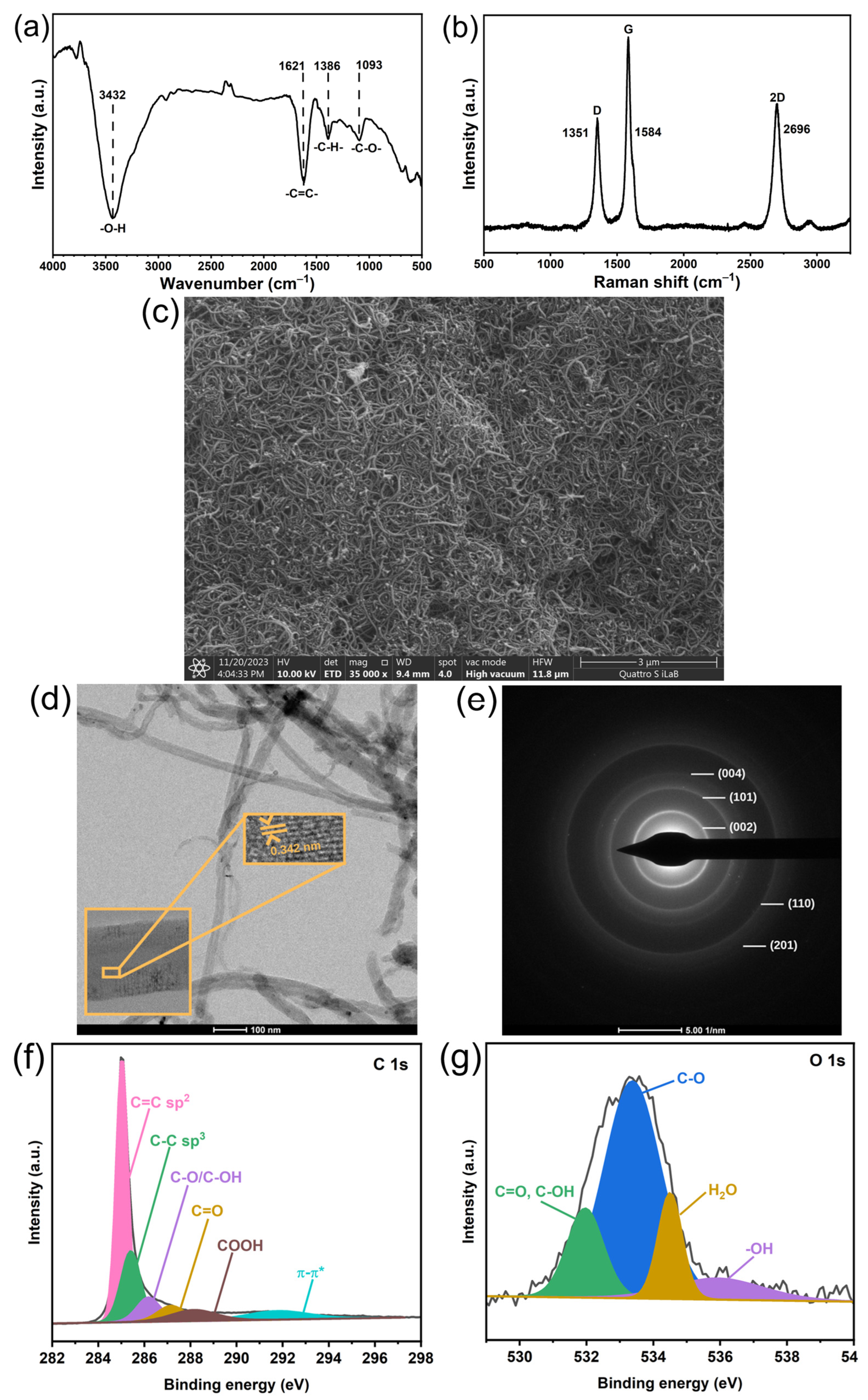
The FTIR spectrum of MWCNTs (Figure 1a) exhibits several characteristic absorption bands associated with graphitic structures and surface functional groups. The broad band at 3432 cm−1 corresponds to O–H stretching vibrations, which may arise from hydroxyl functionalities introduced during oxidative treatment or from adsorbed moisture. The band at 1621 cm−1 is attributed to C=C stretching, confirming the presence of a conjugated graphitic framework. A peak at 1386 cm−1 is assigned to C–H vibrations, while the absorption at 1093 cm−1 corresponds to C–O stretching, indicative of oxygen-containing functional groups such as alcohols or ethers. These findings suggest that, while the MWCNTs retain their intrinsic graphitic backbone, the presence of oxygenated surface moieties enhances their dispersibility, solubility, and interfacial interactions with analytes in electrochemical applications.
The Raman spectrum of MWCNTs (Figure 1b) shows three prominent bands: D, G, and 2D. The D band at 1351 cm−1 reflects disorder or structural imperfections within the sp2 carbon lattice. The G band at 1584 cm−1 corresponds to the in-plane vibrational modes of sp2-hybridized carbon atoms in a well-ordered graphite lattice. The 2D band, observed at 2696 cm−1, represents the second-order overtone of the D band and provides insights into the stacking order and the number of graphene layers [42]. The relative intensity of these bands confirms the partially ordered yet defect-containing structure characteristic of multi-walled carbon nanotubes.
The SEM micrograph of MWCNTs (Figure 1c) reveals a dense, entangled network of long, fibrous nanotubes forming a spaghetti-like morphology [43]. The tubes exhibit relatively uniform diameters with no evidence of large agglomerates or amorphous carbon deposits, confirming a high level of purity. The interconnected three-dimensional porous structure observed suggests a high surface area, which is advantageous for enhancing electrical conductivity and electrochemical performance.
The TEM image of MWCNTs (Figure 1d) further confirms their tubular morphology with concentric graphitic layers characteristic of multi-walled structures. The high-resolution TEM inset (Figure 1e) shows well-defined lattice fringes with an interlayer spacing of approximately 0.342 nm, corresponding to the (002) reflection plane of graphite, thus confirming the crystalline nature of the nanotube walls [44]. The presence of clear, orderly lattice fringes, along with parallel dark lines along the tube axis, further indicates a high degree of structural integrity and a low level of amorphous carbon impurities. Selected area electron diffraction (SAED) analysis revealed distinct ring patterns characteristic of a hexagonal graphitic lattice, corresponding to the (002), (101), (004), (110), and (201) planes, thereby confirming the crystalline structure of the MWCNTs.
The functional groups on MWCNTs were characterized using XPS, as shown in Figure 1f,g. In Figure 1f, the C 1s spectrum displays prominent peaks at binding energies (BEs) of 285.08 eV and 285.38 eV, corresponding to sp2- and sp3-hybridized carbon atoms, respectively. The sp2-hybridized carbons form the graphitic honeycomb lattice, while sp3 hybridization arises from structural defects. An additional peak at 286.18 eV is assigned to C–O bonds, and another at 287.18 eV indicates C=O double bonds [45]. A further peak at 291.88 eV is attributed to carboxyl groups. The O 1s spectrum (Figure 1g) was further deconvoluted to obtain detailed information. The oxygen-related peaks exhibit chemical shifts, resulting in an asymmetric profile. The lowest BE peak, at 531.98 eV, corresponds to hydroxyl groups. A component at 533.38 eV is associated with single C–O bonds, while slightly higher energies may suggest the presence of C=O-containing functional groups [46]. A minor peak around 534.48 eV is likely due to physisorbed water molecules.

3.2. The Voltammetric Fingerprint of Clove Bud

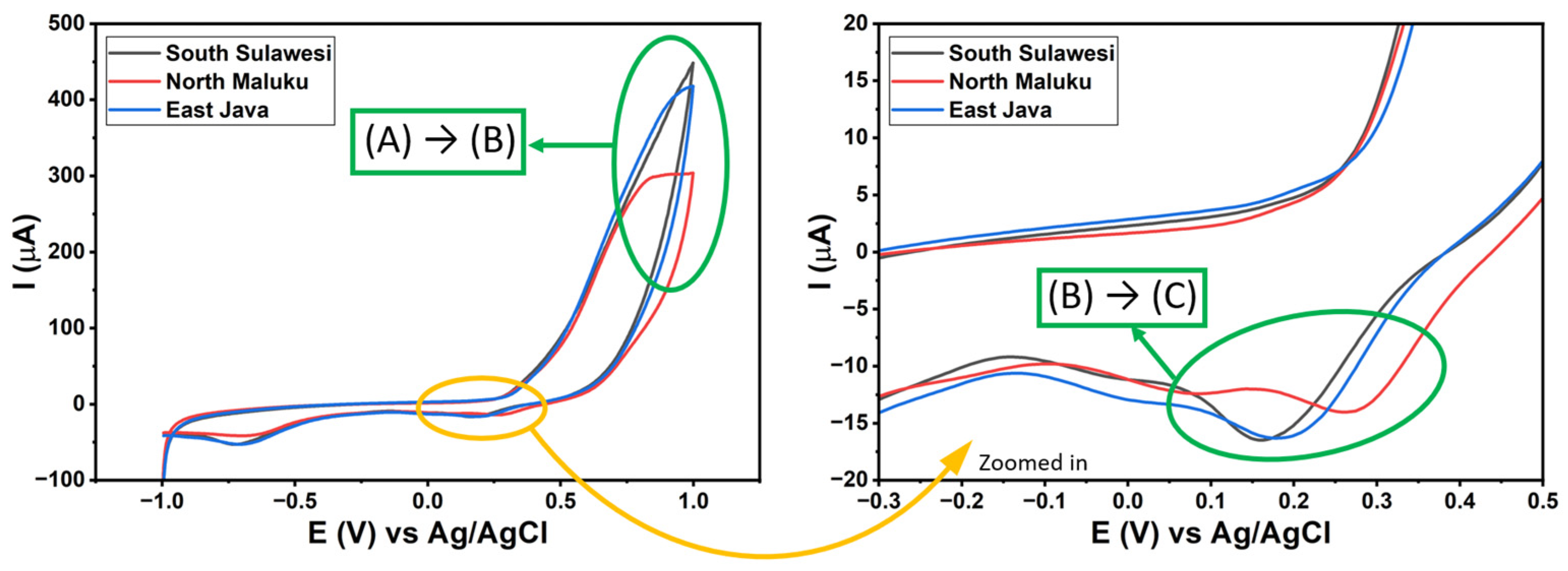
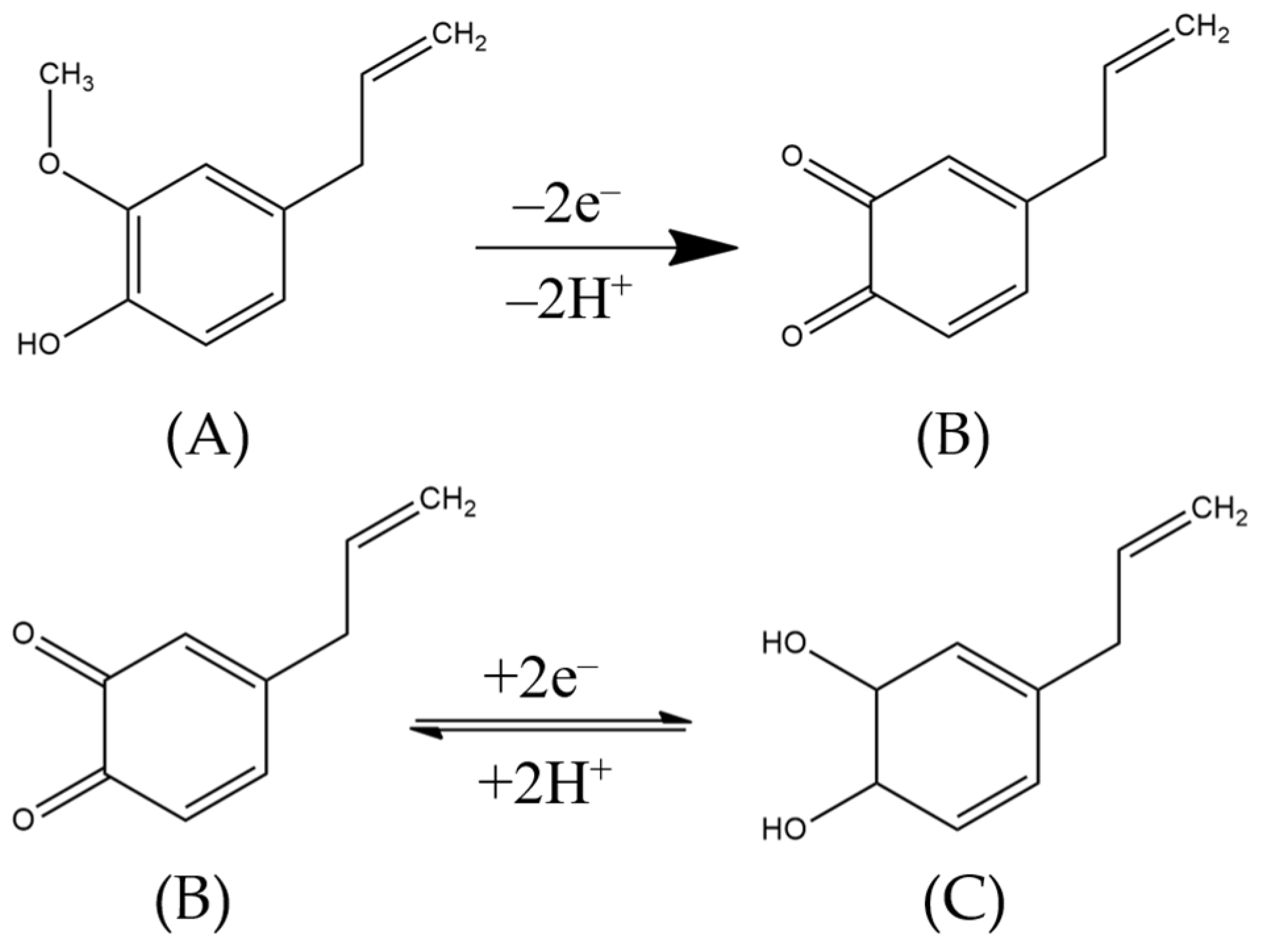
The cyclic voltammograms of clove bud samples from South Sulawesi, North Maluku, and East Java (Figure 2) exhibit characteristic redox features, probably dominated by the oxidation of phenolic constituents, primarily eugenol, which is the primary bioactive compound in clove bud. At potentials exceeding +0.5 V vs. Ag/AgCl, all samples display pronounced anodic currents, which are possibly associated with the oxidation of hydroxyl-substituted aromatic compounds (eugenol) [47]. This is believed to be due to the reduction of eugenol (A) to 4-allylcyclohexa-3,5-diene-1,2-dione (B), involving a transfer of two electrons and two protons (Scheme 1). Notably, the South Sulawesi and East Java samples exhibit higher peak intensities (~400–450 µA) than the North Maluku sample (~300 µA), suggesting either higher concentrations of electroactive phenolics or differences in their matrix composition. In the lower potential window (–0.3 V to +0.5 V), distinct variations in the position and shape of the reduction peaks are observed, reflecting compositional differences among clove bud samples from the three geographical regions. These subtle shifts indicate that the electrochemical response is sensitive not only to concentration but also to the specific profiles of redox-active compounds, including minor phenolics, flavonoids, and other aromatic metabolites.
The overall electrochemical behaviour is characterized by dominant oxidation currents accompanied by weak cathodic responses on the reverse scan, consistent with a quasi-irreversible electron-transfer process commonly observed in natural phenolic systems, where oxidation products (B) undergo secondary chemical reactions into 4-allylcyclohexa-3,5-diene-1,2-diol (C) involving a transfer of two electrons and two protons (Scheme 1). The observed differences in voltammetric profiles can therefore be considered as distinct electrochemical fingerprints of clove bud from different origins. Such fingerprints provide a robust and reproducible basis for authentication, enabling discrimination by geographical origin through chemometric modelling. This approach highlights the sensitivity of voltammetry in capturing subtle chemical variations arising from environmental factors, cultivation conditions, and post-harvest processing that influence clove bud composition.

3.3. Multivariate Analysis of Voltammetric Data

3.3.1. Clove Bud Geographical Origin Authentication

Multivariate chemometric analysis, comprising unsupervised PCA and supervised PLS-DA, was conducted to authenticate clove bud samples based on geographical origin. These techniques were applied to voltammetric fingerprints to construct classification models capable of distinguishing clove bud from South Sulawesi, North Maluku, and East Java. The variables employed for model development included current intensity values obtained from cyclic voltammograms: all current readings recorded, current during the forward and backward scans, current within the potential window of –0.4 to +1.0 V, and the corresponding reduction currents in the reverse sweep. To optimize model performance, several pre-processing techniques were evaluated, including autoscaling [48], mean normalization [49], mean normalization combined with autoscaling [50], maximum normalization [30], and maximum normalization combined with autoscaling. Pre-processing is a critical step in chemometric modelling, as it mitigates differences in scale, corrects baseline drifts, and enhances the relative contribution of minor but discriminative features [51].
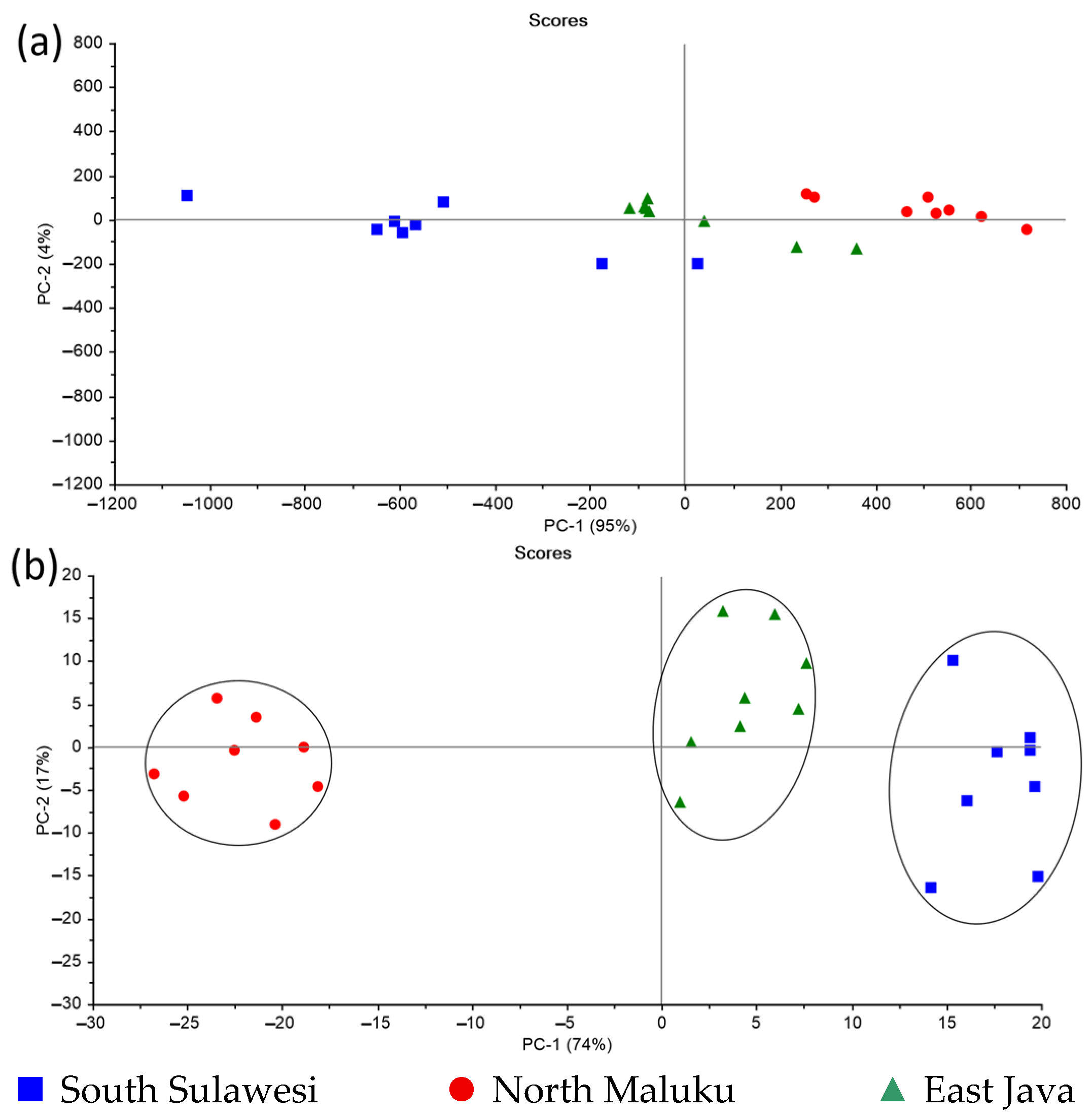
The choice of pre-processing technique for PCA was based on the total PC and discrimination results. The corresponding explained-variance values are summarized in Table S1. The PCA results before and after pre-processing schemes are presented in Figure 3a,b. Despite achieving a cumulative explained variance of 99%, PCA alone was unable to fully resolve the three clove bud groups, as their score plots showed substantial overlap, indicating similarities in their chemical profiles (Figure 3a). Nonetheless, improved separation was observed when maximum normalization combined with autoscaling was applied to the backward-scan data with a total PC of 91%, PC1 (74%) and PC2 (17%) (Figure 3b), which reduced the overlap between South Sulawesi and East Java samples. The loading plots (Figure S1) for PC1 and PC2 were examined to identify the voltammetric variables responsible for discriminating among clove samples. PC1, which explains approximately 74% of the total variance, exhibits the largest positive and negative loading values at specific potential regions, indicating that these voltammetric variables contribute most strongly to the separation observed in the PCA score plot. These influential variables correspond to electrochemical signals likely associated with oxidation-reduction processes of electroactive compounds present in clove extracts, such as phenolic constituents. PC2, accounting for an additional 17% of the variance, shows secondary loading contributions from other potential regions, suggesting that additional voltammetric features also influence the differentiation among samples. In particular, these variables contribute to separating North Maluku samples from those from South Sulawesi and East Java, as observed in the PCA score distribution. Considering that the variables correspond to the backward scan of the voltammetric measurement (+1 to −1 V vs. Ag/AgCl), some influential variables appear in the potential region below approximately +0.5 V, which may reflect variations in the electrochemical behaviour of phenolic compounds present in the clove extracts. It should be noted that adjacent voltammetric variables are highly correlated due to the continuous nature of the voltammetric signal; therefore, the loading profiles appear as smooth curves rather than isolated peaks, reflecting contributions from broader potential regions rather than single discrete variables. However, the resulting figure still does not show a satisfying grouping separation between clove buds from South Sulawesi and East Java. This partial overlap is consistent with the similarity in their voltammetric responses (Figure 2), suggesting comparable phenolic compositions. Hence, further analysis is required to achieve better discrimination.
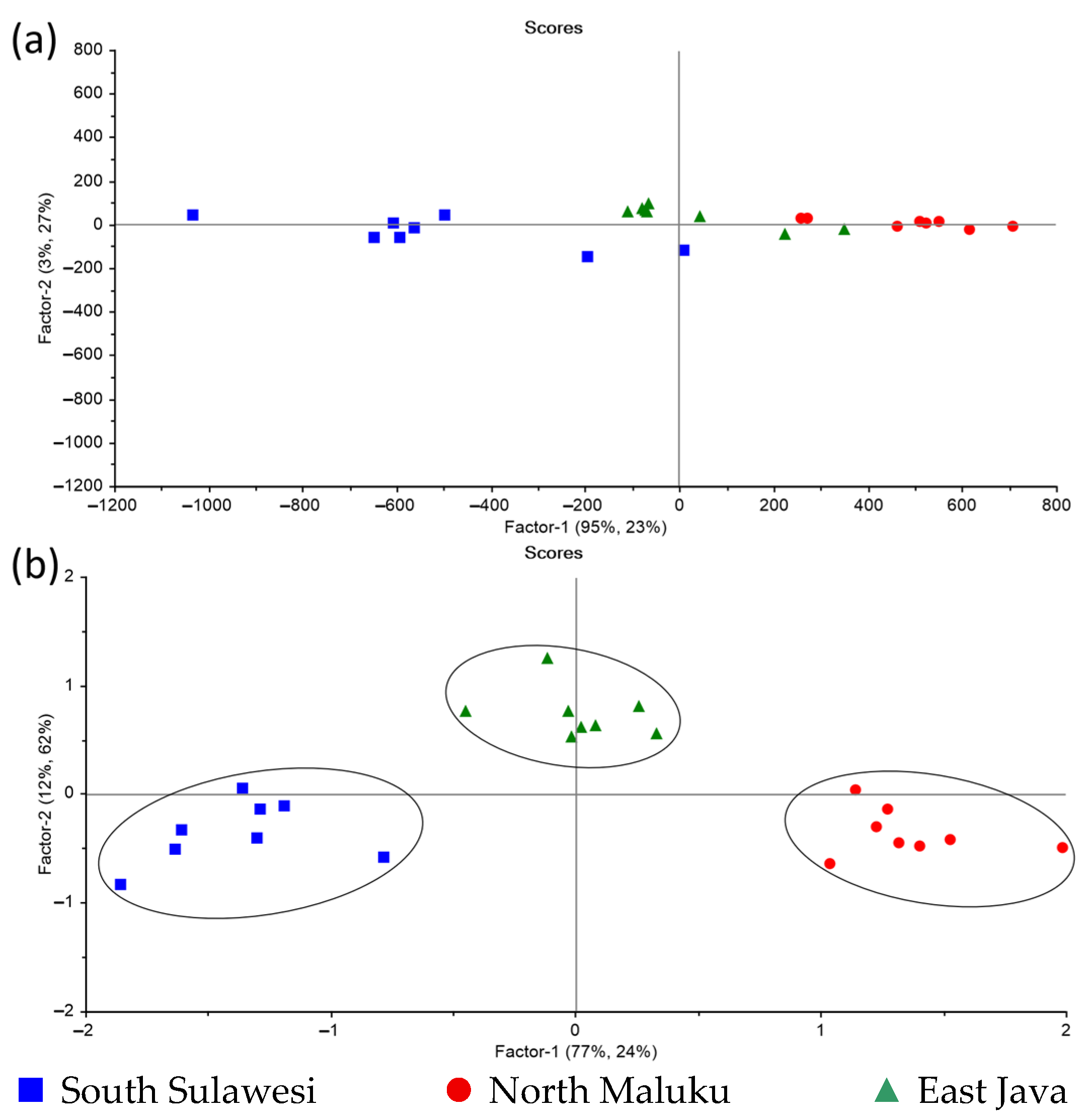
To improve separation, supervised PLS-DA was applied to the cyclic voltammetry data. The best discrimination was obtained when mean normalization was applied to forward-scan current data. Under these conditions, the PLS-DA model achieved well-distinguished clustering of the three geographical groups (Figure 4b), in contrast to the unsatisfactory separation observed before pre-processing (Figure 4a). To further investigate the variables responsible for the supervised discrimination, the X-loading profiles of Factor 1 and Factor 2 were examined (Figure S2). Factor 1, which explains the largest proportion of X-variance in the PLS-DA model, exhibits the largest loading magnitudes at the edges of the potential window, particularly in the high-positive-potential region close to +1 V vs. Ag/AgCl. This indicates that voltammetric signals associated with oxidation processes contribute strongly to the discrimination of clove bud samples from different geographical origins. Factor 2 shows additional contributions from other potential regions, including a moderate negative loading region at intermediate potentials and a strong positive contribution again near the upper potential limit. These patterns suggest that multiple voltammetric features across the scan contribute to the separation among geographical groups. As observed in the PCA model, the loading profiles appear as smooth curves due to strong correlations between adjacent voltammetric variables, reflecting the continuous nature of the electrochemical signal. These results highlight the superior discriminative capability of supervised methods, such as PLS-DA, compared to unsupervised PCA, particularly when combined with appropriate preprocessing strategies that enhance the contribution of subtle but origin-specific electrochemical features.
Table 1 summarizes the results obtained from the training set used to build the model. It presents the proportion of total variation in the X and Y matrices explained by the model, along with the number of components used. A good model is characterized by a low residual variance (approaching 0%) and a high explained variance (approaching 100%), indicating that most of the variation in Y is captured by the model [52]. The calibration variance represents the model’s performance on the training data, while the validation variance reflects its performance on unknown samples. When the difference between calibration and validation variances is slight, it suggests that the model generalizes well and that both datasets are representative of the same population.
In this study, the validation variance closely matches the calibration residual variance, indicating that the model effectively predicts new data and exhibits minimal overfitting. Another indication that the model is well built is shown in Figure 4b. The score plot shows a clear separation between clove buds from different regions. The factor-1 value is 77%, and the factor-2 value is 12%; together, they are close to the maximum value of 100%, as also shown in Table 1.
In this study, PCA and PLS-DA produced their best class discrimination from different portions of the voltammetric signal. PCA gave the best model from the current at the backward potential, and PLS-DA provided the best model from the current at the forward potential. This divergence reflects the fundamentally different objectives of unsupervised and supervised chemometric methods. PCA identifies directions of maximal total variance in the predictor matrix without considering class membership [53]. Thus, any considerable inherent variation in the backward scan, such as more substantial baseline shifts, dominant redox processes, or greater signal heterogeneity, will be emphasized and can produce clearer group tendencies. In contrast, PLS-DA extracts latent variables that maximize covariance between the voltammetric signals and the class labels, allowing it to highlight subtle but class-specific features that may not dominate overall variance [54]. Consequently, even lower-variance features present primarily in the forward scan can yield superior discrimination when more strongly correlated with sample identity. These findings demonstrate that the information most relevant to classification is not necessarily the same as that driving global variance, and that forward and backward scans can contain complementary chemometric information. This also reinforces the importance of combining unsupervised exploration with supervised modelling to fully characterize the discriminatory potential of voltammetric data.

3.3.2. Discrimination of Clove Buds from Adulterants

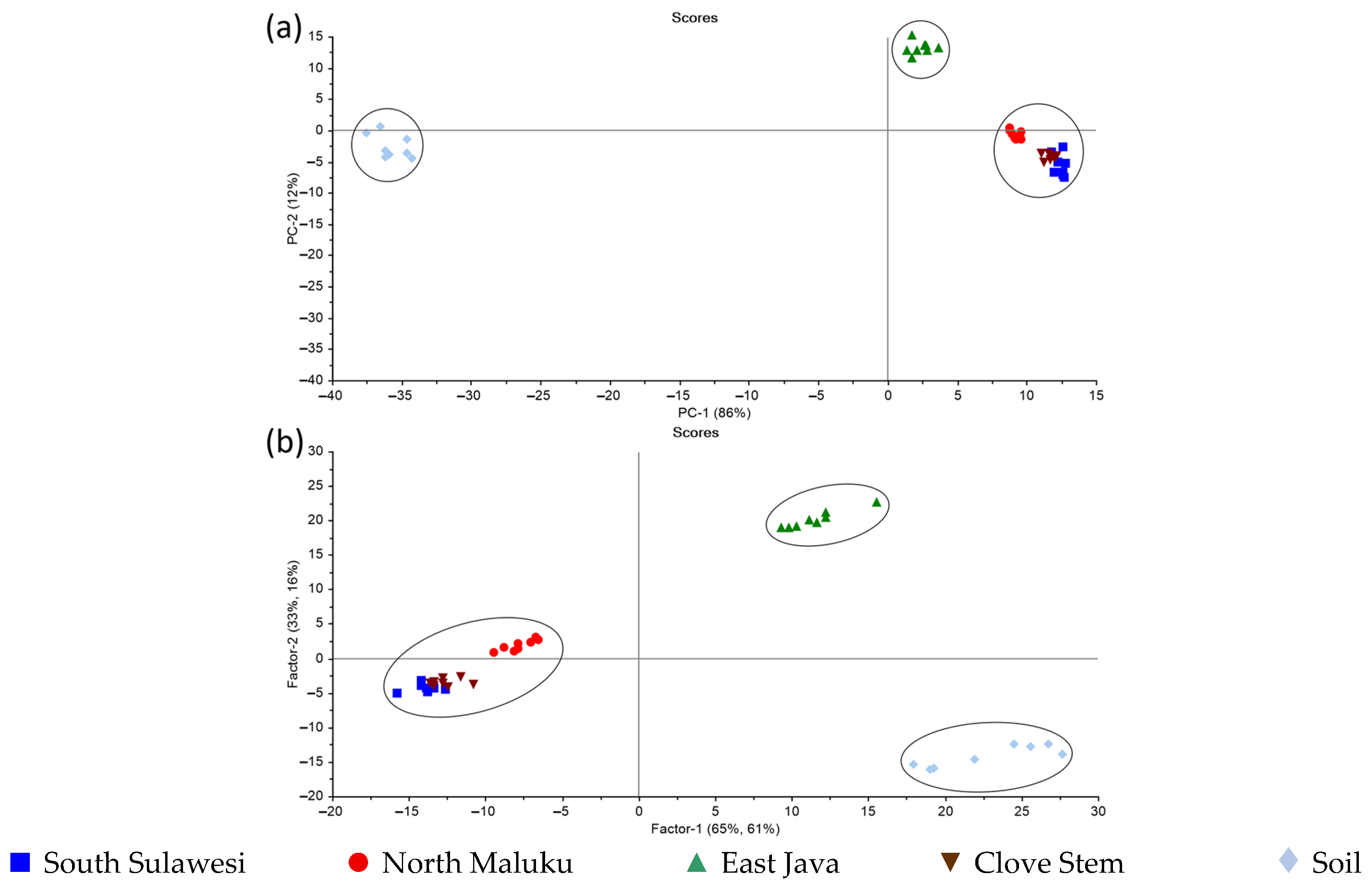
After successfully authenticating clove bud from three different geographical origins using PLS-DA, we further evaluated the chemometric approach’s ability to discriminate authentic clove bud from common adulterants, namely clove stem and soil. The same datasets used for authentication by origin were employed for this purpose, with PCA applied to the current signals recorded at the backward potential and PLS-DA applied to the current signals at forward potential. Among the various preprocessing strategies tested, the combination of maximum normalization and autoscaling produced the most distinct separation between clove bud and adulterants. Under these conditions, PCA was applied to the backward-scan current data, while PLS-DA was applied to the forward-scan current data. The corresponding PCA and PLS-DA score plots are shown in Figure 5a and Figure 5b, respectively. By contrast, although mean normalization provided the best PLS-DA performance for origin authentication, maximum normalization with autoscaling yielded superior separation when the objective was to differentiate clove bud from adulterants. These observations highlight that the optimal pre-processing strategy may vary depending on the classification target.
The PCA and PLS-DA results collectively demonstrate that chemometric modelling based on cyclic voltammetry data is effective for distinguishing authentic clove bud from adulterant materials, even though complete separation among clove bud samples from different regions is not achieved. In PCA, the significant variance captured by the first two principal components already provides clear discrimination between clove bud and adulterants, indicating that the electrochemical signatures of adulterants differ substantially from those of authentic clove bud. The partial overlap among clove bud samples from different geographical origins is expected, given that regional variability often produces subtle chemical differences that may not be fully captured by an unsupervised method.
Although PLS-DA is a supervised classification technique, its performance in this study does not differ markedly from PCA. Both methods show a similar clustering pattern, with clove bud consistently separating from adulterants, while regional clusters remain close and partially overlap. This suggests that the intrinsic voltammetric differences between clove bud and adulterant materials are sufficiently pronounced to be detected even without supervised modelling. Consequently, PCA alone appears adequate for adulteration detection, as it already provides precise and reliable differentiation between genuine clove material and non-clove contaminants.
The comparable performance of PCA and PLS-DA further indicates that supervised modelling confers only marginal additional discriminatory power for this specific analytical task, likely due to the strong contrast in electrochemical behaviour between clove buds and adulterants. Overall, these findings confirm that cyclic voltammetry combined with straightforward PCA-based chemometric analysis offers a robust, efficient, and minimally complex strategy for identifying adulteration in clove bud samples.

3.3.3. Clove Bud Adulteration with Clove Stem and Soil

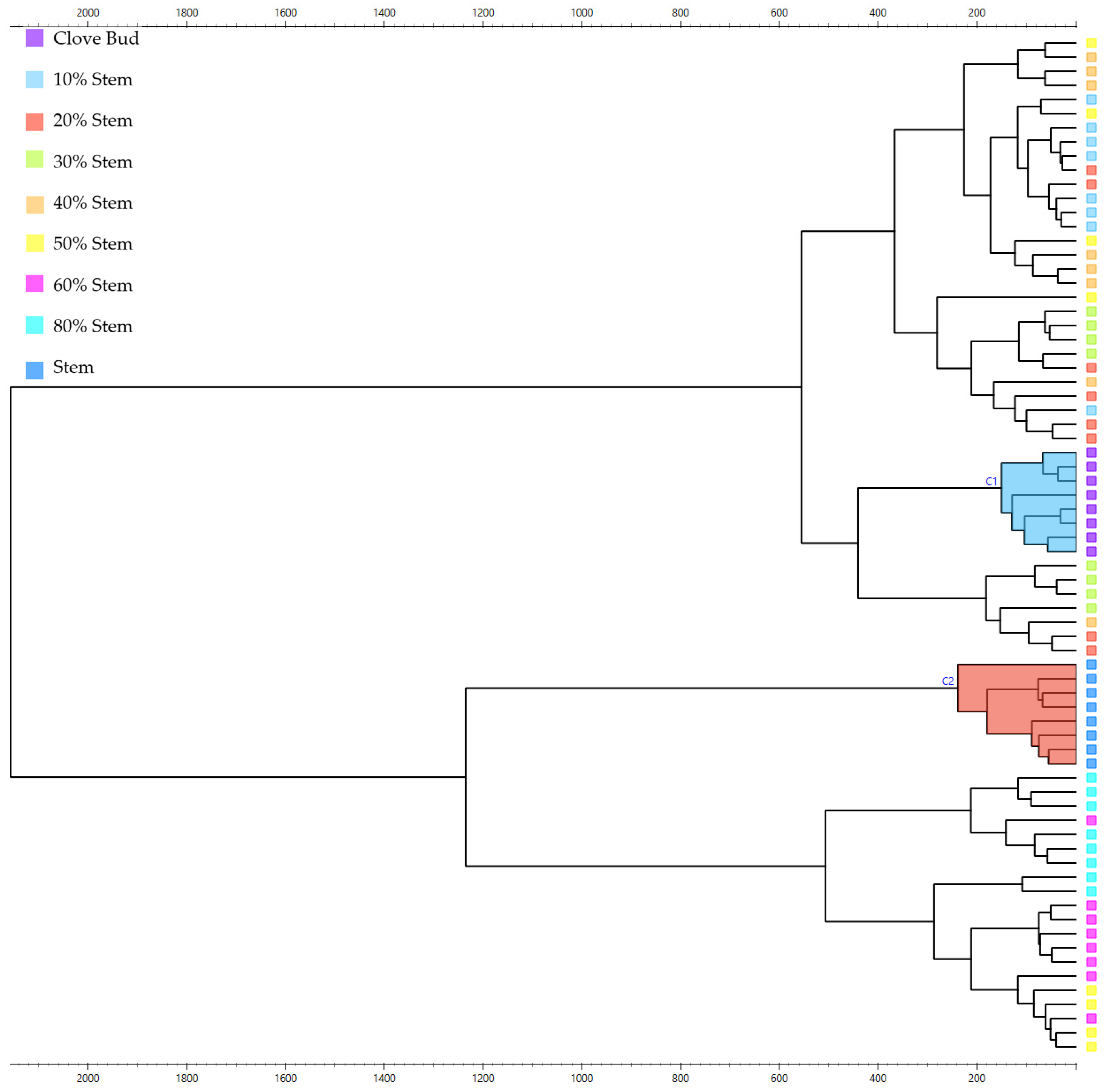
HCA was applied as an unsupervised chemometric tool to evaluate the ability of voltammetric fingerprints to discriminate pure clove bud from adulterated samples. HCA demonstrated clear discrimination between pure clove bud and adulterant materials (clove stem and soil). For the adulteration with clove stem, HCA was performed using the current values recorded at oxidation potentials between −0.4 and +1.0 V vs. Ag/AgCl, after mean normalization preprocessing. Normalized Manhattan distance and the Ward linkage method were used to construct the dendrogram. As shown in Figure 6, the samples were primarily separated into two major branches. Pure clove bud formed a compact, well-defined cluster (C1), indicating high intra-class similarity and distinct voltammetric fingerprints. Clove stem samples were grouped separately (C2), confirming the compositional difference between bud and stem matrices. Adulterated samples (10–80% stem) were distributed across the two main clusters according to adulteration level, with a gradual transition from the clove bud cluster to the stem cluster. Lower adulteration levels (e.g., 10–30%) tended to remain closer to the clove bud group, whereas higher levels (≥50–80%) shifted toward the stem branch. This behaviour reflects the relatively similar phytochemical composition of clove buds and stems, leading to partially overlapping electrochemical signatures.
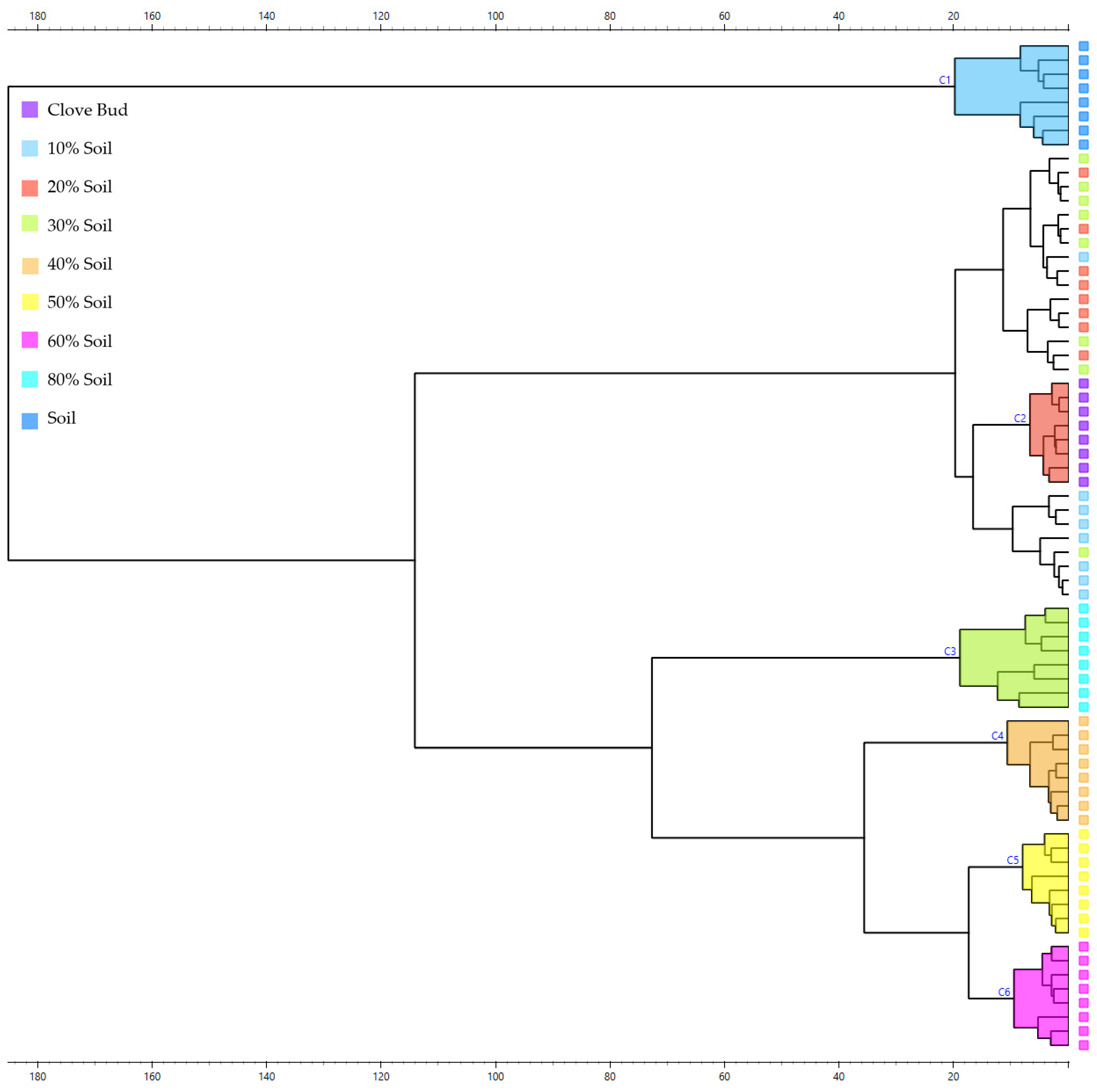
For the soil-adulteration model (Figure 7), HCA was performed using all recorded current values after maximum normalization preprocessing. Distances were calculated using the normalized Euclidean distance, and clustering was conducted using the Ward linkage method. The resulting dendrogram shows that soil samples formed a distinct cluster (C1), clearly separated from pure clove bud (C2), demonstrating stronger discrimination capability. Adulterated mixtures again showed progressive migration between clusters as soil content increased, with higher soil percentages (40–80%) forming their own subclusters (C3–C6). The better separation observed for soil adulteration is likely due to the fundamentally different physicochemical and electroactive properties of soil compared with those of plant-derived matrices, resulting in more pronounced changes in the voltammetric profiles.
Overall, HCA successfully differentiated pure clove bud from both adulterants and revealed a concentration-dependent clustering trend. However, partial overlap among intermediate adulteration levels indicates that unsupervised clustering is limited for precise quantification. Therefore, a supervised regression approach (PLSR), discussed in the next section, was employed to achieve more accurate adulteration prediction.
PLSR is a multivariate regression technique designed to establish a predictive relationship between two matrices: the predictor variables (X) and the response variables (Y). In the present study, PLSR was employed to quantify the degree of adulteration in ground clove bud samples. The X-matrix consisted of current intensity values extracted from cyclic voltammetry (CV) measurements, while the Y-matrix represented the adulteration levels (percentage of clove stem/soil mixed with ground clove bud). A total of nine adulteration levels with eight replicate CV measurements per level (Figure S3) were included in the training set. Before model construction, various pre-processing strategies were applied to the voltammetric fingerprint data to minimize baseline shifts, normalize scaling differences, and enhance the contribution of minor but informative electrochemical features. The pre-processing methods evaluated across five voltammetric datasets are summarized in Tables S2 and S3. Model performance was assessed using the coefficient of determination (R2), the root mean square error of calibration (RMSEC), and the root mean square error of cross-validation (RMSECV). In line with standard chemometric criteria, an optimal model is indicated by an R2 value close to 1, alongside RMSEC and RMSECV values approaching 0. Optimization results revealed that the combination of mean normalization and autoscaling applied to all recorded current data gave the best PLSR model for adulteration with a stem. For soil adulteration, autoscaling on forward-scan current data yielded the most accurate PLSR model.
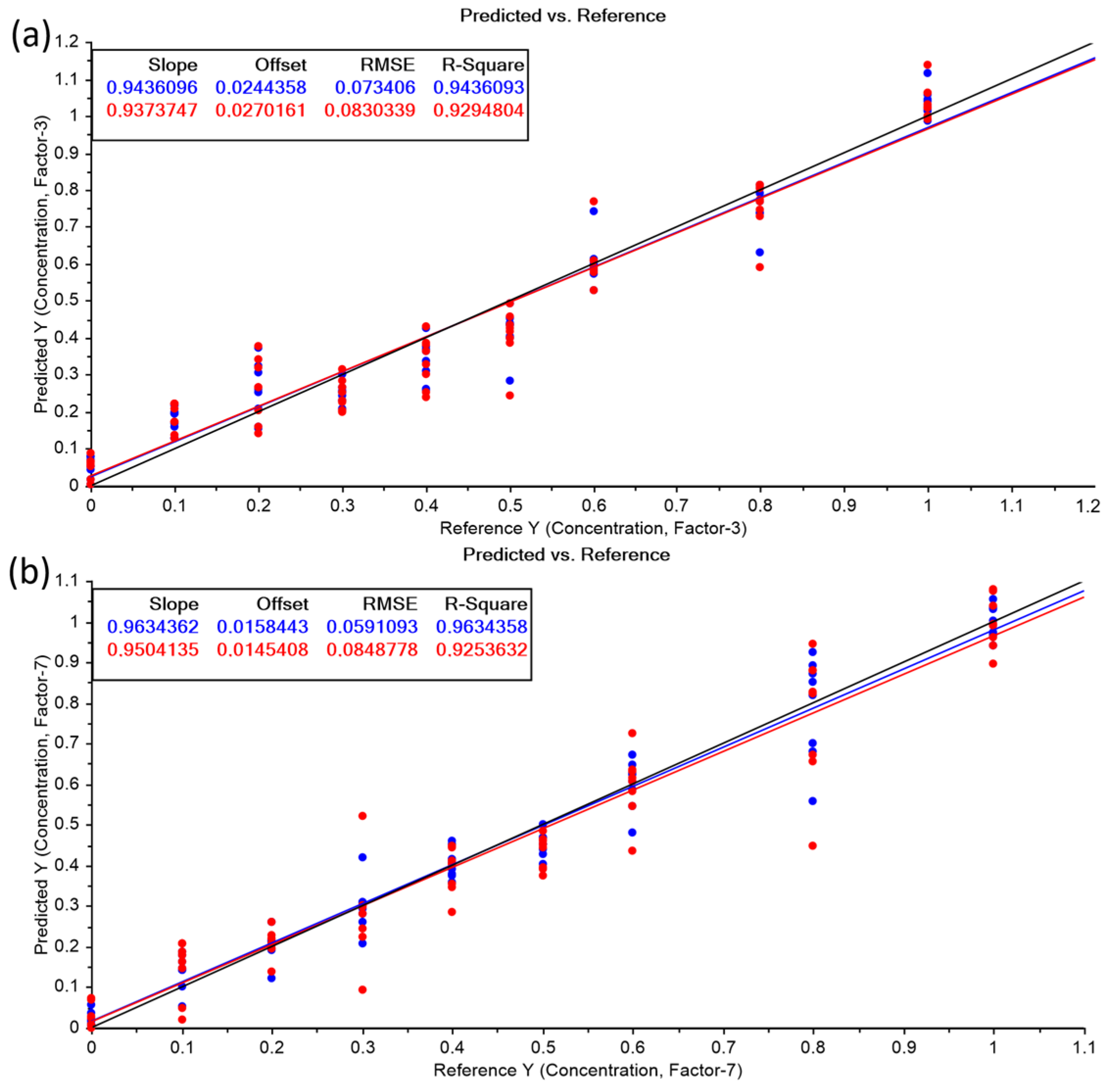
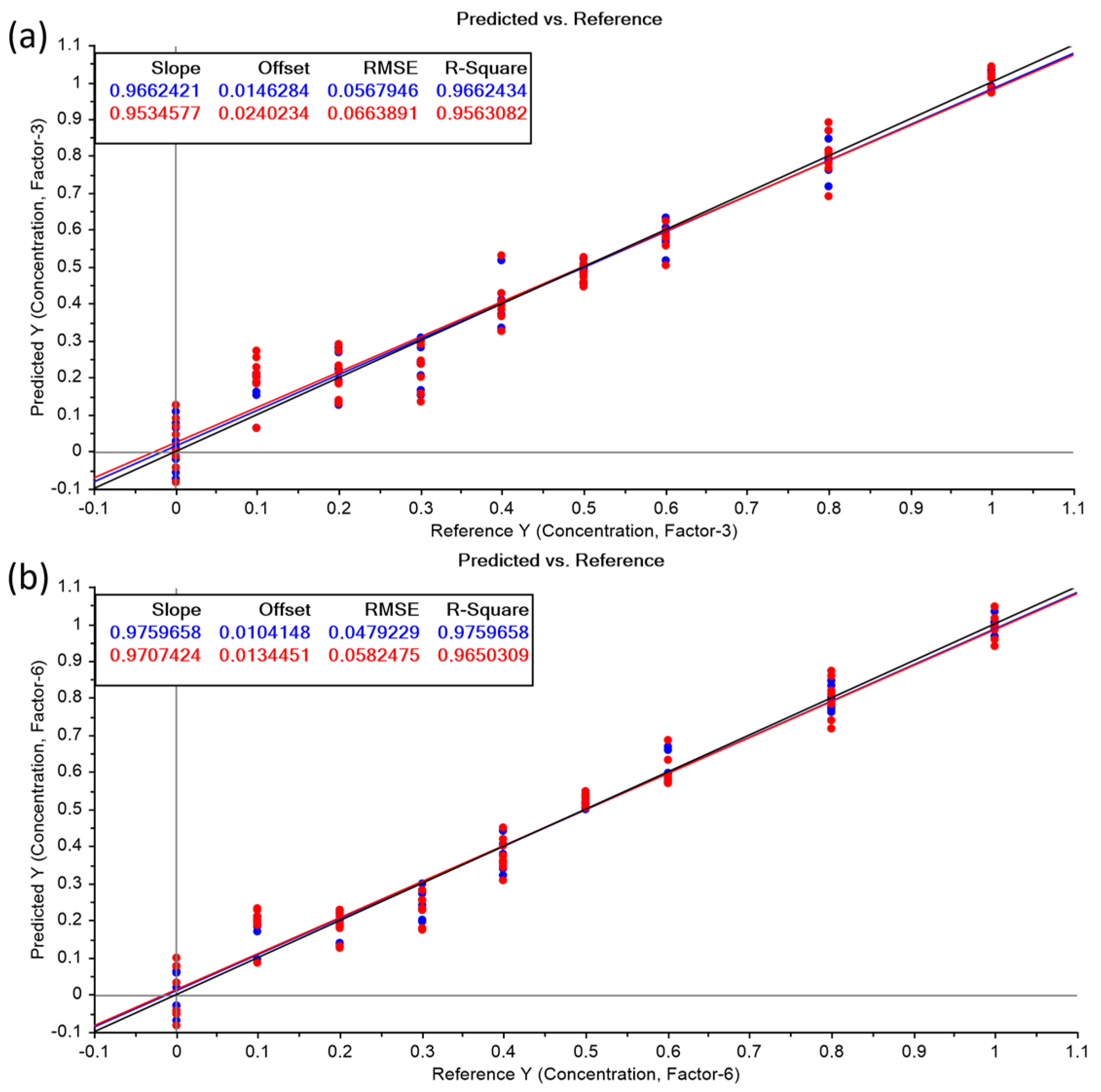
The Predicted vs. Reference control plots before and after applying the optimized preprocessing described above (Figure 8 and Figure 9) demonstrate a linear correlation between reference adulteration levels and predicted values, with the pre-processed model exhibiting improved performance.
Specifically, the R2 value increased, while RMSEC and RMSECV decreased after pre-processing (Table 2) for both clove stem and soil adulteration. This improvement underscores the importance of pre-processing in enhancing the robustness and predictive accuracy of chemometric models. Notably, the PLSR model demonstrated the ability to predict adulteration across the full tested range (up to 100%), confirming the feasibility of combining voltammetric fingerprinting with regression modelling for quantitative adulteration analysis. These findings establish PLSR as a powerful tool for clove bud authentication, enabling not only classification of authentic versus adulterated samples but also accurate estimation of adulterant concentration. The integration of voltammetry with PLSR thus provides a rapid, sensitive, and portable approach for quality control of ground clove bud in practical settings.

4. Conclusions

A voltammetric approach employing an MWCNT-modified GCE was developed for detecting clove bud adulteration with clove stem and soil, in conjunction with chemometric analysis. The procedure involved electrode modification with MWCNTs, followed by direct CV measurements of the samples. The acquired voltammetric data were subjected to pre-processing and multivariate analysis. PLS-DA successfully differentiated clove bud samples from different regions; PCA discriminated authentic clove bud from adulterants (clove stem and soil); and PLSR generated a robust predictive model.

Supplementary Materials

The following supporting information can be downloaded at: https://www.mdpi.com/article/10.3390/chemosensors14040080/s1, Table S1: Optimization of data pre-processing for PCA of clove bud samples from different region; Figure S1: Loading plots of PC1 and PC2 obtained from PCA of the voltammetric fingerprints of clove bud samples. The plots illustrate the contribution of voltammetric variables (current values at different potentials) to the principal components responsible for the discrimination among samples from different geographical origins. Figure S2: X-loading plots of Factor 1 and Factor 2 obtained from the PLS-DA model applied to the voltammetric fingerprints of clove bud samples. The plots indicate the contribution of voltammetric variables (current responses at different potentials) to the latent variables responsible for the dis-crimination among samples from different geographical origins. Figure S3: Cyclic voltammetry of nine concentration levels of clove bud adulteration with eight repetitions. Table S2: PLSR model’s parameters of goodness of fit for clove bud adulteration with clove stem. Table S3: PLSR model’s parameters of goodness of fit for clove bud adulteration with soil.

Author Contributions

Conceptualization, M.R. and W.T.W.; methodology, W.T.W., B.R.P. and M.R.; validation, W.T.W., M.R. and B.R.P.; formal analysis, S.H.N.; investigation, S.H.N.; resources, W.T.W., M.R. and B.R.P.; data curation, S.H.N. and B.R.P.; writing—original draft preparation, S.H.N.; writing—review and editing, W.T.W., B.R.P. and M.R.; visualization, S.H.N.; supervision, B.R.P., W.T.W., M.R., E.R. and M.K.; project administration, W.T.W.; funding acquisition, W.T.W. All authors have read and agreed to the published version of the manuscript.

Funding

This research was funded by the Directorate General of Research and Development, Ministry of Higher Education, Science, and Technology, Republic of Indonesia, grant number 006/C3/DT.05.00/PL/2025 and 23095/IT3.D10/PT.01.03/P/B/2025.

Institutional Review Board Statement

Not applicable.

Informed Consent Statement

Not applicable.

Data Availability Statement

The data presented in this study are available on request from the corresponding author.

Conflicts of Interest

The authors declare no conflicts of interest.

References

  1. Indonesia Cloves (Whole Fruit, Cloves and Stems) Exports by Country. 2023. Available online: https://wits.worldbank.org/trade/comtrade/en/country/IDN/year/2023/tradeflow/Exports/partner/ALL/product/090700 (accessed on 24 October 2025).
  2. Velázquez, R.; Rodríguez, A.; Hernández, A.; Casquete, R.; Benito, M.J.; Martín, A. Spice and Herb Frauds: Types, Incidence, and Detection: The State of the Art. Foods 2023, 12, 3373. [Google Scholar] [CrossRef]
  3. Khan, M.K.; Hassan, S.; Imran, M.; Ahmad, M.H. Extraction of Bioactive Compounds from Clove (Syzygium aromaticum); Academic Press: San Diego, CA, USA, 2022; pp. 405–417. [Google Scholar] [CrossRef]
  4. Ayoola, G.A.; Lawore, F.M.; Adelowotan, T.; Aibinu, I.E.; Adenipekun, E.; Coker, H.A.B.; Odugbemi, T.O. Chemical Analysis and Antimicrobial Activity of the Essential Oil of Syzigium aromaticum (Clove). Afr. J. Microbiol. Res. 2008, 2, 162–166. [Google Scholar]
  5. El-Maati, M.F.A.; Mahgoub, S.A.; Labib, S.M.; Al-Gaby, A.M.A.; Ramadan, M.F. Phenolic Extracts of Clove (Syzygium aromaticum) with Novel Antioxidant and Antibacterial Activities. Eur. J. Integr. Med. 2016, 8, 494–504. [Google Scholar] [CrossRef]
  6. Wang, Y.F.; Jia, J.X.; Tian, Y.Q.; Shu, X.; Ren, X.J.; Guan, Y.; Yan, Z.Y. Antifungal Effects of Clove Oil Microcapsule on Meat Products. LWT 2018, 89, 604–609. [Google Scholar] [CrossRef]
  7. Kiki, M.J. In Vitro Antiviral Potential, Antioxidant, and Chemical Composition of Clove (Syzygium aromaticum) Essential Oil. Molecules 2023, 28, 2421. [Google Scholar] [CrossRef]
  8. Abadi, A.V.M.; Karimi, E.; Oskoueian, E.; Mohammad, G.R.K.S.; Shafaei, N. Chemical Investigation and Screening of Anti-Cancer Potential of Syzygium aromaticum L. Bud (Clove) Essential Oil Nanoemulsion. 3 Biotech 2022, 12, 49. [Google Scholar] [CrossRef]
  9. Afrendi, E.; Prastya, M.E.; Astuti, R.I.; Wahyuni, W.T.; Batubara, I. Bioactivity of the Ethanol Extract of Clove (Syzygium aromaticum) as Antitoxin. Int. J. Food Sci. 2023, 2023, 3245210. [Google Scholar] [CrossRef] [PubMed]
  10. Han, X.; Parker, T.L. Anti-Inflammatory Activity of Clove (Eugenia caryophyllata) Essential Oil in Human Dermal Fibroblasts. Pharm. Biol. 2017, 55, 1619–1622. [Google Scholar] [CrossRef]
  11. Kumar Pandey, V.; Shams, R.; Singh, R.; Dar, A.H.; Pandiselvam, R.; Rusu, A.V.; Trif, M. A Comprehensive Review on Clove (Caryophyllus aromaticus L.) Essential Oil and Its Significance in the Formulation of Edible Coatings for Potential Food Applications. Front. Nutr. 2022, 9, 987674. [Google Scholar] [CrossRef] [PubMed]
  12. Kusuma, R.M.; Wiyatiningsih, S. Quantitative Analysis of Eugenol Content in Clove Oil (Eugenia caryophyllus) Extracted from Flower, Stem, and Leaf Using GC-MS Instrument. Nusant. Sci. Technol. Proc. 2025, 2025, 42–50. [Google Scholar] [CrossRef]
  13. Pages-Rebull, J.; Pérez-Ràfols, C.; Serrano, N.; del Valle, M.; Díaz-Cruz, J.M. Classification and Authentication of Spices and Aromatic Herbs by Means of HPLC-UV and Chemometrics. Food Biosci. 2023, 52, 102401. [Google Scholar] [CrossRef]
  14. Vargas Jentzsch, P.; Gualpa, F.; Ramos, L.A.; Ciobotă, V. Adulteration of Clove Essential Oil: Detection Using a Handheld Raman Spectrometer. Flavour Fragr. J. 2018, 33, 184–190. [Google Scholar] [CrossRef]
  15. Tarhan, İ.; Bakır, M.R.; Kalkan, O.; Yöntem, M.; Kara, H. Rapid Determination of Adulteration of Clove Essential Oil with Benzyl Alcohol and Ethyl Acetate: Towards Quality Control Analysis by FTIR with Chemometrics. Vib. Spectrosc. 2022, 118, 103339. [Google Scholar] [CrossRef]
  16. Selim, D.A.; Darwish, R.S.; Shawky, E. Authentication and Detection of Common Adulterants in Clove Buds (Syzygium aromaticum L.) Powders and Oils Using near IR Combined to Multivariate Analysis. Microchem. J. 2023, 191, 108890. [Google Scholar] [CrossRef]
  17. Guntarti, A.; Nurani, L.H.; Lestari, P.; Edityaningrum, C.A.; Irham, L.M.; Rohman, A. Authentication of clove leaf oil in products (Syzygium aromaticum (L.) merr. & lm perry) using GC-MS and FTIR methods combined with chemometric. Malays. J. Anal. Sci. 2024, 28, 664–680. [Google Scholar]
  18. Graboski, A.M.; Feltes, G.; Zakrzevski, C.A.; Shimizu, F.M.; Steffens, J.; Paroul, N.; Steffens, C. Adulteration of Clove Essential Oil: Detection Using an Electronic Nose with Polymeric Gas Sensors. Food Anal. Methods 2023, 17, 296–308. [Google Scholar] [CrossRef]
  19. Irannejad, N.; Rezaei, B. Electrochemical Sensors for Food Adulterants. In Biosensing and Micro-Nano Devices; Springer Nature: Singapore, 2022; pp. 69–90. ISBN 9789811683336. [Google Scholar]
  20. Oliveira, T.M.B.F.; Morais, S. New Generation of Electrochemical Sensors Based on Multi-Walled Carbon Nanotubes. Appl. Sci. 2018, 8, 1925. [Google Scholar] [CrossRef]
  21. Golikand, A.N.; Asgari, M.; Maragheh, M.G.; Lohrasbi, E. Carbon Nanotube-Modified Glassy Carbon Electrode for Anodic Stripping Voltammetric Detection of Uranyle. J. Appl. Electrochem. 2009, 39, 65–70. [Google Scholar] [CrossRef]
  22. Xu, Z.; Chen, X.; Qu, X.; Dong, S. Electrocatalytic Oxidation of Catechol at Multi-Walled Carbon Nanotubes Modified Electrode. Electroanalysis 2004, 16, 684–687. [Google Scholar] [CrossRef]
  23. Dalmasso, P.R.; Pedano, M.L.; Rivas, G.A. Electrochemical Determination of Cu(II) Using a Glassy Carbon Electrode Modified with Multiwall Carbon Nanotubes Dispersed in Polyhistidine. Electroanalysis 2015, 27, 2164–2170. [Google Scholar] [CrossRef]
  24. Hwang, S.; Choi, H.; Jeon, M.; Vedala, H.; Kim, T.; Choi, W. ?Fabrication and Electrochemical Characterization of Multi-Walled Carbon Nanotube Electrode for Application to Nano-Electrochemical Sensing. J. Korean Phys. Soc. 2010, 56, 677–681. [Google Scholar] [CrossRef]
  25. Guo, Y.; Yan, W.; Lou, X.; Xiao, D.; Zhai, P.; Zhao, G.; Zhang, W.; Huang, P.; Wang, Z.; Liu, J. Multiwall Carbon Nanotubes-Modified Glassy Carbon Electrode for Square-Wave Stripping Voltammetric Determination of Aqueous Antimony (III) Ion. Adv. Mater. Res. 2012, 518–523, 1571–1575. [Google Scholar] [CrossRef]
  26. Zhang, W.; Liu, T.; Zheng, X.; Huang, W.; Wan, C. Surface-Enhanced Oxidation and Detection of Sunset Yellow and Tartrazine Using Multi-Walled Carbon Nanotubes Film-Modified Electrode. Colloids Surf. B Biointerfaces 2009, 74, 28–31. [Google Scholar] [CrossRef] [PubMed]
  27. Patil, R.H.; Hegde, R.N.; Nandibewoor, S.T. Electro-Oxidation and Determination of Antihistamine Drug, Cetirizine Dihydrochloride at Glassy Carbon Electrode Modified with Multi-Walled Carbon Nanotubes. Colloids Surf. B Biointerfaces 2011, 83, 133–138. [Google Scholar] [CrossRef]
  28. Wu, Y. Determination of 1-Hydroxypyrene in Human Urine by a Multi-Wall Carbon Nanotubes-Modified Glassy Carbon Electrode. Int. J. Environ. Anal. Chem. 2011, 91, 1244–1255. [Google Scholar] [CrossRef]
  29. Nikolaou, P.; Deskoulidis, E.; Topoglidis, E.; Kakoulidou, A.T.; Tsopelas, F. Application of Chemometrics for Detection and Modeling of Adulteration of Fresh Cow Milk with Reconstituted Skim Milk Powder Using Voltammetric Fingerpriting on a Graphite/SiO2 Hybrid Electrode. Talanta 2020, 206, 120223. [Google Scholar] [CrossRef]
  30. Demiati; Wahyuni, W.T.; Rafi, M.; Putra, B.R. The Detection of Goat Milk Adulteration with Cow Milk Using a Combination of Voltammetric Fingerprints and Chemometrics Analysis. Chem. Pap. 2023, 77, 4307–4317. [Google Scholar] [CrossRef]
  31. Nikma, S.H.; Rafi, M.; Putra, B.R.; Wahyuni, W.T. Voltammetric Fingerprint Using Hydroxyl-Functionalized Multiwalled Carbon Nanotubes Modified Electrode Combined with Chemometrics Analysis for Detection of Cow Milk Adulteration with Coconut Milk and Corn Starch. Discov. Food 2025, 5, 58. [Google Scholar] [CrossRef]
  32. Liveri, M.; Tsantili-Kakoulidou, A.; Tsopelas, F. Identification of White Wine Adulteration with Apple Juice and Apple Cider Using Cyclic Voltammetry on a Screen-Printed Electrode Aided by Chemometric Analysis. J. Food Compos. Anal. 2024, 136, 106751. [Google Scholar] [CrossRef]
  33. Ristivojević, P.; Trifković, J.; Stanković, D.M.; Radoičić, A.; Manojlović, D.; Milojković-Opsenica, D. Cyclic Voltammetry and UV/Vis Spectroscopy in Combination with Multivariate Data Analysis for the Assessment of Authenticity of Poplar Type Propolis. J. Apic. Res. 2017, 56, 559–568. [Google Scholar] [CrossRef]
  34. Mutz, Y.S.; do Rosario, D.; Silva, L.R.G.; Galvan, D.; Stefano, J.S.; Janegitz, B.C.; Weitz, D.A.; Bernardes, P.C.; Conte-Junior, C.A. Lab-Made 3D Printed Electrochemical Sensors Coupled with Chemometrics for Brazilian Coffee Authentication. Food Chem. 2023, 403, 134411. [Google Scholar] [CrossRef]
  35. Tsopelas, F.; Konstantopoulos, D.; Kakoulidou, A.T. Voltammetric Fingerprinting of Oils and Its Combination with Chemometrics for the Detection of Extra Virgin Olive Oil Adulteration. Anal. Chim. Acta 2018, 1015, 8–19. [Google Scholar] [CrossRef] [PubMed]
  36. Wójcik, S.; Jakubowska, M. Deep Neural Networks in Profiling of Apple Juice Adulteration Based on Voltammetric Signal of the Iridium Quadruple-Disk Electrode. Chemom. Intell. Lab. Syst. 2021, 209, 104246. [Google Scholar] [CrossRef]
  37. Ray, P.; Reddy, S.S.; Banerjee, T. Various Dimension Reduction Techniques for High Dimensional Data Analysis: A Review. Artif. Intell. Rev. 2021, 54, 3473–3515. [Google Scholar] [CrossRef]
  38. Xiong, Q.; Xiong, H.; Kong, Q.; Ni, X.; Li, Y.; Yuan, C. Machine Learning-Driven Seismic Failure Mode Identification of Reinforced Concrete Shear Walls Based on PCA Feature Extraction. Structures 2022, 44, 1429–1442. [Google Scholar] [CrossRef]
  39. Ivosev, G.; Burton, L.; Bonner, R. Dimensionality Reduction and Visualization in Principal Component Analysis. Anal. Chem. 2008, 80, 4933–4944. [Google Scholar] [CrossRef]
  40. Gewers, F.L.; Ferreira, G.R.; De Arruda, H.F.; Silva, F.N.; Comin, C.H.; Amancio, D.R.; Costa, L.D.F. Principal Component Analysis: A Natural Approach to Data Exploration. ACM Comput. Surv. 2022, 54, 1–34. [Google Scholar] [CrossRef]
  41. Lasalvia, M.; Capozzi, V.; Perna, G. A Comparison of PCA-LDA and PLS-DA Techniques for Classification of Vibrational Spectra. Appl. Sci. 2022, 12, 5345. [Google Scholar] [CrossRef]
  42. Piao, Y.; Tondare, V.N.; Davis, C.S.; Gorham, J.M.; Petersen, E.J.; Gilman, J.W.; Scott, K.; Vladár, A.E.; Hight Walker, A.R. Comparative Study of Multiwall Carbon Nanotube Nanocomposites by Raman, SEM, and XPS Measurement Techniques. Compos. Sci. Technol. 2021, 208, 108753. [Google Scholar] [CrossRef]
  43. Ezgin, H.; Ajjaq, A.; Acar, S. Tunable Dielectric and Charge Transport in Functionalized MWCNT/SiC Schottky Diodes for Smart Electronics. ACS Appl. Eng. Mater. 2025, 3, 3095–3110. [Google Scholar] [CrossRef]
  44. Lehman, J.H.; Terrones, M.; Mansfield, E.; Hurst, K.E.; Meunier, V. Evaluating the Characteristics of Multiwall Carbon Nanotubes. Carbon 2011, 49, 2581–2602. [Google Scholar] [CrossRef]
  45. Datsyuk, V.; Kalyva, M.; Papagelis, K.; Parthenios, J.; Tasis, D.; Siokou, A.; Kallitsis, I.; Galiotis, C. Chemical Oxidation of Multiwalled Carbon Nanotubes. Carbon 2008, 46, 833–840. [Google Scholar] [CrossRef]
  46. Sivkov, D.V.; Petrova, O.V.; Nekipelov, S.V.; Vinogradov, A.S.; Skandakov, R.N.; Bakina, K.A.; Isaenko, S.I.; Ob’edkov, A.M.; Kaverin, B.S.; Vilkov, I.V.; et al. Quantitative Characterization of Oxygen-Containing Groups on the Surface of Carbon Materials: XPS and NEXAFS Study. Appl. Sci. 2022, 12, 7744. [Google Scholar] [CrossRef]
  47. Ziyatdinova, G.; Ziganshina, E.; Budnikov, H. Voltammetric Sensing and Quantification of Eugenol Using Nonionic Surfactant Self-Organized Media. Anal. Methods 2013, 5, 4750–4756. [Google Scholar] [CrossRef]
  48. Głowacz, K.; Wawrzyniak, U.E.; Ciosek-Skibińska, P. Comparison of Various Data Analysis Techniques Applied for the Classification of Oligopeptides and Amino Acids by Voltammetric Electronic Tongue. Sens. Actuators B Chem. 2021, 331, 129354. [Google Scholar] [CrossRef]
  49. Skeika, T.; De Faria, M.F.; Nagata, N.; Pessoa, C.A. Simultaneous Voltammetric Determination of Dypirone and Paracetamol with Carbon Paste Electrode and Multivariate Calibration Methodology. J. Braz. Chem. Soc. 2008, 19, 762–768. [Google Scholar] [CrossRef][Green Version]
  50. Bueno, L.; de Araujo, W.R.; Salles, M.O.; Kussuda, M.Y.; Paixão, T.R.L.C. Voltammetric Electronic Tongue for Discrimination of Milk Adulterated with Urea, Formaldehyde and Melamine. Chemosensors 2014, 2, 251–266. [Google Scholar] [CrossRef]
  51. Dayananda, B.; Owen, S.; Kolobaric, A.; Chapman, J.; Cozzolino, D. Pre-Processing Applied to Instrumental Data in Analytical Chemistry: A Brief Review of the Methods and Examples. Crit. Rev. Anal. Chem. 2024, 54, 2745–2753. [Google Scholar] [CrossRef]
  52. Li, J. Assessing Spatial Predictive Models in the Environmental Sciences: Accuracy Measures, Data Variation and Variance Explained. Environ. Model. Softw. 2016, 80, 1–8. [Google Scholar] [CrossRef]
  53. Tharwat, A. Principal Component Analysis—A Tutorial. Int. J. Appl. Pattern Recognit. 2016, 3, 197. [Google Scholar] [CrossRef]
  54. Shamshiri, N.; Fattahi, R.; Mani-Varnosfaderani, A.; Barzegar, M.; Sahari, M.A. Geographical Authentication of Saffron by Chemometrics Applied to the Ion Mobility Spectrometry Data. Food Chem. X 2024, 22, 101455. [Google Scholar] [CrossRef] [PubMed]
Figure 1. (a) FTIR spectra of MWCNTs; (b) Raman spectra of MWCNTs; (c) SEM images of MWCNT surface; (d) TEM images of MWCNT surface; (e) SAED pattern of MWCNTs; (f) Deconvoluted, high-resolution C 1s and (g) O 1s XPS spectra of MWCNTs. In panels (f,g), the black lines represent the experimental XPS spectra, while the colored peaks correspond to the fitted components. “*” denotes the antibonding state in the π–π transition.
Chemosensors 14 00080 g001
Figure 2. Cyclic voltammograms of clove bud from South Sulawesi, North Maluku, and East Java in KCl 0.2 M. The labeled transitions (A) → (B) and (B) → (C) refer to the proposed electrochemical redox reaction of eugenol shown in Scheme 1.
Chemosensors 14 00080 g002
Scheme 1. The proposed electrochemical redox reaction of eugenol: (A) eugenol; (B) 4-allylcyclohexa-3,5-diene-1,2-dione; (C) 4-allylcyclohexa-3,5-diene-1,2-diol. The arrow from A to B represents oxidation, whereas the double arrow between B and C indicates a reversible redox process.
Chemosensors 14 00080 sch001
Figure 3. PCA score plot of clove bud samples (a) before pre-processing and (b) after pre-processing. The circles are included to visually highlight the clustering pattern of each sample group.
Chemosensors 14 00080 g003
Figure 4. PLS-DA score plot of clove bud samples (a) before pre-processing and (b) after pre-processing. The circles are included to visually highlight the clustering pattern of each sample group.
Chemosensors 14 00080 g004
Figure 5. PCA score plot (a) and PLS-DA score plot (b) of clove bud samples and adulterants after pre-processing. The circles are included to visually highlight the clustering pattern.
Chemosensors 14 00080 g005
Figure 6. HCA dendrogram of pure and adulterated clove bud with clove stem, showing two clusters (C1–C2), where C1 and C2 denote clusters 1–2, respectively.
Chemosensors 14 00080 g006
Figure 7. HCA dendrogram of pure and adulterated clove bud with soil, showing six clusters (C1–C6), where C1, C2, C3, C4, C5, and C6 denote clusters 1–6, respectively.
Chemosensors 14 00080 g007
Figure 8. Correlation between actual and predicted values of clove stem in clove bud, obtained from PLSR model (a) before and (b) after pre-processing. The blue points represent the calibration set and the red points represent the validation set.
Chemosensors 14 00080 g008
Figure 9. Correlation between actual and predicted values of soil in clove bud, obtained from PLSR model (a) before and (b) after pre-processing. The blue points represent the calibration set and the red points represent the validation set.
Chemosensors 14 00080 g009
Table 1. The total explained variance for variables X and Y, both for calibration and validation, of the seven factors established in the classification model testing.
X Total VarianceY Total Variance
CalibrationValidationCalibrationValidation
Factor-177.1073.5524.1912.60
Factor-289.2284.9686.0381.22
Factor-398.2296.7991.4687.68
Factor-498.8497.8892.7878.32
Factor-599.0598.3495.7274.00
Factor-699.5198.6496.8277.87
Factor-799.7599.2897.9081.75
Table 2. PLSR model’s parameters of goodness of fit.
PLSRSlopeOffsetCorrelationR2RMSEBias
Clove bud adulteration with clove stem
Before pre-processingC *0.9440.02440.9710.9440.07341∙10−4
V *0.9370.02700.9630.9290.08301.215∙10−4
After pre-processingC *0.9630.01580.9820.9630.05911∙10−4
V *0.95040.01450.9620.9250.08496.947∙10−3
Clove bud adulteration with soil
Before pre-processingC *0.9660.01460.9830.9660.05681∙10−4
V *0.9540.02400.9770.9560.06643.855∙10−3
After pre-processingC *0.9760.01040.9880.9760.04791∙10−4
V *0.9710.01340.9820.9650.05827.669∙10−4
* C = Calibration; V = Validation.
Disclaimer/Publisher’s Note: The statements, opinions and data contained in all publications are solely those of the individual author(s) and contributor(s) and not of MDPI and/or the editor(s). MDPI and/or the editor(s) disclaim responsibility for any injury to people or property resulting from any ideas, methods, instructions or products referred to in the content.