
Review

Carbon Paste Electrodes for Antibiotic Electrochemical Quantification: State of the Art

by
Daniela Partene
1,
Iulia Gabriela David
2,*,
Mihaela-Carmen Cheregi
2,
Emilia-Elena Iorgulescu
2 and
Hassan Noor
3,4
1
Doctoral School of Chemistry, Faculty of Chemistry, University of Bucharest, Panduri Av. 90-92, District 5, 050663 Bucharest, Romania
2
Department of Analytical Chemistry and Physical Chemistry, Faculty of Chemistry, University of Bucharest, Panduri Av. 90-92, District 5, 050663 Bucharest, Romania
3
Department of Surgery, Faculty of Medicine, “Lucian Blaga” University Sibiu, Lucian Blaga Street 25, 550169 Sibiu, Romania
4
Medlife-Polisano Hospital, Strada Izvorului 1A, 550172 Sibiu, Romania
*
Author to whom correspondence should be addressed.
Chemosensors 2026, 14(3), 75; https://doi.org/10.3390/chemosensors14030075
Submission received: 31 January 2026 / Revised: 8 March 2026 / Accepted: 18 March 2026 / Published: 20 March 2026

Abstract

Antibiotics are used primarily in human and veterinary medicine to treat various infections. They have also found applications in animal farms and aquaculture as growth promotors, with the aim of increasing food production. Their uncontrolled use can lead to increased bacterial resistance to antibiotics as well as other adverse effects. Unfortunately, these can reach and accumulate in the environment. Thus, their sensitive and selective detection from various matrices, using inexpensive and portable instruments, is becoming an increasing necessity. Electrochemical techniques are a viable alternative in this regard, and carbon paste electrodes (CPEs) present electrochemical and economic characteristics that recommend them as versatile devices for this purpose. Therefore, this paper is a comprehensive synthesis of the information presented in the last 10 years in the literature regarding CPEs developed for the analysis of antibiotics in different samples. Methods for obtaining different modified CPEs and their performances in detecting compounds belonging to different classes of antibiotics were discussed and priorities for future development were suggested. Through this review, researchers interested in the (electro)analysis of antibiotics will gain information about the advantages and limitations of using CPEs and the efforts made in the last decade to improve their performance.

1. Introduction

Antibiotics are an important class of drugs used to treat bacterial infections. The origin of their name is the word “antibiosis”, which means “against life,”, because they are toxic to microorganisms [1]. They can be classified according to several criteria, such as their mode of action [2], spectrum of activity, and method of administration. However, the most common classification is according to their molecular structure [1,3], which is also the basis of the structure of this review paper regarding the application of CPEs to the electrochemical quantification of antibiotics.
Antibiotics are mainly used to treat various bacterial infections [4,5,6,7]. They may also be prescribed before certain surgical procedures associated with an increased risk of infection. In addition to these medical uses, they are also used for food preservation, processing, and transportation [8], treating sick animals, animal growth and productivity, improving the quality of animal feed in large quantities [9], and in aquaculture [10].
In general, if antibiotics are administered properly, they are well tolerated. However, if they are used improperly or administered for longer periods, various side effects may occur, even damage to the aorta, which can lead to dangerous bleeding or death [11,12,13,14,15,16,17].
The uncontrolled consumption of antibiotics also leads to the appearance of residues in the environment, polluting it. These can come from several sources. Some antibiotics are eliminated from the body without undergoing any changes [18]; others, used in livestock and aquaculture, can accumulate in food products such as meat, eggs, and milk, which are subsequently consumed [19].
These residues end up being relocated and spread into the environment [16]. They can also enter water systems through sewage and wastewater treatment plants [17]. All these factors lead to increased bacterial resistance to antibiotics. Infections with antibiotic-resistant bacteria are much more difficult to treat, involve an increased risk of complications, and increase the mortality rate [20]. Therefore, it is necessary to develop accurate, reliable, rapid, and affordable detection methods. These conditions are met by electroanalytical methods, which also have the advantages of being simple and involving portable equipment, allowing for on-site analysis.
In the literature, there are several synthesis papers on the electroanalysis of antibiotics. Some have discussed only certain representatives of this class of drugs (CAP [21,22], CIP [23,24], MNZ, TNZ, sulfonamides, CIP and AZM [20], NFZ and NFT [25], vancomycin, LZ, CLN [26], tetracyclines [27,28,29], quinolones [29,30], β-lactams [31], macrolides [29,32]), while others consider the entire class. On the other hand, some reviews have also focused on the electrochemical detection of antibiotics in various matrices (Figure 1) [26], such as pharmaceutical formulations [20], environmental samples [27,33,34], water samples [35,36], biological samples [27,34,36] and food samples [27,35,37], such as milk [9,38,39] and dairy products [9]. Two review papers brought insights into the electrode reaction mechanisms involved in the electroanalysis of antibiotics [38,40].
The selectivity and sensitivity of electrochemical determinations can be improved by modifying the electrode surface using various (nano)materials, either alone or in combinations. Information regarding SWV [41], as well as aptasensors [37] and different types of (nano)materials—including nanozymes [42], NPs [31,43,44,45], MOFs [43,46], CNTs, Gr, (r)GO, fulerenes, MXene, polymers [33,43,47,48] and QDs [43]—and methods employed for the modification of electrodes sensitive to antibiotics, were also reviewed [2]. As can be observed, there is great interest in nanomaterial-modified sensors, but, despite their inherent advantages, such as easy preparation and modification, low cost, simple and rapid surface regeneration, and low toxicity, there has been less interest in reviewing the information on the applications of CPEs in antibiotic quantification. On the other hand, CPEs also offer distinct electrochemical characteristics due to their porous microstructure—which facilitates mass transport—low background current, high hydrogen overpotential—which allows measurements in wide potential windows, and mechanical stability suitable for repeated polishing and surface renewal [49]. The liquid binder may provide CPEs with the unique property of extracting the analyte into the paste bulk, which would allow for analyte accumulation and subsequently higher signals and more sensitive determinations. Furthermore, it was considered that carbon pastes have similar electrochemical characteristics to the inks used for preparing SPCEs, so that cost-effective, multi-use CPEs can be applied for preliminary tests before electroanalysis on disposable SPCEs [50]. In 2022, Jiwanti et al. discussed the use of bare or modified carbon-based electrodes, including CPEs, for the detection of quinolone antibiotics [30]. In a review of MIP-modified CPEs for pharmaceutical analysis, only a brief discussion was devoted to antibiotics [49]. Two very recent papers have addressed CPEs, one considering their application in the electroanalysis of pharmaceuticals [50] and the other presenting a comparison between nanomaterial-modified CPEs and sono-gel carbon electrodes for the determination of drugs, biomolecules, pollutants and food-related compounds [51], but antibiotics are either discussed very briefly or not included at all, respectively. Considering the advantages offered by bare and modified CPEs, as well as their wide applicability in the electrochemical detection of different chemical species, but also the importance of antibiotics in everyday life and their quantification in various matrices, this paper represents a comprehensive synthesis of the information published in the last 10 years in the literature regarding the use of CPEs in the electroanalysis of antibiotics.

2. Carbon Paste Electrodes

CPE was introduced for the first time in electroanalysis by R.N. Adams [50]. As emphasized by its name, the electrode material of this type of sensors consists of carbon paste obtained from carbon powder, e.g., spectrally pure graphite (in the absence or presence of a small amount of modifier(s)) as a conductive material, and an electroinactive binding/pasting agent [52]. The most common used binder is PO [53,54,55,56,57,58,59], but SO [60,61,62], TCP, CO [63], Nujol [64], kerosene oil [65], ceresin wax, bromoform, bromonaphthalene [66], PW [67,68,69] molten PW [70], and more recently IL [53,71,72,73,74] were also employed. The binder contained in the carbon paste matrix influences the voltammetric behavior of an analyte. It was reported that the peak potentials are usually higher at CPEs prepared with solid paraffin compared to those based on liquid paraffin. The amount of powder depends on the particle size. On the other hand, the CPEs obtained with liquid paraffin presented lower performance characteristics (unstable baseline and higher susceptibility to surface erosion) in hydrodynamic conditions. The ratio between the binder and the carbonaceous material powder and, eventually, modifier must be optimized in each case, as it influences the mechanical properties of the paste, the electrode stability and the electrochemical response of the analyte [75].
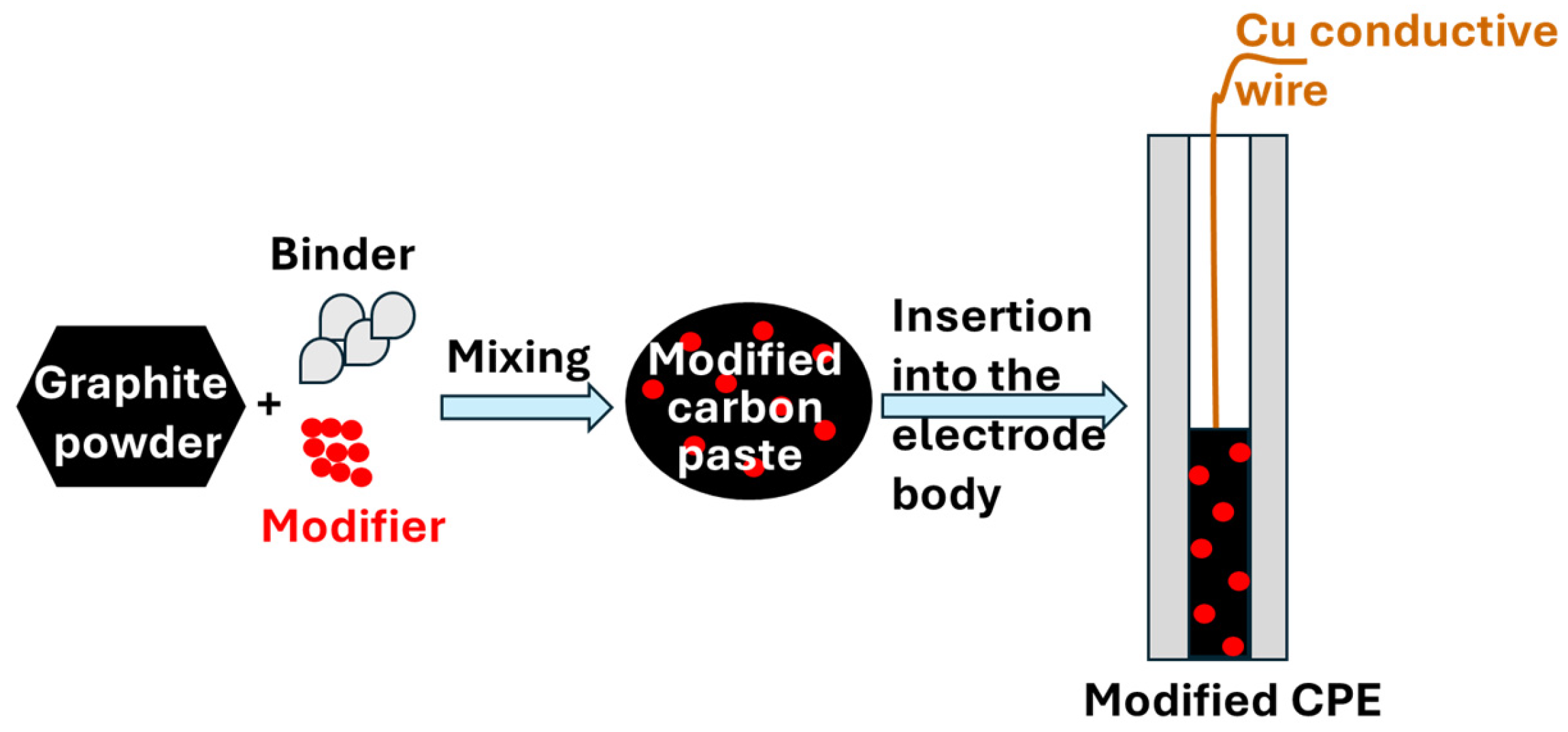
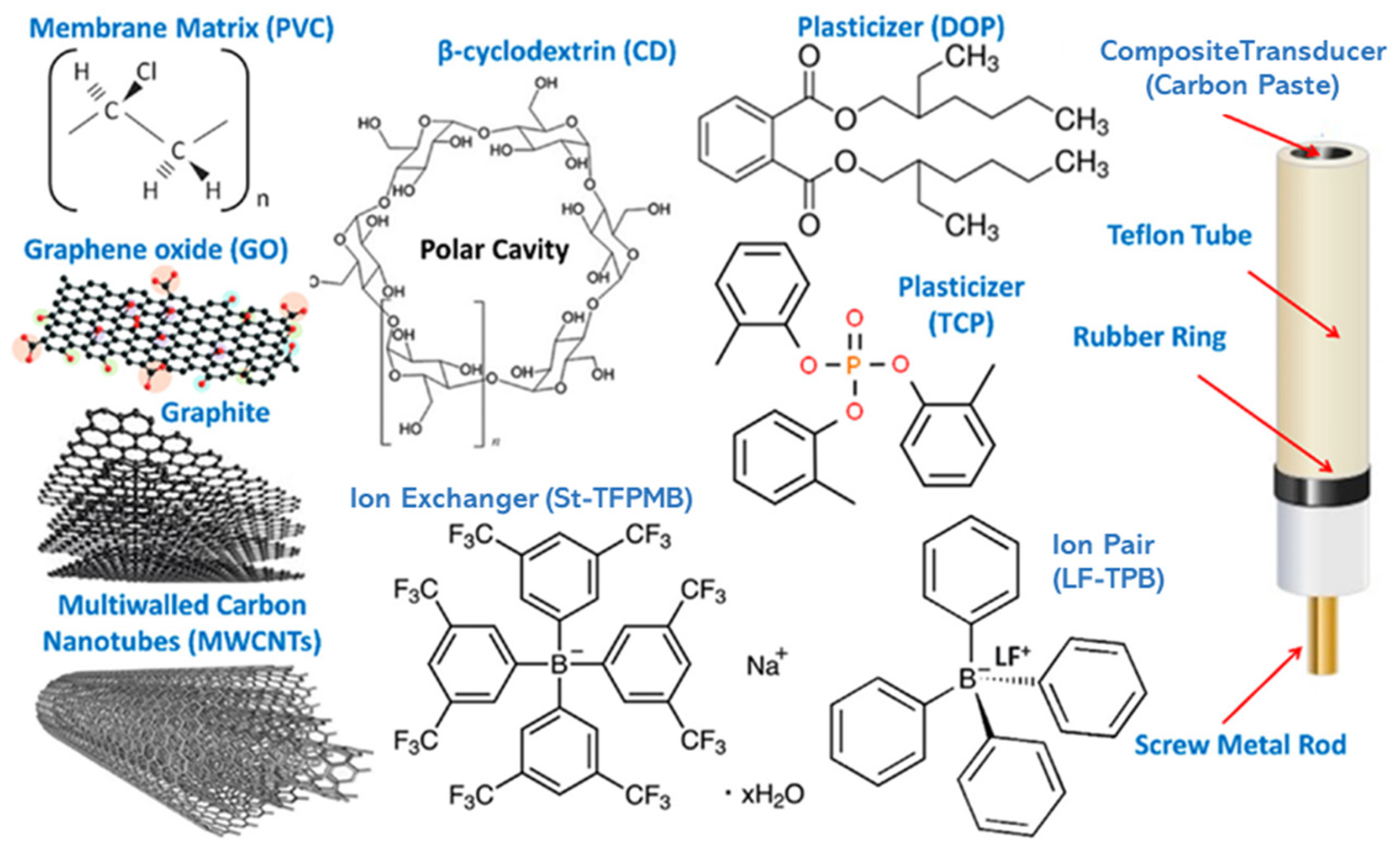
The carbon paste is introduced and pressed in a Teflon or polyethylene tube (sometimes an insulin syringe or even a disposable needle cap [76]) and a conductive wire passing through the electrode body is inserted into the paste with the role of making the connection between the electrode and the electrochemical instrument (Figure 2).
Regeneration of the electroactive surface of CPEs is usually done after each electrochemical recording, by pushing a small portion of carbon paste from the support and mechanically polishing it on clean paper [77].
CPEs can be used as is or can be modified to obtain electrodes with desired properties and improved stability, sensitivity and/or selectivity. The first modified CPE was developed by Kuwana and colleagues in 1964, who dissolved electroactive organic compounds such as ferrocene, anthraquinone, or 5-aminobenzophenone in the liquid component of the paste. Subsequently, several electrochemists began to develop simpler or more complex procedures for obtaining modified CPEs. In 1981, Ravichandran and Baldwin obtained the first modified electrode by directly mixing the modifier into the carbon paste [66]. Since then, CPEs have been modified with various materials, but nanomaterials have been the most commonly used [43]. The modification can be performed by incorporating the modifier(s) into the carbon paste during the preparation process or by (electro)deposition onto the electrode surface. The improvement of the electrochemical performance of the modified sensor can most often be explained by the increase in the electroactive surface area and conductivity of the electrode, the electrocatalytic activity of the modifier(s), the interaction between modifier(s) and analyte favoring its accumulation at the electrode surface, or by a combination of these effects.
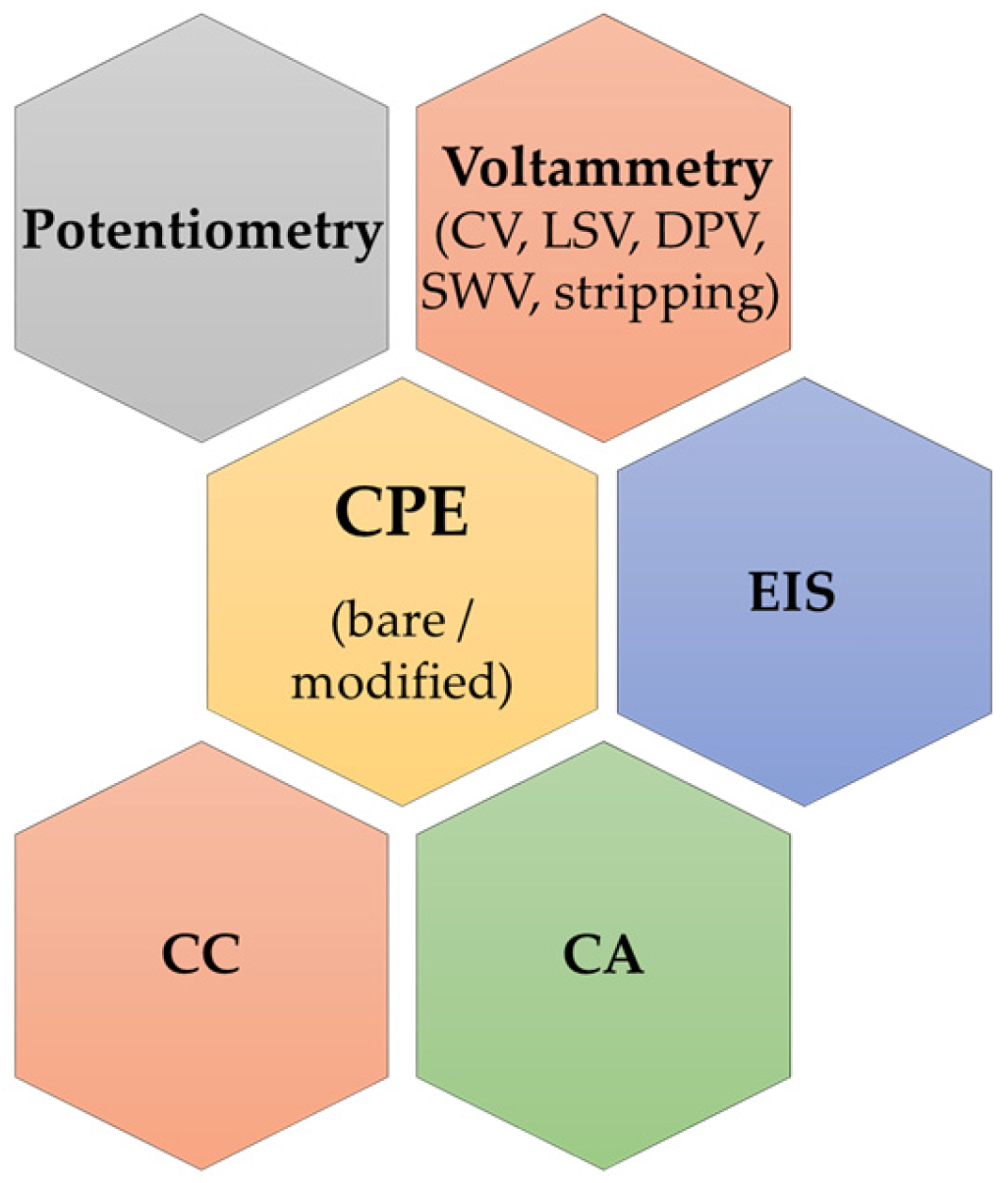
Due to their versatility, CPEs were used as working electrodes in various electrochemical techniques (Figure 3) applied for characterization of the electrode surface and processes, as well as for quantification purposes.
CPEs have several advantages like good electrical conductivity, low background currents, wide potential window [77], and easy and rapid preparation. They are robust, inexpensive and their surface can be simply and easily regenerated and/or modified. Unfortunately, they also have some disadvantages such as (i) preparing the paste by manual mixing may lead to an uneven texture of the material and the electrode surface resulting in lower reproducibility and repeatability, (ii) the non-conductive PO may limit the electron transfer kinetics, and (iii) some analytes may contaminate the electrode surface by strong adsorption, thus affecting the electrode stability. These limitations can be reduced by applying automated mixing with specialized devices, the use of conductive materials like IL or polymers as binder, an optimized carbon powder/binder ratio, and modification of the electrode with anti-fouling materials such as Nafion [51].
Compared to PVC-based potentiometric electrodes, those based on CPE have lower Ohmic resistance, shorter response time, longer lifetime, and are easier to prepare and regenerate [78].

3. CPEs for Antibiotic Electroanalysis

3.1. Carbapenems

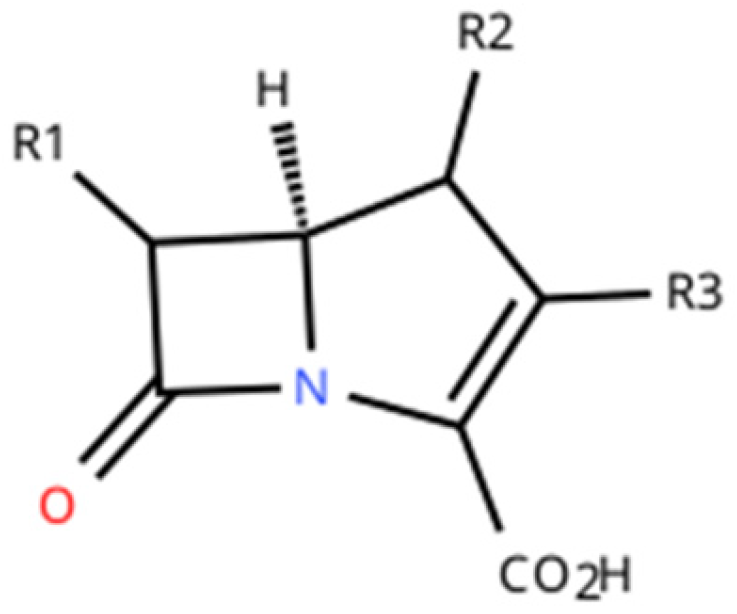
Carbapenems (Figure 4) are non-classical β-lactam antibiotics that were discovered in 1976 because the effectiveness of penicillin was threatened by the emergence of beta-lactamases. This class of drugs is important because it has the broadest spectrum of activity and the highest potency against Gram-positive and Gram-negative bacteria, thus being used as “last-resort antibiotics”. The mechanism of action of carbapenems consists of blocking the cross-linking of peptidoglycan units by inhibiting the formation of peptide bonds catalyzed by penicillin-binding protein. Representatives of this class are imipenem, MP and EP [1].
A CPE modified with ZnO-NPs and MWCNTs was developed for EP electroanalysis by AdSSWV and its quantification in pharmaceutical injections and spiked serum. EP voltammograms presented two anodic peaks. Under optimized conditions (Eacc ~0.5 V, tacc 20 s, BRB pH 2.00), the amplitude of the two signals varied linearly with the analyte concentration over the ranges 4.00 × 10⁻⁷–4.00 × 10⁻⁶ mol/L and 4.00 × 10⁻⁷–3.20 × 10⁻⁶ mol/L EP. The LoDs achieved were 8.50 × 10⁻⁸ mol/L EP and 7.80 × 10⁻⁸ mol/L EP, respectively. Hydrolyzed/oxidized degradation products and the excipients did not interfere with EP determination at CPE/ZnONPs@MWCNTs. The electrode presented a stable response for one month if stored at 4 °C. CC measurements at this electrode enabled the assessment of EP diffusion coefficient to be 6.72 × 10⁻⁸ cm2/s [60].
Cu/Ni-MOF nanoparticles grafted at the surface of N-doped graphite (Cu/Ni-MOFs@N-G NPs) were mixed with graphite powder and PO to obtain CPE/Cu/Ni-MOFs@N-G NPs for MP determination. MP oxidation signal recorded by DPV at this modified CPE in BRB pH 2.00 presented a linear dependence on the analyte concentration over the range 5.00 × 10⁻⁹–1.00 × 10⁻⁴ mol/L MP. The method’s LoD was 1.16 × 10⁻⁹ mol/L MP. The practical applicability of the developed modified CPE was tested by quantification of MP in spiked human serum and in pharmaceutical vials, without any interference from the common existing chemical species. The electrode showed a stable response over 30 days [57].

3.2. Cephalosporins

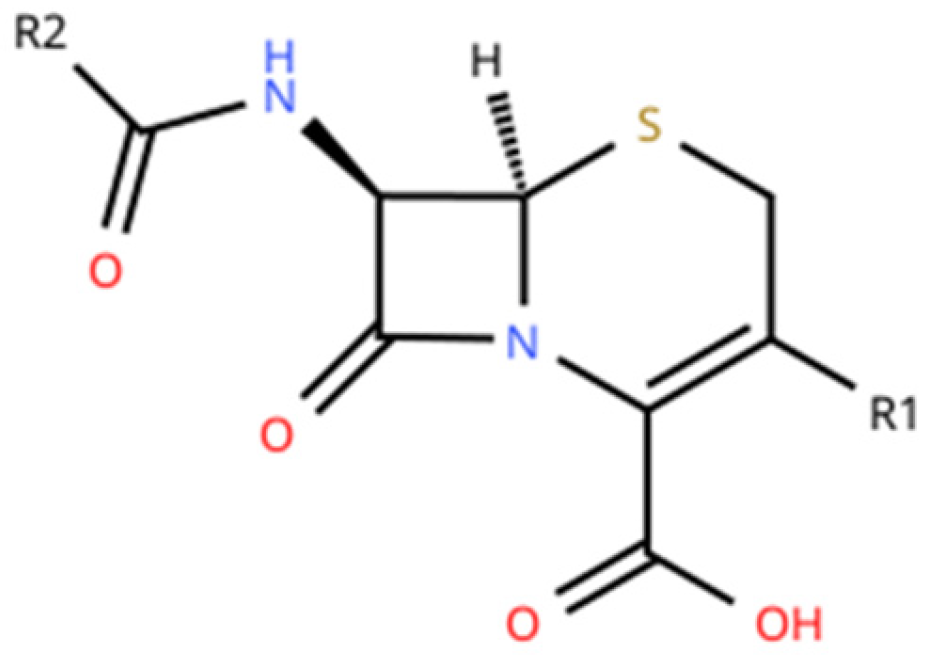
Cephalosporins (Figure 5) are a class of beta-lactam antibiotics used in the treatment of bacterial infections and diseases caused by penicillinase-producing and methicillin-sensitive staphylococci and streptococci. Cephalosporins are similar to penicillin in terms of structure and mode of action, acting by inhibiting cell wall synthesis [1].
The performance characteristics of CPE and BDDE were evaluated comparatively with respect to CFP oxidation. The anodic peak signal was lower at the CPE in comparison to BDDE. The electrode process was adsorption-controlled at the CPE, while at BDDE the analyte diffusion was the limiting step. Thus, the antibiotic could be quantified by stripping voltammetry only at the CPE. Even though the linear range was somewhat larger at the BDDE, the sensitivity of the determination was higher at the CPE due to the higher electroactive surface area of the latter sensor. The precision and recoveries obtained with the two electrodes were comparable. CPE is a cheaper sensor, but BDDE presented a lower LoD even without using a stripping step [12].
An electroactivated Cu(II)-functionalized mesoporous silica (SBA-15-Cu(II))-modified CPE was developed for the electroanalysis of CFZ. Incorporation of SBA-15 into the carbon paste matrix resulted in increased charge transfer resistance, as the modifier is an insulator. Modification of the carbon paste with SBA-15-Cu(II) resulted in a low interfacial resistance, explained by the fact that the Cu(II) ions facilitated electron transfer. Compared with CPE, the CFZ oxidation signal was amplified at the CPE/SBA-15-Cu(II) due to the accumulation of the analyte at the electrode surface through the Cu(II)–cephalosporin interaction. The electrode presented good stability (over four weeks), reproducibility (RSD 4.00%) and repeatability (RSD 2.70%) [11].
A CPE modified with a meso-structured Zeolite was developed for individual and simultaneous DPV determination of piroxicam and CTX, due to a separation of ~0.300 V between their anodic peaks. The peaks recorded at the CPE/Zeolite were about seven times higher vs. those observed at the bare electrode, due to (i) the presence of granular and spherical particles, which led to an increased surface-to-volume ratio of the electrode, and (ii) the electrocatalytic effect of the modifier. EIS studies revealed that Zeolite decreased the charge transfer resistance of the electrode due to both its high crystallite structure and its capacity to accelerate the charge transfer of the analyte at the electrode surface. Furthermore, Zeolite increased the lifetime of charge carriers and therefore their transfer to the external circuit, resulting in more intense signals and consequently improved detection sensitivity. It was shown that UA, glucose and selected amino acids did not interfere with the determination of the analytes [79].
Recently, a Zeolite-modified CPE was described for the simultaneous determination of CTX and diclofenac, the peak separation being 0.110 V. It was demonstrated that the presence of Zeolite in the carbon paste matrix amplified the anodic signal of the analytes by four times. This fact was explained by the increase in the electroactive surface of the electrode due to the porous structure of the material and by the improvement of the charge transfer owing to a surface-controlled electrode mechanism involving oxygen vacancies, which promoted active sites for the oxidation of the analytes [80].
CTX did not present any signal at bare CPE, but the modification of the electrode surface by potentiostatic electrodeposition of AuNPs, BiNPs or Au-Bi-NPs enabled the analyte detection. The highest oxidation peak was recorded at CPE/Au-Bi-NPs. Before the measurements, the modified electrode was electroactivated by applying several potential scans in supporting electrolyte solution [14].
The electrodeposition of Au-Bi-NPs at a CPE improves CFT oxidation signal compared to bare CPE, CPE/Au-NPS and CPE/Bi-NPs due to a larger surface area, lower charge transfer resistance and the synergistic electrocatalytic effect of Au-Bi-NPs. The electrode response was stable over one month, showing good repeatability (RSD 1.71%) and reproducibility (RSD 3.74%). Bimetallic NPs presented improved electrochemical performances because the limitations of the individual components were reduced while the beneficial properties were enhanced by synergism. Due to the crystalline structure of the NPs, the effective electroactive surface area of the CPE/Au-Bi-NPs (0.160 cm2) was 2.7 times larger than that of the unmodified CPE (0.059 cm2), providing a greater possibility of contact with analyte molecules. EIS measurements pointed out that the modified electrode presented reduced diffusion resistance and enhanced mass transport, as well as reduced charge transfer resistance favoring the electron transfer [8].
CFT oxidation peak at CPEs was amplified by incorporating NaMM and GO in carbon paste. Before the first use and after each surface polishing, a negative potential was applied to the electrode to reduce the GO. The electrode surface only needs to be polished before the first use. It was shown that the electrode response did not vary significantly after 30 measurements of CFT without cleaning the electrode surface. EIS studies revealed a low electron transfer resistance for CPE/NaMM/erGO, attributed to the increased electroactive surface area and the conductivity of the nanocomposite, which consequently increased the electron transfer rate at the electrode/electrolyte interface and hence the CFT oxidation signal. The selectivity, reproducibility and repeatability of the electrode response were good and stable for over a month [4].
CPE/CoFe2O4/Gr was described for the simultaneous determination of CPX and PNC G, since at this electrode the peaks of the two analytes were separated by approximately 0.400 V. CoFe2O4 acted as a mediator and accelerated the electron transfer process between the analytes and the electrode surface. Gr showed catalytic effects, good conductivity, stability and contributed to the increase in the electrode surface area. The synergistic effect of CoFe2O4 and Gr improved the performance characteristics of the bare CPE as well as those of the electrodes modified only with each individual component [81].
Due to the known properties of IL, such as thermal stability, low toxicity, anti-fouling and catalytic effects, fast electron transfer and good conductivity, they have been used to modify CPEs to improve their performance characteristics. In the case of CEF oxidation the current intensity increased by about nine times when the CPE matrix included CoFe2O4/rGO/IL due to improved conductivity. CA measurements were used to calculate the diffusion coefficient of CFE, which was found to be 1.17 × 10⁻⁶ cm2/s. CPE/CoFe2O4/rGO/IL allowed for the simultaneous quantification of CEF, mefenamic acid, and acetaminophen [82]. On the other hand, IL together with Cu(Him)2-NPs incorporated into the matrix of a CPE led to a shift in the CFX oxidation peak potential towards lower values and an increase in the peak current. The presence of Cu(Him)2-NPs resulted in a larger electroactive surface area and better conductivity of the modified electrode [71].
The modifiers used in CPE preparation and the electrochemical performances of the corresponding electrodes reported in the literature for cephalosporin determination are summarized in Table 1.
From Table 1 one can observe that the best electrochemical performances were obtained for CFZ and CFT quantification using CPE/SBA-15-Cu(II) [11] and CPE/NaMM/erGO [4], respectively. After preparation, CPE/NaMM/erGO required an electrochemical reduction step, while both electrodes were electroactivated by CV after each surface regeneration. The performances of the two electrodes in terms of easy of preparation, response time, selectivity, stability, repeatability and reproducibility were very similar.

3.3. Fluoroquinolones

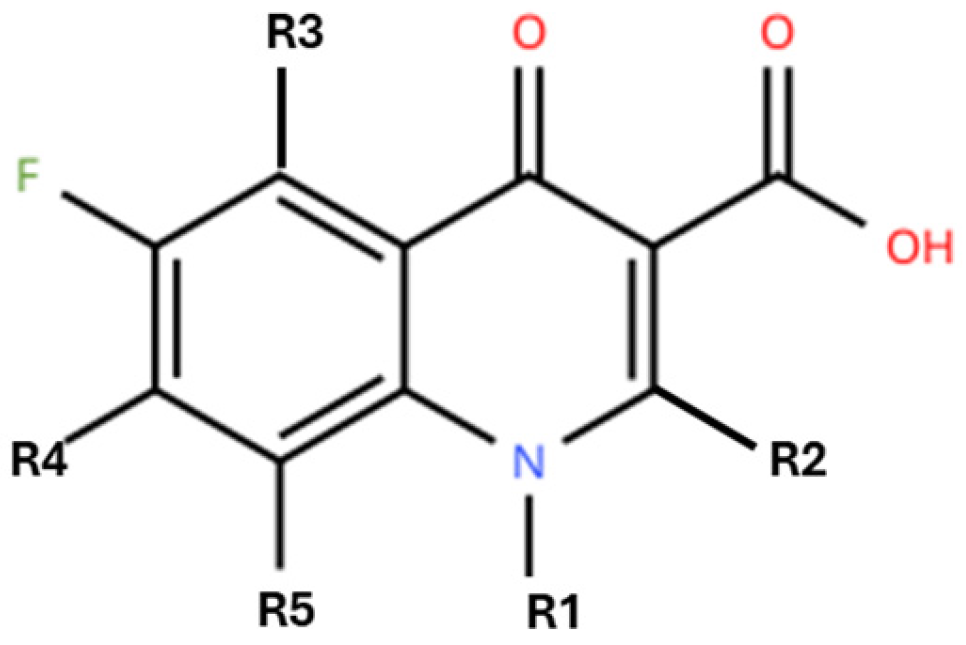
Quinolones (Figure 6) are a class of antibiotics that were discovered accidentally as a by-product of the synthesis of an antimalarial agent. Subsequently, various functional groups were introduced into the quinolone structure, resulting in compounds with broader spectra of action, better pharmacokinetics, and low toxicity, such as fluoroquinolones. This class acts against Gram-negative and Gram-positive bacteria by selectively inhibiting bacterial DNA synthesis. Among the most commonly used fluoroquinolones are CIP, NFX, LF, DAN, and OFX [38].
CPE developed for the potentiometric analysis of DIF (CPE/DIF-TPB) included in the paste composition DIF-TPB as an ion exchanger and DPB as a plasticizer. A modified electrode (CPE/DIP-TPB/ZnO-NPs) was also constructed, which, in addition to the above-mentioned components, also contained ZnO-NPs. Both electrodes exhibited Nernstian response (0.057 V/decade for the CPE/DIP-TPB/ZnO-NPs and 0.0535 V/decade for the CPE/DIP-TPB), short response times (2–5 s), good selectivity and reproducibility, but the electrode containing ZnO-NPs had a wider linear range, a lower LoD and a longer lifetime (4 months vs. 3 months for the unmodified electrode). Both electrodes were applied for DIF determination using the calibration curve method as well as potentiometric titration [83].
Potentiometric CPEs for CIP quantification prepared without or with MWCNTs using CIP-PT or CIP-RKT as ion exchanger and their performance characteristics were compared with those of conventional PVC-membrane ion-selective electrodes. Both PVC-based and carbon paste sensors incorporating CIP-RKT showed very low or no response in the presence of CIP. This was explained by the high lipophilicity of the CIP-RKT and its low solubility in the tested solvents and, on the other hand, by the difficulty of the ion exchange process in the carbon paste. CIP-PT was not soluble in the solvents used either, so PVC-membrane-based electrodes could not be obtained. In case of CPEs the electrode response became near-Nernstian (55.7 mV/decade) by adding the St-TFPMB ion exchanger, as it decreased the paste resistance. The addition of MWCNTs into the carbon paste resulted in a super-Nernstian response (66.5 mV/decade) and high selectivity due to the electrocatalytic properties of the CNTs, but the precision was low. The response times of the sensors were 5 min in dilute CIP solutions and 1 min in solutions with higher concentrations, but they can be reduced by immersing the electrode in concentrated analyte solution before use, to activate the ion exchange process. The CPE/MWCNTs/CIP-PT had a longer lifetime (12 days) than CPE/CIP-PT (7 days). Both electrodes were applied for the direct (standard addition method, calibration curve) and indirect (titration) determination of CIP [84].
Three types of potentiometric CPEs were developed for LF determination. The paste of the first type, denoted simply as CPE, was obtained by mixing graphite, a plasticizer, an ion exchanger (St-TFPMB) and the ion pair LF-TPB in acetone. The second type of electrodes (C-CPE) was prepared by covering the CPE surface with a PVC membrane. This was achieved by drop casting a solution containing LF-TPB, plasticizer and PVC onto the CPE surface and air drying. The plasticized CPE (P-CPE) was fabricated employing a paste obtained by mixing graphite, LF-TPB, plasticizer, ion exchanger, CD as modifier and PVC in a cyclohexane:acetone mixture (Figure 7).
The slopes of the electrodes were 49.30 mV/decade, 50.20 mV/decade and 53.50 mV/decade for CPE, C-CPE and P-CPE, at pH 4.10. The linear range of CPE was 1.00 × 10⁻⁵–1.00 × 10⁻² mol/L while the PVC-based CPEs had a linear range of 1.00 × 10⁻⁴–1.00 × 10⁻² mol/L. The response time of all electrodes was shorter than 1 min. The LoDs of the CPE, C-CPE and P-CPE were 1.00 × 10⁻⁵ mol/L, 7.30 × 10⁻⁵ mol/L and 6.30 × 10⁻⁵ mol/L, respectively. Despite the fact that the modification of the CPE did not improve its the linear range and detection limit, the slope and the selectivity of the modified electrodes were better. The calculated selectivity coefficients indicated that the selectivity of the modified electrodes was improved by at least one order of magnitude, while the C-CPE selectivity towards Fe3+ ions, which may exist in biological samples and can form complexes with LF, was increased by three orders of magnitude. P-CPE had the shortest lifetime (5 days), while the lifetime of the other two was of 14 days. The electrodes were applied for the determination of LF, with good recoveries, from pharmaceuticals, urine and serum samples [15].
CPEs modified with rGO developed for CIP electroanalysis [13,85] presented similar performances, with the mention that rGO resulted after the electrochemical reduction of GO obtained by electrochemical exfoliation under alternating current flow, allowed a slightly lower LoD. Even the use of N-doped porous rGO as a modifier [13], which provided an increased effective electroactive surface area and facilitated the mass transport of reactants, did not lead to better electrochemical performances in CIP detection, compared to rGO-modified CPE [85].
Magnetite is a good choice for electrode modification because it has advantages such as ease of preparation, low cost, biocompatibility and catalytic activity. To avoid oxidation and aggregation of Fe3O4-NPs it was combined with Gr nanosheets and used to prepare a modified CPE for CIP quantification. Fe3O4-NPs increased the electron transfer kinetics and its combination with Gr resulted in improved electrocatalytic activity, better conductivity and a larger effective surface area with more active sites, facilitating CIP adsorption and thus increasing the oxidation current, giving rise to higher peaks and more sensitive determinations. Thus, the linear range of the CPE/Gr/Fe3O4-NPs [86] was extended towards lower concentrations by an order of magnitude, compared to rGO-modified CPEs [13,85].
Nφ, an affordable, eco-friendly mineral, was introduced into the carbon paste to increase the adsorption capacity of the analyte at the electrode surface, enabling more sensitive determinations. Thermal incorporation of Sn/SnO2 into the Nφ structure increased the roughness of the material, improved its conductivity and increased the electron transfer kinetics due to Sn, while SnO2 generated catalytic active sites, leading to higher CIP oxidation signals at lower potentials, compared to the unmodified CPEs [87].
Due to their natural abundance, microporosity, large surface area and mechanical stability, clays have been used as electrode modifiers. CPE/clay response was stable for over 15 days and CIP could be determined in the presence of sucrose, ibuprofen and PAR. RSD% values of 2.66% and 3.98% indicated the electrode’s good repeatability and reproducibility, respectively [88]. Clays can be functionalized with groups with ion exchange or chelating properties, which enhance the accumulation of the analyte(s) at the electrode surface, thus increasing the sensitivity of the determination. On the other hand, surfactants reduce the hydrophobicity of the electrode and can generate appropriate charges at its surface, which can attract or repel chemical species, leading to improved sensitivity and selectivity. Thus, a CPE/Mt-NH2 was developed for CIP determination in the presence of CTAB. The functionalization of the clay did not improve the sensor’s LoD but it extended with almost one order of magnitude the linearity range towards higher concentrations. On the other hand, the sensor had limited selectivity, as citric acid was observed to decrease, and caffeine and DA to increase, the CIP oxidation signal, due to the affinity of the latter molecules for the -NH2 groups on the electrode surface. However, the electrode can be used in matrices where the analyte is in large excess compared to interfering species, or in preliminary studies, where accurate analysis is not the primary objective [89].
Clay was also employed as a spacer to prevent aggregation and increase the stability of GO previously reduced by an environmentally friendly chemical process using glucose. The rGO@clay composite was incorporated into carbon paste to prepare a modified CPE for CIP electroanalysis. The rGO@clay imparted good reproducibility (RSD 2.85%), repeatability (RSD 4.10%), and anti-interference ability to the CPE and decreased the lower limit of the linear range by almost an order of magnitude, compared to CPE/clay, but with almost identical LoDs [90].
To prepare a modified CPE, Ca2CuO3-NS obtained from eggshell waste was incorporated in the carbon paste. Ca2CuO3-NS exhibited an electrocatalytic effect on CIP and OFX oxidation, allowing their individual and simultaneous voltammetric determination. CA was used to calculate the diffusion coefficients of the two analytes, which were 4.03 × 10⁻⁶ cm2/s for CIP and 2.40 × 10⁻⁷ cm2/s for OFX. Common ions, ascorbic acid, UA and DA did not interfere with the determination. The electrode response exhibited good repeatability (RSD 2.43% for CIP and 3.90% for OFX) and stability (21 days) [67].
Modification of CPE with Ag decorated in POM, rGO and IL increased the electroactive surface area of the sensor by 2.9 times and significantly decreased the charge transfer resistance, demostrating the electrocatalytic activity of the modifiers. Using CC experiments at the CPE/Ag@POM@rGO-IL, the diffusion coefficient of CIP was established to be 2.52 × 10⁻⁵ cm2/s. CCD and RSM were used to simultaneously establish all optimal parameters for CIP determination. The electrode response after 14 days and 90 days was 93.06% and 84.76%, respectively, of the initial value, indicating a satisfactory stability [72].
The performances of CPEs modified with CQDs, ZnO-NPs and without or with IL were tested for CIP determination. CQDs and ZnO were prepared using green processes. CQDs were obtained from cat hair waste containing keratin, which improved the CQDs’ surface, while ZnO-NPs were prepared using a plant extract. Common inorganic ions and organic molecules did not influence the CIP response at either of the two modified electrodes. However, some antibiotics (ENR, LF, TC, OTC, PNC G) interfered with the determination [91].
The CPE/CaO-NPs/pL-Meth developed for LF determination was prepared by incorporating CaO-NPs obtained from eggshells into the carbon paste and CV electropolymerization of L-Meth to obtain the pL-Meth layer on the electrode surface. The peak currents recorded at CPE/CaO-NPs/pL-Meth were 5.7, 1.73 and 1.88 times higher than those recorded at CPE, CPE/pL-Meth and CPE/CaO-NPs, respectively. This was due to the electrocatalytic effects of the modifiers and the increased surface areas of the modified electrodes, which were 0.010 cm2, 0.049 cm2, 0.051 cm2, and 0.100 cm2 for CPE, CPE/pL-Meth, CPE/CaO-NPs and CPE/CaO-NPs/pL-Meth, respectively. The value of the diffusion coefficient of LF at CPE/CaO-NPs/pL-Meth calculated from CA data was 4.90 × 10⁻⁶ cm2/s. Poly(ethylen glycole), starch, glucose, ascorbic acid, urea, DA and common ions present in excess did not affect LF oxidation signal. The repeatability (RSD 2.8%) and stability (21 days) of the CPE/CaO-NPs/pL-Meth were good [92]. The CPE/CaO-NPs/pL-Ser sensitive to MOXI was prepared in a similar way. CA was used to calculate MOXI diffusion coefficient (5.70 × 10⁻⁶ cm2/s) at this electrode. The sensor allowed the simultaneous determination of MOXI and PAR. The reapetability (RSD 2.60%) and stability (15 days) of the electrode response were acceptable [93].
CPE/Nafion/GO/Zeolite was used for both the CA estimation of MOXI diffusion coefficient (6.20 × 10⁻⁷ cm2/s) and for the simultaneous determination of MOXI and PAR based on their oxidation peaks at 0.840 V and 0.660 V, respectively [94].
Due to its electrocatalytic effect, the MOF CuBTC was used to modify a CPE, but to counterbalance its low conductivity, the addition of FeBTC was necessary. The CPE/CuBTC/FeBTC allowed the sensitive determination of ENR. The presence of 10-fold-higher concentration of ascorbic acid, CAP, PAR and ERT did not affect the ENR oxidation peak, while cephalosporins, oxalic acid and glucose significantly reduced the signal. ENR recoveries from water samples were in the range 90.20–121.30% [95].
CPE was prepared using different binders (SO, PO, CO, TCP) and modified with various carbonaceous nanomaterials (Gr, C60, MWCNTs and SWCNTs were tested for NDX voltammetric analysis). SO-based electrodes exhibited the best performances because on them the NDX oxidation signal was the most intense. The electrodes were modified either by addition of the carbon nanostructure (10%) into the graphite paste composition or by drop casting the modifier suspension onto the electrode surface. C60-, MWCNT- and SWCNT-bulk-modified electrodes showed increased sensitivity and peaks shifted towards lower potentials. CPE/SWCNTs obtained by surface modification exhibited the best performances (highest peak and anti-fouling properties, lowest LoD). The bulk-modified CPE/SWCNTs presented better reproducibility and longer lifetime [63].
A CPE/MWCNT was modified by casting a suspension of prGO/ANSA followed by its drying and subsequent potentiostatic electrodeposition of Au-NPs. The surface area of the CPE/MWCNTs/prGO/ANSA was 14.6 times larger than that of CPE, while the charge transfer resistance decreased by 11.95 times due to the synergetic effect of all modifiers. In addition, the adsorption of the analyte at the electrode surface was improved at the modified CPE, thus increasing the sensitivity of NFX determination. The analyte signal recorded at CPE/MWCNTs/prGO/ANSA was not affected by the excess presence of common interfering species like DA, vitamins, glucose, urea, and ions. In turn, CIP and LF interfered with the determination, but being antibiotics belonging to the same class, their co-administration is rather unprobable. The repeatability and reproducibility of the electrode were good, being characterized by RSDs of 2.12% and 4.58%, respectively. The electrode response was stable for at least 15 days [96].
CV investigation of OFX performed at various working electrodes (GCE, pristine MWCNTsPE and f-MWCNTsPE) indicated that no voltammetric peak was observed at pristine MWCNTsPE, while the highest oxidation signal was obtained at f-MWCNTsPE. This behavior was explained by the electrocatalytic effect and the large surface area of f-MWCNTs, which bear oxygen-containing functional groups facilitating the electron transfer at the electrode–electrolyte interface [76]. OFX quantification over a larger concentration range and with a lower LoD at a shorter accumulation time was achieved using CPE/GF/oxMWCNTs, which had a larger effective electroactive surface area generated by irregular compact layers presenting cracks, high adsorption capability and fast electron transfer kinetics [97].
The modification of CPE with GO and IL 1B3MITFB significantly reduced the charge transfer resistance of the electrode, increasing the heterogeneous electron transfer rate constant by one order of magnitude, thus improving the electrochemical behavior of the sensor towards OFX detection. The CPE/GO/IL allowed the selective OFX analysis. The precision (RSD% 3.80%) and reproducibility (RSD% 2.90%) of the electrode were good. In addition, the presence of the IL in the electrode material composition ensured a good stability of the sensor [73].
A CPE modified with β-CD and GNS by incorporating the modifiers into the carbon paste was developed for the selective AdSDPV analysis of MOXI enatiomers (S,S-MOXI and R,R-MOXI). The enantioselectivity of the sensor was provided by β-CD through its 35 chiral centers, which bind selectively to S,S-MOXI and R,R-MOXI, forming inclusion complexes with anodic peak potentials of 1.039 V and 0.917 V in BRB pH 7.00, respectively [98].
The Au–Ag-ANCCs/f-MWCNT nanocomposite was deposited on the surface of a CPE by drop casting. Subsequently, ChCl was electrodeposited on the modified surface. The resulting electrode was used for the individual and simultaneous determination of NFX and RIF, its response being stable for about 7 weeks. RSD values of about 4.30% and about 1.75% for both analytes indicated good repeatabiliy and reproductibility of the CPE/Au–Ag-ANCCs/f-MWCNTs/ChCl, respectively [99].
CPE/Gr/Cu-NPs-CTAB was obtained by dropping Gr suspension onto the CPE surface and air drying (CPE/Gr) followed by potentiostatic electrodeposition of Cu-NPs-CTAB from a CuSO4 and CTAB solution (CPE/Gr/Cu-NPs-CTAB). The electrode surface was regenerated by pushing out a small portion of paste from the electrode body and polishing the new surface on a weighing paper. The renewed surface could be modified again. The modifiers film exhibited electrocatalytic effect on GFX and PFX oxidation providing two well-separated anodic peaks, allowing the simultaneous determination of the two drugs. The common ions, UA, ascorbic acid, thiourea, MNZ and CAP did not interfere with the determination. The CPE/Gr/Cu-NPs-CTAB response remained almost unchanged after 15 days of storage at room temperature. RSD values below 3.80% for both analytes indicated good electrode preparation reproducibility and response repeatability [100].
The modifiers used in CPE preparation, and the electrochemical performances of the corresponding electrodes reported in the literature for fluoroquinolone determination are presented in Table 2.
Fortunately, there are a multitude of modifiers, but unfortunately, it is difficult to predict which type of modifier would lead to better results in the electrodetection of an analyte, let alone for classes of compounds. For example, considering LF electroanalysis at CPEs modified with polymers, it can be observed that the extent of the linear range and the LoD varied significantly depending on the used monomer [7,105,106]. Although in many cases the combination of at least two modifiers can lead to an improvement in the detection limit and a larger linearity range, as is the case for LF detection when using CaO-NPs/pL-Met [92] compared to CPEs modified only with polymers [7,105,106] or only with NPs [107], there are CPEs containing only one modifier with much better performances—such as the CPE/ChCl for which the lowest LoD for CIP detection was reported [103]—than those obtained at CPE/Nafion/C60 [101], CPE/ZnO/CQD/IL [91] or CPE/Cu/Ce-MOF/Ni-ZnO-NPs [102].

3.4. Macrolides

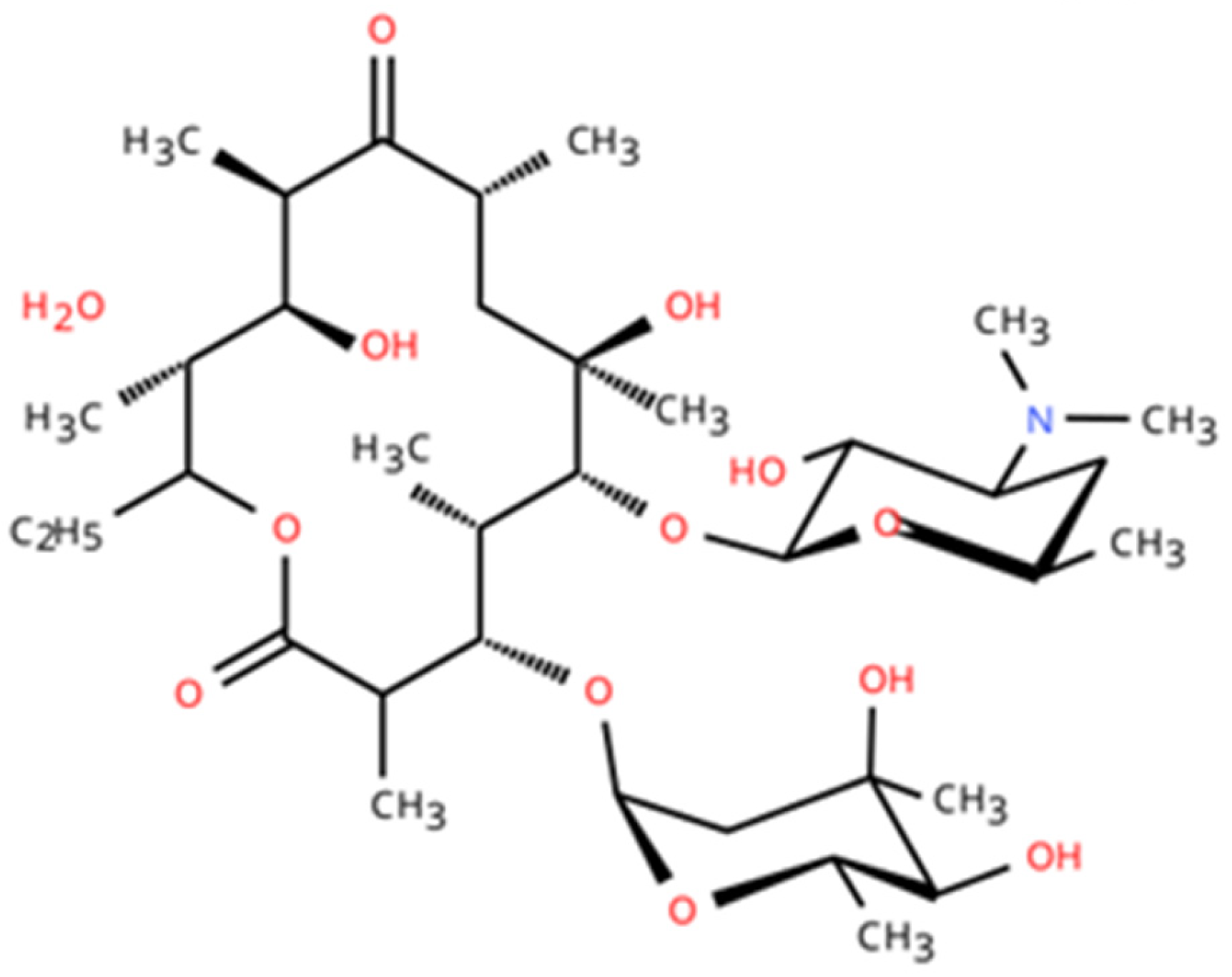
Macrolides (Figure 8) are a class of antibiotics characterized by macrocyclic lactone rings with 14, 15, or 16 members, with unusual deoxy sugars L-cladinose and D-desosamine attached. They have a broader spectrum of antibiotic activity than penicillins. The mechanism of action of this class consists of inhibiting protein synthesis, as they are inhibitors of the 50S ribosome. Among the best-known macrolides are ERT, AZM, and CLA [1].
A potentiometric CPE based on the ion association complex CLA-PT presented a slope of 59.20 ± 0.30 mV/decade and a response time of about 5 s. The repeatability of the measurements was good (RSD of about 1.50%), while the sensors had a lifetime of more than 2 months. The potentiometric selectivity coefficients indicated the good selectivity of the CPE/CLA-PT towards several species among them being AZM, inorganic ions, amino acids, sugars, etc. [6].
The voltametric behavior of AZM, CLA and ERT was investigated at Pt and different carbon-based electrodes, including CPE. All tested macrolide antibiotics showed a similar electrochemical behavior at the tested electrodes, namely a complex multi-step oxidation at the -N atom of the tertiary amine group, explaining the two observed anodic peaks. However, it should be emphasized that the voltammetric signals were poorly defined at the Pt electrode [113].
The surface of a CPE was modified with a poly-TR film electrogenerated by CV. Due to its functional groups, the poly-TR layer allowed the accumulation of AZM at the electrode surface by forming H bonds, resulting in enhanced AZM oxidation peaks. The diffusion coefficients at bare and poly-TR-modified CPE were found to be 5.41 × 10⁻² cm2/s and 1.20 × 10⁻² cm2/s, respectively. The results indicated that the polymeric layer enhanced the analyte diffusion in the solution and increased the electroactive surface area of the electrode by three times [58].
The paste obtained by mixing a MIP based on MAA (monomer) and AZM (template), AB, graphite powder and PO were used to construct a sensor with high selectivity towards AZM and other antibiotics, including macrolides, showing very low responses. No other organic or inorganic species interfered with the AZM analysis [114].
AZM oxidation signal at CPE was enhanced by the increased electroactive surface area, the synergistic electrocatalytic effect of Gr nanoribbon–CoFe2O4@NiO and the high conductivity of the IL binder HMIMPF6 added to the carbon paste. The sensor presented good reproducibility (3.15%), repeatability (2.50%) and stability of approximately 30 days. The electrode response was not affected by the presence of excess of inorganic ions, sucrose, urea and thiamine, thus showing a good selectivity towards possible interferents usually existing in real samples. The AZM diffusion coefficient estimated by CA at CPE/Gr nanoribbon–CoFe2O4@NiO@HMIMPF6 was 9.22 × 10⁻⁶ cm2/s [53].
One study revealed interesting results, showing that better reproducibility of CLA measurements was obtained at bare CPE, without surface renewal between recordings, but with prior cycling of the potential at the electrode surface. In the same investigation, CPEs modified with Au-NPs deposited on the surface by drop coating were used for the determination of AZM and ROX. The CPE modification did not improve AZM determination but extended the lower limit of the linear range towards lower values and reduced the LoD [77].
CLA, TNZ and LAN are employed in triple therapy against H. pilori infections, and there are pharmaceutical preparations packed in kits containing each individual active principle. Based on the different voltametric behavior as a function of pH, the three analytes were determined using a PBA-NP/MWCNTs-modified CPE. The electrode response was stable over 45 days, and RSD values lower than 1.50% indicated a good precision of measurements [61].
The modifiers used in CPE preparation and the electrochemical performances of the corresponding electrodes reported in the literature for macrolide antibiotic determination are summarized in Table 3.
The data summarized in Table 3 shows that, for macrolides detection, MIP-based electrodes could be the best choice, with CPE/AB/MIP presenting the lowest LoD. Furthermore, this sensor allowed AZM detection in the presence of other antibiotics and even macrolides [114].

3.5. Nitrofurans

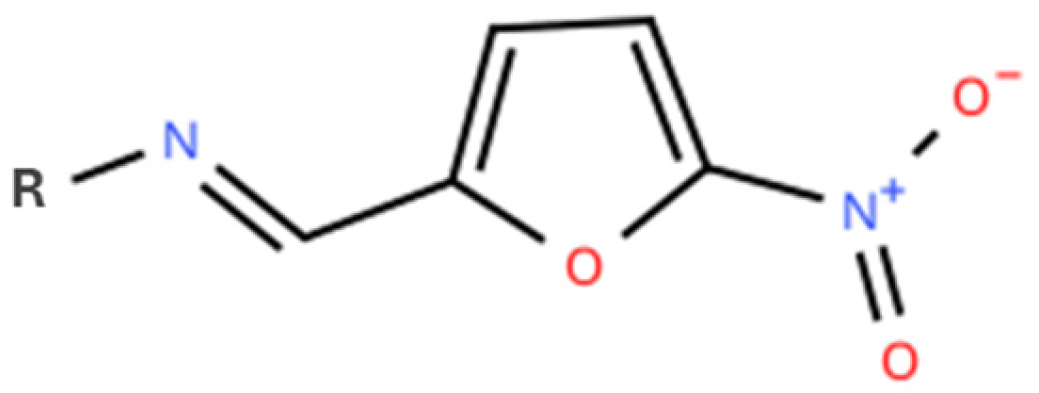
Nitrofurans (Figure 9) are a class of broad-spectrum antibiotics used against aerobic and anaerobic bacteria, as well as pathogens such as fungi, protozoa, and schistosomes. Certain nitrofuran derivatives have carcinogenic potential, leading to their reduced use and the application of stricter regulations. FZD, NFZ and NFT belong to the nitrofuran class [40].
A CPE modified with Ag-NPs was obtained by introducing AgNO3 into the carbon paste and subsequent programmed heating. The electrode presented good electrocatalytic activity towards NFZ, enabling its DPV quantification in PB pH 7.00 in the range of 2.00 × 10⁻⁷–1.00 × 10⁻⁴ mol/L NFZ with an LoD of 1.20 × 10⁻⁸ mol/L NFZ. The selectivity of the electrode was good, as were its reproducibility (RSD 3.10%) and repeatability (RSD 3.40%). CPE/Ag-NPs was applied for the analysis of NFZ in tap water, human urine and commercial milk, with recoveries between 97.60% and 100.10% [116]. The same research group deposited Ag-NPs on CPE by CV from an AgNO3 solution. Using the same quantification conditions mentioned above, the newly developed sensor exhibited comparable performance characteristics, namely a linear range of 4.00 × 10⁻⁷–1.00 × 10⁻³ mol/L NFZ with a LoD of 1.00 × 10⁻⁸ mol/L NFZ. The Ag-NP-coated CPE was applied for the determination of FZN in urine and tap water samples, with recovery rates of 90.00% [117].
An AMPS-based MIP was used to modify a CPE/MWCNT for FZD analysis. Quantum mechanical calculations and molecular dynamics simulation were applied to select the monomer and the optimum polymerization conditions. DPV analysis at CPE/MWCNTs/MIP showed a linear range of 1.00 × 10⁻⁸–1.00 × 10⁻⁶ mol/L FZD with a LoD of 3.00 × 10⁻⁸ mol/L FZD. MIP offered high selectivity, and the sensor was applied with good recoveries, ranging from 91.00% to 105.00%, for the quantification of FZC in tap and river water samples [118].
A CPE/Fmoc-Pro-Phe-OM developed for FZD determination in the concentration range 5.00 × 10⁻⁵–4.50 × 10⁻⁴ mol/L FZD, with a LoD of 1.50 × 10⁻⁸ mol/L FZD, was applied for antibiotic detection in milk and honey samples [119].
Incorporation of the core–shell structure of Co-TCA-complex-coated ZIF-67 nanoparticles (Co-TCA@ZIF-67) into carbon paste enhanced the FTD reduction peak due to the high conductivity of the mesoporous nanostructure, its high adsorption efficiency and the increased electroactive surface area of the sensor. By applying DPV in ABS pH 4.50 the height of the FTD cathodic signal recorded at CPE/Co-TCA@ZIF-67 increased linearly with the analyte concentration in the range 5.00 × 10⁻⁸–5.00 × 10⁻⁶ mol/L FTD. The LoD of the method was 1.20 × 10⁻⁸ mol/L FTD. The electrode showed good response reproducibility (RSD up to 5.00%) and stability of at least one week for the electrode stored at room temperature. Keeping the electrode for more than 120 min in weakly acidic medium affected the modifier stability. The electrode demonstrated good selectivity towards FTD electroanalysis and was used to determine the analyte in aquaculture water by applying the standard addition method [55].
The surface of a CPE was modified with Au-Ag-ANCCs/ZnO-NPs by drop casting, and subsequently PEO was electropolymerized at the modified surface, resulting in CPE/Au-Ag-ANCCs/ZnO-NPs/PEO used for the simultaneous determination of NFT and FZD, which was possible due to a separation of about 0.500 V between the SWV reduction peaks of the two nitrofurans, at pH 7.00. The linear range and LoD of the method for each analyte were 1.00 × 10⁻¹²–2.50 × 10⁻⁴ mol/L and 2.60 × 10⁻¹³ mol/L for NFT and 9.00 × 10⁻¹⁰–3.60 × 10⁻⁴ mol/L and 8.80 × 10⁻¹³ mol/L for FZD, respectively. The developed sensor was used for the determination of the two antibiotics in spiked chicken meat, fish, honey, milk and wastewater samples, applying the standard addition method. The recoveries varied between 96.3% and 102.6%. Stored at 4 °C, the electrode could be used for about two and a half months, with good repeatability (RSD up to 3.32%) and reproducibility (2.99%) [120].
A CPE/SWCNT was developed for simultaneous determination of CAP and FZD in honey and milk samples. DPV analysis in PB solution pH 7.00 revealed a linear range of 5.00 × 10⁻⁵–4.00 × 10⁻⁴ mol/L FZD and the following LoDs: 1.24 × 10⁻⁵ mol/L FZD for individual analysis, 9.95 × 10⁻⁶ mol/L FZD in the presence of 5.00 × 10⁻⁵ mol/L CAP and 9.51 × 10⁻⁶ mol/L FZD for simultaneous variation in the concentrations of both analytes [62].
Comparing all CPEs developed for nitrofurans electroanalysis, they presented LoDs in the 10−8 mol/L range, with two exceptions, namely CPE/SWCNTs—with the highest LoD but having the advantage of allowing the determination of FZD and CAP one in the presence of the other—and CPE/Au-Ag-ANCCs/ZnO-NPs/PEO, which presented by far the best performances with respect to LoD and stability [120]. It should be emphasized that the CPE preparation/modification is usually straightforward, but the prior steps used to prepare the various modifiers differ in terms of time, cost, and sustainability.

3.6. Nitroimidazoles

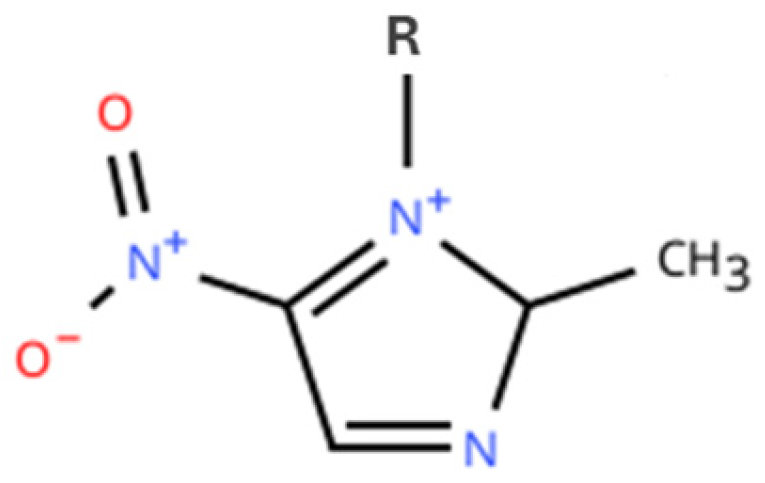
Nitroimidazoles (Figure 10) are a class of antibiotics used as anaerobic antibacterial and antiprotozoal agents. This class includes MNZ, TNZ, and ODZ. The latter has a longer half-life and stronger action than other nitroimidazole compounds [40,121].
CV analysis of DMT was performed on CPE modified with Ag microparticles either electrodeposited by CV from AgNO3 solution (CPE/μAgCV) [122] or obtained after calcination of the mixture of graphite powder and AgNO3 (CPE/μAg) [123]. CA at CPE/μAg allowed the evaluation of the DMT diffusion coefficient as 1.33 × 10⁻⁴ cm2/s. The electrode response was stable over 20 days, and its repeatability was good (RSD 4.40%). Comparing the two sensors (Table 4), the performance characteristics of CPE/μAg were slightly better.
A potentiometric CPE/MWCNTs/PANI-NPs@PVC@MIP was obtained by coating a CPE/MWCNT with PANI-NPs to hinder the formation of a water layer and to improve the ionic transduction and stability of the potential readout, with a PVC membrane containing TpClPB and o-NPOE and with a MNZ-selective MIP. For comparison, a CPE/MWCNT covered with PANI-NPs and PVC membrane, denoted CPE/MWCNTs/PANI-NPs@PVC, and a bare one (CPE/MWCNT) were tested. The modified electrodes exhibited shorter response times (5 s vs. 10 s) and longer lifetimes (45 days vs. 30 days). The MIP layer improved the electrode response slope, which increased from 51.60 mV/decade (CPE/MWCNTs) and 54.30 mV/decade (CPE/MWCNTs/PANI-NPs@PVC) to 56.20 mV/decade (CPE/MWCNTs/PANI-NPs@PVC@MIP) and extended the linear range by an order of magnitude towards lower concentrations, up to 1.00 × 10⁻¹⁰ mol/L MNZ. The LoDs achieved with the three electrodes were 5.19 × 10⁻⁷ mol/L, 6.70 × 10⁻⁶ mol/L and 8.22 × 10⁻⁶ mol/L MNZ for CPE/MWCNTs/PANI-NPs@PVC@MIP, CPE/MWCNTs/PANI-NPs@PVC and CPE/MWCNTs, respectively [124].
The CPE surface was covered with an electrogenerated poly-α-CD layer to improve the performance characteristics of the sensor for MNZ detection by DPV monitoring of its reduction signal. The electroactive surface area of the modified electrode was eight times larger than that of the bare one, due to the change in surface morphology from a two-dimensional flake-like surface (unmodified CPE) to one with hillocks (CPE/poly-α-CD), which led to an increase in the sensitivity of the determinations, thus allowing the achievement of LoQs of 9.60 × 10⁻⁷ mol/L MNZ for CPE/poly-α-CD compared to 1.75 × 10⁻⁵ mol/L MNZ for CPE. The enhancement of MNZ reduction signals at the modified electrode was also attributed to the formation of an inclusion complex between the analyte and α-CD. The modified electrode presented a good selectivity for MNZ quantification in the presence of excess of common interferents. However, in the presence of PAR, a slight shift in the peak potential was observed, which was explained by the inclusion of the PAR redox products in the α-CD cavities, thus hindering the electron transfer process. The electrode response decreased by 6.00% after one week, indicating a good stability [125].
The powder required for the preparation of a CPE modified with Al2O3 microparticles was obtained by calcining a mixture of graphite powder and Al2(SO4)3 in an optimized ratio. The reproducibility of the CPE/Al2O3 as well as the repeatability of the measurements was good (RSD < 5.00% for 10−4 mol/L MNZ). The modified sensor was stable for over 20 days and presented good selectivity, besides the fact that its preparation was easy and cost-effective. The MNZ diffusion coefficient estimated by CA at CPE/Al2O3 had the value 6.34 × 10⁻⁴ cm2/s [126].
A 2.5-fold-larger electroactive surface area and faster electron transfer of CPE were achieved by incorporating N- and S-doped rGO into the carbon paste. The N,S doping was also responsible for a higher density of catalytic active sites, which led to more efficient charge transfer processes. Furthermore, the presence of S facilitated MNZ accumulation at the electrode surface through dipol–dipol interactions. The reproducibility of the CPE/N,S-rGO preparation procedure was very good (RSD 2.90%) as was its selectivity. The electrode response after 15 days was approximately 84% of its initial value, indicating good stability [127].
It was demonstrated that electrodeposition of Ag-NPs onto CPEs, performed by CV, significantly improved the conductivity and enhanced the charge transfer kinetics, due to a normal and symmetrical distribution of Ag-NPs, which led to a large electroactive surface area, reflected in the amplification of MNZ reduction signals. On the other hand, the authors explained the improvements in MNZ response at the modified electrode also by a high affinity of orientation and adsorption of the -NO2 group towards the electrocatalytic surface of CPE/Ag-NPs. CA measurements at the CPE/Ag-NPs revealed an analyte diffusion coefficient value of 4.36 × 10⁻⁴ cm2/s [128].
The performance characteristics of a CPE for MNZ determination were improved by incorporating pPy microspheres fixed on rGO sheets, Ag-NPs and CuMOF into the carbon paste. The porous structure of CuMOFs, as well as the pPy hemispheres acting as spacers between the rGO sheets, increased the electroactive surface area of the electrode. On the other hand, the good conductivity of pPy-rGO and the catalytic activity of the Ag-NPs improved the electron transfer kinetics of the sensor. After one month of storage in the refrigerator, the electrode response decreased to only 96.30% of the initial value. The modified sensor exhibited good inter- and intra-day precision (RSD < 2.00%) and good selectivity towards species commonly present in real samples [129].
Eggshell residues were recycled and used to prepare CaO-NPs with the aim of using them for the modification of CPEs with a CaO-NPs-Chit nanocomposite. The electroactive surface area of the modified sensor was increased 9-fold, while MNZ and ODZ cathodic signals were amplified by 1.73 times [69] and 2.16 times [130], respectively. CA investigations at this electrode allowed the estimation of the MNZ and ODZ diffusion coefficients, which were found to be 1.03 × 10⁻⁶ cm2/s and 4.90 × 10⁻⁷ cm2/s, respectively. The sensor showed good selectivity towards certain chemical species, but other interfered in the analyte determination. For the electrode deposited at room temperature, the response was stable over 21 days and showed good repeatability (RSD up to 2.14%).
The surface of a CPE was modified with Ag-NPs biosynthesized using either date seed extract [121] or cellulose separated from date seeds [54] by simply immersing the electrode in the modifier colloidal solution. The obtained sensors were applied to the electrochemical investigation of ODZ and had quite similar performance characteristics.
As previously discussed, TNZ was analyzed in the presence of CLA and LAN at CPE/PBA-NPs/MWCNTs using PB solutions with different pH values. For TNZ analysis, its reduction signal was exploited, while the other two analytes were detected using their oxidation peaks. Furthermore, the presence of the surfactant SDS had a positive effect only on TNZ signals, due to interionic interaction and better adsorption to SDS on the electrode surface [61].
The modifiers used in CPE preparation and the electrochemical performances of the corresponding electrodes reported in the literature for nitroimidazoles determination are summarized in Table 4.
Table 4. CPE modifiers and their electroanalytical performances in nitroimidazole determination.
AnalyteCPE ModifierTechnique/
Conditions
Linear Range (mol/L)LoD (mol/L)SampleRef.
DMTμAgCVCV/PB pH 7.001.00 × 10−6–3.50 × 10−46.56 × 10−7Orange juice; apple juice; tap water[122]
DMTμAgCV/PB pH 7.008.00 × 10−7–1.00 × 10−32.01 × 10−7Milk; tomato juice; urine[123]
MNZPANI-NPs/PVC–TpClPB–o-NPOE/MIPPotentiometry/BRB pH 2.001.00 × 10−6–1.00 × 10−25.19 × 10−7Capsules; [124]
human plasma
MNZpoly-α-CDDPV/1 mol/L HClO45.00 × 10−7–1.03 × 10−42.80 × 10−7Injectable solution[125]
MNZAl2O3DPV/PB pH 8.005.00 × 10−7–1.00 × 10−32.53 × 10−7Tap water; river water; urine[126]
MNZα-Fe2O3CV/PB pH 7.808.00 × 10−7–1.00 × 10−42.85 × 10−7Tablets; tap water; urine[131]
MNZN,S-rGODPV/PB pH 7.005.00 × 10−6–5.00 × 10−47.60 × 10−8Tap water; urine[127]
MNZAg-NPsCV/PB pH 8.001.00 × 10−6–1.00 × 10−32.06 × 10−7Tap water; milk[128]
MNZAg-NPs/CuMOF/pPy–rGOAdSSWV/BRB pH 5.008.00 × 10−8–1.60 × 10−42.40 × 10−8Tablets; urine[129]
MNZCaO-NPs/ChitLSV/BRB pH 7.003.00 × 10−9–3.50 × 10−78.30 × 10−10Tablets; milk[69]
3.50 × 10⁻⁷–3.00 × 10⁻⁶
ODZCaO-NPs/ChitDPV/PB pH 7.001.50 × 10−8–3.00 × 10−74.13 × 10−9Tablets; milk[130]
3.00 × 10⁻⁷–4.50 × 10⁻⁶
ODZAg-NPsSWV/BRB pH 2.305.00 × 10−5–1.00 × 10−33.80 × 10−6Milk powder[121]
ODZAg-NPsSWV/BRB pH 2.301.00 × 10−5–1.00 × 10−37.58 × 10−7Milk; tap water; river water[54]
TNZ1,4-BZQAdSDPV/BRB pH 5.00, Eacc −0.300 V; tacc 30 s1.00 × 10−6–5.00 × 10−41.10 × 10−7Tablets; urine[132]
TNZPBA-NPs/MWCNTs/SDSDPV/PB pH 2.004.42 × 10−6–1.04 × 10−41.26 × 10−6Pharmaceuticals;
plasma
[61]
A closer look at Table 4 shows that most CPEs developed for the determination of nitroimidazoles had LoDs at the 10−7 mol/L level and linearity ranges of 3–4 orders of magnitude. However, CPE/CaO-NPs/Chit [69,129] allowed quantifications at much lower concentrations. Their stability over time was similar to that of other CPEs, but they had the advantage that the modifiers were obtained from natural, environmentally friendly materials. Therefore, the use of nanomaterials of natural origin (especially oxidic NPs, polymers or a combination thereof) could be one of the future strategies for the development of sensitive and stable modified CPEs for nitroimidazole detection.

3.7. Oxazolidinones

Oxazolidinones are a class of synthetic antibiotics that have only recently been approved for use. The first antibiotic synthesized from this class of drugs was linezolid, which was only approved for use in 2000. They have a broad spectrum of action against Gram-positive bacteria. This class acts on protein synthesis by binding to the P site of the 50S ribosomal subunit [1].
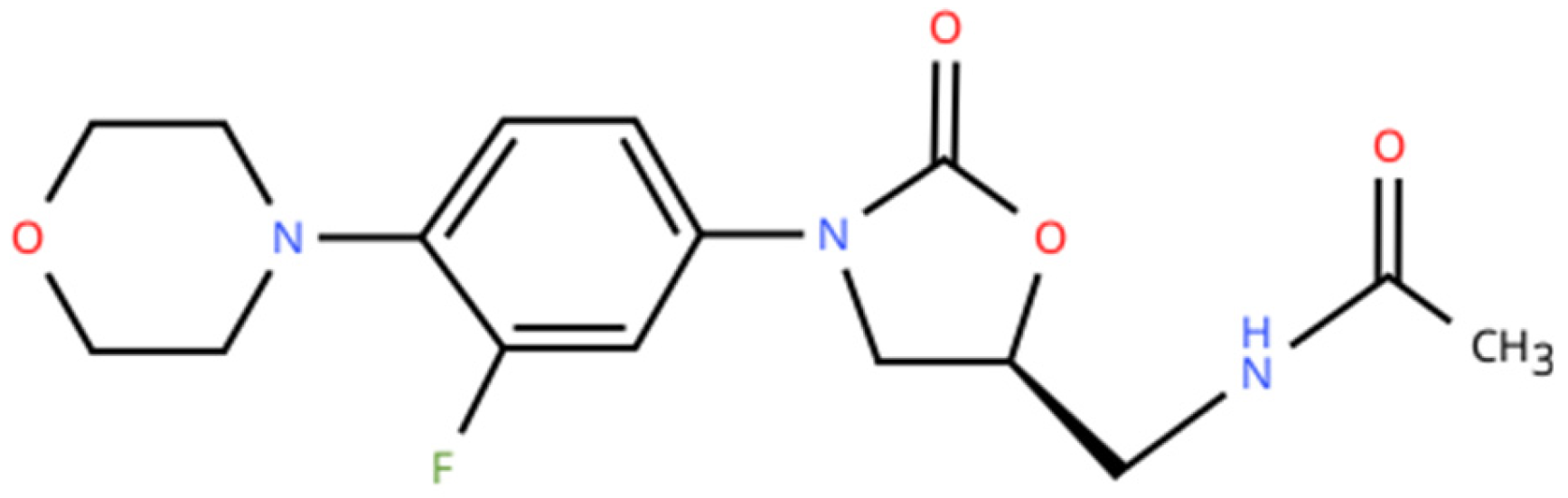
LZ (Figure 11) is the only representative of synthetic antibiotics and antimicrobials from the oxazolidinones class for which determination using CPEs has been reported in the literature in recent years.
The voltametric behavior of LZ was investigated comparatively on PGE and CPE. The linear ranges between peak currents and concentrations and the corresponding LoDs obtained by SWV at PGE in BRB pH 4.00 and at CPE in BRB pH 7.00 were 2.96 × 10⁻⁸–5.93 × 10⁻⁷ mol/L and 2.96 × 10⁻⁷–2.22 × 10⁻⁵ mol/L LZ, and 1.39 × 10⁻⁹ mol/L and 9.25 × 10⁻⁹ mol/L LZ, respectively. The SWV determination of LZ at both investigated electrodes was not influenced by the presence of DA, UA and various inorganic species. The results of the LZ recovery studies from spiked urine were good for both electrodes, i.e., the percentage recovery and RSD values were 104.00% and 1.08% for PGE and 106.80% and 3.82% for CPE, respectively [133].
BCG and MWCNTs were employed to modify a CPE. BCG was incorporated into the carbon paste, while MWCNTs were deposited by drop casting onto the CPE/BGC surface. Due to the synergistic electrocatalytic effect of BCG and MWCNTs, the LZ oxidation peak at the CPE/BCG/MWCNTs was amplified. The increase in the electroactive surface area in the order CPE (0.092 cm2) < CPE/BCG (0.110 cm2) < CPE/BCG/MWCNTs (0.174 cm2) also contributed to the increase in the LZ anodic signal. The developed DPV method (BRB pH 7.00 at CPE/BCG/MWCNTs) presented a linear range of 5.00 × 10⁻⁸–1.45 × 10⁻⁴ mol/L LZ and an LoD of 7.57 × 10⁻⁹ mol/L LZ. The modified sensing platform was applied to LZ quantification in pharmaceutical tablets also containing CEF trihydrate, human urine and saliva [134].
CaO-NPs obtained from recycled eggshells were used to prepare a modified CPE (CPE/CaO-NPs). To further enhance the electrode response towards LZ oxidation, the modified electrode surface was covered by electrodeposition with a poly-D-Al film. The DPV oxidation signal recorded in PB pH 3.00 solutions increased linearly with the analyte concentration from 5.00 × 10⁻⁹ mol/L to 1.00 × 10⁻⁷ mol/L LZ. The LoD of the method was 1.27 × 10⁻⁹ mol/L LZ. The practical applicability of the developed sensor was tested by LZ quantification in pharmaceutical tablets and human serum, with recoveries comprised between 95.70% and 100.20%. The electrode response was stable for about two weeks if the poly-DA film was regenerated at the CPE/CaP-NP surface after polishing [70].
Similarly, a poly-D-Al layer was formed by repetitive CV scans on the surface of a CPE modified by incorporating the electrode material of BNiLi glass. The resulting CPE/BNiLi/poly-D-Al was applied to the DPV quantification of LZ (PB pH 7.00) in the concentration range 9.00 × 10⁻⁸–5.50 × 10⁻⁶ mol/L LZ with an LoD of 2.30 × 10⁻¹⁰ mol/L LZ. After each measurement the electrode was rinsed with distilled water and stored at room temperature. In these conditions the electrode response was stable for over 30 days. CPE/BNiLi/poly-D-Al presented a high selectivity and was applied to LZ analysis in pharmaceuticals and human serum. Moreover, the LZ diffusion coefficient was determined by CA measurements at CPE/BNiLi/poly-D-Al. Its value was 1.02 × 10⁻⁵ cm2/s [68].
Considering the last two modified CPEs [68,70], it could be considered that incorporating appropriate metallic modifiers into the carbon paste matrix and coating the resulting electrode with electrogenerated poly-D-Al film could lead to obtaining sensitive sensors for LZ detection.

3.8. Penicillins

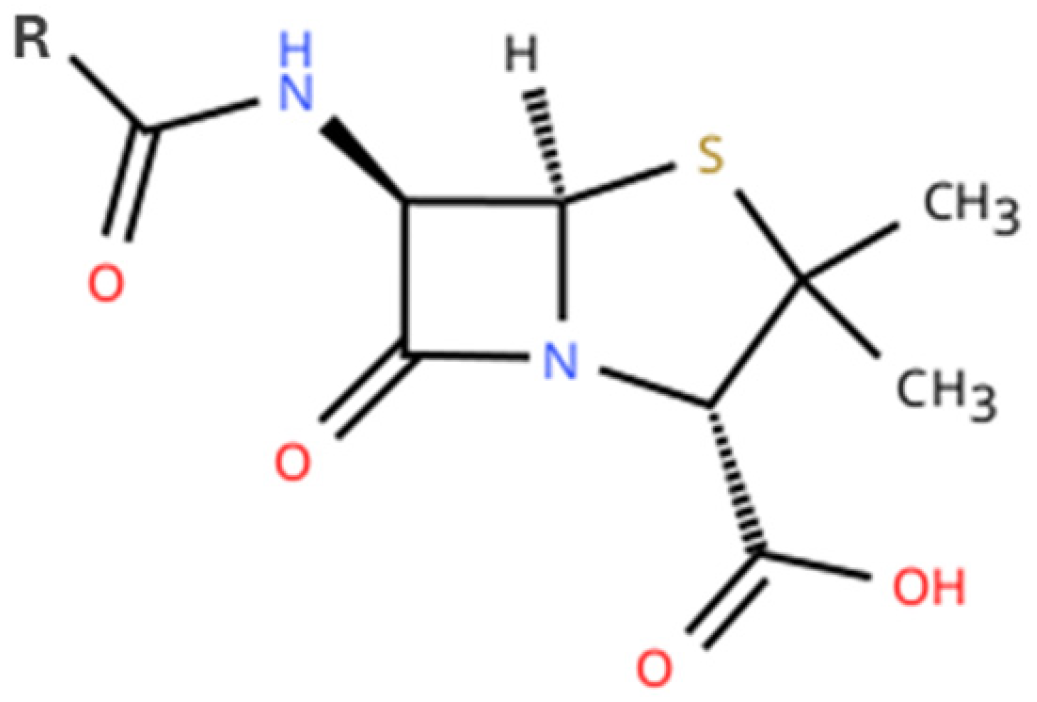
Penicillins (Figure 12) are a class of beta-lactam antibiotics that contain a 6-aminopenicillanic acid nucleus (lactam plus thiazolidine) and other ring side chains. The first antibiotic discovered was penicillin in 1929 by Alexander Fleming, a discovery that marked the introduction of antibiotics into the healthcare system. PNC G, which is obtained naturally, has a narrow spectrum, while some semi-synthetic antibiotics such as ampicillin and AMX have a broader spectrum due to different side chains. Penicillin also acts by inhibiting cell wall synthesis. Subsequently, other antibiotics such as penicillin V, oxacillin, methicillin, ampicillin, AMX, etc., were added to this class [1].
AMX interaction with Cu(II) ions was investigated by SWV at CPE and subsequently a CA method was developed for AMX indirect quantification. The AMX diffusion coefficient was calculated to be 4.82 × 10⁻⁵ cm2/s [135]. The CPE with the longest stability over time (7 months) was obtained by modification with the natural zeolite CL and stored in open air. The CPE/Cu(II)-CL-NP was applied to AMX electroanalysis [136].
The surface of a CPE was coated by CV with a pOT(SDS) film that acted as a substrate for potentiostatic Cu deposition. The obtained sensor exhibited an electrocatalytic effect on AMX oxidation. The electrode response showed good repeatability (RSD 3.50%), reproducibility (RSD 4.00%) and stability for six weeks when stored in 1 mol/L NaOH solution [137].
The thin porous film of p(DPA-co-4, 4′-DADPE) electrogenerated on the CPE surface exerted an electrocatalytic effect on AMX oxidation. The properties of the copolymer layer were improved by immersing the modified electrode in a chloroferrocene solution. It was demonstrated that AMX oxidation at the CPE/ferrocene/p(DPA-co-4, 4′-DADPE) was mediated by ferrocene, while the copolymer constituted a good supporting substrate, but also an internal mediator, indicating that the two modifiers enhance each other’s effects. It is worth noting that the electrode surface was neither deactivated nor contaminated during voltammetric recordings [138].
CTAB drop-casted at a CPE surface reduced the overpotential and the charge transfer resistance, and increased the electroactive surface area in comparison to the bare CPE. The CPE/CTAB was applied for AMX determination in the presence of DA [139].
The ZnO-NP-modified carbon paste used for the construction of an AMX-sensitive electrode was obtained by calcining a mixture of graphite powder and Zn(NO3)2 in a programmable furnace. The AMX diffusion coefficient calculated from CA data using the CPE/ZnO-NPs was 1.13 × 10⁻⁴ cm2/s. UA, ascorbic acid and hydroxychloroquine did not interfere with AMX determination. The electrode response was repeatable and stable over 21 days [140].
An interesting procedure to improve the sensitivity of AMX detection at CPE [141] and at CPE/Zn-HAP [142] was to excite the molecule by irradiation with UV radiation, the excited electrons being more susceptible to oxidation. It was shown that, under these conditions, common metal ions did not influence AMX voltammetric response at the CPE, except for Fe(II), which had a catalytic effect on AMX oxidation and Zn(II) [141]. The interference of these ions was eliminated by selective precipitation with azelaic acid. In the case of CPE/Zn-HAP ibuprofen, PAR, ascorbic acid and metal ions, which could form covalent bonds with HAP, did not affect the AMX anodic signal [142].
A CPE/MIP was described for PNC G determination. The MIP was obtained by phothopolymerization using MAA as functional monomer, PNC G as template and ABIN and EGDMA as initiator and crosslinker, respectively. The template molecule was removed from the polymer matrix by Soxhlet extraction using a methanol–acetic acid mixture. The modified electrode was prepared by incorporating the MIP into the carbon paste. CPE/MIP presented high selectivity, a fact demonstrated by the absence of any interference of the plasma constituents and AMX. The electrode stability was tested in several conditions: at room temperature (16 days), in plasma at freezer temperature (~48 h), in the refrigerator (~24 h) and at room temperature (~5 h) [143].
The modifiers used in CPE preparation and the electrochemical performances of the corresponding electrodes reported in the literature for the determination of antibiotics belonging to the penicillin class are summarized in Table 5.
The lowest LoD for AMX quantification was obtained using CPE/Ni-WO3 [144], but this electrode presented a relatively narrow linearity range, and the reported long-term stability was 7 days. Generally better performances (quite similar LoD, wider linearity range and the longest reported lifetime) were reported for CPE/Cu(II)-CL-NPs [136]. The modified CPEs developed for PNC G determination showed good performance characteristics, but the best ones were reported for CPEs modified with a combination of NPs and IL [147]. It can be concluded that using MIPs or combining metal oxides with ILs or carbon-based nanomaterials (e.g., Gr) could represent future strategies for improving the electrochemical detection performances of PNC G.

3.9. Phenicols

Phenicols are a class of synthetic antibiotics used against a wide range of bacteria, anaerobic microorganisms, and certain viruses. They work by inhibiting protein synthesis in microorganisms. Antibiotics such as thiamphenicol, florfenicol, and CAP belong to this class of antibiotics [37,38].
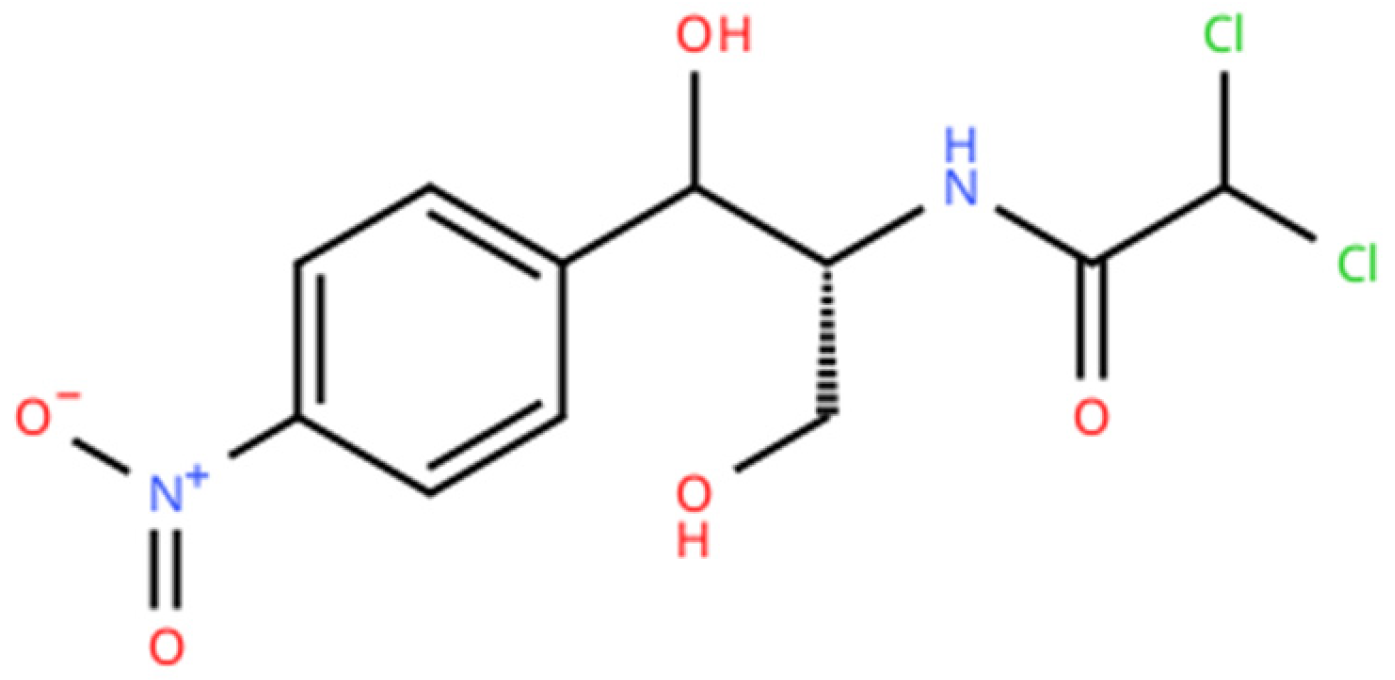
CAP (Figure 13) is the only representative of the phenicol antibiotics reported in the recent literature to be determined at CPEs.
NiO-NP-modified CPE for CAP detection was prepared in two steps: (i) graphite powder was mixed with NiCl2 and calcined and (ii) the obtained product was mixed with kerosene oil to obtain the paste, which was introduced into the electrode cavity. The electrocatalytic effect of NiO-NPs resulted in a decrease in the potential and an increase in the intensity corresponding to CAP reduction peak, leading to an increase in sensitivity by 1.5 orders of magnitude. The applicability of the sensor was demonstrated by determining CAP in spiked tap water and urine samples with recoveries ranging from 98.00% to 106.00%. The reproducibility and repeatability of the electrode, expressed as RSD, were 3.14% and 1.40%, respectively [65]. The same research group applied a similar procedure to prepare CPE/Ag-NPs but replaced NiCl2 with AgNO3. Compared with bare CPE, the modified electrode exhibited a larger electroactive surface area and a higher electrocatalytic activity. The analyte recoveries from biological fluids using this electrode were between 96.6% and 99.01%. The reproducibility and repeatability of the electrode, expressed as RSD, were 3.02% and 2.66%, respectively. After five weeks, the response of the electrode stored in PB solution pH 7.00 decreased to 91% of the initial value, indicating good stability [148]. Comparing these two electrodes, one can conclude that the CPE/NiO-NPs have somewhat better performance characteristics with respect to the linear range and LoD (Table 6) but their reported long-term stability was shorter (only 21 days).
The surface of a CPE was modified with a layer of MoS2/PANI by dropping the modifier solution onto the electrode tip and air drying. The modified electrode achieved improved CAP reduction peaks due to the synergistic electrocatalytic effects of MoS2 and PANI and the composite structure that allowed CAP adsorption and facilitated the electron transfer. The CPE/MoS2/PANI response was stable over two weeks, and the reproducibility of the electrode preparation was acceptable (RSD 4.82%) [149].
The modifiers used in CPE preparation and the electrochemical performances of the corresponding electrodes reported in the literature for chloramphenicol determination are summarized in Table 6.
Table 6. CPE modifiers and their electroanalytical performances for chloramphenicol determination.
CPE ModifierTechnique/
Conditions
Linear Range (mol/L)LoD (mol/L)SampleRef.
NiO2-NPsDPV/PB pH 7.001.00 × 10−7–1.00 × 10−41.80 × 10−8Tap water; urine[65]
Ag-NPsDPV/PB pH 7.005.00 × 10−7–1.00 × 10−46.19 × 10−8Serum, urine[148]
TiO2CV/PBS pH 8.003.10 × 10−6–6.19 × 10⁻⁵-Vannamei shrimp pond water[150]
MoS2/PANIDPV/PB pH 7.001.00 × 10−7–1.00 × 10−46.90 × 10−8 [149]
Fmoc-Pro-Phe-OMDPV/PB pH 7.005.00 × 10−5–4.50 × 10−42.40 × 10−8Milk; honey[119]
SWCNTsDPV/PB pH 7.005.75 × 10−4–9.75 × 10−41.70 × 10−5Milk; honey[62]
FZD 5.00 × 10⁻⁵
5.00 × 10⁻⁵–8.00 × 10−41.70 × 10−5
Simultaneous CAP + FZD
5.00 × 10⁻⁵–7.50 × 10−41.37 × 10−5

3.10. Sulfonamides

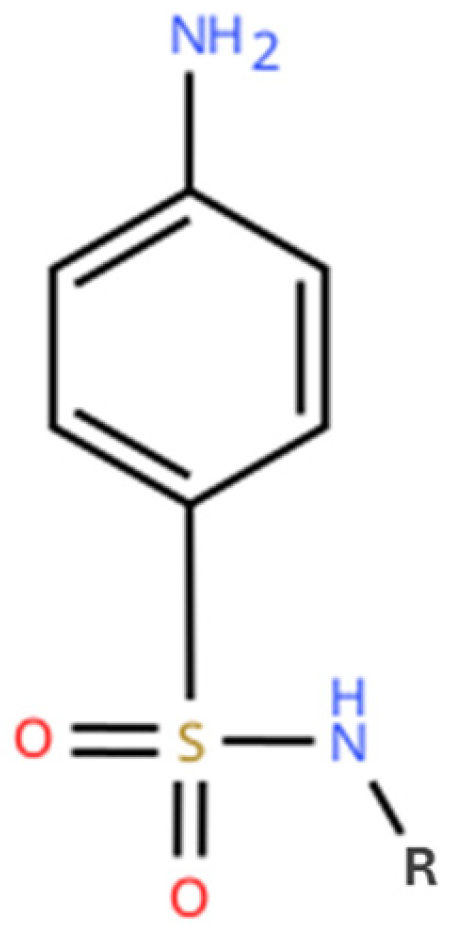
Sulfonamides (Figure 14) are a class of antibiotics that inhibit both Gram-positive and Gram-negative bacteria, as well as the development and multiplication of cancer cells. In certain conditions they can have both bacteriostatic and bactericidal effects. The mechanism of action consists of mimicking a substrate necessary for the cellular metabolism of bacteria. This leads to the attachment of bacterial enzymes to the antibiotic instead of the normal substrate. Sulfonamides act as tetrahydrofolate, which is necessary for the synthesis of folic acid in bacterial cells. Representatives of this class include SDZ, SMX, SAA, etc. [1].
SMX voltammetric analysis was investigated on different carbonaceous materials (CB, AB, graphite, CNP, MWCNTs, GCP)paste electrodes. At all electrodes SMX could be determined by SWV in the concentration range 1.00 × 10⁻⁶–1.00 × 10⁻⁵ mol/L. The LODs varied between 1.20 × 10⁻⁷ mol/L for CNPPE and 1.00 × 10⁻⁶ mol/L for CBPE prepared with liquid paraffin and 4.00 × 10⁻⁷ mol/L for GCPPE and 9.00 × 10⁻⁷ mol/L for CBPE electrodes prepared with solid paraffin [75].
A comparison of CPE and SPCE modified with BCA for SFD electroanalysis revealed better performance characteristics (linear range of three orders of magnitude, LOD of two orders of magnitude lower and better reproducibility) for the SPCE/BCA. These large differences were explained by the fact that the drop casting method employed for the SPCE modification provided more uniform surfaces than the carbon paste preparation procedure. The improvement in the responses of the modified sensors compared to those recorded at bare electrodes was attributed to the ability of BCA to interact and preconcentrate SFD at the electrode surface. It should be emphasized that, despite these differences, CPE/BCA exhibited higher sensitivity than SPCE/BCA due to a higher BCA loading in CPE, thus resulting in more sites available for SFD adsorption, compared to the thin modifier film on the SPCE surface [151].
Data analytics formalism has been used by Ghoreishi et al. [152] to establish the optimal conditions for SP determination at a CPE/MWCNT. By using CCRD—the Box–Wilson formalism—the authors optimized five chemical and instrumental parameters (pH, MWCNT content of the electrode material, scan rate, step potential and modulation amplitude) in order to achieve the optimal DPV electrochemical response for SP detection. Taking into consideration the five experimental parameters mentioned above (variables of the model) a complete scan of their influence on the DPV response would require 5! = 120 experiments for full optimization. If using the Box–Wilson CCRD approach, the number of required experiments significantly decreased to 45. Each variable was first encoded into the model; the importance of the encoding mainly consisted in the stabilization of the numerical estimation by achieving rotatability, thus enabling the sequential optimization. The number of the required experiments followed a fractional factorial design, N = 2f + 2f + r, where f is the number of factors (i.e., the five experimental variables) and r is the replicate number (triplicate, hence r = 3). To optimize the DPV current response, five coded levels (0, ±1, ±α = 2f/4 = 2.38, where α is the distance of the experimental points from the center of the star design of the CCRD procedure) were used. The predicted response of DPV current was fitted with a second-order quadratic equation containing both linear and quadratic terms, as well as interaction between the variable terms. The coded optimized values of each variable were estimated by graphical analysis of the polynomial regression equation of the response surface of the combined effect of the five independent variables on the DPV current of the SP.
CA measurements allowed the calculation of the SP diffusion coefficient (2.03 × 10⁻⁵ cm2/s). The electrode demonstrated good selectivity, with values of SP recovery from spiked human plasma varying from 95.54% to 103.64% [152].
Chemometric analysis (CCD method in the RSM techinque) was also applied to establish the most favorable conditions for the preparation of a NiO-modified CPE and its application to the SSZ quantification [153].
A MWCNT paste electrode modified with TiO2 dispersed on the surface of higly orderer mesoporous silica SBA-15 was applied to the simultaneous determination of SMX and TMP used in pharmaceutical products in a 5:1 ratio. The high surface area of silica combined with the ability of titania to immobilize electroactive analytes and the remarcable properties of MWCNTs (high surface area and conductivity) resulted in amplified anodic peaks of SMX and TMP, separated by about 0.200 V. The response of the sensor stored under ambient conditions changed by 2.00% for SMX and 3.00% for TMP after 2 months and demonstrated good reproducibility and reproductibility (RSD less than 5.30% and 3.50% for both analytes, respectively) [154].
A MWCNT paste electrode modified with Ag-NP-decorated SBA-15 was used for the individual and simultaneous determination of SMX and PAR, based on a difference of over 0.400 V between their peak potentials [18]. The separation between the peak potentials of SDZ and PAR of approximately 0.600 V at CPE/CdO-NPs allowed voltammetric quantification of one in the presence of the other [155].
Modification of the CPE with Aci, Chit, Chit-Aci and Fe3O4/Chit-Aci resulted in amplification of SMTZ oxidation signal by 1.25, 1.37, 1.65 and 3.35 times, respectively, and a shift in the analyte oxidation peak from 0.100 V to 0.085 V. These results were explained by the electroctrocatalytic effects of the modifiers and the variation in the electroactive surface area in the order CPE < CPE/Aci < CPE/Chit < CPE/Chit-Aci < CPE/Fe3O4/Chit-Aci. The value of the diffusion coefficient for SMTZ oxidation at CPE/Fe3O4/Chit-Aci calculated from CA data was 9.40 × 10⁻⁶ cm2/s [156].
The incorporation of IL into the carbon paste matrix improved the material’s anti-fouling properties, conductivity, and, due its catalytic effects, electron transfer kinetics. By modifying the CPE with Fe3O4/ZIF-67/IL, SMX oxidation signal was increased and shifted by 0.250 V towards less positive potentials. The value of SMX diffusion coefficient estimated at this sensor was 6.70 × 10⁻⁶ cm2/s [74].
Modification of a CPE with Ni/GO, 1M3BIB and Ni/GO/1M3BIB increased the SMX oxidation signal by 2.00, 2.76 and 3.60 times, respectively, compared to the bare electrode. These results were attributed to improved conductivity and enhanced surface area of the modified electrodes. Using CA at the composite modified electrode, the diffusion coefficient of SMX was calculated to be 1.75 × 10⁻⁵ cm2/s. The response of the CPE/Ni/GO/1M3BIB presented good reproducibility and repeatability but it decreased by 34.20% after 10 days [157]. The value of SMX diffusion coefficient estimated at CPE/BN–Fe3O4–Pd was 1.60 × 10⁻⁶ cm2/s [158].
The synergistic effects of the two conductive catalysts, IL and ZnO-doped Pd–Pt decorated with rGO, incorporated into the CPE matrix determined the increase in SFF oxidation signal, thus allowing a sensitive determination down to the nmol/L level. In addition, the electrode demonstrated good selectivity, reproducibility (RSD% 3.10%) and stablility for over 2 months [17].
The electrochemical behavior of several sulfonamides (SDZ, SAA, SQX, STZ) was investigated by CV at a CPE/rGO/CeO2. The best defined and highest signal was obtained for SDZ oxidation, so the electrode was used for the determination of this drug [16].
CPE/GO/ZnO was developed for the voltammetric analysis of SDZ and BPA one in the presence of the other, the peak potentials being 0.480 V and 0.900 V for BPA and SDZ, respectively [159].
pDCZ was electrodeposited by CV onto the surface of a CPE. The resulting electrode allowed the simultaneous detection of SDZ and UA, the peak separation of the two analytes being 0.501 V. It was observed that a 10-fold excess of urea, glucose and NH4Cl influenced SDZ oxidation signal [160].
A SMX-MIP composite obtained using 1,2-phenylendiamine and MWCNTs was used to modify a CPE. The modified electrode had a higher surface area, resulting in higher SMX oxidation signal. The 3D cavities of the MIP were resposible for the good selectivity of the CPE/MWCNTs/MIP [161].
DSIPs containing different sulfonamides as templates were prepared by radical polymerization of Na p-SS and self-polymerization of DA and used as a modifier together with MWCNTs/Ag-NPs in the preparation of CPEs sensitive to this class of antibiotics. The DSIPs offer better selectivity than MIPs, allowing quantification of the analyte of interest in the presence of structurally related compounds. Such electrodes were prepared for SMX, SDZ, SMZ and SMTZ, which presented linear response ranges and LODs of 1.00 × 10⁻⁸–1.00 × 10⁻⁵ mol/L and 4.00 × 10⁻⁹ mol/L, respectively. In the case of SMX the sensor response presented good reproducibility (RSD 3.30%), repeatability (RSD less than 4.05%) and stability (after one week of storage at room temperature, the electrode response was 95.83% of the initial value). The sensors were applied for the detection of sulfonamides in food and environmental samples. To obtain better discrimination between the different analogs, PCR analysis was applied [162].
The modifiers used in CPE preparation and the electrochemical performances of the corresponding electrodes reported in the literature for sulfonamide determination are summarized in Table 7.
The results presented in Table 7 show that modified CPEs presented good performances in the detection of sulfonamides, with most of them presenting liniarity ranges between two and even more than four orders of magnitude and low LoDs, most being around 10−8 mol/L. It was surprising that a CPE modified with both MWCNTs and MIP was able to reach only an LoD in the 10−7 mol/L range [161]. The best results were obtained using a CPE modified with a combination of modifiers (metalic NPs, rGO and IL), which allowed SFF detection over a concentration range spanning more than five orders of magnitude with an LoD at the 10−10 mol/L level [17]. Thus, the preparation of modified CPEs exploiting the synergistic effects of metallic and/or metal oxide NPs and IL could be a strategy for the development of more sensitive electrochemical sensors for sulfonamide detection.

3.11. Tetracyclines

Tetracyclines (Figure 15) represent a group of antibiotics widely used due to their broad antimicrobial spectrum, but now many bacteria are able to resist them. They are grouped into three different generations, each generation being defined by the method of production. The first generation is represented by tetracyclines obtained by biosynthesis, such as TC, chlortetracycline, OTC, and demeclocycline. The second generation includes semisynthetic derivatives such as DC, lymecycline, meclocycline, metacycline, minocycline, and rolitetracycline. Tigecycline belongs to the third generation, that of tetracyclines obtained by total synthesis. Tetracyclines function as 30S ribosome inhibitors, acting mainly by blocking the access of aminoacyl-tRNA to the ribosome [1]. They are used in human and veterinary medicine. In addition, they are employed to stimulate the growth of food animals, shrimp and fish and also as chemical preservatives in dairy products [78,166].
The potentiometric CPEs developed for DC quantification were prepared by mixing, in optimized ratios, graphite powder, α-CD and MWCNT ionophores, and TCP or o-NPOE plasticizers. Other plasticizers (DOP, DOS and DBP) were also tested, but the obtained electrodes presented long response times and low sensitivity due to the poor solubility or low distribution of the ion pairs in them. The electrodes based on TCP and o-NPOE showed Nernstian slopes of (58.70 ± 0.20) mV/decade and (58.00 ± 0.60) mV/decade, respectively, a fast response time of 6–7 s, a long lifetime of at least 4 months, and good selectivity towards inorganic and organic compounds and the common excipients existing in pharmaceutical preparations. Prolonged use of the electrodes led to the accumulation of analyte on their surface and affected the determinations. The electroactive surface of the sensor was regenerated by polishing it, which was always done after two or three measurements. The electrodes were applied for direct (by standard addition method) and indirect (titration with NaTPB solution) determination of DC. These electrodes also presented the advantages of being cheap and small [78].
OTC was quantified by DPV at an enzymatic MWCNT-modified CPE in the presence of a fixed concentration of H2O2. The addition of MWCNTs led to a 48% increase in the electroactive surface area of the electrode. The CPE/MWCNTs/HRP presented a good stability when stored at 4 °C. After 18 days, its response was 91.00% of the initial response obtained immediately after preparation. The electrode also presented good selectivity towards folic acid and UA, two of the main interferents existing in serum and urine [167].
As previously described for MNZ, a potentiometric sensor for TC was obtained by depositing a MIP layer on PANI-NPs@PVC-coated CPE/MWCNTs (CPE/MWCNTs/PANI-NPs@PVC@MIP). For comparison, a CPE/MWCNT covered with PANI-NPs@PVC membrane (CPE/MWCNTs/PANI-NPs@PVC) and an unmodified one (CPE/MWCNTs) were tested. Modification of CPE/MWCNTs resulted in shorter response times (5 vs. 10 s) and longer lifetimes (45 days vs. 30 days). The MIP layer improved the slope of the electrode response, which increased from 52.70 mV/decade (CPE/MWCNTs) and 53.90 mV/decade (CPE/MWCNTs/PANI-NPs@PVC) to 57.37 mV/decade (CPE/MWCNTs/PANI-NPs@PVC@MIP) and extended the linear range by an order of magnitude towards lower TC concentrations [123].
The electrochemical determination of TC was comparatively evaluated using two aptasensors based on CPEs. A CPE/OA was prepared by the usual procedure for obtaining CPEs, but using OA as binder, which also constituted the basis for the subsequent anti-TC attachment. By inserting a magnetic bar into a common CPE and modifying the electrode surface by adsorption with Fe3O4-NPs@OA, MBCPE/Fe3O4-NPs@OA was produced. The attraction exerted by the magnetic bar on the iron oxide improved the stability, sensitivity and selectivity of the sensor. Subsequently, each electrode was immersed in NHS/EDC solution to activate the -COOH groups on their surface. Finally, the anti-TC was immobilized on the electrodes surface to obtain the aptasensors CPE/OA/anti-TC and MBCPE/Fe3O4-NPs@OA/anti-TC, respectively. The electrodes were incubated with TC, and the antibiotic–sensor interaction was assessed by CV and EIS recordings in [Fe(CN)6]3−/4− solution.
The two aptasensors presented similar good selectivity towards other drugs, among them being other tetracyclines. Both electrodes also showed similar reproducibility (RSD% about 6.50 for 1.00 × 10⁻¹⁰ mol/L TC) and stability (retained about 90.00% of the initial response after 7 days of deposition in PB solution pH 7.40 at 4 °C) [168].
A magnetic Fe3O4-NPs@MIP-modified CPE was obtained by using acrylic acid as the functional monomer selected by DFT calculations. EGDMA and ABIN were used as the crosslinking agent and radical initiator, respectively. Due to the good interactions between the analyte and the 3D cavities of the MIP, and the low adsorption of TC at the magnetic-NIP-modified and unmodified CPE, the magnetic CPE/Fe3O4-NPs presented higher signals for the same TC concentration, when compared to the other two sensors. CPE/Fe3O4-NPs presented good selectivity in the presence of compounds with similar chemical structures. Recoveries ranging from 91.00% to 103.00% indicated their suitability for TC quantification in various milk samples [166].
Although EIS measurements indicated that CPE modified with natural clay exhibited better conductivity compared to unmodified CPE, the linear range presented by the modified electrode for TC quantification was very narrow. The experimental results also revealed that the clay-modified CPE can simultaneously detect glucose and TC, presenting a higher affinity towards glucose, whose oxidation signal appeared at lower potentials and was more intense [169].
For TC electroanalysis, de Jesus et al. [64] recently reported the preparation of a CPE modified with biosilica obtained from sugarcane ash. CV studies on [Fe(CN)6]3–/4– highlighted that the addition of commercial silica gel or biosilica to the carbon paste resulted in larger electroactive surface areas, improved reaction kinetics and reversibility of electrode processes at the electrode/solution interface. These observations were confirmed by EIS measurements. Biosilica-modified CPE presented higher sensitivity towards TC oxidation in comparison to CPE modified with commercial silica gel or to the unmodified electrode, the obtained quantification limits being 7.50 × 10⁻⁶ mol/L, 9.80 × 10⁻⁶ mol/L and 24.10 × 10⁻⁶ mol/L, respectively. This improvement was explained by a better intercalation of the biosilica particles within the graphite matrix and an increased number of active sites. Glucose, mannose, ascorbic acid, and citric acid, each at 100-fold excess, did not interfere with the determination of TC at the biosilica-modified CPE, while affecting the measurements at the other two electrodes investigated for comparison. It was also shown that the biosilica-modified electrode maintained its sensitivity even after multiple measurements.
The modifiers used in CPE preparation and the electrochemical performances of the corresponding electrodes reported in the literature for tetracycline determination are summarized in Table 8.
Although the tetracycline antibiotic class encompasses a large number of compounds, as can be seen, unfortunately, in the last 10 years, only a few CPEs have been reported for their electrochemical detection, and these were only for a small number of representatives of this group of drugs. Looking at the results from Table 8, it can be considered that a good strategy for obtaining CPEs with remarkable results in terms of both sensitivity and selectivity of tetracycline determination is to modify them with aptamers.

3.12. Miscellaneous

A potentiometric CPE based on the ion pair GNT-RNK was developed for the analysis of the aminoglycoside GNT. The sensor contained o-NPOE as plasticizer, MWCNTs, and NaTPB or KTPB to decrease the LoD. The sensors presented Nernstian response (29.60 ± 0.30 mV/decade and 29.10 ± 0.30 mV/decade for the NaTPB- and KTPB-based sensor, respectively), high selectivity, response times of 6.5 s and a lifetime of 48 days and 45 days for the NaTPB- and KTPB-based sensor, respectively. The electrodes were applied for direct determinations by the standard addition method as well as for potentiometric titrations [170].
A CPE incorporating HP-β-CD as an ionophore in its matrix responded to RIF concentration with a slope of 59.20 mV/decade, having a response time of 4s. The electrode response presented a good stability and reproducibility (RSD 1.72%). The low values of the selectivity coefficients evaluated for several potentially interfering inorganic and organic species indicated that the sensor was able to correctly determine RIF in various samples. The electrode was used for both direct and indirect determinations [171].
CPE modification with Zn-Al LDH improved CLN oxidation signal owing to: (i) the strong CLN adsorption at the electrode surface, determined by the regular layered arrangement of LDH, which favored the interaction with CLN via hydrogen bonding and electrostatic interactions, and (ii) the increased electroactive surface area (2.25 cm2 for bare CPE and 9.30 cm2 for CPE/Zn-Al LDH) due to the higher porosity and roughness. The greenness assessment indicated that the electrode preparation was environmentally friendly and sustainable, but the applicability of the sensor may be limited by: (i) the optimum pH (3.60), which may differ in real samples, (ii) the linear range that may not cover the lower concentrations existing in environment samples, and (iii) the inability of the electrode to detect CLN metabolites [59].
A CPE/GO/MOF enabled the sensitive determination of DOX, an anthracycline antibiotic used in chemotherapy, in the presence of the antitumoral drug DCB due to a separation of 0.335 V between their anodic signals. CA measurements provide for the DOX diffusion coefficient a value of 5.00 × 10⁻⁶ cm2/s. The sensor presented good reproducibility (RSD 3.1%) and selectivity [56].
The simultaneous determination of DOX and AVN in the presence of UA and ascorbic acid was possible at a CPE modified with anatase-phase TiO2 and MWCNTs. The catalytic effect of TiO2 and the high adsorption capacity of the CNTs led to a good separation between the oxidation peak potentials (0.600 V) of the two drugs co-administered to cancer patients. The developed method was precise (RSD 2.33%) and allowed the drugs’ quantification with recoveries in the range 98.17–100.76%. Furthermore, the method was applied to study AVN pharmacokinetics in the presence of DOX in rabbit plasma, indicating the need for monitoring and adjustment of the AVN dose in patients treated with DOX [172].
A magnetic molecularly imprinted modified CPE was developed for TMP electroanalysis. The magnetic nanocomposite Fe3O4@MWCNT was obtained by the co-precipitation method and subsequently used as carrier to prepare MIP@Fe3O4@MWCNTs by surface-imprinting using 2-acetamide acrylic acid as monomer and TMP as template. The 3D cavities of the polymeric structure were created by Soxhlet extraction of the template. The carbon paste was prepared by mixing graphite powder, Fe3O4@MWCNTs and PO and used to prepare the CPE, following the usual procedure. In the next step, rGO was electrodeposited on the electrode surface and finally, MIP@Fe3O4@MWCNT was dispersed in a Chit solution and drop-casted at the CPE/Fe3O4@MWCNTs/rGo surface. The electrode presented good reproducibility (RSD 6.20%) and stability over 2 months when stored in water at 4 °C. Some sulfonamide antibiotics and other possible inorganic and organic interferents did not disturb TMP DPV signal [173].
CPE/DES/Pt-SWCNT was prepared by mixing graphite powder and Pt-SWCNTS with PO:DES solution as binder. DES consisted of 4-methoxybenzyl alcohol and choline chloride in a molar ratio of 4:1. The presence of DES and Pt-SWCNTs in the electrode matrix reduced EPR (a DOX derivative) oxidation peak potential and increased the peak currents by 2.77 times compared to bare CPE. These observations were attributed to an increased electroactive surface area of the electrode, the high conductivity of the electrode material, and to the ability of the modifiers to facilitate electron transfer. The EPR diffusion coefficient calculated from CA data was found to be 3.80 × 10⁻⁶ cm2/s. DPV at CPE/DES/Pt-SWCNTs allowed the EPR determination in the presence of the anticancer drug TP, due to a separation of 0.350 mV between the peak potentials of the two analytes [174].
ds-DNA was immobilized at the surface of a CPE/C/La3+/CuO by immersing the electrode into DNA in ABS pH 4.8 and applying a potential of 0.500 V for 230 s. The biosensor CPE/C/La3+/CuO/DNA was applied to INZ determination based on the decrease in guanine oxidation signal in the presence of the analyte. The biosensor presented good selectivity, repeatability (RSD 2.30%), reproducibility (RSD 3.30%) and stability (30 days) [175]. A CPE/2D-Eu(III)/MoS2/ds-DNA working on the same principle was designed for RIF determination [176].
The modifiers used in CPE preparation and the electrochemical performances of the corresponding electrodes reported in the literature for the determination of various antibiotics are presented in Table 9.

4. Conclusions

Literature research has shown that bare or modified CPEs represent a good option for electroanalysis of antibiotics and more. Therefore, this review is a comprehensive overview of the different types of CPEs with a focus on their preparation/modification, performance characteristics, and application in the electrochemical determination of grouped antibiotics. Regarding the electrometric techniques in which CPEs were used, voltammetric methods were mainly applied for the quantification of antibiotics, while EIS, CA and CC were exploited for the characterization of the electrode surfaces and reaction mechanisms, respectively. Potentiometric CPEs were also reported for antibiotic determination.
As already mentioned, CPEs present certain electrochemical and economic advantages. Specifically, for antibiotic detection, surface- or bulk-modified CPEs allowed their quantification in concentration ranges spanning one to seven orders of magnitude, most of them being 2–3 decades, reaching in most cases an LoD at the 10−8–10−7 mol/L level, but there were cases where it was lowered to the level of 10−12 mol/L level, while using an aptasensor even allowed for an LoD of 3.80 × 10⁻¹⁵ mol/L [167].
It should be noted that there are a multitude of modifiers and their combinations that have been used in the construction of CPEs for the analysis of antibiotics and more, and, of course, these can be further diversified to improve their performance. Unfortunately, it is not possible to predict exactly the behavior of these electrodes because it depends on multiple factors such as the ratio, quality and properties of the paste components, the resulting effect of the characteristics of the individual modifiers, the specific working conditions, and last but not least the analyte.
It is noteworthy that there are several studies that have described the simultaneous determination of an antibiotic and another compound of biological importance. Most reported CPEs presented good selectivity towards the antibiotic of interest but rarely were structurally related compounds or metabolites tested as possible interferents.
The lifetime of CPEs ranged from 5 days to 7 months [136], with most electrodes having stable response for periods between 14 days and 2 months.
Future research should be oriented towards addressing the following aspects of CPEs: (i) increasing their lifetime, by adjusting the ratio of graphite and modifier:binder and finding new types of pasting agents; (ii) improving their selectivity by combining different (nano)materials that manifest specific affinity for the analyte, e.g., MIP or DSIP, or that, through their synergistic effects, increase the separation of peak potentials of various possible coexisting species, such as the drug metabolites; (iii) applying green chemistry principles for the preparation of modifiers and corresponding CPEs; (iv) miniaturizing and integrating them into portable devices for in situ analysis

Author Contributions

Conceptualization, I.G.D. and H.N.; formal analysis, D.P. and I.G.D.; writing—original draft preparation, D.P. and I.G.D.; writing—review and editing, M.-C.C., E.-E.I. and H.N. All authors have read and agreed to the published version of the manuscript.

Funding

This research received no external funding.

Institutional Review Board Statement

Not applicable.

Informed Consent Statement

Not applicable.

Data Availability Statement

Being a review, no new data were created.

Conflicts of Interest

The authors declare no conflicts of interest.

Abbreviations

The following abbreviations are used in this manuscript:
1B3MITFB1-buthyl-3-methylimidazoliumtetrafluoroborate
1M3BIB1-methyl-3-butylimidazolium bromide
α-CD; β-CDα-cyclodextrin; β-cyclodextrin
ABAcetylene black
ABIN2,2 azobisisobutyronitrile
ABSAcetate buffer solution
Aci3-acetylindole
AdSDPVAdsorptive stripping differential pulse voltammetry
AdS(A)SWVAdsorptive stripping (anodic) square-wave voltammetry
AMPS2-acrylamido-2-methyl-1-propanesulfonic acid
AMXAmoxicillin
ANSA6-Aminonaphthalene-2-sulphonic acid
ANCCsAlloy nanocoral clusters
Au–Ag- ANCCsGold–silver alloy nanocoral clusters
AVNAvanafil
AZMAzithromycin
BCAActivated biochar
BCGBromocresol green
BDDEBoron-doped diamond electrode
BNBoron nitride
BPABisphenol A
BPNCBenzylpenicillin
BRBBritton–Robinson buffer
BZQBenzoquinone
CAChronoamperometry
CAPChloramphenicol
CBCarbon black
CBSCitrate buffer solution
CCChronocoulometry
CCDCentral composite design
CCRDCentral composite rotatable design
CEFCefixime
CFPCefepime
CFTCefotaxime
CFXCeftizoxime
CFZCeftazidime
ChClCholine chloride
ChitChitosan
CIPCiprofloxacin
CLClinoptilolite
CLAClarithromycin
CLNClindamycin
CNPCarbon nanopower
CNT(s)Carbon nanotube(s)
COCastor oil
CPE(s)Carbon paste electrode(s)
CPXCephalexin
CQDsCarbon quantum dots
CTABCetyltrimethylammonium bromide
CTXCeftriaxone
CuBTC/FeBTCCopper-1,3,5-benzene tricarboxylate/Iron-1,3,5-benzene tricarboxylate
CVCyclic voltammetry
D-AlD-alanine
DADopamine
DANDanofloxacin
DCDoxycycline
DCBDacarbazine
DESDeep eutectic solvent
DFTDensity functional theory
DIFDifloxacin
DMTDimetridazole
DOPDioctyl phthalate
DOXDoxorubicin
DPVDifferential pulse voltammetry
DSIP(s)Double-system imprinted polymer(s)
EaccAccumulation potential
EDCN’-ethylcarbo-diimide hydrochloride
EGDMAEthylene–glycol-dimethacrylate
EISElectrochemical impedance spectroscopy
[EMIM][Tf2N]1-ethyl-3-methylimidazolium bis(trifluoromethanesulfonyl)imide
ENREnrofloxacin
EPErtapenem
EPREpirubicin
erGOElectrochemically reduced graphene oxide
ERTErythromycin
f-MWCNTsFunctionalized multiwalled carbon nanotube
FGFlake graphite
Fmoc-Pro-Phe-OMFluorenylmethyloxycarbonyl-protected proline-phenylalanine methyl ester
FTDFuraltaldone
FTSWVFourier transform square-wave voltammetry
FZDFurazolidone
g-C3N4Graphitic carbon nitride
GCPGlassy carbon powder
GNSGraphene nanosheets
GNTGentamycin
GrGraphene
GTXGatifloxacin
HAPHydroxyapatite
HimImidazole
HMIM PF61-hexyl-3 methylimidazolium hexafluorophosphate
HP-β-CD2-hydroxypropyl β-cyclodextrin
HRPHorse radish peroxidase
ILIonic liquid
INZIsoniazid
LANLansoprazole
LDHLayered double hydroxide
LoDLimit of detection
LoQLimit of quantification
LSVLinear sweep voltammetry
LFLevofloxacin
LZLinezolid
MAAMethacrylic acid
MBMagnetic bar
MIPMolecularly imprinted polymer
MNZMetronidazole
MPMeropenem
MOF(s)Metal–organic framework(s)
MOXIMoxifloxacin
Mt-NH23(2-aminoethyl)amino]propyltrimethoxysilane functionalized montmorillonite clay
MWCTNsMultiwalled carbon nanotube
NaMMSodium montmorillonite
Na p-SSSodium p-styrenesulfonate
NDXNadifloxacin
NFXNorfloxacin
NHSN-hydroxy succinimide
NFTNitrofurantoin
NFZNitrofurazone
Natural phosphate
NP(s)Nanoparticle(s)
NSNanostructure
o-NPOEo-Nitrophenyloctylether
OAOleic acid
ODZOrnidazole
OFXOfloxacin
OTCOxytetracycline
oxMWCNTsOxidized multiwalled carbon nanotubes
PANIPolyaniline
PARParacetamol
PBPhosphate buffer
PBAPrussian blue analog
PBSPhosphate-buffered saline
PEOPolyethylene oxide
PGEPencil graphite electrode
pDCZPoly(diethylcarbamazine)
PDL-PhalPoly(DL-phenylalanine)
p(DPA-co-4, 4′-DADPE)Poly(diphenylamine-co-4,4′-diaminodiphenyl ether)
PFXPefloxacin
pGNPoly(glycine)
pL-MethPoly(L-methionine)
pL-SerPoly(L-serine)
pMUXPoly(murexide)
PNC GPenicillin G
POParaffin oil
POMPolyoxometalate
pOTPoly(o-toluidine)
pPyPolypyrrole
prGOPartially reduced graphene oxide
PTPhosphotungstate
PVCPolyvinyl chloride
PWParaffin wax
QD(s)Quantum dot(s)
rGOReduced graphene oxide
rGOAC/rGOCDReduced GO obtained under applied alternating current/direct current flow
RIFRifampicin
RKTReineckate
ROXRoxithromycin
RSMResponse surface methodology
RSDRelative standard deviation
SAASulfacetamide
SDDSulfadimidine
SDMSulfadimethoxine
SDSSodium dodecyl sulfate
SDZSulfadiazine
SFDSulfanilamide
SFFSulfafurazole
SMTSulfamethiazole
SMTZSulfamethazine
SMXSulfamethoxazole
SMZSulfamerazine
SOSilicon oil
SPSulfapyridine
SPCEScreen-printed carbon electrode
SQXSulfaquinoxaline
SSSilsesquioxane
ss-DNADouble-stranded deoxyribonucleic acid
SSZSulfasalazine
St-TFPMBSodium tetrakis (trifluoromethyl)phenyl borate
STZSulfathiazole
SWCNTsSingle-walled carbon nanotubes
SWVSquare-wave voltammetry
taccAccumulation time
TCTetracycline
TCAThiocyanuric acid
TCPTricresylphosphate
TMPTrimethoprim
TNZTinidazole
TPTopotecan
TPBTetraphenylborate
TpClPBK tetrakis (p-chlorophenyl) borate
TRThreonine
UAUric acid

References

  1. Etebu, E.; Arikekpar, I. Antibiotics: Classification and Mechanisms of Action with Emphasis on Molecular Perspectives. Int. J. Appl. Microbiol. Biotechnol. Res. 2016, 4, 90–101. [Google Scholar]
  2. Wang, Q.; Xue, Q.; Chen, T.; Li, J.; Liu, Y.; Shan, X.; Liu, F.; Jia, J. Recent Advances in Electrochemical Sensors for Antibiotics and their Applications. Chin. Chem. Lett. 2021, 32, 609–619. [Google Scholar] [CrossRef]
  3. Uddin, T.M.; Chakraborty, A.J.; Khusro, A.; Zidan, B.M.R.M.; Mitra, S.; Emran, T.B.; Dhama, K.; Ripon, K.H.; Gajdács, M.; Sahibzada, M.U.K.; et al. Antibiotic Resistance in Microbes: History, Mechanisms, Therapeutic Strategies and Future Prospects. J. Infect. Public Health 2021, 14, 1750–1766. [Google Scholar] [CrossRef] [PubMed]
  4. Dehdashtian, S.; Behbahani, M.; Noghrehabadi, A. Fabrication of a Novel, Sensitive and Selective Electrochemical Sensor for Antibiotic Cefotaxime Based on Sodium Montmorillonite Nanoclay/Electroreduced Graphene Oxide Composite Modified Carbon Paste Electrode. J. Electroanal. Chem. 2017, 801, 450–458. [Google Scholar] [CrossRef]
  5. Khodari, M.; Hassan, N.Z.; Mohamed, A.E.; Rashed, M.N. Electrochemical Sensor Based on a Poly-Murexide Modified Carbon Paste Electrode for Determination of Fluoroquinolone Antibiotic Ciprofloxacin. Aswan Univ. J. Environ. Stud. 2022, 3, 401–417. [Google Scholar] [CrossRef]
  6. Soleymanpour, A.; Nadimi, N. Construction of a Novel Carbon Paste Clarithromycin Sensor for Low Level Concentration Measurement, Applications to Pharmaceutical and Biological Analysis. Electroanalysis 2015, 27, 2731–2737. [Google Scholar] [CrossRef]
  7. Bhimaraya, K.; Manjunatha, J.G.; Moulya, K.P.; Tighezza, A.M.; Albaqami, M.D.; Sillanpää, M. Detection of Levofloxacin Using a Simple and Green Electrochemically Polymerized Glycine Layered Carbon Paste Electrode. Chemosensors 2023, 11, 191. [Google Scholar] [CrossRef]
  8. Elrouby, M.; Ameer, D.S.; Mohamed, A.E.; Montaser, A.A. Electrochemically Synthesized Nanostructured Gold-Bismuth as Novel Sensor for Efficient Determination of Cefotaxime in Aqueous Media. Microchem. J. 2024, 205, 111266. [Google Scholar] [CrossRef]
  9. Abedi-Firoozjah, R.; Alizadeh-Sani, M.; Zare, L.; Rostami, O.; Azimi Salim, S.A.; Assadpour, E.; Azizi-Lalabadi, M.; Zhang, F.; Lin, X.; Jafari, S.M. State-of-the-Art Nanosensors and Kits for the Detection of Antibiotic Residues in Milk and Dairy Products. Adv. Colloid Interface Sci. 2024, 328, 103164. [Google Scholar] [CrossRef]
  10. Mohammed, E.A.H.; Kovács, B.; Kuunya, R.; Mustafa, E.O.A.; Abbo, A.S.H.; Pál, K. Antibiotic Resistance in Aquaculture: Challenges, Trends Analysis, and Alternative Approaches. Antibiotics 2025, 14, 598. [Google Scholar] [CrossRef]
  11. Dehdashtian, S.; Abdipur, Z. Fabrication of an Ultrasensitive Electrochemical Sensor Based on a Mesoporous Silica Material Functionalized by Copper Ion (SBA-15-Cu(II)) Modified Carbon Paste Electrode for Determination of Antibiotic Ceftazidime and its Application in Pharmaceutical and Biological Samples. J. Iran. Chem. Soc. 2017, 14, 1699–1709. [Google Scholar] [CrossRef]
  12. Öztürk, G.; Kul, D. Comparison of Carbon Paste and Boron-Doped Diamond Electrodes for Determination of Cefepime in Pharmaceutical Dosage Forms and Biological Samples. Diam. Relat. Mater. 2023, 131, 109532. [Google Scholar] [CrossRef]
  13. Reyhane, R.; Sabeti, B.; Chekin, F. Electrochemical Sensor Based on Nitrogen Doped Porous Reduced Graphene Oxide to Detection of Ciprofloxacin in Pharmaceutical Samples. Russ. J. Electrochem. 2021, 57, 654–662. [Google Scholar] [CrossRef]
  14. Elrouby, M.; Ameer, D.S.; Mohamed, A.E.; Montaser, A.A. Development of a Highly Sensitive Gold and Bismuth Nanoparticle-Modified Amperometric Sensor for Ceftriaxone Detection: Experimental and Density Functional Theory Insights. Electroanalysis 2025, 37, e12042. [Google Scholar] [CrossRef]
  15. Abdel-Haleem, F.M.; Mahmoud, S.; Abdel-Ghani, N.E.T.; El Nashar, R.M.; Bechelany, M.; Barhoum, A. Polyvinyl Chloride Modified Carbon Paste Electrodes for Sensitive Determination of Levofloxacin Drug in Serum, Urine, and Pharmaceutical Formulations. Sensors 2021, 21, 3150. [Google Scholar] [CrossRef]
  16. Ebrahimi, M.; Nikoofard, H.; Faridbod, F.; Dezfuli, A.S.; Beigizadeh, H.; Norouzi, P. A Ceria NPs Decorated Graphene Nano-composite Sensor for Sulfadiazine Determination in Pharmaceutical Formulation. J. Mater. Sci. Mater. Electron. 2017, 28, 16704–16712. [Google Scholar] [CrossRef]
  17. Nejad, M.K.; Zamani, H.A. Development of a Graphene-Based Bimetallic Catalyst for Enhanced Voltammetric Detection of Sulfafurazole Antimicrobial Agents. Carbon Lett. 2025, 35, 1667–1675. [Google Scholar] [CrossRef]
  18. Tkachenko, O.S.; Souza, L.V.; Deon, M.; Becker, E.M.; de Menezes, E.W.; Arenas, L.T.; Benvenutti, V.E. AgNP-decorated SBA-15 for MWCNT Paste Modified Electrode: A Sensor for Simultaneous Voltammetric Determination of Paracetamol and Sulfamethoxazole. Electroanalysis 2021, 33, 29–37. [Google Scholar] [CrossRef]
  19. Arsène, M.M.J.; Davares, A.K.L.; Viktorovna, P.I.; Andreevna, S.L.; Sarra, S.; Khelifi, I.; Sergueïevna, D.M. The Public Health Issue of Antibiotic Residues in Food and Feed: Causes, Consequences, and Potential Solutions. Vet. World 2022, 15, 662–671. [Google Scholar] [CrossRef]
  20. Bitew, Z.; Amare, M. Recent Reports on Electrochemical Determination of Selected Antibiotics in Pharmaceutical Formulations: A Mini Review. Electrochem. Commun. 2020, 121, 106863. [Google Scholar] [CrossRef]
  21. Howlader, M.M.R.; Ting, W.-T.; Ali, M.Y. Electrochemical Sensors for Chloramphenicol: Advances in Food Safety and Environmental Monitoring. Pharmaceuticals 2025, 18, 1257. [Google Scholar] [CrossRef] [PubMed]
  22. Mulaudji, K.P.; Mokwebo, K.V.; De Bruin, F.Q.; Pokpas, K.; Ross, N. Advancement in Electrochemical Sensing of Chloramphenicol in Varying Matrixes: A Review. Talanta Open 2025, 12, 100561. [Google Scholar] [CrossRef]
  23. Azriouil, M.; Matrouf, M.; Ettadili, F.E.; Laghrib, F.; Farahi, A.; Saqrane, S.; Bakasse, M.; Lahrich, S.; El Mhammedi, M.A. Recent Trends on Electrochemical Determination of Antibiotic Ciprofloxacin in Biological Fluids, Pharmaceutical Formulations, Environmental Resources and Foodstuffs: Direct and Indirect Approaches. Food Chem. Toxicol. 2022, 168, 113378. [Google Scholar] [CrossRef] [PubMed]
  24. Kini, V.; Sreelakshmi, C.S.; Mondal, D.; Sundaraba, N.; Nag, P.; Sadani, K. Recent Advances in Electrochemical Eensing and Remediation Technologies for Ciprofloxacin. Environ. Sci. Pollut. Res. 2025, 32, 2210–2237. [Google Scholar] [CrossRef] [PubMed]
  25. Aslam, M.; Ali, S.; Ahmad, K.; Danishuddin. Progress in Electrode Materials for the Detection of Nitrofurazone and Nitrofurantoin. Biosensors 2025, 15, 482. [Google Scholar] [CrossRef]
  26. Dezhakam, E.; Tavakkol, M.; Kafili, T.; Nozohouri, E.; Naseri, A.; Khalilzadeh, B.; Rahbarghazi, R. Electrochemical and Optical (Bio)sensors for Analysis of Antibiotic Residuals. Food Chem. 2024, 439, 138145. [Google Scholar] [CrossRef]
  27. Yáñez-Sedeño, P.; Pedrero, M.; Campuzano, S.; Pingarrón, J.M. Electrocatalytic (Bio)platforms for the Determination of Tetracyclines. J. Solid State Electrochem. 2021, 25, 3–13. [Google Scholar] [CrossRef]
  28. Sulaiman, J.M.A.; Altalbawy, F.M.A.; Kumar, A.; Kanjariya, P.; Rekha, M.M.; Siva Prasad, G.V.; Singh, D.; Albadr, R.J.; Saydaxmetova, S.; Bhakuni, P.N.; et al. Recent Advances in Carbon Nanomaterials: Removal, Photodegradation and Electrochemical Detection of Tetracycline, A Review. Inorg. Chem. Commun. 2025, 174, 113897. [Google Scholar] [CrossRef]
  29. Mello, G.A.B.; Benjamin, S.R.; de Lima, F.; Dutra, R.F. Recent Advances in Electrochemical Sensors for the Detection of Anti-Inflammatory and Antibiotic Drugs: A Comprehensive Review. Biosensors 2025, 15, 676. [Google Scholar] [CrossRef]
  30. Jiwanti, P.K.; Wardhana, B.Y.; Sutanto, L.G.; Chanif, M.F. A Review on Carbon-based Electrodes for Electrochemical Sensor of Quinolone Antibiotics. ChemistrySelect 2022, 7, e202103997. [Google Scholar] [CrossRef]
  31. Iresemowo, O.A.; Nyamori, V.O.; Olatunji, O.S. Electrochemical Sensors: A Review of Group 10 and 11 Metal Composites for the Detection of β-Lactam in Aqueous Media. Sens. Actuators Rep. 2025, 10, 100403. [Google Scholar] [CrossRef]
  32. Stoian, I.-A.; Iacob, B.-C.; Bodoki, E. Electrochemical Sensors for the Detection of Macrolide Antibiotics: A Review. Microchem. J. 2025, 218, 115373. [Google Scholar] [CrossRef]
  33. Zheng, A.L.T.; Teo, E.; Yiu, P.; Boonyuen, S.; Chung, E.L.T.; Andou, Y. Recent Advances in Ultrasensitive Electrochemical Sensors and Biosensors for Determination of Antibiotics in Environment Samples. Clean Technol. Environ. Policy 2025, 27, 549−576. [Google Scholar] [CrossRef]
  34. Lochab, A.; Baxi, S.; Tiwari, P.; Bardiya, S.; Saxena, R. Electrochemical Sensors for the Determination of Antipyretic and Antibiotic Drugs in Environmental and Biological Samples. Microchem. J. 2024, 199, 109923. [Google Scholar] [CrossRef]
  35. Mishra, S.; Singh, S.P.; Kumar, P.; Khan, M.A.; Singh, S. Emerging Electrochemical Portable Methodologies on Carbon-Based Electrocatalyst for the Determination of Pharmaceutical and Pest Control Pollutants: State of the Art. J. Environ. Chem. Eng. 2023, 11, 109023. [Google Scholar] [CrossRef]
  36. Qureshi, A.; Shah, A.; Iftikhar, F.J.; Haleem, A.; Ziac, M.A. Electrochemical Analysis of Anticancer and Antibiotic Drugs in Water and Biological Specimens. RSC Adv. 2024, 14, 36633–36655. [Google Scholar] [CrossRef]
  37. Nuran Gokdere, N.; Solangi, A.R.; Palabiyik, I.M. The Use of Electrochemical Aptasensors for the Detection of Antibiotic Residues in Foods. Electrochim. Acta 2025, 536, 146729. [Google Scholar] [CrossRef]
  38. de Faria, L.V.; Lisboa, T.P.; da Silva Campos, N.; Alves, G.F.; Matos, M.A.C.; Matos, R.C.; Munoz, R.A.A. Electrochemical Methods for the Determination of Antibiotic Residues in Milk: A Critical Review. Anal. Chim. Acta 2021, 1173, 338569. [Google Scholar] [CrossRef]
  39. Ribeiro, B.V.; Ferreira, L.F.; Franco, D.L. Advances in Biosensor Development for the Determination of Antibiotics in Cow’s Milk—A Review. Talanta Open 2022, 6, 100145. [Google Scholar] [CrossRef]
  40. Fix, G.; Negreli, R.S.; Coldibeli, B.; Sartori, E.R. Electrochemical Reaction Mechanism of Antibiotics Explored in Working Electrodes Modified with Nanomaterials. Top. Catal. 2025, 69, 390–421. [Google Scholar] [CrossRef]
  41. Megale, J.D.; De Souza, D. New Approaches in Antibiotics Detection: The Use of Square Wave Voltammetry. J. Pharm. Biomed. Anal. 2023, 234, 115526. [Google Scholar] [CrossRef] [PubMed]
  42. Guliy, O.I.; Dykman, L.A. Prospects for the Use of Nanozyme-Based Electrochemical and Colorimetric Sensors for Antibiotic Detection. Talanta 2025, 286, 127524. [Google Scholar] [CrossRef] [PubMed]
  43. Alsaiari, N.S.; Katubi, K.M.M.; Alzahrani, F.M.; Siddeeg, S.M.; Tahoon, M.A. The Application of Nanomaterials for the Electrochemical Detection of Antibiotics: A Review. Micromachines 2021, 12, 308. [Google Scholar] [CrossRef] [PubMed]
  44. Sarakatsanou, C.; Karastogianni, S.; Girousi, S. Promising Electrode Surfaces, Modified with Nanoparticles, in the Sensitive and Selective Electroanalytical Determination of Antibiotics: A Review. Appl. Sci. 2023, 13, 5391. [Google Scholar] [CrossRef]
  45. Radic, J.; Zemljic, L.F.; Persa, S.; Plohl, O. Review of Magnetic Nanomaterials for the Electrochemical Sensing of Antibiotics. ACS Appl. Nano Mater. 2025, 8, 21639–21668. [Google Scholar] [CrossRef]
  46. Yin, M.; Zhang, L.; Wei, X.; Sun, J.; Xu, D. Detection of Antibiotics by Electrochemical Sensors Based on Metal-Organic Frameworks and their Derived Materials. Microchem. J. 2022, 183, 107946. [Google Scholar] [CrossRef]
  47. Kumari, A.; Yadav, N.; Tyagi, D.; Mishra, V. Precision at the Nanoscale: Recent Advances in Nanomaterial-Based Biosensors for Antibiotic Detection. Microchem. J. 2025, 217, 114921. [Google Scholar] [CrossRef]
  48. Mammen, R.B.; Hang, D.-R.; Liang, C.-T.; Chou, M.C.M. Engineering Low-Dimensional Carbon Nanomaterials for Electrochemical Detection of Antibiotics in Environmental and Clinical Matrices. J. Taiwan Inst. Chem. Eng. 2025, 2025, 106360. [Google Scholar] [CrossRef]
  49. Afsharara, H.; Asadian, E.; Mostafiz, B.; Banan, K.; Bigdeli, S.A.; Hatamabadi, D.; Keshavarz, A.; Hussain, C.M.; Keçili, R.; Ghorbani-Bidkorpeh, F. Molecularly Imprinted Polymer-Modified Carbon Paste Electrodes (MIP-CPE): A Review on Sensitive Electrochemical Sensors for Pharmaceutical Determinations. TrAC Trends Anal. Chem. 2023, 160, 116949. [Google Scholar] [CrossRef]
  50. Metelka, R.; Mikysek, M.; Švancara, I.; Sýs, M. Recent Achievements in Electroanalysis of Pharmaceuticals at Carbon Paste Electrodes and Related Configurations. Electrochim. Acta 2025, 549, 148016. [Google Scholar] [CrossRef]
  51. Achache, M.; El Boumlasy, S.; Bouchta, D.; Choukairi, M. Development and Applications of Carbon Paste and Sonogel-Carbon Electrodes Modified with Nanomaterials: Perspectives in Pharmaceutical, Biological, Environmental and Food Analysis: A Review. TrAC Trends Anal. Chem. 2026, 194, 118502. [Google Scholar] [CrossRef]
  52. Eleoterio, I.C.; Balbino, M.A.; de Andrade, J.F.; Ferreira, B.; Saczk, A.A.; Okumura, L.L.; Batista, A.C.F.; de Oliveira, M.F. Analysis of Sulfamethoxazole by Square Wave Voltammetry Using New Carbon Paste Electrode. J. Electrochem. Sci. Eng. 2018, 8, 281–289. [Google Scholar] [CrossRef]
  53. Mostafazadeh, R.; Karimi-Maleh, H.; Ghaffarinejad, A.; Tajabadi, F.; Hamidian, Y. Highly Sensitive Electrochemical Sensor Based on Carbon Paste Electrode Modified with Graphene Nanoribbon–CoFe2O4@NiO and Ionic Liquid for Azithromycin Antibiotic Monitoring in Biological and Pharmaceutical Samples. Appl. Nanosci. 2023, 13, 5829–5838. [Google Scholar] [CrossRef] [PubMed]
  54. Ettadili, F.E.; Aghris, S.; Laghrib, F.; Farahi, A.; Bakasse, M.; Lahrich, S.; El Mhammedi, M.A. Electrochemical Detection of Ornidazole in Commercial Milk and Water Samples Using an Electrode Based on Green Synthesis of Silver Nanoparticles Using Cellulose Eeparated from Phoenix dactylifera Seed. Int. J. Biol. Macromol. 2023, 242, 124995. [Google Scholar] [CrossRef]
  55. Shi, S.; Cao, G.; Chen, Y.; Huang, J.; Tang, Y.; Jiang, J.; Gan, T.; Wan, C.; Wu, C. Facile Synthesis of Core-Shell Co-MOF with Hierarchical Porosity for Enhanced Electrochemical Detection of Furaltadone in Aquaculture Water. Anal. Chim. Acta 2023, 1263, 341296. [Google Scholar] [CrossRef]
  56. Shamsadin-Azad, Z.; Taher, M.A.; Beitollahi, H. Metal Organic Framework-235/Graphene Oxide Nanocomposite Modified Electrode as an Electrochemical Sensor for the Voltammetric Determination of Doxorubicin in Presence of Dacarbazine. Microchem. J. 2024, 196, 109580. [Google Scholar] [CrossRef]
  57. Ali, S.N.; Mahmoud, A.M.; Saad, S.S.; Fayed, A.S.; Marzouk, H.M. A Novel Bimetallic Metal–Organic Framework-Based Electrochemical Nanosensor for Therapeutic Monitoring of Meropenem in Human Plasma. Microchem. J. 2025, 215, 114184. [Google Scholar] [CrossRef]
  58. Mamdouh, S.; Shehata, M.; Fekry, A.M.; Ameer, M.A. Electro-Polymerization of Modified Carbon Paste Sensor for Detecting Azithromycin. Sci. Rep. 2025, 15, 980. [Google Scholar] [CrossRef]
  59. Ahmed, A.M.S.; Radalla, A.M.; Mahgoub, S.M.; Elsuccary, S.A.A.; Korany, M.A.; Allah, A.E.; Mohamed, F.; Allam, A.A.; Alfassam, H.E.; Mahmoud, R. Advanced Electrochemical Detection of Clindamycin from Aqueous Solutions Using Zinc Aluminium Layered Double Hydroxide: Green Chemistry Approaches and Cytotoxicity Evaluation. Chin. J. Anal. Chem. 2025, 53, 100553. [Google Scholar] [CrossRef]
  60. Fayed, A.S.; Youssif, R.M.; Salama, N.N.; Elzanfaly, E.S.; Hendawy, H.A.M. Ultra-Sensitive Stripping SWV for Determination of Ertapenem via ZnONPs/MWCNT/CP Sensor: Greenness Essessment. Microchem. J. 2021, 162, 105752. [Google Scholar] [CrossRef]
  61. Darweish, E.; Abdel-Raoof, A.M.; Marzouk, H.M.; Ashmawy, A.M.; Fayez, Y.M.; Eissa, M.S. Innovative pH-Dependent Approach for Electrochemical Determination of a Triple Eradication Therapy Targeting H. Pylori Infection in Pharmaceutical Formulation and Human Plasma Sample: Modified Electrode with Prussian Blue Analogue Decorated Multi-Walled Carbon Nanotubes (PbA@MWCNT). Microchem. J. 2022, 181, 107784. [Google Scholar] [CrossRef]
  62. Abhishek, K.J.; Reddy, S.; Kudur Jayaprakash, G.; Harrish, K.N.; Kumar, M. Single-Walled Carbon Nanotubes Hybrid Carbon Materials Sensor for Simultaneous Detection of Chloramphenicol and Furazolidone in Food Samples. J. Food Meas. Charact. 2024, 18, 9831–9845. [Google Scholar] [CrossRef]
  63. Eldin, G.M.G.; Khalifa, M.E.; Munshi, A.M.; Aldawsari, A.M.; El-Metwaly, N.M. Determining Nadifloxacin in Pharmaceutical Formulations Using Novel Differential Pulse Voltammetric Approach. Microchem. J. 2021, 163, 105942. [Google Scholar] [CrossRef]
  64. de Jesus, R.A.; de Sá Santos, G.V.; Salazar-Banda, G.R.; Eguiluz, K.I.B. Sugarcane Bagasse-Derived Silica/Carbon Composite Electrode for Tetracycline Detection. Mater. Chem. Phys. 2025, 343, 131028. [Google Scholar] [CrossRef]
  65. Zoubir, J.; Radaa, C.; Bakas, I.; Tamimi, M.; Qourzal, S.; Assabbane, A. One-Shot Synthesis of a Nickel Oxide/Carbon Composite Electrocatalyt for a Sensor Capable of Electrochemically Detecting the Antibiotic Chloramphenicol in Real Samples. Carbon Lett. 2023, 33, 761–780. [Google Scholar] [CrossRef]
  66. Kalcher, K. Chemically Modified Carbon Paste Electrodes in Voltammetric Analysis. Electroanalysis 1990, 2, 419–433. [Google Scholar] [CrossRef]
  67. Khodari, M.; Assaf, H.F.; Shamroukh, A.A.; Rabie, E.M. Fabrication of an Electrochemical Sensor Based on Eggshell waste recycling for the voltammetric simultaneous detection of the antibiotics ofloxacin and ciprofloxacin. BMC Chem. 2023, 17, 131. [Google Scholar] [CrossRef]
  68. Abd-Elsabour, M.; Abou-Krisha, M.M.; Alhamzani, A.G.; Yousef, T.A.; Alotaibi, A.N.; Abdelrahman, E.A.; Mohy-Eldin, M.S. A New BNiLi Glass Sample [Li2O-B2O3-NiO] Conjugated with Poly(l-alanine)-Modified Carbon Paste Electrode for the Electrochemical Determination of Linezolid. Electrocatalysis 2025, 16, 237–249. [Google Scholar] [CrossRef]
  69. Shamroukh, A.A.; Rabie, E.; Assaf, H.; Khodari, M.A. Novel, Effective and Low-Cost Sensor Based on Recycled Eggshell Waste Supported on Chitosan for the Voltammetric Detection of the Antibiotic Metronidazole in Milk and Drug Samples. J. Anal. Chem. 2024, 79, 1132–1142. [Google Scholar] [CrossRef]
  70. Khodari, M.; Hassan, N.Z.; Mohamed, A.E.; Rashed, M.N. A Novel Low–Cost and Sensitive Sensor for the Voltammetric Nano Detection of Linezolid Antibiotic in Real Samples Using Carbon Paste Electrode Modified With Calcium Oxide Nanoparticle Combined with Electropolymerized D-Alanine. BMC Chem. 2025, 19, 305. [Google Scholar] [CrossRef]
  71. Tajik, S.; Beitollahi, H.; Shahsavari, M.; Sheikhshoaie, I. Voltammetric Determination of Ceftizoxime by a Carbon Paste Electrode Modified with Ionic Liquid and Cu (Him)2 Nanoparticles. Top. Catal. 2022, 65, 595–603. [Google Scholar] [CrossRef]
  72. Shafiei, H.; Hassaninejad-Darzi, S.K. Electroanalytical Application of Ag@POM@rGO Nanocomposite and Ionic Liquid Modified Carbon Paste Electrode for the Quantification of Ciprofloxacin Antibiotic. J. Electroanal. Chem. 2023, 935, 117321. [Google Scholar] [CrossRef]
  73. Wong, A.; Silva, T.A.; Vicentini, F.C.; Fatibello-Filho, O. Electrochemical Sensor Based on Graphene Oxide and Ionic Liquid for Ofloxacin Determination at Nanomolar Levels. Talanta 2016, 161, 333–341. [Google Scholar] [CrossRef] [PubMed]
  74. Shahsavari, M.; Tajik, S.; Sheikhshoaie, I.; Beitollahi, H. Fabrication of Nanostructure Electrochemical Sensor Based on the Carbon Paste Electrode (CPE) Modified With Ionic Liquid and Fe3O4/ZIF-67 for Electrocatalytic Sulfamethoxazole Detection. Top. Catal. 2022, 65, 577–586. [Google Scholar] [CrossRef]
  75. Ait Lahcen, A.; Ait Errayess, S.; Amine, A. Voltammetric Determination of Sulfonamides Using Paste Electrodes Based on Various Carbon Nanomaterials. Microchim. Acta 2016, 183, 2169–2176. [Google Scholar] [CrossRef]
  76. Zaman, M.I.; Gul, A.; Bibi, A.; Niaz, A.; Ullah, I.; Daohui, L.; Syed, W.; Alharbi, K. Mechanistic and Analytical Insights onto the Electrochemical Sensing of Ofloxacin Using a Functionalized Carbon Nanotube as Electrode Material. Diam. Relat. Mater. 2026, 161, 113066. [Google Scholar] [CrossRef]
  77. Vajdle, O.; Šekuljica, S.; Guzsvány, V.; Nagy, L.; Kónya, Z.; Ivić, M.A.; Mijin, D.; Petrović, S.; Anojčić, J. Use of Carbon Paste Electrode and Modified by Gold Nanoparticles for Selected Macrolide Antibiotics Determination as Standard and in Pharmaceutical Preparations. J. Electroanal. Chem. 2020, 873, 114324. [Google Scholar] [CrossRef]
  78. Ali, T.A.; Mohamed, G.G.; El-Sonbati, A.Z.; Diab, M.A.; Elkfass, A.M. A Potentiometric Sensor for Determination of Doxycycline Hydrochloride in Pharmaceutical Preparation and Biological Fluids. Russ. J. Electrochem. 2018, 54, 1081–1095. [Google Scholar] [CrossRef]
  79. Khosravi-Hamoleh, A.; Abrishamkar, M.; Cheraghizade, M. Simultaneous Electrochemical Sensing of Ceftriaxone and Piroxicam Using Zeolite Modified Electrode for Medical Applications. Electroanalysis 2021, 33, 1866–1870. [Google Scholar] [CrossRef]
  80. Khosravi-Hamoleh, A.; Taban, R.; Cheraghizade, M. Unveiling the Contribution Mechanism and the Role of Oxygen Vacancies in the Simultaneous Electrochemical Sensing of Ceftriaxone and Diclofenac by CPE/Zeolite. Mater. Res. Bull. 2025, 188, 113398. [Google Scholar] [CrossRef]
  81. Almasi, M.H.; Baezzat, M.R.; Tavakkoli, N.; Soltani, N. Simultaneous Determination of Penicillin G and Cephalexin in Real Samples by Electrochemical Method Based on Modified Carbon Paste Electrode by CoFe2O4/Gr Nanocomposite. Anal. Bioanal. Chem. Res. 2025, 12, 85–100. [Google Scholar] [CrossRef]
  82. Darabi, R.; Shabani-Nooshabadi, M. Development of an Amplified Nanostructured Electrochemical Sensor for the Detection of Cefixime in Pharmaceuticals and Biological Samples. J. Pharm. Biomed. Anal. 2022, 212, 114657. [Google Scholar] [CrossRef] [PubMed]
  83. Farhan, M.K.; Ismail, N.S.; Tamam, M.H.; Abdel-Mottaleb, M.S.; Saif, M. Exploiting ZnO Nanoparticles as a Modifier for Carbon Paste Electrodes for Determination of Difloxacin HCl. J. Solid State Electrochem. 2024, 28, 33–48. [Google Scholar] [CrossRef]
  84. Abdel-Haleem, F.M.; Rizk, M.S.; Badr, I.H.A. Potentiometric Determination of Ciprofloxacin in Physiological Fluids Using Carbon Paste and Nano-Composite Carbon Paste Electrodes. Electroanalysis 2017, 29, 1172–1179. [Google Scholar] [CrossRef]
  85. Azriouil, M.; Ettadili, F.E.; Ouatmane, F.Z.; Tahiri Alaoui, O.; Laghrib, F.; Farahi, A.; Bakasse, M.; Lahrich, S.; El Mhammedi, M.A. Effect of Current Flow Applied for Graphene Synthesis and its Application for the Detection of Ciprofloxacin in Fish, Urine and Drugs. Mater. Today Commun. 2023, 35, 105496. [Google Scholar] [CrossRef]
  86. Zokhtareh, R.; Rahimnejad, M.; Najafpour-Darzi, G.; Karimi-Maleh, H. A New Approach to Electrochemical Sensing of a Wildly Used Antibiotic; Ciprofloxacin. Measurement 2023, 215, 112872. [Google Scholar] [CrossRef]
  87. Azriouil, M.; Ettadili, F.E.; Laghrib, F.; Farahi, A.; Saqrane, S.; El Houssame, S.; Bakasse, M.; Lahrich, S.; El Mhammedi, M.A. Catalytic Effect of Tin/Tin Oxide Particles Supported on Natural Phosphate in Determining Ciprofloxacin in Water Samples at Graphite Electrode. Microchem. J. 2025, 212, 113566. [Google Scholar] [CrossRef]
  88. Azriouil, M.; Aghris, S.; Matrouf, M.; Loudiki, A.; Laghrib, F.; Farahi, A.; Bakasse, M.; Saqrane, S.; Lahrich, S.; El Mhammedi, M.A. Efficacy of Clay Materials for Ciprofloxacin Antibiotic Analysis in Urine and Pharmaceutical Products. Mater. Chem. Phys. 2022, 279, 125787. [Google Scholar] [CrossRef]
  89. Dongmo, L.M.; Pecheu, C.N.; Jiokeng, S.L.Z.; Dzuibo, S.R.N.; Djuffo, L.A.Y.; Tajeu, K.Y.; Ngantchouko, C.B.N.; Francois, K.; Tonle, I.K. Amino-Montmorillonite Crystalline Clay as Electrode Modifier for Electrochemical Detection of Ciprofloxacin in Presence of Cetyltrimethylammonium Bromide. ChemElectroChem 2024, 11, e202400123. [Google Scholar] [CrossRef]
  90. Azriouil, M.; Hrioua, A.; Chhaibi, B.; Laghrib, F.; Farahi, A.; Bakasse, M.; Lahrich, S.; El Mhammedi, M.A. Ultrasensitive Monitoring of Ciprofloxacin with Green Reduced Graphene Oxide@Clay Composite. Electroanalysis 2024, 36, e202300254. [Google Scholar] [CrossRef]
  91. Almada-Leyva, M.L.; Tecuapa-Flores, E.D.; Rojas, L.M.G.; Thangarasu, P. Ionic liquid and ZnO/Carbon Quantum Dots Derived From Cat Hair as an Electrochemical Sensor for Ciprofloxacin in Food Samples: Experimental and Cell-Imaging Studies. Electroanalysis 2024, 36, e202300398. [Google Scholar] [CrossRef]
  92. Assaf, H.F.; Shamroukh, A.A.; Rabie, E.M.; Khodari, M. Green Synthesis of CaO Nanoparticles Conjugated with l-Methionine Polymer Film to Modify Carbon Paste Electrode for the Sensitive Detection of Levofloxacin Antibiotic. Mater. Chem. Phys. 2023, 294, 127054. [Google Scholar] [CrossRef]
  93. Rabie, E.M.; Shamroukh, A.A.; Assaf, H.F.; Khodari, M. A Novel Sensor Based on Calcium Oxide Fabricated from Eggshell Waste Conjugated with L- Serine Polymer Film Modified Carbon Paste Electrode for Sensitive Detection of Moxifloxacin in Human Serum and Pharmaceutical Constituents. Sens. Actuators A Phys. 2023, 356, 114351. [Google Scholar] [CrossRef]
  94. Fekry, A.M.; Abdel-Gawad, S.A.; Azab, S.M.; Walcarius, A. A Sensitive Electrochemical Sensor for Moxifloxacin Hydrochloride Based on Nafion/Graphene Oxide/Zeolite Modified Carbon Paste Electrode. Electroanalysis 2021, 33, 964–974. [Google Scholar] [CrossRef]
  95. Nguyen, T.K.N.; Doan, T.D.; Luu, H.H.; Nguyen, H.A.; Vu, T.T.H.; Tran, Q.H.; Nguyen, H.T.; Dang, T.B.; Pham, T.H.Y.; Hoang, M.H. Electrochemical Nanostructured CuBTC/FeBTC MOF Composite Sensor for Enrofloxacin Detection. Beilstein J. Nanotechnol. 2024, 15, 1522–1535. [Google Scholar] [CrossRef]
  96. Liu, Z.; Jin, M.; Cao, J.; Wang, J.; Wang, X.; Zhou, G.; van den Berg, A.; Shui, L. High-Sensitive Electrochemical Sensor for Determination of Norfloxacin and its Metabolism Using MWCNT-CPE/pRGO-ANSA/Au. Sens. Actuators B Chem. 2018, 257, 1065–1075. [Google Scholar] [CrossRef]
  97. Elfiky, M.; Salahuddin, N.; Hassanein, A.; Matsuda, A.; Hattori, T. Detection of Antibiotic Ofloxacin Drug in Urine Using Electrochemical Sensor Based on Synergistic Effect of Different Morphological Carbon Materials. Microchem. J. 2019, 146, 170–177. [Google Scholar] [CrossRef]
  98. Upadhyay, S.S.; Kalambate, P.K.; Srivastava, A.K. Enantioselective Analysis of Moxifloxacin Hydrochloride Enantiomers with Graphene-β-Cyclodextrin-Nanocomposite Modified Carbon Paste Electrode using Adsorptive Stripping Differential Pulse Voltammetry. Electrochim. Acta 2017, 248, 258–269. [Google Scholar] [CrossRef]
  99. Adane, W.D.; Chandravanshi, B.S.; Getachew, N.; Tessema, M. A Cutting-Edge Electrochemical Sensing Platform for the Simultaneous Determination of the Residues of Antimicrobial Drugs, Rifampicin and Norfloxacin, in Water Samples. Anal. Chim. Acta 2024, 1312, 342746. [Google Scholar] [CrossRef]
  100. Zhu, M.; Li, R.; Lai, M.; Ye, H.; Long, N.; Ye, J.; Wang, J. Copper Nanoparticles Incorporating a Cationic Surfactant-Graphene Modified Carbon Paste Electrode for the Simultaneous Determination of Gatifloxacin and Pefloxacin. J. Electroanal. Chem. 2020, 857, 113730. [Google Scholar] [CrossRef]
  101. Hernandez, P.; Aguilar-Lira, G.Y.; Islas, G.; Rodriguez, J.A. Development of a New Voltammetric Methodology for the Determination of Ciprofloxacin in Beef Samples Using a Carbon Paste Electrode Modified with Nafion and Fullerenes. Electroanalysis 2021, 33, 1539–1546. [Google Scholar] [CrossRef]
  102. Sadeghi, S.; Javanshiri-Ghasemabadi, J. Bimetallic Metal Organic Framework/Ni Doped ZnO Nanomaterials Modified Carbon Paste Electrode for Selective Electrochemical Determination of Ciprofloxacin. RSC Adv. 2024, 14, 7836–7849. [Google Scholar] [CrossRef] [PubMed]
  103. Adane, W.D.; Chandravanshi, B.S.; Tessema, M. A Simple, Ultrasensitive and Cost-Effective Electrochemical Sensor for the Determination of Ciprofloxacin in Various Types of Samples. Sens. Bio-Sens. Res. 2023, 39, 100547. [Google Scholar] [CrossRef]
  104. Ribeiro, I.S.; Andrade, T.A.; Silva, T.A.; de Jesus, J.R. Integration of Mesoporous Copper Coordination Polymer in Electrochemical Platform for Detection of Fluoroquinolone Antibiotic in Biological and Food Samples. ACS Omega 2025, 10, 51466–51478. [Google Scholar] [CrossRef]
  105. Khodari, M.; Hassan, N.Z.; Mohamed, A.E.; Rashed, M.N. Electrocatalytic Determination of the Antibiotic Levofloxacin Using Modified Carbon Paste Electrode with a Poly-Murexide Thin Film Voltammetrically. Electroanalysis 2023, 35, e202200431. [Google Scholar] [CrossRef]
  106. Sumanth, D.; Manjunatha, J.G.; Kanthappa, B.; Raril, C.; Aldossari, S.A.; Mushab, M.S. Fabrication of Carbon Paste Sensor Activated with Electropolymerized DL-Phenylalanine for the Analysis of Levofloxacin. ChemistrySelect 2024, 9, e202305031. [Google Scholar] [CrossRef]
  107. Mutić, T.; Stanković, D.; Manojlović, D.; Petrić, D.; Pastor, F.; Avdin, V.V.; Ognjanović, M.; Stanković, V. Micromolar Levofloxacin Sensor by Incorporating Highly Crystalline Co3O4 into a Carbon Paste Electrode Structure. Electrochem 2024, 5, 45–56. [Google Scholar] [CrossRef]
  108. Fekry, A.M. A New Simple Electrochemical Moxifloxacin Hydrochloride Sensor Built on Carbon Paste Modified with Silver Nanoparticles. Biosens. Bioelectron. 2017, 87, 1065–1070. [Google Scholar] [CrossRef]
  109. Shivaraj, B.; Prabhakara, M.C.; Naik, H.S.B.; Naik, E.I.; Viswanath, R.; Shashank, M. Fabrication of Tb Doped ZnO Nanoparticle via Co-Precipitation Technique for Multifunctional Applications. Chem. Phys. Lett. 2023, 818, 140421. [Google Scholar] [CrossRef]
  110. Amra, S.; Bourouina-Bacha, S.; Bourouina, M.; Hauchard, D. An Innovative Nanoparticle Modified Carbon Paste Microsensor for Ultrasensitive and Selective Detection of Danofloxacin in Environmental and Urinary Samples. Electroanalysis 2025, 37, e12007. [Google Scholar] [CrossRef]
  111. Elaslani, K.; Loudiki, A.; Chhaibi, B.; Laghrib, F.; El Houssame, S.; Bakasse, M.; Lahrich, S.; Farahi, A.; EL Mhammedi, M.A. Enhancing of Ofloxacin Oxidation Current Through the Overvoltage Position Displacement Using Carbon Paste Electrode Modified by Silver Particles: Analytical Application in Water. Chem. Inorg. Mater. 2023, 1, 100013. [Google Scholar] [CrossRef]
  112. Belali, M.; Hassaninejad-Darzi, S.K.; Shafiei, H. Preparation of UiO-67 Metal-Organic Framework Carbon Paste Electrode as a Sensor for Electroanalytical Determination of Ofloxacin in Human Plasma. Results Chem. 2025, 18, 102808. [Google Scholar] [CrossRef]
  113. Veseli, A.; Švorc, L.; Sopaj, F. Additional Studies on the Electrochemical Behaviour of Three Macrolides on Pt and Carbon Based Electrodes. Electroanalysis 2021, 33, 2196–2203. [Google Scholar] [CrossRef]
  114. Zhou, T.; Tao, Y.; Jin, H.; Song, B.; Jing, T.; Luo, D.; Zhou, Y.; Zhou, Y.; Lee, Y.-I.; Mei, S. Fabrication of a Selective and Sensitive Sensor Based on Molecularly Imprinted Polymer/Acetylene Black for the Determination of Azithromycin in Pharmaceuticals and Biological Samples. PLoS ONE 2016, 11, e0147002. [Google Scholar] [CrossRef]
  115. Mamdouh, S.; Shehata, M.; Fekry, A.M.; Ameer, M.A. Graphite-Based Sensor Amended with Fumed Silica for Electrodetection of Azithromycin. Can. J. Chem. 2022, 100, 589–600. [Google Scholar] [CrossRef]
  116. Zoubir, J.; Radaa, C.; Bougdour, N.; Idlahcen, A.; El Hayaoui, W.; Tajat, N.; El Mouhri, W.; Nadif, I.; Qourzal, S.; Tamimi, M.; et al. A Sensor Based on Silver Nanoparticles Synthsized on Carbon Graphite Sheets for the Electrochemical Detection of Nitrofurazone: Application: Tap water, Commercial Milk and Human Urine. J. Indian Chem. Soc. 2022, 99, 100590. [Google Scholar] [CrossRef]
  117. Zoubir, J.; Assabbane, A.; Bakas, I. Electroanalysis of Nirofurazone at Silver Particles and Graphite Powder Composite Electrode. Carbon Lett. 2022, 32, 767–780. [Google Scholar] [CrossRef]
  118. Rebelo, P.; Pacheco, J.G.; Voroshylova, I.V.; Melo, A.; Cordeiro, M.N.D.S.; Delerue-Matos, C. Rational Development of Molecular Imprinted Carbon Paste Electrode for Furazolidone Detection: Theoretical and Experimental Approach. Sens. Actuators B Chem. 2021, 329, 129112. [Google Scholar] [CrossRef]
  119. Raghavendra, R.B.; Reddy, S.; Kumari, D.; Abhishek, K.J.; Nagendra, G.; Gururaj, K.J.; Nirajan, E.; Harish, K.N. Fmoc-Pro-Phe-OMe Dipeptide Carbon Sensor for Simultaneous Detection of Chloramphenicol (CP) and Furazolidone (FZ) Toxic Residues in Food Samples. J. Environ. Sci. Health Part B 2025, 60, 1–14. [Google Scholar] [CrossRef]
  120. Adane, W.D.; Chandravanshi, B.S.; Tessema, M. A Pioneering Electrochemical Sensor for the Simultaneous Determination of Nitrofurantoin and Furazolidone Residues in Food and Municipal Wastewater Samples. Sens. Bio-Sens. Res. 2024, 45, 100678. [Google Scholar] [CrossRef]
  121. Ettadili, F.E.; Azriouil, M.; Chhaibi, B.; Ouatmane, F.Z.; Tahiri Alaoui, O.; Laghrib, F.; Farahi, A.; Bakasse, M.; Lahrich, S.; EL Mhammedi, M.A. Green Synthesis of Silver Nanoparticles Using Phoenix dactylifera Seed Extract and Their Electrochemical Activity in Ornidazole Reduction. Food Chem. Adv. 2023, 2, 100146. [Google Scholar] [CrossRef]
  122. Zoubir, J.; Bakas, I.; Assabbane, A. A Simple Platform for the Electro-catalytic Detection of the Dimetridazole Using an Electrochemical Sensor Fabricated by Electro-deposition of Ag on Carbon Graphite: Application: Orange Juice, Tomato Juice and Tap Water. Heliyon 2021, 7, e07542. [Google Scholar] [CrossRef] [PubMed]
  123. Zoubir, J.; Elkhotfi, Y.; Radaa, C.; Bougdour, N.; Idlahcen, A.; Bakas, I.; Assabbane, A. Electrocatalytic Detection of Dimetridazole Using an Electrochemical Sensor Ag@CPE. Analytical Application. Milk, Tomato Juice and Human Urine. Sens. Int. 2021, 2, 100105. [Google Scholar] [CrossRef]
  124. Hassan, A.M.; Kelani, K.M.; Hegazy, M.A.; Tantawy, M.A. Molecular Imprinted Polymer-Based Potentiometric Approach for the Assay of the Co-Formulated Tetracycline HCl, Metronidazole and Bismuth Subcitrate in Capsules and Spiked Human Plasma. Anal. Chim. Acta 2023, 1278, 341707. [Google Scholar] [CrossRef] [PubMed]
  125. Hernandez-Jimenez, A.; Roa-Morales, G.; Reyes-Perez, H.; Balderas-Hernandez, P.; Barrera-Diaz, C.E.; Bernabe-Pineda, M. Voltammetric Determination of Metronidazole Using a Sensor Based on Electropolymerization of α-Cyclodextrin Over a Carbon Paste Electrode. Electroanalysis 2016, 28, 704–710. [Google Scholar] [CrossRef]
  126. Zoubir, J.; Radaa, C.; Idlahcen, A.; Bakas, I.; Assabbane, A. A New Voltammetric Sensor for Metronidazole Based on Electrocatalytic Effect of Al2O3 Modified Carbon Graphite. Application. Urine, Tap Water and River Water. Mater. Sci. Energy Technol. 2021, 4, 296–306. [Google Scholar] [CrossRef]
  127. Turunc, E.; Ucar, A.; Binzet, R.; Martinez, F. N,S-Doped Reduced Graphene Oxide via Plant Extract Reduction for Highly Sensitive Electrochemical Detection of Metronidazole. Microchem. J. 2026, 220, 116697. [Google Scholar] [CrossRef]
  128. Zoubir, J.; Bougdour, N.; Hayaoui, W.E.; Radaa, C.; Idlahcen, A.; Assabbane, A.; Bakas, I. Electrochemical Detection of Metronidazole Using Silver Nanoparticle-Modified Carbon Paste Electrode. Electrocatalysis 2022, 13, 386–401. [Google Scholar] [CrossRef]
  129. Saedi, H.; Fat’hi, M.R.; Zarga, B. Synthesis of AgNPs Functionalized CuMOF/PPy–rGO Nanocomposite and its use as an Electrochemical Sensor for Metronidazole Determination. J. Chin. Chem. Soc. 2021, 68, 1954–1964. [Google Scholar] [CrossRef]
  130. Shamroukh, A.A.; Rabie, E.; Assaf, H.; Khodari, M.A. A Smple Eco-Friendly Carbon Paste Modified Electrode Using Chitosan-CaO Nanocomposite for the Voltametric Detection of the Antibiotic Ornidazole in Real Samples. Electroanalysis 2024, 36, e202300340. [Google Scholar] [CrossRef]
  131. Zoubir, J.; Bougdour, N.; Radaa, C.; Idlahcen, A.; Bakas, I.; Assabbane, A. Elaboration of a Novel Nanosensor Using Nanoparticles of α-Fe2O3 Magnetic Cores for the Detection of Metronidazole Drug. Urine Human and Tap Water. Sens. Int. 2022, 3, 100160. [Google Scholar] [CrossRef]
  132. Nikodimos, Y.; Hagos, B. Electrochemical Behaviour of Tinidazole at 1,4-Benzoquinone Modified Carbon Paste Electrode and Its Direct Determination in Pharmaceutical Tablets and Urine by Differential Pulse Voltammetry. J. Anal. Methods Chem. 2017, 2017, 8518707. [Google Scholar] [CrossRef] [PubMed]
  133. Aydin, I.; Akgun, H.; Pına, P.T. Analytical Determination of the Oxazolidinone Antibiotic Linezolid at a Pencil Graphite and Carbon Paste Electrodes. ChemistrySelect 2019, 4, 9966–9971. [Google Scholar] [CrossRef]
  134. Mohamed, M.A.; Abdelwahab, N.S.; Banks, C.E. Electroanalytical Sensing of the Antimicrobial Drug Linezolid Utilising an Electrochemical Sensing Platform Based Upon Multiwalled Carbon Nanotubes/Bromocresol Green Modified Carbon Paste Electrode. Anal. Methods 2016, 8, 4345–4353. [Google Scholar] [CrossRef]
  135. Hrioua, A.; Farahi, A.; Lahrich, S.; Bakasse, M.; Saqrane, S.; El Mhammedi, M.A. Chronoamperometric Detection of Amoxicillin at Graphite Electrode using Chelate Effect of Copper(II) Ions: Application in Human Blood and Pharmaceutical Tablets. ChemistrySelect 2019, 4, 8350–8357. [Google Scholar] [CrossRef]
  136. Nosuhi, M.; Nezamzadeh-Ejhieh, A. Comprehensive Study on the Electrocatalytic Effect of Copper-Doped Nano-Clinoptilolite Towards Amoxicillin at the Modified Carbon Paste Electrode—Solution Interface. J. Colloid Interface Sci. 2017, 497, 66–72. [Google Scholar] [CrossRef]
  137. Norouzi, B.; Mirkazemi, T. Electrochemical Sensor for Amoxicillin Using Cu/Poly (o-Toluidine) (Sodium Dodecyl Sulfate) Modified Carbon Paste Electrode. Russ. J. Electrochem. 2016, 52, 37–45. [Google Scholar] [CrossRef]
  138. Farshadinia, A.; Kolahdoozan, M.; Mirmohammadi, M. A Novel, Rapidly-Constructed Synergistic Copolymer-Metallocene Electrode with Drug-Detection Capabilities. Microchem. J. 2024, 197, 109858. [Google Scholar] [CrossRef]
  139. Hareesha, N.; Manjunatha, J.G.; Pushpanjali, P.A.; Prinith Subbaiah, N.; Charithra, M.M.; Sreeharsha, N.; Basheeruddin Asdaq, S.M.; Anwer, M.K. Electrochemical Sensing of Antibiotic Drug Amoxicillin in the Presence of Dopamine at Simple and Selective Carbon Paste Electrode Activated with Cetyltrimethylammonium Bromide Surfactant. Monatsh. Chem. 2022, 153, 31–38. [Google Scholar] [CrossRef]
  140. Zoubir, J.; Bakas, I.; Assabbane, A. Synthesis of ZnO Nanoparticles on Carbon Graphite and its Application as a Highly Efficient Electrochemical Nano-Sensor for the Detection of Amoxicillin: Analytical Application: Milk, Human Urine, and Tap Water. Nanotechnol. Environ. Eng. 2021, 6, 54. [Google Scholar] [CrossRef]
  141. Chhaibi, B.; Loudiki, A.; Hrioua, A.; Farahi, A.; Laghrib, F.; Bakasse, M.; Lahrich, S.; Saqrane, S.; El Mhammedi, M.A. A Novel Electrochemical Method for Amoxicillin Detection Under Photoirradiation: Application in Tap Water and Wastewater Samples. Inorg. Chem. Commun. 2023, 156, 111280. [Google Scholar] [CrossRef]
  142. Chhaibi, B.; Elaslani, K.; Loudiki, A.; Laghrib, F.; Saqrane, S.; Bakasse, M.; Lahrich, S.; Farahi, A.; El Mhammedi, M.A. Synthesis of Zinc Incorporated in the Hydroxyapatite Through a Solid-State Reaction Process for Electrochemical Detection of Amoxicillin Using Ultraviolet Radiation (UV) as Step Catalytic. Mater. Chem. Phys. 2024, 318, 129315. [Google Scholar] [CrossRef]
  143. Tavana, B.; Ramirez, C.A.; Chen, A. Electrochemical Determination of Penicillin G in Biological Matrix Based on the Carbon Paste Electrode Modified with a Molecular Imprinted Polymer. Microchem. J. 2025, 209, 112827. [Google Scholar] [CrossRef]
  144. Malode, S.J.; Ullagaddimath, P.V.; Shanbhag, M.S.; Alodhayb, A.N.; Alzahrani, K.E.; Albrithen, H.; Assaifan, A.K.; Shetti, N.P. Nickel-Doped Tungsten Fabricated Electrode for Electrochemical Sensing of Amoxicillin. Inorg. Chem. Commun. 2024, 169, 112970. [Google Scholar] [CrossRef]
  145. Quandt, J.S.P.; da Rosa, D.S.; Didó, C.A.; Gil, M.P.; Pereira, M.B.; Costa, T.M.H.; Arenas, L.T.; Benvenutti, E.V. Silver Nanoparticles in situ Synthesized Inside of the SBA-15 Pores for Carbon Paste–Modified Electrode Applied as a Sensor for Amoxicillin Determination. J. Solid State Electrochem. 2024, 28, 2189–2202. [Google Scholar] [CrossRef]
  146. Nourbakhsh-Amiri, S.Z.; Najafpour-Darzi, G. Novel Electrochemical Sensing Platform for Accurate Detection of Benzylpenicillin Based on a Graphene Oxide-Manganese Ferrite Modified Carbon Paste Electrode. J. Ind. Eng. Chem. 2024, 137, 317–326. [Google Scholar] [CrossRef]
  147. Baezzat, M.R.; Pourghobadi, Z.; Pourghobadi, R. Nanomolar Determination of Penicillin G Potassium (PGK) Salt Using a Carbon Paste Electrode Modified with TiO2 Nanoparticles/Ionic Liquids in Real Samples. Mater. Chem. Phys. 2021, 270, 124641. [Google Scholar] [CrossRef]
  148. Zoubir, J.; Elkhotfi, Y.; Tounsi, A.; Assabbane, A.; Bakas, I. A Highly Sensitive Chloramphenicol Detection Sensor Based on a Carbon-Graphite Nanocomposite Modified with Silver Nanoparticles Application: Human Serum and Urine. Monatsh. Chem. 2023, 154, 837–848. [Google Scholar] [CrossRef]
  149. Chen, H.-Y.; Wang, J.; Meng, L.; Yang, T.; Jiao, K. Thin-Layered MoS2/Polyaniline Nanocomposite for Highly Sensitive Electrochemical Detection of Chloramphenicol. Chin. Chem. Lett. 2016, 27, 231–234. [Google Scholar] [CrossRef]
  150. Zahro, N.; Setiarso, P. Development of Nano Titanium Dioxide Modified Carbon Paste Electrode for Determination of Chloramphenicol in Vaname Shrimp (Litopenaeus vannamei) Pond Water by Cyclic Voltammetry. J. Pijar Mipa 2023, 18, 986–993. [Google Scholar] [CrossRef]
  151. Cabral, L.L.; Kalinke, C.; Valenga, M.G.P.; Marcolino, L.H., Jr.; Bergamini, M.F. Biochar for Electrochemical Sulfanilamide Detection: Comparative Evaluation of Carbon Paste and Screen-Printed Electrodes. ACS Omega 2025, 10, 33595–33606. [Google Scholar] [CrossRef] [PubMed]
  152. Ghoreishi, S.M.; Behpour, M.; Khoobi, A.; Masoum, S. Application of Experimental Design for Quantification and Voltammetric Studies of Sulfapyridine Based on a Nanostructure Electrochemical Sensor. Arab. J. Chem. 2017, 10, S3156–S3166. [Google Scholar] [CrossRef]
  153. Amani-Beni, Z.; Nezamzadeh-Ejhieh, A. NiO Nanoparticles Modified Carbon Paste Electrode as a Novel Sulfasalazine Sensor. Anal. Chim. Acta 2018, 1031, 47–59. [Google Scholar] [CrossRef] [PubMed]
  154. de Souza, L.V.; Tkachenko, O.; Cardoso, B.N.; Pizzolato, T.M.; Dias, S.L.P.; Vasconcellos, M.A.Z.; Arenas, L.T.; Costa, T.M.H.; Moro, C.C.; Benvenutti, E.V. Strategy to Control the Amount of Titania Dispersed on SBA-15 Surface Preserving its Porosity, Aiming to Develop a Sensor for Electrochemical Evaluation of Antibiotics. Microporous Mesoporous Mater. 2019, 287, 203–210. [Google Scholar] [CrossRef]
  155. Manjunatha, L.S.; Kumara Swamy, B.E.; Manjunatha, K.G. Cadmium Oxide Nanoparticle Modified Carbon Paste Electrode Sensor for Sulfadiazine: A Voltammetric Study. Inorg. Chem. Commun. 2023, 150, 110534. [Google Scholar] [CrossRef]
  156. Abd-Elsabour, M.; Abou-Krisha, M.M.; Alhamzani, A.G.; Alotaibi, A.N.; Yousef, T.A. Voltametric Sensor Based on Magnetic Chitosan Acetylindole-Based Nanocomposite for the Determination of Sulfamethazine. ACS Omega 2024, 9, 17323–17333. [Google Scholar] [CrossRef]
  157. Shabani-Nooshabadi, M.; Roostaee, M. Modification of Carbon Paste Electrode with NiO/Graphene Oxide Nanocomposite and Ionic Liquids for Fabrication of High Sensitive Voltammetric Sensor on Sulfamethoxazole Analysis. J. Mol. Liq. 2016, 220, 329–333. [Google Scholar] [CrossRef]
  158. Tajik, S.; Beitollahi, H.; Asl, M.S.; Jang, H.W.; Shokouhimehr, M. BN-Fe3O4-Pd Nanocomposite Modified Carbon Paste Electrode: Efficient Voltammetric Sensor for Sulfamethoxazole. Ceram. Int. 2021, 47, 13903–13911. [Google Scholar] [CrossRef]
  159. Manjunatha, L.S.; Kumara Swamy, B.E.; Sharma, S.C.; Krithika, C. Electrochemical Activation of Zinc Oxide Decorated Graphene Oxide Modified Carbon Paste Electrode Surface for Investigation of Bisphenol-A and Sulfadiazine: A Voltammetric Study. Mater. Today Commun. 2024, 38, 108012. [Google Scholar] [CrossRef]
  160. Teradale, A.B.; Unki, S.N.; Ganesh, P.S.; Das, K.K.; Das, S.N. Development of a Diethylcarbamazine Citrate-Based Electrochemical Sensor for Quick and Affordable Detection of Sulfadiazine and Uric Acid in Environmental Monitoring. ChemistrySelect 2024, 9, e202401047. [Google Scholar] [CrossRef]
  161. Mostafavi, M.; Shayani-Jam, H.; Piri, F.; Dolatyari, L.; Yaftian, M.R. A Sulfamethoxazole Electrochemical Sensor Based Upon Polyphenylenediamine/Multiwalled Carbon Nanotubes. Iran. J. Chem. Chem. Eng. 2025, 44, 718–729. [Google Scholar] [CrossRef]
  162. Han, B.; Li, W.; Shen, Y.; Li, R.; Wang, M.; Zhuang, Z.; Zhou, Y.; Jing, T. Improving the Sensitivity and Selectivity of Sulfonamides Electrochemical Detection with Double-System Imprinted Polymers. Sci. Total Environ. 2023, 864, 161173. [Google Scholar] [CrossRef] [PubMed]
  163. Javanshiri-Ghasemabadi, J.; Sadeghi, S. Facile Fabrication of an Electrochemical Sensor for the Determination of Two Sulfonamide Antibiotics in Milk, Honey and Water Samples Using the Effective Modification of Carbon Paste Electrode with Graphitic Carbon Nitride and Manganese Oxide Nanostructures. J. Food Compos. Anal. 2023, 120, 105294. [Google Scholar] [CrossRef]
  164. Guo, S.; Chen, X.; Ling, Y.; Wang, H.; Wei, X.; Pan, R.; Wang, P. Modification of a Carbon Paste Electrode with a ZnO@ZIF-8 Nanocomposite and Fabrication of a Highly Sensitive Electrochemical Sensor for Sulfamethoxazole Detection. Int. J. Electrochem. Sci. 2021, 16, 210950. [Google Scholar] [CrossRef]
  165. Abdullatif, H.A.; Abdelkawy, M.; Boltia, S.A.; Nesma, M.; Fahmym, N.M.; Kamal, K. Introducing Bimetallic MOF-Based Electrochemical Sensor for Voltametric Nanogram Determination of Sulfadimidine: Various Applications and a Comprehensive Sustainability Assessment. BMC Chem. 2025, 19, 101. [Google Scholar] [CrossRef]
  166. Zeb, S.; Wong, A.; Khan, S.; Hussain, S.; Sotomayor, M.D.P.T. Using Magnetic Nanoparticles/MIP-Based Electrochemical Sensor for Quantification of Tetracycline in Milk Samples. J. Electroanal. Chem. 2021, 900, 115713. [Google Scholar] [CrossRef]
  167. Ghodsi, J.; Rafati, A.A.; Shoja, Y. First Report on Electrocatalytic Oxidation of Oxytetracycline by Horse radish Peroxidase: Application in Developing a Biosensor to Oxytetracycline Determination. Sens. Actuators B Chem. 2016, 224, 692–699. [Google Scholar] [CrossRef]
  168. Jahanbani, S.; Benvidi, A. Comparison of Two Fabricated Aptasensors Based on Modified Carbon Paste/Oleic Acid and Magnetic Bar Carbon Paste/Fe3O4@Oleic Acid Nanoparticle Electrodes for Tetracycline Detection. Biosens. Bioelectron. 2016, 85, 553–562. [Google Scholar] [CrossRef]
  169. Akono, A.R.Z.; Blaise, N.; Valery, H.G. Preparation of a Carbon Paste Electrode with Active Materials for the Detection of Tetracycline. Helyion 2024, 10, e28471. [Google Scholar] [CrossRef]
  170. Khalil, M.M.; Abed El-aziz, G.M. A New Approach for Decreasing the Detection Limit of Gentamicin Ion-selective Electrodes by Incorporation of Multiwall Carbon Nanotubes (MWCNTs)/Lipophilic Anionic Additives. Electroanalysis 2017, 29, 566–577. [Google Scholar] [CrossRef]
  171. Dehnavi, A.; Soleymanpour, A. New Chemically Modified Carbon Paste Sensor for Nanomolar Concentration Measurement of Rifampicin in Biological and Pharmaceutical Media. Mater. Sci. Eng. C 2019, 94, 403–409. [Google Scholar] [CrossRef]
  172. Ali, A.-M.B.H.; Rageh, A.H.; Abdel-aal, F.A.M.; Mohamed, A.-M.I. Anatase Titanium Oxide Nanoparticles and Multi-walled Carbon Nanotubes-Modified Carbon Paste Electrode for Simultaneous Determination of Avanafil and Doxorubicin in Plasma Samples. Microchem. J. 2023, 185, 108261. [Google Scholar] [CrossRef]
  173. Liu, P.; Zhang, R.; Zheng, L.; Cao, Q. An Electrochemical Sensor for Trimethoprim Based on a Magnetic Molecularly Imprinted Carbon Paste Electrode. Chemosensors 2023, 11, 339. [Google Scholar] [CrossRef]
  174. Bavandpour, R.; Rajabi, M.; Asghari, A. Electrochemical Determination of Epirubicin in the Presence of Topotecan as Essential Anti-Cancer Compounds Using Paste Electrode Amplified with Pt/SWCNT Nanocomposite and a Deep Eutectic Solvent. Chemosphere 2022, 289, 133060. [Google Scholar] [CrossRef]
  175. Mahmoudi-Moghaddam, H.; Garkani-Nejad, Z. Development of the Electrochemical Biosensor for Determination of Antibiotic Drug Isoniazid Using ds-DNA/Carbon/La3+/CuO/CPE. Measurement 2022, 189, 110580. [Google Scholar] [CrossRef]
  176. Mousa Pour, A.; Mahmoudi-Moghaddam, H.; Garkani-Nejad, Z. A Highly Efficient DNA Biosensor Based on 2D-Europium/MoS2 Nanocomposites for Rifampicin Detection. FlatChem 2025, 54, 100945. [Google Scholar] [CrossRef]
Figure 1. Antibiotics’ application fields and samples where they can be found.
Chemosensors 14 00075 g001
Figure 2. Schematic representation of the steps of CPE preparation.
Chemosensors 14 00075 g002
Figure 3. Electrochemical techniques using CPEs as working electrodes.
Chemosensors 14 00075 g003
Figure 4. General chemical structure of carbapenems.
Chemosensors 14 00075 g004
Figure 5. General chemical structure of cephalosporins.
Chemosensors 14 00075 g005
Figure 6. General chemical structure of fluoroquinolones.
Chemosensors 14 00075 g006
Figure 7. Formulation of the different carbon paste electrodes [15].
Chemosensors 14 00075 g007
Figure 8. General chemical structure of macrolides.
Chemosensors 14 00075 g008
Figure 9. General chemical structure of nitrofurans.
Chemosensors 14 00075 g009
Figure 10. General chemical structure of nitroimidazoles.
Chemosensors 14 00075 g010
Figure 11. Chemical structure of LZ.
Chemosensors 14 00075 g011
Figure 12. General chemical structure of penicillins.
Chemosensors 14 00075 g012
Figure 13. Chemical structure of CAP.
Chemosensors 14 00075 g013
Figure 14. General chemical structure of sulfonamides.
Chemosensors 14 00075 g014
Figure 15. General chemical structure of tetracyclines.
Chemosensors 14 00075 g015
Table 1. CPE modifiers and their electroanalytical performances in cephalosporin analysis.
AnalyteCPE ModifierTechnique/
Conditions
Linear Range (mol/L)LoD (mol/L)SampleRef.
CFP-AdSDPV/BRB pH 5.008.00 × 10−8–1.00 × 10−53.73 × 10−9Pharmaceuticals; serum[12]
Eacc 0.200 V; tacc 40 s
AdSSWV/BRB pH 10.004.00 × 10−8–1.00 × 10−52.21 × 10−8
Eacc 0.000 V; tacc 30 s
CFZSBA-15-Cu(II)DPV/PB pH 2.001.00 × 10−9–2.50 × 10−63.00 × 10−10Vials; serum[11]
CTXZeolite CV/PB pH 5.001.00 × 10−6–1.00 × 10−41.00 × 10−6Plasma; urine[80]
CTXAu-Bi-NPsCA/BRB pH 4.001.00 × 10−7–1.00 × 10−52.69 × 10−7-[14]
CV/BRB pH 4.002.00 × 10−5–3.00 × 10−32.26 × 10−7
CFTAu-Bi-NPsCA/BRB pH 2.005.00 × 10−7–2.00 × 10−59.40 × 10−8-[8]
CV/BRB pH 2.001.00 × 10−7–6.00 × 10−51.36 × 10−7
CFTNaMM/erGODPV/PB pH 2.005.00 × 10−10–4.00 × 10−81.00 × 10−10Serum;[4]
4.00 × 10⁻⁸–2.40 × 10⁻⁶ urine
CPXCoFe2O4/GrDPV/PB pH 8.001.00 × 10−7–6.00 × 10−52.30 × 10−8Milk; honey; serum; capsules[81]
CEFCoFe2O4/rGO/ILDPV/PB pH 7.006.00 × 10−8–1.00 × 10−53.50 × 10−8Serum; urine[82]
1.00 × 10⁻⁵–7.00 × 10⁻⁴
CFXCu(Him)2-NPs/ILDPV/PB pH 5.002.00 × 10−6–1.00 × 10−35.00 × 10−10Tablets; serum[71].
Table 2. CPE modifiers and their electroanalytical performances in fluoroquinolone analysis.
AnalyteCPE ModifierTechnique/
Conditions
Linear Range (mol/L)LoD (mol/L)SampleRef.
DIFDIF-TFB Potentiometry/pH 2.00–5.00 6.30 × 10⁻⁶–1.00 × 10−28.50 × 10−6Oral solution[83]
DIF-TFB/ZnO-NPs1.00 × 10−5–1.00 × 10−26.30 × 10−6
CIPCIP-PTPotentiometry/PB pH 4.101.00 × 10−5–1.00 × 10−21.00 × 10−5Tablets; urine; serum[84]
7.90 × 10⁻⁶
CIPrGOAC DPV/0.10 mol/L Na2SO41.00 × 10−7–5.00 × 10−54.08 × 10−9Fresh and preserved fish; urine[85]
rGOCD3.00 × 10−7–5.00 × 10−51.77 × 10−8
CIPN-rGODPV/PB pH 7.001.00 × 10−7–1.00 × 10−53.90 × 10−8Tablets; serum[13]
CIPGr/Fe3O4-NPsDPV/PB pH 3.001.00 × 10−8–2.00 × 10−61.80 × 10−9Tap water; river water; antibiotic plant effluent[86]
2.00 × 10⁻⁶–2.00 × 10⁻⁵
CIPSn/SnO2/NφDPV/PB pH 7.005.00 × 10−8–1.00 × 10−61.20 × 10−8Tap water; wastewater[87]
1.00 × 10⁻⁶–5.00 × 10⁻⁵
CIPClay DPV/PB pH 7.002.00 × 10−7–5.00 × 10−54.60 × 10−8Tablets; urine[88]
CIPMt-NH2SWV/PB pH 7.00, CTAB3.00 × 10−5–2.40 × 10−47.00 × 10−8Tablets; tap water; mineral water; urine[89]
CIPrGO@clay DPV/PB pH 7.005.00 × 10−8–2.00 × 10−64.80 × 10−8Tablets; wastewater; urine [90]
2.00 × 10⁻⁶–1.00 × 10⁻⁵
CIPCa2CuO3-NSDPV/PB pH 4.005.00 × 10−8–8.00 × 10−72.70 × 10−8Tablets; serum[67]
OFX9.00 × 10−8–1.00 × 10⁻⁶
CIPNafion/C60DPV/BRB pH 4.003.00 × 10−6–1.80 × 10−51.00 × 10−6Beef [101]
CIPAg@POM@rGO-ILSWV/PB pH 7.001.00 × 10−7–1.22 × 10−43.10 × 10−8Tablets; serum[72]
CIPZnO-NPs/CQDCV/BRB pH 3.004.00 × 10−6–2.00 × 10−42.40 × 10−7Milk; eggs[91]
SWV1.00 × 10−5–9.00 × 10−54.40 × 10−7
ZnO/CQD/ILCV8.00 × 10−6–1.35 × 10−43.00 × 10−7
SWV1.00 × 10−5–7.00 × 10−53.40 × 10−7
CIPCu/Ce-MOF/Ni-ZnO-NPsDPV/PB pH 3.007.50 × 10−7–1.00 × 10−51.42 × 10−7Water; milk; urine[102]
1.00 × 10⁻⁵–1.00 × 10⁻⁴
CIPChClSWV/CBS pH 5.005.00 × 10−9–2.00 × 10−41.20 × 10−9Eye drops; eggs; river water[103]
CIP [Cu(C8H4O4)]nDPV/PB pH 6.007.50 × 10−7–1.00 × 10−55.00 × 10−7Eggs; synthetic urine[104]
1.00 × 10⁻⁵–1.00 × 10⁻⁴
CIPpMUXDPV/BRB pH 5.505.00 × 10−8–3.00 × 10−65.70 × 10−9Tablets; serum[5]
LFpMUXDPV/PB pH 5.002.50 × 10−8–1.00 × 10−67.18 × 10−9Tablets; serum[105]
LFpGNDPV/PB pH 4.003.00 × 10−5–9.00 × 10−58.43 × 10−7Tablets[7]
LFpDL-PhalDPV/PB pH 4.502.00 × 10−7–7.00 × 10−66.13 × 10−8Tablets[106]
LFCo3O4-NPsSWV/BRB pH 5.001.00 × 10−6–8.50 × 10−53.90 × 10−7Tap water[107]
LFCaO-NPs/pL-MethSWV/BRB pH 6.007.00 × 10−9–3.00 × 10−66.40 × 10−10Tablets; serum[92]
MOXICaO-NPs/pL-SerSWV/PB pH 7.002.00 × 10−8–2.50 × 10−61.00 × 10−9Tablets; serum[93]
MOXIAg-NPsSWV/BRB pH 7.407.00 × 10−7–1.80 × 10−42.90 × 10−9Tablets; urine[108]
MOXITb-ZnOCV/PB pH 7.401.00 × 10−5–5.00 × 10−52.56 × 10−6-[109]
MOXINafion/GO/ZeoliteDPV/PBS pH 7.404.00 × 10−8–2.50 × 10−41.00 × 10−9Urine [94]
CA4.00 × 10−8–2.50 × 10⁻⁴--
EIS4.00 × 10−8–2.50 × 10⁻⁴--
ENRCuBTC/FeBTCSWV/PB pH 7.00 tacc 500 s5.00 × 10−9–1.00 × 10−73.00 × 10−9Tap water; lake water[95]
tacc 90 s1.00 × 10−7–1.00 × 10⁻⁶-
tacc 0 s1.00 × 10−6–1.30 × 10⁻⁵-
DANCB-NPs/MWCNTsCV/PB pH 7.502.50 × 10−9–2.50 × 10−74.30 × 10−10Wastewater; synthetic urine[110]
tacc 600 s
NDXSWCNTsDPV/BRB pH 4.003.30 × 10−6–2.00 × 10⁻⁵ Pharmaceuticals[63]
-surface2.33 × 10−5–5.33 × 10−52.50 × 10−7
-bulk 9.70 × 10⁻⁷
NFXMWCNTs/pRGO-ANSA/AuDPV/PB pH 5.50 3.00 × 10⁻⁸–1.00 × 10−61.60 × 10−8Tablets; rat plasma[96]
1.00 × 10⁻⁶–5.00 × 10⁻⁵
NFXAu–Ag-ANCCs/f-MWCNTs/ChClSWV/PB pH 5.009.00 × 10−10–2.00 × 10−41.40 × 10−10Water [99]
OFXAgNPsDPV/PB pH 7.004.00 × 10−6–1.00 × 10−49.47 × 10−7Tap water[111]
2.00 × 10⁻⁴–1.00 × 10⁻³
OFXf-MWCNTsCV/DPV/PB pH 5.001.00 × 10−8–1.00 × 10−51.00 × 10−9Tablets; urine[76]
tacc 60 s
OFXGF/oxMWCNTsAdSSWV/BRB pH 7.006.00 × 10−10–1.50 × 10−51.80 × 10−10Tablets; urine[97]
Eacc 0.000 V; tacc 40 s
OFXGO/ILAdSASWV/PB pH 6.007.00 × 10−9–7.00 × 10−72.80 × 10−10Ophthalmic sample; urine[73]
Eacc 0.200 V; tacc 60 s
OFXUiO-67 MOFSWV/PB pH 3.001.67 × 10−7–2.42 × 10−45.00 × 10−8Plasma [112]
PFXGr/Cu-NPs-CTABAdSDPV/BRB pH 6.004.00 × 10−8–2.00 × 10−52.10 × 10−9Shrimp; animal serum[100]
GFXEacc −0.400 V; tacc 30 s2.00 × 10−8–4.00 × 10−52.50 × 10−9
Table 3. CPE modifiers and their electroanalytical performances in macrolide antibiotic determination.
AnalyteCPE ModifierTechnique/
Conditions
Linear Range (mol/L)LoD (mol/L)SampleRef.
CLACLA-PTPotentiometry/7.40 × 10−7–1.50 × 10−35.00 × 10−7Tablets; serum;[6]
PB pH 5.00urine
AZMFumed silicaDPV/PB pH 7.404.40 × 10−5–1.00 × 10−31.10 × 10−6Pharmaceuticals; plasma[115]
AZMpoly-TRAdSSWV/PB pH 7.40, tacc 140 min8.88 × 10−6–1.00 × 10−33.20 × 10−7Capsules [58]
AZMAB/MIPDPV/PB pH 7.001.00 × 10−7–2.00 × 10−61.10 × 10−8Tablets; serum; urine[114]
2.00 × 10⁻⁶–2.00 × 10⁻⁵
AZMGr nanoribbon–CoFe2O4@NiO@HMIMPF6SWV/PB pH 7.001.00 × 10−5–2.00 × 10−36.60 × 10−7Capsules; urine[53]
AZM-SWV/BRB pH 11.482.00 × 10−7–3.12 × 10−66.01 × 10−8 [77]
CLA 6.36 × 10⁻⁶–9.90 × 10−61.91 × 10−6
9.90 × 10⁻⁶–5.01 × 10−5
ROX 1.18 × 10−6–7.81 × 10−63.58 × 10−7Tablets
7.81 × 10⁻⁶–2.76 × 10⁻⁵
ERT SWV/BRB pH 8.006.87 × 10−7–6.50 × 10−62.09 × 10−7
6.50 × 10⁻⁶–1.67 × 10⁻⁵
AZMAu-NPsSWV/BRB pH 11.482.00 × 10−7–5.13 × 10−66.01 × 10−8Capsules
ROX 5.97 × 10⁻⁷–1.09 × 10−51.79 × 10−7
1.09 × 10⁻⁵–4.48 × 10⁻⁵
CLAPBA-NPs/MWCNTsDPV/PB pH 5.001.34 × 10−6–1.34 × 10−51.05 × 10−6Pharmaceuticals; human plasma [61]
Table 5. CPE modifiers and their electroanalytical performances for the determination of antibiotics from the penicillin class.
AnalyteCPE ModifierTechnique/
Conditions
Linear Range (mol/L)LoD (mol/L)SampleRef.
AMXCu(II)CA/PB pH 7.001.95 × 10−7–1.46 × 10−58.84 × 10−8Tablets; blood[135]
AMXCu(II)-CL-NPsSWV/0.05 mol/L NaCl pH 7.204.00 × 10−8–1.00 × 10−42.00 × 10−8Tablets; capsules; urine[136]
AMXpOT(SDS)/CuCV/1 mol/L NaOH8.00 × 10−5–2.00 × 10−46.00 × 10−5Tablets[137]
CA/1 mol/L NaOH5.00 × 10−6–1.50 × 10−43.00 × 10−6
AMXferrocene/p(DPA-co-4, 4′-DADPE)CV/PB pH 7.40, 00.10 mol/L KCl2.00 × 10−5–8.00 × 10−41.40 × 10−6-[138]
AMXCTABCV/PB pH 6.501.00 × 10−5–1.50 × 10−45.90 × 10−6Pharmaceuticals[139]
AMXNi-WO3SWV/PB pH 7.005.00 × 10−8–9.00 × 10−78.68 × 10−9Tablets [144]
AMXZnO-NPsSWV/PB pH 7.001.00 × 10−6–1.00 × 10−41.21 × 10−7Tap water; milk; urine[140]
AMXAgNPs-SBA/SSSWV/ABS pH 4.004.97 × 10−5–3.84 × 10−43.50 × 10−7Tablets; milk [145]
3.84 × 10⁻⁴–8.26 × 10⁻⁴
AMXUV radiationDPV/PB pH 7.001.00 × 10−6–4.00 × 10−57.86 × 10−7Tap water; wastewater[141]
6.00 × 10⁻⁵–2.00 × 10⁻⁴
AMXZn-HAPDPV/PB pH 7.004.00 × 10−7–1.00 × 10−51.58 × 10−7Tap water; wastewater[142]
UV radiation1.00 × 10−5–1.00 × 10⁻⁴
BPNCMnFe2O4/GODPV/PB pH 7.001.00 × 10−6–1.00 × 10−41.45 × 10−7Tap water; mineral water; river water[146]
1.00 × 10⁻⁴–1.00 × 10⁻³
PNC GCoFe2O4/GrDPV/PB pH 8.005.00 × 10−7–5.00 × 10−52.60 × 10−8Milk; honey; serum; capsules[81]
PNC GTiO2-NPs/ILSWV/PB pH 7.003.00 × 10−9–1.00 × 10−62.09 × 10−9Injections; milk powder; plasma; serum[147]
PNC GMIPSWV/PB pH 6.305.00 × 10−8–1.00 × 10−63.80 × 10−8Plasma [143]
1.00 × 10⁻⁶–1.00 × 10⁻⁴
Table 7. CPE modifiers and their electroanalytical performances for sulfonamide determination.
AnalyteCPE ModifierTechnique/
Conditions
Linear Range (mol/L)LoD (mol/L)SampleRef.
SMX-SWV/BRB pH 2.187.90 × 10−6–2.40 × 10−52.30 × 10−6 [52]
SMX, SDZ, SDM, SMZ, SMT, SAA, STZ-SWV/PB pH 6.001.00 × 10−6–1.00 × 10−54.00 × 10−7–1.20 × 10⁻⁶ [75]
SMX CNPSWV/PB pH 6.001.00 × 10−6–1.00 × 10−51.20 × 10−7Tablets; drinking water
SFDBCABRB pH 6.005.00 × 10−6–1.00 × 10−41.30 × 10−7-[151]
SPMWCNTsDPV/BRB pH 7.505.96 × 10−6–1.61 × 10−44.95 × 10−8Plasma[152]
SPMn3O4/g-C3N4DPV/PB pH 9.001.00 × 10−6–1.00 × 10−42.30 × 10−7Honey; milk[163]
STZ7.50 × 10−7–1.00 × 10−41.10 × 10−7Water; milk
SSZNiOSWV/0.5 mol/L NaOH9.00 × 10−9–1.60 × 10−62.00 × 10−9Tablets; serum[153]
SMXTiO2-SBA/MWCNTsDPV/BRB pH 5.802.00 × 10−7–2.00 × 10−46.00 × 10−8-[154]
SMXAg-NPs/SBA/MWCNTsDPV/PB pH 5.702.00 × 10−7–2.00 × 10−46.00 × 10−8Synthetic and human urine[18]
SMXZnO/ZIF-8DPV/BRB pH 5.004.00 × 10−7–5.00 × 10−52.00 × 10−8Eggs[164]
SMXFe3O4/ZIF-67/ILDPV/PB pH 7.001.00 × 10−8–5.20 × 10−45.00 × 10−9Urine; tap water; river water[74]
SMXNi/GO/1M3BIBSWV/PB pH 7.008.00 × 10−8–5.50 × 10−44.00 × 10−8Tablets; urine[157]
SFFZnO-Pt@Pd/rGO/[EMIM][Tf2N]SWV/PB pH 5.501.00 × 10−9–2.50 × 10−44.00 × 10−10Dextrose saline; tap water[17]
SMTZFe3O4/Chit-AciDPV/PB pH 7.008.00 × 10−8–6.00 × 10−62.10 × 10−8Milk[156]
SMXBN–Fe3O4–PdDPV/PB pH 7.002.00 × 10−8–4.20 × 10−48.00 × 10−9Urine; tap water; river water[158]
SDDCu/Ni-MOFDPV/PB pH 5.501.00 × 10−7–1.00 × 10−42.00 × 10−8Injections; milk; eggs[165]
SDZCdO-NPsDPV/PB pH 7.001.00 × 10−5–1.00 × 10−42.16 × 10−7-[155]
SDZrGO/CeO2FTSWV/PB pH 7.403.00 × 10−6–1.00 × 10−51.70 × 10−7Pharmaceuticals[16]
3.00 × 10⁻⁵–1.00 × 10⁻³
SDZGO/ZnOLSV/PB pH 7.401.00 × 10−5–8.00 × 10−52.00 × 10−7-[159]
SDZpDCZDPV/PB pH 7.405.00 × 10−5–6.00 × 10−43.80 × 10−9Milk [160]
SMXMWCNTs/MIPDPV/0.1 mol/L HCl pH 0.921.00 × 10−6–9.00 × 10−34.50 × 10−7Injections; urine[161]
Table 8. CPE modifiers and their electroanalytical performances for tetracycline determination.
AnalyteCPE ModifierTechnique/
Conditions
Linear Range (mol/L)LoD (mol/L)SampleRef.
DCMWCNT/α-CD/TCPPotentiometry/ABS pH 4.001.00 × 10−7–1.00 × 10−21.00 × 10−7Tablets;
serum;
urine
[78]
MWCNT/α-CD/o-NPOE1.22 × 10−7–1.00 × 10−21.22 × 10−7
OTCMWCNTs/HRPDPV/3.0 × 10−4 mol/L H2O2, PB pH 8.001.50 × 10−5–1.50 × 10−33.50 × 10−8Tablets;[167]
cow serum
TCMWCNTs/PANI-NPs/PVC–TpClPB–o-NPOE/MIPPotentiometry/BRB pH 2.001.00 × 10−7–1.00 × 10−25.88 × 10−8Capsules; [123]
plasma
TCOA/anti-TCEIS1.00 × 10−12–1.00 × 10−73.00 × 10−13Tablets;
serum;
honey;
[168]
DPV1.00 × 10−10–1.00 × 10−72.90 × 10−11
MB/Fe3O4-NPs@OAEIS1.00 × 10−14–1.00 × 10−63.80 × 10−15
/anti-TCDPV1.00 × 10−12–1.00 × 10−63.10 × 10−13
0.5 mmol/L [Fe(CN)6]3−/4− in 0.1 mol/L KCl Milk
TCFe3O4-NPs@MIPSWV/PB pH 7.00 5.00 × 10⁻⁷–4.00 × 10−51.50 × 10−7Milk[166]
TCNatural claySWV/ABS pH 5.00 5.00 × 10⁻⁷–8.00 × 10−75.16 × 10−9-[169]
TCbiosilicaDPV/ABS pH 5.006.00 × 10−6–8.00 × 10−52.20 × 10−6Artificial urine[64]
1.00 × 10⁻⁴–1.00 × 10⁻³
Table 9. CPE modifiers and their electroanalytical performances for the determination of various antibiotics.
AnalyteCPE ModifierTechnique/
Conditions
Linear Range (mol/L)LoD (mol/L)SampleRef.
GNTGNT-RNK/o-NPOE/MWCNTs/NaTPBPotentiometry/PB pH 8.501.00 × 10−6–1.00 × 10−23.07 × 10−7Ampoules;
urine
[170]
GNT-RNK/o-NPOE/MWCNTs/KTPB 3.40 × 10⁻⁷
RIFHP-β-CDPotentiometry/pH 3.00–8.003.20 × 10−8–2.20 × 10−42.3 × 10−8Tablets; blood serum[171]
CLNZn-Al LDHCV/PB pH 3.604.00 × 10−6–7.00 × 10−44.40 × 10−8Tap water; river water; groundwater; wastewater[59]
DOXGO/MOF-235DPV/PB pH 7.001.00 × 10−8–1.00 × 10−45.00 × 10−9Injections[56]
DOXTiO2/MWCNTsAdSSWV/BRB pH 3.005.00 × 10−6–3.50 × 10−51.30 × 10−6Rabbit plasma[172]
EPRDES/Pt-SWCNTDPV/PB pH 7.001.00 × 10−9–5.00 × 10−48.00 × 10−10Injections;[174]
Dextrose saline
TMPFe3O4@MWCNTs/MIP@Fe3O4@MWCNTs/rGODPV/0.10 mol/L H2SO4 + 0.10 mol/L KCl4.00 × 10−9–8.00 × 10−81.20 × 10−9River water; urine[173]
8.00 × 10⁻⁸–5.00 × 10⁻⁴
INZC/La3+/CuO/ds-DNADPV/ABS pH 4.81.00 × 10−6–1.65 × 10−43.50 × 10−8Tablets; urine; plasma[175]
RIF2D-Eu(III)/MoS2/ds-DNADPV/ABS pH 4.89.00 × 10−8–6.50 × 10−53.80 × 10−8Tablets; urine; plasma[176]
RIFAu–Ag-ANCCs/f-MWCNTs/ChClSWV/PB pH 5.001.40 × 10−11–1.15 × 10−42.70 × 10−12Water [94]
Disclaimer/Publisher’s Note: The statements, opinions and data contained in all publications are solely those of the individual author(s) and contributor(s) and not of MDPI and/or the editor(s). MDPI and/or the editor(s) disclaim responsibility for any injury to people or property resulting from any ideas, methods, instructions or products referred to in the content.