A New Acridine-Based Fluorescent Sensor for the Detection of CN−



Abstract
1. Introduction
2. Materials and Methods
2.1. Materials and Reagents
2.2. Instrumentation
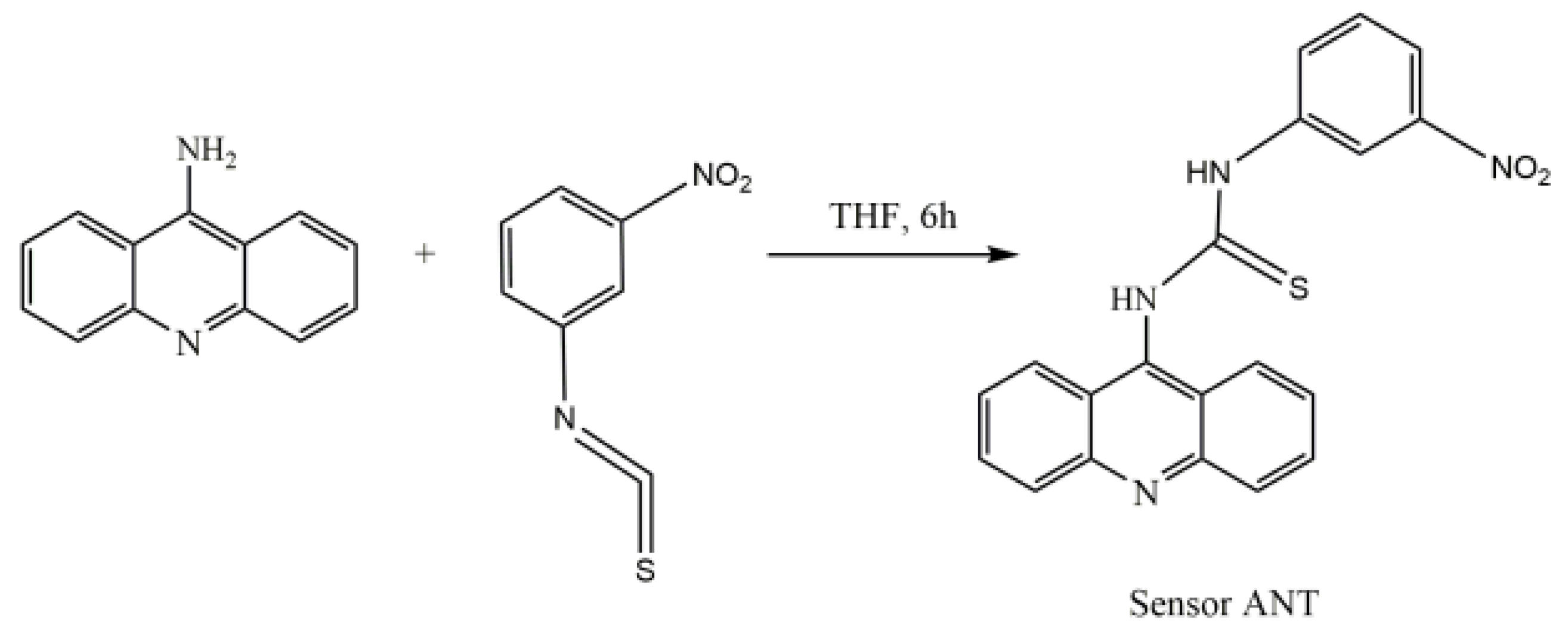
2.3. Synthesis of Sensor ANT
2.4. UV–Vis and Fluorescence Spectroscopic Measurements
2.5. Response Time Measurement
2.6. Cytotoxicity Assay
2.7. Cellular and Zebrafish Imaging Experiments
3. Results
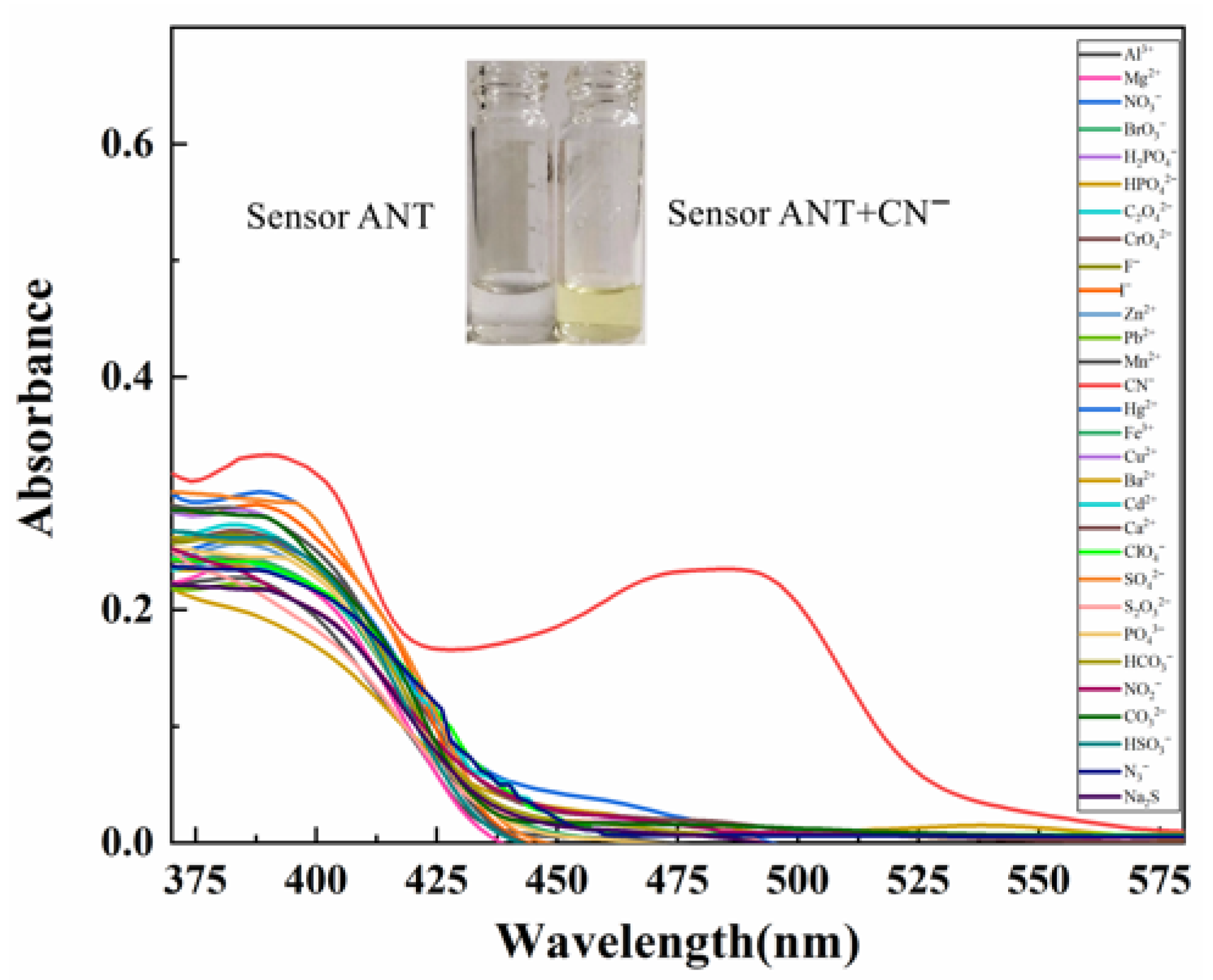
3.1. UV–Vis Spectral Response of Sensor ANT
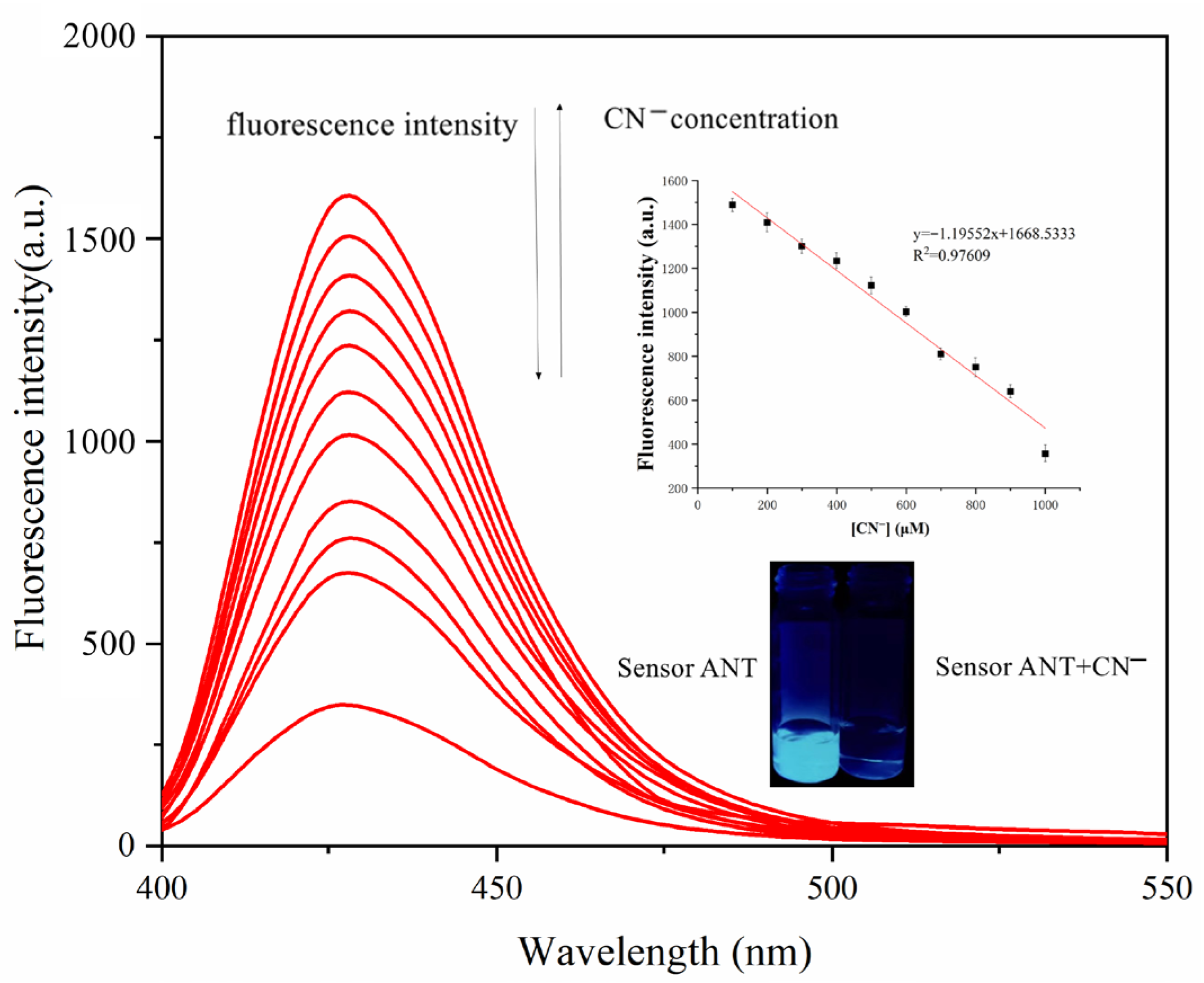
3.2. Fluorescence Sensitivity and Quantitative Detection of CN−
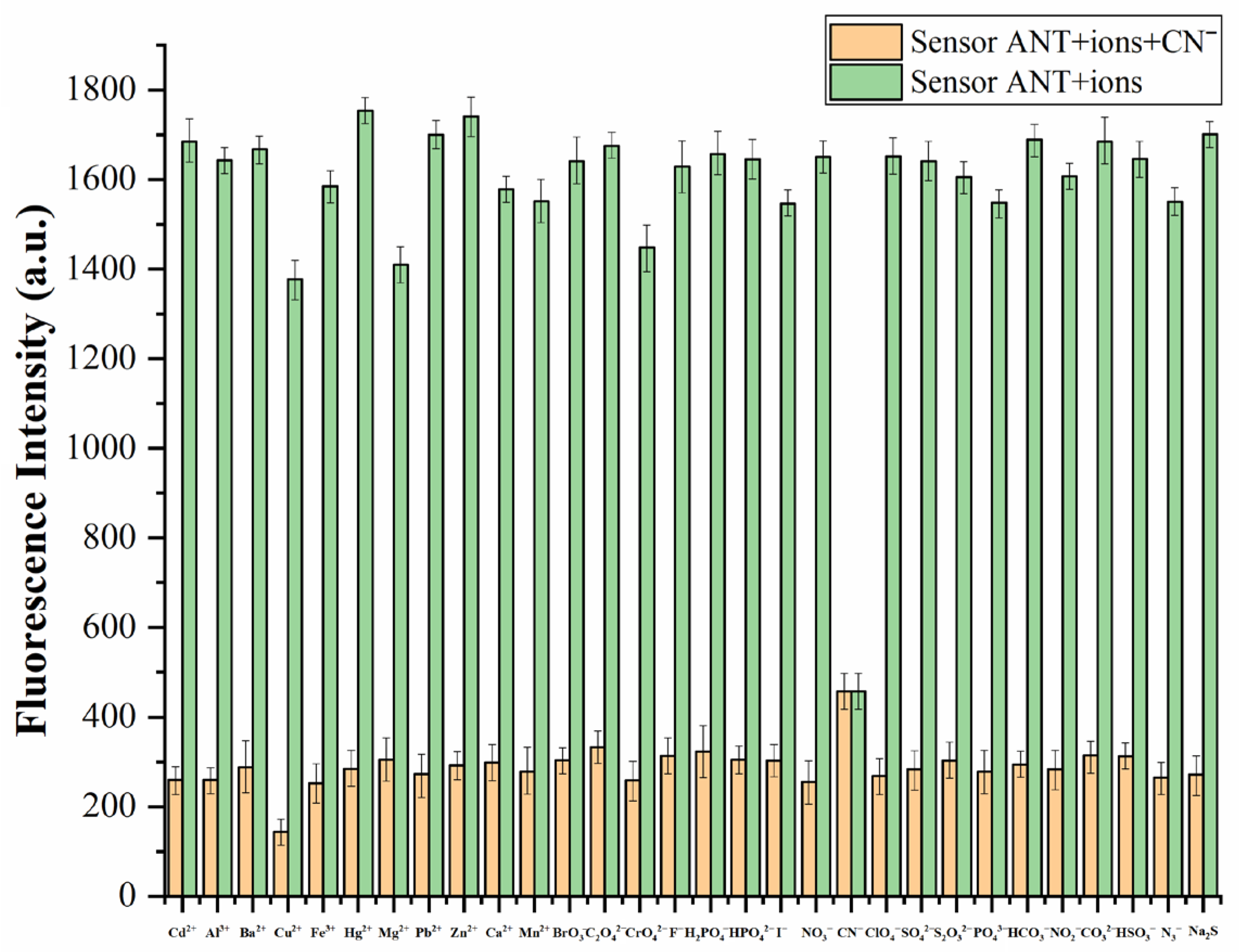
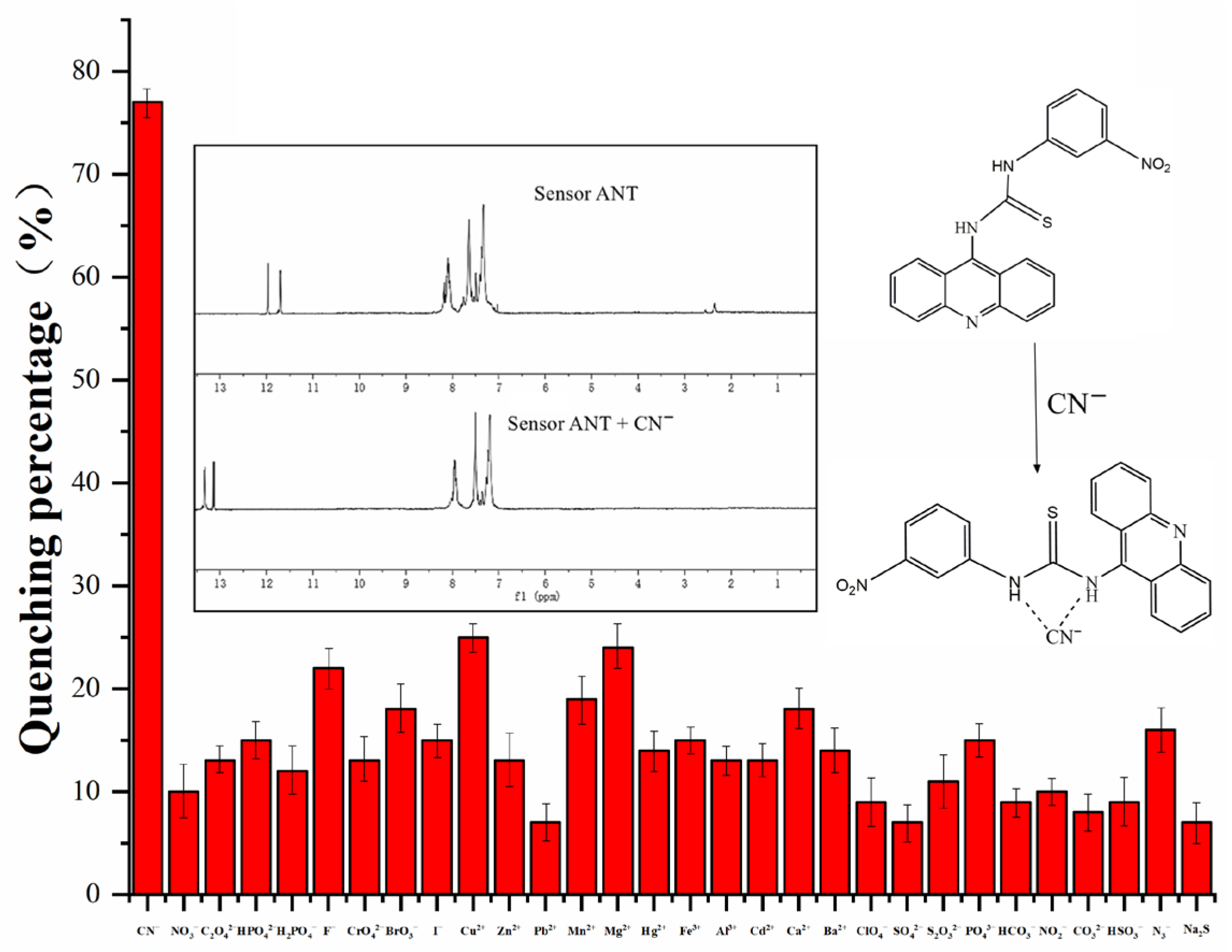
3.3. Selectivity and Anti-Interference Capability
3.4. Binding Stoichiometry and Binding Constant
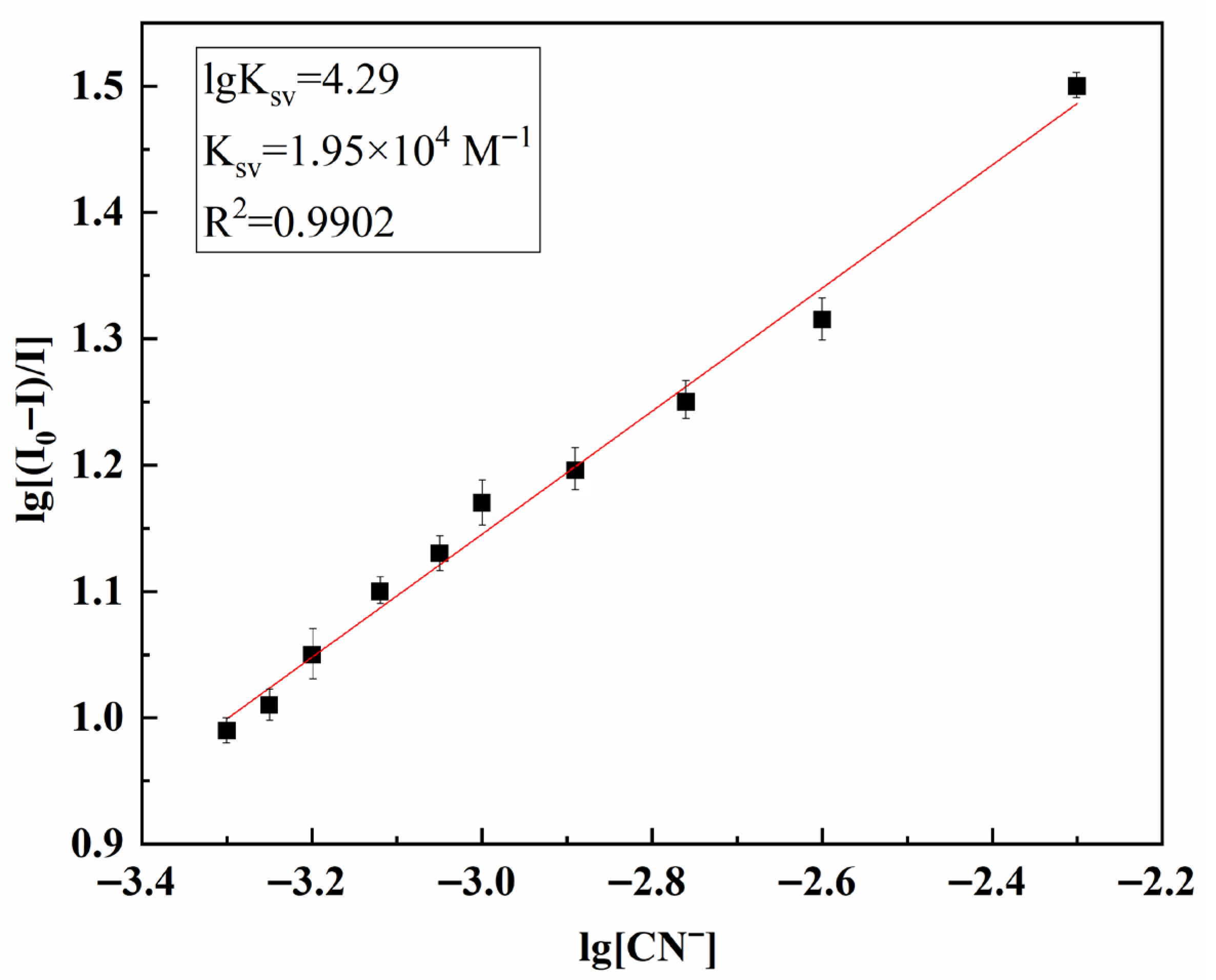
3.5. Fluorescence Quenching Efficiency and Binding Mechanism
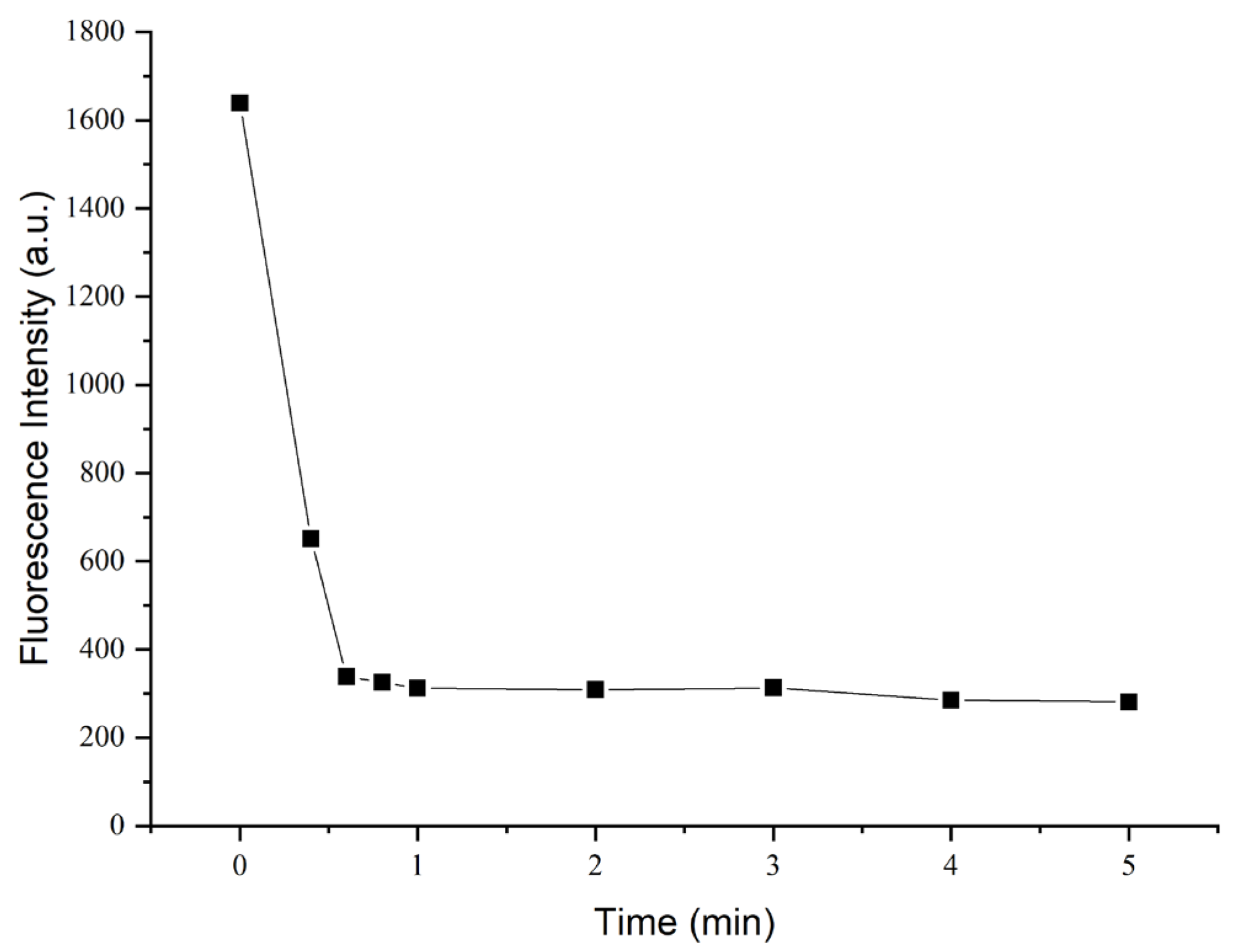
3.6. Response Time
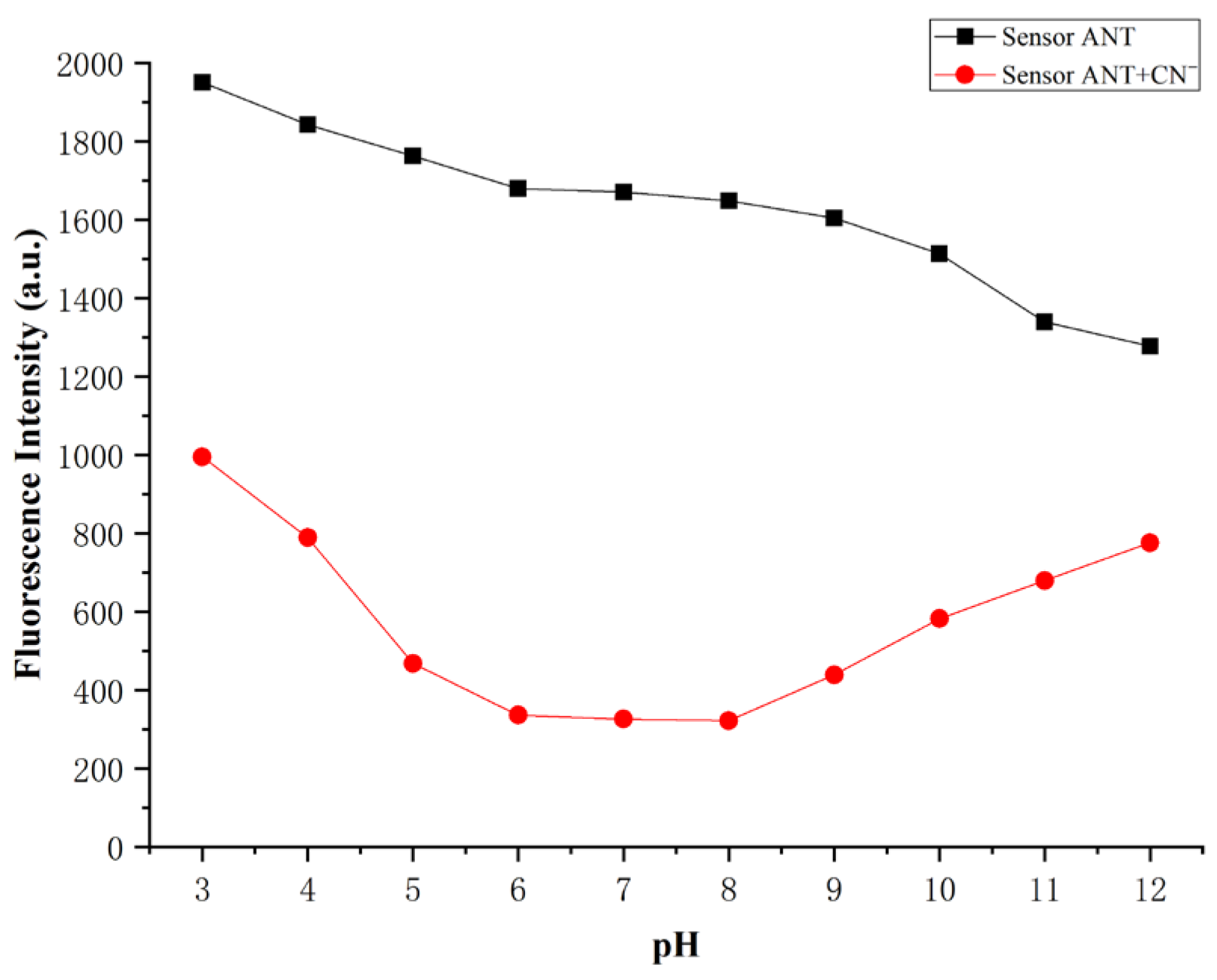
3.7. pH-Responsive
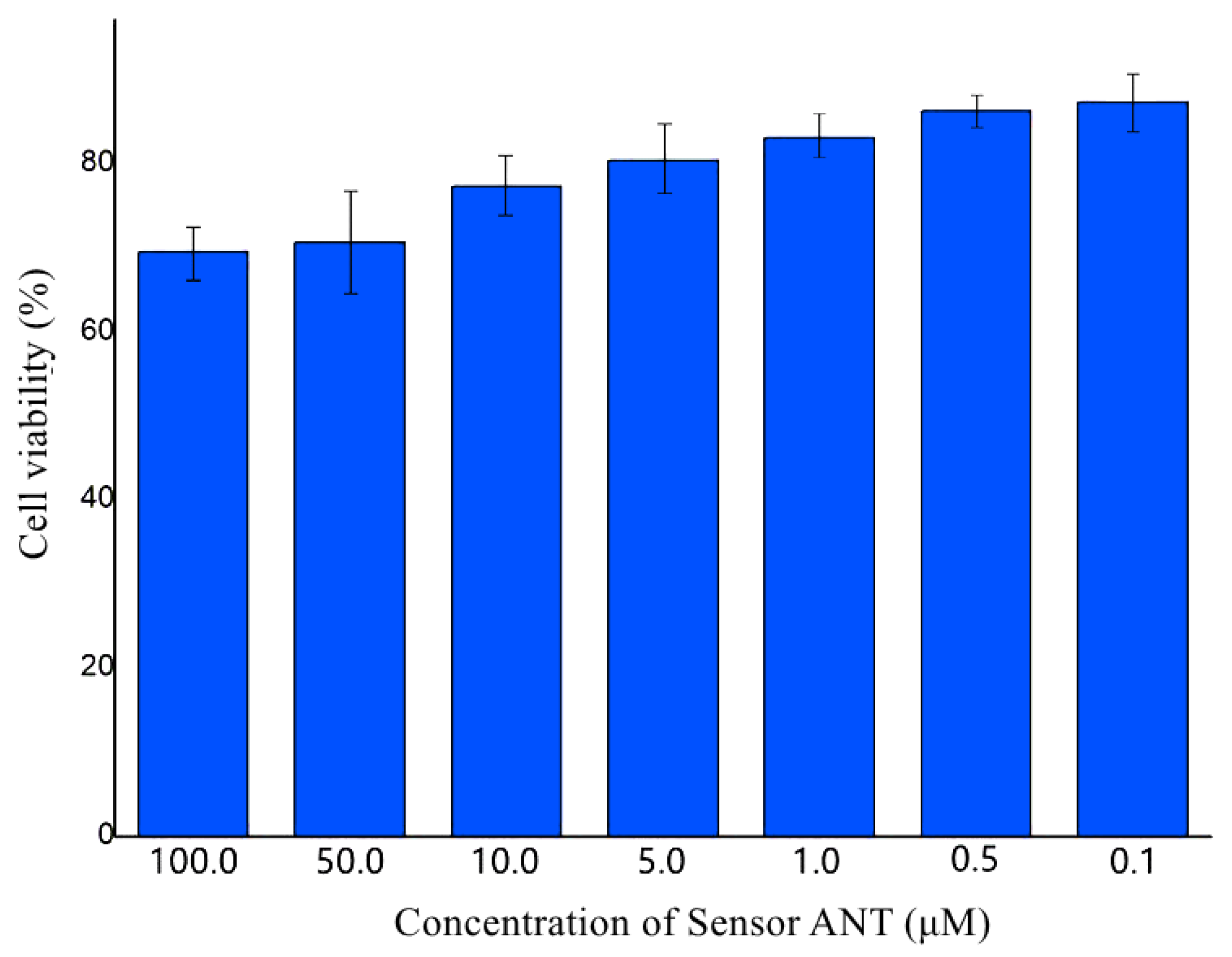
3.8. Cytotoxicity Assay
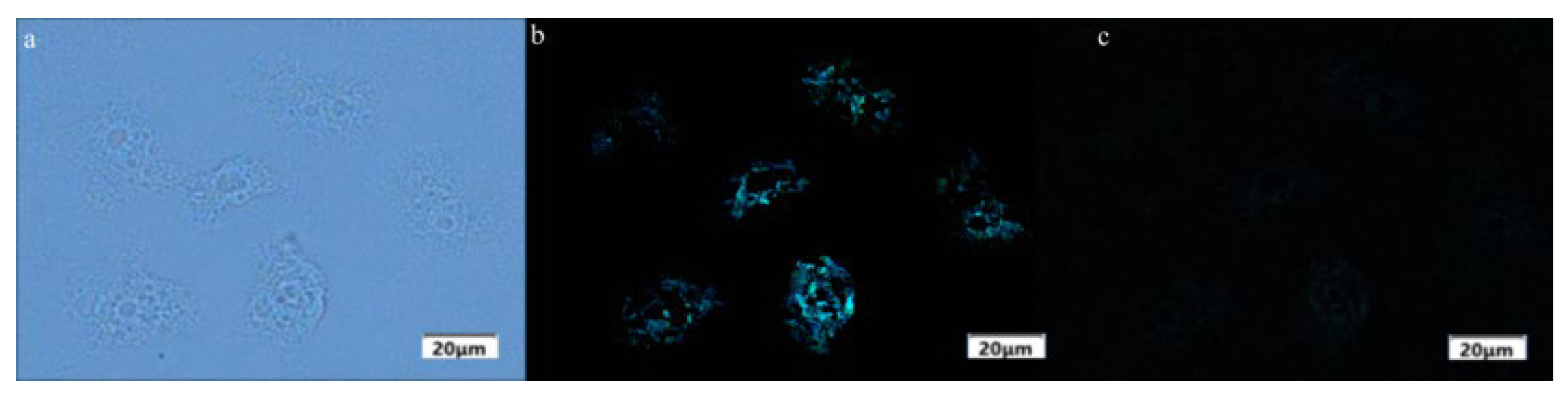
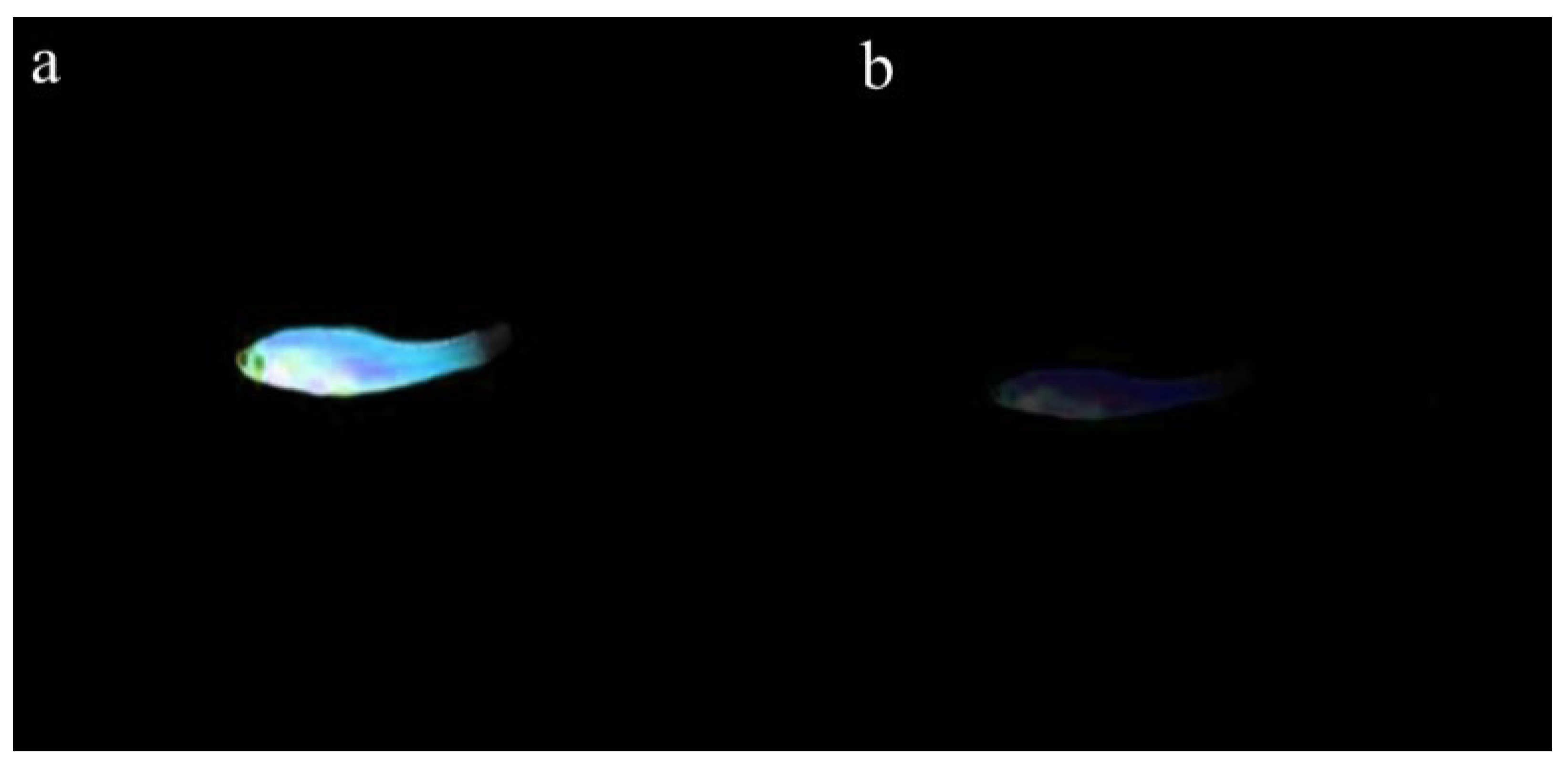
3.9. Cellular and Zebrafish Imaging
3.10. Test Strip Experiment
4. Conclusions
Supplementary Materials
Author Contributions
Funding
Institutional Review Board Statement
Informed Consent Statement
Data Availability Statement
Conflicts of Interest
References
- Li, M.X.; Gao, Y.; Xu, K.; Zhang, Y.; Gong, S.; Yang, Y.; Xu, X.; Wang, Z.; Wang, S. Quantitatively analysis and detection of CN− in three food samples by a novel nopinone-based fluorescent probe. Food Chem. 2022, 379, 132153. [Google Scholar] [CrossRef]
- Xu, Z.; Chen, X.; Kim, H.N.; Yoon, J.Y. Sensors for the optical detection of cyanide ion. Chem. Soc. Rev. 2010, 39, 127. [Google Scholar] [CrossRef]
- Wu, L.; Liu, Y.; Wu, X.; Li, Y.; Du, J.; Qi, S.; Yang, Q.; Xu, H. A novel Near-Infrared fluorescent probe for Zn2+ and CN− double detection based on dicyanoisfluorone derivatives with highly sensitive and selective, and its application in Bioimaging. Spectrochim. Acta A 2022, 267, 120621. [Google Scholar] [CrossRef]
- Wei, T.B.; Li, W.T.; Li, Q.; Su, J.X.; Qu, W.J.; Lin, Q.; Yao, H.; Zhang, Y.M. A turn-on fluorescent chemosensor selectively detects cyanide in pure water and food sample. Tetrahedron Lett. 2016, 25, 2767. [Google Scholar] [CrossRef]
- Li, P.; Li, R.; Wang, K.; Liu, Q.; Ren, B.; Ding, Y.; Guan, R.; Cao, D. A julolidine-chalcone-based fluorescent probe for detection of Al3+ in real water sample and cell imaging. Spectrochim. Acta A 2022, 276, 121213. [Google Scholar] [CrossRef] [PubMed]
- Musile, G.; Grazioli, C.; Fornasaro, S.; Dossi, N.; De Palo, E.F.; Tagliaro, F.; Bortolotti, F. Application of paper-based microfluidic analytical devices (µPAD) in forensic and clinical toxicology: A review. Biosensors 2023, 13, 743. [Google Scholar] [CrossRef] [PubMed]
- Kumar, S.; Singh, P.; Hundal, G.; Hundal, M.S.; Kumar, S. A chemodosimeter for ratiometric detection of cyanide in aqueous media and human blood serum. Chem. Commun. 2013, 49, 2667–2669. [Google Scholar] [CrossRef]
- Wang, P.; Wang, Q.; Guo, Z.; Xue, S.; Chen, B.; Liu, Y.; Ren, W.; Yang, X.; Wen, S. A bifunctional peptide-based fluorescent probe for ratiometric and “turn-on” detection of Zn(II) ions and its application in living cells. Spectrochim. Acta A 2022, 268, 120653. [Google Scholar] [CrossRef]
- Patra, L.; Aich, K.; Gharami, S.; Mondal, T.K. A new carbazole-benzothiazole based chemodosimeter for chromogenic and fluorogenic detection of CN–. J. Lumin. 2018, 201, 419. [Google Scholar] [CrossRef]
- Xue, L.; Wang, R.; Qi, S.; Xu, H.; Wang, X.; Wu, L.; Yang, Q.; Du, J.; Li, Y. A novel 100% aqueous solution near-infrared ratiometric fluorescent CN− probe based on 1,4-dihydropyridines, with a large fluorescent emission peak shift. Talanta 2021, 225, 122100. [Google Scholar] [CrossRef] [PubMed]
- Tang, Q.; Dan, F.; Ma, S.; Zeng, X.; Lan, H. A colorimetric and fluorescent probe based on quinoline-indolium for detection of CN−. ChemistrySelect 2021, 6, 6557. [Google Scholar] [CrossRef]
- Wang, F.; Wang, L.; Chen, X.Q.; Yoon, J.Y. Recent progress in the development of fluorometric and colorimetric chemosensors for detection of cyanide ions. Chem. Soc. Rev. 2014, 43, 4312. [Google Scholar] [CrossRef]
- Wang, S.L.; Li, C.; Song, Q.-H. Fluorescent chemosensor for dual-channel discrimination between phosgene and triphosgene. Anal. Chem. 2019, 91, 5690–5697. [Google Scholar] [CrossRef]
- Kaur, I.; Sharma, V.; Mobin, S.M.; Kaur, P.; Singh, K. Excitation wavelength based reversible multicolour photoluminescence by a single chromophore upon aggregation: Detection of picric acid-application in bioimaging. Sens. Actuators B-Chem. 2018, 281, 613–622. [Google Scholar] [CrossRef]
- Ranolia, A.; Kiran; Sindhu, J.; Kumar, P.; Kumar, S. Divulging indolium inspired cyanide sensors: Did it win the throne? Coord. Chem. Rev. 2024, 498, 215463. [Google Scholar] [CrossRef]
- Huang, Y.; Zhang, Y.; Huo, F.; Wen, Y.; Yin, C. Design strategy and bioimaging of small organic molecule multicolor fluorescent probes. Sci. China Chem. 2020, 63, 1742–1755. [Google Scholar] [CrossRef]
- Yan, L.; Yang, H.; Li, J.; Zhou, C.; Li, L.; Wu, X.; Lei, C. A near infrared fluorescent probe for detection and bioimaging of zinc ions and hypochlorous acid. Anal. Chim. Acta 2022, 1206, 339750. [Google Scholar] [CrossRef]
- Duong, T.Q.; Kim, J.S. Fluoro- and chromogenic chemodosimeters for heavy metal ion detection in solution and biospecimens. Chem. Rev. 2010, 110, 6280. [Google Scholar] [CrossRef]
- Sun, Y.; Fan, S.W.; Duan, L.; Li, R.F. A ratiometric fluorescent probe based on benzo [e] indolium for cyanide ion in water. Sens. Actuators B-Chem. 2013, 185, 638. [Google Scholar] [CrossRef]
- Shahid, M.; Razi, S.S.; Srivastava, P.; Ali, R.; Maiti, B.; Misra, A. A useful scaffold based on acenaphthene exhibiting Cu2+ induced excimer fluorescence and sensing cyanide via Cu2+ displacement approach. Tetrahedron 2012, 68, 9076–9084. [Google Scholar] [CrossRef]
- Odago, M.O.; Colabello, D.M.; Lees, A.J. A simple thiourea based colorimetric sensor for cyanide anion. Tetrahedron 2010, 66, 7465–7471. [Google Scholar] [CrossRef]
- Ahmed, S.A.; Awad, M.I.; Althagafi, I.I.; Altass, H.M.; Morad, M.; Alharbi, A.; Obaid, R.J. Newly synthesized indolium-based ionic liquids as unprecedented inhibitors for the corrosion of mild steel in acid medium. J. Mol. Liq. 2019, 291, 111356. [Google Scholar] [CrossRef]
- Bhalla, V.; Singh, H.; Kumar, M. Triphenylene based copper ensemble for the detection of cyanide ions. Dalton Trans. 2012, 41, 11413–11418. [Google Scholar] [CrossRef]
- Jung, H.S.; Han, J.H.; Kim, Z.H.; Kang, C.; Kim, J.S. Coumarin-Cu(II) ensemble-based cyanide sensing chemodosimeter. Org. Lett. 2011, 13, 5056–5059. [Google Scholar] [CrossRef] [PubMed]
- Lou, X.; Zhang, L.; Qin, J.; Zhen, L. An alternative approach to develop a highly sensitive and selective chemosensor for the colorimetric sensing of cyanide in water. Chem. Commun. 2008, 44, 5848–5850. [Google Scholar] [CrossRef] [PubMed]
- Sun, M.D.; Guo, J.; Yang, Q.B.; Xiao, N.; Li, Y.X. A new fluorescent and colorimetric sensor for hydrazine and its application in biological systems. J. Mater. Chem. B 2014, 2, 1846. [Google Scholar] [CrossRef]
- Guo, Y.-Y.; Tang, X.-L.; Hou, F.-P.; Wu, J.; Dou, W.; Qin, W.-W.; Ru, J.-X.; Zhang, G.-L.; Liu, W.-S.; Yao, X.-J. A reversible fluorescent chemosensor for cyanide in 100% aqueous solution. Sens. Actuators B-Chem. 2013, 181, 202–208. [Google Scholar] [CrossRef]
- Bhalla, V.; Pramanik, S.; Kumar, M. Cyanide modulated fluorescent supramolecular assembly of a hexaphenylbenzene derivative for detection of trinitrotoluene at the attogram level. Chem. Commun. 2013, 49, 895. [Google Scholar] [CrossRef]
- Li, H.; Wen, Z.; Jin, L.; Kan, Y.; Yin, B. A coumarin-Meldrum’s acid conjugate based chemodosimetric probe for cyanide. Chem. Commun. 2012, 48, 11659–11661. [Google Scholar] [CrossRef]
- Yuan, L.; Lin, W.; Yang, Y.; Song, J.; Wang, J. Rational design of a highly reactive ratiometric fluorescent probe for cyanide. Org. Lett. 2011, 13, 3730–3733. [Google Scholar] [CrossRef]
- Li, H.; Li, B.; Jin, L.Y.; Kan, Y.; Yin, B. A rapid responsive and highly selective probe for cyanide in the aqueous environment. Tetrahedron 2011, 67, 7348–7353. [Google Scholar] [CrossRef]
- Kumar, A.; Vanita, V.; Walia, A.; Chae, P.S.; Kumar, S. Pyridoanthrone-based chromo-fluorogenic amphiphiles for selective CN− detection and their bioimaging application. Sens. Actuators B-Chem. 2020, 304, 127396. [Google Scholar] [CrossRef]
- Lv, X.; Liu, J.; Liu, Y.; Zhao, Y.; Sun, Y.Q.; Wang, P.; Guo, W. Ratiometric fluorescence detection of cyanide based on a hybrid coumarin-hemicyanine dye: The large emission shift and the high selectivity. Chem. Commun. 2011, 47, 12843–12845. [Google Scholar] [CrossRef] [PubMed]
- Li, Y.; Zhou, C.; Li, J.; Sun, J. A new phenothiazine-based fluorescent sensor for detection of cyanide. Biosensors 2024, 14, 51. [Google Scholar] [CrossRef]
- Zhou, C.; Song, Y.; Li, Y.P. A novel highly sensitive and selective fluorescent sensor for imaging mercury(II) in living cells. RSC Adv. 2014, 4, 33614. [Google Scholar] [CrossRef]
- Liu, X.; Chen, H.; Hu, X.; Liu, J.; Zhu, X.; Zhang, Y.; Liu, L. CN- as a cofactor enhancing the laccase-like activity of copper porphyrin metal-organic frameworks facilitates the sensitive cyanide detection. Sens. Actuators B-Chem. 2025, 442, 138135. [Google Scholar] [CrossRef]
- Dharaniprabha, V.; Kalavathi, A.; Satheeshkumara, K.; Kuppanagounder, P. ElangoA ferrocene-based chemo-dosimeter for colorimetric and electrochemical detection of cyanide and its estimation in cassava flour. Anal. Methods 2024, 16, 4880–4888. [Google Scholar] [CrossRef]
- Yu, M.; Jiang, L.; Mou, L.; Zeng, X.; Wang, R.; Peng, T.; Wu, F.; Shi, T. A “pincer” type of acridine–triazole fluorescent dye for iodine detection by both ‘naked-eye’ colorimetric and fluorometric modes. Molecules 2024, 29, 1355. [Google Scholar] [CrossRef]
- Gu, Y.; Gong, S.; Tian, J.; Meng, Z.; Liang, Y.; Gao, L.; Wang, Z.; Wang, S. A novel indolium-fused acridine-based bifunctional fluorescent probe for intracellular viscosity and sulfur dioxide applicate in environmental detection, bioimaging and real-time gas absorption monitoring. Sens. Actuators B-Chem. 2025, 443, 138229. [Google Scholar] [CrossRef]
- Hao, Y.; Zhang, Y.; Sun, Q.; Chen, S.; Tang, Z.; Zeng, R.; Xu, M. Phenothiazine-coumarin-pyridine hybrid as an efficient fluorescent probe for ratiometric sensing hypochlorous acid. Microchem. J. 2021, 171, 106851. [Google Scholar] [CrossRef]
- Zhou, C.; Sun, M.D.; Yan, C.Q.; Yang, Q.B.; Li, Y.X.; Song, Y. A new colorimetric and fluorescent chemodosimeter for fast detection of cyanide. Sens. Actuators B-Chem. 2014, 203, 382. [Google Scholar] [CrossRef]
- Wu, P.; Zhu, Y.; Chen, L.; Tian, Y.; Xiong, H. A fast-responsive OFF-ON near-infrared-II fluorescent probe for in vivo detection of hypochlorous acid in rheumatoid arthritis. Anal. Chem. 2021, 93, 13014. [Google Scholar] [CrossRef] [PubMed]
- Kim, Y.; Zhao, H.; Gabbaï, F.P. Sulfonium Boranes for the Selective Capture of Cyanide Ions in Water. Angew. Chem. Int. Ed. 2009, 48, 4957. [Google Scholar] [CrossRef]
- Shellaiah, M.; Awasthi, K.; Chandran, S.; Aazaad, B.; Sun, K.W.; Ohta, N.; Wu, S.P.; Lin, M.C. Methylammonium tin tribromide quantum dots for heavy metal ion detection and cellular imaging. ACS Appl. Nano Mater. 2022, 5, 2859–2874. [Google Scholar] [CrossRef]
- Tanwar, A.; Parui, R.; Garai, R.; Chanu, M.; Iyer, P. Dual “static and dynamic” fluorescence quenching mechanisms based detection of tnt via a cationic conjugated polymer. ACS Meas. Sci. Au 2022, 2, 23–30. [Google Scholar] [CrossRef] [PubMed]
- Wang, B.-B.; Wang, Y.; Wu, W.-N.; Xu, Z.-H.; Fan, Y.-C. A near-infrared colorimetric and fluorescent dual-channel probe for cyanide detection based on dicyanomethylene-4H-pyran. Inorg. Chem. Commun. 2020, 122, 108245. [Google Scholar] [CrossRef]
- Saha, P.P.; Chatterjee, T.; Pattanayak, R.; Das, R.S.; Guha, S. Targeting and imaging of mitochondria using near-infrared cyanine dye and its application to multicolor imaging. ACS Omega 2019, 4, 14579. [Google Scholar] [CrossRef]


Disclaimer/Publisher’s Note: The statements, opinions and data contained in all publications are solely those of the individual author(s) and contributor(s) and not of MDPI and/or the editor(s). MDPI and/or the editor(s) disclaim responsibility for any injury to people or property resulting from any ideas, methods, instructions or products referred to in the content. |
© 2026 by the authors. Licensee MDPI, Basel, Switzerland. This article is an open access article distributed under the terms and conditions of the Creative Commons Attribution (CC BY) license.
Share and Cite
Zhang, Y.; Zhou, C.; Li, J.; Kovtunets, E. A New Acridine-Based Fluorescent Sensor for the Detection of CN−. Chemosensors 2026, 14, 67. https://doi.org/10.3390/chemosensors14030067
Zhang Y, Zhou C, Li J, Kovtunets E. A New Acridine-Based Fluorescent Sensor for the Detection of CN−. Chemosensors. 2026; 14(3):67. https://doi.org/10.3390/chemosensors14030067
Chicago/Turabian StyleZhang, Yiyuan, Chen Zhou, Jiaxin Li, and Evgeny Kovtunets. 2026. "A New Acridine-Based Fluorescent Sensor for the Detection of CN−" Chemosensors 14, no. 3: 67. https://doi.org/10.3390/chemosensors14030067
APA StyleZhang, Y., Zhou, C., Li, J., & Kovtunets, E. (2026). A New Acridine-Based Fluorescent Sensor for the Detection of CN−. Chemosensors, 14(3), 67. https://doi.org/10.3390/chemosensors14030067