Article

Chip-Based Nanospray Ionisation Mass Spectrometry for the Routine Analysis of Intact Reactive Phosphine Ligands and Phosphino Organometallic Complexes


School of Chemistry, University of Bristol, Cantock’s Close, Bristol BS8 1TS, UK
Chemosensors 2026, 14(2), 52; https://doi.org/10.3390/chemosensors14020052 (registering DOI)
Submission received: 18 December 2025 / Revised: 27 January 2026 / Accepted: 28 January 2026 / Published: 21 February 2026
(This article belongs to the Special Issue Spectroscopic Techniques for Chemical Analysis)

Abstract

The analysis of intact phosphine ligands and phosphino organometallic complexes by mass spectrometry is problematic due to the reactivity of phosphorous(III) leading to rapid oxidation and decomposition of the ligands and complexes. Traditionally, the preferred ionisation method for this problematic class of analytes is electrospray ionisation. However, electrospray is often performed in protic solvents which can promote oxidation of the analyte, especially for those that are already prone to oxidation. This study presents the application of chip-based nanospray ionisation for the analysis of these classes of analyte. Nanospray operates at significantly reduced voltages compared to electrospray and at room temperature and, most importantly, is compatible with a wider range of solvents—included non-protic solvents like toluene and THF. The success of this methodology is initially demonstrated by analysis of the commercial ligand DPPE and then by analysis of a wide range of synthetic phosphine ligands and phosphino organometallic complexes produced in-house at the School of Chemistry, University of Bristol. In all cases, the resulting mass spectra are dominated by intact molecular species with only a small number of oxidised products being observed. In some cases, cationated ions are also observed along with some minor fragmentation or decomposition of the complexes.

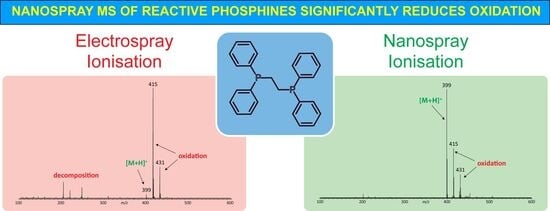
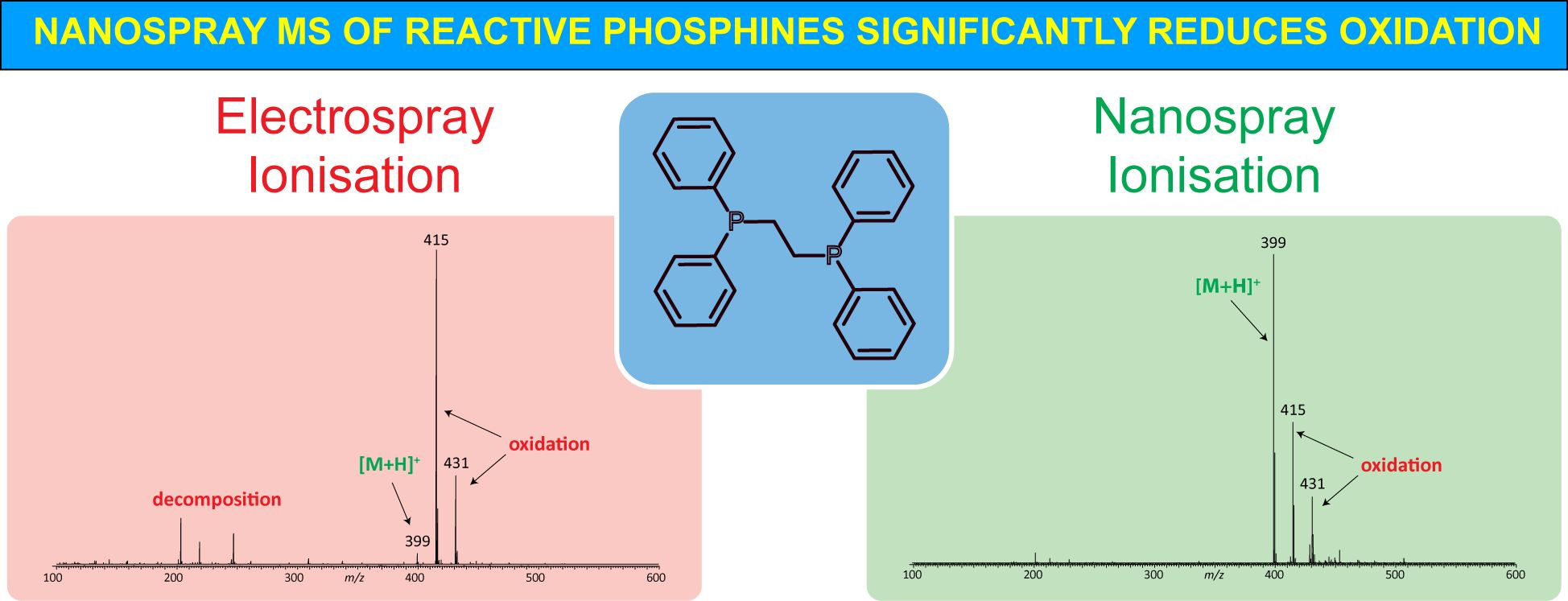
Graphical Abstract

1. Introduction

One of the key roles of any mass spectrometry (MS) service facility is the ability to obtain reliable mass spectra that enables the progression of scientific excellence. One area where this is especially the case is the analysis of often air-sensitive inorganic complexes and organometallics. Air sensitivity is often the result of them containing ligands with phosphorous(III) in their structures. Phosphorous(III) is very easily oxidised to phosphorus(V), and when this occurs in a ligand or organometallic complex, subsequent decomposition is quite likely to occur [1]. This will prevent the observation of the intact structure in the resulting mass spectra. These compound classes are often used as catalysts in a wide range of high-impact chemical and industrial applications, from performing specific synthetic reaction steps [1,2,3,4,5,6,7,8,9,10] to the synthesis of specialised materials of commercial interest [11,12,13,14,15,16,17].
The development of the ‘soft’ ionisation method of electrospray ionisation (ESI) in the late 1980s led to an explosion in the applications of MS to inorganic samples [18,19,20,21]. For the first time, a wide range of involatile, labile, and thermally unstable analytes could be transferred to the gas phase for mass spectral analysis. The analysis of analytes from a wide range of solvents in both positive and negative ion modes became routine. However, problems associated with the analysis of organometallic systems (namely oxidation and decomposition) began to become more recognised, and a wide range of methodologies were developed to try to work around these issues [20,21,22]. Another problem to overcome is that ESI-MS is often not very compatible with the solvents used for this class of analyte [23,24]. For example, the use of highly protic solvents common in ESI-MS can often lead to substitution reactions as well as promoting oxidation and/or structural changes to the analyte [25]. The high temperatures used in ESI analysis can also lead to thermal decomposition of the organometallic complexes [23,26].
Throughout the 2000s, numerous studies were published demonstrating gradual improvements in the application of ESI-MS-based strategies to the analysis of increasingly reactive analytes along with the application of other desorption MS-based techniques, such as DART-MS [27,28,29,30] and DESI-MS [28,31,32]. One technique largely absent from this discussion is nanospray ionisation. Nanospray was derived from ESI, largely to enable the analysis of intact non-covalent complexes—for example, protein–drug or protein–protein complexes [33,34,35]. However, the major drawback of nanospray is that it traditionally uses single-use capillaries which can be fiddly, unreliable, and expensive. However, the development of robot-based nanospray systems using chips (arrays of nanoscale desorption needles) does away with the need of manually preparing tips and introduces a high level of reliability and reproducibility to the process [36]. Chip-based nanospray systems also support rapid workflows due to the minimal sample handling and wider range of solvent compatibilities when compared to conventional nanospray. Due to the practical setup using 96-well plates, they also present compatibility with microfluidics systems and, therefore, automated synthesis and reaction monitoring applications.
Phosphine ligands (i.e., with one or more phosphorous(III) present) are a very commonly used class of spectator ligands in organometallic chemistry and homogeneous catalysis due to their ability to solubilise inorganic complexes in common organic solvents without affecting the oxidation state of the metals [37,38]. Their chemical, electronic, and steric properties are easily altered in a predictable way through variation in the alkyl groups being used. Additionally, phosphino organometallic complexes have shown considerable promise in a number of applications including general catalytic chemistry [39], synthesis of novel cyclic carbon materials [15], and even the development of anticancer therapeutics [40,41]. MS studies of these classes of ligands and complexes are traditionally performed by ESI-MS [42]. However, ESI is considered to be a redox process [43,44], and so analysis of phosphines by ESI-MS almost always generates the phosphine oxide(s) by addition of one oxygen atom to each phosphorous(III) present in the complex. In this study, the application of chip-based nanospray ionisation MS for the successful routine analysis of intact reactive phosphine ligands and phosphino organometallic complexes is presented.

2. Materials and Methods

Chip-based nanospray MS was performed on a Synapt G2S mass spectrometer (Waters, Manchester, UK) equipped with a Nanomate Triversa chip-based nanospray system (Advion Biosciences, Norwich, UK). The Nanomate uses chips with an array of 400 individual micro fabricated nozzles on a silicon chip. The internal diameter of a nozzle is 2.5 µm, allowing µL volumes of analyte solution to generated up to 15 min of stable signal. Each nozzle is used once to avoid contamination. The Nanomate was run at room temperature and 1.5 kV ionisation potential. Typically, 5 µL of sample solution is aspirated with spectra recorded at a resolution of approximately 30,000 and better than 2 ppm mass accuracy. ESI mass spectrometry was performed on an Orbitrap Elite mass spectrometer equipped with a HESI source (Thermo Fisher Scientific, Hemel Hempstead, UK) at a resolution of approximately 120,000, source voltage of 3 kV, source temperature of 350 °C, and a capillary temperature of 275 °C. Tuning and calibration was performed with the built-in routines using Pierce Positive Ion LTQ Calibration Solution (Applied Biosystems, Warrington, UK).
1,2-Bis(diphenylphosphino)ethane (DPPE) 98% was obtained from Fisher Scientific; all other analytes were generated by researchers in the University of Bristol, School of Chemistry, Synthetic Chemistry Laboratory, and as far as was possible had been confirmed to be the correct structures by other analytical techniques. The samples were usually provided as solids under nitrogen. For the nanospray analysis, the analytes were dissolved to approximately 0.1 mg/mL in dry solvents, typically THF/toluene (50%), MeCN/toluene (50%), MeCN/THF (50%) or chlorobenzene. ESI analysis was performed at the same concentration in MeCN/toluene (50%). Care was taken in handling samples and to run them as soon as was possible after dissolving to minimise any decomposition or oxidation.

3. Results and Discussion

3.1. Ligands

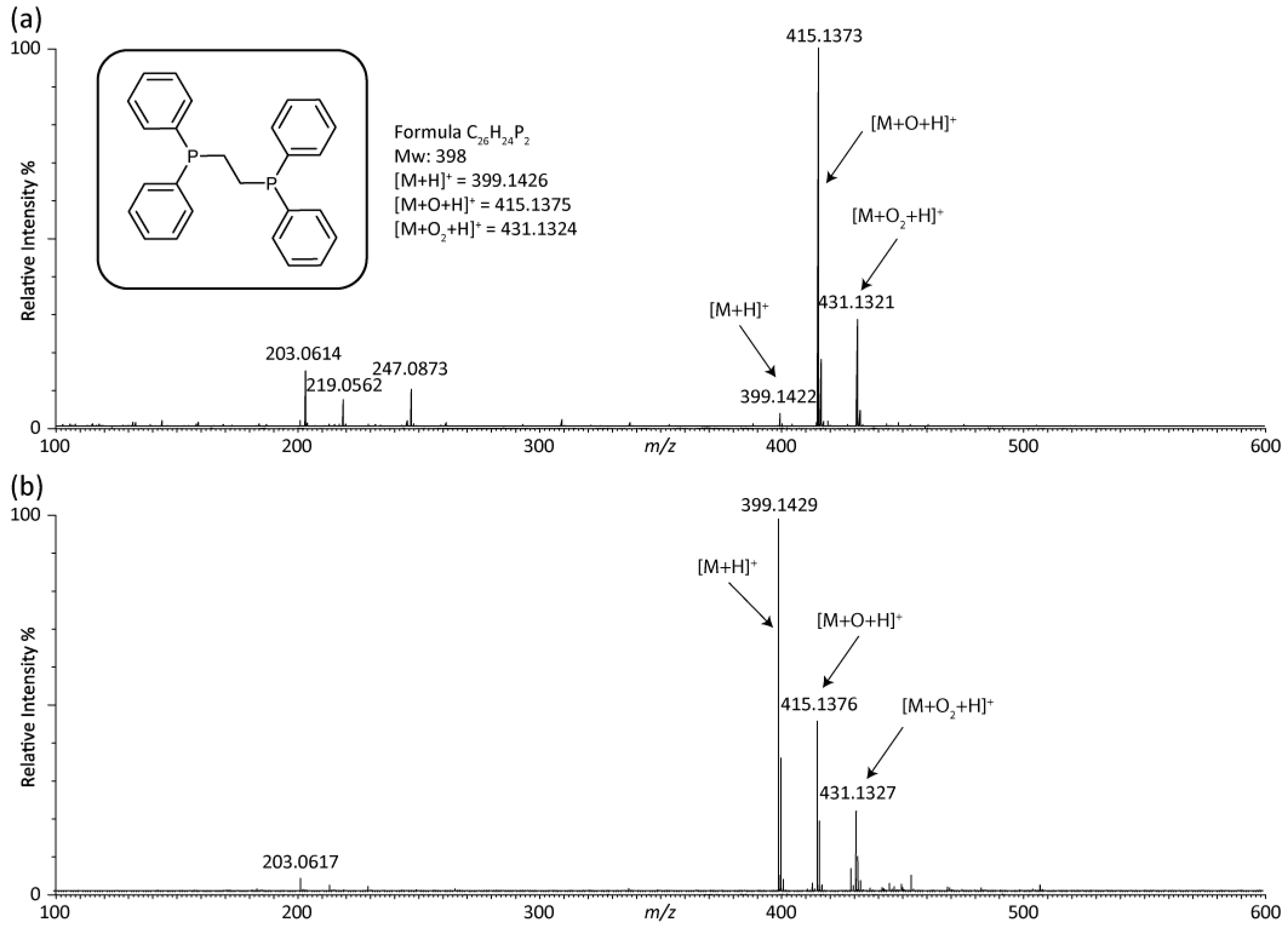
Figure 1 is a comparison of the mass spectra of the commercially available bidentate phosphine ligand 1,2-bis(diphenyl phosphino)ethane (DPPE) analysed by traditional ESI and chip-based nanospray ionisation MS. Although this analysis was performed on different instruments, this study is a comparison of commercially available sources and instruments. This study demonstrates the issues of ligand oxidation and decomposition. For both spectra, the ligand was dissolved in toluene and diluted into toluene:MeCN 50% to try to minimise oxidation resulting from protic solvents, and the same sample was analysed by both techniques. Spectrum (a) is the ESI-MS taken at approximately 1 min from dissolving the sample. The base peak is for the single oxidation (m/z 415), and the second most intense peak is for double oxidation (m/z 431). The [M+H]+ (m/z 399) is only observed at about 5% relative intensity (RI). Spectrum (b) is the chip-based nanospray MS analysis taken 1 min from dissolving the sample. Here, the base peak is the [M+H]+ (m/z 399) with the peaks for single (m/z 415) and double (m/z 431) oxidation occurring at about 50% and 20%, respectively. This would suggest that much less oxidation occurs. There is also a significant decrease in the intensity of the decomposition ions (m/z 203, 219 and 247) in the nanospray spectrum.
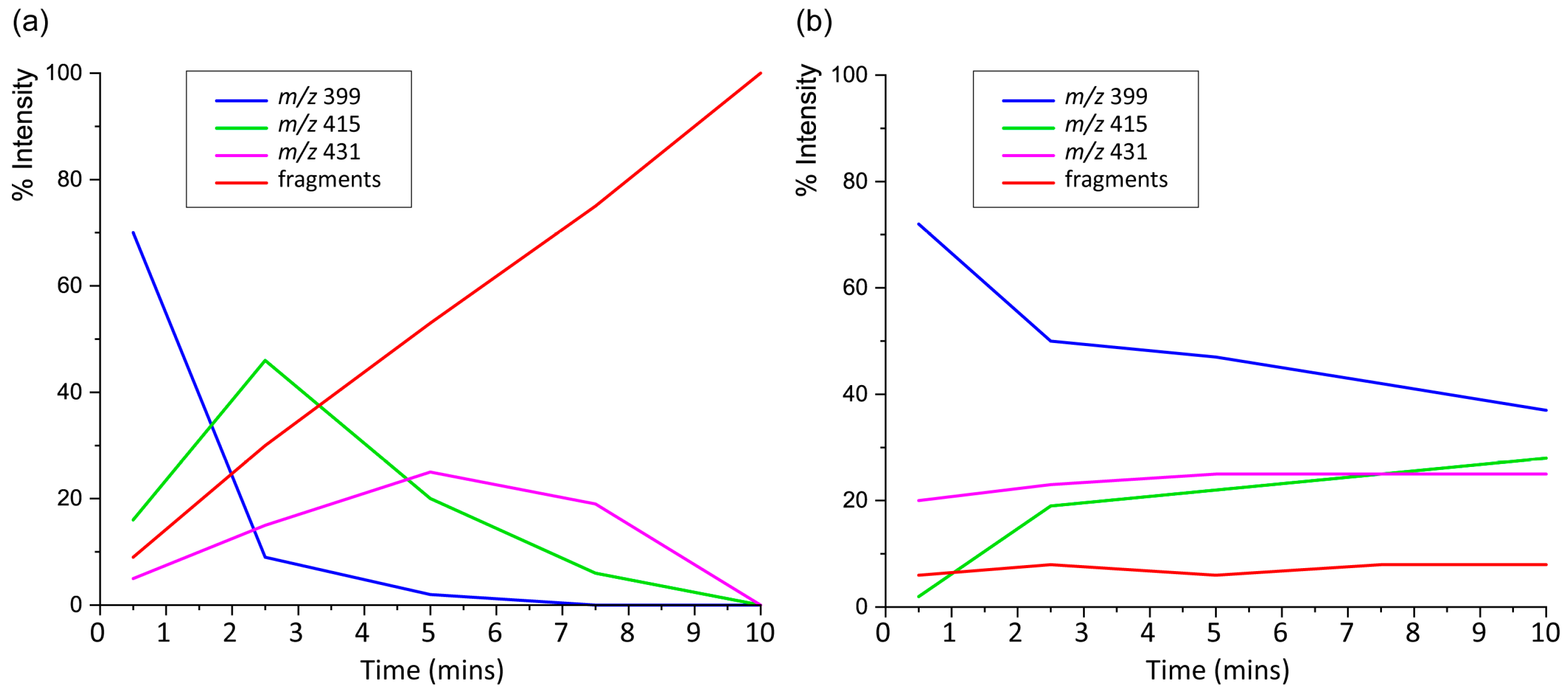
In order to further demonstrate the applicability of chip-based nanospray, the analysis of DPPE was conducted over a 10 min time period with the RI of the various key ions monitored at various time points (see Figure 2). For ESI, this was sampling from the analyte solution delivered at a constant flow rate via a syringe pump, and for nanospray, this was a continuous aspiration of the analyte solution through a single nozzle of the Nanomate chip. Previous studies by this group have demonstrated the longevity of the signal observed in chip-based nanospray ionisation [45].
Figure 1. Mass spectra of DPPE (see insert for structure) run under different conditions but recorded at about 1 min from the sample being dissolved. Spectrum (a) is the normal ESI-MS, and spectrum (b) is the chip-based nanospray MS. The intact molecular ion peaks are labelled on the spectra, and their theoretical m/z are provided in spectrum (a).
Chemosensors 14 00052 g001
Figure 2. Plots of relative intensity vs. time (mins) for the various key ions observed in the ESI-MS (a) and nanospray MS (b) of DPPE. Ions observed are [M+H]+ (m/z 399) shown in blue, [M+O+H]+ (m/z 415) shown in green, and [M+2O+H]+ (m/z 431) shown in pink. The red line shows the sum of the relative intensities of the low-molecular-weight decomposition ions.
Chemosensors 14 00052 g002
This experiment enables the study of ion lifetimes by both ESI and nanospray ionisation, and Figure 2 shows the results of this analysis. Plot (a) shows the results for the ESI analyses, and it can be seen that the protonated molecular ion [M+H]+ (m/z 399) is the most abundant ion at 1 min but very rapidly oxidises. At 2 min it has already dropped to less than 30% RI, with the [M+O+H]+ (m/z 415) becoming the base peak. From 5 min onwards the spectra are dominated by the low mass decomposition ions until at 10 min when no intact molecular species or oxidised molecular species remain visible in the mass spectrum. In contrast, plot (b) shows the results from the nanospray analyses; here, the [M+H]+ (m/z 399) remains the base peak for the duration of the experiment. The [M+O+H]+ (m/z 415) and [M+2O+H]+ (m/z 431) occur at about 20 to 30% RI throughout the experiment with the decomposition ions remaining at less than 10% RI. This illustrates the differences in the speed of oxidation and, ultimately, decomposition of the DPPE ligand over the time the experiment is performed. It is not a quantification experiment, as there will be initial variations due to inconsistences in sample handling, the speed of sample preparation, and variations in solvent composition. Another benefit of chip-based nanospray over conventional ESI is that the sample solution is contained inside the nanospray nozzle with minimal exposure to oxidants. Ionisation is also performed at room temperature and at much lower ionisation potential. These factors, when taken together, minimise the chance of oxidation and maximise the chance of seeing intact, non-oxidised analyte ions.
After the study of the commercial ligand (DPPE), the methodology was tested for the analysis of reactive phosphine ligands and phosphino organometallic complexes. The following sections of this paper present some example nanospray mass spectra of a wide variety of ligands and complexes in order to demonstrate the utility of chip-based nanospray ionisation methodology to their analysis. This method is now routinely used in our facility to analyse such compounds.
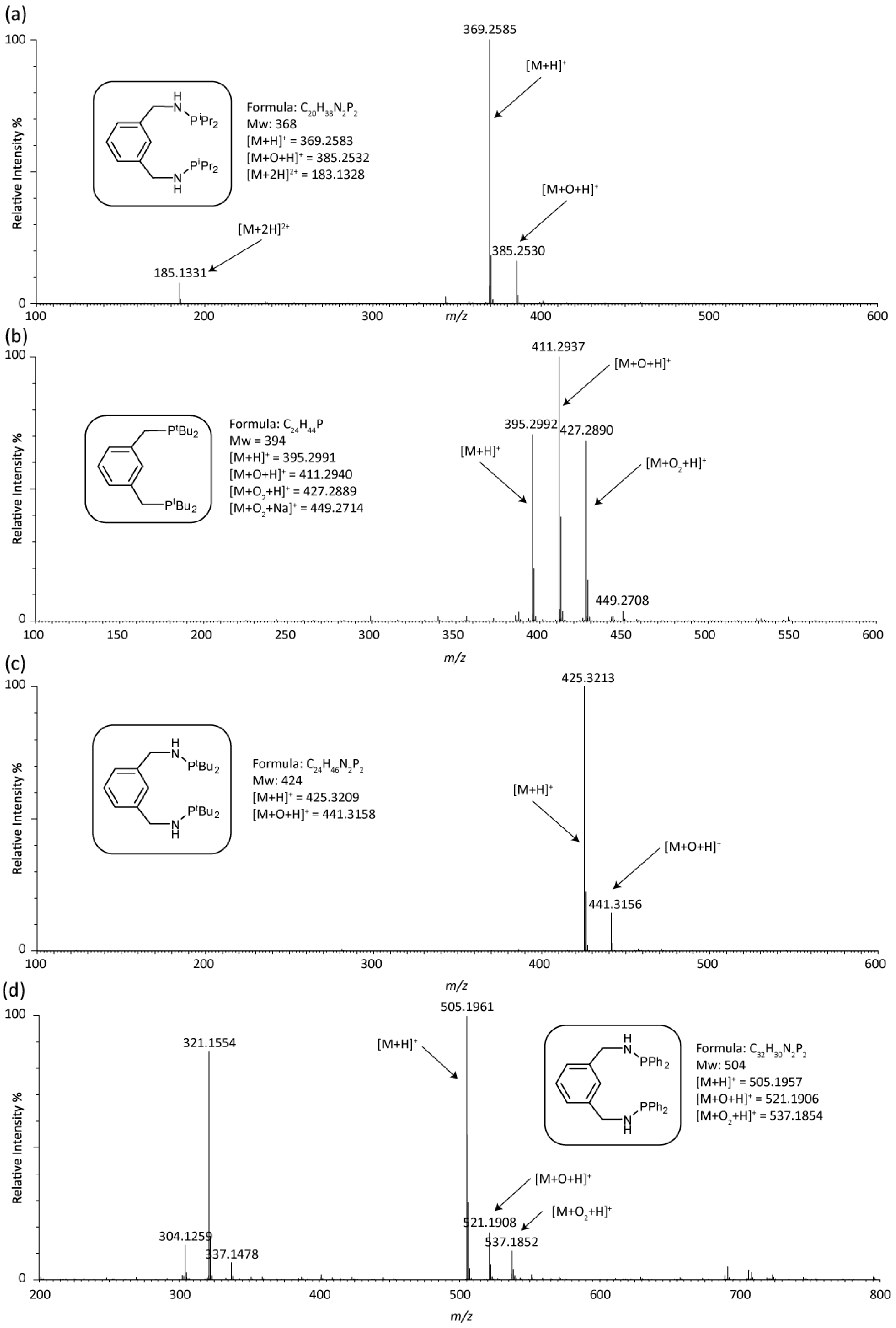
Figure 3 shows the nanospray mass spectra of four phosphine and phosphinous amide pincer ligands. Spectrum (a) is of the isopropyl substituted phosphinous amide; the protonated ion [M+H]+ m/z 369 is the base peak demonstrating the dominance of protonation over oxidation (m/z 385 is the single oxidation product at about 15% RI). Due to this being a di-amide, the double protonated species at m/z 185 is also observed. In spectrum (b), the analysis of the tertiary butyl substituted phosphine; the protonated molecule (m/z 395) is at about 80% RI with oxidation observed through addition of one and two oxygens at m/z 411 and m/z 427, respectively. This ligand has considerably less steric bulk than the one analysed in spectrum (a), and so oxidation still occurs, resulting in the base peak being due to a single oxidation. However, the intact molecules are still readily observed at good intensity. There is also a low intensity peak due to the sodiation of the oxidised ion at m/z 449. Spectrum (c), the analysis of the tertiary butyl substituted phosphinous amide, is dominated by the [M+H]+ at m/z 425 with only a low intensity signal for the [M+O+H]+ at m/z 441. Interestingly, no doubly charged ion is observed. Spectrum (d), the analysis of the phenyl substituted phosphinous amide, has the [M+H]+ at m/z 505 as the base peak with low intensity signals for the [M+O+H]+ at m/z 521 and [M+2O+H]+ at m/z 537. It is expected that the phosphines will have a significantly lower proton affinity than the phosphinous amides, and this is clearly observed in the mass spectra where the amides have a much simpler spectrum dominated by [M+H]+ with only low-intensity oxidised species in contrast to the phosphine that shows a considerable increase in the oxidised ions. Despite this, the [M+H]+ is still present at about 80% RI.
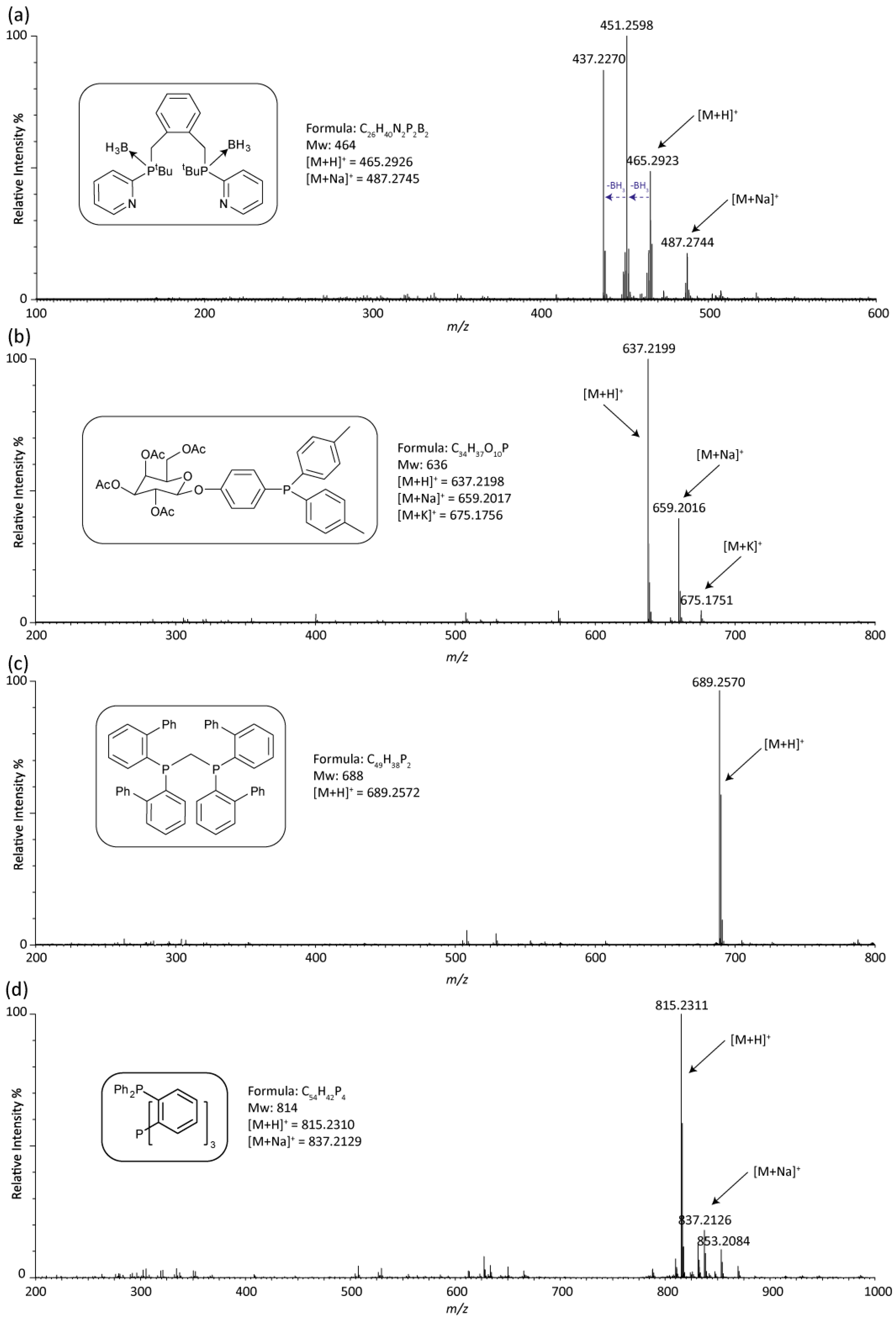
Figure 4 shows the nanospray mass spectra of four non-pincer phosphine ligands to show the application to a wider range of ligand types. Spectrum (a) is of the phosphine-borane ligand, where the base peak results from the loss of one BH3 group (m/z 451), and the second most intense peak is due to loss of two BH3 groups (m/z 537). However, the un-decomposed and unoxidised protonated molecular ion is still present at about 50% RI, with the sodiated ion present at about 20% RI. There is no sign of any oxidation in this spectrum. Spectrum (b) is of the glyco-phosphine, which only shows intact molecular ions, with the protonated molecule [M+H]+ (m/z 637) being the base peak along with sodiated and potassiated ions at m/z 659 and m/z 675, respectively. Spectrum (c) is of an aryl diphosphine, and in this spectrum there is a single ion observed for the [M+H]+ at m/z 689. This is most likely due to steric hinderance preventing metal cationation as well as slowing down oxidation. Finally, spectrum (d) is of a bulky aromatic phosphine; again, this is dominated by the protonated molecule at m/z 815 along with a weak ion due to sodiation at m/z 837. Despite its bulkiness, this phosphine oxidises quite rapidly, and the spectrum shows evidence of the [M+O+H]+ and [M+O+Na]+ at m/z 831 and 853, respectively.
In the nanospray spectra of the non-pincer phosphine ligands (Figure 4), there is very little oxidation observed probably due to steric hinderance around the phosphorous(III) atoms. These ligands all oxidise over extended times and under more extreme ionisation conditions or in more reactive or oxic solvents. The amount and speed of oxidation does seem to be related to the steric hinderance of the phosphorous(III) atoms, as well as the bulkiness of the alkyl substituent groups and the amount of time the analyte is left in solution.

3.2. Neutral Complexes

Neutral complexes bring a set of new issues to their analysis by MS. In traditional ESI analysis of organic complexes, ionisation occurs often by loss of a halogen ion (if present) or by ligand loss and/or decomposition. Oxidation of the central metal can also occur to generate a cation [43,44]. In contrast, nanospray ionisation is a much ‘softer’ or lower energy process, which seems to proceed predominantly by cationation (addition of a proton or a sodium cation) in much the same way as observed in ESI analysis of small organic molecules. Loss of halides will still occur, but this is no longer the dominant route to ionisation. Additionally, undesirable metal oxidation is suppressed, although in some cases it can still occur (see later). This results in a far greater chance of seeing intact, undecomposed complexes with the metal in the correct oxidation state in the resulting mass spectra. The following Figures show some example spectra to illustrate the various aspects of the results, which are then discussed below.
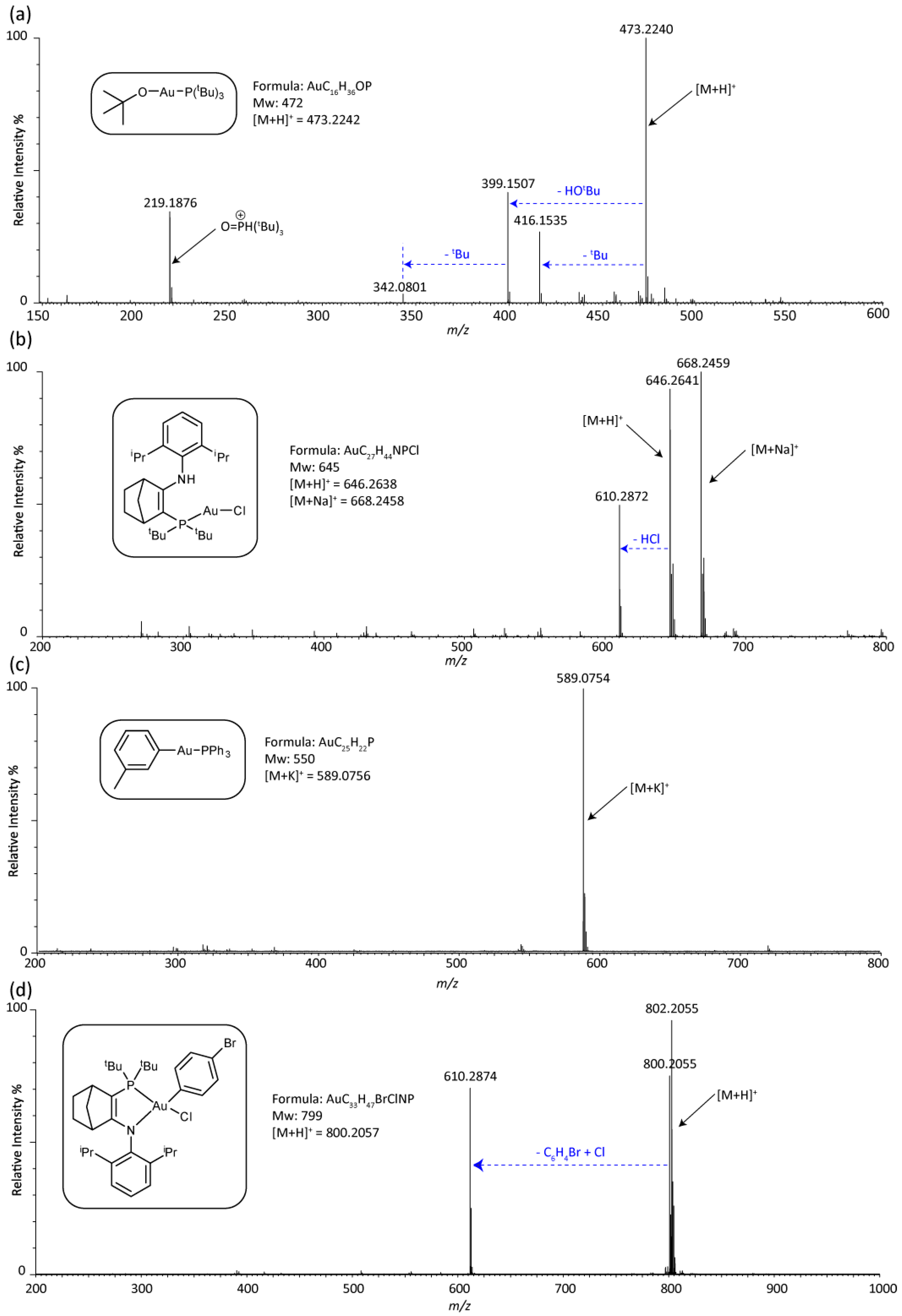
Figure 5 shows the nanospray mass spectra of four neutral gold organometallic phosphino complexes. Spectrum (a) is of the tertiary-butyl substituted gold phosphine complex; the base peak is the protonated molecule at m/z 473 along with three fragment ions resulting from losses of tBu and HOtBu (at m/z 416, 399 and 342), as well as an ion for the oxidised phosphine ligand (m/z 219). Spectrum (b) is of the gold phosphamide chloride complex; the base peak is the sodiated molecule at m/z 668 along with an intense protonated molecule at m/z 646 and a single fragment ion for loss of HCl occurring at about 50% RI at m/z 610. Spectrum (c) is the aryl gold triphenylphosphine complex, where the only peak observed is for the [M+K]+ ion at m/z 589. Spectrum (d) is of the organogold phosphine chloride complex, where the base peak is for the protonated molecule at m/z 800 with one fragment ion due to the combined losses of the bromobenzyl ligand and chloride at m/z 610.
These spectra are a very clear demonstration of the power and utility of nanospray ionisation for the analysis of neutral gold organometallic complexes, and in all cases, the base peak in the mass spectra are due to an intact cationated complex with a mixture of protonated or alkali metal adducts (Na+ or K+). Additionally, all the intact complexes have the gold in the same oxidation state in the gas phase as in solution.
Figure 5. The nanospray mass spectra of four neutral gold organometallic complexes (ad) (structures shown in the boxed insert). The intact molecular ion peaks are labelled on the spectra along with any identified fragment ions.
Chemosensors 14 00052 g005
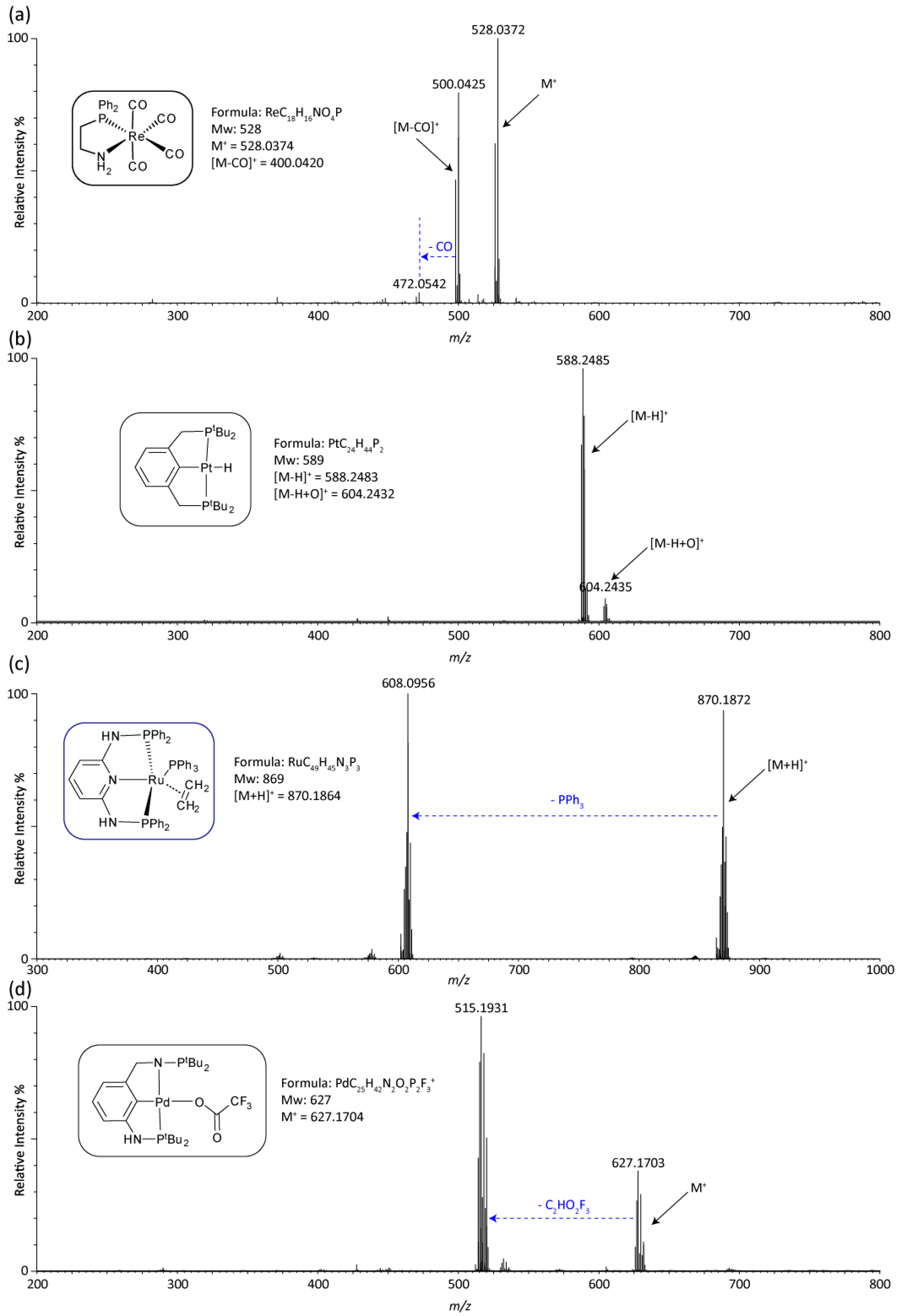
Figure 6 shows the nanospray mass spectra of four more neutral organometallic phosphino complexes covering a range of transition metals. Spectrum (a) is of the rhenium phosphino carbonyl, where the base peak is due to single oxidation of the rhenium to generate M+ at m/z 528. The other two peaks in the spectrum are due to successive losses of CO at m/z 500 and 472. Spectrum (b) is the platinum phosphino hydride complex, where the base peak in the spectrum is due to the loss of a single hydride observed at m/z 588, along with a very low intensity peak for the oxidised complex ([M-H+O]+ at m/z 504. Spectrum (c) is ruthenium phosphino alkene complex, where the base peak is due to [M+H]+ at m/z 870, with the only other significant peak being due to loss of the PPh3 ligand. Otherwise, the complex remains intact. Spectrum (d) shows the analysis of the palladium amino-phosphino triflate complex where the spectrum contains just two intense peaks. The M+ (m/z 627) occurs at about 40% RI, and the fragment ion due to loss of the triflate group (m/z 515) is the base peak.

3.3. Cationic Complexes

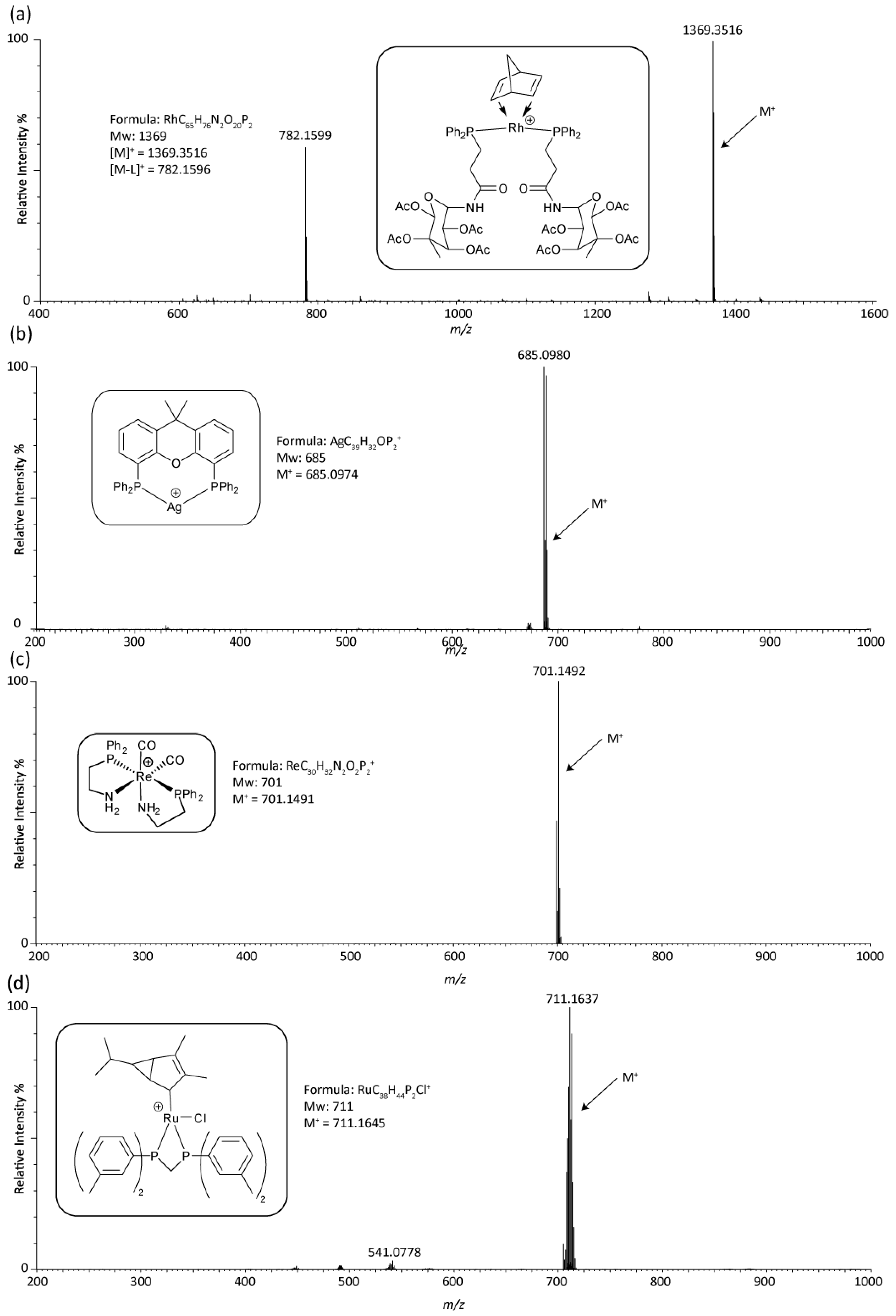
Cationic complexes might appear to be easier to transfer to the gas phase as they are already charged, but several examples below have very labile moieties attached, and it might be expected that these would be lost on desorption to the gas phase; however, as shown in the relevant spectra, these remain intact. Figure 7 shows the positive-ion-mode nanospray mass spectra of four cationic organometallic phosphino complexes covering a range of transition metals and ligand types. Spectrum (a) is the rhodium phosphino carbohydrate complex with a bicyclohepta-2,5-diene moiety non-covalently attached. The base peak in the spectrum is the M+ at m/z 1369 with a single fragment ion due to loss of one of the ligands at m/z 782. Spectrum (b) is the silver bridged phosphino complex which shows a single peak for the M+ at m/z 685. Spectrum (c) is for the cationic rhenium aminophosphino dicarbonyl complex. Carbonyl groups are often quite labile, and it is normal to see peaks for the loss of the carbonyl groups in ESI-MS [46]. Due to the high reactivity and lability of this sample, the solid was provided under nitrogen, directly dissolved in dry DCM, and immediately ran in DCM/MeOH (50%). The resulting spectrum shows just a single peak for the intact M+ ion at m/z 701. This is a remarkable result for such a fragile and reactive complex, although even with the use of nanospray ionisation, speed and careful handling was of the essence. Spectrum (d) is of the ruthenium phosphino bicyclohydrocarbon complex. The base peak in this spectrum is the M+ at m/z 711, which is surprising due to the lability of the alkyl moiety. There is a small fragment ion at m/z 541, which seems to be due to the fragmentation of this alkyl group.

3.4. Anionic and Anion Bridged Complexes

Similarly to the analysis of cationic complexes, the analysis of anionic species in the negative ion mode would appear to be simpler due to the fact that the analyte is already charged. However, the desorption process in ESI can still lead to ligand stripping and/or redox processes. Again, the utility of chip-based nanospray ionisation is tested, with the results presented in the following discussion.
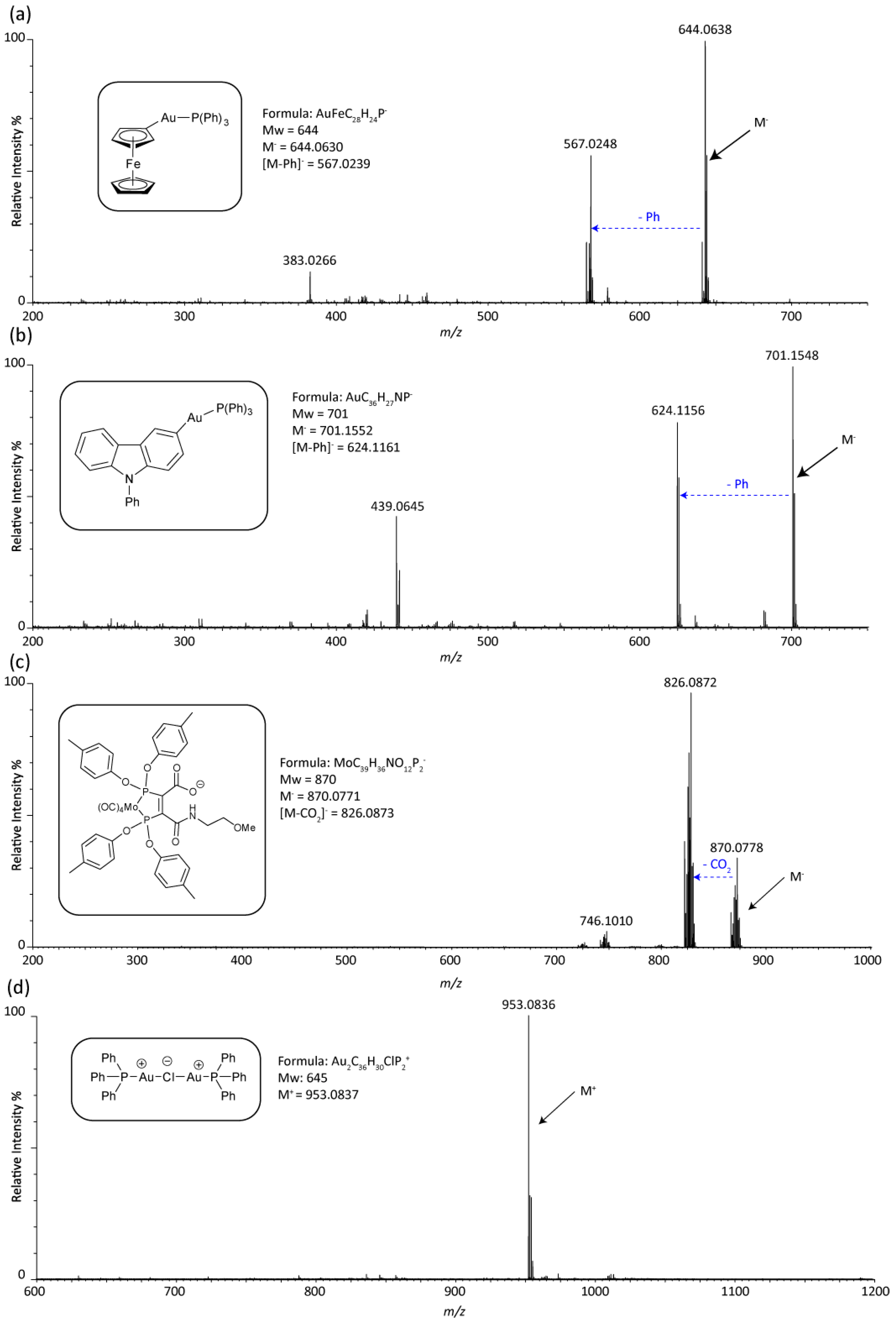
Figure 8 shows the negative-ion-mode nanospray mass spectrometric analysis of three phospino-organometallic complexes to demonstrate the utility of the methodology for the analysis of anionic species or those that prefer to generate anions in the gas phase. Spectrum (a) is of the gold phosphino ferrocene complex. The intact molecular ion (M) is observed as the base peak at m/z 644, with the most intense fragment ion being due to the loss of a phenyl group at m/z 567. The only other significant ion observed in the spectrum is at m/z 383, which is attributed to the HAuP(Ph)2 ion due to probable decomposition of the ligand. Spectrum (b) is of the gold phosphino phenylcarbazole complex. The intact molecular ion (M) is observed as the base peak at m/z 701, with a high intensity fragment ion due to loss of phenyl group at m/z 624. The only other significant ion in the mass spectrum is at m/z 439, which is due to the gold phenyl carbazole complex after loss of the triphenyl phosphine ligand. Spectrum (c) is of the molybdenum carbonyl organometallic complex. In this spectrum, the base peak is for the loss of CO2 from the molecular ion (m/z 826) which is very common in the ESI-MS analysis of acids [47]; however, the intact molecular anion (m/z 870) is present at approximately 35% RI. Finally, in Figure 8, spectrum (d) is the positive ion nanospray mass spectrometric analysis of the chloride bridged gold phosphine dimer complex. The only peak observed in the spectrum is due to the intact cation at m/z 953. This spectrum clearly demonstrates the applicability of nanospray ionisation to anion bridged complexes, which are considered to be quite fragile. You would not normally expect them to survive intact in the gas phase in any other ionisation method.
Figure 7. The nanospray mass spectra of four cationic organometallic complexes (ad) (structures are shown in the boxed insert). The intact molecular ion peaks are labelled on the spectra along with any identified fragment ions.
Chemosensors 14 00052 g007
Figure 8. The negative ion nanospray mass spectra of three organometallic complexes (ac) and positive ion nanospray mass spectra of one anion bridged complex (d) (structures are shown in the boxed insert). The intact molecular ion peaks are labelled on the spectra along with any identified fragment ions.
Chemosensors 14 00052 g008

4. Conclusions

This study clearly demonstrates the power of chip-based nanospray ionisation for the rapid analysis of reactive phosphine ligands and phospino-organometallic complexes. Most of the spectra are dominated by the intact molecules, for example, [M+H]+ for neutral compounds, M+ for cationic compounds, and M for the anionic compounds. In examples when that is not the case, the intact molecule is still easily and clearly identifiable. In some cases, cationation with sodium or potassium to generate [M+Na]+ and [M+K]+ is observed, and in a few cases, oxidation or reduction of the metal is observed. In cases where the base peak in the spectrum does not correspond to the intact molecule, they most often result from the loss of an anion (Cl or H) from the neutral molecule or due to simple neutral losses (loss of CO and CO2), which does not prevent the analyst from being able to identify the original molecule. With the bare ligands, the oxidised peak(s) will appear and continue to grow in intensity throughout the experiment, as nanospray is still an atmospheric ionisation method; however, the rate of oxidation is low enough, under the source and solvent conditions used, that the intact unreacted protonated molecule is still the base peak—even after as long as 10 min. With the organometallic complexes, the appearance of oxidation is often suppressed to the point of it not occurring. As a result, oxidative decomposition of the complexes is also largely absent even when highly labile ligands are present. When compared to ESI, where oxidation often occurs immediately or even in solution prior to ionisation due to the use of protic or oxic solvents, nanospray is shown to be the technique of choice. The power of chip-based nanospray is that it is a very rapid process, taking less than 1 min from dissolving the sample to seeing the mass spectrum. However, it remains the case that it is essential to perform the analysis as quickly as possible and to avoid oxic or protic solvents as far as is possible. Chip-based nanospray systems also present feasibility for coupling with microfluidics systems, enabling analyses to be performed in an automated synthesis setup and/or reaction monitoring workflow.

Funding

This research received no external funding.

Institutional Review Board Statement

Not applicable.

Informed Consent Statement

Not applicable.

Data Availability Statement

The raw data is available at the University of Bristol data repository, data.bris, at https://doi.org/10.5523/bris.8zfi5llx241k1yiz1gjthsy8g.

Acknowledgments

The author would like to acknowledge the University of Bristol, School of Chemistry Synthetic Chemistry Laboratories for keeping him supplied with challenging samples and Candy Jiang for proof reading.

Conflicts of Interest

The author declares no conflicts of interest.

Abbreviations

The following abbreviations are used in this manuscript:
DARTdirect analysis in real time
DCMdichloromethane
DESIdesorption electrospray ionisation
DPPE1,2-Bis(diphenylphosphino)ethane
ESIelectrospray ionisation
HESIheated electrospray ionisation
MeCNacetonitrile
MeOHmethanol
MSmass spectrometry
RIrelative intensity
THFtetrahydrofuran

References

  1. Kapuśniak, L.; Plessow, P.N.; Trzybiński, D.; Woźniak, K.; Hofmann, P.H.; Jolly, P.I. A mild one-pot reduction of phosphine(V) oxides affording phosphines(III) and their metal catalysts. Organometallics 2021, 40, 693–701. [Google Scholar] [CrossRef] [PubMed]
  2. Guo, L.; Xu, Y.; Wang, X.; Liu, W.; Lu, D. Investigation of the mechanisms of palladium-catalyzed C–H acetoxylation and methoxylation by electrospray ionization mass spectrometry. Organometallics 2013, 32, 3780–3783. [Google Scholar] [CrossRef]
  3. Devaraj, K.; Sollert, C.; Juds, C.; Gates, P.J.; Pilarski, L.T. Ru-catalysed C-H silylation of unprotected gramines, tryptamines and their congeners. Chem. Commun. 2016, 52, 5868–5871. [Google Scholar] [CrossRef] [PubMed]
  4. Griffiths, J.R.; Hofman, E.J.; Keister, J.B.; Diver, S.T. Kinetics and mechanism of isocyanide-promoted carbene insertion into the aryl substituent of an N-Heterocyclic carbene ligand in ruthenium-based metathesis catalysts. Organometallics 2017, 36, 3043–3052. [Google Scholar] [CrossRef]
  5. Harper, M.J.; Arthur, C.J.; Crosby, J.; Emmett, E.J.; Falconer, R.L.; Fensham-Smith, A.J.; Gates, P.J.; Leman, T.; McGrady, J.E.; Bower, J.F.; et al. Oxidative addition, transmetalation, and reductive elimination at a 2,2′-bipyridyl-ligated gold center. J. Am. Chem. Soc. 2018, 140, 4440–4445. [Google Scholar] [CrossRef]
  6. Gregg, Z.R.; Griffiths, J.R.; Diver, S.T. Conformational control of initiation rate in Hoveyda–Grubbs precatalysts. Organometallics 2018, 37, 1526–1533. [Google Scholar] [CrossRef]
  7. Brunel, P.; Lhardy, C.; Mallet-Ladeira, S.; Monot, J.; Martin-Vaca, B.; Bourissou, D. Palladium pincer complexes featuring an unsymmetrical SCN indene-based ligand with a hemilabile pyridine sidearm. Dalton Trans. 2019, 48, 9801–9806. [Google Scholar] [CrossRef]
  8. Estevez, R.; Aguado-Deblas, L.; Bautista, F.M.; López-Tenllado, F.J.; Romero, A.A.; Luna, D. A review on green hydrogen valorization by heterogeneous catalytic hydrogenation of captured CO2 into value-added products. Catalysts 2022, 12, 1555. [Google Scholar] [CrossRef]
  9. Huang, J.; Ho, D.B.; Gaube, G.; Celuszak, H.; Becica, J.; Thomas, G.T.; Schley, N.D.; Leitch, D.C. A thermally stable, alkene-free palladium source for oxidative addition complex formation and high-turnover catalysis. Organometallics 2024, 43, 2403–2412. [Google Scholar] [CrossRef]
  10. Zhao, P.; Liu, M.; Li, Y.; Wang, L.; Duan, Z. Reactions of benzyl phosphine oxide/sulfide with (COCl)2: Synthesis of novel acyl chloride-substituted chlorophosphonium ylides. J. Org. Chem. 2024, 89, 14305–14314. [Google Scholar] [CrossRef]
  11. Cheesman, B.T.; Gates, P.J.; Castle, T.C.; Cosgrove, T.; Prescott, S.W. Linear and star architecture methacrylate-functionalised PDMS. Mater. Today Commun. 2015, 3, 122–129. [Google Scholar] [CrossRef]
  12. Klosin, J.; Fontaine, P.P.; Figueroa, R. Development of group IV molecular catalysts for high temperature ethylene-α-olefin copolymerization reactions. Acc. Chem. Res. 2015, 48, 2004–2016. [Google Scholar] [CrossRef]
  13. Teator, A.J.; Lastovickova, D.N.; Bielawski, C.W. Switchable Polymerization Catalysts. Chem. Rev. 2016, 116, 1969–1992. [Google Scholar] [CrossRef]
  14. Musgrave, R.A.; Hailes, R.L.N.; Schäfer, A.; Russell, A.D.; Gates, P.J.; Manners, I. New reactivity at the silicon bridge in sila[1]ferrocenophanes. Dalton Trans. 2018, 47, 2759–2768. [Google Scholar] [CrossRef] [PubMed]
  15. Gao, Y.; Gupta, P.; Rončević, I.; Mycroft, C.; Gates, P.J.; Parker, A.W.; Anderson, H.L. Solution-phase stabilization of a cyclocarbon by catenane formation. Science 2025, 389, 708–710. [Google Scholar] [CrossRef] [PubMed]
  16. Chen, W.; Cai, P.; Zhou, H.-C.; Madrahimov, S.T. Bridging homogeneous and heterogeneous catalysis: Phosphine-functionalized metal-organic frameworks. Angew. Chem. Int. Ed. 2024, 63, e202315075. [Google Scholar] [CrossRef]
  17. Wei, X.; Li, B.; Liu, Q.; Xiong, S.; Wang, P.; Wang, Z.; Cheng Gu, C. Phosphine-catalytic synthesis of covalent organic frameworks: Accessing structural crystallinity and applicable processability. Adv. Funct. Mater. 2025, e18013. [Google Scholar] [CrossRef]
  18. Stewart, I.I.; Horlick, G. Developments in the electrospray mass spectrometry of inorganic species. Trends Anal. Chem. 1996, 15, 80–90. [Google Scholar] [CrossRef]
  19. Hop, C.E.C.A.; Bakhtiar, R. Electrospray ionization mass spectrometry: Part III: Applications in inorganic chemistry and synthetic polymer chemistry. J. Chem. Educ. 1996, 73, A162–A169. [Google Scholar] [CrossRef]
  20. Colton, R.; Dakternieks, D. An electrospray mass spectrometric study of some mercury phosphine complexes. Inorg. Chim. Acta 1993, 208, 173–177. [Google Scholar] [CrossRef]
  21. Henderson, W.; Olsen, G.M. Application of electrospray mass spectrometry to the characterization of hydroxymethylphosphonium salts, -phosphines, and their oxide, sulfide and selenide derivatives. Polyhedron 1996, 15, 2105–2115. [Google Scholar] [CrossRef]
  22. Joshi, A.; Killeen, C.; Thiessen, T.; Zijlstra, H.S.; McIndoe, J.S. Handling considerations for the mass spectrometry of reactive organometallic compounds. J. Mass Spectrom. 2022, 57, e4807. [Google Scholar] [CrossRef]
  23. Yunker, L.P.E.; Stoddard, R.L.; McIndoe, J.S. Practical approaches to the ESI-MS analysis of catalytic reactions. J. Mass Spectrom. 2014, 49, 1–8. [Google Scholar] [CrossRef]
  24. Killeen, C.; Kropp, A.; Chagunda, I.C.; Jackson, E.C.; McIndoe, J.S. The amenability of different solvents to electrospray ionization mass spectrometry. Int. J. Mass Spectrom. 2024, 506, 117349. [Google Scholar] [CrossRef]
  25. Lubben, A.T.; McIndoe, J.S.; Weller, A.S. Coupling an electrospray ionization mass spectrometer with a glovebox: A straightforward, powerful, and convenient combination for analysis of air-sensitive organometallics. Organometallics 2008, 27, 3303–3306. [Google Scholar] [CrossRef]
  26. Dyson, P.J.; McIndoe, J.S. Analysis of organometallic compounds using ion trap mass spectrometry. Inorg. Chim. Acta 2003, 354, 68–74. [Google Scholar] [CrossRef]
  27. Borges, D.L.G.; Sturgeon, R.E.; Welz, B.; Curtius, A.J.; Mester, Z. Ambient mass spectrometric detection of organometallic compounds using direct analysis in real time. Anal. Chem. 2009, 81, 9834–9839. [Google Scholar] [CrossRef] [PubMed]
  28. Groenewold, G.S.; Appelhans, A.D.; McIlwain, M.E.; Gresham, G.L. Characterization of coordination complexes by desorption electrospray mass spectrometry with a capillary target. Int. J. Mass Spectrom. 2011, 301, 136–142. [Google Scholar] [CrossRef]
  29. Mazzotta, M.G.; Young, J.O.E.; Evans, J.W.; Dopierala, L.A.; Claytor, Z.A.; Smith, A.C.; Snyder, C.; Tice, N.C.; Smith, D.L. Direct analysis in real time mass spectrometry of fused ring heterocyclic organometallic compounds. Anal. Methods 2015, 7, 4003–4007. [Google Scholar] [CrossRef]
  30. Goryainov, S.V.; Esparza, C.; Kulikova, L.N.; Borisova, A.R.; Kumandin, P.A.; Antonova, A.S.; Rystsova, E.O.; Oshakbaev, M.T.; Omarova, G.T.; Polovkov, N.Y. DART mass spectrometry in the analysis of organometallic complexes. J. Anal. Chem. 2021, 76, 1520–1524. [Google Scholar] [CrossRef]
  31. Zheng, Q.; Liu, Y.; Chen, Q.; Hu, M.; Helmy, R.; Sherer, E.C.; Welch, C.J.; Chen, H. Capture of reactive monophosphine-ligated palladium(0) intermediates by mass spectrometry. J. Am. Chem. Soc. 2015, 137, 14035–14038. [Google Scholar] [CrossRef]
  32. Pavlov, J.; Zheng, Z.; Douce, D.; Bajic, S.; Attygalle, A.B. Helium-plasma-ionization mass spectrometry of metallocenes and their derivatives. J. Am. Soc. Mass Spectrom. 2021, 32, 548–559. [Google Scholar] [CrossRef] [PubMed]
  33. Wilm, M.S.; Mann, M. Electrospray and Taylor-cone theory, Dole’s beam of macromolecules at last? Int. J. Mass Spectrom. Ion Proc. 1994, 136, 167–180. [Google Scholar] [CrossRef]
  34. Wilm, M.S.; Mann, M. Analytical properties of the nanoelectrospray ion source. Anal. Chem. 1996, 68, 1–8. [Google Scholar] [CrossRef]
  35. Griffiths, W.J. Nanospray mass spectrometry in protein and peptide chemistry. In Proteomics in Functional Genomics, EXS; Jollès, P., Jörnvall, H., Eds.; Birkhäuser: Basel, Switzerland, 2000; Volume 88, pp. 69–79. [Google Scholar] [CrossRef]
  36. Corkery, L.J.; Pang, H.; Schneider, B.S.; Covey, T.R.; Siu, K.W.M. Automated nanospray using chip-based emitters for the quantitative analysis of pharmaceutical compounds. J. Am. Soc. Mass Spectrom. 2005, 16, 363–369. [Google Scholar] [CrossRef][Green Version]
  37. Hartwig, J.F. Organotransition Metal Chemistry: From Bonding to Catalysis; University Science Books: New York, NY, USA, 2010. [Google Scholar]
  38. Schlatzer, T.; Breinbauer, R. Synthesis of hydrophilic phosphorus ligands and their application in aqueous-phase metal-catalyzed reactions. Adv. Synth. Catal. 2021, 363, 668–687. [Google Scholar] [CrossRef]
  39. Mechrouk, V.; Bissessar, D.; Egly, J.; Parmentier, J.; Bellemin-Laponnaz, S. Synthesis and characterization of transition metal complexes supported by phosphorus ligands obtained using hydrophosphination of cyclic internal alkenes. Molecules 2024, 29, 3946. [Google Scholar] [CrossRef]
  40. Kozieł, S.; Komarnicka, U.K.; Ziółkowska, A.; Skórska-Stania, A.; Pucelik, B.; Płotek, M.; Sebastian, V.; Bieńko, A.; Stochel, G.; Kyzioł, A. Anticancer potency of novel organometallic Ir(III) complexes with phosphine derivatives of fluoroquinolones encapsulated in polymeric micelles. Inorg. Chem. Front. 2020, 7, 3386–3401. [Google Scholar] [CrossRef]
  41. Engelbrecht, Z.; Meijboom, R.; Cron, M.J. The ability of silver(I) thiocyanate 4-methoxyphenyl phosphine to induce apoptotic cell death in esophageal cancer cells is correlated to mitochondrial perturbations. BioMetals 2018, 31, 189–202. [Google Scholar] [CrossRef] [PubMed]
  42. Fleissner, S.; Pittenauer, E.; Kirchner, K. Electrospray ionization tandem mass spectrometric study of selected phosphine-based ligands for catalytically active organometallics. J. Am. Soc. Mass Spectrom. 2023, 34, 1647–1652. [Google Scholar] [CrossRef] [PubMed]
  43. Blades, A.T.; Ikonomou, M.G.; Kebarle, P. Mechanism of electrospray mass spectrometry. Electrospray as an electrolysis cell. Anal. Chem. 1991, 63, 2109–2114. [Google Scholar] [CrossRef]
  44. de la Mora, J.F.; van Berkel, G.J.; Enke, C.G.; Cole, R.B.; Martinez-Sanchez, M.; Fenn, J.B. Electrochemical processes in electrospray ionization mass spectrometry. J. Mass Spectrom. 2000, 35, 939–952. [Google Scholar] [CrossRef]
  45. Gates, P.J.; Lopes, N.P. Characterisation of flavonoid aglycones by negative ion chip-based nanospray tandem mass spectrometry. Int. J. Anal. Chem. 2012, 259217. [Google Scholar] [CrossRef]
  46. Edgar, K.; Johnson, B.F.G.; Lewis, J.; Williams, I.G.; Wilson, J.M. Mass spectra of inorganic molecules. Part III. Some transition-metal carbonyl halide and thiol compounds. J. Chem. Soc. A Inorg. Phys. Theor. 1967. [Google Scholar] [CrossRef]
  47. Demarque, D.P.; Crotti, A.E.M.; Vessecchi, R.; Lopes, J.L.C.; Lopes, N.P. Fragmentation reactions using electrospray ionization mass spectrometry: An important tool for the structural elucidation and characterization of synthetic and natural products. Nat. Prod. Rep. 2016, 33, 432–455. [Google Scholar] [CrossRef] [PubMed]
Figure 3. The nanospray mass spectra of four phosphine and phosphinous amide pincer ligands (ad) (structures are shown in the boxed insert). The various key ions are labelled on the spectra.
Chemosensors 14 00052 g003
Figure 4. The nanospray mass spectra of four phosphine ligands (ad) (structures are shown in the boxed insert). The various key ions are labelled on the spectra.
Chemosensors 14 00052 g004
Figure 6. The nanospray mass spectra of four neutral organometallic complexes (ad) (structures are shown in the boxed insert). The intact molecular ion peaks are labelled on the spectra along with any identified fragment ions.
Chemosensors 14 00052 g006
Disclaimer/Publisher’s Note: The statements, opinions and data contained in all publications are solely those of the individual author(s) and contributor(s) and not of MDPI and/or the editor(s). MDPI and/or the editor(s) disclaim responsibility for any injury to people or property resulting from any ideas, methods, instructions or products referred to in the content.