Article

Is Misoprostol Vaginal Insert Safe for the Induction of Labor in High-Risk Pregnancy Obese Women?

by
Valentin Nicolae Varlas
1,2,*,
Georgiana Bostan
3,
Bogdana Adriana Nasui
4,*,
Nicolae Bacalbasa
2 and
Anca Lucia Pop
5
1
Department of Obstetrics and Gynecology, Filantropia Clinical Hospital, 011132 Bucharest, Romania
2
Department of Obstetrics and Gynecology, Carol Davila University of Medicine and Pharmacy, 37 Dionisie Lupu St., 020021 Bucharest, Romania
3
County Emergency Hospital St. John the New, 720224 Suceava, Romania
4
Department of Community Health, Iuliu Hațieganu University of Medicine and Pharmacy, 6 Louis Pasteur Street,400349 Cluj-Napoca, Romania
5
Department of Clinical Laboratory, Food Safety, Carol Davila University of Medicine and Pharmacy, 6 Traian Vuia Street, 020945 Bucharest, Romania
*
Authors to whom correspondence should be addressed.
Healthcare 2021, 9(4), 464; https://doi.org/10.3390/healthcare9040464

Submission received: 9 March 2021 / Revised: 7 April 2021 / Accepted: 12 April 2021 / Published: 14 April 2021
(This article belongs to the Special Issue Maternal and Child Health: Advances in Translational Research)

Abstract

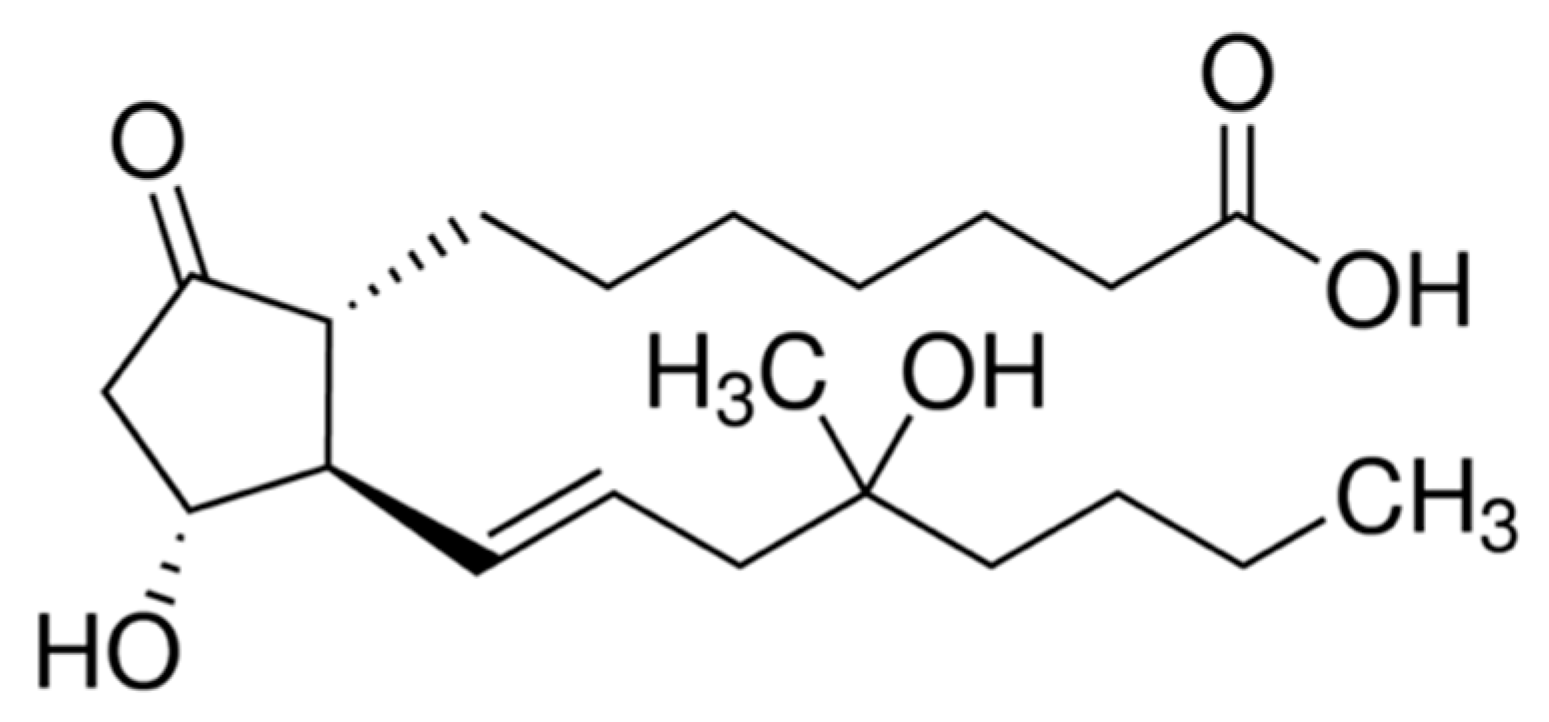
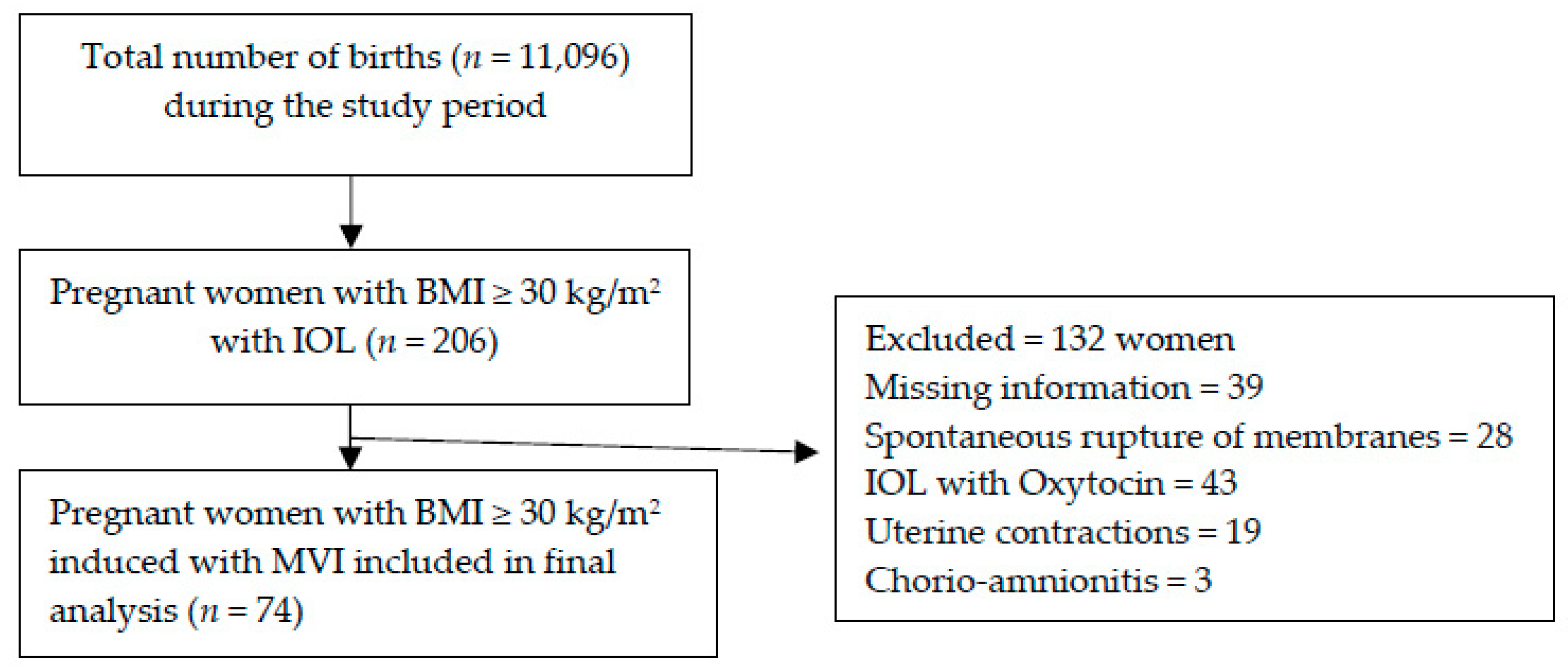
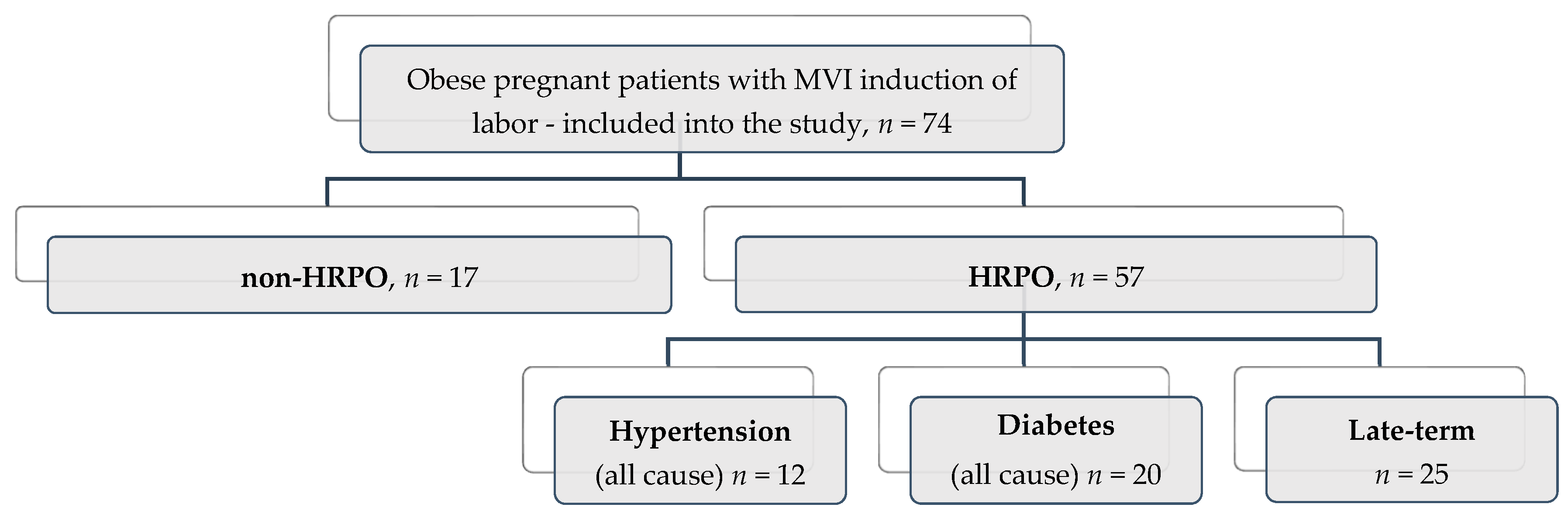
Induction of labor (IOL) is an event that occurs in up to 25% of pregnancies. In Europe, the misoprostol vaginal insert (MVI—Misodel®) was approved for labor induction in 2013. Studies on the outcomes and safety of IOL in obese pregnant women are scarce; no data are available on MVI IOL in high-risk pregnancy obese women (HRPO—late-term, hypertension, diabetes). As the obesity rates are growing steadily in pregnant women, we aimed to evaluate the failure rate for induction and the safety of a 200 μg MVI in obese (body mass index (BMI) >30 kg/m2) HRPO compared to that for obese non-high-risk pregnancies (non-HRPO). For this purpose, we conducted a cross-sectional study in “Filantropia” Clinical Hospital, Bucharest, Romania, from June 2017—the date of the initiation of the MVI IOL protocol in our clinic—to September 2019. The primary outcomes were the failure rate, measured by cesarean section (CS) ratio, and secondarily, the safety profile of MVI, analyzed by one-way ANOVA. Out of a total of 11,096 registered live births, IOL was performed on 206 obese patients. Of these, 74 obese pregnant women had their labor induced with MVI (HRPO, n = 57, and non-HRPO, n = 17). The average maternal age was 29.9 ± 4.8 years (19–44 years). Across the groups, the rate of CS was 29.8% (n = 17) in the HRPO group compared to 23.5% (n = 4) in the non-HRPO group (p = non significant). In the vaginally birth subgroups, the median time from drug administration to delivery was shorter in the HRPO group compared to the non-HRPO group (16.9 ± 6.0 h 95% confidence interval (CI) 15.0–18.8 vs. 19.4 ± 9.2 h 95% CI 13.8–25.0, p = 0.03). No significant differences were found regarding the maternal outcomes among the studied groups; in terms of perinatal outcomes of safety, 5.4% (n = 4) of the cases of vaginal delivery for HRPO were associated with neonatal intensive care unit (NICU) admissions. The MVI seems to be an efficient labor induction agent in high-risk pregnancy obese women with good maternal outcomes and low perinatologic complications.
Keywords: misoprostol vaginal insert; induction of labor; pregnancy; obesity misoprostol vaginal insert; induction of labor; pregnancy; obesity