Article

What Do We Know about Early Management of Sepsis and Septic Shock in Polish Hospitals? A Questionnaire Study


by
Łukasz J. Krzych
1,*,
Agnieszka Wiórek
1,*,
Paweł Zatorski
2,
Karol Gruca
3,
Karina Stefańska-Wronka
4 and
Janusz Trzebicki
2
1
Department of Anaesthesiology and Intensive Care, Faculty of Medical Sciences in Katowice, Medical University of Silesia, 14 Medyków Street, 40-752 Katowice, Poland
2
First Department of Anaesthesiology and Intensive Care, Medical University of Warsaw, 02-005 Warsaw, Poland
3
Students’ Scientific Society of the Department of Anaesthesiology and Intensive Care, Faculty of Medical Sciences in Katowice, Medical University of Silesia, 14 Medyków Street, 40-752 Katowice, Poland
4
Department of Anesthesiology and Intensive Therapy, District Hospital in Poznań, 60-479 Poznań, Poland
*
Authors to whom correspondence should be addressed.
Healthcare 2021, 9(2), 140; https://doi.org/10.3390/healthcare9020140

Submission received: 7 January 2021 / Revised: 23 January 2021 / Accepted: 25 January 2021 / Published: 1 February 2021
(This article belongs to the Section Critical Care)

Abstract

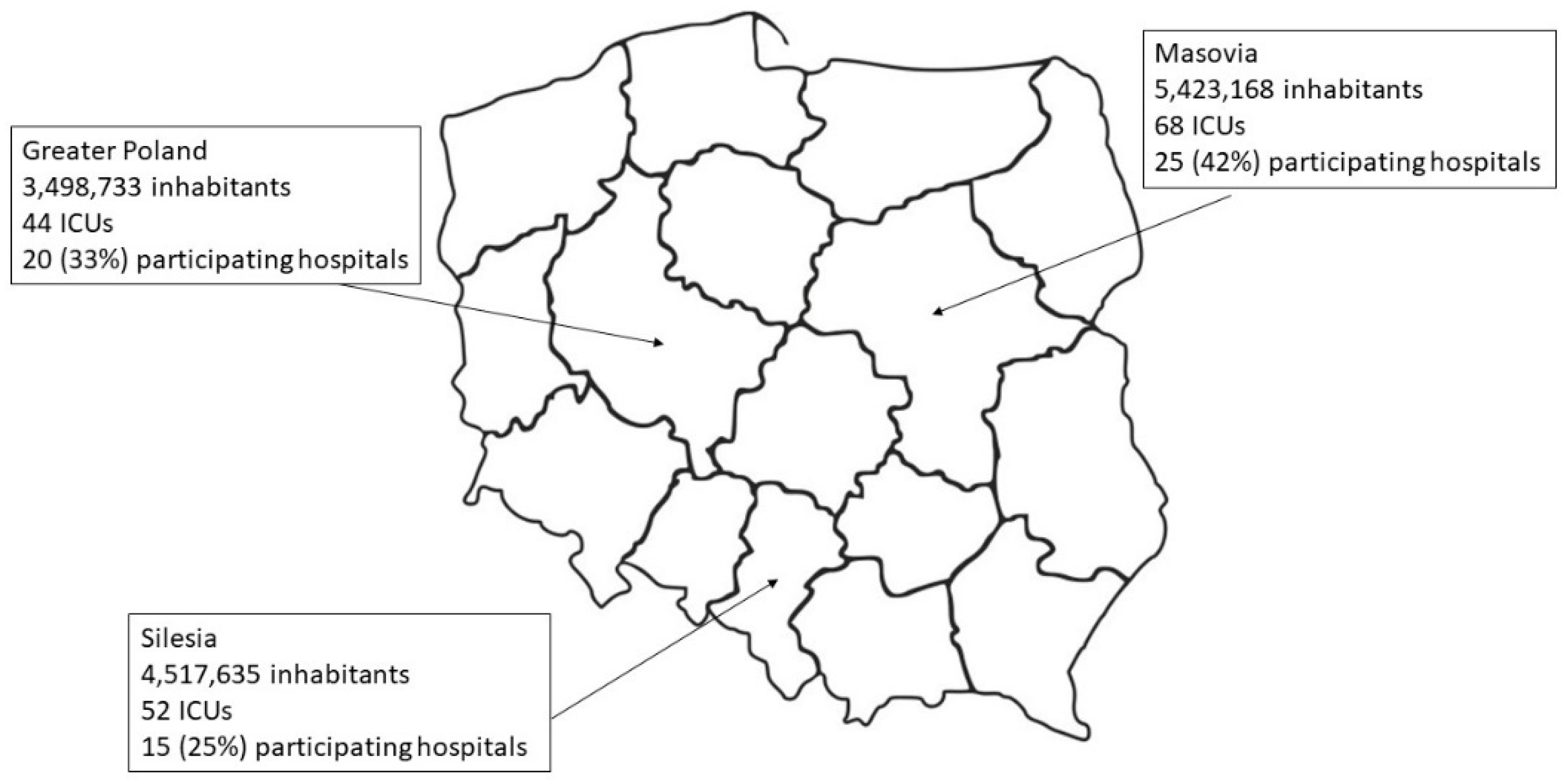
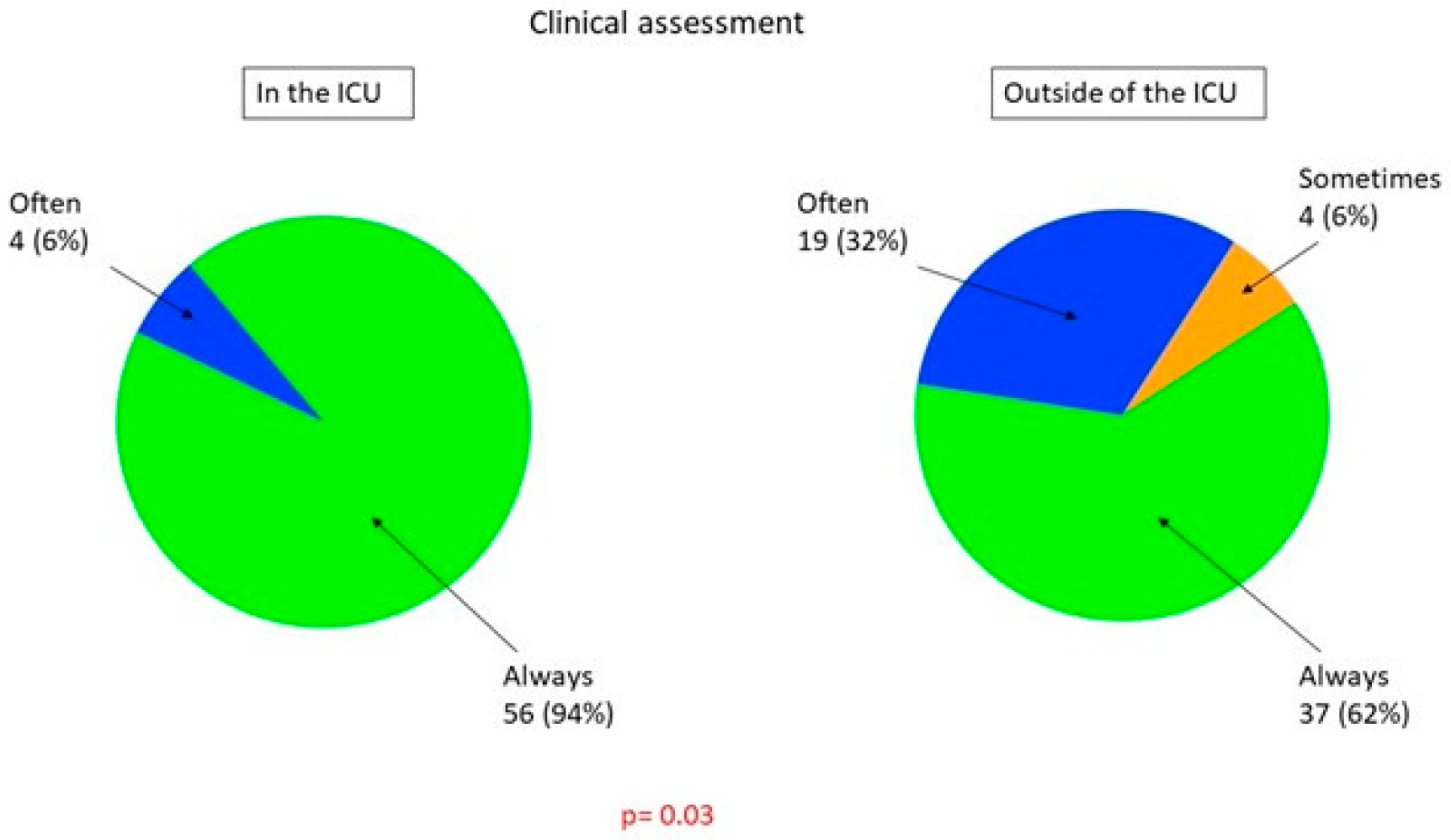
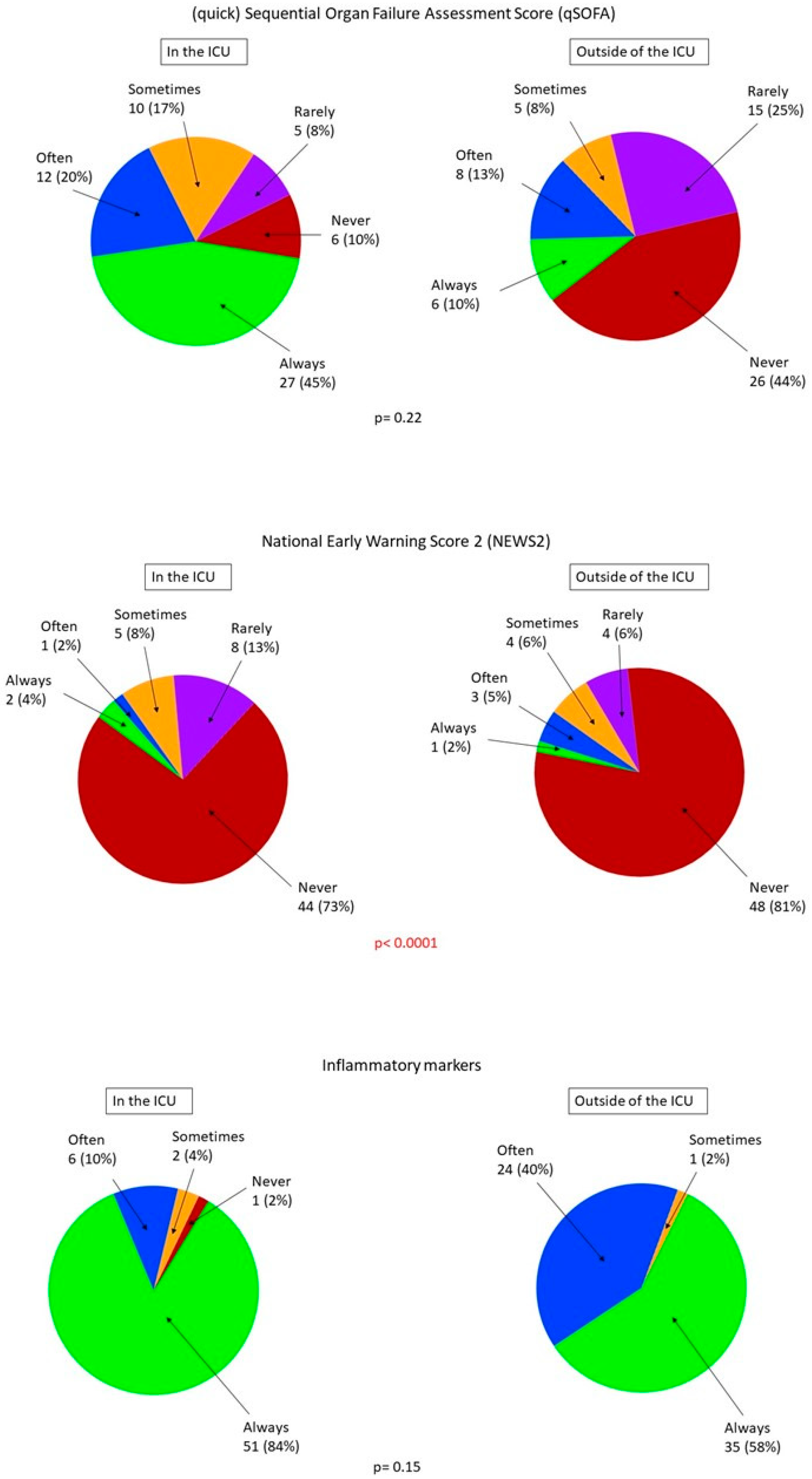
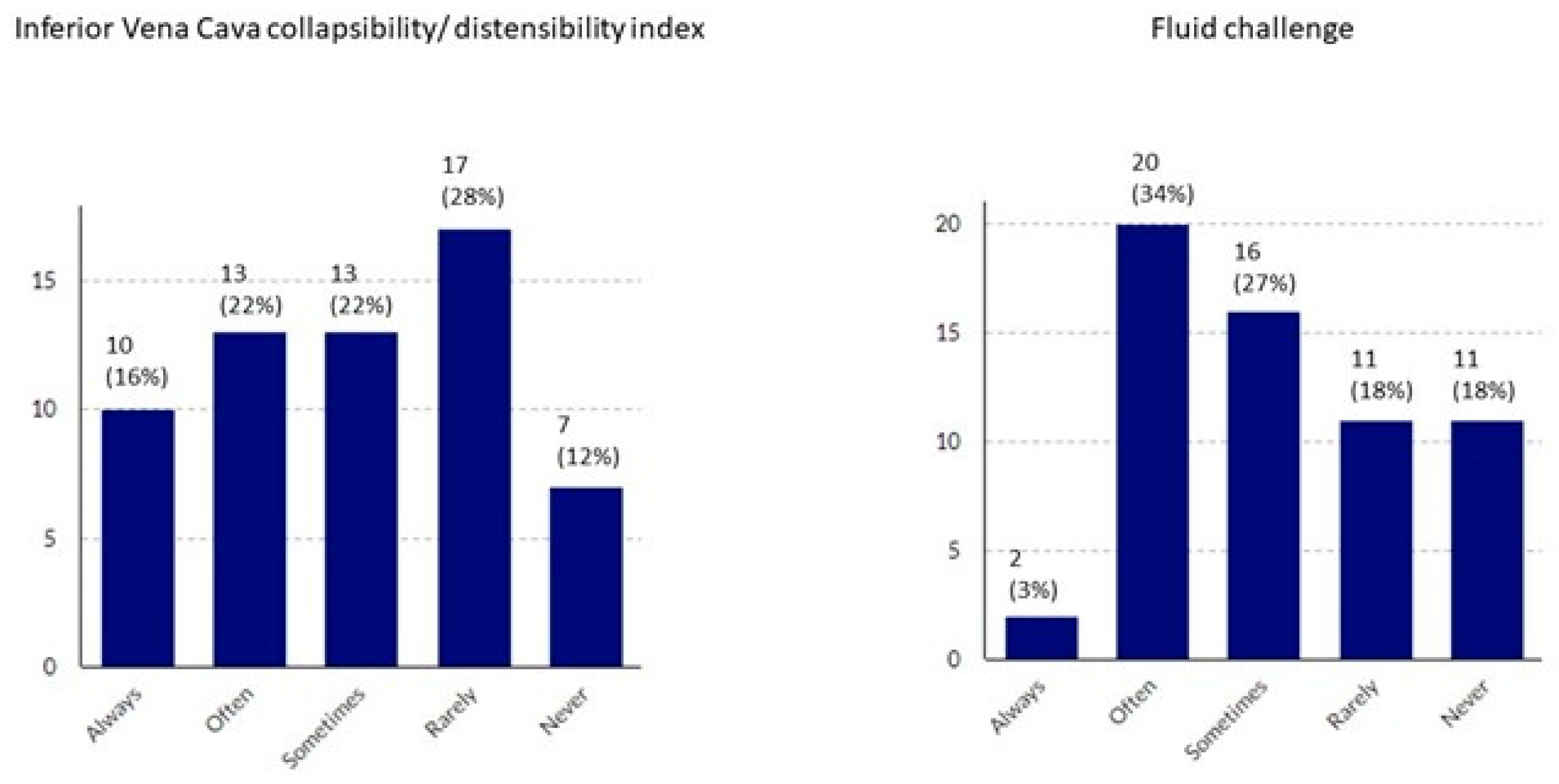
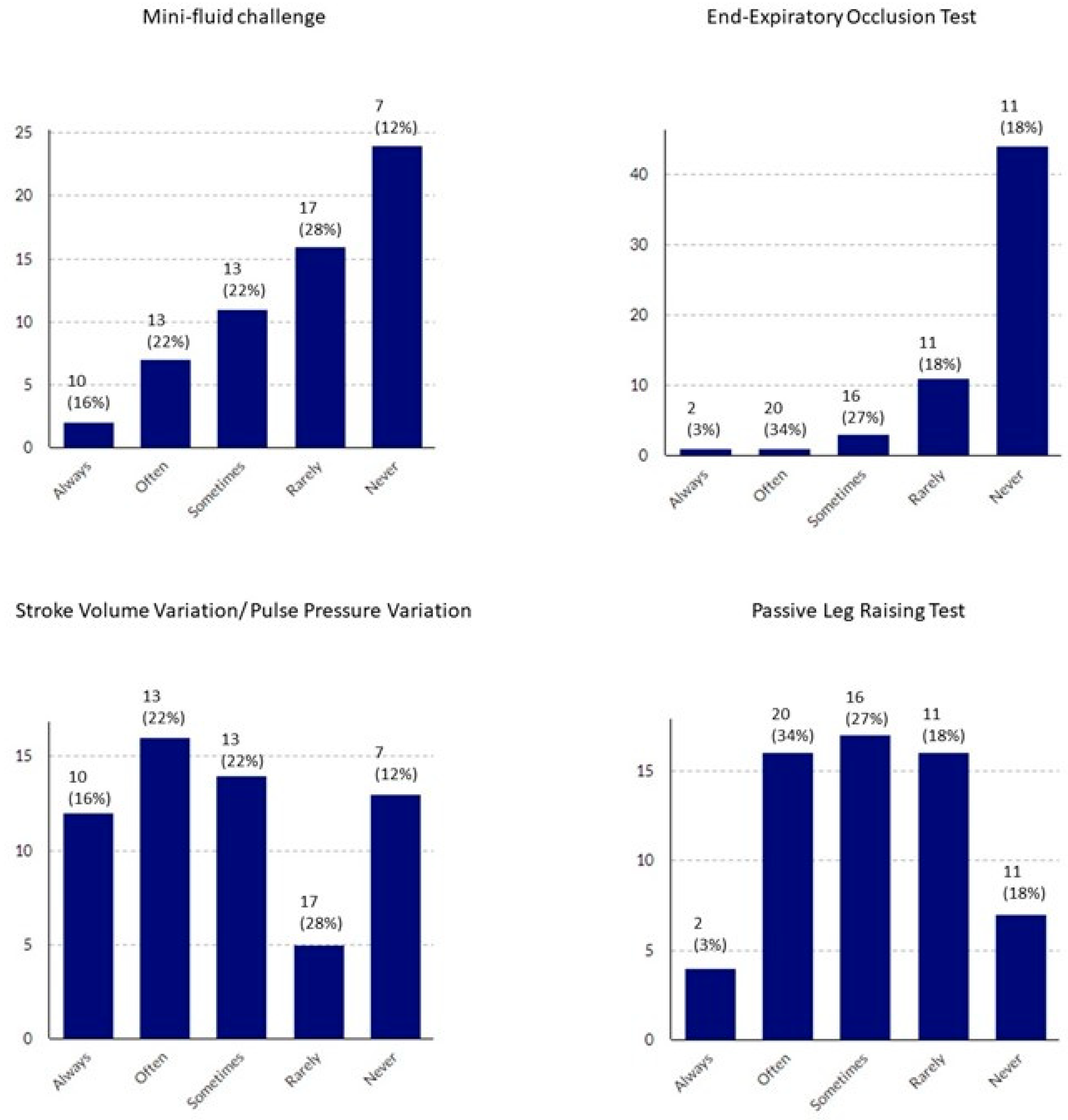
Background: Sepsis and septic shock are medical emergencies with a high risk of poor prognosis. We investigate the correspondence between Surviving Sepsis Campaign (SSC) guidelines and clinical practice in Poland, with special attention given to differences between ICU and non-ICU environments as well as regional variations within the country. Methods: A web-based questionnaire study was performed on a random sample of 60 hospitals from the three most populated regions in Poland—Masovia, Silesia, and Greater Poland. A 19-item questionnaire was built based on the most recent edition of SSC guidelines. Results: Sepsis diagnosis was primarily based on clinical evaluation (ICUs: 94%, non-ICUs: 62%; p = 0.02). There were significant differences between ICUs and non-ICUs regarding taking blood cultures for pathogen identification (2-times more frequent in ICUs) and having hospital-based operating procedures to adjust antimicrobial treatment to a clinical scenario (a difference of 17%). Modification of empiric antimicrobial treatment was required post-ICU admission in 70% of cases. ICUs differed from non-ICUs with regard to the methods of fluid responsiveness assessment and the types of catecholamines and fluids used to treat septic shock. The mean fluid load applied before the implementation of catecholamines was 25.8 ± 10.6 mL/kg. Norepinephrine was the first-line agent used to treat shock, and balanced crystalloids were preferred in both ICUs and non-ICUs. Conclusion: Compliance with SCC guidelines in Polish hospitals is insufficient, especially outside ICUs. There is a need for education among healthcare professionals to reach at least an acceptable level of knowledge and attitude in this field.
Keywords: guidelines compliance comparison; intensive care unit; sepsis guidelines adherence; sepsis and septic shock management; Surviving Sepsis Campaign guidelines compliance comparison; intensive care unit; sepsis guidelines adherence; sepsis and septic shock management; Surviving Sepsis Campaign