Article

An Ecological Analysis of Online Medical Consumption Discourse Among Visually Impaired Individuals Using a Theory-Driven LLM Approach


1
Department of Consumer Science, College of Commerce and Public Affairs, Incheon National University, Incheon 22012, Republic of Korea
2
Department of Food and Nutrition, College of BioNano Technology, Gachon University, Seongnam-si 13120, Republic of Korea
*
Author to whom correspondence should be addressed.
Healthcare 2026, 14(9), 1132; https://doi.org/10.3390/healthcare14091132

Submission received: 18 March 2026 / Revised: 16 April 2026 / Accepted: 22 April 2026 / Published: 23 April 2026

Abstract

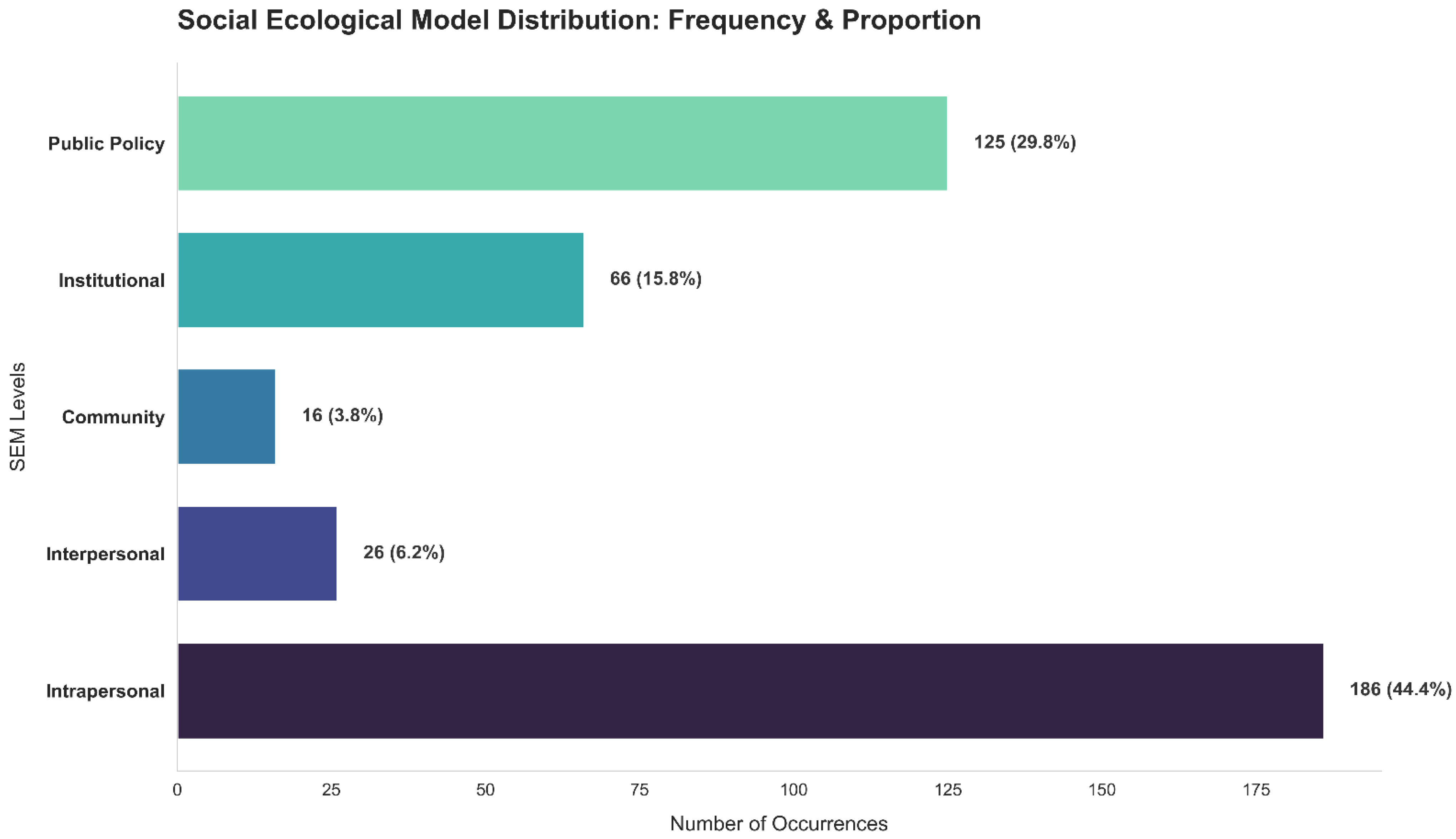
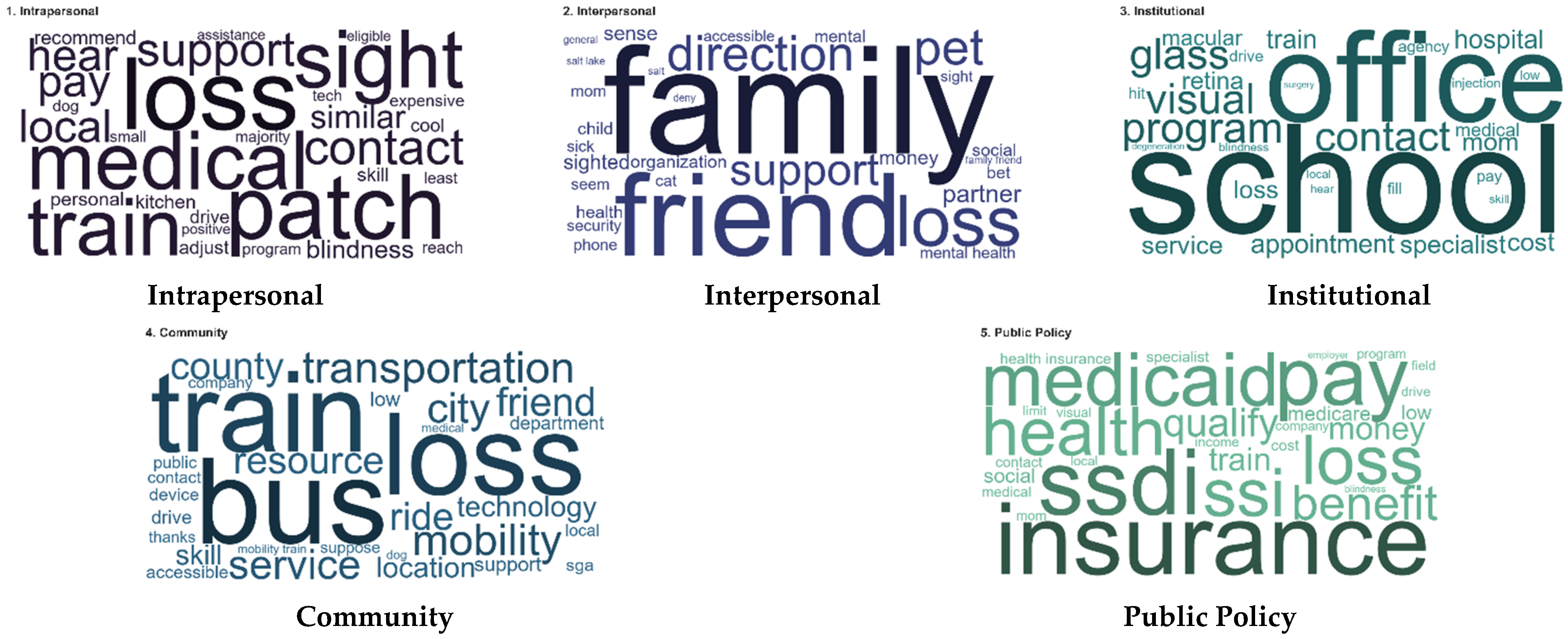
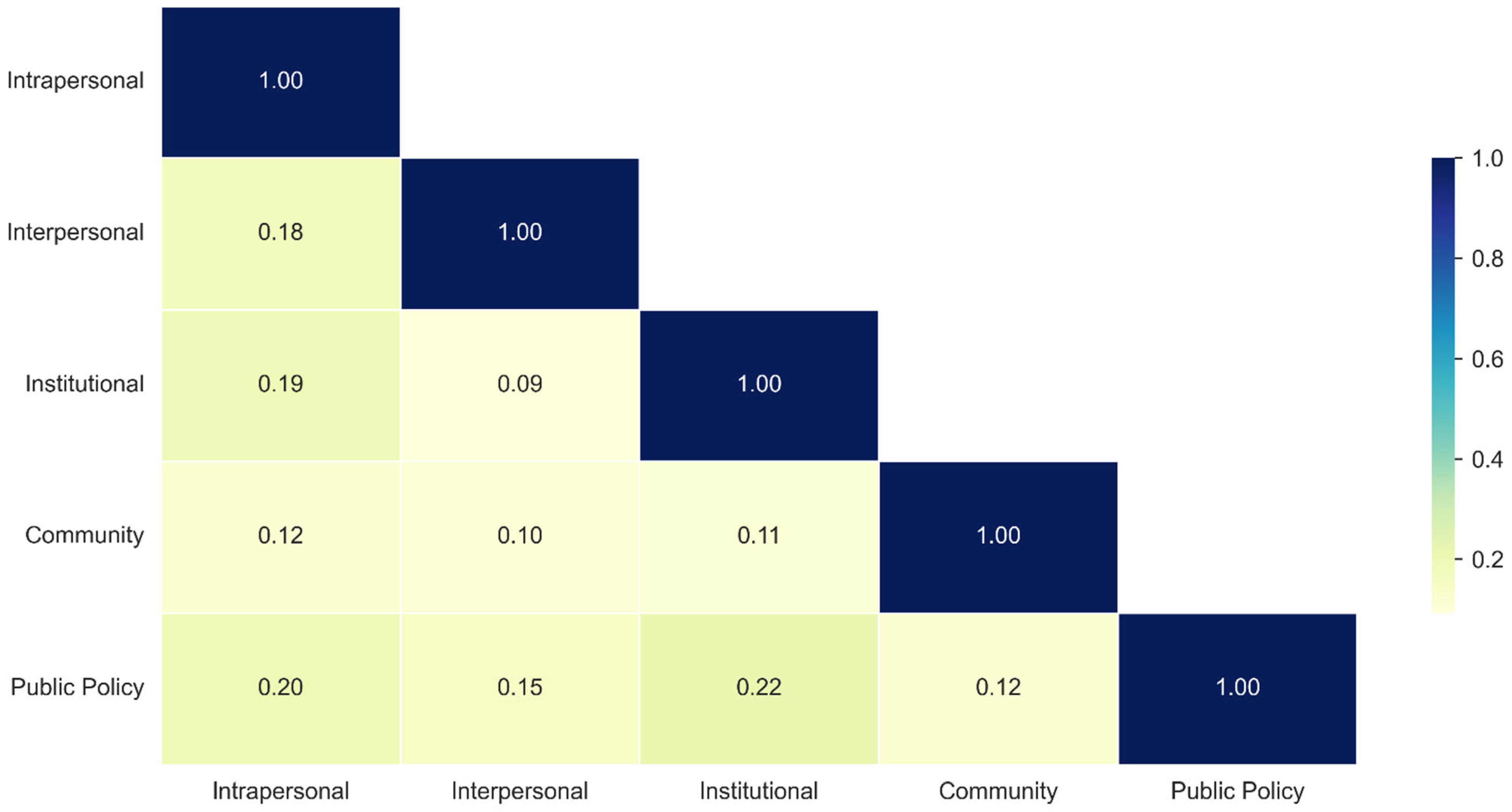
Background: This study examines how medical consumption is discussed in online communities among individuals who are blind or visually impaired using the Social Ecological Model (SEM) to capture multilevel healthcare experiences within digital discourse. Methods: A total of 428 posts and comments were collected from Reddit’s r/Blind community. Term frequency–inverse document frequency keyword extraction and a theory-driven LLM-based classification approach were applied to categorize texts into five SEM levels: intrapersonal, interpersonal, institutional, community, and public policy. Results: The findings show that intrapersonal (44.4%) and public policy (29.8%) levels were the most prominent, indicating a strong emphasis on personal coping experiences alongside structural constraints in healthcare access. Institutional-level discourse accounted for 15.8%, whereas interpersonal (6.2%) and community (3.8%) discourse were relatively limited. Keywords and qualitative analyses revealed themes related to emotional adaptation, social support, service accessibility, mobility constraints, and welfare policy barriers. The Jaccard similarity analysis indicated stronger associations between institutional and policy levels, whereas community-level discourse remained relatively distinct. Conclusions: These findings highlight the importance of understanding healthcare experiences, both individually and structurally, in online environments. This study also demonstrated the potential of integrating LLM-based classification with theory-driven frameworks to enable an interpretable and scalable analysis of complex health-related discourse.
Keywords: visually impaired individuals; social ecological model; medical consumption; online discourse visually impaired individuals; social ecological model; medical consumption; online discourse