The Brain–Atrial Fibrillation–Recent Rehabilitation Axis: A Modern Approach


Abstract
1. Introduction and Clinical Relevance
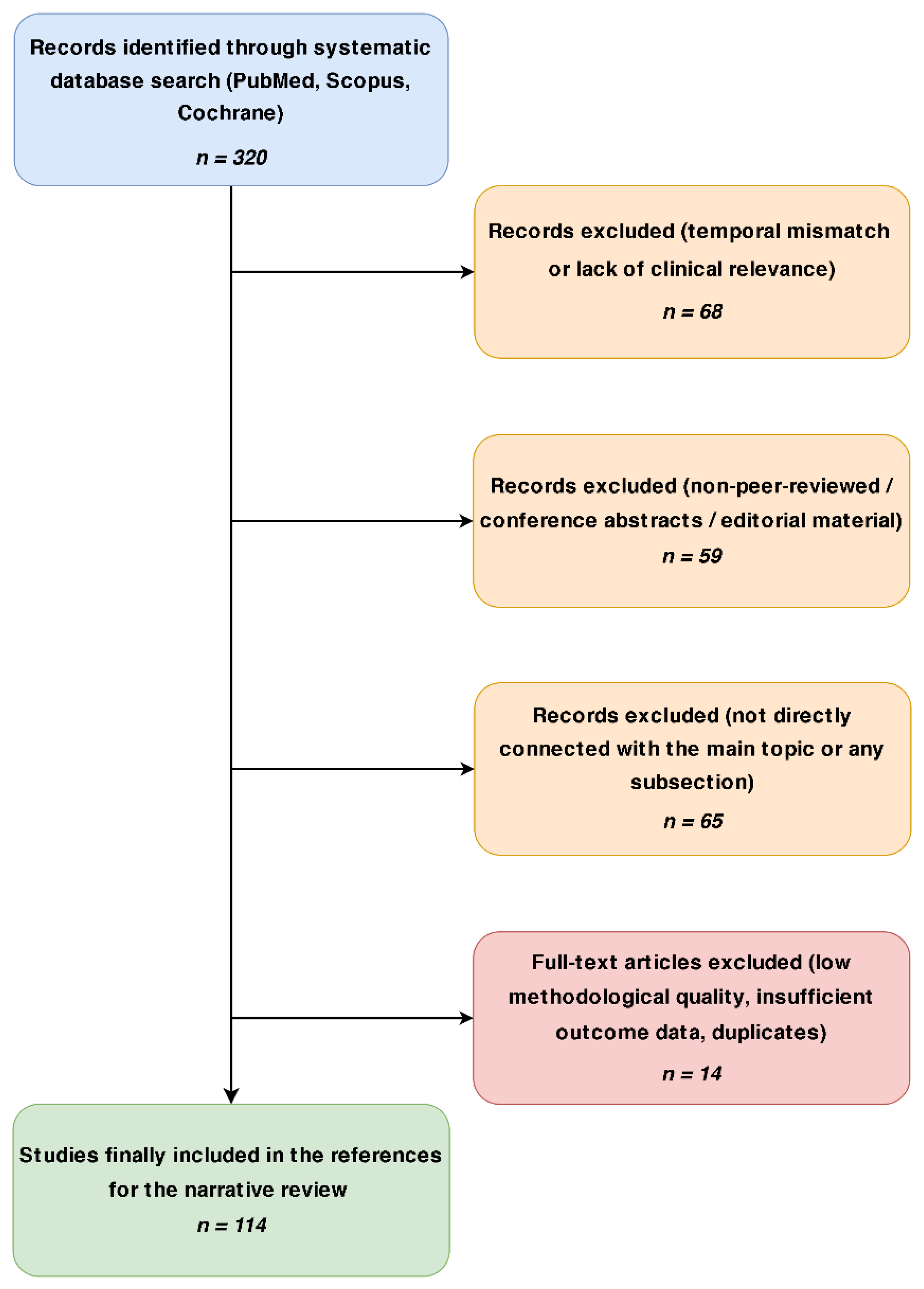
2. Methodology
3. Epidemiology of Atrial Fibrillation and the Impact of Population Aging
4. In-Hospital Management of Atrial Fibrillation: Acute-Phase Treatment and Anticoagulant Prophylaxis
5. Outpatient Treatment and Long-Term Care
6. Atrial Fibrillation and Ischemic Stroke: Identifying and Addressing Critical Gaps in the Management Pathway
7. Early Neurorehabilitation Programs and Protocols in Brain Stroke Connected to Atrial Fibrillation
7.1. Pathophysiological Basis: The Hemodynamic–Metabolic Mismatch
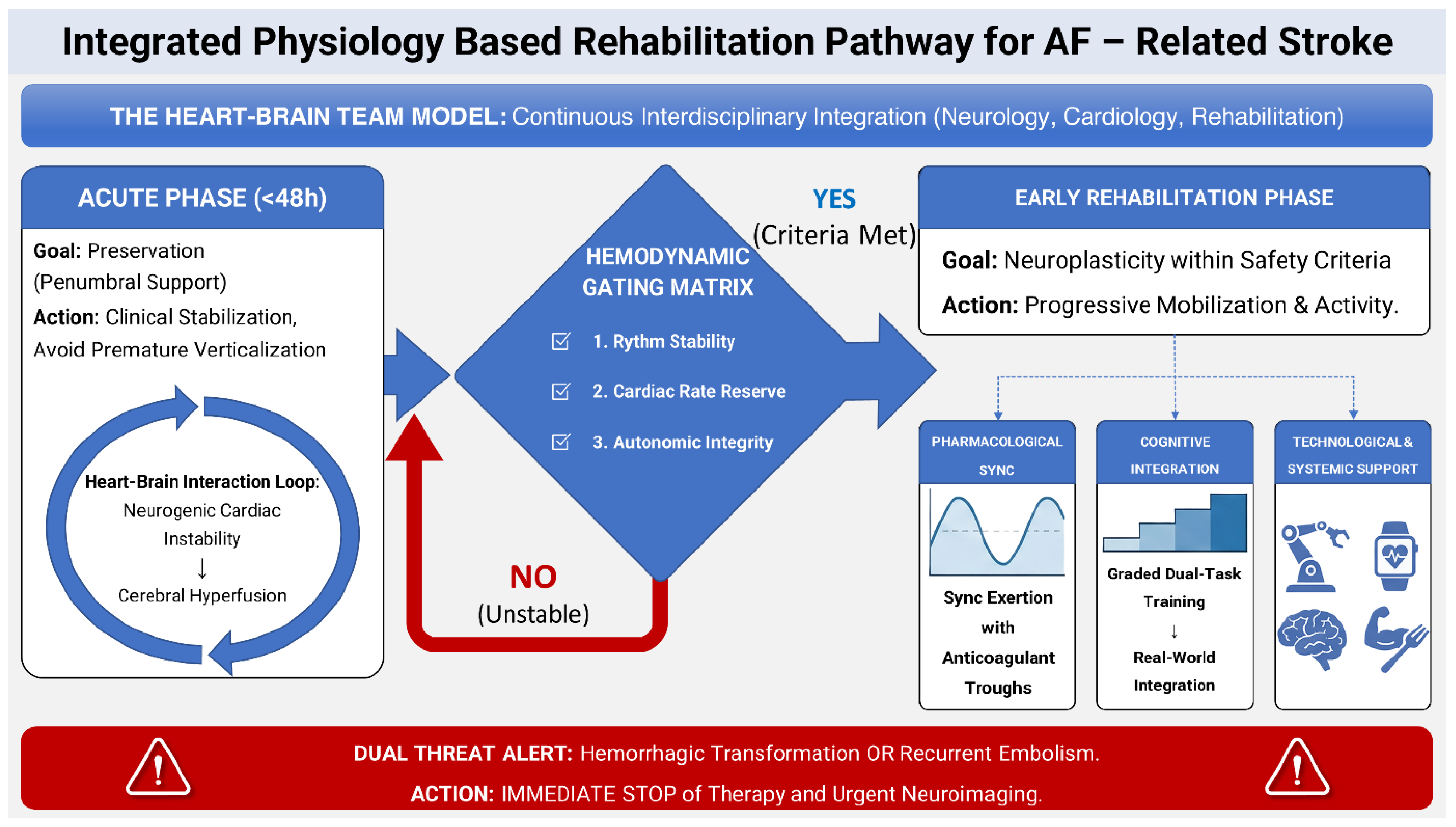
7.2. Mobilization Readiness and the Hemodynamic Gating Matrix
7.3. Anticoagulation Considerations and Pharmacological Synchronization
7.4. Cognitive–Motor Interference and Dual-Task Strategies
7.5. Cognitive Preservation, Screening, and Tailored Rehabilitation Strategies
7.6. Neuromodulation and Safety in Patients with Cardiac Devices
7.7. Technological Support: Wearables and AI Analytics
7.8. Systemic Integration and the Heart–Brain Team Model
7.9. Monitoring Physiological Fatigue and Autonomic Balance
7.10. Robotic Rehabilitation and Prevention of Learned Nonuse
7.11. Implementation Challenges and Continuum of Care
7.12. The Physiological Safety Limits: Reconciling Early Mobilization with AVERT Trial Data
7.13. Operationalization of the Hemodynamic Gating Matrix: Thresholds and Safety Criteria
- Chronotropic Incompetence or Instability: Resting ventricular rate >100 bpm or an exertional increase to >110 bpm (Rapid Ventricular Response), reflecting the upper limit of lenient rate control recommended by the 2024 ESC Guidelines [21] to preserve diastolic filling time.
- Orthostatic Intolerance: A sustained reduction in SBP ≥ 20 mmHg or diastolic BP ≥ 10 mmHg within 3 min of verticalization (classic Orthostatic Hypotension), or the emergence of Postural Orthostatic Tachycardia (increment >30 bpm), both of which are independent predictors of poor functional outcomes in the subacute stroke phase.
8. Limitations of the Study
9. Conclusions
Author Contributions
Funding
Institutional Review Board Statement
Informed Consent Statement
Data Availability Statement
Conflicts of Interest
Appendix A. Detailed Search Strategy
References
- Hindricks, G.; Potpara, T.; Dagres, N.; Arbelo, E.; Bax, J.J.; Blomström-Lundqvist, C.; Boriani, G.; Castella, M.; Dan, G.A.; Dilaveris, P.E.; et al. 2020 ESC Guidelines for the diagnosis and management of atrial fibrillation developed in collaboration with the EACTS. Eur. Heart J. 2021, 42, 373–498. [Google Scholar] [CrossRef]
- Chugh, S.S.; Havmoeller, R.; Narayanan, K.; Singh, D.; Rienstra, M.; Benjamin, E.J.; Gillum, R.F.; Kim, Y.-H.; McAnulty, J.H., Jr.; Zheng, Z.-J.; et al. Worldwide epidemiology of atrial fibrillation: A Global Burden of Disease 2010 study. Circulation 2014, 129, 837–847. [Google Scholar] [CrossRef]
- Zoni-Berisso, M.; Lercari, F.; Carazza, T.; Domenicucci, S. Epidemiology of atrial fibrillation: European perspective. Clin. Epidemiol. 2014, 6, 213–220. [Google Scholar] [CrossRef]
- Wolf, P.A.; Abbott, R.D.; Kannel, W.B. Atrial fibrillation as an independent risk factor for stroke: The Framingham Study. Stroke 1991, 22, 983–988. [Google Scholar] [CrossRef]
- Benjamin, E.J.; Levy, D.; Vaziri, S.M.; D’Agostino, R.B.; Belanger, A.J.; Wolf, P.A. Independent risk factors for atrial fibrillation in a population-based cohort. JAMA 1994, 271, 840–844. [Google Scholar] [CrossRef]
- Lip, G.Y.H.; Nieuwlaat, R.; Pisters, R.; Lane, D.A.; Crijns, H.J.G.M. Refining clinical risk stratification for predicting stroke and thromboembolism in atrial fibrillation using a novel risk factor-based approach: The euro heart survey on atrial fibrillation. Chest 2010, 137, 263–272. [Google Scholar] [CrossRef]
- Pisters, R.; Lane, D.A.; Nieuwlaat, R.; de Vos, C.B.; Crijns, H.J.; Lip, G.Y. A novel user-friendly score (HAS-BLED) to assess 1-year risk of major bleeding in patients with atrial fibrillation. Chest 2010, 138, 1093–1100. [Google Scholar] [CrossRef]
- Kirchhof, P.; Benussi, S.; Kotecha, D.; Ahlsson, A.; Atar, D.; Casadei, B.; Castella, M.; Diener, H.-C.; Heidbuchel, H.; Hendriks, J.; et al. 2016 ESC Guidelines for the management of atrial fibrillation developed in collaboration with EACTS. Eur. Heart J. 2016, 37, 2893–2962. [Google Scholar] [CrossRef]
- Van Gelder, I.C.; Groenveld, H.F.; Crijns, H.J.G.M.; Tuininga, Y.S.; Tijssen, J.G.P.; Alings, A.M.; Hillege, H.L.; Bergsma-Kadijk, J.A.; Cornel, J.H.; Kamp, O.; et al. Lenient versus strict rate control in patients with atrial fibrillation. N. Engl. J. Med. 2010, 362, 1363–1373. [Google Scholar] [CrossRef]
- Wyse, D.G.; Waldo, A.L.; DiMarco, J.P.; Domanski, M.J.; Rosenberg, Y.; Schron, E.B.; Kellen, J.C.; Greene, H.L.; Mickel, M.C.; Dalquist, J.E.; et al. A comparison of rate control and rhythm control in patients with atrial fibrillation. N. Engl. J. Med. 2002, 347, 1825–1833. [Google Scholar] [CrossRef] [PubMed]
- Camm, A.J.; Kirchhof, P.; Lip, G.Y.; Schotten, U.; Savelieva, I.; Ernst, S.; Van Gelder, I.C.; Al-Attar, N. Guidelines for the management of atrial fibrillation: The Task Force for the Management of Atrial Fibrillation of the ESC. Eur. Heart J. 2010, 31, 2369–2429. [Google Scholar] [CrossRef] [PubMed]
- Proietti, M.; Romiti, G.F.; Olshansky, B.; Lane, D.A.; Lip, G.Y.H. Comprehensive Management with the ABC (Atrial Fibrillation Better Care) Pathway in Clinically Complex Patients with Atrial Fibrillation: A Post Hoc Ancillary Analysis from the AFFIRM Trial. J. Am. Heart Assoc. 2020, 9, e014932. [Google Scholar] [CrossRef] [PubMed] [PubMed Central]
- Wilkinson, C.; Todd, O.; Clegg, A.; Gale, C.P.; Hall, M. Management of atrial fibrillation for older people with frailty: A systematic review and meta-analysis. Age Ageing 2019, 48, 196–203. [Google Scholar] [CrossRef]
- Joosten, L.P.; van Doorn, S.; van de Ven, P.M.; Köhlen, B.T.; Nierman, M.C.; Koek, H.L.; Hemels, M.E.; Huisman, M.V.; Kruip, M.; Faber, L.M.; et al. Safety of Switching from a Vitamin K Antagonist to a Non-Vitamin K Antagonist Oral Anticoagulant in Frail Older Patients with Atrial Fibrillation: Results of the FRAIL-AF Randomized Controlled Trial. Circulation 2024, 149, 279–289. [Google Scholar] [CrossRef] [PubMed]
- Ben Freedman, S.; Lowres, N. Asymptomatic Atrial Fibrillation: The Case for Screening to Prevent Stroke. JAMA 2015, 314, 1911–1912. [Google Scholar] [CrossRef] [PubMed]
- Proietti, M.; Romiti, G.F.; Olshansky, B.; Lane, D.A.; Lip, G.Y. Improved outcomes by integrated care of anticoagulated patients with atrial fibrillation using the simple ABC (Atrial fibrillation Better Care) pathway. Am. J. Med. 2018, 131, 1359–1366.e6. [Google Scholar] [CrossRef] [PubMed]
- Friberg, L.; Hammar, N.; Rosenqvist, M. Stroke in paroxysmal atrial fibrillation: Report from the Stockholm cohort of atrial fibrillation. Eur. Heart J. 2010, 31, 967–975. [Google Scholar] [CrossRef] [PubMed]
- Banerjee, A.; Taillandier, S.; Olesen, J.B.; Lane, D.A.; Lallemand, B.; Lip, G.Y.; Fauchier, L. Pattern of atrial fibrillation and risk of outcomes: The Loire Valley Atrial Fibrillation Project. Int. J. Cardiol. 2013, 167, 2682–2687. [Google Scholar] [CrossRef]
- Yoshimura, H.; Providencia, R.; Finan, C.; Schmidt, A.F.; Lip, G.Y.H. Refining the CHA2DS2VASc risk stratification scheme: Shall we drop the sex category criterion? Europace 2024, 26, euae280. [Google Scholar] [CrossRef]
- Adji, A.S.; de Liyis, B.G. Comparison between non-vitamin K oral antagonist versus warfarin in atrial fibrillation with and without valvular heart disease: A systematic review and meta-analysis. Egypt Heart J. 2024, 76, 102. [Google Scholar] [CrossRef]
- Van Gelder, I.C.; Rienstra, M.; Bunting, K.V.; Casado-Arroyo, R.; Caso, V.; Crijns, H.J.G.M.; De Potter, T.J.R.; Dwight, J.; Guasti, L.; Hanke, T.; et al. 2024 ESC Guidelines for the management of atrial fibrillation developed in collaboration with the European Association for Cardio-Thoracic Surgery (EACTS). Eur. Heart J. 2024, 45, 3314–3414. [Google Scholar] [CrossRef] [PubMed]
- Berge, E.; Whiteley, W.; Audebert, H.; De Marchis, G.M.; Fonseca, A.C.; Padiglioni, C.; de la Ossa, N.P.; Strbian, D.; Tsivgoulis, G.; Turc, G. European Stroke Organisation (ESO) guidelines on intravenous thrombolysis for acute ischaemic stroke. Eur. Stroke J. 2021, 6, I–LXII. [Google Scholar] [CrossRef] [PubMed]
- Turc, G.; Bhogal, P.; Fischer, U.; Khatri, P.; Lobotesis, K.; Mazighi, M.; Schellinger, P.D.; Toni, D.; de Vries, J.; White, P.; et al. European Stroke Organisation (ESO)—European Society for Minimally Invasive Neurological Therapy (ESMINT) Guidelines on Mechanical Thrombectomy in Acute Ischaemic StrokeEndorsed by Stroke Alliance for Europe (SAFE). Eur. Stroke J. 2019, 4, 6–12. [Google Scholar] [CrossRef] [PubMed]
- Kim, D.; Shim, J.; Choi, E.-K.; Oh, I.-Y.; Kim, J.; Lee, Y.S.; Park, J.; Ko, J.-S.; Park, K.-M.; Sung, J.-H.; et al. Long-Term Anticoagulation Discontinuation After Catheter Ablation for Atrial Fibrillation: The ALONE-AF Randomized Clinical Trial. JAMA 2025, 334, 1246–1254. [Google Scholar] [CrossRef]
- Verma, A.; Birnie, D.H.; Jiang, C.; Heidbüchel, H.; Hindricks, G.; Kirchhof, P.; Healey, J.S.; Wang, Y.; Dagres, N.; Deyell, M.W.; et al. Antithrombotic Therapy after Successful Catheter Ablation for Atrial Fibrillation. N. Engl. J. Med. 2025, 394, 323–332. [Google Scholar] [CrossRef] [PubMed]
- Itäinen-Strömberg, S.; Lehto, M.; Halminen, O.; Haukka, J.; Putaala, J.; Lehtonen, O.; Mustonen, P.; Linna, M.; Hartikainen, J.; Airaksinen, K.E.J.; et al. How much does elective cardioversion increase the risk of ischaemic stroke compared to the baseline risk in atrial fibrillation? A nationwide study. Europace 2025, 27, euaf298. [Google Scholar] [CrossRef]
- Atzema, C.L.; Stiell, I.G.; Chong, A.; Austin, P.C. Cardioversion and the Risk of Subsequent Stroke or Systemic Embolism and Death in Emergency Department Patients with Acute Atrial Fibrillation or Flutter. J. Am. Coll. Emerg. Phys. Open 2025, 6, 100072. [Google Scholar] [CrossRef]
- Healey, J.S.; Connolly, S.J.; Gold, M.R.; Israel, C.W.; Van Gelder, I.C.; Capucci, A.; Lau, C.P.; Fain, E.; Yang, S.; Bailleul, C.; et al. Subclinical atrial fibrillation and the risk of stroke. N. Engl. J. Med. 2012, 366, 120–129. [Google Scholar] [CrossRef]
- Healey, J.S.; Lopes, R.D.; Granger, C.B.; Alings, M.; Rivard, L.; McIntyre, W.F.; Atar, D.; Birnie, D.H.; Boriani, G.; Camm, A.J.; et al. Apixaban for Stroke Prevention in Subclinical Atrial Fibrillation. N. Engl. J. Med. 2024, 390, 107–117. [Google Scholar] [CrossRef]
- Diener, H.C.; Becher, N.; Sehner, S.; Toennis, T.; Bertaglia, E.; Blomstrom-Lundqvist, C.; Brandes, A.; Beuger, V.; Calvert, M.; Camm, A.J.; et al. Anticoagulation in Patients with Device-Detected Atrial Fibrillation with and Without a Prior Stroke or Transient Ischemic Attack: The NOAH-AFNET 6 Trial. J. Am. Heart Assoc. 2024, 13, e036429. [Google Scholar] [CrossRef]
- Feng, D.; Wang, J. Factor XI inhibitors are the novel promising anticoagulants in the treatment of age related thrombotic disease. Front. Cardiovasc. Med. 2025, 12, 1498826. [Google Scholar] [CrossRef]
- Connors, J.M. Factor XI inhibitors: A new class of anticoagulants. Blood Adv. 2025, 9, 192. [Google Scholar] [CrossRef]
- Ruff, C.T.; Patel, S.M.; Giugliano, R.P.; Morrow, D.A.; Hug, B.; Kuder, J.F.; Goodrich, E.L.; Chen, S.-A.; Goodman, S.G.; Joung, B.; et al. Abelacimab versus Rivaroxaban in Patients with Atrial Fibrillation. N. Engl. J. Med. 2025, 392, 361–371. [Google Scholar] [CrossRef]
- Al Said, S.; Patel, S.M.; Giugliano, R.P.; Morrow, D.A.; Goodrich, E.L.; Murphy, S.A.; Hug, B.; Parkar, S.; Chen, S.-A.; Goodman, S.G.; et al. Abelacimab Versus Rivaroxaban in Patients with Atrial Fibrillation on Antiplatelet Therapy: A Prespecified Analysis of the AZALEA-TIMI 71 Trial. Circulation 2025, 152, 290–296. [Google Scholar] [CrossRef]
- Piccini, J.P.; Patel, M.R.; Steffel, J.; Ferdinand, K.; Van Gelder, I.C.; Russo, A.M.; Ma, C.-S.; Goodman, S.G.; Oldgren, J.; Hammett, C.; et al. Asundexian versus Apixaban in Patients with Atrial Fibrillation. N. Engl. J. Med. 2025, 392, 23–32. [Google Scholar] [CrossRef] [PubMed]
- Shoamanesh, A.; Mundl, H.; Smith, E.E.; Masjuan, J.; Milanov, I.; Hirano, T.; Agafina, A.; Campbell, B.; Caso, V.; Mas, J.-L.; et al. Factor XIa inhibition with asundexian after acute non-cardioembolic ischaemic stroke (PACIFIC-Stroke): An international, randomised, double-blind, placebo-controlled, phase 2b trial. Lancet 2022, 400, 997–1007. [Google Scholar] [CrossRef]
- A Study to Test Asundexian for Preventing a Stroke Caused by a Clot in Participants After an Acute Ischemic Stroke or After a High-Risk Transient Ischemic Attack, a So-Called Mini Stroke (OCEANIC-STROKE). Available online: https://clinicaltrials.gov/study/NCT05686070 (accessed on 31 January 2026).
- Jain, S.S.; Mahaffey, K.W.; Pieper, K.S.; Shimizu, W.; Potpara, T.; Ruff, C.T.; Kamel, H.; Lewis, B.S.; Cornel, J.H.; Kowey, P.R.; et al. Milvexian vs apixaban for stroke prevention in atrial fibrillation: The LIBREXIA atrial fibrillation trial rationale and design. Am. Heart J. 2024, 277, 145–158. [Google Scholar] [CrossRef]
- Fischer, U.; Koga, M.; Strbian, D.; Branca, M.; Abend, S.; Trelle, S.; Paciaroni, M.; Thomalla, G.; Michel, P.; Nedeltchev, K.; et al. Early versus Later Anticoagulation for Stroke with Atrial Fibrillation. N. Engl. J. Med. 2023, 388, 2411–2421. [Google Scholar] [CrossRef] [PubMed]
- Oldgren, J.; Åsberg, S.; Hijazi, Z.; Wester, P.; Bertilsson, M.; Norrving, B.; Collaborators, F.T.N.T. Early Versus Delayed Non–Vitamin K Antagonist Oral Anticoagulant Therapy After Acute Ischemic Stroke in Atrial Fibrillation (TIMING): A Registry-Based Randomized Controlled Noninferiority Study. Circulation 2022, 146, 1056–1066, Erratum in Circulation 2022, 146, e279. https://doi.org/10.1161/CIR.0000000000001111. [Google Scholar] [CrossRef] [PubMed]
- Yu, S.; Liu, C. Advancing post-stroke blood pressure management: An individualized BP strategy for function optimization. Ann. Med. 2025, 57, 2583327. [Google Scholar] [CrossRef] [PubMed]
- Saglietto, A.; Scarsoglio, S.; Canova, D.; Roatta, S.; Gianotto, N.; Piccotti, A.; Franzin, S.; Gaita, F.; De Ferrari, G.M.; Ridolfi, L.; et al. Increased beat-to-beat variability of cerebral microcirculatory perfusion during atrial fibrillation: A near-infrared spectroscopy study. Europace 2021, 23, 1219–1226. [Google Scholar] [CrossRef] [PubMed]
- Castle-Kirszbaum, M.M.; Parkin, W.G.M.; Goldschlager, T.F.; Lewis, P.M. Cardiac Output and Cerebral Blood Flow: A Systematic Review of Cardio-Cerebral Coupling. J. Neurosurg. Anesthesiol. 2022, 34, 352–363. [Google Scholar] [CrossRef] [PubMed]
- Aftyka, J.; Staszewski, J.; Dębiec, A.; Pogoda-Wesołowska, A.; Żebrowski, J. Heart rate variability as a predictor of stroke course, functional outcome, and medical complications: A systematic review. Front. Physiol. 2023, 14, 1115164. [Google Scholar] [CrossRef] [PubMed]
- Feng, Z.; Liu, W.; Liu, Y.; Zhang, W.; Xiong, N.; Chen, W.; Yang, J.; Wu, X.; Dai, W. Factors associated with cognitive impairment in patients with atrial fibrillation: A systematic review and meta-analysis. Arch. Gerontol. Geriatr. 2025, 128, 105619. [Google Scholar] [CrossRef] [PubMed]
- Koh, Y.H.; Lew, L.Z.W.; Franke, K.B.; Elliott, A.D.; Lau, D.H.; Thiyagarajah, A.; Linz, D.; Arstall, M.; Tully, P.J.; Baune, B.T.; et al. Predictive role of atrial fibrillation in cognitive decline: A systematic review and meta-analysis of 2.8 million individuals. Europace 2022, 24, 1229–1239. [Google Scholar] [CrossRef] [PubMed]
- Wang, X.; Ding, Q.; Li, T.; Li, W.; Yin, J.; Li, Y.; Li, Y.; Zhuang, W. Application of vagus nerve stimulation on the rehabilitation of upper limb dysfunction after stroke: A systematic review and meta-analysis. Front. Neurol. 2023, 14, 1189034. [Google Scholar] [CrossRef] [PubMed]
- Zhang, X.; Xu, F.; Shi, H.; Liu, R.; Wan, X. Effects of dual-task training on gait and balance in stroke patients: A meta-analysis. Clin. Rehabil. 2022, 36, 1186–1198. [Google Scholar] [CrossRef] [PubMed]
- Migdady, I.; Russman, A.; Buletko, A.B. Atrial Fibrillation and Ischemic Stroke: A Clinical Review. Semin. Neurol. 2021, 41, 348–364. [Google Scholar] [CrossRef] [PubMed]
- Schwamm, L.H.; Kamel, H.; Granger, C.B.; Piccini, J.P.; Katz, J.M.; Sethi, P.P.; Sidorov, E.V.; Kasner, S.E.; Silverman, S.B.; Merriam, T.T.; et al. Predictors of Atrial Fibrillation in Patients with Stroke Attributed to Large- or Small-Vessel Disease: A Prespecified Secondary Analysis of the STROKE AF Randomized Clinical Trial. JAMA Neurol. 2023, 80, 99–103. [Google Scholar] [CrossRef] [PubMed]
- Liu, Y.; Yin, J.-H.; Lee, J.-T.; Peng, G.-S.; Yang, F.-C. Early Rehabilitation after Acute Stroke: The Golden Recovery Period. Acta Neurol. 2023, 32, 1–8. [Google Scholar] [PubMed]
- Anjos, J.M.; Neto, M.G.; Tapparelli, Y.d.A.; Tse, G.; Biondi-Zoccai, G.; Bitar, Y.d.S.L.; Roever, L.; Duraes, A.R. Efficacy and safety of very early mobilization after thrombolysis in acute ischemic stroke: A randomized clinical trial. J. Neurol. 2023, 270, 843–850. [Google Scholar] [CrossRef] [PubMed]
- Lou, Y.; Liu, Z.; Ji, Y.; Cheng, J.; Zhao, C.; Li, L. Efficacy and safety of very early rehabilitation for acute ischemic stroke: A systematic review and meta-analysis. Front. Neurol. 2024, 15, 1423517. [Google Scholar] [CrossRef] [PubMed]
- Sposato, L.A.; Hilz, M.J.; Aspberg, S.; Murthy, S.B.; Bahit, M.C.; Hsieh, C.-Y.; Sheppard, M.N.; Scheitz, J.F. Post-Stroke Cardiovascular Complications and Neurogenic Cardiac Injury: JACC State-of-the-Art Review. J. Am. Coll. Cardiol. 2020, 76, 2768–2785. [Google Scholar] [CrossRef] [PubMed]
- Fregni, F.; El-Hagrassy, M.M.; Pacheco-Barrios, K.; Carvalho, S.; Leite, J.; Simis, M.; Brunelin, J.; Nakamura-Palacios, E.M.; Marangolo, P.; Venkatasubramanian, G.; et al. Evidence-Based Guidelines and Secondary Meta-Analysis for the Use of Transcranial Direct Current Stimulation in Neurological and Psychiatric Disorders. Int. J. Neuropsychopharmacol. 2021, 24, 256–313. [Google Scholar] [CrossRef] [PubMed]
- Kelley, R.E.; Kelley, B.P. Heart–Brain Relationship in Stroke. Biomedicines 2021, 9, 1835. [Google Scholar] [CrossRef] [PubMed]
- Honig, A.; Percy, J.; Sepehry, A.A.; Gomez, A.G.; Field, T.S.; Benavente, O.R. Hemorrhagic Transformation in Acute Ischemic Stroke: A Quantitative Systematic Review. J. Clin. Med. 2022, 11, 1162. [Google Scholar] [CrossRef] [PubMed]
- Lee, K.-H.; Yeh, J.-T.; Wu, M.-L.; Yeh, W.-Y.; Lip, G.Y.; Chiang, C.-E.; Chen, C.-H.; Cheng, H.-M. Oral anticoagulants and cognitive impairment in patients with atrial fibrillation: A systematic review with meta-analysis and trial sequential analysis. Thromb. Res. 2024, 238, 132–140. [Google Scholar] [CrossRef] [PubMed]
- Agarwal, A.; Mostafa, M.A.; Ahmad, M.I.; Soliman, E.Z. Exploring the Link between Anticoagulation, Cognitive Impairment and Dementia in Atrial Fibrillation: A Systematic Review. J. Clin. Med. 2024, 13, 2418. [Google Scholar] [CrossRef] [PubMed]
- Bucci, T.; Proietti, M.; Shantsila, A.; Romiti, G.F.; Teo, W.-S.; Park, H.-W.; Shimizu, W.; Tse, H.-F.; Lip, G.Y.; Chao, T.-F.; et al. Integrated Care for Atrial Fibrillation Using the ABC Pathway in the Prospective APHRS-AF Registry. JACC Asia 2023, 3, 580–591. [Google Scholar] [CrossRef] [PubMed]
- Lanctôt, K.L.; Lindsay, M.P.; Smith, E.E.; Sahlas, D.J.; Foley, N.; Gubitz, G.; Austin, M.; Ball, K.; Bhogal, S.; Blake, T.; et al. Canadian Stroke Best Practice Recommendations: Mood, Cognition and Fatigue following Stroke, 6th edition update 2019. Int. J. Stroke 2020, 15, 668–688. [Google Scholar] [CrossRef] [PubMed]
- Kayabinar, B.; Alemdaroğlu-Gürbüz, I.; Yilmaz, Ö. The effects of virtual reality augmented robot-assisted gait training on dual-task performance and functional measures in chronic stroke: A randomized controlled single-blind trial. Eur. J. Phys. Rehabil. Med. 2021, 57, 227–237. [Google Scholar] [CrossRef] [PubMed]
- Sreeraj, V.S.; Arumugham, S.S.; Venkatasubramanian, G. Clinical Practice Guidelines for the Use of Transcranial Direct Current Stimulation in Psychiatry. Indian J. Psychiatry 2023, 65, 289–296. [Google Scholar] [CrossRef] [PubMed]
- Toh, S.F.M.; Fong, K.N.K.; Gonzalez, P.C.; Tang, Y.M. Application of Home-Based Wearable Technologies in Physical Rehabilitation for Stroke: A Scoping Review. IEEE Trans. Neural Syst. Rehabil. Eng. 2023, 31, 1614–1623. [Google Scholar] [CrossRef] [PubMed]
- White, A.; Saranti, M.; Garcez, A.D.; Hope, T.M.; Price, C.J.; Bowman, H. Predicting recovery following stroke: Deep learning, multimodal data and feature selection using explainable AI. NeuroImage Clin. 2024, 43, 103638. [Google Scholar] [CrossRef] [PubMed]
- Shim, G.Y.; Kim, M.; Won, C.W. Cross-sectional and longitudinal association between atrial fibrillation and sarcopenia: Findings from the Korean frailty and aging cohort study. J. Cachex-Sarcopenia Muscle 2024, 15, 434–441. [Google Scholar] [CrossRef] [PubMed]
- Mendelson, S.J.; Prabhakaran, S. Diagnosis and Management of Transient Ischemic Attack and Acute Ischemic Stroke: A Review. JAMA 2021, 325, 1088–1098. [Google Scholar] [CrossRef] [PubMed]
- Ballester, B.R.; Ward, N.S.; Brander, F.; Maier, M.; Kelly, K.; Verschure, P.F.M.J. Relationship between intensity and recovery in post-stroke rehabilitation: A retrospective analysis. J. Neurol. Neurosurg. Psychiatry 2022, 93, 226–228. [Google Scholar] [CrossRef] [PubMed]
- Pournajaf, S.; Morone, G.; Straudi, S.; Goffredo, M.; Leo, M.R.; Calabrò, R.S.; Felzani, G.; Paolucci, S.; Filoni, S.; Santamato, A.; et al. Neurophysiological and Clinical Effects of Upper Limb Robot-Assisted Rehabilitation on Motor Recovery in Patients with Subacute Stroke: A Multicenter Randomized Controlled Trial Study Protocol. Brain Sci. 2023, 13, 700. [Google Scholar] [CrossRef] [PubMed]
- Zhang, L.; Ma, J.; Liu, X.; Jin, A.; Wang, K.; Yin, X. Cognitive-motor dual-task training on gait and balance in stroke patients: Meta-analytic report and trial sequential analysis of randomized clinical trials. J. Neuroeng. Rehabil. 2024, 21, 227. [Google Scholar] [CrossRef] [PubMed]
- Anåker, A.; Kevdzija, M.; Elf, M. Enriched Environments in Stroke Units: Defining Characteristics and Limitations. Health Environ. Res. Des. J. 2024, 17, 344–359. [Google Scholar] [CrossRef] [PubMed]
- Romiti, G.F.; Corica, B.; Bucci, T.; Rivera-Caravaca, J.M.; Marín, F.; Frost, L.; Dan, G.-A.; Potpara, T.S.; Tokmakova, M.; Maggioni, A.P.; et al. The ‘Atrial Fibrillation Better Care’ Pathway for Integrated Care of Atrial Fibrillation: A Systematic Review and Meta-Analysis. Thromb. Haemost. 2026. Epub ahead of print. [Google Scholar] [CrossRef] [PubMed]
- AVERT Trial Collaboration group. Efficacy and safety of very early mobilisation within 24 h of stroke onset (AVERT): A randomised controlled trial. Lancet 2015, 386, 46–55, Erratum in Lancet 2015, 386, 30. https://doi.org/10.1016/S0140-6736(15)61204-1. Erratum in Lancet 2017, 389, 1884. https://doi.org/10.1016/S0140-6736(17)31213-8. [Google Scholar] [CrossRef] [PubMed]
- Luft, A.R.; Kesselring, J. Critique of A Very Early Rehabilitation Trial (AVERT). Stroke 2016, 47, 291–292. [Google Scholar] [CrossRef] [PubMed]
- Miranda, J.M.d.A.; Borges, V.M.; Bazan, R.; Luvizutto, G.J.; Shinosaki, J.S.M. Early mobilization in acute stroke phase: A systematic review. Top. Stroke Rehabil. 2023, 30, 157–168. [Google Scholar] [CrossRef] [PubMed]
- Langhorne, P.; Wu, O.; Rodgers, H.; Ashburn, A.; Bernhardt, J. A Very Early Rehabilitation Trial after stroke (AVERT): A Phase III, multicentre, randomised controlled trial. Health Technol. Assess. 2017, 21, 1–120. [Google Scholar] [CrossRef] [PubMed]
- Joglar, J.A.; Chung, M.K.; Armbruster, A.L.; Benjamin, E.J.; Chyou, J.Y.; Cronin, E.M.; Deswal, A.; Eckhardt, L.L.; Goldberger, Z.D.; Gopinathannair, R.; et al. 2023 ACC/AHA/ACCP/HRS Guideline for the Diagnosis and Management of Atrial Fibrillation: A Report of the American College of Cardiology/American Heart Association Joint Committee on Clinical Practice Guidelines. Circulation 2024, 149, e1–e156, Erratum in Circulation 2024, 149, e167. https://doi.org/10.1161/CIR.0000000000001207. Erratum in: Circulation 2024, 149, e936. https://doi.org/10.1161/CIR.0000000000001218. Erratum in Circulation 2024, 149, e1413. https://doi.org/10.1161/CIR.0000000000001263. [Google Scholar] [CrossRef] [PubMed] [PubMed Central]
- Tam, P.K.; Ramamurthy, G.; Rawat, L.; Huang, S.; Lim, J.H. Prevalence and Outcomes of Orthostatic Hypotension in Hemorrhagic Stroke Patients During Hospitalization. Neurol. Int. 2024, 16, 1878–1886. [Google Scholar] [CrossRef] [PubMed]
- Charlier, F.; Morgan, P. The effect of mobilization on blood pressure for stroke survivors with moderate or severe injury: A rapid review. Top. Stroke Rehabil. 2026, 33, 106–118. [Google Scholar] [CrossRef] [PubMed]



| Criterion | Inclusion Criteria | Exclusion Criteria |
|---|---|---|
| Study Design | Randomized Controlled Trials (RCTs), prospective/retrospective cohort studies, systematic reviews, meta-analyses, and official clinical guidelines (e.g., ESC, AHA/ASA). | Case reports, small case series (n < 10), editorials, letters to the editor, expert opinions without original data, and conference abstracts lacking full text. |
| Thematic Scope | Studies explicitly addressing the interdisciplinary “Brain–Heart Rehabilitation” axis: AF management coupled with stroke recovery, hemodynamic monitoring during mobilization, or anticoagulation in rehab settings. | Studies focusing exclusively on isolated domains: general electrophysiology, general stroke rehabilitation without AF specificity, or basic science not translated to clinical practice. |
| Timeframe and Language | Full-text articles published in English between 1 January 2020, and 31 January 2026, with priority given to recent data (2023–2026) reflecting current pharmacotherapy standards. | Publications prior to the year 2020 (unless seminal historical references), non-English manuscripts, and duplicate records identified during the initial database screening. |
| Subjects and Setting | Human adult populations diagnosed with atrial Fibrillation (all types) and/or ischemic stroke; studies conducted in clinical, outpatient, or rehabilitation settings. | Animal models (pre-clinical studies), pediatric populations, and studies involving investigational drugs or devices not currently approved for clinical use. |
| Outcome Measures | Measurable clinical endpoints: functional independence (e.g., mRS, Barthel Index), hemodynamic stability parameters, cognitive trajectory, or safety events (e.g., bleeding, recurrent stroke). | Studies lacking defined clinical endpoints, qualitative descriptive reports without measurable outcomes, or articles with insufficient data transparency. |
| Author | Year | Study Type | Population/Sample | Findings and Conclusions |
|---|---|---|---|---|
| Fischer U et al. [39]. | 2023 | Randomized Controlled Trial (RCT) | N = 2013 (acute ischemic stroke with AF) | Early anticoagulation (NOAC within 48 h) was safe and did not increase the risk of intracranial hemorrhage compared to later initiation. Supports “Rehab-Sync”: Allows earlier mobilization under anticoagulant protection. |
| Oldgren J et al. [40]. | 2022 | Registry-Based Randomized Trial | N = 888 (acute ischemic stroke with AF) | Early NOAC initiation (1–4 days) was non-inferior to delayed start (5–10 days) regarding stroke recurrence and bleeding. Validation: Justifies the feasibility of active rehabilitation in the first week post stroke. |
| Yu S et al. [41]. | 2025 | Narrative Review and Conceptual Framework | Review of 21 studies focused on post-stroke hemodynamic management | Proposed a paradigm shift from “one-size-fits-all” BP targets to an individualized, function-oriented strategy. Argues that BP management must optimize neuroplasticity and functional recovery, not just survival, supporting our “Hemodynamic Gating” concept. |
| Saglietto A et al. [42]. | 2021 | Physiological In Vivo Study (NIRS) | N = 53 (AF patients undergoing cardioversion) | Demonstrated that irregular AF rhythm causes “beat-to-beat” variability in cerebral microcirculatory perfusion, leading to critical hypoperfusion events. Crucial Evidence: Provides the mechanistic basis for the hemodynamic instability risk in AF brains. |
| Castle-Kirszbaum M et al. [43]. | 2022 | Systematic Review | N = N/A (review of 48 studies on CO/CBF) | Confirmed the “Cardio-Cerebral Coupling” phenomenon: Reduced cardiac output directly compromises cerebral blood flow in patients with impaired autoregulation. Validation: Justifies checking cardiac reserve before verticalization. |
| Aftyka J et al. [44]. | 2023 | Systematic Review | N = 1305 (aggregate from 36 studies) | Heart Rate Variability (HRV) identified as a robust predictor of stroke course and complications. Low HRV correlates with autonomic exhaustion. Supports “autonomic integrity”: Validates HRV monitoring as a safety tool in rehabilitation. |
| Feng Z et al. [45]. | 2025 | Systematic Review and Meta-Analysis | N = 3,491,423 (aggregate from 39 observational studies) | Identified key modifiable risk factors for cognitive decline (hypertension, diabetes). Confirmed that NOACs (OR = 0.63) and catheter ablation (OR = 0.74) are significantly protective against cognitive impairment. Validation: Strongest evidence for the “Heart–Brain Team” prevention strategy. |
| Koh YH et al. [46]. | 2022 | Systematic Review and Meta-Analysis | N = 2.8 million (global cohort) | AF increases the risk of cognitive impairment by 39% even in the absence of clinical stroke, driven by silent micro-emboli and hypoperfusion. Validation: Justifies the need for routine cognitive screening in all AF patients. |
| Wang X et al. [47]. | 2023 | Meta-Analysis of RCTs | N = 18 RCTs (stroke rehabilitation) | Vagus Nerve Stimulation (VNS) significantly improves upper limb motor function (Fugl–Meyer score) compared to sham. Neuromodulation: Provides evidence base for adjunctive VNS, though safety in AF requires caution (as noted in Discussion). |
| Zhang X et al. [48]. | 2022 | Meta-Analysis of RCTs | N = 22 RCTs (stroke gait training) | Dual-task training significantly improved step length and cadence compared to single-task training. Rehab Strategy: Supports the “Cognitive–Motor Integration” protocol for restoring real-world functionality. |
| Input Data (Monitoring Parameter) | Physiological Readiness Thresholds (Go-Criteria) | Interruption Criteria (Stop-Signal) | Mobilization Escalation Pathway | Evidence Basis (Extrapolation Source) |
|---|---|---|---|---|
| 1. Chronotropic Competence (Continuous Telemetry) | Resting Ventricular Rate (VR) < 100 bpm. Absence of new-onset arrhythmia or pauses > 3 s. | Rapid Ventricular Response: Exertional VR increase to >110 bpm. De novo atrial fibrillation onset during session. | Level I: If criteria met → Proceed from supine to head-of-bed elevation (30–45°). | Extrapolated from 2024 ESC Guidelines (lenient rate control limits to preserve diastolic filling) [21,77]. |
| 2. Systemic Perfusion Pressure (Non-Invasive Blood Pressure—NIBP) | Systolic BP: 120–180 mmHg. Mean Arterial Pressure (MAP): >70 mmHg. | Hypoperfusion Alert: SBP < 90 mmHg or MAP drop > 20% from baseline. Hypertensive Surge: SBP > 180 mmHg. | Level II: If stable at 45° for 5 min → Proceed to Sitting at Edge of Bed (Dangling). | Based on AVERT trial safety analysis (avoiding U-shaped mortality curve) and Yu et al. (2025) individualized BP targets [41,76]. |
| 3. Orthostatic Tolerance (Active Stand Test/Sit-to-Stand) | SBP delta: <20 mmHg drop. Diastolic BP delta: <10 mmHg drop upon verticalization. | Orthostatic Failure: Sustained SBP drop ≥ 20 mmHg within 3 min. POTS Pattern: HR increase >30 bpm without hypotension. | Level III: If orthostasis is negative → Proceed to Active Standing/Transfer to Chair. | Consensus definition of Orthostatic Hypotension applied to stroke cohorts [75,78]. |
| 4. Autonomic Stability (Short-Term BPV and Symptomatology) | Coefficient of Variation (SBP): <15%. Borg scale (RPE): <11/20 (light exertion). | Autonomic Storm: Profuse sweating, pallor, or fluctuating alertness. Fatigue: Disproportionate dyspnea or RPE > 13/20. | Level IV: If BPV stable → Initiation of Gait Training/Dual-Task Activity. | Extrapolated from Castle-Kirszbaum (2022) on cardio-cerebral coupling and BPV impact on penumbra [43]. |
Disclaimer/Publisher’s Note: The statements, opinions and data contained in all publications are solely those of the individual author(s) and contributor(s) and not of MDPI and/or the editor(s). MDPI and/or the editor(s) disclaim responsibility for any injury to people or property resulting from any ideas, methods, instructions or products referred to in the content. |
© 2026 by the authors. Licensee MDPI, Basel, Switzerland. This article is an open access article distributed under the terms and conditions of the Creative Commons Attribution (CC BY) license.
Share and Cite
Piotrowska, A.M.; Salwa, K.; Kazirod-Wolski, K.; Sielski, J. The Brain–Atrial Fibrillation–Recent Rehabilitation Axis: A Modern Approach. Healthcare 2026, 14, 765. https://doi.org/10.3390/healthcare14060765
Piotrowska AM, Salwa K, Kazirod-Wolski K, Sielski J. The Brain–Atrial Fibrillation–Recent Rehabilitation Axis: A Modern Approach. Healthcare. 2026; 14(6):765. https://doi.org/10.3390/healthcare14060765
Chicago/Turabian StylePiotrowska, Aleksandra Maria, Kamil Salwa, Karol Kazirod-Wolski, and Janusz Sielski. 2026. "The Brain–Atrial Fibrillation–Recent Rehabilitation Axis: A Modern Approach" Healthcare 14, no. 6: 765. https://doi.org/10.3390/healthcare14060765
APA StylePiotrowska, A. M., Salwa, K., Kazirod-Wolski, K., & Sielski, J. (2026). The Brain–Atrial Fibrillation–Recent Rehabilitation Axis: A Modern Approach. Healthcare, 14(6), 765. https://doi.org/10.3390/healthcare14060765