An Immersive Virtual Reality Room to Enhance Positive Affect and Engagement in Nursing Home Residents with Neurocognitive and Psychological Disorders: A Feasibility Study

 ,
,  ,
,  and
and
Highlights
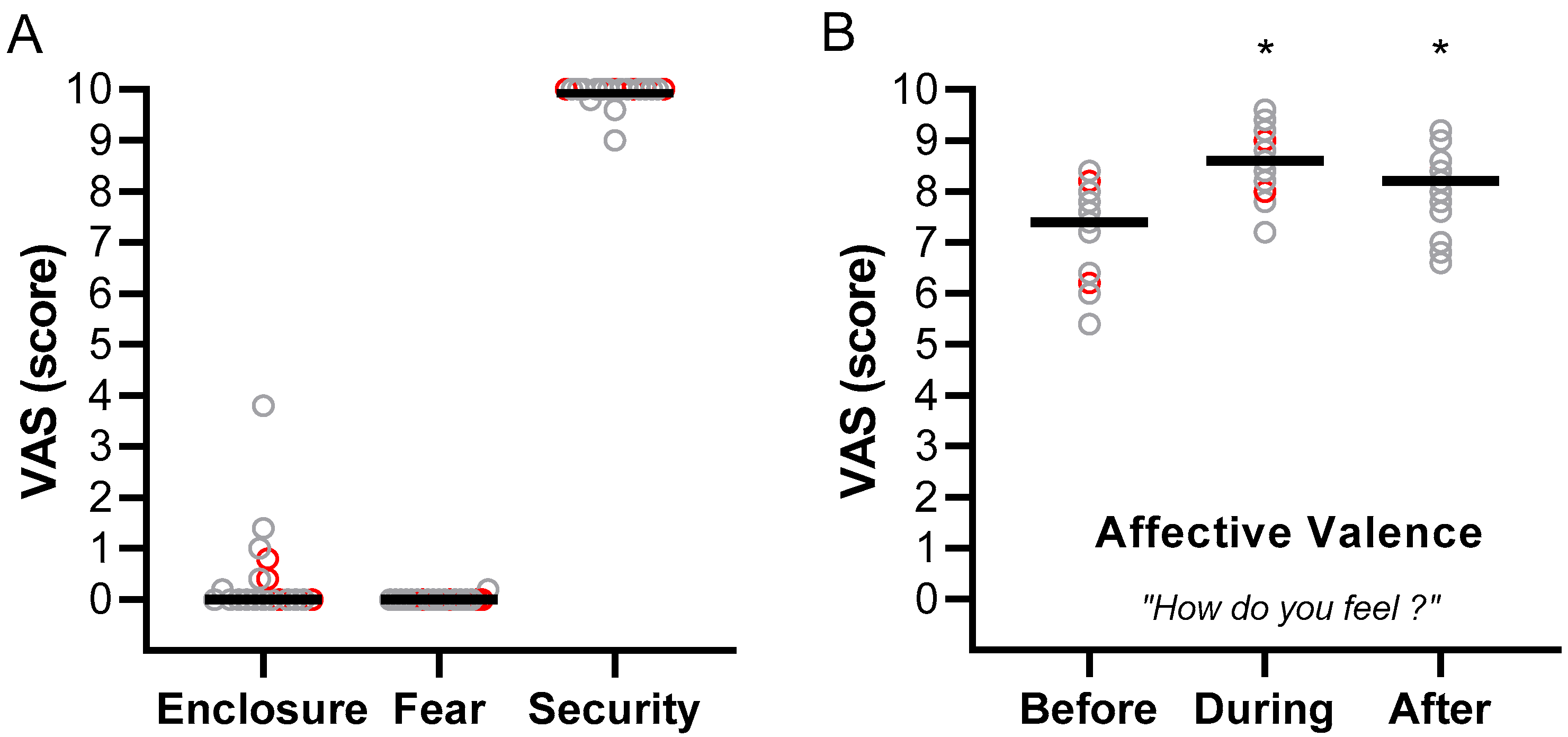
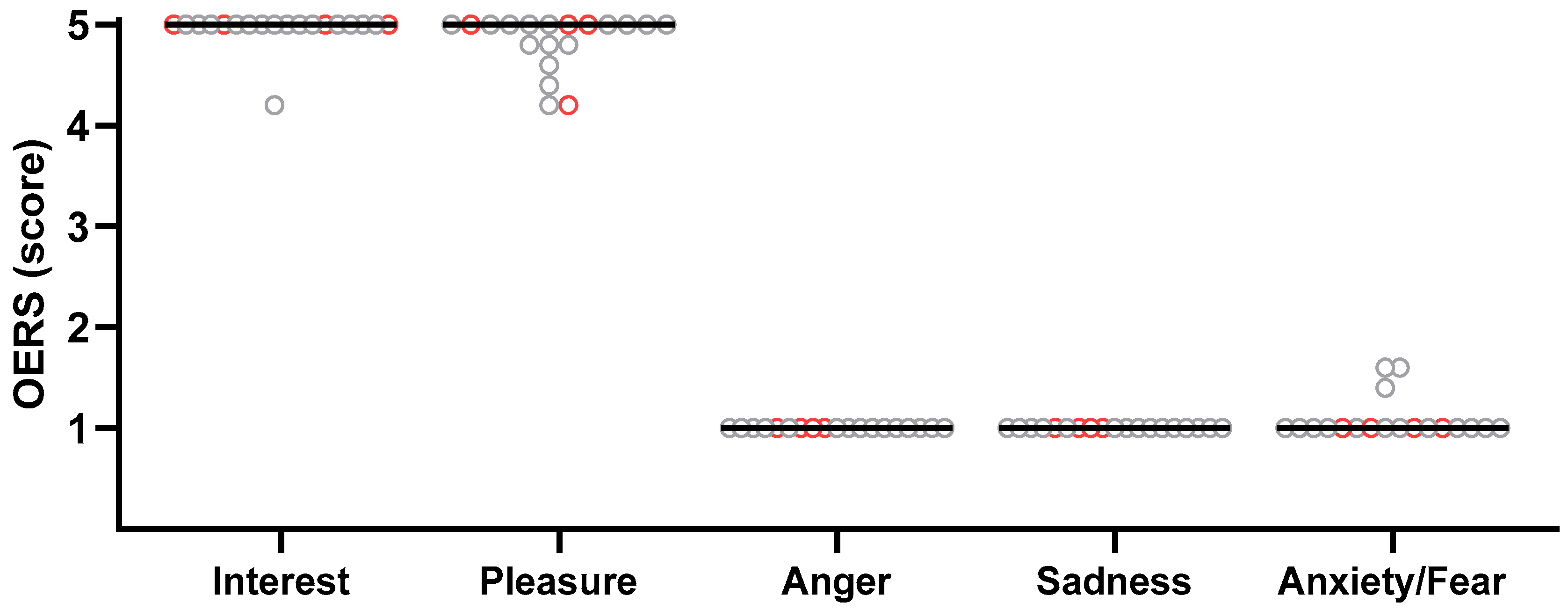
- Immersive VR room sessions were well tolerated, improved short-term positive affect, and fostered shared experiences and active engagement.
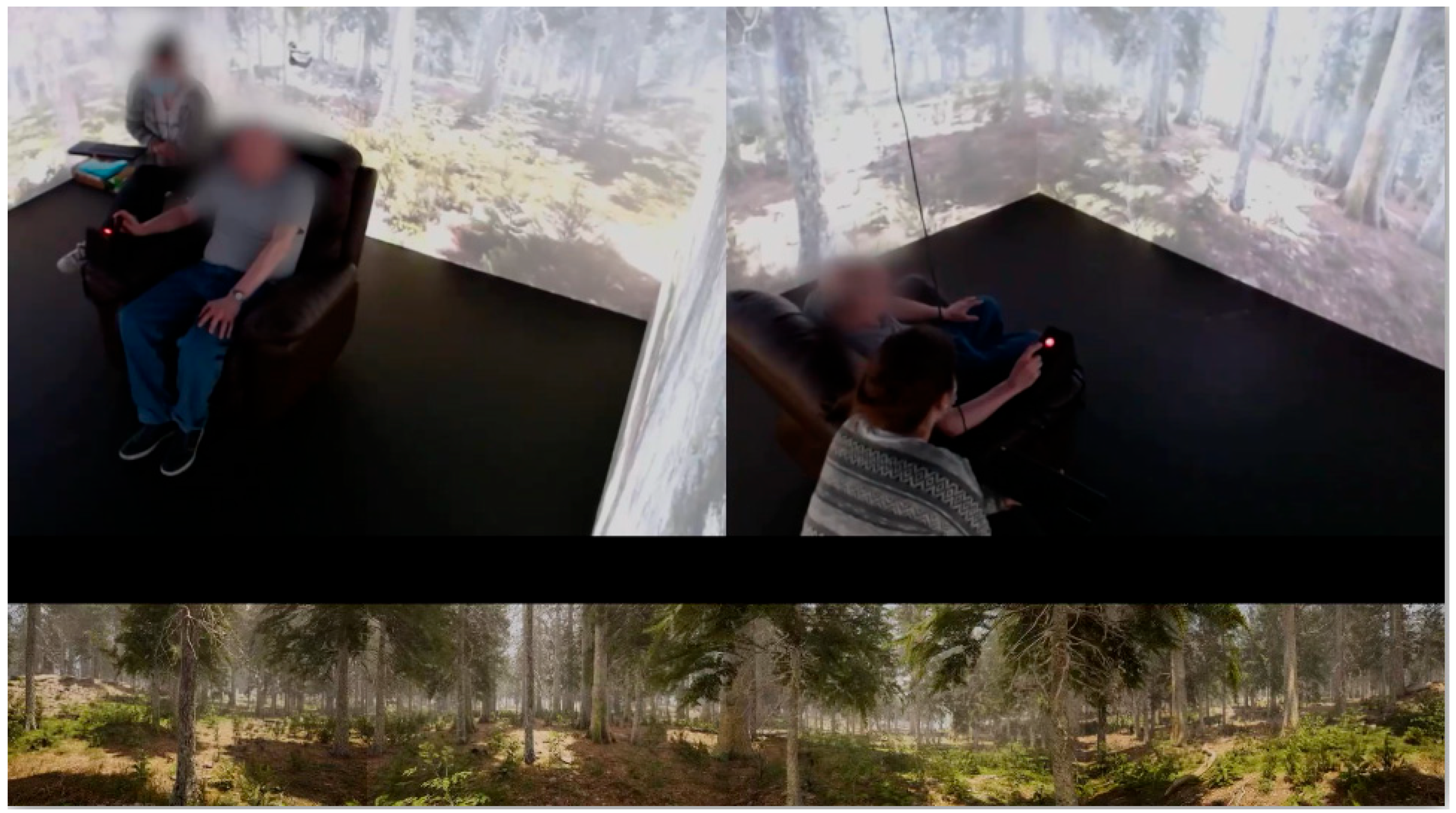
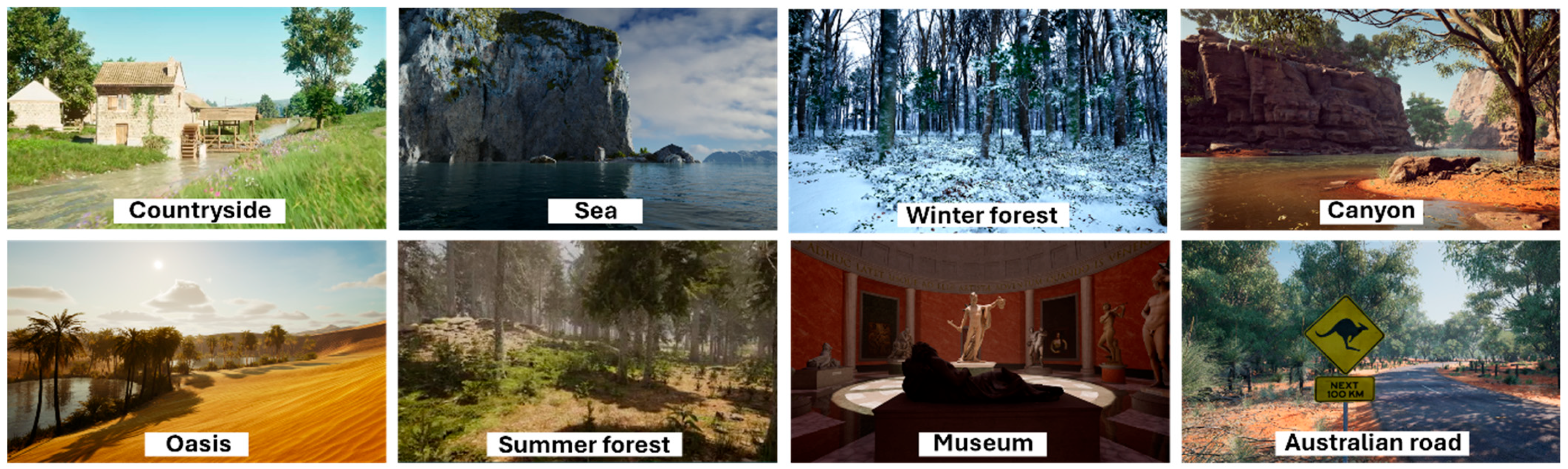
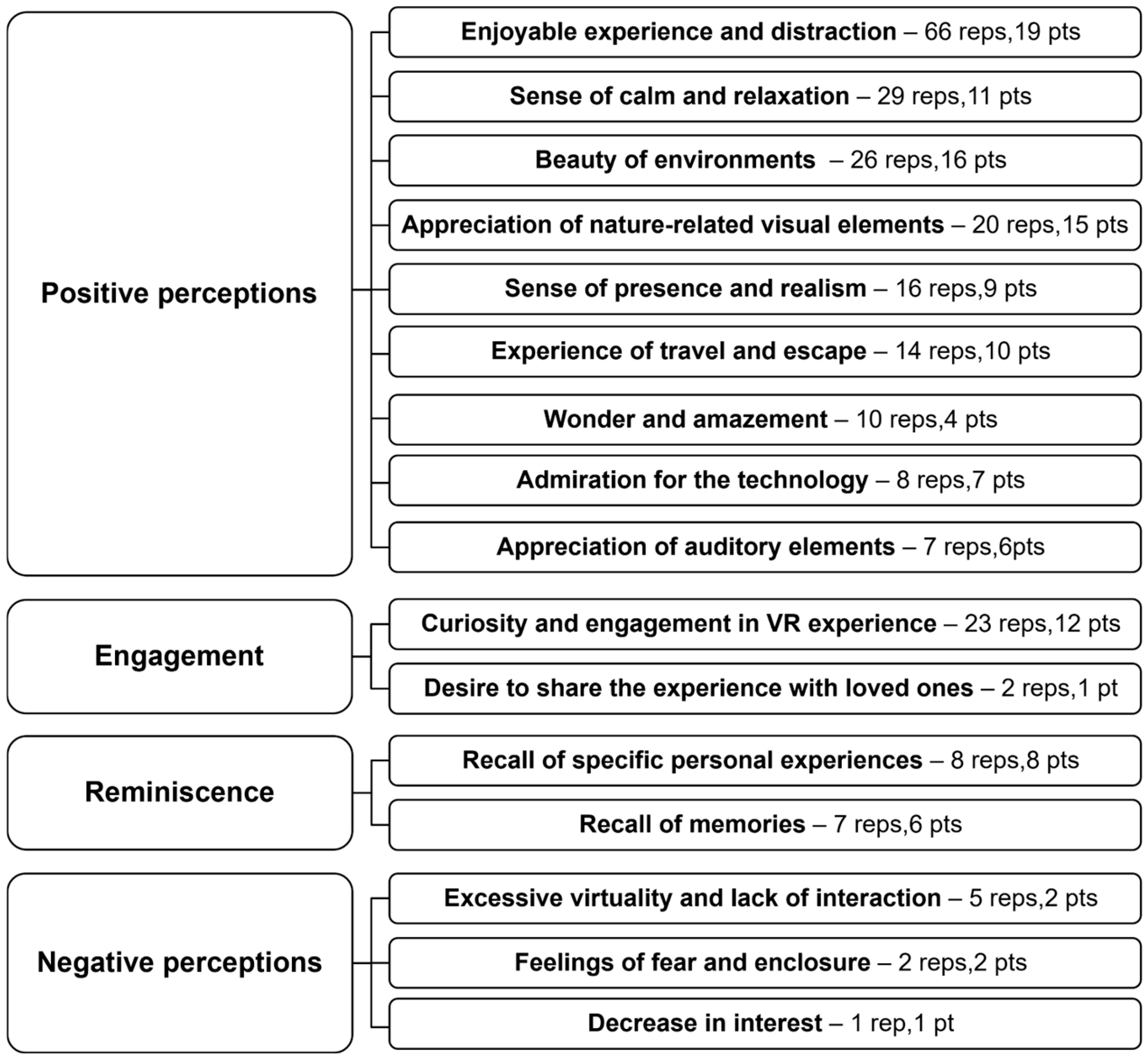
- Participants’ feedback highlighted the enjoyable, relaxing VR experience, noting the realism and aesthetics of the environments, which allowed them to travel virtually, reminisce about personal memories and experiences, and share these with the accompanying person.
- The improvements introduced by the VR room align with recommendations for the development of immersive technologies for nursing home residents by providing realistic, nature-inspired environments, enhancing ease of use and interactivity, and enabling a multi-user experience that supports social interaction.
- By offering an emotionally positive and engaging experience, opportunities for meaningful social interaction, and greater freedom of movement than VR headsets, the VR room could represent an innovative tool for improving mood and supporting the development of novel cognitive interventions. However, further research is required to substantiate these potential benefits.
Abstract
1. Introduction
2. Materials and Methods
2.1. Study Design and Ethical Considerations
2.2. Participants and Eligibility Criteria
2.3. Immersive VR Room
2.4. Protocol
2.5. Analysis of Session Recordings
2.6. Analysis of Verbatim
2.7. Statistical Analysis
3. Results
3.1. Participant Characteristics, Attendance Rate, and Selected Environments
3.2. Affective Valence, Feelings of Fear, Security and Enclosure
3.3. Affects and Interactions Observed During VR Sessions
3.3.1. Observed Emotion Rating Scale
3.3.2. Interactions During VR Sessions
3.4. Qualitative Analysis of Verbatim Responses to Questions
3.5. Qualitative Analysis of Spontaneous Verbatim from Sessions and the Final Interview
4. Discussion
4.1. Feasibility and Tolerability of Immersion in the VR Room
4.2. Effects on Affective Valence and Engagement
4.3. Limitations
4.4. VR Room Applications: Advantages, Limits, and Perspectives
5. Conclusions
Supplementary Materials
Author Contributions
Funding
Institutional Review Board Statement
Informed Consent Statement
Data Availability Statement
Conflicts of Interest
Abbreviations
| BPS | Behavioral and psychological symptoms |
| CAVE | Cave automatic virtual environment |
| HMD | Head-mounted display |
| MMSE | Mini-Mental State Examination |
| NCD | Neurocognitive disorders |
| NPI-NH | Neuropsychiatric Inventory—Nursing Home Version |
| OERS | Observed Emotion Rating Scale |
| VAS | Visual analogue scale |
| VR | Virtual reality |
References
- Ageing and Health. Available online: https://www.who.int/news-room/fact-sheets/detail/ageing-and-health (accessed on 2 January 2025).
- Kramer, D.; Allgaier, A.-K.; Fejtkova, S.; Mergl, R.; Hegerl, U. Depression in Nursing Homes: Prevalence, Recognition, and Treatment. Int. J. Psychiatry Med. 2009, 39, 345–358. [Google Scholar] [CrossRef] [PubMed]
- Sivertsen, H.E.; Haugan, G.; Helvik, A.-S. Clinically Significant Depressive Symptoms among Community-Living Older People ≥ 70 Years: Prevalence and Associations. The HUNT Study, Norway. J. Affect. Disord. 2026, 394, 120445. [Google Scholar] [CrossRef] [PubMed]
- Meijer, E.; Casanova, M.; Kim, H.; Llena-Nozal, A.; Lee, J. Economic Costs of Dementia in 11 Countries in Europe: Estimates from Nationally Representative Cohorts of a Panel Study. Lancet Reg. Health Eur. 2022, 20, 100445. [Google Scholar] [CrossRef] [PubMed]
- McDonald, W.M. Overview of Neurocognitive Disorders. Focus 2017, 15, 4–12. [Google Scholar] [CrossRef]
- Piccininni, M.; Di Carlo, A.; Baldereschi, M.; Zaccara, G.; Inzitari, D. Behavioral and Psychological Symptoms in Alzheimer’s Disease: Frequency and Relationship with Duration and Severity of the Disease. Dement. Geriatr. Cogn. Disord. 2005, 19, 276–281. [Google Scholar] [CrossRef]
- Kitching, D. Depression in Dementia. Aust. Prescr. 2015, 38, 209–2011. [Google Scholar] [CrossRef]
- Abdelaziz, A.S.; Sayed, H.H.; Ibrahim, O.; Elhusseiny, A.; Tantawy, A.E. Assessment of Prevalence, Risk Factors, and Neuropsychiatric Symptoms of Mild Neurocognitive Disorder among Elderly in Suez Canal Area. Middle East Curr. Psychiatry 2024, 31, 82. [Google Scholar] [CrossRef]
- Peng, Y.; Wang, Y.; Zhang, L.; Zhang, Y.; Sha, L.; Dong, J.; He, Y. Virtual Reality Exergames for Improving Physical Function, Cognition and Depression among Older Nursing Home Residents: A Systematic Review and Meta-Analysis. Geriatr. Nurs. 2024, 57, 31–44. [Google Scholar] [CrossRef]
- Brimelow, R.E.; Thangavelu, K.; Beattie, R.; Dissanayaka, N.N. Feasibility of Group-Based Multiple Virtual Reality Sessions to Reduce Behavioral and Psychological Symptoms in Persons Living in Residential Aged Care. J. Am. Med. Dir. Assoc. 2022, 23, 831–837.e2. [Google Scholar] [CrossRef]
- Matsangidou, M.; Solomou, T.; Frangoudes, F.; Papayianni, E.; Kkeli, N.; Pattichi, C.S. “Transported to a Better Place”: The Influence of Virtual Reality on the Behavioural and Psychological Symptoms of Dementia. Int. J. Hum. Comput. Stud. 2025, 196, 103413. [Google Scholar] [CrossRef]
- Abraha, I.; Rimland, J.M.; Trotta, F.M.; Dell’Aquila, G.; Cruz-Jentoft, A.; Petrovic, M.; Gudmundsson, A.; Soiza, R.; O’Mahony, D.; Guaita, A.; et al. Systematic Review of Systematic Reviews of Non-Pharmacological Interventions to Treat Behavioural Disturbances in Older Patients with Dementia. The SENATOR-OnTop Series. BMJ Open 2017, 7, e012759. [Google Scholar] [CrossRef] [PubMed]
- Carvalho, S.C.; Martins, F.S.; Martins, A.N.; Barbosa, R.C.; Vicente, S.G. Effectiveness of Snoezelen in Older Adults with Neurocognitive and Other Pathologies: A Systematic Review of the Literature. J. Neuropsychol. 2024, 18, 312–331. [Google Scholar] [CrossRef] [PubMed]
- Smith, B.C.; D’Amico, M. Sensory-Based Interventions for Adults with Dementia and Alzheimer’s Disease: A Scoping Review. Occup. Ther. Health Care 2019, 34, 171–201. [Google Scholar] [CrossRef] [PubMed]
- Pardini, S.; Gabrielli, S.; Gios, L.; Dianti, M.; Mayora-Ibarra, O.; Appel, L.; Olivetto, S.; Torres, A.; Rigatti, P.; Trentini, E.; et al. Customized Virtual Reality Naturalistic Scenarios Promoting Engagement and Relaxation in Patients with Cognitive Impairment: A Proof-of-Concept Mixed-Methods Study. Sci. Rep. 2023, 13, 20516. [Google Scholar] [CrossRef]
- Lu, Z.; Wang, W.; Yan, W.; Kew, C.L.; Seo, J.H.; Ory, M. The Application of Fully Immersive Virtual Reality on Reminiscence Interventions for Older Adults: Scoping Review. JMIR Serious Games 2023, 11, e45539. [Google Scholar] [CrossRef]
- Kim, J.; Lee, J.; Kim, Y.; Nuseibeh, B.; Han, S. The Effects of a Nature-Based Virtual Reality Program on Emotional Health and Quality of Life among Older Adults with Dementia. Am. J. Health Behav. 2023, 47, 3–12. [Google Scholar] [CrossRef]
- Sultana, M.; Campbell, K.; Jennings, M.; Montero-Odasso, M.; Orange, J.B.; Knowlton, J.; St. George, A.; Bryant, D. Virtual Reality Experience Intervention May Reduce Responsive Behaviors in Nursing Home Residents with Dementia: A Case Series. J. Alzheimer’s Dis. 2021, 84, 883–893. [Google Scholar] [CrossRef]
- Yu, J.; Wu, J.; Liu, B.; Zheng, K.; Ren, Z. Efficacy of Virtual Reality Technology Interventions for Cognitive and Mental Outcomes in Older People with Cognitive Disorders: An Umbrella Review Comprising Meta-Analyses of Randomized Controlled Trials. Ageing Res. Rev. 2024, 94, 102179. [Google Scholar] [CrossRef]
- Definition of Reminiscence. Available online: https://www.merriam-webster.com/dictionary/reminiscence (accessed on 5 January 2025).
- Mao, Q.; Zhao, Z.; Yu, L.; Zhao, Y.; Wang, H. The Effects of Virtual Reality–Based Reminiscence Therapies for Older Adults with Cognitive Impairment: Systematic Review. J. Med. Internet Res. 2024, 26, e53348. [Google Scholar] [CrossRef]
- Tortora, C.; Di Crosta, A.; La Malva, P.; Prete, G.; Ceccato, I.; Mammarella, N.; Di Domenico, A.; Palumbo, R. Virtual Reality and Cognitive Rehabilitation for Older Adults with Mild Cognitive Impairment: A Systematic Review. Ageing Res. Rev. 2024, 93, 102146. [Google Scholar] [CrossRef]
- Wang, J.; Li, H.; Wang, Y.; Meng, F.; Liu, Z.; Zhao, T.; Xu, P.; Guo, C.; Zhu, Y. Effects of Virtual Reality-Based Therapy on Cognitive and Psychological Outcomes in Older Adults with Predementia: A Systematic Review and Meta-Analysis. J. Alzheimer’s Dis. 2025, 109, 1068–1088. [Google Scholar] [CrossRef] [PubMed]
- Li, X.; Zhang, Y.; Tang, L.; Ye, L.; Tang, M. Effects of Virtual Reality-Based Interventions on Cognitive Function, Emotional State, and Quality of Life in Patients with Mild Cognitive Impairment: A Meta-Analysis. Front. Neurol. 2025, 16, 1496382. [Google Scholar] [CrossRef] [PubMed]
- Rmadi, H.; Maillot, P.; Artico, R.; Baudouin, E.; Hanneton, S.; Dietrich, G.; Duron, E. Tolerance of Immersive Head-Mounted Virtual Reality among Older Nursing Home Residents. Front. Public Health 2023, 11, 1163484. [Google Scholar] [CrossRef] [PubMed]
- Holloway, H.; Conroy, B.; Isbel, S.; D’Cunha, N.M. Immersive Virtual Reality in the Promotion of Health and Well-Being for People in Residential Aged Care without Cognitive Impairment: A Scoping Review. Digit. Health 2024, 10, 20552076241249568. [Google Scholar] [CrossRef]
- Baker, S.; Waycott, J.; Robertson, E.; Carrasco, R.; Neves, B.B.; Hampson, R.; Vetere, F. Evaluating the Use of Interactive Virtual Reality Technology with Older Adults Living in Residential Aged Care. Inf. Process. Manag. 2020, 57, 102105. [Google Scholar] [CrossRef]
- Lundstedt, R.; Persson, J.; Håkansson, C.; Frennert, S.; Wallergård, M. Designing Virtual Natural Environments for Older Adults: Think-Aloud Study. JMIR Hum. Factors 2023, 10, e40932. [Google Scholar] [CrossRef]
- Eckert, M.; Radhakrishnan, V.; Ostermann, T.; Ehlers, J.P.; Hohenberg, G. Virtual and Augmented Reality Games in Dementia Care: Systematic and Bibliographic Review. Healthcare 2025, 13, 2013. [Google Scholar] [CrossRef]
- Ip, W.K.; Soar, J.; James, C.; Wang, Z.; Fong, K.N.K. Innovative Virtual Reality (VR) Application for Preventing of Falls among Chinese Older Adults: A Usability and Acceptance Exploratory Study. Hum. Behav. Emerg. Technol. 2024, 2024, 5556767. [Google Scholar] [CrossRef]
- Lee, S. Understanding Wayfinding for the Elderly Using VR. In Proceedings of the 9th ACM SIGGRAPH Conference on Virtual-Reality Continuum and Its Applications in Industry; Association for Computing Machinery: New York, NY, USA, 2010; pp. 285–288. [Google Scholar]
- Pedroli, E.; Greci, L.; Colombo, D.; Serino, S.; Cipresso, P.; Arlati, S.; Mondellini, M.; Boilini, L.; Giussani, V.; Goulene, K.; et al. Characteristics, Usability, and Users Experience of a System Combining Cognitive and Physical Therapy in a Virtual Environment: Positive Bike. Sensors 2018, 18, 2343. [Google Scholar] [CrossRef]
- Lo, H.H.M.; Fong, P.Y.H.; Wang, B.; Fung, C.L.-C.; Wong, S.Y.-S.; Sit, R.W.S. Clinical Efficacy of Virtual Reality Cave Automatic Virtual Environments (CAVE) for Chronic Musculoskeletal Pain in Older Adults: A Randomized Controlled Trial. J. Am. Med. Dir. Assoc. 2025, 26, 105344. [Google Scholar] [CrossRef]
- Moyle, W.; Jones, C.; Dwan, T.; Petrovich, T. Effectiveness of a Virtual Reality Forest on People with Dementia: A Mixed Methods Pilot Study. Gerontologist 2018, 58, 478–487. [Google Scholar] [CrossRef] [PubMed]
- Goodall, G.; André, L.; Taraldsen, K.; Serrano, J.A. Supporting Identity and Relationships amongst People with Dementia through the Use of Technology: A Qualitative Interview Study. Int. J. Qual. Stud. Health Well-Being 2021, 16, 1920349. [Google Scholar] [CrossRef] [PubMed]
- Scarles, C.; Klepacz, N.; van Even, S.; Guillemaut, J.-Y.; Humbracht, M. Bringing The Outdoors Indoors: Immersive Experiences of Recreation in Nature and Coastal Environments in Residential Care Homes. E-Rev. Tour. Res. 2020, 17, 706–721. [Google Scholar]
- Bakker, R. Sensory Loss, Dementia, and Environments. Generations 2003, 27, 46–51. [Google Scholar]
- Matsangidou, M.; Solomou, T.; Frangoudes, F.; Ioannou, K.; Theofanous, P.; Papayianni, E.; Pattichis, C.S. Affective Out-World Experience via Virtual Reality for Older Adults Living with Mild Cognitive Impairments or Mild Dementia. Int. J. Environ. Res. Public Health 2023, 20, 2919. [Google Scholar] [CrossRef]
- Lomholt, R.K.; Jürgensen, K.S. The mini-mental state examination in screening of cognitive dysfunction and dementia. Ugeskr. Laeger 1998, 160, 7251–7254. [Google Scholar]
- Cummings, J.L. The Neuropsychiatric Inventory: Assessing Psychopathology in Dementia Patients. Neurology 1997, 48, S10–S16. [Google Scholar] [CrossRef]
- Wood, S.; Cummings, J.L.; Hsu, M.A.; Barclay, T.; Wheatley, M.V.; Yarema, K.T.; Schnelle, J.F. The Use of the Neuropsychiatric Inventory in Nursing Home Residents. Characterization and Measurement. Am. J. Geriatr. Psychiatry 2000, 8, 75–83. [Google Scholar] [CrossRef]
- Lawton, M.P.; Van Haitsma, K.; Klapper, J. Observed Affect in Nursing Home Residents with Alzheimer’s Disease. J. Gerontol. Ser. B 1996, 51, 3–14. [Google Scholar] [CrossRef]
- Madsø, K.G.; Flo-Groeneboom, E.; Pachana, N.A.; Nordhus, I.H. Assessing Momentary Well-Being in People Living with Dementia: A Systematic Review of Observational Instruments. Front. Psychol. 2021, 12, 742510. [Google Scholar] [CrossRef]
- Lee, K.H.; Lee, J.Y.; Boltz, M.; McConnell, E.S. Emotional Expression of Persons with Dementia: An Integrative Review with Implications for Evidence-Based Practice. Worldviews Evid. Based Nurs. 2019, 16, 344–351. [Google Scholar] [CrossRef]
- Brimelow, R.E.; Dawe, B.; Dissanayaka, N. Preliminary Research: Virtual Reality in Residential Aged Care to Reduce Apathy and Improve Mood. Cyberpsychol. Behav. Soc. Netw. 2020, 23, 165–170. [Google Scholar] [CrossRef] [PubMed]
- Delbroek, T.; Vermeylen, W.; Spildooren, J. The Effect of Cognitive-Motor Dual Task Training with the Biorescue Force Platform on Cognition, Balance and Dual Task Performance in Institutionalized Older Adults: A Randomized Controlled Trial. J. Phys. Ther. Sci. 2017, 29, 1137–1143. [Google Scholar] [CrossRef] [PubMed]
- Braun, V.; Clarke, V. Using Thematic Analysis in Psychology. Qual. Res. Psychol. 2006, 3, 77–101. [Google Scholar] [CrossRef]
- Smith, M.; Gerdner, L.A.; Hall, G.R.; Buckwalter, K.C. History, Development, and Future of the Progressively Lowered Stress Threshold: A Conceptual Model for Dementia Care. J. Am. Geriatr. Soc. 2004, 52, 1755–1760. [Google Scholar] [CrossRef]
- Appel, L.; Appel, E.; Bogler, O.; Wiseman, M.; Cohen, L.; Ein, N.; Abrams, H.B.; Campos, J.L. Older Adults with Cognitive and/or Physical Impairments Can Benefit from Immersive Virtual Reality Experiences: A Feasibility Study. Front. Med. 2019, 6, 329. [Google Scholar] [CrossRef]
- Chan, J.Y.C.; Chan, T.K.; Wong, M.P.F.; Cheung, R.S.M.; Yiu, K.K.L.; Tsoi, K.K.F. Effects of Virtual Reality on Moods in Community Older Adults. A Multicenter Randomized Controlled Trial. Int. J. Geriatr. Psychiatry 2020, 35, 926–933. [Google Scholar] [CrossRef]
- Appel, L.; Appel, E.; Kisonas, E.; Lewis-Fung, S.; Pardini, S.; Rosenberg, J.; Appel, J.; Smith, C. Evaluating the Impact of Virtual Reality on the Behavioral and Psychological Symptoms of Dementia and Quality of Life of Inpatients with Dementia in Acute Care: Randomized Controlled Trial (VRCT). J. Med. Internet Res. 2024, 26, e51758. [Google Scholar] [CrossRef]
- Martirosov, S.; Bureš, M.; Zítka, T. Cyber Sickness in Low-Immersive, Semi-Immersive, and Fully Immersive Virtual Reality. Virtual Real. 2022, 26, 15–32. [Google Scholar] [CrossRef]
- Saredakis, D.; Szpak, A.; Birckhead, B.; Keage, H.A.D.; Rizzo, A.; Loetscher, T. Factors Associated with Virtual Reality Sickness in Head-Mounted Displays: A Systematic Review and Meta-Analysis. Front. Hum. Neurosci. 2020, 14, 96. [Google Scholar] [CrossRef]
- Chang, E.; Kim, H.T.; Yoo, B. Virtual Reality Sickness: A Review of Causes and Measurements. Int. J. Hum. Comput. Interact. 2020, 36, 1658–1682. [Google Scholar] [CrossRef]
- Camacho-Conde, J.A.; Galán-López, J.M. Depression and Cognitive Impairment in Institutionalized Older Adults. Dement. Geriatr. Cogn. Disord. 2020, 49, 107–120. [Google Scholar] [CrossRef] [PubMed]
- Chaze, F.; Hayden, L.; Azevedo, A.; Kamath, A.; Bucko, D.; Kashlan, Y.; Dube, M.; De Paula, J.; Jackson, A.; Reyna, C.; et al. Virtual Reality and Well-Being in Older Adults: Results from a Pilot Implementation of Virtual Reality in Long-Term Care. J. Rehabil. Assist. Technol. Eng. 2022, 9, 20556683211072384. [Google Scholar] [CrossRef] [PubMed]
- Kim, J.-H.; Park, S.; Lim, H. Developing a Virtual Reality for People with Dementia in Nursing Homes Based on Their Psychological Needs: A Feasibility Study. BMC Geriatr. 2021, 21, 167. [Google Scholar] [CrossRef]
- Goodall, G.; Ciobanu, I.; Broekx, R.; Sørgaard, J.; Anghelache, I.; Anghelache-Tutulan, C.; Diaconu, M.; Mæland, S.; Borve, T.; Dagestad, A.D.; et al. The Role of Adaptive Immersive Technology in Creating Personalised Environments for Emotional Connection and Preservation of Identity in Dementia Care: Insights from User Perspectives towards SENSE-GARDEN. Adv. Life Sci. 2019, 11, 13–22. [Google Scholar]
- Huang, C.-M.; Liao, J.-Y.; Lin, T.-Y.; Hsu, H.-P.; Charles Lee, T.-C.; Guo, J.-L. Effects of User Experiences on Continuance Intention of Using Immersive Three-Dimensional Virtual Reality among Institutionalized Older Adults. J. Adv. Nurs. 2021, 77, 3784–3796. [Google Scholar] [CrossRef]
- Nordin, S.; McKee, K.; Wallinder, M.; von Koch, L.; Wijk, H.; Elf, M. The Physical Environment, Activity and Interaction in Residential Care Facilities for Older People: A Comparative Case Study. Scand. J. Caring Sci. 2017, 31, 727–738. [Google Scholar] [CrossRef]
- Matsangidou, M. Virtual Reality Design Principles for Psychophysiological Interventions in Dementia: A Systematic Review of Research. Comput. Hum. Behav. Rep. 2025, 19, 100758. [Google Scholar] [CrossRef]
- Alizai, H.; Wong, M.; Tchao, D.; Appel, L. Navigating Immersion: Usability Study of a Virtual Reality Application Designed for Older Adults with Dementia and Their Caregivers. J. Med. Ext. Real. 2025, 2, 84–94. [Google Scholar] [CrossRef]
- Pavic, K.; Vergilino-Perez, D.; Gricourt, T.; Chaby, L. Because I’m Happy—An Overview on Fostering Positive Emotions Through Virtual Reality. Front. Virtual Real. 2022, 3, 788820. [Google Scholar] [CrossRef]
- Hodge, J.; Balaam, M.; Hastings, S.; Morrissey, K. Exploring the Design of Tailored Virtual Reality Experiences for People with Dementia. In Proceedings of the 2018 CHI Conference on Human Factors in Computing Systems; Association for Computing Machinery: New York, NY, USA, 2018; pp. 1–13. [Google Scholar]
- Roberts, A.R.; De Schutter, B.; Franks, K.; Radina, M.E. Older Adults’ Experiences with Audiovisual Virtual Reality: Perceived Usefulness and Other Factors Influencing Technology Acceptance. Clin. Gerontol. 2019, 42, 27–33. [Google Scholar] [CrossRef]
- Schaumburg, M.; Imtiaz, A.; Zhou, R.; Bernard, M.; Wolbers, T.; Segen, V. Immersive Virtual Reality for Older Adults: Challenges and Solutions in Basic Research and Clinical Applications. Ageing Res. Rev. 2025, 109, 102771. [Google Scholar] [CrossRef]
- Pardini, S.; Calcagno, R.; Genovese, A.; Salvadori, E.; Ibarra, O.M. Exploring Virtual Reality-Based Reminiscence Therapy on Cognitive and Emotional Well-Being in People with Cognitive Impairments: A Scoping Review. Brain Sci. 2025, 15, 500. [Google Scholar] [CrossRef]
- Wei, X.; Huang, C.; Ding, X.; Zhou, Z.; Zhang, Y.; Feng, X.; Zheng, S.; Li, T.; Lü, J. Effect of Virtual Reality Training on Dual-Task Performance in Older Adults: A Systematic Review and Meta-Analysis. J. NeuroEngineering Rehabil. 2025, 22, 141. [Google Scholar] [CrossRef]
- Chan, R.C.-F.; Zhou, J.H.-S.; Cao, Y.; Lo, K.; Ng, P.H.-F.; Shum, D.H.-K.; Wong, A.Y.-L. Nonpharmacological Multimodal Interventions for Cognitive Functions in Older Adults with Mild Cognitive Impairment: Scoping Review. JMIR Aging 2025, 8, e70291. [Google Scholar] [CrossRef]
- Prinz, A.; Buerger, D.; Krafft, J.; Bergmann, M.; Woll, A.; Barisch-Fritz, B.; Witte, K. Use of Immersive Virtual Reality in Nursing Homes for People with Dementia: Feasibility Study to Assess Cognitive, Motor, and Emotional Responses. JMIR XR Spat. Comput. JMXR 2024, 1, e54724. [Google Scholar] [CrossRef]



| Total Sample, n | 20 |
| Female, n | 10 |
| Male, n | 10 |
| Age, years, mean ± SD | 75.1 ± 7.9 |
| MMSE score, mean ± SD | 21.0 ± 6.6 |
| Clinical diagnosis, n | |
| Major NCD, n | 11 |
| Mild NCD, n | 5 |
| NCD without psychological disorder, n | 6 |
| NCD with psychological disorder, n | 10 |
| Psychological disorder only, n | 3 |
| Psychological disorder with an intellectual disability, n | 1 |
| NPI-NH domain scores, median [25th; 75th percentiles] | |
| Depression/Dysphoria | 2.5 [0.3; 6.0] |
| Sleep and night-time behavior disturbance | 2.5 [0.0; 8.0] |
| Anxiety | 2.5 [0.0; 7.5] |
| Agitation/aggression | 1.5 [0.0; 6.0] |
| Irritability | 0.5 [0.0; 4.0] |
| Aberrant motor behaviors | 0.0 [0.0; 5.5] |
| Delusions | 0.0 [0.0; 5.5] |
| Appetite/eating abnormalities | 1.0 [0.0; 3.8] |
| Apathy | 0.5 [0.0; 2.8] |
| Disinhibition | 0.0 [0.0; 0.8] |
| Euphoria | 0.0 [0.0; 0.8] |
| Hallucinations | 0.0 [0.0; 0.0] |
| Patients with severity score for NPI-NH domain ≥ 2 *, n (%) | |
| Depression/Dysphoria | 11 (55) |
| Sleep and night-time behavior disturbance | 10 (50) |
| Anxiety | 9 (45) |
| Agitation/aggression | 9 (45) |
| Irritability | 6 (30) |
| Aberrant motor behaviors | 6 (30) |
| Delusions | 6 (30) |
| Appetite/eating abnormalities | 6 (30) |
| Apathy | 5 (25) |
| Disinhibition | 4 (20) |
| Euphoria | 2 (10) |
| Hallucinations | 2 (10) |
| Type of Interaction | Number of Sessions per Participant | Number of Participants (Out of 19) | |||
|---|---|---|---|---|---|
| Median | P25 | P75 | Range | ||
| Visual exploration of the VR environment | 5 | 5 | 5 | 5–5 | 19 |
| Reactions to visual elements of the VR environment | 5 | 3 | 5 | 0–5 | 17 |
| Navigation within the VR environment | 5 | 3 | 5 | 0–5 | 17 |
| Interactions with caregiver | 4 | 3 | 5 | 0–5 | 18 |
| Reactions to VR environment sounds/music | 3 | 1.5 | 4 | 0–5 | 16 |
| Theme | Representative Items | Number of Reports and Participants | Environments (n Reports) |
|---|---|---|---|
| What did you like during the immersion? | |||
| Visual elements | Presence of rocky landscape and cliffs | 4; 4 | Sea (3), Canyon (1) |
| Aquatic features (water, sea and lake) | 10; 6 | Countryside (3), Oasis (3) Summer Forest (2), Sea (1), Canyon (1) | |
| Presence of fauna (birds, seagulls, ducks, rabbits, squirrels, corrals, and fishes) | 15; 9 | Sea (7), Summer Forest (3), Winter Forest (2), Countryside (2), Oasis (1) | |
| Vegetation diversity (plans, flowers, trees, palm trees, details of the vegetation, richness of the greenery, and plants by the water) | 14; 9 | Summer Forest (5), Countryside (4), Oasis (3), Winter Forest (1), Canyon (1) | |
| Soundscapes | Musical background (chosen by the subject) | 15; 8 | Winter Forest (4), Oasis (4), Countryside (3), Summer Forest (2), Sea (2) |
| Bird sounds | 13; 8 | Summer Forest (6), Sea (2), Countryside (2), Oasis (1), Australian road (1) | |
| Nature ambient sounds (sea waves and wind) | 8; 7 | Sea (6), Summer Forest (1), Winter Forest (1) | |
| Aesthetic and realistic attributes | Beautiful images in general | 10; 8 | Sea (3), Summer Forest (2), Countryside (2), Museum (2), Oasis (1) |
| Realism of the environments (sand moving with the wind, feeling of floating on the water, all is very realistic, it looks like reality…) | 6; 5 | Oasis (2) Summer Forest (2), Sea (2) | |
| Beauty of the nature | 6; 4 | Countryside (2), Summer Forest (1), Winter Forest (1), Oasis (1), Canyon (1) | |
| Beauty of landscapes and depth of the visual field | 3; 2 | Oasis (3) | |
| Beauty of the sky (clear blue sky and sunlight) | 2; 2 | Sea (1), Countryside (1) | |
| Possibilities offered by the technology | Freedom of movement (climb the rocks, dive and swim in water, possibility to interact with environments, to travel where I want…) | 4; 3 | Oasis (2), Countryside (1), Sea (1) |
| Visit nature virtually without having to travel | 1; 1 | Summer Forest (1) | |
| Soothing environment | Winter forest atmosphere | 1; 1 | Winter Forest (1) |
| Calming ambiance | 3; 3 | Winter Forest (1), Sea (1), Museum (1) | |
| Was there anything you dislike during the immersion? | |||
| Fauna | Too many animals (there are too many bird sounds, too many animals, it feels unnatural, animal noises are disturbing…) | 3; 3 | Summer Forest (1), Countryside (1), Canyon (1) |
| Too few animals (lack of animals, would like more animals, more birds, not only to hear the birds but also see them, lack of birds and ducks…) | 6; 5 | Summer Forest (2), Sea (2), Canyon (1), Australian Road (1) | |
| Navigating within the environments | Movements are difficult, navigating the environments is too slow, navigating is difficult and slow, I would like to be able to catch things…) | 4; 1 | Countryside (1), Oasis (1), Sea (1), Winter Forest (1) |
| Lack of realism | Mountains are not very realistic, having too many sounds makes it seems unnatural | 2; 1 | Summer Forest (1), Countryside (1) |
| Elements perceived as oppressive | Would feel more comfortable with an open sea without rocks, feeling of oppression between the cliffs and the water | 2; 2 | Sea (2) |
Disclaimer/Publisher’s Note: The statements, opinions and data contained in all publications are solely those of the individual author(s) and contributor(s) and not of MDPI and/or the editor(s). MDPI and/or the editor(s) disclaim responsibility for any injury to people or property resulting from any ideas, methods, instructions or products referred to in the content. |
© 2026 by the authors. Licensee MDPI, Basel, Switzerland. This article is an open access article distributed under the terms and conditions of the Creative Commons Attribution (CC BY) license.
Share and Cite
Klass, M.; Dandler, F.; Ducommun, Y.; Hanset, M.; Ruscart, L.; Bier, J.-C.; De Breucker, S.; Foucart, J. An Immersive Virtual Reality Room to Enhance Positive Affect and Engagement in Nursing Home Residents with Neurocognitive and Psychological Disorders: A Feasibility Study. Healthcare 2026, 14, 588. https://doi.org/10.3390/healthcare14050588
Klass M, Dandler F, Ducommun Y, Hanset M, Ruscart L, Bier J-C, De Breucker S, Foucart J. An Immersive Virtual Reality Room to Enhance Positive Affect and Engagement in Nursing Home Residents with Neurocognitive and Psychological Disorders: A Feasibility Study. Healthcare. 2026; 14(5):588. https://doi.org/10.3390/healthcare14050588
Chicago/Turabian StyleKlass, Malgorzata, Frédérick Dandler, Yaëlle Ducommun, Michel Hanset, Laurence Ruscart, Jean-Christophe Bier, Sandra De Breucker, and Jennifer Foucart. 2026. "An Immersive Virtual Reality Room to Enhance Positive Affect and Engagement in Nursing Home Residents with Neurocognitive and Psychological Disorders: A Feasibility Study" Healthcare 14, no. 5: 588. https://doi.org/10.3390/healthcare14050588
APA StyleKlass, M., Dandler, F., Ducommun, Y., Hanset, M., Ruscart, L., Bier, J.-C., De Breucker, S., & Foucart, J. (2026). An Immersive Virtual Reality Room to Enhance Positive Affect and Engagement in Nursing Home Residents with Neurocognitive and Psychological Disorders: A Feasibility Study. Healthcare, 14(5), 588. https://doi.org/10.3390/healthcare14050588