Navigating Aging with Technology: A Scoping Review of Digital Interventions Addressing Intrinsic Capacity Decline in Older Adults


Abstract
1. Introduction
2. Materials and Methods
2.1. Identifying the Research Question
2.2. Identifying Relevant Studies
2.3. Study Selection
2.4. Charting the Data
2.5. Collating, Summarizing and Reporting the Results
3. Results
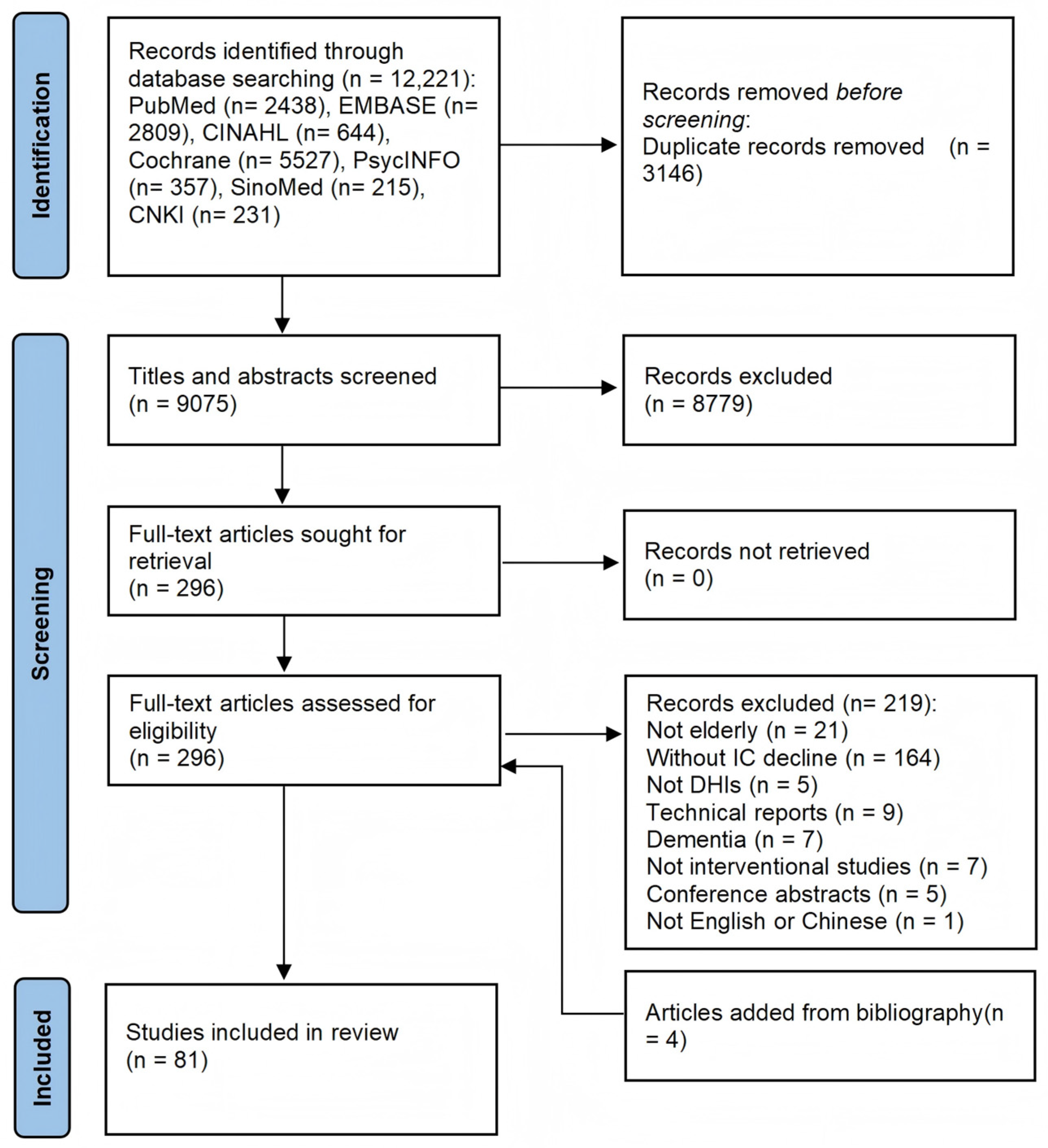
3.1. Literature Search
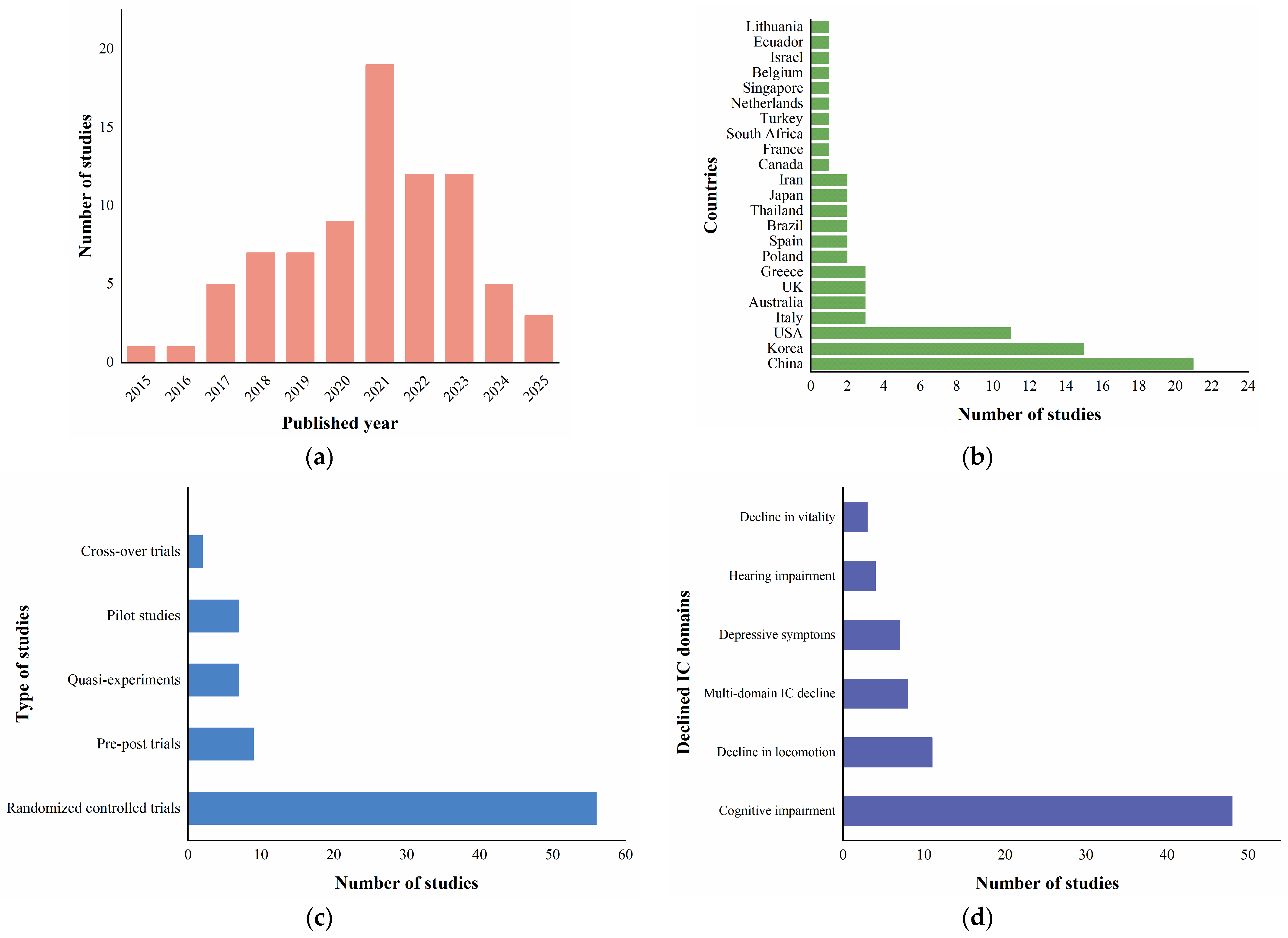
3.2. Characteristics of Included Studies
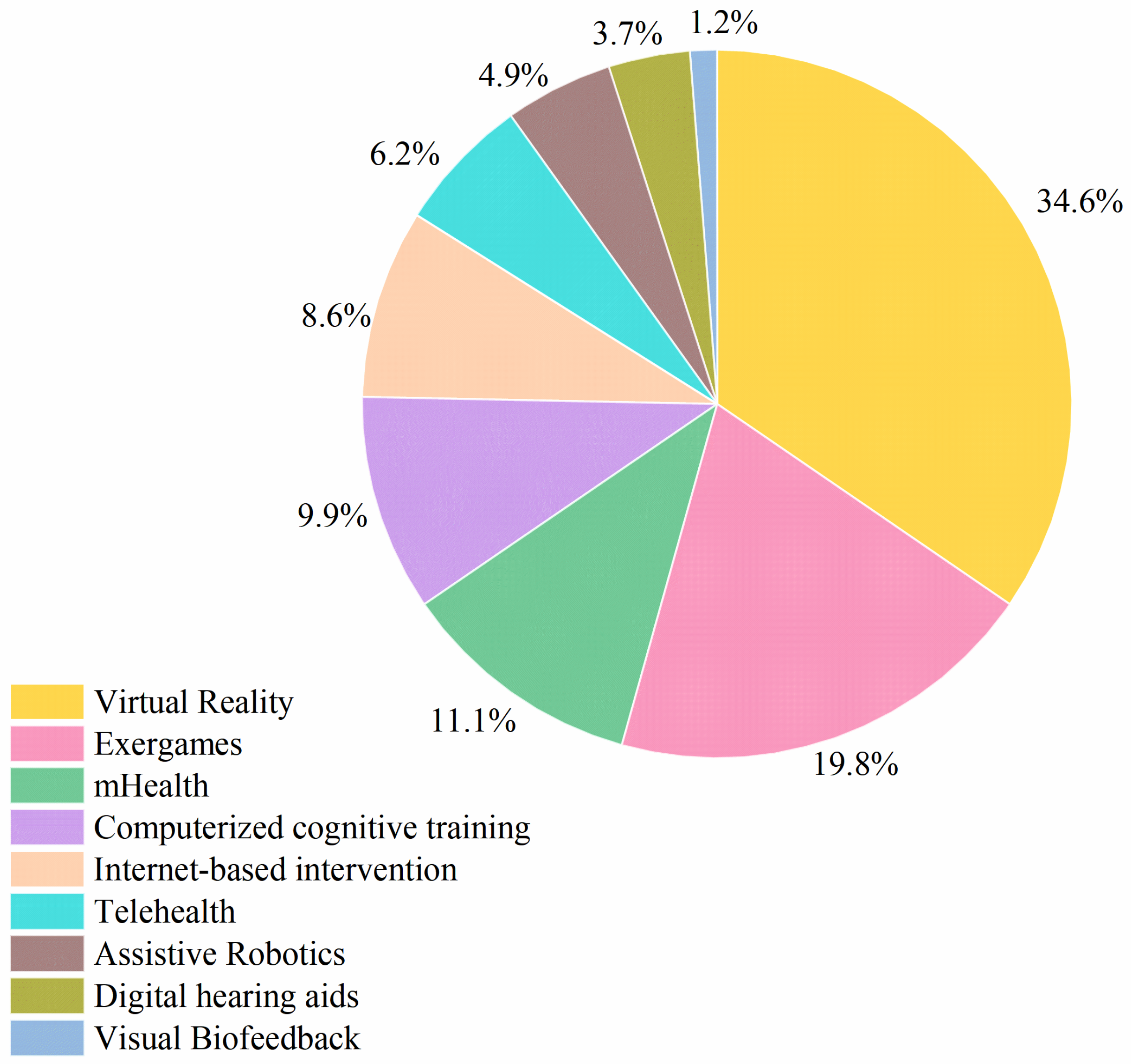
3.3. Types of Digital Health Interventions (DHIs)
3.4. Effects of Digital Interventions on Intrinsic Capacity Domains
3.4.1. Cognitive Domain
3.4.2. Locomotor Domain
3.4.3. Psychological, Sensory, and Vitality Domains
3.4.4. Multi-Domain Interventions
4. Discussion
4.1. Strengths and Limitations
4.2. Implications for Future Research
5. Conclusions
Supplementary Materials
Author Contributions
Funding
Institutional Review Board Statement
Informed Consent Statement
Data Availability Statement
Conflicts of Interest
Abbreviations
| IC | Intrinsic Capacity |
| DHIs | Digital Health Interventions |
| WHO | World Health Organization |
| ICOPE | Integrated Care for Older People |
| ICT | Information and Communication Technologies |
| SinoMed | Chinese biomedical literature service system |
| CNKI | China National Knowledge Infrastructure |
| MeSH | Medical Subject Headings |
| RCTs | Randomized Controlled Trials |
| SCD | Subjective cognitive decline |
| MCI | Mild Cognitive Impairment |
| VR | Virtual Reality |
| HMDs | Head-mounted Displays |
| CCT | Computerized Cognitive Training |
| vMCI | very Mild Cognitive Impairment |
| MOCI | Moderate Cognitive Impairment |
References
- Beard, J.R.; Officer, A.; De Carvalho, I.A.; Sadana, R.; Pot, A.M.; Michel, J.-P.; Lloyd-Sherlock, P.; Epping-Jordan, J.E.; Peeters, G.M.E.E.; Mahanani, W.R.; et al. The World Report on Ageing and Health: A Policy Framework for Healthy Ageing. Lancet 2016, 387, 2145–2154. [Google Scholar] [CrossRef]
- World Health Organization. Ageing and Health. Available online: https://www.who.int/news-room/fact-sheets/detail/ageing-and-health (accessed on 11 January 2026).
- Clegg, A.; Young, J.; Iliffe, S.; Rikkert, M.O.; Rockwood, K. Frailty in Elderly People. Lancet 2013, 381, 752–762. [Google Scholar] [CrossRef]
- Zhao, Y.; Jiang, Y.; Tang, P.; Wang, X.; Guo, Y.; Tang, L. Adverse Health Effects of Declined Intrinsic Capacity in Middle-Aged and Older Adults: A Systematic Review and Meta-Analysis. Age Ageing 2024, 53, afae162. [Google Scholar] [CrossRef]
- Fang, E.F.; Scheibye-Knudsen, M.; Jahn, H.J.; Li, J.; Ling, L.; Guo, H.; Zhu, X.; Preedy, V.; Lu, H.; Bohr, V.A.; et al. A Research Agenda for Aging in China in the 21st Century. Ageing Res. Rev. 2015, 24, 197–205. [Google Scholar] [CrossRef]
- World Health Organization. World Report on Ageing and Health. Available online: https://apps.who.int/iris/handle/10665/186463 (accessed on 27 May 2025).
- Cesari, M.; Araujo De Carvalho, I.; Amuthavalli Thiyagarajan, J.; Cooper, C.; Martin, F.C.; Reginster, J.-Y.; Vellas, B.; Beard, J.R. Evidence for the Domains Supporting the Construct of Intrinsic Capacity. J. Gerontol. Ser. A 2018, 73, 1653–1660. [Google Scholar] [CrossRef]
- De Oliveira, V.P.; Ferriolli, E.; Lourenço, R.A.; González-Bautista, E.; De Souto Barreto, P.; De Mello, R.G.B. The Sensitivity and Specificity of the WHO’s ICOPE Screening Tool, and the Prevalence of Loss of Intrinsic Capacity in Older Adults: A Scoping Review. Maturitas 2023, 177, 107818. [Google Scholar] [CrossRef]
- Ma, L.; Chhetri, J.K.; Zhang, L.; Sun, F.; Li, Y.; Tang, Z. Cross-Sectional Study Examining the Status of Intrinsic Capacity Decline in Community-Dwelling Older Adults in China: Prevalence, Associated Factors and Implications for Clinical Care. BMJ Open 2021, 11, e043062. [Google Scholar] [CrossRef] [PubMed]
- Tavassoli, N.; De Souto Barreto, P.; Berbon, C.; Mathieu, C.; De Kerimel, J.; Lafont, C.; Takeda, C.; Carrie, I.; Piau, A.; Jouffrey, T.; et al. Implementation of the WHO Integrated Care for Older People (ICOPE) Programme in Clinical Practice: A Prospective Study. Lancet Healthy Longev. 2022, 3, e394–e404. [Google Scholar] [CrossRef] [PubMed]
- Campbell, C.L.; Cadar, D.; McMunn, A.; Zaninotto, P. Operationalization of Intrinsic Capacity in Older People and Its Association with Subsequent Disability, Hospital Admission and Mortality: Results from the English Longitudinal Study of Ageing. J. Gerontol. Ser. A 2023, 78, 698–703. [Google Scholar] [CrossRef]
- Li, Y.; Yang, T.; Wang, X.; He, X.; Dong, J.; Qian, Q.; Zhang, X.; Zheng, J.; Fan, X.; Ma, Y. The Ability of Decline in Intrinsic Capacity to Indicate the Risk of Mortality in Older Adults: A Meta-Analysis. Maturitas 2024, 189, 108109. [Google Scholar] [CrossRef]
- Yang, Y.; Ma, G.; Wei, S.; Wei, X.; Yan, B.; Yuan, Y.; Chen, Y.; Qin, J.; Ma, Y. Adverse Outcomes of Intrinsic Capacity in Older Adults: A Scoping Review. Arch. Gerontol. Geriatr. 2024, 120, 105335. [Google Scholar] [CrossRef]
- World Health Organization. Integrated Care for Older People: Guidelines on Community-Level Interventions to Manage Declines in Intrinsic Capacity. Available online: https://apps.who.int/iris/handle/10665/258981 (accessed on 27 May 2025).
- World Health Organization. Integrated Care for Older People (ICOPE): Guidance for Person-Centred Assessment and Pathways in Primary Care. Available online: https://apps.who.int/iris/handle/10665/326843 (accessed on 12 June 2025).
- Liao, X.; Shen, J.; Li, M. Effects of Multi-Domain Intervention on Intrinsic Capacity in Older Adults: A Systematic Review of Randomized Controlled Trials (RCTs). Exp. Gerontol. 2023, 174, 112112. [Google Scholar] [CrossRef] [PubMed]
- Ienca, M.; Schneble, C.; Kressig, R.W.; Wangmo, T. Digital Health Interventions for Healthy Ageing: A Qualitative User Evaluation and Ethical Assessment. BMC Geriatr. 2021, 21, 412. [Google Scholar] [CrossRef] [PubMed]
- Loughnane, C.; Laiti, J.; O’Donovan, R.; Dunne, P.J. Systematic Review Exploring Human, AI, and Hybrid Health Coaching in Digital Health Interventions: Trends, Engagement, and Lifestyle Outcomes. Front. Digit. Health 2025, 7, 1536416. [Google Scholar] [CrossRef]
- World Health Organization. Monitoring and Evaluating Digital Health Interventions: A Practical Guide to Conducting Research and Assessment. Available online: https://apps.who.int/iris/handle/10665/252183 (accessed on 12 June 2025).
- Kang, J.M.; Kim, N.; Lee, S.Y.; Woo, S.K.; Park, G.; Yeon, B.K.; Park, J.W.; Youn, J.-H.; Ryu, S.-H.; Lee, J.-Y.; et al. Effect of Cognitive Training in Fully Immersive Virtual Reality on Visuospatial Function and Frontal-Occipital Functional Connectivity in Predementia: Randomized Controlled Trial. J. Med. Internet Res. 2021, 23, e24526. [Google Scholar] [CrossRef] [PubMed]
- Zheng, H.; Li, J.; Salmon, C.T.; Theng, Y.-L. The Effects of Exergames on Emotional Well-Being of Older Adults. Comput. Hum. Behav. 2020, 110, 106383. [Google Scholar] [CrossRef]
- Solis-Navarro, L.; Gismero, A.; Fernández-Jané, C.; Torres-Castro, R.; Solá-Madurell, M.; Bergé, C.; Pérez, L.M.; Ars, J.; Martín-Borràs, C.; Vilaró, J.; et al. Effectiveness of Home-Based Exercise Delivered by Digital Health in Older Adults: A Systematic Review and Meta-Analysis. Age Ageing 2022, 51, afac243. [Google Scholar]
- Ye, Y.; Lei, M.; Chen, L.; Song, R.; Zhao, F.; Zhang, L. Efficacy of Technology-Based Cognitive and Exercise Interventions for Mild Cognitive Impairment: A Systematic Review, Network Meta-Analysis, and Meta-Regression of Randomized Controlled Trials. Ageing Res. Rev. 2024, 100, 102438. [Google Scholar] [CrossRef]
- Arksey, H.; O’Malley, L. Scoping Studies: Towards a Methodological Framework. Int. J. Soc. Res. Methodol. 2005, 8, 19–32. [Google Scholar] [CrossRef]
- Tricco, A.C.; Lillie, E.; Zarin, W.; O’Brien, K.K.; Colquhoun, H.; Levac, D.; Moher, D.; Peters, M.D.J.; Horsley, T.; Weeks, L.; et al. PRISMA Extension for Scoping Reviews (PRISMA-ScR): Checklist and Explanation. Ann. Intern. Med. 2018, 169, 467–473. [Google Scholar] [CrossRef]
- World Health Organization. WHO Guideline: Recommendations on Digital Interventions for Health System Strengthening. Available online: https://apps.who.int/iris/handle/10665/311941 (accessed on 12 June 2025).
- Bautmans, I.; Knoop, V.; Amuthavalli Thiyagarajan, J.; Maier, A.B.; Beard, J.R.; Freiberger, E.; Belsky, D.; Aubertin-Leheudre, M.; Mikton, C.; Cesari, M.; et al. WHO Working Definition of Vitality Capacity for Healthy Longevity Monitoring. Lancet Healthy Longev. 2022, 3, e789–e796. [Google Scholar] [CrossRef] [PubMed]
- Gaussens, L.; González-Bautista, E.; Bonnefoy, M.; Briand, M.; Tavassoli, N.; De Souto Barreto, P.; Rolland, Y.; on behalf of the GEGN Group. Associations between Vitality/Nutrition and the Other Domains of Intrinsic Capacity Based on Data from the INSPIRE ICOPE-Care Program. Nutrients 2023, 15, 1567. [Google Scholar] [CrossRef]
- Kwan, R.Y.C.; Liu, J.Y.W.; Fong, K.N.K.; Qin, J.; Leung, P.K.-Y.; Sin, O.S.K.; Hon, P.Y.; Suen, L.W.; Tse, M.-K.; Lai, C.K. Feasibility and Effects of Virtual Reality Motor-Cognitive Training in Community-Dwelling Older People with Cognitive Frailty: Pilot Randomized Controlled Trial. JMIR Serious Games 2021, 9, e28400. [Google Scholar] [CrossRef]
- Thapa, N.; Park, H.J.; Yang, J.-G.; Son, H.; Jang, M.; Lee, J.; Kang, S.W.; Park, K.W.; Park, H. The Effect of a Virtual Reality-Based Intervention Program on Cognition in Older Adults with Mild Cognitive Impairment: A Randomized Control Trial. J. Clin. Med. 2020, 9, 1283. [Google Scholar] [CrossRef]
- Afifi, T.; Collins, N.; Rand, K.; Otmar, C.; Mazur, A.; Dunbar, N.E.; Fujiwara, K.; Harrison, K.; Logsdon, R. Using Virtual Reality to Improve the Quality of Life of Older Adults with Cognitive Impairments and Their Family Members Who Live at a Distance. Health Commun. 2023, 38, 1904–1915. [Google Scholar] [CrossRef]
- Buele, J.; Avilés-Castillo, F.; Del-Valle-Soto, C.; Varela-Aldás, J.; Palacios-Navarro, G. Effects of a Dual Intervention (Motor and Virtual Reality-Based Cognitive) on Cognition in Patients with Mild Cognitive Impairment: A Single-Blind, Randomized Controlled Trial. J. Neuroeng. Rehabil. 2024, 21, 130. [Google Scholar] [CrossRef] [PubMed]
- Chiu, H.-M.; Hsu, M.-C.; Ouyang, W.-C. Effects of Incorporating Virtual Reality Training Intervention into Health Care on Cognitive Function and Wellbeing in Older Adults with Cognitive Impairment: A Randomized Controlled Trial. Int. J. Hum. Comput. Stud. 2023, 170, 102957. [Google Scholar] [CrossRef]
- Kwan, R.Y.C.; Liu, J.; Sin, O.S.K.; Fong, K.N.K.; Qin, J.; Wong, J.C.Y.; Lai, C. Effects of Virtual Reality Motor-Cognitive Training for Older People with Cognitive Frailty: Multicentered Randomized Controlled Trial. J. Med. Internet Res. 2024, 26, e57809. [Google Scholar] [CrossRef]
- Maeng, S.; Hong, J.P.; Kim, W.-H.; Kim, H.; Cho, S.-E.; Kang, J.M.; Na, K.-S.; Oh, S.-H.; Park, J.W.; Bae, J.N.; et al. Effects of Virtual Reality-Based Cognitive Training in the Elderly with and without Mild Cognitive Impairment. Psychiatry Investig. 2021, 18, 619–627. [Google Scholar] [CrossRef]
- Park, E.; Yun, B.-J.; Min, Y.-S.; Lee, Y.-S.; Moon, S.-J.; Huh, J.-W.; Cha, H.; Chang, Y.; Jung, T.-D. Effects of a Mixed Reality-Based Cognitive Training System Compared to a Conventional Computer-Assisted Cognitive Training System on Mild Cognitive Impairment: A Pilot Study. Cogn. Behav. Neurol. 2019, 32, 172–178. [Google Scholar] [CrossRef] [PubMed]
- Park, J.-H.; Liao, Y.; Kim, D.-R.; Song, S.; Lim, J.H.; Park, H.; Lee, Y.; Park, K.W. Feasibility and Tolerability of a Culture-Based Virtual Reality (VR) Training Program in Patients with Mild Cognitive Impairment: A Randomized Controlled Pilot Study. Int. J. Environ. Res. Public Health 2020, 17, 3030. [Google Scholar] [CrossRef]
- Phu, S.; Vogrin, S.; Al Saedi, A.; Duque, G. Balance Training Using Virtual Reality Improves Balance and Physical Performance in Older Adults at High Risk of Falls. Clin. Interv. Aging 2019, 14, 1567–1577. [Google Scholar] [CrossRef] [PubMed]
- Sun, Z.; Ma, J.; Gu, X.; Ouyang, G.; Zhang, N.; Chen, X.; Pan, L.; Wang, T. Baduanjin training based on virtual reality can relieve mild cognitive impairment in the elderly. China J. Phys. Med. Rehabil. 2021, 43, 322–326. [Google Scholar] [CrossRef]
- Szczepańska-Gieracha, J.; Cieślik, B.; Serweta, A.; Klajs, K. Virtual Therapeutic Garden: A Promising Method Supporting the Treatment of Depressive Symptoms in Late-Life: A Randomized Pilot Study. J. Clin. Med. 2021, 10, 1942. [Google Scholar] [CrossRef]
- Xu, R.; Wang, Y.; Zhang, Y. The Impact of Virtual Reality-Based Rehabilitation Training on Physical Motor Function and Life Satisfaction in the Elderly. China J. Phys. Med. Rehabil. 2021, 43, 921–923. [Google Scholar] [CrossRef]
- Choi, W.; Lee, S. The Effects of Virtual Kayak Paddling Exercise on Postural Balance, Muscle Performance, and Cognitive Function in Older Adults with Mild Cognitive Impairment: A Randomized Controlled Trial. J. Aging Phys. Act. 2019, 27, 861–870. [Google Scholar] [CrossRef]
- Delbroek, T.; Vermeylen, W.; Spildooren, J. The Effect of Cognitive-Motor Dual Task Training with the Biorescue Force Platform on Cognition, Balance and Dual Task Performance in Institutionalized Older Adults: A Randomized Controlled Trial. J. Phys. Ther. Sci. 2017, 29, 1137–1143. [Google Scholar] [CrossRef] [PubMed]
- Hsieh, C.-C.; Lin, P.-S.; Hsu, W.-C.; Wang, J.-S.; Huang, Y.-C.; Lim, A.-Y.; Hsu, Y.-C. The Effectiveness of a Virtual Reality-Based Tai Chi Exercise on Cognitive and Physical Function in Older Adults with Cognitive Impairment. Dement. Geriatr. Cogn. Disord. 2018, 46, 358–370. [Google Scholar] [CrossRef]
- Kamińska, M.S.; Miller, A.; Rotter, I.; Szylińska, A.; Grochans, E. The Effectiveness of Virtual Reality Training in Reducing the Risk of Falls among Elderly People. Clin. Interv. Aging 2018, 13, 2329–2338. [Google Scholar] [CrossRef]
- Liao, Y.-Y.; Tseng, H.-Y.; Lin, Y.-J.; Wang, C.-J.; Hsu, W.-C. Using Virtual Reality-Based Training to Improve Cognitive Function, Instrumental Activities of Daily Living and Neural Efficiency in Older Adults with Mild Cognitive Impairment. Eur. J. Phys. Rehabil. Med. 2020, 56, 47–57. [Google Scholar] [CrossRef]
- Liao, Y.-Y.; Chen, I.-H.; Lin, Y.-J.; Chen, Y.; Hsu, W.-C. Effects of Virtual Reality-Based Physical and Cognitive Training on Executive Function and Dual-Task Gait Performance in Older Adults with Mild Cognitive Impairment: A Randomized Control Trial. Front. Aging Neurosci. 2019, 11, 162. [Google Scholar] [CrossRef]
- Park, J.; Yim, J. A New Approach to Improve Cognition, Muscle Strength, and Postural Balance in Community-Dwelling Elderly with a 3-D Virtual Reality Kayak Program. Tohoku J. Exp. Med. 2016, 238, 1–8. [Google Scholar] [CrossRef]
- Park, J.-H. Effects of Virtual Reality-Based Spatial Cognitive Training on Hippocampal Function of Older Adults with Mild Cognitive Impairment. Int. Psychogeriatr. 2022, 34, 157–163. [Google Scholar] [CrossRef] [PubMed]
- Park, J.-H. Does the Virtual Shopping Training Improve Executive Function and Instrumental Activities of Daily Living of Patients with Mild Cognitive Impairment? Asian J. Psychiatry 2022, 69, 102977. [Google Scholar] [CrossRef] [PubMed]
- Park, J.-S.; Jung, Y.-J.; Lee, G. Virtual Reality-Based Cognitive–Motor Rehabilitation in Older Adults with Mild Cognitive Impairment: A Randomized Controlled Study on Motivation and Cognitive Function. Healthcare 2020, 8, 335. [Google Scholar] [CrossRef]
- Shirazi, F.; Nasab, N.Z.; Jaberi, A. Comparing the Effects of Virtual Reality and Home Chair-Based Exercises on Balance, Daily Living Activities, and Loneliness Among Older Adults with Balance Disorders. Res. Gerontol. Nurs. 2023, 16, 33–42. [Google Scholar] [CrossRef]
- Torpil, B.; Şahin, S.; Pekçetin, S.; Uyanık, M. The Effectiveness of a Virtual Reality-Based Intervention on Cognitive Functions in Older Adults with Mild Cognitive Impairment: A Single-Blind, Randomized Controlled Trial. Games Health J. 2021, 10, 109–114. [Google Scholar] [CrossRef]
- Zahedian-Nasab, N.; Jaberi, A.; Shirazi, F.; Kavousipor, S. Effect of Virtual Reality Exercises on Balance and Fall in Elderly People with Fall Risk: A Randomized Controlled Trial. BMC Geriatr. 2021, 21, 509. [Google Scholar] [CrossRef]
- Mrakic-Sposta, S.; Di Santo, S.G.; Franchini, F.; Arlati, S.; Zangiacomi, A.; Greci, L.; Moretti, S.; Jesuthasan, N.; Marzorati, M.; Rizzo, G.; et al. Effects of Combined Physical and Cognitive Virtual Reality-Based Training on Cognitive Impairment and Oxidative Stress in MCI Patients: A Pilot Study. Front. Aging Neurosci. 2018, 10, 282. [Google Scholar] [CrossRef]
- Zhu, Y.; Lin, C.; Yang, H.; Jin, G.; Chiu, H. Effects of Exergaming on Cognitive Functions and Loneliness of Older Adults with Cognitive Frailty. Int. J. Geriatr. Psychiatry 2023, 38, e5944. [Google Scholar] [CrossRef]
- González-Bernal, J.J.; Jahouh, M.; González-Santos, J.; Mielgo-Ayuso, J.; Fernández-Lázaro, D.; Soto-Cámara, R. Influence of the Use of Wii Games on Physical Frailty Components in Institutionalized Older Adults. Int. J. Environ. Res. Public Health 2021, 18, 2723. [Google Scholar] [CrossRef]
- Li, J.; Theng, Y.-L.; Foo, S. Play Mode Effect of Exergames on Subthreshold Depression Older Adults: A Randomized Pilot Trial. Front. Psychol. 2020, 11, 552416. [Google Scholar] [CrossRef]
- Whyatt, C.; Merriman, N.A.; Young, W.R.; Newell, F.N.; Craig, C. A Wii Bit of Fun: A Novel Platform to Deliver Effective Balance Training to Older Adults. Games Health J. 2015, 4, 423–433. [Google Scholar] [CrossRef] [PubMed]
- Liu, C.-L.; Cheng, F.-Y.; Wei, M.-J.; Liao, Y.-Y. Effects of Exergaming-Based Tai Chi on Cognitive Function and Dual-Task Gait Performance in Older Adults with Mild Cognitive Impairment: A Randomized Control Trial. Front. Aging Neurosci. 2022, 14, 761053. [Google Scholar] [CrossRef]
- Ogawa, E.F.; Huang, H.; Yu, L.-F.; Gona, P.N.; Fleming, R.K.; Leveille, S.G.; You, T. Effects of Exergaming on Cognition and Gait in Older Adults at Risk for Falling. Med. Sci. Sports Exerc. 2020, 52, 754–761. [Google Scholar] [CrossRef]
- Ramnath, U.; Rauch, L.; Lambert, E.V.; Kolbe-Alexander, T. Efficacy of Interactive Video Gaming in Older Adults with Memory Complaints: A Cluster-Randomized Exercise Intervention. PLoS ONE 2021, 16, e0252016. [Google Scholar] [CrossRef]
- Rica, R.L.; Shimojo, G.L.; Gomes, M.C.; Alonso, A.C.; Pitta, R.M.; Santa-Rosa, F.A.; Pontes Junior, F.L.; Ceschini, F.; Gobbo, S.; Bergamin, M.; et al. Effects of a Kinect-based Physical Training Program on Body Composition, Functional Fitness and Depression in Institutionalized Older Adults. Geriatr. Gerontol. Int. 2020, 20, 195–200. [Google Scholar] [CrossRef] [PubMed]
- Anderson-Hanley, C.; Stark, J.; Wall, K.M.; VanBrakle, M.; Michel, M.; Maloney, M.; Barcelos, N.; Striegnitz, K.; Cohen, B.; Kramer, A.F. The Interactive Physical and Cognitive Exercise System (iPACES™): Effects of a 3-Month in-Home Pilot Clinical Trial for Mild Cognitive Impairment and Caregivers. Clin. Interv. Aging 2018, 13, 1565–1577. [Google Scholar] [CrossRef] [PubMed]
- Jahouh, M.; González-Bernal, J.J.; González-Santos, J.; Fernández-Lázaro, D.; Soto-Cámara, R.; Mielgo-Ayuso, J. Impact of an Intervention with Wii Video Games on the Autonomy of Activities of Daily Living and Psychological–Cognitive Components in the Institutionalized Elderly. Int. J. Environ. Res. Public Health 2021, 18, 1570. [Google Scholar] [CrossRef]
- Lin, Y.-F.; Liu, M.F.; Ho, M.-H.; Lin, Y.-K.; Hsiao, Y.-L.; Wang, M.-H.; Chang, C.-C.; Montayre, J. A Pilot Study of Interactive-Video Games in People with Mild Cognitive Impairment. Int. J. Environ. Res. Public Health 2022, 19, 3536. [Google Scholar] [CrossRef]
- Salisbury, D.L.; Pituch, K.A.; Yu, F. The Effects of Exergame Telerehabilitation in Persons with Subjective Cognitive Decline. Gerontol. 2024, 64, gnae028. [Google Scholar] [CrossRef]
- Sato, K.; Ochi, A.; Watanabe, K.; Yamada, K. Effects of Dance Video Game Training on Cognitive Functions of Community-Dwelling Older Adults with Mild Cognitive Impairment. Aging Clin. Exp. Res. 2023, 35, 987–994. [Google Scholar] [CrossRef]
- Lauzé, M.; Martel, D.D.; Agnoux, A.; Sirois, M.-J.; Émond, M.; Daoust, R.; Aubertin-Leheudre, M. Feasibility, Acceptability and Effects of a Home-Based Exercise Program Using a Gerontechnology on Physical Capacities After a Minor Injury in Community-Living Older Adults: A Pilot Study. J. Nutr. Health Aging 2018, 22, 16–25. [Google Scholar] [CrossRef]
- Kannan, L.; Sahu, U.; Subramaniam, S.; Mehta, N.; Kaur, T.; Hughes, S.; Bhatt, T. Gaming-Based Tele-Exercise Program to Improve Physical Function in Frail Older Adults: Feasibility Randomized Controlled Trial. J. Med. Internet Res. 2024, 26, e56810. [Google Scholar] [CrossRef]
- Tuan, S.-H.; Chang, L.-H.; Sun, S.-F.; Li, C.-H.; Chen, G.-B.; Tsai, Y.-J. Assessing the Clinical Effectiveness of an Exergame-Based Exercise Training Program Using Ring Fit Adventure to Prevent and Postpone Frailty and Sarcopenia Among Older Adults in Rural Long-Term Care Facilities: Randomized Controlled Trial. J. Med. Internet Res. 2024, 26, e59468. [Google Scholar] [CrossRef] [PubMed]
- Duff, K.; Ying, J.; Suhrie, K.R.; Dalley, B.C.A.; Atkinson, T.J.; Porter, S.M.; Dixon, A.M.; Hammers, D.B.; Wolinsky, F.D. Computerized Cognitive Training in Amnestic Mild Cognitive Impairment: A Randomized Clinical Trial. J. Geriatr. Psychiatry Neurol. 2022, 35, 400–409. [Google Scholar] [CrossRef]
- Givon Schaham, N.; Buckman, Z.; Rand, D. The Effect of Daily Practice of Puzzle-Game Apps on Cognition in Two Groups of Older Adults: A Pre-Post Experimental Study. Int. J. Environ. Res. Public Health 2022, 19, 15454. [Google Scholar] [CrossRef] [PubMed]
- Goumopoulos, C.; Skikos, G.; Frounta, M. Feasibility and Effects of Cognitive Training with the COGNIPLAT Game Platform in Elderly with Mild Cognitive Impairment: Pilot Randomized Controlled Trial. Games Health J. 2023, 12, 414–425. [Google Scholar] [CrossRef]
- Jirayucharoensak, S.; Israsena, P.; Pan-ngum, S.; Hemrungrojn, S.; Maes, M. A Game-Based Neurofeedback Training System to Enhance Cognitive Performance in Healthy Elderly Subjects and in Patients with Amnestic Mild Cognitive Impairment. Clin. Interv. Aging 2019, 14, 347–360. [Google Scholar] [CrossRef] [PubMed]
- Nousia, A.; Pappa, E.; Siokas, V.; Liampas, I.; Tsouris, Z.; Messinis, L.; Patrikelis, P.; Manouilidou, C.; Dardiotis, E.; Nasios, G. Evaluation of the Efficacy and Feasibility of a Telerehabilitation Program Using Language and Cognitive Exercises in Multi-Domain Amnestic Mild Cognitive Impairment. Arch. Clin. Neuropsychol. 2023, 38, 224–235. [Google Scholar] [CrossRef]
- Nousia, A.; Martzoukou, M.; Siokas, V.; Aretouli, E.; Aloizou, A.-M.; Folia, V.; Peristeri, E.; Messinis, L.; Nasios, G.; Dardiotis, E. Beneficial Effect of Computer-Based Multidomain Cognitive Training in Patients with Mild Cognitive Impairment. Appl. Neuropsychol. Adult 2021, 28, 717–726. [Google Scholar] [CrossRef]
- Savulich, G.; Piercy, T.; Fox, C.; Suckling, J.; Rowe, J.B.; O’Brien, J.T.; Sahakian, B.J. Cognitive Training Using a Novel Memory Game on an iPad in Patients with Amnestic Mild Cognitive Impairment (aMCI). Int. J. Neuropsychopharmacol. 2017, 20, 624–633. [Google Scholar] [CrossRef]
- Yang, H.-L.; Chu, H.; Kao, C.-C.; Chiu, H.-L.; Tseng, I.-J.; Tseng, P.; Chou, K.-R. Development and Effectiveness of Virtual Interactive Working Memory Training for Older People with Mild Cognitive Impairment: A Single-Blind Randomised Controlled Trial. Age Ageing 2019, 48, 519–525. [Google Scholar] [CrossRef]
- De Souto Barreto, P.; Pothier, K.; Soriano, G.; Lussier, M.; Bherer, L.; Guyonnet, S.; Piau, A.; Ousset, P.-J.; Vellas, B. A Web-Based Multidomain Lifestyle Intervention for Older Adults: The eMIND Randomized Controlled Trial. J. Prev. Alzheimer’s Dis. 2021, 8, 142–150. [Google Scholar] [CrossRef]
- Li, F.; Harmer, P.; Fitzgerald, K.; Winters-Stone, K. A Cognitively Enhanced Online Tai Ji Quan Training Intervention for Community-Dwelling Older Adults with Mild Cognitive Impairment: A Feasibility Trial. BMC Geriatr. 2022, 22, 76. [Google Scholar] [CrossRef]
- Li, P.W.C.; Yu, D.S.F.; Siu, P.M.; Wong, S.C.K.; Chan, B.S. Peer-Supported Exercise Intervention for Persons with Mild Cognitive Impairment: A Waitlist Randomised Controlled Trial (the BRAin Vitality Enhancement Trial). Age Ageing 2022, 51, afac213. [Google Scholar] [CrossRef]
- Zhang, L.; Ge, Y.; Zhao, W.; Shu, X.; Kang, L.; Wang, Q.; Liu, Y. A 4-Week Mobile App–Based Telerehabilitation Program vs Conventional In-Person Rehabilitation in Older Adults with Sarcopenia: Randomized Controlled Trial. J. Med. Internet Res. 2025, 27, e67846. [Google Scholar] [CrossRef] [PubMed]
- Eimontas, J.; Medeišienė, J.; Baranova, K.; Biliūnaitė, I.; Pakalniškienė, V.; Zrumaitė, S.; Hilbig, J.; Andersson, G. Tailored Internet-Delivered Cognitive Behavioral Therapy with Therapist Support for Depressed Older Adults: Results from a Randomized Controlled Trial with a One-Year Follow-Up. J. Affect. Disord. 2025, 385, 119406. [Google Scholar] [CrossRef] [PubMed]
- Hong, S.; Lee, S.; Song, K.; Kim, M.; Kim, Y.; Kim, H.; Kim, H. A Nurse-Led mHealth Intervention to Alleviate Depressive Symptoms in Older Adults Living Alone in the Community: A Quasi-Experimental Study. Int. J. Nurs. Stud. 2023, 138, 104431. [Google Scholar] [CrossRef]
- Tomasino, K.N.; Lattie, E.G.; Ho, J.; Palac, H.L.; Kaiser, S.M.; Mohr, D.C. Harnessing Peer Support in an Online Intervention for Older Adults with Depression. Am. J. Geriatr. Psychiatry 2017, 25, 1109–1119. [Google Scholar] [CrossRef] [PubMed]
- Xiang, X.; Sun, Y.; Smith, S.; Lai, P.H.L.; Himle, J. Internet-Based Cognitive Behavioral Therapy for Depression: A Feasibility Study for Home Care Older Adults. Res. Soc. Work Pract. 2020, 30, 791–801. [Google Scholar] [CrossRef]
- De Luca, R.; Torrisi, M.; Bramanti, A.; Maggio, M.G.; Anchesi, S.; Andaloro, A.; Caliri, S.; De Cola, M.C.; Calabrò, R.S. A Multidisciplinary Telehealth Approach for Community Dwelling Older Adults. Geriatr. Nurs. 2021, 42, 635–642. [Google Scholar] [CrossRef]
- Van Doorn-van Atten, M.N.; Haveman-Nies, A.; Van Bakel, M.M.; Ferry, M.; Franco, M.; De Groot, L.C.P.G.M.; De Vries, J.H.M. Effects of a Multi-Component Nutritional Telemonitoring Intervention on Nutritional Status, Diet Quality, Physical Functioning and Quality of Life of Community-Dwelling Older Adults. Br. J. Nutr. 2018, 119, 1185–1194. [Google Scholar] [CrossRef]
- Wang, Z.; Xu, X.; Gao, S.; Wu, C.; Song, Q.; Shi, Z.; Su, J.; Zang, J. Effects of Internet-Based Nutrition and Exercise Interventions on the Prevention and Treatment of Sarcopenia in the Elderly. Nutrients 2022, 14, 2458. [Google Scholar] [CrossRef] [PubMed]
- Kasemsiri, P.; Yimtae, K.; Thanawirattananit, P.; Israsena, P.; Noymai, A.; Laohasiriwong, S.; Vatanasapt, P.; Siripaopradith, P.; Kingkaew, P. Effectiveness of a Programable Body-Worn Digital Hearing Aid for Older Adults in a Developing Country: A Randomized Controlled Trial with a Cross-over Design. BMC Geriatr. 2021, 21, 437. [Google Scholar] [CrossRef]
- Anson, E.; Ma, L.; Meetam, T.; Thompson, E.; Rathore, R.; Dean, V.; Jeka, J. Trunk Motion Visual Feedback during Walking Improves Dynamic Balance in Older Adults: Assessor Blinded Randomized Controlled Trial. Gait Posture 2018, 62, 342–348. [Google Scholar] [CrossRef] [PubMed]
- Guo, S.; Huang, H.; Wang, Y.; Zheng, S. Effect of internet-based cognitive rehabilitation training on cognitive function of elderly residents in nursing homes. Chongqing Med. 2019, 48, 3215–3217. [Google Scholar] [CrossRef]
- Essery, R.; Pollet, S.; Bradbury, K.; Western, M.J.; Grey, E.; Denison-Day, J.; Smith, K.A.; Hayter, V.; Kelly, J.; Somerville, J.; et al. Parallel Randomized Controlled Feasibility Trials of the “Active Brains” Digital Intervention to Protect Cognitive Health in Adults Aged 60–85. Front. Public Health 2022, 10, 962873. [Google Scholar] [CrossRef]
- Pike, K.; Moller, C.I.; Bryant, C.; Farrow, M.; Dao, D.P.; Ellis, K.A. Examination of the Feasibility, Acceptability, and Efficacy of the Online Personalised Training in Memory Strategies for Everyday Program for Older Adults: Single-Arm Pre-Post Trial. J. Med. Internet Res. 2023, 25, e41712. [Google Scholar] [CrossRef]
- Luo, Y.; Lin, R.; Yan, Y.; Su, J.; Lin, S.; Ma, M.; Li, H. Effects of Remote Expressive Arts Program in Older Adults with Mild Cognitive Impairment: A Randomized Controlled Trial. J. Alzheimer’s Dis. 2023, 91, 815–831. [Google Scholar] [CrossRef]
- Lee, J.; Kim, J.; Park, A.; Hong, R.; Ko, M.; Heo, M.; Kim, H.; Chung, J.Y. Efficacy of a Mobile-Based Multidomain Intervention to Improve Cognitive Function and Health-Related Outcomes Among Older Korean Adults with Subjective Cognitive Decline. J. Alzheimer’s Dis. 2023, 93, 1551–1562. [Google Scholar] [CrossRef]
- Verghese, J.; Mahoney, J.R.; Ayers, E.; Ambrose, A.; Wang, C.; Holtzer, R. Computerised Cognitive Remediation to Enhance Mobility in Older Adults: A Single-Blind, Single-Centre, Randomised Trial. Lancet Healthy Longev. 2021, 2, e571–e579. [Google Scholar] [CrossRef]
- Ozaki, K.; Kondo, I.; Hirano, S.; Kagaya, H.; Saitoh, E.; Osawa, A.; Fujinori, Y. Training with a Balance Exercise Assist Robot Is More Effective than Conventional Training for Frail Older Adults. Geriatr. Gerontol. Int. 2017, 17, 1982–1990. [Google Scholar] [CrossRef] [PubMed]
- Fernandes, D.E.; Kirsztajn, G.M.; Almeida, K.D. Effect of Hearing Aids on Attention, Memory, and Auditory Evoked Potentials: A Pragmatic, Single-Blinded, and Randomized Pilot Clinical Trial. Int. J. Clin. Pract. 2021, 75, e13953. [Google Scholar] [CrossRef] [PubMed]
- Ye, X.; Zhu, D.; Chen, S.; Shi, X.; Gong, R.; Wang, J.; Zuo, H.; He, P. Effects of Providing Free Hearing Aids on Multiple Health Outcomes among Middle-Aged and Older Adults with Hearing Loss in Rural China: A Randomized Controlled Trial. BMC Med. 2022, 20, 124. [Google Scholar] [CrossRef] [PubMed]
- Yu, J.; Jeon, H.; Song, C.; Han, W. Speech Perception Enhancement in Elderly Hearing Aid Users Using an Auditory Training Program for Mobile Devices. Geriatr. Gerontol. Int. 2017, 17, 61–68. [Google Scholar] [CrossRef]
- Kwan, R.Y.; Lee, D.; Lee, P.H.; Tse, M.; Cheung, D.S.; Thiamwong, L.; Choi, K.-S. Effects of an mHealth Brisk Walking Intervention on Increasing Physical Activity in Older People with Cognitive Frailty: Pilot Randomized Controlled Trial. JMIR Mhealth Uhealth 2020, 8, e16596. [Google Scholar] [CrossRef]
- Callisaya, M.L.; Jayakody, O.; Vaidya, A.; Srikanth, V.; Farrow, M.; Delbaere, K. A Novel Cognitive-Motor Exercise Program Delivered via a Tablet to Improve Mobility in Older People with Cognitive Impairment—StandingTall Cognition and Mobility. Exp. Gerontol. 2021, 152, 111434. [Google Scholar] [CrossRef]
- Lin, L.-C.; Liao, J.-Y.; Huang, C.-M.; Lin, F.-H.; Lu, L.-T.; Chien, H.-C.; Guo, J.-L. Effectiveness of Robot-Assisted Board Games on Cognitive Function and Mental Health for Older Adults with Mild Cognitive Impairment: A Cluster Randomized Trial. Games Health J. 2025, 14, 321–331. [Google Scholar] [CrossRef]
- Park, E.-A.; Jung, A.-R.; Lee, K.-A. The Humanoid Robot Sil-Bot in a Cognitive Training Program for Community-Dwelling Elderly People with Mild Cognitive Impairment during the COVID-19 Pandemic: A Randomized Controlled Trial. Int. J. Environ. Res. Public Health 2021, 18, 8198. [Google Scholar] [CrossRef]
- Kim, S.K.; Jang, J.-W.; Hwang, Y.S.; Lee, O.E.; Jo, H.S. Investigating the Effectiveness of Socially Assistive Robot on Depression and Cognitive Functions of Community Dwelling Older Adults with Cognitive Impairments. Assist. Technol. 2025, 37, 22–30. [Google Scholar] [CrossRef]
- Bevilacqua, R.; Felici, E.; Cucchieri, G.; Amabili, G.; Margaritini, A.; Franceschetti, C.; Barboni, I.; Paolini, S.; Civerchia, P.; Raccichini, A.; et al. Results of the Italian RESILIEN-T Pilot Study: A Mobile Health Tool to Support Older People with Mild Cognitive Impairment. J. Clin. Med. 2023, 12, 6129. [Google Scholar] [CrossRef]
- Maggio, M.G.; Maione, R.; Cotelli, M.; Bonasera, P.; Corallo, F.; Pistorino, G.; Luca, A.; Marra, A.; Quartarone, A.; Nicoletti, A.; et al. Cognitive Rehabilitation Using Virtual Reality in Subjective Cognitive Decline and Mild Cognitive Impairment: A Systematic Review. Front. Psychol. 2025, 16, 1641693. [Google Scholar] [CrossRef]
- Yang, Q.; Zhang, L.; Chang, F.; Yang, H.; Chen, B.; Liu, Z. Virtual Reality Interventions for Older Adults with Mild Cognitive Impairment: Systematic Review and Meta-Analysis of Randomized Controlled Trials. J. Med. Internet Res. 2025, 27, e59195. [Google Scholar] [CrossRef] [PubMed]
- Jansen, L.; De Zande, E.V.; De Korne, D.F.; Andringa, G. Feasibility of Implementing Immersive and Non-Interactive Virtual Reality Interventions in Elderly Populations: A Scoping Review. Geriatr. Nurs. 2025, 61, 217–227. [Google Scholar] [CrossRef] [PubMed]
- Schaumburg, M.; Imtiaz, A.; Zhou, R.; Bernard, M.; Wolbers, T.; Segen, V. Immersive Virtual Reality for Older Adults: Challenges and Solutions in Basic Research and Clinical Applications. Ageing Res. Rev. 2025, 109, 102771. [Google Scholar] [CrossRef]
- Ohta, T.; Osuka, Y.; Shida, T.; Daimaru, K.; Kojima, N.; Maruo, K.; Iizuka, A.; Kitago, M.; Fujiwara, Y.; Sasai, H. Feasibility, Acceptability, and Potential Efficacy of a Mobile Health Application for Community-Dwelling Older Adults with Frailty and Pre-Frailty: A Pilot Study. Nutrients 2024, 16, 1181. [Google Scholar] [CrossRef] [PubMed]
- Seifert, A.; Vandelanotte, C. The Use of Wearables and Health Apps and the Willingness to Share Self-Collected Data among Older Adults. Aging Health Res. 2021, 1, 100032. [Google Scholar] [CrossRef]
- Lumsden, J.; Edwards, E.A.; Lawrence, N.S.; Coyle, D.; Munafò, M.R. Gamification of Cognitive Assessment and Cognitive Training: A Systematic Review of Applications and Efficacy. JMIR Serious Games 2016, 4, e11. [Google Scholar] [CrossRef]
- Ying, G.; Zhao, G.; Xu, X.; Su, S.; Xie, X. Association of Age-Related Hearing Loss with Cognitive Impairment and Dementia: An Umbrella Review. Front. Aging Neurosci. 2023, 15, 1241224. [Google Scholar] [CrossRef]
- Ge, H.; Li, J.; Hu, H.; Feng, T.; Wu, X. Digital Exclusion in Older Adults: A Scoping Review. Int. J. Nurs. Stud. 2025, 168, 105082. [Google Scholar] [CrossRef] [PubMed]
- Yen, H.-Y.; Chiu, H.-L. Virtual Reality Exergames for Improving Older Adults’ Cognition and Depression: A Systematic Review and Meta-Analysis of Randomized Control Trials. J. Am. Med. Dir. Assoc. 2021, 22, 995–1002. [Google Scholar] [CrossRef] [PubMed]
- Peters, M.D.J.; Marnie, C.; Tricco, A.C.; Pollock, D.; Munn, Z.; Alexander, L.; McInerney, P.; Godfrey, C.M.; Khalil, H. Updated Methodological Guidance for the Conduct of Scoping Reviews. JBI Evid. Synth. 2020, 18, 2119–2126. [Google Scholar] [CrossRef] [PubMed]



| Targeted Domain | DHI Modality | Outcome Indicator | Reported Significant Improvements | Non-Significant Findings |
|---|---|---|---|---|
| Single domain | ||||
| Cognition (n = 33) | VR (n = 14) | Global Cognition | [32,33,34], [46] *, [51,53] | [30,37,55] |
| Executive Function | [30], [34] *, [35] *, [50,51] | [20,55] | ||
| Memory | Short-term and working memory: [36,51] Delayed recall: [20] *, [46] * Episodic memory: [49] | [34,55] | ||
| Visuospatial Ability and Processing Speed | Visuospatial function: [20], [35]* Spatial cognition: [49] Processing speed: [30] | |||
| Computerized cognitive training (n = 7) | Global Cognition | [73] *, [74,78,79] | [72] | |
| Memory | Working memory: [75,77,79] Episodic memory: [78] Visual memory: [74] Memory recall: [73] | |||
| Other domains | Executive Function: [77] Attention: [75] Language: [77] | |||
| Exergames (n = 4) | Global Cognition | [56], [68] * | ||
| Executive Function | [56], [64] * | |||
| Memory | Verbal memory: [64] * Delayed recall: [56] | |||
| Other domains | Fluid cognition: [67] * Language: [56] | |||
| Internet-based intervention (n = 3) | Cognition and Memory | Global cognition: [93] Verbal reasoning: [94] * Memory: [95] * | ||
| Telehealth (n = 3) | Cognition and Memory | Global cognition: [76,81,96] Memory and verbal fluency: [76] | ||
| mHealth (n = 2) | Memory and Executive | Memory: [82,97] Executive function: [82] | ||
| Locomotion (n = 13) | Exergames (n = 5) | Balance and Falls Risk | Functional balance: [59,70] Static balance and reducing fall risk: [57] | |
| Walking Speed and Physical Function | Walking speed: [57,69] Physical function (SPPB): [57] Muscle strength: [70,71] | |||
| VR (n = 5) | Balance and Posture | Balance: [45] *, [52,54] Static posture control: [38] | ||
| Gait and Mobility | 6MWT: [45] * TUG: [38,54] Gait speed: [38] | |||
| Other domains | Motor dexterity and movement coordination [41]. | |||
| Computerized cognitive training (n = 1) | Walking Speed | [98] * | ||
| Assistive Robotics (n = 1) | Gait and Strength | Tandem gait speed, functional reach, TUG, lower extremity muscle strength [99]. | ||
| Visual Biofeedback (n = 1) | Dynamic Balance | [92] * | ||
| Psychological (n = 8) | Internet-based intervention (n = 3) | Depression and Anxiety | Reduced depressive and anxiety symptoms [84,86], [87] *. | |
| mHealth (n = 1) | Depression | [85] * | ||
| VR (n = 2) | Mental Health Symptoms | Reduced depression, stress and anxiety levels [31] *, [40]. | ||
| Exergames (n = 2) | Loneliness and Depression | Reduced loneliness: [58] Reduced depression: [58,63] | ||
| Sensory (n = 4) | Digital hearing aids (n = 3) | Cognitive and Auditory Function | Attention and memory: [100] * | Speech discrimination: [91] |
| Quality of Life and Depression | Hearing-related quality of life, with protective effects against depressive symptoms [101]. | |||
| mHealth (n = 1) | Auditory Perception | Speech perception, consonant and sentence recognition [102]. | ||
| Vitality (n = 2) | Telehealth (n = 1) | Nutrition and Lifestyle | Nutritional status, diet quality, and physical activity [89] *. | |
| mHealth (n = 1) | Physical Function | Grip strength, arm curl, sit-to-stand, balance, and daily living activities [83] *. | ||
| Multi-domain | ||||
| Cognitive & Locomotor (n = 14) | VR (n = 7) | Simultaneous Improvement | Cognitive function combined with locomotion, including balance, muscle strength, and gait performance [39,42,44,47,48]. | |
| Single Domain Improvement | Improved mobility only: [43] Improved cognition only: [29] | |||
| Exergames (n= 5) | Simultaneous Improvement | Cognitive function combined with physical function including gait, balance, activities of daily living, and mobility [60,61,62,65]. | ||
| Single Domain/Mixed | Improved cognition only [66]. | |||
| mHealth (n = 2) | Simultaneous Improvement | Locomotor function (e.g., walking speed and physical activity), frailty reduction, and cognitive function [103] *. | Cognitive and locomotor outcomes [104]. | |
| Cognitive & Psychological (n = 3) | Assistive Robotics (n = 3) | Simultaneous Improvement | Global cognition and memory combined with reduced depression [105,106]. | |
| Group-Specific Outcomes | Reduced depression (vMCI group), improved cognition (MCI group) [107] *. | Depression and cognition in MOCI group [107]. | ||
| Vitality & Locomotion (n = 1) | mHealth | Simultaneous Improvement | High-quality protein intake and skeletal muscle mass [90]. | |
| Comprehensive IC (n = 3) | mHealth | Comprehensive Outcomes | Perceived memory capability [108]. | Global cognition or psychological well-being [108]. |
| Internet-based intervention | Comprehensive Outcomes | Quality of life [80] and cognition [80] *. | Cognition, psychological function, locomotion, or nutrition [80]. | |
| Telehealth | Comprehensive Outcomes | Mood, behavior, ADL/IADL, and nutritional status [88]. |
Disclaimer/Publisher’s Note: The statements, opinions and data contained in all publications are solely those of the individual author(s) and contributor(s) and not of MDPI and/or the editor(s). MDPI and/or the editor(s) disclaim responsibility for any injury to people or property resulting from any ideas, methods, instructions or products referred to in the content. |
© 2026 by the authors. Licensee MDPI, Basel, Switzerland. This article is an open access article distributed under the terms and conditions of the Creative Commons Attribution (CC BY) license.
Share and Cite
Lu, P.; Yu, C.; Tang, D.; Yang, X.; Zhou, Y.; Zhao, J.; Ying, L. Navigating Aging with Technology: A Scoping Review of Digital Interventions Addressing Intrinsic Capacity Decline in Older Adults. Healthcare 2026, 14, 557. https://doi.org/10.3390/healthcare14050557
Lu P, Yu C, Tang D, Yang X, Zhou Y, Zhao J, Ying L. Navigating Aging with Technology: A Scoping Review of Digital Interventions Addressing Intrinsic Capacity Decline in Older Adults. Healthcare. 2026; 14(5):557. https://doi.org/10.3390/healthcare14050557
Chicago/Turabian StyleLu, Ping, Chengji Yu, Dayu Tang, Xiaodie Yang, Ying Zhou, Juan Zhao, and Liying Ying. 2026. "Navigating Aging with Technology: A Scoping Review of Digital Interventions Addressing Intrinsic Capacity Decline in Older Adults" Healthcare 14, no. 5: 557. https://doi.org/10.3390/healthcare14050557
APA StyleLu, P., Yu, C., Tang, D., Yang, X., Zhou, Y., Zhao, J., & Ying, L. (2026). Navigating Aging with Technology: A Scoping Review of Digital Interventions Addressing Intrinsic Capacity Decline in Older Adults. Healthcare, 14(5), 557. https://doi.org/10.3390/healthcare14050557