Article

A 23-Year Comprehensive Analysis of over 4000 Liver Transplants in Türkiye: Integrating Clinical Outcomes with Public Health Insights

Liver Transplantation Institute, İnönü University, Malatya 44210, Türkiye
*
Author to whom correspondence should be addressed.
Healthcare 2026, 14(2), 163; https://doi.org/10.3390/healthcare14020163
Submission received: 3 November 2025 / Revised: 31 December 2025 / Accepted: 5 January 2026 / Published: 8 January 2026

Highlights

What are the main findings?
  • This 23-year single center analysis of 4011 liver transplants demonstrates that over 86% of procedures were living donor liver transplants, positioning the center among the highest-volume LDLT programs globally.
  • Distinct and clinically relevant age dependent etiological patterns were identified: infectious causes dominated adults, whereas toxic etiologies, bile duct diseases, and metabolic disorders were predominant in pediatric recipients.
What are the implications of the main findings?
  • The high living donor rate highlights the need for strengthening donor safety policies, regional public health planning, and organ donation awareness programs across Türkiye.
  • The age specific etiological differences can guide targeted prevention, early diagnosis, and optimized allocation of healthcare resources for diverse patient groups

Abstract

Background: This study seeks to evaluate the 23 year experience of the İnonu University Liver Transplantation Institute from a public health perspective by examining demographic patterns, etiological factors, and transplantation trends between 2002 and 2025. Aims: This analysis aims to provide insights into the epidemiological landscape of liver transplantation in Türkiye from a public health perspective. Methods: In this retrospective cross sectional study, we analyzed 4011 liver transplant procedures performed between March 2002 and March 2025. Recipient demographics, disease etiologies, donor characteristics, and patients geographic distribution were assessed to delineate regional health needs and service utilization patterns. Results: A total of 4011 patients were included. The cohort comprised 2618 males (65.3%) and 1393 females (34.7%). Recipients were classified as adult (n = 3232, 80.9%) or pediatric (n = 779, 19.1%). Among adults, infectious etiologies were the most prevalent (35.5%), followed by cryptogenic liver cirrhosis (24.7%). In contrast, pediatric patients most commonly presented with toxic etiologies (29.4%), metabolic disorders (22.6%) and bile duct diseases (15.9%). Most liver transplantations were performed using living donors (n = 3481, 86.8%), while deceased donors accounted for 530 procedures (13.2%). Additionally, 244 living donor liver transplantations were performed via liver paired exchange (LPE). Conclusions: These findings may inform resource allocation, health policy development, and the optimization of transplantation services. This center-based model offers a useful framework for characterizing regional health needs and strengthening community health, particularly through prevention, screening, and early intervention strategies for liver diseases.

1. Introduction

Liver transplantation (LT) is considered the only curative treatment option for end-stage liver failure, hepatocellular carcinoma, and some primary hepatobiliary diseases [1]. The success of this treatment method has significantly increased over the last 30 years due to advances in surgical techniques, improvements in immunosuppressive treatment options, and optimization of perioperative care processes [2].
LT practices in Türkiye have gained remarkable momentum since the early 2000s; not only in terms of the number of transplants but also in parameters such as center infrastructure, multidisciplinary team coordination, and pediatric transplantation experience, becoming competitive at the international level. Türkiye is one of the few countries worldwide that is a leader in living donor liver transplantation (LDLT). Approximately 1500–1800 LTs are performed annually in the country, with more than 80% coming from living donors [3,4]. This situation highlights the importance of social solidarity brought about by strong family ties and extensive kinship relationships, despite the low rates of deceased donation in Türkiye.
The Liver Transplantation Institute of İnonu University is one of the strongest representatives of this development in our country. The center has shown consistent growth and development in its LT journey that began in 2002 becoming a regional and international reference center. The center, which has performed 4011 liver transplants over a 23-year period, is Türkiye’s leading LT center, with annual transplant numbers exceeding 300 in some years. The Liver Transplantation Institute of İnonu University stands out not only for its surgical achievements but also for its contributions to analyzing and meeting regional health needs in terms of public health and health policies and improving the health status of the community. Furthermore, understanding the mechanistic pathways shared across different disease etiologies provides essential context for interpreting epidemiological patterns and may help guide future directions in transplant-related research.
This study aims to evaluate the 23 year experience of the institute in light of epidemiological data, highlighting the importance of the center based model in health service planning. The findings are intended to contribute to both local health planning and the direction of national policies.

2. Materials and Methods

2.1. Study Design and Setting

This retrospective, cross-sectional and descriptive study was conducted using data from liver transplantations (LTs) performed at the institute between 1 March 2002, and 31 March 2025. This study was approved by the İnonu University Non Interventional Clinical Research Ethics Committee (Approval No: 2025/7590) in Malatya, Türkiye (https://etik.inonu.edu.tr/panel/index, accessed on 4 January 2026). Given the retrospective design, the requirement for informed consent was waived by the ethics committee. All data were anonymized and used exclusively for scientific purposes.

2.2. Study Population

All patients who underwent LT during the study period and had complete baseline demographic and clinical data were included. Patients who were listed for transplantation but did not undergo the procedure, or those with missing essential demographic information, were excluded from the analysis. Pediatric recipients were defined as individuals younger than 18 years. Donor type was classified as living or deceased according to the procurement source. Kinship relationships were categorized as first degree relatives (parent, sibling, spouse) or second-degree relatives and beyond.

2.3. Data Collection

Data were obtained from the hospital’s digital health information management system and internal archival records. The dataset comprised demographic characteristics of both donors and recipients (age, sex, hometown, and blood type), transplantation type (living vs. deceased), date of transplantation, and donor–recipient relationship. Prior to analysis, all data were reviewed and preprocessed to ensure consistency and suitability for statistical evaluation.

2.4. Statistical Analysis

All statistical analyses were performed using SPSS software version 25.00 (IBM Corp., Armonk, NY, USA). Descriptive statistics were used to summarize the demographic and clinical variables. Continuous variables were expressed as mean ± standard deviation (SD) or median with range, depending on distribution normality. Categorical variables were presented as frequencies and percentages.
Comparisons between groups were performed using the independent samples t-test for normally distributed continuous variables and the Mann–Whitney U test for non normally distributed variables. The chi-square test was used to evaluate associations between categorical variables. A p-value < 0.05 was considered statistically significant.

3. Results

3.1. Patient Demographics and Donor Characteristics

In this study, a total of 4011 patients were analyzed. The cohort consisted of 2618 males (65.3%) and 1393 females (34.7%) with a mean age of 40.3 ± 20.6 years (median 47, range 0–75). As shown in Table 1, the study population was divided into adult (n = 3.232, 80.6%) and pediatric (n = 779, 19.4%) recipients. Adult recipients had a mean age of 48.5 ± 13.2 years with a higher pro-portion of males (67.72%), while pediatric recipients had a mean age of 6.5 ± 5.5 years with a more balanced gender distribution (55.1% male, 44.9% female).
The majority of liver transplantations were performed with living donors (n = 3.237, 80.70%), followed by deceased donors (n = 530, 13.2%) and donors that obtained with the LPE (Liver pare Exchange) system (n = 244, 6.1%). When examining donor characteristics, the mean age of donors was 31.9 ± 11.0 years (median 30, range 0–76), with 59.9% being male and 40.1% female. Among the 3481 living donors, the most common donor relationship was son (21.4%), followed by sibling (16.8%) and daughter (12.2%).

3.2. Etiology of Liver Disease in Adult and Pediatric Patients

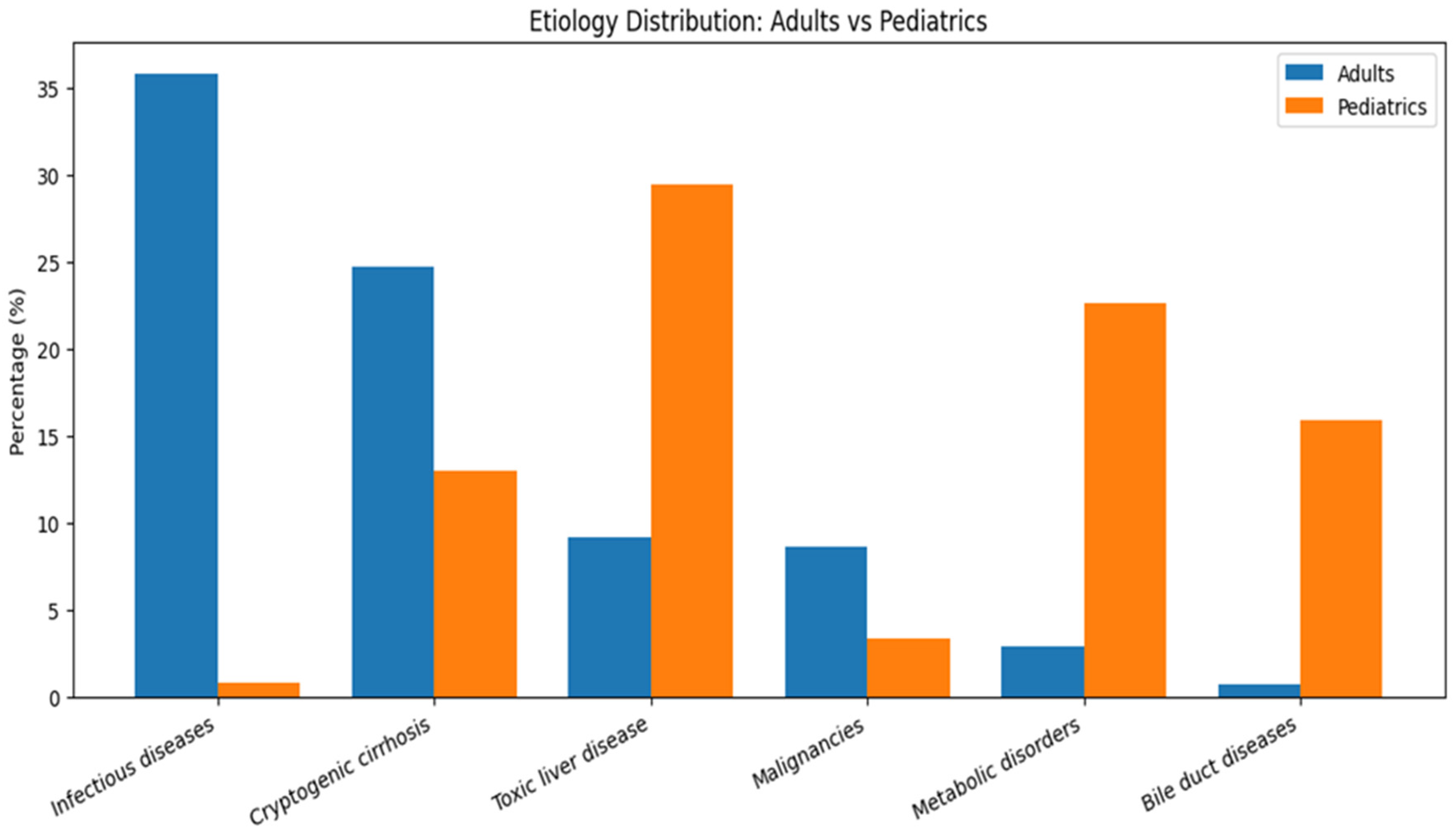
The etiologies of liver diseases requiring transplantation differed significantly between adult and pediatric populations (Table 2 and Table 3, Figure 1). In adults, infectious etiologies were most prevalent (35.77%), followed by cryptogenic liver cirrhosis (24.7%), toxic causes (9.2%), and malignancies (8.6%). In contrast, pediatric patients most commonly presented with toxic etiologies (29.4%), metabolic disorders (22.6%) and bile duct diseases (15.9%).
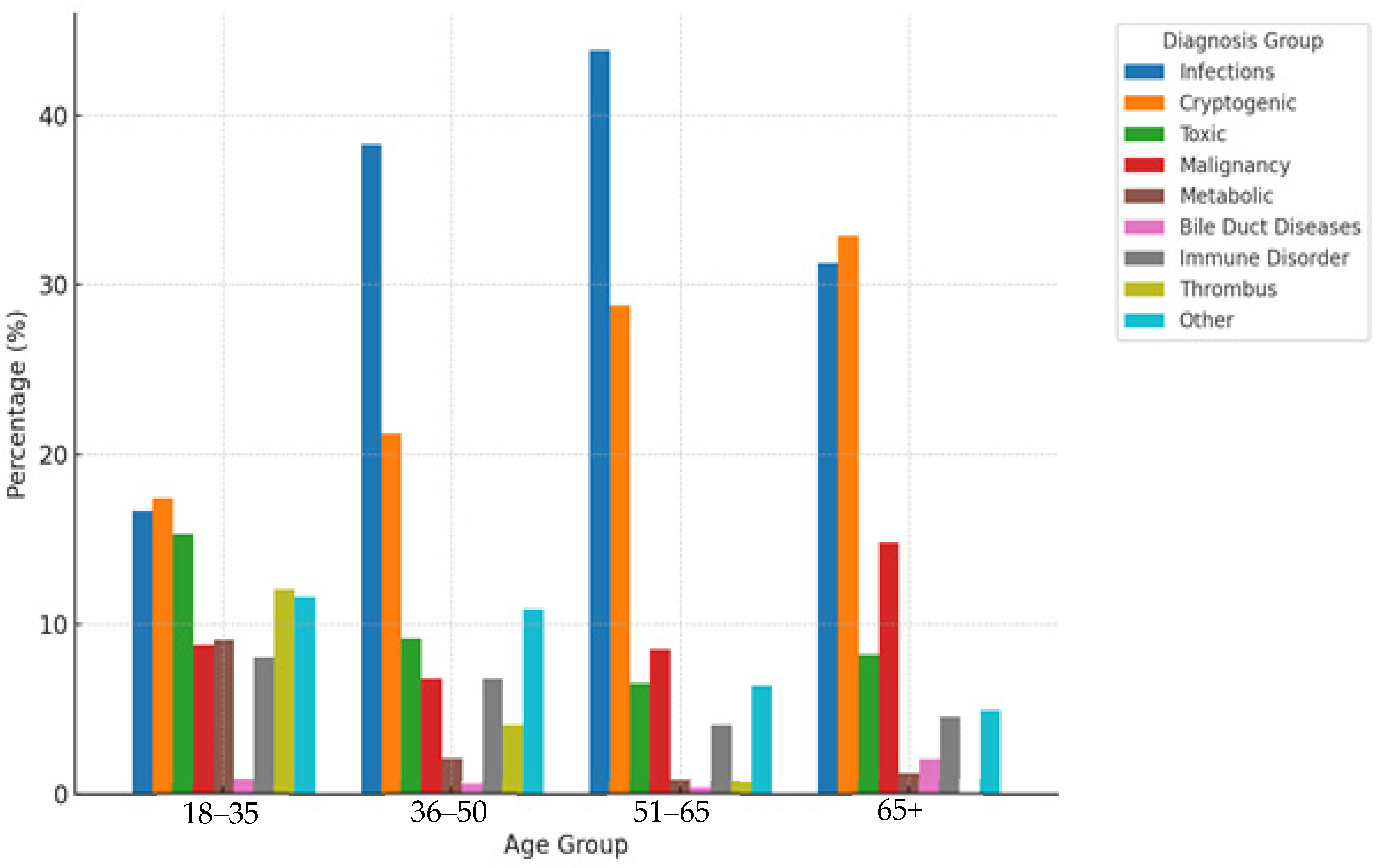
Statistical analysis demonstrated significant differences (p < 0.0001) between adult and pediatric populations for infectious diseases (35.8% vs. 0.8%), cryptogenic cirrhosis (24.7% vs. 13%), toxic liver disease (9.2% vs. 29.4%), malignancies (8.6% vs. 3.3%), metabolic disorders (2.9% vs. 22.6%), and bile duct diseases (0.7% vs. 15.9%). No significant differences were observed for immune-mediated disorders (p = 0.2694), vascular etiology (p = 0.6192), and other etiologies (p = 0.4044) (Figure 2).

3.3. Age-Specific Patterns of Liver Disease

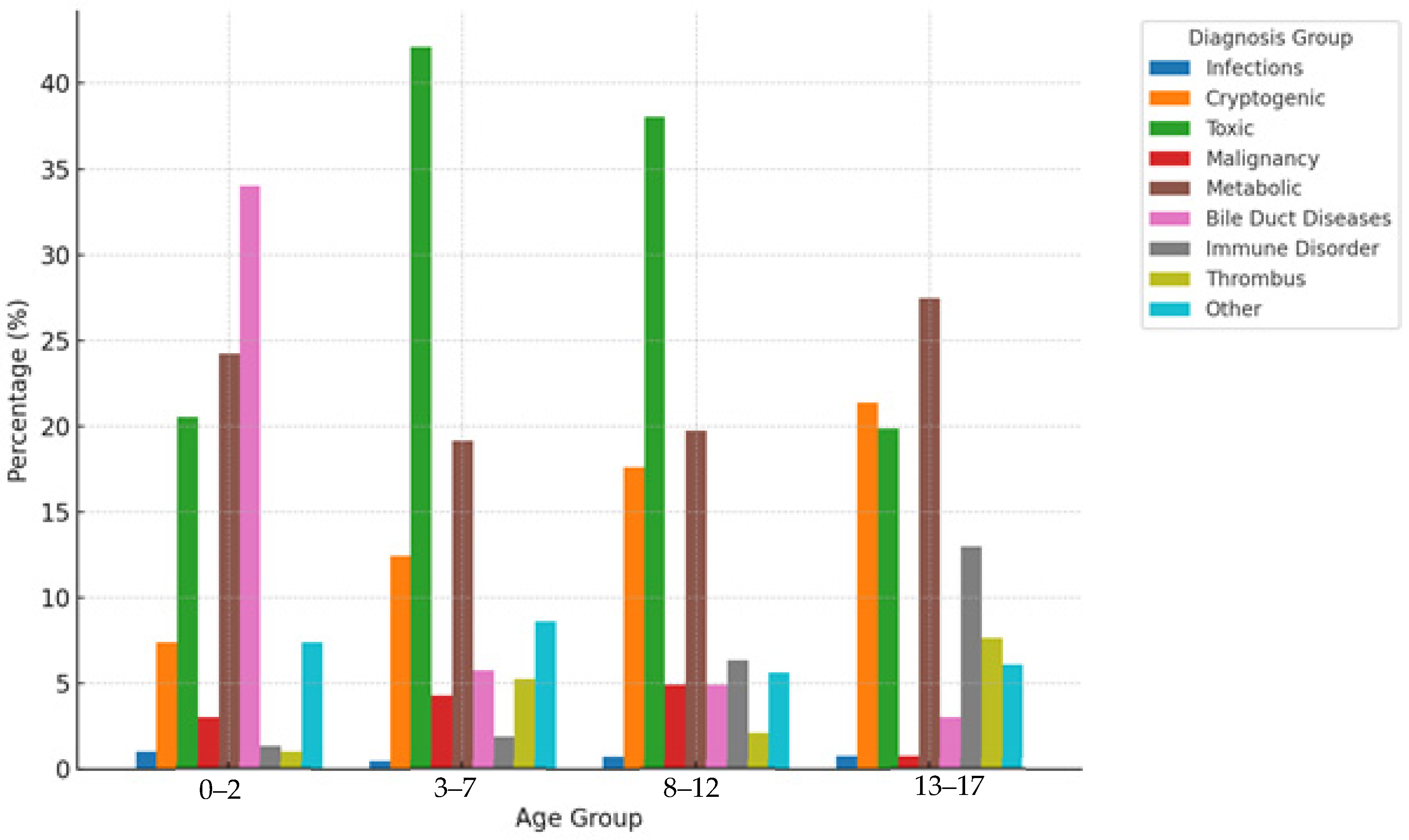
When analyzing adult recipients by age groups (Table 4 and Table 5, Figure 3), significant variations in disease etiology were observed. Infectious causes showed a marked increase from young adults (16.69% in 18–35 years) to middle-aged adults (43.8% in 51–65 years), with odds ratios of 3.10 (p = 0.009) for 36–50 vs. 18–35 and 3.89 (p = 0.007) for 51–65 vs. 18–35. Cryptogenic liver disease also demonstrated an age-dependent increase, reaching 32.9% in patients over 65 years. In contrast, toxic liver disease showed a significant decline with age, from 15.4% in 18–35 years to 6.5% in 51–65 years. Metabolic disorders were predominantly observed in younger adults (9.1% in 18–35 years) compared to older age groups (0.8% in 51–65 years), with statistically significant differences (p < 0.001). Vascular problems were particularly prevalent in the youngest adult group (12.07% in 18–35 years) and virtually absent in those over 65 years (0%, p < 0.001).
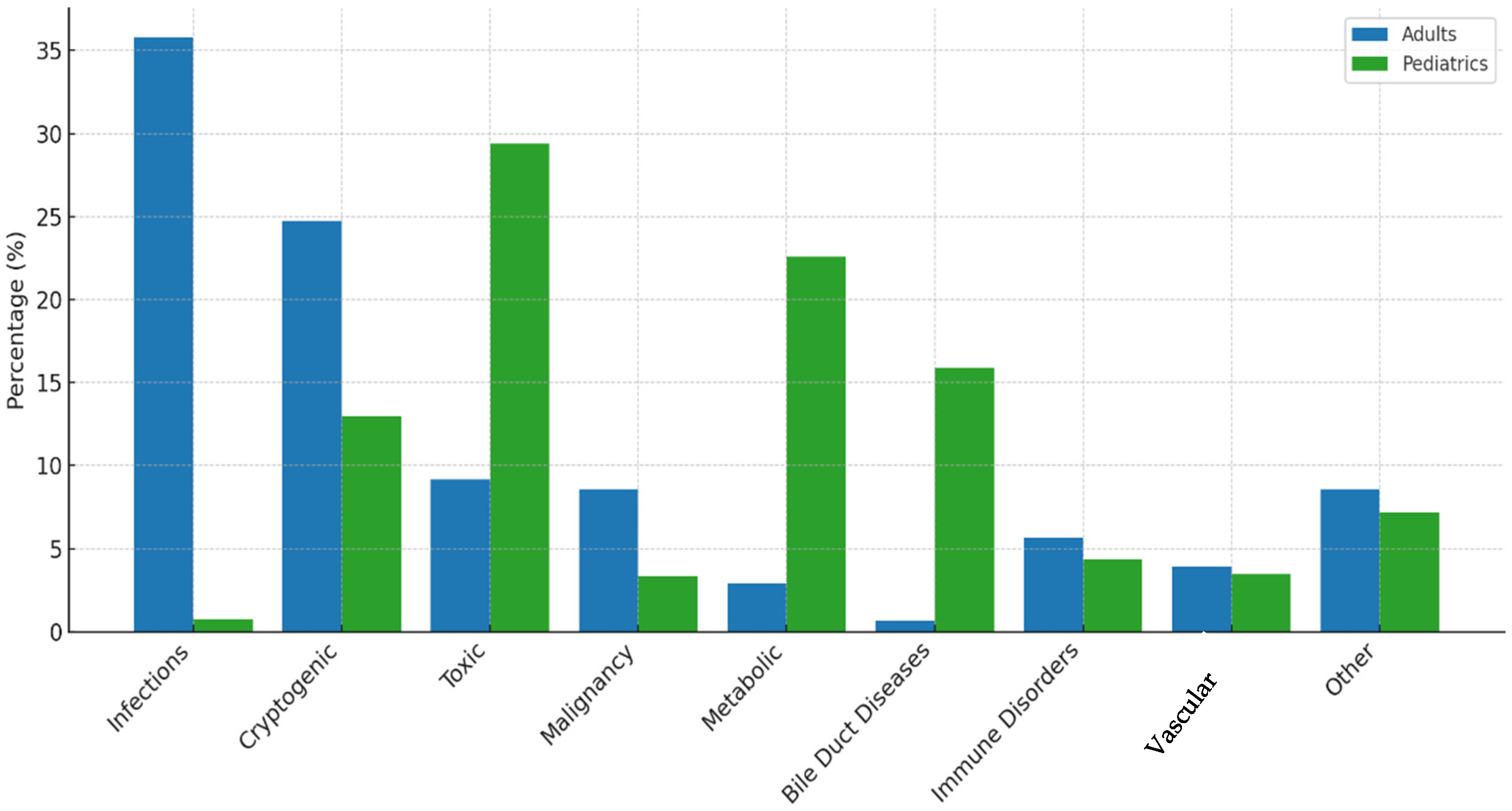
Similarly, pediatric recipients exhibited distinct age-related patterns (Table 6 and Table 7, Figure 4). Cryptogenic liver disease increased significantly with age, from 7.4% in 0–2 years to 21.4% in 13–17 years (OR = 3.40, p = 0.001). Toxic liver disease was most common in intermediate age groups (42.1% in 3–7 years and 38% in 8–12 years). Bile duct diseases showed a dramatic decline with age, from 34% in 0–2 years to 3% in 13–17 years (p < 0.001). Immune-mediated disorders demonstrated a significant age-dependent increase, from 1.4% in 0–2 years to 13% in 13–17 years (OR = 10.92, p = 0.001).

3.4. Blood Group Analysis

Blood group distribution analysis showed that the most common blood type among recipients was A+ (34.6%), followed by O+ (21.23%), B+ (17.9%), and AB+ (16.8%). Among donors, O+ (35.3%) was most common, followed by A+ (26.3%), B+ (12.4%), and A− (7.3%). The cross-tabulation of donor and recipient blood groups demonstrated the expected compatibility patterns, with ABO-identical transplantations being most frequent (Table 8 and Table 9).

3.5. Donor-Recipient Relationships and Geographic Patterns

Analysis of donor-recipient relationships revealed significant differences between pediatric and adult recipients (Table 10, Table 11 and Table 12). For pediatric recipients, parents were the predominant donors (mother: 24%, father: 16.2%), followed by deceased donors (20.1%). In contrast, adult recipients most commonly received organs from their children (sons: 23.2%, daughters: 13.3%), siblings (16.7%), and deceased donors (11.7%). These differences were statistically significant (p < 0.05 to p < 0.001).
Regarding geographic distribution, the majority of recipients originated from eastern and southeastern regions of Turkey (Table 13). The top five provinces for all recipients were Malatya (8.1%), Şanlıurfa (8.03%), Diyarbakır (7.8%), foreign nationals primarily from Syria (7.6%). Notably, there were differences in geographic distribution between pediatric and adult recipients, with Syrian refugees constituting 20.2% of pediatric recipients but only 4.5% of adult recipients. Deceased donors were predominantly from western and Mediterranean regions (Table 14).

3.6. Yearly Distribution of Liver Transplantations

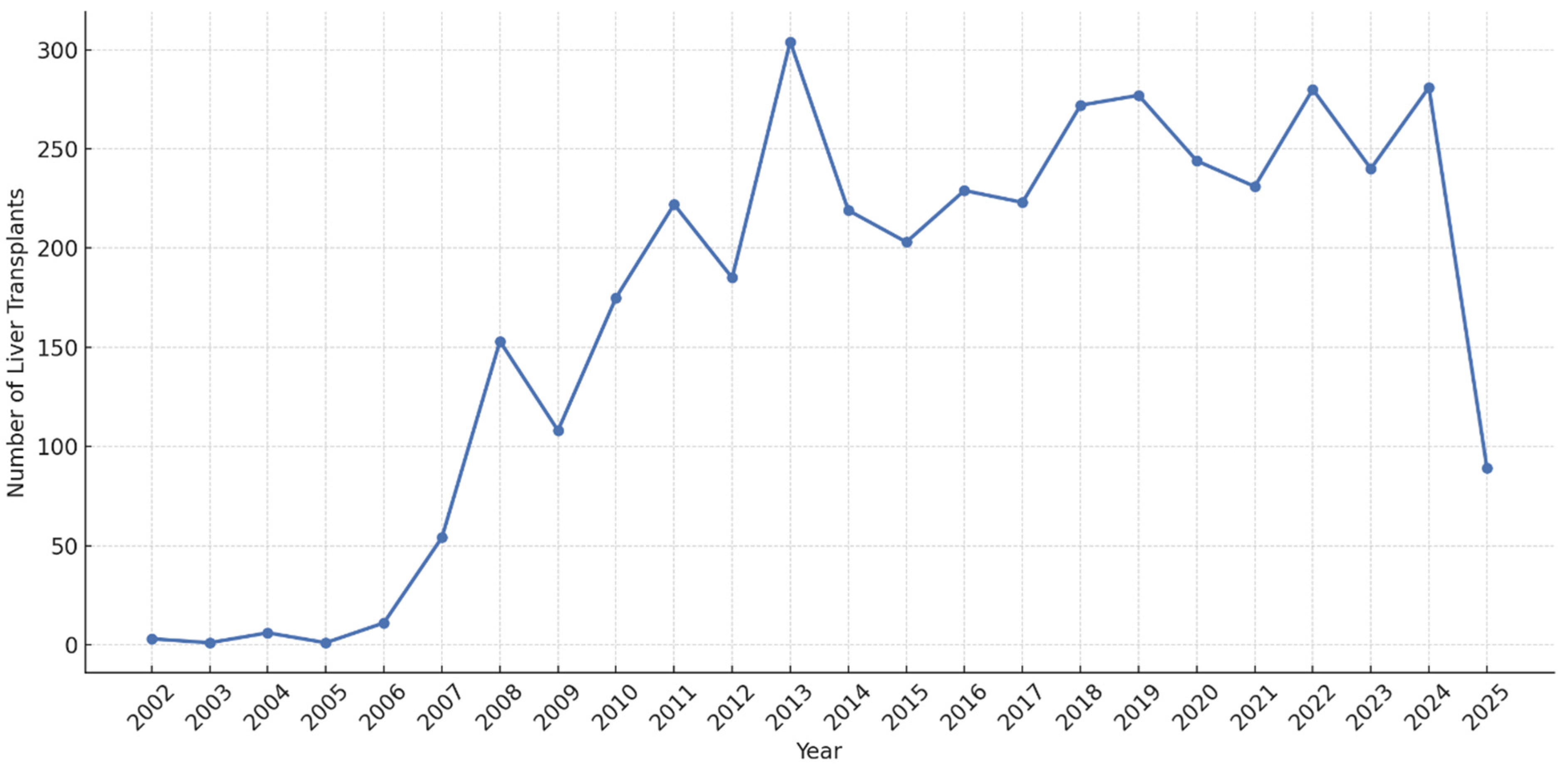
The annual number of liver transplantations performed at the institute exhibited a notable progression from 2002 to 2025 (Table 15). The annual number of liver transplantation (Figure 5). The program began modestly with only 3 transplantations in 2002, growing steadily to reach 11 in 2006. A significant increase was observed in 2007 (n = 54), followed by substantial growth in 2008 (n = 153). The program continued to expand, with annual transplantation numbers reaching over 200 cases in 2011 (n = 222) and peaking at 304 cases in 2013, making it one of the most productive years in the center’s history.
The annual transplantation volume has remained consistently high in recent years, with 272 cases in 2018, 277 in 2019, 244 in 2020, 231 in 2021, 280 in 2022, 240 in 2023, and 281 in 2024. Notably, despite the global COVID-19 pandemic in 2020–2021, the center maintained robust transplantation numbers, with only a modest decrease from pre-pandemic volumes (244 in 2020 and 231 in 2021 compared to 277 in 2019). The data for 2025 includes only the first quarter (n = 89), projecting a similar annual volume to previous years.
This consistent growth and maintenance of high transplantation volumes reflect the center’s increasing capacity, expertise, and regional significance over the 23-year period analyzed.

4. Discussion

Our analysis of 4011 liver transplantations performed at the institute over a 23-year period provides substantial insights into the epidemiological patterns, etiological factors, and demographic characteristics of patients requiring liver transplantation in Türkiye. The findings highlight the unique aspects of liver transplantation practice in the country, particularly the predominance of living donor transplantation and regional variations in disease etiology.
Our etiological spectrum shows distinct regional characteristics when compared to major international registries. While our adult cohort demonstrates infectious causes as the leading indication at 36%, predominantly hepatitis B and C, this contrasts sharply with contemporary North American patterns where NAFLD and NASH account for 32–38% of transplants, alcoholic liver disease for 22–25%, and hepatitis C for 15–18% according to recent UNOS data [5,6]. European patterns from ELTR registries show alcoholic liver disease leading at 28–32%, followed by NAFLD at 20–25% and hepatitis C at 12–15% [7,8]. Asian patterns more closely resemble our findings, with Japan and South Korea showing viral hepatitis predominance at 40–45%, though both countries demonstrate declining trends following decades of universal vaccination programs [9,10]. This divergence reflects Turkey’s ongoing epidemiological transition where despite universal hepatitis B vaccination implemented in 1998, our current transplant population with a mean age of 40 years predominantly comprises individuals born before vaccination implementation [11]. Regional hepatitis B prevalence remains heterogeneous across Turkey, ranging from 2–8% across different regions, which explains the persistent dominance of viral hepatitis in transplant indications [12]. In pediatric populations, our toxic etiology predominance at 30%, primarily from accidental poisonings, substantially exceeds international rates of 12–15% in North America and 8–12% in Europe [13,14], representing a critical preventable public health target unique to our regional setting.
Age-stratified analysis revealed distinct and clinically meaningful patterns across both adult and pediatric populations. In adult recipients, infectious etiologies demonstrated a progressive increase with age, rising from 17% in the 18–35-year age group to 44% in the 51–65-year age group with an odds ratio of 3.89. This age-dependent pattern reflects cumulative hepatitis exposure over decades, particularly in cohorts born before widespread vaccination programs [15]. Conversely, metabolic disorders showed marked concentration in younger adults at 9% compared to only 1% in older age groups, emphasizing the critical value of newborn screening programs that enable early intervention and potentially prevent progression to end-stage liver disease [16,17]. Cryptogenic liver disease demonstrated an age-dependent increase, reaching 33% in patients over 65 years. In pediatric populations, immune-mediated disorders exhibited a dramatic increase with age, from 1% in children aged 0–2 years to 13% in adolescents aged 13–17 years with an odds ratio of 10.92, aligning with the typical onset patterns of autoimmune liver diseases during adolescence [18,19]. Toxic liver disease showed peak prevalence in intermediate age groups at 42% in children aged 3–7 years, while bile duct diseases demonstrated a dramatic decline with age from 34% in infants to 3% in adolescents [20].
Our living donor liver transplantation rate of 87% positions this center among the highest-volume programs globally, comparable only to select Asian centers where South Korea achieves 85–90%, Japan 80–85%, and select centers in India 75–85% [21,22,23]. This stands in stark contrast to Western transplantation systems where North America reports less than 5% living donor procedures, Europe less than 10%, and Australia less than 15% [24,25]. This pattern reflects multiple interconnected factors including persistently low deceased donor rates in Turkey at 8–10 per million population compared to 25–30 per million in Spain and 20–25 per million in the United States [26,27], strong familial support systems deeply embedded in Turkish culture, and widespread religious and cultural acceptance of living donation among family members. However, this living donor-predominant model creates distinct challenges for healthcare systems that are not encountered in deceased-donor-predominant programs, particularly regarding long-term donor safety monitoring, comprehensive lifetime follow-up protocols, and appropriate allocation of healthcare resources to ensure donor welfare. The 244 liver paired exchange procedures performed at our center demonstrate operational sophistication and program maturity comparable to leading Asian transplant centers.
Chronic liver diseases of diverse etiologies often converge on oxidative stress-mediated injury and fibrosis. Oxidative stress plays a central pathogenic role in the progression of viral hepatitis, non-alcoholic fatty liver disease (NAFLD), alcoholic liver disease, and drug-induced liver injury [27,28]. Circulating and tissue oxidative stress biomarkers, including lipid peroxidation products, protein adducts, and DNA oxidation markers, have been increasingly studied as tools to understand disease progression, predict transplant outcomes, and stratify risk in patients with end-stage liver disease [29,30]. Understanding the mechanistic underpinnings shared across different etiologies provides important context for interpreting epidemiological patterns and may inform future directions in transplant-related research.
Donor-recipient relationships reflect traditional Turkish family structures and kinship patterns. In adult transplantation, children served as predominant donors with sons donating in 23% of cases and daughters in 13%, while parents donated primarily to pediatric recipients with mothers comprising 24% and fathers 16% of donations. Spousal donation comprised 11% of cases, notably lower than rates reported in some Western centers, which may reflect both cultural norms regarding spousal donation and medical considerations related to consanguinity patterns that remain prevalent in certain Turkish regions [31,32,33]. Geographic analysis revealed critical healthcare disparities requiring systematic policy intervention, with 65% of recipients originating from eastern and southeastern provinces while 78% of deceased donors came from western and Mediterranean regions. This spatial mismatch reflects complex interplay of infrastructure development gaps, socioeconomic disparities, and substantial regional variations in organ donation awareness and acceptance [34,35].
Our regional findings translate into five specific policy priorities that connect epidemiological patterns directly to actionable health interventions. First, the predominance of viral hepatitis as the indication for 36% of adult transplants necessitates targeted hepatitis control measures including expanded catch-up vaccination programs specifically designed for adults born before 1998 who represent the current transplant-age cohort, implementation of targeted screening programs in Eastern and Southeastern regions where recipient density is highest, strengthened antiviral treatment accessibility to prevent cirrhosis progression, and development of regional hepatitis elimination roadmaps aligned with WHO 2030 targets [36,37]. Economic modeling suggests each prevented cirrhosis case saves an estimated 180,000 to 250,000 US dollars in transplant-related healthcare costs, providing strong justification for prevention investment [38]. Second, pediatric poisoning prevention emerges as a critical public health priority given that 30% of pediatric transplants resulted from toxic causes with peak incidence of 42% in children aged 3–7 years. Evidence-based interventions should include mandatory child-resistant packaging regulations for all hepatotoxic medications and household chemicals, implementation of a national parental education campaign coordinated through preschool enrollment systems to reach families during the highest-risk developmental period, expansion of poison control center capacity particularly in Eastern provinces where access currently remains limited, and enhancement of pediatric intensive care unit infrastructure for acute liver failure management [39,40]. A realistic target would achieve 50% reduction in toxic-related pediatric liver transplants within five years, potentially sparing 20–25 children annually from transplantation and its lifelong medical implications. Third, addressing the 13% deceased donor rate and 87% living donor dependence requires multi-faceted organ donation awareness initiatives. Policy recommendations include intensified national public awareness campaigns particularly targeting Western and Mediterranean regions that currently serve as primary deceased donor sources, consideration of opt-out consent system implementation following Spain’s successful model that achieves 46 donors per million population [41], strengthening of hospital-based donor coordination programs with dedicated professional coordinators, and creation of regional donor coordination centers in high-population areas to improve procurement infrastructure [42,43]. The achievable goal should target increasing deceased donor rates to 15–20 per million population, which would substantially reduce living donor dependency while maintaining program volume. Fourth, the large volume of 3481 living donors including 244 paired exchange procedures necessitates comprehensive living donor safety frameworks that match international standards. Essential components include establishment of a mandatory national living donor registry with standardized lifetime follow-up protocols, implementation of uniform donor selection criteria and informed consent procedures across all transplant centers, creation of independent donor advocate programs to ensure donors receive unbiased information and counseling, development of long-term complication surveillance systems with public reporting of outcomes, and guarantee of universal healthcare coverage for all donor-related complications regardless of time since donation [44,45,46]. International standards mandate zero donor mortality and major complication rates below 5%, which should serve as minimum acceptable benchmarks [47]. Fifth, regional health resource allocation must address the geographic mismatch where the majority of recipients originate from Eastern and Southeastern regions while transplant infrastructure remains concentrated in Western Turkey. Strategic interventions should include development of satellite transplant programs in underserved regions to improve access and reduce travel burden on families, establishment of regional liver disease screening and early intervention programs that enable diagnosis before decompensated cirrhosis develops, creation of telemedicine consultation networks linking regional hospitals to transplant centers for expert guidance, and targeted workforce development initiatives for hepatology and transplant surgery in Eastern provinces where specialist shortages currently limit local capacity [48,49]. Expected outcomes include earlier diagnosis enabling better pre-transplant optimization, reduced geographic disparities in access to care, and more equitable distribution of healthcare resources across regions.
Our center’s sustained high-volume living donor liver transplantation program over 23 years demonstrates operational maturity, technical expertise, and regional significance comparable to leading international centers [50,51]. The consistent annual transplant volumes, successful implementation of complex procedures including liver paired exchange, and comprehensive outcomes tracking provide valuable epidemiological insights that extend beyond clinical metrics to inform public health policy and resource allocation decisions. However, continued program growth must be carefully balanced with systematic donor safety monitoring, rigorous outcome tracking, and strategic efforts to expand equitable access to underserved populations and regions.
This study has several limitations that warrant consideration. The single-center retrospective design may limit generalizability to other Turkish centers or international settings, though our high volume and geographic diversity of patients provide substantial representation of national patterns. Selection bias may exist as our center serves as a regional referral center, potentially attracting more complex cases or patients from specific geographic areas. Long-term outcome data beyond transplantation were not included in this analysis, precluding assessment of patient and graft survival, long-term donor complications, or quality of life outcomes. Additionally, detailed socioeconomic data, education levels, and specific household risk factors for pediatric poisonings were not systematically captured, limiting our ability to identify high-risk populations for targeted interventions. Despite these limitations, the comprehensive 23-year dataset encompassing over 4000 transplants provides robust epidemiological insights that meaningfully inform clinical practice, public health policy, and future research directions in liver transplantation.


5. Conclusions

In this 23-year, single-center cohort of 4011 liver transplantations, we provide a comprehensive public health–oriented snapshot of liver transplantation practice in Türkiye within a predominantly living-donor system. The very high LDLT rate and the sustained implementation of liver paired exchange procedures reflect a mature, high-volume operational model that differs meaningfully from many Western settings. Beyond describing activity and etiologic distributions, our findings underscore practical priorities for health planning: strengthening prevention and early detection strategies for viral/infectious liver diseases among adults, and implementing targeted, prevention-focused actions to reduce toxic etiologies in pediatric recipients. These data also support the need for system-level approaches that align donor-safety monitoring, referral pathways, and regional resource allocation with the realities of living-donor–dominant transplantation. Overall, this center-based experience offers policy-relevant evidence to inform prevention programs and service optimization, while also providing a framework for future multicenter analyses to further refine national planning.

Author Contributions

D.Y.B.: Made substantial contributions to the conception and design of the study, as well as the acquisition, analysis, and interpretation of the data. Drafted the manuscript and revised it critically for important intellectual content. Approved the final version to be published and agrees to be accountable for all aspects of the work, ensuring that any questions related to the accuracy or integrity of any part of the work are appropriately investigated and resolved. S.Y.: Made substantial contributions to the conception and design of the study and provided critical oversight in the interpretation of the data. Reviewed the manuscript critically for important intellectual content and contributed to substantial revisions. Approved the final version to be published and agrees to be accountable for all aspects of the work, ensuring that any questions related to the accuracy or integrity of any part of the work are appropriately investigated and resolved. All authors have read and agreed to the published version of the manuscript.

Funding

This research received no external funding.

Institutional Review Board Statement

This study was approved by the İnönü University Non-Interventional Clinical Research Ethics Committee with the approval number 2025/7590 on 30 May 2025, and conducted according to the Declaration of Helsinki.

Informed Consent Statement

Informed consent was obtained from all subjects involved in the study.

Data Availability Statement

The data presented in this study are available on request from the corresponding author due to privacy restrictions.

Conflicts of Interest

The authors declare no conflicts of interest.

Abbreviations

The following abbreviations are used in this manuscript:
LDLTLiving Donor Liver Transplantation
LPELiver Paired Exchange

References

  1. Starzl, T.E.; Fung, J.J. Themes of liver transplantation. Hepatology 2010, 51, 1869–1884. [Google Scholar] [CrossRef] [Scilit]
  2. Meirelles Júnior, R.F.; Salvalaggio, P.; Rezende, M.B.; Evangelista, A.S.; Della Guardia, B.; Matielo, C.E.L.; Neves, D.B.; Pandullo, F.L.; Felga, G.E.G.; Alves, J.A.D.S.; et al. Liver transplantation: History, outcomes and perspectives. Einstein 2015, 13, 149–152. [Google Scholar] [CrossRef] [Scilit]
  3. Akbulut, S.; Yilmaz, S. Liver transplantation in Turkey: Historical review and future perspectives. Transplant. Rev. 2015, 29, 161–167. [Google Scholar] [CrossRef] [Scilit]
  4. Liapakis, A.; Jesse, M.T.; Pillai, A.; Bittermann, T.; Dew, M.A.; Emre, S.; Hunt, H.; Kumar, V.; Locke, J.; Mohammad, S.; et al. Living donor liver transplantation: A multi-disciplinary collaboration towards growth, consensus, and a change in culture. Clin. Transplant. 2023, 37, e14953. [Google Scholar] [CrossRef] [Scilit]
  5. Kwong, A.J.; Ebel, N.H.; Kim, W.R.; Lake, J.R.; Smith, J.; Schladt, D.; Skeans, M.; Foutz, J.; Gauntt, K.; Cafarella, M.; et al. OPTN/SRTR 2020 Annual Data Report: Liver. Am. J. Transplant. 2022, 22, 204–309. [Google Scholar] [CrossRef] [Scilit] [PubMed]
  6. Goldberg, D.; Ditah, I.C.; Saeian, K.; Lalehzari, M.; Aronsohn, A.; Gorospe, E.C.; Charlton, M. Changes in the prevalence of hepatitis C virus infection, nonalcoholic steatohepatitis, and alcoholic liver disease among patients with cirrhosis or liver failure on the waitlist for liver transplantation. Gastroenterology 2017, 152, 1090–1099. [Google Scholar] [PubMed]
  7. Adam, R.; Karam, V.; Cailliez, V.; Grady, J.G.O.; Mirza, D.; Cherqui, D.; Klempnauer, J.; Salizzoni, M.; Pratschke, J.; Jamieson, N.; et al. 2018 Annual Report of the European Liver Transplant Registry (ELTR)—50-year evolution of liver transplantation. Transpl. Int. 2018, 31, 1293–1317. [Google Scholar]
  8. European Liver Transplant Registry. Evolution of liver transplantation in Europe: Report from the European Liver Transplant Registry (ELTR). J. Hepatol. 2016, 64, 1353–1364. [Google Scholar]
  9. Lee, S.G. A complete treatment of adult living donor liver transplantation: A review of surgical technique and current challenges to expand indication of patients. Am. J. Transplant. 2015, 15, 17–38. [Google Scholar] [CrossRef] [Scilit] [PubMed]
  10. Sugawara, Y.; Kaneko, J. Living donor liver transplantation in Japan. Liver Transpl. 2020, 26, 1458–1464. [Google Scholar]
  11. Toy, M.; Önder, F.O.; Wörmann, T.; Bozdayi, A.M.; Schalm, S.W.; Borsboom, G.J.; van Rosmalen, J.; Richardus, J.H.; Yurdaydin, C. Age- and region-specific hepatitis B prevalence in Turkey estimated using generalized linear mixed models: A systematic review. BMC Infect. Dis. 2011, 11, 337. [Google Scholar] [CrossRef] [Scilit]
  12. Amini, N.; Alavian, S.M.; Kabir, A.; Saiedi Hosseini, S.Y.; Aalaei Andabili, S.H. Clinical Features and Seroepidemiology of Anti-HDV Antibody in patients with Chronic Hepatitis B Virus Infection in Iran: A Meta-Analysis. Hepat. Mon. 2011, 11, 960–967. [Google Scholar] [CrossRef] [Scilit]
  13. Squires, R.H.; Ng, V.; Romero, R.; Ekong, U.; Hardikar, W.; Emre, S.; Mazariegos, G.V. Evaluation of the pediatric patient for liver transplantation: 2014 practice guideline by the American Association for the Study of Liver Diseases, American Society of Transplantation and the North American Society for Pediatric Gastroenterology, Hepatology and Nutrition. Hepatology 2014, 60, 362–398. [Google Scholar] [CrossRef] [Scilit]
  14. Ng, V.L.; Fecteau, A.; Shepherd, R.; Magee, J.; Bucuvalas, J.; Alonso, E.; McDiarmid, S.; Cohen, G.; Anand, R.; The Studies of Pediatric Liver Transplantation Research Group. Outcomes of 5-year survivors of pediatric liver transplantation: Report on 461 children from a North American multicenter registry. Pediatrics 2008, 122, e1128–e1135. [Google Scholar] [CrossRef] [Scilit]
  15. Asrani, S.K.; Devarbhavi, H.; Eaton, J.; Kamath, P.S. Burden of liver diseases in the world. J. Hepatol. 2019, 70, 151–171. [Google Scholar] [CrossRef] [Scilit]
  16. Sundaram, S.S.; Mack, C.L.; Feldman, A.G.; Sokol, R.J. Biliary atresia: Indications and timing of liver transplantation and optimization of pretransplant care. Liver Transpl. 2017, 23, 96–109. [Google Scholar] [CrossRef] [Scilit] [PubMed]
  17. Squires, J.E.; McKiernan, P.; Squires, R.H. Acute liver failure: An update. Clin. Liver Dis. 2018, 22, 773–805. [Google Scholar] [CrossRef] [Scilit]
  18. Mieli-Vergani, G.; Vergani, D.; Czaja, A.J.; Manns, M.P.; Krawitt, E.L.; Vierling, J.M.; Lohse, A.W.; Montano-Loza, A.J. Autoimmune hepatitis. Nat. Rev. Dis. Primers 2018, 4, 18017. [Google Scholar] [CrossRef] [Scilit]
  19. Kerkar, N.; Dugan, C.; Rumbo, C.; Morotti, R.A.; Gondolesi, G.; Shneider, B.L.; Emre, S. Rapamycin successfully treats post-transplant autoimmune hepatitis. Am. J. Transplant. 2005, 5, 1085–1089. [Google Scholar] [CrossRef] [Scilit] [PubMed]
  20. Hartley, J.L.; Davenport, M.; Kelly, D.A. Biliary atresia. Lancet 2009, 374, 1704–1713. [Google Scholar] [CrossRef] [Scilit] [PubMed]
  21. Lee, S.G.; Park, K.M.; Hwang, S.; Lee, Y.; Kim, K.; Ahn, C.; Choi, D.; Joo, S.; Jeon, J.; Chu, C.; et al. Adult-to-adult living donor liver transplantation at the Asan Medical Center, Korea. Asian J. Surg. 2002, 25, 277–284. [Google Scholar] [CrossRef] [Scilit]
  22. Todo, S.; Furukawa, H.; Japanese Study Group on Organ Transplantation. Living donor liver transplantation for adult patients with hepatocellular carcinoma: Experience in Japan. Ann. Surg. 2004, 240, 451–459. [Google Scholar] [CrossRef] [Scilit]
  23. Dar, F.S.; Bhatti, A.B.; Dogar, A.W.; Zia, H.; Amin, S.; Rana, A.; Nazer, R.; Khan, N.A.; Khan, E.U.; Rajput, M.Z.; et al. The travails of setting up a living donor liver transplant program: Experience from Pakistan and lessons learned. Liver Transplant. Off. Publ. Am. Assoc. Study Liver Dis. Int. Liver Transplant. Soc. 2015, 21, 982–990. [Google Scholar] [CrossRef] [Scilit] [PubMed]
  24. Berg, C.L.; Gillespie, B.W.; Merion, R.M.; Brown, R.S.; Abecassis, M.M.; Trotter, J.F.; Fisher, R.A.; Freise, C.E.; Ghobrial, R.M.; Shaked, A.; et al. Improvement in survival associated with adult-to-adult living donor liver transplantation. Gastroenterology 2007, 133, 1806–1813. [Google Scholar] [CrossRef] [Scilit]
  25. Zarrinpar, A.; Busuttil, R.W. Liver transplantation: Past, present and future. Nat. Rev. Gastroenterol. Hepatol. 2013, 10, 434–440. [Google Scholar] [CrossRef] [Scilit] [PubMed]
  26. Matesanz, R.; Domínguez-Gil, B.; Coll, E.; de la Rosa, G.; Marazuela, R. Spanish experience as a leading country: What kind of measures were taken? Transplantation 2017, 101, 1936–1944. [Google Scholar] [CrossRef] [Scilit]
  27. Lin, E.T.; Bae, Y.; Birkett, R.; Sharma, A.M.; Zhang, R.; Fisch, K.M.; Funk, W.; Mestan, K.K. Cord Blood Adductomics Reveals Oxidative Stress Exposure Pathways of Bronchopulmonary Dysplasia. Antioxidants 2024, 13, 494. [Google Scholar] [CrossRef] [Scilit]
  28. Mestan, K.; Gotteiner, N.; Porta, N.; Grobman, W.; Su, E.J.; Ernst, L.M. Cord Blood Biomarkers of Placental Maternal Vascular Underperfusion Predict Bronchopulmonary Dysplasia-Associated Pulmonary Hypertension. J. Pediatr. 2017, 185, 33–41. [Google Scholar] [CrossRef] [Scilit]
  29. Funk, W.E.; Montgomery, N.; Bae, Y.; Chen, J.; Chow, T.; Martinez, M.P.; Lurmann, F.; Eckel, S.P.; McConnell, R.; Xiang, A.H. Human Serum Albumin Cys34 Adducts in Newborn Dried Blood Spots: Associations with Air Pollution Exposure During Pregnancy. Front. Public Health 2021, 9, 730369. [Google Scholar] [CrossRef] [Scilit] [PubMed]
  30. Voller, B.; Chock, S.; Ernst, L.M.; Su, E.; Liu, X.; Farrow, K.N.; Mestan, K.K. Cord blood biomarkers of vascular endothelial growth (VEGF and sFlt-1) and postnatal growth: A preterm birth cohort study. Early Hum. Dev. 2014, 90, 195–200. [Google Scholar] [CrossRef] [Scilit]
  31. Ringe, B.; Strong, R.W. The dilemma of living liver donor death: To report or not to report? Transplantation 2008, 85, 790–793. [Google Scholar] [CrossRef] [Scilit]
  32. Busuttil, R.W.; Tanaka, K. The utility of marginal donors in liver transplantation. Liver Transplant. Off. Publ. Am. Assoc. Study Liver Dis. Int. Liver Transplant. Soc. 2003, 9, 651–663. [Google Scholar] [CrossRef] [Scilit] [PubMed]
  33. Moray, G.; Arslan, G.; Haberal, M. The history of liver transplantation in Turkey. Exp. Clin. Transplant. Off. J. Middle East Soc. Organ Transplant. 2014, 12, 20–23. [Google Scholar] [CrossRef] [Scilit] [PubMed]
  34. Dagcioglu, B.F.; Simsek, E.; Tepeli, R.I.; Oztas, D. Organ Donation in Turkey: The Knowledge, Approaches and Opinions of Family Physicians. Iran. J. Public Health 2021, 50, 1188–1196. [Google Scholar] [CrossRef] [Scilit]
  35. Haberal, M.; Bilgin, N.; Arslan, G.; Karakayali, H.; Akpinar, E.; Moray, G.; Varan, B.; Turan, M.; Boyacioğlu, S. Living-related donor liver transplantation. Transplant. Proc. 1998, 30, 2267–2268. [Google Scholar] [CrossRef] [Scilit]
  36. World Health Organization. Global Hepatitis Report 2017; World Health Organization: Geneva, Switzerland, 2017. [Google Scholar]
  37. Schweitzer, A.; Horn, J.; Mikolajczyk, R.T.; Krause, G.; Ott, J.J. Estimations of worldwide prevalence of chronic hepatitis B virus infection: A systematic review of data published between 1965 and 2013. Lancet 2015, 386, 1546–1555. [Google Scholar] [CrossRef] [Scilit]
  38. Gordon, S.C.; Pockros, P.J.; Terrault, N.A.; Hoop, R.S.; Buikema, A.; Nerenz, D.; Hamzeh, F.M. Impact of disease severity on healthcare costs in patients with chronic hepatitis C (CHC) virus infection. Hepatology 2012, 56, 1651–1660. [Google Scholar] [CrossRef] [Scilit]
  39. Bronstein, A.C.; Spyker, D.A.; Cantilena, L.R., Jr.; Rumack, B.H.; Dart, R.C. 2011 Annual report of the American Association of Poison Control Centers’ National Poison Data System (NPDS): 29th Annual Report. Clin. Toxicol. 2012, 50, 911–1164. [Google Scholar] [CrossRef] [Scilit] [PubMed]
  40. Squires, R.H.; Shneider, B.L.; Bucuvalas, J.; Alonso, E.; Sokol, R.J.; Narkewicz, M.R.; Dhawan, A.; Rosenthal, P.; Rodriguez-Baez, N.; Murray, K.F.; et al. Acute liver failure in children: The first 348 patients in the pediatric acute liver failure study group. J. Pediatr. 2006, 148, 652–658. [Google Scholar] [CrossRef] [Scilit]
  41. Matesanz, R.; Domínguez-Gil, B. Opt-out legislations: The mysterious viability of the false. Kidney Int. 2019, 95, 1301–1303. [Google Scholar] [CrossRef] [Scilit]
  42. Rudge, C.; Matesanz, R.; Delmonico, F.L.; Chapman, J. International practices of organ donation. Br. J. Anaesth. 2012, 108, i48–i55. [Google Scholar] [CrossRef] [Scilit]
  43. Rosenblum, A.M.; Horvat, L.D.; Siminoff, L.A.; Prakash, V.; Beitel, J.; Garg, A.X. The authority of next-of-kin in explicit and presumed consent systems for deceased organ donation: An analysis of 54 nations. Nephrol. Dial. Transplant. 2012, 27, 2533–2546. [Google Scholar] [CrossRef] [Scilit]
  44. Abecassis, M.M.; Fisher, R.A.; Olthoff, K.M.; Freise, C.E.; Rodrigo, D.R.; Samstein, B.; Kam, I.; Merion, R.M.; the A2ALL Study Group. Complications of living donor hepatic lobectomy—A comprehensive report. Am. J. Transplant. 2012, 12, 1208–1217. [Google Scholar] [CrossRef] [Scilit]
  45. Ghobrial, R.M.; Freise, C.E.; Trotter, J.F.; Tong, L.; Ojo, A.O.; Fair, J.H.; Fisher, R.A.; Emond, J.C.; Koffron, A.J.; Pruett, T.L.; et al. Donor morbidity after living donation for liver transplantation. Gastroenterology 2008, 135, 468–476. [Google Scholar] [CrossRef] [Scilit]
  46. Beavers, K.L.; Sandler, R.S.; Shrestha, R. Donor morbidity associated with right lobectomy for living donor liver transplantation to adult recipients: A systematic review. Liver Transpl. 2002, 8, 110–117. [Google Scholar] [CrossRef] [Scilit]
  47. Brown, R.S., Jr.; Russo, M.W.; Lai, M.; Shiffman, M.L.; Richardson, M.C.; Everhart, J.E.; Hoofnagle, J.H. A survey of liver transplantation from living adult donors in the United States. N. Engl. J. Med. 2003, 348, 818–825. [Google Scholar] [CrossRef] [Scilit]
  48. Fisher, R.A.; Strom, S.C. Human hepatocyte transplantation: Worldwide results. Transplantation 2006, 82, 441–449. [Google Scholar] [CrossRef] [Scilit]
  49. Dutkowski, P.; Linecker, M.; DeOliveira, M.L.; Müllhaupt, B.; Clavien, P.A. Challenges to liver transplantation and strategies to improve outcomes. Gastroenterology 2015, 148, 307–323. [Google Scholar] [CrossRef] [Scilit] [PubMed]
  50. Busuttil, R.W.; Farmer, D.G.; Yersiz, H.; Hiatt, J.R.; McDiarmid, S.V.; Goldstein, L.I.; Saab, S.; Han, S.; Durazo, F.; Weaver, M.; et al. Analysis of long-term outcomes of 3200 liver transplantations over two decades: A single-center experience. Ann. Surg. 2005, 241, 905–916. [Google Scholar] [CrossRef] [Scilit] [PubMed]
  51. Lee, S.G.; Hwang, S.; Park, K.M.; Kim, K.H.; Ahn, C.S.; Lee, Y.J.; Cheon, J.Y.; Joo, S.H.; Moon, D.B.; Joo, C.W.; et al. Seventeen adult-to-adult living donor liver transplantations using dual grafts. Transplant Proc. 2001, 33, 3461–3463. [Google Scholar] [CrossRef] [Scilit] [PubMed]
Figure 1. Comparison of Liver Disease Etiologies Between Adult and Pediatric Transplant Patients.
Healthcare 14 00163 g001
Figure 2. Etiology Distrubition: adult and Pediatrics.
Healthcare 14 00163 g002
Figure 3. Diagnostic Patterns by Age Group in Adult Liver Transplant Patients.
Healthcare 14 00163 g003
Figure 4. Diagnostic Patterns by Age Group in Pediatric Liver Transplant Patients.
Healthcare 14 00163 g004
Figure 5. The Annual number of liver transplantation.
Healthcare 14 00163 g005
Table 1. Baseline Demographic Characteristics of Liver Transplant Recipients and Donor Types.
Number ± SD% or Median [Range]
Gender (M/F, %)2618/139365.27%/34.73%
General Age40.3 ± 20.647 [0–75]
Adult/Pediatric 3232/77980.58%/19.42%
Adult Age48.5 ± 13.251 [18–75]
Adult Gender (M/F, %)2189/104367.72%/32.28%
Pediatric Age6.5 ± 5.55 [0–17]
Pediatric Gender (M/F,%)429/35055.07–44.93%
TypeLiving Donor 323780.70%
Decased 53013.21%
LPE 2446.09%
Table 2. Distribution of Liver Disease Etiologies Among Adult and Pediatric Transplant Recipients.
Diagnostic GroupsDiagnosisGeneralAdultPediatric
InfectionsViruticHBV840 (20.94)838 (26.12)2 (0.26)
HBV + HDV152 (3.79)153 (4.74)0 (0)
HCV153 (3.81)153 (4.74)0 (0)
HBV + HCV7 (0.17)7 (0.22)0 (0)
ParasiticEchinococcus Alveolaris28 (0.7)27 (0.19)1 (0.13)
Hydatid Cyst2 (0.04)1 (0.03)1 (0.13)
Schistosomiasis1 (0.02)1 (0)0 (0)
CryptogenicEtiology Not FoundCryptogenic Liver Cirrhosis900 (22.44)799 (24.91)101 (12.97)
ToxicAcuteAcute Fulminant Failure406 (10.12)179 (5.58)227 (29.14)
ChronicEthanol Dependent120 (2.99)120 (3.68)0 (0)
MalignancyHCCHCC156 (3.88)152 (5.32)8 (1.04)
HCC (HBV + HDV)46 (1.14)46 (1.43)0 (0)
HCC (HCV)35 (0.87)35 (1.1)0 (0)
HCC (HBV)17 (0.42)17 (0.53)0 (0)
HCC (HBV + HCV)4 (0.1)4 (0.13)0 (0)
HCC (HBV + HDV + HCV)1 (0.02)1 (0.03)0 (0)
Fibrolamellar HCC1 (0.02)1 (0.03)0 (0)
OtherHepatoblastoma19 (0.45)1 (0.04)18 (2.33)
Cholangio Ca10 (0.25)10 (0.31)0 (0)
Hemangioendothelioma4 (0.1)4 (0.13)0 (0)
Neuroendocrine TM7 (0.17)7 (0.22)0 (0)
MetabolicCopper MetabolismWilson’s Disease122 (3.03)70 (2.18)52 (6.42)
Bile Acid and Transport DisordersPFIC (All types)34 (0.85)0 (0.0)34 (4.62)
Disorders of Bilirubin MetabolismNeonatal Cholestasis32 (0.79)0 (0.0)32 (4.11)
Crigler-Najjar Syndrome11 (0.27)1 (0.03)10 (1.28)
Dubin Johnson1 (0.02)0 (0.0)1 (0.13)
Amino Acid Metabolism DisordersTrisonemia11 (0.27)0 (0.0)11 (1.41)
MSUD (All types)6 (0.15)0 (0.0)6 (0.77)
Protein CatabolismAlpha 1 Antitrypsin Deficiency3 (0.07)1 (0.03)2 (0.26)
Carbohydrate Metabolism DisordersGlycogen Storage Diseases9 (0.22)2 (0.06)7 (0.9)
Iron Metabolism DisordersHemochromatosis8 (0.2)5 (0.16)3 (0.39)
Oxalate MetabolismPrimary hyperoxaluria2 (0.04)0 (0.0)2 (0.26)
SteatosisNASH13 (0.32)13 (0.4)0 (0)
Familial Hypercholesterolemia9 (0.22)2 (0.06)7 (0.9)
HeterogeneousOther (Niemann-Pick, Cystic-Fibrosis Citrullinemia, Berardinelli-Seip syndrome.
Protoporphyria, etc.)
11 (0.27)0 (0.0)11 (1.41)
Bile Duct DiseasesCongenital and AcquiredBiliary Atresia112 (2.79)0 (0.0)112 (14.38)
Caroli’s Disease16 (0.4)6 (0.19)10 (1.28)
Choledochal Cysts3 (0.06)2 (0.06)1 (0.13)
Primary Sclerosing Cholangitis14 (0.35)13 (0.41)1 (0.13)
Immunity DisorderAutoimmuneAutoimmune Hepatitis217 (5.41)183 (5.7)34 (4.36)
VascularVenousBudd-Chiari154 (3.84)127 (3.96)27 (3.47)
OtherHeterogeneous (Including those with no recorded diagnosis)Other314 (8.20)251(8.18)58(7.19)
Table 3. Comparison of Major Diagnostic Categories Between Adult and Pediatric Liver Transplant Recipients.
Diagnostic GroupsTotalAdultPediatricp Value
Infections1162 (28.97%)1156 (35.77%)6 (0.77%)<0.001
Cryptogenic900 (22.44%)799 (24.72%)101 (12.97%)<0.001
Toxic526 (13.11%)297 (9.19%)229 (29.4%)<0.001
Malignancy304 (7.58%)278 (8.6%)26 (3.34%)<0.001
Metabolic270 (6.73%)94 (2.91%)176 (22.59%)<0.001
Bile Duct Diseases145 (3.62%)21 (0.65%)124 (15.92%)<0.001
Immune Disorder217 (5.41%)183 (5.66%)34 (4.36%)0.2694
Vascular 154 (3.84%)127 (3.93%)27 (3.47%)0.6192
Other333 (8.3%)277 (8.57%)56 (7.19%)0.4044
Total4011 (100.00%)3232 (100.00%)779 (100.00%)-
Table 4. Age-Stratified Distribution of Diagnostic Categories among Adult Liver Transplant Recipients.
Diagnosis Group18–35 Years Old36–50 Years Old51–65 Years Old65+ Years OldTotalp
Infections112 (16.69%)330 (38.28%)638 (43.82%)76 (31.28%)1156 (35.77%)<0.001
Cryptogenic117 (17.44%)183 (21.23%)419 (28.78%)80 (32.92%)799 (24.72%)<0.001
Toxic103 (15.35%)79 (9.16%)95 (6.52%)20 (8.23%)297 (9.19%)<0.001
Malignancy59 (8.79%)59 (6.84%)124 (8.52%)36 (14.81%)278 (8.60%)0.005
Metabolic61 (9.09%)18 (2.09%)12 (0.82%)3 (1.23%)94 (2.91%)<0.001
Bile Duct Diseases6 (0.89%)5 (0.58%)5 (0.34%)5 (2.06%)21 (0.65%)0.003
Autoimmune Disorder54 (8.05%)59 (6.84%)59 (4.05%)11 (4.53%)183 (5.66%)0.001
Vascular 81 (12.07%)35 (4.06%)11 (0.76%)0 (0.00%)127 (3.93%)<0.001
Other78 (11.62%)94 (10.90%)93 (6.39%)12 (4.94%)277 (8.57%)<0.001
Total671 (100%)862 (100%)1456 (100%)243 (100%)3232 (100%)<0.001
Table 5. Comparative Analysis of Liver Disease Distribution Between Adult Age Groups: Odds Ratios and p-values.
Diagnosis Group18–35 vs. 36–5018–35 vs. 51–6518–35 vs. 65+36–50 vs. 51–6536–50 vs. 65+51–65 vs. 65+p
Infections3.10 (0.009)3.89 (0.007)2.27 (0.016)1.26 (0.876)0.73 (0.752)0.58 (0.038)<0.001
Cryptogenic1.28 (0.411)1.91 (0.023)2.32 (0.015)1.50 (0.187)1.82 (0.029)1.21 (0.736)<0.001
Toxic0.56 (0.034)0.38 (0.017)0.49 (0.026)0.70 (0.041)0.89 (0.634)1.28 (0.725)<0.001
Malignancy0.76 (0.509)0.97 (0.900)1.80 (0.034)1.27 (0.633)2.37 (0.014)1.87 (0.035)0.005
Metabolic0.21 (0.012)0.08 (0.007)0.13 (0.009)0.39 (0.025)0.59 (0.042)1.50 (0.634)<0.001
Bile Duct Diseases0.65 (0.050)0.38 (0.050)2.33 (0.050)0.58 (0.050)3.59 (0.036)6.15 (0.005)0.003
Immune Disorder0.84 (0.999)0.48 (0.034)0.54 (0.043)0.58 (0.047)0.65 (0.634)1.12 (0.867)0.001
Thrombus0.31 (0.015)0.06 (0.005)0.01 (0.003)0.18 (0.012)0.01 (0.001)0.01 (0.001)<0.001
Other0.93 (0.999)0.52 (0.033)0.39 (0.020)0.56 (0.049)0.43 (0.021)0.76 (0.678)<0.001
Table 6. Age-Stratified Distribution of Diagnostic Categories among Pediatric Liver Transplant Recipients.
Diagnosis Group0–2 Years Old3–7 Years Old8–12 Years Old13–17 Years OldToplamp
Infections3 (1.01%)1 (0.48%)1 (0.70%)1 (0.76%)6 (0.77%)0.856
Cryptogenic22 (7.41%)26 (12.44%)25 (17.61%)28 (21.37%)101 (12.97%)<0.001
Toxic61 (20.54%)88 (42.11%)54 (38.03%)26 (19.85%)229 (29.40%)<0.001
Malignancy9 (3.03%)9 (4.31%)7 (4.93%)1 (0.76%)26 (3.34%)0.041
Metabolic72 (24.24%)40 (19.14%)28 (19.72%)36 (27.48%)176 (22.59%)0.168
Bile Duct Diseases101 (34.01%)12 (5.74%)7 (4.93%)4 (3.05%)124 (15.92%)<0.001
Immune Disorder4 (1.35%)4 (1.91%)9 (6.34%)17 (12.98%)34 (4.36%)<0.001
Thrombus3 (1.01%)11 (5.26%)3 (2.11%)10 (7.63%)27 (3.47%)<0.001
Other22 (7.41%)18 (8.61%)8 (5.63%)8 (6.11%)56 (7.19%)0.726
Total297 (100%)209 (100%)142 (100%)131 (100%)779 (100%)<0.001
Table 7. Comparative Analysis of Liver Disease Distribution Between Pediatric Age Groups: Odds Ratios and p-values.
Diagnosis Group0–2 vs. 3–70–2 vs. 8–120–2 vs. 13–173–7 vs. 8–123–7 vs. 13–178–12 vs. 13–17p
Infections0.47 (0.489)0.70 (0.762)0.75 (0.801)1.47 (0.784)1.60 (0.746)1.08 (0.958)0.856
Cryptogenic1.77 (0.045)2.67 (0.001)3.40 (0.001)1.50 (0.181)1.92 (0.023)1.27 (0.414)<0.001
Toxic2.81 (0.001)2.38 (0.001)0.96 (0.872)0.84 (0.418)0.34 (0.001)0.40 (0.001)<0.001
Malignancy1.44 (0.435)1.66 (0.303)0.25 (0.137)1.15 (0.782)0.17 (0.048)0.15 (0.046)0.041
Metabolic0.74 (0.171)0.77 (0.295)1.19 (0.481)1.04 (0.893)1.60 (0.047)1.54 (0.042)0.168
Bile Duct Diseases0.12 (0.001)0.10 (0.001)0.06 (0.001)0.85 (0.752)0.52 (0.265)0.61 (0.437)<0.001
Immune Disorder1.43 (0.613)4.96 (0.004)10.92 (0.001)3.47 (0.027)7.65 (0.001)2.20 (0.058)<0.001
Thrombus5.44 (0.005)2.12 (0.349)8.11 (0.001)0.39 (0.045)1.49 (0.368)3.82 (0.019)<0.001
Other1.18 (0.620)0.75 (0.491)0.81 (0.632)0.63 (0.289)0.69 (0.391)1.09 (0.858)0.726
Table 8. Distribution of Blood Groups among Donors and Recipients.
Blood GroupDonorsRecipients
O+1414 (35.29)850 (21.23)
O−289 (7.20)49 (1.22)
A+1054 (26.26)1389 (34.61)
A−291 (7.25)174 (4.34)
B+497 (12.38)720 (17.94)
B−134 (3.34)78 (1.94)
AB+270 (6.73)675 (16.82)
AB−62 (1.54)76 (1.89)
Total4011 (100.00)4011 (100.00)
Table 9. Frequency and Proportion of Donor-Recipient Blood Group Matches: A Cross-Tabulation Analysis.
Recipients
DonorsO+O−A+A−B+B−AB+AB−Total
O+758 (18.9)0 (0.0)331 (8.2)0 (0.0)221 (5.5)0 (0.0)104 (2.6)0 (0.0)1414 (35.3)
O−92 (2.3)49 (1.2)47 (1.2)27 (0.7)31 (0.8)18 (0.4)15 (0.4)10 (0.2)289 (7.2)
A+0 (0.0)0 (0.0)907 (22.6)0 (0.0)0 (0.0)0 (0.0)147 (3.7)0 (0.0)1054 (26.3)
A−0 (0.0)0 (0.0)104 (2.6)147 (3.7)0 (0.0)0 (0.0)18 (0.4)22 (0.5)291 (7.3)
B+0 (0.0)0 (0.0)0 (0.0)0 (0.0)417 (10.4)0 (0.0)80 (2.0)0 (0.0)497 (12.4)
B−0 (0.0)0 (0.0)0 (0.0)0 (0.0)51 (1.3)60 (1.5)10 (0.2)13 (0.3)134 (3.3)
AB+0 (0.0)0 (0.0)0 (0.0)0 (0.0)0 (0.0)0 (0.0)270 (6.7)0 (0.0)270 (6.7)
AB−0 (0.0)0 (0.0)0 (0.0)0 (0.0)0 (0.0)0 (0.0)31 (0.8)31 (0.8)62 (1.5)
Total850 (21.2)49 (1.2)1389 (34.6)174 (4.3)720 (17.9)78 (1.9)675 (16.8)76 (1.9)4011 (100.0)
Table 10. Demographic Characteristics of Liver Donors.
FeatureNumber ± SD% or Median [Range]
Gender (M/F, %)2383/159459.9%/40.1%
General Age31.9 ± 11.030 [0–76]
Adult/Pediatric Donor3911/9597.6%/2.4%
Adult Age32.5 ± 10.430 [18–76]
Adult Gender (M/F, %)2326/155659.9%/40.1%
Pediatric Age7.7 ± 5.96 [0–18]
Pediatric Gender (M/F, %)57/3860.0%/40.0%
Cadaver/Living Donor (%)530/348113.2%/86.8%
Table 11. Demographic and Kinship Characteristics of Living Liver Donors.
FeatureNumber ± SD% or Median [Range]
Total Live Donors3481100%
Gender (M/F, %)2058/139959.5%/40.5%
Age30.8 ± 8.829 [0–63]
The Most Common Kinship RelationshipsSon74621.4%
Brother58616.8%
Unrelated48914.0%
Daughter42512.2%
Cross transplant2346.7%
Mother2246.4%
Spouse1624.7%
Father1384.0%
Table 12. Donor Relative Relationships of Recipients Under and Over 18 Years of Age.
Donor KinshipAdultsPediatricsp Value
Mother188 (24.04)39 (1.21)<0.01
Father126 (16.20)12 (0.37)<0.001
Cadaver156 (20.05)377 (11.66)<0.1
Unrelated145 (18.64)344 (10.64)<0.1
Brother49 (6.30)541 (16.74)<0.1
Child (Son)0 (0.00)751 (23.24)<0.0001
Child (Girl)0 (0.00)430 (13.30)<0.0001
Cross Transfer39 (5.01)195 (6.03)0.288
Nephew0 (0.00)179 (5.54)<0.0001
Spouse0 (0.00)168 (5.20)<0.0001
Cousin18 (2.31)117 (3.62)0.08
Uncle27 (3.47)8 (0.25)<0.05
Uncle13 (1.67)6 (0.19)<0.05
Grandchild0 (0.00)17 (0.53)<0.0001
Daughter-in-law0 (0.00)16 (0.50)<0.0001
Still10 (1.29)2 (0.06)<0.01
Auntie8 (1.03)3 (0.09)<0.05
Relationship in Law0 (0.00)7 (0.22)<0.0001
Sister-in-law0 (0.00)6 (0.19)<0.0001
Groom0 (0.00)6 (0.19)<0.0001
Sister-in-law0 (0.00)5 (0.15)<0.0001
Brother-in-law0 (0.00)2 (0.06)<0.0001
Brother-in-law0 (0.00)1 (0.03)<0.0001
TOTAL779 (100.00)3232 (100.00)
Table 13. Geographic Distribution of Pediatric and Adult Liver Recipients.
Pediatric PatientsAdult Patients
OrderHome TownPercentage (%)Home TownPercentage (%)
1Abroad (Syria)20Malatya8.57
2Sanliurfa12.07Diyarbakir8.14
3Gaziantep8.60Sanliurfa7.04
4Malatya6.29Kahramanmaras5.42
5Diyarbakir6.16Gaziantep5.17
6Kahramanmaras5.39Abroad (Syria)4.52
7Adiyaman3.08Elazig4.52
8Adana3.08Adiyaman4.40
9Mardin2.70Adana3.71
10Kayseri2.44Kayseri3.37
Table 14. Central Distribution of Cadaver Donors.
OrderCadaver CenterPercentage (%)
1Marmara Region 15.6
2Aegean Region 18.1
3Eastern Anatolia Region 17.5
4Mediterranean Region 19.6
5Central Anatolia Region 11.8
6Black Sea Region 8.4
7Southern Marmara Region 4.3
8Southeastern Anatolia Region 4.3
Table 15. Liver Transplantation Numbers by Year.
YearTransplant Number%
200230.07%
200310.02%
200460.15%
200510.02%
2006110.27%
2007541.35%
20081533.81%
20091082.69%
20101754.36%
20112225.53%
20121854.61%
20133047.58%
20142195.46%
20152035.06%
20162295.71%
20172235.56%
20182726.78%
20192776.91%
20202446.08%
20212315.76%
20222806.98%
20232405.98%
20242817.01%
2025892.22%
Total4011100.00%
Disclaimer/Publisher’s Note: The statements, opinions and data contained in all publications are solely those of the individual author(s) and contributor(s) and not of MDPI and/or the editor(s). MDPI and/or the editor(s) disclaim responsibility for any injury to people or property resulting from any ideas, methods, instructions or products referred to in the content.