

Next Article in Journal
“Your Digital Doctor Will Now See You”: A Narrative Review of VR and AI Technology in Chronic Illness Management
Previous Article in Journal
Global Trends in Adolescent Health Inequalities and Their Social Determinants: A Bibliometric and Scoping Review
Previous Article in Special Issue
Healthcare Providers’ Perspectives on the Involvement of Mental Health Providers in Chronic Pain Management
error_outline You can access the new MDPI.com website here. Explore and share your feedback with us.
 
 
Article

The Effects of Virtual Immersive Gaming to Optimize Recovery (VIGOR) in Low Back Pain: A Phase II Randomized Controlled Trial

by
Susanne M. van der Veen
1,*,
Alexander Stamenkovic
2,
Christopher R. France
3,
Amanda Robinson
4,
Roy Sabo
5,
Forough Abtahi
6 and
James S. Thomas
6
1
Physical Therapy, College of Allied Health Sciences, East Carolina University, Greenville, NC 27858, USA
2
Human Factors & User Experience, J.S. Held LLC, Redmond, WA 98052, USA
3
Psychology, College of Arts and Sciences, Ohio University, Athens, OH 45701, USA
4
Wright Center, Virginia Commonwealth University, Richmond, VA 23298, USA
5
School of Public Health, Biostatistics, Virginia Commonwealth University, Richmond, VA 23219, USA
6
Physical Therapy, College of Health Professions, Virginia Commonwealth University, Richmond, VA 23220, USA
*
Author to whom correspondence should be addressed.
Healthcare 2026, 14(2), 142; https://doi.org/10.3390/healthcare14020142
Submission received: 17 November 2025 / Revised: 19 December 2025 / Accepted: 29 December 2025 / Published: 6 January 2026
(This article belongs to the Special Issue Pain Management in Healthcare Practice)

Highlights

What are the main findings?
  • Pain and disability can be reduced by inducing people with chronic low back pain and fear of movement to bend their back.
  • The reductions in pain and disability were maintained over the 48-week follow-up.
What is the implication of the main finding?
  • Treatment of kinesiophobia and/or chronic low back pain could benefit from gamification and gradually inducing lumbar flexion movements.

Abstract

Background: Chronic low back pain (cLBP) with kinesiophobia is difficult to treat, and traditional graded activity approaches often show limited adherence and short-term effects. Virtual reality (VR) may enhance treatment engagement by providing immersive game-based environments that encourage therapeutic movement. This randomized controlled trial aimed to examine the effects of VR interventions designed to promote lumbar spine flexion in individuals with cLBP and elevated movement-related fear. Methods: Participants were randomized to one of two nine-week VR game conditions that differed only in the amount of lumbar flexion required. Primary outcomes were changes in pain intensity and disability from baseline to one-week post-treatment. Secondary analyses examined lumbar flexion and expectations of pain/harm as potential mediators. Follow-up assessments were conducted at multiple time points through 48 weeks to assess maintenance of treatment gains. Results: Both VR groups showed significant and clinically meaningful reductions in pain and disability at post-treatment. Improvements were maintained throughout the 48-week follow-up period. Depression symptoms continued to improve during follow-up. Expectations of pain and harm decreased significantly during treatment and remained reduced, whereas objective lumbar flexion did not change appreciably over time. Mediator analyses indicated that improved expectations of pain/harm, rather than increased lumbar flexion, were more closely associated with treatment response. Conclusions: Immersive VR gaming produced sustained reductions in pain, disability, and movement-related fear in individuals with cLBP and kinesiophobia. Findings suggest that VR may enhance rehabilitation outcomes by modifying maladaptive expectations rather than altering lumbar motion. VR-based interventions represent a promising and engaging approach for long-term cLBP management.

1. Introduction

Kinesiophobia—defined as a fear of movement driven by expectations of pain or injury—is one of the strongest predictors of chronic low back pain (cLBP) development [1,2,3,4]. Although avoiding movement may temporarily ease anxiety in individuals with back pain, prolonged reductions in activity can lead to the shortening of spinal peri-articular connective tissues, alterations in the surrounding musculature [5,6,7], and an increased likelihood of the pain becoming chronic.
Common cLBP treatment strategies include graded activity and graded exposure therapies. Graded activity aims to restore the functional ability independent of pain levels by highlighting the benefits of physical activity and the detrimental effects of inactivity on overall health. This approach typically uses predetermined activity quotas and rewards incremental increases in activity over time. In contrast, graded exposure targets the reduction in fear, pain, and harm expectations that accompany movement, emphasizing fear as a barrier to recovery. This method involves constructing a personalized hierarchy of feared movements, which then serves as the basis for systematic exposure and opportunities to challenge inaccurate expectations of harm. Although randomized controlled trials show that both approaches can significantly reduce pain and disability [8,9], a systematic review found that graded activity was not superior to other exercise-based treatments and that graded exposure offers no advantage over wait-list or usual-care controls [10]. While several studies have demonstrated that VR interventions can produce short-term reductions in pain intensity, disability, and kinesiophobia compared with minimal or usual-care controls, evidence supporting the sustained long-term benefits remains limited [11,12,13]. Notably, most of these interventions were designed to influence pain and movement behavior through non-specific mechanisms, such as attentional distraction, altered sensory feedback, and increased motivation for movement, rather than by directly targeting specific motor behaviors or movement patterns [11,13]. One explanation for these limited effects is that patients may perform the prescribed tasks without increasing the lumbar flexion. Our previous work demonstrates that pain-related fear is consistently associated with limited lumbar flexion in people with subacute LBP [14,15], those with cLBP [16], individuals recently recovered from LBP [17], and even healthy individuals experiencing experimentally induced back pain [15]. Thus, a persistent limitation of lumbar motion may hinder optimal functional recovery.
To address this issue, we created virtual reality games designed to progressively increase lumbar flexion as part of gameplay. These games do not explicitly target psychological factors underlying avoidance; instead, they provide acute distraction from pain, positive reinforcement for movement, and gradual increases in lumbar flexion demands. In a Phase I clinical trial [18], we found that three daily sessions of virtual dodgeball were safe for individuals with cLBP, did not worsen their pain, were positively received, and elicited increased lumbar flexion during play. Building on these results, we developed a Phase II randomized controlled trial: a nine-week intervention known as Virtual Immersive Gaming to Optimize Recovery (VIGOR) [19].

2. Materials and Methods

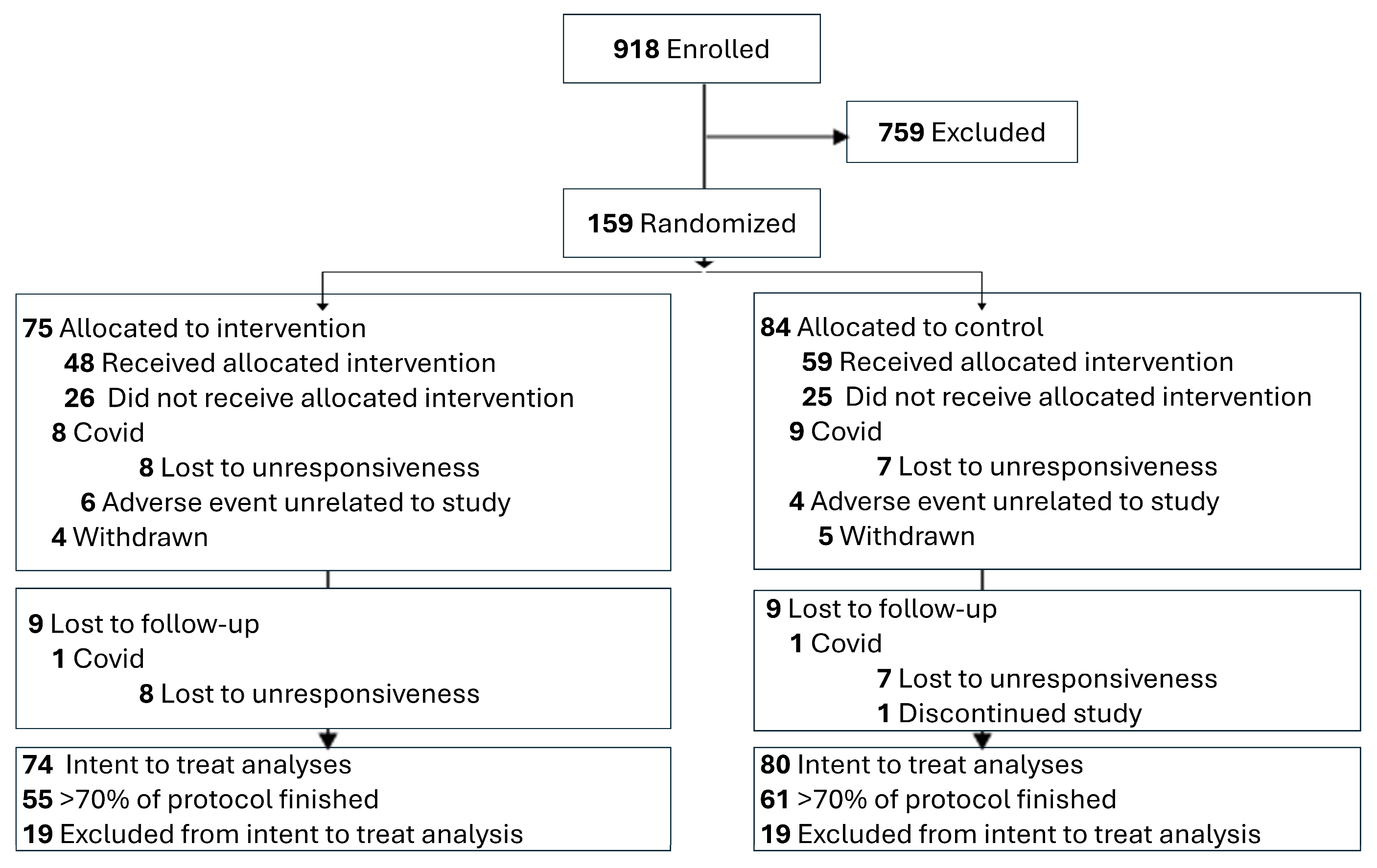
This randomized clinical trial was a triple-blinded (participants, researchers, and analysts were blinded) 2-arm trial. The Institutional Review Board of Virginia Commonwealth University approved this study (HM20014058, 22 October 2018), and informed consent was obtained from all participants. The detailed study protocol is published [19] and registered at the National Library of Medicine (NCT03463824, 13 February 2018). Recruitment began on 10 January 2019, the primary completion date was 17 January 2023, and the study completion date was 12 December 2023. Participants were randomized in a 1:1 ratio into 1 of 2 groups (Figure 1).
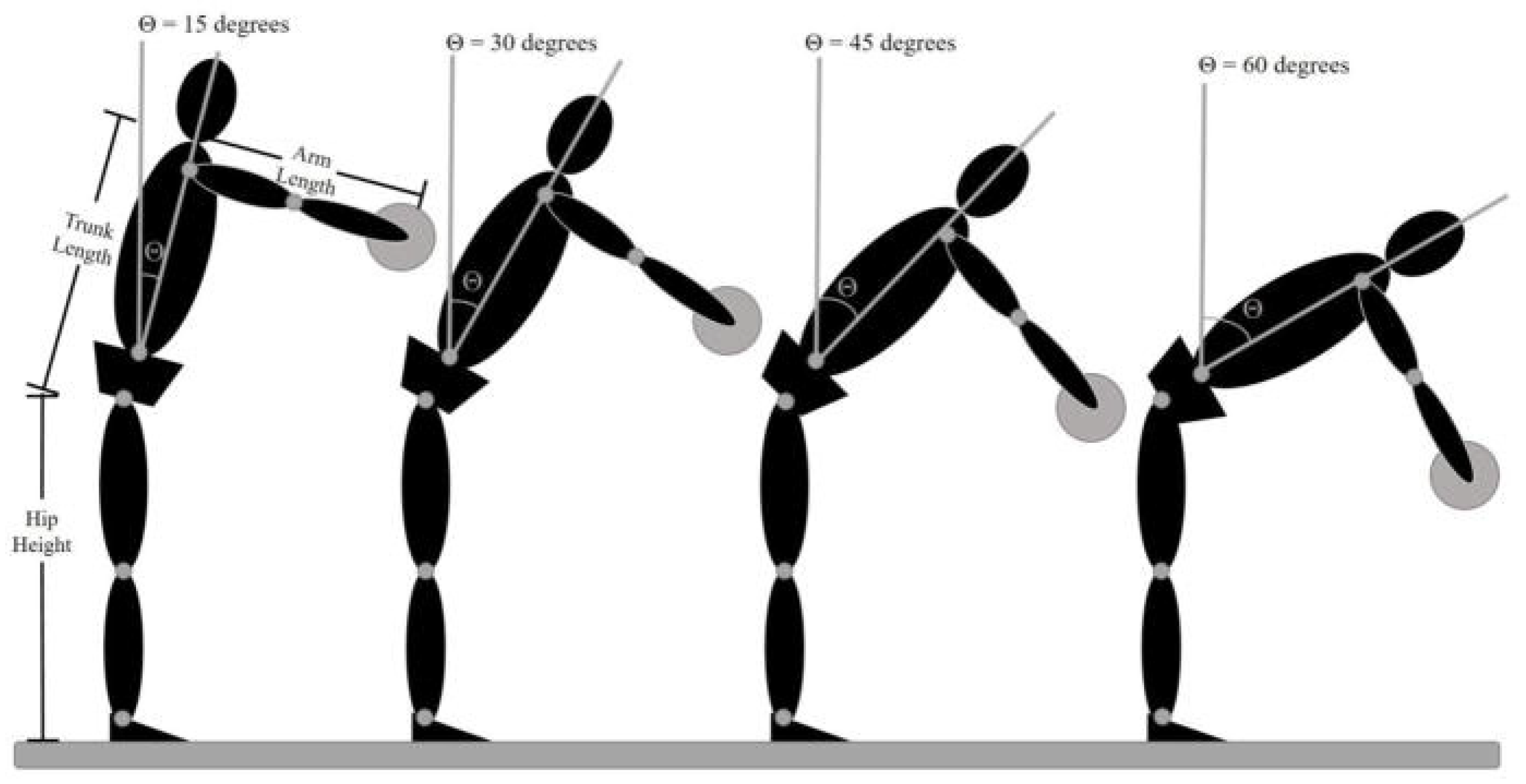
Those assigned to the experimental group played our immersive video games that encouraged participants to produce progressively larger lumbar flexion excursions at each game level and across treatment sessions, i.e., virtual balls were launched to elicit 15°, 30°, 45°, and 60° [19]. Those assigned to the control group played the same immersive games, but the parameters were modified such that less lumbar flexion was required to achieve the same game objectives, i.e., virtual balls were launched to elicit −15°, 0°, 15°, and 30°. Both participants and administrators of the VR game were blinded to the group assigned, as the participant identification code was entered in the VR menu and linked to the randomization table controlling the target heights of the virtually launched balls, as explained below. The treatment frequency and duration were based on prior research on graded activity and exposure, typically with 6–12 interventions with 8–18 treatment sessions, resulting in significant reductions in disability [10,20]. Accordingly, participants in this study completed 18 intervention visits over 9-weeks with the number of sessions tapered across weeks (i.e., 3 sessions/week in weeks 1–3, 2 sessions/week in weeks 4–6, and 1 session/week in weeks 7–9, See Table 1). Our co-primary outcome variables were change in pain and change in disability from baseline to 1-week post-treatment (Aim 1). We also examined changes in expectations of pain/harm and lumbar flexion as potential mechanisms of a change in pain and disability (Aim 2). Finally, we examined the maintenance of treatment gains at 1, 6, 12, 24, and 48 weeks post-treatment (Aim 3).

2.1. Aims and Hypotheses

2.1.1. Aim 1

Examine immediate clinical outcomes as a function of treatment. We hypothesized that, relative to the control group, participants in the experimental group would show larger reductions in pain and disability at post-treatment relative to pre-treatment baseline values (Hypothesis 1).

2.1.2. Aim 2

Examine potential mechanisms of pre- to post-treatment changes in clinical outcomes. We hypothesized that participants in the experimental group would exhibit larger pre- to post-treatment decreases in pain/harm expectancy and increases in lumbar flexion as compared to the control group (Hypothesis 2.1). We further posited that decreases in pain/harm expectancy and increases in lumbar flexion would be positively related to pre- to post-treatment reductions in pain and disability (Hypothesis 2.2).

2.1.3. Aim 3

Examine maintenance of treatment gains. We hypothesized that, relative to the control group, participants in the experimental group would continue to show lower levels of pain and disability at 1, 6, 12, 24, and 48 weeks after the last treatment session (Hypothesis 3).

2.2. Recruitment and Pre-Screening

People with low back pain were recruited through advertisements and flyers posted in the local community and via a combination of electronic, radio, and print. We also recruited from local clinics and ResearchMatch.org. This recruitment resulted in 918 people completing a brief online survey using REDCap to determine their initial eligibility [21]. This pre-screening survey covered the main inclusion and exclusion criteria (see Table 1), including a numeric pain rating scale (24 h and 7-day recall), the Roland–Morris Disability Questionnaire [22,23], a question about fear of physical activity, and medical history related to back pain. In general, a majority of the potential participants were excluded due to (1) insufficient pain levels, (2) insufficient duration of symptoms, (3) insufficient kinesiophobia levels (i.e., tsk < 37), (4) age outside of criterion. Individuals who met the initial study criteria (n = 220) were scheduled for an in-person physical screening prior to assignment to a treatment group.
Table 1. Participant inclusion and exclusion criteria.
Inclusion criteria
  • 18–60 years of age
  • Low back pain for at least half of the days in the past 6 months
  • Average pain intensity > 3 on a 0–10 numeric pain rating scale
  • Disability > 4 on Roland and Morris Disability
  • Kinesiophobia > 36 Tampa scale for kinesiophobia
  • Agrees with the statement “It is not really safe for a person with my back problem to be physically active“
  • Has sought care or consultation from a healthcare provider for back pain
  • Meets < 4 on the Classification System Quebec Task Force on Spinal Disorders [24], reflecting low back pain without neurological signs.
  • Working proficient English
Exclusion criteria
  • A personal history of the following neurological disorders: Alzheimer’s, amyotrophic lateral sclerosis, multiple sclerosis, Parkinson’s, neuropathy, stroke, seizures
  • A personal history of the following cardiorespiratory disorders: congestive heart failure, heart attack in the past 2 years
  • A personal history of the following musculoskeletal disorders: rheumatoid arthritis, muscular dystrophy, pathologic fractures of the spine, avascular necrosis or osteonecrosis, severe osteoarthritis
  • A personal history of spine surgery or hip arthroplasty
  • Active cancer
  • A chronic disease that may restrict movement or preclude safe participation
  • Used opioids or muscle relaxants within 30 days prior to study enrollment
  • Reports being pregnant, lactating, or that they anticipate becoming pregnant within 2 months
  • Reports pending litigation related to the cLBP
  • Current drug or alcohol use, which in the opinion of the PIs would interfere with the adherence to study requirements
  • Significant visual impairment that would prevent virtual reality headset use
  • Significant motion sickness that would prevent virtual reality use

2.3. Screening, Consent, and Enrollment (Visit 0)

During the screening session, the study protocol was verbally described to candidates, any questions were answered, and the informed consent process was started in a quiet private room. Participants were shown a video of the virtual reality games to help them with the process. If they wished to continue, they were asked to read and sign an informed consent document. Those who provided informed consent (N = 220) then completed a series of screening surveys (see Table 2), including a repeat of those completed as part of the pre-screening.
Additionally, individuals who continued to meet the inclusion/exclusion criteria (N = 159, N = 61 were lost due to a reduced TSK scored < 37 during screening) underwent a physical exam by a physical therapist. Participants who remained eligible following the physical exam were formally enrolled into the study (N = 159). They were randomly assigned into a treatment group using a randomization table created by the study statistician prior to study onset. They then proceeded to a pre-treatment baseline assessment (visit 1), which occurred within seven days of the screening visit (or else the participants were re-screened).

2.4. Pre-Treatment and Baseline Assessment (Visit 1)

The pre-treatment baseline assessment included a series of survey measures, participation in a standardized reaching task, and real-world activity monitoring. As shown in Table 2, the survey measures include numeric pain rating scales (current, 24 h, and 7-day recall), the Roland–Morris Disability Questionnaire [22,24], a medication log, and a range of psychological measures (e.g., Tampa Scale for Kinesiophobia [25], Center for Epidemiologic Studies—Depression [26], Pain Catastrophizing Scale [27], Pain Resilience Scale [28,29]).
For the standardized reaching task, participants wore an HMD (head-mounted display) and touched virtual targets, while the movement of light-reflective marker clusters attached to their head, upper arms, forearms, hands, trunk, pelvis, thighs, shanks, and feet were recorded using a 12-camera Vicon Bonita system (Vicon Motion Systems Ltd., Oxford, UK). Participants touched 4 virtual targets co-located in the mid-sagittal plane. As shown in Figure 2, the target locations were adjusted to participant anthropometrics to allow for the comparison of movement patterns across individuals in a task that requires progressive increases in lumbar spine flexion [30] Participants performed ten reach trials for each virtual target location: five per hand, pausing at the target for two seconds, then returning to an upright posture. Instructions emphasized that participants should reach for the targets as quickly as possible in a way that is “natural and comfortable for them.” This instruction was used to avoid biasing participants with a perceived correct way to move and a rapid pace that would challenge the participant by increasing the loading required to perform the task. While forward excursions of the trunk must be counter-balanced by backward movement of the lower extremities, the targets were located such that they did not require an individual to move anywhere near the limits of the available range of motion of the lumbar spine, pelvis, knee, and ankle. Thus, participants could reach the targets using an infinite combination of joint excursions. Even though the reaching task required no lifting, and the loads on the lumbar spine were small, we have shown that individuals with elevated levels of kinesiophobia exhibit reduced lumbar spine flexion at this combination of target height and reaching speed [14,16,17,30]. The time series joint angle data were calculated from the 3D segment coordinate data using a Euler angle sequence of: (1) flexion–extension, (2) lateral bending, and (3) axial rotation using Motion Monitor software 4.0 (MotionMonitor xGEN, Innovative Sports Training Inc., Chicago, IL, USA) [31]. The standardized reaching paradigm was used to assess three dependent measures associated with Aim 2 (i.e., lumbar flexion and pain/harm expectancy). Lumbar flexion was defined as the change in joint angle during each reach (i.e., the difference between the joint angle at the beginning of the trial before the go signal and the joint angle recorded 100 ms after target contact). Consistent with our prior work [18,32,33,34], expectations of pain and harm were also measured during standardized reaches. For each target height, prior to the first reaching trial, participants rated the level of “expected pain” and “expected harm” using a visual analog scale displayed through the head mounted display. The scale consisted of a 10 cm horizontal line with no numbers, marks, or descriptive vocabulary along its length. For expected pain ratings, the scale was anchored with the descriptors “No pain” and “Worst pain imaginable”, respectively, at each end of the line. For expected harm, the scale was anchored with “Not at all concerned” and “Extremely concerned” regarding potential harm to the back during task performance. Participants indicated their response by moving a virtual sliding scale.
After completing all indicated pre-treatment assessments, participants viewed a brief (11.5 min) treatment rationale video that included a chronic pain educational component designed to explain how pain persists without underlying pathology and to describe the interaction between biological, psychological, and social factors in maintaining chronic back pain and related disability. Following the treatment rationale video, participants were introduced to the virtual video games for the first time and had an opportunity to play a practice level to review the basic game constructs (e.g., scoring metrics, moving the avatar, sound and visual cues). They then completed the Treatment Evaluation Inventory to assess their perceptions and expectations regarding the proposed treatment.

2.5. Treatment (Visits 2–19)

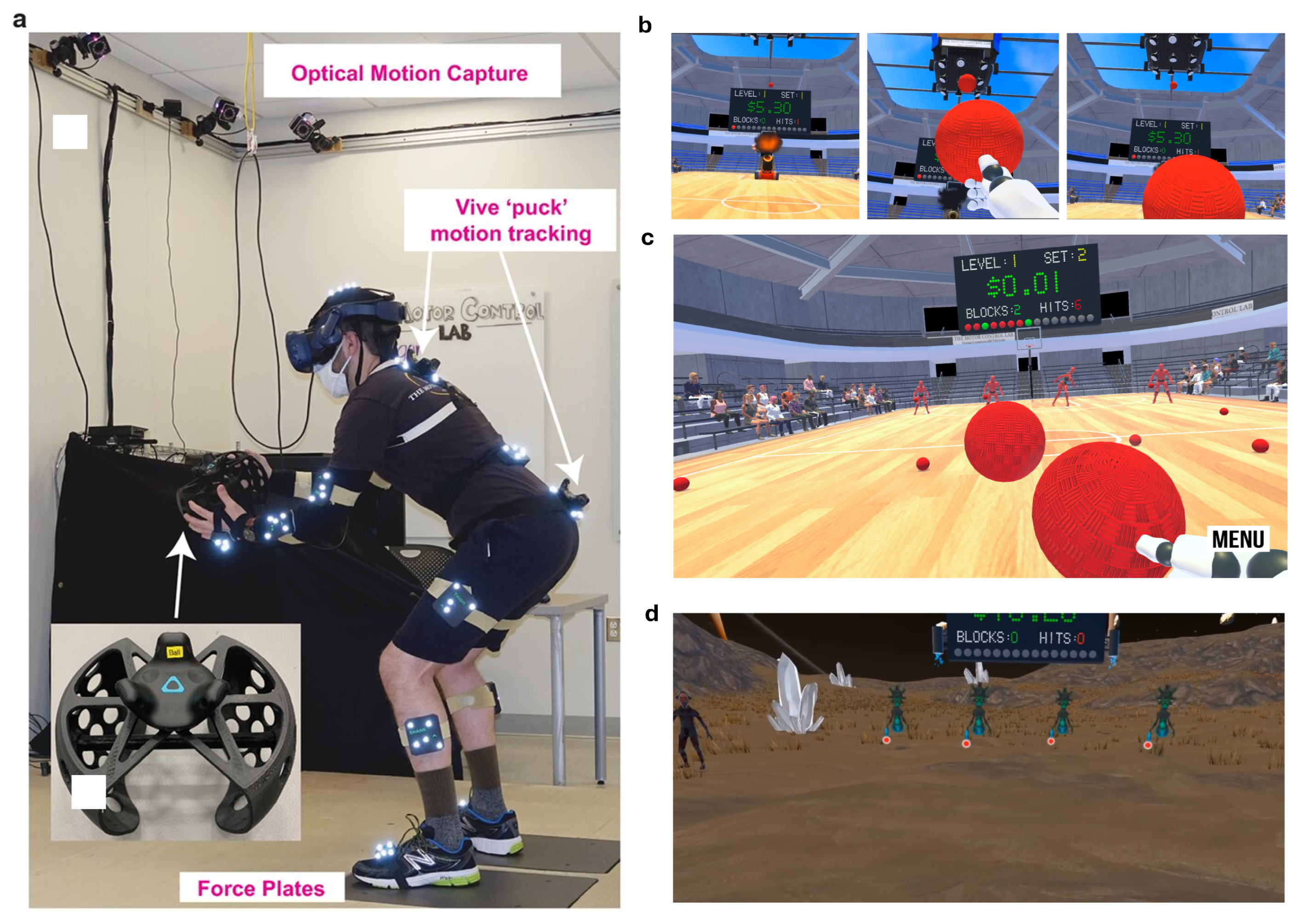
As shown in Table 3, participants completed 18 intervention visits over 9 weeks with the number of sessions tapered across weeks (i.e., 3 sessions/week in weeks 1–3, 2 sessions/week in weeks 4–6, and 1 session/week in weeks 7–9). The immersive games varied across the 9 weeks of treatment to provide a graded increase in challenge with respect to lumbar spine motion, encourage player engagement, and prevent player boredom. There were four virtual reality environments, each played from a first-person perspective, including Dodgeball Cannon, Day, Night, and Space (see Figure 3).
All Dodgeality versions consisted of launched virtual balls that were directed at the participant’s avatar. The goal was to either block the launched virtual ball with a virtual ball held by the participant’s avatar or to duck the launched virtual ball if it changed color and was accompanied by a quacking sound. In all variants of Dodgeality, there were 15 launched virtual balls per set, 2 sets per level, and 3 levels per game. Performance was updated in real time and displayed on a virtual scoreboard. In week one, participants played three sessions of a version of the game, where the balls were launched in slow arcs by a cannon located inside an arena (i.e., Dodgeball Cannon). This was the least physically challenging version of Dodgeality, as the balls started from one location, and the launch trajectory had a high parabolic flight pattern to make interception of the launched virtual ball less challenging. In week two and the beginning of week three, participants played four sessions of a traditional dodgeball game within the same virtual arena environment (i.e., Dodgeball Day). In this version, they competed against four opponent avatars who randomly took turns throwing balls using a normal human motion. In weeks three, four, and five, participants played five sessions of the same traditional dodgeball game, except that the arena lights were removed, and the opposing avatars launched virtual glow-in-the-dark balls (i.e., Dodgeball Night). Finally, in weeks five through nine, participants played weekly sessions of traditional dodgeball that took place on the surface of an alien planet (i.e., Dodgeball Space). The opposing players were aliens, and the physics of the ball launches were adjusted to reflect the reduced gravity of the moon. During weeks five through nine, the launch velocity of virtual balls increased by 10% if success was higher than 80%. Thus, the initial launch velocity increased from 45 m/s to 49.5 m/s if over 24 out of 30 balls were blocked that day. Progressively increasing the initial launch velocity necessitated more rapid movements of the participants to successfully intercept the launched virtual balls and thereby increased the difficulty of the tasks. See Table 3 for the game allocation per visit.
In the control group, to ensure that lumbar flexion was minimized while playing the virtual reality games, we manipulated the presentation of the virtual targets such that the participant only needed to flex the spine 0–45° to successfully intersect the virtual object instead of 15–60° the treatment group.
As shown in Table 2, the survey measures taken during every treatment visit included a numeric pain rating for current pain, medication log, and adverse events. During every first visit of the week (Visit 2, 5, 8, 11, 13, 15, 17, 18, and 19), additional numeric pain rating scales for 24 h and 7-day averages and a standardized reaching task as described in the pre-treatment were completed.

2.6. Post-Treatment Follow-Up Assessments (Visits 20–24)

After the participants completed 18 game sessions over nine weeks, post-treatment follow-up sessions (visits 20–24) were scheduled to assess the maintenance of treatment gains at 1, 6, 12, 24, and 48 weeks after the last treatment session. These follow-up sessions were identical to the pre-treatment baseline assessments with two exceptions. First, at each of the follow-up visits, participants completed a one-item Patient Global Impression of Change measure [35] to assess their overall sense of improvement as a function of receiving the treatment. Second, participants repeated the Treatment Evaluation Inventory [36] to assess their acceptance of the virtual reality games as a potential intervention for low back pain at the first follow-up session only (i.e., visit 20).

2.7. Additional Design Points

To monitor the safety, participants completed a brief health screening at the beginning of each game session to determine whether there were any changes in back pain or radiating symptoms. Any negative change in health status, other than back pain, was recorded as an adverse event, logged, and reported per the requirements of the Virginia Commonwealth University IRB. In the case of deviation from the protocol due to negative health changes, the study’s safety committee would meet to determine whether the adverse event was caused by the intervention.
Participants discontinued the study intervention when a medical condition developed that precluded the continuation of the treatment intervention. If participants discontinued prior to completing all scheduled treatment sessions (regardless of the reason), we made every attempt to obtain the outcome measurements. If the study participant was unwilling or unable to undergo the laboratory-based tests, we still attempted to obtain the clinical outcome measures. In instances where an adverse event occurred, we followed-up with the participant until the event was resolved or until the IRB deemed it unnecessary to continue to follow the participant.
All participants in active treatment during the COVID-19 pandemic (between 12 March and 26 July 2020, N = 17) were withdrawn from the study. Participants who were already in the follow-up phase of the study did not do a standardized reaching task but finished the surveys online (number of online surveys per follow-up visit; v20 = 0, v21 = 3, v22 = 7, v23 = 19, v24 = 14, participant N = 34); however, some participants did not finish the online surveys (N = 3). When the lab opened back up for in-person visits on 27 July 2020, participants were encouraged to come back for their follow-up assessments; however, one participant chose to complete their last follow-up visit (v24) online.

2.8. Outcomes, Sample Size Calculations, and Analysis

We were interested in several outcomes in this study: current, 24 h, and 7-day recall pain (NPRS scale); the Roland–Morris disability score (RMDQ); expectation of pain or harm as measured by the Tampa scale for kinesiophobia (TSK); depression as measured by the eight item PROMIS-depression scale; pain catastrophizing (PCS); Global Impression of Change (GIC); and lumbar flexion angles measured to targets positioned to elicit 15, 30, 45, and 60 degrees of lumbar flexion (respectively levels 1, 2, 3, and 4) as described in the baseline section. Outcomes were collected pre-treatment as well as at 1, 6, 12, 24, and 48-weeks post-treatment, except for the Global Impression of Change, which was only assessed at post-treatment. Study data were collected and managed using REDCap electronic data capture tools hosted by Virginia Commonwealth University [21].

2.8.1. Statistical Analysis

Sample size calculations for this study have been previously described [19]. In brief, based on extant studies of pain (0–10 NPRS scale) and disability (RMDQ), we used a Cohen’s d effect size of 0.45 for simulation studies that indicated 230 subjects would be sufficient to achieve power of 0.8 to detect a clinically meaningful treatment effect for outcomes at our primary end point (v20). The sample size calculations also assumed a 10% attrition rate.
The primary hypotheses were that (1) the treatment group (game designed to elicit 15–60 degrees lumbar flexion) would display a significantly larger reduction in NPRS and RMDQ levels from baseline than the control (game designed to elicit 0–45 degrees lumbar flexion) at the primary end point, (2) participants in the treatment group would exhibit larger pre- to post-treatment decreases in kinesiophobia (TSK) and pain catastrophizing (PCS) and increases in lumbar flexion, as compared to the control group, and (3) relative to the control group, participants in the treatment group would continue to show lower levels of pain (NPRS) and disability (RMDQ) at each follow-up time point.
Data are summarized overall and by treatment group. Numerical measurements are summarized with the mean and standard deviation. Categorical measurements are summarized with frequencies and percentages. The total number of missing responses are reported for each measure.
Linear mixed-effects regression analyses served as the main analytic framework. The maximum-likelihood estimation allowed participants with missing data to be included in the model if the observations were missing completely at random or missing at random. See Appendix A. Mixed effect model outcome table.
All regression models incorporated random intercept terms to account for within-subject variance associated with longitudinal experimental designs. We compared models with linear and quadratic time using likelihood ratio tests and included time as a quadratic term when appropriate due to potential nonlinear relationships between outcomes and time. The fixed effects included the group, linear time (with baseline as the reference), quadratic time when indicated, and their interaction terms (group × time and group × time2) to evaluate group differences in both linear and nonlinear change over time. Biological sex, BMI, and radiating pain were included in each model as additional fixed effects. A priori simple interaction contrasts were conducted to compare the changes from baseline between the two intervention groups. All analyses were completed in R 4.5.0.

2.8.2. Intention-to-Treat Analysis

All randomized study participants with at least a baseline assessment and complete records were included in the intention to-treat (ITT) analysis. This trial enrolled and randomized participants following an in-person physical examination. The baseline measures were then completed in a follow-up visit within 7 days of physical screening. Five of the randomized participants dropped out before baseline measures. Accordingly, our primary analysis does not meet the strict definition for ITT analysis. Thus, we used a near ITT analysis as the primary method for assessing outcomes, and maximum-likelihood estimation was used to estimate any missing observations.

2.8.3. Per-Protocol Analysis

For the per-protocol analysis (PPA), we excluded study participants who (1) attended fewer than 13 treatment sessions and (2) received prohibited concomitant interventions or (3) developed an exclusionary medical condition while on the study protocol. The outcomes from the ITT analysis and PPA were nearly identical (i.e., the differences in estimated marginal means were generally less than 0.5, with no differences in significance). Accordingly, only the results of the ITT analysis are presented.

3. Results

A total of 159 participants (101 women [66%] and 53 men [34%]) with a mean (SD) age of 39.5 (12.9) years (range, 18.1–60.9 years) were enrolled in this trial. At baseline, this cohort reported a mean (SD) pain score over the last 7 days of 5.7 (1.9) on the NPRS (range, 0–10), a mean (SD) score of 13.2 (5.4) on the Roland–Morris Disability Questionnaire (range, 0–24), and a mean (SD) length of chronic back pain of 10.5 (10.2) years, indicating moderate back pain of long duration. Seventy-four participants were randomized to the treatment group. Five participants withdrew from the study after the randomization process owing to scheduling issues (one from the treatment and four from the control group) and never completed baseline measures or any part of the treatments and follow-up assessments. An additional 119 individuals did not complete the allocated intervention and follow-up visits. Participant characteristics as a function of the treatment group are reported in Table 4.

3.1. Primary Outcomes

3.1.1. Treatment Effect on Pain and Disability

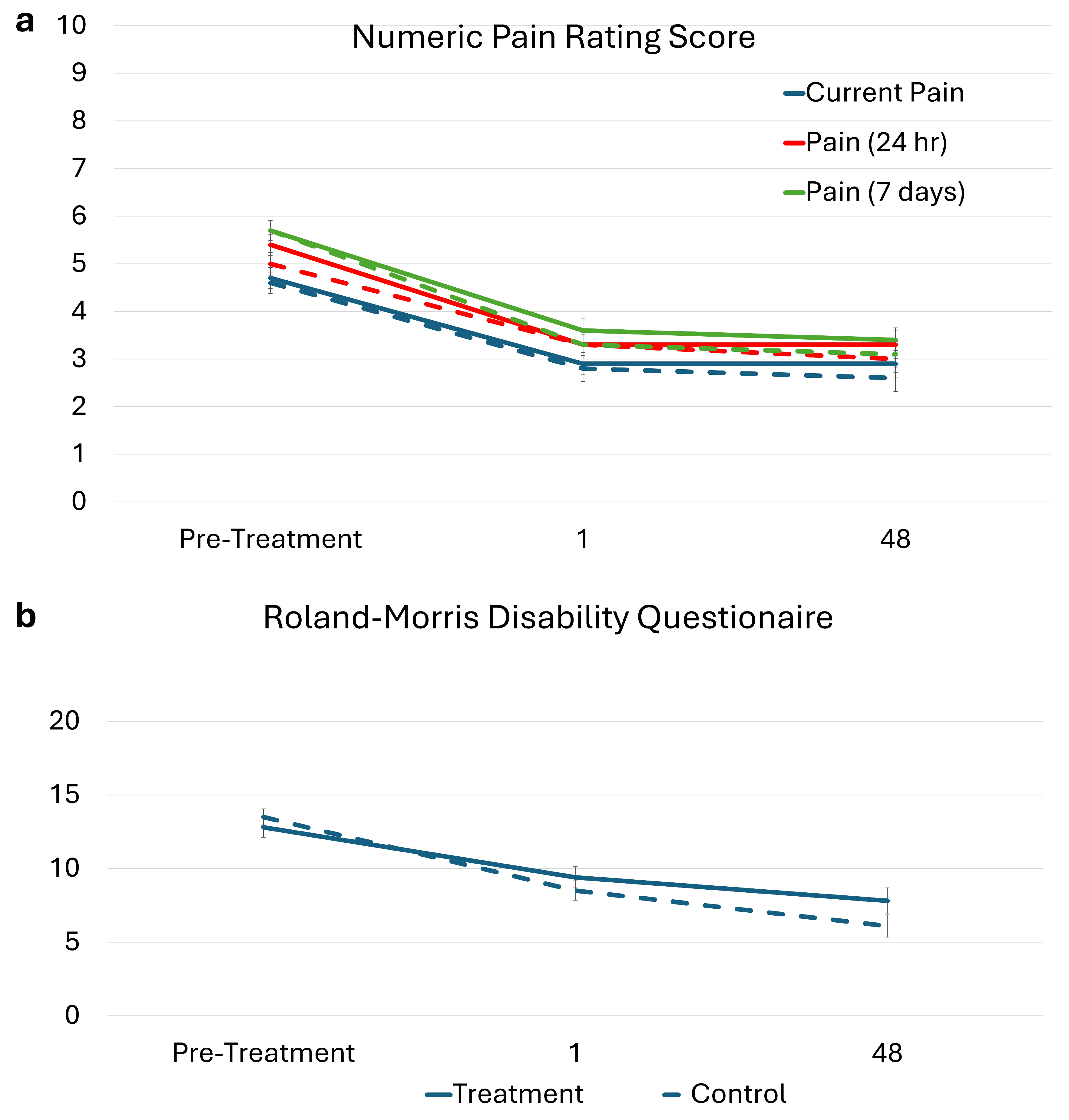
At the primary end point, there was no significant difference in the change in pain scores between the treatment and control groups for current pain (0.31; 95% CI, −0.51 to 1.13; p = 0.86), pain over the last 24 h (0.49; 95% CI, −0.35 to 1.33; p = 0.51), and pain over the last 7-days (0.37; 95% CI, −0.49 to 1.22; p = 0.80). There was no significant difference in the change in self-reported disability scores between the treatment and control (−0.13; 95% CI, −2.53 to 2.27; p = 1.00).
There were significant changes in current pain at the primary end point within the treatment (−0.75; 95% CI, −1.10 to −0.39; p < 0.001) and control group (−1.03; 95% CI, −1.37 to −0.69; p < 0.001), pain over 24 h at the primary end point within the treatment (−0.85; 95% CI, −1.21 to −0.49; p < 0.001) and control group (−1.13; 95% CI, −1.47 to −0.80; p < 0.001), and pain over 7 days at the primary end point within the treatment (−0.91; 95% CI, −1.25 to −0.56; p < 0.001) and control group (−1.23; 95% CI, −1.56 to −0.91; p < 0.001). See Table 5 and Figure 4.

3.1.2. Treatment Effect on Pain and Harm Expectancy and Lumbar Flexion Angles

At the primary end point, there was no significant difference in the change in kinesiophobia scores between the treatment and control groups (1.26; 95% CI, −1.36 to 3.88; p = 0.71) or pain catastrophizing (0.81; 95% CI, −3.74 to 5.36; p = 0.99). There were no significant differences in the change in lumbar flexion angles between the treatment and control groups for height 1 (left (−0.75; 95% CI, −3.69 to 2.20; p = 0.91), right (−0.59; 95% CI, −3.09 to 1.91; p = 0.92)), height 2 (left (1.26; 95% CI, −3.90 to 6.41; p = 0.97), right (−0.57; 95% CI, −4.85 to 3.70; p = 0.9.98)), height 3 (left (0.08; 95% CI, −5.42 to 5.58; p = 1.00), right (−0.26; 95% CI, −5.58 to 5.06; p = 0.99)), and height 4 (left (−1.25; 95% CI, −6.99 to 4.50; p = 0.94), right (−0.17; 95% CI, −6.01 to 5.68; p = 1.00)).
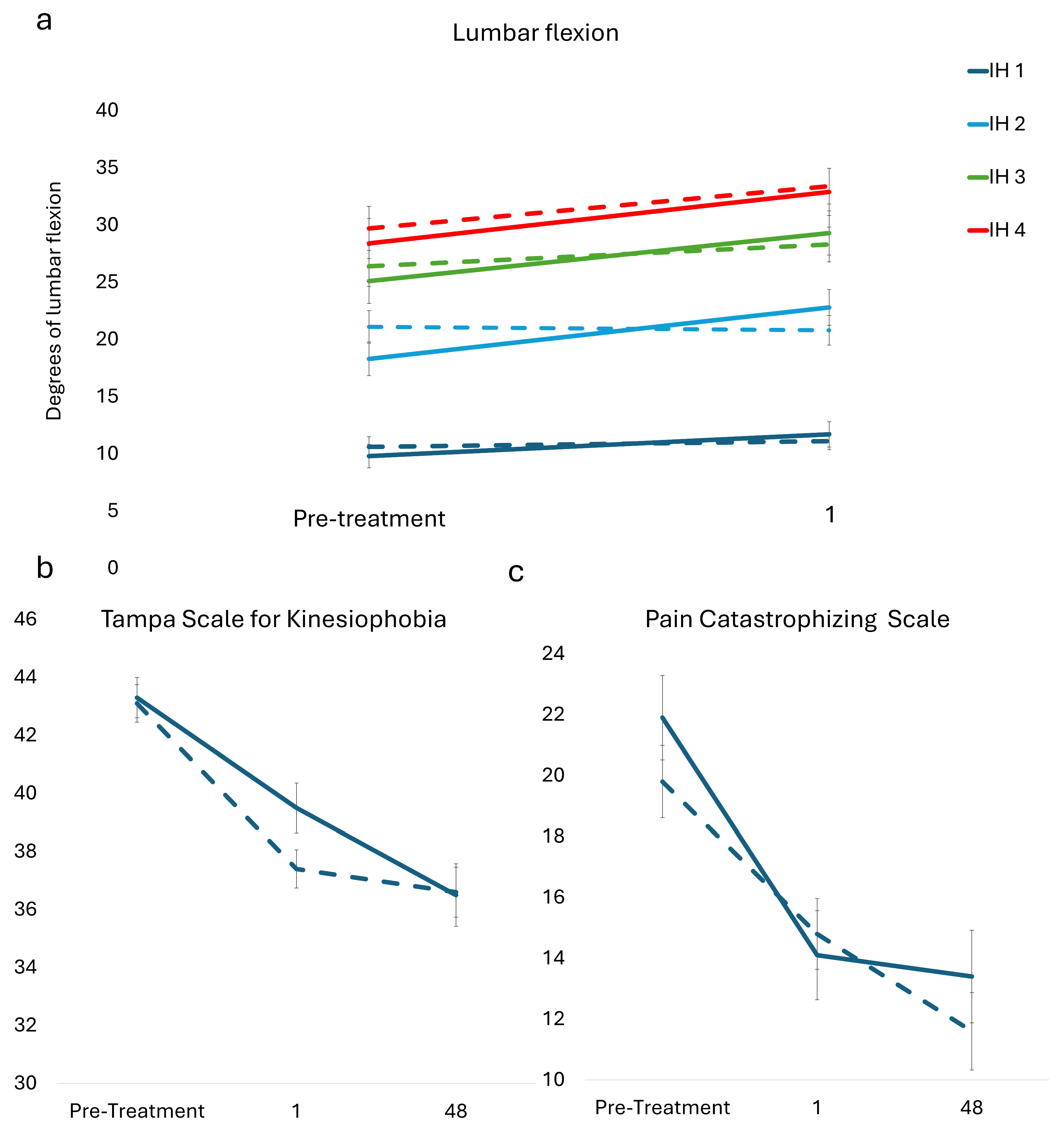
There were significant changes in kinesiophobia at the primary end point within the treatment (−2.81; 95% CI, −3.75 to −1.86; p < 0.001) and control groups (−3.20; 95% CI, −4.09 to −2.31; p < 0.001) and pain catastrophizing at the primary end point within the treatment (−4.48; 95% CI, −6.06 to −2.91; p < 0.001) and control groups (−3.15; 95% CI, −4.65 to −1.66; p < 0.001). See Table 5 and Figure 5.

3.1.3. Maintenance of Treatment Gains Post-Treatment

The maintenance of the treatment gains (48 weeks post-treatment) were not significant different in the change in pain scores between the treatment and control groups for current pain (0.36; 95% CI, −0.77 to 1.49; p = 0.93), pain over the last 24 h (0.40; 95% CI, −0.74 to 1.55; p = 0.90), or pain over the last 7-days (0.34; 95% CI, −0.79 to 1.47; p = 0.95). There was no significant difference in the change in self-reported disability scores between the treatment and control groups (0.85; 95% CI, −2.05 to 3.76; p = 0.95). For treatment gains at 6, 12, 24, and 48 weeks post treatment, see the table in Appendix B).
There were significant changes in the current pain at the 48-week follow-up within the treatment (−1.19; 95% CI, −1.92 to −0.46; p < 0.001) and control groups (−1.52; 95% CI, −2.23 to −0.80; p < 0.001), pain over 24 h at the primary end point within the treatment (−1.39; 95% CI, −2.12 to −0.66; p < 0.001) and control groups (−1.59; 95% CI, −2.30 to −0.87; p < 0.001), and pain over 7 days at the primary end point within the treatment (−1.58; 95% CI, −2.28 to −0.87; p < 0.001) and control groups (−1.87; 95% CI, −2.56 to −1.19; p < 0.001).

3.2. Secondary Outcomes

3.2.1. Depression Score

At the primary end point, there was no significant difference in the change in depression scores between the treatment and control groups (3.39; 95% CI, −0.45 to 7.22; p = 0.11).
There was a significant difference in the depression score at the primary end point in the control group (−2.07; 95% CI, −3.35 to −0.79 p < 0.001) but not for the treatment group (−0.50; 95% CI, −1.85 to 0.85 p = 0.88).

3.2.2. Treatment Expectation

There was no significant difference in the Global Impression of Change between the treatment and control groups at the 6-week follow-up from baseline (−0.20; 95% CI, −0.92 to 0.52 p = 0.89) or any other time (see Appendix B).
There were also no significant differences in the Global Impression of Change from baseline at the 6-week follow up within the treatment (0.07; 95% CI, −0.00 to 0.13 p = 0.06), and control groups (0.03; 95% CI, −0.03 to 0.10 p = 0.55) or at any other time (see Appendix B).

4. Discussion

The fear-avoidance model offers a cognitive–behavioral explanation for the transition from acute musculoskeletal pain to chronic low back pain (cLBP) and disability [37,38,39,40]. In this framework, catastrophic pain appraisals amplify fear of movement (kinesiophobia), prompting avoidance behaviors that contribute to deconditioning, negative affect, and persistent disability. In contrast, individuals with more optimistic appraisals are less likely to avoid activity, remain engaged in valued life goals, and show higher likelihood of recovery. While there was no difference between the treatment and control groups, both groups had a clinically significant improvement in pain and disability. Given the fact that the population in this study had a back pain history of 10.6 (10.2) years, the clinically meaningful and sustained improvement in pain and disability shown here is likely not due to the simple effect of time [41] or placebo [42]. More likely, both groups benefitted from the graded activity they were exposed to in the Dodgeality VR games.
The main aims of this study were to explore the effects of two levels of graded exposure therapy, applied with the VR Dodgeality games, on patients with cLBP and fear of movement. We did not see any differences between the treatment group (increased graded exposure, i.e., balls targeted to elicit 15–60 degrees of lumbar flexion) and the control group (increased graded exposure, i.e., balls targeted to elicit 0–30 degrees of lumbar flexion) in pain, disability, fear measures (TSK and PCS), lumbar flexion angles, and the Global Impression of Change. However, we did see clinically meaningful improvements in pain, disability, fear of movement, pain catastrophizing, and the Global Impression of Change within both groups [43,44]. This indicates that both groups not only perceived they received treatment, but the maintenance of the treatment gain also suggests that both treatments were effective graded activity treatments for cLBP. Where previous VR treatment studies showed initial improvement post-treatment, they did not show improvements in pain and disability beyond 6 months, indicating that the VR was helpful in distracting from the pain [11,13] but not in treating the underling mechanisms. These findings align with reports that graded activity and exposure produce modest long-term gains, with recurrence rates of up to 41% at 12 months [10], yet extend prior work by demonstrating sustained benefits with a VR-based format [6]. VR may offer distinct advantages—immersive distraction from pain, goal-oriented engagement, and progressive challenge—which can enhance adherence and counter the attrition typical of conventional protocols [8,45,46]. Participants with high fear of movement described the VR dodgeball task as enjoyable and intrinsically motivating [18], underscoring its potential to reshape pain-related beliefs and behaviors.
Additionally, we expected the lumbar flexion excursion to increase post-treatment. However, pain catastrophizing and kinesiophobia decreased post-treatment, but the lumbar flexion excursions remained unchanged. It is known that movement restriction often persists despite cognitive improvement [14]. We expected that motor patterns would normalize within the 48-week follow-up window [47], especially with the maintained reduction in pain, harm expectancy, kinesiophobia, and pain catastrophizing measure. In previous studies, we have shown lumbar excursions around 20° to a target eliciting 40° and around 30° to a target eliciting 60° in people without back pain [48] and around 7° and 17° to similarly placed targets in people with back pain [30]. One explanation of the lack of improvement could be that participants in this study had lumbar flexion angles of 27° and 31° to targets targeting 45° and 60°, respectively, which are comparable to the lumbar flexion angles reported in people without back pain [48]. Additionally, reduced excursions were more pronounced in participants with a higher age or BMI, reflecting known declines in spinal mobility from approximately age 40 [6] and diminished flexion in individuals with obesity [7]. Given the sample’s mean age (40) and BMI (30), these effects were expected. Notably, the lumbar mobility did not influence the pain, fear, or depression outcomes; only disability scores on the Roland–Morris Disability Questionnaire correlated with the BMI, possibly reflecting functional limitations attributable to body size rather than pain alone. See Appendix A: Mixed effect model outcome table.
Limitations in this clinical trial were that the control group still received a graded exposure treatment targeting lumbar flexion. This prevented us from showing that VR graded exposure treatment targeting movements people with cLBP avoid, such as lumbar flexion, is more effective than cognitive behavioral or less specific graded activity treatments. In future studies, we suggest comparing graded exposure and activity treatments targeting lumbar flexion movements in people with cLBP compared to a treatment that does not involve lumbar flexion movements. Additionally, the targeted lumbar flexion range differed (15–60° vs. −15–30°), and completion of either protocol did not require achieving these ranges, potentially diluting any differential treatment effect. The sample size was smaller than originally planned due to recruitment challenges during the COVID-19 pandemic, which may have reduced the statistical power to detect between-group differences. These factors should be considered when interpreting the findings and underscore the need for larger-scale studies employing more distinct treatment conditions.
Collectively, these results support VR-mediated graded exposure specifically targeting lumbar motion as a promising adjunct for cLBP with high pain-related fear. By combining cognitive distraction, affective reward, and graduated physical challenge, VR can address both psychological and behavioral components of the fear–avoidance cycle, offering a scalable approach to enhance adherence and sustain recovery.

5. Conclusions

This study demonstrates that nine weeks of VR-based graded activity, delivered through a virtual dodgeball game, produced clinically meaningful reductions in pain and disability in individuals with cLBP and high pain-related fear, likely not due to the simple effect of time [41] or placebo [42], with benefits maintained for up to 48 weeks. These outcomes occurred without measurable increases in lumbar flexion during standardized reach tasks and were not influenced by age or BMI. VR engagement was associated with reductions in pain catastrophizing and kinesiophobia, despite persistent movement restriction, suggesting that cognitive shifts may precede or occur independently of biomechanical changes.
The VIGOR findings highlight VR’s potential to integrate cognitive distraction, affective reward, and progressive physical challenge in a format that sustains adherence and enhances enjoyment compared to conventional graded exposure/activity programs. By enabling repeated graded exposure to lumbar motion in a non-threatening game-based environment, VR interventions may help recalibrate threat perceptions, promote confidence in movement, and support the generalization of these benefits into daily life, offering a promising adjunct for disrupting the fear–avoidance cycle in cLBP.

Author Contributions

Conceptualization, J.S.T. and C.R.F.; methodology, J.S.T. and C.R.F.; software, S.M.v.d.V. and A.S.; formal analysis, A.R. and R.S.; investigation, S.M.v.d.V. and J.S.T.; resources, J.S.T. and C.R.F.; data curation, S.M.v.d.V. and A.S.; writing—original draft preparation, S.M.v.d.V.; writing—review and editing, C.R.F., J.S.T., and F.A.; visualization, S.M.v.d.V.; supervision, J.S.T.; funding acquisition, J.S.T. and C.R.F. All authors have read and agreed to the published version of the manuscript.

Funding

The research reported in this publication was supported by the Eunice Kennedy Shriver National Institute of Child Health & Human Development of the National Institutes of Health under Award Number R01HD088417. The content is solely the responsibility of the authors and does not necessarily represent the official views of the National Institutes of Health.

Institutional Review Board Statement

The study was conducted in accordance with the Declaration of Helsinki and approved by the Institutional Review Board of Virginia Commonwealth University (HM20014058, 22 October 2018).

Informed Consent Statement

Informed consent was obtained from all subjects involved in the study.

Data Availability Statement

The original data presented in this study are available on request from vanderveens24@ecu.edu due to size of the time series data (4 TB of space). The technical challenges of loading this in a public data base are limited.

Acknowledgments

We acknowledge the administrative support from our study coordinator Tiffany Amos and our Unity programmer Matthew Underation for their contributions to this study. This project was supported in part by the Biostatistics, Epidemiology, and Research Design (BERD) core of the C. Kenneth and Dianne Wright Center for Clinical and Translational Research (CTSA award No. UM1TR004360 from the National Center for Advancing Translational Sciences). Its contents are solely the responsibility of the authors and do not necessarily represent official views of the National Center for Advancing Translational Sciences or the National Institutes of Health.

Conflicts of Interest

The authors declare no conflicts of interest. Alexander Stamenkovic is employed by J.S. Held LLC, providing technical and scientific consulting services to consumer technology and medical device companies. Neither J.S. Held nor any other consulted for organization or entity had any involvement in the study conception, data collection, interpretation or manuscript preparation that could inappropriately influence or be perceived to influence this manuscript.

Abbreviations

The following abbreviations are used in this manuscript:
VIGORVirtual immersive gaming to optimize recovery
VRVirtual reality
BMIBody mass index
cLBPChronic low back pain
LBPLow back pain

Appendix A

Table A1. Linear mixed effect model fixed effect coefficient estimates by outcome.
OutcomeTermEstimate95% Confidence Intervalp-Value
Current PainTreatment0.0319[−0.6464, 0.7102]0.9263
Week−0.1192[−0.1485, −0.0899]<0.001
Week20.0016[0.0011, 0.0021]<0.001
Male−0.6656[−1.2861, −0.0450]0.0357
Age0.0101[−0.0140, 0.0342]0.4082
BMI0.0043[−0.0331, 0.0417]0.8201
Radiating Pain−0.0665[−0.6927, 0.5597]0.8341
Treatment/Week Interaction0.0328[−0.0097, 0.0753]0.1306
Treatment/Week2 Interaction−0.0005[−0.0012, 0.0002]0.1896
Pain (24 h)Treatment0.2061[−0.4843, 0.8965]0.5571
Week−0.1316[−0.1610, −0.1022]<0.001
Week20.0018[0.0013, 0.0023]<0.001
Male−0.7153[−1.3505, −0.0802]0.0276
Age0.0105[−0.0141, 0.0352]0.4006
BMI−0.0010[−0.0392, 0.0373]0.9600
Radiating Pain−0.1028[−0.7436, 0.5379]0.7516
Treatment/Week Interaction0.0339[−0.0088, 0.0766]0.1193
Treatment/Week2 Interaction−0.0005[−0.0012, 0.0002]0.1415
Pain (7 days)Treatment0.0401[−0.6532, 0.7334]0.9093
Week−0.1424[−0.1707, −0.1140]<0.001
Week20.0019[0.0014, 0.0024]<0.001
Male−0.6534[−1.3010, −0.0059]0.0480
Age0.0086[−0.0165, 0.0338]0.4987
BMI0.0004[−0.0385, 0.0393]0.9848
Radiating Pain0.0018[−0.6512, 0.6548]0.9957
Treatment/Week Interaction0.0383[−0.0028, 0.0794]0.0677
Treatment/Week2 Interaction−0.0006[−0.0013, 0.0001]0.0969
Roland–Morris Disability ScoreTreatment−0.1940[−2.0767, 1.6888]0.8392
Week−0.3106[−0.3738, −0.2473]<0.001
Week20.0037[0.0026, 0.0047]<0.001
Male−1.5637[−3.4099, 0.2825]0.0963
Age0.0677[−0.0039, 0.1394]0.0636
BMI0.1356[0.0252, 0.2459]0.0164
Radiating Pain−1.4316[−3.2902, 0.4270]0.1301
Treatment/Week Interaction0.0035[−0.0884, 0.0953]0.9405
Treatment/Week2 Interaction0.0003[−0.0013, 0.0018]0.7359
Tampa Scale for KinesiophobiaTreatment0.8634[−1.2259, 2.9526]0.4163
Week−0.3687[−0.4463, −0.2910]<0.001
Week20.0049[0.0036, 0.0061]<0.001
Male1.6859[−0.3184, 3.6903]0.0986
Age0.0341[−0.0436, 0.1119]0.3871
BMI−0.0136[−0.1337, 0.1065]0.8228
Radiating Pain−1.1620[−3.1812, 0.8572]0.2574
Treatment/Week Interaction0.0518[−0.0611, 0.1646]0.3681
Treatment/Week2 Interaction−0.0012[−0.0031, 0.0006]0.1937
Depression ScoreTreatment1.8141[−1.2402, 4.8684]0.2430
Week−0.2383[−0.3496, −0.1271]<0.001
Week20.0031[0.0013, 0.0050]<0.001
Male1.1206[−1.8220, 4.0631]0.4529
Age−0.0551[−0.1692, 0.0590]0.3416
BMI0.0154[−0.1608, 0.1915]0.8635
Radiating Pain−1.3366[−4.2997, 1.6265]0.3742
Treatment/Week Interaction0.1834[0.0217, 0.3452]0.0263
Treatment/Week2 Interaction−0.0026[−0.0053, 0.0001]0.0550
Pain Catastrophizing ScoreTreatment2.1451[−1.4669, 5.7570]0.2431
Week−0.3551[−0.4854, −0.2248]<0.001
Week20.0040[0.0018, 0.0062]<0.001
Male0.4956[−2.9951, 3.9862]0.7794
Age0.0789[−0.0565, 0.2143]0.2513
BMI−0.0043[−0.2133, 0.2047]0.9677
Radiating Pain−3.9321[−7.4473, −0.4168]0.0286
Treatment/Week Interaction−0.1596[−0.3488, 0.0296]0.0981
Treatment/Week2 Interaction0.0026[−0.0005, 0.0058]0.0995
Global Impression of ChangeTreatment−0.2295[−0.8281, 0.3692]0.4500
Week0.0066[−0.0038, 0.0170]0.2119
Male0.1248[−0.4479, 0.6975]0.6665
Age0.0024[−0.0198, 0.0246]0.8306
BMI0.0169[−0.0187, 0.0526]0.3487
Radiating Pain0.0990[−0.4863, 0.6843]0.7380
Treatment/Week Interaction0.0064[−0.0083, 0.0212]0.3915
Left Lumbar Flexion (lvl 1)Treatment−0.6638[−3.3326, 2.0050]0.6245
Week0.0289[−0.0737, 0.1314]0.5803
Male−1.9796[−4.4424, 0.4832]0.1142
Age−0.0470[−0.1424, 0.0483]0.3308
BMI−0.1387[−0.2900, 0.0126]0.0720
Radiating Pain1.3049[−1.1804, 3.7903]0.3009
Treatment/Week Interaction−0.0084[−0.1553, 0.1385]0.9107
Right Lumbar Flexion (lvl 1)Treatment−1.2747[−3.6308, 1.0814]0.2877
Week−0.0402[−0.1392, 0.0589]0.4257
Male−1.9656[−4.0524, 0.1213]0.0647
Age−0.0532[−0.1340, 0.0275]0.1945
BMI−0.0642[−0.1930, 0.0646]0.3258
Radiating Pain0.4404[−1.6657, 2.5466]0.6798
Treatment/Week Interaction0.0680[−0.0740, 0.2101]0.3466
Left Lumbar Flexion (lvl 2)Treatment−1.2736[−5.4183, 2.8711]0.5456
Week0.0713[−0.2242, 0.3667]0.6356
Week2−0.0023[−0.0108, 0.0063]0.6008
Male−0.0270[−3.7430, 3.6890]0.9885
Age−0.2022[−0.3455, −0.0589]0.0061
BMI−0.3904[−0.6177, −0.1632]<0.001
Radiating Pain2.4387[−1.2937, 6.1710]0.1984
Treatment/Week Interaction0.3495[−0.0708, 0.7699]0.1029
Treatment/Week2 Interaction−0.0097[−0.0220, 0.0027]0.1252
Right Lumbar Flexion (lvl 2)Treatment−1.3265[−5.0614, 2.4084]0.4845
Week−0.0536[−0.1465, 0.0394]0.2579
Male−0.1351[−3.7278, 3.4576]0.9408
Age−0.1901[−0.3285, −0.0516]0.0075
BMI−0.3558[−0.5749, −0.1367]0.0017
Radiating Pain1.9967[−1.6093, 5.6027]0.2754
Treatment/Week Interaction0.0752[−0.0604, 0.2108]0.2760
Left Lumbar Flexion (lvl 3)Treatment−0.8817[−5.7198, 3.9563]0.7197
Week−0.0227[−0.1431, 0.0978]0.7116
Male2.1445[−2.4639, 6.7530]0.3588
Age−0.2407[−0.4179, −0.0634]0.0082
BMI−0.4637[−0.7450, −0.1825]0.0014
Radiating Pain2.2588[−2.3552, 6.8727]0.3345
Treatment/Week Interaction0.0961[−0.0771, 0.2693]0.2758
Right Lumbar Flexion (lvl 3)Treatment−1.3970[−6.0022, 3.2083]0.5503
Week−0.0959[−0.2059, 0.0141]0.0872
Male2.1380[−2.3281, 6.6040]0.3453
Age−0.2551[−0.4274, −0.0828]0.0040
BMI−0.4941[−0.7677, −0.2206]<0.001
Radiating Pain1.7435[−2.7390, 6.2260]0.4429
Treatment/Week Interaction0.1134[−0.0463, 0.2731]0.1635
Left Lumbar Flexion (lvl 4)Treatment−1.3593[−6.4115, 3.6929]0.5963
Week0.0383[−0.0888, 0.1654]0.5540
Male3.5048[−1.3170, 8.3266]0.1528
Age−0.3120[−0.4982, −0.1258]0.0012
BMI−0.4993[−0.7931, −0.2056]0.0010
Radiating Pain2.2680[−2.5793, 7.1153]0.3563
Treatment/Week Interaction0.0112[−0.1742, 0.1965]0.9057
Right Lumbar Flexion (lvl 4)Treatment−0.1181[−5.2082, 4.9720]0.9636
Week−0.0209[−0.1483, 0.1065]0.7474
Male3.5237[−1.3810, 8.4284]0.1576
Age−0.2966[−0.4857, −0.1076]0.0024
BMI−0.4690[−0.7694, −0.1686]0.0025
Radiating Pain2.6439[−2.2779, 7.5657]0.2899
Treatment/Week Interaction−0.0050[−0.1882, 0.1782]0.9575

Appendix B

Table A2. Change in outcome from baseline by treatment group and week post-treatment.
OutcomeWeek Post-TreatmentChange from Baseline *Difference in Change from Baseline (Trt vs. Ctrl) *
TreatmentControl
Estimate [95% CI]p-ValueEstimate [95% CI]p-ValueEstimate [95% CI]p-Value
Current Pain1−0.75 [−1.10, −0.39]<0.001−1.03 [−1.37, −0.69]<0.0010.31 [−0.51, 1.13]0.8640
6−1.04 [−1.52, −0.55]<0.001−1.42 [−1.88, −0.96]<0.0010.42 [−0.43, 1.26]0.6873
12−1.31 [−1.91, −0.71]<0.001−1.79 [−2.35, −1.22]<0.0010.51 [−0.38, 1.40]0.5401
24−3.21 [−4.17, −2.24]<0.001−3.77 [−5.03, −2.52]<0.0010.60 [−0.35, 1.55]0.4378
48−1.19 [−1.92, −0.46]<0.001−1.52 [−2.23, −0.80]<0.0010.36 [−0.77, 1.49]0.9314
Pain (24 h)1−0.85 [−1.21, −0.49]<0.001−1.13 [−1.47, −0.80]<0.0010.49 [−0.35, 1.33]0.5114
6−1.18 [−1.66, −0.69]<0.001−1.56 [−2.03, −1.10]<0.0010.59 [−0.27, 1.46]0.3357
12−1.49 [−2.09, −0.88]<0.001−1.96 [−2.53, −1.39]<0.0010.68 [−0.23, 1.59]0.2488
24−3.62 [−4.60, −2.65]<0.001−4.16 [−5.42, −2.90]<0.0010.74 [−0.22, 1.71]0.2248
48−1.39 [−2.12, −0.66]<0.001−1.59 [−2.30, −0.87]<0.0010.40 [−0.74, 1.55]0.8957
Pain (7 days)1−0.91 [−1.25, −0.56]<0.001−1.23 [−1.56, −0.91]<0.0010.37 [−0.49, 1.22]0.7945
6−1.26 [−1.73, −0.79]<0.001−1.70 [−2.15, −1.26]<0.0010.48 [−0.39, 1.36]0.5753
12−1.59 [−2.17, −1.02]<0.001−2.14 [−2.69, −1.59]<0.0010.59 [−0.33, 1.51]0.4161
24−3.87 [−4.81, −2.94]<0.001−4.51 [−5.72, −3.29]<0.0010.67 [−0.30, 1.65]0.3315
48−1.58 [−2.28, −0.87]<0.001−1.87 [−2.56, −1.19]<0.0010.34 [−0.79, 1.47]0.9453
Roland–Morris Disability Score1−2.68 [−3.44, −1.91]<0.001−2.74 [−3.46, −2.01]<0.001−0.13 [−2.53, 2.27]1.0000
6−3.72 [−4.76, −2.68]<0.001−3.83 [−4.82, −2.84]<0.001−0.08 [−2.53, 2.37]1.0000
12−4.71 [−6.00, −3.42]<0.001−4.90 [−6.12, −3.68]<0.001−0.01 [−2.54, 2.53]1.0000
24−9.48 [−11.56, −7.40]<0.001−9.88 [−12.58, −7.18]<0.0010.21 [−2.43, 2.84]0.9999
48−4.71 [−6.25, −3.16]<0.001−5.75 [−7.27, −4.24]<0.0010.85 [−2.05, 3.76]0.9486
Tampa Scale for Kinesiophobia1−2.81 [−3.75, −1.86]<0.001−3.20 [−4.09, −2.31]<0.0011.26 [−1.36, 3.88]0.7077
6−3.94 [−5.23, −2.65]<0.001−4.44 [−5.66, −3.22]<0.0011.36 [−1.33, 4.05]0.6590
12−5.06 [−6.65, −3.47]<0.001−5.60 [−7.10, −4.10]<0.0011.40 [−1.40, 4.20]0.6687
24−11.32 [−13.89, −8.76]<0.001−11.68 [−15.01, −8.35]<0.0011.22 [−1.72, 4.16]0.8132
48−6.33 [−8.24, −4.42]<0.001−5.25 [−7.12, −3.38]<0.001−0.22 [−3.53, 3.09]1.0000
Depression Score1−0.50 [−1.85, 0.85]0.8782−2.07 [−3.35, −0.79]<0.0013.39 [−0.45, 7.22]0.1129
6−0.71 [−2.55, 1.13]0.8586−2.87 [−4.61, −1.13]<0.0013.98 [0.05, 7.90]0.0467
12−0.92 [−3.20, 1.35]0.8282−3.62 [−5.77, −1.47]<0.0014.51 [0.42, 8.60]0.0225
24−4.36 [−8.02, −0.69]0.0107−7.55 [−12.31, −2.79]<0.0015.01 [0.73, 9.29]0.0128
48−1.44 [−4.17, 1.30]0.6268−3.36 [−6.03, −0.70]0.00563.74 [−1.06, 8.55]0.2104
Pain Catastrophizing Score1−4.48 [−6.06, −2.91]<0.001−3.15 [−4.65, −1.66]<0.0010.81 [−3.74, 5.36]0.9943
6−6.23 [−8.38, −4.07]<0.001−4.42 [−6.46, −2.39]<0.0010.34 [−4.31, 5.00]0.9999
12−7.88 [−10.54, −5.22]<0.001−5.69 [−8.21, −3.17]<0.001−0.04 [−4.88, 4.80]1.0000
24−13.71 [−18.00, −9.42]<0.001−11.32 [−16.89, −5.74]<0.001−0.25 [−5.31, 4.82]1.0000
48−7.75 [−10.97, −4.54]<0.001−7.22 [−10.35, −4.10]<0.0011.62 [−4.06, 7.30]0.9554
Global Impression of Change60.07 [−0.00, 0.13]0.05590.03 [−0.03, 0.10]0.5487−0.20 [−0.92, 0.52]0.8873
120.14 [−0.00, 0.29]0.05600.07 [−0.07, 0.22]0.5487−0.16 [−0.85, 0.54]0.9310
240.30 [−0.01, 0.60]0.05590.15 [−0.15, 0.45]0.5487−0.08 [−0.78, 0.62]0.9899
480.61 [−0.01, 1.24]0.05570.31 [−0.30, 0.92]0.54870.07 [−0.82, 0.97]0.9964
Left Lumbar Flexion (lvl 1)10.20 [−1.12, 1.53]0.97610.29 [−1.00, 1.58]0.9328−0.75 [−3.69, 2.20]0.9050
60.31 [−1.68, 2.30]0.97610.43 [−1.51, 2.37]0.9328−0.79 [−3.94, 2.36]0.9084
120.43 [−2.35, 3.21]0.97610.61 [−2.11, 3.32]0.9328−0.84 [−4.54, 2.86]0.9298
240.68 [−3.70, 5.05]0.97610.95 [−3.31, 5.22]0.9328−0.94 [−6.29, 4.41]0.9655
Right Lumbar Flexion (lvl 1)10.28 [−1.01, 1.56]0.9379−0.40 [−1.65, 0.85]0.8269−0.59 [−3.09, 1.91]0.9205
60.42 [−1.51, 2.35]0.9379−0.60 [−2.48, 1.27]0.8269−0.25 [−2.97, 2.46]0.9945
120.59 [−2.11, 3.28]0.9379−0.84 [−3.47, 1.78]0.82690.15 [−3.14, 3.45]0.9993
240.92 [−3.32, 5.16]0.9379−1.33 [−5.45, 2.80]0.82690.97 [−4.00, 5.94]0.9536
Left Lumbar Flexion (lvl 2)13.01 [0.03, 6.00]0.04720.48 [−2.49, 3.46]0.99611.26 [−3.90, 6.41]0.9762
63.62 [−0.07, 7.32]0.05750.56 [−3.14, 4.26]0.99741.79 [−3.62, 7.21]0.9153
123.57 [−0.43, 7.57]0.10580.49 [−3.53, 4.52]0.99901.80 [−3.70, 7.31]0.9191
243.13 [−9.40, 15.67]0.97332.12 [−10.17, 14.42]0.9949−0.27 [−7.08, 6.55]1.0000
Right Lumbar Flexion (lvl 2)10.22 [−1.03, 1.46]0.9671−0.54 [−1.71, 0.64]0.6237−0.57 [−4.85, 3.70]0.9843
60.32 [−1.55, 2.19]0.9671−0.80 [−2.56, 0.96]0.6237−0.20 [−4.51, 4.11]0.9993
120.45 [−2.16, 3.07]0.9671−1.12 [−3.59, 1.34]0.62370.25 [−4.31, 4.82]0.9989
240.71 [−3.40, 4.83]0.9671−1.77 [−5.64, 2.10]0.62371.16 [−4.48, 6.79]0.9476
Left Lumbar Flexion (lvl 3)10.73 [−0.84, 2.31]0.6065−0.23 [−1.75, 1.30]0.97890.08 [−5.42, 5.58]1.0000
61.10 [−1.26, 3.46]0.6064−0.34 [−2.62, 1.94]0.97890.56 [−4.96, 6.08]0.9931
121.54 [−1.76, 4.85]0.6064−0.48 [−3.67, 2.72]0.97891.14 [−4.68, 6.95]0.9542
242.42 [−2.77, 7.61]0.6064−0.75 [−5.77, 4.28]0.97892.29 [−4.84, 9.42]0.8294
Right Lumbar Flexion (lvl 3)10.17 [−1.29, 1.64]0.9888−0.96 [−2.35, 0.43]0.2715−0.26 [−5.58, 5.06]0.9992
60.26 [−1.93, 2.45]0.9888−1.44 [−3.52, 0.64]0.27150.30 [−5.06, 5.66]0.9988
120.37 [−2.70, 3.44]0.9888−2.01 [−4.93, 0.90]0.27150.98 [−4.66, 6.63]0.9668
240.58 [−4.25, 5.40]0.9888−3.17 [−7.75, 1.42]0.27152.35 [−4.51, 9.21]0.8011
Left Lumbar Flexion (lvl 4)10.49 [−1.21, 2.20]0.86790.38 [−1.22, 1.99]0.9211−1.25 [−6.99, 4.50]0.9387
60.74 [−1.82, 3.30]0.86790.57 [−1.84, 2.98]0.9211−1.19 [−6.96, 4.58]0.9467
121.04 [−2.54, 4.62]0.86790.80 [−2.57, 4.18]0.9211−1.12 [−7.24, 4.99]0.9613
241.63 [−4.00, 7.26]0.86791.26 [−4.04, 6.56]0.9211−0.99 [−8.56, 6.58]0.9854
Right Lumbar Flexion (lvl 4)1−0.26 [−1.92, 1.40]0.9760−0.21 [−1.82, 1.40]0.9857−0.17 [−6.01, 5.68]0.9998
6−0.39 [−2.88, 2.11]0.9760−0.31 [−2.73, 2.10]0.9857−0.19 [−6.09, 5.70]0.9998
12−0.54 [−4.03, 2.95]0.9760−0.44 [−3.82, 2.94]0.9857−0.22 [−6.47, 6.02]0.9997
24−0.85 [−6.34, 4.63]0.9760−0.69 [−6.00, 4.62]0.9857−0.28 [−7.96, 7.40]0.9997
* Baseline was measured at one week post-treatment for Global Impression of Change and at pre-treatment for all other outcomes.

References

  1. Chou, R. Will This Patient Develop Persistent Disabling Low Back Pain? JAMA 2010, 303, 1295. [Google Scholar] [CrossRef] [PubMed]
  2. Main, C.J.; George, S.Z. Psychologically Informed Practice for Management of Low Back Pain: Future Directions in Practice and Research. Phys. Ther. 2011, 91, 820–824. [Google Scholar] [CrossRef]
  3. Nicholas, M.K.; Linton, S.J.; Watson, P.J.; Main, C.J. Early Identification and Management of Psychological Risk Factors (“Yellow Flags”) in Patients with Low Back Pain: A Reappraisal. Phys. Ther. 2011, 91, 737–753. [Google Scholar] [CrossRef]
  4. George, S.Z.; Beneciuk, J.M. Psychological Predictors of Recovery from Low Back Pain: A Prospective Study. BMC Musculoskelet. Disord. 2015, 16, 49. [Google Scholar] [CrossRef]
  5. Hides, J.A.; Richardson, C.A.; Jull, G.A. Magnetic Resonance Imaging and Ultrasonography of the Lumbar Multifidus Muscle. Spine 1995, 20, 54–58. [Google Scholar] [CrossRef]
  6. Hides, J.A.; Richardson, C.A.; Jull, G.A. Multifidus Muscle Recovery Is Not Automatic After Resolution of Acute, First-Episode Low Back Pain. Spine 1996, 21, 2763–2769. [Google Scholar] [CrossRef]
  7. Lieber, R.L. Skeletal Muscle Structure, Function, and Plasticity: The Physiological Basis of Rehabilitation; Wolter Kluwer: Alphen aan den Rijn, The Netherlands, 2010; ISBN 9780781775939. [Google Scholar]
  8. Woods, M.P.; Asmundson, G.J.G. Evaluating the Efficacy of Graded in Vivo Exposure for the Treatment of Fear in Patients with Chronic Back Pain: A Randomized Controlled Clinical Trial. Pain 2008, 136, 271–280. [Google Scholar] [CrossRef] [PubMed]
  9. Leeuw, M.; Goossens, M.E.J.B.; van Breukelen, G.J.P.; de Jong, J.R.; Heuts, P.H.T.G.; Smeets, R.J.E.M.; Köke, A.J.A.; Vlaeyen, J.W.S. Exposure in Vivo versus Operant Graded Activity in Chronic Low Back Pain Patients: Results of a Randomized Controlled Trial. Pain 2008, 138, 192–207. [Google Scholar] [CrossRef]
  10. Macedo, L.G.; Smeets, R.J.E.M.; Maher, C.G.; Latimer, J.; McAuley, J.H. Graded Activity and Graded Exposure for Persistent Nonspecific Low Back Pain: A Systematic Review. Phys. Ther. 2010, 90, 860–879. [Google Scholar] [CrossRef]
  11. Brea-Gómez, B.; Torres-Sánchez, I.; Ortiz-Rubio, A.; Calvache-Mateo, A.; Cabrera-Martos, I.; López-López, L.; Valenza, M.C. Virtual Reality in the Treatment of Adults with Chronic Low Back Pain: A Systematic Review and Meta-Analysis of Randomized Clinical Trials. Int. J. Environ. Res. Public Health 2021, 18, 11806. [Google Scholar] [CrossRef] [PubMed]
  12. Wang, S.; Sun, J.; Yin, X.; Li, H. Effect of Virtual Reality Technology as Intervention for People with Kinesiophobia: A Meta-Analysis of Randomised Controlled Trials. J. Clin. Nurs. 2023, 32, 3074–3086. [Google Scholar] [CrossRef]
  13. Li, R.; Li, Y.; Kong, Y.; Li, H.; Hu, D.; Fu, C.; Wei, Q. Virtual Reality-Based Training in Chronic Low Back Pain: Systematic Review and Meta-Analysis of Randomized Controlled Trials. J. Med. Internet Res. 2024, 26, e45406. [Google Scholar] [CrossRef]
  14. Thomas, J.S.; France, C.R. The Relationship between Pain-Related Fear and Lumbar Flexion during Natural Recovery from Low Back Pain. Eur. Spine J. 2008, 17, 97–103. [Google Scholar] [CrossRef]
  15. Trost, Z.; France, C.R.; Sullivan, M.J.; Thomas, J.S. Pain-Related Fear Predicts Reduced Spinal Motion Following Experimental Back Injury. Pain 2012, 153, 1015–1021. [Google Scholar] [CrossRef]
  16. Thomas, J.S.; France, C.R.; Sha, D.H.; Vander Wiele, N.; Moenter, S.; Swank, K. The Effect of Chronic Low Back Pain on Trunk Muscle Activations in Target Reaching Movements with Various Loads. Spine 2007, 32, E801–E808. [Google Scholar] [CrossRef] [PubMed]
  17. Thomas, J.S.; France, C.R.; Lavender, S.A.; Johnson, M.R. Effects of Fear of Movement on Spine Velocity and Acceleration After Recovery From Low Back Pain. Spine 2008, 33, 564–570. [Google Scholar] [CrossRef] [PubMed]
  18. Thomas, J.S.; France, C.R.; Applegate, M.E.; Leitkam, S.T.; Walkowski, S. Feasibility and Safety of a Virtual Reality Dodgeball Intervention for Chronic Low Back Pain: A Randomized Clinical Trial. J. Pain 2016, 17, 1302–1317. [Google Scholar] [CrossRef]
  19. France, C.R.; Thomas, J.S. Virtual Immersive Gaming to Optimize Recovery (VIGOR) in Low Back Pain: A Phase II Randomized Controlled Trial. Contemp. Clin. Trials 2018, 69, 83–91. [Google Scholar] [CrossRef]
  20. López-De-Uralde-Villanueva, I.; Munõz-García, D.; Gil-Martínez, A.; Pardo-Montero, J.; Munõz-Plata, R.; Angulo-Díaz-Parrenõ, S.; Gómez-Martínez, M.; La Touche, R. A Systematic Review and Meta-Analysis on the Effectiveness of Graded Activity and Graded Exposure for Chronic Nonspecific Low Back Pain. Pain Med. 2016, 17, 172–188. [Google Scholar] [CrossRef]
  21. Harris, P.A.; Taylor, R.; Thielke, R.; Payne, J.; Gonzalez, N.; Conde, J.G. Research Electronic Data Capture (REDCap)—A Metadata-Driven Methodology and Workflow Process for Providing Translational Research Informatics Support. J. Biomed. Inform. 2009, 42, 377–381. [Google Scholar] [CrossRef] [PubMed]
  22. Roland, M.; Morris, R. A Study of the Natural History of Back Pain. Part I: Development of a Reliable and Sensitive Measure of Disability in Low-Back Pain. Spine 1983, 8, 141–144. [Google Scholar] [CrossRef]
  23. Stratford, P.W.; Binkley, J.; Solomon, P.; Finch, E.; Gill, C.; Moreland, J. Defining the Minimum Level of Detectable Change for the Roland Morris Questionnaire. Phys. Ther. 1996, 76, 359–365. [Google Scholar] [CrossRef] [PubMed]
  24. Spitzer, W.O. Scientific Approach to the Assessment and Management of Activity-Related Spinal Disorders: A Monograph for Clinicians. Report of the Quebec Task Force on Spinal Disorders. Spine 1987, 12, 1–59. [Google Scholar]
  25. French, D.J.; France, C.R.; Vigneau, F.; French, J.A.; Evans, R.T. Fear of Movement/(Re)Injury in Chronic Pain: A Psychometric Assessment of the Original English Version of the Tampa Scale for Kinesiophobia (TSK). Pain 2007, 127, 42–51. [Google Scholar] [CrossRef] [PubMed]
  26. Radloff, L.S. The CES-D Scale: A Self-Report Depression Scale for Research in the General Population. Appl. Psychol. Meas. 1977, 1, 385–401. [Google Scholar] [CrossRef]
  27. Sullivan, M.J.L.; Bishop, S.R.; Pivik, J. The Pain Catastrophizing Scale: Development and Validation. Psychol. Assess. 1995, 7, 524–532. [Google Scholar] [CrossRef]
  28. Ankawi, B.; Slepian, P.M.; Himawan, L.K.; France, C.R. Validation of the Pain Resilience Scale in a Chronic Pain Sample. J. Pain 2017, 18, 984–993. [Google Scholar] [CrossRef]
  29. Slepian, P.M.; Ankawi, B.; Himawan, L.K.; France, C.R. Development and Initial Validation of the Pain Resilience Scale. J. Pain 2016, 17, 462–472. [Google Scholar] [CrossRef]
  30. Thomas, J.S.; France, C.R. Pain-Related Fear Is Associated with Avoidance of Spinal Motion During Recovery From Low Back Pain. Spine 2007, 32, E460–E466. [Google Scholar] [CrossRef]
  31. McGill, S.M.; Cholewicki, J.; Peach, J.P. Methodological Considerations for Using Inductive Sensors (3space Isotrak) to Monitor 3-D Orthopaedic Joint Motion. Clin. Biomech. 1997, 12, 190–194. [Google Scholar] [CrossRef]
  32. Trost, Z.; France, C.R.; Thomas, J.S. Examination of the Photograph Series of Daily Activities (PHODA) Scale in Chronic Low Back Pain Patients with High and Low Kinesiophobia. Pain 2009, 141, 276–282. [Google Scholar] [CrossRef]
  33. Trost, Z.; France, C.R.; Thomas, J.S. Exposure to Movement in Chronic Back Pain: Evidence of Successful Generalization across a Reaching Task. Pain 2008, 137, 26–33. [Google Scholar] [CrossRef]
  34. Trost, Z.; France, C.R.; Thomas, J.S. Pain-Related Fear and Avoidance of Physical Exertion Following Delayed-Onset Muscle Soreness. Pain 2011, 152, 1540–1547. [Google Scholar] [CrossRef]
  35. Rampakakis, E.; Ste-Marie, P.A.; Sampalis, J.S.; Karellis, A.; Shir, Y.; Fitzcharles, M.A. Real-Life Assessment of the Validity of Patient Global Impression of Change in Fibromyalgia. RMD Open 2015, 1, e000146. [Google Scholar] [CrossRef]
  36. Kelley, M.L.; Heffer, R.W.; Gresham, F.M.; Elliott, S.N. Development of a Modified Treatment Evaluation Inventory. J. Psychopathol. Behav. Assess. 1989, 11, 235–247. [Google Scholar] [CrossRef]
  37. Leeuw, M.; Goossens, M.E.J.B.; Linton, S.J.; Crombez, G.; Boersma, K.; Vlaeyen, J.W.S. The Fear-Avoidance Model of Musculoskeletal Pain: Current State of Scientific Evidence. J. Behav. Med. 2007, 30, 77–94. [Google Scholar] [CrossRef] [PubMed]
  38. Vlaeyen, J.W.S.; Linton, S.J. Fear-Avoidance and Its Consequences in Chronic Musculoskeletal Pain: A State of the Art. Pain 2000, 85, 317–332. [Google Scholar] [CrossRef]
  39. Vlaeyen, J.W.S.; Crombez, G.; Linton, S.J. The Fear-Avoidance Model of Pain. Pain 2016, 157, 1588–1589. [Google Scholar] [CrossRef]
  40. Boselie, J.J.L.M.; Vlaeyen, J.W.S. Broadening the Fear-Avoidance Model of Chronic Pain? Scand. J. Pain 2017, 17, 176–177. [Google Scholar] [CrossRef]
  41. Glette, M.; Stiles, T.C.; Borchgrevink, P.C.; Landmark, T. The Natural Course of Chronic Pain in a General Population: Stability and Change in an Eight–Wave Longitudinal Study Over Four Years (the HUNT Pain Study). J. Pain 2020, 21, 689–699. [Google Scholar] [CrossRef]
  42. Ashar, Y.K.; Sun, M.; Knight, K.; Flood, T.F.; Anderson, Z.; Kaptchuk, T.J.; Wager, T.D. Open-Label Placebo Injection for Chronic Back Pain with Functional Neuroimaging: A Randomized Clinical Trial. JAMA Netw. Open 2024, 7, e2432427. [Google Scholar] [CrossRef] [PubMed]
  43. De Vet, H.C.W.; Ostelo, R.W.J.G.; Terwee, C.B.; Van Der Roer, N.; Knol, D.L.; Beckerman, H.; Boers, M.; Bouter, L.M. Minimally Important Change Determined by a Visual Method Integrating an Anchor-Based and a Distribution-Based Approach. Qual. Life Res. 2006, 16, 131. [Google Scholar] [CrossRef] [PubMed]
  44. Elfving, B.; Lund, I.; Lüning Bergsten, C.; Boström, C. Ratings of Pain and Activity Limitation on the Visual Analogue Scale and Global Impression of Change in Multimodal Rehabilitation of Back Pain—Analyses at Group and Individual Level. Disabil. Rehabil. 2016, 38, 2206–2216. [Google Scholar] [CrossRef] [PubMed]
  45. Trost, Z.; Zielke, M.; Guck, A.; Nowlin, L.; Zakhidov, D.; France, C.R.; Keefe, F. The Promise and Challenge of Virtual Gaming Technologies for Chronic Pain: The Case of Graded Exposure for Low Back Pain. Pain Manag. 2015, 5, 197–206. [Google Scholar] [CrossRef]
  46. Linton, S.J.; Boersma, K.; Jansson, M.; Overmeer, T.; Lindblom, K.; Vlaeyen, J.W.S. A Randomized Controlled Trial of Exposure in Vivo for Patients with Spinal Pain Reporting Fear of Work-Related Activities. Eur. J. Pain 2008, 12, 722–730. [Google Scholar] [CrossRef]
  47. Koho, P.; Orenius, T.; Kautiainen, H.; Haanpää, M.; Pohjolainen, T.; Hurri, H. Association of Fear of Movement and Leisure-Time Physical Activity among Patients with Chronic Pain. J. Rehabil. Med. 2011, 43, 794–799. [Google Scholar] [CrossRef]
  48. Thomas, J.S.; Gibson, G.E. Coordination and Timing of Spine and Hip Joints during Full Body Reaching Tasks. Hum. Mov. Sci. 2006, 26, 124–140. [Google Scholar] [CrossRef]
Figure 1. Consort diagram of participant enrollment, allocation, follow-up, and analysis.
Healthcare 14 00142 g001
Figure 2. Target locations determined for each individual participant based on hip height, trunk length, and arm length. The high target was located such that the subject could, in theory, reach the target by flexing the hips 15° with the shoulder flexed 90° and the elbow extended. Published by France and Thomas 2018 [19].
Healthcare 14 00142 g002
Figure 3. A participant with the head-mounted display and instrumented with the marker clusters (a). Dodgeball variants are illustrated: cannon (b), standard (c), alien planet (d).
Healthcare 14 00142 g003
Figure 4. (a) Self-reported assessment of current pain, average pain over 24 h, and average pain over the last 7 days (Numerical Pain Rating Scale score; range, 0–10, with higher scores indicating more pain). Solid line represents the treatment and dashed line the control group. (b) Self-reported disability (Roland–Morris Disability Questionnaire; range, 0–24, with higher scores indicating higher disability). Standard error of the mean (error bars) is plotted for ratings collected at the initial visit, 1 week after completing 18 weeks of treatment (i.e., primary end point), and 48 weeks after treatment completion (i.e., follow-up). Solid lines represents the treatment and dashed line the control group.
Healthcare 14 00142 g004
Figure 5. (a) Lumbar flexion angles to targets positioned to elicit 15° (dark blue), 30° (light blue), 45° (green), and 60° (red) lumbar flexion from pre-treatment to one week follow-up. Self-reported outcomes for (b) Tampa Scale for Kinesiophobia, and (c) Pain Catastrophizing Scale. Standard error of the mean (error bars) is plotted for ratings collected at the initial visit, 1 week after completing 18 weeks of treatment (i.e., primary end point), and 48 weeks after treatment completion (i.e., follow-up). Solid lines represent the treatment group and dashed lines the control group.
Healthcare 14 00142 g005
Table 2. Schedule of assessments. * indicates assessment at the first visit of each week.
Pre-ScreenScreenEnrollment and BaselineTreatmentPost-Treatment
Assessments
Post-Treatment
Assessments
Assessment Visit 0Visit 1Visits 2–19Visit 20Visits 21–24
Numeric Pain Rating Scales
7-day and 24 h
xxxx *xx
Roland–Morris Disability Questionnairexxx xx
Fear Questionxx
Medical History—Back Painxx
Tampa Scale for Kinesiophobiaxxx xx
Medication Log xxxxx
Informed Consent Form x
Inclusion/Exclusion Criteria x
Enrollment/Randomization x
Medical History x
Physical Exam Form x
Adverse Events xxxx
Numeric Pain Rating Scale—Right Now xxxx
Standardized Reaching Paradigm
  • Pain and Harm Expectancy
  • Lumbar Spine Flexion
xx *xx
Center for Epidemiologic Studies—Depression x xx
Pain Catastrophizing Scale x xx
Pain Resilience Scale x xx
Pain Self Efficacy Questionnaire x xx
Brief Pain Inventory—Short Form x xx
PROMIS-Anxiety x xx
PROMIS-Depression x xx
PROMIS-Positive Affect x xx
PROMIS—Meaning and Purpose Scale x xx
Life Fulfillment Scale x xx
Profile of Mood States x xx
Real World Activity Monitoring x xx
Treatment Evaluation Inventory—Short Form x x
Patient Global Impression of Change xx
x indicates the visit number assessments were recorded.
Table 3. Game version played per session per week.
GameTreatment Session
Week 1Week 2Week 3Week 4Week 5Week 6Week 7Week 8Week 9
Dodgeball Cannon2, 3, 4
Dodgeball Day 5, 6, 78
Dodgeball Night 9, 1011, 1213
Dodgeball Space 1415, 16171819
Table 4. Participant characteristics.
TreatmentControl
(N = 74)(N = 80)
Age
 Mean (SD)38.4 (11.9)40.9 (13.0)
 Missing1 (1.4%)1 (1.3%)
Sex
 Male23 (31.1%)30 (37.5%)
 Female51 (68.9%)50 (62.5%)
Body mass index
 Mean (SD)30.6 (7.57)29.9 (8.56)
 Missing1 (1.4%)0 (0%)
Low back pain history in years (SD)10.8 (10.6)10.3 (9.9)
Radiating pain
 Yes52 (70.3%)51 (63.8%)
 No22 (29.7%)29 (36.3%)
>70%, per-protocol analysis
 Yes55 (74.3%)61 (76.3%)
 No19 (25.7%)19 (23.8%)
Table 5. The self-report measures for each group at pre-treatment and at the five post-treatment assessment intervals.
OutcomeGroupWeeks Post-Treatment
Pre-Treatment16122448
Current PainTreatment4.7 (1.9)2.9 (2.0)3.2 (2.1)3.2 (2.3)3.0 (2.4)2.9 (2.4)
Control4.6 (2.0)2.8 (2.4)2.6 (2.2)2.5 (2.0)2.6 (2.3)2.6 (2.5)
Pain (24 h)Treatment5.4 (1.9)3.3 (1.9)3.6 (2.3)3.7 (2.5)3.6 (2.6)3.3 (2.5)
Control5.0 (2.1)3.3 (2.5)2.9 (2.2)2.9 (2.2)2.7 (2.1)3.0 (2.5)
Pain (7 days)Treatment5.7 (1.8)3.6 (2.1)4.0 (2.6)3.5 (2.5)3.8 (2.4)3.4 (2.2)
Control5.7 (1.9)3.3 (2.3)3.2 (2.2)3.3 (2.4)3.1 (2.2)3.1 (2.4)
Roland–Morris Disability ScoreTreatment12.8 (5.9)9.4 (6.2)8.4 (6.8)8.0 (7.1)7.1 (6.5)7.8 (7.6)
Control13.5 (4.9)8.5 (5.9)8.2 (6.2)7.9 (6.3)7.2 (6.4)6.1 (6.7)
Tampa Scale for KinesiophobiaTreatment43.3 (6.0)39.5 (7.4)38.4 (6.8)38.2 (7.6)37.5 (6.7)36.5 (9.3)
Control43.1 (5.8)37.4 (5.9)37.4 (6.4)36.9 (7.3)36.9 (6.7)36.6 (7.7)
Depression ScoreTreatment17.1 (8.8)16.1 (9.7)15.9 (10.4)15.8 (10.6)15.7 (12.4)15.4 (10.5)
Control16.0 (9.9)12.1 (8.9)11.7 (8.2)11.8 (9.9)12.3 (10.3)11.7 (9.6)
Pain Catastrophizing ScoreTreatment21.9 (11.9)14.1 (12.6)14.6 (12.8)14.3 (14.2)12.8 (12.6)13.4 (13.1)
Control19.8 (10.6)14.8 (10.4)14.5 (10.9)13.2 (11.0)12.4 (10.0)11.6 (11.4)
Global Impression of ChangeTreatment 2.5 (1.6)2.4 (2.0)2.6 (1.8)2.6 (2.0)3.0 (1.6)
Control 2.9 (1.4)2.6 (2.2)2.6 (2.0)2.7 (1.9)3.0 (2.1)
Disclaimer/Publisher’s Note: The statements, opinions and data contained in all publications are solely those of the individual author(s) and contributor(s) and not of MDPI and/or the editor(s). MDPI and/or the editor(s) disclaim responsibility for any injury to people or property resulting from any ideas, methods, instructions or products referred to in the content.