AΙ-Driven Interventions for Neurocognitive, Self-Regulation, and Adaptive Skill Development in Neurodevelopmental and Cognitive Disorders: A Systematic Review of Randomized Controlled Trials



Abstract
1. Introduction
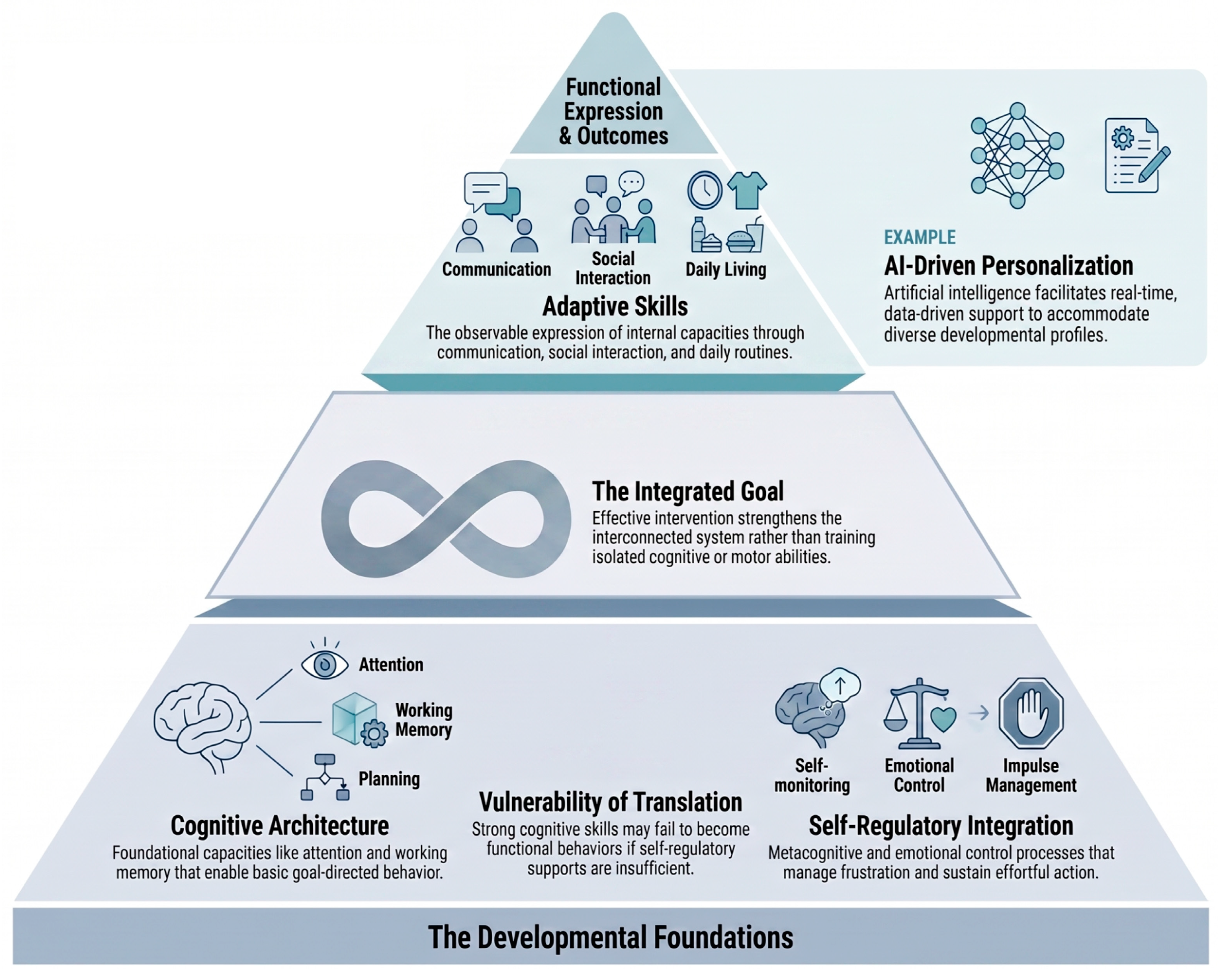
2. Theoretical Background
2.1. A Conceptual Framework of Functional Skills in Neurodevelopmental and Cognitive Disorders
2.2. Artificial Intelligence as an Adaptive Framework for Functional Skill Development
3. Materials and Methods
3.1. Study Design
3.2. Eligibility Criteria
3.3. Information Sources
3.4. Search Strategy
3.5. Selection Process
3.6. Data Collection and Data Items Process
3.7. Reporting Bias Assessment
4. Results
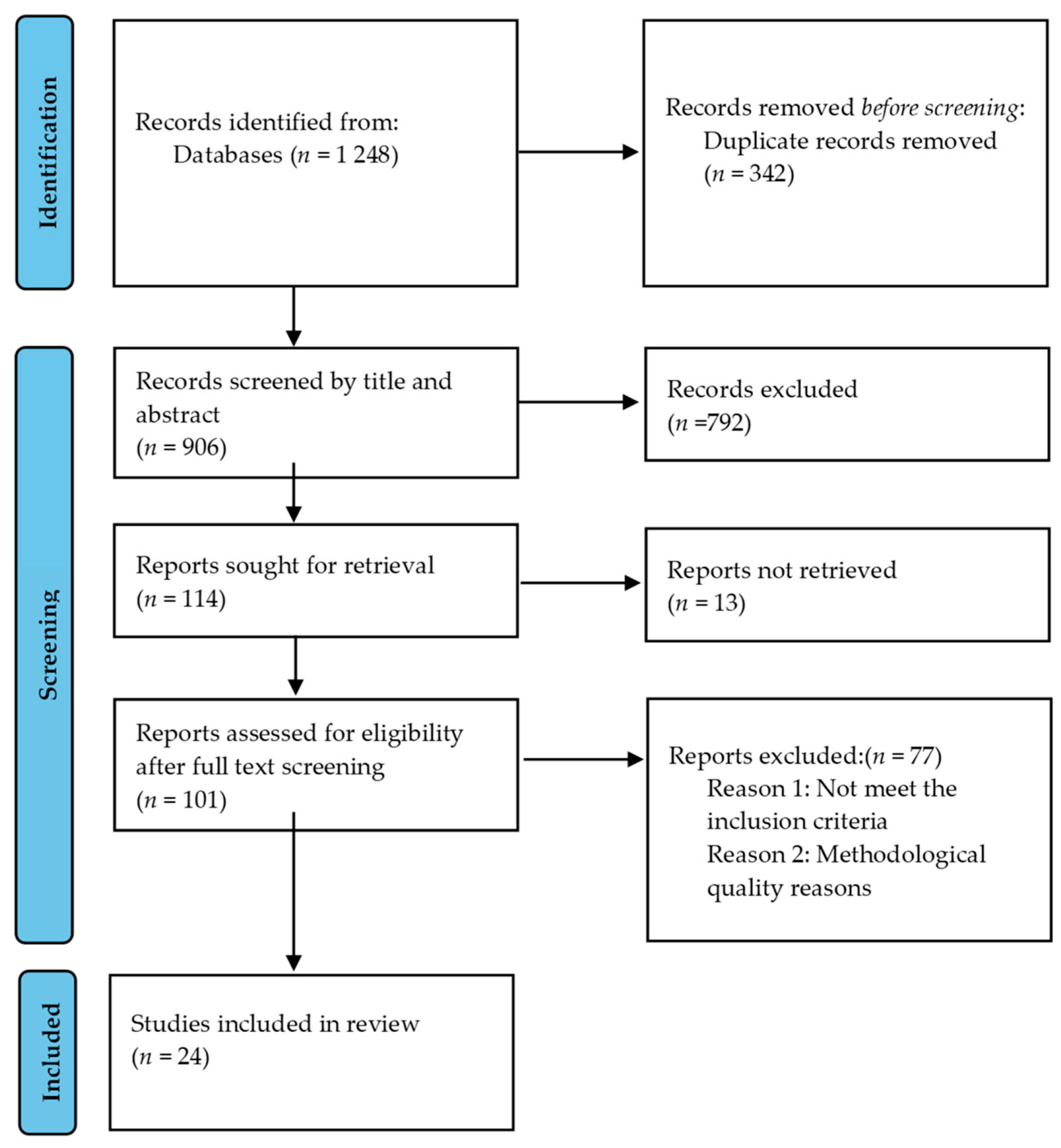
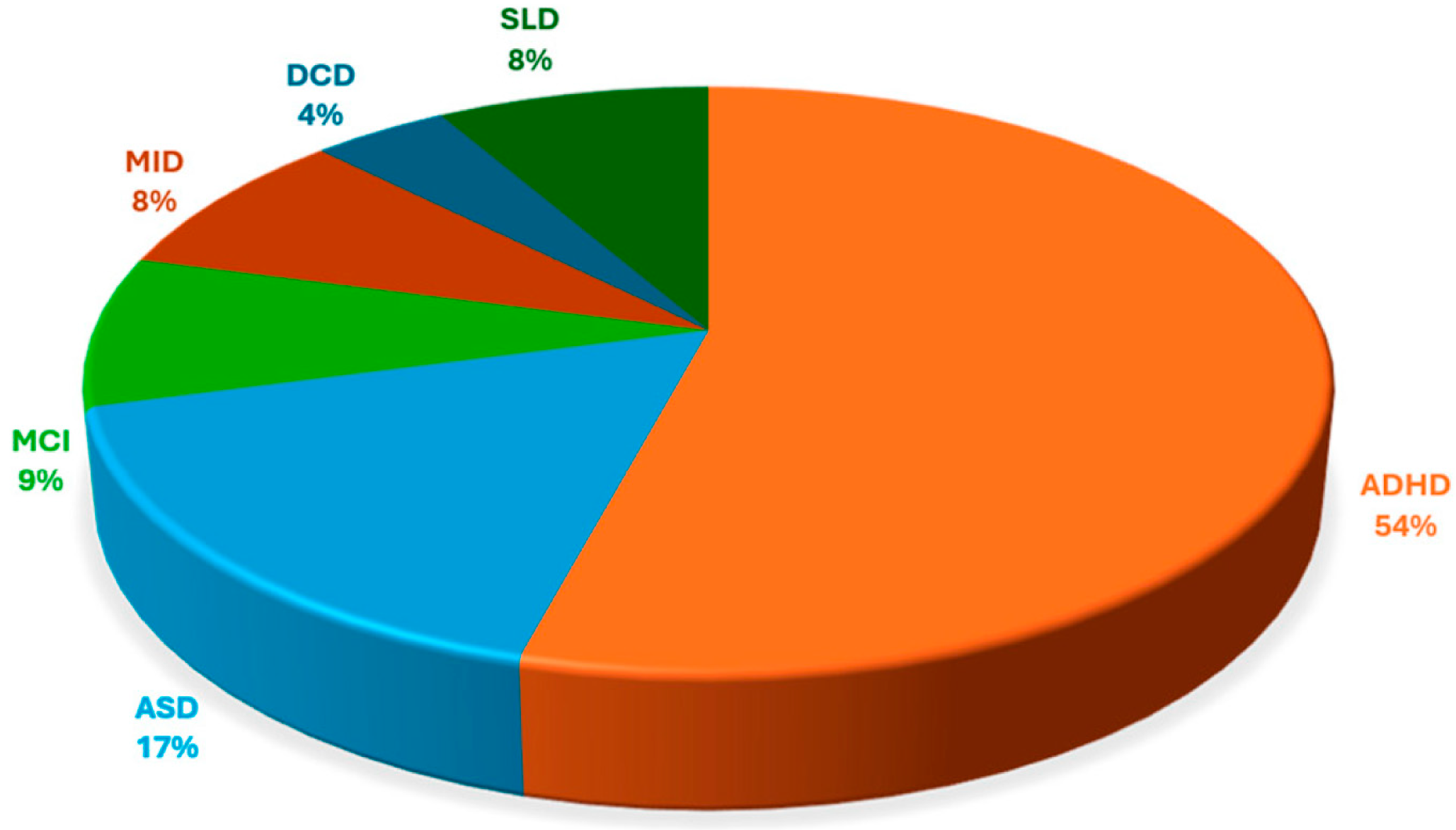
4.1. Study Selection and General Characteristics
4.2. Characteristics of AI-Based Interventions

| AI- Intervention | AI-Tools/ Platforms | Clinical Populations | Target Skills | Duration | Sample Size | Selected Studies |
|---|---|---|---|---|---|---|
| AI Chatbots and conversational agents | ChatGPT, GPT-4, Noora, Voicebot, psychoeducation chatbots | ADHD, ASD, Dyslexia, MID | Psychoeducation, CBT, empathy, communication, reading, daily living skills | 3–8 weeks | 16–249 | [54,55,56,57,58,59,60,73] |
| Adaptive cognitive training systems | AKL-T01, NeuroNation MED, Sincrolab DCT, Calcularis 2.0 | ADHD, ASD, Dyscalculia, MCI | Attention, executive functions, working memory, mental flexibility | 4–13 weeks | 29–348 | [61,62,63,64,65,66,67,68,69] |
| Wearable AI technologies | Superpower Glass, EEG neurofeedback, BCI systems | ASD, ADHD | Social communication, attention, emotion recognition, self-regulation | 6–20 weeks | 41–172 | [67,70,71] |
| AI Educational platforms | AI tutoring systems, AI reading assistants | Dyslexia, ADHD, MID | Reading, mathematics, vocabulary, language, academic performance | 5–12 weeks | 70–153 | [54,55,72,73] |
| AI creative and therapeutic systems | AI drawing therapy, AI play intervention, AI occupational therapy, AI exercise rehabilitation | ADHD, DCD | Emotional regulation, quality of life, motor skills, handwriting, adaptive functioning | 4–24 weeks | 41–144 | [74,75,76,77] |
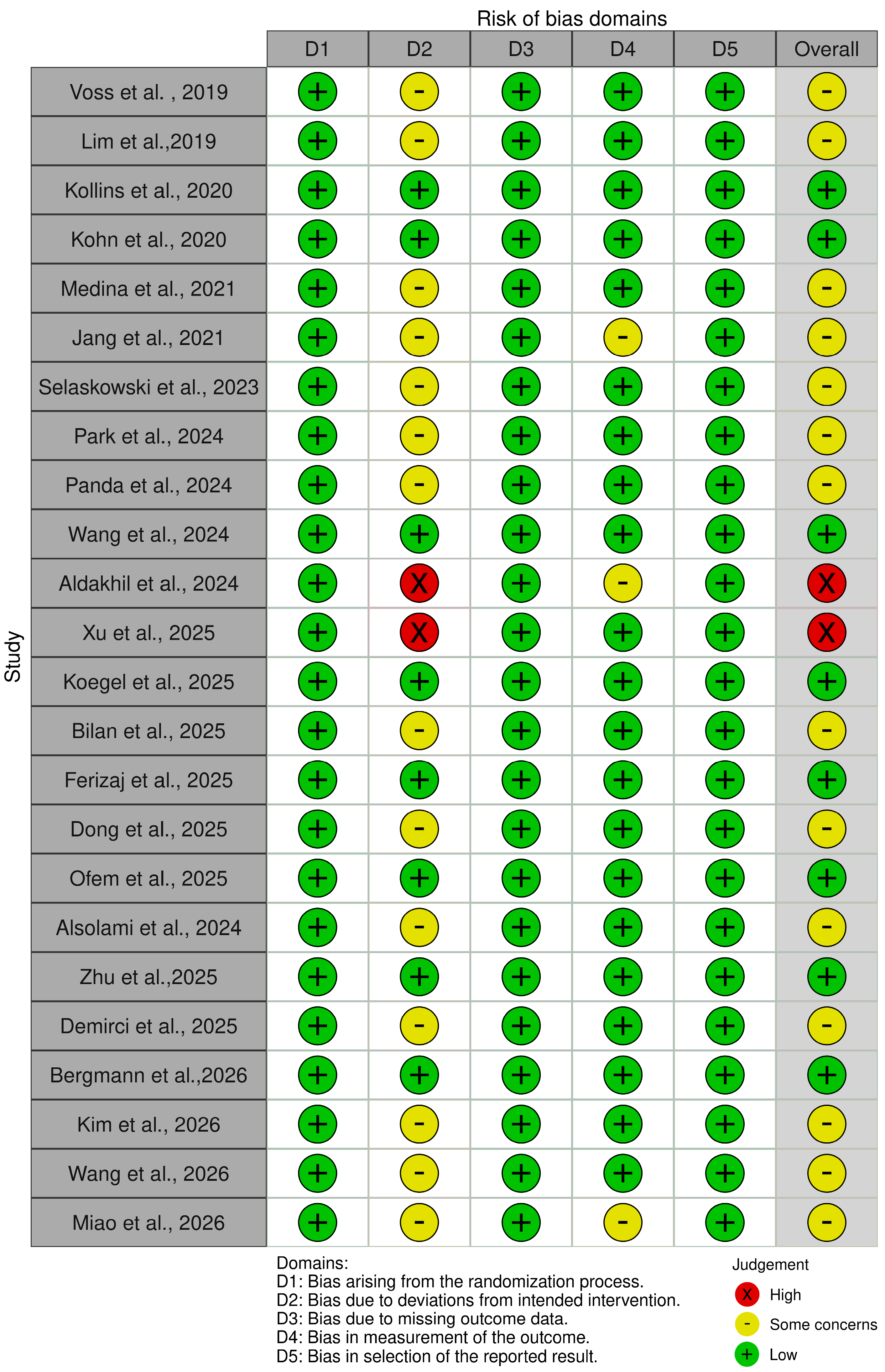
4.3. Risk of Bias in the Selected Studies
4.4. Effects of AI-Based Interventions on Skills Development
4.4.1. Effects on Neurocognitive Skills
Attention
Processing Speed
Working Memory
Mental Flexibility
Inhibitory Control
4.4.2. Effects of AI-Based Interventions on Self-Regulatory Skills
Metacognitive-Control Skills
Emotional Regulation
Impulse Control
4.4.3. Effects of AI-Based Interventions on Adaptive and Quality of Life Skills
Social Skills
Language and Communication Skills
Motor Control Skills
Problem-Solving, Critical Thinking, and Reading Skills
Reading Skills
4.5. Summary of Effect Sizes
5. Discussion
5.1. Main Findings
5.2. Clinical Implications
5.3. Limitations
5.4. Future Directions
6. Conclusions
Supplementary Materials
Author Contributions
Funding
Institutional Review Board Statement
Informed Consent Statement
Data Availability Statement
Conflicts of Interest
Appendix A
| Reference | Country | Intervention Strategy | AI tool | Sample | Clinical Condition | Duration | Measurements | Study’s Design | Skills Developed |
|---|---|---|---|---|---|---|---|---|---|
| Voss et al. [70] | USA | Home-based AI-assisted wearable behavioral intervention combined with standard Applied Behavior Analysis (ABA) therapy | Superpower Glass (Google Glass); wearable AI system using computer vision and machine learning for real-time facial detection and emotion recognition, paired with a smartphone application | Experimental: n = 40; Control: n = 31; Total: n = 71; Mean age = 8.38 ± 2.46 years (6–12 years); Male: 63 (89%); Female: 8 (11%) | ASD | 6 weeks (20-min sessions, 4 sessions/week at home, in addition to usual ABA therapy | VABS-II, SRS-2, ABC, CGI, Social Communication Questionnaire, Abbreviated IQ | RCT (parallel-group, waiting-list control) | Emotion recognition, facial engagement, social communication, and adaptive social behavior |
| Lim et al. [67] | Singapore | BCI-based attention training program | BCI system with machine-learning algorithms that analyze multi-band EEG signals | Total randomized: n = 172, (final analysis): n = 163 experimental group: n = 81, waitlist-control group: n = 82, mean age: 8.6 years, male: 147, female: 25 | ADHD | 8 weeks (24 sessions) and 12 weeks maintenance (3 sessions) 20 weeks total, follow-up at 4 weeks post-intervention | ADHD-RS, CDISC-IV, CBCL, CGAS, CGI-S, CGI-I, PAERS | Single-center, outcome-assessor-blinded, waitlist-controlled, parallel-group RCT | Sustained attention, self-regulation of attention, concentration, academic-task performance (generalization), cognitive engagement, and metacognitive awareness |
| Kollins et al. [63] | USA | Video game-based digital intervention targeting attentional functioning and cognitive control | AKL-T01 digital therapeutic with adaptive algorithm using staircasing methodology, real-time performance-based difficulty adjustment, and personalized progression | total randomized: n = 348, experimental group: n = 180, control group: n = 168, mean age 9.7, male: 248, female: 100 | ADHD | 4 weeks (25 min/day, 5 days/week, total 100 sessions) | ADHD-RS-IV, IRS, CGI-I, CGI-S, BRIEF, patient-reported exit questionnaire, parent-reported exit questionnaire | RCT | Attention, cognitive control, interference management, divided attention, selective attention, mental flexibility, response inhibition, processing speed, and sustained attention |
| Kohn et al. [66] | Germany (collaboration with Switzerland) | Adaptive computer-based mathematics training using an individualized intelligent tutoring approach | Calcularis 2.0—AI-driven adaptive Intelligent Tutoring System that dynamically adjusts task difficulty according to the learner’s performance and learning profile | Experimental: n = 34; Control (waiting-list): n = 33; Total: n = 67; Mean age = 8.96 ± 0.82 years (Grades 2–5); Female: 49; Male: 18 | SLD (Dyscalculia) | 42 sessions, 20 min/session, over up to 13 weeks | Heidelberg Rechentest (HRT), Number Line Test, Basic Number Processing Computer Test, Mathematics Anxiety Interview (baseline) | RCT | Numerical cognition, arithmetic fluency, number sense, mental number line representation, magnitude comparison, and mathematical problem-solving |
| Medina et al. [64] | Spain | Home-based AI-driven digital cognitive stimulation program delivered through gamified mobile exercises, compared with a sham video game intervention | AI-driven cognitive training platform using a Case-Based Reasoning algorithm to adapt task type and difficulty according to each child’s cognitive performance | Experimental: n = 15; Control: n = 14; Total analyzed: n = 29 (40 randomized; 11 dropouts); Age: 8–11 years (Experimental: 9.20 ± 1.21; Control: 9.71 ± 1.33 years); Male: 25; Female: 4 | ADHD | 12 weeks; 3 sessions/week; 15–20 min/session (≥80% adherence required; home-based intervention) | CPT-III, BRIEF, EDAH ADHD Rating Scale, neurophysiological measure: Resting-state Magnetoencephalography (MEG) | Single-center, single-blind, parallel-group RCT | Inhibitory control, sustained attention, working memory, executive functioning, mental flexibility, planning, and cognitive-processing speed |
| Jang et al. [58] | Republic of Korea | Mobile-based interactive chatbot delivering cognitive behavioral therapy and psychoeducation | Chatbot with AI natural language processing, pre-written dialogue scenarios by psychiatrist, decision tree-based responses, diagrams/pictures as auxiliary tools, emotion-recognition support | n = 46 (nexp = 23, nclt = 23), F = 26, Μ = 20, Mage = 25.1 | ADHD | 4 weeks | CAARS, ASRS, QIDS-SR, SAS, PSS | RCT | Impulse control, emotional regulation, time management, organization skills, and mindfulness |
| Selaskowski, et al. [59] | Germany | Self-guided digital psychoeducation delivered via an interactive AI chatbot compared with a conventional psychoeducation smartphone application | AI chatbot providing interactive psychoeducation through dialogue, quizzes, and guided-learning modules | Randomized: n = 34, experimental = 17, Control = 17, Mean age: 29.6 ± 8.4 years (19–52 years); Female: 18; Male: 16 | ADHD | 3 weeks | IDA-R, ADHS-SB, WHOQOL, DASS-21, MWT-B | Parallel-group RCT | Self-management, attention regulation, impulsivity management, emotional self-management, coping skills, and symptom awareness |
| Park et al. [57] | Republic of Korea | Cognitive behavioral therapy (self-instruction training: goal-plan-do-check), behavioral parent training (token-based economies), scaffolding (praise, hint, recruitment) | Voicebot “ForMe” (Raspberry Pi and Google Dialogflow), parent smartphone application | Experimental: n = 7, control: n = 9, total: n = 16, Age: 6–12 years, Mean age: 8.71, Female: 1, Male: 15 | ADHD | 8 weeks, voicebot used 4 times daily | KGSES, ADHD RS, LPS-C, HSQ PSI-SF, semi-structured interviews | Parallel pilot RCT | Self-regulation, self-efficacy, attention/inattention management, daily task completion (morning routine, homework, organization, and time management), self-control, behavioral problem reduction, and parent–child-relationship improvement |
| Panda et al. [69] | India | Add-on treatment with AI-based mobile application delivering ABA-based therapy, personalized programs tailored to each child’s needs, discrete trial training, animated avatar guidance, parent-supervised sessions | MPUTE ADT-1: mobile application utilizing face tracking, eye tracking, and body tracking for behavior data collection; reinforcement learning with AI-based algorithms; adaptive-learning algorithm for personalized program evolution; data analytics for progress measurement | Total: n = 70, intervention group: n = 37, control group: n = 33, Age: 2–6 years. Mean age: 3.8 ± 1.6 in intervention; 3.7 ± 1.5 in control) Gender: Predominantly male (30 boys in each group) | ASD | 12 weeks (≥60 min/day) | ADOS-2, compliance/adherence, parent feedback questionnaire (10 items), ADI-R, adverse-effects monitoring | Open-label, parallel design, two-arm RCT | Verbal skills, social skills, reduction of repetitive behaviors, receptive language, communication skills, social interaction, and learning engagement |
| Wang et al. [71] | China | Wearable EEG neurofeedback training targeting the mirror neuron system, powered by machine-learning algorithms | Starkside wearable EEG system (BrainCo) with built-in proprietary machine-learning algorithms, single-channel EEG (Fpz, 160 Hz), and AI algorithms analyze continuous EEG data, classify conditions, and generate mu rhythm probability scores (0–100) every second to control feedback; wearable EEG headband | Total enrolled: n = 60, completed (final analysis): n = 41, active NFT group: n = 17, placebo group: n = 24, Age: Mean age 55.0 ± 12.07 months, male: 31, female: 10 | ASD | 60 sessions (30 min/session, 4–5 days/week, total 12–18 weeks) | CARS-2, ABC, PEP-3, SRS, ATEC | RCT | Expressive language, sensory/cognitive awareness, social reciprocity, affective expression, social communication, sociability, and self-regulation |
| Aldakhil et al. [75] | Saudi Arabia | AI-based play activities program group format, instructor-led sessions integrating AI-driven activities with hands-on tasks, role-playing, and real-world simulations, parent and teacher involvement through AI tracking systems | Adaptive cognitive exercises, motion-sensing technology, real-time behavior tracking with points-based positive reinforcement, facial-expression recognition, AI-guided meditation | Total: n = 61, experimental group: n = 30, control group: n = 31, age: 8–12 years (M = 10.0, SD = 1.4), female: n = 0, male: n = 61 | ADHD | 4 weeks | PedsQL | Attention control, behavioral regulation, social interaction, emotional regulation, cognitive skills (problem-solving, memory, and reasoning), motor skills, mindfulness, self-regulation, focus, teamwork, and communication | |
| Xu et al. [74] | China | AI-assisted drawing therapy vs. Traditional drawing therapy (control), based on the Hooked Behavior Model (Trigger, Action, Variable Reward, Investment), with phased thematic design (self-awareness, emotions, past experiences) | Midjourney Vision 5 (AI image generation based on children’s drawings and therapist-coded keywords) | Total: n = 41, Experimental group: n = 19, Control group: n = 22, Age: 7–10 years, Female: n = 7, Male: n = 34 | ADHD | 24 weeks (6 months) between baseline and post-intervention, 24 weekly sessions (20–30 min each) | SNAP-IV-26, WFIRS-P | Parallel RCT | Attention/inattention reduction, hyperactivity–impulsivity reduction, oppositional defiant behavior reduction, functional improvements (family, school, life skills), self-concept enhancement, emotional regulation, and self-expression |
| Koegel et al. [56] | USA | AI-based empathy training program using Large Language Model (GPT-4) with live feedback, sentiment rating (positive/neutral/negative), graded verbal responses, verified sample answers, non-open domain chatbot | Noora (AI chatbot using GPT-4 via Microsoft Azure OpenAI Services), web app accessible via computer, tablet, or phone | Total: n = 30, Experimental group: n = 15, Control (waitlist) group: n = 15, Mean: 18.3, Female: n = 4, Male: n = 26 | ASD | 4 weeks (10 trials/day, 5 days/week, expected total ~200 trials) | Waitlist-controlled RCT | Verbal empathetic responses, sentiment recognition (positive/neutral/negative), responding to others’ fortune/misfortune, showing understanding and concern, asking relevant questions, and social conversation skills | |
| Bilan et al. [65] | Spain | AI-driven Digital Cognitive Therapy (serious game) delivered via mobile device (tablet/smartphone), personalized and adaptive cognitive training with AI algorithms adjusting task selection and difficulty based on individual performance | Sincrolab DCT (KAD_SCL_01)—AI-powered digital cognitive program with 14 cognitive game-based tasks (go/no-go and n-back), adaptive algorithms for personalized intervention | Total: n = 41 Experimental group: n = 20 Control (sham) group: n = 21 Age: 8–12 years (Mean: 9.41 experimental, 9.38 control) Female: n = 3 (7.3%) Male: n = 38 (92.7%) | ADHD | 12 weeks (3 sessions/week, 15 min/session, total 36 sessions) | CPT-3, NEPSY-II, EDAH, BRIEF, WNV | Single-center, parallel, single-blindRCT | Inhibitory control/impulsivity reduction, inattention reduction, sustained attention, vigilance, working memory, mental flexibility, spatial processing, response inhibition, and attention regulation |
| Ferizaj et al. [61] | Germany | Mobile, gamified computerized cognitive training using the NeuroNation MED app (self-administered, multi-domain cognitive training) | NeuroNation MED | Total: n = 50, Intervention group: n = 36 Control group (waiting): n = 14 Age: Mean 58.1 years Female: 36, Male: 14 | MCI | 12 weeks | S-NAB, CFQ-D, HADS-D, HLQ-D, TICS | Multicenter, parallel RCT | Planning and problem-solving, verbal fluency, mental flexibility, inhibitory control, and working memory |
| Dong et al. [54] | China | AI chatbot-led shared book reading using PEER (Prompt, Evaluate, Expand, and Repeat) and CROWD (Completion, Recall, Open-ended, Wh-questions, and Distancing) dialogic-reading techniques | ChatGPT 4.0 (AI chatbot with oral input and voice output, trained with predefined instructions, emotion-neutral feedback, programmable repetitions, and dynamic pacing adjustment via NLP) | Total: n = 153 chatbot: n = 40, Mean age = 68.13 months | ADHD | 12 weeks (2 sessions/week, 25 min/session) | RV, EV, CR, LC, RI, RAX | RCT with 4 groups | Receptive vocabulary, expressive vocabulary, character reading, listening comprehension, syntax (sentence-structure awareness), reading interest, and reading-anxiety reduction |
| Ofem et al. [55] | Nigeria | AI-scaffolded planning tools intervention, step-by-step prompts, examples, and constructive feedback, structured activities progressively enhancing research topic formulation skills, adaptive prompts and personalized feedback | ChatGPT (brainstorming, idea generation, and topic clarification), Elicit (literature exploration, feasibility analysis, evidence-based refinement), Research Rabbit (mapping connections between research ideas; strengthening alignment with research objectives) | Total: n = 91, Experimental group: n = 46, control group: n = 45, Age: School-aged (third-year students) Female: 41 Male: 50 | MID | 8 weeks | RTFS | RCT | Critical thinking, problem-solving, and academic self-efficacy |
| Alsolami et al. [72] | Saudi Arabia | AI-based personalized academic skills training, 1-on-1 instruction with teacher, adaptive learning, gamification, interactive apps, multimedia learning, visual aids, positive reinforcement, graduated guidance | Multiple AI-powered educational applications | Total: n = 70, experimental group: n = 35, control group: n = 35 Mean age = 10.5 Female: 0 Male: 70 | MID | 5 weeks (10 sessions, 2 sessions/week, 60 min each) | WJ-IV-ACH, WISC-V, VABS-2 | RCT | Phonemic/phonological awareness, word recognition/decoding, reading fluency, and reading comprehension |
| Zhu et al. [77] | China | mHealth-facilitated personalized exercise rehabilitation program, merging physically and cognitively demanding exercises | mHealth system that uses AI algorithms to recommend personalized exercises based on each participant’s assessment results, dynamic adaptation of programs based on individual progress and preferences, automated tracking and feedback, reward mechanisms | Total: n = 144, experimental group: n = 53, traditional offline group: n = 45, control group: n = 46, mean age 8.53, male: 126, female: 18 | ADHD | 12 weeks (3 sessions/week, 45–60 min/session, total 36 sessions) | TGMD-3, MABC-2, SNAP-IV | Single-center, assessor-blinded, parallel, three-arm RCT | Inhibitory control, impulse control, working memory, mental flexibility, and motor skills (gross motor, fine motor, and balance), |
| Demirci et al. [76] | Turkey | AI-supported occupational therapy program based on the Model of Human Occupation | Multiple AI applications: digital coloring, dot-to-dot activities, machine-learning tools for shadow figure and finger movement analysis in real-time, deep learning models for pencil grip and drawing speed assessment, AI-assisted handwriting analysis with real-time feedback and error correction | Total: n = 42, Intervention group: n = 21, control group: n = 21, Mean age = 114.33 ± 12.75 months, male: n = 25, female: n = 17 | DCD | 8 weeks (2 sessions/week, 45 min/session, total 16 sessions) | MHA, DCDQ, BOT2-BF, MVPT-3 | RCT | Handwriting skills (writing speed, legibility, shape, alignment, size, and spacing), fine motor control, visual–motor integration, motor planning, spatial awareness, hand–eye coordination, motor learning, and grip and stroke control |
| Bergmann et al. [62] | Germany | Individualized digital cognitive training using the NeuroNation MED app | NeuroNation MED (digital cognitive training application) | Initially enrolled: n = 77 Final randomized comparison: n = 60, training condition datasets: n = 28, TAU condition: n = 32, Age: Mean age = 33.4, Male = 16, Female = 25, Diverse = 2 | ADHD | 12 weeks | JFSKB-II, CAARS-L SB, WHOQOL-BREF, WFIRS Scale, BDI-II, BFI, SUS, WURS-K, TAP, VLMT, RWT, WST | Single-blind RCT with cross-over design | Mental flexibility, response inhibition, working memory, processing speed attention (sustained and divided), memory, reasoning, and verbal fluency |
| Kim et al., 2026 [68] | Republic of Korea | AI-driven, self-guided, home-based cognitive telerehabilitation, autonomous difficulty adjustment via AI algorithm, cloud-based compliance monitoring, personalized content recommendations, no direct therapist supervision, tablet-based delivery | AI-driven computerized cognitive rehabilitation platform with: training record module, task analysis module, performance prediction module, recommendation module, adaptive difficulty algorithms, cloud-based infrastructure | Total: n= 70, Final analyzed: n = 62 Group AB (Intervention-first): n = 33 Group BA (Control-first): n = 29 Age: Mean 74.0 ± 4.8 years Female: 54, Male: 8 | MCI | 5 weeks (24 sessions) | K-MMSE2, DSF, DSB, TMT-A, TMT-B, K-CESD-R, EQ-5D, SES, S-IADL | RCT | Mental flexibility, inhibitory control, planning, organization, problem-solving, task switching, attention, and working memory |
| Wang et al. [73] | Taiwan | AI chatbot-assisted learning for arithmetic word-problem-solving, adaptive, multisensory, and individually tailored support, stepwise scaffolded problem-solving, graduated prompt hierarchy, text-to-speech functionality, color-coded keyword highlighting | GPT-based AI Chatbot configured with a curated corpus of 150 curriculum-aligned arithmetic word problems, fine-tuned with stepwise solution paths, scaffolded feedback, immediate hints, adaptive difficulty adjustment, text-to-speech integration | Total: n = 83, experimental group: n = 39, control group: n = 44 Mean age = 10.52, Male: 44, Female: 39 | SLD (Dyslexia) | 6 weeks (2 sessions/week, 30 min/session, total 12 sessions) | AWP, AMS | RCT | Arithmetic word-problem-solving, problem representation, operation selection, equation/number sentence construction, computation, checking and reasoning, mathematical reasoning, and reading comprehension in mathematical contexts |
| Miao et al. [60] | China | Parent–child storybook reading intervention (dialogic reading vs. typical reading) with parent training via AI chatbot or professional social workers | AI chatbot, audio input, automatic conversation transcription, immediate feedback, personalized training at parent’s own pace | Total: n = 249, Experimental group: 198, control group: 51 Mean age = 5.76, Total Male: 159, Female: 90 | ADHD-PI and ADHD-C | 4 weeks (2 sessions/week, 25 min/session) | PreBERS IEB, UERS-Q, UERS-C | RCT | Emotional regulation, school readiness, social confidence, reduction of impulsive emotional behavior, and increased use of emotional-regulation strategies |
References
- American Psychiatric Association. Diagnostic and Statistical Manual of Mental Disorders, 5th ed.; American Psychiatric Publishing: Washington, DC, USA, 2013. [Google Scholar] [CrossRef] [Scilit]
- Thapar, A.; Cooper, M.; Rutter, M. Neurodevelopmental disorders. Lancet Psychiatry 2016, 4, 339–346. [Google Scholar] [CrossRef] [Scilit] [PubMed]
- Pennington, B.F.; Ozonoff, S. Executive functions and developmental psychopathology. J. Child Psychol. Psychiatry 1996, 37, 51–87. [Google Scholar] [CrossRef] [Scilit] [PubMed]
- Snyder, H.R.; Miyake, A.; Hankin, B.L. Advancing understanding of executive function impairments and psychopathology: Bridging the gap between clinical and cognitive approaches. Front. Psychol. 2015, 6, 328. [Google Scholar] [CrossRef] [Scilit]
- Willcutt, E.G.; Petrill, S.A.; Wu, S.; Boada, R.; DeFries, J.C.; Olson, R.K.; Pennington, B.F. Comorbidity between reading disability and math disability. J. Learn. Disabil. 2013, 46, 500–516. [Google Scholar] [CrossRef] [Scilit] [PubMed]
- Bishop, D.; Rutter, M. Neurodevelopmental Disorders: Conceptual Issues. In Rutter’s Child and Adolescent Psychiatry, 5th ed.; Rutter, M., Bishop, D., Pine, D., Scott, S., Stevenson, J., Taylor, E., Thapar, A., Eds.; Blackwell: Oxford, UK, 2008; pp. 32–41. [Google Scholar]
- World Health Organization. International Classification of Functioning, Disability, and Health: Children & Youth Version: ICF-CY; World Health Organization: Geneva, Switzerland, 2007. [Google Scholar]
- Wehmeyer, M.L. Self-determination in adolescents and adults with intellectual and developmental disabilities. Curr. Opin. Psychiatry 2019, 33, 81–85. [Google Scholar] [CrossRef] [Scilit] [PubMed]
- Diamond, A.; Lee, K. Interventions shown to aid executive function development in children 4 to 12 years old. Science 2011, 333, 959–964. [Google Scholar] [CrossRef] [Scilit] [PubMed]
- D’Mello, S.; Graesser, A. Dynamics of affective states during complex learning. Learn. Instr. 2011, 22, 145–157. [Google Scholar] [CrossRef] [Scilit]
- Käser, T.; Baschera, G.-M.; Kohn, J.; Kucian, K.; Richtmann, V.; Grond, U.; Gross, M.; Von Aster, M. Design and evaluation of the computer-based training program Calcularis for enhancing numerical cognition. Front. Psychol. 2013, 4, 489. [Google Scholar] [CrossRef] [Scilit] [PubMed]
- MacEachern, S.J.; Forkert, N.D. Machine learning for precision medicine. Genome 2020, 64, 416–425. [Google Scholar] [CrossRef] [Scilit]
- Deliu, N.; Williams, J.J.; Chakraborty, B. Reinforcement learning in modern biostatistics: Constructing optimal adaptive interventions. Int. Stat. Rev. 2024, 93, 385–424. [Google Scholar] [CrossRef] [Scilit]
- Subara-Zukic, E.; Cole, M.H.; McGuckian, T.B.; Steenbergen, B.; Green, D.; Smits-Engelsman, B.C.; Lust, J.M.; Abdollahipour, R.; Domellöf, E.; Deconinck, F.J.A.; et al. Behavioral and Neuroimaging Research on Developmental Coordination Disorder (DCD): A Combined Systematic Review and Meta-Analysis of Recent Findings. Front. Psychol. 2022, 13, 809455. [Google Scholar] [CrossRef] [Scilit] [PubMed]
- Washington, P.; Kalantarian, H.; Kent, J.; Husic, A.; Kline, A.; Leblanc, E.; Hou, C.; Mutlu, O.C.; Dunlap, K.; Penev, Y.; et al. Improved digital therapy for Developmental Pediatrics using Domain-Specific Artificial Intelligence: Machine Learning study. JMIR Pediatr. Parent. 2022, 5, e26760. [Google Scholar] [CrossRef] [Scilit] [PubMed]
- Abd-Alrazaq, A.A.; Alajlani, M.; Alalwan, A.A.; Bewick, B.M.; Gardner, P.; Househ, M. An overview of the features of chatbots in mental health: A scoping review. Int. J. Med. Inform. 2019, 132, 103978. [Google Scholar] [CrossRef] [Scilit] [PubMed]
- Demszky, D.; Yang, D.; Yeager, D.S.; Bryan, C.J.; Clapper, M.; Chandhok, S.; Eichstaedt, J.C.; Hecht, C.; Jamieson, J.; Johnson, M.; et al. Using large language models in psychology. Nat. Rev. Psychol. 2023, 2, 688–701. [Google Scholar] [CrossRef] [Scilit]
- Diamond, A. Executive functions. Annu. Rev. Psychol. 2012, 64, 135–168. [Google Scholar] [CrossRef] [Scilit] [PubMed]
- Robson, D.A.; Allen, M.S.; Howard, S.J. Self-regulation in childhood as a predictor of future outcomes: A meta-analytic review. Psychol. Bull. 2020, 146, 324–354. [Google Scholar] [CrossRef] [Scilit] [PubMed]
- Best, J.R.; Miller, P.H.; Naglieri, J.A. Relations between executive function and academic achievement from ages 5 to 17 in a large, representative national sample. Learn. Individ. Differ. 2011, 21, 327–336. [Google Scholar] [CrossRef] [Scilit] [PubMed]
- Eisenberg, N.; Spinrad, T.L.; Eggum, N.D. Emotion-Related Self-Regulation and its relation to children’s maladjustment. Annu. Rev. Clin. Psychol. 2010, 6, 495–525. [Google Scholar] [CrossRef] [Scilit] [PubMed]
- White, D.A.; Dodder, R.A. The Relationship of Adaptive and Maladaptive Behaviour to Social Outcomes for Individuals with Developmental Disabilities. Disabil. Soc. 2000, 15, 897–908. [Google Scholar] [CrossRef] [Scilit]
- Balboni, G.; Mumbardó-Adam, C.; Coscarelli, A. Influence of adaptive behaviour on the quality of life of adults with intellectual and developmental disabilities. J. Appl. Res. Intellect. Disabil. 2020, 33, 584–594. [Google Scholar] [CrossRef] [Scilit] [PubMed]
- Hyde, K.K.; Novack, M.N.; LaHaye, N.; Parlett-Pelleriti, C.; Anden, R.; Dixon, D.R.; Linstead, E. Applications of Supervised Machine Learning in Autism Spectrum Disorder Research: A Review. Rev. J. Autism Dev. Disord. 2019, 6, 128–146. [Google Scholar] [CrossRef] [Scilit]
- Cao, M.; Martin, E.; Li, X. Machine learning in attention-deficit/hyperactivity disorder: New approaches toward understanding the neural mechanisms. Transl. Psychiatry 2023, 13, 236. [Google Scholar] [CrossRef] [Scilit] [PubMed]
- Jan, T.G.; Khan, S.M. A Systematic Review of research Dimensions towards Dyslexia Screening using Machine Learning. J. Inst. Eng. Ser. B 2023, 104, 511–522. [Google Scholar] [CrossRef] [Scilit]
- Drigas, A.S.; Ioannidou, R.E. Artificial Intelligence in Special Education: A Decade Review. Int. J. Eng. Educ. 2013, 29, 1464–1476. [Google Scholar]
- Begum, M.; Serna, R.W.; Yanco, H.A. Are robots ready to deliver autism interventions? A comprehensive review. Int. J. Soc. Robot. 2016, 8, 157–181. [Google Scholar] [CrossRef] [Scilit]
- Miyake, A.; Friedman, N.P.; Emerson, M.J.; Witzki, A.H.; Howerter, A.; Wager, T.D. The unity and diversity of executive functions and their contributions to complex “Frontal lobe” tasks: A latent variable analysis. Cogn. Psychol. 2000, 41, 49–100. [Google Scholar] [CrossRef] [Scilit] [PubMed]
- Zimmerman, B.J. Attaining Self-Regulation. In Elsevier eBooks; Elsevier: Amsterdam, The Netherlands, 2000; pp. 13–39. [Google Scholar] [CrossRef] [Scilit]
- Zimmerman, B.J.; Schunk, D.H. Self-Regulated Learning and Performance: An Introduction and an Overview. In Handbook of Self-Regulation of Learning and Performance; Zimmerman, B.J., Schunk, D.H., Eds.; Routledge: New York, NY, USA, 2011; pp. 1–12. [Google Scholar]
- Tassé, M.J.; Schalock, R.L.; Balboni, G.; Bersani, H.; Borthwick-Duffy, S.A.; Spreat, S.; Thissen, D.; Widaman, K.F.; Zhang, D. The construct of Adaptive Behavior: Its conceptualization, measurement, and use in the field of intellectual disability. Am. J. Intellect. Dev. Disabil. 2012, 117, 291–303. [Google Scholar] [CrossRef] [Scilit] [PubMed]
- Schalock, R.L.; Luckasson, R.; Tassé, M.J. An Overview of Intellectual Disability: Definition, Diagnosis, Classification, and Systems of Supports. Am. J. Intellect. Dev. Disabil. 2021, 126, 439–442. [Google Scholar] [CrossRef] [Scilit] [PubMed]
- Nota, L.; Ferrari, L.; Soresi, S.; Wehmeyer, M. Self-determination, social abilities and the quality of life of people with intellectual disability. J. Intellect. Disabil. Res. 2007, 51, 850–865. [Google Scholar] [CrossRef] [Scilit] [PubMed]
- Dawson, G.; Rogers, S.; Munson, J.; Smith, M.; Winter, J.; Greenson, J.; Donaldson, A.; Varley, J. Randomized, Controlled trial of an intervention for toddlers with autism: The Early Start Denver model. Pediatrics 2009, 125, e17–e23. [Google Scholar] [CrossRef] [Scilit] [PubMed]
- Kazdin, A.E.; Blase, S.L. Rebooting psychotherapy research and practice to reduce the burden of mental illness. Perspect. Psychol. Sci. 2011, 6, 21–37. [Google Scholar] [CrossRef] [Scilit] [PubMed]
- Vanlehn, K. The relative effectiveness of human tutoring, intelligent tutoring systems, and other tutoring systems. Educ. Psychol. 2011, 46, 197–221. [Google Scholar] [CrossRef] [Scilit]
- Topol, E.J. High-performance medicine: The convergence of human and artificial intelligence. Nat. Med. 2018, 25, 44–56. [Google Scholar] [CrossRef] [Scilit] [PubMed]
- Vygotsky, L.S. Mind in Society: The Development of Higher Psychological Processes; Harvard University Press: Cambridge, MA, USA, 1978. [Google Scholar] [CrossRef] [Scilit]
- Wisniewski, B.; Zierer, K.; Hattie, J. The Power of Feedback Revisited: A Meta-Analysis of Educational Feedback Research. Front. Psychol. 2020, 10, 3087. [Google Scholar] [CrossRef] [Scilit] [PubMed]
- Andrade, H.L.; Heritage, M. Using Formative Assessment to Enhance Learning, Achievement, and Academic Self-Regulation; Routledge: New York, NY, USA, 2017. [Google Scholar]
- Belland, B.R.; Walker, A.E.; Kim, N.J.; Lefler, M. Synthesizing results from empirical research on Computer-Based scaffolding in STEM education. Rev. Educ. Res. 2016, 87, 309–344. [Google Scholar] [CrossRef] [Scilit] [PubMed]
- Baker, R.S.; Berning, A.W.; Gowda, S.M.; Zhang, S.; Hawn, A. Predicting K-12 dropout. J. Educ. Stud. Placed Risk (JESPAR) 2019, 25, 28–54. [Google Scholar] [CrossRef] [Scilit]
- Stasolla, F.; Akbar, K.; Passaro, A.; Dragone, M.; Di Gioia, M.; Zullo, A. Integrating reinforcement learning and serious games to support people with rare genetic diseases and neurodevelopmental disorders: Outcomes on parents and caregivers. Front. Psychol. 2024, 15, 1372769. [Google Scholar] [CrossRef] [Scilit] [PubMed]
- Canadas, E.; Maestu, F.; De Ramon, I. A Randomized Controlled Trial of an Intelligent Cognitive Stimulation Program for Adults with ADHD: Study Protocol. J. Clin. Med. 2025, 14, 6629. [Google Scholar] [CrossRef] [Scilit] [PubMed]
- Olinic, M.-S.; Stretea, R.; Cherecheș, C. Wearables in ADHD: Monitoring and Intervention—Where are we now? Diagnostics 2025, 15, 2359. [Google Scholar] [CrossRef] [Scilit] [PubMed]
- Azevedo, R.; Bouchet, F.; Duffy, M.; Harley, J.; Taub, M.; Trevors, G.; Cloude, E.; Dever, D.; Wiedbusch, M.; Wortha, F.; et al. Lessons learned and future directions of MetaTutor: Leveraging multichannel data to scaffold Self-Regulated learning with an intelligent tutoring system. Front. Psychol. 2022, 13, 813632. [Google Scholar] [CrossRef] [Scilit] [PubMed]
- Xygkou, A.; Siriaraya, P.; She, W.-J.; Covaci, A.; Ang, C.S. “Can I be More Social with a Chatbot?”: Social Connectedness Through Interactions of Autistic Adults with a Conversational Virtual Human. Int. J. Hum.-Comput. Interact. 2024, 40, 8937–8954. [Google Scholar] [CrossRef] [Scilit]
- He, F.; Qi, Y.; Zhou, Y.; Cao, A.; Yue, X.; Fang, S.; Zheng, Y. Meta-analysis of the efficacy of digital therapies in children with attention-deficit hyperactivity disorder. Front. Psychiatry 2023, 14, 1054831. [Google Scholar] [CrossRef] [Scilit] [PubMed]
- Brankovic, A.; Hendrie, G.A.; Baird, D.L.; Khanna, S. Predicting disengagement to better support outcomes in a Web-Based weight loss program using machine learning models: Cross-Sectional study. J. Med. Internet Res. 2023, 25, e43633. [Google Scholar] [CrossRef] [Scilit] [PubMed]
- Page, M.J.; McKenzie, J.E.; Bossuyt, P.M.; Boutron, I.; Hoffmann, T.C.; Mulrow, C.D.; Shamseer, L.; Tetzlaff, J.M.; Akl, E.A.; Brennan, S.E.; et al. The PRISMA 2020 Statement: An Updated Guideline for Reporting Systematic Reviews. BMJ 2021, 372, n71. [Google Scholar] [CrossRef] [Scilit] [PubMed]
- Mitsea, E.; Drigas, A.; Charalabos, S. AΙ-Driven Interventions for NeuroCognitive, Self-Regulation, and Adaptive Skill Development in Neurodevelopmental and Cognitive Disorders: A Systematic Review of Randomized Controlled Trials osf.io/tnved. Available online: https://osf.io/2wrtc (accessed on 16 August 2026).
- Sterne, J.A.C.; Savović, J.; Page, M.J.; Elbers, R.G.; Blencowe, N.S.; Boutron, I.; Cates, C.J.; Cheng, H.-Y.; Corbett, M.S.; Eldridge, S.M.; et al. RoB 2: A Revised Tool for Assessing Risk of Bias in Randomised Trials. BMJ 2019, 366, l4898. [Google Scholar] [CrossRef] [Scilit] [PubMed]
- Dong, Y.; Chow, B.W.-Y.; Mo, J.; Zheng, H. Does shared reading with AI chatbot promote language development in kindergarteners with ADHD. Lang. Educ. 2025, 40, 796–814. [Google Scholar] [CrossRef] [Scilit]
- Ofem, U.J.; Anake, P.; Anyin, N.N.; Nsan, N.; Okon, M.O.; Abuo, C.B.; Olonye, S.; Adie, J.; Obibessong, V.M.; Ukatu, J.O.; et al. Effect of Artificial Intelligence (AI)-Scaffolded Planning Tools on Research Question Formulation Among Students with Mild Intellectual Disabilities: A Randomized Controlled Trial Analysis. J. Intellect. Disabil.-Diagn. Treat. 2025, 13, 415–426. [Google Scholar] [CrossRef] [Scilit]
- Koegel, L.K.; Ponder, E.; Bruzzese, T.; Wang, M.; Semnani, S.J.; Chi, N.; Koegel, B.L.; Lin, T.Y.; Swarnakar, A.; Lam, M.S. Using artificial intelligence to improve empathetic statements in autistic adolescents and adults: A randomized clinical trial. J. Autism Dev. Disord. 2025, 56, 2513–2529. [Google Scholar] [CrossRef] [Scilit] [PubMed]
- Park, D.E.; Lee, J.; Han, J.; Kim, J.; Shin, Y.J. A preliminary study of VoiceBot to assist ADHD children in performing daily tasks. Int. J. Hum.-Comput. Interact. 2024, 40, 2711–2724. [Google Scholar] [CrossRef] [Scilit]
- Jang, S.; Kim, J.-J.; Kim, S.-J.; Hong, J.; Kim, S.; Kim, E. Mobile app-based chatbot to deliver cognitive behavioral therapy and psychoeducation for adults with attention deficit: A development and feasibility/usability study. Int. J. Med. Inform. 2021, 150, 104440. [Google Scholar] [CrossRef] [Scilit] [PubMed]
- Selaskowski, B.; Reiland, M.; Schulze, M.; Aslan, B.; Kannen, K.; Wiebe, A.; Wallbaum, T.; Boll, S.; Lux, S.; Philipsen, A.; et al. Chatbot-supported psychoeducation in adult attention-deficit hyperactivity disorder: Randomised controlled trial. BJPsych Open 2023, 9, e192. [Google Scholar] [CrossRef] [Scilit] [PubMed]
- Miao, X.; Li, B.; Dong, Y.; Zheng, H. Effectiveness of Dialogic Reading Versus Typical Reading on Emotional Regulation of Children with Attention-Deficit Hyperactivity Disorder (ADHD) in China: A Comparison of Artificial Intelligence (AI) and Social Worker-Led Training. Res. Soc. Work Pract. 2026. [Google Scholar] [CrossRef] [Scilit]
- Ferizaj, D.; Stamm, O.; Perotti, L.; Martin, E.M.; Finke, K.; Finke, C.; Strobach, T.; Heimann-Steinert, A. Preliminary effects of mobile computerized cognitive training in adults with mild cognitive impairment: Interim analysis of a randomized controlled trial. BMC Psychol. 2025, 13, 202. [Google Scholar] [CrossRef] [Scilit] [PubMed]
- Bergmann, M.; Schröfel, J.; Zimmermann, L.; Fastenau, A.; Pafel, S.; Sauermann, P.; Fecht, J.; Philipsen, A.; Lux, S. Effects of a novel individualized digital cognitive training on ADHD characteristics, quality of life, and cognitive functioning in adults with ADHD: A randomized controlled trial. J. Psychiatr. Res. 2026, 200, 26–37. [Google Scholar] [CrossRef] [Scilit] [PubMed]
- Kollins, S.H.; DeLoss, D.J.; Cañadas, E.; Lutz, J.; Findling, R.L.; Keefe, R.S.E.; Epstein, J.N.; Cutler, A.J.; Faraone, S.V. A novel digital intervention for actively reducing severity of paediatric ADHD (STARS-ADHD): A randomised controlled trial. Lancet Digit. Health 2020, 2, e168–e178. [Google Scholar] [CrossRef] [Scilit] [PubMed]
- Medina, R.; Bouhaben, J.; De Ramón, I.; Cuesta, P.; Antón-Toro, L.; Pacios, J.; Quintero, J.; Ramos-Quiroga, J.A.; Maestú, F. Electrophysiological brain changes associated with cognitive improvement in a pediatric attention deficit hyperactivity disorder Digital Artificial Intelligence-Driven Intervention: Randomized Controlled trial. J. Med. Internet Res. 2021, 23, e25466. [Google Scholar] [CrossRef] [Scilit] [PubMed]
- Bilan, D.S.; Giglioli, I.A.C.; Cuesta, P.; Cañadas, E.; De Ramón, I.; Maestú, F.; Alda, J.; Ramos-Quiroga, J.A.; Herrera, J.A.; Amado, A.; et al. Decreased impulsiveness and MEG normalization after AI-digital therapy in ADHD children: A RCT. npj Ment. Health Res. 2025, 4, 1. [Google Scholar] [CrossRef] [Scilit] [PubMed]
- Kohn, J.; Rauscher, L.; Kucian, K.; Käser, T.; Wyschkon, A.; Esser, G.; von Aster, M. Efficacy of a Computer-Based Learning Program in children with Developmental Dyscalculia. What influences individual responsiveness? Front. Psychol. 2020, 11, 1115. [Google Scholar] [CrossRef] [Scilit] [PubMed]
- Lim, C.G.; Poh, X.W.W.; Fung, S.S.D.; Guan, C.; Bautista, D.; Cheung, Y.B.; Zhang, H.; Yeo, S.N.; Krishnan, R.; Lee, T.S. A randomized controlled trial of a brain-computer interface based attention training program for ADHD. PLoS ONE 2019, 14, e0216225. [Google Scholar] [CrossRef] [Scilit] [PubMed]
- Kim, M.; Kim, D.Y.; Jeong, T.; Park, S.-W. AI-driven telerehabilitation for older adults with mild cognitive impairment: A randomized controlled trial. Front. Neurol. 2026, 17, 1813694. [Google Scholar] [CrossRef] [Scilit] [PubMed]
- Panda, P.K.; Elwadhi, A.; Gupta, D.; Palayullakandi, A.; Tomar, A.; Singh, M.; Vyas, A.; Kumar, D.; Sharawat, I.K. Effectiveness of IMPUTE ADT-1 mobile application in children with autism spectrum disorder: An interim analysis of an ongoing randomized controlled trial. J. Neurosci. Rural Pract. 2024, 15, 262–269. [Google Scholar] [CrossRef] [Scilit] [PubMed]
- Voss, C.; Schwartz, J.; Daniels, J.; Kline, A.; Haber, N.; Washington, P.; Tariq, Q.; Robinson, T.N.; Desai, M.; Phillips, J.M.; et al. Effect of Wearable Digital Intervention for Improving Socialization in Children With Autism Spectrum Disorder. JAMA Pediatr. 2019, 173, 446–454. [Google Scholar] [CrossRef] [Scilit] [PubMed]
- Wang, X.-N.; Zhang, T.; Han, B.-C.; Luo, W.-W.; Liu, W.-H.; Yang, Z.-Y.; Disi, A.; Sun, Y.; Yang, J.-C. Wearable EEG Neurofeedback Based-on Machine Learning Algorithms for Children with Autism: A Randomized, Placebo-controlled Study. Curr. Med. Sci. 2024, 44, 1141–1147. [Google Scholar] [CrossRef] [Scilit] [PubMed]
- Alsolami, A.S. The Effectiveness of Using Artificial Intelligence in Improving Academic Skills Of School-Aged Students With Mild Intellectual Disabilities in Saudi Arabia. Res. Dev. Disabil. 2024, 156, 104884. [Google Scholar] [CrossRef] [Scilit] [PubMed]
- Wang, L.-C.; Kuo, H.-C. AI chatbots and dyslexia: How AI chatbots empower students with dyslexia to master arithmetic word problems. J. Learn. Disabil. 2026, 222194261450136. [Google Scholar] [CrossRef] [Scilit] [PubMed]
- Xu, J.; Lin, R.; Zhang, A.; Chen, Q.; Li, D.; Chen, J.; Song, M.; Chen, S.; Yang, B.; Li, L.; et al. AI-assisted drawing therapy for children with ADHD: A randomised controlled trial. Complement. Ther. Med. 2025, 94, 103262. [Google Scholar] [CrossRef] [Scilit] [PubMed]
- Aldakhil, A.F. Investigating the impact of an AI-based play activities intervention on the quality of life of school-aged children with ADHD. Res. Dev. Disabil. 2024, 154, 104858. [Google Scholar] [CrossRef] [Scilit] [PubMed]
- Demirci, O.; Yilmaz, G.G.; Köse, B. Artificial intelligence-supported occupational therapy program on handwriting skills in children at risk for developmental coordination disorder: Randomized controlled trial. Res. Dev. Disabil. 2025, 161, 105009. [Google Scholar] [CrossRef] [Scilit] [PubMed]
- Zhu, F.; Kuang, D.; Zhu, X.; Xu, B.; Lin, S.; Chen, J.; Bi, X.; Li, Z.; Yang, L.; Wang, Y.; et al. Efficacy of a mobile health with tailored personalized exercise rehabilitation program for ADHD children: Randomized controlled trial. J. Affect. Disord. 2025, 387, 119495. [Google Scholar] [CrossRef] [Scilit] [PubMed]
- Cortese, S.; Ferrin, M.; Brandeis, D.; Buitelaar, J.; Daley, D.; Dittmann, R.W.; Holtmann, M.; Santosh, P.; Stevenson, J.; Stringaris, A.; et al. Cognitive Training for Attention-Deficit/Hyperactivity Disorder: Meta-Analysis of clinical and neuropsychological outcomes from randomized controlled trials. J. Am. Acad. Child Adolesc. Psychiatry 2014, 54, 164–174. [Google Scholar] [CrossRef] [Scilit]
- Grynszpan, O.; Weiss, P.L.; Perez-Diaz, F.; Gal, E. Innovative technology-based interventions for autism spectrum disorders: A meta-analysis. Autism 2013, 18, 346–361. [Google Scholar] [CrossRef] [Scilit]
- Perry, N.; Sun, C.; Munro, M.; Boulton, K.A.; Guastella, A.J. AI technology to support adaptive functioning in neurodevelopmental conditions in everyday environments: A systematic review. npj Digit. Med. 2024, 7, 370. [Google Scholar] [CrossRef] [Scilit]
- Ramírez, M.A.N.; Rodríguez, M.M.; Salas, M.J.C.; Rincón, E.H.H. Artificial intelligence in diagnosis of pediatric neurodevelopmental disorders: A scoping review. World J. Pediatr. 2026, 22, 315–329. [Google Scholar] [CrossRef] [Scilit]
- Pivetti, M.; Di Battista, S.; Agatolio, F.; Simaku, B.; Moro, M.; Menegatti, E. Educational Robotics for children with neurodevelopmental disorders: A systematic review. Heliyon 2020, 6, e05160. [Google Scholar] [CrossRef] [Scilit]
- Barua, P.D.; Vicnesh, J.; Gururajan, R.; Oh, S.L.; Palmer, E.; Azizan, M.M.; Kadri, N.A.; Acharya, U.R. Artificial Intelligence Enabled Personalised Assistive Tools to Enhance Education of Children with Neurodevelopmental Disorders—A Review. Int. J. Environ. Res. Public Health 2022, 19, 1192. [Google Scholar] [CrossRef] [Scilit]
- Toni, E.; Ayatollahi, H. Applying Machine Learning Techniques to Predict Drug-Related Side Effect: A Policy brief. Inq. J. Health Care Organ. Provis. Financ. 2025, 62, 469580251335805. [Google Scholar] [CrossRef] [Scilit]
- Toni, E.; Ayatollahi, H. Enhancing cancer-supportive care through virtual reality: A policy brief. Health Res. Policy Syst. 2025, 23, 52. [Google Scholar] [CrossRef] [Scilit]
- Toni, E.; Ayatollahi, H.; Abbaszadeh, R.; Siahpirani, A.F. Identifying adverse drug events in children with congenital heart disease using machine learning techniques and multi-domain descriptors. Netw. Model. Anal. Health Inform. Bioinform. 2026, 15, 159. [Google Scholar] [CrossRef] [Scilit]


| Skill Domain | Definition | Key Components | Clinical Vulnerability |
|---|---|---|---|
| Neurocognitive skills | Basic information-processing architecture that drives goal-directed behavior | Attention, working memory, inhibitory control, mental flexibility, and processing speed | Deficits common across ADHD, ASD, and learning disorders; reduce efficiency of learning and adaptation |
| Self-regulation skills | Metacognitive, emotional, and behavioral control processes that allow for reflection, regulation, and adjustment | Self-monitoring, emotional regulation, impulse control, and behavioral inhibition | Vulnerable domain in neurodevelopmental disorders; predictor of mental health, academic success, and life satisfaction |
| Adaptive skills | Observable expression of cognitive and self-regulatory capacities in everyday life | Social interaction, communication, motor coordination, participation, and independence | Core component of diagnostic criteria for intellectual disabilities (IDs) |
| Intervention Need in Neurodevelopmental and Cognitive Disorders | Core Intervention Need | AI Capability | Skill Domains Supported |
|---|---|---|---|
| Heterogeneous developmental and cognitive profiles | Individualized intervention | Personalization | Cognitive, academic, and adaptive |
| Fluctuating performance and developmental progression | Dynamic adaptation | Adaptive algorithms and reinforcement learning | Executive functions, metacognition, and self-regulation |
| Need for continuous assessment | Ongoing monitoring | Adaptive algorithms and reinforcement learning | Attention, engagement, motor coordination, and adaptive behavior |
| Requirement for immediate reinforcement | Formative feedback | Intelligent tutoring systems and conversational AI | Metacognition, language, communication, and self-regulation |
| Need for intensive and repetitive practice | Structured practice | Adaptive cognitive training and digital therapeutics | Cognitive, social, academic, and motor skills |
| Low motivation and commitment to therapy | Proactive intervention adjustment | Predictive analytics | Persistence, engagement, and adaptive functioning |
| PICOS Element | Inclusion Criteria | Exclusion Criteria |
|---|---|---|
| Population | Individuals with neurodevelopmental disorders or cognitive disorders (mild cognitive impairment) | Neurological and psychiatric disorders |
| Intervention | AI-powered interventions for therapeutic, educational, or cognitive support | AI used for diagnosis, screening or prediction, non-AI interventions |
| Comparator | Active control, treatment as usual, waitlist, active and digital controls | Studies without a comparator group |
| Outcomes | Quantitative measures of cognitive, self-regulatory, and adaptive functioning | Studies reporting only usability, feasibility or technical performance |
| Study design | Randomized controlled trials (including pilot/feasibility RCTs) | Non-randomized studies, observational studies, qualitative studies, reviews, protocols, conference abstracts, editorials |
| The Search Strings with the Main Keywords |
|---|
| “Artificial intelligence” OR “Machine learning” OR “Deep learning” OR “Generative AI” OR “Large language model” OR “Chatbot” OR “Conversational agent” OR “Intelligent tutoring system” OR “Adaptive learning” OR “Virtual agent” OR “Digital therapeutics” OR “Wearable AI” AND “Neurodevelopmental disorder” OR “Attention-Deficit/Hyperactivity Disorder” OR “Autism Spectrum Disorder” OR “Specific Learning Disorder” OR “Dyslexia” OR “Dyscalculia” OR “Intellectual Disability” OR “Communication Disorder” OR “Developmental Coordination Disorder” OR “Cognitive Disorders” OR “Cognitive Impairment” AND “Intervention” OR “Treatment” OR “Therapy” OR “Rehabilitation” OR “Training” OR “Education” OR “Cognitive Training” OR “Behavioural Intervention” OR “Educational Intervention” |
| AND “Self-regulation” OR “Executive function” OR “Metacognitive skill” OR “Attention regulation” OR “mental flexibility” OR “Emotion regulation” OR “Behaviour regulation” OR “Self-monitoring” OR “Self-control” OR “Working memory” OR “Inhibition control” OR “Social communication” OR “Empathy” OR “Adaptive skills” AND “Randomized Controlled Trial” |
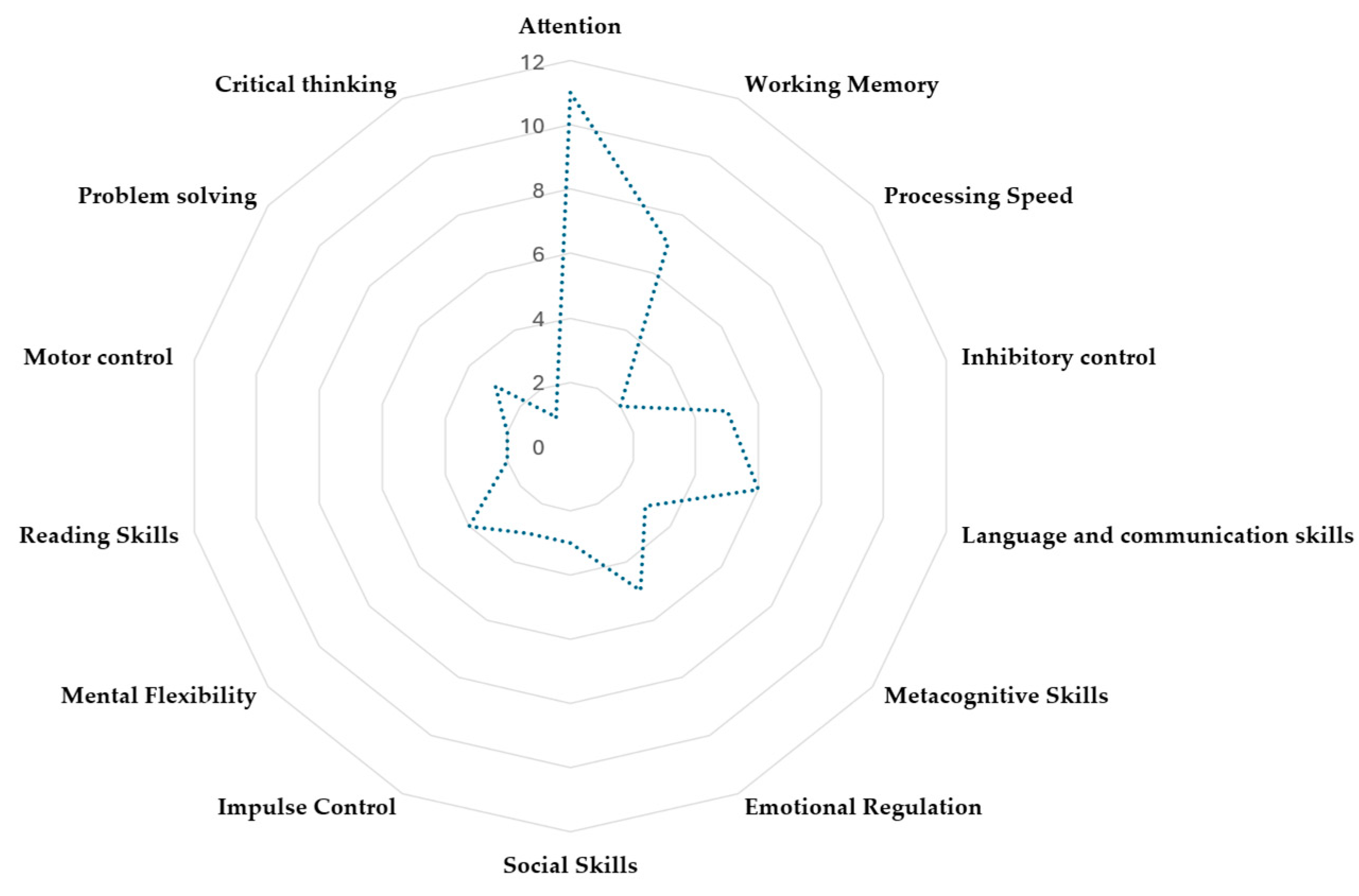
| Skill Domain | ADHD | ASD | SLD (i.e., Dyslexia and Dyscalculia) | ID | DCD | Cognitive Disorder (Represented in This Review by MCI) |
|---|---|---|---|---|---|---|
| Attention | [57,59,62,63,64,65,67,74,75] | [61,68] | ||||
| Processing speed | [63] | [76] | ||||
| Working memory | [62,64,67,77] | [66] | [61,68] | |||
| Metacognitive skills | [57,59] | [73] | ||||
| Inhibitory control | [64,65,67,77] | [76] | ||||
| Impulse control | [58,65,77] | |||||
| Emotional regulation | [58,60,74,75] | [56] | ||||
| Mental flexibility | [62,64,77] | [68] | ||||
| Social skills | [75] | [69,70] | ||||
| Language and communication skills | [54,75] | [69,70,71,75] | ||||
| Motor control skills | [77] | [76] | ||||
| Problem-solving | [66,73] | [55] | ||||
| Critical thinking | [55] | |||||
| Reading skills | [54] | [72] |
| Skill Domain | Cohen’s d | η2 | Hedges’ g | β | Interpretation |
|---|---|---|---|---|---|
| Attention | 0.28–1.08 | 0.06–0.56 | - | - | Small to large |
| Processing speed | 0.28–0.48 | - | - | - | Small to medium |
| Working memory | 0.48–1.42 | −0.84 to −1.10 | Medium to large | ||
| Metacognitive skills | 0.56–0.93 | 0.18–0.58 | - | - | Medium to large |
| Inhibitory control | 0.48–0.93 | - | 0.62 | - | Medium to large |
| Impulse control | 0.60–0.83 | 0.52 | - | - | Medium to large |
| Emotional regulation | 0.62–0.83 | 0.27–0.31 | - | - | Medium to large |
| Mental flexibility | 0.63–1.19 | 0.77 | - | - | Medium to large |
| Social skills | 0.62 | - | - | - | Moderate |
| Language and Communication skills | - | 0.44–0.90 | - | - | Large |
| Motor control skills | 0.48–2.291 | - | - | - | Medium to very large |
| Problem-solving | - | 0.10–0.75 | - | - | Medium to large |
| Critical thinking | - | 0.749 | - | - | Large |
| Reading skills | - | 0.48–0.811 | - | - | Large |
Disclaimer/Publisher’s Note: The statements, opinions and data contained in all publications are solely those of the individual author(s) and contributor(s) and not of MDPI and/or the editor(s). MDPI and/or the editor(s) disclaim responsibility for any injury to people or property resulting from any ideas, methods, instructions or products referred to in the content. |
© 2026 by the authors. Licensee MDPI, Basel, Switzerland. This article is an open access article distributed under the terms and conditions of the Creative Commons Attribution (CC BY) license.
Share and Cite
Mitsea, E.; Drigas, A.; Skianis, C. AΙ-Driven Interventions for Neurocognitive, Self-Regulation, and Adaptive Skill Development in Neurodevelopmental and Cognitive Disorders: A Systematic Review of Randomized Controlled Trials. Healthcare 2026, 14, 3102. https://doi.org/10.3390/healthcare14183102
Mitsea E, Drigas A, Skianis C. AΙ-Driven Interventions for Neurocognitive, Self-Regulation, and Adaptive Skill Development in Neurodevelopmental and Cognitive Disorders: A Systematic Review of Randomized Controlled Trials. Healthcare. 2026; 14(18):3102. https://doi.org/10.3390/healthcare14183102
Chicago/Turabian StyleMitsea, Eleni, Athanasios Drigas, and Charalabos Skianis. 2026. "AΙ-Driven Interventions for Neurocognitive, Self-Regulation, and Adaptive Skill Development in Neurodevelopmental and Cognitive Disorders: A Systematic Review of Randomized Controlled Trials" Healthcare 14, no. 18: 3102. https://doi.org/10.3390/healthcare14183102
APA StyleMitsea, E., Drigas, A., & Skianis, C. (2026). AΙ-Driven Interventions for Neurocognitive, Self-Regulation, and Adaptive Skill Development in Neurodevelopmental and Cognitive Disorders: A Systematic Review of Randomized Controlled Trials. Healthcare, 14(18), 3102. https://doi.org/10.3390/healthcare14183102