Article

Effect of a Single Immersive Virtual Nature Session on Preoperative Surgical Fear and State Anxiety in Patients Awaiting a Laparoscopic Sleeve Gastrectomy: A Randomised Controlled Trial


1
Department of Surgical Nursing, Faculty of Health Sciences, Fırat University, 23119 Elazığ, Türkiye
2
Provincial Health Directorate, 23050 Elazığ, Türkiye
*
Author to whom correspondence should be addressed.
Healthcare 2026, 14(18), 3067; https://doi.org/10.3390/healthcare14183067 (registering DOI)

Submission received: 13 August 2026 / Revised: 13 September 2026 / Accepted: 15 September 2026 / Published: 17 September 2026

Abstract

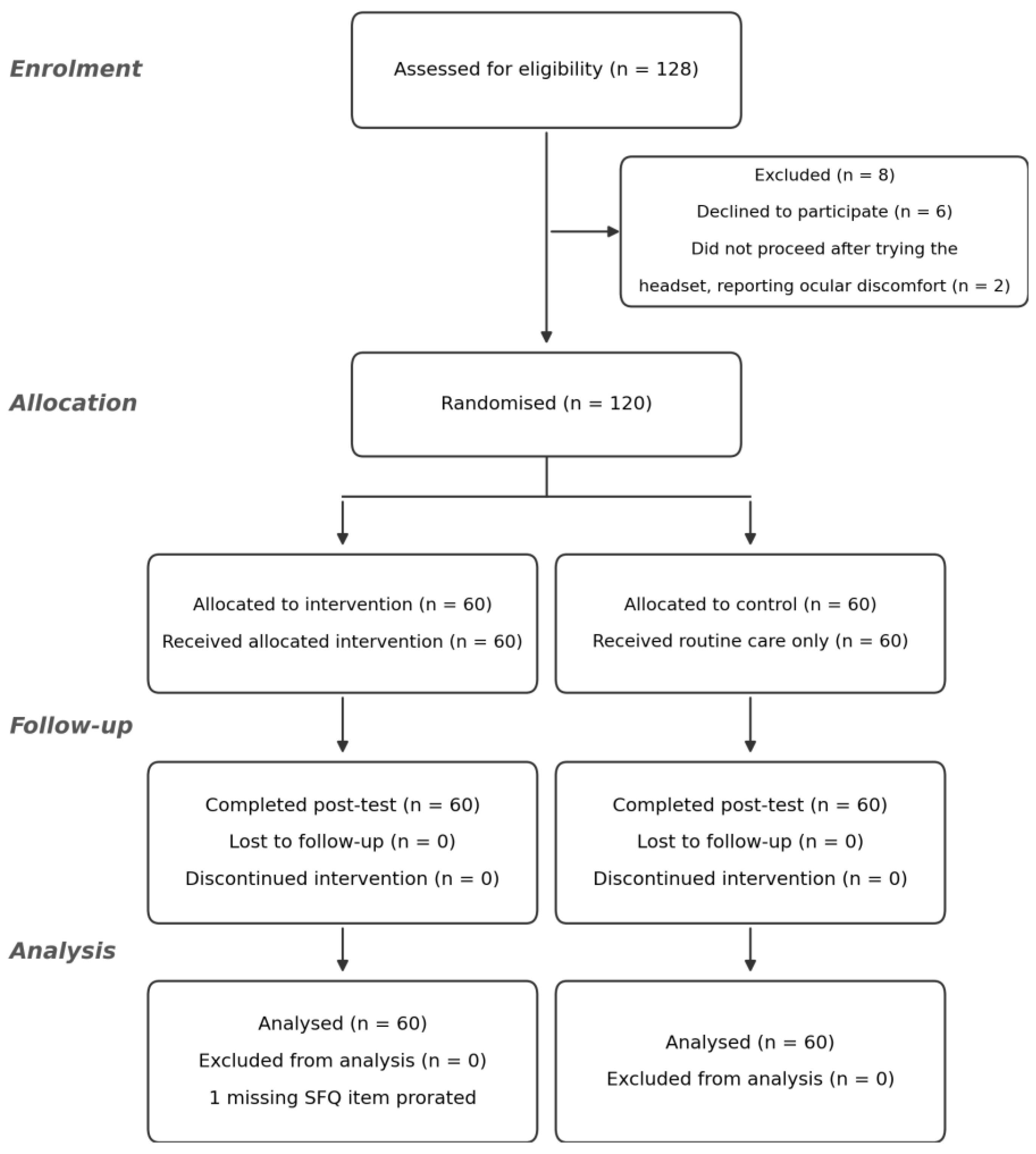
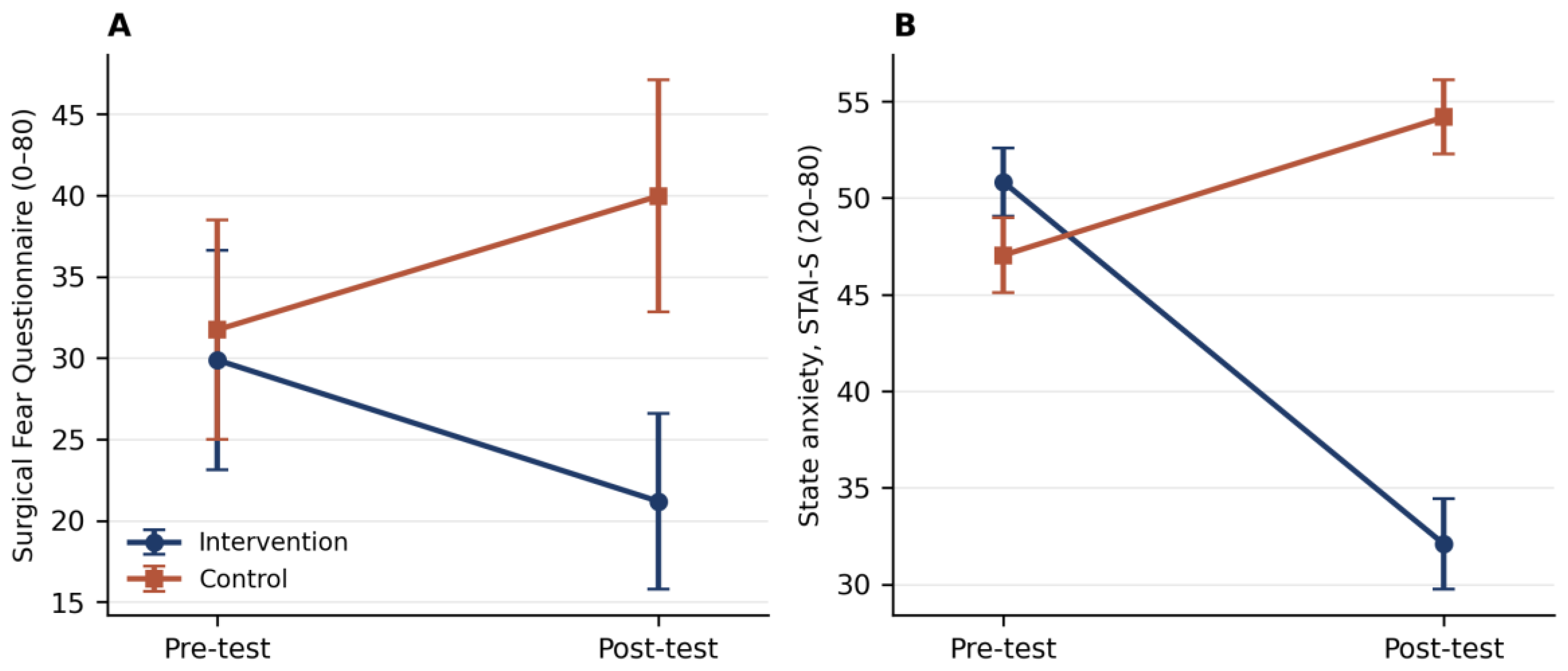
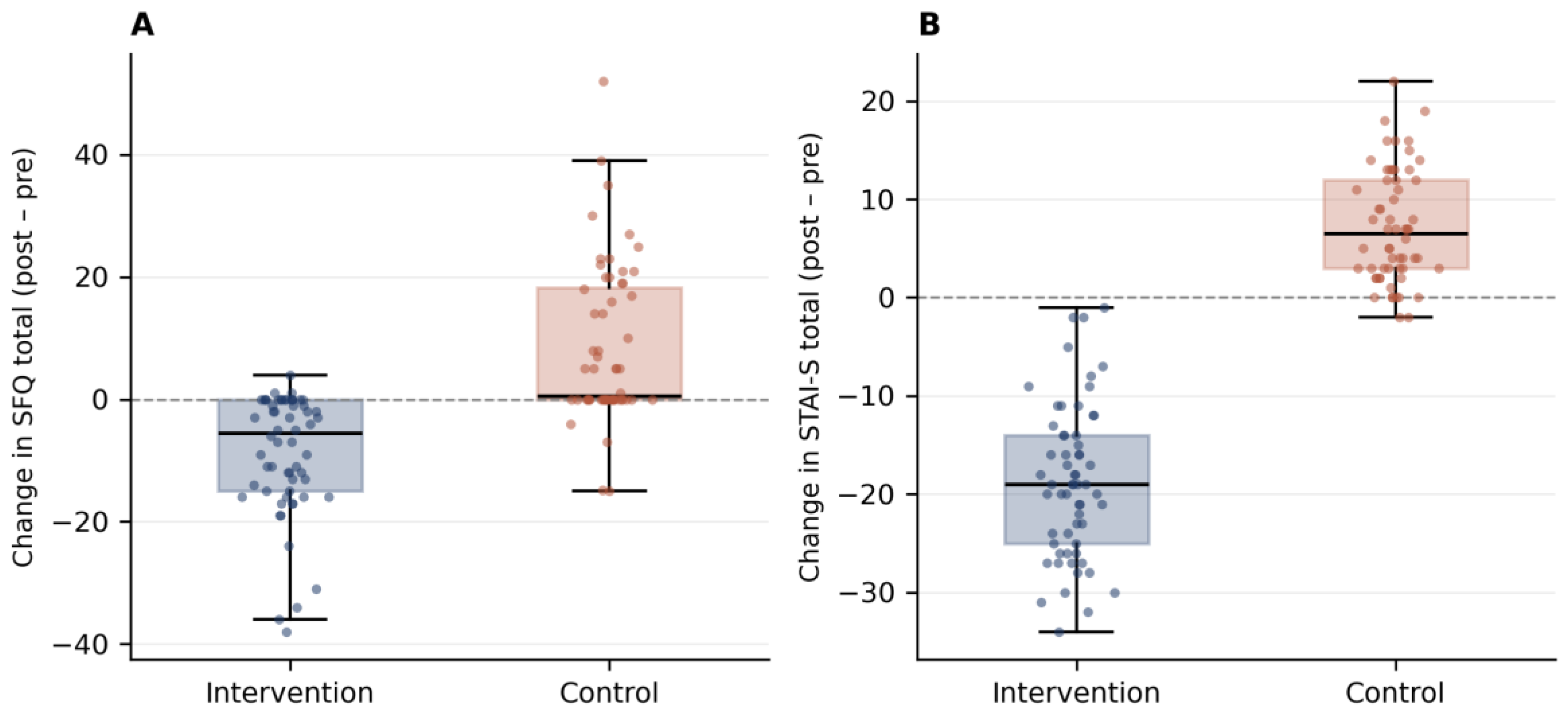
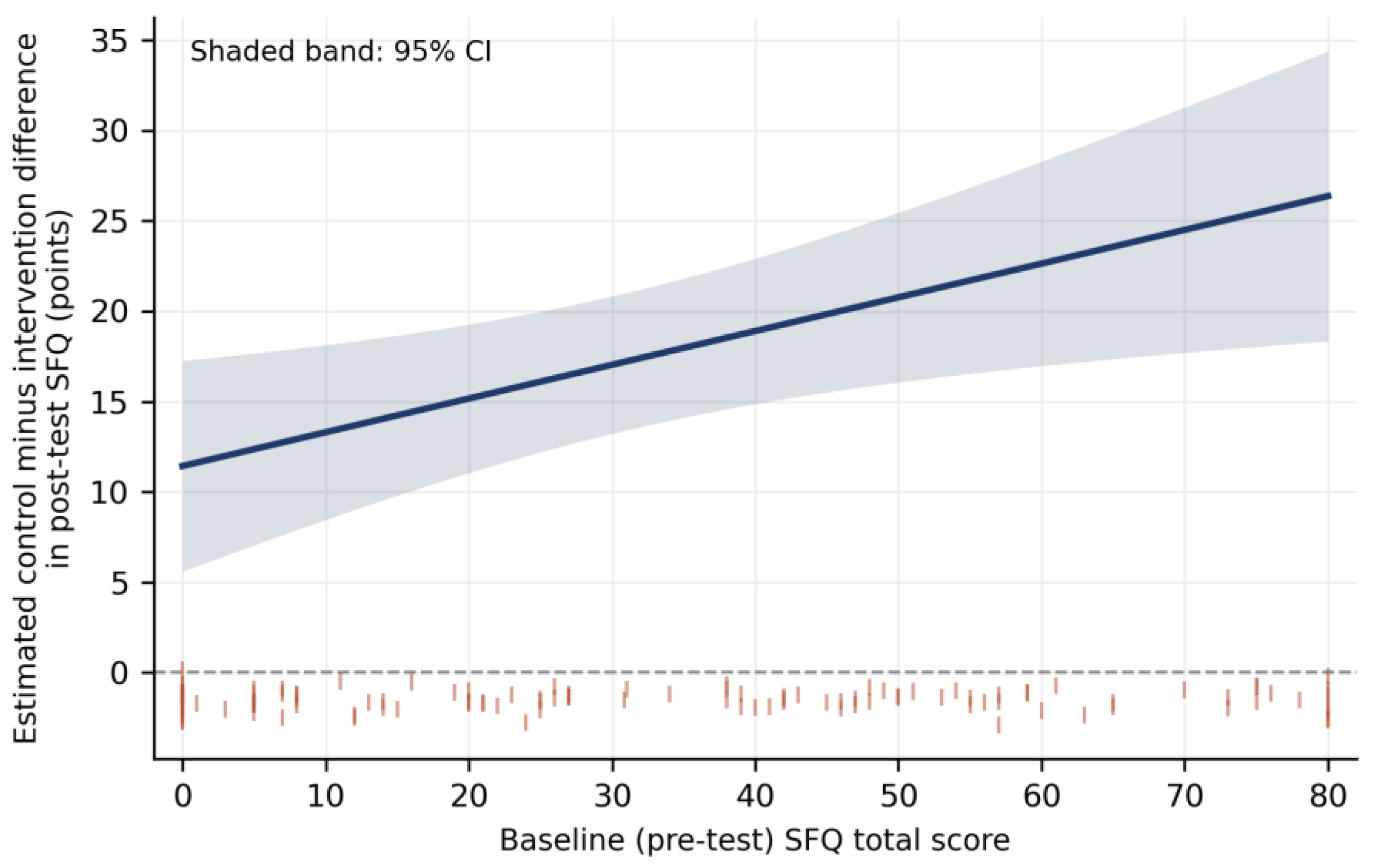
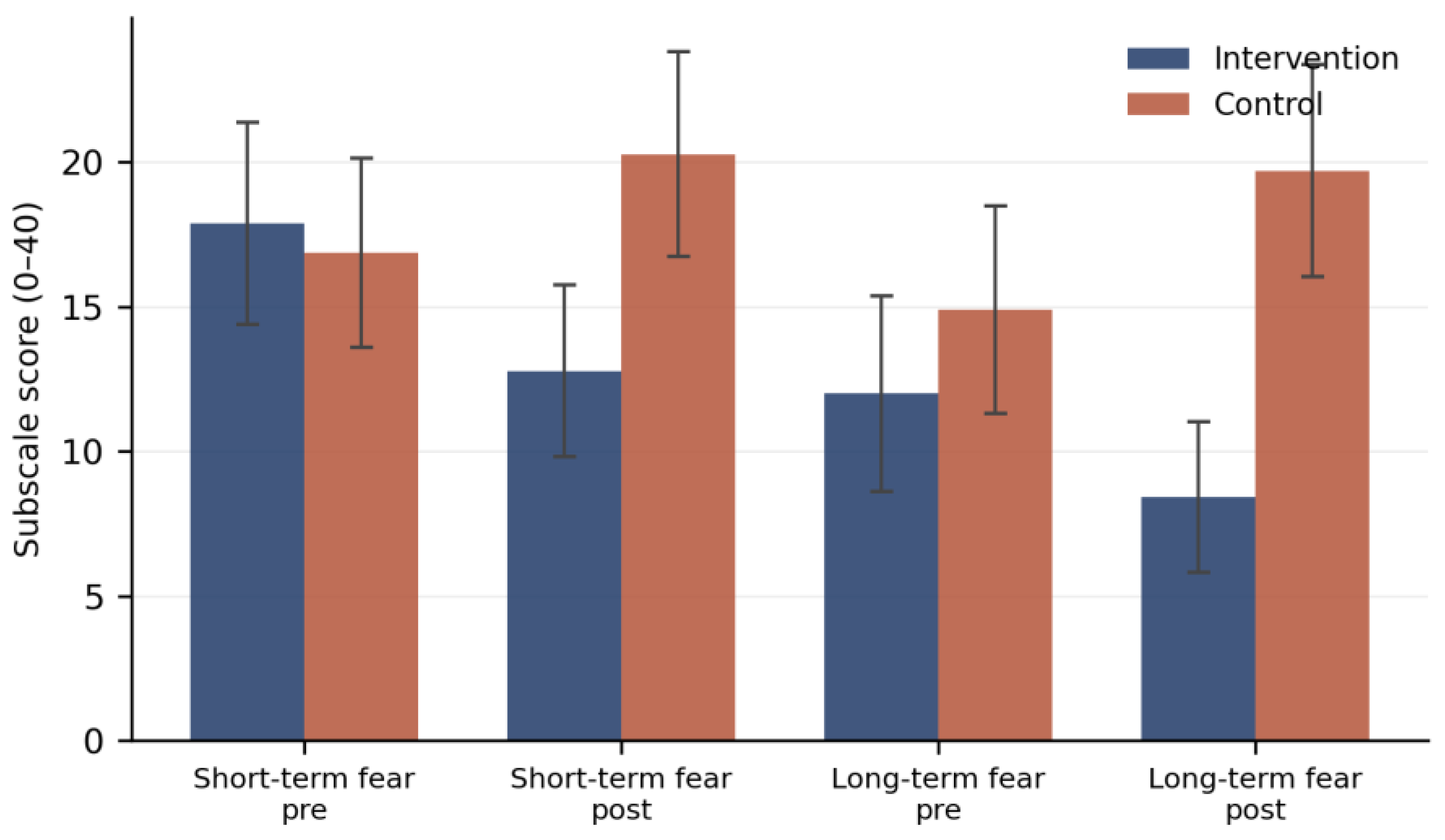
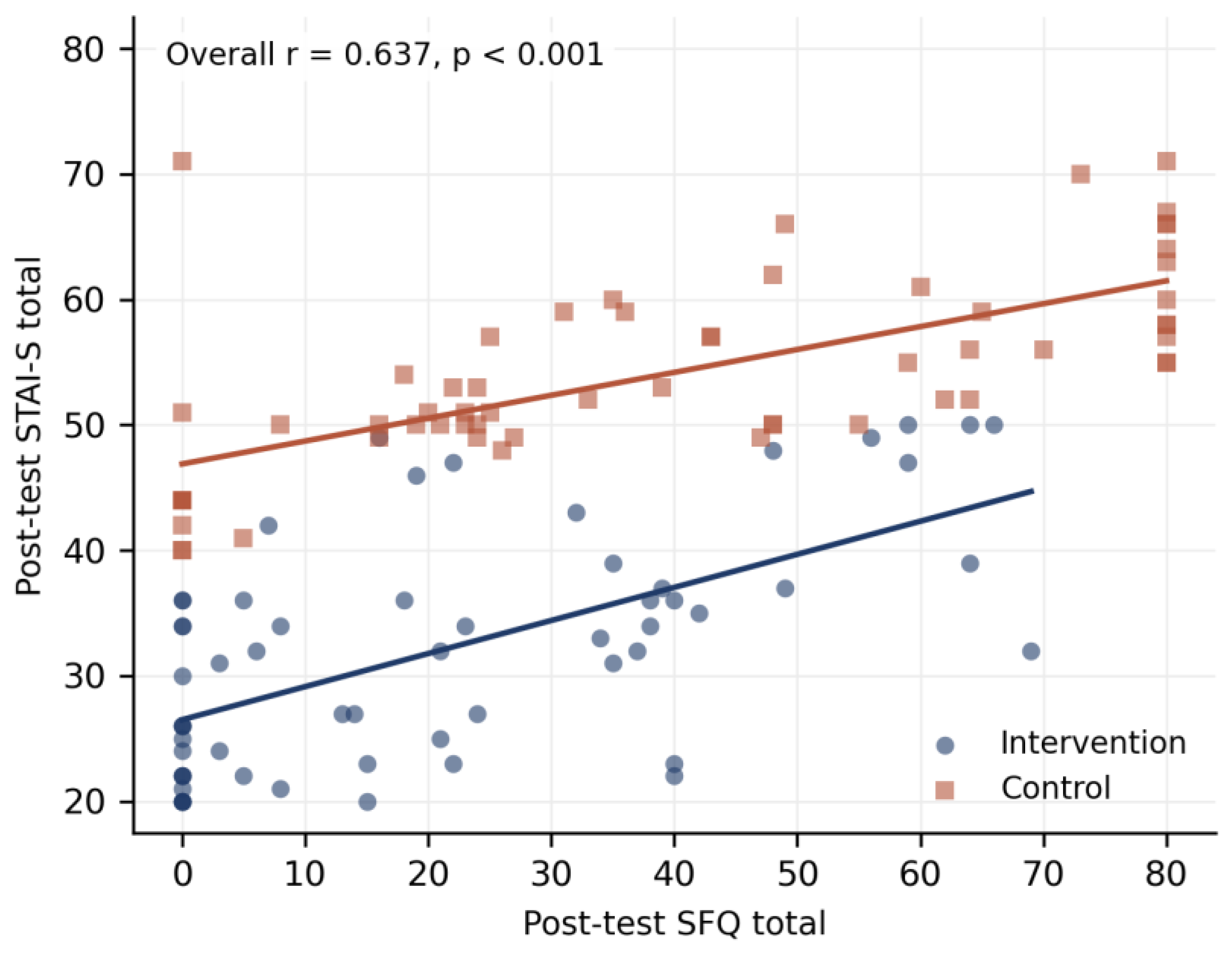
Background: Patients awaiting bariatric surgery face permanent anatomical change, lifelong behavioural adaptation, and uncertainty about weight-loss maintenance; consequently, they report high levels of surgical fear and state anxiety. Immersive 360° virtual nature exposure delivered through a head-mounted display is a low-cost, nurse-deliverable, non-pharmacological option, but its effect on surgical fear specifically, and in bariatric candidates in particular, is largely untested. The aim was to determine whether a single 20 min session delivered in the immediate preoperative period reduces surgical fear and state anxiety in patients scheduled for laparoscopic sleeve gastrectomy. Methods: A single-centre, two-arm, parallel-group randomised controlled trial was conducted in a general surgery clinic between March 2025 and June 2026 and is reported in accordance with the CONSORT 2025 statement (ClinicalTrials.gov NCT07774156; registered retrospectively on 18 August 2026). One hundred and twenty adults scheduled for laparoscopic sleeve gastrectomy were randomly allocated 1:1, using sequentially numbered opaque sealed envelopes, to the intervention or to routine care. Two hours before transfer to theatre, the intervention arm viewed a single 20 min 360° nature video with a natural soundtrack through a head-mounted display; the control arm received the standard clinical protocol. Premedication was administered after post-testing in both arms. Surgical fear (Surgical Fear Questionnaire, SFQ) and state anxiety (State Anxiety Inventory, STAI-S) were measured before and after the intervention period. The primary analysis was a baseline-adjusted comparison of post-test SFQ; because the homogeneity-of-regression-slopes assumption was violated, a group-by-baseline interaction model was used, and conditional treatment effects were reported. All other analyses were exploratory. Results: All 120 patients completed the trial. In the interaction model, the estimated control minus intervention difference in post-test SFQ was significant across the entire observed baseline range, from 11.43 points (95% CI 5.59 to 17.27) at a baseline score of 0 to 26.37 points (95% CI 18.35 to 34.40) at a baseline score of 80, and was 17.19 points (95% CI 13.38 to 20.99) at the sample mean baseline. Post-test state anxiety was lower in the intervention arm by 24.87 points after baseline adjustment (95% CI −27.33 to −22.41; F(1, 117) = 400.84, p < 0.001). Surgical fear fell by 8.68 points in the intervention arm and rose by 8.22 points in the control arm; state anxiety fell by 18.75 points and rose by 7.15 points, respectively. Forty-five per cent of participants gave identical responses to all eight SFQ items at post-test, and when these participants were excluded, the between-group difference in post-test SFQ fell to 10.66 points (p = 0.029), and the baseline interaction disappeared. Conclusions: A single 20 min session of immersive 360° virtual nature exposure was followed by substantially lower surgical fear and state anxiety than routine care, under which both increased over the same interval. The magnitude of these effects greatly exceeds pooled estimates from the existing literature and should not be attributed to the virtual reality content itself: the comparator was routine care rather than an attention-matched control, so the contrast reflects a bundle of immersive stimulation, novelty, protected quiet time, and individual researcher attention; the trial was unblinded with self-reported outcomes; and a substantial response-set pattern in the SFQ data may have inflated the apparent effect on surgical fear. The findings support further evaluation in attention-controlled trials rather than immediate adoption.
Keywords: bariatric surgery; sleeve gastrectomy; preoperative anxiety; surgical fear; virtual reality; perioperative nursing bariatric surgery; sleeve gastrectomy; preoperative anxiety; surgical fear; virtual reality; perioperative nursing