Review

Resilience as a Protective Factor in Substance Use Prevention: A Narrative Review of Health Promotion Strategies Across Adolescence and Young Adulthood

College of Arts & Sciences, Embry-Riddle Aeronautical University—Worldwide, Daytona Beach, FL 32114, USA
Healthcare 2026, 14(15), 2252; https://doi.org/10.3390/healthcare14152252

Submission received: 10 June 2026 / Revised: 18 July 2026 / Accepted: 21 July 2026 / Published: 23 July 2026

Abstract

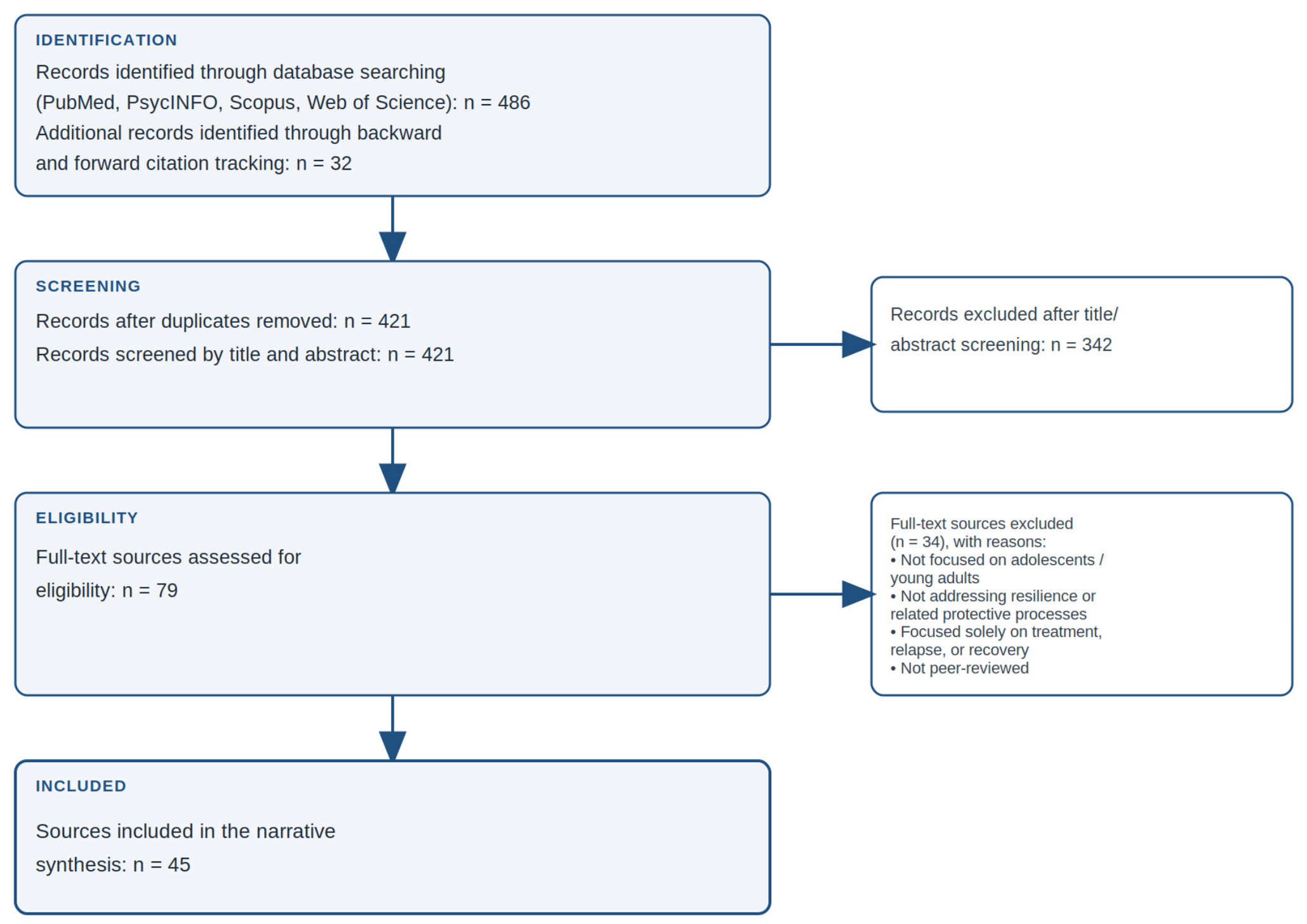
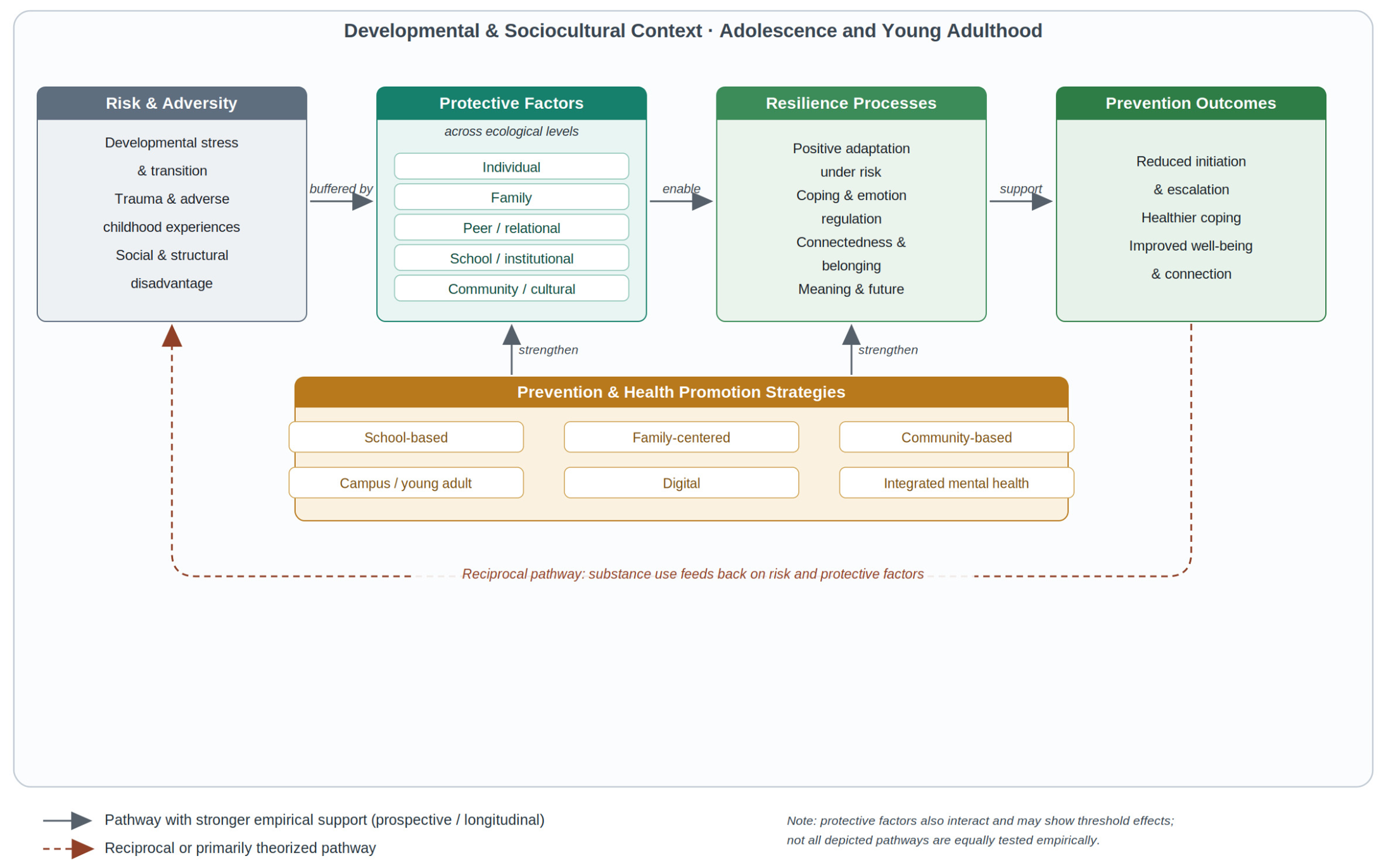
Background/Objectives: Substance use disorders remain a significant public health concern, particularly when vulnerability emerges during adolescence and young adulthood. Although much of the literature has focused on treatment and recovery, prevention-oriented scholarship increasingly points to the value of strengths-based approaches that reduce risk by cultivating protective processes. This narrative review examines resilience as a protective factor in substance use prevention across adolescence and young adulthood, with particular attention to health promotion, developmental context, and multilevel prevention systems. Methods: A narrative review approach was used to synthesize interdisciplinary literature from psychology, public health, education, addiction studies, and prevention science. The review focused on peer-reviewed scholarship addressing resilience, protective factors, and prevention-related processes relevant to adolescent and young adult substance use. Literature was analyzed thematically across major domains including conceptualizations of resilience, developmental relevance, protective factors, prevention strategies, diverse and at-risk populations, and conceptual and methodological challenges. Results: The literature suggests that resilience is most useful for substance use prevention when conceptualized as a dynamic and ecological process rather than a fixed individual trait. Protective processes associated with lower substance use risk include emotional regulation, adaptive coping, family support, peer connectedness, school engagement, community cohesion, and culturally meaningful sources of identity and belonging. Prevention strategies appear most promising when they are multilevel, relational, developmentally responsive, and integrated with broader mental health and health promotion efforts. At the same time, the literature remains limited by definitional inconsistency, measurement variability, heterogeneous outcome indicators, a predominance of cross-sectional evidence, inconsistent or null protective effects for some factors and outcomes, and insufficiently contextualized uses of resilience. Conclusions: Resilience offers a valuable framework for substance use prevention across adolescence and young adulthood when it is grounded in developmental, ecological, and equity-aware perspectives. Prevention may be strengthened by moving beyond deficit-focused models and intentionally cultivating the supportive conditions under which young people can adapt, connect, and thrive without turning to substances as a means of coping.
Keywords: resilience; substance use prevention; addiction prevention; health promotion; adolescents; young adults; protective factors; public health resilience; substance use prevention; addiction prevention; health promotion; adolescents; young adults; protective factors; public health