Physical Therapists’ Self-Reported Perceptions of Bedside Manners in Saudi Arabia: A Mixed-Methods Study

 , , , , , , , ,
Highlights
- Saudi physical therapists showed strong support for bedside manners, especially introducing themselves, listening carefully, obtaining consent, maintaining privacy, and reassuring patients during care.
- Qualitative interviews highlighted trust-building, body language, balanced empathy, therapist presence, and equitable patient care as key elements of bedside manners.
- Bedside manners should be reinforced in physical therapy education and continuing professional development to support more consistent patient-centered care.
- Embedding bedside manners in professional standards and self-assessment may help physical therapists apply communication, empathy, consent, and privacy consistently in their own practice.
Abstract
1. Introduction
2. Materials and Methods
2.1. Design
2.2. Study Participants, Recruitment and Sampling
2.3. Data Collection
2.4. Data Analysis
3. Results
- (a)
- Quantitative Section
- (A)
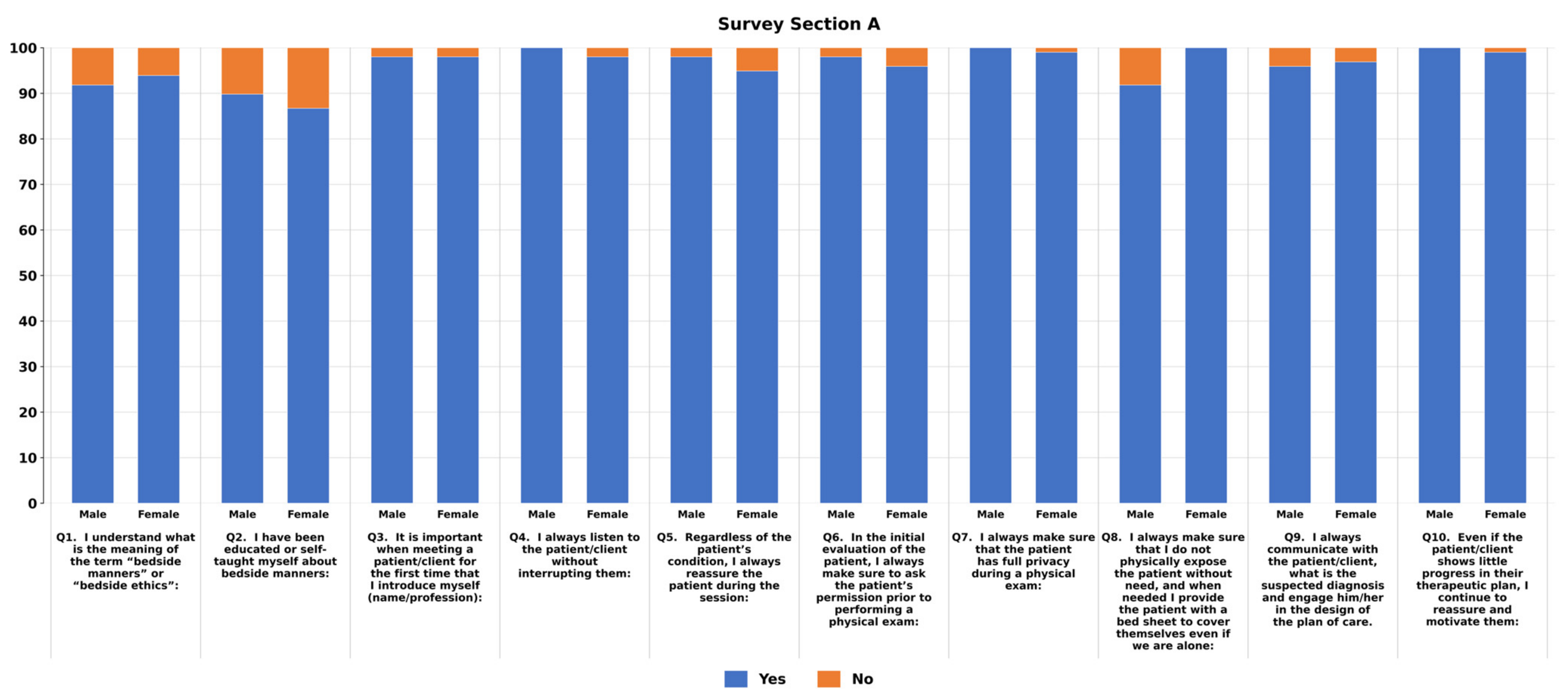
- Section A (yes/no items)In Section A, agreement was high across all ten yes/no items, ranging from 87.8% to 99.3% “yes” (Table 2). Endorsement was highest for ensuring the patient’s full privacy during physical examination (Question 7) and for continuing to reassure patients who show little progress (Question 10), both 99.3%, followed by listening without interrupting (Question 4, 98.6%) and introducing oneself at the first meeting (Question 3, 98.0%). The lowest, though still high, were having been educated or self-taught about bedside manners (Question 2, 87.8%) and understanding the term “bedside manners” (Question 1, 93.2%). Privacy-related conduct was also strongly endorsed, including not physically exposing the patient unnecessarily (Question 8, 97.3%). These uniformly high proportions indicate a ceiling effect across Section A.
- (B)
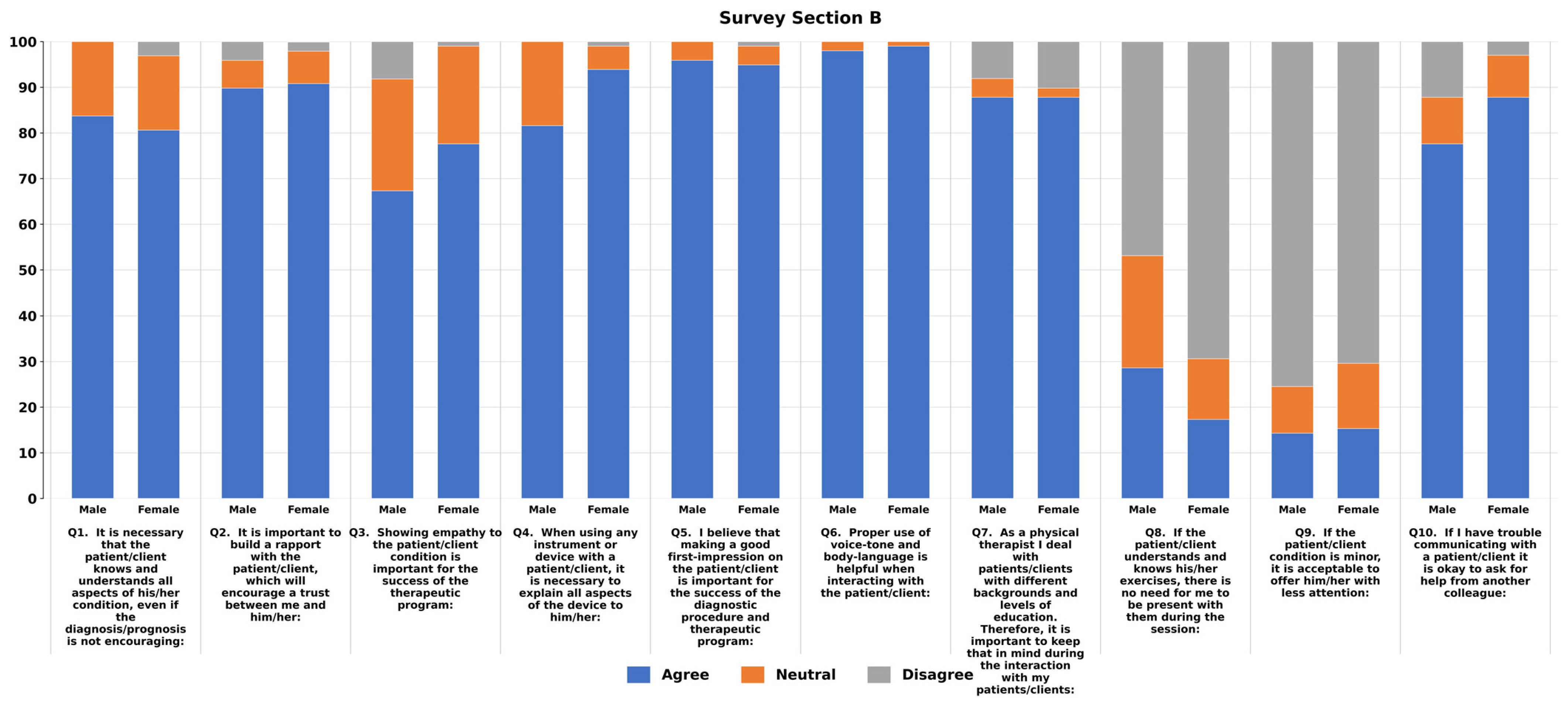
- Section B (Likert items)In Section B, most statements drew strong agreement (Table 3). Agreement was highest for using appropriate voice tone and body language (Question 6, 98.6%), making a good first impression (Question 5, 95.2%), and building rapport and trust with the patient (Question 2, 90.5%). Two items were worded so that disagreement reflects recommended practice, and showed the opposite pattern: most therapists disagreed that there is no need to remain present once a patient knows their exercises (Question 8; 61.9% disagreed vs. 21.1% agreed) and that minor cases may receive less attention (Question 9; 72.1% disagreed vs. 15.0% agreed), indicating strong support for therapist presence and for equitable attention regardless of case severity. Neutral responses were most frequent for the importance of showing empathy (Question 3, 22.4%) and for ensuring the patient understands all aspects of their condition (Question 1, 16.3%).
- (C)
- Differences by genderResponses were broadly similar between female and male therapists across most items. A few items differed. For the Section A privacy item (Question 8), all female therapists (100%) answered “yes,” compared with 91.8% of male therapists (four male respondents answered “no”). In Section B, a higher proportion of female than male therapists agreed that all aspects of a device should be explained to the patient (Question 4; 93.9% [92/98] vs. 81.6% [40/49]), and a higher proportion of female therapists disagreed that there is no need to remain present once the patient knows their exercises (Question 8; 69.4% [68/98] vs. 46.9% [23/49]). These differences are illustrated in Figure 1 and Figure 2.
- (D)
- Differences by work settingResponses were broadly similar across work settings on most items; two items in Section B showed variation. For Question 8 (therapist presence), disagreement with leaving patients alone was highest among therapists in private clinics (70.6%) and government hospitals (66.2%), and lowest among those in rehabilitation hospitals (41.2%), who were correspondingly the most likely to agree (47.1%) when patients were familiar with their treatment plans.For Question 9 (giving minor cases less attention), disagreement was highest among therapists in government hospitals (78.5%) and private clinics (76.5%). The single Community Care respondent (n = 1) is reported but, given the single respondent, is not included in the between-setting comparison. The full Q8 and Q9 cross-tabulations across all five work settings are provided in Supplementary Table S2.
- (E)
- Differences by experienceResponses were broadly similar across experience levels. Disagreement with leaving patients alone once they know their exercises (Question 8) was somewhat lower among more experienced therapists (0–5 years, 67% [69/103]; 5–10 years, 53% [17/32]; >10 years, 42% [5/12]), with correspondingly more neutral responses. The agreement with showing empathy is important (Question 3) was slightly lower in the most experienced group (58% [7/12] versus approximately 76% among earlier-career therapists). Endorsement of privacy and most other items was high across all experience levels. The most experienced group was small (n = 12); therefore, these patterns should be interpreted with caution.
- (b)
- Qualitative analysis:
- (A)
- Building trustTherapists consider bedside manners essential in their practice, as they are crucial for building trust between the therapist and the patient, as well as for the fundamentals of the profession. Participants described trust as developing through behaviors that demonstrate respect and attentiveness to patients’ concerns. Active listening and clear communication were perceived as helping patients feel heard and informed, while maintaining privacy and professional conduct were viewed as reinforcing confidence in the therapist and the therapeutic relationship.Therapist vi12: “Bedside ethics are important in order to build trust between us and the patients, and this contributes to the success of the treatment plan.”Therapist ii6: “patients need someone who listens to them and allows them to feel comfortable speaking and expressing what they have to say.”
- (B)
- Positive contribution to careThe majority of participants described the perceived value of bedside manners as operating through the development of trust. In their accounts, trust was viewed as encouraging patients to communicate openly, consider therapists’ recommendations, and engage more actively in the therapeutic process.Therapist xi2: “Certainly, it has an impact. It’s one of the things that make the patient adhere to the treatment plan, consider your decisions, and value your opinion. If you maintain these aspects, all these ethical practices will enhance the trust between you and the patient.”However, these perceptions were not shared by all participants. One participant expressed uncertainty “Maybe not sure” (v1), while another stated “From a technical standpoint, it doesn’t make a difference” (x26). Although differences in work setting appeared to coincide with variation in participants’ views, work setting was not examined as a determinant in this study. Differences in work settings appeared to coincide with variation in participants’ perceptions. In this theme, the participant working in an inpatient setting described bedside manners as important for fostering trust and engagement, whereas the participant working across inpatient and outpatient settings expressed uncertainty, and the participant working primarily in an outpatient setting questioned their influence. Although this pattern emerged from participants’ accounts, work setting was not directly examined as a determining factor in the present study and should therefore be considered only as an explanation for the variation in views.
- (C)
- Body languageTherapists viewed effective non-verbal communication as beneficial for establishing rapport and supporting patient comfort. They find it effective in containing and supporting the patient, which in turn provides therapists with the patient’s attention and commitment.Therapist ii6: “yes of course, body language is very important when dealing with patients, the patients always recognize therapist body language. One of the patients complained about the doctor body position and how he was standing while he takes her history which make her anxious.”Therapist ii1: “it affects the quality of the session, and how open the patient is to the therapy. The patient will determine whether or not to continue attending after the initial session.”Non-verbal communication, including eye contact, facial expression, posture, tone of the voice, therapeutic touch, and respectful positioning, plays an important role in physical therapy practice. These behaviors can enhance patient comfort, promote trust, support privacy and dignity, and help maintain appropriate professional boundaries. These qualities were viewed as contributing to positive therapeutic interactions and patient-centered care.
- (D)
- Differing views on empathyWhen the interviewer asked the therapists about empathy, and whether it was important during treatment, participants’ views fell into three broad perspectives. Unlike bedside manners, which participants generally described as observable professional behaviors and communication practices, empathy was discussed in relation to understanding patients’ experiences and emotional needs.The first part agreed to use it during sessions.Therapist vi11: “Yes, of course, I must show my understanding of the pain they feels and show my full empathy for them.”The second did not prefer to use it during sessions.Therapist vi12: “No, sometimes empathy may not be necessary. What is important is to provide care to the fullest extent and leave me satisfied.”Finally, the third opinion emphasized that empathy should be applied according to the patient’s personality. They indicated that empathy may not be appropriate in all situations and that its use should be adapted to individual patient characteristics and clinical circumstances.Therapist ii6: “Perhaps empathy would take another path if it existed. Empathy is not always the right thing, and you can use it according to the patient’s health condition and personality. Some patients will be affected by empathy.”The differing opinions suggest that therapists do not view empathy as a universally beneficial approach. Instead, they may tailor its use based on individual patient characteristics and clinical circumstances, reflecting the need to balance emotional involvement with therapeutic effectiveness and professional objectivity. These differing views may also reflect variation in therapists’ work settings or clinical responsibilities; however, these factors were not directly examined and this interpretation remains speculative. Another possible explanation may relate to differences in work settings and clinical responsibilities. For example, therapists working in inpatient settings may encounter patients with greater emotional and psychological needs, whereas those in outpatient settings may place greater emphasis on maintaining professional boundaries and encouraging patient independence. However, these factors were not directly examined in the present study.
- (E)
- Therapist presenceSome therapists agreed on the importance of the therapist’s presence throughout the session, while others disagreed.Therapist iv13: “It is important that there is monitoring of the patient, even if the sessions are consecutive and the patient masters performing the therapeutic exercises. It is important that there is supervision to ensure the patient’s safety first, and also to monitor the patient’s performance in their treatment program.”Therapist x20 “If I’ve been treating them for a long time, I don’t mind leaving them because they know their exercises and everything they need. But it’s not about just leaving them completely; I need to check on them regularly, so they feel that I care about them.”Participants expressed differing views regarding the extent to which therapists should remain continuously present during treatment sessions. Continuous therapist presence was perceived as particularly important in situations involving patient safety, close supervision, complex interventions, or when reassurance and emotional support were needed. In contrast, participants considered brief therapist absence acceptable during low-risk activities when patients were stable, adequately instructed, and able to perform tasks independently, provided that appropriate monitoring and supervision were maintained.
- (F)
- Patient equityIn clinical practice, therapists emphasize the importance of delivering fair and equal care to all patients, regardless of age, diagnosis, or the level of difficulty involved in the condition. They make sure that they treat them equally and give them their needed time.Therapist iv11: “as long as the patient is concerned and comes just to solve the problem even if it is simple, I give the same attention as any other patients whether it is a difficult or temporary case.”Other therapists have another opinion. They of course will treat all patients equally, but some cases need more time like geriatric patients or complicated cases that need a multidisciplinary team.Therapist xi1: “of course the level of attention is the same but there is a difference in cases but not the attention. The difference is in my time with the patients … the main attention that in the beginning that I hear and understand for sure will be equal. But if their problem is complicated of course, I hear them more, I sit with them more and communicate more because the case will have more referrals since the problem has more complex details.”Participants generally described patient equity as providing the same level of respect, attention, and professional commitment to all patients regardless of age, diagnosis, or case complexity. They distinguished between equality of attention and equality of time allocation, noting that patients with more complex conditions may require additional communication, assessment, or multidisciplinary coordination to meet their clinical needs. These findings suggest that participants perceived equitable care as adapting support to patient needs while maintaining fairness and respect across all patients. However, these findings reflect therapists’ perceptions of equitable practice and should not be interpreted as an objective assessment of equity within clinical practice.
- (G)
- Seeking help from colleaguesMost of the therapists agreed to ask their colleagues if they are facing any issues with the patient’s case, but this should be away from the patient or after the session.Therapist x2: “It depends on the situation. If I encounter a new case and my colleague has sufficient experience in that, I will maintain the level of trust between me and the patient and I will consult my colleague later on.”Participants viewed seeking support from colleagues as an aspect of professional bedside manners and ethical practice. Recognizing situations that exceeded one’s expertise and consulting more experienced colleagues when necessary was perceived as reflecting professional responsibility, awareness of professional limitations, and a commitment to maintaining patient trust and professional credibility. Participants also perceived collaboration with colleagues as a way of supporting appropriate patient care, particularly when managing unfamiliar or complex cases, while helping maintain professional boundaries and promote patient safety.Additional quotations from the thematic analysis are summarized in Table 4.
4. Discussion
5. Strengths and Limitations
6. Conclusions
Supplementary Materials
Author Contributions
Funding
Institutional Review Board Statement
Informed Consent Statement
Data Availability Statement
Acknowledgments
Conflicts of Interest
References
- Kahn, M.W. Etiquette-Based Medicine. N. Engl. J. Med. 2008, 358, 1988–1989. [Google Scholar] [CrossRef] [Scilit] [PubMed]
- Zazgyva, A.; Zuh, S.-G.; Voidăzan, S.; Russu, O.M.; Pop, T.S. Medical Students’ View on Troublesome Aspects of Bedside Manner in a Multilingual Area. Procedia Soc. Behav. Sci. 2014, 142, 243–247. [Google Scholar] [CrossRef] [Scilit]
- Ambady, N.; Koo, J.; Rosenthal, R.; Winograd, C.H. Physical Therapists’ Nonverbal Communication Predicts Geriatric Patients’ Health Outcomes. Psychol. Aging 2002, 17, 443–452. [Google Scholar] [CrossRef] [Scilit] [PubMed]
- Chandra, S.; Mohammadnezhad, M.; Ward, P. Trust and Communication in a Doctor–Patient Relationship: A Literature Review. J. Healthc. Commun. 2018, 3, 36. [Google Scholar]
- Haynes, R.B.; McDonald, H.P.; Garg, A.X. Helping Patients Follow Prescribed Treatment: Clinical Applications. JAMA 2002, 288, 2880–2883. [Google Scholar] [CrossRef] [Scilit] [PubMed]
- Wald, R.L.; Temoshok, L.R. Improve Bedside Manner, Affect Patient Adherence: Communication Makes a Difference. Patient Educ. Manag. 2005, 30, 2008. [Google Scholar] [CrossRef] [Scilit]
- Beach, M.C.; Duggan, P.S.; Moore, R.D. Is Patients’ Preferred Involvement in Health Decisions Related to Outcomes for Patients with HIV? J. Gen. Intern. Med. 2007, 22, 1119–1124. [Google Scholar] [CrossRef] [Scilit] [PubMed]
- Fuertes, J.N.; Mislowack, A.; Bennett, J.; Paul, L.; Gilbert, T.C.; Fontan, G.; Boylan, L.S. The Physician–Patient Working Alliance. Patient Educ. Couns. 2007, 66, 29–36. [Google Scholar] [CrossRef] [Scilit] [PubMed]
- Heisler, M.; Bouknight, R.R.; Hayward, R.A.; Smith, D.M.; Kerr, E.A. The Relative Importance of Physician Communication, Participatory Decision Making, and Patient Understanding in Diabetes Self-Management. J. Gen. Intern. Med. 2002, 17, 243–252. [Google Scholar] [CrossRef] [Scilit] [PubMed]
- Hibbard, J.H.; Mahoney, E.R.; Stock, R.; Tusler, M. Do Increases in Patient Activation Result in Improved Self-Management Behaviors? Health Serv. Res. 2007, 42, 1443–1463. [Google Scholar] [PubMed]
- Kaplan, S.H.; Greenfield, S.; Ware, J.E., Jr. Assessing the Effects of Physician–Patient Interactions on the Outcomes of Chronic Disease. Med. Care 1989, 27, S110–S127. [Google Scholar] [CrossRef] [Scilit] [PubMed]
- Stewart, M.; Brown, J.B.; Donner, A.; McWhinney, I.R.; Oates, J.; Weston, W.W.; Jordan, J. The Impact of Patient-Centered Care on Outcomes. J. Fam. Pract. 2000, 49, 796–804. [Google Scholar] [PubMed]
- Stewart, M.A. Effective Physician–Patient Communication and Health Outcomes: A Review. CMAJ Can. Med. Assoc. J. 1995, 152, 1423–1433. [Google Scholar]
- Hall, A.M.; Ferreira, P.H.; Maher, C.G.; Latimer, J.; Ferreira, M.L. The Influence of the Therapist–Patient Relationship on Treatment Outcome in Physical Rehabilitation: A Systematic Review. Phys. Ther. 2010, 90, 1099–1110. [Google Scholar] [CrossRef] [Scilit] [PubMed]
- Ferreira, P.H.; Ferreira, M.L.; Maher, C.G.; Refshauge, K.M.; Latimer, J.; Adams, R.D. The Therapeutic Alliance Between Clinicians and Patients Predicts Outcome in Chronic Low Back Pain. Phys. Ther. 2013, 93, 470–478. [Google Scholar] [CrossRef] [Scilit] [PubMed]
- McGilton, K.S.; Boscart, V.; Fox, M.; Sidani, S.; Rochon, E.; Sorin-Peters, R. A Systematic Review of the Effectiveness of Communication Interventions for Health Care Providers Caring for Patients in Residential Care Settings. Worldviews Evid. Based Nurs. 2009, 6, 149–159. [Google Scholar] [CrossRef] [Scilit] [PubMed]
- O’Keeffe, M.; Cullinane, P.; Hurley, J.; Leahy, I.; Bunzli, S.; O’Sullivan, P.B.; O’Sullivan, K. What Influences Patient–Therapist Interactions in Musculoskeletal Physical Therapy? Qualitative Systematic Review and Meta-Synthesis. Phys. Ther. 2016, 96, 609–622. [Google Scholar] [CrossRef] [Scilit] [PubMed]
- Gard, G. Factors Important for Good Interaction in Physiotherapy Treatment of Persons Who Have Undergone Torture: A Qualitative Study. Physiother. Theory Pract. 2007, 23, 47–55. [Google Scholar] [CrossRef] [Scilit] [PubMed]
- Gyllensten, A.L.; Gard, G.; Salford, E.; Ekdahl, C. Interaction Between Patient and Physiotherapist: A Qualitative Study Reflecting the Physiotherapist’s Perspective. Physiother. Res. Int. 1999, 4, 89–109. [Google Scholar] [CrossRef] [Scilit] [PubMed]
- Cherry-Bukowiec, J.R.; Denchev, K.; Dickinson, S.; Chenoweth, C.E.; Zalewski, C.; Meldrum, C.; Sihler, K.C.; Brunsvold, M.E.; Papadimos, T.J.; Park, P.K.; et al. Prevention of Catheter-Related Blood Stream Infection: Back to Basics? Surg. Infect. 2011, 12, 27–32. [Google Scholar] [CrossRef] [Scilit]
- Cooper, K.; Smith, B.H.; Hancock, E. Patient-Centredness in Physiotherapy from the Perspective of the Chronic Low Back Pain Patient. Physiotherapy 2008, 94, 244–252. [Google Scholar] [CrossRef] [Scilit]
- Oien, A.M.; Steihaug, S.; Iversen, S.; Raheim, M. Communication as Negotiation Processes in Long-Term Physiotherapy: A Qualitative Study. Scand. J. Caring Sci. 2011, 25, 53–61. [Google Scholar] [CrossRef] [Scilit] [PubMed]
- Peiris, C.L.; Taylor, N.F.; Shields, N. Patients Value Patient–Therapist Interactions More than the Amount or Content of Therapy During Inpatient Rehabilitation: A Qualitative Study. J. Physiother. 2012, 58, 261–268. [Google Scholar] [CrossRef] [Scilit] [PubMed]
- Del Baño-Aledo, M.E.; Medina-Mirapeix, F.; Escolar-Reina, P.; Montilla-Herrador, J.; Collins, S.M. Relevant Patient Perceptions and Experiences for Evaluating Quality of Interaction with Physiotherapists During Outpatient Rehabilitation: A Qualitative Study. Physiotherapy 2014, 100, 73–79. [Google Scholar] [CrossRef] [Scilit] [PubMed]
- Potter, M.; Gordon, S.; Hamer, P. The Physiotherapy Experience in Private Practice: The Patients’ Perspective. Aust. J. Physiother. 2003, 49, 195–202. [Google Scholar] [CrossRef] [Scilit] [PubMed]
- May, S.J. Patient Satisfaction with Management of Back Pain. Physiotherapy 2001, 87, 4–20. [Google Scholar] [CrossRef] [Scilit]
- Harman, K.; Bassett, R.; Fenety, A.; Hoens, A.M. Client Education: Communicative Interaction Between Physiotherapists and Clients with Subacute Low Back Pain in Private Practice. Physiother. Can. 2011, 63, 212–223. [Google Scholar] [CrossRef] [Scilit] [PubMed]
- Verbeek, J.; Sengers, M.J.; Riemens, L.; Haafkens, J. Patient Expectations of Treatment for Back Pain: A Systematic Review of Qualitative and Quantitative Studies. Spine 2004, 29, 2309–2318. [Google Scholar] [CrossRef] [Scilit] [PubMed]
- Oosterhof, B.; Dekker, J.; Sloots, M.; Bartels, E.A.C.; Dekker, J. Success or Failure of Chronic Pain Rehabilitation: The Importance of Good Interaction—A Qualitative Study Under Patients and Professionals. Disabil. Rehabil. 2014, 36, 1903–1910. [Google Scholar] [CrossRef] [Scilit] [PubMed]
- Hills, R.; Kitchen, S. Satisfaction with Outpatient Physiotherapy: Focus Groups to Explore the Views of Patients with Acute and Chronic Musculoskeletal Conditions. Physiother. Theory Pract. 2007, 23, 1–20. [Google Scholar] [CrossRef] [Scilit] [PubMed]
- Laerum, E.; Indahl, A.; Skouen, J. What Is “the Good Back-Consultation”? A Combined Qualitative and Quantitative Study of Chronic Low Back Pain Patients’ Interaction with and Perceptions of Consultations with Specialists. J. Rehabil. Med. 2006, 38, 255–262. [Google Scholar] [CrossRef] [Scilit] [PubMed]
- Fox, J.G.; Storms, D.M. A Different Approach to Sociodemographic Predictors of Satisfaction with Health Care. Soc. Sci. Med. A 1981, 15, 557–564. [Google Scholar] [CrossRef] [Scilit] [PubMed]
- Escolar-Reina, P.; Medina-Mirapeix, F.; Gascón-Cánovas, J.J.; Montilla-Herrador, J.; Jimeno-Serrano, F.J.; Sousa, S.L.d.O.; del Baño-Aledo, M.E.; Lomas-Vega, R. How Do Care-Provider and Home Exercise Program Characteristics Affect Patient Adherence in Chronic Neck and Back Pain: A Qualitative Study. BMC Health Serv. Res. 2010, 10, 60. [Google Scholar] [CrossRef] [Scilit] [PubMed]
- Grandpierre, V.; Milloy, V.; Sikora, L.; Fitzpatrick, E.; Thomas, R.; Potter, B. Barriers and Facilitators to Cultural Competence in Rehabilitation Services: A Scoping Review. BMC Health Serv. Res. 2018, 18, 23. [Google Scholar] [CrossRef] [Scilit] [PubMed]
- Black, J.D.; Purnell, L.D. Cultural Competence for the Physical Therapy Professional. J. Phys. Ther. Educ. 2002, 16, 3. [Google Scholar] [CrossRef] [Scilit]
- Maclachlan, M. Culture and Health; John Wiley & Sons: Chichester, UK, 1997. [Google Scholar]
- Purnell, L.D.; Paulanka, B.J. Transcultural Health Care: A Culturally Competent Approach; F.A. Davis: Philadelphia, PA, USA, 1998. [Google Scholar]
- Alonazi, A. Cultural and Social Determinants of Physical Therapy Rehabilitation in Saudi Arabia: A Narrative Review. Healthcare 2025, 13, 2773. [Google Scholar] [CrossRef] [Scilit] [PubMed]
- ALShammari, M.; ALSharif, D.S.; Aldaihan, M.M.; Whitney, S.L. Vestibular Rehabilitation in Saudi Arabia: Practice, Knowledge, and Beliefs of Physical Therapists. J. Clin. Med. 2025, 14, 2295. [Google Scholar] [CrossRef] [Scilit] [PubMed]
- Fetters, M.D.; Curry, L.A.; Creswell, J.W. Achieving Integration in Mixed Methods Designs—Principles and Practices. Health Serv. Res. 2013, 48, 2134–2156. [Google Scholar] [CrossRef] [Scilit] [PubMed]
- Bryman, A. Social Research Methods, 5th ed.; Oxford University Press: Oxford, UK, 2016. [Google Scholar]
- Denzin, N.K.; Lincoln, Y.S. The SAGE Handbook of Qualitative Research, 5th ed.; SAGE Publications: Thousand Oaks, CA, USA, 2017. [Google Scholar]
- Creswell, J.W.; Creswell, J.D. Research Design: Qualitative, Quantitative, and Mixed Methods Approaches, 5th ed.; SAGE Publications: Thousand Oaks, CA, USA, 2018. [Google Scholar]
- Baillie, L. Promoting and Evaluating Scientific Rigour in Qualitative Research. Nurs. Stand. 2015, 29, 36–42. [Google Scholar] [CrossRef] [Scilit] [PubMed]
- Hall, J.A.; Irish, J.T.; Roter, D.L.; Ehrlich, C.M.; Miller, L.H. Gender in Medical Encounters: An Analysis of Physician and Patient Communication in a Primary Care Setting. Health Psychol. 1994, 13, 384–392. [Google Scholar] [CrossRef] [PubMed]
- Fang, M.C.; McCarthy, E.P.; Singer, D.E. Are Patients More Likely to See Physicians of the Same Sex? Recent National Trends in Primary Care Medicine. Am. J. Med. 2004, 117, 575–581. [Google Scholar] [CrossRef] [Scilit] [PubMed]
- Roter, D.L.; Hall, J.A.; Aoki, Y. Physician Gender Effects in Medical Communications: A Meta-Analytic Review. JAMA 2002, 288, 756–764. [Google Scholar] [CrossRef] [Scilit] [PubMed]
- Hall, J.A.; Roter, D.L. Patient Gender and Communication with Physicians: Results of a Community-Based Study. Women’s Health 1995, 1, 77–95. [Google Scholar] [PubMed]
- Braun, V.; Clarke, V. Using Thematic Analysis in Psychology. Qual. Res. Psychol. 2006, 3, 77–101. [Google Scholar] [CrossRef] [Scilit]
- Leung, L. Validity, Reliability, and Generalizability in Qualitative Research. J. Fam. Med. Prim. Care 2015, 4, 324–327. [Google Scholar] [CrossRef] [Scilit]
- Connelly, L.M. Trustworthiness in Qualitative Research. Medsurg Nurs. 2016, 25, 435–436. [Google Scholar] [PubMed]
- Kleiner, M.J.; Kinsella, E.A.; Miciak, M.; Teachman, G.; McCabe, E.; Walton, D.M. An Integrative Review of the Qualities of a ‘Good’ Physiotherapist. Physiother. Theory Pract. 2021, 39, 89–116. [Google Scholar] [CrossRef] [Scilit] [PubMed]
- Kaliyadan, F.; Amin, T.T.; Qureshi, H.; Al Wadani, F. Specialty Preferences of 1st Year Medical Students in a Saudi Medical School—Factors Affecting These Choices and the Influence of Gender. Avicenna J. Med. 2015, 5, 134–139. [Google Scholar] [CrossRef] [Scilit] [PubMed]
- Kidd, M.O.; Bond, C.H.; Bell, M.L. Patients’ Perspectives of Patient-Centredness as Important in Musculoskeletal Physiotherapy Interactions: A Qualitative Study. Physiotherapy 2011, 97, 154–162. [Google Scholar] [CrossRef] [Scilit] [PubMed]
- Clarke, D.J. Nursing Practice in Stroke Rehabilitation: Systematic Review and Meta-Ethnography. J. Clin. Nurs. 2014, 23, 1201–1226. [Google Scholar] [CrossRef] [Scilit] [PubMed]
- Harvey, C.; Thompson, S.; Otis, E.; Willis, E. Nurses’ Views on Workload, Care Rationing and Work Environments. J. Nurs. Manag. 2020, 28, 912–918. [Google Scholar] [CrossRef] [Scilit] [PubMed]
- Racy, S.; Davidson, P.M.; Peeler, A.; Hager, D.N.; Street, L.; Koirala, B. A Review of Inpatient Nursing Workload Measures. J. Clin. Nurs. 2021, 30, 1799–1809. [Google Scholar] [CrossRef] [Scilit] [PubMed]
- Bertakis, K.D. The Influence of Gender on the Doctor–Patient Interaction. Patient Educ. Couns. 2009, 76, 356–360. [Google Scholar] [CrossRef] [Scilit] [PubMed]
- Branch, W.T. The Ethics of Caring and Medical Education. Acad. Med. 2000, 75, 127–132. [Google Scholar] [CrossRef] [Scilit] [PubMed]
- Greenfield, B.H.; Anderson, A.; Cox, B.; Tanner, M.C. Meaning of Caring to 7 Novice Physical Therapists During Their First Year of Clinical Practice. Phys. Ther. 2008, 88, 1154–1166. [Google Scholar] [CrossRef] [Scilit] [PubMed]
- Ramklass, S. A Framework for Caring in Physiotherapy Education and Practice. S. Afr. Fam. Pract. 2015, 57, 126–130. [Google Scholar] [CrossRef] [Scilit]
- Matthews, N.D.; Rowley, K.M.; Dusing, S.C.; Krause, L.; Yamaguchi, N.; Gordon, J. Beyond a Statement of Support: Changing the Culture of Equity, Diversity, and Inclusion in Physical Therapy. Phys. Ther. 2021, 101, pzab212. [Google Scholar] [CrossRef] [Scilit] [PubMed]
- Edwards, I.; Delany, C.M.; Townsend, A.F.; Swisher, L.L. New Perspectives on the Theory of Justice: Implications for Physical Therapy Ethics and Clinical Practice. Phys. Ther. 2011, 91, 1642–1652. [Google Scholar] [CrossRef] [Scilit] [PubMed]
- Alotaibi, Y.K. Building a Healthy Future for All: A Roadmap for Healthcare Equity in Saudi Arabia. Saudi Med. J. 2024, 45, 455. [Google Scholar] [CrossRef] [Scilit]
- Posa, S.; Wasilewski, M.B.; Mercer, S.W.; Simpson, S.; Robinson, L.R.; Simpson, R. Conceptualization, Use, and Outcomes Associated with Empathy and Compassion in Physical Medicine and Rehabilitation: A Scoping Review. Int. J. Rehabil. Res. 2022, 45, 291–301. [Google Scholar] [CrossRef] [Scilit] [PubMed]
- Kim, S.S.; Park, B.K. Patient-Perceived Communication Styles of Physicians in Rehabilitation: The Effect on Patient Satisfaction and Compliance in Korea. Am. J. Phys. Med. Rehabil. 2008, 87, 998–1005. [Google Scholar] [CrossRef] [Scilit] [PubMed]
- Quaschning, K.; Körner, M.; Wirtz, M. Analyzing the Effects of Shared Decision-Making, Empathy and Team Interaction on Patient Satisfaction and Treatment Acceptance in Medical Rehabilitation Using a Structural Equation Modeling Approach. Patient Educ. Couns. 2013, 91, 167–175. [Google Scholar] [CrossRef] [Scilit] [PubMed]



| Demographic Characteristics | (n = 147) |
|---|---|
| Age, years | 20–30—104 (70.7%) 31–40—38 (25.8%) 41–50—5 (3.4%) |
| Sex | Female—98 (66.7%) Male—49 (33.3%) |
| Academic training | Qassim University—34 (23.1%) King Saud University—20 (13.6%) Umm Al-Qura University—4 (2.7%) King Khaled University—5 (3.4%) King Abdulaziz University—12 (8.2%) University of Hail—9 (6.1%) Taif University—4 (2.7%) Jazan University—10 (6.8%) Najran University—1 (0.7%) Imam Abdurahman Al Faisal University—13 (8.8%) Prince Sattam University—4 (2.7%) Shaqra University—2 (1.4%) Majmaah University—12 (8.2%) Prince Noura University—8 (5.4%) Other—9 (6.1%) |
| Employed | Yes—137 (93.2%) No—10 (6.8%) |
| Experience, Years | 0–5 years—103 (70.1%) 5–10 years—32 (21.8%) >10 years—12 (8.1%) |
| Work Setting | General Hospital (Government)—65 (44.2%) General Hospital (Private)—30 (20.4%) Rehabilitation Hospital—17 (11.6%) Community Care—1 (0.7%) Private Clinic—34 (23.1%) |
| Type of work setting | Outpatient—77 (52.4%) Inpatient—12 (8.2%) Mix (in- and out-patient)—58 (39.5%) |
| PT Specialty | General PT Practice—74 (50.3%) Neurology—14 (9.5%) Orthopedics/Sports—41 (27.9%) Cardiopulmonary—1 (0.7%) Geriatrics—3 (2%) Pediatrics—7 (4.8%) Home Health Care—3 (2%) Women’s Health—4 (2.7%) |
| Yes | No | |
|---|---|---|
| 1—I understand what is the meaning of the term “bedside manners” or “bedside ethics”: | 137 (93.2%) | 10 (6.8%) |
| 2—I have been educated or self-taught myself about bedside manners: | 129 (87.8%) | 18 (12.2%) |
| 3—It is important when meeting a patient/client for the first time that I introduce myself (name/profession): | 144 (98%) | 3 (2%) |
| 4—I always listen to the patient/client without interrupting them: | 145 (98.6%) | 2 (1.4%) |
| 5—Regardless of the patient’s condition, I always reassure the patient during the session: | 141 (95.9%) | 6 (4.1%) |
| 6—In the initial evaluation of the patient, I always make sure to ask the patient’s permission prior to performing a physical exam: | 142 (96.6%) | 5 (3.4%) |
| 7—I always make sure that the patient has full privacy during a physical exam: | 146 (99.3%) | 1 (0.7%) |
| 8—I always make sure that I do not physically expose the patient without need, and when needed I provide the patient with a bed sheet to cover themselves even if we are alone: | 143 (97.3%) | 4 (2.7%) |
| 9—I always communicate with the patient/client, what is the suspected diagnosis and engage him/her in the design of the plan of care. | 142 (96.6%) | 5 (3.4%) |
| 10—Even if the patient/client shows little progress in their therapeutic plan, I continue to reassure and motivate them: | 146 (99.3%) | 1 (0.7%) |
| Strongly Agree | Agree | Neutral | Disagree | Strongly Disagree | |
|---|---|---|---|---|---|
| 1—It is necessary that the patient/client knows and understands all aspects of his/her condition, even if the diagnosis/prognosis is not encouraging: | 69 (46.9%) | 51 (34.7%) | 24 (16.3%) | 3 (2.0%) | 0 (0.0%) |
| 2—It is important to build a rapport with the patient/client, which will encourage a trust between me and him/her: | 90 (61.2%) | 43 (29.3%) | 10 (6.8%) | 4 (2.7%) | 0 (0.0%) |
| 3—Showing empathy to the patient/client condition is important for the success of the therapeutic program: | 52 (35.4%) | 57 (38.8%) | 33 (22.4%) | 4 (2.7%) | 1 (0.7%) |
| 4—When using any instrument or device with a patient/client, it is necessary to explain all aspects of the device to him/her: | 94 (63.9%) | 38 (25.9%) | 14 (9.5%) | 1 (0.7%) | 0 (0.0%) |
| 5—I believe that making a good first-impression on the patient/client is important for the success of the diagnostic procedure and therapeutic program: | 93 (63.3%) | 47 (32.0%) | 6 (4.1%) | 1 (0.7%) | 0 (0.0%) |
| 6—Proper use of voice-tone and body-language is helpful when interacting with the patient/client: | 104 (70.7%) | 41 (27.9%) | 2 (1.4%) | 0 (0.0%) | 0 (0.0%) |
| 7—As a physical therapist I deal with patients/clients with different backgrounds and levels of education. Therefore, it is important to keep that in mind during the interaction with my patients/clients: | 101 (68.7%) | 28 (19.0%) | 4 (2.7%) | 3 (2.0%) | 11 (7.5%) |
| 8—If the patient/client understands and knows his/her exercises, there is no need for me to be present with them during the session: | 10 (6.8%) | 21 (14.3%) | 25 (17.0%) | 57 (38.8%) | 34 (23.1%) |
| 9—If the patient/client condition is minor, it is acceptable to offer him/her with less attention: | 8 (5.4%) | 14 (9.5%) | 19 (12.9%) | 60 (40.8%) | 46 (31.3%) |
| 10—If I have trouble communicating with a patient/client it is okay to ask for help from another colleague: | 62 (42.2%) | 62 (42.2%) | 14 (9.5%) | 5 (3.4%) | 4 (2.7%) |
| Qualitative Themes | Additional Quotations |
|---|---|
| Building trust |
|
| Positive contribution to care |
|
| Body language |
|
| Differing views on empathy |
|
| Therapist presence |
|
| Patient equity |
|
| Seeking help from colleagues |
|
Disclaimer/Publisher’s Note: The statements, opinions and data contained in all publications are solely those of the individual author(s) and contributor(s) and not of MDPI and/or the editor(s). MDPI and/or the editor(s) disclaim responsibility for any injury to people or property resulting from any ideas, methods, instructions or products referred to in the content. |
© 2026 by the authors. Licensee MDPI, Basel, Switzerland. This article is an open access article distributed under the terms and conditions of the Creative Commons Attribution (CC BY) license.
Share and Cite
Alsouhibani, A.; Aba-Alkhayl, F.M.; Alfouzan, M.M.; Althinayyan, S.H.; Alnoshan, R.M.; Albarrak, J.B.; Alsaheel, W.A.; Almohaimeed, F.A.; Alsughayyir, A.I.; Aljutaily, R.; et al. Physical Therapists’ Self-Reported Perceptions of Bedside Manners in Saudi Arabia: A Mixed-Methods Study. Healthcare 2026, 14, 2250. https://doi.org/10.3390/healthcare14152250
Alsouhibani A, Aba-Alkhayl FM, Alfouzan MM, Althinayyan SH, Alnoshan RM, Albarrak JB, Alsaheel WA, Almohaimeed FA, Alsughayyir AI, Aljutaily R, et al. Physical Therapists’ Self-Reported Perceptions of Bedside Manners in Saudi Arabia: A Mixed-Methods Study. Healthcare. 2026; 14(15):2250. https://doi.org/10.3390/healthcare14152250
Chicago/Turabian StyleAlsouhibani, Ali, Faris M. Aba-Alkhayl, Moodhi M. Alfouzan, Sara H. Althinayyan, Ryhana M. Alnoshan, Jana B. Albarrak, Wasan A. Alsaheel, Fayzah A. Almohaimeed, Alanoud I. Alsughayyir, Raghad Aljutaily, and et al. 2026. "Physical Therapists’ Self-Reported Perceptions of Bedside Manners in Saudi Arabia: A Mixed-Methods Study" Healthcare 14, no. 15: 2250. https://doi.org/10.3390/healthcare14152250
APA StyleAlsouhibani, A., Aba-Alkhayl, F. M., Alfouzan, M. M., Althinayyan, S. H., Alnoshan, R. M., Albarrak, J. B., Alsaheel, W. A., Almohaimeed, F. A., Alsughayyir, A. I., Aljutaily, R., Alquraishi, R. S., Aldughaim, R. K., Alqazlan, F., & Aloraini, S. M. (2026). Physical Therapists’ Self-Reported Perceptions of Bedside Manners in Saudi Arabia: A Mixed-Methods Study. Healthcare, 14(15), 2250. https://doi.org/10.3390/healthcare14152250