Yoga and High-Intensity Interval Training Show Comparable Effects on HbA1c in Type 2 Diabetes: A Systematic Review and Preliminary Pilot Network Meta-Analysis in Adult Populations



Abstract
1. Background
2. Methodology
2.1. Methodological Standards and Registration
2.2. Search Strategy
2.3. Study Selection
2.4. Quality Assessment and Data Extraction
2.5. Network Meta-Analysis
3. Results
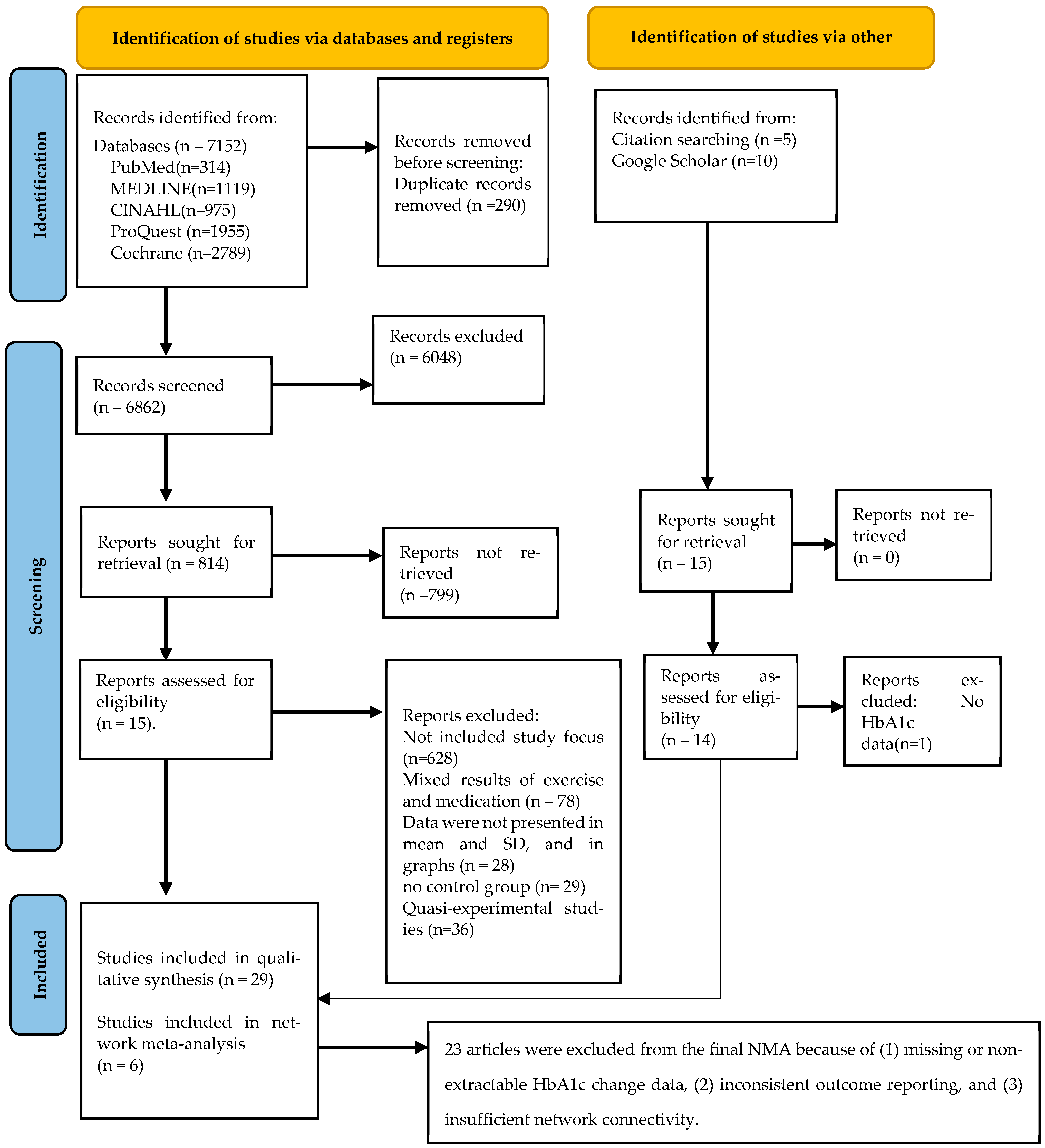
3.1. Screening Result
3.2. Characteristics of the Included Study
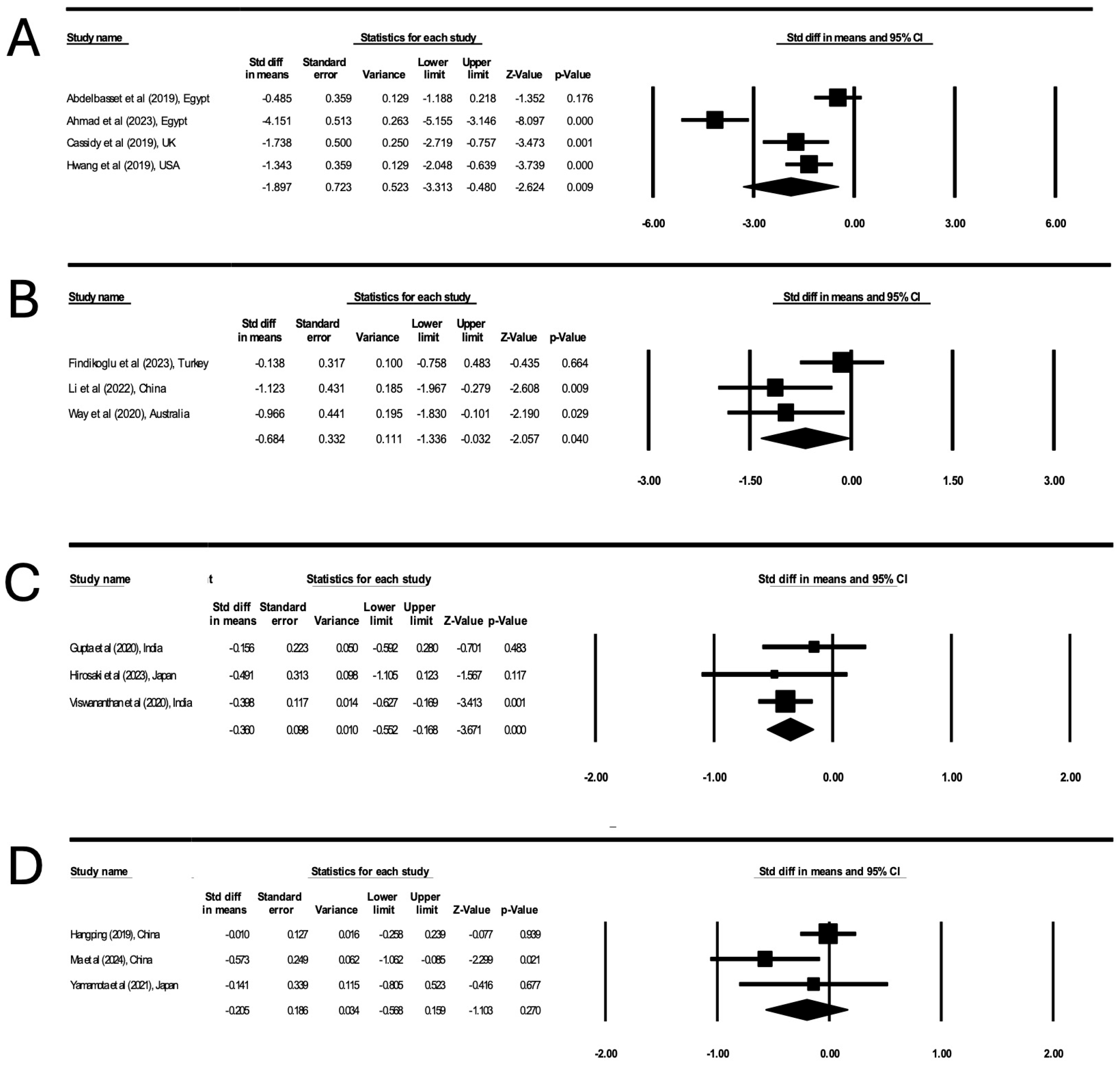
3.3. Evaluation of the HbA1c Reduction Effect Using Preliminary Meta-Analysis
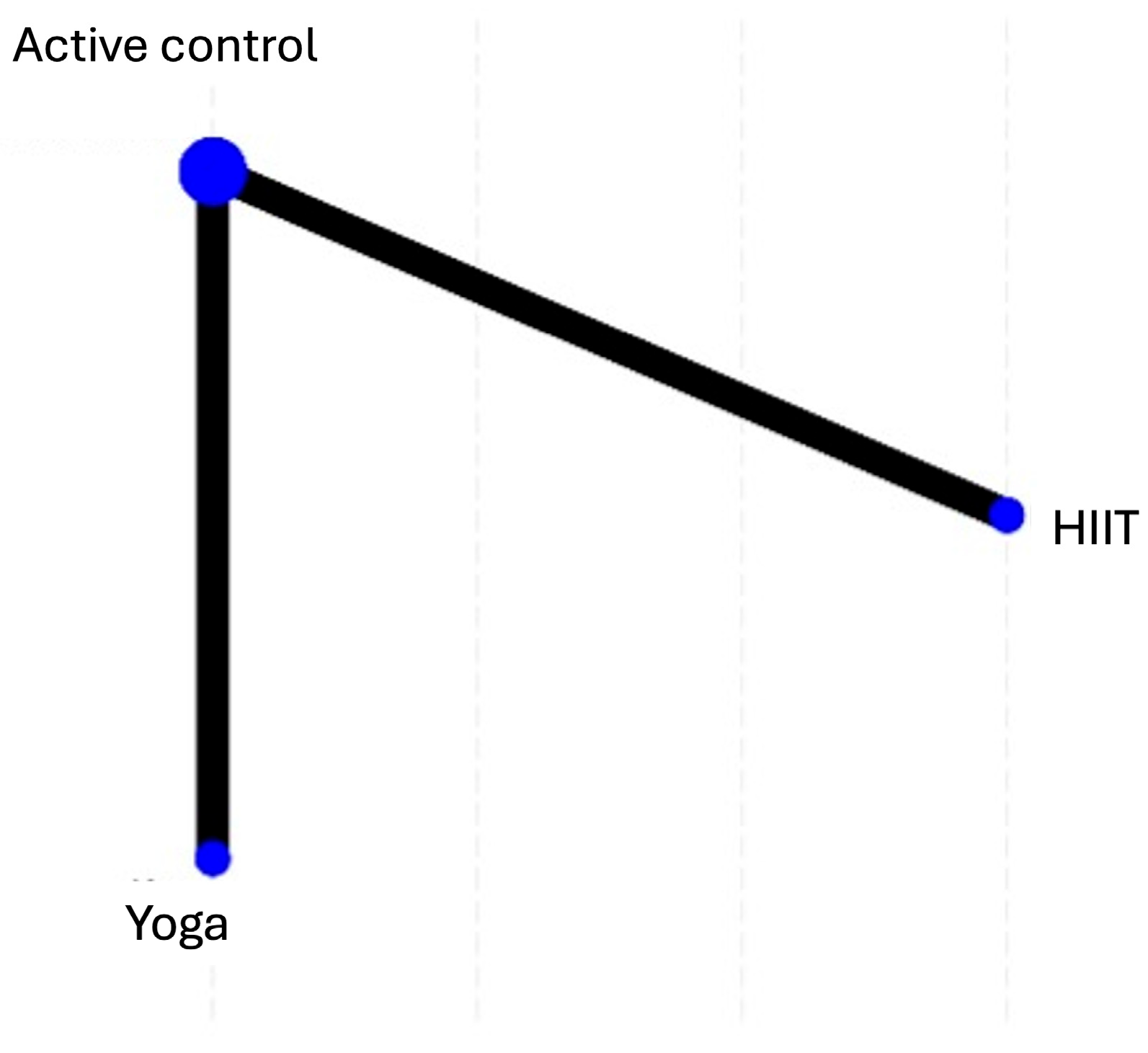
3.4. Comparison of the HbA1c Reduction Between HIIT and Yoga in Network Meta-Analysis
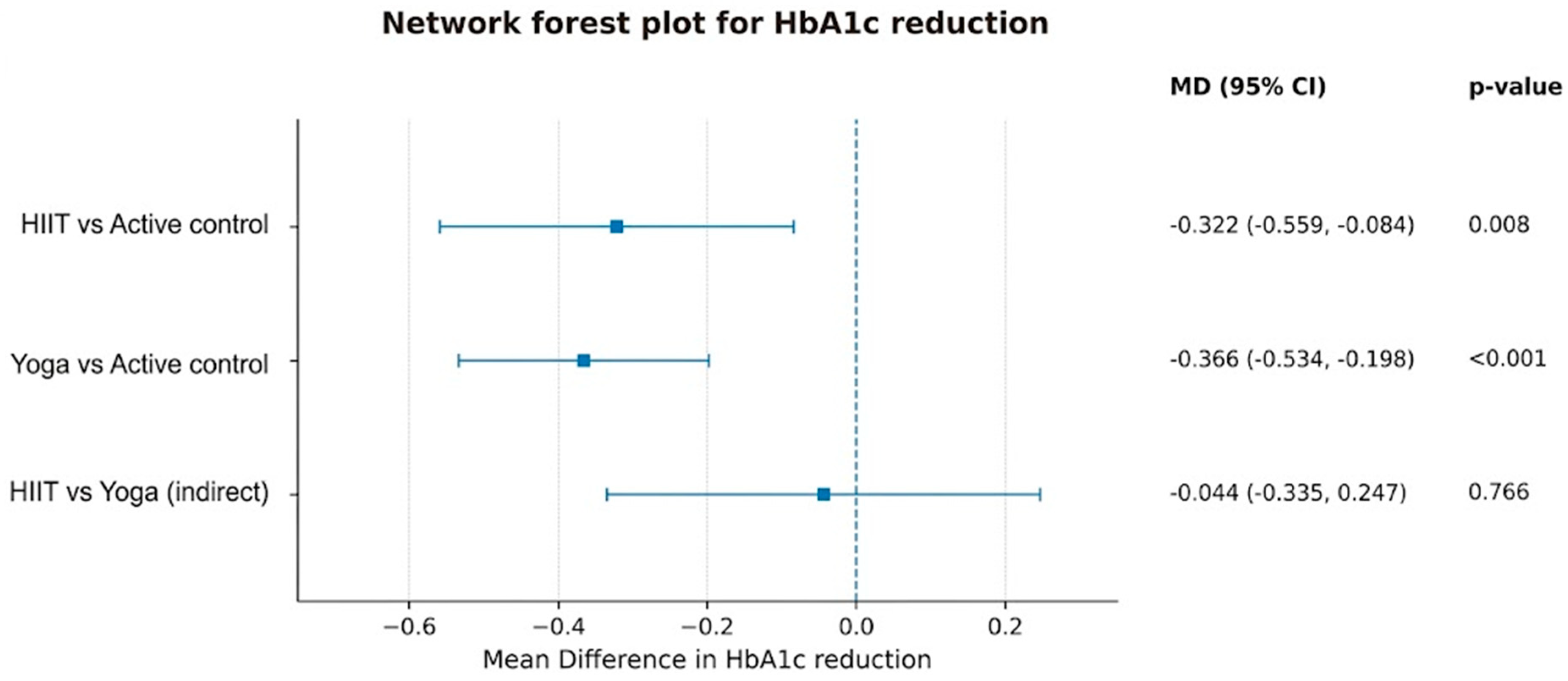
3.5. Relative Treatment Effects on HbA1c Reduction
3.6. Relative Treatment Effects and Ranking Probabilities
4. Discussion
5. Limitations of the Study
6. Conclusions
Supplementary Materials
Author Contributions
Funding
Institutional Review Board Statement
Informed Consent Statement
Data Availability Statement
Acknowledgments
Conflicts of Interest
References
- Holt, R.I.G.; DeVries, J.H.; Hess-Fischl, A.; Hirsch, I.B.; Kirkman, M.S.; Klupa, T.; Ludwig, B.; Norgaard, K.; Pettus, J.; Renard, E.; et al. The Management of Type 1 Diabetes in Adults. A Consensus Report by the American Diabetes Association (ADA) and the European Association for the Study of Diabetes (EASD). Diabetes Care 2021, 44, 2589–2625. [Google Scholar] [CrossRef]
- International Diabetes Federation. Diabetes Around the World in 2025. Available online: https://diabetesatlas.org/ (accessed on 13 October 2025).
- Sun, H.; Saeedi, P.; Karuranga, S.; Pinkepank, M.; Ogurtsova, K.; Duncan, B.B.; Stein, C.; Basit, A.; Chan, J.C.N.; Mbanya, J.C.; et al. IDF Diabetes Atlas: Global, regional and country-level diabetes prevalence estimates for 2021 and projections for 2045. Diabetes Res. Clin. Pract. 2022, 183, 109119. [Google Scholar] [CrossRef]
- Colberg, S.R.; Albright, A.L.; Blissmer, B.J.; Braun, B.; Chasan-Taber, L.; Fernhall, B.; Regensteiner, J.G.; Rubin, R.R.; Sigal, R.J.; American College of Sports, M.; et al. Exercise and type 2 diabetes: American College of Sports Medicine and the American Diabetes Association: Joint position statement. Exercise and type 2 diabetes. Med. Sci. Sports Exerc. 2010, 42, 2282–2303. [Google Scholar] [CrossRef]
- Bird, S.R.; Hawley, J.A. Update on the effects of physical activity on insulin sensitivity in humans. BMJ Open Sport Exerc. Med. 2016, 2, e000143. [Google Scholar] [CrossRef]
- Zhang, L.; Cheng, X.; Yang, Y.; Li, X.; Yuan, Y. Optimal dosage and modality of exercise on glycemic control in people with prediabetes: A systematic review and network meta-analysis. Front. Endocrinol. 2025, 16, 1560676. [Google Scholar] [CrossRef]
- de Mello, M.B.; Righi, N.C.; Schuch, F.B.; Signori, L.U.; da Silva, A.M.V. Effect of high-intensity interval training protocols on VO(2)max and HbA1c level in people with type 2 diabetes: A systematic review and meta-analysis. Ann. Phys. Rehabil. Med. 2022, 65, 101586. [Google Scholar] [CrossRef]
- Colberg, S.R.; Sigal, R.J.; Yardley, J.E.; Riddell, M.C.; Dunstan, D.W.; Dempsey, P.C.; Horton, E.S.; Castorino, K.; Tate, D.F. Physical Activity/Exercise and Diabetes: A Position Statement of the American Diabetes Association. Diabetes Care 2016, 39, 2065–2079. [Google Scholar] [CrossRef]
- Pan, B.; Ge, L.; Xun, Y.Q.; Chen, Y.J.; Gao, C.Y.; Han, X.; Zuo, L.Q.; Shan, H.Q.; Yang, K.H.; Ding, G.W.; et al. Exercise training modalities in patients with type 2 diabetes mellitus: A systematic review and network meta-analysis. Int. J. Behav. Nutr. Phys. Act. 2018, 15, 72. [Google Scholar] [CrossRef]
- Jayedi, A.; Emadi, A.; Shab-Bidar, S. Dose-Dependent Effect of Supervised Aerobic Exercise on HbA(1c) in Patients with Type 2 Diabetes: A Meta-analysis of Randomized Controlled Trials. Sports Med. 2022, 52, 1919–1938. [Google Scholar] [CrossRef]
- Cui, J.; Yan, J.H.; Yan, L.M.; Pan, L.; Le, J.J.; Guo, Y.Z. Effects of yoga in adults with type 2 diabetes mellitus: A meta-analysis. J. Diabetes Investig. 2017, 8, 201–209. [Google Scholar] [CrossRef]
- Wang, Y.; Yan, J.; Zhang, P.; Yang, P.; Zhang, W.; Lu, M. Tai Chi Program to Improve Glucose Control and Quality of Life for the Elderly with Type 2 Diabetes: A Meta-analysis. Inquiry 2022, 59, 469580211067934. [Google Scholar] [CrossRef]
- Chan, A.W.K.; Chair, S.Y.; Lee, D.T.F.; Leung, D.Y.P.; Sit, J.W.H.; Cheng, H.Y.; Taylor-Piliae, R.E. Tai Chi exercise is more effective than brisk walking in reducing cardiovascular disease risk factors among adults with hypertension: A randomised controlled trial. Int. J. Nurs. Stud. 2018, 88, 44–52. [Google Scholar] [CrossRef]
- Joanna Briggs Institute. Critical Appraisal Tools. Available online: https://jbi.global/critical-appraisal-tools (accessed on 15 May 2024).
- Goplen, C.M.; Verbeek, W.; Kang, S.H.; Jones, C.A.; Voaklander, D.C.; Churchill, T.A.; Beaupre, L.A. Preoperative Opioid Use is Associated with Worse Patient Outcomes After Total Joint Arthroplasty: A Systematic Review and Meta-analysis. BMC Musculoskelet. Disord. 2019, 20, 234. [Google Scholar] [CrossRef]
- Mir, E.; Moazzami, M.; Bijeh, N.; Hakak Dokht, E.; Rahimi, N. Changes in SFRP5, WNT5A, HbA1c, BMI, PBF, and insulin resistance in men with type 2 diabetes after 12 weeks of combined exercise (HIIT and resistance). Int. J. Diabetes Dev. Ctries. 2020, 40, 248–254. [Google Scholar] [CrossRef]
- Nazari, M.; Shabani, R.; Darsara, S.G. Effect of circuit resistance and jogging exercise training on the markers of metabolic syndrome in women with type 2 diabetes. J. Phys. Act. Horm. 2023, 5, 76. [Google Scholar]
- Zheng, H.P.; Qiao, X.N.; Zhang, Q.; Li, Q.C.; Yi, N.; Ji, L.J.; Liu, S.Y.; Zhang, S.; Zhou, X.M.; Liu, X.X.; et al. The impact on glycemic control through progressive resistance training with bioDensity(TM) in Chinese elderly patients with type 2 diabetes: The PReTTy2 (Progressive Resistance Training in Type 2 Diabetes) Trial. Diabetes Res. Clin. Pract. 2019, 150, 64–71. [Google Scholar] [CrossRef]
- Ali, H.I.; Al Ketbi, L.B.; Platat, C.; Abdl El Baki, H.; Elmi, F.; Ibrahim, W.; Zoubeidi, T.; Al Dhaheri, A.S.; Cheikh Ismail, L.; Tariq, M.N.M.; et al. Impact of Skills for Change Program on metabolic control, diet and physical activity levels in adults with type 2 diabetes: A cluster randomized trial. PLoS ONE 2024, 19, e0304639. [Google Scholar] [CrossRef]
- Abdelbasset, W.K.; Tantawy, S.A.; Kamel, D.M.; Alqahtani, B.A.; Elnegamy, T.E.; Soliman, G.S.; Ibrahim, A.A. Effects of high-intensity interval and moderate-intensity continuous aerobic exercise on diabetic obese patients with nonalcoholic fatty liver disease: A comparative randomized controlled trial. Medicine 2020, 99, e19471. [Google Scholar] [CrossRef]
- Ahmad, A.M.; Mahmoud, A.M.; Serry, Z.H.; Mohamed, M.M.; Abd Elghaffar, H.A. Effects of low-versus high-volume high-intensity interval training on glycemic control and quality of life in obese women with type 2 diabetes. A randomized controlled trial. J. Exerc. Sci. Fit. 2023, 21, 395–404. [Google Scholar] [CrossRef]
- Al-Rawaf, H.A.; Gabr, S.A.; Iqbal, A.; Alghadir, A.H. High-Intensity Interval Training Improves Glycemic Control, Cellular Apoptosis, and Oxidative Stress of Type 2 Diabetic Patients. Medicina 2023, 59, 1320. [Google Scholar] [CrossRef]
- Amaravadi, S.K.; Maiya, G.A.; Vaishali, K.; Shastry, B.A. Effectiveness of structured exercise program on insulin resistance and quality of life in type 2 diabetes mellitus-A randomized controlled trial. PLoS ONE 2024, 19, e0302831. [Google Scholar] [CrossRef]
- Chattopadhyay, K.; Mishra, P.; Singh, K.; Singh, K.; Harris, T.; Hamer, M.; Greenfield, S.M.; Manjunath, N.K.; Nair, R.; Mukherjee, S.; et al. Yoga Programme for Type 2 Diabetes Prevention (YOGA-DP) Among High-Risk People in India: A Multicenter Feasibility Randomized Controlled Trial. Diabetes Ther. 2023, 14, 1137–1154. [Google Scholar] [CrossRef]
- Gupta, U.; Gupta, Y.; Jose, D.; Mani, K.; Jyotsna, V.P.; Sharma, G.; Tandon, N. Effectiveness of Yoga-based Exercise Program Compared to Usual Care, in Improving HbA1c in Individuals with Type 2 Diabetes: A Randomized Control Trial. Int. J. Yoga 2020, 13, 233–238. [Google Scholar] [CrossRef]
- Ranga, S.; Agrawal, S.; Rukadikar, C.; Rukadikar, A. Study of effect of yoga on blood pressure, blood glucose, and glycosylated hemoglobin levels of patients with Type 2 diabetes mellitus. Natl. J. Physiol. Pharm. Pharmacol. 2021, 11, 449. [Google Scholar] [CrossRef]
- Sivapuram, M.S.; Srivastava, V.; Kaur, N.; Anand, A.; Nagarathna, R.; Patil, S.; Biman, S.; Chander, I.; Jyoti, S.; Nagendra, H.R. Ayurveda Body-Mind Constitutional Types and Role of Yoga Intervention Among Type 2 Diabetes Mellitus Population of Chandigarh and Panchkula Regions. Ann. Neurosci. 2020, 27, 214–223. [Google Scholar] [CrossRef]
- Viswanathan, V.; Sivakumar, S.; Sai Prathiba, A.; Devarajan, A.; George, L.; Kumpatla, S. Effect of yoga intervention on biochemical, oxidative stress markers, inflammatory markers and sleep quality among subjects with type 2 diabetes in South India: Results from the SATYAM project. Diabetes Res. Clin. Pract. 2021, 172, 108644. [Google Scholar] [CrossRef]
- Cassidy, S.; Vaidya, V.; Houghton, D.; Zalewski, P.; Seferovic, J.P.; Hallsworth, K.; MacGowan, G.A.; Trenell, M.I.; Jakovljevic, D.G. Unsupervised high-intensity interval training improves glycaemic control but not cardiovascular autonomic function in type 2 diabetes patients: A randomised controlled trial. Diab Vasc. Dis. Res. 2019, 16, 69–76. [Google Scholar] [CrossRef]
- Leung, L.Y.; Chan, A.W.; Sit, J.W.; Liu, T.; Taylor-Piliae, R.E. Tai Chi in Chinese adults with metabolic syndrome: A pilot randomized controlled trial. Complement Ther. Med. 2019, 46, 54–61. [Google Scholar] [CrossRef]
- Li, J.; Cheng, W.; Ma, H. A Comparative Study of Health Efficacy Indicators in Subjects with T2DM Applying Power Cycling to 12 Weeks of Low-Volume High-Intensity Interval Training and Moderate-Intensity Continuous Training. J. Diabetes Res. 2022, 2022, 9273830. [Google Scholar] [CrossRef]
- Li, X.; Si, H.; Chen, Y.; Li, S.; Yin, N.; Wang, Z. Effects of fitness qigong and tai chi on middle-aged and elderly patients with type 2 diabetes mellitus. PLoS ONE 2020, 15, e0243989. [Google Scholar] [CrossRef]
- Liu, X.; Zhu, H.; Peng, Y.; Liu, Y.; Shi, X. Twenty-Four week Taichi training improves pulmonary diffusion capacity and glycemic control in patients with Type 2 diabetes mellitus. PLoS ONE 2024, 19, e0299495. [Google Scholar] [CrossRef]
- Ma, X.; Ai, Y.; Lei, F.; Tang, X.; Li, Q.; Huang, Y.; Zhan, Y.; Mao, Q.; Wang, L.; Lei, F.; et al. Effect of blood flow-restrictive resistance training on metabolic disorder and body composition in older adults with type 2 diabetes: A randomized controlled study. Front. Endocrinol. 2024, 15, 1409267. [Google Scholar] [CrossRef]
- Qian, Z.; Ping, L.; Xu, D.M.; Zhang, X.L. Slow-velocity eccentric-only resistance training improves symptoms of type 2 diabetic mellitus patients by regulating plasma MMP-2 and -9. Medicine 2024, 103, e38855. [Google Scholar] [CrossRef]
- Findikoglu, G.; Altinkapak, A.; Yaylali, G.F. Is isoenergetic high-intensity interval exercise superior to moderate-intensity continuous exercise for cardiometabolic risk factors in individuals with type 2 diabetes mellitus? A single-blinded randomized controlled study. Eur. J. Sport Sci. 2023, 23, 2086–2097. [Google Scholar] [CrossRef]
- Hirosaki, M.; Ohira, T.; Wu, Y.; Eguchi, E.; Shirai, K.; Imano, H.; Funakubo, N.; Nishizawa, H.; Katakami, N.; Shimomura, I.; et al. Laughter yoga as an enjoyable therapeutic approach for glycemic control in individuals with type 2 diabetes: A randomized controlled trial. Front. Endocrinol. 2023, 14, 1148468. [Google Scholar] [CrossRef]
- Yamamoto, Y.; Nagai, Y.; Kawanabe, S.; Hishida, Y.; Hiraki, K.; Sone, M.; Tanaka, Y. Effects of resistance training using elastic bands on muscle strength with or without a leucine supplement for 48 weeks in elderly patients with type 2 diabetes. Endocr. J. 2021, 68, 291–298. [Google Scholar] [CrossRef]
- Hwang, C.L.; Lim, J.; Yoo, J.K.; Kim, H.K.; Hwang, M.H.; Handberg, E.M.; Petersen, J.W.; Holmer, B.J.; Leey Casella, J.A.; Cusi, K.; et al. Effect of all-extremity high-intensity interval training vs. moderate-intensity continuous training on aerobic fitness in middle-aged and older adults with type 2 diabetes: A randomized controlled trial. Exp. Gerontol. 2019, 116, 46–53. [Google Scholar] [CrossRef]
- Magalhaes, J.P.; Judice, P.B.; Ribeiro, R.; Andrade, R.; Raposo, J.; Dores, H.; Bicho, M.; Sardinha, L.B. Effectiveness of high-intensity interval training combined with resistance training versus continuous moderate-intensity training combined with resistance training in patients with type 2 diabetes: A one-year randomized controlled trial. Diabetes Obes. Metab. 2019, 21, 550–559. [Google Scholar] [CrossRef]
- Ranasinghe, C.; Devage, S.; Constantine, G.R.; Katulanda, P.; Hills, A.P.; King, N.A. Glycemic and cardiometabolic effects of exercise in South Asian Sri Lankans with type 2 diabetes mellitus: A randomized controlled trial Sri Lanka diabetes aerobic and resistance training study (SL-DARTS). Diabetes Metab. Syndr. 2021, 15, 77–85. [Google Scholar] [CrossRef]
- Way, K.L.; Sabag, A.; Sultana, R.N.; Baker, M.K.; Keating, S.E.; Lanting, S.; Gerofi, J.; Chuter, V.H.; Caterson, I.D.; Twigg, S.M.; et al. The effect of low-volume high-intensity interval training on cardiovascular health outcomes in type 2 diabetes: A randomised controlled trial. Int. J. Cardiol. 2020, 320, 148–154. [Google Scholar] [CrossRef]
- Sudarsono, N.C.; Tulaar, A.B.M.; Jusman, S.W.A.; Soewondo, P.; Sudaryo, M.D.K.; Siagian, M.; Karhiwikarta, W. The Effects of Combined High-Intensity Interval and Resistance Training on Glycemic Control and Oxidative Stress in T2DM. Asian J. Sports Med. 2019, 10, e91841. [Google Scholar] [CrossRef]
- Liu, J.X.; Zhu, L.; Li, P.J.; Li, N.; Xu, Y.B. Effectiveness of high-intensity interval training on glycemic control and cardiorespiratory fitness in patients with type 2 diabetes: A systematic review and meta-analysis. Aging Clin. Exp. Res. 2019, 31, 575–593. [Google Scholar] [CrossRef]
- Poon, E.T.; Li, H.Y.; Kong, A.P.S.; Little, J.P. Efficacy of high-intensity interval training in individuals with type 2 diabetes mellitus: An umbrella review of systematic reviews and meta-analyses. Diabetes Obes. Metab. 2025, 27, 1719–1734. [Google Scholar] [CrossRef] [PubMed]
- Balaji, P.A.; Varne, S.R.; Ali, S.S. Physiological effects of yogic practices and transcendental meditation in health and disease. N. Am. J. Med. Sci. 2012, 4, 442–448. [Google Scholar] [CrossRef]
- Raveendran, A.V.; Deshpandae, A.; Joshi, S.R. Therapeutic Role of Yoga in Type 2 Diabetes. Endocrinol. Metab. 2018, 33, 307–317. [Google Scholar] [CrossRef] [PubMed]
- Misra, P.; Sharma, G.; Tandon, N.; Kant, S.; Sangral, M.; Rai, S.K.; Yadav, K.; Vishnubhatla, S.; Mandal, S.; Kardam, P.; et al. Effect of Community-Based Structured Yoga Program on Hba1c Level among Type 2 Diabetes Mellitus Patients: An Interventional Study. Int. J. Yoga 2021, 14, 222–228. [Google Scholar] [CrossRef] [PubMed]
- Chiarpenello, C.; Brodmann, K. What can the psychoneuroimmunology of yoga teach us about depression’s psychopathology? Brain Behav. Immun.—Health 2024, 42, 100877. [Google Scholar] [CrossRef]
- Marshall, M.; McClanahan, M.; McArthur Warren, S.; Rogers, R.; Ballmann, C. A Comparison of the Acute Effects of Different Forms of Yoga on Physiological and Psychological Stress: A Pilot Study. Int. J. Environ. Res. Public Health 2020, 17, 6090. [Google Scholar] [CrossRef] [PubMed]
- Li, X.; Gao, M.; Hua, J. Comparative efficacy of various mind-body exercise types on cardiometabolic health in patients with type 2 diabetes: A network meta-analysis of randomized controlled trials. BMC Cardiovasc Disord. 2025, 25, 291. [Google Scholar] [CrossRef]
- Singh, V.P.; Khandelwal, B. Effect of Yoga and Exercise on Glycemic Control and Psychosocial Parameters in Type 2 Diabetes Mellitus: A Randomized Controlled Study. Int. J. Yoga 2020, 13, 144–151. [Google Scholar] [CrossRef]
- Page, M.J.; McKenzie, J.E.; Bossuyt, P.M.; Boutron, I.; Hoffmann, T.C.; Mulrow, C.D.; Shamseer, L.; Tetzlaff, J.M.; Tetzlaff, E.A.; Brennan, S.E.; et al. The PRISMA 2020 statement: An updated guideline for reporting systematic reviews. BMJ 2021, 372, n71. [Google Scholar] [CrossRef] [PubMed]



| No. | Author/Year/Country | Design/Study Population | Intervention Group/Mean Age | Exercise Dose (Duration and Frequency) | Intensity | Monitoring of Exercise Intensity | Sample Size | Outcome (HbA1c) Changes | Main Findings | |
|---|---|---|---|---|---|---|---|---|---|---|
| 1 | Abdelbasset et al. (2020)/Egypt [20] | RCT/T2DM | HIIT (Cycling Ergometer) Age (54.4 ± 5.8) | 8 weeks: 3 times/week 40 min/session | 80–85% VO2max (intense effort) 50% VO2max (light cycling) | VO2max | 16 | Baseline | After 8 weeks | Both the high-intensity (HII) and moderate-intensity (MIC) exercise groups showed reduced liver fat and belly fat. There was no clear difference between HII and MIC in their effects. |
| 6.6 ± 0.4 | 6.2 ± 0.3 | |||||||||
| Control Age (55.2 ± 4.3) | Receive medical treatment without exercise intervention | 16 | 6.7 ± 0.6 | 6.5 ± 0.5 | ||||||
| 2 | Ahmad et al. (2023), Egypt [21] | Randomized Control Parallel/Women with T2DM | low-volume HIIT (Treadmill exercise) Age (42.96 ± 5.87) | 12 weeks: 3 sessions/week, 19 min/session | Warm-up: 65–70% HRpeak Interval: 85–90% HRpeak Recovery: 65–75% Hrpeak | HR | 24 | Baseline | After 12 weeks | Both low- and high-volume HIIT showed improvements in TC, HDL, SBP, DBP, BMI, WC, and waist-to-hip ratio (p < 0.05). The high-volume HIIT group showed more significant improvements in HbA1c, FBG, 2 h PPBG, TG, LDL, (p < 0.05) |
| 8.15 ± 0.52 | 7.12 ± 0.49 | |||||||||
| High-volume HIIT (treadmill exercise) Age (43.29 ± 6.20) | 12 weeks: 3 sessions/week, 16 min/session | Warm-up: 65–70% HRpeak Interval: 85–90% HRpeak Recovery: 65–75% Hrpeak | 24 | 8.15 ± 0.56 | 6.65 ± 0.17 | |||||
| Usual care (non-exercising control group Age (42.46 ± 5.57) | 24 | 8.14 ± 0.55 | 8.19 ± 0.50 | |||||||
| 3 | Cassidy et al. (2019)/UK [29] | RCT/T2DM | HIIT (Cycling Ergometer) Age (60 ± 3) | 12 weeks: 3 sessions/week, 30–40 min/session | RPE 16–17 during intervals | Borg RPE scale | 11 | Baseline | 12 weeks | HIIT group improved HbA1c (from 7.13% to 6.87%), while the control group worsened (from 7.18% to 7.36%), p = 0.03. |
| 7.13 ± 0.31 | 6.87 ± 0.29 | |||||||||
| Control Age (59 ± 3) | Usual care | Maintain their normal routine and do not change their medication, physical activity, diet or body weight. | 11 | 7.18 ± 0.17 | 1.36 ± 0.21 | |||||
| 4 | * Findikoglu et al. (2023)/Turkey [36] | a single-blinded, 3-arm, randomized, controlled prospective study/Individuals with T2DM for less than 10 years but more than 1 year | HIIT (Electromagnetic bicycle) Age (57.5 ± 7.82) | 12 weeks: 3 sessions/week, 24 min in week (1–4) with 8 cycles, 36 min in week (5–8) with 12 cycles, and 48 min in week (9–12) with 16 cycles. | high-intensity (90% VO2peak for 60 s) low-intensity (30% VO2peak for 120 s) | VO2max | 20 | Baseline | after 12 weeks | Both HIIT and MICT improved VO2peak and HbA1c after 12 weeks of training. Only MICT caused additional improvements in cardiovascular responses, anthropometric measures, and abdominal fat compared to baseline (p < 0.05). |
| 6.9 ± 0.68 | 6.59 ± 0.49 | |||||||||
| Control Age (55.75 ± 8.56) | Doing simple static stretches of major muscle groups | 20 | 6.99 ± 0.66 | 6.76 ± 0.66 | ||||||
| 5 | * Gupta et al. (2020)/India [25] | RCT/Individuals with T2DM | Yoga (asanas, kriyas, pranayama, and meditation) Age (50.6 ± 8.5) | 16 weeks: Training phases: 3 sessions/week (weeks 1–2); Supervision phase: 2 sessions/week (weeks 3–4); Maintenance phase: 1 session/month (months 2–4). One Session/45 min. | 40 | Baseline | After 16 weeks | An HbA1c drop of ≥0.5% was observed in 44.7% of YBEP participants, while 37.5% in usual care. ≥75% of attending YBEP showed a 0.3% drop, compared to 0.1% for lower attendance. | ||
| 8.53 ± 0.71 | 8.31 ± 1.32 | |||||||||
| Control Age (50.6 ± 8.5) | usual care (Dietary counseling plus 30 min walking (5–6 km/h), ≥5 days/week.) | 41 | 8.39 ± 0.65 | 8.38 ± 1.37 | ||||||
| 6 | Zheng et al. (2019)/China [18] | RCT/T2DM | high-intensity Progressive Resistance Training (using non-conventional equipment) Age (65.66 ± 8.58) | 24 weeks: 1 session/week, 5–10 min/session Four isometric exercises (chest press, leg press, core pull, vertical lift) are supervised by a qualified trainer | Isometric contractions performed against resistance scaled to body weight, with progressive load increases. | Multiples of body weight (MOBs) generated during the isometric contractions | 165 | Baseline | After 24 weeks | There were no significant changes in HbA1c between the control and PRT groups overall. The intervention group had significant improvements in HDL and LDL |
| 6.83 ± 1.31 | 6.75 ± 0.93 | |||||||||
| Control Age (66.72 ± 6.68) | Participants maintained their usual medical care, dietary habits, and lifestyle. | 100 | 6.92 ± 1.26 | 6.85 ± 1.17 | ||||||
| 7 | * Hirosaki et al. (2023)/Japan [37] | RCT/People with T2DM | Laughter Yoga Program (warm-up, deep breathing, laughter exercises, and calming activities) Age (71.8 ± 6.4)) | 12 weeks: Mini-lecture (30 min) + laughter yoga (60 min); 1 session/week (weeks 1–4), then 1 session/2 weeks (weeks 5–12). | 21 | Baseline | After 12 weeks | Laughter yoga group had a significant HbA1c reduction (−0.31%, 95% CI: −0.54 to −0.09) with increased positive affect scores (+0.62, 95% CI: 0.003 to 1.23). | ||
| 7.07 ± 0.7 | 6.82 ± 0.6 | |||||||||
| Control Age (70.6 ± 8.2) | Oral hypoglycemic medications, physician advice, and physical activity guidance under Japan’s Treatment Guide for Diabetes | 21 | 7.19 ± 0.7 | 7.26 ± 0.7 | ||||||
| 8 | Hwang et al. (2019)/USA [39] | RCT/T2DM | HIIT (Cycling Ergometer) Age (65 ± 2) | 8 weeks: 4 sessions/week, 40 min/session | 90% HRpeak (4 × 4 min intervals) 70% HRpeak (3 × 3 min recovery) | HR | 23 | Baseline | After 8 weeks | No improvement has been found in glycemic control, lipid profile, or blood pressure. However, both intervention groups improved in aerobic fitness. |
| 7.1 ± 0.3 | 6.8 ± 0.2 | |||||||||
| Control Age (61 ± 2) | Followed regular physical activity, dieting, and meditation | 16 | 7.4 ± 0.4 | 7.5 ± 0.4 | ||||||
| 9 | * Li et al. (2022)/China [31] | parallel randomized controlled clinical trial/T2DM patients | HIIT (Swedish Monark power bike) Age (38 ± 6) | 12 weeks: 5 sessions/week, 30 min/session | 80–95% HRmax/VO2peak | HR | 13 | Baseline | After 12 weeks | The MICT group showed significant weight loss (difference = 3.52, p < 0.01) and improved FBG (p < 0.05). BMI significantly decreased within groups (p < 0.01), though not between groups. HbA1c levels improved significantly over time (p < 0.01), but not between groups. SBP improved significantly in both HIIT and MICT groups compared to the control (p < 0.05). |
| 7.18 ± 0.50 | 6.79 ± 0.41 | |||||||||
| Control Age (40 ± 7) | Received standard counseling on conventional T2DM exercise guidelines | 12 | 7.06 ± 0.38 | 7.09 ± 0.33 | ||||||
| 10 | Ma et al. (2024)/China [34] | Single-blinded RCT/People diagnosed with T2DM | RT (using dumbbells, resistance bands, and kettlebells) Age (66.65 ± 4.94) | 24 weeks: 3 times/week, 50 min/time | 40–50% of 1-RM during initial training, progressively increasing by 5–10% up to 60–70% of 1RM. | % of 1-RM | 31 | Baseline | 24 weeks | Fasting Plasma Glucose (FPG), HbA1c, blood lipids, diastolic blood pressure, body composition, and muscle performance significantly improved in both exercise groups compared to the control group and their own baseline (p < 0.05). |
| 7.80 ± 0.93 | 7.11 ± 0.75 | |||||||||
| blood flow restrictive resistance exercise group (using KAATSU Air Bands) Age (66.41 ± 4.97) | 24 weeks: 3 times/week, 50 min/time | 20–30% of one-repetition maximum (1RM) combined with blood flow restriction pressure sufficient to partially restrict arterial inflow. | % of 1-RM for load resistance and limb occlusion pressure (LOP) for BFR | 34 | 7.75 ± 0.97 | 7.24 ± 0.85 | ||||
| Control Age (65.55 ± 4.41) | Usual care (followed a diabetes management program but received no formal training and continued their usual self-selected diet and exercise habits.) | 33 | 7.98 ± 0.96 | 7.93 ± 0.75 | ||||||
| 11 | * Viswanathan et al. (2021)/India [28] | RCT/T2DM | Yoga (loosening exercises, asanas, pranayama, and relaxation techniques, along with diabetes education) Age (50.8 ± 8.3) | 12 weeks: 5 days/week, 50 min/day | 150 | Baseline | After 12 weeks | Yoga group lowers BMI, blood sugar, HbA1c, cholesterol, and inflammation markers. | ||
| 7.5 ± 0.5 | 7.2 ± 0.9 | |||||||||
| Non-Yoga Age (52.8 ± 7.0) | Simple physical exercises for 50 min per session, 5 days per week. | 150 | 7.5 ± 0.6 | 7.6 ± 1.1 | ||||||
| 12 | * Way et al. (2020)/Australia [42] | RCT/T2DM | HIIT (Cycling Ergometer) Age (56.9 ± 2.1) | 12 weeks: 3 sessions/week, 19 min/session | Each session with 4 min of high-intensity cycling at 90% VO2peak | % of VO2peak | 12 | Baseline | After 12 weeks | After the intervention of HIIT and MICT, significant improvements were found in VO2peak (p < 0.01), HbA1c (p = 0.03), systolic blood pressure (p< 0.01), and waist size (p = 0.03). |
| 7.1 ± 1.5 | 6.8 ± 0.9 | |||||||||
| Control Age (51.9 ± 1.4) | Sham Exercise Placebo (Stretching and core exercises every 2 weeks; ≤30 min/session with 5 min light cycling (20 W) warm-up and cool-down.) | 11 | 7.6 ± 0.5 | 8.0 ± 0.5 | ||||||
| 13 | Yamamoto et al. (2021)/Japan [38] | Prospective RCT/T2DM | Resistance exercise (using an elastic band) Age (73.2 ± 2.6) | 48 weeks of daily exercise: one time/15 min | Bodyweight exercises combined with progressive elastic band resistance (TBB-1 to TBB levels) representing increasing resistance levels. | Daily exercise logs (adherence tracking). | 18 | Baseline | After 48 weeks | No changes in physical function, muscle mass, or cognitive function in any group. The leucine supplement brought no extra benefits for muscle strength or mass. |
| 7.4 ± 0.9 | 7.3 ± 0.8 | |||||||||
| Control Age (73.3 ± 2.5) | Maintain daily activities | 17 | 7.0 ± 0.7 | 6.8 ± 0.6 | ||||||
| Comparison | Mean Difference (MD) | 95% CI | p-Value |
|---|---|---|---|
| HIIT vs. Active control | −0.322 | −0.559, −0.084 | 0.008 |
| Yoga vs. Active control | −0.366 | −0.534 to −0.198 | <0.001 |
| HIIT vs. Yoga (indirect) | −0.044 | −0.335 to 0.247 | 0.766 |
| Treatment | Active Control | HIIT | Yoga |
|---|---|---|---|
| Active control | — | 0.322 (0.084 to 0.559) | 0.366 (0.198 to 0.534) |
| HIIT | −0.322 (−0.559 to −0.084) | — | −0.044 (−0.335 to 0.247) |
| Yoga | −0.366 (−0.534 to −0.198) | 0.044 (−0.247 to 0.335) | — |
| Rank | Intervention | Probability of Being Best | Probability of Being Second | Probability of Being Third | SUCRA |
|---|---|---|---|---|---|
| 1 | Yoga | 1.0 | 0.0 | 0.0 | 1.0 |
| 2 | HIIT | 0.0 | 1.0 | 0.0 | 0.5 |
| 3 | Active control | 0.0 | 0.0 | 1.0 | 0.0 |
Disclaimer/Publisher’s Note: The statements, opinions and data contained in all publications are solely those of the individual author(s) and contributor(s) and not of MDPI and/or the editor(s). MDPI and/or the editor(s) disclaim responsibility for any injury to people or property resulting from any ideas, methods, instructions or products referred to in the content. |
© 2026 by the authors. Licensee MDPI, Basel, Switzerland. This article is an open access article distributed under the terms and conditions of the Creative Commons Attribution (CC BY) license.
Share and Cite
Thu, S.Y.W.; Patnaik, S.; Shih, Y.-H. Yoga and High-Intensity Interval Training Show Comparable Effects on HbA1c in Type 2 Diabetes: A Systematic Review and Preliminary Pilot Network Meta-Analysis in Adult Populations. Healthcare 2026, 14, 1703. https://doi.org/10.3390/healthcare14121703
Thu SYW, Patnaik S, Shih Y-H. Yoga and High-Intensity Interval Training Show Comparable Effects on HbA1c in Type 2 Diabetes: A Systematic Review and Preliminary Pilot Network Meta-Analysis in Adult Populations. Healthcare. 2026; 14(12):1703. https://doi.org/10.3390/healthcare14121703
Chicago/Turabian StyleThu, Saw Ye Win, Sneha Patnaik, and Yin-Hwa Shih. 2026. "Yoga and High-Intensity Interval Training Show Comparable Effects on HbA1c in Type 2 Diabetes: A Systematic Review and Preliminary Pilot Network Meta-Analysis in Adult Populations" Healthcare 14, no. 12: 1703. https://doi.org/10.3390/healthcare14121703
APA StyleThu, S. Y. W., Patnaik, S., & Shih, Y.-H. (2026). Yoga and High-Intensity Interval Training Show Comparable Effects on HbA1c in Type 2 Diabetes: A Systematic Review and Preliminary Pilot Network Meta-Analysis in Adult Populations. Healthcare, 14(12), 1703. https://doi.org/10.3390/healthcare14121703