1. Introduction
Topical corticosteroids (TCS) represent one of the most frequently prescribed therapeutic agents in dermatology, serving as the cornerstone of treatment for a broad spectrum of inflammatory and autoimmune skin conditions, including atopic dermatitis, psoriasis, lichen planus, lichen simplex chronicus, discoid lupus erythematosus, vitiligo, and lichen sclerosis [
1,
2,
3]. Available in various formulations, potencies, and vehicles, TCS efficacy is contingent upon selecting the appropriate preparation matched to the diagnosis, affected body site, and intended duration of therapy [
2]. Since the introduction of hydrocortisone 1% cream as an over-the-counter agent in the United Kingdom in 1987, TCS have become widely accessible, facilitating their use and misuse beyond the scope of specialist prescription [
4]. Unrestricted use has been associated with well-documented adverse effects, including cutaneous atrophy, striae, rosacea, acneiform eruptions, perioral dermatitis, and purpura; incidence decreases substantially when use is restricted to prescription-only frameworks [
4,
5].
Despite their established efficacy and safety profile when used appropriately, TCS phobia, defined as vague, unfavorable beliefs and irrational fear toward TCS, among patients or caregivers has emerged as a clinically significant barrier to effective dermatological care [
6]. TCS phobia is directly associated with poor medication adherence, disease exacerbations, and unnecessary escalation to expensive biologics such as dupilumab or systemic immunosuppressants including methotrexate and cyclosporine [
6,
7,
8,
9,
10,
11,
12,
13]. Contributing factors include personal exposure to adverse effects, misinterpretation of prescribing information, and misinformation disseminated via social media and informal networks [
14]. Addressing these factors through effective patient education requires a thorough understanding of their prevalence and determinants.
Published estimates of TCS phobia prevalence range widely from 31% to 95.7% depending on the study population, methodology, and tool used [
15]. However, epidemiological data from Saudi Arabia remain limited, with only a small number of regional studies conducted in single cities or specific patient subgroups [
16,
17,
18,
19]. A cross-sectional assessment among a socially recruited sample covering diverse demographic regions and employing a validated phobia scale is lacking. This study aims to address this gap by determining the prevalence of TCS-related concern and phobic behaviors among the general population across Saudi Arabia, characterizing the beliefs and behaviors that associated with it, and identifying factors associated with higher TCS-related concern and phobic attitudes to inform targeted health education strategies.
2. Materials and Methods
2.1. Study Design and Setting
This was a cross-sectional, observational study conducted between October and December 2025 among the general population of Saudi Arabia. Data were collected via an online self-administered questionnaire distributed through social media platforms (WhatsApp, X [formerly Twitter], and Instagram). The study included participants from five major geographic zones of Saudi Arabia, broadly corresponding to the northern, southern, eastern, western, and central parts of the country. These zones were defined for the purpose of geographic distribution analysis and do not strictly correspond to the official administrative regions designated by the Saudi government; rather, they reflect the self-reported residential areas indicated by participants in the questionnaire.
2.2. Study Population and Sampling
Participants were eligible if they were Saudi nationals or long-term residents of Saudi Arabia aged 18 years or older and able to complete the questionnaire in Arabic. Individuals who identified themselves as healthcare professionals were excluded via a self-report screening item at the commencement of the questionnaire, to minimize professional knowledge bias. Questionnaires were retained if participants completed the core sociodemographic block and the primary TCS-concern item (n = 481). Module-specific denominators differ across the results because (i) the seven-item cumulative phobia score required complete responses to all seven items (n = 476); (ii) multivariable models list-wise excluded participants missing any covariate (logistic n = 481; linear n = 476); (iii) the ever-user module was conditional on current or previous TCS use (n = 192); and (iv) the usage-detail module was conditional on current use (n = 163). Convenience sampling was employed through across social media platforms.
2.3. Sample Size Calculation
The required sample size was calculated using the online Raosoft® sample size calculator with an assumed population size of 35 million, a confidence interval of 95%, a margin of error of 5%, and an estimated TCS phobia prevalence of 50% (conservative estimate). The minimum required sample was 377 participants. A total of 481 valid responses were obtained, exceeding the calculated minimum.
2.4. Instruments
The phobia assessment items were adapted from established instruments used in the TCS literature, including the TOPICOP scale [
10]. In addition, the selection of items was guided by findings from previously published cross-sectional studies and systematic reviews on TCS phobia [
6,
8,
11]. Items were translated into Arabic by two bilingual investigators and back translated by an independent bilingual clinician; discrepancies were resolved by consensus. The instrument was pretested in 20 adults from the target population to confirm clarity and face validity.
The questionnaire was developed in Arabic and comprised four sections: (1) sociodemographic information (age, sex, marital status, education level, region); (2) TCS use history and current practices; (3) seven items assessing phobic attitudes and behaviors toward TCS, adapted from the TOPICOP scale [
10] and previous TCS-phobia studies [
6,
8,
11]; and (4) sources of information about TCS. Each of the seven phobia items was scored on a four-point Likert scale (1 = Totally Disagree, 2 = Neutral, 3 = Somewhat Agree, 4 = Totally Agree), as administered in the Arabic questionnaire. The willingness item (“If prescribed, I will use topical corticosteroids”) was reverse coded so that higher item scores consistently indicated greater phobic attitudes. The cumulative phobia score was computed as the sum of the seven items, with a theoretical range of 7–28 and higher values denoting stronger phobic attitudes. Because the instrument was adapted but not formally re-validated in Arabic, no diagnostic cut-off (low/moderate/high phobia) was imposed; the score is treated as a continuous measure of TCS-related concerns and phobic attitudes throughout. Questionnaires with any missing item on the phobia scale (n = 5) were excluded from score computation, yielding n = 476 with complete seven-item data. Internal consistency, calculated after reverse coding, was acceptable (Cronbach’s α = 0.73).
2.5. Data Analysis
Data was analyzed using IBM SPSS Statistics version 29.0 (IBM Co., Armonk, NY, USA). Descriptively, frequencies with percentages, means with standard deviations, and medians with interquartile ranges were used to characterize the study population. Confidence intervals of 95% were computed for key prevalence estimates. Differences in the distribution of categorical variables across levels of TCS concern were examined using Chi-square (χ2) test (or Fisher’s exact test where any expected cell frequency was less than 5); strength of association was quantified using Cramér’s V.
The distribution of the cumulative phobia score was assessed using the Shapiro–Wilk test; homogeneity of variance was assessed using Levene’s test. Mean phobia scores were compared between two groups using independent-samples t-tests and across three or more groups using one-way ANOVA. Effect sizes were reported as Cohen’s d for two-group comparisons, η2 for ANOVAs, and Cramér’s V for χ2 tests. The Benjamini–Hochberg procedure was applied jointly across the 16 primary tests to control the false-discovery rate.
For comparability with prior TCS-phobia studies using a binary endpoint [
3,
11], the primary outcome was dichotomized as TCS concern (“Yes” vs. “No/Neutral”). To identify factors independently associated with the outcomes, two multivariable models were fitted: (a) a binary logistic regression with TCS concern (Yes vs. No/Neutral) as the outcome, and (b) a multiple linear regression with the cumulative phobia score as the outcome. All covariates (age, sex, marital status, education, region, current TCS use, and primary information source) were selected a priori on the basis of plausibility from the prior TCS-phobia literature and entered simultaneously; no stepwise selection was performed. Adjusted odds ratios are reported for the logistic model; β coefficients (expressed as adjusted change in the cumulative phobia score in points, theoretical range 7–28, versus the reference category) are reported for the linear model. A two-sided
p-value < 0.05 was considered statistically significant for all analyses.
2.6. Ethical Considerations
This study was approved by the Bioethics Committee of Scientific and Medical Research at the University of Jeddah (Bioethics Committee Registration Number: HAP-02-J-094; Application Number: UJ-REC-308; Approval Date: 29 December 2024), with all recruitment and data collection (October–December 2025) carried out prospectively within this approval period. Written electronic informed consent was obtained from all participants prior to completing the questionnaire. Participation was voluntary, and anonymity was assured.
4. Discussion
This cross-sectional study provides an assessment of TCS-related concerns and phobic behaviors among a convenience sample recruited via social media across multiple regions of Saudi Arabia. Our finding that 51.6% of participants expressed concern about TCS use reflects the burden of TCS-related apprehension and behavioral avoidance within this population; however, this figure should be interpreted with caution, as it is derived from a single self-reported item rather than a validated diagnostic instrument, and does not constitute a clinically defined prevalence of TCS phobia. Nonetheless, this proportion falls within the global prevalence range of 31–95.7% reported in a comprehensive review by Contento et al. (2021) [
15]. This comparatively moderate prevalence may reflect the mixed composition of our sample, which included both TCS-naïve and experienced users, as well as participants with varying levels of dermatological exposure.
Multivariable regression analyses identified female sex, married status, and diploma-level education as the most consistent independent correlates of TCS-related concern and phobic attitudes. The persistence of the female–male difference (aOR 1.71 for concern; β = +1.59 points for the phobia score) consistent with international observations of greater TCS hesitancy among women and is plausibly mediated by greater dermatological help-seeking, differential exposure to dermatology-related social-media content, lack of education, fear of side effects, and misinformation [
15,
20]. Conversely, age and primary information sources, which appeared significant in unadjusted analyses, lost independent significance in both models, indicating that their crude associations were partially confounded by the demographic composition of these subgroups. The associations that survived Benjamini–Hochberg adjustment for multiple testing, sex, marital status, education, region, and behavioral intention to use TCS if prescribed for the concern outcome, and sex, marital status, education, region and age for the phobia-score outcome should be regarded as the most robust signals in these data, while findings that did not survive correction should be interpreted as exploratory.
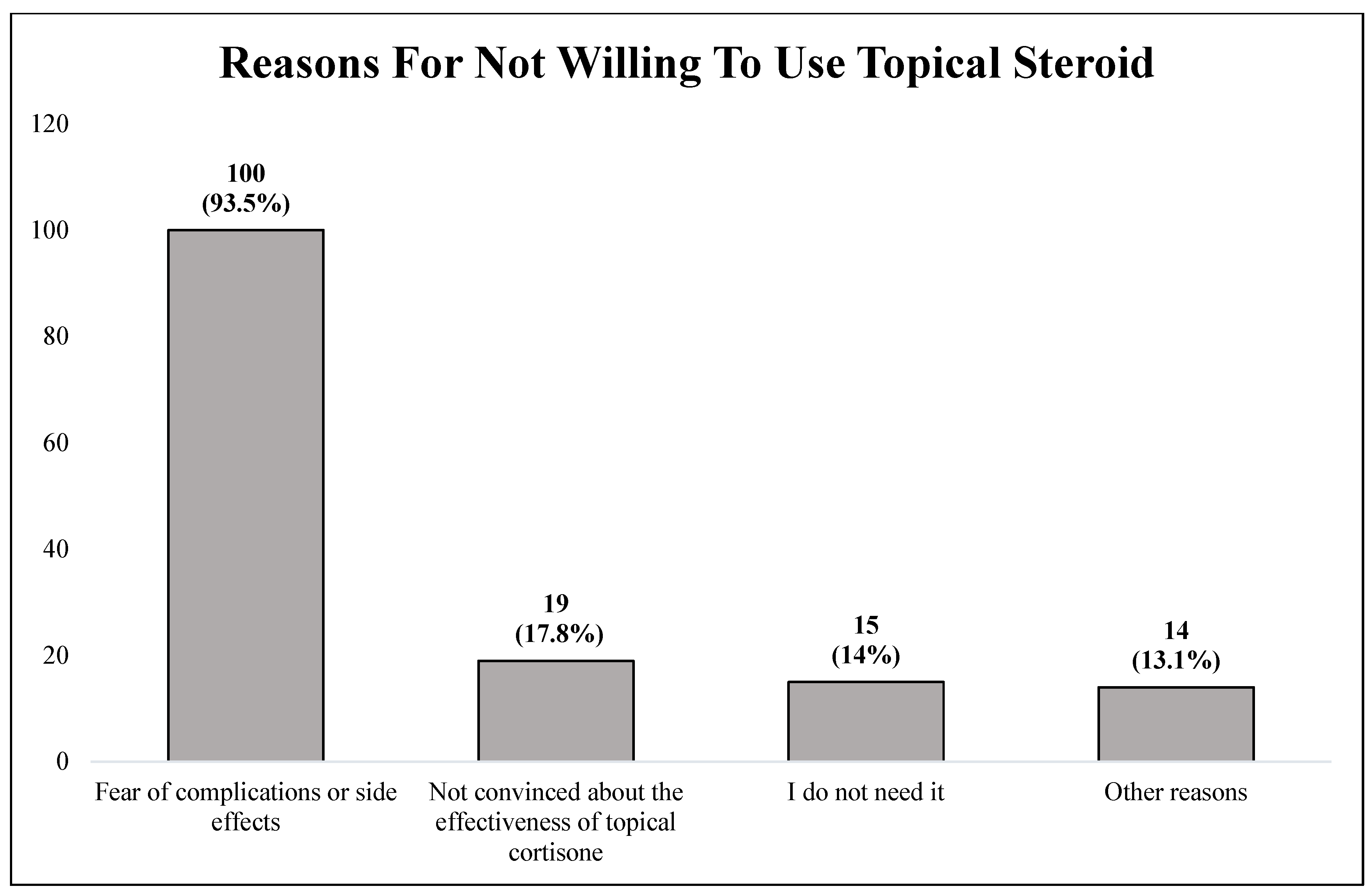
The overwhelmingly predominant reason for declining prescribed TCS was fear of adverse effects (93.5%), in alignment with Magboul et al. (2025), who similarly identified safety concerns as the primary factor associated with of corticosteroid hesitancy in the western region of Saudi Arabia [
21]. Patients frequently overestimate the risk of systemic absorption, skin thinning, dependency, and withdrawal syndromes, while underestimating the established benefit-to-risk ratio of appropriately used TCS. These misconceptions are known to result in suboptimal application practices, interruptions in therapy, and avoidance of effective treatment, ultimately perpetuating chronic skin disease [
6,
12].
The age signal in the unadjusted analysis (driven principally by the small 25–34-year subgroup; n = 17) did not retain independent significance in either multivariable model. This is partially consistent with findings by Alamri and Al Satti (2024), who reported higher phobia in individuals aged ≥ 56 years [
22], and with Lin et al. (2025), who reported that younger women (<25 years) were particularly concerned about cosmetically conspicuous TCS side effects such as facial acne and hyperpigmentation [
23], suggesting that age-related patterns in TCS-related concern may vary considerably by setting, sex, and indication. In our cohort, age associations should be regarded as exploratory and require confirmation in larger probability-based samples.
The significantly higher phobia scores among female participants (20.43 ± 4.06 vs. males 18.84 ± 4.68,
p < 0.001) are similar to Choi et al.’s (2020) findings, who observed greater TCS hesitancy among women using the TOPICOP score [
3]. This difference may reflect heightened cosmetic awareness, greater dermatology healthcare utilization, or differential exposure to beauty-focused social media content. Furthermore, widowed and divorced individuals demonstrated the highest unadjusted phobia scores (21.82 ± 3.57,
p = 0.008), suggesting that reduced social support, a recognized correlate of health anxiety and medication non-adherence, may amplify corticosteroid-related fear, as discussed by Janowski et al. (2012) in the context of psoriasis [
24].
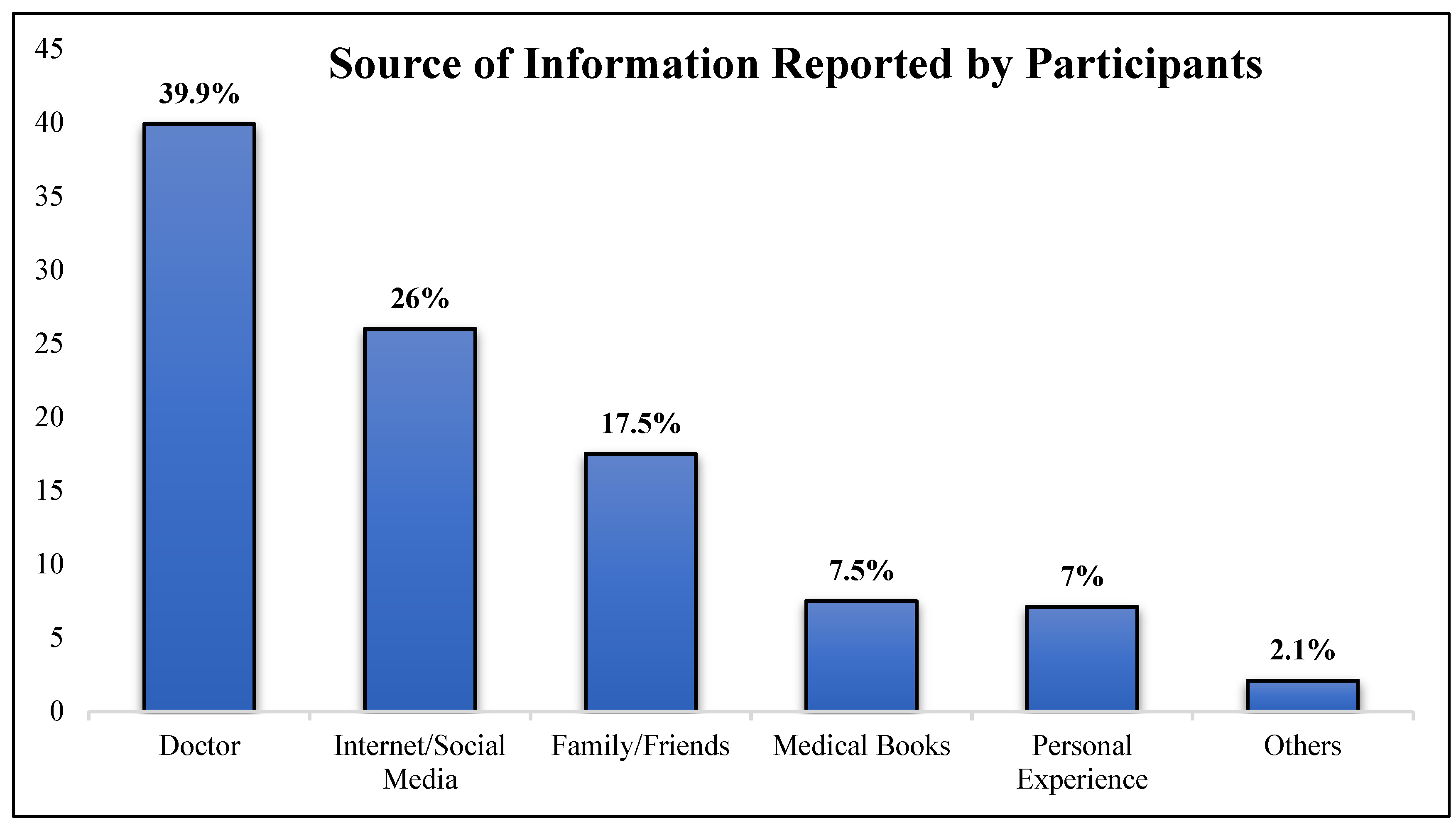
The role of information sources was particularly notable. Although physicians were the most frequently cited source (38.3%), a substantial proportion of participants relied on social media and the internet (27.7%) or family and friends (16.6%). Participants who sourced health information from social media demonstrated numerically higher unadjusted phobia scores (20.42 ± 4.14), although this association did not retain significance after BH correction (BH-adj. p = 0.114) and did not survive multivariable adjustment. This finding should be interpreted with caution in the context of a cross-sectional design, which precludes determination of directionality. Individuals with pre-existing TCS-related concerns may preferentially seek information from social media, rather than social media exposure itself precipitating phobic attitudes. Longitudinal studies are therefore warranted to delineate the temporal relationship between health information-seeking behavior and the development of TCS-related phobic attitudes. Nonetheless, clinicians should remain attentive to the potential influence of unregulated online health information and address TCS-related misconceptions proactively during consultations.
Key phobic behaviors identified in our study including fear of large-quantity application (40.5%), long-term use (54.2%), and application to sensitive anatomical sites (63.0%) mirror findings by Li et al. (2017) in their systematic review of TCS phobia in atopic dermatitis [
6]. These behaviors directly undermine TCS efficacy and contribute to the vicious cycle of undertreated skin disease and escalating therapeutic costs. Poor adherence (44.2%) in our cohort is similarly consistent with published evidence linking phobic concerns to medication non-adherence [
6]. Structural barriers including inadequate hospital dispensing (32.7%) and high out-of-pocket cost (25.3%) compound this problem and signal a need for systemic healthcare improvements alongside patient education.
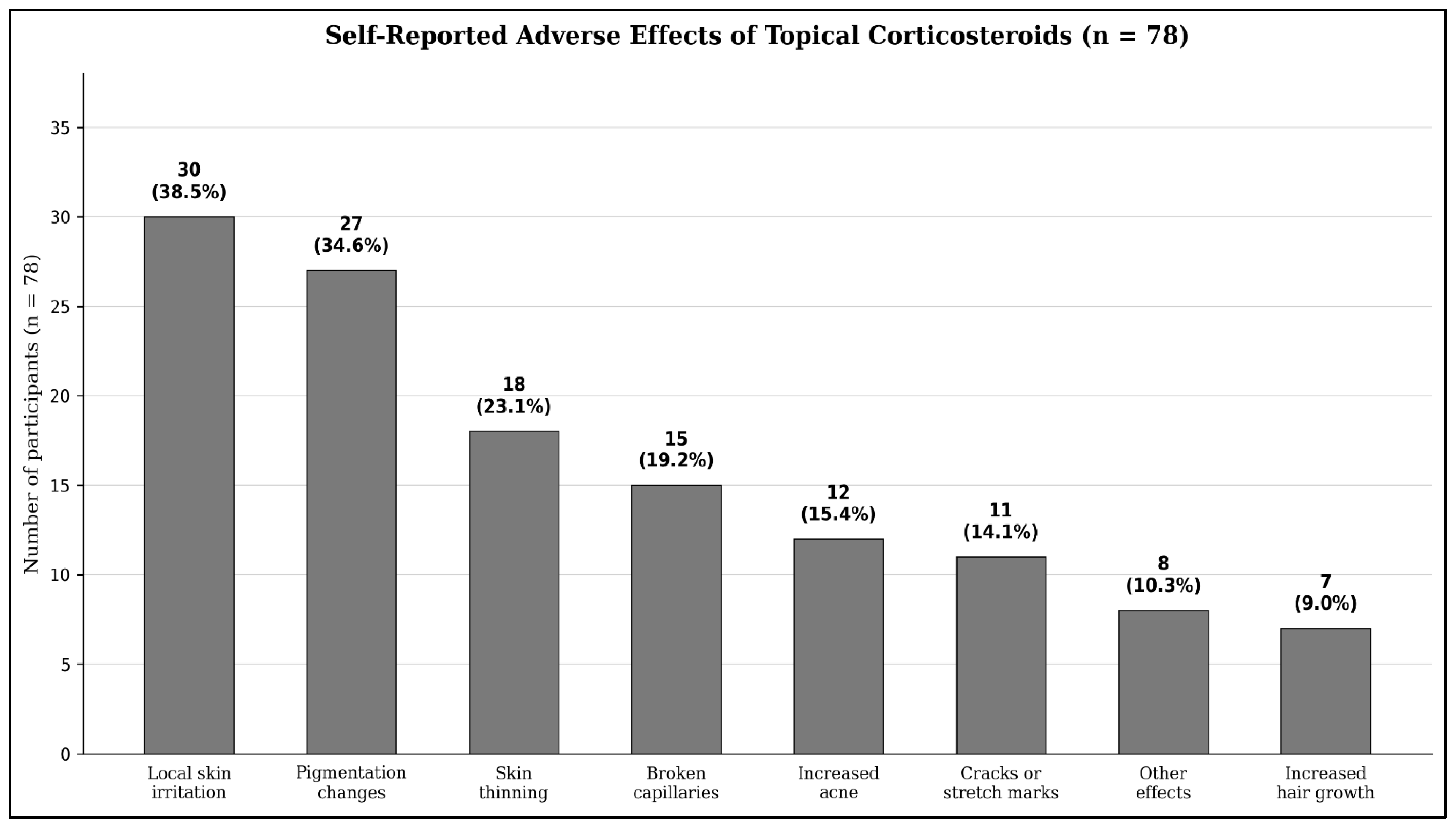
The self-reported perceived adverse effects among TCS users (n = 78) were dominated by local skin irritation (38.5%), pigmentation changes (34.6%), and skin thinning (23.1%), which are consistent with the known dermatological sequelae of prolonged or inappropriate TCS use as described by Coondoo et al. (2014) [
5]; however, given the absence of clinical verification, these symptoms should be interpreted with caution as they may partially reflect manifestations of the underlying dermatological condition rather than being directly attributable to TCS use. Among participants who reported adverse effects, a notable proportion had obtained TCS through self-medication or non-specialist sources (17.7% of users combined). While a direct causal relationship between non-specialist prescribing and the occurrence of adverse effects cannot be established from these cross-sectional data, this observation is consistent with the broader literature suggesting that unsupervised TCS use may be associated with a higher risk of adverse outcomes [
5]. Strengthening evidence-based prescribing practices and enhancing patient counseling at the point of dispensing represent clinically plausible strategies to minimize inappropriate TCS use, though further prospective research is needed to substantiate these recommendations within the Saudi healthcare context.
Regionally, participants from the Southern and Northern regions reported the highest phobia scores, while those in the heterogeneous “Other” geographic category scored lowest. The Southern-region association was borderline non-significant in adjusted models (p = 0.07). These observed differences likely reflect variations in access to specialist dermatological care, regional health literacy, and differential exposure to TCS misinformation campaigns, and should be confirmed in geographically stratified probability-based samples before being used to guide geographic targeting of educational initiatives.
4.1. Strengths and Limitations
This study has several strengths, including its relatively large sample size, inclusion of participants from all major regions of Saudi Arabia, and use of a structured questionnaire that enabled assessment of TCS-related beliefs, behaviors, and phobia scores in a nationally distributed sample. The study also examined both general concern and quantified phobia scores, allowing identification of demographic and behavioral subgroups with higher TCS-related concern. However, several limitations should be considered. The findings are associative rather than causal given the cross-sectional design, and convenience sampling through social media may have introduced selection bias, limiting representativeness among older adults, those with limited internet access, and those with lower health literacy. The sample skewed younger (18–24 years) and female, consistent with social media recruitment bias, further limiting generalizability to older male populations. Self-reported data are subject to recall, social-desirability, and measurement bias, and the absence of clinician-verified diagnoses, objectively measured adherence, and confirmation of prescribed regimens limits the precision of clinical outcomes. Excluding healthcare professionals improved homogeneity but prevented comparisons with medically informed respondents. Although internal consistency was acceptable (Cronbach’s α = 0.730), the phobia assessment was adapted rather than fully validated, with no factor analysis or test–retest reliability conducted, and the multivariable models explained modest variance (adjusted R2 = 0.061; McFadden pseudo-R2 = 0.061), indicating that unmeasured determinants such as personality, prior adverse experiences, disease severity, and anti-TCS media exposure likely contribute. The willingness-to-use item was administered only to non-current users (n = 308). Future studies should employ stratified random sampling and the fully validated Arabic TOPICOP scale to improve construct validity, measurement precision, and the external validity of TCS-related concern estimates in the Saudi population.
4.2. Implications for Practice and Future Research
The findings of this study carry meaningful implications for both clinical practice and health policy. Dermatologists and primary care physicians should routinely screen for TCS-related misconceptions during consultations, particularly among female patients and those reporting reliance on online health information. Structured patient education protocols, incorporating individualized counseling on the benefit-to-risk profile of TCS, written information leaflets, and visual aids tailored to health literacy levels, should be integrated into standard dermatological care. Physicians should adopt a shared decision-making communication approach, explicitly eliciting and addressing patient concerns regarding adverse effects at the point of prescription. Given the observed associations between social media use and TCS-related concern, healthcare authorities, national dermatological societies, and the Saudi Ministry of Health should consider developing regulated, culturally appropriate, evidence-based digital campaigns to counter unverified online narratives surrounding TCS use. From a research perspective, future studies should employ prospective and interventional designs to evaluate the effectiveness of targeted educational interventions on phobia reduction and treatment adherence. The adoption of the validated TOPICOP scale across future multicenter studies would enhance cross-study comparability and enable more precise risk stratification, and qualitative research exploring the lived experiences of patients with TCS phobia would provide deeper insight into the cultural, psychological, and social determinants of corticosteroid hesitancy in the Saudi Arabian context.
Several methodological limitations warrant explicit acknowledgement. First, although internal consistency of the seven-item phobia scale was acceptable (Cronbach’s α = 0.730), the instrument was adapted from the literature rather than formally re-validated in Arabic; future Saudi work should use the formally validated Arabic TOPICOP scale once available. Second, the multivariable models explained a modest proportion of the variance (adjusted R2 = 0.061 for the phobia score; McFadden pseudo-R2 = 0.061 for concern), indicating that additional unmeasured determinants such as personality traits, prior adverse-treatment experiences, dermatological diagnosis severity, and exposure to specific anti-TCS media campaigns likely play important roles. Third, the willingness-to-use item was administered only to non-current users (n = 308), restricting analyses involving this variable to that subsample. Fourth, the cross-sectional design precludes causal inference, and self-reported data are subject to recall and social-desirability biases.




 ,
,