Integrative Literature Review on the Lived Experiences of Parents of Children with a Rare Disease

 , ,
, ,
Abstract
1. Introduction
- How do parents experience the period of uncertainty and diagnostic pursuit (the “diagnostic odyssey”) prior to receiving a rare disease diagnosis for their child?
- What emotional, cognitive, and relational experiences do parents report at the time the rare disease diagnosis is communicated?
- What experiences, needs, coping strategies, and adaptive processes emerge in the everyday care trajectory of parents of children and adolescents with a rare disease?
- How does a rare disease reshape parents’ roles, responsibilities, and day-to-day life balance within their caregiving experience?
2. Materials and Methods
2.1. Study Design
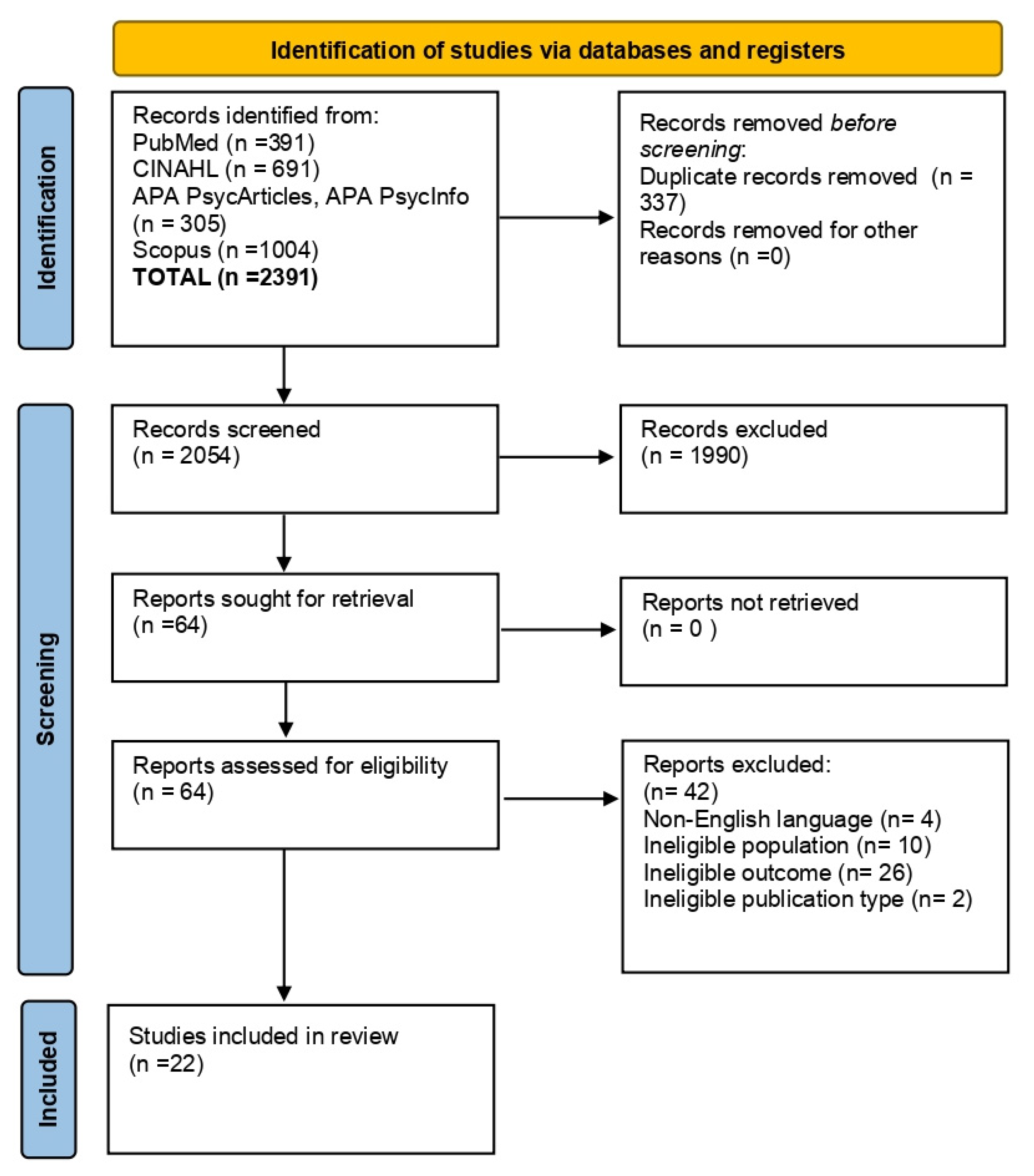
2.2. Search Strategy
2.3. Inclusion and Exclusion Criteria
- Population: Parents (mothers and/or fathers) or informal family caregivers (non-professional) of children or adolescents (<18 years) diagnosed with a rare disease.
- Condition of interest: Rare diseases as defined by international or national regulatory frameworks (e.g., European Union definition: prevalence < 5 per 10,000), or conditions explicitly described as rare by the study authors.
- Phenomenon of interest: Studies addressing at least one of the following domains related to parental experience:
- ○
- Lived experiences and caregiving perceptions;
- ○
- Emotional, psychological, social, physical, or economic burden;
- ○
- Quality of life and psychosocial outcomes;
- ○
- Experiences related to the diagnostic process, including diagnostic uncertainty, diagnostic odyssey, and/or communication of diagnosis.
- Study design: Empirical studies using qualitative, quantitative, or mixed-methods designs, as well as secondary research (e.g., systematic reviews, scoping reviews, rapid reviews, and meta-syntheses), in accordance with the integrative review methodology.
- Language: Articles published in English or Italian.
- Publication type: Peer-reviewed journal articles.
- Population mismatch: Studies focusing exclusively on adult patients, professional caregivers or healthcare providers without parental perspectives, or other family members without disaggregated data on parents.
- Condition mismatch: Studies addressing conditions not classified or described as rare diseases.
- Outcome mismatch: Studies not reporting parental experiences, caregiving impact, psychosocial outcomes, or diagnosis-related experiences.
- Study type: Editorials, commentaries, opinion papers, conference abstracts, dissertations, grey literature, or methodological papers without relevant empirical data.
- Language: Studies published in languages other than English or Italian.
2.4. Study Selection and Data Management
2.5. Critical Appraisal of Study Quality
2.6. Data Extraction and Synthesis
3. Results
3.1. Characteristics of Included Studies
3.2. Themes Emerging from the Included Studies
- Main theme:
- The Diagnostic Journey: from uncertainty to disclosure and validation
- 1.1.
- Prolonged uncertainty and diagnostic odyssey.Parents consistently reported a prolonged and often demanding search for answers prior to receiving a definitive diagnosis. This phase was characterised by repeated consultations, multiple investigations, evolving clinical hypotheses, and, in some cases, misdiagnoses. Quantitative evidence indicated that many families consulted several specialists before receiving a diagnosis and perceived that an earlier diagnosis might have been possible [41]. Qualitative findings described persistent uncertainty, anxiety, and anticipatory fear during this period [10,28]. The absence of a diagnostic label was associated with difficulties in accessing healthcare services, educational support, and social recognition of the child’s condition. For some families, particularly those with older children or adolescents, prolonged diagnostic processes were also associated with tensions related to the continuation of diagnostic investigations and decision-making about further testing [30].Where reported, the duration of the diagnostic odyssey varied substantially across studies. In paediatric-focused samples, reported durations ranged from less than 1 year to more than 5 years, with some studies reporting delays of 13–15.6 years among diagnosed or still undiagnosed children [34,41]. Deuitch et al. reported that the time from symptom onset to diagnosis ranged from 1.5 to 13 years among diagnosed children and from 2 to 14 years among children who remained undiagnosed [29]. In one study focusing on emerging-ultrarare disorders, the median length of the diagnostic search was 9.8 years, with a reported range of 1.11–48.82 years [32]. Because only a subset of included studies reported comparable numerical estimates, and because some studies included ongoing undiagnosed cases, no pooled average was calculated.
- 1.2.
- Epistemic injustice and fragmentation of care.Several studies highlighted that parents’ experiences during the diagnostic process were shaped not only by clinical complexity but also by interactions with healthcare professionals. Parents frequently reported feeling unheard or not taken seriously, with their knowledge of their child sometimes being overlooked or minimised [31]. These experiences were associated with increased emotional distress and reduced trust in healthcare providers. In response, many parents described assuming active roles in coordinating care, organising appointments, and monitoring clinical information. Limited continuity of care, combined with the involvement of multiple specialists, further contributed to fragmentation and increased caregiving demands. Parents also engaged in independent information-seeking, including the use of online resources and peer support networks, to better understand their child’s condition and inform decision-making [29]. While these strategies provided support, they also reflected gaps in formal healthcare communication and coordination.
- 1.3.
- The moment of disclosure: shock, validation, and ambivalence.Receiving the diagnosis represented a critical turning point in the parental trajectory. Across studies, this moment was characterised by a complex interplay of emotional responses, including shock, grief, anger, devastation, and, in some cases, relief [27,28,34]. Relief was typically associated with the end of uncertainty and the validation of longstanding parental concerns. For many families, the diagnostic label enabled access to services, connection with support networks, and the possibility of future planning. However, the diagnosis also marked the beginning of a new phase of uncertainty, particularly in ultra-rare or genomically emerging conditions, where limited prognostic information was available [32]. Thus, diagnosis did not always equate to closure; rather, it often signified a transition from uncertainty about “what” to uncertainty about “what next.”
- 1.4.
- Communication quality as a turning point.The quality of communication at the time of diagnosis emerged as a key factor influencing parents’ experiences. Parents valued clear, empathic, and responsive communication, as well as opportunities to ask questions and receive ongoing support [27,31]. Conversely, insufficient, delayed, or poorly structured communication was associated with increased distress and dissatisfaction. The communication process influenced both immediate emotional responses and subsequent engagement with healthcare services, including trust in professionals and adherence to care pathways.
- 2.
- The Multidimensional Caregiving Burden
- 2.1.
- Emotional strain as a pervasive and gendered experience.Emotional burden was consistently reported across studies, with parents describing elevated levels of stress, anxiety, depressive symptoms, and ongoing uncertainty [37,38,39]. These outcomes were associated with diagnostic ambiguity, caregiving demands, and perceived lack of support from healthcare systems. Gender differences were evident, with mothers more frequently identified as primary caregivers and reporting higher levels of stress and reduced quality of life compared to fathers [26,35]. Qualitative findings suggested that fathers also experienced distress, although it was often expressed through different coping patterns and roles within the family.
- 2.2.
- Family system reconfiguration and relational strain.Caregiving was associated with substantial changes in family roles and routines. Parents reported reduced time for couple relationships, increased conflict, and challenges in maintaining family balance [26,33]. Caregiving responsibilities often extended beyond direct care to include coordination of services, administrative tasks, and advocacy, contributing to role overload. Quantitative studies also reported associations between caregiving burden and reduced health-related quality of life across multiple domains [36,38].
- 2.3.
- Social isolation, stigma, and reduced participation.Social impact emerged as a recurring theme, with parents reporting reduced participation in social activities, limited peer interactions, and feelings of isolation [9,18].Limited public awareness of rare diseases contributed to experiences of stigma and the need to repeatedly explain the child’s condition. These experiences were associated with social withdrawal and reduced engagement in community and leisure activities.
- 2.4.
- Economic and physical consequences of sustained caregiving.Economic burden included both direct and indirect costs, such as treatment expenses, travel, specialised care, and reduced employment, particularly among mothers [38,40].Physical effects, including fatigue, sleep disturbances, and somatic symptoms, were also reported [9], highlighting the broader impact of sustained caregiving demands on parental health and daily functioning.Across studies, the systems most frequently implicated in the production or amplification of caregiving burden were healthcare services, educational services, and social welfare systems. Healthcare systems contributed through fragmented care pathways, repeated consultations, poor coordination, and limited recognition of parental expertise. Educational and social systems contributed to difficulties in accessing appropriate school support, disability-related resources, respite care, and welfare benefits. Employment-related systems were also implicated when parents, particularly mothers, reduced working hours or left employment to meet caregiving demands.
- 3.
- Adaptive Trajectories and Family Reconfiguration.
- 3.1.
- Coping as a dynamic and relational process.Parents reported a range of coping strategies, including problem-focused approaches (e.g., information-seeking, care coordination, and advocacy) and emotion-focused strategies (e.g., acceptance, cognitive reframing, and social support) [9,37].Coping strategies varied depending on disease characteristics, available support, and family dynamics. Gender differences in coping patterns were also described, reflecting differentiated roles within caregiving [35]. Greater access to social support and positive healthcare experiences were associated with lower levels of psychological distress [39].
- 3.2.
- Parental upskilling and identity transformation.Several studies described the progressive acquisition of knowledge and skills by parents, enabling them to actively participate in care and decision-making [9,18].Parents frequently developed competencies in navigating healthcare systems, interpreting medical information, and coordinating services. In some cases, particularly in ultra-rare conditions, parents assumed roles as advocates or key coordinators of care [32].
- 3.3.
- Meaning-making and rebalancing family priorities.Qualitative findings highlighted processes of meaning-making and adjustment of expectations over time [9,42]. Parents described shifts in priorities, increased attention to daily achievements, and ongoing negotiation of future expectations.Adaptation often involved adjustments in response to changes in the child’s condition or developmental stage, requiring continuous re-evaluation of goals and caregiving strategies [30].
- Final synthesis of themes
4. Discussion
- The diagnostic journey as a critical and relational phase
- Caregiving burden as a multidimensional and cumulative process
- Gendered dimensions of caregiving and underrepresentation of fathers
- Adaptive trajectories: coping, identity transformation, and meaning-making
- Gaps in the literature and methodological considerations
- Implications for practice and healthcare systems
- Final synthesis
5. Review Limitations
6. Conclusions
7. Implications for Nursing Practice
8. Implications for Future Research
Supplementary Materials
Author Contributions
Funding
Institutional Review Board Statement
Informed Consent Statement
Data Availability Statement
Acknowledgments
Conflicts of Interest
Abbreviations
| JBI | Joanna Briggs Institute |
| OSF | Open Science Framework |
| QuADS | Quality Assessment with Diverse Studies |
References
- Haendel, M.; Vasilevsky, N.; Unni, D.; Harris, N.; Bologa, C.; Rehm, H.; Hamosh, A.; Baynam, G.; Groza, T.; McMurry, J.; et al. How Many Rare Diseases Are There? Nat. Rev. Drug Discov. 2020, 19, 77–78. [Google Scholar] [CrossRef] [Scilit] [PubMed]
- Nguengang Wakap, S.; Lambert, D.M.; Olry, A.; Rodwell, C.; Gueydan, C.; Lanneau, V.; Murphy, D.; Le Cam, Y.; Rath, A. Estimating Cumulative Point Prevalence of Rare Diseases: Analysis of the Orphanet Database. Eur. J. Hum. Genet. 2020, 28, 165–173. [Google Scholar] [CrossRef] [Scilit] [PubMed]
- Llubes-Arrià, L.; Sanromà-Ortíz, M.; Torné-Ruiz, A.; Carillo-Álvarez, E.; García-Expósito, J.; Roca, J. Emotional Experience of the Diagnostic Process of a Rare Disease and the Perception of Support Systems: A Scoping Review. J. Clin. Nurs. 2022, 31, 20–31. [Google Scholar] [CrossRef] [Scilit]
- The Lancet Global Health. The Landscape for Rare Diseases in 2024. Lancet Glob. Health 2024, 12, e341. [Google Scholar] [CrossRef] [Scilit]
- Dubuya, J.S.; Zeng, C.; Deng, L.; Li, Y.; Chen, X.; Ahmad, B.; Lu, J. The Impact of Rare Diseases on the Quality of Life in Paediatric Patients: Current Status. Front. Public Health 2025, 13, 1531583. [Google Scholar] [CrossRef] [Scilit]
- Chung, C.C.Y.; Hong Kong Genome Project; Chu, A.T.W.; Chung, B.H.Y. Rare Disease Emerging as a Global Public Health Priority. Front. Public Health 2022, 10, 1028545. [Google Scholar] [CrossRef] [Scilit]
- Costa, E.; Ajith, V.; Al Khaldi, A.F.; Isgrò, A.; Lee, K.J.; Luigetti, R.; Pasmooij, A.M.G.; Stoyanova-Beninska, V.; Trachsel, E.; Vaillancourt, J.; et al. Addressing Global Regulatory Challenges in Rare Disease Drug Development. Drug Discov. Today 2025, 30, 104462. [Google Scholar] [CrossRef] [Scilit]
- Currie, G.; Szabo, J. “It Is like a Jungle Gym, and Everything Is under Construction”: The Parent’s Perspective of Caring for a Child with a Rare Disease. Child 2019, 45, 96–103. [Google Scholar] [CrossRef] [Scilit]
- Wu, C.; Chu, X.; Tang, K.; Cheng, D.; Ren, L. Caregiving Experiences of Caregivers of Children with Rare Diseases: A Qualitative Meta-Synthesis. J. Pediatr. Nurs. 2024, 75, 31–40. [Google Scholar] [CrossRef] [Scilit]
- Bauskis, A.; Strange, C.; Molster, C.; Fisher, C. The Diagnostic Odyssey: Insights from Parents of Children Living with an Undiagnosed Condition. Orphanet J. Rare Dis. 2022, 17, 233. [Google Scholar] [CrossRef] [Scilit]
- Kenny, T.; Bogart, K.; Freedman, A.; Garthwaite, C.; Henley, S.; Bolz-Johnson, M.; Mohammed, S.; Walton, J.; Winter, K.; Woodman, D. The Importance of Psychological Support for Parents and Caregivers of Children with a Rare Disease at Diagnosis. Rare Dis. Orphan Drugs J. 2022, 1, 7. [Google Scholar] [CrossRef] [Scilit]
- Pavisich, K.; Jones, H.; Baynam, G. The Diagnostic Odyssey for Children Living with a Rare Disease—Caregiver and Patient Perspectives: A Narrative Review with Recommendations. Rare 2024, 2, 100022. [Google Scholar] [CrossRef] [Scilit]
- Germeni, E.; Vallini, I.; Bianchetti, M.G.; Schulz, P.J. Reconstructing Normality Following the Diagnosis of a Childhood Chronic Disease: Does “Rare” Make a Difference? Eur. J. Pediatr. 2018, 177, 489–495. [Google Scholar] [CrossRef] [Scilit] [PubMed]
- Ashtiani, S.; Makela, N.; Carrion, P.; Austin, J. Parents’ Experiences of Receiving Their Child’s Genetic Diagnosis: A Qualitative Study to Inform Clinical Genetics Practice. Am. J. Med. Genet. Part A 2014, 164, 1496–1502. [Google Scholar] [CrossRef] [Scilit] [PubMed]
- Gómez-Zúñiga, B.; Pulido Moyano, R.; Pousada Fernández, M.; García Oliva, A.; Armayones Ruiz, M. The Experience of Parents of Children with Rare Diseases When Communicating with Healthcare Professionals: Towards an Integrative Theory of Trust. Orphanet J. Rare Dis. 2019, 14, 159. [Google Scholar] [CrossRef] [Scilit]
- Currie, G.; Szabo, J. ‘It Would Be Much Easier If We Were Just Quiet and Disappeared’: Parents Silenced in the Experience of Caring for Children with Rare Diseases. Health Expect. 2019, 22, 1251–1259. [Google Scholar] [CrossRef] [Scilit] [PubMed]
- Cardinali, P.; Migliorini, L.; Rania, N. The Caregiving Experiences of Fathers and Mothers of Children with Rare Diseases in Italy: Challenges and Social Support Perceptions. Front. Psychol. 2019, 10, 1780. [Google Scholar] [CrossRef] [Scilit]
- Von Der Lippe, C.; Neteland, I.; Feragen, K.B. Children with a Rare Congenital Genetic Disorder: A Systematic Review of Parent Experiences. Orphanet J. Rare Dis. 2022, 17, 375. [Google Scholar] [CrossRef] [Scilit]
- Atkins, J.C.; Padgett, C.R. Living with a Rare Disease: Psychosocial Impacts for Parents and Family Members—A Systematic Review. J. Child Fam. Stud. 2024, 33, 617–636. [Google Scholar] [CrossRef] [Scilit]
- Whittemore, R.; Knafl, K. The Integrative Review: Updated Methodology. J. Adv. Nurs. 2005, 52, 546–553. [Google Scholar] [CrossRef] [Scilit]
- Page, M.J.; McKenzie, J.E.; Bossuyt, P.M.; Boutron, I.; Hoffmann, T.C.; Mulrow, C.D.; Shamseer, L.; Tetzlaff, J.M.; Akl, E.A.; Brennan, S.E.; et al. The PRISMA 2020 Statement: An Updated Guideline for Reporting Systematic Reviews. BMJ 2021, 372, n71. [Google Scholar] [CrossRef] [Scilit] [PubMed]
- Ouzzani, M.; Hammady, H.; Fedorowicz, Z.; Elmagarmid, A. Rayyan—A web and mobile app for systematic reviews. Syst. Rev. 2016, 5, 210. [Google Scholar] [CrossRef] [Scilit]
- Tricco, A.C.; Antony, J.; Zarin, W.; Strifler, L.; Ghassemi, M.; Ivory, J.; Perrier, L.; Hutton, B.; Moher, D.; Straus, S.E. A Scoping Review of Rapid Review Methods. BMC Med. 2015, 13, 224. [Google Scholar] [CrossRef] [Scilit] [PubMed]
- Harrison, R.; Jones, B.; Gardner, P.; Lawton, R. Quality Assessment with Diverse Studies (QuADS): An Appraisal Tool for Methodological and Reporting Quality in Systematic Reviews of Mixed- or Multi-Method Studies. BMC Health Serv. Res. 2021, 21, 144. [Google Scholar] [CrossRef] [Scilit]
- Joanna Briggs Institute. Checklist for Analytical Cross Sectional Studies; Joanna Briggs Institute: Adelaide, Australia, 2017; Available online: https://jbi.global/critical-appraisal-tools (accessed on 8 April 2026).
- Bayraktar, S.; Aydın, A.; Karaca, M.; Balcı, M.C.; Gökçay, G.F.; Göktepe, N. Experiences of Mothers Caring for Children with Rare Diseases in Turkey. J. Genet. Couns. 2025, 34, e1978. [Google Scholar] [CrossRef] [Scilit]
- Burbury, L.; Ayres, S.; Boyle, J.; Renton, H.; McInerney-Leo, A. Exploring the Experience of Communication in Healthcare Settings with Parents of Children with a Rare Genetic Condition: “It’s the More Negative Ones That You Remember”. J. Genet. Couns. 2025, 34, e70102. [Google Scholar] [CrossRef] [Scilit]
- Carmichael, N.; Tsipis, J.; Windmueller, G.; Mandel, L.; Estrella, E. “Is It Going to Hurt?”: The Impact of the Diagnostic Odyssey on Children and Their Families. J. Genet. Couns. 2015, 24, 325–335. [Google Scholar] [CrossRef] [Scilit]
- Deuitch, N.T.; Beckman, E.; Halley, M.C.; Young, J.L.; Reuter, C.M.; Kohler, J.; Bernstein, J.A.; Wheeler, M.T.; Undiagnosed Diseases Network; Ormond, K.E.; et al. “Doctors Can Read about It, They Can Know about It, but They’ve Never Lived with It”: How Parents Use Social Media throughout the Diagnostic Odyssey. J. Genet. Couns. 2021, 30, 1707–1718. [Google Scholar] [CrossRef] [Scilit]
- Miller, I.M.; Yashar, B.M.; Undiagnosed Disease Network; Acosta, M.T.; Adam, M.; Adams, D.R.; Agrawal, P.B.; Alvey, J.; Amendola, L.; Andrews, A.; et al. Continuing a Search for a Diagnosis: The Impact of Adolescence and Family Dynamics. Orphanet J. Rare Dis. 2023, 18, 6. [Google Scholar] [CrossRef] [Scilit]
- Nguyen, M.M.; Mahfoozi, S.; Bonner, D.; Martschenko, D.O.; Giri, A.; Tang, C.; Bernstein, J.A.; Wheeler, M.T.; Halley, M.C. “Nobody Listened to Us for Years”: Parents’ Experiences of Provider Communication in the Diagnostic Odyssey. Mol. Genet. Metab. 2025, 146, 109283. [Google Scholar] [CrossRef] [Scilit]
- Stafford-Smith, B.; Sullivan, J.A.; McAllister, M.; Walley, N.; Shashi, V.; McConkie-Rosell, A. The Book Is Just Being Written: The Enduring Journey of Parents of Children with Emerging- Ultrarare Disorders. J. Genet. Couns. 2025, 34, e1894. [Google Scholar] [CrossRef] [Scilit]
- Witt, S.; Schuett, K.; Wiegand-Grefe, S.; Boettcher, J.; Quitmann, J. Living with a Rare Disease—Experiences and Needs in Pediatric Patients and Their Parents. Orphanet J. Rare Dis. 2023, 18, 242. [Google Scholar] [CrossRef] [Scilit] [PubMed]
- Bullock, I.; Malone, K.F.; Turnwald, A. Parental Experiences of Receiving a Rare Genetic Disease Diagnosis for Their Child on Diagnosis Day. Am. J. Med. Genet. Part A 2026, 200, 67–76. [Google Scholar] [CrossRef] [Scilit]
- Chu, S.-Y.; Wen, C.-C.; Weng, C.-Y. Gender Differences in Caring for Children with Genetic or Rare Diseases: A Mixed-Methods Study. Children 2022, 9, 627. [Google Scholar] [CrossRef] [Scilit] [PubMed]
- Boettcher, J.; Boettcher, M.; Wiegand-Grefe, S.; Zapf, H. Being the Pillar for Children with Rare Diseases—A Systematic Review on Parental Quality of Life. Int. J. Environ. Res. Public Health 2021, 18, 4993. [Google Scholar] [CrossRef] [Scilit] [PubMed]
- Manalel, J.A.; Sumrall, S.; Davidson, H.; Grewal, M.; Granovetter, M.A.; Koehly, L.M. Stress, Coping, and Positive Aspects of Caregiving among Caregivers of Children with Rare Disease. Psychol. Health 2024, 39, 216–232. [Google Scholar] [CrossRef] [Scilit]
- Valcárcel-Nazco, C.; Ramallo-Fariña, Y.; Linertová, R.; Ramos-Goñi, J.M.; García-Pérez, L.; Serrano-Aguilar, P. Health-Related Quality of Life and Perceived Burden of Informal Caregivers of Patients with Rare Diseases in Selected European Countries. Int. J. Environ. Res. Public Health 2022, 19, 8208. [Google Scholar] [CrossRef] [Scilit]
- Pavić, J.; Krznar, M.; Čukljek, S.; Sedić, B.; OzimecVulinec, Š.; Kovačević, I. The Association between Healthcare Satisfaction and Social Support and Stress, Depression, and Life Satisfaction in Female Caregivers: The Moderating Role of Dependence of a Sick Child. Int. J. Environ. Res. Public Health 2024, 21, 1245. [Google Scholar] [CrossRef] [Scilit]
- Somanadhan, S.; McAneney, H.; Awan, A.; McNulty, S.; Sweeney, A.; Buckle, N.; Sinnott, S.; Bracken, S.; McKnight, A.J.; Kroll, T.; et al. Assessing the Supportive Care Needs of Parents of Children with Rare Diseases in Ireland. J. Pediatr. Nurs. 2025, 81, 31–42. [Google Scholar] [CrossRef] [Scilit]
- APSU Rare Diseases Impacts on Families Study Group; Zurynski, Y.; Deverell, M.; Dalkeith, T.; Johnson, S.; Christodoulou, J.; Leonard, H.; Elliott, E.J. Australian Children Living with Rare Diseases: Experiences of Diagnosis and Perceived Consequences of Diagnostic Delays. Orphanet J. Rare Dis. 2017, 12, 68. [Google Scholar] [CrossRef] [Scilit]
- Fitzgerald, J.; Wilson, C.; Kelly, C.; Gallagher, L. ‘More than a Box of Puzzles’: Understanding the Parental Experience of Having a Child with a Rare Genetic Condition. Eur. J. Med. Genet. 2021, 64, 104164. [Google Scholar] [CrossRef] [Scilit]
- Sandilands, K.; Williams, A.; Rylands, A.J. Carer Burden in Rare Inherited Diseases: A Literature Review and Conceptual Model. Orphanet J. Rare Dis. 2022, 17, 428. [Google Scholar] [CrossRef] [Scilit]


| Main Theme | Subtheme | Analytical Interpretation (Evidence Pattern) | Type of Evidence | Strength of Evidence | Key Sources |
|---|---|---|---|---|---|
| 1. Diagnostic journey | 1.1 Prolonged uncertainty and diagnostic odyssey | Consistent evidence across studies indicates a prolonged and fragmented diagnostic pathway characterised by multiple consultations, uncertainty, and perceived delays, with convergence between qualitative experiences and quantitative data on diagnostic delay | Qualitative + Quantitative | Strong convergence | [10,28,41] |
| 1.2 Epistemic injustice and fragmented care | Converging qualitative evidence highlights lack of recognition of parental knowledge and systemic fragmentation, leading parents to assume coordination roles | Qualitative (dominant) | Moderate–strong | [29,31] | |
| 1.3 Moment of diagnosis: shock and validation | Evidence consistently shows diagnosis as an emotional turning point marked by ambivalence (relief + distress) and transition to a new phase of uncertainty | Qualitative + Mixed-methods | Strong | [27,32] | |
| 1.4 Communication as a turning point | Strong convergence indicates that communication quality directly shapes emotional adjustment, trust, and engagement with healthcare services | Qualitative + Mixed-methods | Strong | [27,31] | |
| 2. Multidimensional caregiving burden | 2.1 Emotional and gendered burden | Robust evidence shows high psychological distress, with consistent gender disparities indicating greater burden among mothers | Quantitative + Mixed-methods | Strong | [35,38] |
| 2.2 Family reconfiguration | Converging findings indicate substantial reorganisation of family roles, relational strain, and increased caregiving responsibilities | Qualitative + Quantitative | Strong | [26,33] | |
| 2.3 Social isolation and stigma | Consistent qualitative evidence highlights reduced social participation, stigma, and lack of societal awareness | Qualitative + Review | Moderate–strong | [9,18] | |
| 2.4 Economic and physical impact | Evidence indicates significant financial strain, employment reduction, and physical consequences (fatigue, somatic burden), supported by quantitative and survey data | Quantitative + Mixed-methods | Strong | [38,40] | |
| 3. Adaptive trajectories | 3.1 Coping as a dynamic process | Evidence shows coping as a dynamic and context-dependent process involving both problem-focused and emotion-focused strategies | Quantitative + Qualitative | Strong | [9,37] |
| 3.2 Parental upskilling and identity transformation | Converging qualitative evidence indicates progressive acquisition of skills and active involvement in care, reflecting role expansion beyond caregiving | Qualitative | Moderate–strong | [18,32] | |
| 3.3 Meaning-making and rebalancing priorities | Evidence highlights ongoing processes of meaning-making, adjustment of expectations, and redefinition of quality of life over time | Qualitative | Moderate | [30,42] |
Disclaimer/Publisher’s Note: The statements, opinions and data contained in all publications are solely those of the individual author(s) and contributor(s) and not of MDPI and/or the editor(s). MDPI and/or the editor(s) disclaim responsibility for any injury to people or property resulting from any ideas, methods, instructions or products referred to in the content. |
© 2026 by the authors. Licensee MDPI, Basel, Switzerland. This article is an open access article distributed under the terms and conditions of the Creative Commons Attribution (CC BY) license.
Share and Cite
Guillari, A.; Ballfusha, K.; Palazzo, C.; Martino, M.D.; Giordano, V. Integrative Literature Review on the Lived Experiences of Parents of Children with a Rare Disease. Healthcare 2026, 14, 1437. https://doi.org/10.3390/healthcare14111437
Guillari A, Ballfusha K, Palazzo C, Martino MD, Giordano V. Integrative Literature Review on the Lived Experiences of Parents of Children with a Rare Disease. Healthcare. 2026; 14(11):1437. https://doi.org/10.3390/healthcare14111437
Chicago/Turabian StyleGuillari, Assunta, Keti Ballfusha, Chiara Palazzo, Maurizio Di Martino, and Vincenza Giordano. 2026. "Integrative Literature Review on the Lived Experiences of Parents of Children with a Rare Disease" Healthcare 14, no. 11: 1437. https://doi.org/10.3390/healthcare14111437
APA StyleGuillari, A., Ballfusha, K., Palazzo, C., Martino, M. D., & Giordano, V. (2026). Integrative Literature Review on the Lived Experiences of Parents of Children with a Rare Disease. Healthcare, 14(11), 1437. https://doi.org/10.3390/healthcare14111437