An Experimental Study on the Effectiveness and Usefulness of 360° Virtual Reality Simulation in Korean Medical Education: A Pilot Study

 , , , , and
Abstract
1. Introduction
2. Materials and Methods
2.1. Study Design
2.2. Participants
2.3. Intervention
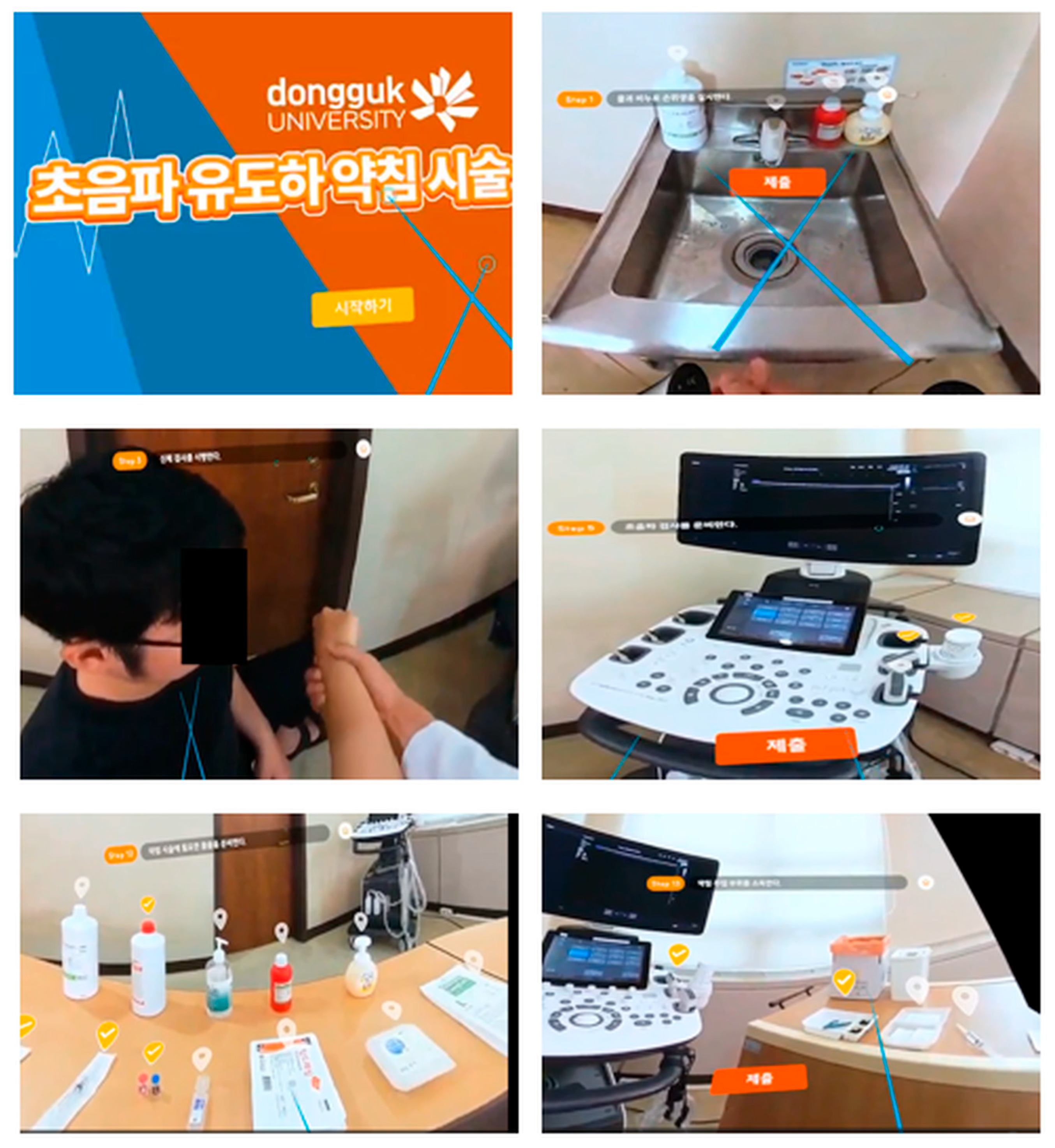
2.3.1. VR Simulation Program
2.3.2. Pilot Experimental Study
2.4. Outcome Measures
2.4.1. Subject Characteristics
2.4.2. Assessment of Understanding and Awareness of VR
2.4.3. Medical Achievement Self-Efficacy Scale (MASS)
2.4.4. Objective Structured Assessment of Ultrasound Skills (OSAUS)
2.4.5. Usability Test
2.4.6. System Usability Scale (SUS)
2.4.7. Evaluation of Presence and Educational Effectiveness
2.4.8. Learning Self-Efficacy Scale for Clinical Studies (L-SES)
2.4.9. Student Satisfaction and Self-Confidence in Learning Scale (SCLS)
2.4.10. Simulation Design Scale (SDS)
2.4.11. Simulation Sickness Questionnaire (SSQ)
2.4.12. NASA-Task Load Index (NASA-TLX)
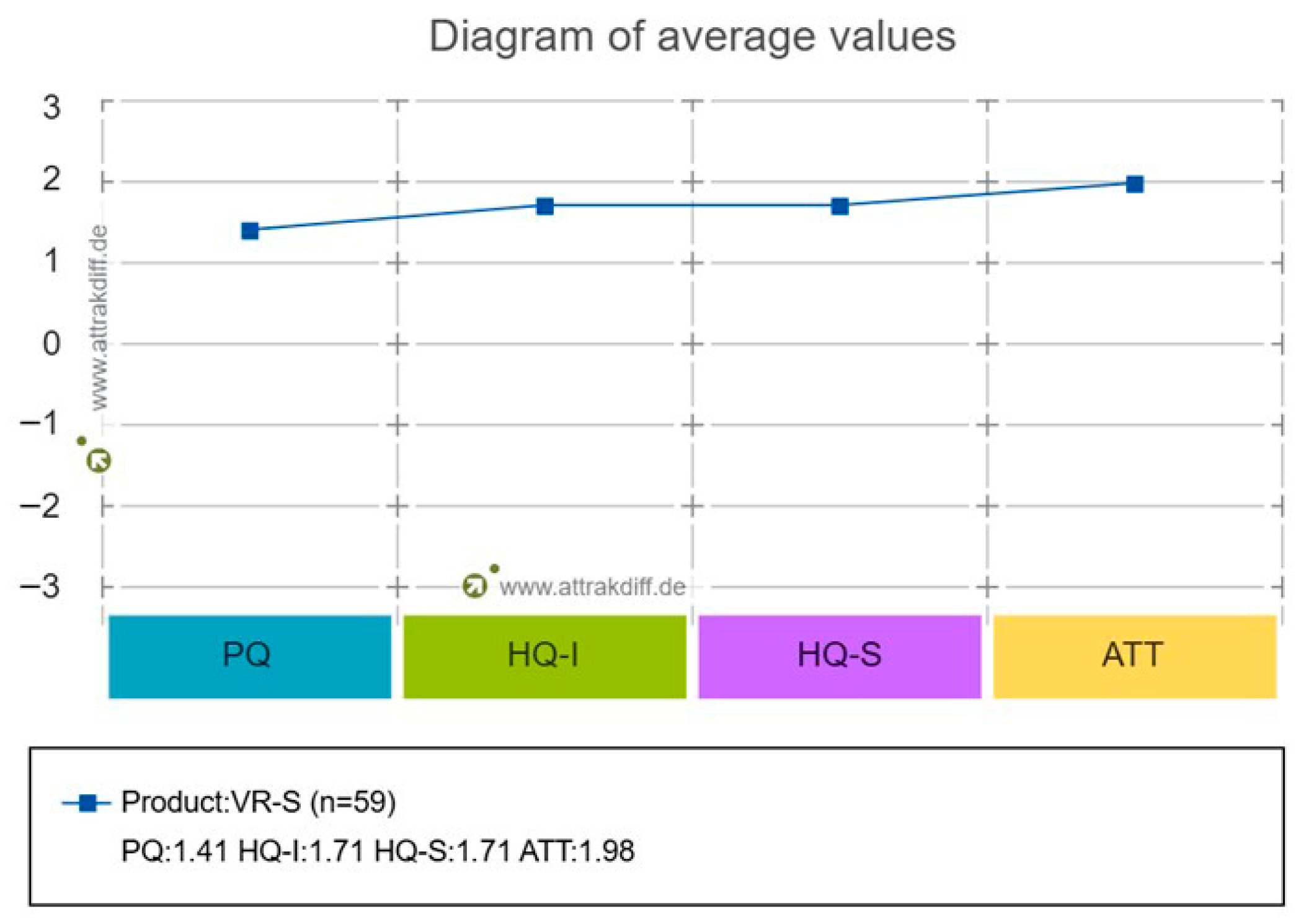
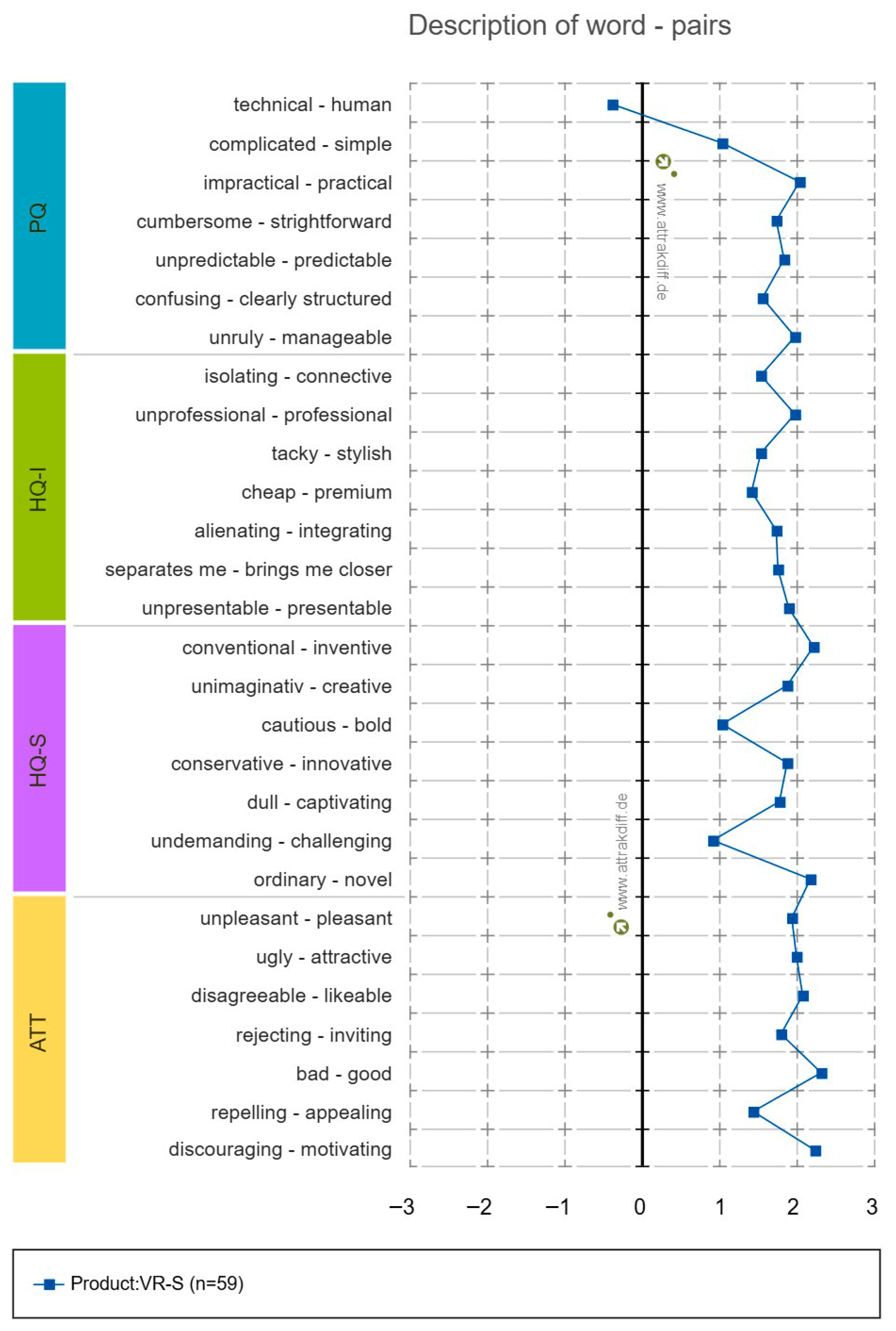
2.4.13. AttrakDiff-2 Evaluation
2.5. Data Collection and Analysis
2.6. Ethical Considerations
3. Results
3.1. Characteristics of Research Participants
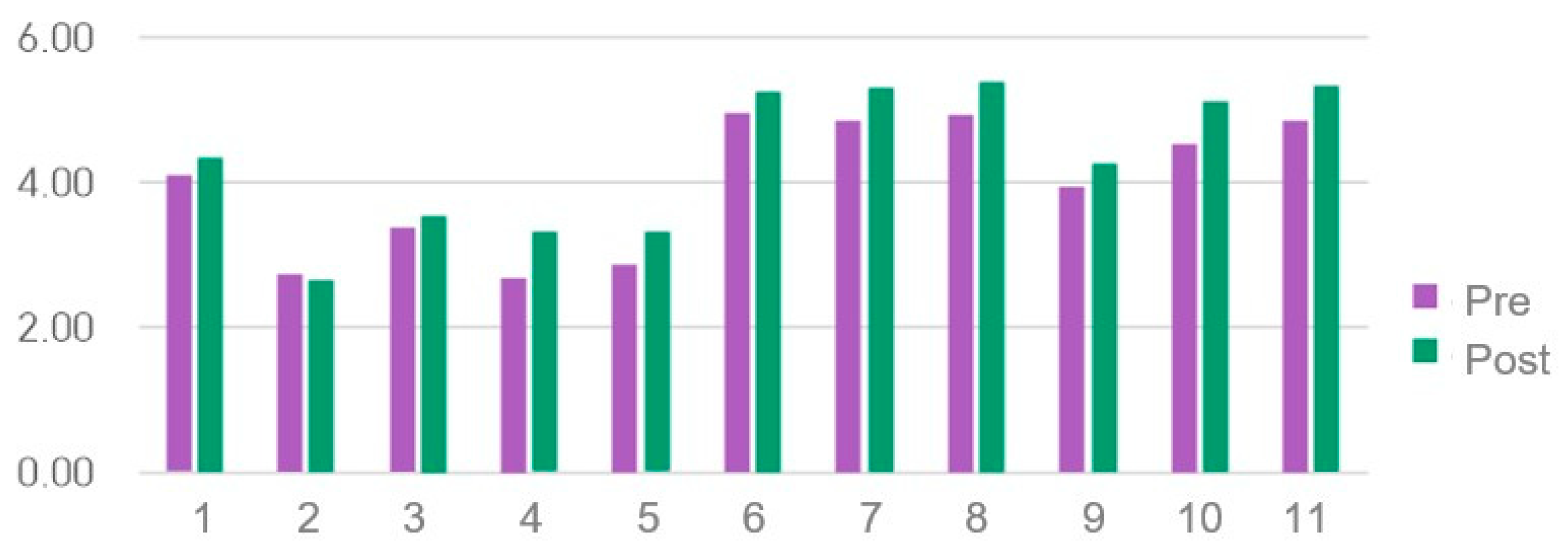
3.2. Results of Results of VR Understanding and Awareness Assessment
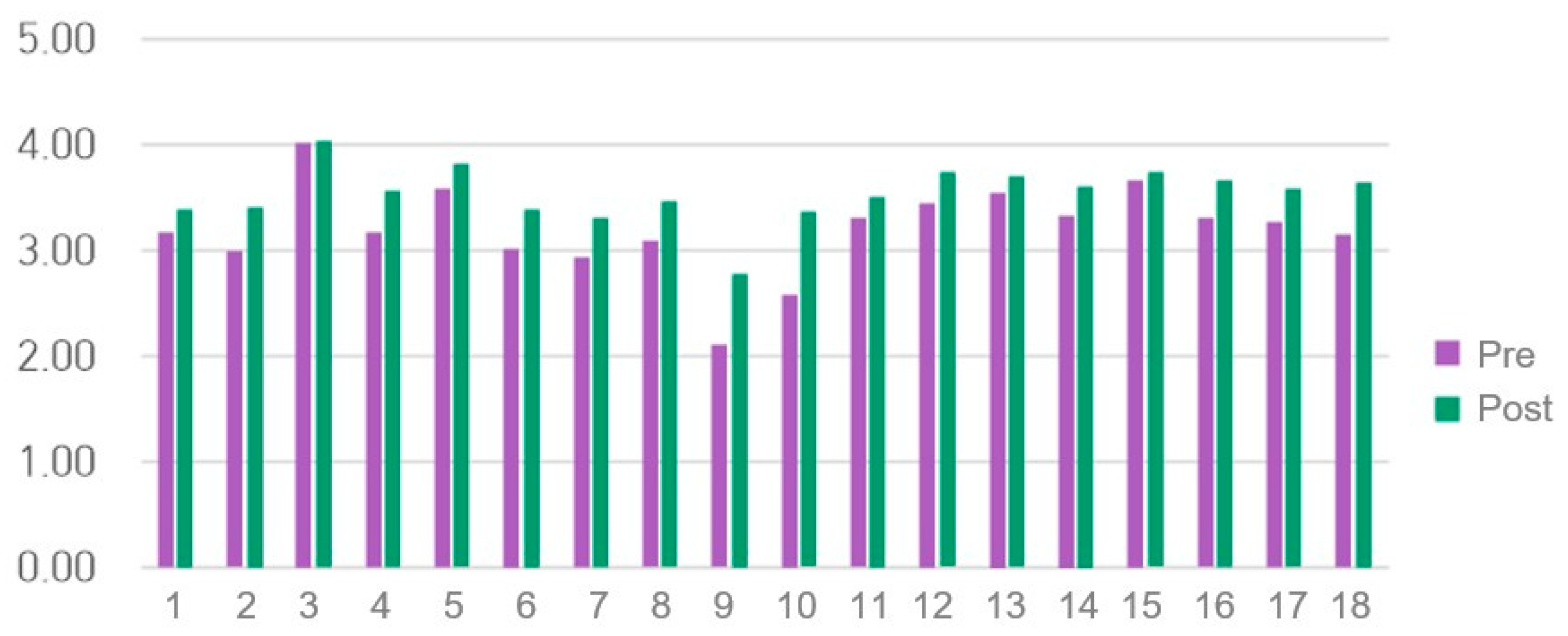
3.3. MASS Scores
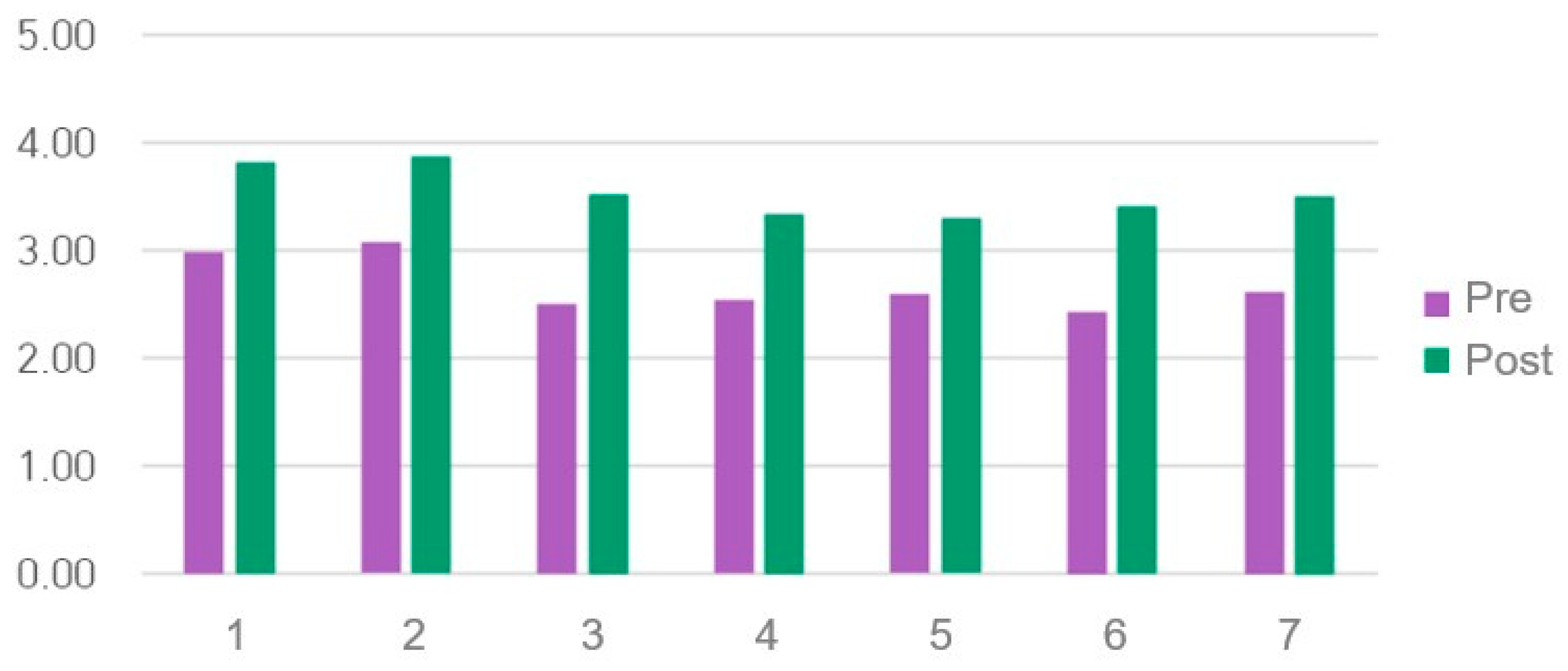
3.4. OSAUS Scores
3.5. Results of Usability Test Scores
3.6. SUS Scores
3.7. Reults of Presence and Educational Effectiveness
3.8. L-SES Scores
3.9. SCLS Scores
3.10. SDS Scores
3.11. SSQ Scores
3.12. NASA-TLX Scores
3.13. AttrakDiff-2
4. Discussion
4.1. Limitations
4.2. Future Research Directions
5. Conclusions
Author Contributions
Funding
Institutional Review Board Statement
Informed Consent Statement
Data Availability Statement
Conflicts of Interest
References
- Fincher, R.M.; Lewis, L.A. Learning, experience, and self-assessment of competence of third-year medical students in performing bedside procedures. Acad. Med. 1994, 69, 291–295. [Google Scholar] [CrossRef]
- Okuda, Y.; Bryson, E.O.; DeMaria, S.; Jacobson, L.; Quinones, J.; Shen, B.; Levine, A.I. The utility of simulation in medical education: What is the evidence? Mt. Sinai J. Med. 2009, 76, 330–343. [Google Scholar] [CrossRef]
- Yoon, T.Y.; Lee, J.K.; Oh, I.H. Changes in the clerkship in Korean medical schools: The prospect of a student internship. Korean Med. Educ. Rev. 2013, 15, 75–81. [Google Scholar] [CrossRef]
- McGaghie, W.C.; Issenberg, S.B.; Cohen, E.R.; Barsuk, J.H.; Wayne, D.B. Does simulation-based medical education with deliberate practice yield better results than traditional clinical education? Acad. Med. 2011, 86, 706–711. [Google Scholar] [CrossRef] [PubMed]
- Motola, I.; Devine, L.A.; Chung, H.S.; Sullivan, J.E.; Issenberg, S.B. Simulation in healthcare education: A best evidence practical guide. Med. Teach. 2013, 35, e1511–e1530. [Google Scholar] [CrossRef]
- Gordon, J.A.; Wilkerson, W.M.; Shaffer, D.W.; Armstrong, E.G. Practicing medicine without risk: Students’ and educators’ responses to high-fidelity patient simulation. Acad. Med. 2001, 76, 469–472. [Google Scholar] [CrossRef]
- Issenberg, S.B.; McGaghie, W.C.; Petrusa, E.R.; Gordon, D.L.; Scalese, R.J. Features and uses of high-fidelity medical simulations that lead to effective learning: A BEME systematic review. Med. Teach. 2005, 27, 10–28. [Google Scholar] [CrossRef]
- Gaba, D.M. The future vision of simulation in health care. Qual. Saf. Health Care 2004, 13, i2–i10. [Google Scholar] [CrossRef] [PubMed]
- Bradley, P. The history of simulation in medical education and possible future directions. Med. Educ. 2006, 40, 254–262. [Google Scholar] [CrossRef]
- Lane, L.J.; Slavin, S.; Ziv, A. Simulation in medical education: A review. Simul. Gaming 2001, 32, 297–314. [Google Scholar] [CrossRef]
- Rosen, K.R. The history of medical simulation. J. Crit. Care 2008, 23, 157–166. [Google Scholar] [CrossRef]
- Lateef, F. Simulation-based learning: Just like the real thing. J. Emerg. Trauma Shock 2010, 3, 348–352. [Google Scholar] [CrossRef] [PubMed]
- Barteit, S.; Lanfermann, L.; Bärnighausen, T.; Neuhann, F.; Beiersmann, C. Augmented, mixed, and virtual reality-based head-mounted devices for medical education: Systematic review. JMIR Serious Games 2021, 9, e29080. [Google Scholar] [CrossRef]
- Hamilton, D.; McKechnie, J.; Edgerton, E.; Wilson, C. Immersive virtual reality as a pedagogical tool in education: A systematic literature review of quantitative learning outcomes and experimental design. J. Comput. Educ. 2021, 8, 1–34. [Google Scholar] [CrossRef]
- Kyaw, B.M.; Saxena, N.; Posadzki, P.; Vseteckova, J.; Nikolaou, C.K.; George, P.P.; Divakar, U.; Masiello, I.; Kononowicz, A.A.; Zary, N.; et al. Virtual reality for health professions education: Systematic review and meta-analysis by the Digital Health Education Collaboration. J. Med. Internet Res. 2019, 21, e12959. [Google Scholar] [CrossRef]
- Haerling, K.A. Cost-utility analysis of virtual and mannequin-based simulation. Simul. Healthc. 2018, 13, 33–40. [Google Scholar] [CrossRef]
- Conrad, M.; Kablitz, D.; Schumann, S. Learning effectiveness of immersive virtual reality in education and training: A systematic review of findings. Comput. Educ. X Real. 2024, 4, 100053. [Google Scholar] [CrossRef]
- Tene, T.; López, D.F.V.; Aguirre, P.E.V.; Puente, L.M.O.; Gomez, C.V. Virtual reality and augmented reality in medical education: An umbrella review. Front. Digit. Health 2024, 6, 1365345. [Google Scholar] [CrossRef]
- Sung, H.; Kim, M.; Park, J.; Shin, N.; Han, Y. Effectiveness of virtual reality in healthcare education: A systematic review and meta-analysis. Sustainability 2024, 16, 8520. [Google Scholar] [CrossRef]
- Antoniou, P.E.; Arfaras, G.; Pandria, N.; Athanasiou, A.; Ntakakis, G.; Babatsikos, E.; Nigdelis, V.; Bamidis, P. Biosensor real-time affective analytics in virtual and mixed reality medical education serious games: Cohort study. JMIR Serious Games 2020, 8, e17823. [Google Scholar] [CrossRef]
- Aggarwal, R.; Ward, J.; Balasundaram, I.; Sains, P.; Athanasiou, T.; Darzi, A. Proving the effectiveness of virtual reality simulation for training in laparoscopic surgery. Ann. Surg. 2007, 246, 771–779. [Google Scholar] [CrossRef]
- Barsom, E.Z.; Graafland, M.; Schijven, M.P. Systematic review on the effectiveness of augmented reality applications in medical training. Surg. Endosc. 2016, 30, 4174–4183. [Google Scholar] [CrossRef]
- Chen, H.E.; Yovanoff, M.A.; Pepley, D.F.; Sonntag, C.C.; Mirkin, K.A.; Han, D.C.; Moore, J.Z.; Miller, S.R. Can haptic simulators distinguish expert performance? A case study in central venous catheterization in surgical education. Simul. Healthc. 2019, 14, 35–42. [Google Scholar] [CrossRef]
- Faul, F.; Erdfelder, E.; Buchner, A.; Lang, A.G. Statistical power analyses using G*Power 3.1: Tests for correlation and regression analyses. Behav. Res. Methods 2009, 41, 1149–1160. [Google Scholar] [CrossRef]
- Cohen, J. Statistical Power Analysis for the Behavioral Sciences, 2nd ed.; Lawrence Erlbaum Associates: Hillsdale, NJ, USA, 1988. [Google Scholar]
- Yu, M.; Kang, K. Effectiveness of a role-play simulation program involving the SBAR technique: A quasi-experimental study. Nurse Educ. Today 2017, 53, 41–47. [Google Scholar] [CrossRef] [PubMed]
- Ryu, J.M. Effects of VR Simulation-Based Infection Control Education Program for Nurses in Neonatal Intensive Care Units: Focusing on High-Risk Medication and Treatment. Master’s Thesis, Gyeongsang National University Graduate School, Jinju, Republic of Korea, 2023. [Google Scholar]
- Ekstrand, C.; Jamal, A.; Nguyen, R.; Kudryk, A.; Mann, J.; Mendez, I. Immersive and interactive virtual reality to improve learning and retention of neuroanatomy in medical students: A randomized controlled study. CMAJ Open 2018, 6, E103–E109. [Google Scholar] [CrossRef]
- Plotzky, C.; Lindwedel, U.; Sorber, M.; Loessl, B.; König, P.; Kunze, C.; Kugler, C.; Meng, M. Virtual reality simulations in nurse education: A systematic mapping review. Nurse Educ. Today 2021, 101, 104868. [Google Scholar] [CrossRef] [PubMed]
- Joo, G.E.; Kim, B.N.; Park, M.J.; Park, S.U.; Bang, A.R.; Lim, Y.J.; Jeong, G.B.; Jeong, J.M.; Joo, Y.J. Awareness, current educational state and educational requirements of virtual reality and augmented reality among nursing students. J. Kyungpook Nurs. Sci. 2020, 24, 1–9. [Google Scholar] [CrossRef]
- Turan, S.; Valcke, M.; de Maeseneer, J.; Aper, L.; Koole, S.; de Wispelaere, A.; Deketelaere, A.; Derese, A. A novel medical achievement self-efficacy scale (MASS): A valid and reliable tool. Med. Teach. 2013, 35, 575–580. [Google Scholar] [CrossRef]
- Tolsgaard, M.G.; Todsen, T.; Sorensen, J.L.; Ringsted, C.; Lorentzen, T.; Ottesen, B. International multispecialty consensus on how to evaluate ultrasound competence: A Delphi consensus survey. PLoS ONE 2013, 8, e57687. [Google Scholar] [CrossRef]
- Höhne, E.; Recker, F.; Dietrich, C.F.; Schäfer, V.S. Assessment methods in medical ultrasound education. Front. Med. 2022, 9, 871957. [Google Scholar] [CrossRef]
- Kim, S.K.; Lee, Y.H.; Yoon, H.S.; Choi, J.M. Adaptation of extended reality smart glasses for core nursing skill training among undergraduate nursing students: Usability and feasibility study. J. Med. Internet Res. 2021, 23, e24313. [Google Scholar] [CrossRef]
- Brooke, J. SUS: A retrospective. J. Usability Stud. 2013, 8, 29–40. Available online: https://uxpajournal.org/sus-a-retrospective/ (accessed on 3 March 2026).
- Brooke, J. SUS: A “quick and dirty” usability scale. In Usability Evaluation in Industry; Jordan, P.W., Thomas, B., Weerdmeester, B.A., McClelland, I.L., Eds.; Taylor & Francis: London, UK, 1996. [Google Scholar]
- Hwang, B.G.; Lee, W.H. A study on the validity of measuring tools for the reality and educational effectiveness of VR educational contents (crime prevention). Korean Crim. Psychol. Rev. 2018, 14, 173–186. [Google Scholar]
- Kang, Y.N.; Chang, C.H.; Kao, C.C.; Chen, C.Y.; Wu, C.C. Development of a short and universal learning self-efficacy scale for clinical skills. PLoS ONE 2019, 14, e0209155. [Google Scholar] [CrossRef] [PubMed]
- Jeffries, P.R.; Rizzolo, M.A. Designing and Implementing Models for the Innovative Use of Simulation to Teach Nursing Care of Ill Adults and Children: A National, Multi-Site, Multi-Method Study; National League for Nursing: New York, NY, USA, 2006. [Google Scholar]
- Kennedy, R.S.; Graybiel, A. The Dial Test: A Standardized Procedure for the Experimental Production of Canal Sickness Symptomatology in a Rotating Environment; Naval School of Aerospace Medicine: Pensacola, FL, USA, 1965. [Google Scholar]
- Lane, N.E.; Kennedy, R.S. A New Method for Quantifying Simulator Sickness: Development and Application of the Simulator Sickness Questionnaire (SSQ); Essex Corporation: Orlando, FL, USA, 1988. [Google Scholar]
- Drexler, J.M. Identification of System Design Features That Affect Sickness in Virtual Environments. Ph.D. Thesis, University of Central Florida, Orlando, FL, USA, 2006. [Google Scholar]
- Jang, D.P.; Kim, I.Y.; Nam, S.W.; Wiederhold, B.K.; Wiederhold, M.D.; Kim, S.I. Analysis of physiological response to two virtual environments: Driving and flying simulation. Cyberpsychol. Behav. 2002, 5, 11–18. [Google Scholar] [CrossRef] [PubMed]
- Carnegie, K.; Rhee, T. Reducing visual discomfort with HMDs using dynamic depth of field. IEEE Comput. Graph. Appl. 2015, 35, 34–41. [Google Scholar] [CrossRef] [PubMed]
- Hart, S.G.; Staveland, L.E. Development of NASA-TLX (Task Load Index): Results of empirical and theoretical research. In Human Mental Workload; Hancock, P.A., Meshkati, N., Eds.; North-Holland: Amsterdam, The Netherlands, 1988; pp. 139–183. [Google Scholar]
- Hendy, K.C.; Hamilton, K.M.; Landry, L.M. Measuring subjective workload: When is one scale better than many? Hum. Factors 1993, 35, 579–601. [Google Scholar] [CrossRef]
- Haga, S.; Shinoda, H.; Kokubun, M. Effects of task difficulty and time-on-task on mental workload. Jpn. Psychol. Res. 2002, 44, 134–143. [Google Scholar] [CrossRef]
- Rubio, S.; Diaz, E.; Martin, J.; Puente, J.M. Evaluation of subjective mental workload: A comparison of SWAT, NASA-TLX, and workload profile. Appl. Psychol. 2004, 53, 61–86. [Google Scholar] [CrossRef]
- Hassenzahl, M.; Burmester, M.; Koller, F. AttrakDiff: Ein Fragebogen zur Messung wahrgenommener hedonischer und pragmatischer Qualität. In Mensch & Computer; Szwillus, G., Ziegler, J., Eds.; Vieweg+Teubner: Wiesbaden, Germany, 2003; pp. 187–196. [Google Scholar] [CrossRef]
- Lee, M.K.; Eom, J.H.; Kim, J.Y. The educational needs of virtual reality simulation training for novice nurses’ adaptation to clinical practice: A mixed methods study. J. Korean Acad. Soc. Nurs. Educ. 2023, 29, 339–351. [Google Scholar] [CrossRef]
- Gomes, S.H.; Trindade, M.; Petrisor, C.; Costa, D.; Correia-Pinto, J.; Costa, P.S.; Pêgo, J.M. Objective structured assessment ultrasound skill scale for hyomental distance competence: Psychometric study. BMC Med. Educ. 2023, 23, 177. [Google Scholar] [CrossRef]
- Kim, J.H.; Jeong, Y.S.; Ryu, J.H. Differences in usability evaluation and learning satisfaction of medical students according to XR and VR application environments of medical simulation. J. Educ. Res. 2023, 21, 41–60. [Google Scholar] [CrossRef]
- Lewis, J.R. The system usability scale: Past, present, and future. Int. J. Hum. Comput. Interact. 2018, 34, 577–590. [Google Scholar] [CrossRef]
- Anderson, L.W.; Krathwohl, D.R. A Taxonomy for Learning, Teaching, and Assessing: A Revision of Bloom’s Taxonomy of Educational Objectives; Pearson Education Group: Boston, MA, USA, 2001. [Google Scholar]
- Sevinc, V.; Ilker, B.M. Psychometric evaluation of Simulator Sickness Questionnaire and its variants as a measure of cybersickness in consumer virtual environments. Appl. Ergon. 2020, 82, 102958. [Google Scholar] [CrossRef]
- Braarud, P.Ø. Investigating the validity of subjective workload rating (NASA-TLX) and subjective situation awareness rating (SART) for cognitively complex human machine work. Int. J. Ind. Ergon. 2021, 86, 103233. [Google Scholar] [CrossRef]
- Hart, S.G. NASA-Task Load Index (NASA-TLX): 20 years later. Proc. Hum. Factors Ergon. Soc. Annu. Meet. 2006, 50, 904–908. [Google Scholar] [CrossRef]
- Radianti, J.; Majchrzak, T.A.; Fromm, J.; Wohlgenannt, I. A systematic review of immersive virtual reality applications for higher education: Design elements, lessons learned, and research agenda. Comput. Educ. 2020, 147, 103778. [Google Scholar] [CrossRef]
- Sánchez-Adame, L.M.; Urquiza-Yllescas, J.F.; Mendoza, S. Measuring anticipated and episodic UX of tasks in social networks. Appl. Sci. 2020, 10, 8199. [Google Scholar] [CrossRef]
- Chan, J.C.K.; Fong, D.Y.T.; Tang, J.J.; Gay, K.P.; Hui, J. The Chinese student satisfaction and self-confidence scale is reliable and valid. Clin. Simul. Nurs. 2015, 11, 278–283. [Google Scholar] [CrossRef]
- Hoadley, T.A. Learning advanced cardiac life support: A comparison study of the effects of low- and high-fidelity simulation. Nurs. Educ. Perspect. 2009, 30, 91–95. [Google Scholar]
- Smith, S.J.; Roehrs, C.J. High-fidelity simulation: Factors correlated with nursing student satisfaction and self-confidence. Nurs. Educ. Perspect. 2009, 30, 74–78. [Google Scholar]
- Weech, S.; Kenny, S.; Barnett-Cowan, M. Presence and cybersickness in virtual reality are negatively related: A review. Front. Psychol. 2019, 10, 158. [Google Scholar] [CrossRef]
- Pawełczyk, W.; Olejarz, D.; Gaweł, Z.; Merta, M.; Nowakowska, A.; Nowak, M.; Rutkowska, A.; Batalik, L.; Rutkowski, S. Understanding cybersickness and presence in seated VR: A foundation for exploring therapeutic applications of immersive virtual environments. J. Clin. Med. 2025, 14, 2718. [Google Scholar] [CrossRef]
- Ellaway, R. Virtual reality in medical education. Med. Teach. 2010, 32, 791–793. [Google Scholar] [CrossRef]
- Mariani, A.W.; Pêgo-Fernandes, P.M. Medical education: Simulation and virtual reality. Sao Paulo Med. J. 2011, 129, 369–370. [Google Scholar] [CrossRef]
- Winkler-Schwartz, A.; Bissonnette, V.; Mirchi, N.; Ponnudurai, N.; Yilmaz, R.; Ledwos, N.; Siyar, S.; Azarnoush, H.; Karlik, B.; Del Maestro, R.F. Artificial intelligence in medical education: Best practices using machine learning to assess surgical expertise in virtual reality simulation. J. Surg. Educ. 2019, 76, 1681–1690. [Google Scholar] [CrossRef]
- Alharbi, Y.; Al Mansour, M.; Al Saffar, R.; Garman, A.; Alraddadi, A. Three dimensional virtual reality as an innovative teaching and learning tool for human anatomy courses in medical education: A mixed methods study. Cureus 2020, 12, e7085. [Google Scholar] [CrossRef]
- Rizzetto, F.; Bernareggi, A.; Rantas, S.; Vanzulli, A.; Vertemati, M. Immersive virtual reality in surgery and medical education: Diving into the future. Am. J. Surg. 2020, 220, 856–857. [Google Scholar] [CrossRef]
- Hao, G.; Fan, M.; Yuan, Y.; Zhao, F.; Huang, H. The comparison of teaching efficiency between virtual reality and traditional education in medical education: A systematic review and meta-analysis. Ann. Transl. Med. 2021, 9, 252. [Google Scholar] [CrossRef]
- Shrivastava, S.R.; Shrivastava, P.S. Virtual reality in medical institutions: Innovative tool to strengthen the process of delivery of medical education. J. Sci. Soc. 2023, 50, 23–27. [Google Scholar] [CrossRef]
- Palombi, T.; Galli, F.; Giancamilli, F.; D’Amico, M.; Alivernini, F.; Gallo, L.; Neroni, P.; Predazzi, M.; De Pietro, G.; Lucidi, F.; et al. The role of sense of presence in expressing cognitive abilities in a virtual reality task: An initial validation study. Sci. Rep. 2023, 13, 13396. [Google Scholar] [CrossRef]
- Servotte, J.C.; Goosse, M.; Campbell, S.H.; Dardenne, N.; Pilote, B.; Simoneau, I.L.; Guillaume, M.; Ghuysen, A. Virtual reality experience: Immersion, sense of presence and cybersickness. Clin. Simul. Nurs. 2020, 38, 35–43. [Google Scholar] [CrossRef]
- Park, S.; Park, W.; Heo, H.; Kim, J. A study on presence of collaboration based multi-user interaction in immersive virtual reality. J. Korea Comput. Graph. Soc. 2018, 24, 11–20. [Google Scholar] [CrossRef]
- Kang, J.; Choi, S. Study on the expanded interface in immersive virtual reality content. J. Digit. Contents Soc. 2020, 21, 1599–1606. [Google Scholar] [CrossRef]
- Liu, C.; Meng, S.; Zheng, W.; Zhou, Z. Research on the impact of immersive virtual reality classroom on student experience and concentration. Virtual Real. 2025, 29, 82. [Google Scholar] [CrossRef]
- So, Y.H. The impact of academic achievement by presence and flow-mediated variables in a simulation program based on immersive virtual reality. J. Commun. Des. 2016, 57, 55–68. [Google Scholar]
- Son, G.; Tiemann, A.; Rubo, M. I am here with you: An examination of factors relating to social presence in social VR. Front. Virtual Real. 2025, 6, 1558233. [Google Scholar] [CrossRef]
- Dunmoye, I.; Rukangu, A.; May, D.; Das, R. An exploratory study of social presence and cognitive engagement association in a collaborative virtual reality learning environment. Smart Learn. Environ. 2024, 11, 100054. [Google Scholar] [CrossRef]
- van Brakel, V.; Barreda-Angeles, M.; Hartmann, T. Feelings of presence and perceived social support in social virtual reality platforms. Comput. Hum. Behav. 2023, 139, 107523. [Google Scholar] [CrossRef]
- Wiepke, A.; Heinemann, B. A systematic literature review on user factors to support the sense of presence in virtual reality learning environments. Comput. Educ. X Reality. 2024, 4, 100064. [Google Scholar] [CrossRef]
- Larmuseau, C.; De Leersnijder, L.; Rotsaert, T.; Boel, C.; Demanet, J.; Schellens, T. Beyond realism: Rethinking VR design for optimal learning in technical and vocational secondary education. Comput. Educ. X Real. 2025, 6, 100098. [Google Scholar] [CrossRef]
- Imran, E.; Adanir, N.; Khurshid, Z. Significance of haptic and virtual reality simulation (VRS) in the dental education: A review of literature. Appl. Sci. 2021, 11, 10196. [Google Scholar] [CrossRef]
- Padilha, J.M.; Machado, P.P.; Ribeiro, A.L.; Ramos, J.L. Clinical virtual simulation in nursing education. Clin. Simul. Nurs. 2018, 15, 13–18. [Google Scholar] [CrossRef]
- Verkuyl, M.; Hughes, M. Virtual gaming simulation in nursing education: A mixed-methods study. Clin. Simul. Nurs. 2019, 29, 9–14. [Google Scholar] [CrossRef]
- Schunk, D.H.; Pajares, F. The development of academic self-efficacy. In Development of Achievement Motivation; Wigfield, A., Eccles, J., Eds.; Academic Press: San Diego, CA, USA, 2002; pp. 15–31. [Google Scholar]
- Klomegah, R.Y. Predictors of academic performance of university students: An application of the goal efficacy. Coll. Stud. J. 2007, 41, 407–415. [Google Scholar]
- Quintero, G.A.; Vergel, J.; Arredondo, M.; Ariza, M.C.; Gómez, P.; Pinzon-Barrios, A.M. Integrated medical curriculum: Advantages and disadvantages. J. Med. Educ. Curric. Dev. 2016, 3, S18920. [Google Scholar] [CrossRef]
- Shrivastava, S.R.; Shrivastava, P.S. Supporting integrated curriculum in medical education with integrated assessments to maximise output. J. Clin. Sci. Res. 2021, 10, 192–193. [Google Scholar] [CrossRef]
- de Souza, A.S.C.; Debs, L. Concepts, innovative technologies, learning approaches and trend topics in Education 4.0: A bibliometric and scoping review. Soc. Sci. Humanit. Open Comput. Educ. 2024, 9, 100902. [Google Scholar] [CrossRef]
- Zafar, Z.; Umair, M.; Faheem, F.; Bhatti, D.; Kalia, J.S. Medical education 4.0: A neurology perspective. Cureus 2022, 14, e31668. [Google Scholar] [CrossRef]
- Grainger, R.; Liu, Q.; Gladman, T. Learning technology in health professions education: Realising an (un)imagined future. Med. Educ. 2024, 58, 36–46. [Google Scholar] [CrossRef]
- Duan, S.; Liu, C.; Rong, T.; Zhao, Y.; Liu, B. Integrating AI in medical education: A comprehensive study of medical students’ attitudes, concerns, and behavioral intentions. BMC Med. Educ. 2025, 25, 599. [Google Scholar] [CrossRef]
- Lee, J.W.Y.; Lee, J.; Tsang, I.; Lai, S.; Ng, W.T.; Tsang, K.S.L.; Liu, Y.; Zhang, X.; Chan, B.P.L.; Yung, K.K.L. Technology acceptance model in medical education. JMIR Med. Educ. 2025, 11, e67873. [Google Scholar] [CrossRef] [PubMed]
- Venkatesh, V.; Davis, F.D. A theoretical extension of the technology acceptance model: Four longitudinal field studies. Manag. Sci. 2000, 46, 186–204. [Google Scholar] [CrossRef]
- Makransky, G.; Petersen, G.B. The cognitive affective model of immersive learning: A theoretical research-based model of learning in immersive virtual reality. Educ. Psychol. Rev. 2021, 33, 937–958. [Google Scholar] [CrossRef]



| Category | Subcategory | Number (%) | |
|---|---|---|---|
| Sex | Male | 22 (36.67) | |
| Female | 38 (63.33) | ||
| Average age (years) | Male | 24.14 ± 1.63 | |
| Female | 24.13 ± 2.31 | ||
| Total | 24.13 ± 2.09 | ||
| Grade | 2nd grade | 29 (48.33) | |
| 3rd grade | 19 (31.67) | ||
| 4th grade | 12 (20.00) | ||
| Preferred learning method | Textbook | 32 (53.33) | |
| Lecture | 22 (36.67) | ||
| Drawing | 3 (5.0) | ||
| Flashcard | 1 (1.67) | ||
| Models | 1 (1.67) | ||
| YouTube | 1 (1.67) | ||
| Other | 0 (0) | ||
| Migraines | Yes | 12 (20.0) | |
| No | 48 (80.0) | ||
| Motion sickness | Yes | 17 (28.33) | |
| No | 43 (71.67) | ||
| Understanding of VR | Previous awareness of VR | Yes | 60 (100) |
| No | 0 (0) | ||
| Previous experience with VR | None | 18 (30.0) | |
| 0–5 times | 38 (63.3) | ||
| 5–10 times | 4 (6.67) | ||
| 15–20 times | 0 (0) | ||
| Over 20 times | 0 (0) | ||
| Awareness of VR features (differences between VR, AR, MR, XR) | Know | 3 (5.0) | |
| Don’t know | 57 (95.0) | ||
| Ownership of a VR device | Yes | 0 (0) | |
| No | 60 (100) | ||
| Total | 60 (100) | ||
| Measure | Pre (M ± SD, n = 60) | Post (M ± SD, n = 59) | t | df | p | d | 95% CI |
|---|---|---|---|---|---|---|---|
| Primary Outcomes | |||||||
| MASS (per-item avg, /5) | 3.21 ± 0.51 | 3.54 ± 0.61 | −5.084 | 58 | <0.001 | 0.662 | [0.38, 0.94] |
| MASS (total score) | 57.68 ± 9.17 | 63.64 ± 11.03 | −5.084 | 58 | <0.001 | 0.662 | [0.38, 0.94] |
| OSAUS (per-item avg, /5) | 2.66 ± 0.73 | 3.54 ± 0.71 | −8.875 | 58 | <0.001 | 1.155 | [0.83, 1.48] |
| OSAUS (total score) | 18.69 ± 5.16 | 24.75 ± 4.97 | −8.875 | 58 | <0.001 | 1.155 | [0.83, 1.48] |
| Secondary Outcome | |||||||
| VR Awareness (total, /6) | 4.34 ± 0.66 | 4.76 ± 0.56 | −5.01 | 58 | <0.001 | 0.65 | [0.37, 0.93] |
| Pre | Post | |
|---|---|---|
| ||
| 4.08 ± 1.32 | 4.34 ± 1.01 |
| 2.72 ± 0.96 | 2.64 ± 0.92 |
| 3.37 ± 1.47 | 3.54 ± 1.22 |
| 2.68 ± 1.30 | 3.31 ± 1.43 |
| 2.87 ± 1.37 | 3.31 ± 1.55 |
| 4.95 ± 0.87 | 5.25 ± 0.76 |
| 4.85 ± 0.90 | 5.31 ± 0.70 |
| 4.93 ± 0.86 | 5.39 ± 0.72 |
| 3.93 ± 1.19 | 4.25 ± 1.24 |
| 4.53 ± 1.04 | 5.03 ± 1.03 |
| 4.85 ± 1.04 | 5.32 ± 0.66 |
| 4.90 ± 0.95 | 5.34 ± 0.68 |
| 4.80 ± 0.99 | 5.31 ± 0.86 |
| 4.33 ± 0.66 | 4.76 ± 0.56 *** |
| ||
| 3.17 ± 0.94 | 3.39 ± 0.95 |
| 2.98 ± 0.83 | 3.41 ± 0.97 |
| 4.02 ± 0.79 | 4.03 ± 0.77 |
| 3.17 ± 0.79 | 3.56 ± 0.93 |
| 3.58 ± 0.89 | 3.81 ± 0.80 |
| 3.02 ± 0.97 | 3.39 ± 1.07 |
| 2.93 ± 0.84 | 3.31 ± 0.86 |
| 3.08 ± 0.74 | 3.46 ± 0.90 |
| 2.10 ± 1.05 | 2.78 ± 1.10 |
| 2.58 ± 0.94 | 3.36 ± 0.92 |
| 3.30 ± 0.85 | 3.51 ± 0.82 |
| 3.45 ± 1.00 | 3.73 ± 1.08 |
| 3.55 ± 0.79 | 3.69 ± 0.86 |
| 3.33 ± 0.91 | 3.61 ± 0.81 |
| 3.67 ± 0.83 | 3.73 ± 0.85 |
| 3.30 ± 1.03 | 3.66 ± 0.84 |
| 3.27 ± 0.94 | 3.58 ± 0.93 |
| 3.15 ± 0.89 | 3.64 ± 0.92 |
| Total average | 3.21 ± 0.51 | 3.54 ± 0.61 *** |
| Total score | 57.68 ± 9.17 | 63.64 ± 11.03 *** |
| ||
| 2.98 ± 0.91 | 3.81 ± 0.73 |
| 3.07 ± 0.94 | 3.86 ± 0.75 |
| 2.50 ± 0.93 | 3.53 ± 0.92 |
| 2.53 ± 1.05 | 3.34 ± 1.08 |
| 2.58 ± 0.96 | 3.29 ± 1.00 |
| 2.43 ± 1.03 | 3.41 ± 1.15 |
| 2.62 ± 1.11 | 3.51 ± 1.07 |
| Total average | 2.66 ± 0.73 | 3.54 ± 0.71 *** |
| Total score | 18.69 ± 5.16 | 24.75 ± 4.97 *** |
| Question | Result |
|---|---|
| |
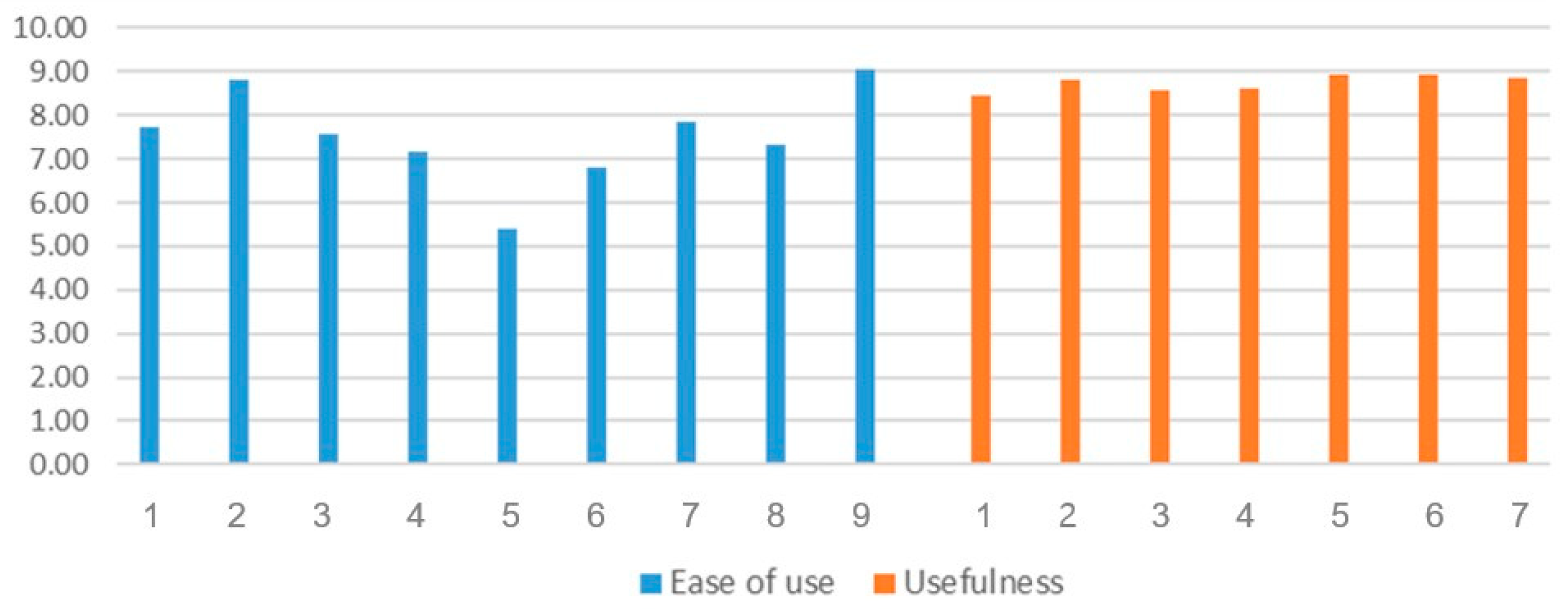
| a. Ease of use | |
| (1) How convenient do you think VR training programs are? | 7.73 ± 1.38 |
| (2) Was the initial training on VR devices and how to use them adequate? | 8.80 ± 1.42 |
| (3) Was the text information displayed on the VR screen easy to read? | 7.56 ± 2.48 |
| (4) Do you clearly understand the video information on the VR screen? | 7.17 ± 2.22 |
| (5) Was the resolution of the VR screen good? | 5.41 ± 2.69 |
| (6) Have you encountered any difficulties due to errors occurring during VR playback? | 6.80 ± 3.13 |
| (7) Was the VR program at an appropriate pace? | 7.86 ± 2.05 |
| (8) Was the information displayed on the VR screen appropriately positioned? (Is it consistent and easy to see?) | 7.32 ± 2.33 |
| (9) Was the VR device easy to use? | 9.03 ± 1.27 |
| Total average | 7.52 ± 1.10 |
| b. Usefulness | |
| (10) Did the on-screen and text information in the VR training program help you learn clinical skills? | 8.44 ± 1.51 |
| (11) Did you enjoy the VR training program? | 8.81 ± 1.54 |
| (12) Do you expect that your clinical skills will improve through VR training programs? | 8.56 ± 1.52 |
| (13) Does the VR training program help you understand clinical skills better? | 8.56 ± 1.57 |
| (14) Would you recommend the VR Clinical Skills Training Program to others? | 8.93 ± 1.47 |
| (15) Do you think VR training programs will be useful for clinical skills training in the future? | 8.93 ± 1.45 |
| (16) Would you consider using VR training programs for learning other clinical skills in the future? | 8.86 ± 1.51 |
| Total average | 8.73 ± 1.32 |
| Grand total average | 8.05 ± 1.06 |
| |
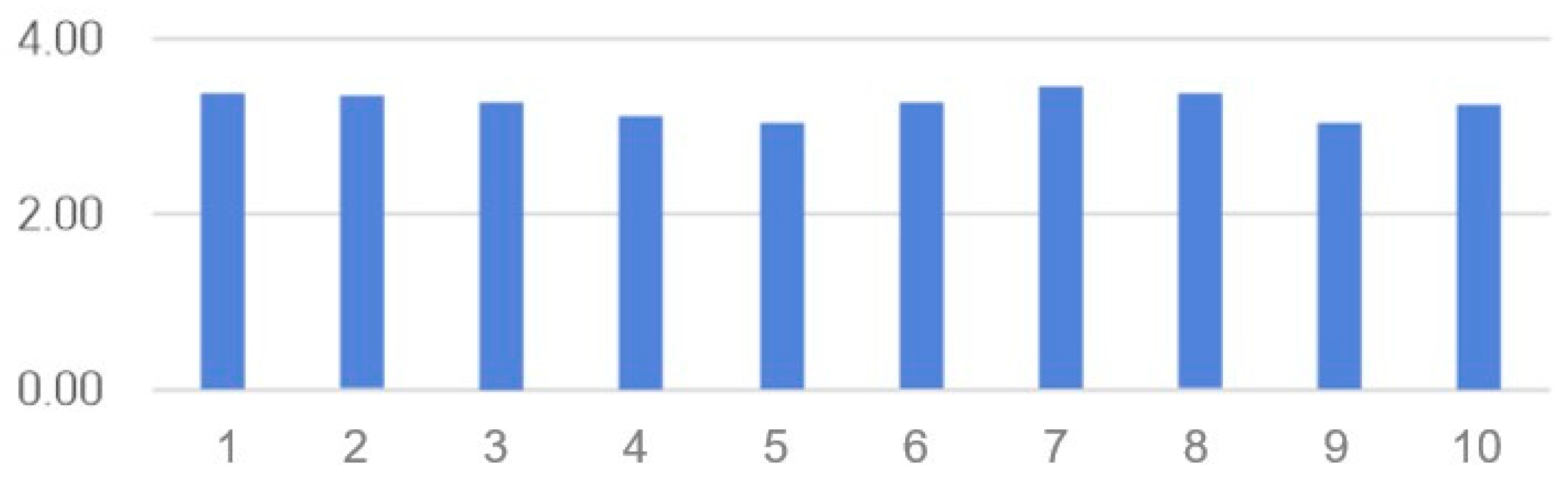
| (1) I would like to use this VR simulation training often. | 4.22 ± 0.70 |
| (2) I think this VR simulation training is too complicated. | 1.97 ± 0.83 |
| (3) I think this VR simulation training is easy to use. | 4.10 ± 0.82 |
| (4) I think I need help using this VR simulation training. | 3.63 ± 0.95 |
| (5) I think this VR simulation training has a lot of well-integrated features. | 3.80 ± 0.98 |
| (6) I feel like there are too many inconsistencies in this VR simulation training. | 2.08 ± 0.84 |
| (7) I think most people will quickly learn how to use this VR simulation training. | 4.31 ± 0.59 |
| (8) I find this VR simulation training very cumbersome to use. | 2.03 ± 0.93 |
| (9) I felt very confident after using this VR simulation training. | 3.80 ± 0.76 |
| (10) I had to learn a lot before using this VR simulation training. | 2.71 ± 1.18 |
| Total score | 69.49 |
| |
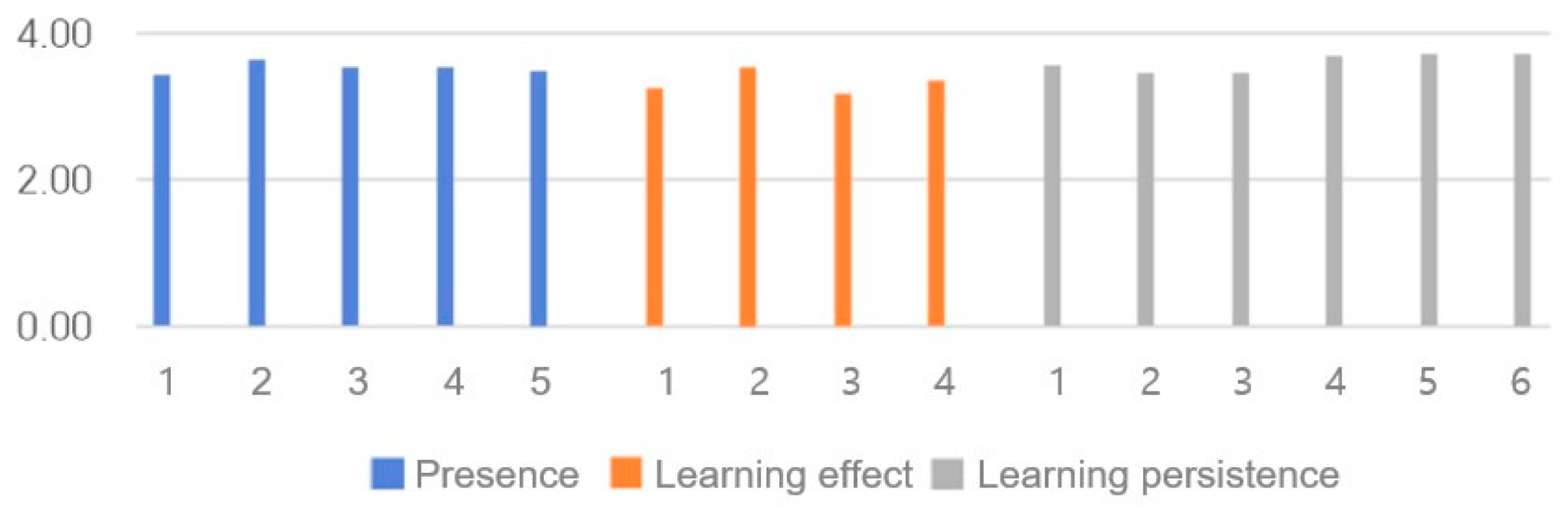
| a. Presence | |
| (1) During the VR simulation training experience, I felt as if I was in a clinical setting. | 4.27 ± 0.83 |
| (2) I think that this screen, where you experience VR simulation training, is a reality that could actually exist. | 4.54 ± 0.68 |
| (3) The sounds (conversations) heard while experiencing VR simulation training seemed real. | 4.41 ± 0.77 |
| (4) While experiencing VR simulation training, I felt like I was seeing the scenes on the screen as if they were actually happening. | 4.41 ± 0.75 |
| (5) While experiencing the VR simulation training, the situation felt like an actual clinical situation. | 4.36 ± 0.92 |
| Total average | 4.40 ± 0.65 |
| b. Learning effectiveness | |
| (1) I feel that my clinical skills have improved more than I expected while learning VR simulation training. | 4.05 ± 0.99 |
| (2) I believe that if I study VR simulation training diligently, it will help improve my clinical skills. | 4.42 ± 0.72 |
| (3) After receiving VR simulation training, I gained confidence in performing clinical skills. | 3.97 ± 1.02 |
| (4) After receiving VR simulation training, it helped me improve my clinical skills. | 4.19 ± 0.86 |
| Total average | 4.16 ± 0.80 |
| c. Learning persistence | |
| (1) I plan to use what I learned in the VR simulation training in my future clinical practice. | 4.44 ± 0.62 |
| (2) I think I will be able to utilize what I learned in the VR simulation training more in my clinical practice than I expected. | 4.31 ± 0.82 |
| (3) I will use what I learned in the VR simulation training in my future clinical practice. | 4.31 ± 0.75 |
| (4) I would be willing to experience VR simulation training again. | 4.61 ± 0.62 |
| (5) I would recommend VR simulation training to other students. | 4.63 ± 0.67 |
| (6) In the future, I would like to utilize VR simulation training more if possible. | 4.64 ± 0.52 |
| Total average | 4.49 ± 0.55 |
| Grand total average | 4.37 ± 0.58 |
| |
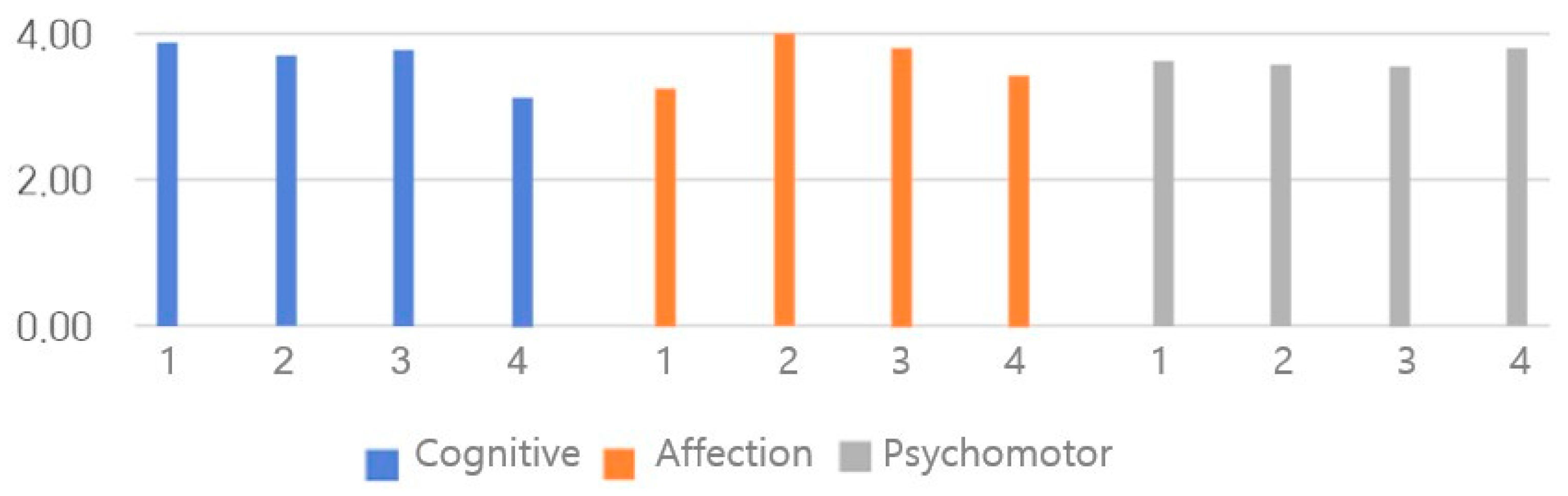
| a. Cognitive domain | |
| (1) I remember how to perform clinical techniques. | 3.88 ± 0.85 |
| (2) I can understand the content of clinical techniques and demonstrate them to others. | 3.69 ± 0.93 |
| (3) I can verbally explain the purpose and principles of performing clinical techniques. | 3.78 ± 1.02 |
| (4) I can verbally explain the sequence and interrelationships between each step of clinical technique. | 3.14 ± 0.71 |
| Total average | 3.62 ± 0.77 |
| b. Affection domain | |
| (5) I spend more time on this area than on any other. | 3.25 ± 0.96 |
| (6) I think I can get more out of this field than any other. | 4.03 ± 0.81 |
| (7) I tend to pay more attention to information related to this field. | 3.81 ± 0.80 |
| (8) I actively seek out information related to this field. | 3.44 ± 0.90 |
| Total average | 3.64 ± 0.67 |
| c. Psychomotor domain | |
| (9) I can accurately follow the instructor’s steps and actions for clinical techniques. | 3.63 ± 0.90 |
| (10) I can smoothly complete the steps of performing clinical skills. | 3.58 ± 0.97 |
| (11) I try to monitor my clinical skills for improvement. | 3.56 ± 0.84 |
| (12) I strive to monitor clinical skill performance and make appropriate adjustments when necessary. | 3.80 ± 0.77 |
| Total average | 3.64 ± 0.71 |
| Grand total average | 3.63 ± 0.62 |
| |
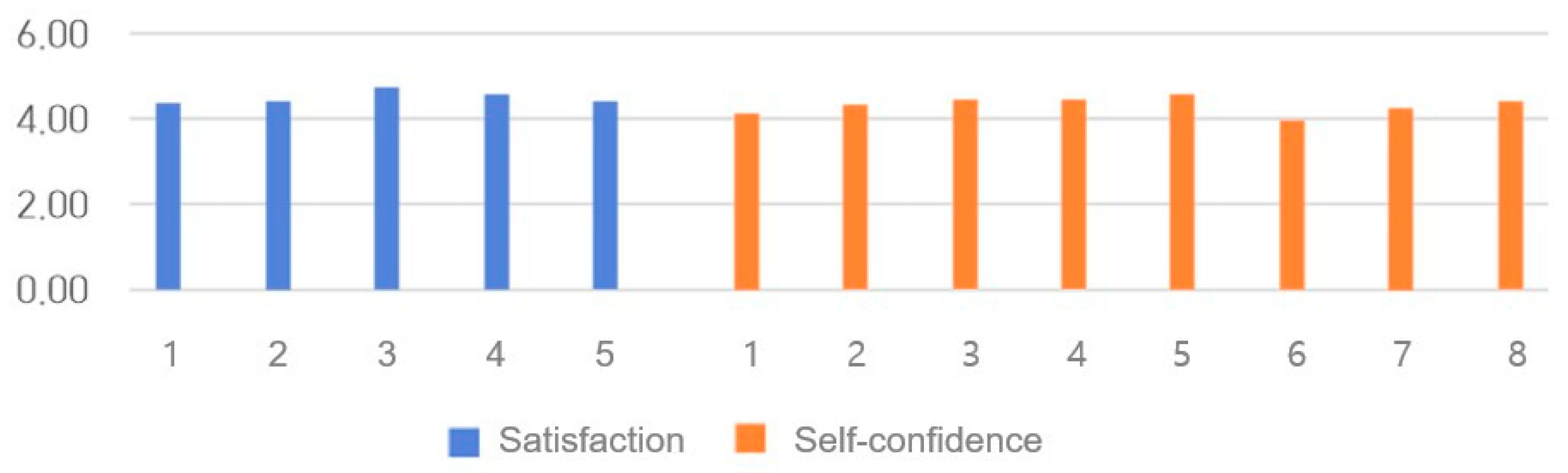
| a. Satisfaction | |
| (1) The teaching methods used in VR simulation training were helpful and effective. | 4.37 ± 0.69 |
| (2) VR simulation training provided a variety of learning materials and activities that helped me learn my clinical skills. | 4.42 ± 0.70 |
| (3) The VR simulation training was interesting. | 4.75 ± 0.51 |
| (4) The learning materials in the VR simulation training were motivating and helpful for learning. | 4.58 ± 0.59 |
| (5) The VR simulation training method suited the way I learn. | 4.41 ± 0.75 |
| Total average | 4.51 ± 0.56 |
| b. Self-confidence | |
| (1) I am confident that I have learned the contents of the VR simulation training. | 4.14 ± 0.78 |
| (2) I am confident that VR simulation training contains important content necessary for learning clinical skills. | 4.32 ± 0.84 |
| (3) I am confident that VR simulation training will allow me to develop the skills and gain the knowledge necessary to perform tasks required in a clinical setting. | 4.44 ± 0.62 |
| (4) VR simulation training used materials that helped with teaching. | 4.44 ± 0.60 |
| (5) It is my role as a learner to learn what I need to know in VR simulation training. | 4.58 ± 0.59 |
| (6) I know how to get help when you don’t understand the concepts covered in VR simulation training. | 3.97 ± 1.00 |
| (7) I know how to use VR simulation training to learn important aspects of clinical skills. | 4.27 ± 0.78 |
| (8) It is the instructor’s role to inform students of what they need to know through VR simulation training. | 4.41 ± 0.65 |
| Total average | 4.32 ± 0.53 |
| Grand total average | 4.39 ± 0.52 |
| |
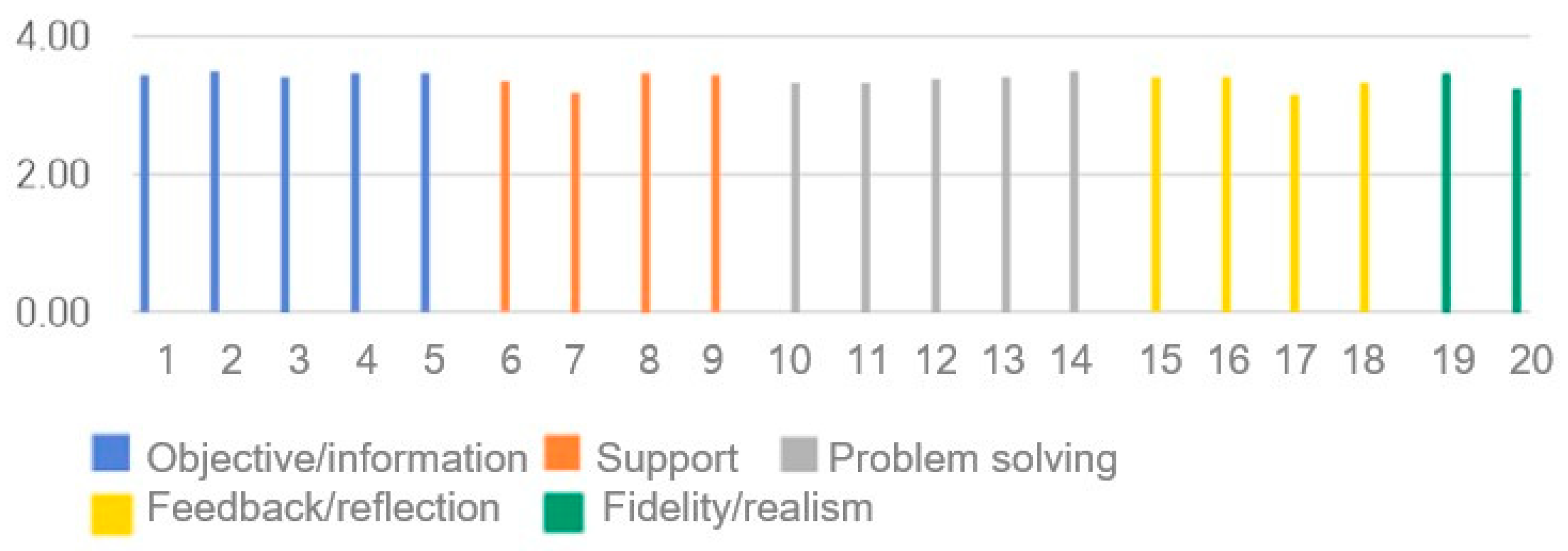
| a. Objectives & information | |
| (1) When starting the VR simulation, sufficient information was available to provide direction and encouragement for learning. | 4.29 ± 0.70 |
| (2) Clearly understand the purpose and goals of VR simulation. | 4.36 ± 0.61 |
| (3) The VR simulation clearly provided sufficient information in problem-solving situations. | 4.25 ± 0.69 |
| (4) I was given enough information during the VR simulation. | 4.32 ± 0.71 |
| (5) The instructions within the VR simulation were appropriate and helped enhance my understanding. | 4.32 ± 0.80 |
| Total average | 4.31 ± 0.56 |
| b. Support | |
| (6) Support was provided when needed during VR simulation learning. | 4.17 ± 0.87 |
| (7) I realized I needed help during my VR simulation learning. | 3.98 ± 1.11 |
| (8) I felt supported and assisted by the instructor during the VR simulation. | 4.31 ± 0.78 |
| (9) I received support during the VR simulation learning process. | 4.29 ± 0.77 |
| Total average | 4.19 ± 0.74 |
| c. Problem solving | |
| (10) Independent problem solving was promoted after the VR simulation. | 4.15 ± 0.81 |
| (11) I was encouraged to explore all the possibilities of VR simulation. | 4.15 ± 0.89 |
| (12) The VR simulation was designed to suit my specific level of knowledge and skills. | 4.22 ± 0.79 |
| (13) VR simulations provided an opportunity to learn about diagnostic and treatment priorities. | 4.25 ± 0.76 |
| (14) VR simulations gave patients the opportunity to set goals. | 4.36 ± 0.74 |
| Total average | 4.23 ± 0.65 |
| d. Feedback/reflection | |
| (15) The feedback provided was helpful. | 4.24 ± 0.80 |
| (16) Feedback was provided in a timely manner. | 4.25 ± 0.80 |
| (17) VR simulations allowed me to analyze my own actions and movements. | 3.93 ± 1.10 |
| (18) After the VR simulation, I was able to improve my knowledge level by receiving guidance and feedback from the instructor. | 4.15 ± 0.83 |
| Total average | 4.14 ± 0.75 |
| e. Fidelity/realism | |
| (19) The scenario was similar to a real situation. | 4.34 ± 0.73 |
| (20) Real-world elements, situations, and variables are incorporated into VR simulation scenarios. | 4.05 ± 0.94 |
| Total average | 4.19 ± 0.75 |
| Grand total average | 4.22 ± 0.57 |
| |
| (1) Mental Demand | 55.56 ± 23.49 |
| (2) Physical Demand | 18.46 ± 18.67 |
| (3) Temporal demand | 38.97 ± 23.14 |
| (4) Effort | 43.42 ± 22.59 |
| (5) Performance | 83.14 ± 94.30 |
| (6) Frustration | 14.81 ± 14.81 |
| Total average | 42.39 ± 20.37 |
| |
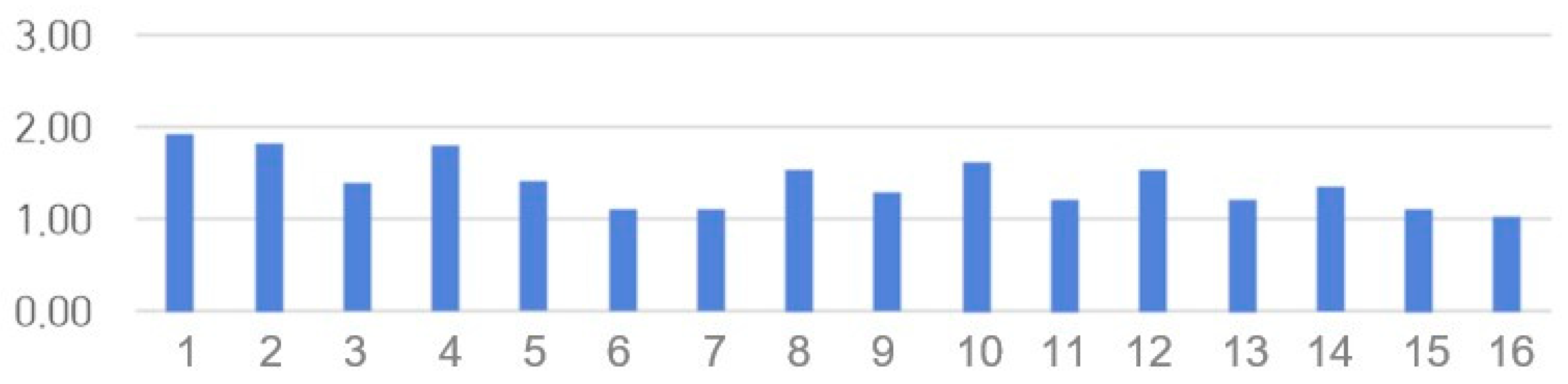
| (1) General discomfort | 1.93 ± 0.79 |
| (2) Fatigue | 1.83 ± 0.91 |
| (3) Headache | 1.39 ± 0.64 |
| (4) Eyestrain | 1.80 ± 0.92 |
| (5) Difficulty focusing | 1.41 ± 0.65 |
| (6) Increased salivation | 1.10 ± 0.31 |
| (7) Sweating | 1.10 ± 0.40 |
| (8) Nausea | 1.54 ± 0.93 |
| (9) Difficulty concentrating | 1.29 ± 0.53 |
| (10) Fullness of head | 1.63 ± 0.87 |
| (11) Blurred vision | 1.22 ± 0.53 |
| (12) Dizziness (eyes open) | 1.54 ± 0.77 |
| (13) Dizziness (eyes closed) | 1.22 ± 0.49 |
| (14) Vertigo | 1.36 ± 0.69 |
| (15) Stomach awareness | 1.12 ± 0.33 |
| (16) Burping | 1.03 ± 0.18 |
| Total average | 1.41 ± 0.38 |
Disclaimer/Publisher’s Note: The statements, opinions and data contained in all publications are solely those of the individual author(s) and contributor(s) and not of MDPI and/or the editor(s). MDPI and/or the editor(s) disclaim responsibility for any injury to people or property resulting from any ideas, methods, instructions or products referred to in the content. |
© 2026 by the authors. Licensee MDPI, Basel, Switzerland. This article is an open access article distributed under the terms and conditions of the Creative Commons Attribution (CC BY) license.
Share and Cite
Sung, H.-K.; Oh, Y.; Kim, M.; Kim, E.-J.; Lee, J.-H.; Han, Y.; Shin, N. An Experimental Study on the Effectiveness and Usefulness of 360° Virtual Reality Simulation in Korean Medical Education: A Pilot Study. Healthcare 2026, 14, 1426. https://doi.org/10.3390/healthcare14101426
Sung H-K, Oh Y, Kim M, Kim E-J, Lee J-H, Han Y, Shin N. An Experimental Study on the Effectiveness and Usefulness of 360° Virtual Reality Simulation in Korean Medical Education: A Pilot Study. Healthcare. 2026; 14(10):1426. https://doi.org/10.3390/healthcare14101426
Chicago/Turabian StyleSung, Hyun-Kyung, Yongtaek Oh, Mikyung Kim, Eun-Jin Kim, Ju-Hee Lee, Yejin Han, and Namin Shin. 2026. "An Experimental Study on the Effectiveness and Usefulness of 360° Virtual Reality Simulation in Korean Medical Education: A Pilot Study" Healthcare 14, no. 10: 1426. https://doi.org/10.3390/healthcare14101426
APA StyleSung, H.-K., Oh, Y., Kim, M., Kim, E.-J., Lee, J.-H., Han, Y., & Shin, N. (2026). An Experimental Study on the Effectiveness and Usefulness of 360° Virtual Reality Simulation in Korean Medical Education: A Pilot Study. Healthcare, 14(10), 1426. https://doi.org/10.3390/healthcare14101426