


Abstract
Background: The high prevalence of anxiety and depression among young adults constitutes a significant public health concern, with body image identified as a key psychological factor. However, the interplay between subjective metrics (perceived body image) and objective measures (Body Mass Index) remains insufficiently explored within specific populations, such as health sciences students in Eastern Europe. Methods: An observational, cross-sectional study was conducted on a sample of 137 medical and nursing students from a Romanian university. Validated instruments were employed: the Hospital Anxiety and Depression Scale (HADS) and the Eating Disorder Examination Questionnaire (EDE-Q). BMI was calculated from self-reported height and weight. Spearman’s correlation analyses and Mann–Whitney U tests were performed. Results: Subjective body image concerns, particularly those related to shape, weight, and eating, were found to be positively and significantly correlated with symptoms of anxiety and depression (all p < 0.05). In contrast, BMI exhibited no significant correlation with either of the HADS subscales. Although nursing students presented a higher mean BMI, no significant differences were recorded between the student groups with respect to psychological symptoms or body image concerns. Conclusions: Subjective dissatisfaction with body image is a more salient correlate of emotional distress than objective body mass in this cohort. Although the sample size was moderate, the observed associations were robust and statistically significant, underscoring the importance of subjective body image over objective metrics such as BMI in this academic population. These findings underscore the necessity for mental health interventions within university settings to focus on the perceptual and cognitive-affective aspects of body image, rather than exclusively on weight management.
Keywords:
body image; body dissatisfaction; anxiety; depression; medical students; nursing students; Romania; EDE-Q; HADS 1. Introduction
Anxiety and depression represent some of the most prevalent psychological disorders globally, with their incidence rising particularly among adolescents and young adults [1,2,3,4]. The most comprehensive umbrella review to date synthesised data from over 8.7 million university students worldwide and found pooled prevalence rates for mild depressive symptoms at 35.4% (95% CI: 33.9–36.9) and mild anxiety symptoms at 40.2% (95% CI: 37.4–43.1), with severe symptoms at 13.4% and 16.8%, respectively [5]. These emotional conditions arise from a complex interplay of biological predispositions, environmental stressors, and underlying psychological vulnerabilities [6,7,8]. Within this context, body image dissatisfaction has emerged as a significant factor in psychological well-being [9,10]. Body image is a multifaceted construct, encapsulating an individual’s perceptions, thoughts, and emotional responses to their physical appearance [10,11]. Meta-analytic reviews confirm a robust negative correlation between body satisfaction and symptoms of depression and anxiety among university students, establishing that body dissatisfaction is a significant predictor of these disorders [12].
A fundamental distinction must be drawn between objective anthropometric measures, such as the Body Mass Index (BMI), and the subjective psychological experience of one’s own body. Although BMI serves as a standardised metric for weight status, it does not adequately capture the complexity of body-related emotional and cognitive experiences [10,13]. There is a growing body of evidence to suggest that an individual’s subjective perceptions and feelings toward their body may serve as a more potent predictor of psychological distress than objective weight status alone [14,15].
The majority of research in this domain originates from Western countries, leaving a comparative deficit of data from Eastern Europe, a region undergoing unique socio-cultural transitions [16,17]. Studies from neighbouring countries provide an important regional context. Research in Poland indicates high body dissatisfaction and a pronounced desire to alter physical appearance, particularly among women [18,19]. In the Czech Republic and Slovakia, body dissatisfaction is also prevalent, especially in girls, and is not always correlated with actual obesity [20]. A study conducted in Moscow and Tiraspol revealed that the drivers of dissatisfaction differ by gender: males were dissatisfied with insufficient weight, whereas females were dissatisfied with excess weight [21]. This cultural friction could amplify the psychological distress associated with body image, rendering the subjective experience of the body particularly potent and relevant for investigation [22].
Within the Romanian context, research is limited but highly pertinent. A recent study demonstrated that Romanian medical students are at a higher risk of developing eating disorders compared to the general population, with familial pressure identified as a more powerful predictor than media pressure [23]. The specific population of medical and nursing students is particularly vulnerable, facing high levels of stress, academic pressure, and potential professional pressures related to health and physical appearance [24,25]. Other regional data indicate that a significant percentage of young people are at high risk for generalised anxiety disorder [26]. These findings suggest a significant mental health problem among young people in the region. A recent study combining institutional data with a national meta-analysis confirmed the high burden, finding that 34.0% of students at the same university presented with clinically significant depressive symptoms, with the pooled national prevalence standing at 19.99% [27].
This study, therefore, aims to address a significant gap in the literature by pursuing the following objectives:
- To investigate the relationship between subjective body image concerns (measured with EDE-Q), objective body size (BMI), and symptoms of anxiety and depression (measured with HADS) in a sample of Romanian health sciences students.
- To test the hypothesis that subjective body image concerns are more strongly associated with anxiety and depression than is BMI.
- To explore potential differences in these variables between medical and nursing students.
While previous studies have focused primarily on Western populations, this research addresses a significant gap by providing robust data from an under-researched Eastern European academic context, using validated instruments and rigorous analytic methods. The moderate sample size is offset by the strong effect sizes and internal consistency observed.
2. Materials and Methods
2.1. Study Design
This study employed a cross-sectional, observational design to explore the associations between objective body size, subjective body image concerns, and psychological distress—specifically, symptoms of anxiety and depression—among university students. The study was conducted at a single university in Romania. The study followed the Strobe checklist. The checklist can be found in Supplementary Materials.
2.2. Participants and Study Procedure
A total of 137 students enrolled in the General Medicine and General Nursing undergraduate programmes at the Faculty of Medicine and Pharmacy, “Dunărea de Jos” University of Galați, participated in the study. Recruitment was conducted via internal university announcements and brief presentations during lectures. Data collection took place during the autumn semester of the 2024–2025 academic year. Inclusion criteria were: current enrolment in the faculty and age ≥ 18 years. No exclusion criteria were applied.
Data were collected via an anonymous online survey hosted on the PsyToolkit platform version: 3.6.2 [28,29]. Prior to participation, all respondents provided informed consent electronically. Participants were informed of the voluntary nature of the study, assured of the confidentiality and anonymity of their responses, and reminded of their right to withdraw at any time without penalty. The study was approved by the Ethics Committee of “Dunărea de Jos” University of Galați and was conducted in accordance with the ethical principles outlined in the Declaration of Helsinki.
The sample exhibited a significant female majority (77.4% women; 22.6% men), which reflects the general demographic trend in Romanian health sciences education. This imbalance is noted as a necessary limitation for the generalizability of the results to the broader population, particularly male students.
2.3. Measures
Symptoms of anxiety and depression were assessed using the Hospital Anxiety and Depression Scale (HADS) [30]. This 14-item self-report instrument is designed for use in general medical populations. The scale includes two subscales—anxiety (HADS-A) and depression (HADS-D)—each containing seven items scored on a 4-point Likert scale (0–3). Subscale scores range from 0 to 21, with higher scores indicating greater symptom severity. The HADS has demonstrated strong psychometric properties across diverse populations.
BMI was calculated based on self-reported height and weight using the standard formula (kg/m2). Subjective concerns about body image were measured using the Eating Disorder Examination Questionnaire (EDE-Q) [31]. This self-report instrument assesses attitudes and behaviours related to eating, shape, and weight over the past 28 days. Items are rated on a 7-point scale (0 = “No days” to 6 = “Every day”). The current study focused on the Shape Concern, Weight Concern, and Eating Concern subscales, with higher scores reflecting more pronounced body image distress. The EDE-Q is widely validated and has demonstrated reliability in both clinical and non-clinical samples.
2.4. Statistical Analysis
All data were analysed using IBM SPSS Statistics for Windows, version 27 [32]. The significance threshold was set at p < 0.05 for all tests. Descriptive statistics were calculated for demographic and psychometric variables. Spearman’s rank correlation coefficients were used to examine associations between subjective body image concerns, BMI, and psychological symptoms. Mann–Whitney U tests were applied to compare variables between student groups (Medicine vs. Nursing), given the non-normal distribution of most variables, as confirmed by the Shapiro–Wilk test.
3. Results
3.1. Participant Characteristics
The sample consisted of 137 students (mean age = 26.02, SD = 10.208). The majority of participants were female (N = 106, 77.4%), with the remainder being male (N = 31, 22.6%). The sample was divided between students of Medicine (N = 85, 62%) and Nursing (N = 52, 38%). Descriptive statistics for key continuous variables are presented in Table 1. Categorical distributions for BMI, anxiety, and depression showed that most participants were of normal weight (55.5%), had normal levels of anxiety (58.4%), and normal levels of depression (86.1%).
Table 1.
Participant Demographics and Descriptive Statistics for Key Variables.
3.2. Correlations Between Body Image, BMI, and Psychological Distress
Spearman’s correlation analysis revealed significant associations between subjective body image concerns and symptoms of anxiety and depression. Specifically, higher scores on the HADS anxiety subscale (HADS-A) were positively correlated with Eating Concern (ρ = 0.334, p < 0.001), Shape Concern (ρ = 0.320, p < 0.001), and Weight Concern (ρ = 0.318, p < 0.001).
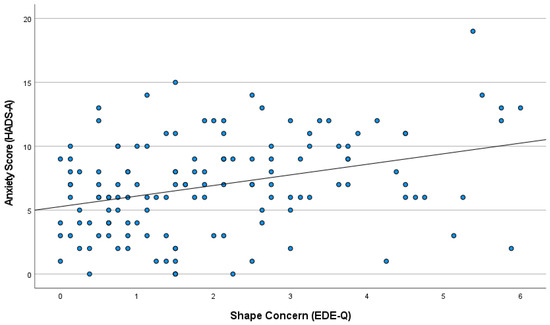
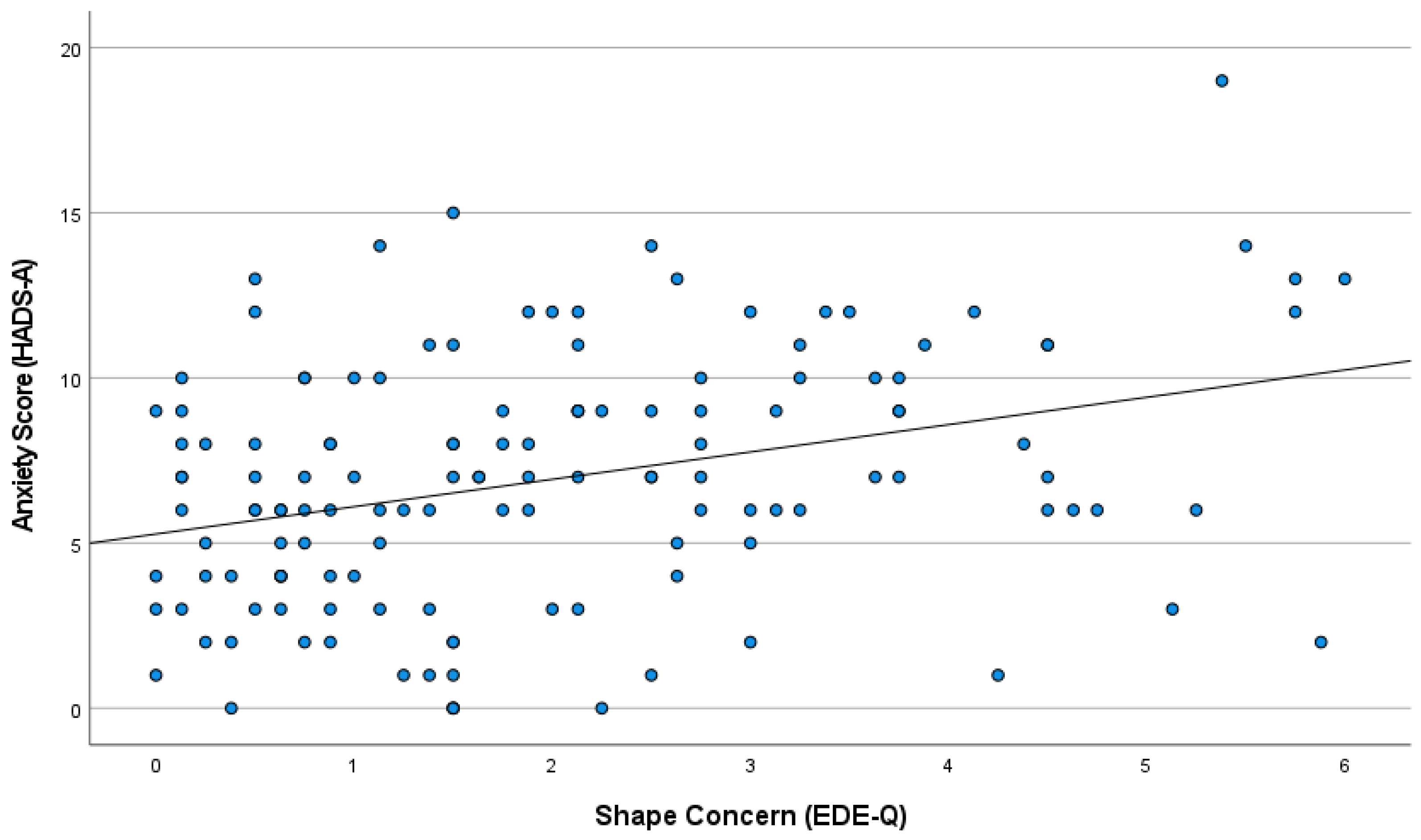
As shown in Figure 1, there was a clear positive association between anxiety symptoms (HADS-A) and Shape Concern scores (EDE-Q), with higher levels of subjective body image concern corresponding to greater psychological distress. Despite the moderate sample, the correlation between subjective body image concerns and anxiety (ρ = 0.032, p < 0.001) remained strong and statistically significant, consistent with patterns observed in larger studies.
Figure 1.
Scatter plot illustrating the positive correlation between HADS-Anxiety scores and EDE-Q Shape Concern scores. Each point represents a participant. The regression line indicates the overall trend (N = 137).
Similarly, higher scores on the HADS depression subscale (HADS-D) were positively correlated with Eating Concern (ρ = 0.267, p = 0.002), Weight Concern (ρ = 0.247, p = 0.004), and Shape Concern (ρ = 0.199, p = 0.020).
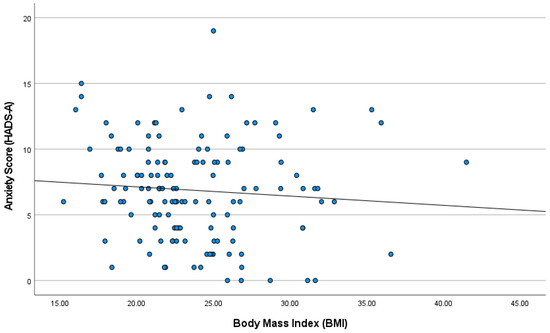
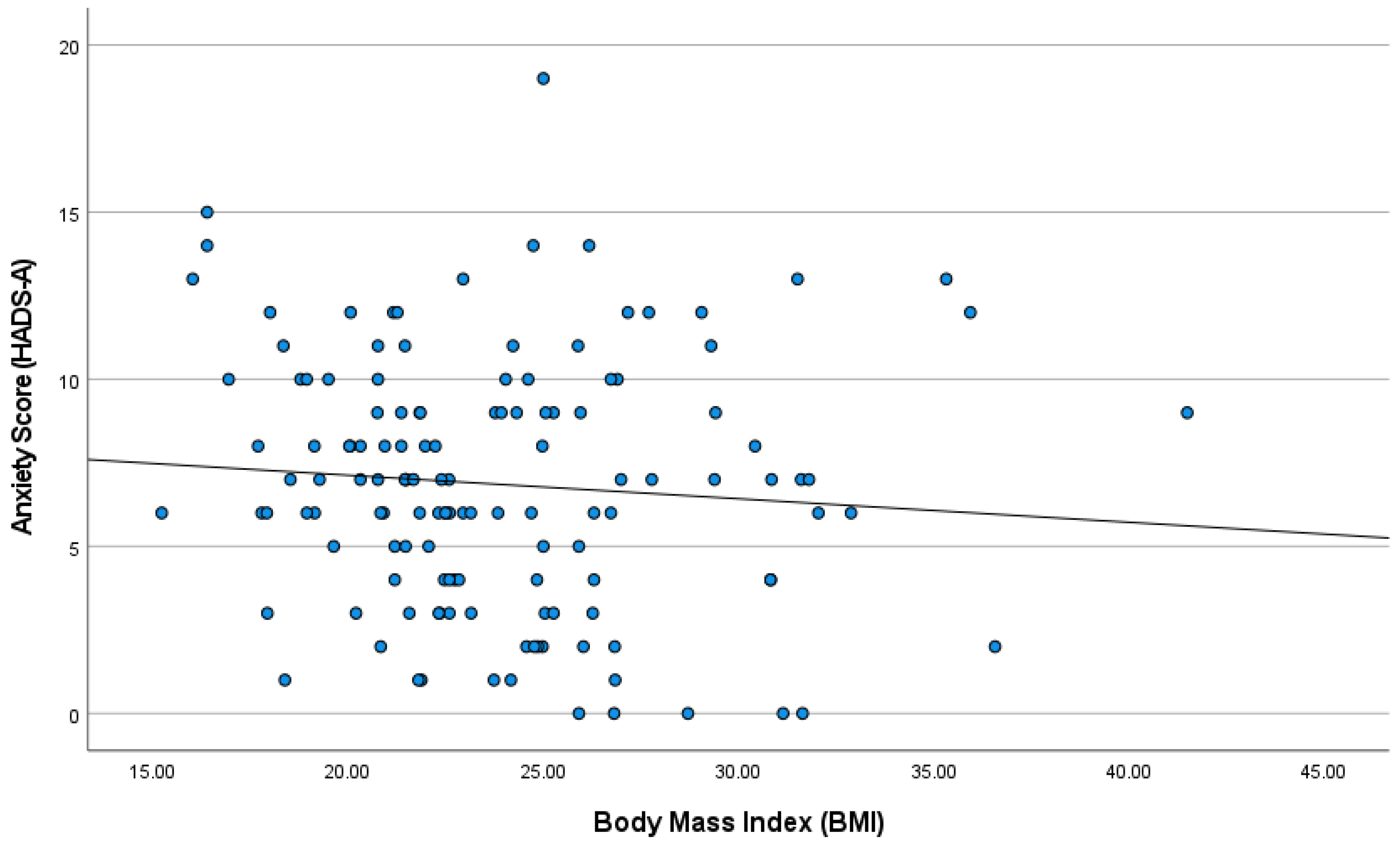
In striking contrast, BMI exhibited no statistically significant correlation with either HADS-A scores (ρ = −0.127, p = 0.138) or HADS-D scores (ρ = 0.065, p = 0.448). In contrast, as illustrated in Figure 2, BMI showed no clear relationship with anxiety symptoms, with data points dispersed and the regression line close to flat, visually confirming the lack of a statistically significant association. The absence of a statistically significant association between BMI and psychological distress further reinforces the primacy of subjective perceptions, a result that holds despite the sample size.
Figure 2.
Scatter plot showing the absence of correlation between HADS-Anxiety scores and BMI. Each point represents a participant; the regression line is nearly horizontal (N = 137).
The full correlation results are presented in Table 2.
Table 2.
Correlation analyses between burnout and various variables.
3.3. Descriptive Statistics for Medicine and Nursing Students
As it was already presented in Table 1, there were 95 students enrolled in the Medicine programme and 42 in the Nurse programme. Descriptives for the Medicine programme are presented in Table 3 and for Nurse in Table 4.
Table 3.
Descriptive statistics for Medicine students.
Table 4.
Descriptive statistics for Nurse students.
3.4. Group Comparisons Between Medicine and Nursing Students
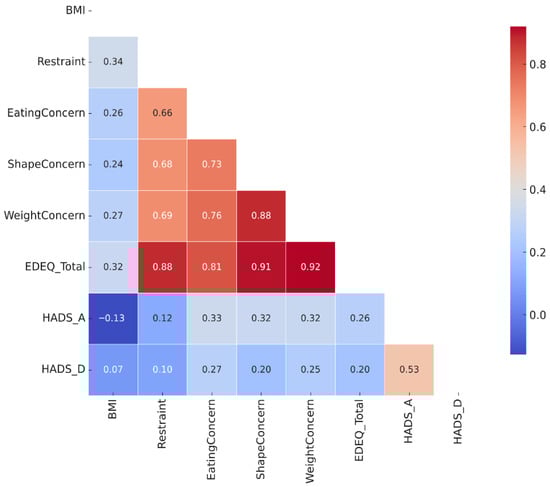
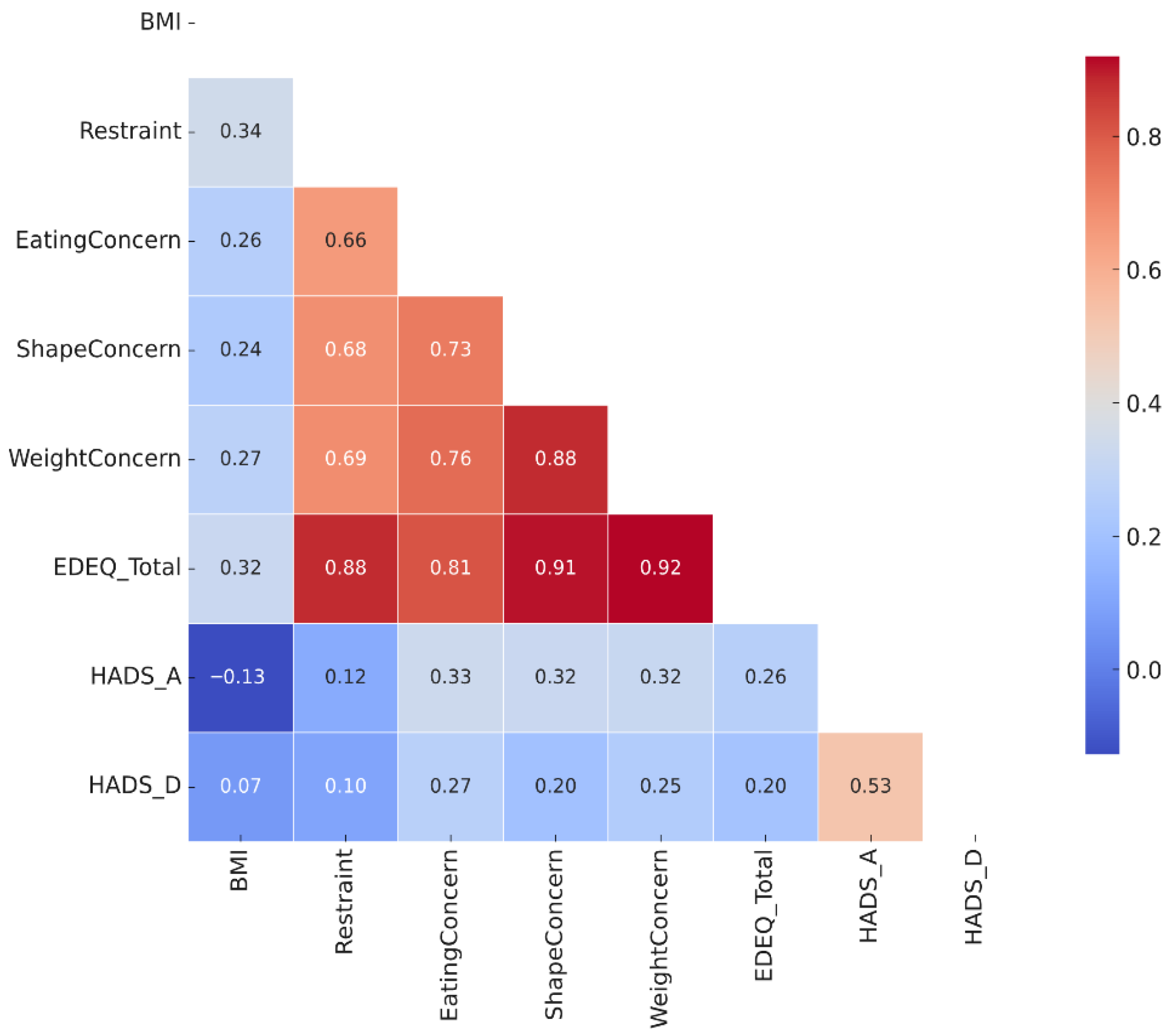
For a comprehensive overview of the relationships among the main variables, Figure 3 presents a heatmap of Spearman’s correlation coefficients.
Figure 3.
Heatmap of Spearman’s correlation coefficients between BMI, HADS subscales, and EDE-Q subscales. Statistically significant correlations are highlighted (N = 137).
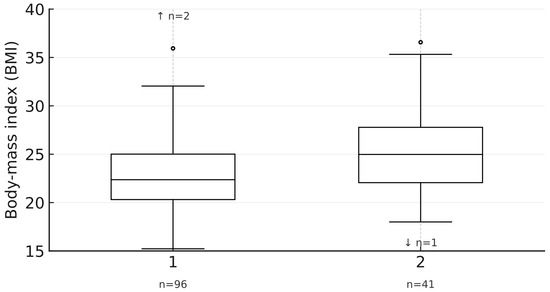
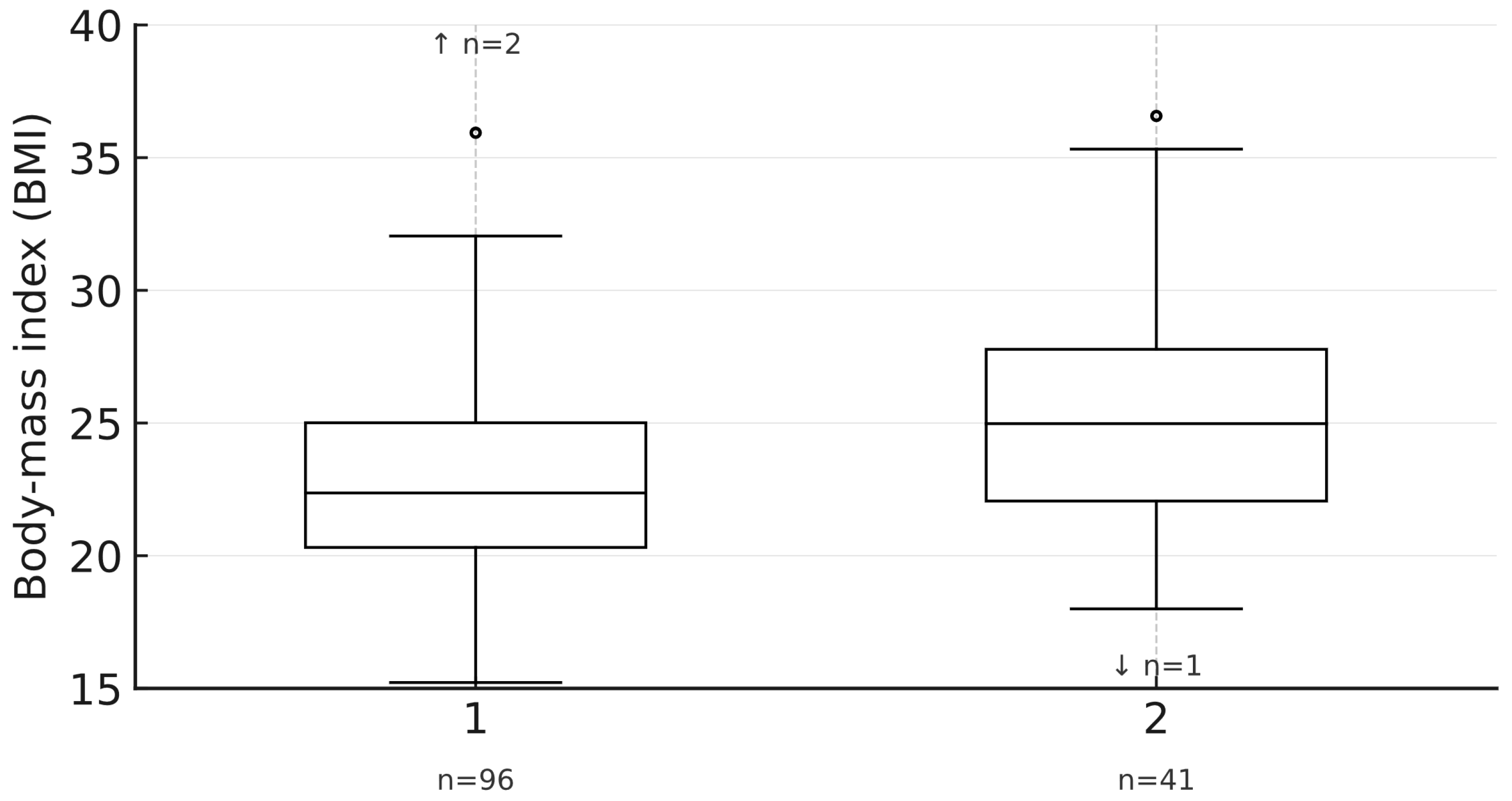
Mann–Whitney U tests were employed to compare variables between students of Medicine (N = 85) and Nursing (N = 52). A statistically significant difference in BMI was found between the two groups, with Nursing students having a higher median BMI (Median = 24.98) compared to Medicine students (Median = 22.36), U = 1354.00, p = 0.004.
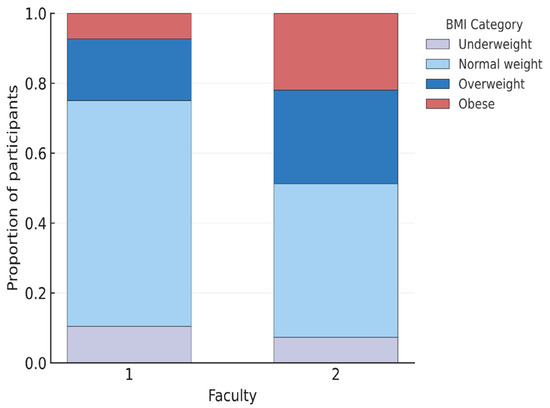
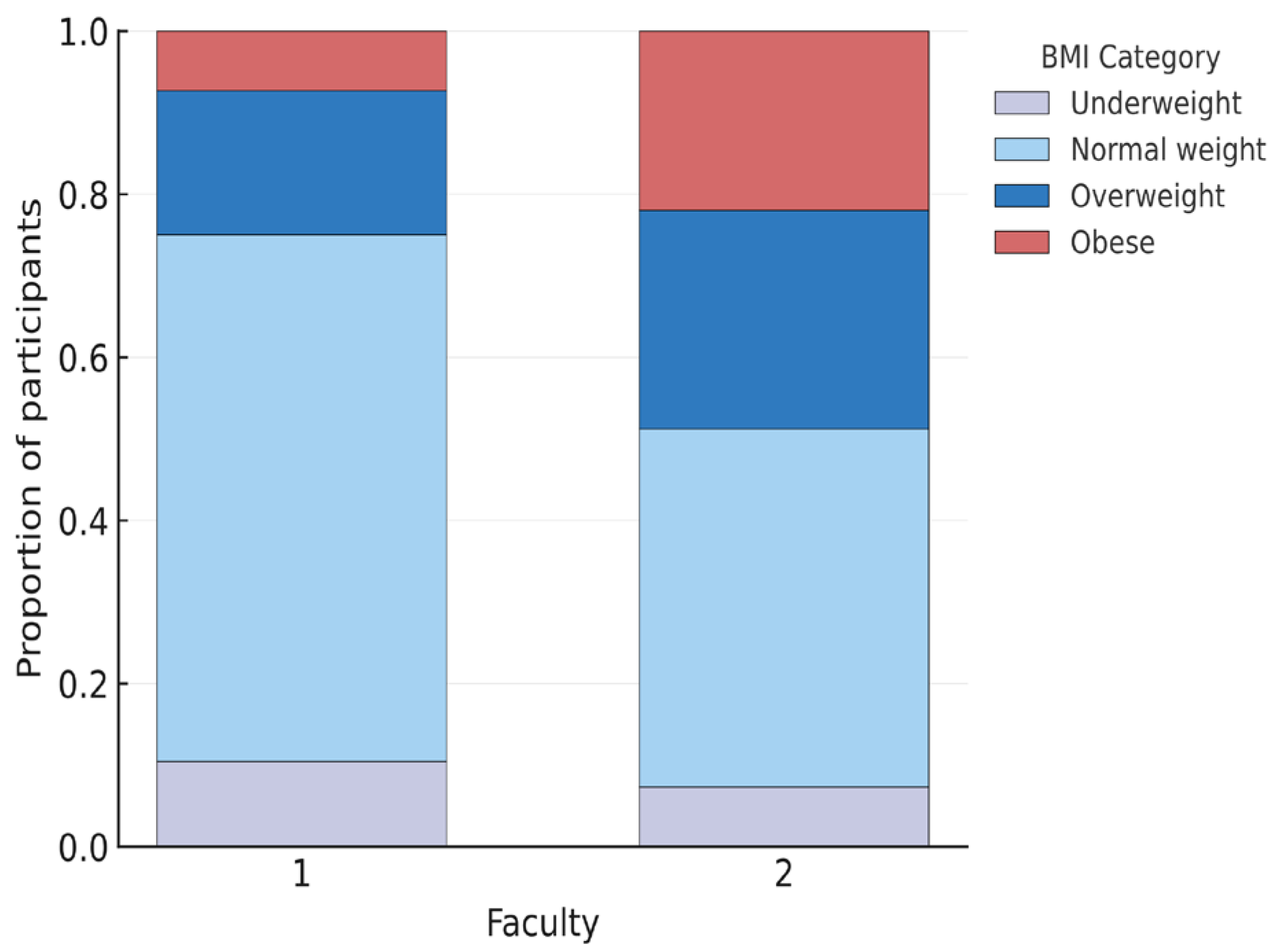
The distribution of BMI categories by faculty is shown in Figure 4, highlighting a higher proportion of overweight and obese individuals among nursing students.
Figure 4.
Distribution of body-mass index (BMI) categories by faculty (1, Medicine; 2, Nursing).
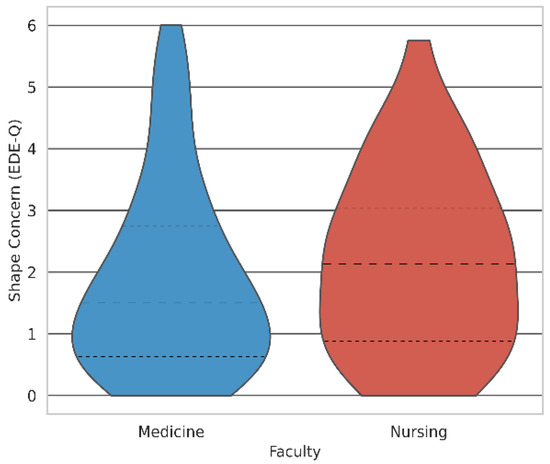
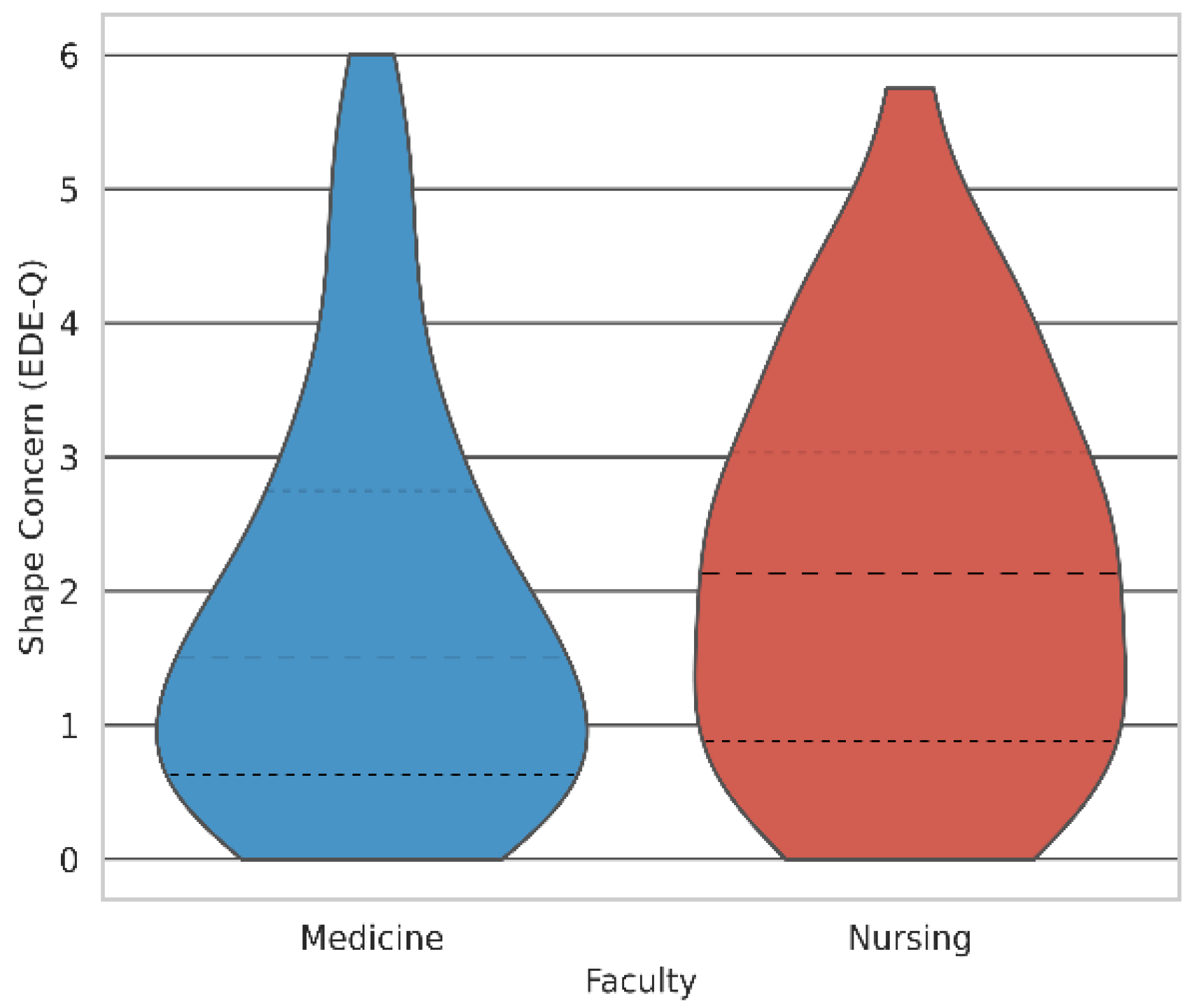
Figure 5 displays the distribution of Shape Concern scores (EDE-Q) by faculty, revealing asymmetry and greater variability among nursing students.
Figure 5.
Violin plot of Shape Concern (EDE-Q) scores by faculty, visualising distribution shape, outliers, and median (N = 137).
Figure 6 visually demonstrates significantly higher BMI in nursing students compared to medical students.
Figure 6.
Box-and-whisker plots of body-mass index (BMI) by faculty (1 = Medicine; 2 = Nursing).
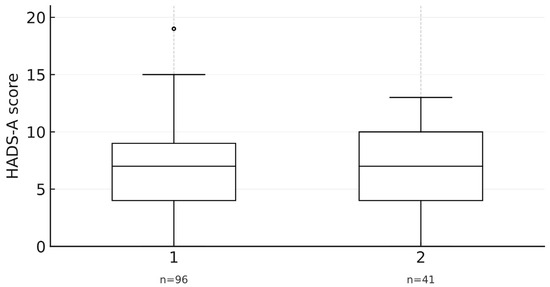
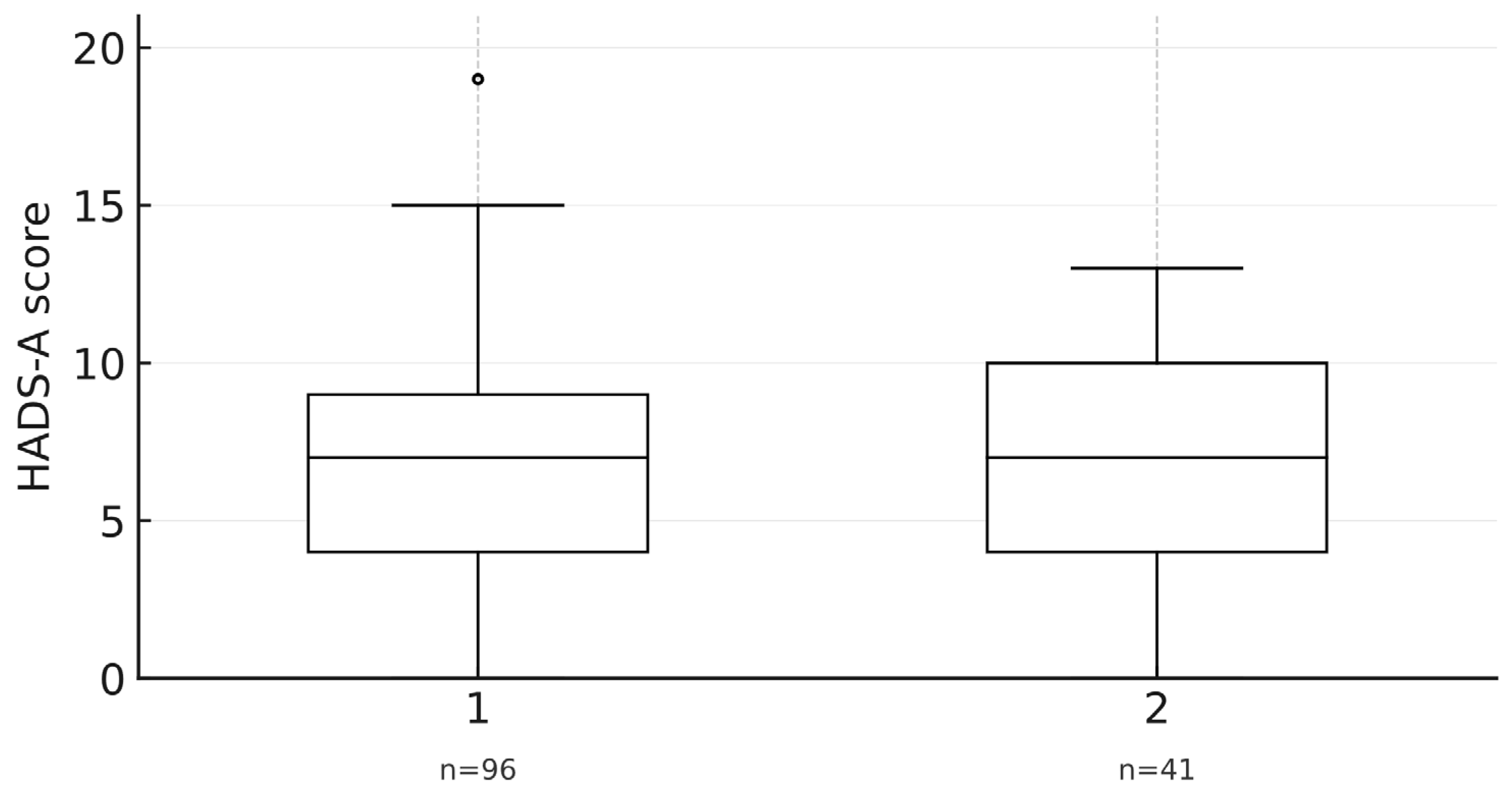
However, no statistically significant differences were found between the two groups for any of the psychological variables, including HADS-A and HADS-D scores, or for any of the EDE-Q subscales (all p > 0.05). However, Figure 7 shows that anxiety scores (HADS-A) were very similar between the two groups, with overlapping distributions and medians.
Figure 7.
Box plot of HADS-Anxiety scores by faculty, illustrating similar distributions for Medicine and Nursing students (N = 137).
These results are detailed in Table 5.
Table 5.
Mann–Whitney U Test Comparisons of Key Variables between Medicine and Nursing Students.
4. Discussion
This study investigated the relationships between body image, BMI, and symptoms of anxiety and depression in a sample of Romanian health sciences students. The principal finding is the clear dissociation between the impact of subjective body perception and that of objective body mass on mental health. Our results demonstrate that subjective concerns regarding shape, weight, and eating are significantly and positively correlated with higher levels of anxiety and depression. Conversely, BMI, an objective measure of weight status, showed no significant association with emotional distress. This finding strongly supports the study’s central hypothesis and suggests that, for this cohort of future health professionals, the psychological and emotional experience of one’s own body is a more salient correlate of mental well-being than actual weight status. Notably, the robust associations observed in this moderate sample suggest that subjective body image dissatisfaction is a key driver of anxiety and depression among health sciences students, irrespective of objective weight status.
4.1. The Primacy of Perception in the Context of Global Literature
This central result aligns with a growing body of international literature that acknowledges the limitations of BMI as a predictor of mental health and underscores the importance of body dissatisfaction as a risk factor for negative psychological outcomes [33,34,35]. Importantly, in Romania, Pop (2016) reported that body image dissatisfaction correlated more strongly with self-esteem (r = −0.36, p < 0.001) than BMI, reinforcing the regional applicability of our results [36]. Furthermore, similar findings have been documented in China, where body dissatisfaction predicted anxiety and depression across genders [37,38,39]. The consistency of these results—across genders, cultures, and BMI statuses—supports the view that subjective body perception is a more potent driver of psychological distress than objective body measures.
Furthermore, the finding of no significant differences in psychological distress between medical and nursing students, despite a significant difference in their mean BMI, serves as a powerful demonstration of this dissociation. This reinforces the argument that it is not the physical metric itself, but the subjective experience thereof, that is the primary driver of the observed mental health outcomes. It suggests that common factors related to the medical academic environment (e.g., stress, perfectionism) or socio-cultural pressures may exert a more uniform impact on the students’ psyche than do their physical differences [25,40,41,42].
4.2. Regional Novelty: Body Image in the Eastern European Context
This study makes a unique contribution by focusing on an under-researched population in a distinct regional context. As summarised in Table 6, research from Eastern Europe is beginning to form a complex picture of body image concerns.
Table 6.
Summary of Recent Findings on Body Image Dissatisfaction and Correlates among Students in Eastern Europe.
Our results fit within this regional landscape but add a crucial nuance. The amplified importance of subjective perception in our Romanian sample may reflect the ongoing socio-cultural transition in the region. As Western, often unrealistic, beauty ideals permeate through media and globalisation, they may create a significant and distressing discrepancy between the internalised ideal and physical reality [46,47]. This discrepancy is a potent source of psychological distress, which explains why subjective perception becomes a stronger correlate of anxiety and depression than objective BMI [14,19,48]. Moreover, our findings complement the study by Motorga et al. (2025), which identified familial pressure as a key risk factor for eating disorders in Romanian medical students [23]. Our study suggests that this external pressure manifests as an internal, subjective dissatisfaction, which is in turn tightly linked to symptoms of anxiety and depression.
4.3. Implications for University Mental Health in Romania
The strong association between body image dissatisfaction and mental health symptoms found in this cohort underscores the need for practical clinical action within the university setting. Therefore, university health services should consider screening for body image dissatisfaction using validated instruments such as the EDE-Q, not merely monitoring BMI, to identify students at risk. Interventions should target the cognitive (e.g., cognitive restructuring of negative body-related thoughts) and affective (e.g., developing self-compassion) components of body image.
4.4. Strengths and Limitations
The study has several strengths, including the use of validated instruments, a focus on a key and vulnerable demographic, and its regional novelty in providing data from an under-researched Eastern European context. However, certain limitations must also be acknowledged. The cross-sectional design precludes the establishment of causal relationships. The reliance on self-reported data for BMI calculation introduces the possibility of inaccuracies. The recruitment method may have introduced a self-selection bias, and the sample being drawn from a single institution limits the generalisability of the results. Furthermore, the study did not account for other potential confounding factors, such as academic stress, social support, or pre-existing mental health conditions. Another significant limitation of this study is the high prevalence of female participants (77.4%), which is characteristic of health sciences programmes in the region but affects the generalizability of findings to the wider student population, especially male students. Future research should aim for larger, more balanced samples. Also, another limitation is the scope of the instruments used. While subjective body image was assessed, the study did not include measures of external factors, such as social comparison or media-related pressure on body image. These socio-cultural influences are critical contextual factors that contribute to body dissatisfaction, and their omission limits the depth of interpretation regarding the formation of body dissatisfaction. Future longitudinal studies should integrate measures of these external pressures.
Although the cross-sectional design and moderate sample size may limit generalizability, the consistency of the observed effects and use of validated instruments support the reliability of the study’s main conclusions.
4.5. Future Research Directions and Clinical Implications
Based on these findings and the high prevalence of associated distress observed in our cohort, longitudinal studies are recommended to track the evolution of the relationship between these variables over time. Qualitative research could also provide a deeper understanding of the lived experience of body image concerns in this specific cultural and academic context.
Clinically, the development and implementation of scalable, low-barrier interventions is essential to address the strong association between body image dissatisfaction and mental health symptoms. Digital Mental Health Interventions (DMHIs) have demonstrated significant efficacy for both depression and anxiety in university students [49]. Since body image-related anxiety is often rooted in fears of social evaluation, automated DMHIs—which have been noted for their effectiveness in reducing anxiety—offer a promising avenue by potentially removing the fear of judgment from a therapist. Therefore, future research should test the efficacy of culturally adapted, automated DMHIs specifically targeting body dissatisfaction in the Romanian student population.
5. Conclusions
This study demonstrates strong associations that, among Romanian health sciences students, subjective perception and the emotional response to one’s own body are far more strongly correlated with psychological distress than objective weight status. Intense preoccupations with weight, shape, and eating were consistently associated with elevated symptoms of anxiety and depression, indicating that negative body image constitutes a significant psychological factor in this population. The dissociation between BMI and emotional distress underscores the limited power of objective metrics in predicting mental health outcomes. These findings highlight the urgent need for mental health initiatives within academic institutions to address body image concerns as a central element of student psychological health, promoting strategies that cultivate healthier body perceptions and emotional resilience. In summary, body dissatisfaction is strongly associated with increased symptoms of anxiety and depression in this population, suggesting that subjective perception is a more relevant mental health predictor than BMI. We advocate for future longitudinal studies to confirm the directionality and causality of these relationships.
Supplementary Materials
The following supporting information can be downloaded at https://www.mdpi.com/article/10.3390/healthcare13233118/s1, STROBE Statement—checklist of items that should be included in reports of observational studies.
Author Contributions
Conceptualization, C.P.-C. and V.D.; methodology, C.P.-C. and L.-A.M.; software, C.P.-C. and M.A.; validation, V.D. and L.-A.M.; formal analysis, C.P.-C. and V.D.; investigation, C.P.-C. and P.-S.S.; resources, P.-S.S. and V.P.-C.; data curation, C.P.-C. and M.A.; writing—original draft preparation, C.P.-C. and V.D.; writing—review and editing, C.P.-C. and L.-A.M.; visualisation, V.D. and V.P.-C.; supervision, C.P.-C. and V.D.; project administration, C.P.-C. and V.P.-C. All authors have read and agreed to the published version of the manuscript.
Funding
This research received no external funding.
Institutional Review Board Statement
The study was conducted in accordance with the Declaration of Helsinki and approved by the Ethics Committee of “Dunărea de Jos” University of Galaţi and the Galaţi College of Physicians, no. 1165/29.11.2024, approved on 29 November 2024.
Informed Consent Statement
Informed consent was obtained from all subjects involved in the study.
Data Availability Statement
The raw dataset generated during the current study is available in the Zenodo repository at https://doi.org/10.5281/zenodo.17541525. Access to the dataset is restricted to protect participant privacy. Data can be made available to researchers upon reasonable request submitted through the Zenodo access request system.
Acknowledgments
During the preparation of this work, the authors used ChatGPT, version 5.0 (OpenAI) for assistance with English translation, grammatical corrections, and to improve the fluency of expression. After using the AI tool, the authors reviewed and edited the content and take full responsibility for the final version of the publication.
Conflicts of Interest
The authors declare no conflicts of interest. The funders had no role in the design of the study; in the collection, analyses, or interpretation of data; in the writing of the manuscript; or in the decision to publish the results.
References
- Zhang, Z.; Chen, X.; Wu, S.; Chen, X.; Wang, X.; Liu, C.; Zeng, N.; Liu, Y.; Huo, T.; Liu, X.; et al. Global, Regional and National Burden of Anxiety and Depression Disorders from 1990 to 2021, and Forecasts up to 2040. J. Affect. Disord. 2026, 393, 120299. [Google Scholar] [CrossRef] [Scilit]
- Wang, Z.; Dou, Y.; Yang, X.; Guo, X.; Ma, X.; Zhou, B.; Zhang, W. Global, Regional, and National Burden of Mental Disorders among Adolescents and Young Adults, 1990–2021: A Systematic Analysis for the Global Burden of Disease Study 2021. Transl Psychiatry 2025, 15, 397. [Google Scholar] [CrossRef] [Scilit]
- Dongjun, Z.; Mingyue, W.; Xinqi, L.; Lina, W.; Jiali, W.; Mengyao, J. Trends in Depressive and Anxiety Disorders among Adolescents and Young Adults (Aged 10–24) from 1990 to 2021: A Global Burden of Disease Study Analysis. J. Affect. Disord. 2025, 387, 119491. [Google Scholar] [CrossRef] [Scilit]
- Dionisie, V.; Puiu, M.G.; Manea, M.; Pacearcă, I.A. Predictors of Changes in Quality of Life of Patients with Major Depressive Disorder—A Prospective Naturalistic 3-Month Follow-Up Study. J. Clin. Med. 2023, 12, 4628. [Google Scholar] [CrossRef] [Scilit]
- Paiva, U.; Cortese, S.; Flor, M.; Moncada-Parra, A.; Lecumberri, A.; Eudave, L.; Magallón, S.; García-González, S.; Sobrino-Morras, Á.; Piqué, I.; et al. Prevalence of Mental Disorder Symptoms among University Students: An Umbrella Review. Neurosci. Biobehav. Rev. 2025, 175, 106244. [Google Scholar] [CrossRef] [Scilit]
- Ballester, L.; Alayo, I.; Vilagut, G.; Mortier, P.; Almenara, J.; Cebrià, A.I.; Echeburúa, E.; Gabilondo, A.; Gili, M.; Lagares, C.; et al. Predictive Models for First-Onset and Persistence of Depression and Anxiety among University Students. J. Affect. Disord. 2022, 308, 432–441. [Google Scholar] [CrossRef] [Scilit]
- Nunnink, M.; Ballester, L.; Vilagut, G.; Alayo, I.; Mortier, P.; Almenara, J.; Cebrià, A.I.; Gabilondo, A.; Gili, M.; Lagares, C.; et al. Depression and Anxiety: A 3-Year Follow-up Study of Associated Risk and Protective Factors among University Students. J. Affect. Disord. 2025, 391, 120058. [Google Scholar] [CrossRef] [Scilit] [PubMed]
- Yang, X.; Fang, Y.; Wang, Y.; Liu, S.; Cai, J.; Li, H.; Chen, Z. Multidimensional Stressors and Depressive and Anxiety Symptoms in Adolescents: A Network Analysis through Simulations. J. Affect. Disord. 2024, 347, 364–374. [Google Scholar] [CrossRef] [Scilit] [PubMed]
- Jiménez-Limas, K.; Miranda-Barrera, V.A.; Muñoz-Díaz, K.F.; Novales-Huidobro, S.R.; Chico-Barba, G. Body Dissatisfaction, Distorted Body Image and Disordered Eating Behaviors in University Students: An Analysis from 2017–2022. Int. J. Environ. Res. Public Health 2022, 19, 11482. [Google Scholar] [CrossRef] [Scilit]
- Kini, B.S.; Huchchannavar, R.; Doddamani, A.; Manjula, A.; Alok, Y.; Kini, B.S.; Anusha Bhat, N.; Krishnan, A. Mirror, Mirror on the Coast: Exploring Body Image Perception and Its Nexus with Self-Esteem, Mental Well-Being among Student Population at an Education Hub in South-India. PLoS ONE 2025, 20, e0326171. [Google Scholar] [CrossRef] [Scilit] [PubMed]
- Solomon-Krakus, S.; Sabiston, C.M.; Brunet, J.; Castonguay, A.L.; Maximova, K.; Henderson, M. Body Image Self-Discrepancy and Depressive Symptoms Among Early Adolescents. J. Adolesc. Health 2017, 60, 38–43. [Google Scholar] [CrossRef] [Scilit]
- Barnes, M.; Abhyankar, P.; Dimova, E.; Best, C. Associations between Body Dissatisfaction and Self-Reported Anxiety and Depression in Otherwise Healthy Men: A Systematic Review and Meta-Analysis. PLoS ONE 2020, 15, e0229268. [Google Scholar] [CrossRef] [Scilit]
- Wilson, R.E.; Latner, J.D.; Hayashi, K. More than Just Body Weight: The Role of Body Image in Psychological and Physical Functioning. Body Image 2013, 10, 644–647. [Google Scholar] [CrossRef] [Scilit]
- Darimont, T.; Karavasiloglou, N.; Hysaj, O.; Richard, A.; Rohrmann, S. Body Weight and Self-Perception Are Associated with Depression: Results from the National Health and Nutrition Examination Survey (NHANES) 2005–2016. J. Affect. Disord. 2020, 274, 929–934. [Google Scholar] [CrossRef] [Scilit]
- Haynes, A.; Kersbergen, I.; Sutin, A.; Daly, M.; Robinson, E. Does Perceived Overweight Increase Risk of Depressive Symptoms and Suicidality beyond Objective Weight Status? A Systematic Review and Meta-Analysis. Clin. Psychol. Rev. 2019, 73, 101753. [Google Scholar] [CrossRef] [Scilit]
- Izydorczyk, B.; Truong Thi Khanh, H.; Lizińczyk, S.; Sitnik-Warchulska, K.; Lipowska, M.; Gulbicka, A. Body Dissatisfaction, Restrictive, and Bulimic Behaviours among Young Women: A Polish–Japanese Comparison. Nutrients 2020, 12, 666. [Google Scholar] [CrossRef] [Scilit] [PubMed]
- Túry, F.; Szabó, P.; Dukay-Szabó, S.; Szumska, I.; Simon, D.; Rathner, G. Eating Disorder Characteristics among Hungarian Medical Students: Changes between 1989 and 2011. J. Behav. Addict. 2021, 9, 1079–1087. [Google Scholar] [CrossRef] [Scilit] [PubMed]
- Izydorczyk, B.; Sitnik-Warchulska, K. Sociocultural Appearance Standards and Risk Factors for Eating Disorders in Adolescents and Women of Various Ages. Front. Psychol. 2018, 9, 429. [Google Scholar] [CrossRef] [Scilit] [PubMed]
- Taylor, D.; Szpakowska, I.; Swami, V. Weight Discrepancy and Body Appreciation among Women in Poland and Britain. Body Image 2013, 10, 628–631. [Google Scholar] [CrossRef] [Scilit] [PubMed]
- Babosová, R.; Matejovičová, B.; Langraf, V.; Kopecký, M.; Sandanusová, A.; Petrovičová, K.; Schlarmannová, J. Differences in the Body Image Based on Physical Parameters among Young Women from the Czech Republic and Slovakia. Eur. J. Public Health 2024, 34, 730–736. [Google Scholar] [CrossRef] [Scilit]
- Godina, E.Z.; Sineva, I.M.; Khafizova, A.A.; Okushko, R.V.; Negasheva, M.A. Gender and Regional Differences in Body Image Dissatisfaction in Modern University Students: A Pilot Study in Two Cities of Eastern Europe. Coll. Antropol. 2020, 44, 13–20. [Google Scholar] [CrossRef] [Scilit]
- Zhang, X.; Slobodskaya, H.R.; Kaneko, H. Adolescent Mental Health in Japan and Russia: The Role of Body Image, Bullying Victimisation and School Environment. Int. J. Psychol. 2024, 59, 64–73. [Google Scholar] [CrossRef] [Scilit] [PubMed]
- Motorga, R.; Ionescu, M.; Nechita, F.; Micu, D.; Băluțoiu, I.; Dinu, M.M.; Nechita, D. Eating Disorders in Medical Students: Prevalence, Risk Factors, Comparison with the General Population. Front. Psychol. 2025, 15, 1515084. [Google Scholar] [CrossRef] [Scilit]
- Cheng, W.L.S.; Chow, P.P.K.; Wong, F.M.F.; Ho, M.M. Associations among Stressors, Perceived Stress, and Psychological Distress in Nursing Students: A Mixed Methods Longitudinal Study of a Hong Kong Sample. Front. Psychol. 2023, 14, 1234354. [Google Scholar] [CrossRef] [Scilit] [PubMed]
- Ullah, H.; Arbab, S.; Liu, C.; Du, Q.; Khan, S.A.; Khan, S.; Dad, O.; Tian, Y.; Li, K. Source of Stress-Associated Factors Among Medical and Nursing Students: A Cross-Sectional Study. J. Nurs. Manag. 2025, 2025, 9928649. [Google Scholar] [CrossRef] [Scilit]
- Runcan, R.; Nadolu, D.; David, G. Predictors of Anxiety in Romanian Generation Z Teenagers. Int. J. Environ. Res. Public Health 2023, 20, 4857. [Google Scholar] [CrossRef] [Scilit]
- Duica, C.L.; Negoita, S.I.; Pleșea-Condratovici, A.; Moroianu, L.-A.; Ignat, M.D.; Nicolcescu, P.; Ciubara, A.; Robles-Rivera, K.; Mititelu-Tartau, L.; Pleșea-Condratovici, C. Depression in Romanian Medical Students—A Study, Systematic Review, and Meta-Analysis. J. Clin. Med. 2025, 14, 5853. [Google Scholar] [CrossRef] [Scilit]
- Stoet, G. PsyToolkit: A Novel Web-Based Method for Running Online Questionnaires and Reaction-Time Experiments. Teach. Psychol. 2017, 44, 24–31. [Google Scholar] [CrossRef] [Scilit]
- Stoet, G. PsyToolkit: A Software Package for Programming Psychological Experiments Using Linux. Behav. Res. Methods 2010, 42, 1096–1104. [Google Scholar] [CrossRef] [Scilit]
- Zigmond, A.S.; Snaith, R.P. The Hospital Anxiety and Depression Scale. Acta Psychiatr. Scand. 1983, 67, 361–370. [Google Scholar] [CrossRef] [Scilit]
- Fairburn, C.G.; Beglin, S.J. Eating Disorder Examination Questionnaire 2011; APA: Washington, DC, USA, 2011. [Google Scholar]
- IBM Corp. IBM SPSS Statistics for Windows, Version 27.0; IBM Corp.: Armonk, NY, USA, 2020.
- Chen, S.; Zhang, H.; Gao, M.; Machado, D.B.; Jin, H.; Scherer, N.; Sun, W.; Sha, F.; Smythe, T.; Ford, T.J.; et al. Dose-Dependent Association Between Body Mass Index and Mental Health and Changes Over Time. JAMA Psychiatry 2024, 81, 797. [Google Scholar] [CrossRef] [Scilit]
- Blundell, E.; De Stavola, B.L.; Kellock, M.D.; Kelly, Y.; Lewis, G.; McMunn, A.; Nicholls, D.; Patalay, P.; Solmi, F. Longitudinal Pathways between Childhood BMI, Body Dissatisfaction, and Adolescent Depression: An Observational Study Using the UK Millennium Cohort Study. Lancet Psychiatry 2024, 11, 47–55. [Google Scholar] [CrossRef] [Scilit] [PubMed]
- Drosopoulou, G.; Sergentanis, T.N.; Mastorakos, G.; Vlachopapadopoulou, E.; Michalacos, S.; Tzavara, C.; Bacopoulou, F.; Psaltopoulou, T.; Tsitsika, A. Psychosocial Health of Adolescents in Relation to Underweight, Overweight/Obese Status: The EU NET ADB Survey. Eur. J. Public Health 2021, 31, 379–384. [Google Scholar] [CrossRef] [Scilit]
- Pop, C. Self-Esteem and Body Image Perception in a Sample of University Students. Eurasian J. Educ. Res. 2016, 16, 31–44. [Google Scholar] [CrossRef] [Scilit]
- Gao, W.; Ping, S.; Liu, X. Gender Differences in Depression, Anxiety, and Stress among College Students: A Longitudinal Study from China. J. Affect. Disord. 2020, 263, 292–300. [Google Scholar] [CrossRef] [Scilit]
- Liu, Z.-H.; Cai, H.; Bai, W.; Liu, S.; Liu, H.; Chen, X.; Qi, H.; Cheung, T.; Jackson, T.; Liu, R.; et al. Gender Differences in Body Appreciation and Its Associations with Psychiatric Symptoms Among Chinese College Students: A Nationwide Survey. Front. Psychiatry 2022, 13, 771398. [Google Scholar] [CrossRef] [Scilit]
- Han, B.; Du, G.; Yang, Y.; Chen, J.; Sun, G. Relationships between Physical Activity, Body Image, BMI, Depression and Anxiety in Chinese College Students during the COVID-19 Pandemic. BMC Public Health 2023, 23, 24. [Google Scholar] [CrossRef] [Scilit]
- Wielewska, M.K.; Godzwon, J.M.; Gargul, K.; Nawrocka, E.; Konopka, K.; Sobczak, K.; Rudnik, A.; Zdun-Ryzewska, A. Comparing Students of Medical and Social Sciences in Terms of Self-Assessment of Perceived Stress, Quality of Life, and Personal Characteristics. Front. Psychol. 2022, 13, 815369. [Google Scholar] [CrossRef] [Scilit]
- Jahrami, H.; AlKaabi, J.; Trabelsi, K.; Pandi-Perumal, S.R.; Saif, Z.; Seeman, M.V.; Vitiello, M.V. The Worldwide Prevalence of Self-Reported Psychological and Behavioral Symptoms in Medical Students: An Umbrella Review and Meta-Analysis of Meta-Analyses. J. Psychosom. Res. 2023, 173, 111479. [Google Scholar] [CrossRef] [Scilit] [PubMed]
- Franzen, J.; Jermann, F.; Ghisletta, P.; Rudaz, S.; Bondolfi, G.; Tran, N.T. Psychological Distress and Well-Being among Students of Health Disciplines: The Importance of Academic Satisfaction. Int. J. Environ. Res. Public Health 2021, 18, 2151. [Google Scholar] [CrossRef] [Scilit] [PubMed]
- Jankauskiene, R.; Baceviciene, M. Body Image Concerns and Body Weight Overestimation Do Not Promote Healthy Behaviour: Evidence from Adolescents in Lithuania. Int. J. Environ. Res. Public Health 2019, 16, 864. [Google Scholar] [CrossRef] [Scilit]
- Hricová, L.; Orosová, O.; Benka, J.; Petkeviciene, J.; Lukács, A. Body Dissatisfaction, Body Mass Index and Self-Determination among University Students from Hungary, Lithuania and Slovakia. Ceska A Slov. Psychiatr. 2015, 111, 64–71. [Google Scholar]
- Bosnic, Z.; Miletic, M.; Volaric, N.; Holik, D.; Volaric, M.; Majnaric, L.T. The Lack of an Association between Body Image Satisfaction and Self-Esteem in High School Students in Eastern Croatia: A Cross-Sectional Study. 2020; preprint.
- Möri, M.; Mongillo, F.; Fahr, A. Images of Bodies in Mass and Social Media and Body Dissatisfaction: The Role of Internalization and Self-Discrepancy. Front. Psychol. 2022, 13, 1009792. [Google Scholar] [CrossRef] [Scilit]
- Ionescu, A.; Furdui, R.; Gavreliuc, A.; Greenfield, P.M.; Weinstock, M. The Effects of Sociocultural Changes on Epistemic Thinking across Three Generations in Romania. PLoS ONE 2023, 18, e0281785. [Google Scholar] [CrossRef] [Scilit] [PubMed]
- Swami, V.; Frederick, D.A.; Aavik, T.; Alcalay, L.; Allik, J.; Anderson, D.; Andrianto, S.; Arora, A.; Brännström, Å.; Cunningham, J.; et al. The Attractive Female Body Weight and Female Body Dissatisfaction in 26 Countries Across 10 World Regions: Results of the International Body Project I. Pers. Soc. Psychol. Bull. 2010, 36, 309–325. [Google Scholar] [CrossRef] [Scilit] [PubMed]
- Madrid-Cagigal, A.; Kealy, C.; Potts, C.; Mulvenna, M.D.; Byrne, M.; Barry, M.M.; Donohoe, G. Digital Mental Health Interventions for University Students with Mental Health Difficulties: A Systematic Review and Meta-Analysis. Early Interv. Psychiatry 2025, 19, e70017. [Google Scholar] [CrossRef] [Scilit] [PubMed]

Disclaimer/Publisher’s Note: The statements, opinions and data contained in all publications are solely those of the individual author(s) and contributor(s) and not of MDPI and/or the editor(s). MDPI and/or the editor(s) disclaim responsibility for any injury to people or property resulting from any ideas, methods, instructions or products referred to in the content. |
© 2025 by the authors. Licensee MDPI, Basel, Switzerland. This article is an open access article distributed under the terms and conditions of the Creative Commons Attribution (CC BY) license (https://creativecommons.org/licenses/by/4.0/).