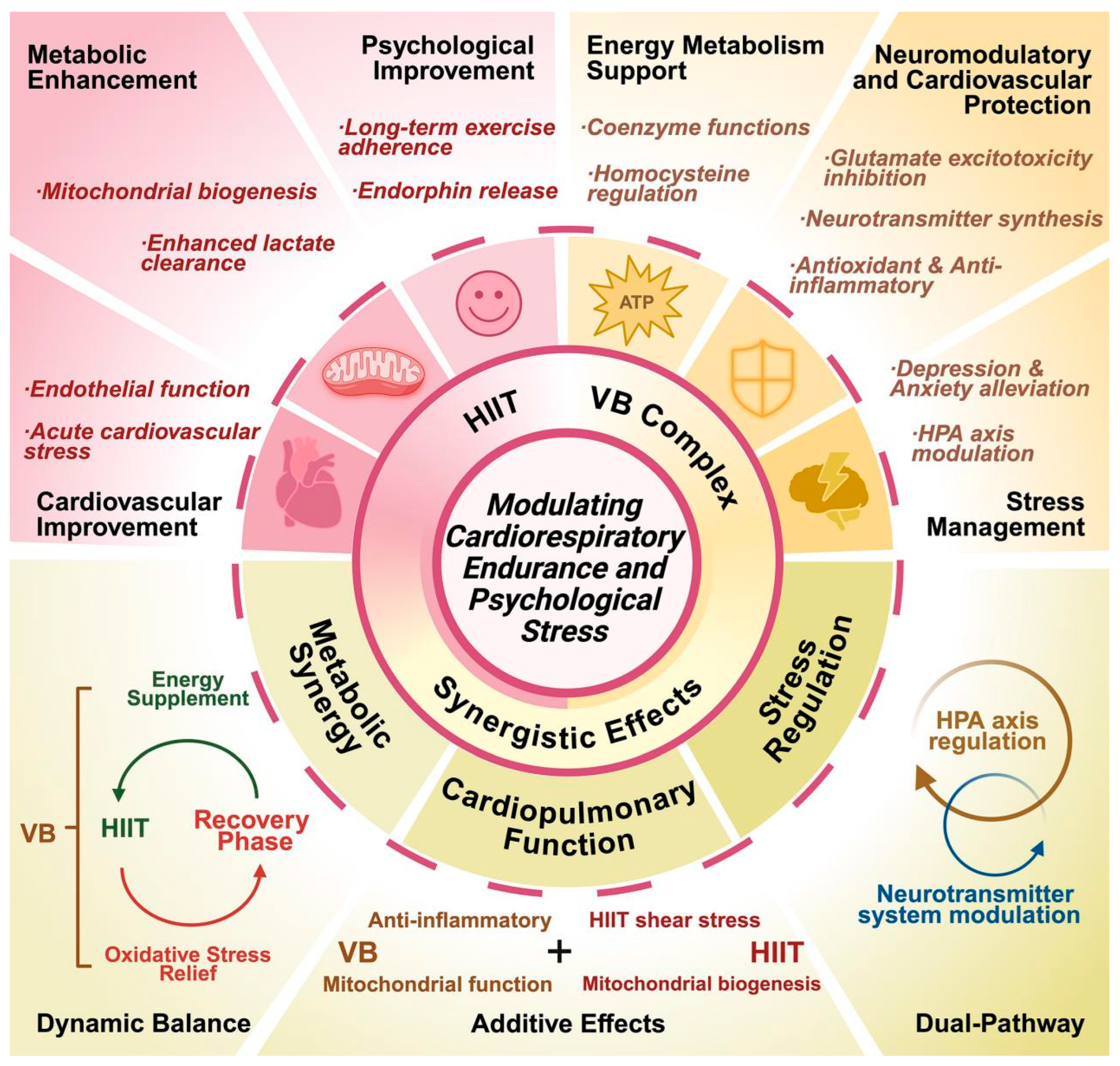
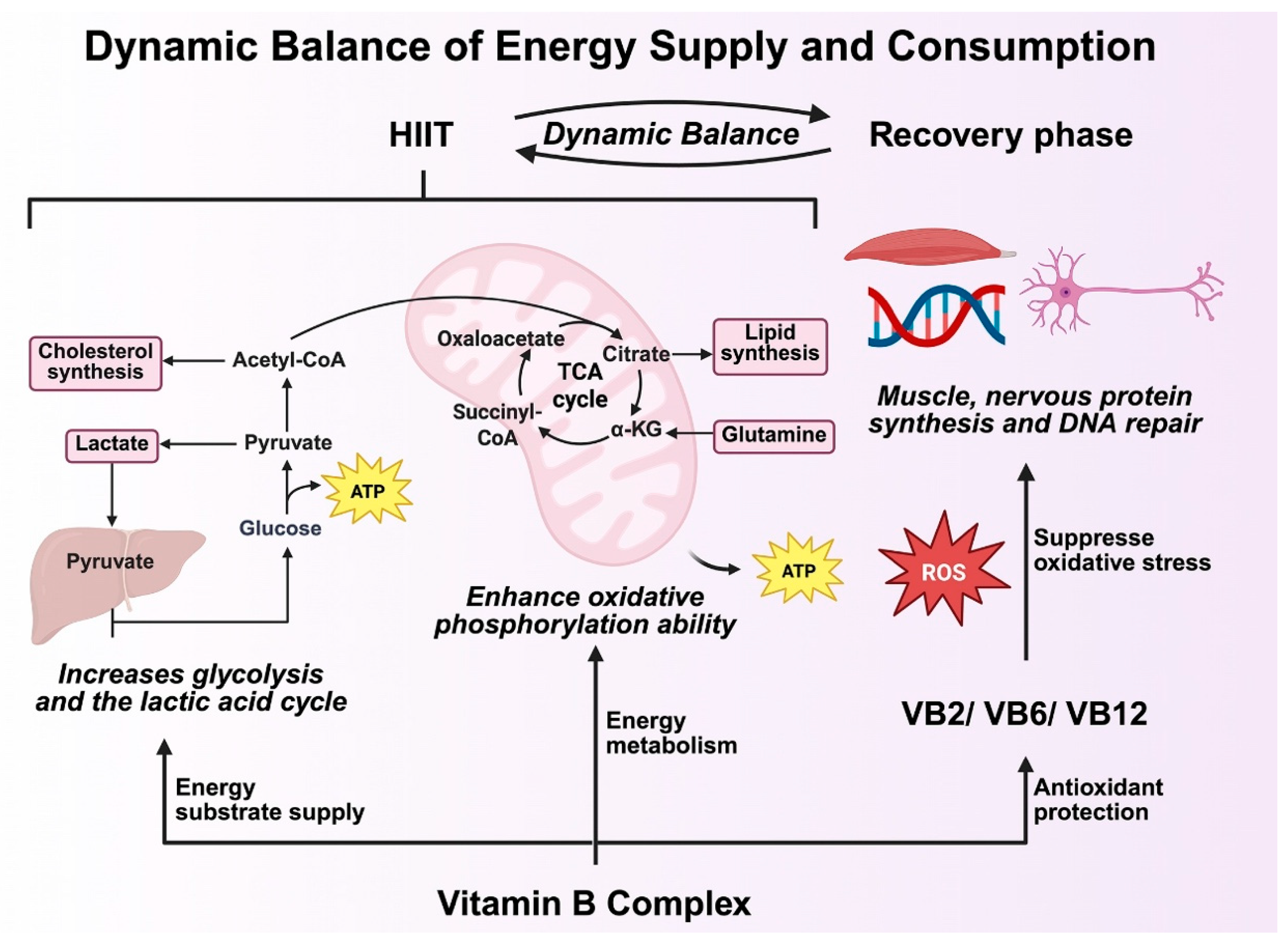
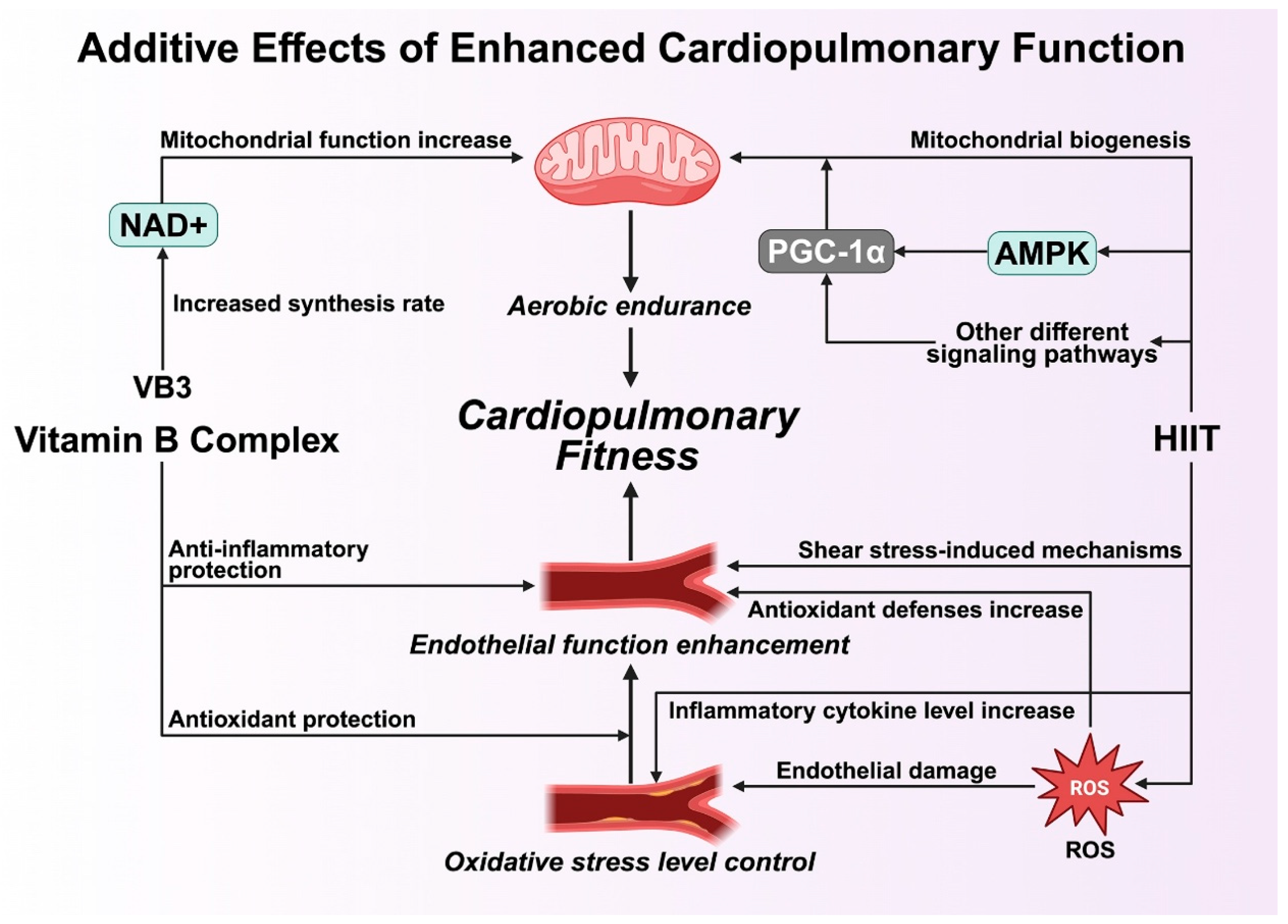
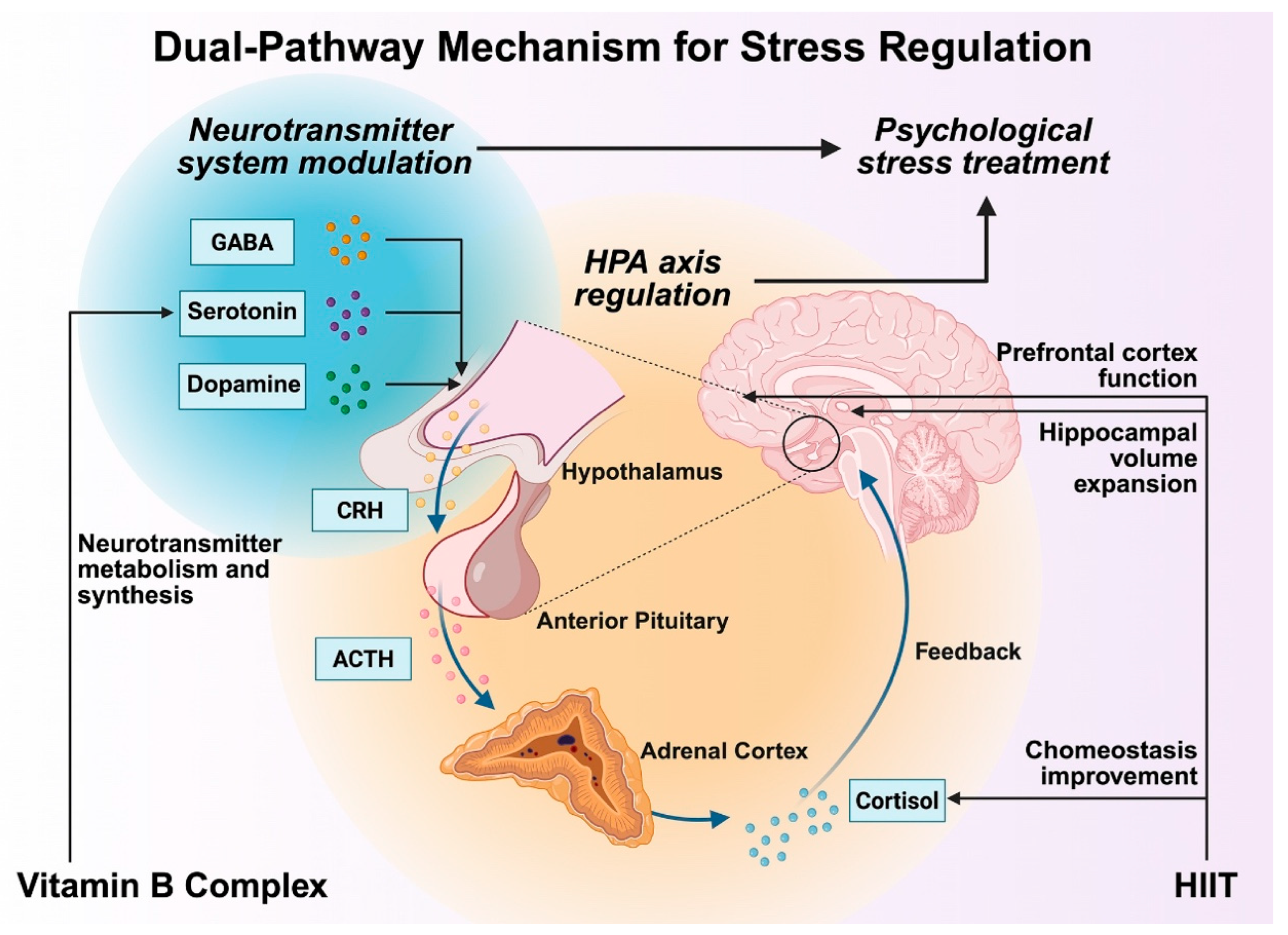
A Review of Mechanisms Underlying Modulation of Cardiorespiratory Endurance and Psychological Stress in College Students by High-Intensity Interval Training (HIIT) Combined with B-Vitamin Supplementation




Abstract
Share and Cite
Fu, J.; Zhang, H.; Yu, X.; Zhong, T.; Tao, X.; Xiao, Y. A Review of Mechanisms Underlying Modulation of Cardiorespiratory Endurance and Psychological Stress in College Students by High-Intensity Interval Training (HIIT) Combined with B-Vitamin Supplementation. Healthcare 2025, 13, 2873. https://doi.org/10.3390/healthcare13222873
Fu J, Zhang H, Yu X, Zhong T, Tao X, Xiao Y. A Review of Mechanisms Underlying Modulation of Cardiorespiratory Endurance and Psychological Stress in College Students by High-Intensity Interval Training (HIIT) Combined with B-Vitamin Supplementation. Healthcare. 2025; 13(22):2873. https://doi.org/10.3390/healthcare13222873
Chicago/Turabian StyleFu, Jia, Hankai Zhang, Xi Yu, Tian Zhong, Xiaoyu Tao, and Ying Xiao. 2025. "A Review of Mechanisms Underlying Modulation of Cardiorespiratory Endurance and Psychological Stress in College Students by High-Intensity Interval Training (HIIT) Combined with B-Vitamin Supplementation" Healthcare 13, no. 22: 2873. https://doi.org/10.3390/healthcare13222873
APA StyleFu, J., Zhang, H., Yu, X., Zhong, T., Tao, X., & Xiao, Y. (2025). A Review of Mechanisms Underlying Modulation of Cardiorespiratory Endurance and Psychological Stress in College Students by High-Intensity Interval Training (HIIT) Combined with B-Vitamin Supplementation. Healthcare, 13(22), 2873. https://doi.org/10.3390/healthcare13222873