Article

A Retrospective Analysis of the Challenges of Urothelial Cancer Management during the COVID-19 Pandemic at a Single Academic Center in Romania

1
Department XV, Discipline of Urology, “Victor Babes” University of Medicine and Pharmacy, 300041 Timisoara, Romania
2
Doctoral School, “Victor Babes” University of Medicine and Pharmacy, 300041 Timisoara, Romania
3
Department of Urology, Satu-Mare County Emergency Hospital, 440192 Satu-Mare, Romania
4
Department XIII, Discipline of Infectious Diseases, “Victor Babes” University of Medicine and Pharmacy, 300041 Timisoara, Romania
5
Faculty of Medicine and Pharmacy, University of Oradea, 410073 Oradea, Romania
6
Biochemistry Research Center, “Victor Babes” University of Medicine and Pharmacy, 300041 Timisoara, Romania
*
Author to whom correspondence should be addressed.
Healthcare 2023, 11(6), 812; https://doi.org/10.3390/healthcare11060812

Submission received: 20 January 2023 / Revised: 5 March 2023 / Accepted: 7 March 2023 / Published: 9 March 2023
(This article belongs to the Special Issue Urological Cancer Care—Improving Patient Outcomes)

Abstract

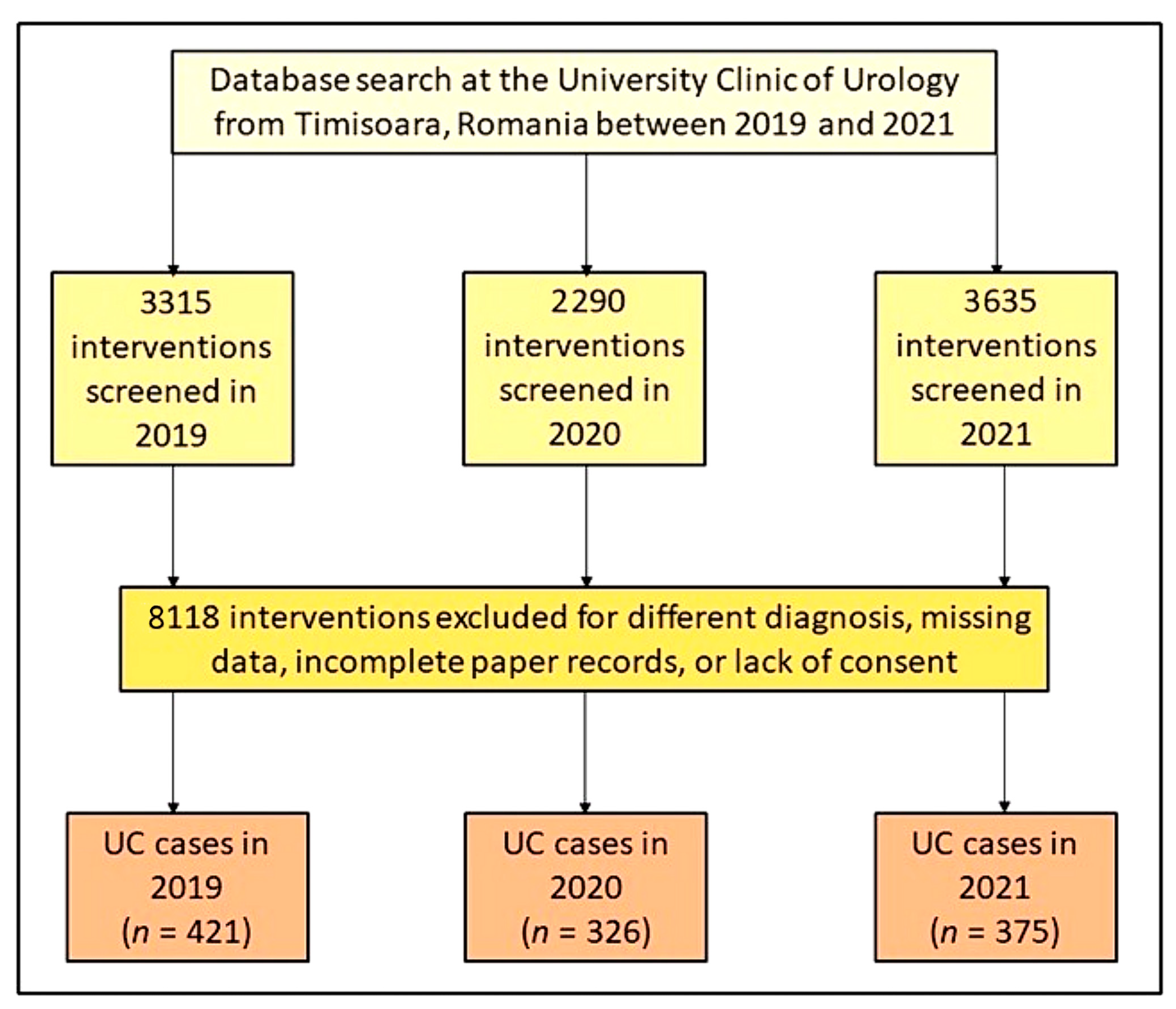
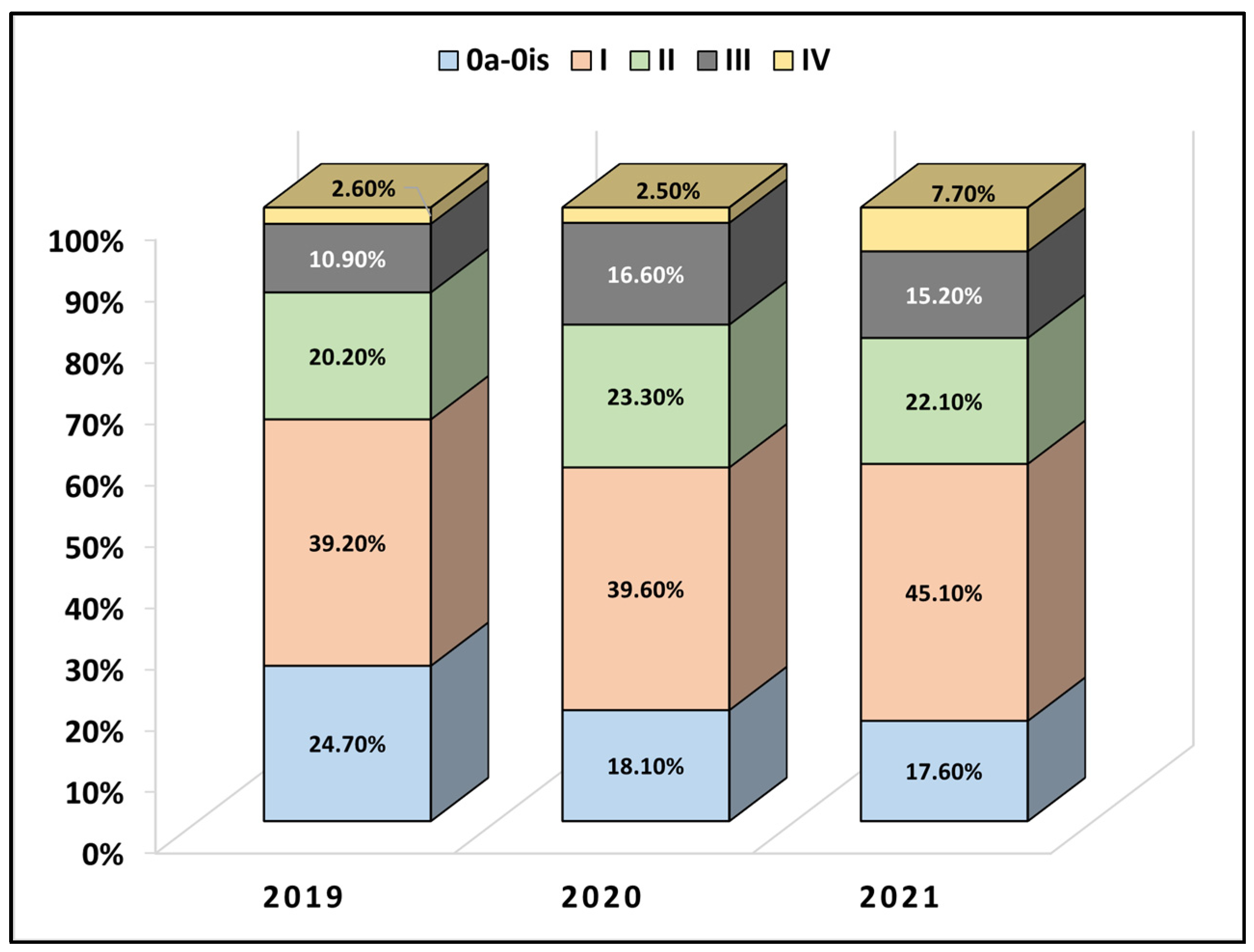
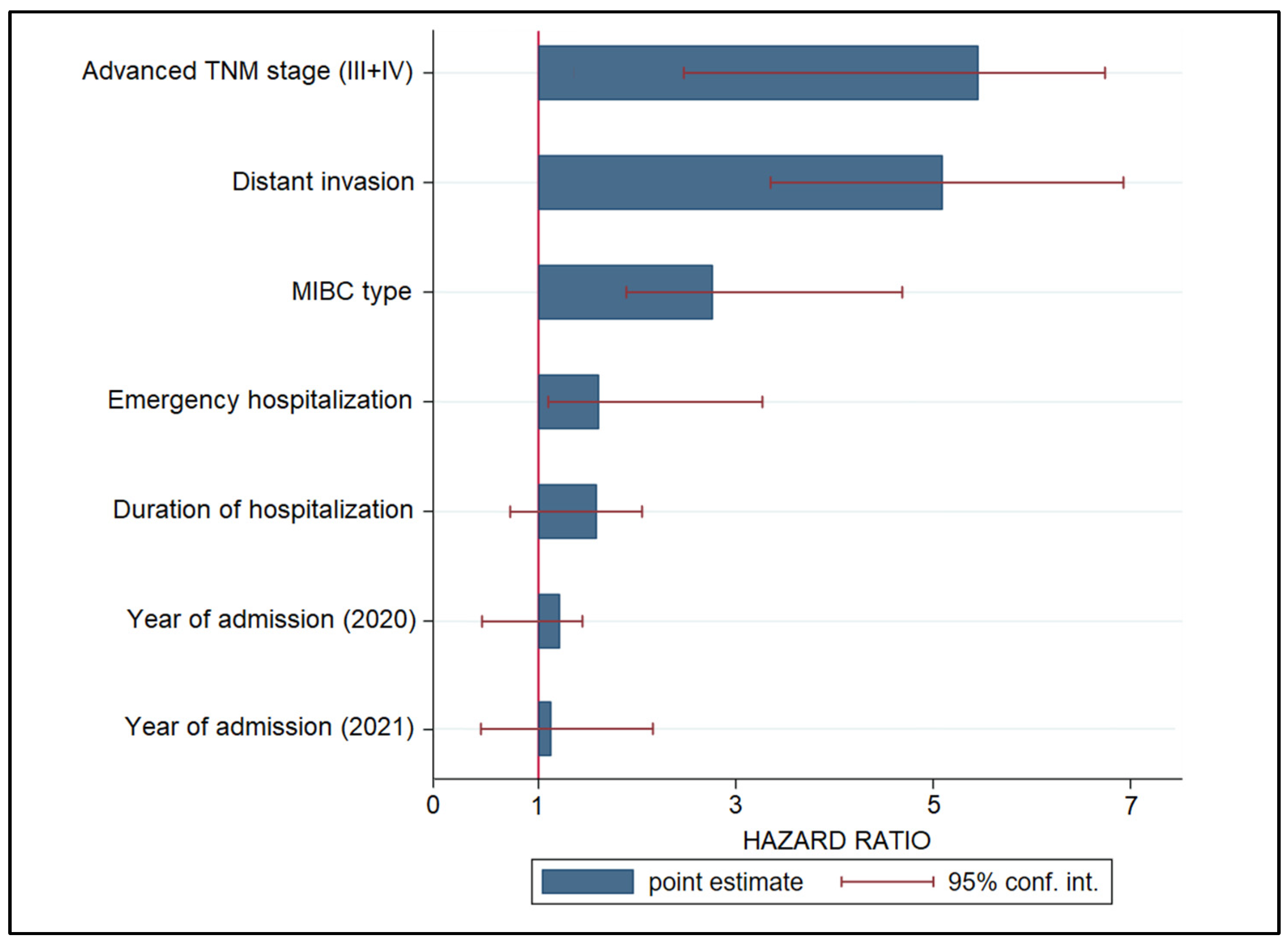
The COVID-19 pandemic caused major changes in the healthcare sector due to adaptations required to hospitalize and treat an impressive number of patients. This retrospective study intended to collect reliable information on urothelial cancer patients in Romania. The primary objective was to compare the pre-pandemic and pandemic periods to observe the differences that occurred in the management of patients with urothelial carcinoma. The secondary objective was to determine the risk factors for urothelial cancer progression in the study cohort correlated with the COVID-19 pandemic. All patients that were diagnosed and treated at our clinic with a diagnosis of urothelial carcinoma (transitional cell carcinoma) during 2019–2021 were included in the current study. A total of 1122 eligible unique cases were identified during the study period. The number of patients who underwent intervention in the pre-pandemic year was 421, followed by a 22.6% decrease in 2020 to 326 cases and a 13.1% increase in 2021 to 375 cases. The proportion of muscle-invasive bladder cancer (MIBC) cases was significantly higher during the pandemic years, from 30.5% MIBC cases in 2019 to 37.4% in 2020 and 39.4% in 2021, suggesting a delay in presentations during the pandemic. Stage III and IV (TNM) cases were significantly more frequent, even though approximately 40% of all patients were operated on in stage I. The number of cystectomies increased significantly, from 5.2% in 2019 and 4.3% in 2020 to 10.1% in 2021, while the number of elective surgeries decreased, although no significant difference was observed regarding the in-hospital mortality and disease progression at six months. Patients with stage III and IV at presentation had the highest likelihood of disease progression at six months (HR = 5.61). Distant invasion was the second highest risk factor (HR = 5.13), followed by MIBC type (HR = 2.49). Nevertheless, the duration of hospitalization and year of diagnosis during the COVID-19 pandemic were not significant risk factors for cancer progression at six months. It can be concluded that there was a significant delay in patient presentations in 2020, and we advocate for increased public health awareness for urothelial cancer and increased attention toward the screening and management of these patients in the following years.
Keywords: COVID-19; urothelial cancer; cancer management; cancer epidemiology COVID-19; urothelial cancer; cancer management; cancer epidemiology