Article

Analysis of Driving Factors in the Intention to Use the Virtual Nursing Home for the Elderly: A Modified UTAUT Model in the Chinese Context


School of Management, Harbin University of Commerce, Harbin 150028, China
*
Author to whom correspondence should be addressed.
Healthcare 2023, 11(16), 2329; https://doi.org/10.3390/healthcare11162329

Submission received: 5 July 2023 / Revised: 9 August 2023 / Accepted: 16 August 2023 / Published: 17 August 2023

Abstract

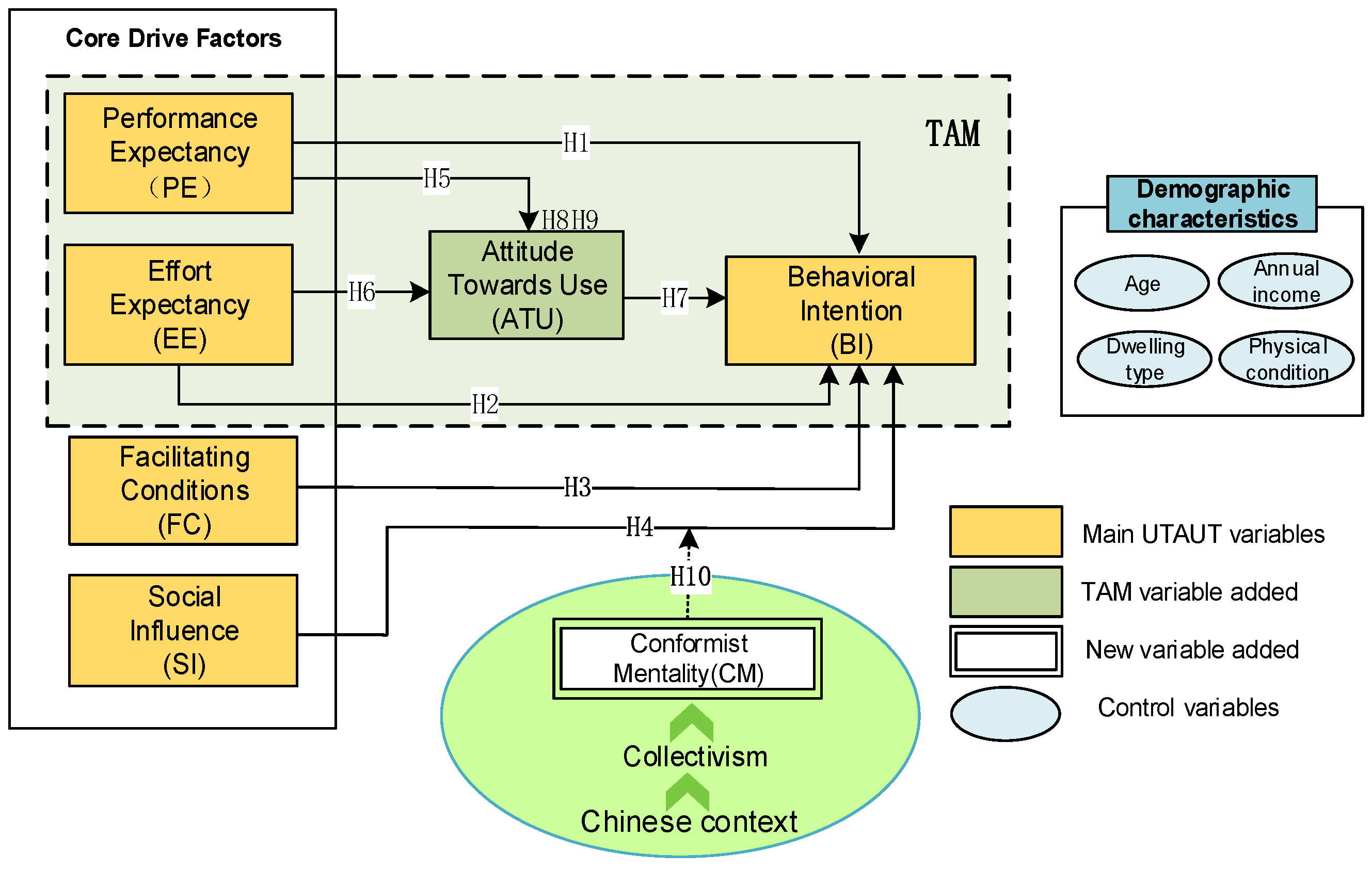
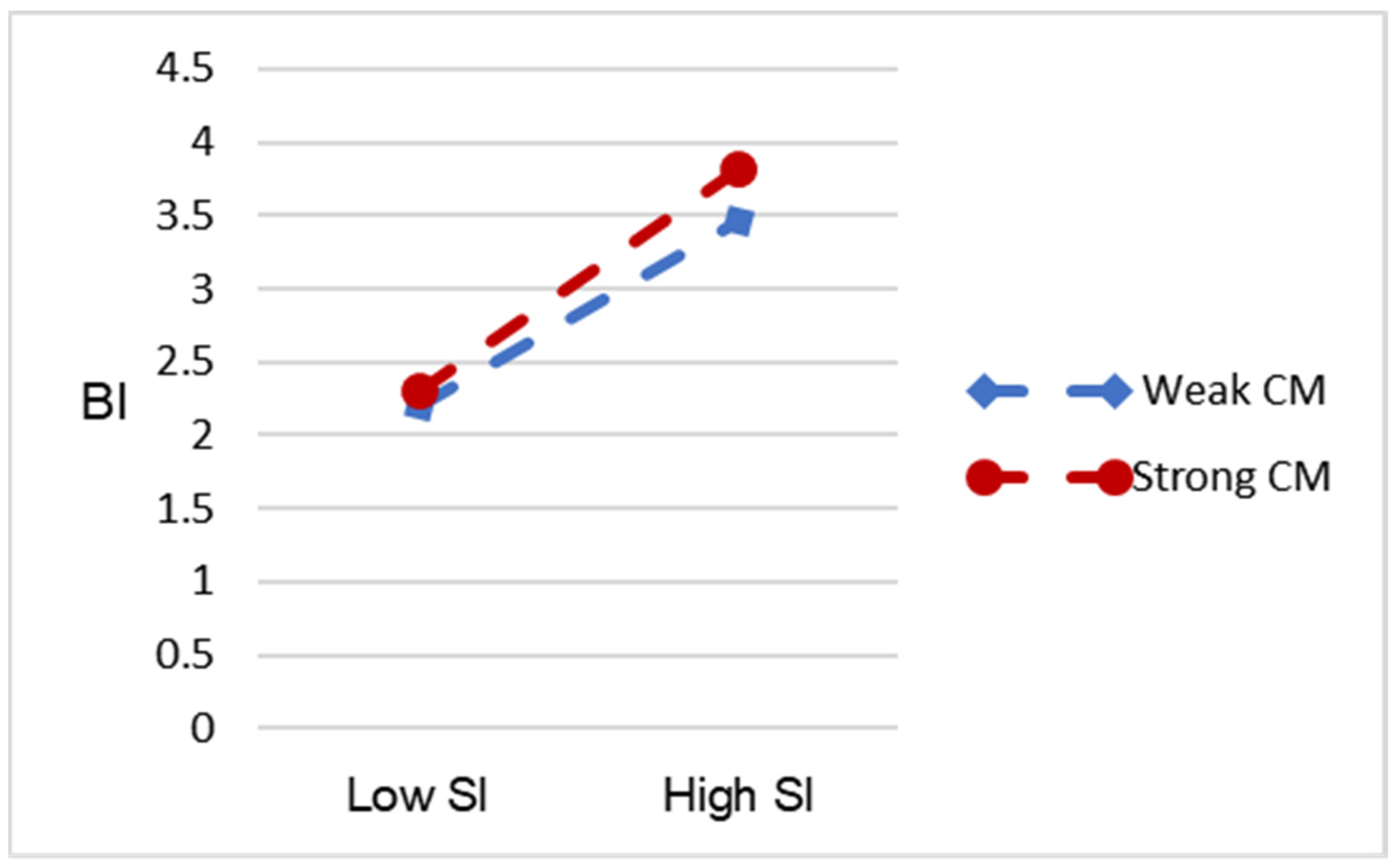
As a unique form of mobile health service (m-Health) for elderly care in China, the virtual nursing home is considered a reliable alternative to the traditional model of home-based care, but services from virtual nursing homes are infrequently used by the elderly in practice. Thus, this study aims to measure the driving factors affecting the behavioral intention to use the virtual nursing home by designing a research framework that combined the unified theory of acceptance and use of technology (UTAUT) with the technology acceptance model (TAM). Furthermore, a new variable, conformist mentality, is proposed as a moderator. In order to validate the model, a well-structured questionnaire using mature scales was used, and the linear regression analysis method was conducted on 200 valid data samples collected during a field study in Harbin, China. The results show that performance expectancy, effort expectancy, and social influence significantly affect behavioral intention. However, the effect of facilitating conditions is not significant. Moreover, performance expectancy and effort expectancy have a positive effect on attitude toward use, and attitude toward use not only affects behavioral intention but also plays a mediating role in the effect of performance expectancy and effort expectancy on behavioral intention. This study also innovatively proposes and confirms conformist mentality as a moderator to strengthen the driving effect of social influence on behavioral intention. This is the first time that conformist mentality is introduced as a moderator in a study on the behavioral perception and acceptance of virtual nursing homes among Chinese older adults. Based on these findings, this study offers theoretical contributions and management implications that are conducive to the sustainable development of virtual nursing homes, thereby making extensive contributions to this field. Additionally, it also aids in the contextual expansion of the UTAUT model.
Keywords: elderly care; m-Health; virtual nursing home; UTAUT; behavioral intention elderly care; m-Health; virtual nursing home; UTAUT; behavioral intention